



Chase Elliott, Johanna Long and Dakoda Armstrong Prove Racing is a Family Affair
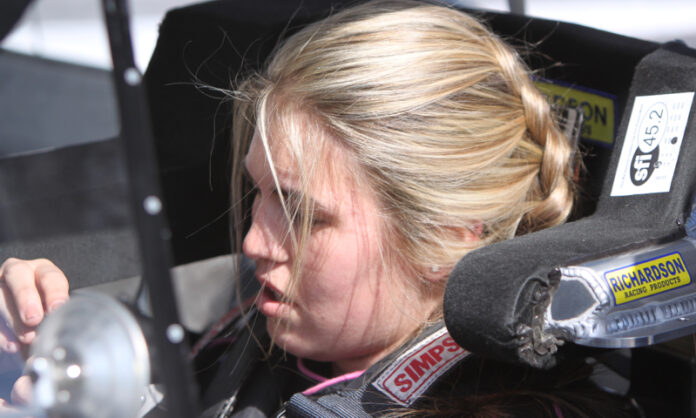
[media-credit name=”Barry Albert” align=”alignright” width=”250″]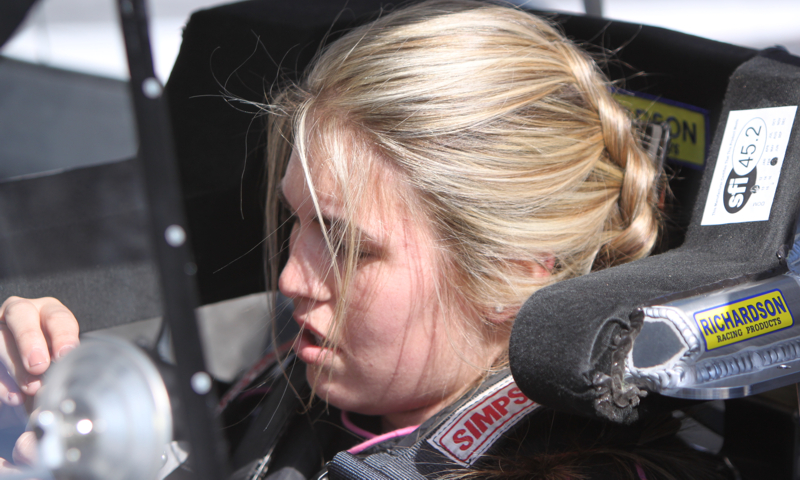 [/media-credit]Up and coming NASCAR racers like Chase Elliott, Johanna Long and Dakoda Armstrong may have loads of talent but they also have one other thing in common, the love and support of their family. And each one of them has proven that racing is truly a family affair.
Thanks to the coaching of his NASCAR champion father Awesome Bill Elliott and the unfailing support of mom Cindy, Chase Elliott is already proving that racing for him is filled with family. The young racer also recently signed with one of NASCAR’s most famous team families, Hendrick Motorsports.
Elliott raced this past weekend at Greenville Pickens Speedway in one of NASCAR’s developmental series under the banner of HMS. With that start, Chase officially became the youngest driver ever to start a K&N Pro Series East race at the tender age of 15 years.
Elliott followed in his most popular father’s footsteps from the moment he pulled into the historic race track in South Carolina. Fans lined up well into Turn Four to get the youngster’s autograph and the line remained until the session finally had to be ended so the race could start.
Elliott, in his No. 9 HendrickCars.com Chevrolet, qualified for the Kevin Whitaker Chevrolet 150 in the 26th position. His qualifying lap, at a speed of 85.531 miles per hour, was a definite improvement over his practice time but he still started the race deep within the field.
Elliott had to not only pick his way through the field gradually but also had to overcome a spin on lap 97 to soldier forward. With 23 laps to go, the young driver, with his father in his ear as spotter, manhandled his way to eighth, eventually finishing the race in the fourth spot.
Ever the competitor, just like his father, Chase Elliott had this to say after his debut.
“The weekend wasn’t quite what we wanted it to be,” Elliott said. “But it ended up being a pretty good night for the HendrickCars.com Chevrolet.”
“Having the support of your family and friends for any first time event in your life is always special,” Elliott continued. “I have been fortunate to have the support of a lot of family and friends that have been with me each step of the way.”
Just as family has been critical to Chase Elliott’s rise in the sport, so has the family of Johanna Long been instrumental in her move up as a rookie in the Camping World Truck Series this year. She too is following in the steps of her racing father, Donald, who raced in the NASCAR All-Pro Division back in the day.
Long, at age 18, admits that she is struggling a bit to get that handle on her No. 20 Panhandle Grading and Paving Toyota Tundra truck. In the first three Truck races, she has finished 32nd, 20th and 31st respectively.
“It’s going,” Long said of her Truck run to date. “We’ve had a lot of bad luck but every time we go to the race track we’ve been learning a lot.”
“I’m learning and learning and learning.”
Long was very excited to race this past weekend at Martinsville in the Kroger 250 this past weekend. She was able to harness her excitement to get her best finish to date, bringing her truck to the finish line in one piece and in the 18th position.
But she still goes back to crediting her family for putting her in the position to pursue her racing dreams.
“My mom and my dad and my grandparents and my uncle, they all own my team,” Long said. “They are a big part of my career.”
“They have given me a great opportunity and I can’t thank them enough,” Long continued. “My mom and dad come to every single race and they would not miss it for the world. It’s really neat for them to come and experience this with me.”
At age 19, Dakoda Armstrong may be the eldest of this group of up and coming racers, but he too got to where he is today thanks to the nurturing of his family, in his case from down on the farm. Thanks to his family’s support, Armstrong recently signed with ThorSport Racing to run a third team to current powerhouse Truck racers Johnny Sauter and Matt Crafton.
Armstrong will run the No. 98 Chevy Silverado for a select number of races this year. Armstrong will also continue his ARCA racing, where last year he won the Rookie of the Year honors.
Armstrong credits his family with jump starting his racing career. He grew up on a farm in the Midwest, born in New Castle, Indiana.
“When I was younger, we had cattle and we actually had to sell them so we could go racing,” Armstrong said.
The investment paid off and this racer’s family farming avocation has even led him to several sponsorship deals, specifically with ethanol coming into the sport and the greening of NASCAR.
“It’s kind of funny how it worked out,” Armstrong said. “My dad’s farming career and my racing career are starting to mesh right now.”
“It’s been really neat and it’s a great experience for my family,” Armstrong said of his racing. “They really love it.”
Regardless of their ages or current racing series, there is no doubt that all three of these up and coming NASCAR future stars have succeeded in moving forward in their young careers thanks to the love, support and nurturing of their families.
And there is also no doubt that the parents, grandparents, aunts, and uncles of Chase Elliott, Johanna Long and Dakoda Armstrong could not be more proud.
Martinsville May Be the New Bristol
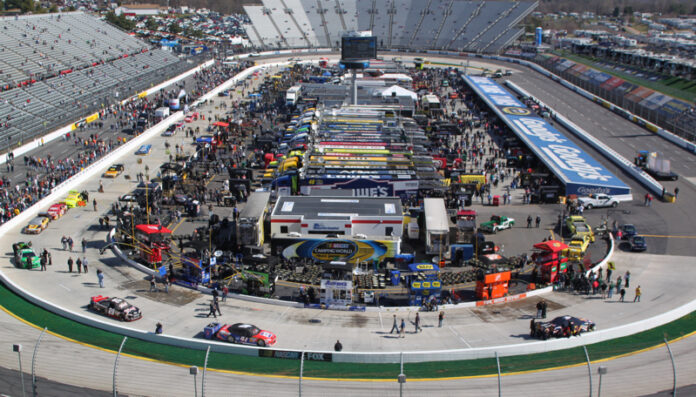
[media-credit name=”Barry Albert” align=”alignright” width=”263″]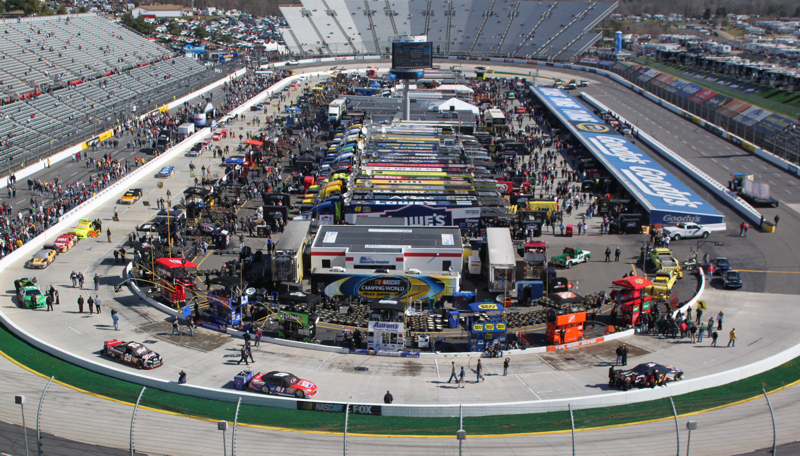 [/media-credit]Martinsville is the new Bristol. Why? I could see it on the fans’ faces. Two weeks ago, a very low crowd came to Bristol to see some short track racing and what did they get? Racing that just wasn’t Bristol. Apparently, the word has gotten around that Bristol no longer offers the short track “rubbing is racing” experience that fans crave. So the fans stayed away. The 160,000+ seat stadium crowd was about half that. Enter Martinsville Speedway.
Martinsville Speedway doesn’t offer the high speeds of Richmond and Bristol, but “the paper clip” offers lots of action and some of that “rubbing” that the fans seem to love. And boy did they get that on Sunday. The intimate venue gave us the best racing of 2011 complete with an exciting finish. The stands were nearly full (the official estimate was 60,000) and the fans were enthusiastic, especially when Dale Earnhardt, Jr. took the lead late in the race. Old Junior even moved Kyle Busch out of the way with his bumper to make the pass. The crowd loved it. And they could clearly see it because there isn’t a bad seat in the house.
At nearly the halfway mark, the bad crash that involved Martin Truex, Jr. and Kasey Kahne caused the race to be red-flagged. It was such a beautiful day that I ventured outside the friendly confines of the press box and into the concourse and the grassy area on the backstretch. My son, attending his first race at Martinsville, something my father and I did long ago, was sitting there and he made the most prolific statement of the day. “Dad,” he said, “this is a lot better than Charlotte.” Indeed.
The race had it all. We saw close racing, a most popular driver finally lead a race, and action on every lap. Where else could you see this? Well, earlier you might have seen it at places like Bristol, but the popular thing to do is to configure tracks so that the drivers can race without touching. I’m here to tell you that the fans do not want that. They want what they saw on Sunday.
For whatever reason, Goodyear brought a tire that didn’t last very long and didn’t rubber up the track, leaving one groove for the drivers to go fast. That’s pretty much always been the case at Martinsville, but it was really extreme on Sunday. Double-file restarts were an exercise in futility. If you were on the outside, you were toast. So, if you wanted to go low, you had to do something to get there and that meant contact. The fans loved it. And for all the hand-wringing about the tires, they were hardly a concern during the race. It was as if the multitudes came to the mecca of short track racing to see just that since they can’t find it anywhere else.
Martinsville Speedway may very well become the favorite of short track fans in the future. Tickets prices are reasonable, the venue takes you back in time when racing came down to who could make the moves to get a win in a small space. And while the high dollar speculators built palaces for these gladiators of speed to perform in, Martinsville has stayed essentially the same. The new improvements were noticeable, but they didn’t take away from the charm of the track built in 1947—the oldest track on the Sprint Cup circuit. From the exhilaration on the talk shows to the comments of the people on the street, it seems this is what the fans want. I hope everyone in the NASCAR world is listening.
Pit Road Discussion: Jimmie Johnson, Kyle Busch and Timing Speeds
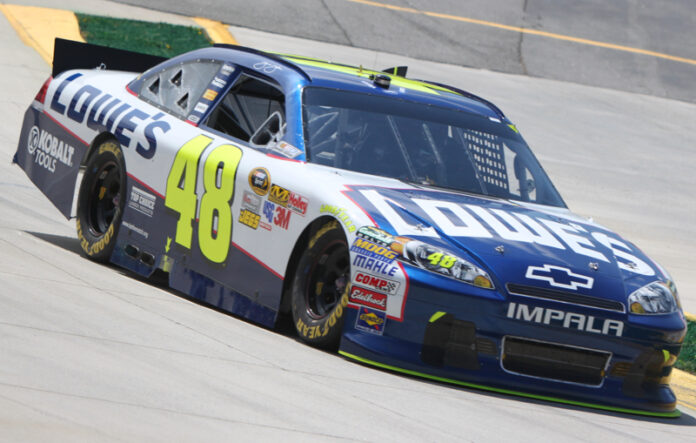
[media-credit name=”Barry Albert” align=”alignright” width=”235″]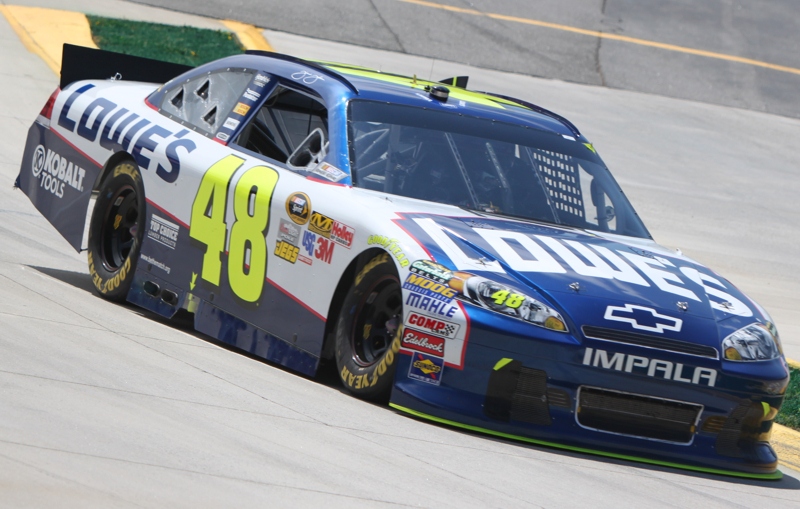 [/media-credit]Pit road is sometimes the worst place for a driver as they can lose a lot of time, and sometimes it can be the best place. This past Sunday, during the final round of the stops, it didn’t pan out in Johnson’s favor as he was caught speeding the final round of pit stops.
According to what NASCAR has told Johnson, he was speeding in the segment right before his pit stall. The explanation as to why he was trying to gain time resides in his closest competitor at that point – Kyle Busch.
On every round of pit stops, Busch had it perfectly figured out where he could speed up and where he had to slow down to gain the most time. He marked his segment well and did it every time, always gaining time.
When Johnson came down pit road on that final round of pit stops, he was set to get the edge on Busch so he could start in the preferred line on the restart. He tried to push the boundaries, though pushed a segment too early and got busted.
A lot of questions have always surrounded pit road times and whether NASCAR is fair across the board. Johnson suggested that posting the times for all of the media and fans to see would be the best way to get rid of these questions.
“If NASCAR wanted to eliminate speeding controversy, they would post the times for the world to see,” Johnson said during a teleconference on Tuesday. “Just let the facts be out there. If pit road segment times were broadcast live to review, it would eliminate the finger pointing.
“We have this kind of controversy once a month, every couple of races. To have the data would be cool for fans to see and eliminate people like myself making comments and harming the credibility of the sport.”
Though the negative side of that is it shows the type of strategy plainly that drivers like Busch are using. As Johnson said, it would de-emphasize the importance of specific stalls on pit road and secrets surrounding them. A large of winning races is about the strategy played out on pit road to get in position to win.
As spotter for Brett Griffin says, “Picking pits is extremely important when strategizing how to maximize speed on pit road as it pertains to timing zones.”
Do you we want to eliminate part of that for our own gain? Some critics say that it’d be a wise step to make as it’d allow for fan education and allow the fans to find another avenue in where they feel more connected to the sport.
Another part of the discussions is if speeds should be judged on segment time or speed. Currently, they are judged on segment time, which allows drivers to push the envelope in the segment their pit stall in in. Johnson notes that he does like the flexibility that segment timing does bring. However, if they changed it to speed, no pushing of the envelope would be allowed. Is that fair to the strategy or is it better to do that to eliminate the questions?
In the end, it’s all about pushing the envelope for most drivers. They are given a pit road speed and then 5 mph leeway on top of that. Instead of sticking to the speed given, they try to hit the leeway mark and sometimes that gets them in trouble. Looks like Johnson tried to find another advantage and it bit him.
