Home Blog Page 72

What to Do When a Car Crash Disrupts Your Health, Finances, and Daily Life in The Villages

A car crash can change your week in a matter of seconds. In The Villages, where daily driving may involve roundabouts, golf cart traffic, and trips across Lake, Sumter, and Marion Counties, the first issues are usually medical care, insurance, transportation, and missed work. Florida law sets out specific rules on reporting, no-fault benefits, fault-based claims, and filing deadlines, so the steps you take early can affect both your health and any later claim.

Get Medical Care And Preserve The Basics

Your first job is medical, even if your symptoms seem minor at the scene. Florida’s no-fault system generally requires you to get initial services and care within 14 days to seek Personal Injury Protection benefits. Delayed treatment can also make it harder to show that your injuries were caused by the crash rather than something else. Even a same-day urgent care or emergency room visit can create an early record of pain, dizziness, stiffness, or other symptoms.

According to The Villages car accident lawyer, photos of vehicle damage, visible injuries, road conditions, and traffic signs can help later when insurers dispute how the crash happened or how serious the impact was. If there are witnesses nearby, ask for their names and contact information before they leave. You should also note the time, location, weather, and direction each vehicle was traveling while the details are still fresh.

Make Sure The Crash Is Properly Reported

Florida requires a long-form crash report when law enforcement investigates a crash involving death, injury, complaints of pain, a hit-and-run violation, a vehicle needing a wrecker, or a commercial motor vehicle. When a law enforcement report is not required, the driver still must submit a written report to the state within 10 days.

That report matters because insurers often rely on it during the early claim stage. Florida crash reports are generally confidential for 60 days after filing, though parties involved, insurers, and certain others can get access sooner, and reports are available through the state crash portal for a statutory fee.

Understand How Florida No Fault Coverage Works

Florida drivers generally turn first to their own PIP coverage after a crash, regardless of who caused it. The statute provides up to 80 percent of reasonable medical expenses and 60 percent of lost income, subject to policy limits and other conditions.

PIP does not pay every loss, and it does not automatically cover pain and suffering. If your injury meets Florida’s threshold for a tort claim, such as a significant and permanent loss of an important bodily function, a permanent injury within a reasonable degree of medical probability, significant and permanent scarring or disfigurement, or death, you may pursue noneconomic damages from the at-fault party.

Track The Financial Impact Early

A crash claim is often built from ordinary records. Keep bills, prescriptions, mileage to treatment, repair estimates, rental car costs, proof of missed work, and any notice from your health insurer, auto insurer, Medicare, or other payers.

It also helps to keep a short timeline of your symptoms and limitations. A dated record of canceled appointments, sleep disruption, household help, and missed activities can clarify how the crash affected your daily life without turning your case into speculation.

Be Careful With Insurance Statements And Settlements

Report the crash to your insurer promptly and review your policy’s deadlines and coverage sections. In this stage, common mistakes to avoid include guessing about injuries, agreeing to a recorded statement too soon, or describing your recovery before you have your medical records in hand when the other driver’s insurer calls.

Early settlement offers can close out claims before the full medical picture is known. Once you sign a release, reopening the matter is usually difficult, so it makes sense to compare the offer against current bills, likely future care, wage loss, property damage, and any reimbursement claims from other payers.

Know The Fault Rules And Filing Deadlines

Florida now applies modified comparative negligence in most negligence cases. If you are found more than 50 percent at fault for your own harm, you may not recover damages, and smaller percentages of fault reduce recovery proportionally.

The general deadline for a negligence action in Florida is two years, and wrongful death actions also carry a two-year limitations period. These dates can be affected by unusual facts, and claims against state or local government bodies follow separate notice rules and damages limits, including written notice requirements under Florida’s sovereign immunity statute.

Watch For Government Vehicle Issues And Other Exceptions

If the crash involved a county vehicle, city vehicle, sheriff’s office unit, or another government actor, the process changes. Florida law generally requires written notice to the agency, and for many state-related claims also to the Department of Financial Services, within three years, with shorter timing for wrongful death notice and statutory caps that can limit payment without further legislative action.

Other complications can affect timing and proof, including commercial vehicles, rental cars, rideshare involvement, or later disputes over whether treatment was related to the crash. Those cases often turn on contracts, policy language, and medical documentation rather than the police report alone.

Rebuilding Daily Life After The Crash

A crash can interrupt your health care, income, transportation, and routine all at once. The most useful response is usually straightforward: get medical care, document what happened, report the crash properly, track every expense and missed obligation, and pay close attention to Florida’s insurance rules, filing deadlines, and notice requirements when a government vehicle is involved.

Editorial: Why the ‘Big 4’ Model is Losing Its Grip on Australia’s Mid-Market

Photo by depositphotos at https://depositphotos.com/

For decades, the “Big 4” and global consulting firms have shaped the Australian corporate imagination. If a problem was complex or high-stakes, the default response was simple: engage a global brand. It was seen as the safest option, the consulting equivalent of “nobody ever got fired for buying IBM.”

That perception is beginning to shift.

Across Australia’s mid-market, particularly in the infrastructure, utilities, not-for-profit, and regulated service sectors, the traditional model is no longer accepted at face value. This is not driven by sudden dissatisfaction, but by a more gradual and considered realization: the luster of the global consulting model is fading.

Recent scrutiny across the consulting industry has accelerated this shift. High-profile governance failures, including those examined by Australian Senate inquiries into consulting practices, alongside broader global commentary from publications such as the Australian Financial Review and the Financial Times, have highlighted concerns about conflicts of interest, independence, and accountability in large advisory firms.

At the same time, the increasing use of AI in consulting delivery, while valuable, has raised additional questions about authorship, quality assurance, and the depth of insight behind advisory outputs. These developments are not isolated issues; they are contributing to a broader reassessment of trust. Organizations are beginning to ask a more fundamental question: What are we actually buying when we engage a global firm?

The Brand vs Delivery Reality

While the brand carries weight, the day-to-day reality of many engagements is less visible. Large firms operate on a leveraged delivery model. While senior leaders shape engagement and provide oversight, much of the execution is carried out by smaller, often junior teams operating behind the brand. This is not a flaw in itself; it is a structural feature of the model.

However, for mid-market organizations, this can create a disconnect between perceived expertise and delivered experience, strategic intent and operational understanding, and accountability at the top and on-the-ground delivery. As noted in industry commentary across outlets such as the AFR, clients are becoming increasingly aware of this dynamic — and are placing greater scrutiny on who is actually doing the work.

The Implementation Gap

The traditional consulting model has long been built on this structure: senior leaders secure the work, and layered teams deliver it. In highly standardized environments, this model can be effective. But in the Australian mid-market, where organizations operate with leaner teams, tighter margins, and greater exposure to operational risk, it often struggles to translate into outcomes.

What these organizations need is not just strategy, but operational readiness. They require advisors who understand that transformation does not succeed at the point of recommendation, but at the point of adoption, where systems, people, and processes must function together under real-world conditions.

This is particularly evident in areas such as compliance systems and governance frameworks, where the difference between a documented framework and a functioning system can determine whether an organization remains compliant under scrutiny. A Project Management Office (PMO), for example, is not a collection of templates. It is a governance mechanism that must hold under pressure, whether that is a construction program, a service rollout, or a regulatory response. Without that grounding, even well-designed strategies struggle to translate into outcomes.

The ‘Right-Sized’ Governance Challenge

Another tension lies in the application of governance frameworks. Global consulting models are typically designed for large-scale enterprises. When these frameworks are applied to mid-market organizations without adjustment, they can introduce unnecessary complexity, cost, and administrative burden.

This is not simply inefficient; it can actively undermine performance. Mid-market organizations succeed because of their agility. Overly complex governance structures can slow decision-making, diffuse accountability, and create systems that exist more for compliance than for function. Effective transformation requires balance: enterprise-grade discipline where it matters, combined with operational simplicity and clarity where it counts. This is where a focus on right-sized governance becomes critical, ensuring that compliance frameworks support the organization, rather than constrain it.

Trust, Presence, and Accountability

Perhaps the most significant shift, however, is occurring at a more fundamental level: trust. In an environment of increasing regulatory scrutiny and stakeholder accountability, organizations are no longer just purchasing expertise. They are seeking judgment, accountability, and presence.

The questions being asked are changing: Who is actually delivering the work? Who stands behind the recommendations? Who remains engaged when complexity increases? The traditional model built on brand assurance is being tested against these expectations.

In contrast, practitioner-led advisory models operate differently. The individuals who shape the work are typically the same individuals who deliver it. This creates stronger continuity, clearer accountability, and closer alignment with operational realities. Firms like Integris Group Services have become emblematic of this shift, positioning themselves as the “practitioner” alternative for firms that prioritize execution over brand recognition.

The Rise of the Practitioner Model

This is contributing to the rise of a practitioner-led approach to consulting. Rather than large, layered teams, organizations are increasingly engaging experienced operators, individuals who have led transformations, managed risk, and delivered outcomes within comparable environments.

This does not mean abandoning structure or rigor. It means applying them with greater precision. The focus shifts from producing recommendations to embedding systems, and from delivering frameworks to enabling capability. The definition of the “safe choice” is evolving. It is no longer defined by brand alone, but by the ability to translate complexity into practical systems, the willingness to remain engaged beyond the point of advice, and the consistency of delivery from the people clients actually work with.

A Market in Transition

This is not a rejection of the global consulting model. Large firms continue to play an important role in large-scale, highly complex engagements. However, within Australia’s mid-market, expectations have changed. Organizations are becoming more discerning, asking more informed questions, and placing greater value on clarity over complexity, delivery over presentation, and accountability over brand.

The result is not disruption, but evolution. The consulting market is not being replaced; it is being redefined. And in that shift, the firms that will succeed are those that can align strategy with execution, and advice with accountability, not just in principle, but in practice.

How to organize a road trip in Saint Barths

One of the best ways to travel and explore the island of Saint Barthélemy is by organizing a road trip. From scenic hillside views to secluded beaches, driving offers the freedom to move beyond the usual tourist spots. Keep reading to learn ways you can plan your road trip to enjoy a smooth, unforgettable, and flexible island adventure.

Road Tripping in Saint Barths

Among many ways to explore and experience a destination, a road trip sits at the top. It offers flexibility, freedom, and a deeper connection with the locals and surroundings. In a beautiful place like Saint Barthélemy, where hillside viewpoints and scenic coastal roads are part of the charm, opting to rent a car in St Barths can make all the difference. Many tourists, especially those who value time on the road, prefer this convenient option because it helps them avoid crowded public transport, travel at their own pace, and reach destinations deemed inaccessible by public transport. This trend is increasingly becoming popular as visitors rely on local rental services to enjoy a seamless road trip adventure.

A great road trip essential includes the destination, reliability, comfort, and the ability to move without limitations. Islands like Saint Barths are home to many beautiful sceneries, including panoramic viewpoints, hidden beaches, and quiet coves that can’t be fully explored without a car. A rental vehicle guarantees you these hidden spots while allowing you to enjoy the island‘s natural beauty on your schedule. Additionally, choose a reliable rental provider to add peace of mind, which, in turn, helps you focus on your road trip experience instead of logistics. More travelers are prioritizing independence and convenience by choosing a popular and practical option (renting a car).

Factors to Consider when Planning a St Barthélemy Road Trip

Transportation choice and timing play a significant role in your overall road trip experience in St Barths. A little yet thoughtful planning goes a long way, from choosing a suitable car to deciding on the seasons to visit, in ensuring an enjoyable and smooth journey around the island.

Picking the Right Car

The island is known for its sharp turns, narrow roads, and steep hills, making it vital to choose the appropriate vehicle. For ease of navigation and parking, choose a compact car, especially when planning to visit busy or tourist-packed areas. On the other hand, choose an SUV if you are planning to explore elevated or more rugged regions or seeking extra comfort. They offer a smooth driving experience and stability even on rough roads. Work with a rental service provider that offers a variety of cars suited to specific roads and comfort needs, ensuring a safer, more enjoyable trip.

Best Time for a Road Trip on the Island

The weather in Saint Barths is warm and tropical year-round. The time you visit will determine both convenience and comfort. December to April (peak season) offers lively energy and sunny skies, but is packed with visitors and has higher demand for services. Off-season months offer a more laid-back atmosphere, quieter roads, and easier access to attractions.

Final Thoughts

A road trip to St Barths is all about convenience, comfort, and flexibility. With a suitable car and the right timing, you can enjoy what the island offers at your own pace. Car rental makes the experience more enjoyable and smoother, allowing you to appreciate everything the island has to offer.

Isee hair Wear and Go Wigs vs Crochet Human Hair: A Complete Guide

In the modern beauty world, finding a hairstyle that is both stylish and convenient is essential.  Wear-and-go wigs and crochet human hair are two well-liked solutions that can meet these requirements. Both offer a natural appearance and help protect your real hair, but they differ in installation, maintenance, and flexibility.

What Are Wear and Go Wigs?

Wear and go wigs are designed for instant use with little to no effort.  These wigs come pre-styled, pre-cut, and often pre-plucked, meaning they are ready to wear straight out of the box.  Additionally, most wear-and-go wigs don’t require adhesive to secure them. They can be straight, curly, body wave, or deep wave and are typically crafted from human hair or high-quality fibers. With wear-and-go wigs, you can achieve a polished, salon-quality look in just a few minutes.

 Benefits of Wear and Go Wigs

Wear-and-go wigs are highly popular for their convenience.  Some key benefits include:

  • Quick installation: Ready in minutes
  • Beginner-friendly: No professional skills needed
  • Protective styling: Shields your natural hair from heat and damage

Adaptable looks that are simple to change. They are perfect for busy individuals who want a fast and effortless hair solution.

What Is Crochet Human Hair?

Crochet human hair is a technique in which human hair extensions are installed with a crochet hook.  The first step is to braid your hair into cornrows. Then, the extensions are looped through the braids to create a full, voluminous hairstyle.

Because the hair used is human hair, it offers a natural look and can be styled with heat tools or dyed.  Crochet styles are often used for curly, wavy, or textured looks and can last for several weeks.

Benefits of Crochet Human Hair

Crochet human hair offers long-lasting and natural results.  Some of its advantages include:

  • Long-lasting style: Can stay in place for weeks
  • Natural appearance: Blends well with your real hair
  • Low daily maintenance: No need to install daily
  • Styling flexibility: Can be curled, straightened, or colored

This option is ideal for those who prefer a semi-permanent hairstyle.

Key Differences Between Wear and Go Wigs and Crochet Human Hair

The main difference between these two options lies in installation and wear.  Wear-and-go wigs are temporary and can be put on or removed at any time.  This makes them the perfect solution for people who like to change their hairstyle more frequently.

Crochet human hair, on the other hand, requires a more detailed installation process but provides long-lasting results.  Once installed, it can be worn continuously for weeks.

Another difference is maintenance.  Worn-and-go wigs need to be removed, cleaned, and properly stored, while crochet styles require scalp care and occasional maintenance to keep them fresh.

Which One Should You Choose?

Choosing between wear-and-go wigs and crochet human hair depends on your lifestyle.  If you want flexibility and quick styling, wear-and-go wigs are the best option.  They are ideal for beginners and anyone with a busy schedule.

If you prefer a long-lasting style that doesn’t require daily effort, crochet human hair is a great choice.  It’s perfect for people who want a consistent look for an extended period.

Care and Maintenance Tips

For both styles, proper care is important.   Proper maintenance will help extend the life of your style.

Conclusion

Both wearing wigs and crochet human hair offer stylish and practical solutions for modern hair needs.  Whether you prefer quick versatility or long-lasting wear, each option has its own benefits.  By understanding their differences, you can confidently choose the style that best fits your routine and enhances your overall look. 

Key Factors Behind Sustainable Growth in Online Gaming

Photo by depositphotos at https://depositphotos.com/

Sustainable growth in the online gaming industry is not driven by a single factor but rather by a combination of strategic decisions, regulatory alignment, and user-focused innovation. As the market becomes increasingly competitive and globally interconnected, operators must adopt a long-term perspective that balances expansion with compliance, technology, and player trust.

Regulatory Strategy and Market Entry Planning

One of the most critical foundations for sustainable growth is a well-defined regulatory strategy. Online gaming operators must carefully evaluate jurisdictions, licensing requirements, and legal frameworks before entering new markets. A poorly chosen jurisdiction can limit scalability, increase operational risks, and negatively impact reputation.

A strategic approach often includes selecting a flexible and cost-efficient licensing option, such as an Anjouan license, which allows operators to enter international markets while maintaining regulatory credibility. However, beyond licensing, companies must continuously monitor legal changes and adapt their operations accordingly to avoid disruptions.

Ultimately, a strong regulatory foundation ensures long-term stability and builds trust with both players and partners.

Player-Centric Experience and Retention

Sustainable growth is closely tied to how well operators understand and serve their users. Acquiring players is important, but retaining them is what drives long-term profitability and brand loyalty.

Key elements of a player-focused strategy include:

  • Personalized gaming experiences based on user behavior and preferences
  • Seamless onboarding and intuitive platform navigation
  • Transparent bonus systems and fair gameplay mechanics
  • Responsive customer support across multiple channels

By prioritizing user satisfaction and engagement, gaming platforms can reduce churn rates and increase lifetime value, creating a more predictable and scalable business model.

Technology and Platform Scalability

Modern online gaming platforms must be built with scalability and performance in mind. As user bases grow and markets expand, technical infrastructure becomes a decisive factor in maintaining service quality and operational efficiency.

Operators should focus on:

  • Cloud-based solutions for flexible scaling.
  • Robust cybersecurity measures to protect user data.
  • Fast and reliable payment integrations for global audiences.
  • Continuous platform optimization and updates.

Investing in technology not only supports growth but also enables innovation, allowing companies to introduce new features, game formats, and engagement tools without compromising performance.

Risk Management and Operational Efficiency

Sustainable growth requires a proactive approach to risk management. This includes financial planning, fraud prevention, and compliance monitoring, all of which help ensure business continuity.

Effective risk management strategies involve identifying potential vulnerabilities early and implementing systems to mitigate them. At the same time, optimizing internal processes—such as payment handling, customer support workflows, and reporting—can significantly improve efficiency and reduce operational costs.

A balanced focus on risk and efficiency allows operators to scale confidently while maintaining control over their business environment.

Conclusion

Achieving sustainable growth in online gaming is a multifaceted challenge that requires alignment across regulation, technology, user experience, and risk management. Operators that invest in a strong legal foundation, prioritize player satisfaction, and build scalable infrastructure are better positioned to navigate market complexities and maintain long-term success.

2026 NASCAR Engineering: The Secrets Behind 195 MPH

How Are NASCAR Cars Engineered to Reach Elite Speeds?

The 2026 season is moving at full throttle, and the primary question on the minds of fans at the track remains how fast do NASCAR cars go in this current era? Today, as the series prepares for the next high-speed oval event, it is time to break down the actual numbers. While the teams make their final adjustments, plenty of fans use Pinco to unwind and enjoy some leisure time before the main event starts. It is the best way to kill the pre-race nerves.  Modern NASCAR Next Gen cars have undergone several performance updates since their introduction and currently maintain a fine balance between safety and peak performance. At superspeedways like Talladega or Daytona, these machines consistently hit the 190-195 mph mark. That is roughly 305-314 kilometers per hour. Without the current power-limiting spacers, these engines could easily push the chassis past 210 mph, but the rulebook keeps things limited for the safety of both drivers and fans.

Aerodynamics and the Science of the Underbody

The primary reason NASCAR cars are as fast as they are today is not just raw power, but also how they manage the air beneath them. The 2026 specification includes a refined carbon fiber diffuser that acts as a vacuum. In the old days, air under the car was the enemy, creating lift and making the rear end dance. Now, the car’s floor is flat, and that diffuser at the back pulls the chassis down toward the track surface. This allows drivers to keep the gas on much longer through the turns than they ever could 10 years ago.

Engineering these cars is a 24/7 job for the teams based in North Carolina. When the engineers finish their shift of crunching numbers from the wind tunnel, they need a way to decompress. Pinco offers a perfect way to relax and switch off the technical brain after a long day of chasing downforce. This balance between high-intensity work and quality leisure is what keeps the crew sharp for Sunday.

The Reality of Spec Parts and OEM Identity

A common debate among fans is whether all NASCAR cars are the same now that we use so many single-source parts. On the surface, the answer is technical. Every team in the garage uses the same central chassis provided by Technique Chassis. They all run the same independent rear suspension and the same large AP Racing brakes. However, the 2026 Mustang Dark Horse, Toyota Camry XSE, and Chevy Camaro have distinct body shells. These shells are built from composite materials that are far more durable than the old steel bodies.

Component2026 SpecificationMaterial/Manufacturer
Engine358 cu in (5.86L) V8Iron block, Aluminum heads
Horsepower670 – 750 HPVariable by track type
Gearbox5-Speed SequentialXtrac P1289
Wheels18-inch ForgedBBS Aluminum
Brakes6-piston FrontAP Racing Monobloc
FuelE15 High-OctaneBiofuel Blend

Engineers spend their time optimizing the tiny windows of freedom allowed by the rules. While the bones of the NASCAR cars are identical, the way a team like Hendrick or Joe Gibbs sets up the dampers and the steering geometry makes all the difference. This level of parity means that a tenth of a second is no longer just a gap; it is a canyon.

Transmission and Driver Input in the 2026 Season

One question that keeps coming up among younger fans is whether NASCAR cars are manual in an era when street cars are almost entirely automatic. The 2026 Next Gen car uses a 5-speed sequential transaxle. It is indeed a manual, but you no longer see the old-school H-pattern shifter. Drivers just pull the lever back to upshift and push it forward to downshift. It is crisp, fast, and eliminates the risk of a “money shift”, in which a driver accidentally shifts into second gear instead of fourth and destroys the engine.

This transmission change has fundamentally altered how fast NASCAR cars are on road courses. At tracks like Watkins Glen or the Chicago Street Course, the sequential box allows for lightning-fast downshifts while braking into a heavy turn. The drivers can keep their eyes on the apex rather than worry about the gearstick. After watching such intense shifting work for three hours, many fans enjoy a break with Pinco to let the adrenaline settle. It is a solid choice for anyone looking to unwind after a high-stakes race finish.

Key Engineering Factors for Speed and Stability

To understand the sheer capability of these cars, you have to look at the specific systems that allow them to handle 750 horsepower on a short track.

  1. The underbody aero tray keeps the air smooth and fast under the engine.
  2. The 18-inch wheels allowed for much larger brake rotors, reducing stopping distances.
  3. The rack-and-pinion steering replaced the old steering box, giving drivers much more feedback.
  4. The transaxle design moved the gearbox weight to the rear for better balance.
  5. The cooling vents on the hood that extract hot air from the radiator to prevent front-end lift.
  6. The composite body panels pop back into shape after a light impact with a wall.

These factors, combined, are why how fast NASCAR cars go is such a complicated topic. A car might be fast on the straightaway, but if the cooling vents are blocked by debris, the engine will lose power within three laps. Engineering is a delicate dance between maximum speed and thermal management.

The Power Plant: The 5.86-Liter V8 Legend

Despite all the talk of electrification, the 2026 Cup Series still runs on the 358 cubic-inch V8. This engine is the heart and soul of the sport. It is a pushrod design that feels like it belongs in a different century, yet it is built with tolerances that would make a NASA engineer blink. Every engine is dyno-tested to ensure it meets the strict power curves mandated by the series. For 2026, the power package for short tracks has been increased to 750 horsepower to help NASCAR cars break traction and put the race back in drivers’ hands.

Maintaining these engines requires a massive logistical effort. After the haulers return to the shop on Monday, the engines are often torn down and inspected for any signs of fatigue. Crew members who spend their weeks staring at valve springs and crankshafts often need a mental reset. 

Conclusion

The engineering of a modern stock car is about more than just a big engine and a loud exhaust. When you look at how fast do nascar cars go in 2026, you are looking at a masterclass in aerodynamic efficiency and mechanical durability. While we still hear the question, “Are all NASCAR cars the same?” from the casual observer, the reality is that the 2026 season is a battle of millimeters. The independent suspension, the 5-speed sequential box, and the massive underbody diffuser have transformed these machines into elite racing tools. As the series continues to evolve, the balance between heritage and high-tech will keep the speeds high and the fans on the edge of their seats every Sunday.

Chase Briscoe capitalizes in overtime for third-place result at Kansas

Photo by Ron Olds for SpeedwayMedia.com.

Chase Briscoe utilized an overtime shootout in the 2026 AdventHealth 400 at Kansas Speedway. This enabled him to go from finishing outside of the top-10 mark to notching a strong third-place result.

The reigning two-time Southern 500 champion from Mitchell, Indiana, endured a quiet afternoon of racing in NASCAR’s Heartland venue. This was despite being the fourth-fastest competitor in practice and qualifying in fifth place for Sunday’s main event. Racing as high as third place throughout the first stage period, Briscoe settled in seventh place when the stage concluded. Though he did gain four critical stage points.

Restarting in eighth place to start the second stage, Briscoe quickly carved his way back into the top-five mark. He then spent the majority of this stage period racing just within and outside of the top-10 mark. Ultimately, he missed out on recording another set of stage points. He settled in 11th place when the second stage period concluded.

He restarted in ninth place when the third and final stage period commenced. Briscoe then spent the majority of this stage period racing outside of the top-10 mark. Despite racing up to as high as eighth place at certain points in the closing laps, he was initially primed for a top-15 result (14th place, to be exact) as the event’s scheduled distance was within reach.

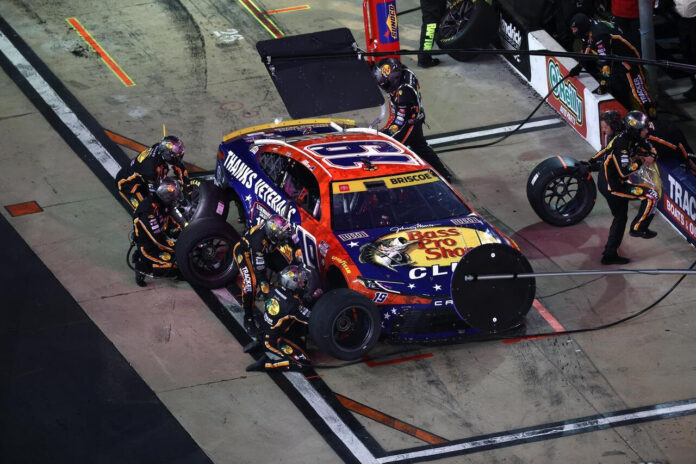
A late-race caution due to Cody Ware spinning in Turn 4 flew with two laps remaining, sending the event into overtime. It also generated an opportunity for Briscoe, crew chief James Small and his No. 19 Bass Pro Shops/Joe Gibbs Racing Toyota Camry XSE team. Despite exiting pit road in 11th place, Briscoe was the first to do so with four fresh tires while the top-10 competitors in front of him pitted for only two tires.

During the ensuing overtime shootout, Briscoe used the four fresh tires to bolt from 10th to fourth in a single lap. He then capitalized on teammate Denny Hamlin scrubbing the backstretch’s outside wall to overtake him for third place. Amid a final-lap charge through the final two turns, Briscoe crossed the finish line in third place. He finished 0.295 seconds behind race winner Tyler Reddick.

Chase Briscoe’s third-place result marked his third top-five finish of the 2026 NASCAR Cup Series season. It was his second consecutive top-five result in recent weeks, backing up his fifth-place result from last weekend at Bristol. He also recorded his third consecutive top-five result in a Cup event at Kansas.

The third-place effort for Briscoe left the Hoosier native with mixed emotions. He was disappointed to fall short of stealing a victory amid a two-lap shootout. But also relieved, as he achieved good fortunes following a difficult start to the 2026 campaign.

“I would have loved to have another corner, but honestly, just grateful for that last caution,” Briscoe said on FOX. “Our Bass Pro Shops/Tracker [Boats] Toyota was not good. We were going to run 12th or 13th, and [crew chief] James [Small] did a really good job there, being able to put me on offense and was able to make something out of it.”

With the result and the stage points he accumulated from the first stage period, Briscoe gained two spots in the 2026 driver’s standings from 17th to 15th. He went from being a single point outside of the top-16 mark to making the Chase. And, he is now above the cutline by 17 points. 

Briscoe’s methodical climb back into the top-16 mark marks a valiant effort for the No. 19 competitor that was strapped with two DNFs and mired outside the top-30 mark in the standings following the first four-scheduled events. Over the previous five events, including Sunday’s event at Kansas, Briscoe recorded an average-finishing result of 8.4 (compared to 28.0 from the first four events) and 167 points (120 more points than the first four events). 

“For as bad as the stuff has gone for us early in the season, this is a lucky break for us,” Briscoe said. “Just glad we were able to make the most out of it.”

With Kansas Speedway in the rearview mirror, the 2026 NASCAR Cup Series season continues next Sunday, April 26 in Talladega. It also marks the site of Briscoe’s latest Cup victory. The Indiana natives won at the track last October, which enabled him to compete for the 2025 championship. 

Will Chase Briscoe’s recent surge and rebound this season continue at the world’s fastest venue on the NASCAR schedule? 

The 2026 Jack Link’s 500 at Talladega Superspeedway will occur on April 26, at 3 p.m. ET on FOX, MRN, SiriusXM and HBO MAX.

RCR NCS Race Recap: Kansas Speedway

Austin Dillon pilots the No. 3 Marine Corps Reserve Toys for Tots Chevrolet to Top-20 Finish at Kansas Speedway

Finish: 16th
Start: 20th
Points: 25th

“Solid top-20 day for our Marine Corps Reserve Toys for Tots team. Our Chevrolet fired off a little tight, but fought a few different things once we got in clean air. We were too tight for the first half of the race, and then it flipped and we were too loose. It took 10 or 12 laps for our car to come in and then we were on pace with the field. By the end of a run, we were probably a little better than others. Richard Boswell and the No. 3 guys kept adjusting on the balance and made the right calls to not lose track position throughout the race. Proud of the effort from everyone today. We will keep battling.” -Austin Dillon

Kyle Busch and the No. 8 Nicokick x zone Cranberry Chevrolet Team Face Adversity on Frustrating Afternoon at Kansas Speedway

Finish: 35th
Start: 23rd
Points: 27th

“This afternoon was a fight from start to finish for the entire No. 8 Nicokick x zone Cranberry Chevrolet team. We fired off tight, lacked turn, and battled right side tire wear early on. While we ended up going a lap down as the race progressed, we were adjusting the car in the right direction and fighting for the Lucky Dog. As we neared the end of Stage 2, we were back in the pits for an unscheduled tire stop, and then lost more track position as we looked into a potential brake issue. All we can do now is make notes, refocus and look to next weekend in Talladega as we try to chase a better finish I know everyone is after.” -Kyle Busch

RFK Racing Kansas Executive Summary

RFK RACING
KANSAS SPEEDWAY – EXECUTIVE SUMMARY
Date: April 19, 2026
Series: NASCAR Cup Series
Location: Kansas Speedway (1.5-mile oval) – Kansas City, KS
Format: 400 miles, broken into three stages (completed at lap 80 / lap 165 / lap 267)

***Note: A caution on the final lap of regulation forced the race into overtime, finishing on lap 274 of the scheduled 267 lap distance.

RFK RACING RACE SUMMARY: RFK Racing delivered a complete team performance Sunday at Kansas Speedway, placing all three entries inside the top 11. The race was run nearly caution free, placing an emphasis on long green flag runs and tire management, before ultimately being decided in an overtime finish. Brad Keselowski led the charge with an aggressive charge from 21st to sixth. Chris Buescher remained a consistent presence near the front, managing tire wear and fighting dirty air to secure a solid 10th-place result. Ryan Preece capped the effort with an inspiring final stage, surging forward in the final laps as his car came to life, ultimately finishing 11th.

DRIVER HIGHLIGHTS

Brad Keselowski – No. 6 Trimble Ford Mustang Dark Horse

· Finish: 6th

· Start: 21st

· Laps Led: 0

· Stage Results: S1 – 13th, S2 – 7th

· Headline takeaway: It was another resilient performance from Brad Keselowski and the 6-team. Keselowski charged to the front, nearly scoring a top-5 finish, after starting 21st.

· Keselowski Quote: “We had a lot of really good long run speed and took advantage of that throughout the race. I would have liked to have been a little bit better on the short run, but long run speed I felt like we were one of the top cars. We got those long runs and took advantage of it and then just tried to survive that restart.”

Chris Buescher – No. 17 Dillon’s / Gold Peak Ford Mustang Dark Horse

· Finish: 10th

· Start: 7th

· Laps Led: 0

· Stage Results: S1 – 12th, S2 – 9th

· Headline takeaway: Chris Buescher backed up a strong qualifying effort to score a top-10 finish. Throughout the day he was the model of consistency, maintaining a steady presence among the lead pack, all while expertly managing tire wear an overcoming other cars on pit road that at times proved to be obstacles.

· Buescher Quote: “Our car balanced out pretty well a lot of times during the race and was pretty quick. We just had a rough go on pit road just from others around us having bad days and that ended up affecting us quite a bit. We struggled for track position on that front and we had a little bit of tire wear late on runs, but ultimately it felt like we were always trying to play catch-up and was abusing pretty hard today.”

Ryan Preece – No. 60 Kickstand Cocktails Ford Mustang Dark Horse

· Finish: 11th

· Start: 12th

· Laps Led: 0

· Stage Results: S1 – 19th, S2 – 19th

· Headline takeaway: Talk about peaking when it counted the most, Preece and the 60-team found the sweet spot combination of balance and speed during the race’s final segment. After finishing stage two 19th, Preece rallied to nearly score a top-10 finish.

· Preece Quote: “Just need to be a little bit faster. Started strong, that early adjustment really put me in a tough spot, felt like we were working backwards for a little bit. Derrick made some strong calls and put me right back up there. Great stops all day from the crew. Not the worst but not our best. Feeling strong about Talladega though and think our 3 RFK Ford Mustangs are working well together.”

Point Standings:

Keselowski: 9th

Buescher: 11th

Preece: 13th

Next Up:

The next event on the NASCAR Cup Series schedule is Sunday, April 26 at the Talladega Superspeedway (Talladega, AL). The race begins at 3 p.m. EDT with live coverage provided by FOX Sports and the Motor Racing Network.

Tyler Reddick wins Cup Series race over Kyle Larson in last lap pass at Kansas

Tyler Reddick wins NASCAR Cup Series race at Kansas Speedway by Ron Olds

Kansas City, KS – In an overtime restart, 23XI Racing driver Tyler Reddick made a last-lap pass in the middle of Turns 3 and 4 on Kyle Larson. He took the lead and the eventual race win, scoring his fifth win of the 2026 NASCAR Cup Series season.

Reddick described the final laps, saying, “It was really chaotic. We had a decent launch on the 11 (Denny Hamlin). The 5 (Kyle Larson) put him middle of the three, and then the 20 (Christopher Bell) got to my outside – yeah, we all ran out of real estate off of turn two.

“It’s a bummer I got Christopher there, and pretty much took his shot of winning the race, or running top-five like he did all day away, so that one in the moment stings. And, you just have to put it behind you really fast and go and win the race for Toyota. I was glad we were able to get back to the 5. I was really surprised we had that kind of grip on those right sides, but I took advantage of it and was able to make the move.”

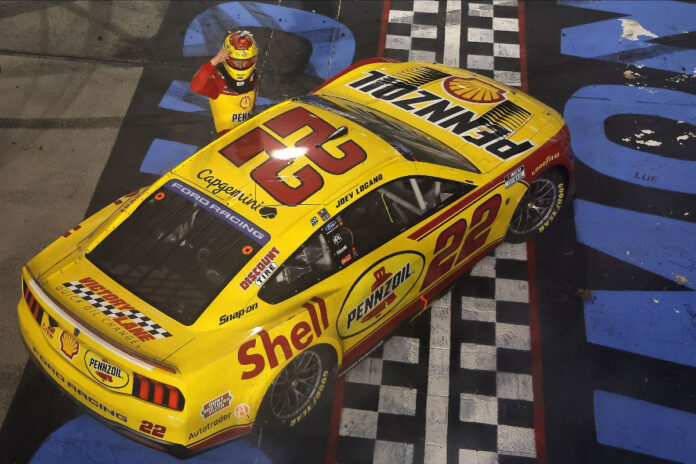
Kansas Speedway marked the ninth race of the 2026 season. Originally, stages 80-85-102 made up the 267-lap race before going seven laps into an overtime restart as the checkered flag fell at Lap 274. Just two cars went to the rear before the start of the race; Joey Logano for steering and Noah Gragson for adjustments.

During the first stage, Hamlin took the lead as early as Lap 4 and held the lead until the first round of green flag pit stops began around Lap 32. It wasn’t until Lap 38 that race leader Hamlin pitted from the lead, while Reddick pitted a lap earlier on Lap 37.

However, Hamlin cycled back to the lead following pit stops at Lap 41 and led all the way to the end of Stage 1. Hamlin, Kyle Larson, Reddick, Ty Gibbs, Christopher Bell, Chase Briscoe, Carson Hocevar, Bubba Wallace, and Corey Heim were the Top 10. No cautions were seen during the stage.

Stage 2 took place between Laps 88 and 165. One lap after the restart, Larson took the lead from Hamlin as Hamlin slipped to the fourth position. Larson led the majority of the second stage, as the only time he lost the lead was during green flag pit stops. The Hendrick Motorsports driver cycled out to the lead at Lap 130. From there, Larson led the way and took the Stage 2 win. Larson, Hamlin, Reddick, Elliott, Bell, Wallace, Keselowski, Gibbs, Buescher, and Hocevar rounded out the Top 10.

The final stage began with 94 laps to go, with Hamin, Bell, Larson, Reddick, and Wallace the top five. A lap later, Bell took the lead from Hamlin. He led most of the final stage for what was supposed to be the final round of pit stops that began with 49 laps to go. Hamlin was the first to pit with 49 laps to go, followed by Reddick two laps later. Eventually, Bell pitted from the race lead with 46 to go, giving the lead to Hamlin with 43 to go.

Following the stops, Hamlin nearly had a five-second lead over Reddick before Reddick began closing in on the race leader inside 40 to go, cutting the lead to 2.9 seconds. However, Hamlin was able to manage his gap over his team driver Reddick before there was 20 to go. At that point in time, Reddick began slowly erasing the gap, even getting it down to 1.1 seconds at 15 to go.

Eventually, Reddick was able to take the lead with nine laps to go over Hamlin after running him down using the high line. Though the fight was not over, as Hamlin did not give up and started to close back down inside five to go. With two laps remaining, Reddick briefly ran out of fuel, which allowed Hamlin to take the lead.

It looked as though the Joe Gibbs Racing driver would be on his way to an easy victory until a caution came out, as Hamlin was just exiting off of Turn 4 and getting ready to take the white flag.

Hamlin spoke about his frustration after leading 131 laps.

“I mean, obviously, it’s not winning. It’s Cody Ware, six laps down, wrecking. I don’t know. It just added up. I feel like it was the same move that the 5 (Kyle Larson) got me a couple years ago when I was on the inside. I got to learn from those mistakes that I make, not executing those last few laps.”Cody Ware and the No. 51 Rick Ware Racing team brought out the late race yellow (the only for incident throughout the entire race), as Ware spun off Turn 4.

The Top 10 pitted under yellow for two tires, while Briscoe was the first to take four tires and was going to restart in the 11th position. Hamlin, Reddick, Larson, Bell, and Wallace were the top five for the final restart.

Larson made a dive-bomb move going into Turn 1 and briefly took the race lead from Hamlin and Reddick. Bell was also on the top side, making a run off Turn 2. During the process, Reddick made slight contact with Bell, which then saw him make slight contact with the wall and end his shot at the win.

Then, Reddick had momentum in Turns 3 and 4, passing Hamlin for second. On the backstretch, both Larson and Reddick were side-by-side, battling for the race victory. Larson had contact with Reddick, which was enough for Reddick to pass him and drive away with the 13th victory of his career. The win at Kansas was his second at the 1.5-mile racetrack, his first since 2023 in the fall race.

There were three cautions for 20 laps and 17 lead changes among seven different leaders. Reddick led three times for 10 laps en route to victory.

After Kansas, Tyler Reddick leads the series standings by 105 points over Denny Hamlin, 120 over Ryan Blaney, 138 over Ty Gibbs, and 143 over Kyle Larson.

Official Race Results Following The Advent Health 400 at Kansas Speedway

  1. Tyler Reddick, led 10 laps
  2. Kyle Larson, led 78 laps and won Stage 2
  3. Chase Briscoe
  4. Denny Hamlin, led 131 laps and won Stage 1
  5. Bubba Wallace
  6. Brad Keselowski
  7. William Byron
  8. Chase Elliott
  9. Ty Gibbs
  10. Chris Buescher led one lap
  11. Ryan Preece
  12. Austin Cindric
  13. Carson Hocevar led six laps
  14. Riley Herbst
  15. Corey Heim
  16. Austin Dillon
  17. Todd Gilliland
  18. Alex Bowman
  19. Daniel Suarez led one lap
  20. Christopher Bell led 47 laps, 1 lap down
  21. Ricky Stenhouse Jr, 1 lap down
  22. John Hunter Nemechek, 1 lap down
  23. Erik Jones, 1 lap down
  24. Ryan Blaney, 1 lap down
  25. Cole Custer, 1 lap down
  26. Ross Chastain, 2 laps down
  27. Josh Berry, 2 laps down
  28. Noah Gragson, 2 laps down
  29. Connor Zilisch, 2 laps down
  30. Joey Logano, 2 laps down
  31. A.J. Allmendinger, 3 laps down
  32. Zane Smith 3 laps down
  33. Ty Dillon, 3 laps down
  34. Michael McDowell, 3 laps down
  35. Kyle Busch, 4 laps down
  36. Shane Van Gisbergen, 4 laps down
  37. Cody Ware, 6 laps down