Home Blog Page 74

NEW NUMBERS TO CHEER FOR AS NASCAR’S CHASE HEADS TO BRISTOL MOTOR SPEEDWAY

Chase Briscoe drives the 19, which has a long history but at the same time is relatively new to fans on the Cup Series stage. Martin Truex had some success in the 19 during his Cup career, but his 15 wins gives the 19 only 27 career victories out of its 1,740 starts among 91 drivers. Briscoe wants to make sure the 19 has more winning to do in the future.

BRISTOL, Tenn. (Aug. 17, 2026) – Earlier this year all the kids were doing it. Was it 6-7 or 7-6 or 6-7?

Despite the best common sense or strategic thinking, there was never a clear answer to that question.

NASCAR, however, is a world that revolves around numbers and there’s always a clear answer.

Every driver has a number. The drivers with numbers, also have stats, which bring into play even more numbers. Those that can earn victories calculate numbers on top of numbers. National record performances mean big numbers. It’s a sport where the numbers never stop.

Older generation fans got way too comfortable with their favorite driver numbers over the years. It seems like in the Cup Series specifically, there are a set of numbers that just continue on to be utilized by the best drivers.

For instance, the 11 has the most victories in the Cup Series. Four-time Bristol winner Denny Hamlin currently has the majority of the 244 victories owned by the 11, but several other top drivers have also piloted the No. 11 and led to its overall success, including Cale Yarborough, Darrell Waltrip, Junior Johnson and Ned Jarrett just to name a few.

For years the popular numbers along with the 11 have included the 3, the 2, the 24, the 21, the 22, the 48, the 5 and the 18. You can spot those numbers on t-shirts all over the Fan Zone during a race week with fans showing allegiances to specific drivers. Their favorite drivers, of course.

However, there has been a shift in the number dynamic this year. Some unfamiliar numbers are now becoming favorites. Fans should keep their eyes open for some of those numbers as they battle in post-season competition during The NASCAR Chase in the Bass Pro Shops Night Race weekend, Sept. 17-19 at iconic Bristol Motor Speedway.

To help fans keep track of their favorite drivers in these unfamiliar NASCAR numbers, the information below should prove to be helpful.

97 – Shane Van Gisbergen isn’t the winningest driver to ever pilot the No. 97 and with 22 starts he ranks only fifth for most races with the 97. Van Gisbergen is definitely the only Kiwi to drive the 97 and probably has the most road course wins in the 97. The 97 hasn’t been cheered too much for many years, ever since NASCAR Hall of Fame member Kurt Busch had success with the number on his cars at RFK Racing in the early 2000s. For the record, Busch won 14 races in the 97 and led over 50,000 laps in it. As Van Gisbergen works on his short track and superspeedway race craft to compliment his dominating road course abilites, look for his number of victories to soar in the 97 in seasons to come.

77 – Carson Hocevar, or as fans call him ‘Hurricane Hocevar,’ is responsible for one of the three career victories in the No. 77 in his 94 career starts with that number. The driver with the most starts in the 77 is Robert Pressley, who took 133 green flags with the number but never a checkered flag. Justin Haley also has a Cup victory in the 77, when he was declared the winner during a weather delay at Daytona’s summer race in 2019. There have been 116 different drivers to pilot the 77 over the years but certainly the tall and lanky Michigan native Hocevar, who drives for Spire Motorsports and has been compared to Dale Earnhardt Sr. for his ‘assertive racing style’, has managed to put that number in its biggest spotlight. As Hocevar’s confidence and his fan base grows, look for him to be racing out front more often than not.

60 – Ryan Preece, has started 58 races at the controls of the No. 60 and he is one of 69 different drivers who have piloted the number in NASCAR Cup competition over a span of 413 races. Preece, a former modified standout from the Northeast, grabbed headlines after winning the NASCAR Clash at Bowman Gray Stadium to kick off the 2026 season. He is expected to race unchartered for RFK Racing starting in 2027. Preece has the personality and wit to acquire more fans and he is already seeing tremendous support for those fans who already cheer on his teammates Brad Keselowski and Chris Buescher. With Preece in the cockpit, expect more big things out of the 60 car in the future.

54 – Ty Gibbs, finally broke through for his maiden victory earlier this season by winning the Food City 500 on Bristol’s high banks and then showed everyone he is the real deal by winning at Iowa in early August. Many felt like Gibbs would’ve had many wins by this point in his career, but the grandson of team owner Joe Gibbs, may just be hitting his stride. Only 40 drivers have piloted the No. 54 and Jimmy Pardue and Lennie Pond have the most starts and each has a win or two with the number. Since the two victories, the young Gibbs has moved to second overall in the NASCAR Chase standings with 10 top fives and 15 top 10s after spending much of the season around fourth place. There is no doubt that Gibbs has his eyes focused on the season championship. It was announced recently that Gibbs’ No. 54 at Bristol will feature a very special paint design with the yellow M&M’s scheme to honor the late Kyle Busch. Gibbs has quickly become a car that Cup drivers do not want to see in their rear mirrors, leaving most of them worrying throughout each race, “Car 54, where are you?”

45 – Tyler Reddick jumped out to a start like hasn’t been seen in many NASCAR Cup Series seasons in 2026, officially stating that the No. 45 is here to win races and contend for championships. The 45 is of course connected to Michael Jordan, team owner of 23XI Racing. It was Jordan’s baseball number while moonlighting with the Birmingham Barons in the minor leagues between NBA championship runs with the Chicago Bulls. Reddick has scored 10 victories in the 45 in his career, including the five so far this year. But the season is far from over. If Reddick, who is currently fourth in the Chase standings after Iowa, catches fire in the Chase like he did at the beginning of the year he could go on another run that will continue to elevate the No. 45 in the eyes of NASCAR fans. For the record, Kyle Petty had 245 starts in the 45 during his career and 87 different drivers competed in the 45 in the Cup Series.

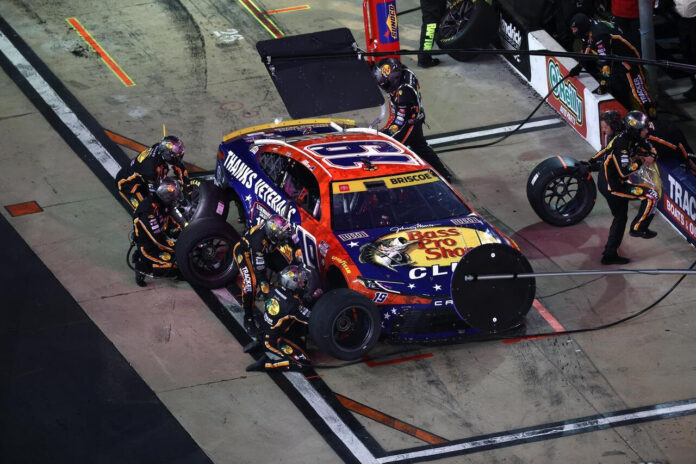
19 – Chase Briscoe pilots a car number that has 1,740 starts among 91 drivers and Henley Gray and Martin Truex Jr. are two of the drivers at the top of the list of those who have competed in the 19. Briscoe won a race this year in the No. 19 and will be one of the favorites to win the Bass Pro Shops Night Race with the title sponsor splashed all over his car. At fifth in points post Iowa, Briscoe is also a Chase contender. The 19 has 27 Cup victories to its credit and Truex has earned 15 of those. Some interesting names who have driven the 19 over the years include NASCAR Hall of Fame member Carl Edwards with 72 starts, Cale Yarborough, Dick Trickle, Mike Skinner, Ned Jarrett, Tiny Lund, Wendell Scott, Benny Parsons, Dale Earnhardt, and Bill Elliott.

7 – Daniel Suarez ranks 18th on the list of 117 drivers who have piloted the No. 7 in Cup Series competition. Robby Gordon drove the 7 in 226 Cup races and the late Alan Kulwicki won five times in it and earned a Championship in it in 1992. Suarez’ victory this season has positioned the Mexican driver as one to reckon with in The Chase, especially given he won the crown jewel Coca-Cola 600 at Charlotte Motor Speedway. He has been a bright spot for Spire this season, steadily producing two top-fives and 6 top 10s to hold down his 12th position in the points order as a Chase hopeful. Looking at his Bristol Motor Speedway finish history, he could have fans cheering the No. 7 on in Bristol’s rooftop Victory Lane following another of NASCAR’s crown jewels — America’s Night Race.

The race weekend features the crown jewel Bass Pro Shops Night Race on Saturday night, Sept. 19, a 500-lap post-season race in the NASCAR Cup Series and also the Food City 300 on Friday night, Sept. 18, a Chase race in the NASCAR O’Reilly Auto Parts Series. The NASCAR CRAFTSMAN Truck Series opens its Chase at Bristol with the UNOH 250 presented by Ohio Logistics in what promises to be a thrilling Thursday night double-header with the ARCA Menards Series, which will open the racing that afternoon with the Bush’s Beans 200 as the future stars of the sport take to the track. For more information or to purchase tickets, please visit the Bristol Motor Speedway website or call the BMS Tickets Sales Center at (866) 415-4158.

About Bristol Motor Speedway

Bristol Motor Speedway, known as The Last Great Colosseum, sits in the mountains of Northeast Tennessee near the Virginia state line. The 0.533-mile concrete oval, with 28-degree banking, hosts two major NASCAR Cup Series weekends each year, the tradition-rich Food City 500 and the crown jewel Bass Pro Shops Night Race. The venue has staged iconic moments such as the 2016 Pilot Flying J Battle at Bristol football game between the University of Tennessee and Virginia Tech (NCAA-record 156,990 fans), the 2025 MLB Speedway Classic between the Atlanta Braves and Cincinnati Reds (MLB regular-season record crowd of 91,032), the 2020 NASCAR All-Star Race, the rebirth of NASCAR Cup Series racing on dirt from 2021–2023 and sold-out concerts for Morgan Wallen and Kenny Chesney. Fans enjoy Colossus TV, the world’s largest outdoor center-hung four-sided screen video board. The adjacent Bristol Dragway is the home to the NHRA Super Grip Thunder Valley Nationals, and the dragway can transform into the Thunder Valley Amphitheatre for music concerts. Opened in 1961 and acquired by Speedway Motorsports in 1996, Bristol remains one of America’s most unique and versatile sports and entertainment destinations. For more information, please visit www.bristolmotorspeedway.com.        

Revolutionizing The Virtual Shopping Experience Through Smart E-commerce Merchandising Approaches

Photo by depositphotos at https://depositphotos.com/

In an era where digital interactions are the norm, the shopping experience has transformed remarkably. Gone are the days when shopping meant dragging ourselves to physical stores, navigating aisles, and enduring long queues at the checkout. Now, millions of consumers are embracing the convenience of e-commerce, a realm where smart merchandising approaches are redefining how we shop online. As we delve into this digital revolution, it’s crucial to explore how these strategies are enhancing the virtual shopping experience and what they mean for both consumers and retailers.

The Evolution of E-commerce Merchandising

E-commerce merchandising has come a long way since its inception. With the rapid advancement of technology, online retailers are now equipped with sophisticated tools to understand consumer behavior and preferences like never before. Imagine walking into a store where every item on display feels like it was curated just for you. This is the promise of modern merchandising in ecommerce.

Anecdotally, consider the term “buffer.” In the early days of online shopping, a “buffer” could mean the frustrating wait for pages to load. Today, however, it represents how retailers ensure seamless, uninterrupted shopping experiences. By optimizing their platforms and utilizing data-driven insights, they create a buffer-free environment where you can shop effortlessly.

Personalization: The Heart of Modern Merchandising

At the core of smart e-commerce merchandising lies personalization. Retailers are leveraging data analytics to tailor shopping experiences to individual preferences, offering product recommendations, special discounts, and even personalized homepages. This level of personalization not only enhances customer satisfaction but also builds brand loyalty.

Imagine logging in to your favorite online store and being greeted by a selection of items you didn’t even realize you needed but now can’t live without. This outgoing approach to merchandising in ecommerce creates a sense of connection and understanding between the brand and the consumer, fostering a relationship that extends beyond mere transactions.

The Power of Visual Merchandising

Visual merchandising in the digital space plays a pivotal role in capturing the attention and interest of consumers. High-quality images, 360-degree views, and interactive product displays bring a tangible feel to the virtual world. It’s akin to the experience of window shopping on a bustling street, but with a click of a button, you’re transported into the world of your chosen product.

The use of augmented reality (AR) and virtual reality (VR) is further revolutionizing merchandising ecommerce. These technologies allow you to visualize how a piece of furniture might look in your living room or how a dress could fit, all from the comfort of your home. This immersive experience not only aids decision-making but also reduces return rates, benefiting both consumers and retailers.

Seamless Integration Across Platforms

In today’s digital age, consumers expect a seamless shopping experience across devices and platforms. Whether you’re browsing on a desktop, shopping through a mobile app, or discovering products via social media, the transition should be smooth and intuitive. This is where smart e-commerce merchandising strategies come into play.

Retailers are now focusing on creating a cohesive brand experience, ensuring that whether you start your shopping journey on Instagram or their website, the quality and consistency remain unchanged. It’s like having an outgoing conversation with a friend; the dialogue flows naturally regardless of the medium.

The Role of Artificial Intelligence

Artificial intelligence (AI) is a game-changer in the realm of e-commerce merchandising. It enables retailers to analyze vast amounts of data, predict trends, and optimize inventory management. AI-driven chatbots provide instant customer support, answering queries and guiding you through the shopping process.

Consider AI as the diligent store assistant who knows your needs even before you do. This intuitive interaction not only enhances the shopping experience but also ensures that you find exactly what you’re looking for without the hassle of dragging through endless product lists.

Building Trust Through Transparency

In the digital landscape, building trust is paramount. Consumers want to know that their data is secure and that their purchases are protected. Retailers are responding by implementing transparent return policies, secure payment gateways, and clear communication about shipping and delivery times.

Furthermore, providing detailed product information, customer reviews, and ratings boosts confidence in online purchases. This transparency mirrors the experience of speaking to a knowledgeable salesperson in a brick-and-mortar store, where you feel assured of the quality and value of your purchase.

The Future of E-commerce Merchandising

As technology continues to evolve, so will the strategies employed in e-commerce merchandising. The future promises even more personalized, engaging, and efficient shopping experiences. Retailers will likely adopt advanced AI algorithms, enhance their use of AR and VR, and explore new ways to integrate social commerce.

As consumers, we can look forward to an era where the virtual shopping experience is not just a substitute for in-store visits but a preferred choice that offers convenience, personalization, and excitement.

In closing, the transformation of e-commerce merchandising is a testament to the power of innovation and technology. It’s a journey that has taken us from the early days of buffering frustrations to a seamless, outgoing digital retail world. As we embrace these changes, the future of online shopping looks bright and promising, offering endless possibilities for both consumers and retailers. So, the next time you embark on an online shopping adventure, know that you are part of this ongoing revolution, one that continues to shape the way we shop and connect in the digital age.

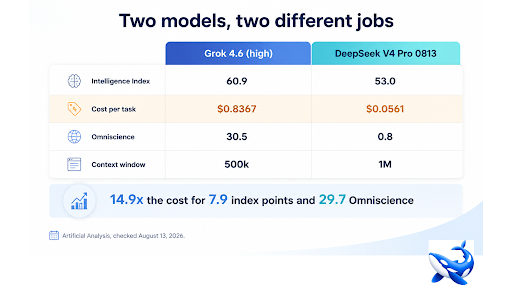
Grok 4.6 vs DeepSeek V4 Pro: 14.9× the Cost, 7.9 More Index Points

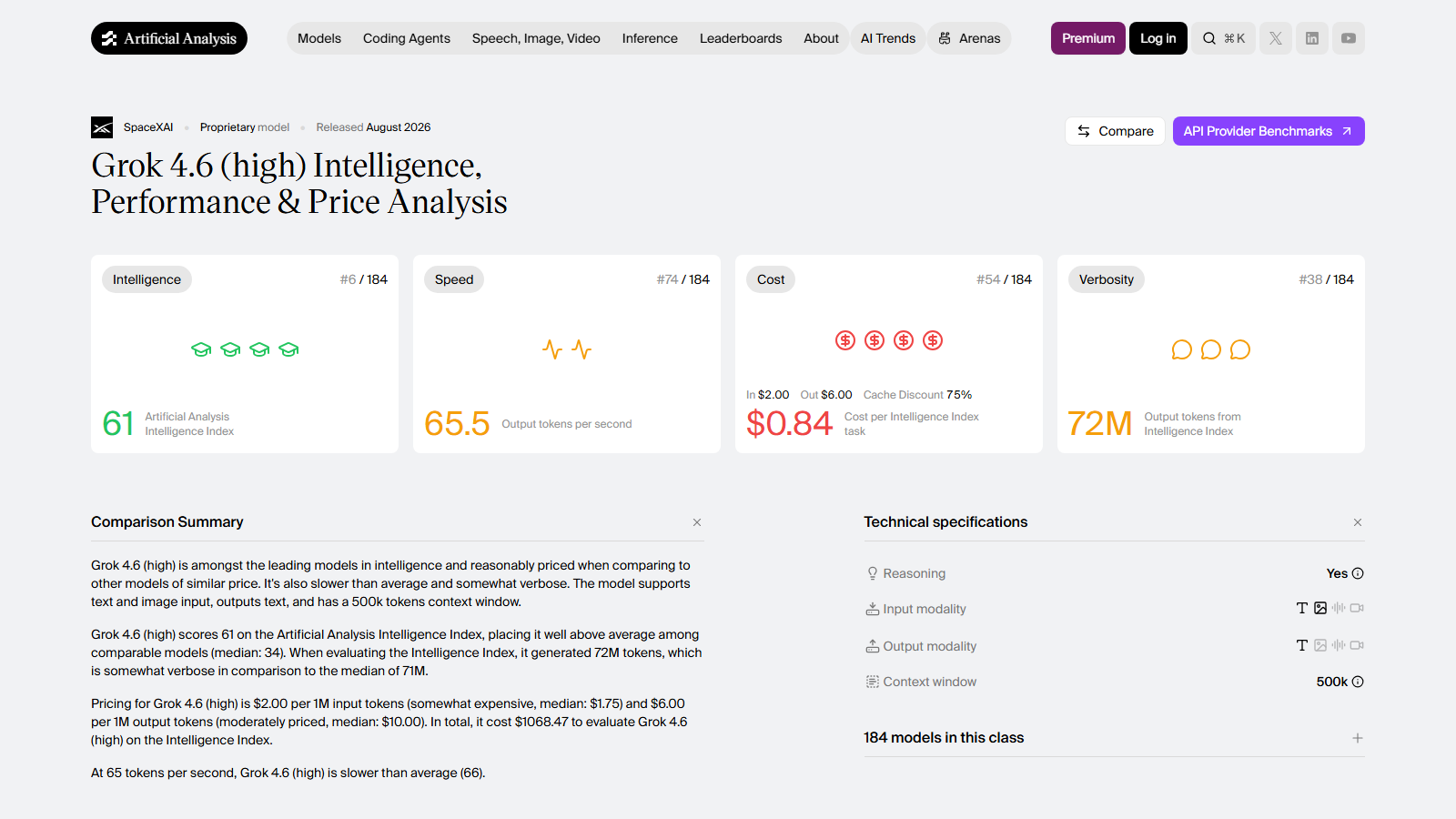
Both of these shipped in the same week of August 2026 and they are not competing for the same job. Grok 4.6 measures 60.9 on the Artificial Analysis Intelligence Index at $0.8367 per completed task; DeepSeek V4 Pro’s GA build measures 53.0 at $0.0561 — 14.9× cheaper. Grok 4.6 is the successor to Grok 4.5 at an unchanged price; V4 Pro left preview at unchanged prices too, gaining 7.7 index points on the way. Our Grok 4.6 release notes track what shipped, when, and what it replaced.

Put them side by side and the shape of the decision is unusually clear.

The measurements

Artificial Analysis, checked August 13, 2026:

Grok 4.6 (high)DeepSeek V4 Pro 0813 (max)
Intelligence Index60.953.0
Cost per index task$0.8367$0.0561
AA-Omniscience30.50.8
Median output speed67.6 tok/snot published
Context window500k1M

Grok 4.6 leads on capability, calibration and measured speed. V4 Pro leads on price by 14.9× and on context window by 2×.

The Omniscience gap is 29.7 points and it is the largest difference in the table. V4 Pro’s 0.8 is the lowest figure on that board; Grok 4.6’s 30.5 sits in the upper middle, behind Claude Opus 5 (37.1) and Claude Fable 5 (43.3). That index measures knowledge plus willingness to admit its absence, so a 0.8 means the model answers confidently rather than declining when it doesn’t know.

What each one is actually for

Grok 4.6 is for hard work in a chain. Frontier-band reasoning at 67.6 tokens per second — the fastest of any model scoring 59 or above — makes it the natural choice for agent loops whose individual steps are genuinely difficult. It also has the better calibration of the two by a wide margin, which matters more in a chain than anywhere else, since one invented intermediate result contaminates everything downstream.

V4 Pro is for volume where you supply the facts. At six cents a task with a 1M window and a cache-hit rate 120× below its miss rate, it makes patterns affordable that a frontier model forecloses: verifying every record instead of sampling, running three passes and comparing, reprocessing an archive after a prompt change. Its low Omniscience matters much less when the answer is in the prompt rather than in the weights — which is the architecture that pricing pushes you toward anyway.

Neither displaces the other. A system that uses one for the volume and the other for the hard tail is cheaper and better than a system that picks one, and the split is measurable rather than a matter of taste.

The two rate cards behave differently

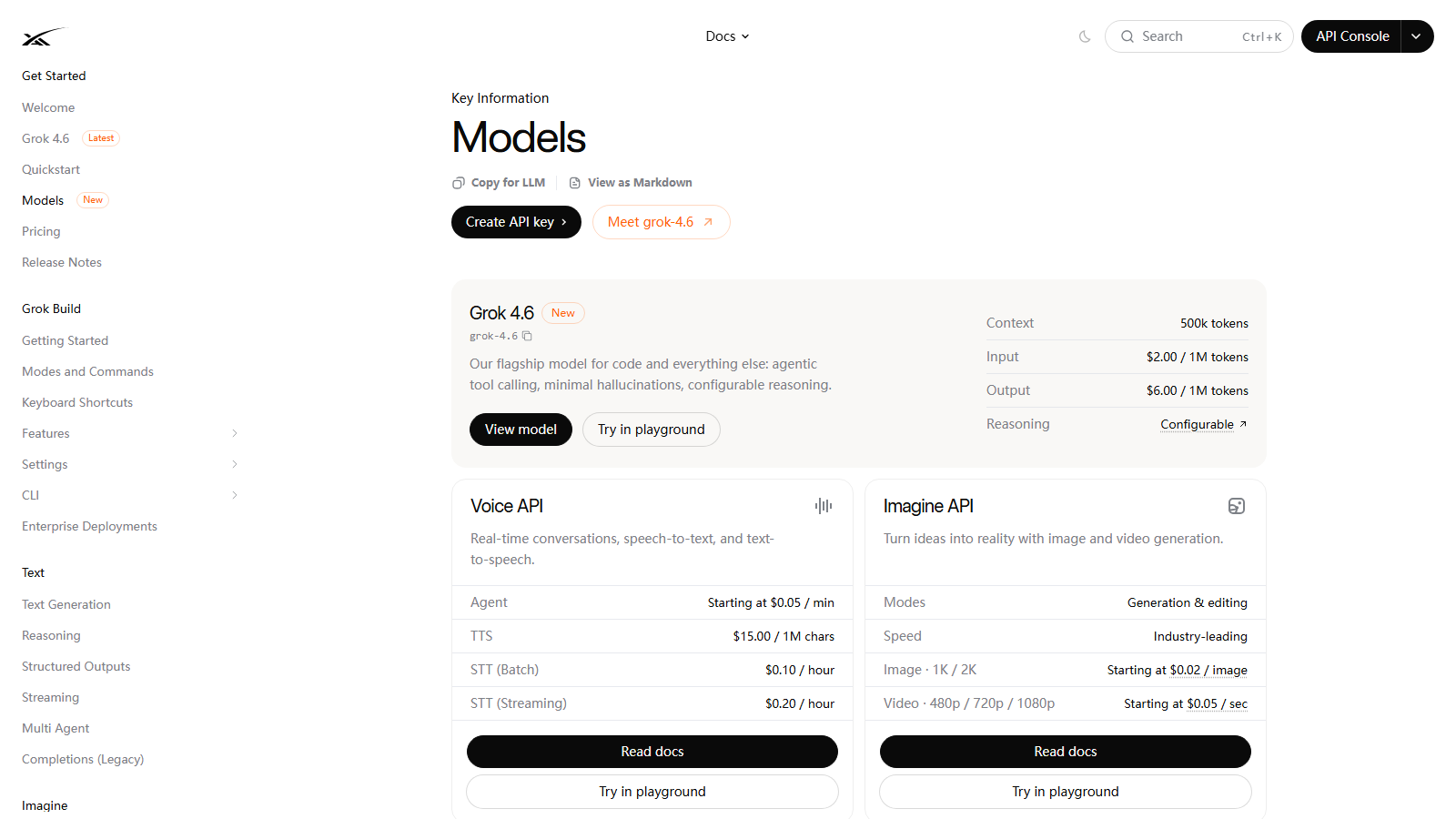
Grok 4.6, from xAI’s model documentation, checked August 13, 2026:

• $2.00 / $6.00 per million tokens under 200,000

$4.00 / $12.00 at or above 200,000 — applied to the whole request

• Cached input $0.50 / $1.00, up 67% from Grok 4.5’s $0.30 / $0.60

• 500k context, knowledge cutoff February 1, 2026

DeepSeek V4 Pro, from DeepSeek’s own API documentation, same day:

• $0.435 per million input on a cache miss, $0.003625 on a hit

• $0.87 per million output

• 1M context, 384K maximum output

No tier threshold — one rate across the whole window

• A notice that pricing will rise significantly, with no date and no replacement rates published

That structural difference matters for long-context work in a way the headline numbers don’t show. Grok 4.6’s advertised 500k window has 60% of its range above the doubling point, so a long request bills at $4.00 / $12.00. V4 Pro’s 1M window bills linearly throughout. For document-heavy pipelines the effective gap is wider than 14.9×, and it widens further if your prompts have a stable prefix that hits cache.

A concrete routing split

Send to V4 Pro: classification, extraction into a schema, summarising supplied text, first-pass filtering, bulk document interrogation, anything with a mechanical check downstream. This is where 14.9× multiplies and where 0.8 Omniscience has the least to act on.

Send to Grok 4.6: the hard tail — multi-step reasoning where a 53-point model fails and a 61-point one succeeds, agent chains without verification steps, work where throughput compounds across hundreds of sequential calls.

Measure the boundary rather than guessing it. Take fifty tasks from the difficult end of your distribution and run both. Score cost per completed job, quality on your own criteria, and — most importantly — how each fails. If V4 Pro clears your hard tail, the rest of your traffic was never the problem. If it doesn’t, you have found exactly where the 14.9× is worth paying and can route accordingly.

That test is cheap in a way it wouldn’t have been a year ago: fifty tasks on V4 Pro costs under three dollars on these figures.

The takeaway

Grok 4.6 costs 14.9× more per completed task than DeepSeek V4 Pro and delivers 7.9 more index points, 29.7 more points of factual calibration, and a published output speed of 67.6 tokens per second where V4 Pro has none. V4 Pro answers with twice the context window, no pricing tier to cross, and a cache-hit rate 120× below its miss rate. They are complementary rather than competing: route grounded, verifiable volume to the cheap model and the hard, unverified tail to the expensive one, and measure the boundary on fifty real tasks rather than choosing one for everything.

Sourcing note: Intelligence Index, cost per index task, AA-Omniscience, median output speed and context windows are from Artificial Analysis, checked August 13, 2026, at the configurations labelled; that evaluator publishes no output-speed figure for the DeepSeek V4 Pro 0813 build. Grok per-token prices, tier thresholds, cached-input rates and the knowledge cutoff are from xAI’s own model documentation, checked the same day. DeepSeek’s context length, maximum output, per-token rates and price-increase notice are from DeepSeek’s own API documentation, checked the same day; that notice carries no date and no replacement rates.

Tips to Avoid Early Tire Wear and Tear

Photo by depositphotos at https://depositphotos.com/

The right shape, size, and alignment of car tires are crucial for smooth, fast operation. Without proper care, maintenance, and timely replacement before they reach the end of their life, this isn’t possible. Therefore, buying branded wheels from reliable platforms is a popular way to enjoy smooth, comfortable rides. However, early tire tearing can cause additional stress, time, and money loss. 

Tires carry your car’s weight and provide traction on the road. This helps them run fast and smoothly. Damage to the tread or sidewalls can lead to complete failure if left untreated. Regularly checking tire pressure, tread, and alignment is essential to avoid unnecessary drama on the road. 

Tips To Avoid Early Tearing 

All Dubai tyres have a specific lifespan after which they require replacement to ensure a smooth and comfortable ride. However, improper care and neglecting the basic needs of tires can damage the tread or cause early wear-out. This is also known as premature tire tearing, which can cause major financial damage and life-threatening accidents. 

To reduce the risk of early wear-out, follow these tips to improve the performance and lifespan of your car tires. 

Regular Pressure Check 

Adequate tire pressure is crucial for better traction and smooth vehicle operation. Overinflating or underinflating tires can cause them to explode or run slowly, which can lead to serious problems.  Therefore, regular pressure checks and keeping them at the optimum level are essential to avoid stress while driving. 

Weekly or Monthly Inspection and Repair 

Neglecting signs of damage or leaving small issues untreated can cause poor performance, early tire wear, and problems with other crucial parts like the braking system and engine. Therefore, inspect the vehicle monthly and repair any damage before it causes trouble. 

Avoid Overloading Your Vehicle 

Tires carry the vehicle’s weight. Pulling heavy loads requires more force, which wears down the tire tread faster. Moreover, it also increases fuel consumption. Therefore, avoid overloading and regularly clean or declutter your vehicle to keep it lighter. 

Buy Branded Tires  

One of the most important tips to reduce the risk of premature tire tearing is to choose good-quality brands, including Yokohama, Pirelli, and eTires, over cheap, poor-quality tires. Though it’s an expensive investment, pairing premium tires with a professional rims repair service in Dubai for your wheels will provide you with excellent performance and other long-lasting benefits. 

Bottom Line 

Replacing tires after 5 or 10 years, depending on their lifespan, is essential to avoid unwanted incidents or trouble. However, improper care and leaving minor issues or damage untreated can cause premature tire tearing, which is a major financial loss. Moreover, it can also affect the car’s performance. Don’t worry; you can avoid this risk by following the tips above and making your tires last longer than expected.

Common Mini Cooper Problems and How to Spot Them

Mini Coopers are known for their distinctive styling, compact size, responsive handling, and fun driving experience. However, like any vehicle, they can develop mechanical or electrical problems as they age and accumulate miles. Knowing the warning signs can help owners address problems early and avoid turning a relatively small repair into a more expensive one.

Alpharetta, Georgia, is a growing community in the northern Atlanta metropolitan area, with busy roads connecting residential neighborhoods, workplaces, shopping areas, and nearby cities.

Mini Cooper owners in the area often depend on their vehicles for daily commuting and local travel. If your vehicle starts showing unusual symptoms, finding reliable Mini Cooper repair in Alpharetta can help you identify the cause before the problem becomes more serious.

1. Oil Leaks

Oil leaks are a problem Mini owners should not ignore. Depending on the model and engine, leaks can develop around gaskets, seals, or other components.

You may notice dark spots underneath the vehicle, a burning-oil smell, or a low oil level between services.

A small leak may seem harmless, but allowing it to continue can lead to low oil levels and potentially serious engine damage.

2. Engine Warning Lights

A check-engine light can appear for many reasons, ranging from a relatively minor sensor issue to a more significant engine or emissions problem.

The important thing is not to ignore it.

If the light remains illuminated, have the vehicle properly diagnosed. If it flashes, the vehicle may have a more serious problem that requires immediate attention.

A professional diagnostic scan can help determine what is causing the warning rather than relying on guesswork.

3. Cooling System Problems

Cooling system issues can cause serious engine damage if they are not addressed.

Warning signs can include:

  • Rising engine temperature
  • Coolant leaks
  • Low coolant levels
  • A sweet smell around the vehicle
  • Steam from the engine compartment
  • Temperature warning lights

If your Mini begins overheating, continuing to drive it can make the problem significantly worse. Stop safely and have the cooling system inspected.

4. Transmission Problems

Some Mini Cooper models may develop transmission-related issues over time.

Drivers may notice delayed shifting, hesitation, unusual noises, slipping, or difficulty selecting gears.

Even if the vehicle still drives, changes in shifting behavior should not be ignored. Early diagnosis can help determine whether the issue involves fluid, sensors, software, or an internal transmission component.

5. Suspension and Steering Issues

Mini Coopers are designed to provide responsive handling, but suspension components experience constant stress from everyday driving.

Worn components can cause:

  • Excessive bouncing
  • Uneven tire wear
  • Clunking noises
  • Pulling to one side
  • Increased vibration
  • Changes in steering feel

If the vehicle no longer feels stable or predictable, a technician should inspect the suspension and steering systems.

6. Brake Wear

Brake components naturally wear down, but unusual symptoms should be checked promptly.

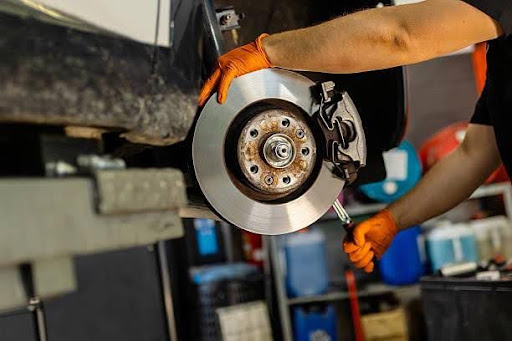
Squealing, grinding, vibration during braking, a soft pedal, or increased stopping distance can indicate a problem.

Regular brake inspections can identify worn pads, damaged rotors, or other issues before they affect braking performance.

7. Battery and Electrical Problems

Modern Mini Coopers depend on numerous electronic systems, which means electrical problems can affect several functions at once.

A weak battery may cause difficulty starting, warning lights, unusual electrical behavior, or problems with electronic features.

If multiple warning messages appear at the same time, the issue may not be with every individual system. A technician should test the battery, charging system, and relevant electrical components.

8. Strange Noises

Unusual sounds are often early warnings that something needs attention.

Pay attention to new clicking, rattling, grinding, whining, or knocking sounds. Try to notice when the noise occurs, such as during acceleration, braking, turning, or starting the engine.

Providing these details to a technician can make diagnosis easier.

9. Reduced Engine Performance

If your Mini suddenly feels slower, struggles to accelerate, hesitates, or operates roughly, there may be an issue affecting the engine or fuel and air systems.

Poor acceleration can have many possible causes, so replacing parts without proper diagnosis may waste money.

A professional inspection can determine whether the issue involves ignition, fuel delivery, air intake, sensors, or another system.

Key Takeaways

  • Oil leaks should be inspected before they lead to low oil levels or engine damage.
  • Persistent warning lights require proper diagnostic testing.
  • Cooling system problems can cause serious engine damage if ignored.
  • Transmission, suspension, and steering changes should be checked promptly.
  • Brake noises or changes in braking performance should never be overlooked.
  • Battery and electrical problems can produce multiple warning messages.
  • New or unusual noises may provide an early warning of mechanical problems.
  • Regular maintenance and early inspections can help prevent expensive repairs.

Driving Habits That May Affect Your BMW’s Braking System

Your driving habits can directly affect how quickly your BMW’s brake pads, rotors, tires, and related components wear. Aggressive braking, excessive speed, tailgating, heavy loads, and ignoring warning signs can increase heat and wear, reducing braking performance over time.

Dallas, Texas, deals with a mix of major highways, busy arterial roads, neighborhood streets, and frequent construction or lane changes. The city has ongoing transportation projects affecting corridors such as I-30 and I-635. Local streets can also involve congestion, intersections, and changing traffic patterns. 

For drivers considering getting a BMW brake repair in Dallas, understanding how everyday habits affect brake wear can help prevent avoidable problems.

Riding the Brakes

Resting your foot on the brake pedal, even lightly, can keep the pads against the rotors. This creates friction and heat and may lead to faster pad wear, glazed components, and premature repairs.

Keep your foot completely off the pedal when you are not actively slowing down. Maintaining a reasonable following distance also reduces unnecessary braking.

Hard and Sudden Braking

Frequent hard stops place substantial stress on brake pads, rotors, tires, and suspension components. Emergency braking is sometimes unavoidable, but making it a regular habit can accelerate wear.

Look farther ahead and anticipate traffic lights, merging vehicles, and slowing traffic. Gradual braking is easier on the vehicle and gives drivers behind you more time to react.

Following Too Closely

Tailgating leaves little room to respond when traffic slows. This often results in repeated, sudden braking.

Leave enough space to reduce speed gradually. Greater following distance also improves reaction time, particularly during heavy traffic or on wet roads.

Excessive Speed

Higher speeds require the brakes to dissipate more energy during a stop, creating additional heat and stress. Controlled speeds provide more time to recognize hazards and brake smoothly.

Take extra care on highways, downhill roads, and unfamiliar routes. 

Stop-and-Go Traffic

Congested streets, school zones, and commuter routes can require constant acceleration and braking. When traffic permits, maintain a steady speed, lift off the accelerator early, and avoid accelerating toward vehicles that are already slowing.

Heavy Loads and Downhill Driving

Excessive cargo increases the energy required to stop. Never exceed your BMW’s specified payload or towing limits.

On steep descents, reduce speed beforehand and use an appropriate lower gear when suitable. Avoid continuously dragging the brake pedal because excessive heat can cause brake fade.

Watch for Warning Signs

Have your BMW inspected if you notice:

  • Grinding or persistent squealing.
  • A soft or spongy pedal.
  • Steering-wheel vibration.
  • Pulling while braking.
  • Longer stopping distances.
  • Brake or ABS warning lights.
  • Burning smells near the wheels.

Grinding can indicate severely worn pads and may damage the rotors if ignored. If you are looking for a BMW brake repair in Dallas, early inspection is especially important if you notice any of these warning signs.

Final Takeaways

  • Avoid riding the brake pedal.
  • Brake smoothly and anticipate traffic.
  • Maintain a safe following distance.
  • Control speed before downhill sections.
  • Stay within vehicle load limits.
  • Keep tires properly maintained.
  • Address brake symptoms early on.

Your Suit Wardrobe Needs to Shift With the Seasons More Than You Realize

Most men treat their suit wardrobe as a fixed set of options, worn interchangeably regardless of the season. In reality, the seasons place real demands on fabric, colour and structure, and a wardrobe that shifts with them tends to perform noticeably better than one that stays static all year round.

Why One Suit Cannot Do Everything

A heavier winter-weight suit that feels comfortable in cooler months can become genuinely uncomfortable once temperatures rise, trapping heat and causing visible creasing far faster than lighter alternatives. The reverse is also true, with lighter summer fabrics sometimes looking and feeling thin during colder, more formal winter occasions. Treating a suit wardrobe as one-size-fits-all for the season ignores how fabric behaviour actually changes.

Fabric Choices Worth Rotating

Wool blends with a slightly heavier weight tend to suit cooler months well, offering structure and warmth without excessive bulk. As temperatures climb, lighter wool, linen blends or breathable cotton alternatives become far more practical, allowing airflow while still maintaining a sharp, formal appearance. Rotating fabric weight with the seasons is one of the simplest ways to stay comfortable without sacrificing polish.

Colour Shifts That Follow the Calendar

Colour palettes tend to shift naturally with the seasons too. Deeper charcoal and navy tones suit the shorter days and cooler light of winter, while lighter greys and softer neutrals feel more at home under the brighter light of spring and summer. This is not a strict rule, but it does explain why certain suits feel intuitively right at different points in the year.

Wedding Season Adds Its Own Pressure

Wedding season, which tends to cluster heavily around spring and summer months, adds another layer of seasonal demand on a suit wardrobe. Warmer weather ceremonies call for lighter, more breathable options, since it is entirely possible to beat the heat and still photograph well throughout a long day. Anyone attending several weddings in a short stretch may find it worth exploring MSW wedding suits designed specifically for that seasonal comfort.

Layering as a Middle Ground

For transitional months, when temperatures swing between cool mornings and warm afternoons, layering offers a practical middle ground. A lighter waistcoat or a suit that can be worn with or without an undershirt gives a man flexibility throughout a single unpredictable day, without needing to own a separate suit for every slight change in temperature.

Building a Wardrobe That Adapts

The goal is not to own a separate suit for every possible temperature, but to have at least one lighter and one heavier option covering the extremes of the year. That small amount of seasonal planning prevents the common mistake of reaching for the same suit regardless of climate, and it keeps every outfit looking genuinely appropriate for the day.

A suit wardrobe that ignores the seasons is working harder than it needs to. A little seasonal awareness goes a long way toward staying comfortable and polished all year round, whatever the weather happens to be doing outside.

The Ultimate Guide to Buying and Maintaining a Pre-Owned Vehicle

Photo by depositphotos at https://depositphotos.com/

Purchasing a vehicle is one of the most significant financial decisions most people make. Whilst the allure of a brand-new car straight off the showroom floor with zero miles on the odometer is undeniable, the pre-owned market continues to grow rapidly in popularity, and for good reason. Modern automobiles are engineered to last significantly longer than their predecessors, making used cars an exceptionally smart, value-driven choice.

However, getting the maximum value out of a pre-owned vehicle requires a balanced approach: making an informed choice during the purchasing stage and committing to proper cosmetic and mechanical maintenance throughout ownership. In this comprehensive guide, we will break down the essential steps for finding the right used vehicle, inspecting it thoroughly, and maintaining its bodywork and performance over the long haul.

Part 1: Smart Strategies for Finding the Right Pre-Owned Vehicle

Navigating the pre-owned car market can feel overwhelming given the sheer volume of choices available today. To narrow down your search and avoid potential buyer’s remorse, consider the following key factors before committing to a purchase:

1. Define Your Needs vs. Your Wants

Before browsing listings, clearly define what you require from a daily driver. Ask yourself key practical questions:

  • What is your daily mileage and commute type (city stop-and-go vs. motorway cruising)?
  • Do you require specific boot space, towing capacity, or seating configurations for family and travel?
  • What are your expected fuel efficiency and insurance budget parameters?

2. Research Regional Markets & Reputable Dealerships

Where you buy is just as important as what you buy. Established dealerships offer clear advantages over private sellers, including vehicle history guarantees, multi-point inspection checks, and warranty options. For instance, if you are searching for trustworthy used cars in Belfast, sourcing through a reputable, long-standing local garage ensures that you receive a thoroughly vetted vehicle backed by professional customer service.

3. Review Vehicle History & Documentation

Never purchase a pre-owned vehicle without examining its complete service history. A well-documented history reveals whether previous owners adhered to manufacturer-recommended service intervals for oil changes, timing belt replacements, and brake servicing. Furthermore, always run a comprehensive history check to ensure the car has no outstanding finance, has not been declared an insurance write-off, and has an accurate mileage record.

Part 2: Performing a Thorough Vehicle Inspection

Whether buying from a main dealer or a private seller, carrying out a methodical inspection is crucial. If you aren’t mechanically inclined, hiring an independent mechanic for a pre-purchase inspection is always a worthwhile investment.

Exterior and Structural Checks

  • Panel Alignment: Inspect the gaps between body panels (doors, bonnet, boot lid). Uneven or misaligned panel gaps often point to prior collision damage or poor-quality repairs.
  • Paintwork Consistency: Check for subtle colour variations across panels under clear, natural light. Overspray on rubber seals or inside wheel arches is a telltale sign of recent resprays.
  • Tyre Condition: Look for uneven tread wear across all four tyres. Uneven wear typically indicates alignment issues, worn suspension components, or incorrect tyre pressures.

Mechanical & Test Drive Evaluation

  • Cold Engine Start: Request that the engine be cold when you arrive. A cold start makes it easier to spot issues such as abnormal exhaust smoke, top-end engine clatter, or battery weakness.
  • Brake Performance: Test the brakes under various speed conditions. Listen for squealing or grinding noises, and check whether the steering wheel vibrates or pulls to one side when applying pressure.
  • Transmission & Clutch: Gear changes should feel crisp and effortless. On manual transmissions, check that the clutch bites smoothly without slipping; on automatics, ensure gear shifts occur without jerky transitions or hesitation.

Part 3: Maintaining Cosmetic Integrity and Bodywork

Once you have acquired a pre-owned vehicle, your focus shifts to preservation. While mechanical maintenance like regular oil changes keeps the engine running reliably, maintaining the exterior bodywork preserves structural safety and protects the car’s resale value.

Why Immediate Bodywork Maintenance Matters

Minor cosmetic issues, such as stone chips, minor bumper scuffs, parking dents, or scratched paintwork, are more than just visual flaws. Exposed metal surfaces quickly react with moisture, road salt, and dirt, creating prime conditions for rust oxidation. Once rust takes hold beneath the paint surface, it spreads rapidly and can compromise structural integrity.

Prompt attention from specialists in car body shop repairs ensures that minor imperfections, panel dents, and paint damage are corrected before corrosion sets in. Professional body shops utilise precision colour-matching tools and specialised paint booths to restore the vehicle’s finish back to factory standards.

Essential Tips for Preserving Your Car’s Finish

  1. Regular Washing and Waxing: Wash your vehicle every two weeks to remove corrosive buildup like road salt, bird droppings, and tree sap. Apply a high-quality synthetic wax or ceramic sealant twice a year to create a protective barrier against UV damage and environmental contaminants.
  2. Address Dents & Scratches Early: Never leave deep scratches or dented panels exposed. Even minor clear coat damage allows moisture to breach the protective layers.
  3. Park Smartly: Whenever possible, utilise covered parking or garages. When parking in public spaces, choose well-lit areas away from tight doors or heavy foot traffic to minimise the risk of accidental dings.

Value Realised Through Proper Upkeep

Buying a pre-owned car is one of the most practical financial choices a motorist can make. By taking the time to research thoroughly, inspect potential purchases with care, and partner with trusted local professionals for ongoing mechanical and cosmetic care, you can enjoy a dependable, great-looking ride for years to come. Investing in prompt bodywork repairs and routine servicing not only enhances your daily driving experience, but also ensures that your vehicle retains maximum market value when it’s time to sell or trade in.

Same Day Cheque Printing vs Traditional Cheque Processing: Which Service Saves Time?

In personal finance, efficient time management is often as valuable as the monetary investments themselves. Individuals and businesses alike constantly seek ways to streamline their financial processes. One area where this is profoundly evident is in cheque processing. The evolution of cheque handling methods has introduced options like Same Day Cheque Printing, a service that promises to save time and reduce hassle. This article compares traditional cheque processing with Same Day Cheque Printing and examines which method truly offers a time advantage. We will also explore the associated costs and how these services align with specific financial needs.

Same Day Cheque Printing: A Revolutionary Approach

Same Day Cheque Printing is a modern solution designed to address the delays associated with traditional cheque processing. Unlike conventional methods that can take several days, this service lets you print cheques and have them ready for use the same day. This capability is particularly beneficial for businesses that require rapid turnaround times to manage cash flow effectively. For instance, a company focused on Cash Flow Forecasting can benefit significantly from this expedited service, ensuring funds are available immediately for reinvestment or operational expenses. Moreover, Same Day Cheque Printing services often come with advanced security features, reducing the risk of fraud.

The efficiency of Same Day Cheque Printing is not just about speed. It also integrates seamlessly with digital financial systems, enabling better control over financial transactions. This integration is crucial for businesses employing a Risk Management Framework to mitigate financial risks. With immediate access to funds, companies can respond more quickly to market changes and financial obligations.

Traditional Cheque Processing: Time-Consuming and Inefficient

Traditional cheque processing is a lengthy process that involves several steps, including physical transportation and manual verification. This method can result in significant delays, sometimes taking several business days for the cheque to clear. For financial planners using a Monte Carlo Simulation to predict investment outcomes, such delays can disrupt cash flow predictions and financial strategies.

Furthermore, traditional processing is not only time-consuming but also more expensive due to labor and resource use. These inefficiencies can affect a company’s bottom line and hinder its ability to maintain an optimal Debt-to-Income Ratio (DTI), which is crucial for assessing the financial health of both individuals and businesses. Traditional processing may also lack the advanced security features found in modern cheque printing services, increasing the risk of errors and fraud.

Comparative Analysis of Processing Times and Costs

When comparing Same Day Cheque Printing to traditional methods, the differences in processing times are stark. The former offers immediate cheque availability, while the latter may take up to a week. This timely access is crucial for entities involved in Behavioral Finance Analysis, where immediate data and financial movement can influence decision-making processes. Additionally, while Same Day Cheque Printing incurs an upfront cost, it can ultimately save money by reducing labor costs and minimizing the opportunity cost of delayed funds.

For instance, a business using a 401(k) Profit-Sharing Plan can strengthen its fiduciary duty by ensuring contributions are processed and invested promptly, maximizing returns for participants. According to recent studies by PwC, businesses that streamline their financial processes tend to achieve better financial outcomes.

Moreover, Same Day Cheque Printing services often provide detailed reporting and analytics, tools that are indispensable for companies engaging in Credit Risk Assessment. These reports offer insights into transaction patterns and financial health, allowing for more informed decision-making.

Choosing the Right Service for Your Financial Needs

Selecting between Same Day Cheque Printing and traditional processing depends on specific financial requirements and goals. For those prioritizing Financial Independence Retire Early (FIRE) strategies, managing funds swiftly and efficiently can significantly affect financial independence timelines. Similarly, organizations focusing on Asset Allocation Models can benefit from the quick access to funds provided by Same Day Cheque Printing to adjust portfolios in response to market fluctuations.

However, businesses with more static financial needs or lower transaction volumes might find traditional cheque processing adequate. Evaluate potential time and resource savings against the costs of adopting new technologies. Consulting a financial advisor or using robo-advisory platforms can provide personalized insights into which method best aligns with your financial strategy.

Recent research by Financial Planning underscores the importance of aligning cheque processing methods with broader financial goals to optimize outcomes.

Conclusion

Comparative Analysis of Processing Times and Costs

The choice between Same Day Cheque Printing and traditional cheque processing hinges on individual and business financial needs. While Same Day Cheque Printing offers clear advantages in speed and efficiency, traditional methods may still suit those with less urgent needs. By considering factors like cost, time savings, and alignment with their financial strategy, individuals and businesses can make informed decisions that improve their financial management.

Balancing Fleet Power & Executive Luxury: Maintenance & Purchasing Insights for Modern Drivers

Photo by depositphotos at https://depositphotos.com/

Whether you manage an operational fleet supporting daily logistics or drive a high-performance executive saloon for your morning commute, vehicle selection and upkeep dictate long-term success on the road. Modern automotive engineering has elevated both commercial utility and luxury motoring to impressive heights. However, getting the absolute maximum return on investment from any vehicle requires strategic purchasing and rigorous maintenance standards.

In this comprehensive guide, we explore the essential principles of selecting commercial vehicles that drive operational productivity, alongside the precision servicing required to keep high-end executive vehicles running at peak performance.

Part 1: The Commercial Workhorse, Driving Business Productivity

For tradespeople, courier networks, and expanding small businesses, a commercial vehicle is far more than mere transportation, it is a mobile office, tool shed, and frontline brand ambassador. Choosing the right van directly impacts daily fuel efficiency, driver safety, and delivery reliability.

Key Considerations When Selecting a Commercial Van

  1. Payload & Cargo Volume: Overloading a vehicle leads to rapid brake pad wear, suspension stress, and severe legal penalties. Evaluating cubic capacity and maximum payload allowances before purchasing ensures your vehicle safely handles heavy tools or bulky cargo.
  2. Fuel Economy & Powertrain Efficiency: With rising operational overheads, selecting an efficient diesel or modern electric unit pays dividends across thousands of annual miles.
  3. Ergonomics & Driver Comfort: Commercial drivers often spend six to eight hours a day behind the wheel. Ergonomic seating, cabin noise dampening, and advanced driver-assist systems reduce driver fatigue and lower accident rates.
  4. Resale Value & Durability: Renowned commercial platforms hold their value extraordinarily well in the pre-owned market due to robust build quality and trusted chassis engineering.

When expanding your business fleet or replacing an ageing operational vehicle, sourcing a proven, dependable model is paramount. Finding a high-quality Mercedes Sprinter van for sale offers businesses access to class-leading cargo space, refined motorway comfort, and legendary engine longevity that keeps your business moving without costly downtime.

Part 2: High-Performance Precision, Servicing Premium Executive Cars

While commercial fleets prioritise utility and cubic volume, executive saloons and sports cars demand absolute mechanical precision. High-output engines, sophisticated multi-link suspension arrangements, and complex electronics require specialised care to maintain factory handling and power delivery.

Why Specialised Maintenance Matters for Luxury Vehicles

Unlike standard commuter cars, performance platforms utilise tightly engineered tolerances. Standard quick-lube oil changes often fall short of meeting manufacturer specifications for synthetic lubricant viscosity, specialised filters, or ECU diagnostic protocols.

  • Advanced Engine Diagnostics: Modern executive cars utilise dense arrays of sensors monitoring air-fuel ratios, exhaust gas recirculation, and turbocharger boost pressures. Dedicated OEM-grade diagnostic tools are essential for pinpointing sensor anomalies before they lead to engine knock or limp mode.
  • Component-Specific Wear Items: High-performance braking systems, variable valve timing actuators, and electronic differential units require exact fluid grades and routine calibration during routine inspections.
  • Preserving Resale Value: A fully documented service history stamped by qualified brand technicians protects your vehicle’s residual market value when trading in or selling privately.

Owners of precision German vehicles should never compromise on routine maintenance schedules. Booking a dedicated BMW service with trained specialists ensures that factory diagnostic software, genuine OEM components, and manufacturer-approved oils are used, preserving your vehicle’s dynamic handling, engine smoothness, and long-term reliability.

Part 3: Total Cost of Ownership (TCO) — Preventive Care vs. Reactive Repairs

Whether overseeing ten commercial vans or caring for a single flagship saloon, adopting a preventive maintenance mindset dramatically cuts total cost of ownership over a three-to-five-year cycle.

The Preventive Care Strategy:

1. Routine Inspection
2. Early Wear Detection
3. Planned Component Swap

Outcome: Sustained vehicle performance and predictable running costs.

The Reactive Repair Strategy:

1. Ignored Warning
2. System Failure 
3. Breakdown & Towing

Outcome: Costly collateral damage and unnecessary vehicle downtime.

Essential Upkeep Checkpoints for Every Driver

  • Fluid Hygiene: Engine oil, transmission fluid, and brake fluid break down under thermal stress. Timely fluid swaps prevent internal corrosion, hydraulic pressure loss, and premature component friction.
  • Tyre Alignment & Pressure Control: Incorrect tyre pressures increase rolling resistance, worsening fuel efficiency by up to 3%. Furthermore, misaligned wheels cause uneven tread wear, compromising wet-weather grip and handling stability.
  • Brake System Overhauls: Glazed brake pads or warped brake discs increase stopping distances significantly. Regular measuring of pad thickness and rotor runout prevents catastrophic calliper seizure.
  • Suspension & Bushing Care: Heavy loads in commercial vans and high-speed cornering in executive saloons wear out rubber suspension bushings. Replacing cracked bushings restores sharp steering response and prevents uneven tyre wear.

Value Realised Through Informed Choices

Navigating the modern automotive landscape successfully comes down to two pillars: smart purchasing decisions and uncompromising maintenance standards. By selecting proven commercial platforms tailored to your business needs and entrusting luxury vehicles to brand-qualified service specialists, you protect both your financial investment and your daily driving experience. Taking a proactive approach to vehicle management ensures every mile driven is safe, efficient, and enjoyable.