Home Blog Page 74

LEGACY MOTOR CLUB: LAS VEGAS II RACE PREVIEW

LEGACY MOTOR CLUB:
LAS VEGAS II PRE-RACE ADVANCE
EVENT: South Point 400
DATE: October 4, 2026
RACE: NASCAR Cup Series 31 of 36
TRACK: Las Vegas Motor Speedway | 1.5-Mile Oval

JOHN HUNTER NEMECHEK
NO. 42 PYE-BARKER FIRE & SAFETY TOYOTA CAMRY XSE
JHN AT LAS VEGAS: John Hunter Nemechek has seven NASCAR Cup Series starts at Las Vegas, with his highest finish at the track of ninth coming in October 2024. In the NASCAR O’Reilly Auto Parts Series, Nemechek has made seven starts, including one race win in March 2024. He has only finished outside the top-10 twice at Las Vegas in the series. In his 10 starts in the NASCAR Craftsman Truck Series, he earned two pole awards and a race win in March 2021.

WINNER AT LAS VEGAS: Nemechek won the NASCAR O’Reilly Auto Parts Series race at Las Vegas in March 2024, where he led 99 laps and won with a margin of victory of 4.36 seconds over Cole Custer. In the NASCAR Craftsman Truck Series, he took home the checkered flag in March 2021 where he led 94 of 134 laps and won with a margin of victory of 0.686 seconds over Kyle Busch.

HONORING TROOPER PHILIPS: Kentucky State Police Trooper Hayden Phillips was killed in the line of duty on Monday, Sept. 28, during a traffic stop in Warren County, Kentucky. In honor of his service and sacrifice, Nemechek will carry Phillips’ name above the driver-side door of the No. 42 Toyota Camry XSE, along with a commemorative decal honoring his life and dedication to protecting others.

JOHN HUNTER NEMECHEK QUOTE:
“We were able to find some long-run speed with our intermediate package in Kansas, so I’m hoping that will translate as we head into Vegas. This one should be a good one for us, and I’m excited to have a strong run this weekend.”

ERIK JONES
NO. 43 DOLLAR TREE TOYOTA CAMRY XSE
JONES LAS VEGAS STATS: Sunday’s South Point 400 at Las Vegas Motor Speedway will mark Erik Jones’ 19th NASCAR Cup Series start at the 1.5-mile oval in the desert. Through these starts, he’s collected four top-10 finishes with a best result of eighth, earned three-times in his career. The first came in March 2018 after starting ninth. He followed that up with another eighth-place finish in September 2020 when he started 13th. Finally, he finished eighth in October 2022 after starting 22nd. Additionally, Jones has four starts outside of the Cup Series at Las Vegas – two in the NASCAR O’Reilly Auto Parts Series and two in the NASCAR Craftsman Truck Series. He earned a best finish of third in the O’Reilly Auto Parts Series in March 2016 after starting second. Jones never finished outside the top-10 at Las Vegas in the Truck Series with a win in September 2014 and a ninth-place finish in October 2015.

TRUCK SERIES WINNER AT LAS VEGAS: Jones is a winner at Las Vegas Motor Speedway in his NASCAR career. In September 2014 when Jones was running a part-time schedule in the Craftsman Truck Series, he started 13th in the No. 51 Truck for Kyle Busch Motorsports. He led twice for 19 laps in the race, first leading for five laps on Lap 27 before taking the lead for the final time on Lap 133. He bested runner-up Bubba Wallace by 1.329 seconds to earn his second of three victories in a season where he ran just 12 races.

WINDOW OF HOPE STEPS UP: Despite some conflicts with the manufacturer of the iconic pink window nets, Jones and the Erik Jones Foundation pivoted for the 2026 season to continue their efforts to raise money for Breast Cancer research. The Foundation asked drivers from all three National Series to help donate an autographed pair of race shoes to go up for auction at the end of October. The money raised from this auction will be donated to several organizations to support breast cancer research. More information to come.

CONTRACT EXTENSION: Last Sunday at Kansas Speedway, Jones announced a multi-year contract extension with LEGACY MOTOR CLUB to keep him in the famous No. 43 Toyota Camry XSE for years to come. As a cornerstone of the team, Jones will welcome two new teammates as LEGACY MOTOR CLUB continues to grow and improve in an expansion era. In addition, he will continue to work with Crew Chief Justin Alexander who joined the No. 43 team prior to the 2026 season.

ERIK JONES QUOTE:
“I’m excited to get to another intermediate track. These have really been our strength this year so hopefully this series of them can help us get back on track. We’ve had some bad luck over the past few weeks – getting involved in situations that weren’t of our own doing. With six races to go in the season, we want to end on a strong note to help us as we prepare for 2027. I’m confident that the No. 43 team can do just that starting this weekend at Vegas.”

CLUB NOTES:
LEGACY MOTOR CLUB AT VEGAS: Since 2023, LEGACY MOTOR CLUB has competed in five races at Las Vegas Motor Speedway with five drivers: Erik Jones, John Hunter Nemechek, Jimmie Johnson, Carson Hocevar and Noah Gragson. The team’s best starting position was 20th, achieved by Nemechek in March, while its best finish also came from Nemechek, who secured ninth place in the October 2024 race.

JJ AT LAS VEGAS: LEGACY MOTOR CLUB owner and seven-time NASCAR Cup Series Champion Jimmie Johnson has an impressive record at Las Vegas Motor Speedway. He owns 23 Cup Series starts at the track that have resulted in four wins, seven top-fives, and 10 top-10s as well as 595 laps led. Johnson won three back-to-back races at Las Vegas in March 2005, March 2006, and March 2007. In 2005, he started ninth, led 107 laps, and bested Las Vegas native Kyle Busch by 1.661 seconds. Johnson followed that up in 2006 when he started third, led the final lap of the race, and bested Matt Kenseth by .045 of a second. He returned once again in 2007 where he started 23rd and bested Jeff Gordon by 2.795 seconds after leading 89 laps. Johnson’s final win in the Cup Series at Las Vegas came in March 2010. He started 20th, led 18 laps and bested runner-up Kevin Harvick by 1.874 seconds. He has two additional starts at Las Vegas in the NASCAR O’Reilly Auto Parts Series with a best finish of 14th in March 2001.

KENSETH LAS VEGAS STATS: LEGACY MOTOR CLUB competition advisor and 2003 NASCAR Cup Series Champion Matt Kenseth owns 19 Cup Series starts at Las Vegas. In these starts, he’s collected three victories, six top-fives, and 10 top-10s in addition to 526 laps led. He scored his first win in March 2003 when he started 17th, led 88 laps, and bested Dale Earnhardt Jr. by 9.104 seconds. He followed that up the next year in March 2004 when he started 25th, led 123 laps, and beat Kasey Kahne by 3.426 seconds. Kenseth’s final win at Las Vegas came in March 2013. He started 18th, led 42 laps, and bested Kahne once again by .594 of a second. Kenseth has an additional 10 starts in the NASCAR O’Reilly Auto Parts Series at Las Vegas where he earned a best result of second from the pole in March 2006.

DAY WITH THE CLUB: Join LEGACY MOTOR CLUB on Thursday, October 8 at the shop in Statesville, N.C. to help celebrate the 2027 season and prepare for the race weekend at Charlotte Motor Speedway. Stay tuned for more details and a schedule for the day.

SOCIAL SPOTLIGHT:

Between laps around the speedway, Jimmie Johnson and Carrie Joy talk about money, opportunity, and the work being done to help everyday Americans better understand and take control of their finances. It is a unique mix of high-speed action and meaningful conversation as Jimmie shares the experience of NASCAR racing while discussing the importance of financial empowerment.

CLUB APPEARANCES:
John Hunter Nemechek will visit the Dollar Tree Display in the fan zone on Saturday, October 3 at 11 a.m. local time, and then the trackside merchandise trailer at 11:30 a.m. local time for an autograph session. On Sunday, October 4, he will stop by the NASCAR Kids Zone for an autograph session at 11 a.m. local time.

Erik Jones will visit the NASCAR Kids Zone on Saturday, October 3 at 11:45 a.m. local time for an autograph session before heading to the Cracker Barrel stage and Dollar Tree display at 12:05 p.m. local time for a Q&A and autograph session.

TUNE IN:
Fans can tune in to watch the South Point 400 at Las Vegas Motor Speedway on Sunday, October 4 at 5:30 p.m. EDT on USA Sports, HBO MAX, PRN, and SiriusXM NASCAR Radio (Channel 90).

ABOUT LEGACY MOTOR CLUB: (LEGACY MC) is a premier auto racing organization owned by seven-time NASCAR Cup Series champion and 2024 NASCAR Hall of Fame inductee, Jimmie Johnson and Knighthead Capital Management, LLC. Drawing from a rich tradition of success, LEGACY MC is dedicated to pushing the boundaries of motorsport and setting new standards of excellence. The CLUB competes under the Toyota Racing banner in the NASCAR Cup Series with the No. 43 Toyota Camry XSE piloted by Erik Jones and the No. 42 Toyota Camry XSE driven by John Hunter Nemechek. The No. 84 Toyota Camry XSE driven by Riley Herbst will debut full time in the 2027 season, while Johnson will make his final NASCAR Cup Series start at the 2027 DAYTONA 500 in the No. 48 Toyota Camry XSE. With NASCAR legend and Hall of Famer Richard Petty, “The King”, serving as CLUB Ambassador, LEGACY MC blends timeless racing traditions with a new forward-thinking vision. As an inclusive community for motorsport enthusiasts, LEGACY MC honors both its storied past and the promising future of its members, always striving for victory and championship glory at the pinnacle of NASCAR competition.

HENDRICK MOTORSPORTS AND HP EXTEND WINNING RELATIONSHIP THROUGH 2029

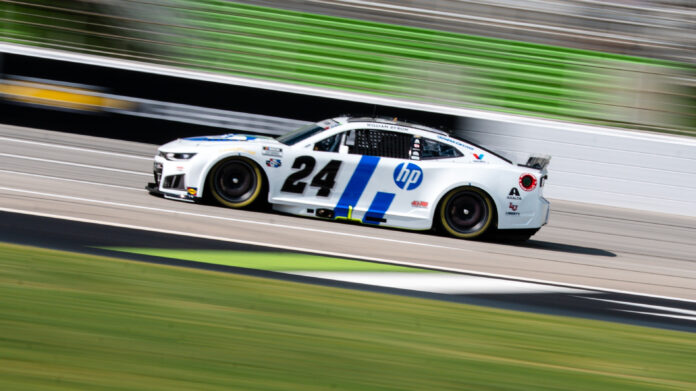
TECH LEADER CONTINUES PRIMARY SPONSORSHIP OF WILLIAM BYRON AND THE NO. 24 CHEVROLET

CONCORD, N.C. (Oct. 1, 2026) – Hendrick Motorsports has extended its strategic relationship with HP Inc. through the 2029 NASCAR Cup Series season, with the agreement continuing HP’s primary sponsorship of driver William Byron and the No. 24 Chevrolet for two races annually.

The three-year renewal builds on a relationship that began in October 2022 and expanded to include Byron and the No. 24 team in 2023. In addition to its primary races, HP will receive season-long branding across the No. 24 Chevrolet and the team’s fire suits, apparel and equipment.

“Our relationship with Hendrick Motorsports is built on shared values: performance, teamwork and an unwavering drive to win,” said Jim Nottingham, senior vice president and division president of Advanced Compute Solutions at HP Inc. “HP and Hendrick Motorsports showcase what’s possible when world-class talent is paired with industry-leading technology. Together, we’re driving innovation and competitive breakthroughs behind the scenes of one of the most demanding and data-driven environments in sports.”

Hendrick Motorsports utilizes a range of HP technology across its operations, highlighted by the HP Z Workstations & Solutions portfolio of high-performance mobile workstations, desktops, monitors and solutions. The technology supports the people and processes behind the competition and business operations of the 15-time NASCAR Cup Series champions.

“HP understands the demands of a high-performance organization, and we trust their technology, expertise and support,” said Rick Hendrick, owner of Hendrick Motorsports. “William has done a terrific job as a spokesperson, representing HP the right way and delivering results on the racetrack. We also work closely together to deliver wins for their business. That teamwork has made this a strong partnership, and we’re proud to continue it through 2029.”

The relationship with Byron began in 2023. The Charlotte, North Carolina, native has driven the iconic No. 24 Chevrolet for Hendrick Motorsports since 2018 and qualified for NASCAR’s postseason, now known as the Chase, every year since the HP partnership expanded to the No. 24 team. Byron won consecutive DAYTONA 500s in 2024 and 2025 and claimed the 2025 Cup Series regular-season championship.

“Since HP joined the No. 24 team, we’ve won two DAYTONA 500s and a regular-season championship,” Byron said. “They’ve been part of some of the biggest moments of my career, and I’m proud of what we’ve accomplished together. We’re delivering on the track and creating value for their business. That’s what great partnerships do, and we want to keep building on our success.”

ABOUT HENDRICK MOTORSPORTS:
Founded by Rick Hendrick in 1984, Hendrick Motorsports is the winningest team in NASCAR Cup Series history. At the sport’s premier level, the organization holds the all-time records in every major statistical category, including championships (15), points-paying race victories (324) and laps led (more than 86,000). It has earned at least one race win in a record 42 different seasons, including an active streak of 41 in a row (1986-2026). The team fields four full-time Chevrolet entries in the NASCAR Cup Series with drivers Alex Bowman, William Byron, Chase Elliott and Kyle Larson. Headquartered on more than 150 acres in Concord, North Carolina, Hendrick Motorsports employs approximately 500 people. For more information, please visit HendrickMotorsports.com or interact on Facebook, Instagram, TikTok and X.

RCR Race Preview: Las Vegas Motor Speedway

Richard Childress Racing in the NASCAR Cup Series at Las Vegas Motor Speedway… In 94 NASCAR Cup Series starts at Las Vegas Motor Speedway, Richard Childress Racing boasts 12 top-five and 28 top-10 finishes. Clint Bowyer (spring 2009) and Kevin Harvick (spring 2010) hold the organization’s best result of second. Tyler Reddick earned a pole for RCR at the Sin City racetrack in 2022.

Richard Childress Racing in the NASCAR O’Reilly Auto Parts Series at Las Vegas Motor Speedway… RCR has five wins at Las Vegas Motor Speedway in the NASCAR O’Reilly Auto Parts Series, most recently by Austin Hill in March 2023. Other drivers to win in O’Reilly Auto Parts Series competition for the Welcome, N.C.-based organization include Kevin Harvick (2004), Jeff Burton (2007), Austin Dillon (2015) and Tyler Reddick (2019). RCR has racked up four poles in the O’Reilly Auto Parts Series at Las Vegas Motor Speedway with drivers Harvick (2007), Ty Dillon (2014), A. Dillon (2015) and Myatt Snider (2020). In their most recent appearance at the track in March 2026, Jesse Love finished sixth and Austin Hill tenth, helping to contribute to RCR’s 18 top-five and 44 top-10 finishes in O’Reilly Auto Parts Series competition at the track.

West Coast Stock Car/Motorsports Hall of Fame Inductions… Before the racing begins at Las Vegas Motor Speedway, our industry’s elite will gather for the West Coast Stock Car/Motorsports Hall of Fame inductions on Thursday, Oct. 1 at South Point Resort and Casino. The class of inductees, the 23rd for the organization, will include two individuals with ties to Richard Childress Racing. Kyle Busch will be inducted posthumously, leading the list of the 2026 inductees.

The Hall’s 2026 Heritage Class of inductees will feature the Stockman family, including the late Harry, a post-World War II open wheel champion; son Gary, driver, car owner, car builder, crew chief, and track promoter and grandson Danny, a multiple NASCAR national series championship crew chief.

Catch Saturday’s Action… The O’Reilly Auto Parts Series’ Focused Health 302 at Las Vegas Motor Speedway will be televised live on Saturday, October 3 at 7:30 p.m. ET on The CW and stream live on the ESPN App with ESPN Unlimited. The live radio broadcast can be heard on the Performance Racing Network and SiriusXM NASCAR Radio Channel 90. Saturday afternoon’s practice and qualifying sessions will be shown on The CW App and stream live on the ESPN App with ESPN Unlimited beginning at 2 p.m. ET.

Watch Us on USA Network… The Cup Series race at Las Vegas Motor Speedway will be televised on Sunday, October 4 at 5:30 p.m. ET on USA Network. The live radio broadcast can be heard on the Performance Racing Network and SiriusXM NASCAR Radio Channel 90. Saturday afternoon’s practice and qualifying session will be shown live on truTV beginning at 4:30 p.m. ET. Ride shotgun all season long with live, in-car camera feeds and scanner audio with a paid subscription to Max as part of their NASCAR driver cam experience during the race.

Facebook X Instagram

Austin Dillon and the No. 3 Toys for Tots Chevrolet at Las Vegas Motor Speedway… In 22 NASCAR Cup Series starts at Las Vegas Motor Speedway, Austin Dillon has two top-five and three top-10 finishes. The Welcome, North Carolina native has completed 95.8 percent of all the laps run at the 1.5-mile oval. In his most recent appearance to the track, Dillon earned a strong 12th-place finish in March after starting 11th.

Previous Winner… Dillon is a two-time winner at Las Vegas Motor Speedway. The 2013 NASCAR O’Reilly Auto Parts Series Champion went to Victory Lane in O’Reilly Auto Parts Series competition at the track in March 2015, leading 183 of the scheduled 200 laps. Dillon also earned a NASCAR Truck Series win at the track in September 2010.

About Toys for Tots… Toys for Tots, a 79-year National charitable Program run by the U.S. Marine Corps Reserve, provides year-round joy, comfort, and hope to economically disadvantaged children across the Nation through the gift of a new toy or book. Providing toys, books, and other gifts to disadvantaged children offers recognition, confidence, and a positive memory for a lifetime. It is such experiences that help children become responsible citizens and caring members of their community. Since 1947, the Program has evolved and grown exponentially, having delivered hope and the magic of Christmas to over 325 million children in need. Because the need isn’t just at Christmastime, the Marine Toys for Tots Program also provides support year-round to families experiencing challenges and exceptional circumstances, thus fulfilling the hopes and dreams of millions of disadvantaged children beyond the holidays. The Marine Toys for Tots Foundation is a not-for-profit organization authorized by the U.S. Marine Corps and the Department of Defense to provide fundraising and other necessary support for the annual Marine Corps Reserve Toys for Tots Program. For more information, visit www.toysfortots.org.

High-Octane Holiday Cheer… Summer is officially in the rearview mirror, which means the Christmas season and the 2026 Toys for Tots Holiday Campaign are upon us. Every year, Marines, civilian Coordinators, volunteers, and community partners work hand-in-hand across the United States to collect toys, organize distributions, and expand resources needed to help ensure disadvantaged children get to experience the magic of the holiday. This weekend, Dillon will shine a new light on the mission of Toys for Tots as he gets behind the wheel of the No. 3 Toys for Tots Chevrolet at Las Vegas Motor Speedway. But everyone both at home and watching from the track will have their chance to join in support of the cause as well. In recognition of Toys for Tots’ partnership with the No. 3 Chevrolet team, race fans are encouraged to make a special $33 donation to Toys for Tots at https://secure.toysfortots.org/a/richardchildressracing. Each gift helps provide toys, books, and games to children who might otherwise go without this holiday season, and early donations are especially important because they help Toys for Tots prepare now for the millions of children and families who will turn to them in the weeks ahead.

Meet Dillon… Fans will have two opportunities to meet Dillon this weekend at Las Vegas Motor Speedway. On Sunday, October 4 beginning at 10:50 a.m. Local Time, Dillon is scheduled to stop by the RCR Merchandise Hauler in the Fan Midway to sign autographs. Be sure to stop by and stock up on all your race day gear. For fans unable to travel to the race, visit the official RCR Team Store to purchase Austin Dillon merch: https://store.rcrracing.com.

Following, Dillon is scheduled to traverse the Fan Midway to the Toys for Tots Display for his second fan meet and greet of the day beginning at 11:25 a.m. Local Time. Be sure to stop by a visit Dillon and make your contribution to Toys for Tots’ 2026 holiday campaign.

AUSTIN DILLON QUOTES:

Describe what the racing is like at Las Vegas Motor Speedway?

“Las Vegas Motor Speedway is a great mile-and-a-half. The track is rough through Turns 1 and 2, and you have to be able to cut through the bumps. Restarts are wild, too. Vegas is an awesome place to go.”

Toys for Tots is back on your Chevrolet this weekend. What makes this race so significant for them?

“Toys for Tots is a great organization, and myself and everyone at RCR are so proud to be partnered with them. On October 1, all the drives start for Toys for Tots to collect toys for kids across America. I want to encourage everyone to check out your local community to get involved, or go to www.toysfortots.org and donate today. Do your job and get involved so everyone can have a great Christmas season.”

What makes Las Vegas Motor Speedway a race every fan should experience in person?

“Obviously, the atmosphere at Las Vegas Motor Speedway is pretty cool. You get the nightlife and the fun that goes on in the city, and it just naturally translates over to the track. I feel like the racing is really good. The groove has spread out over the years. The track has a lot of character. It’s a cool track for us to bring the No. 3 Toys for Tots Chevrolet.”

What’s the biggest win you’ve had on or off the track at Las Vegas Motor Speedway?

“It’s hard to choose between my NASCAR Truck Series win and my NASCAR O’Reilly Auto Parts Series win there. I loved my NASCAR O’Reilly Auto Parts Series win in the No. 33 racing Ryan Blaney in the Penske car at the end of the race in 2015. Nick Harrison was the crew chief, and he decided to keep me out. We dominated the entire race, and when the caution came out, we stayed out but Blaney came to pit road to get tires. Nick lied to me and told me that no one got tires. All of the sudden, I’m having to race Blaney with what I’ve got. I blocked him all the way to the grass in that race and was able to win it on older tires. After the race, Nick just said ‘I told you we’d be all right,’ and I was like, ‘what do you mean?’, and he told me Blaney had tires behind me. I was glad he didn’t say anything during the race. I knew as dominant as we had been all day, that when Blaney caught me as fast as he did, that I was in a situation and there was no way we were on even tires. It was just an ‘it is what it is’ situation, and I hoped that his stuff fell off.”

Any Carolina Cowboys success in Las Vegas or big wins from your PBR team in Sin City?

“Oh yeah, The Carolina Cowboys won the championship in Las Vegas this past year, so that was cool. The year before last, the PBR Teams Series Championship and the NASCAR Cup Series race were in Las Vegas on the same weekend. I got wrecked out of the Cup race early, so I went over to T-Mobile and I got to watch the Carolina Cowboys lose the championship. And then, this year, we made it to the championship again and were able to win it. It was an awesome feeling.”

Austin Hill and the No. 33 BetMGM Chevrolet at Las Vegas Motor Speedway… Austin Hill will make his first NASCAR Cup Series start at Las Vegas Motor Speedway on Sunday. Despite a lack of experience at the Nevada speedway in the premier series, the Winston, Georgia native has 10 career starts in the NASCAR O’Reilly Auto Parts Series with one victory (spring 2023), three top-five and eight top-10 results. Hill also has eight starts in the NASCAR Truck Series with two wins (fall 2019, fall 2020), four top-five and six top-10 finishes.

Winner, Winner… Hill is a previous winner in both the O’Reilly Auto Parts Series and Truck Series at Las Vegas Motor Speedway, claiming three checkered flags at the 1.5-mile oval.

About BetMGM… BetMGM is a market-leading sports betting and gaming entertainment company, pioneering the online gaming industry. Born out of a partnership between MGM Resorts International (NYSE: MGM) and Entain Plc (LSE: ENT), BetMGM has exclusive access to all of MGM’s U.S. land-based and online sports betting, major tournament poker, and online gaming businesses. Utilizing Entain’s U.S.-licensed, state-of-the-art technology, BetMGM offers sports betting and online gaming via market-leading brands including BetMGM, Borgata Casino, Party Casino and Party Poker. Founded in 2018, BetMGM is headquartered in New Jersey. For more information visit https://casino.betmgm.com/en/blog/.

Meet Hill… On Sunday, October 4 at 11:20 a.m. Local Time, Hill is scheduled to sign autographs at the RCR Merchandise Hauler in the Fan Zone at Las Vegas Motor Speedway. Stop by to meet the 32-year-old and purchase new No. 33 gear before the green flag waves.

AUSTIN HILL QUOTE:

Describe the outlook heading into Las Vegas Motor Speedway.

“Throughout my career, Las Vegas has statistically been a good track for me. I’ve won races there on the Truck side, and we’ve also been able to get a win on the O’Reilly side. Anytime you go to a track where you’ve had success at in the past, it gives you a little more confidence. But in saying that, the Cup Series is such a different ballgame compared to the other series, so it’s not going to be easy by any means. The track itself fits my driving style and is one of my favorite mile-and-a-half tracks. You want to paint your left side tires on the white line, and I’ve been known to be a bottom feeder or someone who likes to catfish through the corner. Hopefully, we can have a solid day in our BetMGM Chevrolet and make Kyle Busch proud at his home track.”

Jesse Love and the No. 2 Whelen Chevrolet at Las Vegas Motor Speedway… Jesse Love has made five career NASCAR O’Reilly Auto Parts Series starts at Las Vegas Motor Speedway. Last October, the 21-year-old showed speed and finished fourth. Most recently in March, the young gun qualified seventh, led 36 laps and bought the car home in sixth position. Growing up in Menlo Park, California, Love attended races at the 1.5-mile oval in person throughout his childhood.

Get to the Points… As we get ready for the fourth race in the 2026 Chase, Love is currently fourth in the standings, 41 points behind leader Sheldon Creed. When the O’Reilly Auto Parts Series was last on track roughly two weeks ago at Bristol Motor Speedway, Love started on the pole after qualifying was rained out and showed speed, leading 84 laps. While he was in contention for the win in the final laps, Love cut a rear tire and was forced to the pits, ultimatley finishing the race 17th and taking home 35 points.

About Whelen Engineering… Whelen Engineering is a family-owned company with a pioneering spirit and a passion to protect the lives of those who protect and serve others. The company mission is to provide industry-defining safety solutions around the world, while creating a community of problem-solvers who are inspired to push boundaries and continue our legacy of delivering ground-breaking innovation. As a global leader in the emergency warning industry, Whelen has been trusted to perform since 1952, when George Whelen III invented the first rotating aviation beacon. Whelen now encompasses two state-of-the-art manufacturing facilities in Connecticut and New Hampshire with over 750,000 square feet of engineering and manufacturing space and the largest design staff in the industry. Every part of every Whelen product is proudly designed and manufactured in America. We embrace quality as our foundation, and we celebrate innovative engineering in every product we produce.

Racing For A Cure… Last week at Lime Rock Park in Connecticut, Sonny Whelen hosted his annual Racing for a Cure karting event in support of the Michael J. Fox Foundation for Parkinson’s Research. Current driver of the No. 2 Whelen Chevrolet Jesse Love and the car’s future driver beginning in 2027 Carson Brown both traveled north to compete in the charity event and show their support for Whelen Engineering’s work to find a cure for Parkinson’s disease. Brown’s team, which also included two other Whelen-sponsored drivers, led the charge throughout the marathon four-hour campaign, winning the overall race by three laps. Everyone at Richard Childress Racing is proud to support the entire Whelen community in their unwavering work with Team Fox, both during race weekend and through special charitable events.

Meet Love… Fans will have two opportunities to meet Love this weekend in Las Vegas. On Saturday, October 3, Love is scheduled to stop by the South Point Hotel, Casino & Spa display in the Fan Midway for an autograph signing beginning at 2 p.m. Local Time. Following, starting at 2:20 p.m. Local Time, Love is scheduled to be on hand at the RCR Merchandise Hauler for his second signing of the day. Fans are encouraged to stop by, meet Love and get new race day gear before the green flag waves.

JESSE LOVE QUOTES:

Describe what it’s like to race in Las Vegas?

“I am excited for Las Vegas. It’s my favorite mile-and-a-half racetrack that we go to. I love the city, obviously I grew up racing here, so in a lot of ways whenever I race in Las Vegas I kind of feel like it’s almost a home race for me as much as anywhere else that we go to, so I am looking forward to it.”

What is the team’s mindset entering this weekend’s race?

“I feel like our cars right now are really fast and my team is giving me what I need to compete for wins every week. Las Vegas should be no different. That is kind of our bread and butter, is these bigger tracks, so I am feeling very confident, but at the same time open minded to any obstacles that may come my way. I’ll be ready to adapt and be present in the moment and be ready for any challenges we may face.”

Austin Hill and the No. 21 Global Industrial Chevrolet at Las Vegas Motor Speedway… Austin Hill has made 10 career NASCAR O’Reilly Auto Parts Series starts at Las Vegas Motor Speedway, earning one win (spring 2023), three top-five and eight top-10 finishes. In eight NASCAR Truck Series starts at the Nevada speedway, the Winston, Georgia native has led a total of 80 laps and captured two victories (fall 2019, fall 2020), four top-five and six top-10 results.

Did You Know? Hill is the only active driver in the O’Reilly Auto Parts Series field who has won at Las Vegas Motor Speedway in both the O’Reilly Auto Parts Series and Truck Series.

Top-10 Streaking… Hill has finished inside the top-10 in his last eight O’Reilly Auto Parts Series races at Las Vegas Motor Speedway, accomplishing the feat in 80 percent of events competed. In this season’s spring race, the 32-year-old took the checkered flag in the 10th position.

Points Check… Hill currently holds the ninth position in the O’Reilly Auto Parts Series Chase standings. The racer is only two points behind eighth-place Taylor Gray and 106 points behind leader Sheldon Creed.

Hill has previously won at four of the final six tracks – Las Vegas Motor Speedway, Talladega Superspeedway, Martinsville Speedway and Homestead-Miami Speedway.

About Global Industrial… Global Industrial Company (NYSE:GIC) is a leading distributor of high-quality, industrial-strength equipment and supplies, serving organizations of all sizes across a wide range of industries. With more than 75 years of experience, customers rely on Global Industrial for its broad portfolio of national and private brands, trusted service, and focus on value. We help customers keep their operations running by delivering the right products when they need them, because We Can Supply That™. Visit Globalindustrial.com, and follow us on Facebook, Instagram, and LinkedIn.

AUSTIN HILL QUOTE:

What makes Las Vegas Motor Speedway a good track for yourself and the No. 21 team?

“Since the start of the Chase, Las Vegas has been in my top two or three races that I’ve been looking forward to. It has been a good place for me personally, winning races on both the O’Reilly side and Truck side. I’m not sure what it is about the track that I like so much, but I think it’s because you’re able to paint the white line – that Harvick line that he used at old Atlanta for so many years. It seems to fit my driving style, and even on a bad day, we seem to run seventh to 10th. Given our spot in the standings, we need to have a good points day with our Global Industrial Chevrolet. We need to qualify well, earn stage points, and put ourselves in contention at the end to make up some ground.”

Wood Brothers Racing – Race Week Briefing: Las Vegas Motor Speedway

Event: South Point 400
Date/Time: Sunday, October 4, 2026, 5:30 p.m. ET
Location: Las Vegas Motor Speedway, Las Vegas, Nevada
Layout: 1.5-Mile Oval
TV/Radio: USA, PRN, SiriusXM NASCAR Radio

Josh Berry and the No. 21 eero team head to Las Vegas Motor Speedway looking to rebound from a disappointing end to last Sunday’s Hollywood Casino 400 at Kansas Speedway and continue the strong stretch of performances they’ve put together in recent months.

“It was unfortunate to get caught up in the incident at Kansas because I felt like we had a solid run going up until that point,” said Berry, who won the Pennzoil 400 at Las Vegas last year. “Overall, we’ve had a lot of strong runs lately and have been building some good momentum with this No. 21 team. We just need to keep doing what we’ve been doing and hopefully put together another strong weekend at Las Vegas.”

Berry and the No. 21 team have made significant gains in the standings during their recent run of strong performances. Since a seventh-place finish at Indianapolis in late July, Berry has climbed from 33rd to 25th in the NASCAR Cup Series standings and enters Las Vegas just seven points out of 24th.

Practice for the South Point 400 is set for Saturday at 4:30 p.m. ET, followed by qualifying at 5:35 p.m. ET, with coverage on truTV.

Sunday’s 267-lap, 400.5-mile event is scheduled for 5:30 p.m. ET, with coverage on USA Sports.

Josh Berry

Age: 35 (Oct. 22, 1990)

Hometown: Hendersonville, Tennessee

Crew Chief: Miles Stanley

IG: @joshberry88

X: @joshberry

About eero
eero was founded to make wifi and networking the way they should be—fast, reliable, secure, and, most importantly, easy to use. After introducing the first home mesh wifi system with a high-quality design that blends into its environment and technology that intuitively works behind the scenes, eero became known for sweating every single detail and delivering award-winning hardware and software for homes, businesses, communities, and service providers. Founded and headquartered in San Francisco in 2014, eero is an Amazon company. For more information, visit eero.com.

The Race Liveries NASCAR Fans Never Forget – And Why Some Are Bringing Theirs Home

Photo by Adam Lovelace for SpeedwayMedia.com

Ask a NASCAR fan to close their eyes and picture a car, and there’s a decent chance a specific number and color scheme comes up before anything else. Not a driver’s face. Not a track. A paint job — Petty blue, the DuPont rainbow, the black No. 3 with the silver flash across the door. Some liveries stop being decoration and become identity, for the car and for the fans who grew up watching it circle a track a few hundred times a weekend.

That’s a strange kind of staying power when you think about it. The car itself is usually long gone — wrecked, retired, sold off in pieces, or sitting disassembled in a shop somewhere. But the livery survives in a way the physical machine doesn’t, showing up on t-shirts, die-casts, tattoos, and increasingly, in something a lot more permanent than any of those.

Why Some Liveries Just Stick

Not every car that wins races gets remembered this way. The liveries that actually stick tend to share something specific: they were on track long enough, and consistently enough, to become inseparable from the driver and the era. Richard Petty’s Plymouths and Pontiacs weren’t just fast — that blue was on track for decades, across different manufacturers, until “Petty blue” stopped being a paint description and became a proper noun in the sport’s vocabulary. It’s exactly the kind of car fans still track down as a handcrafted scale model of a car decades later — not a generic stock car, but that specific blue, on that specific chassis.

The same thing happened with Dale Earnhardt’s black No. 3 Chevrolet. It wasn’t the only car on the grid, but it became the one people point to when they talk about what intimidation looked like on a race track. And the DuPont rainbow that Jeff Gordon ran through the 1990s did something different again — it made a car instantly recognizable from the other side of the grandstand, in an era before every fan had a phone to check who was leading.

The Cars Behind the Liveries Rarely Survive

Here’s the part that doesn’t get talked about much: the actual cars almost never make it. Race cars get wrecked, cannibalized for parts, rebuilt into something else entirely, or scrapped once they’re no longer competitive. A specific chassis that ran a specific livery in a specific season is, more often than not, gone within a few years of retirement — even when the paint scheme itself goes on to become iconic.

That leaves a real gap for the fans and former crew members who watched that exact car race. The livery lives on in photos and highlight reels. The car that actually wore it usually doesn’t exist anymore in any form you could walk up to and look at.

How Fans Are Closing That Gap

This is where a growing number of diehard fans, former team members, and collectors have started doing something more permanent than a die-cast off a store shelf. A commissioned replica — built from actual reference photos of a specific car in a specific season, right down to the correct paint numbers and sponsor decal placement — is a different thing entirely from a mass-produced collectible. It’s not a generic version of “a car that looked like that.” It’s built to document the actual machine, as it actually raced.

For someone who crewed on a specific car, or grew up watching one specific number circle a specific track, that distinction matters. A build like this captures the livery the way the fan actually remembers it — not the version smoothed out for a toy line, but the real paint scheme, the real proportions, built once rather than off an assembly line.

Bringing a Specific Car Home

The process usually starts the same way for most people: digging through old photos, race programs, or footage to nail down exactly how the car looked during the specific race or season that mattered. From there, it’s a matter of finding someone who can build to that reference rather than to a generic template.

For fans who’ve decided they want their own piece of racing history done properly rather than picked up off a shelf, you can make my car a reality — a specific, correctly detailed replica of the exact machine and livery that never left your memory in the first place.

Race Weekend Truck Prep: A Pre-Trip Checklist for Diesel Tow Rigs

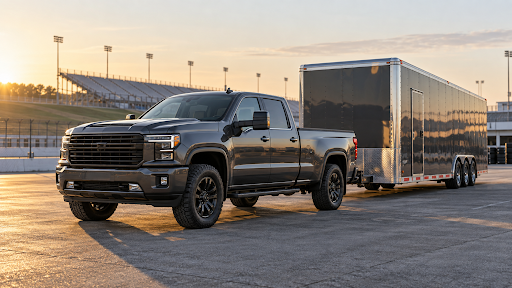
A race weekend starts long before the green flag. For the teams, crews, and fans who tow their own trailers to the track, the diesel pickup in the driveway is part of the program. If it overheats on a grade, runs rough under load, or leaves a trailer on the shoulder, the weekend is over before practice begins.

Most breakdowns on the way to the track are not surprises. They are small problems that were visible a week earlier, and the exhaust system is one of the first places they show up. This checklist covers what to inspect, what to carry, and what to order early so your tow rig arrives ready to work. It applies to Ford Power Stroke, Ram Cummins, and Chevy and GMC Duramax pickups.

Start With the Numbers

Before you look at a single bolt, confirm your setup sits inside the truck’s rated limits. Check the trailer’s loaded weight, the tongue weight, and the truck’s gross combined weight rating on the door jamb sticker or in the owner’s manual. Race trailers fill up fast with tires, fuel, tools, and spares, so weigh the rig loaded if you can. A truck that already runs near its limit has less margin for hot weather, long grades, and crosswinds.

Walk the Exhaust From Turbo to Tailpipe

Towing keeps a diesel under load for hours, and that heat cycles every joint in the exhaust. Inspect the system with the engine cold and the truck on level ground. Use jack stands or a lift if you need to get underneath, and never work on a hot exhaust.

Look for soot streaks around flanges and joints, which point to a small leak. Check for loose or rusted band clamps, cracked hangers, and pipes that rub the frame or a crossmember. A ticking sound on a cold start that fades as the engine warms often points to a leak near the manifold or turbo.

Pay extra attention to the up-pipes. On Power Stroke trucks and several Duramax generations, diesel up-pipes carry exhaust from the manifolds to the turbocharger, so they see some of the highest heat in the system. A cracked or leaking up-pipe can cost you boost and throttle response under load, which is the last thing you want on a mountain grade with a loaded trailer.

Owners planning a replacement can read the up-pipe upgrade guide to compare options before they order.

Next, look at the downpipe, which connects the turbo outlet to the rest of the exhaust. Check the flange, the clamp, and the pipe itself for cracks or heavy corrosion. If a part needs replacing, choose a fitment-matched downpipe built for your exact year, engine, cab, and bed configuration. A pipe that is almost right creates leaks, rattles, and a second trip to the parts counter.

Pack the Hardware and Spares

Exhaust bolts that have lived through years of heat do not always come out clean. If you plan any work before the trip, soak the fasteners ahead of time and read how to remove a stuck exhaust bolt without damage before you pick up a wrench.

Keep a small repair kit in the truck for the road:

  • Spare exhaust band clamps and a few gaskets sized for your setup
  • Basic sockets, wrenches, and a torque wrench
  • Work gloves, a flashlight, and a tire plug kit
  • A tow strap, wheel chocks, and a lug wrench that fits both truck and trailer

Check Fluids, Cooling, and Brakes

A loaded trailer asks more of every system on the truck, not just the engine. Go through the basics a few days before departure:

  • Engine oil level and condition
  • Coolant level, hoses, and clamps
  • Transmission fluid level and condition
  • DEF level, if your truck uses it
  • Brake pads, rotors, and brake fluid
  • Trailer brake controller settings and trailer brake function
  • Tire pressure on the truck, the trailer, and the spare
  • Hitch, safety chains, breakaway cable, and trailer lights

Scan for Codes and Test the Rig Loaded

Plug in a scan tool and read both stored and pending codes. A fault code you ignored at home can turn into a derate on the highway.

Then hook up the loaded trailer and drive a loop that includes highway speed and at least one hill. Watch coolant temperature, transmission temperature, and exhaust gas temperature if you run a gauge. Listen for new noises, and look for fresh soot at the exhaust joints when you stop.

Order Early and Match Fitment

Parts ordered the night before a trip rarely show up in time. Start your inspection at least two weeks before departure so a replacement part has time to ship, and so you have a day or two to install it without rushing.

Before you buy, write down your truck’s year, make, model, engine, cab style, bed length, and trim. Exhaust parts can differ by year range and by configuration, and some are not compatible with Cab & Chassis trucks. If your truck has prior modifications or a crossover year, send your details to the seller before checkout and ask for a fitment check.

Your Quick Pre-Trip List

  • Confirm trailer weight, tongue weight, and truck ratings
  • Inspect up-pipes, downpipe, clamps, and hangers on a cold engine
  • Pack spare clamps, gaskets, and a basic tool kit
  • Check all fluids, brakes, tires, and trailer lights
  • Scan for codes and test drive the rig loaded
  • Order any parts at least two weeks before the trip

Get the Rig Ready Before the Next Race Weekend

If your inspection turns up a worn up-pipe or a leaking downpipe, the diesel parts specialists at EngineGo carry application-specific options for Power Stroke, Cummins, and Duramax trucks. Most orders ship from U.S. warehouses, and free shipping applies within the continental United States. Check fitment before ordering, and get your tow rig sorted before the trailer is loaded.

OEM vs. OEE vs. Aftermarket Auto Glass: What’s the Real Difference?

Ask three glass shops for a quote, and you might hear three unfamiliar terms in the same phone call: OEM, OEE, and aftermarket. The OEM vs. OEE windshield question trips up most car owners because none of these labels say anything about safety on their own. A crack that spreads across the driver’s line of sight is one of the clearer signals it’s time to replace the glass outright rather than patch it, and once that decision gets made, the type of glass chosen shapes fit, noise, and camera performance for years.

What is an OEM Windshield

OEM stands for Original Equipment Manufacturer, and the label describes a sourcing relationship rather than a factory address. Automakers do not fabricate glass themselves. Companies like AGC, Pilkington, Saint-Gobain, and Fuyao produce windshields under contract, using the exact blueprints, curvature tolerances, and bracket placements the vehicle manufacturer specifies. What separates OEM from everything else on the shelf is branding: the automaker’s logo gets stamped permanently into the corner of the glass, next to the required DOT code and safety markings. A Ford dealership sells Ford-branded glass, a Toyota dealership sells Toyota-branded glass, sometimes from the exact same production line, just under a different label.

How Driver Assist Cameras Changed Glass Standards

A decade ago, glass grade was mostly a cosmetic and cost conversation. That changed as automakers packed more of the recent advances in car safety technology behind the windshield itself, mounting forward-facing cameras there to run lane keeping, automatic braking, and adaptive cruise control. The team at Whitby Auto Glass now sees a windshield-mounted camera or radar sensor on most vehicles in their bay, putting far more weight on glass quality and calibration accuracy than a decade ago. Skip the recalibration step afterward, or botch it, and a system built to catch a wandering lane or a stopped car ahead can misjudge the road entirely.

Sourcing Not Quality Is the Real Divide

OEE, or Original Equipment Equivalent, glass comes from the same Tier 1 suppliers that build OEM parts, just without the automaker’s logo and without routing through the dealership network. Built with similar tooling, it tends to land closer to OEM on fit and optical clarity than budget aftermarket glass does. Aftermarket, sometimes labeled ARG, comes from independent manufacturers who reverse engineer the dimensions instead of working from factory blueprints. The OEM vs aftermarket windshield gap shows up less in whether the glass is legal, since every panel sold in North America has to meet FMVSS No. 205, and more in tolerance. OEM curvature typically stays within half a millimeter, while some aftermarket suppliers allow twice that. A half millimeter sounds trivial until it tilts a camera bracket’s angle or leaves an uneven gap where the adhesive bead needs to sit evenly.

Car Windshield Glass Type and Part Numbers

Two windshields can fit the same frame opening and still be different products entirely. A single model year often ships with a dozen part numbers by trim: one windshield carries an acoustic interlayer that quiets wind noise by several decibels, another a wedge-shaped layer a heads-up display needs to project one clean image instead of a ghosted double, another a solar coating that keeps the cabin cooler on a hot afternoon. Some trims add a rain sensor or antenna wire laminated into the layers, part of a broader world of car sensors doing more work behind the scenes. None of that shows up just by looking at the glass.

Getting the right part for a specific trim means cross-referencing the vehicle identification number, not just year, make, and model, since two cars built on the same line can need different glass depending on the options box checked. Installers doing the swap will often throw in fresh wiper blades or a treatment like Rain-X at the same time, though that’s a separate expense, not tied to glass grade.

What OEM Costs and Whether Insurance Pays

Price tracks the sourcing chain fairly predictably. Standard aftermarket glass on an ordinary sedan without ADAS or a HUD usually runs $250 to $500. OEE lands around $350 to $700. OEM climbs to $500 to $1,200 or more before calibration gets added, and a vehicle carrying both a camera system and a heads-up display can push the total bill past $2,000. IIHS research on crash avoidance systems found that vehicles with front crash prevention carry noticeably higher glass claim costs overall, largely from the labor of recalibrating the camera afterward. Insurance rarely covers that gap automatically.

Most comprehensive policies default to the cheapest compliant option unless the policyholder carries an OEM parts endorsement, the vehicle is new enough to fall under a manufacturer position statement, or state rules mandate zero-deductible glass coverage. Whether a specific policy reimburses OEM glass is worth confirming with the carrier before booking anything.

Getting It Installed Right

Even the best glass fails if it goes in poorly. A technician needs a clean, rust-free pinchweld, the right primer, and a full, even bead of urethane adhesive, followed by enough cure time before the car leaves the bay. That cure window, called Safe Drive-Away Time, depends on temperature, humidity, and the adhesive in use, and rushing it is one of the more common reasons a fresh windshield develops a leak or a whistle at highway speed within the first few weeks. Weather adds another variable, since a car that sits outside overnight or gets washed the next morning raises fair questions about what’s safe for a seal that’s still curing.

Conclusion

None of the three labels guarantees a bad outcome or a good one on its own. A poorly installed OEM windshield can leak just as easily as a well-installed aftermarket one can perform for years without issue. What separates a good replacement from a disappointing one comes down to whether the glass matches the original part number, whether the camera actually gets recalibrated, and whether the shop backs its work with a real warranty. Ask those three questions first. The letters stamped in the corner of the glass count for far less than the answers.

From Sepang to Singapore: F1 Odds and Storylines to Follow

Photo by You Le on Unsplash

Formula 1’s Asian stretch presents two dramatically different challenges. Sepang combines sweeping corners, long straights and demanding braking zones, while Marina Bay replaces that rhythm with walls, heat and constant precision.

That contrast creates an intriguing shift in how each race is assessed. Characteristics that suit a car in Malaysia may become less influential in Singapore, while qualifying, race management and track position can take on different significance. Understanding those differences provides useful context before the championship moves between circuits.

Sepang Steps In for a Displaced Bahrain Round

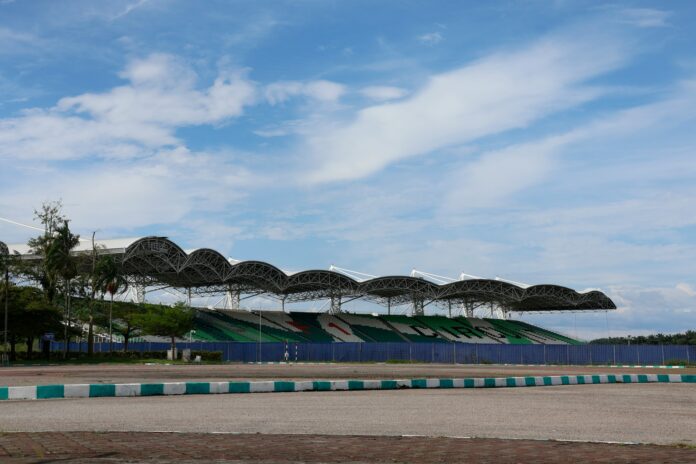
Sepang’s appearance on the 2026 calendar comes under unusual circumstances. The Bahrain race could not proceed at its original venue, so the event was moved to Malaysia for 2026. Sepang is no stranger to Formula 1, having previously hosted races between 1999 and 2017.

Its 5.543-kilometre layout combines long straights, heavy braking and fast direction changes, while heat, humidity and potentially unpredictable weather add another layer of uncertainty. Those changing conditions can also influence how FanDuel odds develop across the race weekend as practice, qualifying and weather provide new information.

Sepang creates a distinctive technical assignment within the season, with several sections of the track placing particular demands on car balance and precision.

Three Corners Define Sepang’s Technical Gauntlet

Sepang’s broad character becomes clearer when the lap is broken into individual sequences. Turns 1 and 2 immediately combine heavy braking with a tightening change of direction, making the opening complex important for positioning and acceleration.

The character changes dramatically at Turns 5 and 6. This rapid sequence places greater emphasis on high-speed balance and accurate direction changes. A car comfortable through these corners can maintain momentum through one of Sepang’s fastest sections.

Turns 11 and 14 introduce another problem. Both require braking while the car is already negotiating a bend, demanding control during corner entry. Turn 14 is particularly prone to front-wheel lock-ups when braking precision disappears.

Those contrasts explain why Sepang tests more than outright speed. Cars must combine stability, braking confidence and acceleration across one lap. Yet those flowing sections offer little preparation for what follows. Marina Bay exchanges Sepang’s space and rhythm for a confined street circuit where errors carry far less margin.

Singapore Trades Flow for Relentless Precision

Singapore provides an immediate technical inversion. Marina Bay is a highly demanding street circuit, replacing Sepang’s broad racing surface and flowing sequences with barriers, low-speed corners and a stop-start rhythm under the lights.

Its 19 corners arrive rapidly across the lap. Repeated braking demands put sustained pressure on both car and driver, while the bumpy street surface and surrounding concrete walls leave little room to correct mistakes.

Heat and humidity deepen that challenge. Formula 1 describes Singapore as one of the calendar’s most physically demanding races, with cockpit temperatures capable of exceeding 60℃ and humidity potentially approaching 90%.

Those characteristics change which factors deserve attention. Qualifying position, braking consistency and avoiding contact can become especially prominent when overtaking opportunities are constrained by a street layout. Singapore therefore creates a very different test from Sepang.

Precision or Pace: Marina Bay’s Final Verdict

Sepang and Singapore demand different versions of Formula 1 performance. Malaysia rewards a combination of high-speed balance, heavy braking and acceleration, while Marina Bay concentrates the challenge around repeated low-speed corners, barriers and physical endurance.

That distinction can reshape expectations between consecutive weekends. A car particularly effective through Sepang’s flowing middle sector may not carry the same advantage to a street circuit that demands different mechanical and aerodynamic strengths.

Qualifying consequently becomes an important part of the Singapore picture. Starting position can shape strategy on a circuit where barriers restrict racing space, and mistakes can quickly derail a session or race.

Fans following F1 race analysis can track how qualifying, tyre management and race execution shape expectations across the weekend. Drivers and cars must sustain precision through a demanding race while teams manage tyres, braking and changing circumstances. From Sepang’s sweeping sequences to Marina Bay’s confined streets, the transition tests whether outright pace translates into controlled execution.

Verstappen’s Singapore Gap Shapes the Narrative

Max Verstappen has succeeded across a wide range of Formula 1 circuits, but Singapore remains an unusual omission. Marina Bay is the only established circuit on the current F1 calendar where a Grand Prix victory has continued to elude him.

That history provides a storyline independent of short-term form. Different Red Bull cars and competitive circumstances have arrived in Singapore over the years, yet none has turned Verstappen’s appearances there into a win.

The circuit’s characteristics help explain why the statistic attracts attention. Singapore rewards confidence under braking, low-speed performance and consistency close to barriers. Those demands differ substantially from the characteristics that define many conventional permanent circuits.

That missing victory consequently remains relevant whenever Singapore appears on the schedule, particularly when assessing outright and head-to-head markets. The 2026 season also carries broader questions involving the championship battle and the progress of manufacturers operating under a new regulatory era.

Title Fight Dynamics and Manufacturer Report Cards

Singapore arrives late enough in the calendar for championship pressure to provide additional context, but the lasting storyline is broader than any current points gap. Every remaining round reduces the opportunities available to recover from poor results.

That makes consistency increasingly significant. George Russell and Kimi Antonelli entered 2026 as Mercedes teammates with championship ambitions, creating an internal comparison shaped by qualifying, race execution and their ability to maximize different circuit types.

The season also provides an important reference point for Audi and Cadillac. Audi entered its first campaign as a works operation following the transition from Sauber, while Cadillac joined Formula 1 as an entirely new 11th team.

Their progress can therefore be measured against very different starting points. Singapore adds another demanding circuit to those assessments without requiring one race to define either project. Ultimately, however, Marina Bay returns attention to the fundamental question raised by its layout: whether precision can outweigh pure pace.

Two Circuits, Two Different Tests

Moving from Sepang to Singapore highlights how quickly Formula 1’s competitive equation can change. One circuit rewards flow across fast corners and major braking zones; the next compresses the challenge between walls on demanding city streets.

That contrast is what gives the two-race sequence its lasting intrigue. Driver history, car characteristics, qualifying and race management all remain relevant, but their importance changes with the venue. Sepang asks competitors to master variety. Singapore then asks whether they can replace that freedom with relentless precision.

Content reflects information available as of 2026/10/01; subject to change.

Winneradspy at a Glance: What It Is, What It Does, and Who Should Use It

Photo by depositphotos at https://depositphotos.com/

Winneradspy is a creative intelligence platform that tracks advertising for mobile apps and games. It gathers ads from Meta Ads, Google Ads, the App Store, and Google Play, marks each as a Winner, Loser, or Learning, and applies AI scoring to show which creative elements drive results.

Choosing what to put in front of users is the most expensive guess in mobile marketing. Winneradspy reduces that guess by organizing more than 20 million ad creatives from over 200,000 apps and games into a searchable, scored archive built around how app advertisers actually work.

Key Takeaways

  • Winneradspy is a mobile-only ad intelligence platform covering apps and games.
  • The archive spans 20M+ creatives across 200K+ titles.
  • Winner, Loser, and Learning labels show which ads are proven, unproven, or still in testing.
  • AI scoring explains the hook, visuals, messaging, and CTA behind each result.
  • Competitor Listening delivers alerts about launches, stopped ads, and creative swaps.
  • A free start option and an MCP server make it easy to try and integrate.

Platform Snapshot

ElementDetails
FocusMobile apps and games
Library size20M+ creatives, 200K+ apps and games
Data sourcesMeta Ads, Google Ads, App Store, Google Play
Ad verdictsWinner, Loser, Learning
Core modulesCreative Library, Competitor Listening, Creative Scoring
ExtrasMCP server for AI assistants

Why Mobile Creative Research Is Its Own Discipline

An online store can sell a product through a single photo. A mobile app has to convince someone to install, open, and return, often in a few seconds of video. That is why creative decisions in this space carry so much weight: the opening scene, the on-screen promise, and the call to action all affect what each install costs.

General-purpose ad libraries were not designed with this in mind. They list ads but do not rank them, and many spy tools prioritize ecommerce stores and dropshipping offers. Winneradspy takes the opposite approach by starting with the app marketer’s questions.

Find, Watch, Understand

The platform is easiest to grasp as three actions.

Find: the Creative Library

Search any app or game and the Creative Library opens its advertising history. Coverage runs from hypercasual titles and RPGs to fintech, fitness, translation, and wellness apps. You can browse by category, open the ads of a specific brand, and focus on those carrying a Winner tag.

Watch: Competitor Listening

Tracking a rival manually means returning to the same pages again and again. With Winneradspy’s Competitor Listening, you follow an advertiser once and receive alerts when it starts a new ad, ends an existing one, or alters a creative. Over weeks, that stream shows which concepts a competitor abandons quickly and which ones it keeps funding.

Understand: Creative Scoring

Scoring analyzes creatives daily and compares strong performers with weak ones. Each ad receives a Winner Score, and the explanation covers what the opening hook does, how the visuals support it, what the message promises, and how the CTA closes. This turns inspiration into something your team can discuss and brief.

How to Read the Labels

The three verdicts are intentionally easy to interpret:

  1. Winner: an ad that is performing strongly and worth studying closely.
  2. Loser: an ad that has not worked, useful mainly as an example of what to avoid.
  3. Learning: an ad still being tested, best treated as a signal to monitor.

Reading the labels together with the score gives you two angles on every creative: how it is performing and why.

Who Gets the Most Value

  • User acquisition managers use it to shortlist concepts before spending budget on tests.
  • Creative strategists and motion designers use it to build briefs around patterns that already hold attention.
  • Agencies use it to keep competitor research for multiple apps in a single workspace.
  • Founders and indie developers use it to learn how bigger players in their category present their product.
  • Teams using AI assistants can connect the data through the MCP server and fold it into existing workflows.

Common Mistakes to Avoid

Copying instead of learning. A winning ad shows a direction, not a template. Borrow the principle, such as a fast problem-solution opening, and rebuild it around your own product.

Ignoring Learning ads. Creatives still being tested can reveal where a competitor is heading next, before the results are in.

Researching only your direct rivals. Strong ideas often come from apps in neighboring categories, so widen the search.

Skipping your own validation. Market signals narrow the field, but your audience and budget make the final call.

Frequently Asked Questions

What does Winneradspy do in one sentence? It finds and scores winning mobile app and game ads so marketers can build campaigns from evidence.

Is it suitable for ecommerce advertisers? No. It is designed for mobile apps and games.

Can I explore it without paying first? The site offers a Start for Free option, which lets you look around before deciding.

The Bottom Line

Strong mobile campaigns start with strong creative, and strong creative starts with knowing what the market already rewards. Winneradspy packages that knowledge into a library, a monitoring system, and a scoring engine that speak the language of app marketers. For any team that wants to replace hunches with signals, it deserves a place in the research stack.

Why a Racing Team’s Digital Strategy Matters Beyond Race Day

Hellmann's 500 at Talladega Superspeedway. Photo by Getty Images for NASCAR.

A race team’s work is easy to measure on the track: lap times, finishes, points, and trophies. Away from race day, however, teams also compete for attention. Fans look for news and video, sponsors want to understand who they can reach, and new ventures need reliable ways to serve their audiences. A useful digital strategy can connect those needs without taking focus away from racing.

That strategy does not require every team to build a complicated app or publish content every hour. It starts with clear information, a consistent voice, and a website that helps people find what they came for. For a local short-track team, that might mean schedules, driver profiles, and ticket details. A larger organization might add race-weekend updates, behind-the-scenes video, merchandise and sponsor features.

Make the team easy to find and follow

Social media is often where a fan first sees a team, but a team-owned website gives that interest somewhere to go. A well-maintained site can keep essential information in one place and provide context that a short post cannot. That matters when schedules change, a driver joins a new program or a team wants to introduce a partner beyond a logo on the car.

Search visibility can help those pages reach people who are already looking for a driver, series, or racing experience. Links from other websites can contribute to that visibility, but a large number of links is not automatically a sign of a strong profile. A motorsports publication, track, or relevant community site may be a more useful source than an unrelated page created simply to host links. iCopify’s overview of quality backlink checks outlines factors such as relevance, editorial standards, traffic, and where a link appears.

For teams, the practical lesson is to build relationships and publish material that genuinely helps the racing community. A race preview with accurate event details, an interview with a crew member, or a clear explanation of a technical change gives readers a reason to visit and share a page. Links earned because the material helps an audience are more meaningful than links pursued without regard to the website or its readers.

Give sponsors more than a logo placement

Sponsors support racing for different reasons: local recognition, customer engagement, hospitality, content opportunities or a connection to a particular audience. A team can make those opportunities easier to understand by presenting them clearly online. A sponsor page might describe the partnership, show how it appears at events and provide examples of the team’s content and community activity.

Good reporting also helps a team assess what is working. Website visits, video views, newsletter sign-ups, and engagement with specific posts can show which content attracts attention. Those measures are not substitutes for a sponsor’s own business results, and raw numbers should not be presented without context. Still, consistent reporting gives both sides a more informed basis for planning future activations.

Content should remain credible. Fans can tell when every update reads like a sales pitch, so a balanced calendar might include race information, driver and crew stories, partner features, and community news. A sponsor gains a more natural place in the team’s world, while followers keep getting material they have a reason to follow.

Use technology to solve a real problem

As a racing operation grows, a spreadsheet or a collection of separate tools may become difficult to manage. A team might consider a custom system to organize content, collect fan registrations, coordinate merchandise, or present data to partners. Before commissioning software, it should define the actual problem, identify who will use the product, and decide what a successful first version must do.

That kind of planning matters for motorsports startups and established teams testing a new digital idea. A guide on how to hire a programmer in 2026 can help a founder think through the type of developer needed, the project brief, costs, and the risks of building an MVP. Osdire is a freelance marketplace, and its programming category is one option for teams exploring outside help; a clear scope remains essential wherever they source work.

You don’t need to start with a large platform. A simple, mobile-friendly site or a small pilot can reveal whether fans, staff, or partners actually use a proposed feature. Teams should also consider who will maintain it after launch, how they’ll keep information current, and what happens if the original developer is no longer available. Those questions can matter as much as the initial build.

Keep the digital effort tied to the racing

Digital work is most effective when it supports the team’s real identity rather than trying to manufacture one. Strong race coverage, accurate updates, and a straightforward way to learn about the program give fans a reason to return between events. For smaller teams working with limited time, a consistent schedule of useful updates is usually more sustainable than trying to imitate the output of a national series.

The track remains the main event, but the audience’s relationship with a team extends beyond the green flag. A dependable online presence can make that connection easier to maintain, help partners see where they fit and give new ideas room to develop. The best starting point is not a bigger digital footprint for its own sake; it is a clear understanding of what fans and partners need, followed by tools and content that serve those needs.