Home Blog Page 78

GMG Racing Regains Championship Lead at Barber Motorsports Park with Kyle Washington and Tom Sargent

Washington and Sargent Turn Three-Point Deficit into Six-Point Advantage Going into Double-Points Indianapolis 8 Hour Season Finale

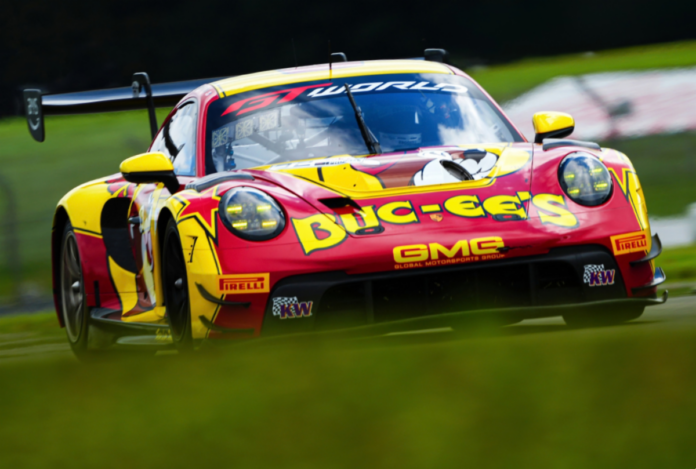
BIRMINGHAM, Alabama (September 29, 2026) – GMG Racing, co-drivers Kyle Washington and Tom Sargent, and the No. 32 GMG Racing Porsche 911 GT3 R Evo team have reclaimed the GT World Challenge America Pro-Am championship lead after a hard-fought third-place class finish in Sunday’s three-hour race at Barber Motorsports Park.

Washington, Sargent and the No. 32 team arrived in Alabama three points out of the Pro-Am driver and team championship leads after being knocked from the top of the standings for the first time this season last month at Road America.The third-place result at Barber delivered a nine-point swing, and the team now carries a six-point lead into the double-points Indianapolis 8 Hour season finale at Indianapolis Motor Speedway, October 8-11.

Just reaching the grid took a monumental effort from the GMG Racing crew. In the weeks after a crash at Road America, the team tackled a chassis tub replacement and flew in a second Porsche from France. The car was reassembled and fully prepared before its arrival in Alabama where the tireless GMG Racing crew pulled off an unexpected engine and gear box replacement early in the race weekend.

The race itself brought more adversity. Washington was turned in the opening minutes by a class competitor who was penalized for the incident. The No. 32 dropped a lap down, but top pit-side strategy and a quick pace by both Washington and race closing driver, Sargent, soon put the team back in lead lap contention.

“There are a lot of mixed emotions,” said GMG Racing Founder and Principal James Sofronas. “We definitely had the car to win this weekend, but in racing, it’s not all about speed. You have to put everything together. But no doubt, the team worked above and beyond to not only prepare a new car from Europe and then have to replace an engine and a gearbox. With the commitment from Kyle to see this through and the commitment from the team to get everything done, third-place here is almost like a win after all of the adversity we faced and the contact we had today.”

Washington has endless praise for the GMG Racing team, and the strong Barber result has him firmly focused on the Indy finale.

“We flew in a new car, re-tubbed one of the original cars, then had to replace the engine and gearbox as there was collateral damage from the incident at Road America,” Washington said. “So, to get a podium out of that is pretty incredible. The crew was unbelievable. I was really depressed after the Road America incident, and now I’m pumped again. Indy is a double-points race, which you have to take into consideration. It means everything. We are going to stay focused, work out for the next 10 days, study Indy and go get it done.”

Sargent went to work right away and passed several competitors in his run to the checkered flag to secure the podium finish.

“We were all over the place the whole race, with Kyle getting turned around at the start and going a lap down, so to come back to a podium is huge,” Sargent said. “The car took a lot of hits back there, but it held together in the end. It wasn’t the most pleasant thing to drive, but we pulled it together and the car did an amazing job. We did what we came here to achieve. We put the championship back where we deserved it to be, and we have a small buffer going into Indy.”

The result marks the fourth Pro-Am podium of the season for Washington and Sargent, which includes wins at Sonoma Raceway and Sebring International Raceway in the first year of the series’ new three-hour race format.

“Taking the points lead to Indy helps,” Sofronas said. “We are back on the right track, but now we’ve got to regroup, clean these cars up, make sure they are as fast as they were here and look forward to hopefully winning Kyle’s first championship.”

Next up for GMG Racing in SRO America competition is the GT World Challenge America season finale, the Indianapolis 8 Hour at Indianapolis Motor Speedway, October 8 – 11.

About GMG Racing: Founded in 2001, GMG Racing quickly established itself as North America’s premier performance tuning facility. What began as a small 1,200 sq. ft. shop, maintaining two race cars, has grown into a state-of-the-art performance tuning, racing and service facility relocated last year to The Thermal Club and a 28,000 sq. ft. trackside motorsports facility. The staff, attention to detail and passion are what make GMG the choice of professionals and enthusiasts worldwide. GMG, in its early years, was located directly across the street from Porsche Motorsport North America (PMNA). This close proximity allowed GMG to build a strong relationship with the legendary racing brand which has helped the company support its customers to the highest level possible. We have since won several Championships, not only with Porsche, but with Audi, Lamborghini, Aston Martin and McLaren. From club racing to Sebring, Daytona, Spa, Montreal, COTA and The Thermal Club, GMG can take you as far as you want to go. More information can be found at www.gmgracing.com.

RFK RACING AND BRAD KESELOWSKI TO PART WAYS FOLLOWING 2026 SEASON

CONCORD, N.C. (September 29, 2026) – Roush Fenway Keselowski (RFK) Racing and Brad Keselowski today announced that Keselowski will conclude his tenure as driver of the No. 6 Ford Dark Horse Mustang following the 2026 NASCAR Cup Series season, bringing to a close an important chapter for both Keselowski and the organization.

“We are big fans of Brad as a person, driver, and colleague. The impact Brad has made on our organization has been felt by everyone associated with RFK Racing; he’s undoubtedly been a terrific representative of our collective efforts both on and off the track,” said Chip Bowers, President of RFK Racing. “He was not simply driving the No. 6 car but investing himself in the future of the team and helping us think differently about what RFK Racing could become. We have tremendous respect for Brad as a champion, competitor, and leader, and we are grateful for the energy and commitment he has brought to RFK. Brad has been clear about his desire to continue competing for years to come, and we respect and support him in pursuing the path that best allows him to achieve those goals. With several races still ahead, we look forward to competing together through the remainder of the season.”

Keselowski joined Roush Fenway Racing as a co-owner in 2021, with the organization becoming Roush Fenway Keselowski Racing ahead of the 2022 season, when he also began driving for the team. Over the past five years, he has played a significant role in helping shape the team’s competitive direction by modernizing its efforts with an ambitious commitment to process and technology.

Keselowski will remain behind the wheel of the No. 6 Ford Dark Horse Mustang through the remainder of the 2026 season. RFK Racing and Keselowski intend to collaboratively and mutually work through the appropriate next steps regarding his existing ownership interest in the organization, and the team supports his desire to explore his career opportunities elsewhere.

RFK Racing remains committed to competing as a three-car NASCAR Cup Series organization in 2027 and will continue its active pursuit of a third charter. The team will announce future plans for the No. 6 team at the appropriate time. The search for a new head of competition, a position previously held by Keselowski, will begin immediately.

RFK Racing will continue to operate under the ownership of Roush Enterprises, building on Jack Roush’s decades of success in NASCAR, and Fenway Sports Group, a diversified global sports platform. Both ownership groups remain firmly committed to RFK Racing and its long-term success.

Keselowski and Bowers will not be available for media requests at this time. Additional media availability will be announced at a later date.

Front Row Motorsports Welcomes Jake Garcia and Quanta Services to NASCAR Truck Series Program

Garcia to Drive the Team’s No. 38 Ford F-150 Beginning in 2027

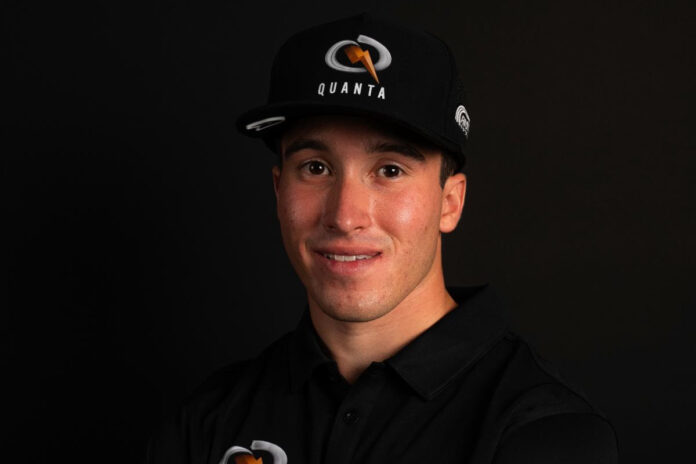
 MOORESVILLE, N.C. (September 29, 2026) – – Front Row Motorsports (FRM) announced this morning that NASCAR Truck Series veteran, and Bristol winner, Jake Garcia will take over as driver of the team’s No. 38 Ford F-150, beginning in 2027.

Garcia, a native of Monroe, Ga., joins a FRM NASCAR Truck Series stable that has experienced on-track success since its inception, with 23 race victories and a series championship in 2022, won by current FRM NASCAR Cup Series competitor, Zane Smith.

“We’re excited to have Jake join us next season,” said Jerry Freeze, General Manager of Front Row Motorsports. “He displayed it at Bristol, and over his entire Truck Series career, he has the talent, abilities and personal motivation to keep our No. 38 team at the top of the heap and continue to help FRM set the bar in the series. We’re confident in what Jake brings to the table, and we look forward to seeing him put in the work during the offseason, to get ready for 2027.”

In his 95 career NASCAR Truck Series starts, Garcia has one win, six top-5 finishes, 29 top-10 finishes and five poles. Garcia secured his first NASCAR Truck Series victory at Bristol Motor Speedway on September 17, leading 104 of the 250 laps. He is currently ranked 11th in the NASCAR Truck Series standings. Garcia is also a former winner of the prestigious All-American 400 and North-South Challenge late model races.

“I’m very thankful to get the opportunity to compete for Front Row Motorsports, in the NASCAR Truck Series,” Garcia said. “They are one of the top teams in the series and have proven that their equipment can win any given week, no matter the track. I appreciate Bob (Jenkins) and Jerry for giving me this shot. With their support, I think that I can continue to build upon the success that other drivers have had in the No. 38 truck and be a contender for the title in 2027.”

Quanta Services, a Fortune 500 corporation and global leader in specialized contracting services for the utility, renewable energy, communications, pipeline and energy industries, will join Garcia as a major primary on the No. 38 truck. Based in Houston, Texas, and with over 60,000 employees across the globe, the company’s comprehensive services include designing, installing, repairing and maintaining energy and communications infrastructure.

Both FRM entries in the series, the No. 34 and No. 38 Ford F-150s, qualified for this year’s Chase, which began at Bristol and features the top 10 drivers from the regular season standings battling for the championship. The No. 38 team has been victorious twice this season, through 19 events, with wins at Daytona (Feb.) and North Wilkesboro (Jul.).

Garcia will make his debut in the No. 38 Ford F-150 at Daytona International Speedway, on Friday, February 19, with the launch of the 2027 NASCAR Truck Series season. All 25 races NASCAR Truck Series will be televised live on FOX Sports.

ABOUT QUANTA SERVICES

Quanta Services is a leading specialized contracting services company, delivering comprehensive infrastructure solutions for the utility, renewable energy, communications, pipeline, and energy industries. Quanta’s comprehensive services include designing, installing, repairing, and maintaining energy and communications infrastructure. With operations throughout the United States, Canada, Australia, and select other international markets, Quanta has the manpower, resources, and expertise to safely complete projects that are local, regional, national, or international in scope. For more information, visit www.quantaservices.com.

ABOUT FRONT ROW MOTORSPORTS

Front Row Motorsports (FRM) is a championship-winning racing organization, competing in the top levels of NASCAR, with entries in the NASCAR Cup Series and the NASCAR Truck Series. Founded in 2004 by successful entrepreneur Bob Jenkins, the team has evolved from humble beginnings to a top-tier team, with 27 total victories and a championship in the NASCAR Truck Series, in 2022. In 2021, FRM captured the most coveted prize in NASCAR, winning the DAYTONA 500, one of four victories the team has earned in NASCAR’s premier division, the NASCAR Cup Series.

Based in Mooresville, N.C., FRM proudly represents Ford Racing on a weekly basis in Ford Mustang Dark Horse race cars, in the NASCAR Cup Series, and Ford F-150 race trucks, in the NASCAR Truck Series, with an impressive roster of talented, race-winning drivers that have nearly 100 victories in NASCAR’s national and regional touring divisions .

To keep up with the team, visit FrontRowMotorsports.com and follow Front Row Motorsports on X (@Team_FRM); Instagram (@teamfrm); Facebook (FrontRowMotorsports); Tik Tok (@Team_FRM); and YouTube (@FrontRowNASCAR).

Christian Lundgaard joins Chip Ganassi Racing for 2027 IndyCar season

Photo by Paul Hurley (Penske Entertainment).

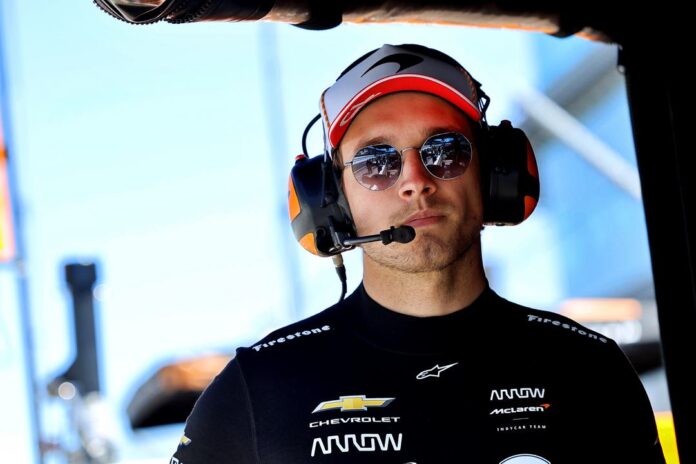
Christian Lundgaard has officially been announced as the driver of the No. 9 PNC Bank Dallara-Honda entry for Chip Ganassi Racing (CGR) for the 2027 NTT IndyCar Series season.

The 25-year-old Lundgaard from Hedensted, Denmark, is coming off his fifth consecutive season as a full-time IndyCar competitor and his best, to date. He notched a pair of road course victories (Indianapolis Motor Speedway Road Course in May and Road America in June), a pole position at the Mid-Ohio Sports Car Course, career high stats in podiums (7) and laps led (91), a career-best average-finishing result of 7.2 and a career-best third place in the driver’s standings.

Having previously competed for Rahal Letterman Lanigan Racing and Arrow McLaren, Lundgaard will elevate his IndyCar career to a new level by piloting CGR’s iconic No. 9 entry. The entry has been driven to Victory Lane 58 times, including the 2008 Indianapolis 500, and six championships by six-time IndyCar champion, Scott Dixon, for 23 years, and will have a new chapter to etch in 2027 with Dixon transitioning to Arrow McLaren.

“It is an honor and a privilege to join Chip Ganassi Racing beginning next season,” Lundgaard said. “The fact that it is in the iconic No. 9 PNC Bank Honda makes it even more special.  CGR has set the standard in INDYCAR for decades, and the opportunity to be part of that legacy is something I’ve worked toward my entire career. I’m incredibly exicted about what’s ahead. I can’t wait to get to work with everyone at Chip Ganassi Racing and compete for wins, championshipss and the Indianapolis 500.”

Lundgaard, a former SMP F4 and F4 Spanish champion along with winning in Formula 3 and Formula 2, made his IndyCar debut at the Indianapolis Motor Speedway Road Course in August 2021 with Rahal Letterman Lanigan Racing, where he finished in 12th place. He then spent the following three seasons as a full-time competitor for the latter organization. During the three-year campaign, he became the first Danish competitor to win in IndyCar competition when he won at Exhibition Place in Toronto, Canada, in July 2023 from pole position. He also achieved his first two career pole positions and three podiums.

Beginning in 2025, Lundgaard joined Arrow McLaren, where he notched average-finishing results in the top-10 mark during a two-year campaign with the latter organization. He also notched a combined 13 podiums, including his pair of road course victories in 2026, a combined 144 laps led and top-five results in the driver’s standings (fifth in 2025 and third in 2026).

Through 87 career starts in IndyCar competition, Lundgaard has achieved three victories, three poles, 16 podiums, 275 laps led and an average-finishing result of 10.7 as he continues his pursuit of his first driver’s championship. He solidifies CGR’s lineup for the 2027 IndyCar season that includes this year’s five-time champion Alex Palou and Kyffin Simpson.

“We are excited to welcome Christian to Chip Ganassi Racing,” Chip Ganassi, Owner of Chip Ganassi Racing, said. “We know he’s capable of accomplishing even more in the NTT INDYCAR SERIES, and we’re looking forward to helping him reach that next level with the No. 9 team. He’s already proven he can win races, and it isn’t often a driver of his caliber becomes available. Throguhout our history, one of the things we’ve done best is identify young talent, help them maximize their potential, and develop them into championship contenders. We believe Christian has all the talent to be the next driver to do that.”

Christian Lundgaard’s first IndyCar campaign with Chip Ganassi Racing is scheduled to commence on March 7, 2027, at the Streets of St. Petersburg in St. Petersburg, Florida.

Why Motorsport Betting Withdrawals Slow Down After Race Day

The race is over. Your bet shows as won, the balance is visible in your account, and you have requested a withdrawal. Yet the money has not arrived. From the bettor’s side, that can feel like one unexplained delay. From the operator’s side, several separate processes may still be running.

First, the sportsbook has to settle the relevant betting market. Then it has to process the withdrawal request. An identity or account check may need attention, and finally the payment has to move through the chosen payout method. Knowing which step is pending is more useful than asking whether a bookmaker offers “fast withdrawals” in general.

That distinction matters after a busy race weekend, when many customers may be checking results and requesting payouts at once. It also matters when a betting platform accepts crypto: a fast transfer on one part of the journey does not make every review or payout step instant. Here is how to locate the delay, what to ask the operator, and what happens behind the scenes when routine cases become a queue.

A Finished Race Is Not Always a Settled Bet

A driver crossing the finish line does not necessarily mean that every related betting market has been settled. “The race has finished,” “the event result has been confirmed,” and “my particular bet has been graded” are different statements.

Take Formula 1 as an example. The FIA publishes provisional and final race classifications separately. That does not mean every sportsbook waits for the final classification before settling every F1 bet; settlement depends on the operator’s rules and the market involved. A wager on the race winner, a qualifying result, or another event-specific outcome may be governed by different terms.

Before contacting support about a payout, check the bet slip. Does it say Open, Pending, Settled, or Won? Is the expected amount already in your withdrawable balance? If the bet is still open, the question is about settlement, not withdrawal. Ask which market rule applies and whether the operator is waiting for an official result or carrying out an internal review.

If the bet has been settled and the balance is available, you have moved to a different stage. The next question is whether the operator has processed your request to take the money out.

The Withdrawal Has Its Own Processing Window

A winning balance in an account is not the same as a completed payout. After you press Withdraw, the sportsbook may first check that the request meets its withdrawal conditions, then approve or process it. Only after that does the chosen payment route have its own work to do.

This is why payout wording deserves a close read. “Fast withdrawals” might refer to how quickly an operator handles eligible requests, the speed of a particular payment method, or a best-case journey. It is not a promise that every customer will receive funds at the moment a race ends. SpeedwayMedia’s coverage of newer sportsbooks identifies operator processing, identity checks, and deposit or withdrawal methods as separate parts of the experience.

Look for the status of the withdrawal request, not only the status of the bet. A request marked Pending may still be with the operator. One marked Processed may have moved to the payment stage, although you should check how that particular operator defines the term.

There is also a difference between an advertised processing window and a missed deadline. If the published time has not passed, the status page may be the best source of information. If it has passed, ask support where the request is held and whether they need anything from you. That question is more actionable than simply asking, “Where is my money?”

When Identity Checks Affect a Payout

Identity verification is sometimes discussed as though it happens only when a customer tries to withdraw. That is misleading. The timing and scope of checks depend on the operator, the jurisdiction, and the reason for the review.

For example, Britain’s Gambling Commission requires operators to verify a customer’s identity before allowing them to gamble. It has also said operators should not wait until withdrawal to request identity information they could reasonably have requested earlier. Other necessary checks can still arise later, but a first payout should not automatically be described as the standard starting point for KYC.

A payout-related review might involve an unresolved account detail, a discrepancy in information already supplied, or an additional check the operator considers necessary. The useful question for the customer is specific: What information is missing, and why is this request pending?

If the operator asks for a document, use its official account area or verified support channel to confirm the request. Check that your account details are accurate, submit only what is requested through the approved process, and keep a record of the submission and any case number. Sending the same material repeatedly through different channels may make the conversation harder to follow.

KYC is not just an upload screen. Behind a request may be automated checks, a human reviewer, an exception that needs escalation, and a recorded decision. That is why two withdrawals made through the same method can take different paths.

A Fast Payment Method Cannot Skip Every Step

The payment route matters, but it is only one part of the timeline. A card, bank transfer, e-wallet, or crypto withdrawal may each have different conditions and processing stages. A method that worked quickly for one payout is not a reliable clock for every later request.

Crypto makes the distinction especially visible. A customer can be comfortable moving funds between wallets and still encounter a pending request at the betting platform. The operator may not yet have released the withdrawal. If the operator has released it, the remaining question concerns the transfer and the destination. Those are different problems, and support should be able to tell you which one you are dealing with.

Do not assume that paying in crypto removes identity checks. SpeedwayMedia already covers crypto sportsbooks for motorsport fans; the practical detail to check before depositing is the platform’s own withdrawal and verification policy, not just which coins it accepts.

The same caution applies to fiat on-ramps and off-ramps connected to a wider crypto product. If a regulated crypto-asset service provider is involved in an EU transfer, additional obligations may apply to that provider. MiCA governs aspects of crypto-asset services, while the EU Travel Rule concerns information accompanying certain funds and crypto-asset transfers. Neither should be casually presented as a blanket rule for every sportsbook withdrawal or every peer-to-peer wallet transfer.

For a bettor, the operational question remains simple: has the sportsbook approved and released the payout? If yes, ask for the available payment or transaction reference. If not, ask what is preventing approval.

Why a Race Weekend Tests Operations

A major race weekend gives a betting operator several tasks in a tight period. Customers follow the result, check bet slips, contact support about settlement, and request withdrawals. New users may also be completing account checks. The important point is not that every event produces an exceptional spike; it is that these activities can overlap.

Simple cases may move through standard workflows. Exceptions take people. A result may need checking against a market rule. A customer record may contain inconsistent details. A screening alert may need to be dismissed or escalated. If reviewers cannot clear that work as quickly as it arrives, a queue forms even when the app itself is working normally.

From the outside, all of those situations can look like “withdrawal pending.” From the inside, they require different owners and different next actions. A settlement question belongs with trading or sportsbook operations. An account verification issue belongs with the relevant review team. A released payment needs investigation through the payment route.

Good operations therefore start with clear case status. The customer should not have to guess whether the race result, an account review, or the payment method is responsible. Support teams also need enough visibility to give an answer without asking the customer to start the explanation again each time.

How Operators Keep Review Queues Moving

For operators, the tempting response to a growing queue is to add more reviewers. That may help, but only if the work is defined. Analysts need current procedures, a way to distinguish routine cases from exceptions, quality checks, and an escalation path when they cannot make a decision at their level.

Some businesses keep all of that work with an internal team. Others use external reviewers for defined operational tasks while retaining policy and oversight in-house. A specialist provider such as Actigy describes outsourced teams handling identity and document checks, screening triage, enhanced due diligence, and backlog remediation. That makes it an example of the KYC operating model, not evidence that it has worked for a particular motorsport sportsbook

Outsourcing is not a shortcut around accountability. An operator should specify what a reviewer may clear, what must be escalated, how decisions are documented, and who checks the quality of completed cases. A paid pilot on real case types can reveal whether the procedures work before a larger queue depends on them. If the platform also runs regulated crypto services or uses an on-ramp, the relevant compliance team must map those activities and obligations separately rather than assuming the sportsbook’s KYC workflow covers everything.

The benefit to the customer is indirect but concrete: a properly staffed, well-run review process is better placed to explain what is pending and deal with exceptions. No vendor arrangement, however, can guarantee an instant payout or replace the operator’s published rules.

What to Do If Your Withdrawal Is Pending

Work through the process in order. That gives you a clearer support request and helps avoid confusing a delayed bet settlement with a delayed payment.

  1. Check the bet slip. Confirm that the market is settled and the winnings are in your withdrawable balance.
  2. Check the withdrawal status. Find out whether your request is pending, approved, processed, or completed—and read how the operator defines those labels.
  3. Look for an official account request. If information or documents are needed, confirm that through the operator’s account area or verified support channel.
  4. Read the applicable withdrawal terms. Check the processing window, limits, and conditions for the method you selected.
  5. Contact support with specifics. Give the bet and withdrawal references, the request date, and the displayed status. Ask which stage is pending and whether you need to act.
  6. Keep a record. If the stated timeframe passes without a clear resolution, retain the messages and follow the operator’s formal complaint process.

Avoid submitting a second withdrawal or changing payment methods simply to see whether one moves faster. If a request is already being reviewed, ask support what to do first.

FAQ

Why is my motorsport bet still unsettled after the race?

The operator may still be applying the rules for that particular betting market. A visible finish and an officially published classification can be different stages; the relevant settlement rule determines which result the operator uses. Check your bet slip and the market terms before treating it as a withdrawal delay.

Can KYC verification delay a betting withdrawal?

An identity or account review can affect a request, but it should not be assumed to occur for every payout. Requirements differ by jurisdiction. In Britain, operators must verify identity before permitting a customer to gamble and should not hold back reasonably foreseeable identity requests until withdrawal.

Does using crypto guarantee a faster payout?

No. A transfer method cannot speed up a bet that has not been settled or a withdrawal that the operator has not approved. First establish whether the request is still with the sportsbook or has been released to the payment route.

What should I ask support about a pending withdrawal?

Ask: “Has my bet been fully settled? Is my withdrawal awaiting operator approval, an account review, or the payment provider? Do you need any action from me?” Include the relevant references so support can locate the case rather than give a general payout estimate.

A finished race is only the first checkpoint. To understand a delayed payout, find the exact stage—settlement, operator processing, account review, or payment—and ask for the next action tied to that stage.

How to Buy a Used Bajaj Boxer 125 Carefully

A used motorcycle can look clean in photographs and still need attention that is hard to spot until you see it in person. Paint, a recently washed engine and a short description tell you little about how it starts, stops or tracks along the road. If you are considering a Bajaj Boxer 125, begin with the condition of the actual machine and the clarity of its ownership record, rather than assuming every bike of the same model has had the same life. This guide covers the questions to ask a seller, the checks to make during an inspection and when to bring in a qualified mechanic before agreeing to buy.

Decide how you will use the bike

Picture your usual journeys. Will the motorcycle mainly carry you through town, cover longer roads or deal with rougher surfaces? Will you often carry a passenger or luggage? These needs affect how you judge comfort, tyres, suspension and the amount of maintenance you can accept. A bike that feels fine on a short solo ride may reveal weaknesses when used differently, so be honest about your intended routine.

Set priorities before contacting sellers: sound mechanical condition, complete documents and a comfortable riding position should come ahead of colour or cosmetic additions. Think about where you can have the motorcycle serviced and whether a trusted mechanic can inspect it. Leave room in your plan for routine maintenance and protective equipment. If you depend on the bike for work, consider how you would manage transport while it is being repaired. Choosing a used bike is easier when you know which issues you can fix and which would make you walk away.

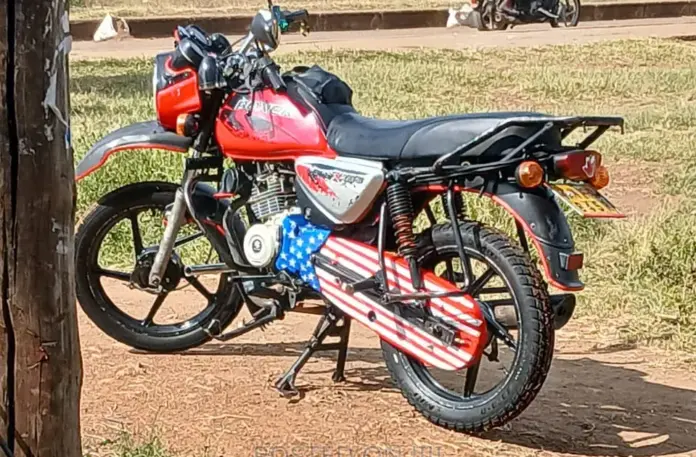
When comparing a boxer 125 in different listings, look for clear photographs of both sides, the tyres, engine area and identification details rather than relying on a polished front view. Ask the seller to confirm the exact make, model, year and condition. Listings can contain mistakes, so match those claims to the motorcycle and its records during an in-person inspection.

Confirm identity and ownership early

Before discussing a deal in detail, ask who owns the motorcycle and what registration documents are available. Check that the identifying numbers on the bike are legible and match the records presented. Do not accept an explanation that essential details can be sorted out later. A mechanical inspection has limited value if ownership cannot be established clearly.

Registration and transfer processes can change. Verify the current requirements with Kenya’s relevant transport authority or a qualified professional, and complete the transaction through the appropriate process. If the seller is acting for someone else, ask what authority they have to sell and who will take part in the transfer. Keep copies of the agreed terms and a record of what is included with the motorcycle.

Look beyond the fresh wash

Inspect the bike in daylight when it is dry. A wet or heavily polished surface can make some marks harder to notice. Walk around slowly and compare both sides for dents, cracked covers, uneven gaps or signs of a repair. Cosmetic damage does not always mean the machine is unsound, but it gives you a reason to ask what happened and whether the underlying parts were checked.

Look at the frame, footrests, handlebar and controls for obvious bends or mismatched parts. Check whether fasteners are missing or appear to have been handled roughly. Modifications deserve questions: who fitted them, why, and whether the original parts are available. If anything suggests a serious fall or structural repair, have a competent mechanic assess it before making a decision.

Ask for a cold start

If practical, arrange to see the motorcycle before it has been run that day. A cold start can reveal behaviour that disappears once an engine is warm. Watch how it starts and settles, and listen for unusual knocking, rattling or uneven running. Exhaust smoke, a strong fuel smell or visible leaks deserve investigation. Do not try to diagnose a complex fault from a brief sound clip; ask a mechanic when something seems wrong.

Let the engine run long enough to see whether it idles consistently, but do so in a safe, well-ventilated place. Check around the engine and underneath for fresh fluid. Ask about the most recent service and what work was carried out. Receipts or records can support the answer, although their absence does not prove neglect. A seller who can explain the maintenance history clearly gives you more to work with than one who only says the bike is “ready to ride”.

Check tyres, wheels and suspension

Tyres are a safety item, not just a cosmetic detail. Look at tread condition, sidewalls and any uneven wear. Cracks, cuts, bulges or a tyre that seems old and hardened call for a closer look. Check both wheels for visible damage and ask a mechanic to assess anything that appears bent or loose. The tyres fitted should suit the bike and the riding you plan to do; do not assume any replacement is appropriate because it fits the rim.

Press the suspension gently and watch how it moves, without forcing the bike or putting anyone at risk. Look for leaks around the fork and rear units, and notice whether the motorcycle sits evenly. Listen for clunks when the bike is moved slowly. A short visual check cannot prove the suspension is healthy, but it can identify reasons for a more thorough inspection.

Inspect brakes and drivetrain

Check that brake levers and pedals move smoothly and feel predictable. Look for obvious wear, leaks and damaged lines or cables where visible. The wheels should turn and stop without scraping or grabbing in a way that needs explanation. Brake condition matters too much to judge from a seller’s assurance alone; if you are uncertain, have a mechanic inspect the system before riding.

Examine the chain and sprockets for wear, poor adjustment and heavy dirt. A neglected drivetrain can signal that other routine tasks were missed. Ask when it was last cleaned, adjusted or replaced. The clutch and gears should also operate smoothly during an appropriately supervised test. Do not dismiss difficult shifting as something every used bike does; find out why it happens.

Test the controls and electrics

With the seller present, check lights, indicators, horn, switches and any instrument display. Confirm that the ignition works consistently and that the controls return properly after use. Inspect visible wiring for loose connections or improvised repairs. Ask for a repair assessment if a function you will need on the road fails.

Sit on the bike and see whether you can reach the controls comfortably and balance it at a stop. The seat, grips and mirrors should suit your posture and give you a clear view. Comfort is personal. A familiar model name does not guarantee that a particular used bike, perhaps with altered parts, will feel right to you.

Take a careful test ride if appropriate

Ride only with the seller’s permission, when you are properly licensed and the ride is legally permitted and safe. Wear appropriate protective equipment. If you cannot ride under those conditions, ask a qualified mechanic or suitable rider to assess the bike. A test ride is useful because it can reveal pulling to one side, unusual vibration, weak braking or gear changes that felt fine while stationary.

Start gently in a safe area and pay attention to how the motorcycle responds to steering, braking and acceleration. Do not attempt risky manoeuvres to “prove” the machine. If you notice a problem, stop and describe it to the seller. One smooth ride does not replace an inspection, especially when the bike will be used regularly or carry a passenger.

Use an independent mechanic

A mechanic who is not connected to the sale can help you separate ordinary wear from more serious work. Ask for a check of the engine, brakes, steering, frame, suspension and drivetrain, along with an explanation of anything that needs attention. A useful inspection should tell you what must be repaired before use, what can be scheduled and what remains uncertain without further work.

Discuss findings with the seller before deciding. If access to the bike for inspection is refused without a good reason, treat that as a warning sign. Do not feel pressured to make a quick commitment because someone else might be interested. There will be other motorcycles; your decision should be based on what you can verify.

A quick inspection checklist

  • Identity: Match the model and identifying numbers with the records.
  • History: Ask about ownership, maintenance, repairs and modifications.
  • Engine: Observe a cold start and look for leaks or unusual behaviour.
  • Safety: Have tyres, brakes, wheels, steering and suspension checked.
  • Ride: Test controls and road behaviour only when permitted and safe.
  • Decision: Get an independent assessment before accepting an unclear fault.

The bottom line

Buy a used Bajaj Boxer 125 on the strength of its actual condition and verified records. Compare listings, inspect the bike in person, and ask a qualified mechanic to check anything that affects safe riding. Confirm the current ownership-transfer requirements before paying. A careful inspection can reveal work you are prepared to handle or give you a sound reason to keep looking.

Diesel Tuning: More Than Just Horsepower

There is something uniquely American about watching a diesel truck hook up to a massive sled, get on the throttle, and try to drag it down the track.

Depending on the engine and hardware, ECU tuning can change the way power and torque are delivered, along with throttle response and boost control. For a truck that regularly tows or hauls, that can matter a lot more than a peak horsepower number. The useful part is what the engine does through the range where it spends most of its working time.

You don’t necessarily need to build a competition truck to feel the difference. Sometimes, the biggest improvement comes from making the engine work better with the truck’s actual configuration.

What Truck Pulling Reveals About Diesel Performance

Truck pulling competitions take the basic idea of a working truck and push it to an extreme. Engines are built for serious power, drivetrains are heavily upgraded, and every part of the setup has to work together when the load becomes enormous.

But the interesting part isn’t simply how much horsepower the engine produces.

It’s how that power gets delivered.

A diesel can have an impressive horsepower number and still feel completely different from another truck with a similar peak output. Torque delivery, throttle response, boost behavior, and engine calibration all play a part when the truck actually has to move something heavy.

And that isn’t just a truck-pulling issue. The same thing matters when a work truck is pulling a loaded trailer up a grade or spending hours under load.

Peak Horsepower Doesn’t Tell the Whole Story

When people talk about diesel performance, horsepower usually gets most of the attention.

Dyno numbers are easy to understand. Bigger numbers look impressive.

But a truck doesn’t move a heavy trailer because of a number on a dyno sheet. It moves because the engine can make useful power across the operating range and get that power through the drivetrain.

For a truck that regularly works under load, things like these can matter just as much:

  • Low and mid-range torque
  • Throttle response
  • Turbocharger response
  • Fuel delivery
  • Engine operating strategy
  • Transmission behavior
  • Overall ECU calibration

This is why two trucks with similar peak horsepower can feel very different on the road.

The real question isn’t only how much power a diesel makes. It’s what the truck can actually do with that power when the load is there.

The ECU Is Where the Character Changes

Modern diesel engines are largely managed by electronic control systems. The ECU coordinates fuel delivery, boost-related strategies, torque management, throttle response, and many other aspects of engine operation.

Factory calibration is a compromise by design.

The manufacturer has to account for emissions requirements, fuel economy, drivability, durability, and a wide range of operating conditions. That’s necessary for a production vehicle. It also means the factory calibration has to cover a lot of different situations rather than being built around one specific use.

ECU tuning changes that equation.

A properly developed programming can change how the engine responds and how it delivers the power that’s available. Depending on the engine, ECU, and vehicle configuration, tuning may improve certain performance characteristics, change torque delivery, or adapt the calibration to a modified setup where supported.

That’s when a work truck can start feeling like a different machine.

And if the truck spends hours under load, there is more to consider than the highest possible power setting. Cooling capacity, exhaust temperatures, turbocharger limits, and transmission capacity all matter. The most powerful setting isn’t automatically the one that makes the most sense for the job.

When the Truck Has Been Modified

Performance modifications can change the way a diesel engine operates.

A truck may receive a different turbocharger, intake or exhaust components, fuel-system upgrades, or other engine modifications. Once the hardware changes, the factory calibration may no longer be the best match for the new setup.

This is one reason ECU tuning is often treated as part of a complete performance setup rather than an isolated upgrade.

The hardware creates the potential.

The programming determines how that potential is used.

For some builds, the goal is maximum performance. For others, it’s better response or a calibration that fits the way the truck is actually used.

There isn’t one correct approach for every build. The engine, ECU, hardware, transmission, and intended application all matter.

A truck with aftermarket engine hardware may also require custom programming beyond the scope of a standard tuning service.

You Don’t Need a Competition Truck

Most diesel owners aren’t trying to win a truck-pulling competition.

They have a trailer to tow, equipment to haul, a long highway run ahead of them, or they simply want more performance from a truck they already own.

That’s where the same performance principles become useful in everyday driving.

A diesel that spends its life pulling heavy loads needs usable power, predictable response, and programming that makes sense for its configuration. A performance-oriented owner may want something completely different from someone who uses the same type of truck as a workhorse.

There is no single tune that makes sense for every diesel.

The best place to start is with the truck’s engine ECU.

DrunkLab: Software Tuning Solutions

This is where professional tuning becomes more than simply changing a few parameters in an ECU.

DrunkLab develops proprietarysoftware and hardware solutions for the remote tuning of electronic systems in trucks, buses, construction equipment, and other heavy-duty applications. The company’s work also extends to Volvo Penta industrial and marine engines.

DrunkLab works with commercial vehicle platforms including Volvo, Mack, Renault, UD Trucks, Prevost, Volvo Penta, and Volvo construction equipment, as well as Cummins, Detroit Diesel, and PACCAR.

Mochester App: DrunkLab’s Tuning Platform

Mochester App (M4 App) is DrunkLab’s Windows-based platform for programming and tuning supported trucks, buses, and heavy equipment.

Available engine tuning services include horsepower upgrades and DPF, EGR, and SCR/DEF tuning solutions. Options depend on the engine, ECU, and vehicle configuration. Services can be checked via VIN number, or by connecting the equipment to the vehicle directly.

The app also offers free fault-code reading, providing a report of active and inactive faults.

Mochester App also enables users to program factory software for compatible vehicle control modules such as FCIOM, RCIOM, and CCIOM modules, in addition to engine tuning.

Remote Tuning Through TeamViewer

For Cummins, Detroit Diesel, and PACCAR engines, DrunkLab also provides remote ECU tuning through TeamViewer.

This allows ECU programming and calibration to be performed remotely using compatible equipment connected to the customer’s truck. The exact process and available options depend on the engine, ECU, vehicle, and application.

Making Diesel Performance Work for You

Truck pulling shows what happens when diesel performance is taken to an extreme.

A competition truck may be built almost entirely around one goal: generate enormous power and put it to the ground.

A working diesel has a different mission.

It needs to start every day, travel long distances, tow, haul, and do its job without becoming a competition machine.

That’s why good diesel tuning isn’t necessarily about making the biggest number possible. It’s about making the engine’s power work for the application.

Whether the goal is a serious performance build, a modified diesel, or simply getting more usable performance from an existing truck, ECU tuning can be an important part of the equation.

On the pulling track, the result is measured in feet. For a working truck, it’s how well the engine handles the load, the grade, and the hours ahead.

Wearable Technology in the Workplace: Why Camera-Free AI Glasses Are Gaining Ground

Wearable technology in the workplace is becoming more practical as businesses look for ways to improve productivity without adding more screen time to the working day. Smartwatches, wireless audio devices, and smart glasses are moving from consumer technology into professional environments, where employees may use them for communication, information access, translation, note-taking, and other everyday tasks. Yet workplace adoption involves more than simply finding a device with useful features. Employers and employees also have to consider privacy, recording, comfort, security, and how other people in the workplace respond to the technology.

These concerns become especially important when wearable devices are used around colleagues, customers, or confidential information. A device that can make work more efficient may still create hesitation if people cannot easily understand what it is recording or processing. This has made privacy-focused designs increasingly relevant to the discussion around workplace wearables, particularly as AI becomes a larger part of everyday professional tasks.

Why Workplace Wearables Are Attracting Attention

The basic appeal of workplace wearables is convenience. Employees regularly switch between conversations, emails, meetings, documents, calls, and other tasks. Even a short interaction with a phone can interrupt concentration when someone needs to check information or respond to a message. Wearable devices can move some of these interactions away from the screen and make them accessible through voice or audio.

For businesses, the potential value goes beyond convenience. Hands-free technology may help employees stay engaged with their physical surroundings while receiving information or communicating with others. Sales representatives, field workers, consultants, trainers, and employees who spend much of their day in meetings can all encounter situations where carrying out a digital task without reaching for a phone would be useful. This is one reason workplace wearables are increasingly being considered as productivity tools rather than simple consumer gadgets.

The Privacy Problem Behind Smart Devices

Privacy is one of the biggest barriers to wider acceptance of wearable technology in professional environments. A camera-equipped device can create uncertainty because people nearby may not know when images or video are being captured. Even when the wearer has no intention of recording, the presence of a camera can make colleagues or customers uncomfortable.

This concern can become more serious in workplaces where sensitive information is discussed. Legal offices, healthcare organizations, corporate meetings, research facilities, and other professional settings may have strict rules concerning recording. A wearable with a camera can therefore require additional policies and restrictions before it can be used. The challenge is not only technical; organizations must also maintain trust between employees, customers, and colleagues.

Why Camera-Free Designs Change the Conversation

A different approach is to remove the camera altogether. Camera-free smart glasses can still provide voice-based and audio-focused functions while eliminating visual recording from the hardware. This does not remove every privacy consideration because microphones, connected services, and audio recording still require responsible use. However, it removes one of the most obvious concerns surrounding smart glasses in shared professional spaces.

Dymesty has built its camera-free smart-glasses approach around functions such as voice interaction, real-time translation, transcription, summaries, calls, and audio assistance. The design reflects a practical trade-off: users can access several AI-powered features without the visual recording capabilities associated with camera-equipped glasses. For workplaces where photography or video recording is restricted, this distinction can make the technology easier to evaluate and potentially easier to accept.

Can Wearables Become Part of Normal Office Life?

Technology adoption depends heavily on how natural a device feels during everyday use. Employees may be interested in AI devices at work, but that interest can disappear if a wearable is uncomfortable, distracting, difficult to operate, or socially awkward. Unlike a laptop that remains on a desk, glasses are worn directly on the face, so weight, frame design, audio quality, and battery performance all become important parts of the user experience.

Acceptance also depends on how clearly the technology’s purpose is understood. A device designed for calls, translation, voice assistance, or permitted meeting recording may be easier to explain than one that combines many unclear functions. Employers can help by establishing straightforward rules about where wearables can be used, when recording is permitted, and how employees should respect the privacy of other people.

Open-Ear Audio Offers a More Natural Workplace Experience

Audio is one of the most practical areas for workplace wearables because many tasks do not require a screen. An employee may need to listen to a call, hear translated speech, receive information from an AI assistant, or access spoken notes while continuing to work. Open-ear audio can support this type of interaction without completely blocking the user’s ears.

That distinction matters in collaborative workplaces. Traditional headphones can make it harder to hear nearby conversations, announcements, or other environmental sounds, depending on their design and how they are used. Open-ear smart glasses take a different approach by delivering audio while allowing the wearer to remain aware of the surrounding environment. For employees who move between individual tasks and conversations throughout the day, this can make a wearable feel more integrated into normal work rather than isolating them from it.

What Camera-Free AI Glasses Can Bring to the Modern Workplace

One example of this workplace-focused approach is Dymesty Cook Edge, a camera-free AI glasses model designed to combine AI assistance with everyday eyewear. The product supports functions including AI recording, transcription, summaries, real-time translation, calls, and open-ear audio. Its titanium frame weighs around 35 grams, while Dymesty states that it can provide up to 48 hours of typical use. These specifications are relevant for professionals who may want a wearable that can remain part of their routine rather than requiring frequent charging or feeling heavy during extended use.

The Cook Edge also uses four microphones to support its voice and audio functions. This is particularly important because the product’s camera-free design places greater emphasis on spoken interaction rather than visual capture. Combined with open-ear audio, the microphone system supports communication, translation, recording where permitted, and other voice-based functions. The result is a wearable designed around listening and speaking rather than putting another visual screen in front of the user.

Where Camera-Free Smart Glasses Could Be Useful

The strongest use cases for camera-free workplace wearables are situations where hands-free access to information is useful but visual recording is unnecessary. Sales professionals may benefit from calls and translation while meeting customers, while consultants and field workers can use voice-based tools without constantly reaching for a phone. Employees working with international teams may also find real-time translation useful during conversations.

Meeting-heavy roles offer another potential application. Transcription and summaries can help employees retain information from discussions when recording is allowed and appropriate under company policy. Training sessions, conferences, customer service environments, and other settings where people need to stay engaged with their surroundings could also benefit from hands-free audio and AI assistance. The important point is that the technology should support the task rather than become a distraction.

Workplace Policies Still Matter

A camera-free design can reduce one major privacy concern, but it does not mean every workplace should allow wearable devices without restrictions. Microphones and audio-recording capabilities can still raise important questions about consent, confidentiality, and data management. Companies should therefore establish clear rules before introducing employee wearable technology into sensitive environments.

Employees also need to understand those boundaries. A simple policy can explain where smart glasses are permitted, when recording is allowed, how consent should be handled, and which areas prohibit wearable devices altogether. Clear expectations can prevent misunderstandings and make employees more comfortable with colleagues using the technology around them.

The Future of Wearable Technology May Be More Selective

The next stage of workplace wearables may not be about adding as many features as possible. Instead, successful devices may be those that provide useful capabilities while fitting naturally into professional environments. Employees need technology that saves time, supports communication, and reduces unnecessary screen interaction, while employers need solutions that do not create avoidable privacy and trust problems.

Camera-free AI glasses offer one response to that challenge. Rather than attempting to replace every workplace device, they can provide a focused combination of voice interaction, audio, translation, transcription, and AI assistance. Dymesty’s Cook Edge demonstrates how these features can be brought together in a lightweight wearable built around camera-free use. As businesses continue exploring workplace wearables, this balance between capability, privacy, and everyday acceptance could become just as important as the underlying AI technology.

Choosing a Used Car for Life in Aberdeenshire

Photo by Scharfsinn at https://depositphotos.com/

Choosing a used car for life in Aberdeenshire has less to do with badges and more to do with mileage and weather. The area covers wide ground between towns, and daily journeys often mix dual carriageway with minor roads. Get the basics right and you will spend less time worrying about the car when winter closes in.

Start with distance and road type

Aberdeenshire spreads towns and villages across long stretches, so many owners cover higher annual mileages than city drivers. That puts fuel use and cruising comfort near the top of the list, alongside mechanical soundness. A car that feels relaxed at 60 mph and returns steady economy on a 40-mile round trip will matter far more day to day than outright pace.

The A90 and A96 feature in many commutes and can expose a car to sustained higher-speed running and changing weather. Buyers should look for stable straight-line manners and useful mid-range pull for joining traffic and climbing gradients rather than chasing a high headline power figure. Cruise control helps on average-speed sections, while a quiet cabin makes a long run to Aberdeen or Inverness less tiring.

Think about where the car sleeps and where it leaves the main route. A driveway in Inverurie or Stonehaven presents a different brief from a cottage at the end of an unclassified lane with passing places. Note your worst regular junction and tightest passing spot, along with your longest weekly run. If a car copes with those tests, it should cope with the rest.

Don’t buy for one snow day.

You do not all need a big 4×4

There is a persistent idea that rural Aberdeenshire demands a large SUV with four driven wheels. For some households it does, but for many others it adds weight, fuel bills and tyre costs without much daily gain. A front-wheel-drive hatchback or estate on decent rubber will handle tarmac commutes, school runs and shopping trips through most of the year.

All-wheel drive still has a place. Full-time and on-demand systems can help on steep grass braes and rutted farm access tracks, where two driven wheels may spin and stop progress. Ground clearance also helps in these spots by keeping sumps and exhausts clear of ridges and deep potholes. Width matters on single-track lanes, where a narrower car is less stressful to place beside a verge.

One point can save buyers money: tyres have a major effect on winter grip, whatever badge is on the car. All-wheel drive can help a vehicle move off, but it does not remove the need for suitable tyres or shorten braking distances by itself. If your driving is mainly on treated roads, consider tyre condition and suitability as carefully as drivetrain.

Pick-up trucks fit a specific working brief. A Toyota Hilux or Ford Ranger suits farms and estates that need load-bed strength and rough-track ability. When the bed stays empty through the working week, the ride can feel choppy and fuel stops come around quickly. Be honest about how often you need that layout.

Petrol, diesel, hybrid or electric for northern miles

Match the fuel to the journeys you actually make. Modern diesels suit long rural runs, where the engine gets hot and stays hot long enough for the diesel particulate filter to clear itself. That pattern fits reps, carers and commuters who cover distance each day on A-roads and dual carriageways. Short hops can cause trouble because repeated cold starts clog the filter, bringing warning lights and garage bills.

If the daily loop is a short school run with stop-start traffic, petrol or hybrid is often the lower-stress used buy. Petrol engines warm up faster and cope well with brief trips. Hybrids add quiet town running and strong economy in slow traffic, though buyers should check battery health and service stamps on older cars. For mixed use with moderate mileage, either choice keeps things simple.

Electric cars can work, although home charging changes the calculation. Public charging availability varies by route, so check the chargers near home, work and regular destinations rather than assuming they will be convenient. Reliable home charging can make ownership much easier. Cold mornings can also reduce usable range because cabin heating uses energy and low temperatures affect battery performance. An EV can still be suitable, but compare realistic cold-weather range with your longest routine journey and keep a margin for heating and diversions.

Buyers can get this wrong when they chase cheap fuel without considering access. An EV without home charging requires a workable public or workplace charging routine, while a diesel used mainly for short trips may be a poor fit. Write down your normal weekly mileage, then choose petrol, diesel, hybrid or electric to match it.

Buying local makes aftercare simpler

A used car is more than metal and tyres. The help you receive when something rattles or a warning light appears also matters. A seller a short drive away can inspect the car, honour warranty work and point you towards a trusted garage. That nearness counts in a large rural area, where a long trip for repairs can take half a day.

Buying nearby makes it easier to inspect a car in person and return to the seller if agreed work or warranty support is needed. A search for used cars Aberdeenshire will turn up plenty of locally prepared stock, and checking the tyres and winter equipment on each vehicle makes it easy to compare like for like. A distant car may still be worthwhile, but include travel, inspection and aftercare in the decision.

Ask what has been done before the sale. A fresh service, recent wipers and a battery test suggest that the dealer has thought about winter. Ask for the MOT record and service book, then listen to how clearly the paperwork is explained. Clear answers now can suggest clear help later.

An in-person inspection can provide useful reassurance before a high-value purchase.

Winter kit that earns its keep

Cold around Braemar and the Cairngorm foothills can mean more than light frost. Lasting cold ices door seals and glazes untreated lanes. Heated seats and a heated windscreen can turn a dark morning start from a chore into a quick exit. Treat both as worthwhile equipment if you leave early rather than simply as luxury trim.

Heated mirrors deserve similar consideration. They clear quickly and stay clear on damp runs, which helps on narrow roads where every glance counts. Hill-start assist is useful on steep village junctions and icy farm braes, where rollback can feel alarming. Good headlights and fog lights help on unlit B-roads, while a strong battery with a recent test date reduces the chance of a non-start after a cold snap.

Tyres complete the winter setup. Tyre performance varies with temperature and road conditions. Winter tyres are designed for colder conditions, while suitable all-season tyres may be a practical compromise for drivers who do not want two sets. Check tread depth across the full width and look for cracks or uneven wear. Budget for replacement if the car has budget summer tyres near the limit.

Air conditioning still matters in winter because it clears misted screens quickly when paired with heat. Test the heater fan at every speed and make sure the screen demists within a few minutes. Small comforts become daily needs when you scrape ice most mornings.

Rust and rural wear: what to check

Salt and damp are hard on cars in the north east. Grit keeps roads passable, but it attacks metal through winter and into spring. Sills and wheel arches may show the first blisters, sometimes hidden behind trim or mudflaps. Brake lines and subframes can also suffer where spray lingers and washing does not reach.

Start with the MOT history online before travelling. Look for repeated corrosion advisories, as well as wear in suspension bushes and drop links that may point to rough-road use. One advisory is not a failure by itself, but a pattern across several years suggests the car has had a hard country life without enough attention. Cross-check the mileage against service stamps, since long rural miles are fine when oil changes have kept pace.

View the car in daylight and inspect the visible bodywork carefully. Look along the sills and wheel arches for bubbles, flaking underseal or fresh black paint that could be hiding repairs. Open the boot and bonnet to check the seams, then look under the bonnet for damp or rust around the strut tops. Inside, lift the mats and check for musty smells that may point to leaking seals.

Do not rush this stage. Sellers expect careful checks in this market, and a straight car should stand up to them. If the underside is so heavily caked that the metal cannot be seen, ask for a clearer view or arrange a professional inspection. Walk away if you are pressured to decide quickly.

Towing needs and a proper test drive

Towing often matters for smallholdings, horses and boats. Do not rely on an advert for the limits. Check the handbook or door plate and confirm the braked and unbraked limits in writing. You should also check nose weight and licence requirements for the exact outfit you plan to pull, since horseboxes and caravans load a car differently from a small unbraked trailer.

Stability matters as much as strength on single-track braes. A long-wheelbase estate or pick-up can feel planted with a box behind it, while a short, light hatchback may feel nervous even within its limit. If towing is weekly work, shortlist cars with trailer stability aids and factory tow electrics. If it happens twice a year for a small boat, carrying extra towing bulk all year may offer little value. Hiring or borrowing could be cheaper.

Finish with a test drive that reflects real life. Include a steep hill start to test the clutch bite and rollback control, then take in a rough B-road section to listen for knocks and assess the ride over potholes. Join the dual carriageway to feel the car’s crosswind steadiness and judge its overtaking response without thrashing the engine.

Watch the small signals. The heater should warm up quickly and the wipers should clear without smearing. Check that the mirrors adjust and heat, and that the spare wheel, inflator kit or sealant is present and in date. These details point to a car that has been kept ready, which is what Aberdeenshire asks of a vehicle through winter.

Pick the car that fits your roads and your week rather than the one that shouts loudest on the forecourt. A sound hatchback on good tyres will serve many households better than a thirsty giant. A well-kept estate or compact SUV will suit those who genuinely need space and clearance. Buy on condition, history and suitability, and the car should repay that care each cold morning it starts first time.

What Are the Most Popular Betting Markets That Punters Use?

Daniel Suárez was sitting on pit road at Charlotte Motor Speedway under a red flag when the Coca-Cola 600 became his. He had taken two tires on a late stop, led the restart with 31 laps to go and was still in front three laps later, when rain reached the first two turns. After a stoppage of nearly eight minutes on May 24, NASCAR ruled the race official, 27 laps short of its scheduled distance.

For anyone holding a race-winner bet on Suárez, that ruling was the finish line. Which markets bettors use most is harder to settle. No major US sportsbook I could find publishes its NASCAR handle split by market, so popularity has to be read from two places instead: the order in which one sportsbook’s house rules describe its markets, and the volume one event-contract exchange publishes for every contract it lists.

Both point toward the race winner. Most of what sits below it asks the same question another way: with a wider target, between two cars, on a newer venue, over a shorter race or by counting something other than the finishing order. What separates those markets is the moment each one settles, and that’s worth knowing before backing any of them.

A Race-Winner Bet Waits For Post-Race Inspection

Caesars’ published house rules list the race winner first among the auto racing markets they describe, and the size of the field keeps it there. Bristol started 37 cars on Sept. 19 and Charlotte started 39 in May, so one plain question produces a long price on almost every name in the lineup.

History narrows that field faster than an entry list does. SpeedwayMedia’s preview of the Sept. 27 Hollywood Casino 400 shows that 28 of the 41 Cup races run at Kansas Speedway went to a driver who started in the top 10, and only three to one who started outside the top 20. Brad Keselowski’s win from 25th in the spring of 2011 is still the deepest start of any Kansas winner.

The answer also arrives later than the checkered flag. At Pocono in July 2022, NASCAR disqualified the first two cars across the line when post-race inspection found a problem with the aero on their front fascias, and Chase Elliott, who had crossed the line third, was declared the winner.

Caesars builds that delay into settlement. Its current rules say NASCAR, O’Reilly and Truck Series results “will not be settled until the post-race inspection is completed,” and they let wagers stand whenever the governing body declares a race official, “no matter what the circumstances are.” Read together, those lines mean a race called short, as the 600 was, still pays on the declared winner, but only once inspection is done.

It’s the easiest market on the board to understand and one of the hardest to get right, since knowing a driver’s form at one track rarely narrows 37 cars to one. In return, it settles on the result every fan remembers, which is exactly what the other markets trade away.

Hamlin’s Kansas Record Shows What A Top-10 Bet Buys

A finishing-position bet asks whether a driver lands inside a band rather than in front. Caesars’ rules cover a top-three finish, a top-10 finish and a general top-X finish, and all of them wait on the same post-race inspection as the race winner. Widening the target changes what a fan’s knowledge is worth, because a win record at one track is a thin sample and a top-10 record is a thick one.

Hamlin at Kansas shows the difference. The same preview credits him with four wins there, the most of any active driver, alongside 16 top-fives and 18 top-10s. Four wins is a small base to price one race from. Eighteen top-10s is a pattern.

That’s the case for the band: it rewards backing the driver who runs well every week, which is what regulars actually watch for. The cost is the price. A top-10 on Hamlin or Larson is short enough that one loose wheel or a pit-road penalty can wipe out a stake that was never going to return much.

A Matchup Can Be Decided Forty Laps From The End

A head-to-head bet throws out the rest of the field. It pays on whichever of two named drivers finishes higher, and Caesars settles it by “the official listed order of finish of the series’ governing body.” That means one incident can decide it long before the checkered flag.

Bristol showed how. Ryan Blaney and Carson Hocevar made contact with 43 laps left and Blaney’s car hit the outside wall in Turn 1. Hocevar went on to finish third, Blaney was scored 33rd, and the night ended with the two fighting on pit road. Any matchup between them was decided in that corner.

Matchups also carry void rules of their own. The same rules void a driver matchup if either driver is substituted during the race or if both are disqualified, and they void a group bet if any listed driver fails to start. A relief driver climbing in mid-race cancels the wager.

For a fan who follows the garage closely, this is the market I’d look at first, because judging one car against another draws on what a regular viewer already watches, from equipment to form on a track type, in a way that picking from a whole field rarely does. The price already reflects what’s public, though, so an opinion only matters where it differs from the number.

An Exchange Lists The Race Winner One Driver At A Time

Every market so far is a sportsbook’s. Kalshi, a CFTC-regulated exchange, lists the race winner as one event contract per driver, paying $1 if he “finishes in first in the main race.” A fan used to a betting board has no odds to convert, only a price in cents that works as the market’s estimate of his chance, which raises the question of who sets it. The answer is other traders rather than a book, and a GamingToday guide to the venues that list event contracts, event trading platforms, lays out how that pricing differs from a sportsbook’s.

On the morning of Sept. 24, the board for the Kansas race had Kyle Larson and Denny Hamlin offered at $0.18 each, roughly an 18% chance apiece, with Christopher Bell at $0.14 and Tyler Reddick at $0.13. Nineteen of the 36 contracts, Suárez’s among them, had no bid at all and a seller at $0.01, the lowest price the exchange lists.

The exchange also publishes volume by contract, so on this venue popularity comes with a number. Its market on the Bristol race traded 2,811,421 race-winner contracts across 37 drivers between opening on Sept. 14 and closing after the finish, 70% of them on race day. The four finishing bands for the same race traded 300,495 between them, led by the top 10 at 110,060, the fastest-lap market drew 6,422, and no head-to-head contract was listed for that race at all.

Those are contract counts, not dollars, so the ratio in money isn’t published and could differ from the nine to one the counts show. Prices also kept moving through the race. Ty Gibbs’s contract, at $0.13 to $0.14 before the green flag, traded as high as $0.84 late in the race and settled at nothing when he finished fifth.

Settlement waits here too. The rules on each Kansas contract hold payouts until NASCAR posts final results, not provisional ones, and resolve a disqualified driver No, while the contract terms ignore any disqualification issued after the official classification is published.

Kalshi self-certified its current motorsport contract with the CFTC on March 9, 2026, but that didn’t settle the larger question. Judges have split on what these contracts are, with some rulings putting sports event contracts under the CFTC and others treating them as bets under state gambling law, so whether one can be offered still depends on the state.

Since August, A Caution Can End A Stage Early

Stage markets settle on the running order at a lap NASCAR fixes before the race, and the 267-lap race at Kansas on Sept. 27 is set to end Stage 1 on Lap 80 and Stage 2 on Lap 165. A caution can bring either point forward. Under the procedure ESPN reported on Aug. 6, a natural caution with 10 or fewer laps left in Stage 1 or Stage 2 ends that stage on the spot, with the top 10 scored where they ran when the yellow came out.

Bristol’s second stage ended that way, under a caution with three laps left in it, and Blaney collected the stage win more than 200 laps before his wreck. Charlotte made the split starker. Kyle Larson, Denny Hamlin and Christopher Bell each won one of the 600’s first three stages, and Suárez, who won none of them, took the race. Stage bets reward a different read, on early speed and pit cycles rather than on who survives to the finish.

Laps And Points Can Crown A Driver Who Didn’t Win

Below the finishing markets sits a long menu of props, from lead changes and winning margin to the first driver to pit and whether the winning car number is odd or even. The props that count something, rather than rank someone, settle on terms of their own.

Most laps led is the clearest case. Tyler Reddick led 119 laps at Charlotte, more than anyone, and finished fourth. Under Caesars’ current rules, its over/under on the most laps led by any driver also needs every scheduled lap run or the bet is void, so a race cut short like Charlotte’s voids that wager even as the same rules let race-winner bets on it stand.

Championship futures count points, and the 2026 format makes that literal. The Chase has no eliminations: 16 drivers run 10 races, and whoever has the most points after the season finale is champion, a design NASCAR said would provide a larger sample size to decide the title. Reddick’s five wins were the most in the Cup Series through Bristol, the last of them at Kansas on April 19, yet he left Bristol seventh in the Chase, 61 points back. On the morning of Sept. 24 his title contract on Kalshi was quoted between $0.02 and $0.04, against about $0.30 for Hamlin and $0.25 for Larson.

With seven races left after Bristol, that board has room to move. A title contract trades the same way as a race-winner one, so the model in the event-contract guide cited earlier applies to it too. That guide comes from the same newsroom as GamingToday’s YouTube channel.

So which market fits? Start from what you actually know. A read on who handles intermediate tracks like Kansas is a top-10 or matchup opinion rather than a race-winner one, and a belief that one driver will keep stacking points into November is a futures opinion. Whichever you choose, check what settles it before the green flag, because at Charlotte that moment came 27 laps early.