Home Blog Page 79

The Pit Call Looks Easier After the Checkered Flag

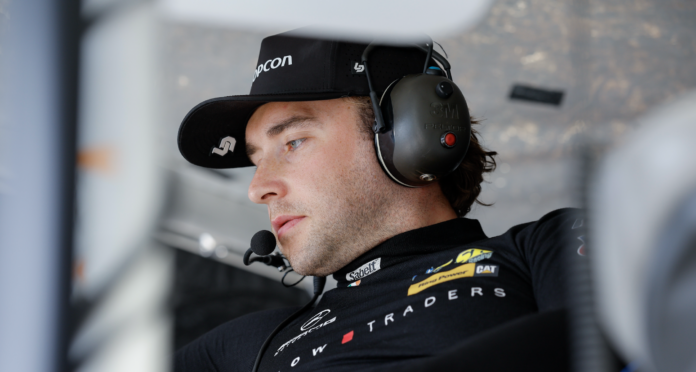
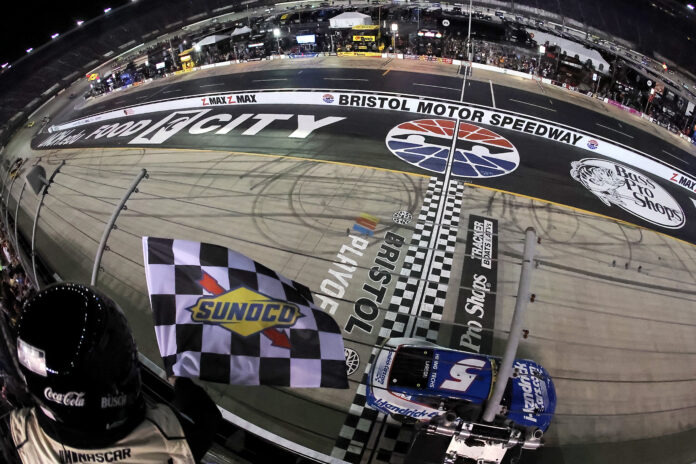
Kyle Larson, driver of the #5 (Photo by Jonathan Bachman/Getty Images)

Every race fan has watched a pit call and thought, “I’d have done that differently.” The problem is that you get to judge it with the result in hand. Crew chiefs do not. They compare the options before committing, then find out later whether it worked out on the track.

Jake Garcia’s Bristol win came down to a call that made sense in the moment. His team chose fuel only and protected track position; the restarts then decided whether that gamble would hold up. Racing works like that. The useful comparison is the one that fits the situation, because the best choice on paper can change once the race gets messy and the crew has to react with the information in front of them.

Different Choices Need Different Comparisons

Comparing options works best when you know what you actually care about. A race team may value track position above fresh tires at one point, then make the opposite call later because the circumstances have changed. Fans make similar choices away from the track, and a long list of options becomes much easier to use once the differences are laid out clearly.

That is the job done by online casinos in new jersey. 30 legal operators are compared using practical details rather than treating them as interchangeable. The current comparison covers game quality alongside app functionality, with banking options and payout speeds also part of the review process. Individual reviews carry ratings and current offers, so a reader can start with the feature they care about instead of picking a name and hoping for the best.

Bristol Showed What Context Can Change

Garcia started 12th at Bristol after rain wiped out qualifying, yet he worked his way forward and finished fourth in both opening stages. The big call came before the final stage. Garcia took fuel only, while much of the field behind him chose fresh tires, putting his No. 98 Ford at the front with clean air and control of the outside lane.

The decision held up. Garcia survived two late restarts and briefly lost the lead during a three-wide fight before taking it back with 21 laps remaining. He led 104 of the scheduled 250 laps and won on his 94th Truck Series start. Fresh rubber had an obvious advantage, but giving up track position carried a cost of its own; Bristol turned that trade-off into the defining call of the race.

Every Strategy Call Has Missing Information

A crew chief makes the call before knowing when the next caution will come or whether a restart will run cleanly. Tire wear can be estimated and fuel can be calculated, but the race still contains things nobody can know in advance. Waiting for certainty would mean waiting until the decision has already passed.

Decision-making under uncertainty is simply choosing an action when the outcome is unknown and the information is incomplete. That sounds academic when written on a textbook cover, but race teams live with it every weekend. Garcia’s crew knew what they would gain by staying near the front and what they would give up by skipping tires. They made the call, then had to live with whatever the next 120 laps brought.

Fans Get to Judge the Call Afterward

The sofa is a wonderful place to become a crew chief. Once the checkered flag falls, everybody knows where the cautions landed and which tires lasted. A call that looked brave at lap 130 can look obvious by lap 250 because the missing information has disappeared.

That hindsight is part of the fun. Fans pick apart pit stops and restarts after the race, then decide which team got the big call right. The same conversation now carries on through social media, where the result can keep people talking long after the haulers leave the track. The useful distinction is between judging a decision with what was known at the time and judging it with the final result already sitting on the screen.

A Good Decision Is Not a Guaranteed Result

Good decisions still lose races. A perfectly sensible fuel call can be ruined by a caution five laps later, while an aggressive tire gamble can suddenly work because the field gets another restart. The result tells you what happened; it does not automatically tell you whether the original call was foolish or clever.

That is why useful comparisons begin with the question you are actually trying to answer. Race teams decide what they value at that moment, then compare the available choices against it. Fans do much the same when they compare anything else. Clear information gives you a better basis for choosing, but it cannot remove the unknowns. Garcia’s Bristol win is a neat example because the team understood the trade-off before committing to the call, then still had to race for the result.

What NASCAR Playoff Casino Branding Means for Pennsylvania Bonus Shoppers

Photo by Chris Trotman/Getty Images

The increasing inclusion and visibility of NASCAR playoff branding across the gambling industry is a huge win for Pennsylvania bonus shoppers. Given the highly competitive nature of the Pennsylvania Gaming Control Board (PGCB)- regulated market, sportsbooks and online casinos have been capitalizing on major high-stakes events like the NASCAR Playoffs as a way to acquire new players and retain existing ones.

The overlap between high-stakes motorsports and online gaming has never been more visible, and as the NASCAR Cup Series Chase intensifies with high-energy events like the upcoming Hollywood Casino 400 at Kansas Speedway, the changing realities of corporate sponsorships are heavily influencing the consumer market.

Once supported by traditional consumer goods, racing syndicates have transitioned away in favor of the tech and authorized gaming industries. This national branding surge is more than just background noise on a broadcast for sports fans and online gamers in the Keystone State. It’s actually a clear sign of the targeted marketing campaigns that have been designed to capture a share of the market because national racing partnerships become localized competition, effectively driving up the value of pennsylvania casino bonus offers for online players.

How the Track-To-Casino Pipeline Has Evolved

The relationship between legal stock car racing and online gaming sites has evolved into a multi-layered network, with major gaming companies like Penn Entertainment managing to lock in expansive agreements, securing race entitlement sponsorships like the Hollywood Casino 400 through 2026.

At the same time, individual race teams have also leaned into the crossover, as illustrated by BetMGM’s recent launch of customized experiences like the BetMGM Speedway online casino game in collaboration with Richard Childress Racing, directly targeting Pennsylvania’s online gaming market.

This visibility is strongly supported by clear consumer behavior metrics, as data compiled by MarketCast has highlighted that NASCAR ranks first among all of the major U.S. professional sports leagues in terms of fan loyalty toward corporate sponsors. Racing fans seem to be uniquely predisposed to try, support and recommend the brands that invest in their favorite teams or tracks.

Recognizing this potential, online platforms are using these major playoff windows as an opportunity to refresh their promotional pipelines, significantly discounting the costs of player acquisition through enhanced sign-up incentives.

The Sheer Scale of PA’s Online Gaming Arena

Pennsylvania is home to one of the most mature and strictly regulated online casino industries in the United States. When you analyze the absolute scale of the financial environment in the state, it becomes easier to understand why playoff branding affects bonus structures.

The PGCB handles licensing for over a dozen different online casino sites, each of which is tied to a physical land-based casino certificate or qualified gaming brand. Across the broader Commonwealth, the overarching tourism and entertainment economy is a $83.9 billion industry and the online component has become a foundational pillar of state tax revenue, consistently generating record-breaking monthly returns.

Due to the intense regional competition, sites are implementing exorbitant customer acquisition budgets. During periods of peak sports viewership like the 10-race NASCAR postseason, promotional values often spike to stand out from the competition.

When national brands spend millions to splash their emblems across the hoods of cars or on track walls, the regional arms of those same sites are tasked with turning that awareness into active user volume. For players, this operational reality manifests in the form of highly competitive registration perks.

Identifying and Maximizing Potential Value

If you’re struggling to make heads or tails of the current influx of online options, you should start by understanding the structural layout of these promotions. These structural mechanics are normally what separates the generic, evergreen offerings from the high-value seasonal campaigns.

Promotional OfferingUnderlying MechanicsIdeal Strategic Use
Deposit Match IncentivesThe site matches a percentage of your initial capital, with specific wagering requirements.Good for long-term players looking to maximize a substantial starting balance across different games.
Risk-Free Bets/ Net Loss RebatesThe site compensates net losses incurred within your first 24 to 48 hours up to a defined limit in the form of site credits.Ideal for testing a specific app’s interface and slot variety with a built-in safety net.
No-Deposit Registration CreditsSmaller balances are provided instantly upon identity verification (typically ranging between $10 and $50)Perfect for evaluating software responsiveness, transaction speeds and game libraries without upfront capital.

Before just grabbing any bonus that looks good, make sure you understand what you’re getting and that it aligns with the gaming experience you’re looking for. Always read the fine print and make yourself aware of the wagering requirements before registering on a site or depositing your funds.

What To Watch Next on the Playoff Horizon

When online gaming brands spend a lot of money to dominate the airwaves during the autumn race schedule, the real winners are the bonus shoppers who capitalize on the resulting promotional competition to secure the best terms.

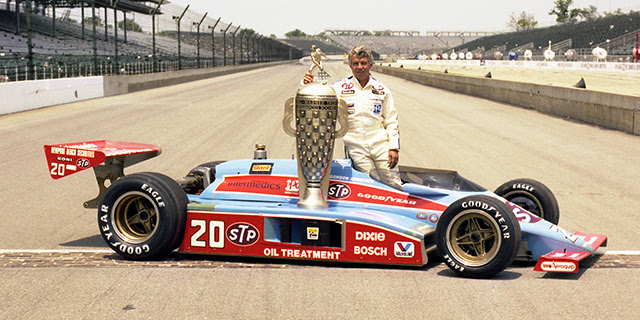
Two-Time Indy 500 Winner Johncock Dies at 90

INDIANAPOLIS (Monday, Sept. 28, 2026) – Gordon Johncock, whose stirring drive late in the 1982 Indianapolis 500 earned him a second victory in “The Greatest Spectacle in Racing,” died of natural causes Sept. 28 at his home in South Branch, Michigan. He was 90.

Born Aug. 5, 1936, in Hastings, Michigan, the lifelong resident of the state was the INDYCAR SERIES national champion in 1976 and won 25 races in the series. Yet, Johncock was known for winning both memorable and forgettable “500s,” each time driving for Patrick Racing.

Johncock’s duel with Rick Mears in the closing laps of the 1982 race was the most thrilling to that point, prompting renowned television broadcaster Jim McKay to claim he’d “never seen anything like it.” Johncock masterfully covered Mears’ last-lap passing attempt in Turn 1, then outran the 1979 race winner to the finish line. Their margin at the checkered flag was a then-record .16 of a second, still the seventh closest ever.

Johncock later said he was fortunate to win as he hit an unfamiliar bump low in Turn 3 on the last lap that pushed his car up the track and gave Mears an opportunity to gain ground.

“I pretty near lost it,” he told The Indianapolis Star in 2016. “Ask Rick; he saw it (because) he was right there.

“I had never run that low before in Turn 3, but I knew I had to if I was going to be able to stay in the throttle. It was just a little rougher down there than I expected.”

The 1973 “500” was one of tragedy and poor weather, with rain postponing the race two days. Johncock started 11th and grabbed his first lead on Lap 40, but soon after teammate Swede Savage and crew member Armando Teran were involved in separate horrifying accidents.

Johncock, who led 64 laps, was in front of Bill Vukovich II when rain ended the race on Lap 133. With the annual Victory Banquet canceled, Johncock and his Patrick crew “celebrated” with hamburgers at a local Burger Chef restaurant after visiting Savage in the hospital.

Johncock was able to properly celebrate following his 1982 victory, and Mears said he never felt so good finishing second.

“I remember thinking during the race that if we can’t win it would be great to see him win,” Mears said.

Said Johncock of watching replays of the duel with Mears, “It gives you goosebumps … (that) well, I did it again!”

After a successful stint as a sprint car racer, Johncock’s INDYCAR SERIES career began in 1964 with a dirt race in Springfield, Illinois, and it didn’t take him long to show his talent. Johncock finished fifth as a rookie in the 1965 “500” in a roadster, in a race that saw five rookies finish in the top nine. He won for the first time nine races later at the Milwaukee Mile. Johncock also scored the first of his 20 career poles that year.

Johncock started his own team in 1967, joining A.J. Foyt as the sport’s only owner/driver. Johncock won six races during that three-year span.

Johncock nearly won a few more Indianapolis 500s. He finished third in 1976 and 1978, and he was fourth on two other occasions (1966 and 1974). In 1977, Johncock was leading Foyt, the eventual winner, with 16 laps remaining when his car’s crankshaft broke. He had led 129 laps.

Johncock’s career in the INDYCAR SERIES spanned 262 starts over 25 seasons. He actually retired twice, the first during the first week of “500” practice in 1985. He served on the IMS Radio Network for that race. Two years later, he replaced the injured Jim Crawford and finished 22nd.

Johncock’s last “500” was in 1992 after he retired on Lap 60 with engine failure. He finished 29th. His 24 starts in the race rank fifth among all drivers, tied with Johnny Rutherford and Scott Dixon. Johncock led 339 laps in the Indianapolis 500, which stands 15th all time.

Johncock was one of the last living drivers to have competed in front- and rear-engine Indy cars.

He was successful in stock car racing, too, competing in 21 of NASCAR’s top-division races. He made three starts in the Daytona 500, qualifying fifth in 1973. He had three top-five finishes in NASCAR, highlighted by a fourth in the 1973 Firecracker 400 at Daytona International Speedway. He also won a pole at Atlanta Motor Speedway that season.

After Johncock’s second retirement, he turned his focus to his timber business in South Branch, Michigan, located 200 miles north of Detroit. Johncock enjoyed such a quiet life away from racing that some employees were surprised to learn he had been a race car driver, much less a two-time Indy 500 winner.

Johncock kept most of his racing memorabilia in his basement, although his two winner’s plaques have shared a wall with artwork of the 1982 win, the race’s checkered flag and a stuffed deer head in his living room. He seldom attended the “500” after retiring.

“It was a job I used to have,” Johncock said of racing. “Now I have a different job.”

Johncock was inducted into the Indianapolis Motor Speedway Hall of Fame in 1997 and the International Motorsports Hall of Fame in 1999.

Johncock is survived by his wife, Sue; three daughters (Patsy, Pamilee, Peggy), two sons (Gordon Jr., Wally); stepdaughter (Valerie); and 12 grandchildren, 17 great-grandchildren and one great-great grandchild.

Roe Closes Busy 2026 Campaign with Petit Le Mans

Indianapolis, IN (Sept. 29, 2026) – James Roe will close out his 2026 racing season this weekend at one of sports car racing’s biggest events, joining Lone Star Racing for the 10-hour Motul Petit Le Mans at Michelin Raceway Road Atlanta.

Roe will share the No. 80 Mercedes-AMG GT3 with Luca Stolz (DEU) and Lin Hodenius (NLD) for his fifth endurance event with Lone Star Racing this season. The weekend also marks Roe’s final race of the year after wrapping up his INDY NXT campaign earlier this month.

The IMSA season finale will take on the challenging 2.54-mile, 12-turn Road Atlanta circuit, with the race beginning in the afternoon and continuing into darkness.

“It’s been a busy year and I’m excited to finish it with the crew at Lone Star,” said Roe. “I’ve really enjoyed being part of this Mercedes-AMG program and getting immersed in sports car racing this season. Petit is obviously a huge event and a tough race, so hopefully we can put together a strong weekend and end the year on a high.”

Saturday’s Motul Petit Le Mans takes the green flag at 12:10 p.m. ET. NBC will carry the opening three hours beginning at noon, followed by NBCSN from 3-10:30 p.m., with flag-to-flag coverage on Peacock. International coverage is available through IMSA.tv and IMSA’s Official YouTube channel.

Charlotte’s Historic Oval Set for Bank of America 400 Weekend

  • NASCAR Chase drivers share what makes Charlotte’s oval one of the most exciting tracks to compete on during the postseason
  • Bank of America 400 weekend tickets are available at www.charlottemotorspeedway.com or by calling 1-800-455-FANS (3267). With college ticket deals, flexible payment options and the best kids’ pricing in sports through the Dollar Tree “More Fun. More Value.” program, it’s easier than ever to be part of the action!

CONCORD, N.C. (Sept. 28, 2026) – The road to NASCAR’s championship runs through Charlotte Motor Speedway this October, as the sport’s top drivers return to the track’s historic 1.5-mile oval for Bank of America 400 weekend.

Known for producing some of NASCAR’s most memorable finishes, Charlotte’s oval presents a unique challenge during the postseason. From multiple racing grooves and changing track conditions to its signature bumps and demanding corners, the 1.5-mile speedway tests drivers and teams as they compete for championship glory.

As The Chase battle intensifies, drivers share what makes Charlotte’s oval one of the most exciting and challenging tracks on the NASCAR schedule, and why the fall return to the Queen City is one they have been eager to see.

Carson Kvapil, No. 1, NASCAR O’Reilly Auto Parts Series, JR Motorsports

“I feel like the Charlotte oval is probably the most fun mile and a half that we run. And I feel like, in my opinion, it’s the most fun one; it’s the fastest one. It’s just really hard, I guess you could say. So for me, I think it’s really fitting that we go there. Charlotte is probably one of my favorite bigger tracks, favorite mile and a half. Really tough place to get a hold of; I just feel like it’s right to be near the Charlotte-Morrisville area, and it’s just a really, really fun place.

Daniel Suarez, No. 7, 2026 Coca-Cola 600 Champion, Spire Motorsports

“In my opinion, Charlotte Motor Speedway, in the oval version, is one of the best mile-and-a-halves we have, just because it’s fast, but at the same time, it has so much character. Corners one and two are very different from corners three and four, but not just on the banking or the shape, but mainly also on the bumps. Corners three and four is extremely bumpy. I don’t think people actually realize how bumpy it is, and that’s what makes the racetrack so fun, right? Because you have to go through all this adversity. So yeah, I love it.”

Kaden Honeycutt, No. 11, NASCAR Craftsman Truck Series, TRICON Garage

“Charlotte just races like a short track. You’ll see us run up on the fence. You’ll see us run around the painted blue line. I think that’s one of the coolest things about the place is there’s not really one lane that’s specific; it moves around throughout the run. It’s honestly kind of rough. It’s fun to race around when you can go from 30th up to the lead, not having to worry about dirty air, worrying about passing anybody; it’s just a matter of working your way through traffic and just making yourselves a good day. So, we’ll be looking forward to it, and we were almost there in the spring, so we’ll hopefully be one spot better for the fall.”

Daniel Hemric, No. 19, NASCAR Craftsman Truck Series, McAnally-Hilgemann Racing

“The Charlotte oval makes it one of the best tracks of the postseason, simply because of what you can ask out of your vehicle, the maneuverability that’s built into that racetrack, the character, the seams, the bumps. You can run completely down the painted line, or you can run right on the fence and everywhere in between. A lot of racetracks that go to the postseason, some have some of those characteristics, but not all of those, and I think those characteristics of what make it put on the show, it puts on not only for the fans, but for the drivers and the race teams.”

Sam Mayer, No. 41, NASCAR O’Reilly Auto Parts Series, Haas Factory Team

“The Charlotte oval is awesome. Just purely because it’s one of the coolest ovals that we race at. It’s super dynamic, really, really rough and it provides really good racing, especially in the O’Reilly Auto Parts Series. I’m super excited to get back there. I haven’t raced at the oval in the fall yet in my career, so it’ll be a first-time experience for me.”

Tyler Reddick, No. 45, NASCAR Cup Series, 23XI Racing

“I mean, it’s just great to race on in general. For a long time, we only got to race it once a year in the (Coca-Cola) 600, and now we’re going to have it back in the fall, and that’s for me as a driver, I never got to race at Charlotte in the fall ever. So, it’s just gonna be a new experience. It’s going to feel different than the 600 and I think drivers and teams are going to have to adjust to that.”

TICKETS:
Bank of America 400 weekend tickets are available now at www.charlottemotorspeedway.com or by calling 1-800-455-FANS (3267). With college ticket deals, flexible payment options and the best kids’ pricing in sports through the Dollar Tree “More Fun. More Value.” program, it’s easier than ever to be part of the action!

MORE INFO:
Fans can connect with Charlotte Motor Speedway and get the latest news by following X, Instagram and Facebook, or by downloading the Charlotte Motor Speedway mobile app.

ARCA Menards Series 2026 Post-Season Notes

ARCA Menards Series Post-Season Notes

  • Thomas Annunziata became the 43rd champion in ARCA Menards Series history when he finished fifth in last Friday’s Menards 150 at Kansas Speedway. Annunziata and his Nitro Motorsports teammate Jake Bollman scored an identical 947 points, but Annunziata’s victory at Lime Rock Park gave him the tie breaker over a winless Bollman.
  • It was the second time in series history that there was a tie atop the ARCA Menards Series standings, but it was the first time a tie breaker was used to determine the champion. Ron Hutcherson and Dave Dayton tied for the title in 1974 and were named co-champions.
  • Bollman led the series with 12 top-five finishes in the series’ 20 races. He and Annunziata both had 18 top-ten finishes.
  • Isabella Robusto finished third in the ARCA Menards Series standings to give Nitro Motorsports a sweep of the top three positions in the driver’s championship. For Robusto, she matched Hailie Deegan’s third-place finish in 2020 as the highest finishing female in the series standings, and for Nitro Motorsports, it is the first team to ever sweep the top-three positions in the final standings.
  • Eight drivers won at least one ARCA Menards Series races in 2026: Gio Ruggiero, Carson Brown, and Max Reaves all scored four victories, Tristan McKee won three times, Kaden Honeycutt won twice, and Connor Mosack, Thomas Annunziata, and Andy Jankowiak all notched a single victory.
  • Carson Brown became the 39th driver since 1979 to win in his ARCA Menards Series debut with his victory at Phoenix Raceway in March.
  • Gio Ruggiero (Daytona), Carson Brown (Phoenix), Andy Jankowiak (Talladega), and Kaden Honeycutt (Watkins Glen) all earned their first career ARCA Menards Series victory in 2026. Honeycutt was the 372nd driver to earn at least one ARCA Menards Series win.
  • Lanie Buice’s second-place finish at Chicagoland Speedway matched the all-time series best finish by a female driver. Shawna Robinson (Daytona, 1999), Erin Crocker-Evernham (Kentucky 2005, Kansas 2007m Kentucky 2007), Hailie Deegan (Daytona 2020, Springfield, 2020), and Isabella Robusto (Springfield, 2024) all have earned second place finishes previously.
  • Isabella Robusto set the record for most top-five finishes for a female driver in ARCA Menards Series history with her 13th top-five result, a fifth-place finish at Berlin Raceway in June. She ended the season with 14 total top-five finishes with another fifth-place at Salem Speedway to extend her record.
  • Nine drivers won at least one Sioux Chief PowerPEX Pole Award: Carson Brown had the most with six, Max Reaves had four, Thomas Annunziata had three, Gio Ruggiero had two, and Gus Dean, Jack Wood, Garrett Mitchell, Lanie Buice, and Tristan McKee all had one each. There were four races without a speed for the pole: both races at Kansas Speedway and the road course race at Watkins Glen International and qualifying canceled by inclement weather, while the field was set per the rulebook for the race at Talladega Superspeedway. Jack Wood was on the pole for the first Kansas race, Gio Ruggiero was on the pole at Talladega and the second Kansas race, and Max Reaves was on the pole at Watkins Glen.
  • Bollman led the ARCA Menards Series standings for 18 consecutive races and held a lead as high as 27 points after the race at Pocono Raceway in June. He also led the series’ full-time drivers with a 5.9 average finish, over a full position better than Annunziata who was second at 6.95.
  • Despite only making only 13 starts, Max Reaves led more laps than any other driver with 690 laps at the front of the field in six different races. Carson Brown was second at 576 in a season-best seven different races. Tristan McKee was third with 430, Gio Ruggiero fourth at 245, and Landon S. Huffman fifth at 132. Annunziata was sixth, but the highest driver who started all 20 races, with 129 laps led in five races.
  • Twenty-four different drivers led at least one lap: Reaves (690), Brown (576), McKee (430), Ruggiero (245), Huffman (132), Annunziata (129), Connor Mosack (107), Kaden Honeycutt (101), Daniel Dye (42), Jack Wood (39), Jake Finch (32), Garrett Mitchell (25), Isabella Robusto (16), Gus Dean (15), Jake Bollman (10), Gavan Boschele (10), Lanie Buice (6), Ryan Huff (5), Ryan Vargas (3), John Kennedy (2), Andy Jankowiak (1), and Isaac Kitzmiller (1).
  • Annunziata completed 2607 of a possible 2617 laps for a 99.62% completion percentage. Prior to the finale, Bollman had completed every lap but one, but he lost 42 laps due to crash damage just before the halfway point. He ended the season with 2574 laps completed for a 98.36% completion percentage.
  • There were a total of 70 lead changes in the 20 races, an average of 3.5 swaps per race. There were 69 lead changes in 2025.
  • There were 111 caution periods for a total of 708 laps, up from 100 cautions for 535 laps in 2025. That works to an average of 5.55 caution flags per race for an average of 35.40 laps.
  • Two ARCA Menards Series races were televised live on FOX, with nearly a million viewers tuned in to watch the season-opener at Daytona International Speedway and over 550,000 viewers watched the series’ first short track race broadcast on over-the-air network television at Salem Speedway in September.
  • Twenty-nine drivers scored at least one top-five finish and 59 drivers had at least one top-ten.
  • One-hundred forty drivers scored ARCA Menards Series points in 2026, and 137 started at least one race.

About ARCA 
The Automobile Racing Club of America (ARCA), founded in 1953 by John and Mildred Marcum in Toledo, Ohio, and acquired by NASCAR in April 2018, is the leading grassroots stock car sanctioning body in the United States. Bridging the gap between NASCAR’s top three national touring series and weekly and regional tour racing all across the country, the organization to sanctions over 100 races per year in the ARCA Menards Series, ARCA Menards Series East, ARCA Menards Series West, ASA STARS National Tour, ASA CRA Super Series, ASA Midwest Tour, ASA Southern Super Series plus weekly racing at Toledo and Flat Rock Speedways. For more information about ARCA visit , or follow ARCA on Facebook (@ARCARacing) and Twitter (@ARCA_Racing). 

About Menards
A family-owned and run company started in 1958, Menards is recognized as the retail home center leader of the Midwest with 236 stores in 15 states.  Menards is truly a one-stop shop for all of your home improvement needs featuring a full-service lumberyard and everything you need to plan a renovation or build a home, garage, cabin, shed, deck, fence or post frame building.  You’ll find a large selection of lumber, roofing, siding, construction blocks, trusses, doors and windows, plus cabinets, appliances, countertops, flooring, lighting, paint, plumbing supplies and more.  To complete the job, Menards has quality hand tools, power tools, fasteners, electrical tools plus storage options and supplies for everyone from the weekend warrior to the pro!
 
Menards has what you need to complete your outdoor projects and keep your yard in tip-top shape including mowers, trimmers, blowers, pressure washers and more, plus a beautiful garden center stocked with plants, shrubs, trees, landscaping tools, grass seed, fertilizer options, outdoor décor and patio furniture.  Menards also has everyday essentials like health & beauty products, housewares, pet and wildlife supplies, automotive items and even groceries.  And at Christmas, an Enchanted Forest display area with impressive trees, lighting, decorations, ornaments, inflatables and more. 

Menards is known for friendly Customer Service and as the place to “Save Big Money” with low prices every day, and sales too!  For more information, please visit Menards.com to learn about our store locations, offerings and services.

NAPA AUTO PARTS NHRA MIDWEST NATIONALS IN ST. LOUIS SET FOR FOOTBALL ADJACENT BROADCAST ON FOX

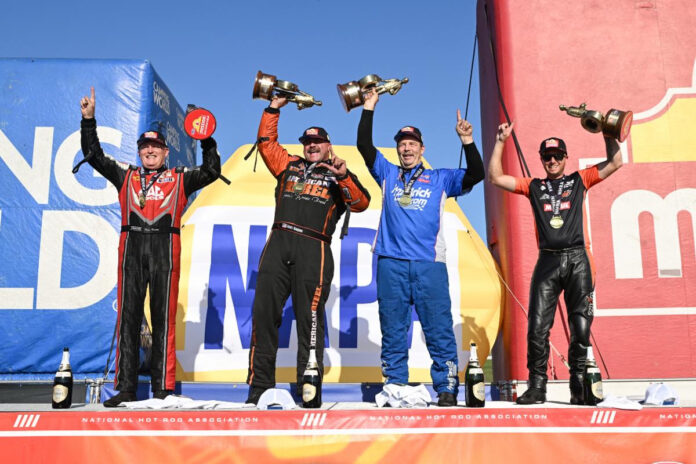
MADISON, Ill. (Sept. 28, 2026) – One of the biggest races in NHRA’s Countdown to the Championship playoffs will also get a major spotlight on FOX, as the 15th annual NAPA Auto Parts NHRA Midwest Nationals at World Wide Technology Raceway will air on FOX adjacent to a FOX football broadcast on Sunday, Oct. 4.

It’s the sixth straight year a race in NHRA’s postseason will be broadcast on FOX adjacent to a football game, but it marks the first time the standout St. Louis stop, which is the third of six races in the Countdown to the Championship playoffs, will air in the broadcast window.

This unique opportunity with FOX has led to massive audiences on the national broadcast network, including last year at Texas Motorplex in Dallas, when NHRA enjoyed the biggest viewership in its history with 2.065 million viewers and an impressive peak audience of 3.631 million.

The majority of markets on Sunday, Oct. 4, will see NHRA action from St. Louis following football broadcasts early in the day. Those markets will air the NHRA playoff race from 4:30-6:30 p.m. ET following the football on FOX game, while some markets will air NHRA coverage from 2-4 p.m. ET, leading directly into football on FOX action.

The broadcast will showcase a popular stop in the Countdown to the Championship playoffs, as the NAPA Auto Parts NHRA Midwest Nationals has consistently drawn sellout crowds to the fan-favorite World Wide Technology Raceway.

The premier stop on the NHRA tour during its 75th anniversary season will feature some of the fastest runs of the year from the incredible 12,000-horsepower, 340-mph Top Fuel dragsters and Funny Cars, starting with two qualifying sessions on Friday, including a can’t-miss night session under the lights to start the weekend in style.

The event continues with two qualifying sessions on Saturday and eliminations on Sunday, featuring a special 9 a.m. CT start time to position the event for its marquee broadcast window on FOX.

Last season, Doug Kalitta (Top Fuel), Matt Hagan (Funny Car), Greg Anderson (Pro Stock) and Gaige Herrera (Pro Stock Motorcycle) each claimed wins, while this year’s coverage also includes qualifying at 6:30 p.m. ET on FS1 and 11 a.m. on Sunday.

Top Fuel has been dominated in 2026 Kalitta Motorsports teammates Shawn Langdon and Kalitta. Langdon is the current points leader, riding a three-race winning streak, while others to watch include Tony Stewart, Maddi Gordon, Leah Pruett and Antron Brown.

Jordan Vandergriff, a Funny Car newcomer for John Force Racing, opened the playoffs with a win will try to track down points leader Hagan, who won Sunday in Rockingham, Capps, Todd and back-to-back world champ Austin Prock.

Greg Stanfield moved into the points lead in Pro Stock after winning in Rockingham. He’ll look to hold off the likes of Matt Hartford, reigning world champ Dallas Glenn, Greg Anderson and Erica Enders in St. Louis.

Reigning Pro Stock Motorcycle champion Richard Gadson holds the points lead after winning Sunday in Rockingham. Other standouts include Matt and Angie Smith, Herrera and Chase Van Sant.

The NAPA Auto Parts NHRA Midwest Nationals will also feature action in the NHRA Lucas Oil Drag Racing Series, the JBS Equipment NHRA Pro Mod Drag Racing Series presented by Elite Motorsports and Flexjet NHRA Factory Stock Showdown.

Fans can enjoy the special pre-race ceremonies that introduce and celebrate each driver racing for the prestigious Wally on Sunday and includes the fan favorite SealMaster Track Walk, as well as the winner’s circle celebration on Sunday after racing concludes, where fans are invited to congratulate the St. Louis event winners.

As always, fans get a pit pass to the most powerful and sensory-filled motorsports attraction. Fans can see their favorite teams in action and servicing their cars between rounds, get autographs from their favorite drivers and more. They can also visit NHRA’s Manufacturers Midway, which includes interactive displays, merchandise, food and fun.

NHRA Mission Food Drag Racing Series qualifying will feature two rounds at 4:30 and 7 p.m. CT on Friday, Oct. 2, and the final two rounds on Saturday, Oct. 3 at 12 and 2:30 p.m. Final eliminations are scheduled for 9 a.m. CT on Sunday, Oct. 4.

Tickets may be purchased at the WWTR ticket office, by phone at (618) 215-8888, or online at www.wwtraceway.com. All children 12 and under are free in the general admission area with a paid adult. For more info on NHRA, visit www.NHRA.com.


About Mission Foods

MISSION®, owned by GRUMA, S.A.B. de C.V., is the world’s leading brand for tortillas and wraps. MISSION® is also globally renowned for flatbreads, dips, salsas and Mexican food products. With presence in over 112 countries, MISSION® products are suited to the lifestyles and the local tastes of each country. With innovation and customer needs in mind, MISSION® focuses on the highest quality, authentic flavors, and providing healthy options that families and friends can enjoy together. For more information, please visit https://www.missionfoods.com/

About NHRA

NHRA is the primary sanctioning body for the sport of drag racing in the United States. NHRA presents 20 national events featuring the NHRA Mission Foods Drag Racing Series and NHRA Lucas Oil Drag Racing Series, as well as the JBS Equipment NHRA Pro Mod Drag Racing Series presented by Elite Motorsports and NHRA Flexjet Factory Stock Showdown™ at select national events. NHRA provides competition opportunities for drivers of all levels in the NHRA Summit Racing Series and NHRA Street Legal™. NHRA also offers the NHRA Jr. Street® program for teens and the Summit Racing Jr. Drag Racing League® for youth ages 5 to 17. With more than 100 Member Tracks, NHRA allows racers to compete at a variety of locations nationally and internationally. NHRA’s Youth and Education Services® (YES) Program reaches over 30,000 students annually to ignite their interest in automotive and racing related careers. NHRA’s streaming service, NHRA.tv®, allows fans to view all NHRA national events as well as exclusive features of the sport. In addition, NHRA owns and operates three racing facilities: Gainesville Raceway in Florida; Lucas Oil Indianapolis Raceway Park; and In-N-Out Burger Pomona Dragstrip in Southern California. For more information, log on to www.NHRA.com, or visit the official NHRA pages on Facebook, Instagram, Twitter, and YouTube.

Why Hospitals Are Betting on NASCAR

Photo by depositphotos at https://depositphotos.com/

At Daytona, a family walks through an oversized gate wrapped in the branding of a Florida-based health system, plays a hand-eye coordination game meant to mimic what a driver does at 190 mph, and never once reads it as an advertisement. That gate is the AdventHealth injector, and it has been part of Daytona International Speedway since the middle of the last decade. It is also one of the clearest signs of a shift that has been building for years: hospitals and health systems have become one of NASCAR’s steadiest new sponsor categories, and they are not slowing down.

The buys look different from a beer or insurance deal. Health systems aren’t chasing impressions the way a consumer brand does. They are making a set of specific decisions about where their name should live, who it should reach, and what the sponsorship is supposed to do. 

Read the recent announcements carefully and you can see the trade-offs each system weighed before it signed.

Track Partnership or Race Team: Where Does the Dollar Work Harder?

The first decision a health system faces is the most fundamental one. Sponsor a track, sponsor a team, or do both. Each one buys a different thing. A track partnership puts the system inside the event itself, usually as the official healthcare or medical provider. That’s a working role, not a logo placement.

A team deal buys reach instead. The paint scheme travels to every race on the schedule and shows up in every broadcast cutaway. Systems with a defined geographic footprint tend to lean toward track and speedway deals near their hospitals. Systems trying to build a national brand, or recruit talent across states, lean toward the car. Treating the two as interchangeable is where health systems waste money, because they do very different jobs.

Regional Health System or National Brand Play

A regional not-for-profit hospital and a multi-state system are answering different questions when they write the check. Confusing the two produces sponsorships that underperform on both ends.

Buy the Reach or Build the Experience

Signage and paint schemes are the easy part. The harder question is what happens when a fan actually shows up at the track. A health system can pay for a logo and stop there, or it can spend more to build something people walk through, remember, and tell a friend about.

The experience side is where healthcare has an unusual advantage over other categories. Blood pressure checks, concussion education, hydration stations in July heat, and screening kiosks all fit naturally at a racetrack. They also give the system something honest to say about why it’s there in the first place.

The trade-off is cost and staffing. An activation footprint needs clinicians on shift, insurance coverage, and a plan for what to do when a fan actually needs care. Systems that aren’t ready for that operational load should stay on the signage side and not pretend otherwise.

Does the NASCAR Audience Match the Patient You Want to Reach?

The audience question deserves an honest look, not a hopeful one. NASCAR fans skew in specific directions on age, geography, and household composition, and they respond to sponsorship in a measurable way. YouGov’s fan profile found that a majority of NASCAR fans view sponsorship as socially valuable and actively notice which brands are on the car. That’s a friendlier environment for a hospital logo than most sports properties offer.

The fit is strongest for service lines that map to the fan base: cardiac care, orthopedics, sports medicine, women’s health, pediatrics through the family audience. It’s weaker for service lines aimed at populations that watch different sports. A marketing lead should be able to name the service line the sponsorship is really supporting before the deal is signed. If nobody can, the deal is a brand exercise, and it should be priced and measured as one.

Measure It Like a Marketing Investment, Not a Donation

The last decision is the one that gets skipped most often. A NASCAR sponsorship is a line item, and it should be defended like any other marketing spend. Systems that treat it as goodwill tend to renew on habit and cut it in the first bad budget cycle. Systems that measure it survive the budget conversation.

Useful measures include tracked phone numbers and landing pages tied to race-weekend creative, service-line inquiry volume in the sponsor’s home markets during and after events, employer and physician recruiting activity, and earned media value from the on-site activation. None of that is unusual. It’s the same measurement discipline any healthcare marketing team should already be applying to the rest of its channels, which is why working with an agency that understands healthcare buyers tends to produce a cleaner read on whether the sponsorship is earning its keep.

Healthcare’s move into NASCAR isn’t a fad and it isn’t charity. It’s a category finding a property whose audience, values, and on-site needs happen to line up with what hospitals sell and how they want to be seen. The systems getting it right are the ones making each of these decisions on purpose.

How F1, IndyCar and NASCAR Each Solved Race-Day Refueling

Photo by depositphotos at https://depositphotos.com/

The car rolls into the box, the jack drops, and a crewman in a fire suit swings a hose onto the side of the chassis. Seven seconds later the car is gone and the rig is sitting there, dripping, ready for the next stop. What happens inside that rig in those seven seconds is the part nobody on TV bothers to show, and it’s where a lot of races have been won, lost, and set on fire.

Refueling looks like plumbing. It’s a different animal. Every series that runs a fuel rig has fought the same basic problem from a different angle: get a volatile liquid into a moving race car fast, without spilling it, without pressurizing it into a bomb, and without giving one team an edge nobody can measure. The answers each series arrived at say a lot about how pumps, seals, and flow control actually work.

Formula 1 Chose Pressure, and Paid For It

F1’s refueling era was built on borrowed technology. The 1990s rigs came straight out of the world of commercial aviation, adapted from the equipment that fills airliners on the ramp, and that’s where the pressurized architecture came from. Fuel sat in a tall storage cell above the rig, and a pump pushed it down through a hose and a quick-connect coupling into the car’s fuel cell at a rate that would empty a household bathtub in under a minute.

Regulators drew a hard line on how fast that could go. According to the Formula 1 Dictionary, the FIA capped flow at 12.1 liters per second and specifically outlawed mechanical pumps that would push it any higher. Teams still tried. After the Hockenheim fire in 1994, the sport tightened the rules again, and by 2010 in-race refueling was gone entirely on cost and safety grounds.

The lesson from that era is one every pump engineer already knows: pressurizing a fuel line buys you speed and hands you risk in equal measure. A single failed seal at the coupling turns a pit stop into a fireball.

IndyCar Went the Other Direction Entirely

IndyCar’s rulebook takes the opposite philosophy and writes it down in one sentence: Refueling supply must be gravity flow only. Pressurization and vacuum assist are both prohibited. The fuel falls out of an overhead tank, through a hose, and into the car under nothing but its own weight.

That single constraint drives a surprising amount of hardware design. The tanks along pit lane are bolted to the ground so nobody can gain a head of pressure by tilting one. Hose diameter, vent design, and coupling geometry all get scrutinized because they’re the only variables left. When you can’t add a pump, every millimeter of the flow path matters.

Gravity feed is slower than pressurized delivery, and it’s much harder to turn into a disaster. That trade is the whole point.

NASCAR Kept the Human in the Loop

Stock car refueling still runs on a can and a strong back. The gas man carries a sealed vessel up to the car, dumps it into the fuel cell, and swaps in a second one if the stop calls for it. There’s no pump on the rig at all in the traditional sense. The pressure head is the fueler’s arms and shoulders.

The physical demand is real. A full NASCAR can holds around 12 gallons and tips the scale near 95 pounds once you add the weight of the empty can to the fuel inside it. The fueler lifts that to shoulder height, holds it there, and does it again on the next stop. Design constraints on the vent, the probe, and the internal check valve all exist so the flow starts and stops exactly when the fueler wants it to.

Centrifugal Pumps Do the Work You Never See

Push past the trackside rig and into the fuel farm, the transfer trucks, and the ground-support equipment that keeps a paddock running, and centrifugal pumps show up everywhere. They move fuel from tanker to storage, storage to day tank, and day tank to rig. The physics are the same as any other centrifugal application: liquid enters the eye of a spinning impeller, gets flung outward by the vanes, and the volute converts that velocity into pressure at the discharge.

What makes fuel transfer unforgiving is the fluid itself. Gasoline and race fuels are low-viscosity, high-vapor-pressure, and aggressive on the wrong elastomers. The pump has to move liquid without cavitating, without leaking, and without generating a spark near a vapor cloud. That last requirement is what makes seal choice the single most consequential decision on the whole assembly.

Seals Are Where Race-Day Rigs Live or Die

A mechanical seal is two lapped faces, one spinning with the shaft and one held still in the housing, pressed together by a spring and by the process fluid itself. The clearance between them is measured in helium light-bands. Those two faces are the only barrier standing between the fuel and the atmosphere.

Selecting one for a fuel-service centrifugal pump is a chain of trade-offs: single versus double, face materials that handle the fluid without galling, elastomers rated for the specific hydrocarbon blend, and a flush plan that keeps vapor from forming at the faces. 

A practical guide from American Stainless Pumps walks through the decision points in plain terms. The short version: match the seal to the fluid, the pressure, and the speed, or plan on replacing it a lot.

Phoenix Beyond Race Weekend: What the Valley Is Like to Live In

Photo by depositphotos at https://depositphotos.com/

The same compromise shows up in housing style. Master-planned communities make up most of the Valley’s outer growth. These are newer builds with HOA-managed amenities like pools and parks. They offer a finished, predictable neighborhood from day one, which appeals to many buyers.

Move closer to the center, and that predictability gives way to something else. Planned communities generally can’t offer established trees or architectural variety. What they lack most is a sense of place: the kind that accumulates over decades rather than one that developers build all at once.

Central Phoenix, Tempe, and pockets of the East Valley carry that character. In keeping with the same pattern, they trade away space. Lots tend to be smaller, and homes often need more updates than newer construction.

Neither approach is better than the other. The right pick depends on whether a buyer values predictability and amenities or character and proximity more.

Car Dependency vs. the Proximity Premium

That question resolves into dollars and cents once you factor in how people actually get around. If you live farther out in the Valley, you almost always commit more fully to car dependency.

Errands, school runs, and social life all stretch across greater distances, and developers didn’t build the newer suburbs with walkability in mind. It’s a real cost, even if it’s less visible on a monthly budget than rent or a mortgage payment.

A house in the downtown area avoids that cost, but it shows up directly in the home’s price. Proximity to downtown Phoenix, Old Town Scottsdale, or the walkable pockets of Arcadia carries a premium that outer suburbs simply don’t charge, precisely because that convenience is in shorter supply.

At this point, it’s better to leave the general ideas behind and look at what’s for sale locally.

A quick search for homes for sale in Phoenix shows just how much the price gap between “bigger and farther out” and “smaller and closer in” really is.

The Price Gap Across the Valley

According to 2026 housing market data by Houzeo, the median home price across the Phoenix metro is around $446,250. However, that single figure hides a significant divide. Central, highly connected neighborhoods like Arcadia or Downtown Phoenix consistently sell well above that midpoint, while outer suburbs like Gilbert, Queen Creek, or Surprise often fall below it. 

That price difference is the cost of location, showing exactly how much extra buyers pay for proximity over extra space. 

The median price isn’t really one market. It’s the midpoint between two different ways of living, and every home for sale falls on one side of it or the other. 

Where the Trade-Off Tends to Land

Commute, housing style, and daily cost all point in the same direction, but people rarely settle it once and for all. Most lean one way based on their current life stage, then reassess later.

Families with young kids often prioritize space and newer schools early on and accept a longer commute. As commute fatigue sets in, or as kids get older and need less supervision, some of those same families move back toward proximity and trade space for time.

Others make a different choice. They start close to the center for the lifestyle, then move outward later once space matters more. There’s no fixed endpoint here. Life keeps changing, and so does the balance you strike.

Make the Balance Work for You

By now, one thing is obvious: your commute, your neighborhood, and your monthly budget are all connected to the same underlying decision. The real question isn’t which option is better. It’s which one fits how you actually live.

If your commute is short or flexible, you can lean into extra space without much downside. If you’re stuck with a longer commute, a smaller home closer in might be worth it for the time and quality of life you get back. Neither choice is wrong, they just work for different routines.

What matters most is picking what fits your life, not what sounds good on paper. The Valley is spread out, so this one decision shapes almost everything else: your commute, your social life, and your budget. Take your time and get it right from the start, because this choice will shape how the rest of your life here feels.