Racing liveries and national football kits both use colour to create instant recognition, but they’ve followed very different paths. Motorsport began with national racing colours, such as British racing green, Italian red and French blue, before sponsorship transformed cars into moving advertisements from the late 1960s onwards. National football kits, by contrast, have largely stayed loyal to colours rooted in flags, royal houses and historic moments, like the Netherlands’ orange, Italy’s blue and Brazil’s yellow and green. The result is that football colours act as enduring symbols of national identity, while racing liveries often represent eras, sponsors and teams.
Both worlds show how powerful colour can be. A flash of red on a track or a sea of orange in a stadium tells fans exactly who they’re supporting before they see a name or a badge.
When Motorsport Raced in National Colours
In the early years of international motor racing, cars were painted in colours that represented their country. This tradition grew from events such as the Gordon Bennett Cup in the early 1900s, where national teams competed against each other. Britain adopted green, which became known as British racing green, Italy chose red, France used blue and Germany was initially associated with white.
The German colour later changed into one of motorsport’s most famous legends. In the 1930s, German cars became known as the Silver Arrows, racing in bare, polished metal. A popular story claims the white paint was scraped off to meet weight limits, although historians still debate how much of that tale is true. Either way, silver became closely linked to German racing and remains so today.
These colours created strong national pride. Spectators could recognise a country’s cars instantly, and success on the track was celebrated as a national achievement, much like football victories at major tournaments.
How Sponsorship Rewrote Racing Liveries
Everything changed in the late 1960s, when motorsport rules began allowing commercial sponsorship on cars. Teams quickly realised that sponsors could fund their increasingly expensive racing programmes, and national colours were replaced by company branding. In 1968, Lotus became one of the first Formula 1 teams to race in sponsor colours, marking the start of a new era.
Over the following decades, many liveries became iconic in their own right. The powder blue and orange of Gulf, the red, blue and white stripes associated with Martini and the black and gold of John Player Special became famous among fans, often more recognisable than the teams’ original national colours. These designs are now celebrated as part of motorsport history.
One team kept its link to national identity. Ferrari has remained closely tied to Italian red, known as rosso corsa, and its red cars are one of the strongest symbols in motorsport. That continuity has helped Ferrari build a deep emotional connection with fans around the world, similar to that between national football teams and their supporters.
Why National Football Kits Stayed Loyal to Their Colours
National football teams have been far more consistent. Kit designs change regularly, but core colours rarely do, because they’re tied to national symbols. The Netherlands wears orange in honour of the royal House of Orange-Nassau, while Italy’s blue, the famous azzurro, comes from the colour associated with the House of Savoy, the country’s former royal family.
Some colours come from dramatic moments. Brazil originally played in white, but after the shock defeat to Uruguay in the 1950 World Cup final at the Maracanã, the white kit was seen as unlucky. A design competition in the early 1950s led to the famous yellow shirt with green trim, which has since become one of the most recognisable kits in world sport.
National kits carry deep emotional meaning because they represent entire countries, not just teams. If you want to compare how different nations use their colours across home and away designs, take a look at the range of international shirts, from Argentina’s sky blue and white stripes to Germany’s classic white with black details and Japan’s distinctive blue.
Commercial pressures still exist in football, with kit suppliers producing new designs every couple of years and adding bold patterns or alternative colours for away and third kits. Yet the core colours remain untouched, because changing them would be seen as a break with national identity.
What Both Worlds Understand About Fans
Motorsport and football both show that fans become attached to colour. In racing, supporters often feel nostalgic about liveries from particular eras, and retro-inspired designs frequently appear at special events, delighting fans who remember the originals. Teams sometimes create one-off liveries for anniversaries or special races, which quickly become collectors’ items.
Football works in similar ways. Retro kits from famous tournaments are hugely popular, and supporters often associate shirts with specific memories, such as a first World Cup or a famous victory. Special edition kits for anniversaries or tributes often sell out quickly.
Both worlds also understand that colour connects fans across generations. A grandparent who watched a green British car in the 1950s and a grandchild cheering Ferrari red today are both part of the same story about colour and identity, just as generations of football fans share the same national shirt colours.
Where Colour Identity Goes Next
Motorsport has shown renewed interest in heritage colours. Some teams have introduced designs that nod to their history or national roots, and fans often respond positively to liveries that feel connected to tradition. As sponsorship continues to shape the sport, balancing commercial needs with heritage will remain an important challenge.
Football faces similar pressures. Kit designers want to create fresh, marketable designs, while supporters expect respect for tradition. National teams will likely continue to experiment with patterns, collars and away colours while keeping their core identity intact.
Sustainability and technology are also changing how both industries approach design, from recycled materials in football shirts to new paint and wrap technologies for racing cars. These changes may influence how colours are applied, but not necessarily what they mean.
Next time you watch a race or a national team match, notice how quickly colour tells you who’s who. Whether it’s Ferrari red flashing past or orange shirts filling a stadium, those colours carry decades of history, pride and emotion, and they’re a big part of why fans feel so connected to the teams they support.
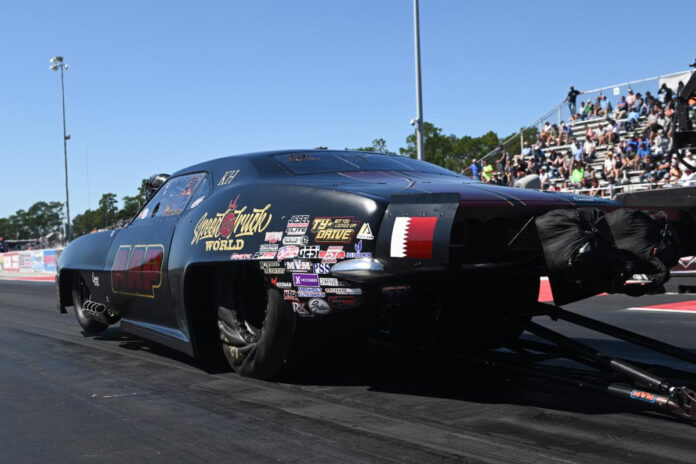
MADISON, Ill. (Oct. 1, 2026) – Mike Stavrinos has enjoyed an impressive year in the JBS Equipment NHRA Pro Mod Drag Racing Series presented by Elite Motorsports, but the standout has turned it on at a key time, leading the points race with only two events remaining heading into this weekend’s NAPA Auto Parts NHRA Midwest Nationals at World Wide Technology Raceway.
It is the 10th of 11 races in the category and this weekend’s event is powered by M&M Transmission and Jerry Bickel Race Cars. It’s also the fourth of five races in Pro Mod’s Road to the Championship as the category closes in on the finale.
Stavrinos jumped into the lead with his victory on Sunday in Rockingham in his Al-Anabi Performance Camaro, giving him two wins this season and two final-round appearances over his last four races.
While the points lead is the ideal spot with two races remaining, Stavrinos knows not to get comfortable in the loaded NHRA Pro Mod field. Justin Bond is just nine points behind in second and Derek Menholt is 43 points back in third.
It will make for a thrilling final two races and Stavrinos is well aware of what he needs to do this weekend in St. Louis.
“Coming into St. Louis in this position is exactly where we want to be,” Stavrinos said. “The AAP team has really found its stride and the momentum we’ve built over the last few races gives us a lot of confidence. But the points are incredibly tight, so there’s no room to take anything for granted.
“We’re going to St. Louis focused on doing what we’ve been doing – qualifying well, making good runs and going rounds. At this stage of the championship, every point matters and we’re ready for the fight.”
The annual Pro Mod stop in St. Louis always comes at a key time and this year is no different with the championship hunt in full effect. It’s another loaded field that includes the likes of Billy Banaka, reigning world champion J.R. Gray, Stan Shelton, Stevie Jackson, Mike Castellana, Lyle Barnett and Jason Collins, with everyone looking to get the win at the penultimate race of the season.
“St. Louis is our home track, and after four consecutive years of supporting NHRA Pro Mod, this event has become an important part of our commitment to the racers and customers in this class,” said Mark Micke, owner and CEO of M&M Transmission.
“Our trackside maintenance and support are an extension of what we stand for every day — delivering the reliability, performance and technology these teams need to compete at the highest level. We’re proud to play a part in helping the quickest and fastest doorslammers in the world win races and set records.”
NHRA Pro Mod qualifying at the NAPA Auto Parts NHRA Midwest Nationals will also feature an added battle this weekend with the $7,500 Aeromotive Showdown. The special qualifying award will go to the driver with the quickest average elapsed time across all four qualifying rounds, rewarding consistency throughout qualifying.
The JBS Equipment NHRA Pro Mod Drag Racing Series presented by Elite Motorsports features two qualifying rounds at 3:15 and 6:30 p.m. CT on Friday and the final two rounds of qualifying at 11 a.m. and 1:45 p.m. on Saturday. The first round of eliminations is slated for 4:15 p.m. CT on Saturday, with eliminations continuing on Sunday.
A qualifying session from both Friday and Saturday, and a round of eliminations will be broadcast for free on NHRA’s YouTube page. Fans can subscribe to the channel to be notified when the class goes live on NHRA’s YouTube page.
Tickets may be purchased at the WWTR ticket office, by phone at (618) 215-8888, or online at www.wwtraceway.com. All children 12 and under are free in the general admission area with a paid adult. For more info on NHRA, visit www.NHRA.com.
About M&M Transmission
When horsepower gets serious, racers turn to M&M Transmission. Founded by racer Mark Micke, M&M builds race-winning transmissions, torque converters and shifters trusted throughout drag racing. Designed, manufactured and tested in Jefferson City, Missouri — it’s proven performance, built by racers, for racers. Visit MandMTransmission.comand put M&M performance in your race program.
About NHRA
NHRA is the primary sanctioning body for the sport of drag racing in the United States. NHRA presents 20 national events featuring the NHRA Mission Foods Drag Racing Series and NHRA Lucas Oil Drag Racing Series, as well as the JBS Equipment NHRA Pro Mod Drag Racing Series presented by Elite Motorsports and NHRA Flexjet Factory Stock Showdown™ at select national events. NHRA provides competition opportunities for drivers of all levels in the NHRA Summit Racing Series and NHRA Street Legal™. NHRA also offers the NHRA Jr. Street® program for teens and the Summit Racing Jr. Drag Racing League® for youth ages 5 to 17. With more than 100 Member Tracks, NHRA allows racers to compete at a variety of locations nationally and internationally. NHRA’s Youth and Education Services® (YES) Program reaches over 30,000 students annually to ignite their interest in automotive and racing related careers. NHRA’s streaming service, NHRA.tv®, allows fans to view all NHRA national events as well as exclusive features of the sport. In addition, NHRA owns and operates three racing facilities: Gainesville Raceway in Florida; Lucas Oil Indianapolis Raceway Park; and In-N-Out Burger Pomona Dragstrip in Southern California. For more information, log on to www.NHRA.com, or visit the official NHRA pages on Facebook, Instagram, Twitter, and YouTube.
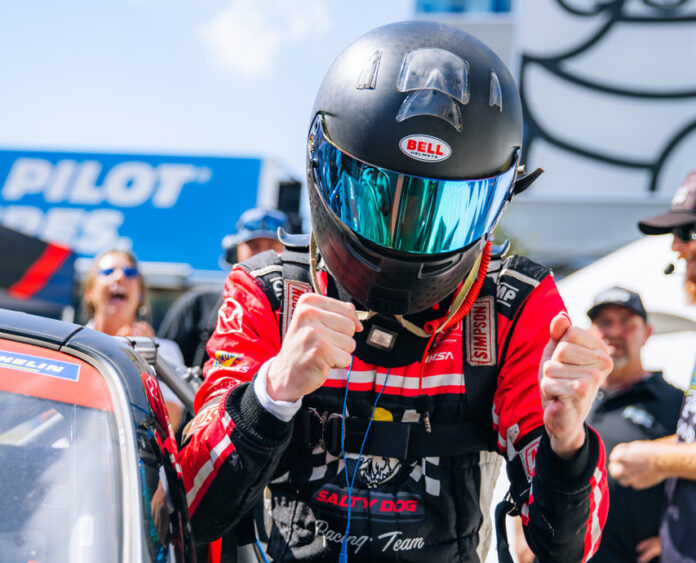
BRASELTON, Ga. (Oct. 1, 2026) – After 45 minutes of elbows-out racing, seven lead changes, and multiple intense restarts, it was Bobby Gossett (No. 44 BSI Racing) who raced to the Whelen Mazda MX-5 Cup presented by Michelin Race 1 win on Thursday. His Road Atlanta victory helped to grow his lead in the championship fight.
The top three drivers in the championship battle, all fighting to secure the $250,000 prize from Mazda with just one race to go in the 2026 season, monopolized the podium as Justin Adakonis (No. 23 McCumbee McAleer Racing) finished in second and Jared Thomas (No. 96 JTR Motorsports Engineering) came home third.
Gossett, who entered the race weekend leading the championship, grew his advantage over both Adakonis and Thomas in the standings after a remarkable run that started from 22nd on the grid to earn him the Penske “Shocking Performance” award for his huge push forward to victory.
Pole-sitting Frankie Barroso (No. 48 Spark Performance) led the field to green, but it was Ethan Goulart (No. 29 Saito Motorsports Group) into the lead on lap one. At the close of the opening lap, the first of two full-course cautions came out to remove Charlotte Traynor’s (No. 43 Parker DeLong Racing) stranded machine in Turn 10.
The restart saw Nathan Nicholson (No. 56 Advanced Autosports) move to the point, before Barroso retook the lead. Race officials were not too happy with the interaction the two drivers had in that lead change and issued Barroso a 10-second post-race penalty. Luckily for Barroso, the penalty and subsequent 18th-place finish did not harm his campaign for Rookie of the Year, which he mathematically clinched.
Goulart was back in the lead before the second full-course caution, but the real story was Gossett who was up to eighth and directly ahead of Adakonis for the restart.
Adakonis picked his way to the front quicker than Gossett and briefly took the lead, but it might have been too soon. Barroso and Goulart were determined to get back to the race lead and fought the MMR driver for it. This was exactly what Gossett needed to get around Adakonis and into the lead.
On the final lap, Adakonis was back in fourth, but made his way back to Gossett’s bumper with a brave move into Turn 10. It wasn’t enough though and Gossett held the advantage to the checkered flag, taking victory by 0.320-second.
“I think we got lucky there,” Gossett said.” I made quite a few mistakes, but there were some good passes in there too. I was just picking them off and I had a lot of friends out there,” said Gossett. “I think a lot of people know we are in the championship battle and they respect that. I’m glad to have a lot of friends out there-I can’t say that enough.”
After losing his championship advantage when a mechanical issue in Indianapolis cost him significant points, Adakonis is putting that out of his mind and looking to return to the points lead when it matters—after Friday’s final race. He’ll need to overcome a 120-point gap to Gossett.
“You know, it’s just another race in the schedule, and that was kind of our approach going into it is ‘whatever happens, happens,’ said Adakonis about his approach for the penultimate race. “You know, if I think about where Bobby’s [Gossett] at, thinking about where Jared’s at, but it’s not going to make any difference to me. I’m going 100 percent anyway and can only control what I can control, and I think we had a really great race.
“Overall, it’s really solid race, it’s obviously unfortunate that Bobby won as far as the points because I think we ran a really good race. But congrats to Bobby, man. He’s done great this year. So we’ll get him tomorrow. I think it’s going to be a close one for sure. I know the points say otherwise, but I think it’s going to be a tight race.”
Looking at potentially taking a break from racing in the Championship next year, the two-time champion Thomas put himself in the mix midway through the race, holding the lead and running in podium contention through the final stages to add yet another podium to his remarkable Whelen Mazda MX-5 Cup career. Despite losing ground to both, he keeps his hat in the ring for the title with a 190-point deficit to Gossett.
“That’s really been the way it has been all year,” Thomas said of the hard-fought race all the way through the field. “That’s pretty standard operating for these guys. So, it was just about trying to keep your equipment under you and not get it wrecked too bad. I am not thinking about the points, but you have to just focus to do the best you can. That’s the goal, and the points come out, how they come out.”
Matt Novak (No. 11 Advanced Autosports) finished fourth ahead of Goulart who ended up fifth.
Gossett’s twin sister Ellie (No. 77 BSI Racing) joined him in the victory circle celebrations to collect her award for Highest Finishing Female.
Back in the series for the first time since St. Petersburg, Jameson Riley (No. 66 JTR Motorsports Engineering) took home the Takumi Award for the highest finishing driver over the age of 40.
Everything comes down to Friday at 9:35am ET when the green flag will fly on the final Mazda MX-5 Cup race of 2026. Watch live on the IMSA and RACER YouTube channels to see who the newest champion will be.
About: The Whelen Mazda MX-5 Cup presented by Michelin is the signature spec series for Mazda Motorsports. The series has been operated by Andersen Promotions since 2017 and is currently sanctioned by IMSA. Mazda-powered grassroots champions can earn Mazda scholarships for this pro-level series. The Whelen Mazda MX-5 Cup awards more than $1 million in prizes and scholarships.
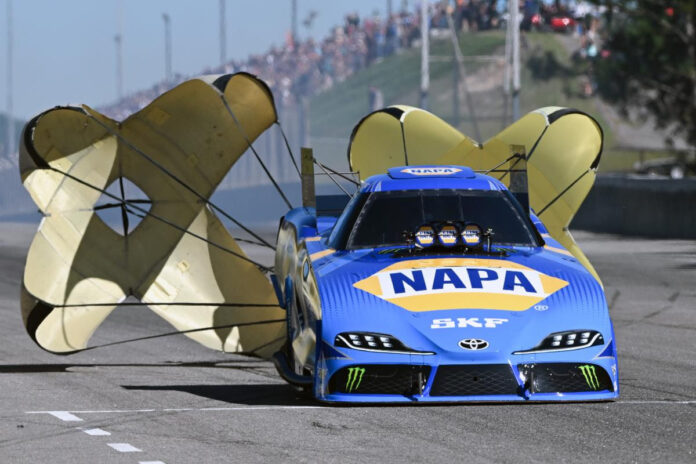
MADISON, Ill. (Oct. 1, 2026) – Needing a big weekend to get back in the thick of the world championship hunt, Funny Car standout Ron Capps likely couldn’t have picked a better destination than World Wide Technology Raceway, the site of this weekend’s 15th annual NAPA Auto Parts NHRA Midwest Nationals.
For one, it’s a sponsor race for Capps and his NAPA Auto Care team, which automatically makes it a highlight for the three-time champ.
But it’s always a place where Capps has performed well over the years, winning a Funny Car-best four times. Entering the weekend fourth in points and 112 behind leader Matt Hagan, the past success in St. Louis gives Capps added confidence he can have a big weekend as the first half of the Countdown to the Championship comes to a close.
Ending on a positive – and perhaps winning – note would bode well for the final three races and Capps is hopeful his talented team can deliver this weekend in St. Louis, where he will also be honored as one of “Gateway’s Greatest” on Friday at the track.
“We’ve got some good events coming up, especially this weekend in St. Louis with the event being sponsored by NAPA,” said Capps, who has three Funny Car victories in 2026. “St. Louis has been a good track for me with a lot of wins, and a lot of great results. Of course, when you have so many NAPA people come out like they are, you want to show off.”
Last season, Doug Kalitta (Top Fuel), Hagan (Funny Car), Greg Anderson (Pro Stock) and Gaige Herrera (Pro Stock Motorcycle) each claimed wins, while this year’s coverage also includes qualifying at 6:30 p.m. ET on FS1 and 11 a.m. on Sunday. It also includes eliminations coverage on FOX on Sunday.
The majority of markets on Sunday, Oct. 4, will see NHRA action from St. Louis following football broadcasts early in the day. Those markets will air the NHRA playoff race from 4:30-6:30 p.m. ET following the football on FOX game, while some markets will air NHRA coverage from 2-4 p.m. ET, leading directly into football on FOX action.
The race is the 17th of 20 races during the 2026 season and marks the halfway point of the six-race Countdown to the Championship. It’s also a big one for Ron Capps Motorsports as Capps’ teammate, star rookie Maddi Gordon, will be sporting a NAPA Auto Parts Top Fuel dragster for the event.
That adds even more incentive for Capps, who will also try to leap past the likes of J.R. Todd, who sits in third, and Jordan Vandergriff, who is second in points and 84 back of Hagan. The three-time champ advanced to the quarterfinals at the first two Countdown races, but Capps knows he needs to advance further on raceday to have a chance to track down Hagan down the stretch.
“It’s a tight battle and we know who we’re going to have to fight for the championship,” Capps said. “But that being said, looking back at Rockingham and Michigan, you can’t count anybody out on race day. You don’t even want to not mention them, because you look at the top 12 cars in our class, and any of them are capable of winning on Sunday.”
Friday opens with two qualifying sessions, including a spectacular night session that includes the inaugural “Top Dog” competition presented by USEDHOTDOGS.com, as NHRA’s quickest qualifiers battle for $7,500 in bonus money. That leads into Saturday’s two sessions and final eliminations on Sunday at the key playoff race.
Kalitta will try to keep pace with Top Fuel teammate Shawn Langdon, who is riding another three-race winning streak into St. Louis. The likes of Tony Stewart, Antron Brown, Leah Pruett and Maddi Gordon will also look to stop Langdon’s hot streak.
Greg Stanfield moved into the points lead in Pro Stock after winning in Rockingham. He’ll look to hold off the likes of Matt Hartford, reigning world champ Dallas Glenn, Greg Anderson and Erica Enders in St. Louis.
Reigning Pro Stock Motorcycle champion Richard Gadson holds the points lead after winning Sunday in Rockingham. Other standouts include Matt and Angie Smith, Herrera and Chase Van Sant.
The NAPA Auto Parts NHRA Midwest Nationals will also feature action in the NHRA Lucas Oil Drag Racing Series, the JBS Equipment NHRA Pro Mod Drag Racing Series presented by Elite Motorsports and Flexjet NHRA Factory Stock Showdown.
Fans can enjoy the special pre-race ceremonies that introduce and celebrate each driver racing for the prestigious Wally on Sunday and includes the fan favorite SealMaster Track Walk, as well as the winner’s circle celebration on Sunday after racing concludes, where fans are invited to congratulate the St. Louis event winners.
As always, fans get a pit pass to the most powerful and sensory-filled motorsports attraction. Fans can see their favorite teams in action and servicing their cars between rounds, get autographs from their favorite drivers and more. They can also visit NHRA’s Manufacturers Midway, which includes interactive displays, merchandise, food and fun.
NHRA Mission Food Drag Racing Series qualifying will feature two rounds at 4:30 and 7 p.m. CT on Friday, Oct. 2, and the final two rounds on Saturday, Oct. 3 at 12 and 2:30 p.m. Final eliminations are scheduled for 10 a.m. CT on Sunday, Oct. 4.
Tickets may be purchased at the WWTR ticket office, by phone at (618) 215-8888, or online at www.wwtraceway.com. All children 12 and under are free in the general admission area with a paid adult. For more info on NHRA, visit www.NHRA.com.
About Mission Foods
MISSION®, owned by GRUMA, S.A.B. de C.V., is the world’s leading brand for tortillas and wraps. MISSION® is also globally renowned for flatbreads, dips, salsas and Mexican food products. With presence in over 112 countries, MISSION® products are suited to the lifestyles and the local tastes of each country. With innovation and customer needs in mind, MISSION® focuses on the highest quality, authentic flavors, and providing healthy options that families and friends can enjoy together. For more information, please visit https://www.missionfoods.com/
About NHRA
NHRA is the primary sanctioning body for the sport of drag racing in the United States. NHRA presents 20 national events featuring the NHRA Mission Foods Drag Racing Series and NHRA Lucas Oil Drag Racing Series, as well as the JBS Equipment NHRA Pro Mod Drag Racing Series presented by Elite Motorsports and NHRA Flexjet Factory Stock Showdown™ at select national events. NHRA provides competition opportunities for drivers of all levels in the NHRA Summit Racing Series and NHRA Street Legal™. NHRA also offers the NHRA Jr. Street® program for teens and the Summit Racing Jr. Drag Racing League® for youth ages 5 to 17. With more than 100 Member Tracks, NHRA allows racers to compete at a variety of locations nationally and internationally. NHRA’s Youth and Education Services® (YES) Program reaches over 30,000 students annually to ignite their interest in automotive and racing related careers. NHRA’s streaming service, NHRA.tv®, allows fans to view all NHRA national events as well as exclusive features of the sport. In addition, NHRA owns and operates three racing facilities: Gainesville Raceway in Florida; Lucas Oil Indianapolis Raceway Park; and In-N-Out Burger Pomona Dragstrip in Southern California. For more information, log on to www.NHRA.com, or visit the official NHRA pages on Facebook, Instagram, Twitter, and YouTube.
NASCAR sponsorship used to mean a logo on the hood, a few TV mentions and a show car at the local store. In 2026, a growing share of sponsor money also goes to streamers and content creators who bring racing to fans who rarely sit through a full broadcast.
From sim racing streams to garage tour clips on TikTok, creators now sit alongside TV as one of the main ways teams and partners reach new fans. Here is how that shift works and what it means for teams, sponsors and fans.
Why are race teams working with creators?
The audience is changing. Younger fans often discover drivers through short clips, podcasts and live streams before they ever watch a full race. A 20 second clip of a last-lap pass or a perfect pit stop can travel much further on social platforms than a three hour broadcast.
Drivers have also become creators themselves. Many now stream sim racing, post behind-the-scenes videos and host their own shows. That gives sponsors a direct line to fans that did not exist a decade ago.
What does creator content look like in motorsport?
Format
Where it lives
What sponsors get
Sim racing streams
Twitch, YouTube, Kick
Long watch time, live chat and natural product use
Garage and shop tours
YouTube, TikTok
Technical credibility and real product demos
Race weekend vlogs
YouTube, Instagram
Access, personality and relaxed brand placement
Short race clips
TikTok, Shorts, Reels, X
Reach far beyond the core fan base
Podcasts and live shows
YouTube, Spotify
Deep engagement with loyal fans
How do sponsors fit into creator content without annoying fans?
Racing fans are used to sponsors. Paint schemes, firesuits and post-race interviews have always carried brands. The difference with creators is that fans can tell instantly when a mention feels forced.
Let the creator lead. A sponsor product used during a real sim race or shop build lands better than a scripted read.
Match the moment. A tool brand fits a garage video. An energy drink fits a late night sim race.
Go long term. A season-long partnership builds familiarity. One-off posts are quickly forgotten.
Disclose clearly. Fans respect an honest paid partnership label far more than a hidden ad.
Which brands are moving into motorsport creator marketing?
Automotive parts makers, energy drinks, tool brands and apparel companies moved first. Fan apps, fantasy games, sports media and, in states where it is legal, sportsbooks have followed, since race fans overlap heavily with fans of other sports.
Specialist creator agencies such as 3Bet Media plan these campaigns across streamers, YouTubers and short-form clippers, matching each brand with creators whose audience sits in the markets it can legally reach.
How do teams and sponsors measure the results?
TV exposure is still measured in airtime and logo visibility. Creator campaigns need different numbers:
Average live viewers and total watch time on streams
Views and shares on short clips
Clicks and sign-ups from unique creator links or codes
Follower growth for the team or driver during the campaign
Comment sentiment, which shows how fans feel about the partnership
The best partnerships track these from day one, so a sponsor can compare a creator campaign with a traditional activation at the track.
What should fans expect next?
Expect more drivers streaming between races, more teams running their own creator programs and more sponsor content built for phones first.
Race day will stay at the center of the sport. The conversation around it will keep moving to creators.
FAQ
Do NASCAR drivers stream on Twitch?
Many drivers and team members stream sim racing or behind-the-scenes content on platforms like Twitch, YouTube and Kick, especially during the off-season.
Why do sponsors pay motorsport creators?
Creators reach younger fans who watch clips and streams more than full broadcasts, and their recommendations often feel more personal than traditional ads.
How are creator sponsorships measured?
With watch time, clip views, unique links or codes, follower growth and audience sentiment, rather than airtime alone.
Is creator content replacing TV for racing?
No. It adds to TV. Broadcasts remain the main event, while creators keep fans engaged between races.
Three attractive clips can become a confusing sequence when edited together. A vehicle travels left in one shot and right in the next, the lighting shifts from cool morning to orange evening, and the camera suddenly moves much faster. Each clip may work alone, but the combined video loses its sense of place.
Planning a Seedance 2.5 video workflow around shared visual rules gives creators a clearer basis for reviewing those changes. Consistency begins with decisions made before generation, then continues through selection and editing.
Write a continuity brief before the first clip
List the elements that should stay stable: subject identity, movement direction, palette, lighting, camera height, and overall pace. Keep the list short enough to use during every review.
For a hypothetical motorsport event teaser, the brief might specify a fictional red race car, grey track surroundings, overcast light, and forward movement from left to right. This is an illustrative concept rather than footage of a real race.
Separate those fixed elements from details that may change. The camera can move from a wide track view to a closer wheel shot while the car’s color and travel direction remain consistent. That distinction leaves room for variety without making each shot feel unrelated.
Give each reference a clear purpose
If the selected interface supports reference uploads, use a small, coherent set. One image might define the car’s appearance, another the color palette, and another the intended framing. Confirm supported inputs before preparing a larger collection.
Avoid mixing references with different weather, lighting, or body designs unless the change is intentional. More material can introduce competing instructions when the purpose of each asset is unclear.
Keep a written description of important details alongside the references. A reviewer should know which visible characteristics are required even when a reference image contains distracting background elements.
Plan motion continuity across the cut
Movement direction helps viewers connect separate shots. If a subject exits toward the right, a following shot that continues that direction usually provides an easier visual connection than an unexplained reversal.
In the fictional race teaser, a wide shot could establish the car approaching a bend. A closer shot could continue the same travel direction, followed by a stable view of the car leaving the corner.
Decide where each action starts and ends. A close-up should not show the car stationary immediately after a wide shot suggests rapid movement unless there is a clear reason for the change. Review the relationship between shots, not only the quality of each generated clip.
Keep camera instructions comparable
Describe camera movement in plain, specific terms. “Low side view with a gentle tracking movement” gives a more reviewable intention than “dynamic cinematic action.”
Use similar language for related shots. If one instruction asks for slow tracking and another requests dramatic movement, the resulting sequence may have inconsistent energy.
Distinguish subject motion from camera motion. A car can move through a fixed frame, or the camera can follow it. Asking for both without explaining their relationship makes it harder to judge whether the shot matches the plan.
Review visual consistency side by side
Compare opening and closing frames for color, subject shape, scale, and background. Then place the selected clips in a rough sequence and watch at normal speed.
Look for changes that pull attention away from the event: different bodywork, flickering track markings, unexplained shadows, or a sudden increase in motion blur. Name the specific mismatch before revising instructions.
A useful correction might be “keep the same overcast lighting and grey track surface.” “Make it more consistent” leaves the problem undefined.
Use editing to finish the sequence
Trim clips to match action and rhythm, then adjust color carefully where a modest correction can bring shots closer together. Reject footage with major identity or geometry changes rather than trying to conceal every defect.
Add event names and other essential text during editing if generated lettering is unreliable. For a real event, verify sponsor details and avoid presenting invented racing scenes as documentary footage. The finished sequence should make its setting and movement easy to follow from the first shot to the last.
A weekend car is often the car one cares about the most and is more difficult to repair or return to top condition if any damage occurs. When a car is vintage, original parts can be difficult to replace. If it is a luxury piece, even a small cosmetic flaw can cost an arm and a leg. Regarding sports cars, loading them on steep ramps introduces a major risk. This is why your choice of transport – and more importantly, of transport provider – matters so much when looking to relocate a weekend car.
Open vs. enclosed transport at a glance
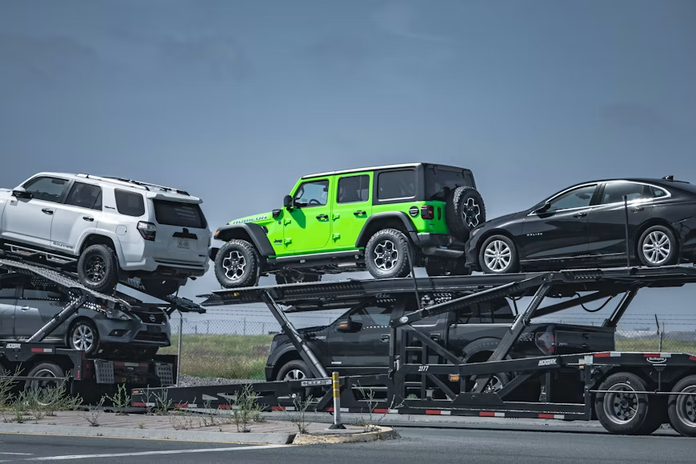
Before you choose a provider, determine whether your car should travel open or enclosed. Open car transport is the industry’s workhorse and involves loading more vehicles onto a multi-car carrier, the same way dealerships use to deliver new inventory. It’s the cheaper and more common option, suitable for everyday cars or weekend cars that don’t need extra protection and can handle road conditions like dirt and weather. Enclosed transport, on the other hand, is more relevant for low-clearance sports cars, cars with custom paint, luxury vehicles, exotics, and classics. In short, we talk about cars whose value or condition makes that extra protection a priority. Enclosed transport places the vehicle inside a fully covered trailer, either alone or alongside only a few other vehicles, compared with the multi-car deck of an open carrier that’s designed to transport more. Because enclosed cars transport fewer vehicles at a time, rates are typically higher to compensate for the extra equipment and operational expenses involved. Now that these differences are clear, we can proceed with comparing three car transport providers: Ship That Car, Montway, and Ship a Car Direct.
Ship That Car
Ship That Car offers both enclosed and open car transport, the former usually carrying two to six cars per trailer and the latter up to nine. Ship That Car’s enclosed service relies on hard-side enclosed trailers for high-value cars, using steel or aluminum walls to shield the car against debris, weather, and casual contact for the entire trip. This offers extra security, rigidity, and protection from impact that may occur during loading and transit, which is a reason why the cost can be 30-50% higher compared to open transport. To exemplify, the provider mentions that a 2,789-mile lane could add another $400-$800 for enclosed over open. Soft-side trailers, which use a fabric skin over a steel frame that makes them lighter and slightly cheaper, are also available, commonly used for automobiles valued between $50,000 and $100,000.
Another layer of protection comes from the specialized equipment the provider uses. Hydraulic lift gates load the car securely without steep ramps, a feature designed for low-clearance cars, exotics, and inoperable classics. At the same time, for lowered or show-quality automobiles, the provider offers soft-tie protocols using padded straps that grip only the wheels, so nothing touches the body, suspension arms, or undercarriage. Both options are available on request. Every carrier is authorized by the Federal Motor Carrier Safety Administration (FMCSA) and cargo coverage starts at $250,000. Vehicles declared over $250,000 are matched with carriers holding $500,000-$1 million cargo coverage based on the vehicle’s value, with no deductible billed to the customer.
Ship That Car’s enclosed service is suitable for anyone looking to transport an exotic, classic, low-clearance sports car, a recently restored vehicle, or any car that’s a collector’s piece. Enclosed transportation can usually take between three and seven days to arrange, and booking early is generally recommended to meet delivery dates. For more modest weekend cars, Ship That Car also offers open transport, which costs less and is quicker to schedule. No deposit is taken at booking – the carrier is paid on delivery.
Montway Auto Transport
Montway Auto Transport is another logistics broker and connects customers with carriers within a network of over 30,000 carriers, by its count. It offers both open and enclosed transport to suit different protection, budget, and car value levels. Enclosed transport usually carries a few vehicles, up to seven in some cases. The service is similarly oriented towards classic, rare, or high-end cars, which warrant extra protection from road elements like debris. Open trailers carry between eight and ten vehicles per transport, being the cheaper and faster option. Costs differ depending on distance; short routes come with a fee of $1.85 per mile, medium routes charge $0.91 per mile, and long routes cost $0.59 per mile, as per the specified 2025 prices. Enclosed prices for standard vehicles hover around $2.53 per mile for short routes, $1.25 per mile for medium routes, and $1.84 per mile for long routes. Nothing is charged at booking.
Carriers generally have between $100,000 and $250,000 in cargo insurance. However, owners with cars that exceed this ceiling should talk to the provider ahead of booking.
Ship a Car Direct
There are two options for enclosed transport with Ship a Car Direct: shared enclosed trailers, which usually hold four to six cars, and single-car trailers that carry only one. As expected, shared trailers are more affordable since more cars split the expense of the trip. Delivery, on the other hand, is a strong selling point for single-car trailers because it’s faster, as the driver doesn’t have to make any extra stops. This tier is better suited for rare, vintage, or ultra-luxury cars. Rates revolve around $2 for longer routes and $1 for shorter routes for enclosed transport, but the type of enclosure and car size also affect the final price.
When it comes to open transport, Ship a Car Direct offers three main carrier options, including:
Single-level with multiple cars for typical sports and high-end cars
Two-level with multiple cars for everyday cars
Single-level tow trailer with a dually pickup for short moves to a close destination.
Every carrier must have up-to-date insurance and meet a set of safety standards. Shipments are also protected by the provider’s Damage Free Guarantee Program, which steps in if the insurance doesn’t cover the entire damage.
Before you book a car transport service, ask yourself questions such as:
How much damage risk can my weekend car take?
How hard or expensive would it be to repair?
What does the insurance cover?
A weekend car has a value you want to protect, and this care starts with making the right transport choice.
Crypto gaming spent its first decade proving the basic model worked: wallet-based accounts, on-chain settlement, provably fair verification. The next phase looks less like refining that foundation and more like building new product categories on top of it, several of which barely resemble traditional casino gambling at all.
Esports Betting Is Scaling Faster Than Traditional Sports Betting
Wagering on competitive video gaming has grown from a niche adjacent market into a distinct betting category with its own dedicated markets, odds structures, and player base, one that overlaps only partially with traditional sports betting’s audience. A crypto gambling site active today typically already supports several of these adjacent categories directly, rather than treating them as separate future additions to the core casino product.
Esports betting has grown into a category with dedicated markets and odds structures distinct from traditional sports betting, appealing to a younger player base that came to online wagering through gaming culture rather than traditional sports fandom.
Crypto-native platforms have a structural advantage in this specific market, since esports audiences already skew toward crypto familiarity relative to the general betting population, reducing the friction that a purely fiat-based sportsbook would face trying to attract the same demographic.
The Numbers Behind the Esports Betting Surge
This growth is measurable rather than anecdotal. Market data specifically tracking esports betting shows the segment expanding at a rate that outpaces most traditional sports betting verticals, driven by a younger player base that came to online betting through gaming culture rather than through traditional sports fandom.
That growth trajectory is expected to continue for several more years as esports titles themselves attract larger audiences and more structured competitive leagues, giving betting markets more consistent, well-covered events to build products around.
Betting markets for esports titles also differ structurally from traditional sports, often built around map-by-map or round-by-round outcomes rather than a single final result, which requires odds infrastructure tuned to a much faster event cadence than most traditional sportsbooks were originally built to handle.
Social and Interactive Formats Are Displacing Solitary Play
Live leaderboards, synchronized jackpot events, and scheduled tournament windows have moved slot and table game formats away from purely solitary sessions toward something closer to a shared, timed event. This shift mirrors broader trends in digital entertainment generally, where passive, individual consumption has steadily given ground to formats built around shared, real-time participation.
That social layer changes retention dynamics meaningfully. A player competing on a visible leaderboard has a different reason to keep playing than one simply chasing a personal payout, and platforms have adjusted feature design accordingly over the past several release cycles.
Community features, shared chat during live dealer sessions, visible win notifications across a platform, and tournament brackets, borrow directly from broader digital entertainment norms established by gaming and streaming platforms long before crypto casinos adopted similar mechanics.
Prediction Markets Are Blurring Into Gambling’s Territory
Wagering on real-world event outcomes, elections, weather, cultural events, structured as tradable positions rather than fixed-odds bets, has grown into its own category that shares infrastructure with crypto gambling without always being classified under the same regulatory umbrella. That overlap is creating genuine regulatory ambiguity in several jurisdictions, since a prediction market position and a sports bet can look functionally identical to a player while facing different legal treatment.
Crypto rails make this category especially viable, since settling a position based on a real-world outcome benefits from the same fast, verifiable settlement infrastructure that crypto gambling platforms already built for traditional games.
Whether prediction markets ultimately get regulated as a form of gambling, as a financial derivative, or as something distinct from both remains an open legal question in most major jurisdictions, and how that question resolves will shape how freely the category can expand over the next several years.
AI-Driven Personalization Is Reshaping the Player Experience
Recommendation engines that surface specific games based on a player’s session history, bet sizing patterns, and time-of-day activity have become standard across most major platforms, borrowing directly from techniques originally developed for streaming and e-commerce personalization. The stated goal is matching players to content they are more likely to enjoy; the practical effect is also longer average session length, which platforms track closely.
This raises genuine responsible-gambling questions that the industry has not fully resolved. Personalization tuned purely for engagement can work against a player’s own stated limits if not paired with equally sophisticated safer-gambling tooling, a tension regulators in several markets have begun examining directly.
Some platforms have started applying the same personalization models to responsible-gambling interventions themselves, flagging unusual session patterns for a specific player rather than relying on generic, one-size-fits-all limit warnings. Whether that approach genuinely protects players or simply optimizes retention under a different label is a distinction regulators are still working out how to evaluate. How that question ultimately gets resolved will likely shape how the next generation of personalization tools gets designed across the industry, not just at any single platform. Players who want more control over that dynamic now have a genuine incentive to check what limit and self-exclusion tools a platform actually offers before assuming that engagement-tuned recommendations are working entirely in their favor.
What Ties These Trends Together
Esports betting, social formats, prediction markets, and AI personalization are not separate, unrelated developments; they all depend on the same underlying wallet-based, fast-settlement infrastructure that crypto-native
Imagine you run a small dealership outside Nairobi and need ten clean, low-mileage SUVs before the end of the quarter. Or perhaps you are a private buyer in Barbados who has found the exact Range Rover specification you want in Britain but needs someone to handle sourcing, export paperwork and shipping. Buying from Britain can make sense because qualifying vehicle exports may be zero-rated for UK VAT, while buyers also gain access to deep stock of prestige marques and established sea and air routes to Africa, Asia, the Caribbean, the Middle East and Europe. This guide to the best UK vehicle exporters for right-hand and left-hand drive cars is intended for overseas dealers and private buyers, ranking eight options by drive-type coverage, destination reach, marque focus and logistics support.
Our top pick is Import Marques for overseas dealers and private buyers who need both RHD and LHD prestige vehicles sourced and shipped with logistics support. It brings more than 20 years of trading history, dual RHD and LHD supply, VAT-free pricing for eligible exports and a growing EV and PHEV range alongside established prestige marques. Buyers focused on high-volume RHD brands for Africa or Asia should also consider Milele Motors. European buyers who need a dedicated left-hand drive specialist may prefer My LHD Car France LTD.
This article gives you a plain-English explanation of what to check before committing, a quick side-by-side comparison and full profiles with practical pros and cons for each exporter. Whether you need prestige LHD stock for Europe or volume RHD stock for Africa and Asia, the guide should help you identify which provider best fits your buying scenario.
What to look for
Use this short checklist to compare UK vehicle exporters as a trade buyer would. Working through these five points can help you avoid common problems involving drive-type mismatch, incomplete paperwork and unclear shipping arrangements.
Drive type coverage
Check whether the exporter can supply right-hand drive, left-hand drive or both. Many British suppliers mainly sell RHD vehicles, which may suit buyers shipping to Kenya, Japan or the Caribbean but not those seeking LHD models for France, Spain, Portugal or the Middle East. Ask the exporter to confirm the steering side in writing before you pay a deposit.
Destination reach and route experience
Look for evidence that the exporter serves your market rather than relying solely on a general claim that it ships worldwide. A supplier familiar with your destination may be better placed to address port requirements, vehicle age limits and inspection rules. Cross-border used-car rules and demand vary by market, making destination-specific knowledge worth checking.
Marque and vehicle type focus
Match the supplier’s stock strengths to your customers. Some exporters focus on prestige and 4×4 models such as Mercedes-Benz, Porsche and Range Rover, while others concentrate on volume brands such as Toyota, Honda and Nissan, as well as light commercial vehicles. A prestige specialist may not suit bulk economy orders, while a volume supplier may have limited access to unusual luxury specifications.
How complete the logistics are
Some suppliers manage sourcing, export documentation, customs paperwork, insurance and sea or air freight through one point of contact. If you need to arrange your own freight forwarder or obtain the V5C logbook and export declaration separately, include that time and expense in your comparison. The quotation should state clearly whether shipping is insured and whether the service is door-to-port or port-to-port.
Years in operation
Favour businesses with a traceable operating history, clear company details and consistent customer feedback. A 20-year history cannot guarantee a trouble-free transaction, but it shows that the business has operated through changing market conditions. When dealing with a smaller or less established operation, starting with one vehicle can limit your exposure before you place a bulk order.
The 8 best UK vehicle exporters for RHD and LHD cars
The eight companies below cover a broad range of overseas buying needs, from prestige LHD sourcing for European dealers to higher-volume RHD supply for African markets. Each profile explains who the exporter may suit, what the service includes and where you should seek further confirmation. Our number one is the strongest all-round recommendation for buyers seeking prestige choice in both drive types.
Provider
Best for
Key strength
Drive config
Import Marques
Overseas dealers and private buyers needing prestige RHD and LHD with full logistics
Dual drive prestige supply plus insured sea and air freight
Both RHD and LHD
Hamilton Cars (UK) Ltd
Budget-conscious buyers shipping to Kenya, Guyana, Barbados and worldwide
Proven Africa and Caribbean routes with VAT-free sourcing
RHD, LHD on enquiry
Milele Motors
RHD volume buyers in Africa and Asia wanting Toyota, Honda and Nissan
Multi-country RHD stock and VAT-free pricing
RHD
My LHD Car France LTD
European buyers needing a dedicated LHD specialist
LHD-only focus with registration help and warranty
LHD
Beck Evans
South East trade buyers wanting a franchised dealer export service
Established sales and service setup with responsive communication
RHD, confirm LHD on enquiry
Lee Game Prestige
Prestige and 4×4 buyers wanting a boutique Essex specialist
Personalised service for luxury SUVs and performance cars
RHD, confirm LHD on enquiry
Gocarz
Buyers importing UK vehicles to France, Belgium or Luxembourg
Search, inspection, customs and delivery managed end to end
Confirm per vehicle
Chorley Group
North West trade buyers wanting a multi-franchise network
Nissan, Kia and other franchise access with client services team
RHD, confirm LHD on enquiry
#1. Import Marques – best for overseas dealers and private buyers needing prestige RHD and LHD vehicles with full logistics
*The all-round prestige choice if you want both steering sides, eligible VAT-free pricing and shipping handled from sourcing to delivery.*
Import Marques sources new and low-mileage prestige and luxury vehicles for overseas trade and private buyers, with Mercedes-Benz, Porsche, Range Rover, Ferrari, Bentley and Rolls-Royce among its core marques. You deal with one team from vehicle sourcing through to export paperwork and delivery, which may suit you if you do not have your own UK agent or freight contact. The operation has traded since 2001, giving it a long record of arranging inspections, documentation and insured transport.
You can order both right-hand drive and left-hand drive vehicles, making the company relevant to buyers who supply mixed markets or European customers who specifically require LHD. VAT-free export pricing is available on qualifying overseas sales where the relevant conditions and evidence requirements are met. Sea or air freight can be fully insured, with customs documentation prepared as part of the service. The catalogue also includes a growing range of EV and PHEV models alongside petrol and diesel prestige stock.
The specialism will not suit every buyer. This is a prestige-focused supplier, so customers seeking high-volume budget hatchbacks or economy fleet cars should look elsewhere. There is no general published price list, meaning you need to request a tailored quotation for each vehicle or proposed bulk deal.
Pros
More than 20 years in operation since 2001
Dual RHD and LHD supply at the prestige end of the market
End-to-end service covering sourcing, paperwork, customs and insured freight
Broad prestige marque coverage, including Mercedes-Benz, Porsche and Range Rover
Growing EV and PHEV choice for markets with limited local supply
Cons
Prestige and luxury focus, rather than economy or high-volume budget vehicles
No published price list, so each deal requires a direct enquiry and quotation
Buyers planning large simultaneous orders should confirm availability and lead times
Premium models may not suit cost-first buyers working to tight per-unit budgets
Who it is best for: overseas franchise dealers, independent trade buyers and private clients seeking prestige RHD or LHD stock, eligible VAT-free pricing and one team to handle logistics to more than 50 countries.
#2. Hamilton Cars (UK) Ltd – best for budget-conscious buyers shipping to Africa and the Caribbean
*A practical option if your priority is UK sourcing and shipping to Kenya, Guyana or Barbados.*
Hamilton Cars (UK) Ltd is a new and used vehicle exporter based in West Sussex, England. It sources vehicles according to customers’ stated budgets and requirements, then exports them to Kenya, Guyana, Barbados and other destinations. VAT-free treatment may be available for eligible qualifying exports when the required evidence and conditions are satisfied.
Buyers can arrange sourcing and shipping through the same business, reducing the coordination involved if they do not have a UK freight partner. The company offers worldwide shipping by sea or air, depending on the buyer’s requirements and timetable. Sea freight may suit standard dealer stock where cost is the main concern, while air freight provides an alternative for urgent or high-value vehicles.
Some points need to be confirmed directly because public information is limited on the exact marque range and steering-side coverage. Based on the available information, the main appeal is destination coverage and a choice of freight methods rather than a narrow prestige specialism. Ask for examples of recent shipments to your destination and request a clear breakdown of everything included in the quoted price.
Pros
Routes offered to Kenya in Africa and Guyana and Barbados in the Caribbean
VAT-free treatment for eligible qualifying exports
Combined sourcing and shipping service through one supplier
Choice of sea or air freight according to budget and timing
Cons
Limited public detail on the marque range or prestige and volume split
LHD capability should be confirmed for your chosen vehicle and market
Pricing and payment terms require a direct enquiry
Who it is best for: trade and private buyers shipping to Africa or the Caribbean who want a budget-aware UK exporter to source and ship vehicles on their behalf.
#3. Milele Motors – best for RHD volume buyers in Africa and Asia wanting volume-brand stock
*The volume RHD option if you need Toyota, Honda, Nissan and similar marques for Africa or Asia.*
Milele Motors describes itself as an exporter of VAT-free right-hand drive motor vehicles to Africa and Asia. It operates through branches in Japan, Australia, the United Kingdom and the United Arab Emirates, giving buyers access to stock from several markets rather than relying on UK supply alone. This may improve availability when a particular specification is difficult to source in Britain.
The range covers passenger and light commercial vehicles from Toyota, Honda, Nissan, Mitsubishi, Mercedes-Benz and other manufacturers. Buyers can request petrol or diesel models with manual or automatic transmission to reflect local demand. The company specialises in vehicle procurement, export management and customer service technology, making it particularly relevant to repeat trade customers as well as buyers placing individual orders.
The main trade-off is its drive-type focus. The company primarily promotes RHD exports, so buyers seeking LHD stock for continental Europe or other left-hand drive markets should confirm whether suitable vehicles are available. Those planning large or simultaneous shipments should also discuss current capacity, stock availability and lead times before committing funds.
Pros
Clear focus on RHD exports to markets in Africa and Asia
Brand roster spanning volume names and Mercedes-Benz at the premium end
Multi-country sourcing from the UK, Japan, Australia and the UAE
Light commercial vehicles as well as passenger cars
Procurement and export management systems suitable for repeat orders
Cons
Primarily RHD focused, making it less suitable for LHD-market buyers
Capacity and scheduling for large bulk orders need direct confirmation
UK-specific pricing and payment terms are available only on enquiry
Who it is best for: overseas dealers and fleet buyers in RHD markets across Africa and Asia who need volume brands, potentially eligible VAT-free pricing and repeat stock replenishment.
#4. My LHD Car France LTD – best for European buyers needing a dedicated LHD specialist
*The specialist to shortlist if you live in Europe and want left-hand drive stock with registration support.*
My LHD Car France LTD presents itself as a UK left-hand drive car specialist. It holds an inventory of LHD cars for sale and focuses on left-hand drive supply rather than offering it only as an occasional option. Buyers based in France, Spain, Portugal or elsewhere in Europe may find this focus helpful when discussing specifications and compliance requirements.
The company also offers practical ownership support beyond the sale. European registration assistance can reduce the administrative work involved in re-registering a UK-sourced vehicle abroad. Warranty cover is available on its vehicles and the business describes its delivery service as secure, both of which may provide reassurance when a buyer cannot visit in person. The company was founded in 2008 and its UK operation is centred on Nottingham.
Buyers should discuss order size and timescales directly, particularly when seeking several vehicles or an urgent delivery. This is not the right choice for customers who need RHD stock, while marque availability and prices must be confirmed because neither is presented in comprehensive public detail. Request current inventory, warranty terms and expected delivery dates before paying a deposit.
Pros
Dedicated focus on LHD supply and continental buyer requirements
European registration assistance to support re-registration
Warranty provision for additional buyer confidence
Established in 2008 with long-term LHD specialisation
Cons
Capacity for large or urgent multi-unit orders needs confirmation
Not suitable for RHD-market buyers
Limited public detail on specific marques and price ranges
Current inventory and lead times must be checked directly
Who it is best for: private and trade buyers in Europe who want a dedicated LHD vehicle with help covering registration, warranty and secure delivery.
#5. Beck Evans – best for South East trade buyers wanting an established dealer export service
*A sensible enquiry if you prefer to export through an established franchised dealer setup with sales and service support.*
Beck Evans operates as a franchised dealer business with sales and service departments, as well as an export section for overseas buyers. That structure may appeal if you prefer buying through an established dealer operation rather than a standalone broker. Industry recognition through a Lifetime Achievement Award also indicates a long-standing presence in the motor trade.
Communication is a positive theme in the limited public feedback available. One customer review reports good customer service and regular updates during a one-week transaction. For trade buyers managing payments, documents and transport remotely, consistent communication can be an important part of the service.
Expectations should remain measured because public information about the export offering is limited. Available details do not provide a confirmed breakdown of RHD and LHD capability, a detailed export marque list or published destination coverage and pricing. Treat Beck Evans as a shortlist candidate for South East England trade business, then ask directly about steering side, stock access, export paperwork and freight arrangements.
Pros
Industry recognition indicating a long-standing market presence
Positive customer feedback on communication and transaction updates
Established sales and service infrastructure supporting the export service
Cons
Limited public detail on export processes, marques and destinations
RHD and LHD availability must be confirmed for each requirement
Pricing, payment terms and freight arrangements require an enquiry
Who it is best for: trade buyers who prefer a South East England franchised dealer and want to test its export capability with a single vehicle.
#6. Lee Game Prestige – best for prestige and 4×4 buyers wanting a boutique Essex specialist
*One to consider if you want prestige or 4×4 stock with personalised attention.*
Lee Game Prestige is based in Stapleford Tawney in Essex and specialises in prestige and 4×4 vehicles. It sells used cars through a personalised, boutique service model. Buyers who prefer dealing with a named contact familiar with the available stock may favour this approach over a larger, more centralised operation.
The business maintains an export section, so overseas enquiries fall within its stated services. Its Essex location may be convenient if you have a UK agent who wants to view or collect a vehicle or if you plan to conduct inspections in person. The prestige and 4×4 focus is relevant to customers seeking luxury SUVs, performance models and high-specification used stock.
Several details need direct confirmation because the public export information is limited. There is no confirmed RHD and LHD split, published list of export destinations or comprehensive explanation of freight, insurance and customs support. Buyers seeking several vehicles should discuss availability and delivery times early in the process.
Pros
Clear prestige and 4×4 specialisation for SUV and luxury demand
Boutique service model offering personalised attention
Essex location convenient for viewing or collection
Cons
Limited public information on drive types, export reach and logistics
Buyers seeking bulk orders need to confirm stock and delivery capacity
Pricing and payment terms require a direct enquiry
Who it is best for: buyers seeking prestige or 4×4 used stock with a personal service, particularly those with UK representation available for inspections.
#7. Gocarz – best for buyers importing UK cars to France and nearby European markets
*A practical option if you want UK vehicle sourcing, inspection, customs and delivery handled for France or nearby markets.*
Gocarz specialises in importing vehicles from the UK for customers in France and nearby European markets. Its current terms identify Gocarz as a brand operated by DYN Services UK Limited under English law, with customers principally in France, Belgium and Luxembourg. The business says it has operated from Norfolk since 2013.
Its service covers vehicle search, on-site inspection, purchase, customs formalities, transport and tax documentation, with a customer tracking area showing the progress of each import. The site also reports more than 700 completed imports since 2013. This end-to-end approach may suit buyers who want one provider to manage the process from sourcing through to delivery.
The main consideration is geographic fit. The current service is geared primarily towards France, Belgium and Luxembourg rather than broad global export routes. Gocarz is not positioned as a dedicated LHD specialist, so buyers should confirm steering side, exact costs and delivery timing for the vehicle they want.
Pros
UK-to-France import specialism with service also aimed at Belgium and Luxembourg
Vehicle search and on-site inspection before purchase
Customs formalities, transport and tax paperwork handled in one process
More than 700 imports completed since 2013
Cons
Primary focus on France, Belgium and Luxembourg rather than worldwide routes
Not positioned as a dedicated LHD specialist
Exact import costs vary by vehicle, taxes and delivery requirements
Who it is best for: buyers in France, Belgium or Luxembourg who want UK vehicle sourcing, inspection, customs and delivery managed through one provider.
#8. Chorley Group – best for North West trade buyers wanting a multi-franchise network
*Useful if you want new-car access through mainstream franchises and a structured client services team.*
Chorley Group is a multi-franchise dealer group in the North West of England, with franchises including Nissan and Kia alongside other brands. It maintains a dedicated vehicle exports page, meaning export enquiries are handled as a distinct service. For buyers seeking mainstream new stock rather than prestige used vehicles, its franchise access is the main attraction.
Support is organised through a central Client Services Team working across Chorley Group locations and franchises. The team handles enquiries and updates through a joined-up process, which may help customers sourcing across several sites or seeking consistent communication. The regional footprint also makes viewing and relationship building more convenient for North West based trade contacts.
Buyers should note the segment and information gaps. This is a mainstream volume franchise operation rather than a prestige or luxury specialist. Available details do not confirm the RHD and LHD split, international freight and insurance arrangements or the full geographic reach of the export service. Clarify paperwork, delivery terms and drive-type availability before committing.
Pros
Multi-franchise network with confirmed Nissan and Kia access
Dedicated client services team providing structured support
North West presence convenient for regional trade relationships
Export section confirms that overseas enquiries are accepted
Cons
Mainstream franchise focus rather than prestige or luxury specialisation
Limited public detail on drive types and international logistics
Pricing and destination coverage require a direct enquiry
Who it is best for: trade buyers seeking mainstream franchise stock through a North West dealer group with centralised enquiry handling.
Frequently asked questions
What is the difference between RHD and LHD and which markets need each?
RHD means right-hand drive, with the steering wheel on the right, and is used in the UK, Japan, Kenya, Australia, Barbados, Guyana and many African and Asian markets. LHD means left-hand drive, with the wheel on the left, and is used across most of Europe, the Middle East, the Americas and parts of Africa and Asia. You must match the steering side to the rules of the country where the car will be registered because some markets restrict or impose additional costs on the other configuration. Some cross-border purchases fall within the concept described in this guide to grey-market vehicles, so check vehicle age limits, emissions rules and inspection requirements before buying.
How does VAT-free export work from the UK and who qualifies?
A vehicle permanently exported from the UK may qualify for zero-rated VAT treatment when the sale satisfies the applicable rules and the exporter obtains the required evidence within the relevant period. The process may involve paying a deposit, providing overseas delivery details and supplying proof of export, including shipping documents. Eligibility depends on the transaction, destination and documentary requirements rather than simply on whether the customer is an overseas private buyer or dealer. Ask the exporter to confirm in writing whether the sale qualifies, what evidence is needed and how any deposit or VAT amount will be handled.
What paperwork do I need to export a car from the UK?
You will normally need a sales invoice showing the applicable VAT treatment, the relevant V5C documentation for permanent export, a valid MOT where required, proof of identity and overseas address, plus shipping and insurance documents. Your exporter or freight forwarder may also prepare the UK export declaration and assist with the import declaration, duty assessment and port clearance at the destination. Requirements vary by country, particularly for vehicle age, mileage, emissions and pre-shipment inspections, so obtain a document checklist for your port before transferring funds. Keep copies of every document until the vehicle is registered locally.
Can I buy an LHD car from a UK-based exporter?
Yes, but you need an exporter that stocks or sources left-hand drive vehicles. Many British dealers primarily hold RHD stock, while some specialise in LHD for Europe or offer both configurations for selected prestige models. Ask for the VIN, written steering-side confirmation, dashboard photographs and details of European registration support where relevant. Regular LHD buyers may find a dedicated LHD specialist or dual-supply prestige exporter more suitable than a volume seller focused mainly on RHD vehicles.
Which exporter fits your scenario best
If you need prestige choice in both RHD and LHD, potential VAT-free treatment for eligible exports and one team handling paperwork and insured freight, Import Marques remains the top all-round pick in this comparison. Buyers interested in sourcing and delivery to Kenya, Guyana or Barbados can approach Hamilton Cars, while Milele Motors is better aligned with volume RHD brands such as Toyota, Honda and Nissan for Africa or Asia. European buyers focused solely on LHD should consider My LHD Car France LTD. Other options include Beck Evans in the South East, Lee Game Prestige for boutique 4×4 stock, Gocarz for UK imports into France, Belgium and Luxembourg, and Chorley Group for mainstream franchise access in the North West. Contact the providers that match your market and budget, request a written quotation itemising freight and documents and consider starting with one vehicle when testing a new relationship.
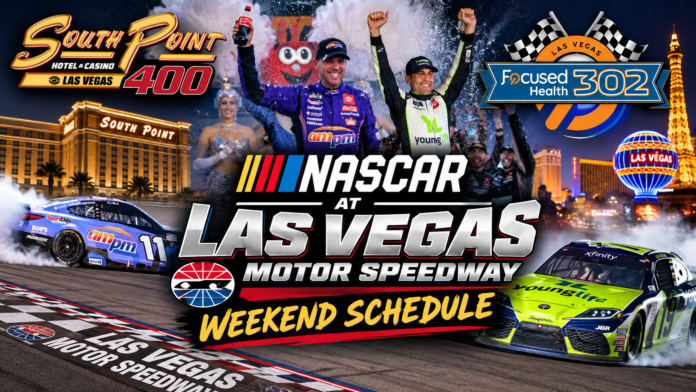
The NASCAR Cup Series and the NASCAR O’Reilly Auto Parts Series head to Las Vegas Motor Speedway. The O’Reilly Auto Parts Series kicks off the weekend on Saturday with the Focused Health 302 at 7:30 p.n. ET on the CW Network. Then on Sunday, the Cup Series South Point 400 begins at 5:30 p.m. ET on the USA Network.
The Bullring at Las Vegas Motor Speedway honors Kyle Busch with the inaugural Kyle Busch Classic presented by Star Nursery on Friday, October 2nd. The race honors the NASCAR champion and Las Vegas native.
“The Bullring is where it all began for Kyle,” Samantha Busch said. “It’s where he fell in love with racing, where his dad, Tom, first taught him the sport and where he spent countless nights racing alongside his brother, Kurt, while his mom and grandma cheered them on. Those early years shaped not only the driver the world came to know but the husband, father, and person we loved so deeply.”
NASCARCup Series Notes for Las Vegas Motor Speedway:
Kyle Larson became the first driver to earn a race-maximum 76 points at Kansas by winning both race stages, the race, and setting the fastest lap. Larson’s win extended his points lead to 26 over Denny Hamlin, and his dominance cost all 15 drivers to lose points to the series lead.
Denny Hamlin won the last two Las Vegas races and could join Jimmie Johnson as the second driver to win three straight Las Vegas races. Joey Logano (four), Hamlin (three), and Kyle Larson (three) have won 10 of the last 17 Las Vegas races and are the only repeat winners in that span.
The pass for the win has come in the final six laps in five of the last nine races. Five of the last seven races were won from the front row, the last eight races were won from a top-10 starting position, and the stage one winner has gone on to win the race six times.
NASCAR O’Reilly Auto Parts SeriesNotes for Las Vegas Motor Speedway:
This is the fourth race of the 2026 Chase with six races remaining.
Justin Allgaier (1) and Austin Hill (1) are the only drivers in the field with Las Vegas wins, and both are the only drivers in the field with stage wins.
Allgaier has finished in the top 10 in ten straight races, the longest Las Vegas top 10 streak of all time. Also, if Allgaier leads 116 more laps, he will pass Kyle Busch for most laps led all-time at Vegas.
The Weekend Schedule for Las Vegas Motor Speedway:
SATURDAY, OCTOBER 3 2:00 AM – 11:50 AM: NOAPS PRACTICE 3:05 PM – 1:00 PM: NOAPS QUALIFYING (IMPOUND) 4:30 PM – 2:20 PM: NCS PRACTICE (IMPOUND) (ALL ENTRIES) 5:35 PM – 3:30 PM: NCS QUALIFYING (IMPOUND) 7:05 PM: NOAPS DRIVER INTRODUCTIONS 7:30 PM: NOAPS RACE (STAGES 45/90/201 LAPS = 301.5 MILES) ON THE CW NETWORK
SUNDAY, OCTOBER 4 4:55 PM: NCS DRIVER INTRODUCTIONS 5:30 PM: NCS RACE (STAGES 80/165/267 LAPS = 400.5 MILES) ON THE USA NETWORK *All times are Eastern. NASCAR Cup Series (NCS), NASCAR O’Reilly Auto Parts Series (NOAPS), NASCAR Craftsman Truck Series (NCTS), ARCA Series (AMS)