Home Blog Page 82

Ford Racing Notes and Quotes – Charlotte 2 Media Availabilities

Ford Racing Notes and Quotes
NASCAR Cup Series
Bank of America 400 Media Availabilities — Charlotte Motor Speedway
Saturday, October 10, 2026

JOEY LOGANO, No. 22 Shell/Pennzoil Ford Mustang Dark Horse – Talking about championship battle – “Points are at the top of mind all the time. I think where we are 71 [points] back, we’ll get through Charlotte and see where we fare out of here. Hopefully we have a pretty solid run, score some points, and keep ourselves in range. I look at the tracks coming up; Phoenix, Martinsville, Las Vegas, all those tracks are tracks we can win at.”

On this weekend – “Glad to be back out here [on the oval configuration]. We’ll see what we got when we get out there. If it’s today, I’d be surprised, but if we get out there we’ll make some laps and see what we got. If not it’ll be tomorrow and we’ll all figure it out together, 30-whatever cars deep into turn one and we’ll see what it does. It’s always a lot of faith and a lot of trust in the team to hit all those things right, but I know we can.”

RYAN BLANEY, No. 12 Discount Tire Ford Mustang Dark Horse – “I’d much rather be leading. I think there’s a little bit of added pressure like ‘don’t mess it up’ since you can almost start being defensive, and you can maybe lose what got you there. If you can maybe shift your mindset to the guys that are chasing, obviously they can’t afford a mistake either so there’s that pressure there, but it is a little bit more of a different mindset in that you have the opportunity to catch this person. So I think it’s a little bit different, but I’d much rather have that weight on my shoulders leading it and trying to maintain it than having to chase.’

CHRIS BUESCHER, No. 17 Fifth Third Bank Ford Mustang Dark Horse – Approach for this race compared to spring – “I would say largely it is a very similar starting point. Obviously you’ll have a bit of different weather conditions. We think it’ll be during the day and it won’t go into a night race. Charlotte is one of the tracks that changes the most drastically with conditions. With that being said, we’re kind of experiencing a little bit more consistency at the track if it stays on target here.”

On being back on the oval – “I’m glad to be back on the oval. I appreciate the Roval for what it was, and I’ve enjoyed the handful of years that we did it to start. But I’m glad to be back on the big track. With the weather and the shorter race it’ll be a lot more like the other mile-and-a-half races that play out. But yeah, it’ll be fun. I really like this track, I love the fact that we can move around so much here. It [Charlotte] has so much character, It’s put on some really good races and I think that was the big push to get us back on the oval.”

RYAN PREECE, No. 60 Kroger/Blue Buffalo Ford Mustang Dark Horse – “It’s only 400 miles, so yeah the stages are going to be different. You know in the [Coke] 600, they’re [stages] 100 laps. There’s a lot of time for things to happen. Hopefully, we can unload really fast, since I felt really good about our car in May.”

BRAD KESELOWSKI, No. 6 Ford Mustang Dark Horse – “”I’m glad that we’re back on the oval. I hate that the weather hasn’t cooperated so far, but my team says that Sunday the weather’s going to get way better, so I’m happy to hear that. The oval presents a different set of challenges, clearly, than the Roval does. The fact that this is a 400 miles race instead of a 600 mile race is probably something you’ve heard from every other driver, but it is a difference maker for sure, in how you race the track and how you approach the track. We’ll see if we end up racing during the day or during the night. If it’s during the day it’s going to be really slick and really hard to get a hold up. It will present a significant challenge either way but even more so during the day.”

What Should Be Mapped Before Walls Move? The Hidden Systems That Shape a Home Renovation

Photo by depositphotos at https://depositphotos.com/

A renovation can look straightforward on a floor plan. Move a kitchen wall, enlarge a doorway, relocate a bathroom vanity, add recessed lighting, and open two rooms into one larger space. On paper, those changes may take only a few lines.

The house itself can tell a different story.

Behind finished walls and ceilings are plumbing lines, drain stacks, electrical wiring, ductwork, framing, vents, and structural supports. These hidden systems often determine how easily a layout can change. A wall that appears unimportant may carry loads from above. A ceiling bulkhead may conceal a main duct. Moving a sink several feet may require more than extending two water lines because the drain still needs a workable route.

Good home renovation planning therefore starts before demolition. Mapping what is hidden can prevent homeowners from designing a layout that becomes unnecessarily difficult once construction begins.

Start With Plumbing Before Moving Kitchens or Bathrooms

Kitchens and bathrooms are often the most tempting rooms to rearrange because moving fixtures can dramatically improve function.

Plumbing, however, does not move as freely as furniture.

Water supply lines can often be rerouted with reasonable flexibility, but drains introduce more restrictions. Wastewater relies on gravity, which means drain lines need appropriate routing and slope. Venting also needs to be considered.

Moving a kitchen sink to the opposite side of a room may look simple in a rendering, yet the new location could require changes below the floor or inside nearby walls.

Follow the Drain, Not Just the Faucet

Homeowners often focus on where hot and cold water will come from.

The drain deserves just as much attention.

Before finalizing a new kitchen or bathroom layout, identify where the existing drain travels and where it connects to larger plumbing lines.

A shorter, cleaner route may influence where a sink, shower, or toilet works best.

That does not mean fixtures can never move far from their original locations. It means the design should account for the construction required rather than treating plumbing as an invisible system that can be placed anywhere.

Identify Drain Stacks Early

Vertical drain stacks can influence several floors at once.

A stack serving an upper bathroom may pass through a wall on the main floor before continuing downward. Removing that wall can therefore involve more than framing work.

Relocating a stack may affect bathrooms, ceilings, floors, or other finished spaces.

This is one reason whole-home renovation planning should look vertically as well as horizontally.

A floor plan shows what sits beside a room. It does not always show what passes through it from the level above.

Before committing to major wall changes, determine whether important plumbing runs through the area.

Find HVAC Routes Before Opening the Floor Plan

Heating and cooling systems often use walls, ceilings, floor cavities, and bulkheads as pathways.

A wall can appear unnecessary from an architectural point of view while still containing ductwork that supplies another part of the house.

Removing it may require rerouting that duct.

Sometimes the new route is straightforward. Other times, it may require a new bulkhead, changes to adjacent rooms, or a different distribution strategy.

That makes HVAC mapping particularly important when homeowners want cleaner ceilings and fewer visual obstructions.

Bulkheads Usually Exist for a Reason

A boxed section near the ceiling is often treated as something that should automatically disappear during a renovation.

Sometimes it can.

Before designing around its removal, find out what is inside.

A bulkhead may contain:

  • HVAC ductwork
  • Plumbing drains
  • Water lines
  • Electrical wiring
  • Structural framing
  • Exhaust ducts

Removing the visible box is only useful if the systems inside can be relocated without creating a larger problem somewhere else.

In some homes, redesigning a bulkhead so it looks deliberate may be more practical than eliminating it completely.

Understand Which Walls Are Structural

One of the biggest assumptions homeowners make during renovation planning is that a wall can be removed because it feels thin or appears to divide two small rooms.

Wall thickness alone does not determine whether a wall carries load.

Structural walls may support floor joists, beams, roof loads, or parts of the house above them.

Removing one requires a plan for transferring those loads safely.

That often means installing a beam and providing support at each end.

The Beam Has to Transfer Its Load Somewhere

A beam does not make structural loads disappear.

It redirects them.

The posts or supports beneath the beam need to transfer weight through the structure below, sometimes all the way to the foundation.

That is why opening a wall can affect more than the room where the work takes place.

A design may also need to consider what sits beneath the proposed support points.

Understanding that load path early can help homeowners compare different opening sizes and structural approaches before finishes are selected.

Map Electrical Wiring Before Finalizing the Layout

Electrical systems tend to be more flexible than structural framing, but relocation can still affect the scope of a renovation.

Walls may contain wiring for:

  • Receptacles
  • Light switches
  • Ceiling fixtures
  • Appliances
  • Smoke alarms
  • Exterior lighting
  • Data or communication lines

Removing a wall means those circuits may need new routes.

The bigger opportunity is to use the renovation to plan electrical placement around the new layout rather than merely reconnecting what already existed.

Design Power Around Furniture and Daily Use

Once walls move, furniture often moves too.

That changes where outlets and switches should go.

A new open living area may need floor power. A kitchen island may require electrical service. Bedside outlets may shift if a bedroom layout changes. Built-in cabinetry can block receptacles that once worked perfectly well.

This is where planning Home Renovations in Toronto as a complete layout exercise makes more sense than treating framing, electrical, plumbing, and interior design as separate decisions. Once the intended room use is clear, hidden systems can be positioned to support it instead of being adjusted after finishes are already chosen.

Check the Electrical Panel Before Adding New Loads

A renovation often adds electrical demand.

New appliances, lighting, heated floors, kitchen circuits, home offices, or other equipment may change what the electrical system needs to support.

Before planning around those additions, it is useful to understand the existing panel and available capacity.

This does not mean every renovation requires a panel upgrade.

It means electrical planning should happen early enough that any needed changes are part of the project rather than a late surprise.

Look Above the Ceiling Before Planning Lighting

Recessed lighting seems simple on a reflected ceiling plan.

The space above the ceiling may make certain locations difficult.

Joists, ducts, plumbing lines, and other obstructions can limit where fixtures physically fit.

This is particularly important when homeowners want perfectly aligned rows of recessed lights.

A lighting plan should respect the structure rather than assuming every point on the ceiling is open.

Sometimes shifting fixtures slightly produces a cleaner result than heavily modifying hidden systems just to preserve an exact layout.

Think About Floor Cavities Too

Many hidden renovation constraints are not actually inside walls.

They may be beneath the floor.

Plumbing lines, ducts, wiring, and structural framing often use floor cavities as pathways.

Moving a fixture upstairs may therefore affect the ceiling below.

Adding new mechanical systems can do the same.

Before finalizing a second-floor bathroom or laundry layout, consider what sits beneath it.

A seemingly minor change upstairs may create drywall or ceiling work on the main floor.

Planning both levels together makes those effects easier to manage.

Decide Which Hidden Systems Are Worth Relocating

Not every obstacle should automatically be moved.

Sometimes relocating a duct, drain, or structural support makes sense because the layout improvement is substantial.

Other times, the construction required may be disproportionate to the benefit.

This is where homeowners can compare the functional gain against the disruption.

Ask questions such as:

  • Does moving this system noticeably improve the room?
  • Is there another layout that achieves most of the same benefit?
  • Will relocation affect multiple floors?
  • Does the change create new bulkheads or access requirements?
  • Will future maintenance become harder?

A strong renovation design works with the house where possible and changes it where the improvement is worth the effort.

Coordinate Hidden Work Before Finishes Begin

The sequence of construction matters.

Mechanical, electrical, plumbing, and structural work should generally be coordinated before walls and ceilings are closed.

Otherwise, newly finished surfaces may need to be opened again.

This is especially important in whole-home renovations where several trades may need access to the same cavities.

For example, a kitchen wall may need framing changes, electrical wiring, plumbing lines, and ductwork before insulation and drywall can proceed.

Looking at those systems together reduces conflicts.

Older Homes Often Need More Investigation

Older houses can contain changes from several different eras of ownership.

A wall may have been opened and closed again. Wiring may have been updated in only part of the property. Plumbing routes may reflect an earlier addition. Ductwork may have been adapted around renovations completed decades ago.

That history can make hidden conditions harder to predict from drawings alone.

It does not mean an older home cannot be transformed.

It simply means the design stage should leave room for investigation.

Selective openings, attic access, basement observations, existing plans, and professional assessment can all provide useful information before major demolition begins.

Hidden Conditions Can Improve the Design

Discovering a duct, beam, or drain stack in the wrong location can feel like a setback.

Sometimes it leads to a better solution.

A structural post might become part of built-in cabinetry. A necessary bulkhead can define a kitchen zone. A plumbing stack can influence the location of a powder room that fits the floor plan more naturally.

Good design does not always eliminate constraints.

It can absorb them.

Treating existing systems as information rather than obstacles often produces a renovation that feels more connected to the original structure.

Photograph Open Walls Before They Close

Once framing and rough-ins are exposed, homeowners have a rare opportunity to document what normally remains hidden.

Take clear photographs before insulation and drywall are installed.

Useful images can show:

  • Plumbing routes
  • Electrical wiring
  • Blocking
  • Ductwork
  • Structural framing
  • Shutoff locations
  • Drain paths

Label the images by room and wall.

Years later, this record can make future repairs or renovations easier because there is at least a visual reference for what lies behind the finished surface.

Plan the House Beneath the Finishes

Paint colors, flooring, cabinetry, and fixtures shape how a renovated home looks, but hidden systems often shape what the renovation can become.

Plumbing determines how easily wet areas can move. Ductwork affects ceilings and walls. Structural framing influences openings. Electrical systems need to support the way rooms will actually be used.

Mapping these elements before demolition allows homeowners to make layout decisions with a more accurate picture of the work involved.

The strongest renovation plans do not begin with the assumption that every wall can move and every fixture can go anywhere. They begin by learning how the house is built, then using that information to create a layout that works visually, structurally, and practically.

That approach can reduce mid-project surprises and help the finished home feel intentional rather than compromised by discoveries made after construction has already begun.

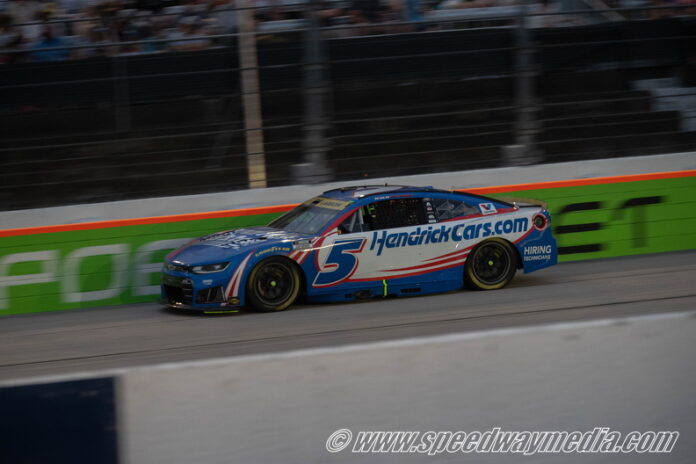
Kyle Larson awarded Cup Chase pole at Charlotte

Photo by John Knittel for SpeedwayMedia.com.

Kyle Larson was awarded the pole position for the Bank of America 400 at Charlotte Motor Speedway on Saturday, October 10.

The event’s starting lineup was determined by a qualifying metric formula that evaluated competitors’ finishing results from a previous-scheduled event and respective entries in the owner’s standings. This was due to this weekend’s on-track qualifying session at Charlotte being canceled due to inclement weather. The weather also canceled the qualifying session for Saturday’s O’Reilly Auto Parts Series’ Chase event at Charlotte and has postponed the event to Sunday, October 11, at 8 p.m. ET on the CW Network.

Larson is coming off a runner-up result during last weekend’s NASCAR Cup Series’ Chase event at Las Vegas Motor Speedway and is currently leading the 2026 Chase standings. Therefore, the reigning two-time Cup Series champion from Elk Grove, California, was awarded the top-starting spot for Sunday’s sixth Chase event of this season at Charlotte. Having won at Charlotte for the prestigious Coca-Cola 600 event in 2021, Larson will strive to add a fall Charlotte oval event victory to his resume as he remains in pursuit for his third championship in six seasons.

Larson will share the front row with Chase Briscoe, the latter of whom won last weekend’s Chase event at Las Vegas Motor Speedway. Tyler Reddick, Ryan Blaney, Austin Cindric, William Byron, Joey Logano, Bubba Wallace, Chase Elliott and Shane van Gisbergen complete the top-10 starting grid, respectively.

With nine of 16 Chase contenders (Larson, Briscoe, Reddick, Blaney, Cindric, Byron, Logano, Wallace and Elliott) starting in the top 10 on the grid, the remaining Chasers that include Carson Hocevar, Denny Hamlin, Chris Buescher, Ty Gibbs, Daniel Suarez, Christopher Bell and Ryan Preece will start 11th, 12th, 13th, 14th, 15th, 17th and 24th, respectively.

With 39 competitors vying for 39 starting spots, all made the main event.

Charlotte – Starting Lineup:

  1. Kyle Larson
  2. Chase Briscoe
  3. Tyler Reddick
  4. Ryan Blaney
  5. Austin Cindric
  6. William Byron
  7. Joey Logano
  8. Bubba Wallace
  9. Chase Elliott
  10. Shane van Gisbergen
  11. Carson Hocevar
  12. Denny Hamlin
  13. Chris Buescher
  14. Ty Gibbs
  15. Daniel Suarez
  16. Alex Bowman
  17. Christopher Bell
  18. AJ Allmendinger
  19. Michael McDowell
  20. Austin Dillon
  21. Riley Herbst
  22. Brad Keselowski
  23. Noah Gragson
  24. Ryan Preece
  25. Erik Jones
  26. Austin Hill
  27. Josh Berry
  28. Ross Chastain
  29. John Hunter Nemechek
  30. Cole Custer
  31. Todd Gilliland
  32. Ricky Stenhouse Jr.
  33. Ty Dillon
  34. Zane Smith
  35. Cody Ware
  36. Connor Zilisch
  37. Corey Heim
  38. Gray Gaulding
  39. BJ McLeod

*Bold indicates Chase Drivers

The 2026 Bank of America 400 at Charlotte Motor Speedway is scheduled to occur on Sunday, October 11, at 3 p.m. ET on USA Network, PRN Radio, SiriusXM and HBO MAX.

Daniel Dye’s NCTS Charlotte Motor Speedway Race Recap

Ecosave 200 – Race Results

Venue: Charlotte Motor Speedway

FINISH: 28th

Start: 21st

Heartbreak Hovers Over Dye After an Early Exit at Charlotte

Daniel Dye, driver of the No. 20 Champion Container Chevrolet was poised for a top-10 finish at Charlotte Motor Speedway for the Ecosave 200 until an incident in the closing laps led to heartbreak for the young driver. Dye started the 134-lap event 21st in line and wasted no time on his charge to the front. A quiet first stage saw Dye picking up spots left and right and raced his way to a 16th-place Stage One finish. Under the stage break, Dye reported to his team that his balance was pretty neutral and did not feel he needed adjustments. Four fresh tires and top off of Sunoco race fuel for the young driver to send him on his way to restart Stage Two.

The field stacked up and the No. 20 was forced to drop a few spots back to 22nd. Dye quickly regrouped and soon found himself back just outside the top 15 with 10 laps to go. As the stage came to a close, the young driver was able secure a 15th-place Stage Two finish and reported to crew chief Dewy Townsend under the stage break that he was lacking rear-stability in his race truck. A quick trip down pit road for four fresh tires, fuel and a slight adjustment to help the handling on that race truck led the Daytona Beach, Fla. native to restart the final stage 15th in line.

Throughout the final run, the field started to heat up and the racing started to get dicey. Dye continued to battle with the handling on the rear end of his race truck until a yellow flag appeared with 35 laps to go. This allowed the young driver to come down pit road for four tires, fuel and a small adjustment. A quick stop by the crew gained Dye a few spots on pit road to get him inside the top 10 to restart the closing laps. Dye set his focus forward and made a move up through the middle putting himself three-wide and battling hard as he found himself up to seventh until another caution arose. This gave the No. 20 a chance to reset and regroup in eighth.

On the restart, the field stacked up and a gaggle of trucks, including the No. 20 Chevrolet made contact, sending the competition into a red flag. The No. 20 spotter was able to assess the damage from above and the team chose not to pit when the field went back green. On the restart, the No. 20 went for an unfortunate spin headed into Turn 1 which forced the young driver to the garage for an early exit and a 28th-place finish at Charlotte.

Daniel Dye Quote:

“We had a really fast No. 20 Champion Container Chevrolet tonight and I hate that we walk away, once again, with nothing to show for it. Tough night for this No. 20 team but very grateful to MHR for the opportunity to hop in this truck for a few races this year. Big thanks to Champion Container, Bill (McAnally, team owner), Dewey (Townsend, crew chief) and the No. 20 team for a great run.”

Tyler Ankrum’s NCTS Charlotte Motor Speedway Recap

Ecosave 200 – Race Results

Venue: Charlotte Motor Speedway

FINISH: 9th

Start: 25th

Stage One: 17th

Stage Two: 12th

NCTS Playoff Point Standings Position: 10th

Ankrum Bounces Back to Secure a Top-10 finish at Charlotte

Tyler Ankrum, driver of the No. 18 LIUNA Chevrolet scooped up a solid rebound Friday evening at Charlotte Motor Speedway for the Ecosave 200 where he rallied from a 25th-place start to a top-10 finish in the NASCAR CRAFTSMAN Truck Series event. Starting toward the back of the pack, Ankrum struggled with track position for the first run of the 134-lap event as he reported to crew chief Mark Hillman that he was tight off the corners in the right front. An uneventful stage allowed the young driver to make his way up to the top 20 for a 17th-palce Stage One finish. Under the stage break, Ankrum’s only complaint continued on with tight handling in dirty air but overall balance felt decent. Four tires, fuel and a slight air pressure adjustment was the call for the No. 18 LIUNA Chevrolet. A quick trip down pit road sent the young driver out to restart the second stage in the 14th position.

A scuffle on the opening lap sent the San Bernardino, Calif. native three-wide heading into Turn 1 but Ankrum was able to overpower the chaos and pick up two spots to 12th where he settled in for the remained of the stage. Another quiet round of 30 laps saw the driver of the No. 18 Chevrolet on the heels of front of the field. The handling on his race truck had started to shift throughout the second stage and he reported to his crew that he was now building free throughout the run. Hillman (Mark, crew chief) brought Ankrum down pit road under the stage break for a fresh set of Goodyear tires, Sunoco race fuel and a small round of adjustments in the right rear to restart the final laps at Charlotte.

The pit crew doubled down for another solid stop which allowed the young driver to gain three very valuable spots on pit road to put him seventh in line and hungry in the top 10. The competition started to heat up and chaos started to settle in. Ankrum battled to stay inside the top 10 for the majority of the final stage until the first incident-caution of the night arose with 35 laps to go. One last stop was in the cards for the No. 18 for his final set of four fresh tires, fuel and more adjustments on the right rear. More pit road gains were in sight that led the young driver to restart the closing laps of the Ecosave 200 in sixth. Knocking on the door of a top-five finish, the chaos continued and more yellow fell. A big shuffle on the final restart pushed Ankrum a few spots back where he ultimately finished the night with a hard-fought top-10 finish in ninth.

Tyler Ankrum Quote:

“A really good effort by the No. 18 team tonight. I had a poor qualifying effort and I put us in a bad spot to start but man, these guys worked so hard all night. This Trackhouse pit crew is unreal and the 18 guys gave me such a fast No. 18 LIUNA Chevrolet so super happy that we were able to fight our way to a top 10 tonight. I think we really could of had a top five if I chose the top instead of the bottom on that final restart but we will take the top 10, hang our heads high and move on to Phoenix next week.”

Kris Wright’s NCTS Charlotte Motor Speedway Recap

Ecosave 200 | Charlotte Motor Speedway

Race Results

Venue: Charlotte Motor Speedway

FINISH: 25th

Start: 24th

NCTS Point Standings Position: 24th

Wright’s Charlotte Speed Sidelined by Tough Luck

Kris Wright and the No. 81 F.N.B. Corporation team finished 25th in Friday night’s NASCAR CRAFTSMAN Truck Series race at Charlotte Motor Speedway. McAnally-Hilgemann Racing brought strong speed to the 1.5-mile oval, earning three top-10 finishes across its entries, while Wright and the No. 81 team battled strong before dealing with late-race misfortune.

Wright battled handling challenges throughout Stage 1, fighting a loose condition in Turns 1 and 2 and tight handling in Turns 3 and 4. Wright made a pass on lap 22 to move into the top-30 and finished the stage in 29th. The team made air pressure and chassis adjustments during the stage break, hoping to improve the truck’s pace and balance.

As Stage 2 went green, Wright made quick work of the trucks in front of him as he leaped into the top-25 on lap 45. Wright fought off his opponents for the duration of Stage 2 to hold position in the top-25. The F.N.B. Corporation team made minor tire pressure adjustments under the stage break and sent him back out to battle in the final stage.

The Pittsburgh, Pa. native continued to show speed early in the final segment, climbing to 22nd on lap 70. Wright was called to pit road on lap 97, but a caution interrupted the F.N.B. Corporation team’s green-flag pit stop, trapping Wright a lap down in 31st. He took the wave around to return to the lead lap and restarted 30th on lap 105. Shortly after going back green, Wright’s right-front tire went soft on lap 113 and made contact with the Turn 2 wall, which forced him to pit road for repairs . Wright scratched and clawed the rest of the way, ultimately finishing the Ecosave 200 25th, four laps down.

Kris Wright Quote:

“I was super impressed with the speed we figured out tonight with our F.N.B. Corporation Chevrolet Silverado RST. After the first stage, I really started to trust the vehicle and we made some really good moves on our way though the field. It’s unfortunate that our night didn’t end how we wanted it to, but we’ve only got four more races this season and the speed we had gives this team confidence that we’ll continue to bring fast trucks to the race track continuing with Phoenix next weekend.”

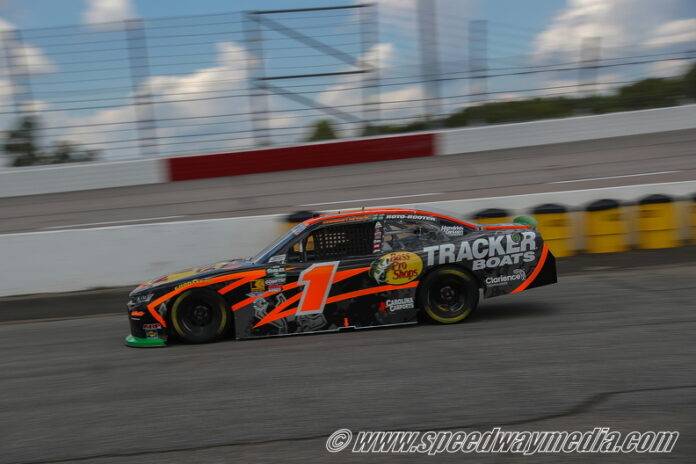
Carson Kvapil awarded O’Reilly Chase pole at Charlotte

Photo by John Knittel for SpeedwayMedia.com.

Carson Kvapil was awarded the pole position for the Blue Cross NC 300 at Charlotte Motor Speedway on Saturday, October 10.

The event’s starting lineup was determined by a qualifying metric formula that evaluated competitors’ finishing results from a previous-scheduled event and respective entries in the owner’s standings. This was due to this weekend’s on-track qualifying session at Charlotte being canceled due to inclement weather. 

Kvapil is coming off a strong runner-up result during last weekend’s NASCAR O’Reilly Auto Parts Series’ Chase event at Las Vegas Motor Speedway and is currently ranked in the runner-up spot in the 2026 Chase standings. Therefore, the 23-year-old native from Mooresville, North Carolina, was awarded the top-starting spot for Saturday’s fifth Chase event of this season at Charlotte. Kvapil is also currently trailing the points lead by 19 points as he has five Chase events remaining on his schedule, including this weekend at Charlotte, to make up his deficit and contend for his first series’ championship.

Kvapil will share the front row with Corey Day, the latter of whom won last weekend at Las Vegas following a dramatic duel with Kvapil in the closing laps. Jesse Love, Brent Crews, Sam Mayer, Taylor Gray, Austin Hill, Sheldon Creed, William Sawalich and Rajah Caruth complete the top-10 starting grid, respectively.

With eight of 12 Chase contenders (Kvapil, Day, Love, Mayer, Gray, Hill, Creed and Caruth) starting in the top 10 on the grid, the remaining Chasers that include Sammy Smith, Parker Retzlaff, Justin Allgaier and Brandon Jones will start 13th, 16th, 23rd and 28th, respectively.

With 39 competitors vying for 39 starting spots, all made the main event.

Charlotte – Starting Lineup:

  1. Carson Kvapil
  2. Corey Day
  3. Jesse Love
  4. Brent Crews
  5. Sam Mayer
  6. Taylor Gray
  7. Austin Hill
  8. Sheldon Creed
  9. William Sawalich
  10. Rajah Caruth
  11. Jeremy Clements
  12. Anthony Alfredo
  13. Sammy Smith
  14. Ryan Sieg
  15. Harrison Burton
  16. Parker Retzlaff
  17. Dean Thompson
  18. Brennan Poole
  19. Austin Green
  20. Carson Brown
  21. Jeb Burton
  22. Kyle Sieg
  23. Justin Allgaier
  24. Garrett Smithley
  25. Patrick Staropoli
  26. Matt DiBenedetto
  27. Lavar Scott
  28. Brandon Jones
  29. Mason Maggio
  30. Blaine Perkins
  31. Joey Gase
  32. Josh Bilicki
  33. Ryan Ellis
  34. Myatt Snider
  35. Derek Lemke
  36. Jake Finch
  37. Dawson Cram
  38. JJ Yeley

*Bold indicates Chase Drivers

The 2026 Blue Cross NC 300 at Charlotte Motor Speedway is scheduled to occur on Saturday, October 10, at 4 p.m. ET on the CW Network, PRN Radio and SiriusXM.

Front Row Motorsports: Charlotte Motor Speedway NCTS Race Report- Layne Riggs / Chandler Smith

Layne Riggs | Chandler Smith
Charlotte Motor Speedway NASCAR CRAFTSMAN Truck Series Race Report
Charlotte Motor Speedway 200
Date: Friday, October 9, 2026
Event: Race 21 of 25
Series: NASCAR CRAFTSMAN Truck Series
Location: Charlotte Motor Speedway (1.5-miles)
Length of Race: 134 laps over one hour, 43 minutes, 15 seconds

FRM Finish:

Layne Riggs (Started 13th, Finished 1st / Running, completed 134 of 134 laps)
Chandler Smith (Started 10th, Finished 5th / Running, completed 134 of 134 laps)

FRM Points Standings:

Layne Riggs (2nd)
Chandler Smith (3rd)

Layne Riggs Key Takeaways

Stage One: 1st / Stage Two: 2nd / Race Result: 1st

Layne Riggs won his seventh race of the season and 12th of his career with tonight’s victory.

The win completes a Charlotte season sweep after he took the checkered flag in May, as well.

Riggs is now only four wins away from tying Greg Biffle (16) as Ford’s all-time wins leader in the series.

“It was a great race tonight,” said Riggs. “Front Row Motorsports gave me a great No. 34 BKB Bare Knuckle Boxing Ford F-150. We’ve been working a lot at the Ford Racing simulator to get better for this race. We kind of fine-tuned our setup that we had here in the Spring and brought the same truck back. I feel like the bumps and characteristics of this track make it really, really difficult to hit it just right, but the truck was good enough, and I was confident enough behind the wheel that I was able to drive it up to the front.”

Chandler Smith Key Takeaways

Stage One: 3rd / Stage Two: 3rd / Race Result: 5th

“Our No. 38 Mystik Lubricants Ford F-150 was really good tonight,” said Smith. “Obviously, we ran top three the whole race until we had that problem. Man, I don’t even know what to call it back there. It’s something. I didn’t like it. I joked to the guys, ‘please, don’t put me in this spot again. I hate it back here. I’m scared.’ I was joking because we haven’t had nothing go for us and then we dodged that wreck and I came on the radio and was like, ‘I want to praise the Lord for us dodging that wreck’ because that would have been the topping on the cake for tonight. To rebound and finish top five, I’m humbled.”

ABOUT FRONT ROW MOTORSPORTS

Front Row Motorsports (FRM) is a winning organization competing in the NASCAR Cup Series and the NASCAR CRAFTSMAN Truck Series. Founded in 2004 by entrepreneur Bob Jenkins, FRM has earned top honors including a 2021 Daytona 500 victory and the 2022 CRAFTSMAN Truck Series championship. Based in Mooresville, N.C., FRM fields the No. 4, No. 34, and No. 38 entries in the NASCAR Cup Series, along with the No. 34 and No. 38 teams in the CRAFTSMAN Truck Series. For more information, visit FrontRowMotorsports.com and follow Front Row Motorsports on social media — X: @Team_FRM, Instagram: @teamfrm, Tik Tok: @Team_FRM, YouTube: @FrontRowNASCAR, and Facebook: facebook.com/FrontRowMotorsports.

Christian Eckes NCTS Charlotte Motor Speedway Recap

Ecosave 200 – Race Results

Venue: Charlotte Motor Speedway

FINISH: 2nd

Start: 8th

Stage 1: 4th

Stage 2: 5th

Laps Led: 0

Points Position: 4th

Eckes Notches Second Straight Runner-Up at Charlotte

Christian Eckes’ stout Chase run continued with a brilliant drive towards a runner-up finish at Charlotte Motor Speedway on Friday evening. The driver of the No. 91 NAPA Nightvision Chevrolet Silverado RST was methodical and opportunistic in his second-straight second-place effort. A late charge from fourth to second in final 11 circuits netted him one position in the NASCAR CRAFTSMAN Trucks Series Chase standings and sits fourth after his eighth top-five finish of the season.

Eckes’ evening began from the eighth position but was met with a tight handling condition at the drop of the green flag. While he navigated the chaotic traffic at the outset, Eckes directed his NAPA Nightvision Chevrolet towards the top-five despite a “super tight” chassis balance. As the opening 30-lap stage progressed, so did the No. 91, while an improved handling condition allowed Eckes to muscle his way inside the top-five and collect seven points at lap 30 while running in fourth position.

The first pit stop of the evening posed a dose of adversity to the team as Eckes was blocked in his pit stall by the No. 88 machine, who was pitted directly in front. Eckes’ pit exit was hampered and subsequently lined up 10th for the lap 38 restart. Within two circuits, Eckes was back inside the top-five and scored six additional points at the close of Stage 2 on lap 60 in fifth position.

The second four-tire pit stop of the night under caution saw a second instance of Eckes being blocked in on pit road, thus dropping him back to 12th. The pit lane woes couldn’t keep him buried for long as he drove back into he top five in 21 laps. He ran fifth when a cycle of green flag pit stops began and was third when a fortuitous caution flew on lap 99, allowing him to pit under yellow.

Quality pit work by the NAPA team kept Eckes in the top-five and restarted fourth on lap 106. A pair of cautions and a restart on lap 124 set up an 11-lap run to the checkers. Eckes immediately took third position on the restart and closed in on the top two jockeying for position. He pounced on the leader stumbling in Turn 4 with five laps remaining to take second and began tracking down the new leader. Eckes ultimately ran out of time, but scored his best-career finish at CMS, coming home second to equal his best result of the year.

Christian Eckes Quote:

“Not only on our team, but all of McAnally-Hilgemann Racing. We have three in the top-10, so that’s good to see progress across the board. Our NAPA Nightvision Chevrolet was really solid all day. We were kind of just slow down the straightaways and struggled with a couple balance items. Still good to finish second, that’s back-to-back weeks. Obviously, we want to win and I feel like we’re on the cusp of doing that. We’ll move on to Phoenix and hopefully we can do it there.

Daniel Hemric NCTS Charlotte Motor Speedway Recap

Ecosave 200 – Race Results

Venue: Charlotte Motor Speedway

FINISH: 6th

Start: 16th

Stage 2: 10th

Laps Led: 0

Points Position: 5th

Hemric Continues Consistent March in Charlotte

Consistency can be an elusive attribute for drivers, but Daniel Hemric has found it and generating momentum after a sixth-place finish at Charlotte Motor Speedway (CMS) on Friday evening. The driver of the No. 19 Delphi Chevrolet Silverado RST continued his progress up the NASCAR CRAFTSMAN Trucks Series (NCTS) Chase standings by moving to fifth in points. Hemric’s string of consistency now includes fourth top-10 results over the last five races, and three finishes of eighth or better in the last four races.

Hemric’s Delphi Chevrolet featured a tribute scheme to Kyle Busch’s 2007 NASCAR Busch Series car, and the North Carolinian made sure to deliver an effort worthy of Rowdy’s scheme. He took the green flag in 16th position and instantly moved forward. By lap four, Hemric climbed to 11th but began to contend with a loose handling balance during the opening run. The entirety of Stage 1 ran under green flag conditions as Hemric was scored 13th at the end of the segment on lap 30.

During the stage caution, crew chief Kevin Bellicourt armed Hemric with a fresh set of Goodyear tires, fuel, and an adjustment to improve his balance. He restarted in 18th position on lap 38 and immediately made another charge forward. The outside lane provided timely momentum as the neon No. 19 rocketed back into the top-10 by lap 40. The ensuing 24-lap run showed Hemric’s durability as he maintained the 10th position to score a stage point at the end of the segment at lap 60.

After the second pit stop of the evening for four tires, fuel, and an adjustment, Hemric lined up 13th for the lap 69 restart. Cooler temps and increased grip levels gradually improved the No. 19’s outright speed as Hemric drove to ninth by lap 73. The following green flag period ran long enough to begin a cycle of pit stops but was interrupted by a timely caution flag on lap 99 while running fifth. Hemric made his final pit stop of the evening under the yellow flag and restarted seventh on lap 106. Two subsequent restarts with elevated intensity settled the evening and saw Hemric run as high as fourth with 11 laps remaining. He ultimately finished sixth for his 10th top-10 finish of the season and was one of three MHR entries to finish in the top-nine.

Daniel Hemric Quote:

“Super special to carry that Delphi throwback paint scheme. Just disappointed we couldn’t finish a little better than we did but the reality is we finished better than we ran all day. Just got fortunate with the yellow that caught a couple of the guys that we were kind of around and racing. That was a break, netted us two or three spots. Had a couple restarts go our way. We thought we were going to claw out a fouth-place finish there and the front tires shut off. Disappointed we let a top-five slip away, but where we were in Stage 1, Stage 2, we’ll count our blessings and go to the next one.”