The 2026 NASCAR season is delivering another exciting mix of high-speed racing, top-level pressure, and unpredictable finishes. As the sport’s championship battle enters its decisive stage, fans will have plenty to follow. From driver performance to overall race strategy, online betting opportunities are plentiful. If you’re exploring casino games available online, the NASCAR postseason also offers plenty of ways to compare sports wagers with traditional casino fun, including slots, blackjack, and roulette.
2026 NASCAR Championship
This year’s NASCAR Cup Series championship format has changed to The Chase. This 10-race battle features the top 16 drivers in the standings, placing heavy emphasis on consistency and performance in the final part of the season.
With races at Charlotte, Talladega, Martinsville, and Homestead-Miami still to come, each will bring its own challenges. Superspeedway racing delivers compelling pack battles, while the shorter tracks demand precision and pit management.
The differences in each race will create unique betting opportunities for invested fans. While availability varies by sportsbook, jurisdiction, and event, bettors can expect common markets including:
Race winner: Predict who will win the NASCAR race.
Head-to-head matchups: Pick two different drivers and bet on who will be ahead at the end of the race.
Top-Five and Top-Ten finishes: Wagering on whether a driver will finish in or above these positions.
Championship Winner: Backing a specific driver to win the entire series or championship.
Understanding how each track can affect a race’s outcome can help you decide how to wager. No amount of preparation can guarantee a winning bet, regardless of a driver’s or team’s statistical history or advantages. Research can help you make informed decisions, but it cannot guarantee a result.
3 Other Online Casino Gambling Options Available
NASCAR and motorsports wagers are only a small part of a much broader gambling market. During series downtime, players often seek traditional casino games for a different experience. Keeping things fresh is a common way to improve your overall experience and discover things you might enjoy.
1. Online Slots
Like their real-world counterparts, online slots are popular for straightforward gameplay, unique themes, and interactive features. Typically, an online slots game requires you to set a stake and spin the reels to see if you win big.
2. Blackjack
Blackjack offers a more structured and strategic approach to gambling. When you play, you must decide whether to hit, stand, split, or double down based on what you’re dealt and what the dealer is showing. Mathematically, the casino always has an advantage, but learning basic strategy can greatly improve your odds.
3. Roulette
Roulette is a chance-based game where you bet on where a spinning ball will land on a wheel. Typically, you can choose numbers and colors to influence your odds, with each selection offering a different payout and probability.
Staying Responsible During the NASCAR Season
Whether you’re tracking NASCAR odds or exploring online casino games, responsible play and betting are essential. Set a budget, avoid chasing losses, and never wager money you need to live. Gambling outcomes are always uncertain, and no single system guarantees a profit.
As the 2026 NASCAR championship nears its conclusion, online casino fans can enjoy the sport’s excitement while exploring other options. By staying informed about racing developments, managing risk, and keeping entertainment front and center, you can use online casinos to make the season even more enjoyable.
Deciding between playing in a browser and installing a dedicated casino app affects more than you might expect, including how fast things load, how easy the platform is to use, and how your phone copes with it. Many people who use platforms like Winbox22 can pick either route. The better one depends on your device, your connection, and what you want from a session.
A browser lets you start right away with nothing to install, while an app can feel smoother and may include features built around touchscreens. Neither wins every time. Loading speed, responsiveness, battery drain, security updates, game support, and network stability all play a part, so it makes sense to choose the format that suits your habits rather than whichever looks newest.
Browser Gaming: Quick Access, No Installation
The biggest strength of browser play is how easy it is to get started. You open a compatible browser, go to the platform, log in, and play. That helps if your phone is short on storage or you’d rather not add another app.
Today’s mobile browsers handle complex sites well, including interactive games, account pages, payment screens, and live dealer streams. When a site is properly built for mobile, the experience can come very close to what an app delivers.
Browsers also travel well. You can switch between a phone, tablet, or computer without hunting for a separate app for each operating system, and picking up where you left off is often simpler.
The downside is that results depend on several things outside the site itself: the browser you use, what else is running in the background, stored cache, and how well the site was optimized for small screens. Older phones may also struggle with pages heavy on animation or interactive elements.
How Winbox22 Can Feel Different on Different Devices
When looking at Winbox22, it helps to think about the hardware in your hand as much as the platform. A recent smartphone with plenty of RAM and a steady connection should run smoothly in a browser or an app. On an older phone, the gap between the two can be much more obvious.
Screen size matters too. Browsers resize content to fit, but menus, game controls, and account tools don’t always feel natural on every display. An app can be designed around touch gestures, portrait mode, and simpler navigation.
Your internet connection is just as important. A well-built app won’t fix a weak signal, and a well-optimized website will still lag if latency is high. Always weigh the software and the hardware together.
Before settling on a format, test it yourself on the device you use most. Check how fast pages load, how quickly games respond, whether logins stay stable, and how easy it is to find your way around. What you observe in practice is more reliable than assuming one option is always quicker.
Mobile Apps and Purpose-Built Optimization
An app made specifically for phones and tablets gives developers more control over layout, navigation, notifications, and some device features. That can make it feel snappier than a website, especially if you use the platform often.
Apps can also store some resources on the device so they don’t have to reload every time. Still, that doesn’t guarantee lower data use or faster loading. Weak optimization, big updates, background activity, or heavy animation can easily cancel out the benefits.
Updates are another point to consider. Apps have to keep pace with changes in mobile operating systems, so you should download only from legitimate sources and stay on top of update requirements. Files from unofficial sites carry real security risks.
For frequent players, a home-screen icon and a mobile-first interface can be worth the installation. Occasional players may find it easier to just open a browser and skip the extra app.
Browser vs App: A Side-by-Side Look
The gap in performance is often smaller than people assume. It depends on how well the platform is built, your device specs, the browser engine, your operating system, and your connection.
Factor
Browser Play
Mobile App
Installation
Usually none needed
Required
Storage
Very little extra
Takes up device space
Accessibility
Works across compatible devices
Usually limited to supported operating systems
Navigation
Depends on how well the mobile site is designed
Typically built for touch use
Updates
Handled on the server
May need manual or automatic app updates
Battery use
Varies with browser activity
Depends on how well the app is optimized
Convenience
Good for occasional use
Good for regular use
Device compatibility
Broad across modern browsers
Depends on supported platforms
For speed of access and flexibility, browsers usually come out ahead. For regular use and a consistent interface, apps tend to be more convenient. Loading speed alone shouldn’t decide it.
How often you play is worth factoring in as well. If you only log in now and then, an app may add little. If you play regularly, having a dedicated interface close at hand can be genuinely useful.
Graphics, Live Games and Connection Stability
Differences show up most clearly with graphics-heavy games and live dealer tables. These need more processing power and a steady connection, since video and game actions are streamed continuously.
Browsers have come a long way and can display responsive graphics and animations well. However, extra tabs, extensions, and background processes can compete for resources, so closing the ones you don’t need can sometimes help.
Apps run in a more controlled environment, but they don’t escape network problems. Live games depend on your link to the platform’s servers, and lag is often caused by congestion rather than the app.
Instead of timing how quickly something opens, watch for practical warning signs: slow game loading, delayed controls, dropped connections, and unexpected battery drain.
Security, Updates and Compatibility
Speed means little without security. A fast interface isn’t much use if you’re running an outdated browser, an unsupported app, or software from a dubious source.
If you play in a browser, keep both your operating system and browser up to date. Double-check the web address before typing in login or payment details, and steer clear of suspicious pop-ups or unexpected redirects.
App users have similar duties. Download only from trusted sources and look over the permissions an app requests. If it asks for access to contacts, messages, or files it has no obvious need for, be cautious.
Check compatibility before installing anything, because system requirements change and an app that works on one phone may not run on another. When an app isn’t available or doesn’t work on your device, a browser can serve as a reliable fallback.
Keeping your software current also tends to improve stability and lowers your exposure to known vulnerabilities.
Matching the Format to the Way You Play
There’s no single best answer. The right pick depends on where, how, and how often you play.
A browser tends to suit people who want instant access, use several devices, have limited storage, or don’t want to deal with app updates. It’s also a handy way to try a platform before deciding whether an app is worth installing.
An app is usually better for frequent players who like a dedicated icon, streamlined menus, and an interface made for phones. People with newer devices and dependable connections often get the most out of it.
In both cases, the basics are the same: use a stable connection, update your software, protect your login details, and keep an eye on how your device is coping. If a game keeps freezing or loading slowly, switching between browser and app can help you figure out whether the cause is the software, the network, or the device.
Making a Sensible Choice
The most reliable way to decide is to try both on the device you actually use. A powerful phone with little free storage may do better with a browser, while a regular player with plenty of space may prefer the convenience of an app. There’s no need to guess which technology is faster.
If you’re considering Winbox22, compare navigation, loading times, stability, battery use, and compatibility before committing to one format. You can review the official platform details at https://www.winbox22asia.com/ to see which access options are available.
In short, browsers win on flexibility and apps often win on usability. The better choice is whichever stays stable, secure, and comfortable in everyday use. Weigh your device, connection, software upkeep, and personal habits together, and you can decide with confidence rather than relying on marketing claims or assumptions.
Six Numbers for Reading NASCAR Practice Beyond the Speed Chart
Austin Cindric set the fastest single practice lap at Watkins Glen on May 9, 2026. Shane van Gisbergen led the five-, ten-, and fifteen-lap averages. NASCAR reported a ten-lap average of 73.53 seconds for van Gisbergen among the fourteen drivers who completed a run of at least ten consecutive laps. The same session produced different leaders because the measurements answered different questions.
Longer practice makes those differences easier to examine. On July 22, NASCAR announced a single full-field, 50-minute Cup Series session beginning at New Hampshire, with exceptions for superspeedway and designated extended-practice weekends. More track time gives teams a better chance to evaluate tire wear and handling over a run.
For spectators, that creates a reading problem: more laps do not automatically produce a cleaner comparison. A useful practice notebook separates sustained speed from tire age, traffic, and conditions. Six numbers can organize that evidence before it reaches a race prediction or a betting market.
1. Ten Consecutive Laps
A ten-lap average asks whether a car can sustain speed across a sequence. It reduces the emphasis on a single fresh-tire lap. At Watkins Glen, Cindric led the individual-lap chart but ranked fifth in the ten-lap average, illustrating why the two tables should be read together.
Check how the published average is calculated. A mean lap time and a mean lap speed are different quantities, and figures in seconds cannot be compared directly with miles per hour. Also compare equivalent run lengths; a ten-lap average should not silently become evidence about performance over twenty-five laps.
2. Measure How Pace Changes as Tires Age
Tire falloff measures how pace changes as a run develops. Compare later laps with earlier representative laps on the same set, then inspect traffic and interruptions. An unusually slow lap behind another car is not automatically tire degradation.
Consider a hypothetical sequence that moves from 30.0 seconds to 31.0 seconds. The one-second difference describes an observed slowdown, but it doesn’t prove it all came from the tires. A car that preserves pace at the end of a stint can be more interesting than one that produces an isolated quick lap before fading.
3. How Many Drivers Made the Comparison
Fourteen drivers made the Watkins Glen ten-lap comparison. Drivers absent from that table didn’t all show inferior long-run pace; some lacked the required consecutive sample. Missing data and slow data are different findings.
That distinction carries into reading betting markets. A practice ranking helps only when you understand its sample and conditions. The official MelBet GuideBook at https://guidebook.melbet.com/fa/ provides a reference for sportsbook terminology and platform instructions when comparing the available markets. The Persian-language hub explains the service but does not replace timing data. Keep driver evidence in the practice notebook and check the exact selection on the bet slip separately. Winning the race, finishing in a stated position, and beating another driver describe different outcomes.
4. Read Starting Position Alongside Race Pace
The grid determines where a driver begins the race. Practice pace describes what the car demonstrated under different conditions. Passing opportunities, traffic, and track position decide how readily that pace translates into forward movement.
Read the starting position alongside the kind of circuit. A car starting deep in the field may spend its opening stint in traffic, while a front-row starter can initially run a different line. Qualifying penalties or a requirement to start at the rear can also make the listed grid spot an incomplete description of the opening race situation.
From a deep starting position, identify where passing is feasible and whether the car can maintain its pace in traffic.
5. Time Lost During the Entire Pit Sequence
The crew’s stationary service time is only part of a stop. Entry, travel along pit road, and the return to racing speed also affect the gap to a rival who stays on track. The useful figure is the overall time lost relative to that rival’s progress.
Green-flag and caution stops require separate comparisons because the field travels at different speeds. A stop that sacrifices track position can be worthwhile if fresher tires recover that time later. Include traffic after rejoining in the calculation, especially when an early stop puts the driver behind cars still running their original stint.
6. When the Track Conditions Changed
Temperature, rain, and the condition of the racing surface can change how runs compare. At Watkins Glen, teams begin on wet-weather tires before switching to slicks. Combining those laps into one supposed measure of driver ability would erase the circumstances that produced them.
The same care applies when following a race. Check the lap count and latest caution before treating a changing price as a response to car speed. Readers checking how to download MelBet from Google Play (Persian: دانلود مل بت از گوگل پلی) can consult MelBet GuideBooK’s official app instructions before installing. The guide describes a direct Android APK route, so a Google Play search should not be assumed to locate the app. Review the source and device instructions before installing. Once the race starts, the accepted price and market description on the slip remain the record of the wager.
When practice and race conditions diverge, label the comparison accordingly. A long run completed on a cool surface is evidence about that run, not a promise of identical balance in afternoon heat. Keep the session time, tire context, and sample length next to the average so the number retains its meaning.
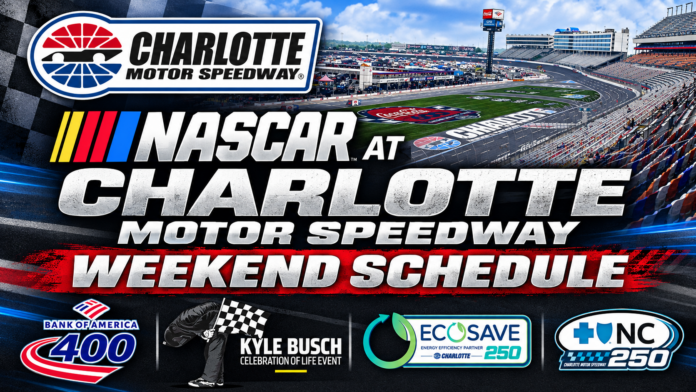
The NASCAR Cup Series, NASCAR O’Reilly Auto Parts Series, and the NASCAR Craftsman Truck Series head to Charlotte Motor Speedway this weekend. The Craftsman Truck Series kicks off the weekend in the Ecosave 200 on Friday at 5:00 p.m. ET on FOX. On Saturday, the O’Reilly Auto Parts Series Blue Cross NC 300 begins at 4:00 p.m. ET on the CW Network. Then the Cup Series wraps up the weekend on Sunday in the Bank of America 400 at 3:00 p.m. ET on the USA Network.
Following the NASCAR Craftsman Truck Series Ecosave 200 on Friday, the Kyle Busch Celebration of Life will take place on the frontstretch. Fans are welcome to sit as close as possible in the grandstands. Guest speakers include Samantha Busch, Joe Gibbs, Kurt Busch, Christopher Bell, Noah Gragson, Daniel Suarez, Kyle Larson, Austin Dillon, and Mike Joy. Ten of Kyle Busch’s most iconic race cars will be displayed on the front stretch along with a drone show. Gifts will be handed to the first 15,000 guests on the way out.
NASCARCup Series Notes for Charlotte Motor Speedway:
The Charlotte oval previously hosted a Chase race every season, and this season is the first time since 2017 that the Charlotte oval (400-mile) is part of the Chase.
Kyle Larson’s second-place finish at Las Vegas extended his points lead to 40 over Denny Hamlin. After Las Vegas, five drivers gained points on series leader Kyle Larson, with Chase Briscoe gaining the most at 39 points.
Ryan Blaney is the only Chase driver to score stage points in all 10 stages of the five Chase races, and Carson Hocevar is the only driver to have an issue/incident in all five.
Eleven of the last twelve stage winners finished in the top-five, with only Christopher Bell (2024) winning, and ten different drivers won the last 10 races. The pass for the win came in the final six laps in five of the last twelve races.
NASCAR O’Reilly Auto Parts SeriesNotes for Charlotte Motor Speedway:
This is the 82nd NASCAR O’Reilly Auto Parts Series race at Charlotte Motor Speedway since the inaugural race in 1982, and Charlotte has hosted an NOAPS race every season since 1982.
After Vegas, Sheldon Creed gained eight points in the series standings and now leads Justin Allgaier by 19 points. Corey Day gained 51 points on the leader, the most of any driver in the Chase.
Creed and Brent Crews (non-Chase) are tied with the best average finish in the Chase with 4.25, and Sam Mayer, Taylor Gray, and Brent Crews (non-Chase) are the only drivers to finish Top 10 in all four Chase races.
Charlotte has featured six last-lap passes for the win, most recently by Kyle Busch, who passed Austin Cindric in May 2020. The driver leading the most laps went on to win the race 44% of the time
JR Motorsports (3) and Hendrick Motorsports (2) combined have won the last five Charlotte races. JR Motorsports won with four of their five cars and six of their 12 drivers this season.
NASCAR Craftsman Truck SeriesNotes for Charlotte Motor Speedway:
This is the 25th Truck race at Charlotte Motor Speedway, and this season marks the first time the Charlotte oval will host two Truck Series races and the first time it has been part of the Chase.
Every driver third in points is more than 70 points behind points leader Kaden Honeycutt, who took the lead after the Kansas win. The maximum points available in a race is 76.
Kaden Honeycutt, Layne Riggs and Ty Majeski have earned stage points in all four stages in the Chase.
The Weekend Schedule for Charlotte Motor Speedway:
FRIDAY, OCTOBER 9
1:00 PM – 1:50 PM: NCTS PRACTICE 2:05 PM – 3:00 PM: NCTS QUALIFYING (IMPOUND) 4:40 PM: NCTS DRIVER INTRODUCTIONS 5:00 PM: NCTS ECOSAVE 200 RACE (STAGES 30/60/134 LAPS = 201 MILES) ON FOX
SATURDAY, OCTOBER 10
10:30 AM – 11:20 AM: NOAPS PRACTICE 11:35 AM – 12:30 PM: NOAPS QUALIFYING (IMPOUND) 1:00 PM 1:50 PM: NCS PRACTICE (IMPOUND) (ALL ENTRIES) 2:05 PM – 3:00 PM: NCS QUALIFYING (IMPOUND) 3:25 PM: NOAPS DRIVER INTRODUCTIONS 4:00 PM: NOAPS BLUE CROSS NC 300 RACE (STAGES 45/90/200 LAPS = 300 MILES) ON THE CW NETWORK
SUNDAY, OCTOBER 11
2:35 PM: NCS DRIVER INTRODUCTIONS (PIT ROAD STAGE) 3:00 PM: NCS BANK OF AMERICA 400 RACE (STAGES 80/165/267 LAPS = 400.5 MILES) ON THE USA NETWORK
*All times are Eastern. NASCAR Cup Series (NCS), NASCAR O’Reilly Auto Parts Series (NOAPS), NASCAR Craftsman Truck Series (NCTS), ARCA Series (AMS)
● Charlotte Motor Speedway celebrates its 20th anniversary of partnership with Bank of America during NASCAR Weekend; Tom Scrivener, Chief Operations Executive at Bank of America, will serve as Grand Marshal for the Bank of America 400
● NFL Hall of Fame nominee, seven-time Pro Bowler, N.C. State All-American and North Carolina native Torry Holt will serve as Honorary Pace Car Driver for Sunday’s event
● Fans can purchase weekend race tickets online at www.charlottemotorspeedway.com or call 1-800-455-FANS (3267). Kids 12 and under get in for just $10 on Sunday.
CONCORD, N.C. (Oct. 8, 2026) – Charlotte Motor Speedway is gearing up for an exciting Bank of America 400 NASCAR Chase Weekend, Oct. 9-11, featuring a distinguished lineup of community leaders, sports figures and entertainment personalities who will take part in pre-race ceremonies and special on-track moments throughout the weekend.
Sunday’s Bank of America 400 marks the 20th anniversary of the partnership between Bank of America and Charlotte Motor Speedway, making it NASCAR’s fourth-longest active Cup race sponsorship. In recognition of the milestone, Bank of America Chief Operations Executive Tom Scrivener will serve as Grand Marshal for Sunday’s Bank of America 400. A member of the executive management team, Scrivener is responsible for delivering integrated operations solutions for all lines of business, staff support areas and the broader enterprise. He oversees operations teams around the world, including Global Business Services.
One lucky fan will become the Honorary Starter and drop the green flag to start Sunday’s main event, courtesy of Bank of America. In an interactive fan zone display that will carry fans from the start of the race to Victory Lane, fans will have the opportunity to practice waving the green flag for photo opportunities from a replica flag stand. Bank of America will randomly select one fan in the fan zone to be the Honorary Starter and waive the flag to start Sunday’s Bank of America 400.
Leading the field to that green flag as the Honorary Pace Car driver will be NFL Hall of Fame nominee and North Carolina native Torry Holt. The N.C. State All-American from Gibsonville, N.C. played wide receiver for 11 years in the NFL, winning the Super Bowl as a St. Louis Ram in 2000. Holt holds the NFL record with six straight 1,300+ yard receiving seasons and was named a member of the NFL 2000s All-Decade Team. Inducted into the North Carolina Sports Hall of Fame in 2022, Holt co-founded the Holt Brothers Foundation with his brother, Terrance, to support children who have a parent diagnosed with cancer.
Dignitaries for Sunday’s Bank of America 400:
● Grand Marshal: Tom Scrivener, Chief Operations Executive, Bank of America
● Honorary Starter: Fan selected from Bank of America fan zone display
● Honorary Pace Car Driver: Torry Holt, NFL Hall of Fame Nominee, Super Bowl Champion & North Carolina Native
● Invocation: Madyson Stenhouse, Wife of NASCAR Cup Series Driver, Ricky Stenhouse Jr.
● Presentation of Colors: Cabarrus County Sheriff’s Office Honor Guard
● National Anthem: Brooke Lee, Charlotte Native & Rising Music Artist/Songwriter
● Honorary Race Officials:
○ Alshon Jeffrey, Former NFL Player, Super Bowl Champion, South Carolina Native
○ Blake Whiten, Artist
○ Laura Ingraham, host of FOX News’ The Ingraham Angle
Dignitaries for Saturday’s Blue Cross NC 300:
● Grand Marshal: North Carolina Food is Medicine Coalition, Representatives Dru Zucchino, Meredith Mastromauro, Rashim Gupta and Rochelle Bellin
● Honorary Starters: Colleen Briggs, Vice President of Corporate Social Responsibility, Blue Cross NC & President of the Blue Cross NC Foundation
● Invocation: Cami Parsons Creed, Wife of O’Reilly Auto Parts Driver, Sheldon Creed
● National Anthem: Tyler White, Netflix’s Hit Series, Love on the Spectrum & Pursuing Country Music Artist
● Presentation of Colors: Concord Fire Department Honor Guard
Dignitaries for Friday’s Ecosave 200:
● Grand Marshal: Kevin Keenan, Vice President of Engineering, Ecosave
● Honorary Starter: Lisa Vitale, Senior Business Development Manager, Ecosave
● Invocation: Evan Albertyn, Motor Racing Outreach & Charlotte Motor Speedway Chaplain
● Presentation of Colors: York Comprehensive High School Navy ROTC Color Guard
● National Anthem: Persona Bell, GRAMMY-nominated recording artist & Singer/Songwriter
TICKETS:
Fans can purchase weekend race tickets online at www.charlottemotorspeedway.com or by calling 1-800-455-FANS (3267). Kids 12 and under get in free on Friday and Saturday and for just $10 on Sunday.
MORE INFO:
Fans can connect with Charlotte Motor Speedway and get the latest news by following on X and Instagram, or becoming a Facebook fan. Keep up with all the latest news and information with the Charlotte Motor Speedway mobile app.
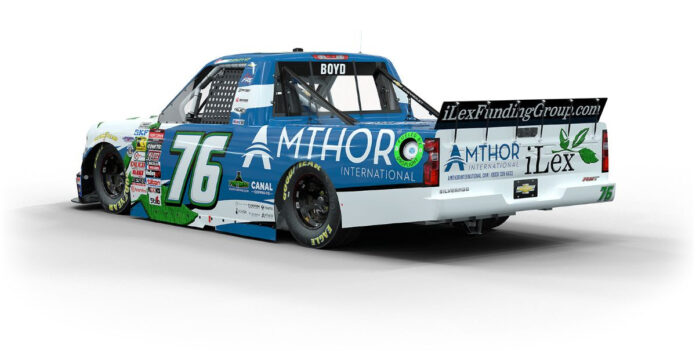
Mooresville, NC (October 8, 2026) Spencer Boyd announced today that iLex Funding Group will join the team as a Co-Primary sponsor with Amthor International at Martinsville Speedway. iLex Funding Group provides commercial financing solutions designed to help businesses acquire equipment, expand operations, and manage working capital.
“Speaking while wearing my owner hat,” commented Spencer Boyd driver/owner for Freedom Racing Enterprises. “Equipment funding is key to growing a business that depends on assets to increase revenue. As iLex (Funding Group) and Amthor (International) work together already, it was natural for them to come together on a race truck.”
At iLex Funding Group, the goal is simple: help businesses access the financing they need to move forward.
Alexander Perez, President and CEO of iLex Funding Group commented on the company’s first foray into NASCAR, “There is so much passion in racing! The fans are definitely loyal and so many of them own businesses in construction and related industries, so we had to get into the fold by sponsoring Spencer. I got to hang out with him and his wife recently and confirmed they are salt of the earth people that we are delighted to work with.”
Martinsville Speedway is a stone’s throw away from Amthor International’s headquarters in Gretna, VA and the location of Spencer’s first-ever NASCAR start on April 2, 2016.
The multi-year and multi-race partner of Boyd, Executive Vice President of Amthor International, Brian Amthor added, “This race is about connecting with our local community as well as the equipment community nationwide. The NASCAR Craftsman Truck Series is exactly the platform that fits both. We’re excited to introduce iLex (Funding Group) to NASCAR racing while continuing building our businesses.”
Spencer Boyd will be short track racing the iLex Funding Group/Amthor International No. 76 Chevrolet Silverado at the NASCAR Craftsman Truck Series Race at Martinsville Speedway on Friday, October 30 2026, at 6:00 PM ET. The race will be broadcast live on FS1.
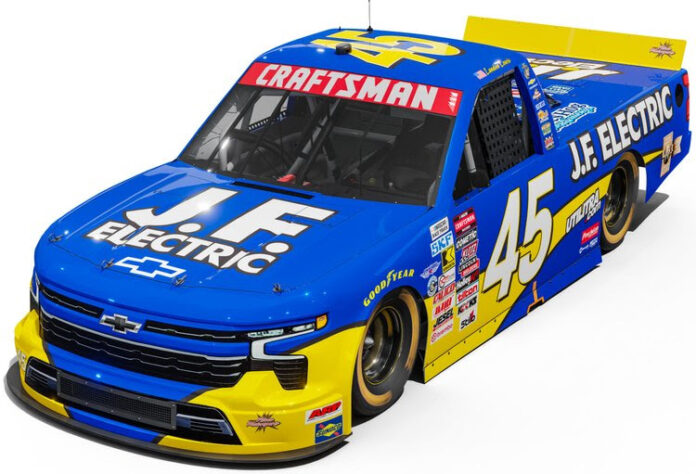
SALISBURY, NC (Oct. 8, 2026) – Landen Lewis will pay homage to his mentor and close friend, Ron Hornaday, with a special tribute paint scheme on his No. 45 J.F. Electric Chevrolet Silverado on October 30 at Martinsville Speedway.
With an incredible career highlighted by a record-setting four NASCAR CRAFTSMAN Truck Series (NCTS) championships (‘96, ‘97, ‘07, and ‘09) and 51 race wins, Hornaday was inducted into the North Carolina Auto Racing Hall of Fame earlier this week.
In 2018, Hornaday was inducted into the NASCAR Hall of Fame and in 2023 was formally recognized as one of NASCAR’s 75 Greatest Drivers, cementing his legacy as one of the all-time greats.
In recent years, Hornaday has served as a mentor and driver development coach for Lewis. Hornaday’s influence has been invaluable in molding Lewis into a rising star on and off the race track.
Lewis’ truck will sport an iconic look which harkens back to Hornaday’s No. 33 Camping World Silverado that he raced for Kevin Harvick Inc. in 2007 and 2008. This paint scheme visited victory lane on nine occasions with Hornaday behind the wheel, and was the primary design for his 2007 NCTS championship run.
“This scheme brings back some great memories for me, and I know it will for Ron, too,” said Harvick. “He won a lot of races and a championship for KHI in these colors. It’s a fitting way to celebrate all he’s accomplished. There’s no doubt Landen is going to be especially proud to race this truck.”
Hornaday’s ties to Niece Motorsports are not exclusive to Lewis, having also worked alongside Ron Paradiso (NASCAR Winston West Series mechanic from 1992-1993), Phil Gould (NASCAR Busch Series car chief in 2004), Wally Rogers (NCTS crew chief from 2005-2006), and Gary Labretone (NCTS front tire changer in 2008).
“I am so excited to honor Ron by racing one of his most dominant and recognizable paint schemes on my truck at Martinsville,” said Lewis. “Ron and his family have meant so much to me on both a personal and professional level, and I am very thankful for everything they have done for me. Having J.F. Electric’s support to allow us to run these colors on their truck is awesome, and the team did a great job with the design. I hope we can be just as fast as Ron was when he raced it.”
The paint scheme, which was kept secret from Hornaday, was unveiled today at the team’s Fan Day. It was an emotional moment for the Palmdale, CA native, who was caught by surprise with the gesture.
“When I first saw the truck I thought, ‘Man, I didn’t think J.F. Electric was blue and yellow,’ but then I did a double take and realized – wow, that’s my championship truck!” said Hornaday. “It’s so special, and I can’t thank Landen and everyone at Niece Motorsports and J.F. Electric enough for surprising me like this.”
“This truck is one of my favorites that I ever raced. Kevin Harvick gave me a rocket ship at every race track, and the support that Camping World and Marcus Lemonis gave us was just unbelievable, Hornaday continued. “To see Landen bring this truck back to life and have my name on the side of it means so much to my family and I. I’m not an emotional guy, but once I see tire marks all down the side of it and a grandfather clock next to it, it will be hard to hold the tears back.”
The NASCAR CRAFTSMAN Truck Series returns to Martinsville Speedway on Friday, October 30 for the penultimate race of the season. Live coverage of the 200-lap race will air on FOX Sports 1, NRN Radio, and SiriusXM NASCAR Radio.
About J.F. Electric: J.F. Electric is an electrical contractor that provides engineering expertise, backed by construction and installation know-how in a diverse range of service offerings, from utilities and commercial projects, to industrial and telecommunications customers. When having a long family history in an industry, a company not only builds on its knowledge and experience, it takes pride in cultivating a solid understanding of client needs, all the while nurturing strong relationships with its employees. Evolving through five generations of the Fowler family, J.F. Electric has matured into a well-managed and thoughtfully diversified electrical contractor which is poised to continue its growth and expansion into the future.
About Niece Motorsports: Niece Motorsports is a professional auto racing team that has competed in the NASCAR CRAFTSMAN Truck Series since 2016. The team is owned by Josh Morris of DQS Solutions and Staffing and the Fowler Family of J.F. Electric and Utilitra, and was founded by United States Marine Corps Veteran Al Niece. At its 80,000 sq. ft. headquarters in Salisbury, NC, Niece Motorsports is a full-service race vehicle build shop as well as a customizable fabrication shop for any manufacturing needs.
Follow the Team: To keep up to date with the latest team news, visit niecemotorsports.com or connect on Facebook and Instagram (@NieceMotorsports) as well as X (@NieceMotorsport).
Charlote II Oval Event Info: Date: Sunday, October 11th Time: 3 p.m. ET Series: NASCAR Cup Series (NCS) Location: Concord, N.C. Format: 267 Laps, 400.5 Miles TV: USA Radio: PRN, SiriusXM NASCAR Radio (Channel 90)
Weekend Schedule: Saturday: 1:00 p.m. ET, Cup Practice (TruTV, PRN, SiriusXM NASCAR Radio) Saturday: 2:05 p.m. ET, Cup Qualifying (TruTV, PRN, SiriusXM NASCAR Radio) Sunday: 3 p.m. ET, Cup Race (USA, PRN, SiriusXM NASCAR Radio)
Pace Laps:
The NASCAR schedule turns to Charlotte Motor Speedway this weekend with its return to the Oval this fall, pivoting from the track’s road-course (the “ROVAL”), this will be the first time since 2017 the NASCAR Cup Series ran the oval at Charlotte twice in the same season.
RFK has 20 wins all-time at CMS including four in the Coca-Cola 600.
Brad Keselowski with 27 starts at CMS sits 3rd amongst the field in starts at the track as an active driver; Keselowski leads all active NASCAR Cup Series drivers in wins at Charlotte Motor Speedway with two victories (2013, 2020).
6 Team Info: Driver: Brad Keselowski Crew Chief: Mike Skarbowski Partner: Trimble
17 Team Info: Driver: Chris Buescher Crew Chief: Scott Graves Partner: Fifth Third
Fifth Third Bank Pass Through Partner for Charlotte II; United Way of Greater Charlotte:
For 95 years, United Way of Greater Charlotte has strengthened our region by investing in local nonprofits, convening partners, and addressing the root causes of our community’s greatest challenges.
United Way brings together nonprofits, donors, businesses, and community leaders to create lasting solutions that expand opportunities and improve lives across Greater Charlotte.
Every gift to United Way fuels a stronger nonprofit network, providing the resources and support local organizations need to deliver greater impact.
Through neighborhood-based investments and grassroots partnerships, United Way helps communities build stronger futures from the ground up.
60 Team Info: Driver: Ryan Preece Crew Chief: Derrick Finley Partner: Kroger/Blue Buffalo
Brad Keselowski at Charlotte Starts: 27 Wins: 2 (2013, 2020) Top-10s: 12 Poles: 1 (2011)
Keselowski makes his 28th overall start at CMS this weekend. He has 12 top-10 finishes – seven inside the top five – with two wins and a 13.6 average finish.
Keselowski is the 2020 winner of the 600-mile event, leading 21 laps after starting ninth. He also won on the oval in 2013, and in total has led in 15 different Charlotte oval events.
Last season, Keselowski finished 5th Coke 600 after starting 35th.
Keselowski has an average starting position of 16.9 with one pole (2011).
Keselowski also made a combined 25 additional starts in the Xfinity and Truck Series at CMS with a combined four wins – all in Xfinity – in 2010, 2012, 2014 and 2018.
Chris Buescher at Charlotte Starts: 14 Wins: — Top-10s: 4 Poles: —
Buescher makes his 15th Cup start at Charlotte this weekend in what will be his third race on the oval in the Fall.
He has four top-10s at Charlotte with a best finish of sixth in the 2019 Coca-Cola 600. He finished 10th a year later, and ran eighth in the 2021 event.
Buescher’s best starting position stands as 4th (2025) with a 20.6 overall average starting position.
He also made five Xfinity Series starts at CMS with three top-10s and a best finish of sixth (2014).
Ryan Preece at Charlotte Starts: 9 Wins: — Top-10s: 1 Poles: —
Preece is set to make his 10th Cup start at Charlotte this Sunday, and his first start for the Fall Oval race at the track.
Preece’s first start at CMS in the Cup Series was in 2019, a year after the track instated the Charlotte “ROVAL” would become the track’s Fall race.
His best finish at CMS is 13th in 2023 and is coming off a P9 finish on the Charlotte “ROVAL” road course in the fall.
Preece holds a 26.0 average starting position at Charlotte, with a best career start of 22nd in 2020 and 2023.
Preece also made three Xfinity starts at Charlotte, along with one truck start.
RFK Historically at Charlotte Cup Wins: 8 (Mark Martin, 1992, 1995, 1998, 2002; Jeff Burton, 1999, 2001; Matt Kenseth, 2000, 2011)
RFK in the 600: Across 112 NASCAR Cup Series starts in the prestigious Coca-Cola 600, RFK Racing has earned four victories along with 24 top-five and 42 top-10 finishes. Jeff Burton collected two Coke 600 wins for Jack Roush, while Mark Martin and Matt Kenseth each added one.
By the Numbers: In 222 Cup Series starts at Charlotte, RFK has totaled eight wins, 47 top-five finishes and 83 top-10s. RFK Fords have posted an all-time average finish of 16.4 while leading 2,640 laps.
2006 Strength: RFK delivered one of its strongest Coca-Cola 600 performances in 2006, with its five-car lineup posting an average finish of 5.4. The organization finished third, fourth, fifth, seventh and eighth, while pacing the field for 52 laps. In 2002, RFK secured a one-two finish as Martin edged Kenseth after the pair combined to lead 67 laps.
Golden Stretch: RFK captured a record four straight Coca-Cola 600 victories from 1999-2002 with Jeff Burton, Matt Kenseth and Mark Martin. During that four-year run, the team led 427 laps, including 201 of the 400 circuits in the 1999 race.
Last Time Out & Where They Stand Las Vegas: With his best points day of the 2026 Chase, Chris Buescher led Roush Fenway Keselowski (RFK) Racing in Las Vegas. The Prosper, TX native was able to parlay a solid starting position into stage points in the race’s second segment before finishing 13th. Three-time Las Vegas winner Brad Keselowsi, started the day displaying speed, climbing as high as seventh, early in Stage Two. Handling challenges though were difficult, resulting in a 24th place finish. Ryan Preece, who had scored top 10 finishes in three of the prior four Chase races, encountered a setback when he developed a wheel vibration during Stage Two. Using pit strategy, the team and Preece briefly regained lost track position but ultimately finished 28th.
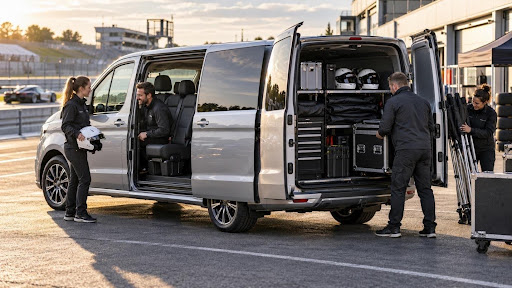
Motorsport logistics has a habit of exposing weak vehicle choices. A team may have enough room for people but nowhere sensible for helmets and equipment. Or it may have a well-equipped support van that leaves drivers, engineers and guests travelling separately. Either way, the event begins with unnecessary complexity.
A crew van is designed to solve that middle-ground problem. It gives a team dedicated passenger seating while retaining a separate rear load area for the equipment that must arrive safely and be easy to unload.
For teams reviewing Ford Transit crew van options, the decision should start with the job list for an event weekend. The right vehicle is not necessarily the one with the highest seat count or longest load bay; it is the one that keeps the correct people and equipment moving together without compromising either.
A motorsport crew is more than a headcount
A track-day operation, race-support business or small competition team may travel with a driver, mechanic, coordinator, photographer, instructor and occasional guest. On paper, that can look like a simple seating calculation.
In practice, each person changes the van’s role. The mechanic may need quick access to tools on arrival. The photographer may carry sensitive cases that should not be stacked under wet equipment. An instructor needs enough comfort to be ready for a full day in the car. A guest should not be squeezed into an improvised seat between bags.
That is where a crew van differs from a standard panel van with an extra passenger seat. Its layout is designed around a genuine second row, allowing the team to travel together while keeping the rear of the vehicle available for work.
The result can be a more coherent event setup. Fewer vehicles need to be coordinated, fewer parking spaces are required and the team arrives with the same schedule and equipment plan.
The real comparison: one crew van or a two-vehicle setup?
A crew van is not automatically the best arrangement for every team. It is useful to compare it with the alternatives before deciding what will work over a full season.
Event transport approach
Works well when
Main limitation
Crew van
A small team needs seats and a separate load area in one vehicle
Rear cargo space is reduced by the extra seating
Panel van plus car
Equipment needs are very heavy and passenger numbers vary
More fuel, parking, drivers and coordination
Passenger vehicle plus trailer
The team carries light equipment but needs flexible people transport
A trailer can be inconvenient at busy circuits and tight venues
Large support vehicle
A bigger operation carries extensive equipment or hospitality materials
Higher running costs and less everyday usability
For many small and mid-sized motorsport teams, the crew van sits in a practical sweet spot. It avoids the expense and planning burden of sending two vehicles while offering a more useful load area than a passenger-focused people carrier.
The important point is to measure the actual event load, not the idealised one. Include helmets, toolboxes, tyres or tyre bags, pop-up shelter components, tables, spare clothing, food, chargers, radios, camera equipment and cleaning supplies. The vehicle needs to work when the weather is poor and the schedule is busy, not only when packed for a promotional photograph.
Give every seat a purpose
It is tempting to choose the maximum possible seating layout, particularly for a team that occasionally brings extra people. Yet every additional seat changes the available room for cargo and can complicate how the rear of the van is organised.
Start with the minimum number of people who must travel to every event. Then consider the maximum number likely to travel together on the busiest dates. If the difference is large, a crew van may still be the best primary vehicle, with occasional alternative travel arrangements for extra guests or temporary staff.
Passenger comfort deserves proper attention too. Motorsport days are long, and the return journey often follows hours spent on foot in the paddock. Seating, ventilation, storage and sensible access all affect how well the team arrives and how manageable the drive home feels.
A crew van should help people begin work prepared, rather than simply get them to the gate.
Plan the rear load area before ordering
The rear compartment is where a crew-van purchase becomes specific to the team. A generic empty space is useful, but a carefully considered layout is better.
A race-support company might prioritise protected storage for tools and diagnostic equipment. A driving-experience provider may need a clear area for helmets, catering items and customer materials. A content team could require secure cases for cameras, batteries and laptops, all of which should be kept separate from wet boots or muddy canopy legs.
The most effective setup normally follows the order in which the team works. First-out items should be easy to reach. Heavier equipment should sit low and be restrained properly. Fragile cases need a protected location, while dirty or damp items should have their own zone for the journey home.
Any racking, shelving or flooring must also be assessed as part of the total vehicle specification. It adds useful organisation, but it also adds weight. Buyers should confirm the payload available for the exact model, seating arrangement and conversion before assuming that every item can travel legally and safely.
A paddock is a poor place to discover a bad layout
At a circuit, time and access are rarely generous. The van may be parked several metres from the garage, on a busy service road or in a crowded support area. Equipment needs to be removed without blocking others or forcing the whole team to unpack at once.
This is where rear-door access, side access and a clear internal arrangement prove their value. A good crew-van layout allows one person to retrieve tools while another sorts clothing or event materials, without everyone trying to use the same doorway.
It also helps the team pack down more efficiently. After a wet or demanding day, equipment tends to return to the van in a hurry. A planned storage system reduces the risk of loose items, damaged kit and the frustrating search for something essential at the next event.
Think beyond the circuit gate
The vehicle may serve more than race weekends. It might attend sponsor meetings, collect parts, travel to test days, move promotional displays or support customer events. That broader use is one reason crew vans can make commercial sense for teams that do not need a full-size transporter every day.
A well-presented van also gives a small operation a more professional base. It can carry a team to the venue, keep key equipment secure and present the business properly when customers, partners or event organisers are nearby.
That does not mean adding equipment simply for appearance. The strongest specification is still one built around function: enough seats, appropriate storage, useful access and a load area that remains organised after a long day.
Make the van part of the team’s operating system
A crew van should reduce the number of decisions that have to be made on event morning. The team knows who travels where, which cases are loaded first and where essential kit can be found on arrival.
Before choosing a Ford Transit crew van, list the regular passengers, weigh the usual equipment, map the likely load area and check the exact payload for the configuration under consideration. Then consider the events that put the most pressure on the team: the early starts, wet paddocks, long motorway runs and weekends when everyone needs to travel together.
A vehicle that handles those conditions well will not just transport the team. It will make the entire operation more organised, dependable and easier to scale.
Car performance used to mean one thing: raw engine power. Big V8 engines and heavy steel frames ruled the roads for decades. Drivers wanted speed, loud exhausts, and straight-line acceleration.
Things are very different today. Modern performance blends raw power with smart software, lightweight materials, and high efficiency. Mechanics and custom builders constantly work to maximize space inside packed engine bays. The goal is no longer just building bigger engines. It is about making every single part work smarter.
The Shift From Heavy Metal to Smart Power
Classic muscle cars relied on massive engine displacement. Custom builders often source slim fit parts for vehicles when working with tight engine bays. Modern sports cars take a completely different route to boost output without taking up extra space.
Car makers now use aluminum, carbon fiber, and lightweight alloys. Turbochargers and superchargers let smaller engines generate massive power without adding weight. Lower vehicle mass helps drivers handle corners more sharply.
Digital fuel injection systems replaced old carburetors long ago. Electronic sensors monitor airflow and fuel mixtures instantly. This change gives drivers sharp throttle response and better gas mileage.
Software Taking Control of the Wheel
Hardware used to dictate everything a car could do on the asphalt. Today, lines of code control how a vehicle responds to the road. Engine control units manage fuel delivery, ignition timing, and boost pressure in real time.
Software updates can now change how a vehicle behaves overnight. Drivers can download performance tuning tweaks, new interface options, and active driving modes directly over the air. Vehicles no longer remain static after leaving the factory floor.
Custom tuning maps allow owners to switch between daily commuting and track days. A single button press alters suspension stiffness, exhaust volume, and throttle sensitivity. Connected car networks continue pushing vehicle capabilities forward.
Steering and Braking Go Digital
Old mechanical steering columns provided a physical link to front tires. Modern vehicles cut those heavy physical connections to save space and improve reaction times. Hydraulic fluid lines are quickly becoming a thing of the past.
New steer-by-wire setups use software to adjust wheel angles directly. Digital signals send inputs from the steering wheel to electric actuators near the tires. This setup reduces heavy mechanical drag under the chassis.
Engineers can tune steering resistance based on vehicle speed. Electronic braking systems match this precision by applying exact stopping power to individual wheels. These digital pathways streamline the entire engine bay layout.
Combustion Engines Fight Back With New Tech
Gasoline power is far from dead in the performance world. Engineers keep finding clever ways to squeeze extra efficiency out of internal combustion setups. Synthetic fuels and thermal management lead this charge.
Custom engine optimization, bioethanol blends, and new synthetic e-fuels show that internal combustion still has plenty of mileage left. Advanced valve timing helps these engines burn fuel much cleaner. Drivers can enjoy classic engine sounds while reducing overall tailpipe emissions.
Final Thoughts
The path from heavy steel blocks to smart digital performance has changed driving forever. Today’s cars are faster, safer, and far more efficient than anything built in the past. High performance is no longer just about horsepower under the hood. It is about how well software, light materials, and smart design work together on the open road.