The reason projects fail is not always a lack of effort but rather problems associated with the adhesives. Due to these adhesive problems, layers of paper may lift unexpectedly, fabric may stiffen, or wooden joints may become loose, which causes frustration and wasted material.
Most individuals struggle to find a single glue that works well on various surfaces, switching between adhesives, and ending up with uneven results. Even simple things would turn out to be time-consuming and unpredictable without knowing how adhesives bond.
That said, PVA glue can be used to address these problems, as it performs well with porous materials and offers both flexibility and strength. By understanding the relationship between this versatile glue and paper, fabric, and wood, you can achieve strong, well-coordinated results.
The article describes how PVA glue performs on paper, fabric, and wood and provides a realistic understanding of how to bond best.
1. Liquid Bond Formation with PVA Glue
PVA glue is a water-based glue that is composed of polyvinyl acetate, which allows materials to bond together by a physical process. Once it is applied, the liquid spreads smoothly and enters the pores of surfaces to form a strong grip as water evaporates.
This forms a flexible polymer film, allowing controlled positioning before the bond sets. Since PVA glue does not depend on chemical reactions, it is applicable to other materials and across different temperatures, and still gives predictable results.
Moreover, it diffuses into porous surfaces, including paper, cloth, and wood, and provides uniform adhesion and lowers the chance of mistakes. This makes PVA glue an effective and dependable option when it comes to working on projects that need precision and high adhesiveness.
2. Paper Layer Bond Strength
Paper requires adhesives that must possess a balance in absorption and surface bonding. The reason is that PVA glue does not saturate through the fibers; therefore, multiple layers can be applied to ensure adhesion.
Its clear-drying attribute maintains the printed designs and patterns without any apparent trace, which is essential to crafts and bookbinding. Moreover, the polymer is slightly flexible and therefore enables the paper to bend or fold without breaking, and this contributes to the durability and functionality of the paper.
Other versatile properties include its ability to work with thin sheets or cardstock, while even coverage prevents uneven texture. By providing a strong bond, PVA glue delivers clean, reliable results in paper projects, combining durability, aesthetics, and the ability to work without damaging fragile surfaces.
3. Fabric Fiber Connection
Fabric needs to have adhesives that stick firmly without being rigid and hard. PVA glue binds them together without forming stiff points, which may interfere with comfort or movement.
Such characteristics render it suitable for hems, applique, and craft projects that require much flexibility. A water-based composition of the fabric enables it to stay breathable and avoids stiffness, even with delicate or lightweight materials.
Firmness may be regulated using thin layers, and the result is consistent without changing the feel of the fabric. Its clear coating maintains aesthetic quality and makes the surfaces clean, leaving no trace.
This combination of strength, flexibility, and clarity makes PVA glue a good option in fabric projects in order to achieve durability and simultaneously enable natural movement in a wide range of textile applications.
4. Wood Joint Reinforcement
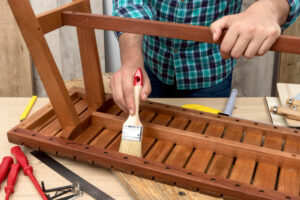
PVA glue works well on wood surfaces since it can infiltrate well into the grain, giving deep internal bonds. These connections tend to be stronger than the wood itself, and they are not subject to pulling or shearing forces.
Adhesion can be enhanced by applying pressure or clamping to squeeze the glue further and remove air bubbles. After being cured, dry glue can be sanded, leaving a smooth finish that does not leave an impression on the surrounding wood.
PVA glue is stable at both temperature and moisture changes, making it suitable for furniture, joinery, and decorative woodworking. Its capacity to produce stable, clean, and reliable joints qualifies it to be a valuable resource in functional and decorative woodworking products, assuring good quality and enduring outcomes.
5. Drying Time Control and Environmental Adaptation
Adhesive performance is also subject to change, and PVA glue is sensitive to temperature, humidity, and airflow. Warm, dry conditions accelerate drying, while cooler or humid environments slow curing, allowing alignment adjustments before final set.
Staged drying prevents weak adhesion and warping, maintaining even bonds across materials. Proper ventilation ensures moisture escapes and reduces the risks of trapped water weakening connections.
Predictable drying behavior allows planning for complex projects without compromising quality. The ability to reposition materials before full curing ensures accurate placement and smooth outcomes.
PVA glue adapts effectively to different environments, making it practical for workshops, classrooms, and indoor craft areas, offering consistent, strong results under varied conditions.
6. Versatility and Practical Benefits
The process of bonding various substances is simple, and PVA glue allows combining unique adhesives and guarantees the uniformity of the effect on paper, fabric, or wood. Wet glue cleans easily with water, preventing residue and maintaining surface quality.
Its non-toxic and low-odor composition allows safe use in indoor settings, including homes, workshops, and classrooms. Clear-drying, flexible, and strong, it supports both decorative and structural applications, delivering functional and aesthetic benefits.
By simplifying workflow, providing consistent adhesion, and offering practical advantages, PVA glue becomes an essential tool for crafters, DIY enthusiasts, and professionals who need reliable performance across different materials while achieving durable, clean, and predictable outcomes.
Conclusion
Strong, flexible, and durable bonds for paper, fabric, and wood are achieved with PVA glue. Its water-based formula ensures proper penetration and adhesion without damaging materials, while transparent drying maintains visual appeal.
Predictable curing and adaptability to environmental conditions allow precise placement and strong, long-lasting connections. Versatility across materials reduces complexity and improves efficiency, making it ideal for both craft and structural projects.
By using PVA glue, users gain control over outcomes, avoid common adhesive issues, and achieve reliable results every time.