
Modern motorsports are still mainly a contest of horsepower, tire grip, and driver bravery. But silicon is beginning to play an increasingly important role as well. Long before a car rolls into the pit lane, an electronic components distributor may already be part of the equation, helping teams and manufacturers source the sensors, connectors, control units, and other hardware that now shape performance as much as mechanical design does.
So, it is no longer just about building the strongest engine or the slipperiest bodywork, but about capturing information and turning it into better decisions lap after lap. In modern motorsports, advanced electronics are becoming central to strategy, reliability, safety, and outright pace.
Fast Cars Are Data Systems
Racing has always been about measurement, but today’s cars operate more like rolling networks than stripped-down machines. Each Formula 1 car carries around 300 sensors and generates more than 1.1 million telemetry data points per second, feeding teams a constant stream of information about everything from temperatures and pressures to braking behavior and power delivery.
Engineers need to know how a driver is using the tires, whether a setup change is helping in medium-speed corners, how aggressively the power unit is being worked, and when performance is beginning to fall away. Electronics make that visible in real time.
Electronics Shape How Power Is Used
Power in modern racing is increasingly managed by engine control units, throttle mapping, fuel delivery, regeneration systems, and deployment strategies.
In NTT IndyCar, for example, the hybrid era added a new tactical layer to racing. When the series introduced hybrid assist, officials said the system and Push to Pass could combine for 120-plus additional horsepower, pushing output to more than 800 horsepower for the first time in two decades.
The old image of motorsports as a purely mechanical battlefield is outdated, and today, speed often comes from how intelligently a team manages electrical energy under pressure.
Better Electronics Mean Better Racing
One of the easiest mistakes to make when talking about racing technology is assuming that electronics only add complexity. In reality, the best systems simplify decision-making for drivers and create more meaningful competition.
After hybrid technology arrived, IndyCar reported that 12 of the 14 on-track passing records set in 2024 came with the hybrid system in place, and that 71% of passes at Portland were a result of the hybrid power unit.
When the systems are well integrated, they can improve the spectacle without making the racing feel artificial. More controlled deployment and more overtaking options contribute to a sharper product on track.
The Driver Interface Has Changed
Electronics are also changing what the driver sees and how the driver responds. Years ago, NASCAR’s move to digital dashboards hinted at this direction, and the idea still matters because it shows how driver communication has evolved.
A better interface reduces ambiguity. In a race environment, that can mean earlier recognition of a developing issue and cleaner communication between the cockpit and the pit box.
This is where automotive electronics become especially important. The same kinds of control logic, display design, sensor integration, and power management that matter in top-level racing increasingly influence the wider vehicle world too.
Motorsports remains a harsh proving ground, and electronics that survive there tend to teach valuable lessons about durability and human-machine interaction.
Safety Electronics Are Performance Electronics Too
The NASCAR Cup Series has offered a strong example of the overlap between driver safety and performance. Driver-worn mouthpieces used to measure head motion, and impacts recorded nearly 1,000 impact events in one section of Watkins Glen, compared with about 3,400 total events across the entire 2023 season.
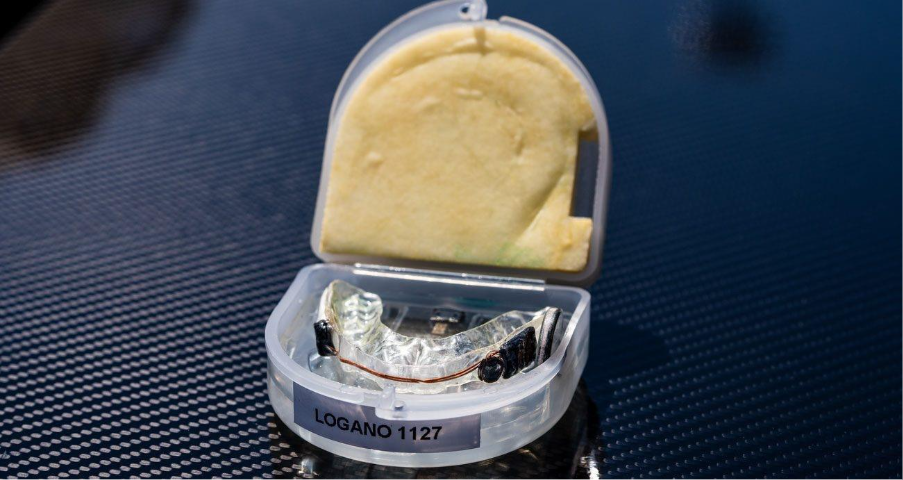
That may sound exclusively like a safety story at first, but it is also a performance story. When teams and series officials understand where repeated impacts or vibrations are hurting drivers, they can improve the conditions in which they compete. A driver who is less physically punished is better able to attack and perform consistently over a run.
This Trend Will Only Grow
There is no realistic path back to simpler racing technology at the top level. The competitive pressure is too high, and the gains are too meaningful.
Modern motorsports will always celebrate bold overtakes and brave braking, but beneath all of that is the truth that many of the biggest gains now come from the invisible systems that monitor and optimize what happens on track. The cars are still mechanical marvels, but now they are also intelligent machines.
Advanced electronics help teams understand more, react faster, deploy power better, improve safety, and squeeze more performance from every lap. In a world measured in thousandths, that hidden intelligence is absolutely essential.