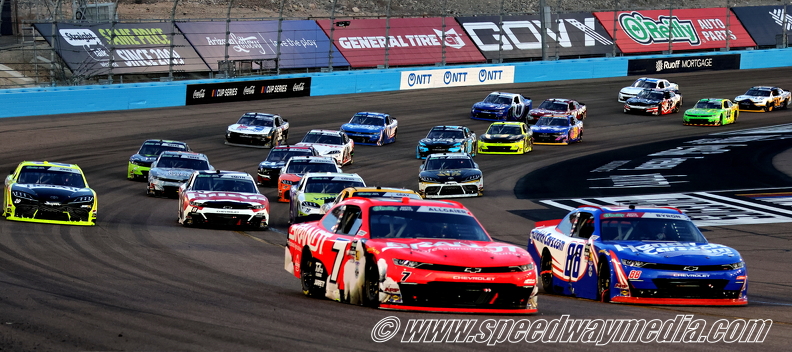
Two crowds, two starts, two completely different ideas of what “loud” is supposed to mean. Walk into a NASCAR grandstand on race day, and the noise hits like a wall — 40 cars in tight formation, engines built for oval tracks and full-throttle stretches that barely let up. Walk into the Autodromo at Monza during Ferrari week, and the noise is different too, but the crowd is doing something odder: they’re watching corners.
Two National Obsessions, Two Different Track Shapes
Geometry is the first true hint. Daytona, Talladega, and Charlotte are oval superspeedway tracks designed for pure speed and drafting, where vehicles race inches apart at speeds close to 320 km/h for hours, earning NASCAR its notoriety. On the other side, Monza is situated in a park that was once a royal hunting area and has an old-world feel to it, with bends named after 1920s and 1930s crashes and lengthy straights interspersed with punishing chicanes. When seeing Monza for the first time, a NASCAR fan may ask why the cars keep braking for no reason. When watching NASCAR, an F1 enthusiast would wonder why no one is braking at all.
Ownership, Loyalty, and the Ferrari Exception
American racing culture leans heavily on driver loyalty — fans follow a person, not a manufacturer, switching allegiance if their driver changes teams. Italian racing culture flips that almost entirely around one brand. Ferrari’s tifosi don’t just support a team; surveys from Formula 1’s own fan reports have repeatedly found Ferrari to be the most-followed team on the grid globally, independent of results, sometimes especially independent of results. A bad season doesn’t shrink the crowd at Monza. If anything, a struggling Ferrari draws people out specifically to grieve together, which is its own strange kind of devotion.
That devotion also shapes how people actually get to the race. Monza sits close enough to Milan that a huge share of the crowd flies in specifically for race weekend, and Italy airport transfers from GetTransfer around that Sunday effectively become part of the ritual — hire cars and shuttles booked out weeks in advance, red-and-yellow flags visible before anyone’s even left the terminal. NASCAR weekends don’t have that same funnel; most fans drive in from within a few states, so the airport-to-track pipeline barely registers the way it does in Lombardy every September.
The Sound, the Ritual, the Sunday
Both cultures treat race day as something closer to a religious calendar event than a sports fixture, but they perform that ritual differently.
- American race weekends run on tailgating culture — RVs parked days early, grills going before qualifying even starts, a whole infield economy built around the wait.
- Italian race weekends run on pilgrimage culture — trains and transfers converging on one town, flags carried through streets that have nothing to do with racing the other 51 weeks of the year.
Both versions wind up at the same spot, more or less: people yelling together at machines driving insanely fast for reasons that don’t require explaining once you’re standing there.
Why One Side Doesn’t Understand the Other Completely
Ask an American fan about Monza, and they’ll usually mention the history, maybe the elegance. Ask an Italian fan about NASCAR and the reaction is often confusion bordering on suspicion — cars turning left for three hours sounds, to a Monza purist, less like a sport and more like an oversight. Neither read is wrong exactly. They’re just built on completely different assumptions about what makes racing worth watching in the first place: precision cornering versus raw, close-quarters speed.
Motorsport, it turns out, isn’t one culture wearing two different uniforms. It’s two separate answers to the same question “what does it feel like to watch something go faster than it should” and neither country seems especially interested in agreeing on the answer.