Home Blog Page 1163

Tire Issues Leave Burton 32nd at Bristol

A promising start to Sunday’s Food City 500 at Bristol Motor Speedway for Harrison Burton and the No. 21 DEX Imaging team took a disappointing turn just 67 laps into the 500-lapper as Burton made an unscheduled green-flag stop for fresh rubber. Although he and the team managed to work their way back onto the lead lap, the tire issues continued to plague them and they wound up 32nd at the finish.

Burton started the race from 13th place and drove into the top 10 by Lap 44. He was running just outside the top 15 at Lap 60 when tire issues surfaced, necessitating a green-flag stop that left him two laps in arrears.

Burton and the DEX Imaging team worked their way into the free pass position and rejoined the lead lap when the caution flag was displayed at Lap 175 for a multi-car crash.

He was back among the top 20 in the latter portions of the second Stage, and ended that segment in 19th place.

The DEX Imaging crew called for a two-tire stop at the end of the Stage and moved back into the top 15 only to experience another tire issue and another unscheduled green-flag stop at Lap 306 that cost them three laps.

With few strategy options at the team’s disposal, Burton was unable to advance.

Burton and the No. 21 team return to the track next week for a road-course race at Circuit of the Americas.

About DEX Imaging
DEX Imaging is the digital document imaging division of Staples, the world’s largest business solutions provider. DEX sells and services the broadest selection of copiers, printers and data management solutions, such as HP, Konica Minolta, Canon, Kyocera and numerous others.

COMPETITIVE ADVANTAGES:
Reducing Operating Costs
Reducing Paper Consumption
Increasing Productivity

DEX Imaging has been the recipient of virtually every industry award since the company’s inception, including the JD Power & Associates Award for Best Customer Experience, the prestigious ProTech Service award by Konica Minolta, the Diamond Premier Dealer Award by Kyocera, and the Elite DEALER Award by ‘ENX’ magazine. Other accolades include being named ‘Best Place to Work’ by numerous business journals in the markets DEX serves.

Wood Brothers Racing
Wood Brothers Racing was formed in 1950 in Stuart, Va., by Hall of Famer Glenn Wood. Wood Brothers Racing is the oldest active team and one of the winningest teams in NASCAR history. Since its founding, the team won 99 races (including at least one race in every decade for the last seven decades) and 120 poles in NASCAR’s top-tier series. Fielding only Ford products for its entire history, the Wood Brothers own the longest association of any motorsports team with a single manufacturer. Glenn’s brother, Leonard, is known for inventing the modern pit stop. The team currently runs the Ford Mustang driven by Harrison Burton in the famous No. 21 racer.

CHEVROLET NCS AT BRISTOL 1: Post-Race Report

NASCAR CUP SERIES
BRISTOL MOTOR SPEEDWAY
FOOD CITY 500
TEAM CHEVY POST-RACE REPORT
MARCH 17, 2024

 Bowman, Larson Lead Chevrolet with Top-Five Finishes at Bristol

  • Alex Bowman led Chevrolet to the checkered-flag in the NASCAR Cup Series Food City 500 at Bristol Motor Speedway – driving his No. 48 Ally Camaro ZL1 to a fourth-place finish.
  • Three Camaro ZL1’s earned top-10 results at the Tennessee short-track, with Bowman leading his Hendrick Motorsports teammates Kyle Larson, No. 5 HENDRICKCARS.COM Camaro ZL1, in fifth; and Chase Elliott, No. 9 NAPA Auto Parts Camaro ZL1, in eighth.
  • With his second top-five finish of the season, Larson took over the top position in the NASCAR Cup Series driver points standings.
  • The 2024 NASCAR Cup Series season continues at Circuit of The Americas with the EchoPark Automotive Grand Prix on Sunday, March 24, at 3:30 P.M. ET. Live coverage can be found on FOX, PRN and SiriusXM NASCAR Radio Channel 90.

TEAM CHEVY UNOFFICIAL TOP-20:
POS. DRIVER

4th Alex Bowman, No. 48 Ally Camaro ZL1
5th Kyle Larson, No. 5 HENDRICKCARS.COM Camaro ZL1
8th Chase Elliott, No. 9 NAPA Auto Parts Camaro ZL1
15th Ross Chastain, No. 1 Busch Light Fishing Camaro ZL1
18th Daniel Suarez, No. 99 Jockey Outdoors by Luke Byran Camaro ZL1

 TEAM CHEVY POST-RACE QUOTES:
Alex Bowman, No. 48 Ally Camaro ZL1

Finished: 4th

Bowman on his fourth-place finish at Bristol Motor Speedway:

“We just made our left-front tire last a little longer than some others there. I think it was a good, solid day for the No. 48 Ally Chevy team. I feel like we had a pretty good Chevy, but we just had to go roll around half-speed and try to make it last. It kind of reminded me of Greenville Pickens (Speedway), short-track racing in the East Series, or something like that. Just had to be really, really, really patient. Obviously that long green-flag run where we all pitted, I think our right-front probably lasted the longest. It got us some track position and we ended up with a fourth-place finish. I don’t really know where my race car could have ended up, straight-up, because we were never able to run hard, but it was pretty good.”

Kyle Larson, No. 5 HENDRICKCARS.COM Camaro ZL1

Finished: 5th

How difficult was it to get into a rhythm in today’s race?

“Yeah, it was tough.. tough to get a rhythm. I felt like I was kind of in a rhythm when I could run around fourth to sixth behind the Gibbs cars and kind of pace myself. I felt like I was doing a good job of managing my stuff, we just never got a long run. And then the one time we get a long run is when we had the penalty and we had to go to the back, and abuse my tire to get back to the top-five.

It all just kind of weirdly worked out. I still don’t really know how we ended fifth, but we will take it and move on.

You’ll take a fifth. You don’t care how you got there, as long as you get to fifth, right?

“Yeah, for sure. Obviously, I would have loved to not get that penalty because I felt like I could pace the 11 (Denny Hamlin) well, and I thought I could manage my tires good. He would have been hard to beat, but we could have ended up a little bit better and we could have ended up worse. So, yeah, I think I will take the fifth and be happy with it.”

Chase Elliott, No. 9 NAPA Auto Parts Camaro ZL1

Finished: 8th

For short-tracks, is this a good thing?

“It’s a better race than we’ve had here. It was pretty fun from my seat.”

What made this race challenging?

“Normally, you could just bury the car into the corner so far and you don’t ever really get beat by guys with tires that bad. But you could just fall off a cliff there with the way that was. It was like racing at a really old, worn out short-track. It was a lot of fun. I think there was probably a little better balance somewhere up there, but I had a good time.”

AJ Allmendinger, No. 16 Mountain Dew/Doritos Camaro ZL1

Finished: 23rd

“We initially struggled to find balance in our No. 16 Mtn Dew Cheetos Chevy. Combined with the tire issues the field faced, we had our hands full. I’m proud of our team and Travis [Mack] on the pit box. The way our day started, it wasn’t looking good, but we refocused as a team and made the most out of our day.”

Austin Dillon, No. 3 BREZTRI Camaro ZL1

Finished: 24th

“We fought hard with the No. 3 BREZTRI Chevy. It didn’t matter what we did, we just kept losing tires. We were kind of in a box there trying to save and trying to go. Man, it was a weird race. Hate it that we couldn’t hold on because that would have been good run if we would have gotten ourselves into a better position. It was a good fight. We’ll go get a little bit more next week at COTA.”

Daniel Hemric, No. 31 Cirkul Camaro ZL1

Finished: 28th

“Lots of highs and lows during this long race. We had a solid second stage, but after making some contact with the wall, we just fought a really tight-handling No. 31 Cirkul Chevy. The right front would wear quickly, and the rear would start going away not long after. Hopefully we can come back in the fall for some redemption.”


Team Chevy high-resolution racing photos are available for editorial use.

About Chevrolet

Founded in 1911 in Detroit, Chevrolet is now one of the world’s largest car brands. Chevrolet models include electric and fuel-efficient vehicles that feature engaging performance, design that makes the heart beat, passive and active safety features and easy-to-use technology, all at a value. More information on Chevrolet models can be found at www.chevrolet.com.

Rick Ware Racing: Food City 500 from Bristol

RICK WARE RACING
Food City 500

Date: March 17, 2024
Event: Food City 500 (Round 5 of 36)
Series: NASCAR Cup Series
Location: Bristol (Tenn.) Motor Speedway (.533-mile concrete oval)
Format: 500 laps, broken into three stages (125 laps/125 laps/250 laps)
Race Winner: Denny Hamlin of Joe Gibbs Racing (Toyota)
Stage 1 Winner: Ty Gibbs of Joe Gibbs Racing (Toyota)
Stage 2 Winner: Ty Gibbs of Joe Gibbs Racing (Toyota)

RWR Race Finish:

● Justin Haley (Started 32nd, Finished 17th/ Running, completed 498 of 500 laps)
● Kaz Grala (Started 33rd, Finished 19th/ Running, completed 498 of 500 laps)

RWR Points:

● Justin Haley (28th with 72 points, 113 out of first)
● Kaz Grala (33rd with 55 points, 130 out of first)

RWR Notes:

● This is the first time both RWR cars have scored top-20 finishes in the same race at Bristol.
● This was Haley’s fourth career start at Bristol. His best Bristol finish remains 12th, earned in September 2022.
● Haley’s 17th-place finish matched the previous team-best at Bristol earned by Cody Ware in September 2022.
● This was Grala’s first NASCAR Cup Series start at Bristol.

Race Notes:

● Denny Hamlin won the Food City 500 to score his 52nd career NASCAR Cup Series victory and his fourth at Bristol. His margin of victory over second-place Martin Truex Jr. was 1.083 seconds.

● There were nine caution periods for a total of 98 laps.

● Only five of the 36 drivers in the Food City 500 finished on the lead lap.

● Kyle Larson is tied with Truex for the championship lead with a seven-point advantage over third-place Ty Gibbs.

Sound Bites:

“We had a fast Ohanafy Ford Mustang Dark Horse. At the end the tires just fell off, but we ran in the top-10 almost all day and that’s awesome to establish that because it put a lot of smiles on a lot of people’s faces. I’m excited to keep digging. I feel like the cars have speed, we just need to keep running like that and we’ll be OK. I love this type of racing. I don’t know what social media says, but as a driver I thought it was fun because you had to manage it. You weren’t all-out the whole time, so it was fun to have a major part in how the car ran.” – Justin Haley, driver of the No. 51 Ohanafy Ford Mustang Dark Horse

“We had great speed in our Ford Mustang Dark Horse. I’m proud of everyone at Rick Ware Racing. Both of our cars were fast. We were just straight-up top-15, top-12 cars today, which was really cool. Unfortunately, we got behind on the very last run there tire cycling-wise. I got shoved to the top and that wore out our right-front a little early, so we ended up 19th, but we had a strong day. That’s cool to see. It gives us a lot of encouragement going forward. We’re upset with 19th because we ran better than that today, but it’s not a bad position to be in when you’re mad about that.”– Kaz Grala, driver of the No. 15 N29 Capital Partners Ford Mustang Dark Horse

Next Up:

The next event on the NASCAR Cup Series schedule is the EchoPark Automotive Grand Prix on Sunday, March 24 at Circuit of the Americas in Austin. The race begins at 3:30 p.m. EDT with live coverage provided by FOX and SiriusXM NASCAR Radio.

RFK Caps Wild Day in Bristol with Pair of Top-10s

Keselowski Finishes Third in King’s Hawaiian Ford, Buescher Seventh in BuildSubmarines.com Ford

BRISTOL, Tenn. (March 17, 2024) – For the second week in a row, RFK again came away with a pair of top-10 finishes as Brad Keselowski finished third in Bristol, and Chris Buescher seventh in the BuildSubmarines.com Ford.

Tire management was the storyline in arguably one of the more notable short-track races in recent memory. Both RFK Fords spent time inside the top five, and both maintained top-10 position for much of the afternoon.

6 Recap
Keselowski had one of the faster cars of the day, earning the second-most stage points of any driver (16), combined with the podium finish.

“It was a pretty good day for us with RFK and the 6 car here,” Keselowski said after the race. “We just kind of ran top five pretty much the whole race and kept them honest. I got ran into on one of those pit caution cycles. That did a little damage to the front end, otherwise I think I could have had a shot to win it today, but still solid to come home third. It was a really good week.”

After starting 17th, Keselowski quickly put the field on notice with the King’s Hawaiian Ford. He was in the top-10 just 20 laps into the afternoon, and after a pair of cautions and restarts, he drove into the top five by lap 60. From there, he effectively never left, earning a fourth-place finish in stage one.

He began the second stage in third, and drove to P2 by the end of stage two (lap 250). The final 250 laps were broken up just twice – first at lap 311, and for the final time at lap 369 – as teams thrashed with tire management, often times putting on scuffed tires. Eventually, NASCAR granted teams an extra set of Goodyears as the laps counted down.

Around lap 430 – still with a pit cycle remaining – cars in the lead pack began falling off, forcing a wide range of green-flag pit stops. Crew chief Matt McCall kept the veteran on track longer than most anyone on track, ultimately giving the No. 6 a shorter run on tires to the end. Following his pit stop at lap 450 – where he inherited the lead for a lap – Keselowski ultimately cycled back to the top five, and eventually the top three.

Despite the fall off, the field managed the closing laps with no cautions as Keselowski finished third, the second-straight week with an RFK top five.

17 Recap
Buescher had an eventful, but productive, afternoon climbing through the field in the BuildSubmarines.com Ford. After rolling off 34th, crew chief Scott Graves quickly employed a strategy play in the first caution, putting right-side tires on the No. 17 just 20 laps in.

He restarted 18th and quickly improved to 13th just 10 laps later. The No. 17 team put him out 10th for a restart at lap 79, and from there cycled to third as stage one concluded at lap 125.

He restarted sixth for stage two as that green-flag run lasted 35 laps until lap 175 when Buescher ran fifth. After another stop for right-side tires, Buescher restarted on the point at lap 190. He took scuff tires in the next break at lap 234 and restarted 18th, before going on to finish the stage 24th.

Buescher ran 21st with 200 laps remaining, and slowly progressed to 18th by lap 379. As the tire fall off began and the green-flag cycle ensued at lap 430, Buescher ran sixth before pitting for the final time at lap 446. He held on for the seventh-place result as the final 121 laps ran caution-free, securing the No. 17 team’s second-straight top-10.

Up Next
Circuit of the Americas (COTA) hosts the first road course race of the season next weekend. Race coverage next Sunday is set for 3:30 p.m. ET on FOX, with radio coverage on PRN and SiriusXM NASCAR Radio (Channel 90).

About RFK Racing
RFK Racing, entering its 37th season in 2024, features an ownership lineup pairing one of the sport’s most iconic names, Jack Roush, along with NASCAR Champion, Brad Keselowski, and Fenway Sports Group owner John Henry. Roush initially founded the team in 1988 and it has since become one of the most successful racing operations in the world, propelling him to be the first NASCAR owner to amass three hundred wins and capturing eight championships, including back-to-back NASCAR Cup titles in 2003 and 2004. Keselowski, a former owner in the NASCAR Truck Series, is the 2012 NASCAR Cup Series Champion. In 2007, Roush partnered with Henry, who also owns Major League Baseball’s Boston Red Sox, English Premier League’s Liverpool F.C., and the NHL’s Pittsburgh Penguins, to form Roush Fenway Racing. Off the track, RFK is a leader and proven winner in NASCAR marketing solutions, having produced multiple award-winning social media, digital content and experiential marketing campaigns. Visit rfkracing.com, and follow the team on all social platforms @rfkracing.

LEGACY MOTOR CLUB Race Recap: Bristol Motor Speedway

JOHN HUNTER NEMECHEK

No. 42 DOLLAR TREE TOYOTA CAMRY XSE

START: 26TH

FINISH: 6TH

POINT STANDINGS: 15TH

John Hunter Nemechek had a strong day throughout the evening in his LEGACY MOTOR CLUB Toyota Camry XSE – with top-five finishes in both stages and a sixth-place finish – which gives the North Carolina-native a new career-best NASCAR Cup Series finish.

Nemechek’s Post-Race Thoughts: “The car is in one piece, and finished sixth. Solid day and we needed that. We finished top-five in both stages. I was joking with the guys that it’s just an oversized Pensacola with tire wear. I grew up short-track late-model racing – places where you had to manage tire wear till the end of the run. We were able to do so. My guys gave me a great Dollar Tree Toyota Camry XSE all day, and everyone at LEGACY MOTOR CLUB worked hard. We were able to finish top-five in both stages and finish sixth overall. Great points day. We definitely needed that as a team.”

ERIK JONES

No. 43 ADVENTHEALTH TOYOTA CAMRY XSE

START: 15TH

FINISH: 20TH

POINT STANDINGS: 20TH

Erik Jones’ Post-Race Thoughts: “Bad tire, bad race, behind at the end, and that was kind of it. Not really anything great about the day. We will get our AdventHealth Camry better for next time and try to get them at the night race.”

ABOUT OUR PARTNERS

ABOUT DOLLAR TREE, INC.: Dollar Tree, a Fortune 200 Company, operated 16,622 stores across 48 states and five Canadian provinces as of October 28, 2023. Stores operate under the brands of Dollar Tree, Family Dollar, and Dollar Tree Canada. To learn more about the Company, visit www.DollarTree.com.

ABOUT ADVENTHEALTH: With a sacred mission of Extending the Healing Ministry of Christ, AdventHealth is a connected system of care for every stage of life and health. More than 90,000 team members across hundreds of care sites including physician practices, hospitals, outpatient clinics, home health agencies and hospice centers provide individualized, wholistic care. A shared vision, common values, focus on whole-person health and commitment to making communities healthier unify the system’s more than 50 hospital campuses in diverse markets throughout nine states. For more information about AdventHealth, visit AdventHealth.com/news.

ABOUT LEGACY MOTOR CLUB: LEGACY MOTOR CLUB™ is a professional auto racing club owned by businessman and entrepreneur Maurice “Maury” J. Gallagher and seven-time NASCAR Cup Series champion Jimmie Johnson. The CLUB competes full-time in the NASCAR Cup Series fielding the No. 42 Toyota Camry XSE of John Hunter Nemechek, the No. 43 Toyota Camry XSE of Erik Jones, and the No. 84 limited schedule entry for Johnson. LEGACY M.C. also competes in the Extreme E Series. Seven-time NASCAR Cup Series champion and NASCAR Hall of Famer Richard Petty “The King” serves as Club Ambassador. With a unique title signifying a nod to car clubs of past eras, LEGACY M.C. is an inclusive club for all motorsport enthusiasts to celebrate the past and future legacies of its members, while competing for wins and championships at NASCAR’s elite level. To keep up-to-date with the latest news, information and exclusive content, follow LEGACY MOTOR CLUB™ on Facebook, X, Instagram and at www.LEGACYMOTORCLUB.com.

RCR NCS Race Recap: Bristol Motor Speedway

Hard Fight By Austin Dillon and The No. 3 BREZTRI AEROSPHERE® (budesonide, glycopyrrolate, and formoterol fumarate) Chevrolet Camaro ZL1 Team at Bristol Motor Speedway

Finish: 24th
Start: 31st
Points: 30th

“We fought hard today in the No. 3 BREZTRI AEROSPHERE® (budesonide, glycopyrrolate, and formoterol fumarate) Chevrolet Camaro ZL1 at Bristol Motor Speedway. No matter what we did, we kept losing tires. It put us in a box with managing when to save tires and when to race hard. It was a very different race than what we’ve had in the past here. I hate that we couldn’t hold on there at the end. We had ourselves in a better position late in the race and I feel we could have had a really good finish. It was a good fight. We’ll go get a little bit more next week at Circuit of the Americas.” -Austin Dillon

Kyle Busch Leads Laps, Overcomes Many Hurdles in FICO Chevrolet at Bristol Motor Speedway

Finish: 25th
Start: 14th
Points: 16th

“Today was one of those days where you just try to survive and get the best finish you can. Our FICO Chevrolet was good at the beginning of the race and we were able to work our way into the lead. The right-side tire wear was a huge factor and unfortunately led to me spinning out a couple of times. We were able to make up that lost time by taking the wave around during a caution just past halfway and catching a yellow flag about 50 laps later that put us back on the lead lap. Crew chief Randall Burnett and the guys worked hard on the car all day but the balance was just too tight. At the end of the race, we stretched out tire wear as far as we could go before pitting but unfortunately had to stop under green. It was a tough day overall but we’ll rebound next week at the Circuit of the Americas.” -Kyle Busch

Tips for Navigating Windy Roads

Photo by Joel & Jasmin Førestbird on Unsplash

Many people find driving to be an enjoyable pastime, but it can be incredibly stressful to encounter windy roads for the first time as a new driver. Roads with complex twists, turns, and elevation changes require a slightly different approach to driving compared to the straight roads and freeways you may be more accustomed to. In this article, we discuss how you can take on windy roads like a pro, keeping yourself and your passengers safe in the meantime.

What Makes Windy Roads Challenging to Navigate?

Windy roads often feature sharp bends, blind corners, and elevation changes. It becomes more challenging to stay in control of your vehicle, particularly if traveling at an unsafe rate of speed. To help familiarize yourself with a windy road you haven’t driven on before, consider studying a map or using a navigation system with upcoming curve warnings. Doing so will help you prepare for your drive and ensure you aren’t caught off guard by sudden elevation changes or curves in the road.

Weather conditions can also make windy roads particularly hard to navigate. Strong winds can affect vehicle stability, particularly for lighter cars. Headwinds can require you to speed up to keep your vehicle moving at a safe rate of travel, while crosswinds can push your car to one side or the other. Rain or fog can reduce visibility, making it harder to see curves or significant elevation changes. 

Keeping Your Car Under Control on Windy Roads

It’s essential to maintain a constant speed on a road with sharp curves or drops. Do your best to avoid sudden braking or acceleration, as these can disrupt your control of the car. At the same time, you don’t want to take turns too quickly, as this can cause you to spin out. Maintain a reasonable rate of speed and ease off the accelerator gently as needed.

During turns, you need to maneuver your car as smoothly as possible. You should use the hand-over-hand steering technique and ensure you maintain a firm grip at all times. Avoid jerky movements or overcorrection, as this can lead to loss of control. These strategies significantly reduce your risk of spinning out or getting into a collision. If a crash does occur, a car accident lawyer in Atlanta may be able to help.

Practicing the Principles of Defensive Driving 

Defensive driving can help keep you safe under any road conditions but becomes particularly invaluable when dealing with windy roads. You should be constantly scanning the road ahead for hazards, from rockfall on a mountain road to an oncoming vehicle drifting over into your lane. Be extra vigilant for potential hazards that might be obscured by blind corners, such as oncoming traffic, stopped vehicles, debris, or wildlife. Anticipate these possibilities and be sure to maintain a safe speed so you can come to a stop if needed. 

Maintaining a safe following distance is always vital, but this trait becomes even more critical on windy roads. Leaving extra space between your vehicle and the car in front allows you to come to a stop or evade unexpected hazards. On windy roads, you should have a following distance of at least 3 to 4 seconds. If visibility is poor or the weather is bad, increase your following distance accordingly. 

Building Confidence Through Practice 

Driving on windy roads can understandably cause anxiety, especially for new drivers. The more practice you get, the better prepared you’ll be to handle windy roads when you encounter them. Start by driving on more forgiving windy roads initially, and progress to more challenging drivers as you gain confidence. It may be worth doing a driving course with an experienced trainer to gain some valuable tips and tricks and improve your skills. 

Navigating Windy Roads Like a Pro

Windy roads may seem daunting when you first start driving on them, but with the right knowledge, proper techniques, and a focus on safety, you’ll be able to navigate them with confidence. We hope this article helps you take on your next drive through the mountains or valleys!

The Essential Guide to Choosing a Lamborghini Mechanic

Owning a Lamborghini is not just about luxury and speed. It’s about being part of an exclusive world where excellence is standard. That’s why, for maintenance and repairs, picking the right Lamborghini mechanic is crucial. This guide aims to give you insights. They will help you choose the best specialist for your Lamborghini. We will cover the details of technical qualifications and experience. We will also cover the importance of using genuine parts.

Choosing a specialized mechanic for your Lamborghini goes beyond ordinary car care. It’s about trusting your prized possession to someone who gets its value. It’s also about its complexity. In this guide, we explore the key factors. Consider them when making this choice. Every detail matters. They ensure your Lamborghini gets the care it deserves. This care needs specific qualifications, tools, and diagnostics.

Why choose a specialized mechanic for your Lamborghini, you may ask? The answer lies in the mix of tech, design, and performance. These cars represent it uniquely. A generic approach to maintenance won’t suffice. Let’s look at why a specialized mechanic is not just a preference. It’s a necessity for Lamborghini owners.

Why Choose a Specialized Mechanic for Your Lamborghini?

Lamborghini are not ordinary vehicles. They are masterpieces of engineering and design. As such, they require a level of care that matches their prestige. A specialised Lamborghini mechanic understands the nuances of these vehicles. They can provide the meticulous attention your car needs.

A Lamborghini mechanic brings more to the table than just technical expertise. They have a passion for these cars that translates into superior service. This dedication keeps your Lamborghini in peak condition. It preserves its performance and value.

Choosing a specialist means accessing a wealth of knowledge about Lamborghini models. This expertise is crucial for diagnosing and fixing issues swiftly. It ensures your vehicle spends less time in the shop and more time on the road.

Understanding Lamborghini’s Technical Complexity

Lamborghinis are marvels of automotive technology. Their engines, aerodynamics, and electronics are cutting-edge. This complexity requires a mechanic with a deep understanding of high-performance vehicles.

Each Lamborghini model boasts unique features and systems. A specialized mechanic stays updated on these advancements. This knowledge is vital for effective maintenance and repairs.

Dealing with Lamborghini’s technical complexity isn’t just about fixing problems. It’s about foreseeing potential issues before they arise. A skilled mechanic can find and fix minor issues. This stops big future repairs.

Qualifications & Certifications to Look For

When selecting a Lamborghini mechanic, check their qualifications and certifications. These credentials indicate a professional’s expertise and commitment to excellence. Look for certifications from reputable automotive institutions. They demonstrate a mechanic’s proficiency in handling high-performance vehicles.

A mechanic’s training in Lamborghini-specific courses is invaluable. It shows they have invested time and resources in understanding these unique cars. This specialized training is a sign of a mechanic’s dedication to their craft.

Qualifications alone aren’t enough. They must be current. The automotive industry evolves rapidly, and so do Lamborghini’s models and technologies. Ensure your mechanic’s certifications are up-to-date, reflecting their ongoing commitment to learning.

Experience with Specific Lamborghini Models

Not all Lamborghinis are the same. Different models have their idiosyncrasies. Experience with your specific model is crucial. It ensures the mechanic knows your car inside and out.

A mechanic’s experience extends beyond just technical knowledge. It includes understanding the car’s behaviour on the road. This insight is critical for fine-tuning performance and handling.

The more a mechanic has worked with Lamborghinis, the better. It means they’ve encountered a wide range of issues and know how to solve them efficiently. This experience can be the difference between a quick fix and a lengthy, costly repair.

Access to Specialized Tools & Diagnostics

Lamborghini maintenance requires more than just a wrench and screwdriver. It demands specialized tools and diagnostic equipment. These tools are designed specifically for Lamborghini’s complex systems. They allow for precise adjustments and accurate fault diagnosis.

A mechanic’s access to official Lamborghini diagnostic software is a game-changer. This software provides detailed insights into the car’s performance and health. It’s essential for identifying issues that aren’t immediately apparent.

The right tools and diagnostics do more than just fix problems. They help optimize your Lamborghini’s performance. This precision ensures your car operates at its best. It delivers the thrilling driving experience you expect.

Genuine Lamborghini Parts vs. Aftermarket Options

The debate between genuine Lamborghini parts and aftermarket options is significant. Genuine parts are designed specifically for your vehicle. They guarantee a perfect fit and optimal performance.

Aftermarket parts may offer a cost saving. However, they can’t always match the quality and compatibility of genuine Lamborghini parts. Using genuine parts preserves your car’s integrity and value.

A specialized Lamborghini mechanic will always recommend genuine parts. They understand the importance of maintaining the car’s performance and resale value. Trust their advice to keep your Lamborghini authentic.

Reputation & Customer Reviews

A mechanic’s reputation is a key indicator of their quality and reliability. Look for mechanics with positive reviews from Lamborghini owners. These testimonials provide insights into their expertise and customer service.

Customer reviews often highlight a mechanic’s attention to detail and dedication. These qualities are crucial for dealing with high-performance vehicles like Lamborghini. Positive feedback is a good sign you’ve found a reliable specialist.

Don’t just rely on online reviews. Ask fellow Lamborghini owners for recommendations. Your experiences can guide you to a mechanic. They truly understand these special vehicles.

Facility & Service Environment

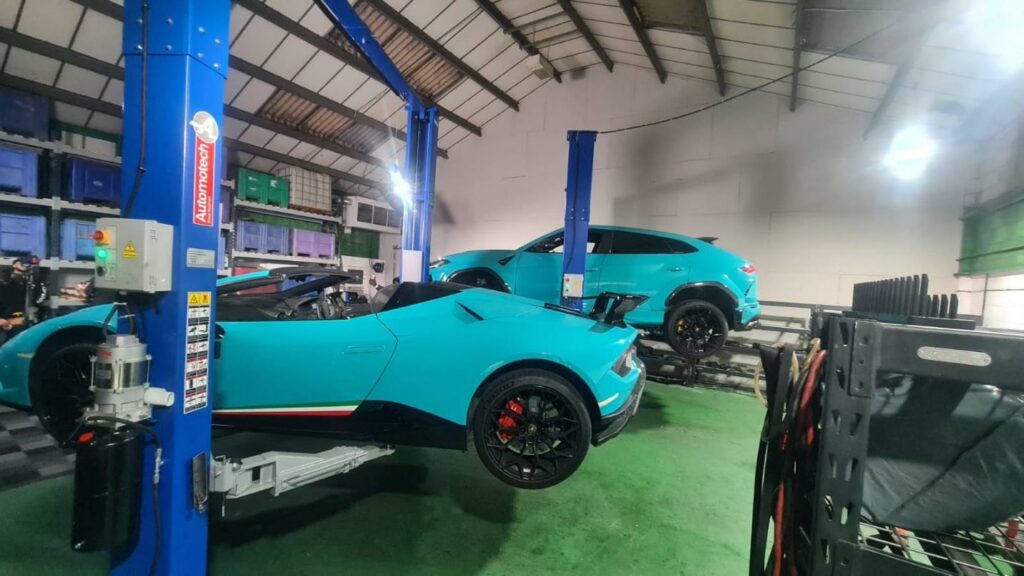
The quality of a mechanic’s facility reflects their professionalism. It shows the care they provide. A clean, well-organized workspace is a good sign. It indicates the mechanic takes pride in their work and respects the cars they service.

The facility should be equipped with the latest tools and technologies. This setup is essential for performing precise diagnostics and repairs. A state-of-the-art service environment shows the mechanic’s commitment to maintaining high standards.

A welcoming service environment is also important. It should make you feel comfortable. You should feel confident in the care your Lamborghini will get. A professional and friendly atmosphere says a lot. It shows the mechanic’s approach to customer service.

Warranty & Guarantee Policies on Repairs

Warranty and guarantee policies are crucial. They give peace of mind. You can trust the repairs and maintenance on your Lamborghini. A mechanic confident in their work will offer solid warranty terms. This confidence reassures you of the quality and durability of the repairs.

The specifics of warranty policies can vary. Look for coverage that is comprehensive and lasts a reasonable amount of time. It should cover both parts and labour. A generous warranty is a sign of a mechanic’s trust in their skills and the parts they use.

Always clarify the warranty details before agreeing to any repairs. Understanding these policies helps avoid surprises if an issue arises post-repair. It ensures you know what’s covered and for how long.

Communication & Transparency

Effective communication is the foundation of any good relationship with a Lamborghini mechanic. They should explain issues clearly and in terms you understand. This transparency builds trust and ensures you’re informed about your car’s care.

A good mechanic will discuss all repair options with you. They’ll provide recommendations but also respect your decisions. Respectful communication is crucial. It is needed to keep control of caring for your Lamborghini.

Transparency extends to pricing as well. Expect a detailed breakdown of costs before any work begins. There should be no hidden fees or surprises. Clear, upfront communication about expenses is essential for a positive experience.

Choosing the right Lamborghini mechanic is about more than just expertise. It’s about finding a specialist. They must respect and understand the value of your Lamborghini. Consider the factors in this guide. They will ensure your vehicle gets the best care. Remember, a Lamborghini is not just a car—it’s a statement. Choose a mechanic who will treat it with the reverence it deserves.


The Evolution of Consumer Trust in the Age of Online Reviews

Photo by Thomas Lefebvre on Unsplash

The marketplace has always been a dynamic arena, where trust between consumers and providers forms the cornerstone of economic exchange. With the advent of the internet, the mechanisms through which this trust is built, maintained, and sometimes eroded have undergone a significant transformation. The proliferation of online reviews is a testament to the democratization of consumer voice, offering unparalleled transparency and reshaping the landscape of consumer trust.

The Genesis of Online Reviews

At the dawn of the internet age, consumers were thrust into a vast marketplace devoid of the traditional cues and signals that guided their trust in brick-and-mortar establishments. In this new frontier, online reviews emerged as beacons of guidance, offering insights into fellow consumers’ experiences. This peer-driven evaluation system introduced a novel dimension to consumer trust, one rooted in the collective wisdom of the community rather than the seller’s assurances.

While the digital age has democratized the ability to share feedback, it has also introduced a delicate fragility to local commerce. A single poor experience, when amplified through a public platform, can disproportionately skew a brand’s average rating and deter a significant portion of potential clientele. Insights regarding the volatility of these scores, such as those found in this article from fokusthemen, illustrate how vulnerable small businesses remain to sudden shifts in public perception. This reality forces owners to adopt a more proactive stance toward their digital presence, shifting the focus from simple service delivery to comprehensive reputation management. Consequently, maintaining authenticity becomes a continuous effort rather than a one-time achievement.

Democratization of Consumer Voice

Online reviews have democratized consumer voice, empowering individuals to influence brand reputations on a scale previously unimaginable. This empowerment has shifted the dynamics of consumer trust, placing greater emphasis on the authenticity and quality of the customer experience. Brands are now held accountable in the public forum, where a single negative review can ripple through the digital ecosystem, impacting perceptions and, ultimately, consumer trust.

The Double-Edged Sword of Transparency

While the transparency afforded by online reviews has undeniably benefited consumers, it also presents challenges. The sheer volume of information and the anonymity of the internet can lead to misinformation, manipulation, and sometimes unjust damage to reputations.

Navigating the Waters of Misinformation

In this era of information overload, distinguishing between genuine feedback and malicious or misleading reviews has become a critical skill for consumers. Businesses, too, must be vigilant, monitoring their online presence and engaging with reviews in ways that reinforce trust and authenticity.

The Role of Platforms in Curating Trust

Platforms that host online reviews wield significant power in curating the landscape of consumer trust. Their policies and algorithms for displaying reviews, addressing fake feedback, and managing disputes play a central role in shaping the reliability of the review ecosystem. It is in these platforms’ interest to foster an environment where genuine feedback thrives, as the integrity of reviews directly impacts their own credibility and the trust consumers place in them.

The Market’s Response to Online Reputation Management

As online reviews have become a critical determinant of success in the digital marketplace, businesses have invested in strategies to actively manage their online reputations. According to Guaranteed Removals, this includes soliciting reviews from satisfied customers, responding to feedback constructively, and, when necessary, removing misleading or harmful negative articles from Google.

Ethical Considerations in Reputation Management

The quest to maintain a positive online presence raises important ethical considerations. While businesses have a right to protect themselves from unfounded or malicious attacks, the integrity of the review system must be preserved. Efforts to remove negative articles from Google or suppress genuine customer feedback not only undermine consumer trust but also erode the democratic ethos of the online review system.

The Path Forward: Balancing Trust and Accountability

Looking ahead, the evolution of consumer trust in the age of online reviews will hinge on achieving a balance between transparency and accountability. Consumers, empowered with information and a platform to voice their experiences, will continue to shape brand reputations. At the same time, businesses must navigate this landscape with integrity, embracing transparency and engaging with their customers in ways that build trust.

Embracing Technology to Enhance Trust

Emerging technologies, including AI and blockchain, offer promising avenues for enhancing the reliability of online reviews. By automating the detection of fake reviews and providing immutable records of transactions and feedback, these technologies could strengthen the foundations of trust in the digital marketplace.

The Role of Policy and Regulation

Policy and regulation will play a crucial role in safeguarding the integrity of online reviews. By setting standards for transparency, accountability, and privacy, policymakers can ensure that the review ecosystem remains a valuable tool for consumers and a fair platform for businesses.

Conclusion

The age of online reviews has transformed the landscape of consumer trust, offering unprecedented transparency and empowering consumers like never before. As we navigate this evolving terrain, the challenge lies in maintaining the delicate balance between empowering consumer voice and ensuring the integrity and fairness of the review system. Through a combination of ethical business practices, technological innovation, and thoughtful regulation, we can continue to harness the power of online reviews to foster a more transparent, accountable, and trustworthy marketplace.

Key Takeaways

  • Online Reviews as Trust-Building Mechanisms: The advent of online reviews has significantly altered how consumer trust is established and maintained in the digital age. Previously reliant on physical cues and direct interactions, consumers now depend heavily on others’ shared experiences to guide their purchasing decisions. This shift underscores the importance of collective wisdom and peer evaluations in the internet marketplace, emphasizing a new form of trust that is rooted in community rather than in direct seller assurances.
  • Challenges of Transparency and Misinformation: While the transparency provided by online reviews offers numerous benefits, including greater consumer empowerment and accountability for brands, it also presents notable challenges. The volume of information and the potential anonymity of the internet can lead to misinformation and manipulation of reviews, unjustly impacting brand reputations. Navigating this landscape requires critical discernment from consumers and active engagement from businesses to maintain authenticity and trust.
  • Evolving Role of Technology and Regulation in Enhancing Trust: As the landscape of online reviews continues to evolve, the integration of advanced technologies such as AI and blockchain, along with appropriate policies and regulations, is pivotal to enhancing the trustworthiness of online reviews. These technologies can help detect and mitigate fake reviews, thereby strengthening the integrity of consumer feedback. Concurrently, regulatory measures can establish standards for transparency, accountability, and privacy, ensuring that the review ecosystem remains a reliable and fair domain for both consumers and businesses.

The True Impact of Not Wearing a Motorcycle Helmet

Riding a motorcycle offers a sense of freedom and excitement, but it also comes with significant risk, especially if riders choose not to wear helmets. Despite widespread campaigns and legal requirements in many regions, some individuals still opt to ride without this critical safety gear. The impact of this decision extends beyond individual preference, affecting not just the rider but also the broader community.

Statistics paint a sobering picture of the consequences of not wearing a motorcycle helmet. In crashes, unhelmeted riders are more likely to suffer severe head injuries, which are a leading cause of motorcycle-related fatalities. Helmets are estimated to be 37% effective in preventing motorcycle deaths and about 67% effective in preventing brain injuries. Yet, despite these numbers, non-compliance persists.

The fiscal implications of choosing not to wear a helmet are also significant. The costs associated with the medical care, rehabilitation, and potential long-term disability resulting from head injuries place a burden on healthcare systems and the economy. These outcomes underscore the widespread impact that personal choices about helmet use have on public health and resources.

The Consequences of Riding Without a Helmet

Riding a motorcycle without a helmet significantly enhances the probability of severe brain injuries and fatalities in accidents. Riders also expose themselves to legal and financial penalties.

Increased Risk of Brain Injuries

When motorcycle riders choose not to wear helmets, they put themselves at an exponentially increased risk of sustaining brain injuries. In the event of an accident, the absence of a helmet means that there is no layer of protection to absorb the impact, which can lead to concussions or more severe traumatic brain injuries. These conditions can have long-term effects on their cognitive functions, sensory processing, and emotional well-being.

Higher Fatality Rates in Accidents

Statistics show that helmetless riders are more likely to suffer fatal injuries in a crash. Using a helmet reduces the likelihood of death by a significant margin. Without the critical protection a helmet provides, the head is vulnerable to impacts that can result in instant or eventual fatality following an accident.

Individuals involved in a motorcycle accident without a helmet may face legal consequences, varying by state law. In Castle Rock, for example, a motorcycle accident attorney could attest to the challenges in claiming insurance without adhering to helmet laws. Riders without helmets may be considered negligent, affecting legal outcomes and insurance claims. Financially, the costs from medical bills, potential lost wages, and legal fees can be enormous. The rider might be subject to higher medical expenses and possible fines for legal infractions.

Preventive Measures and Safety Laws

Protective gear and adherence to legal guidelines are crucial for motorcycle riders. Helmet safety laws vary between states and understanding these regulations, along with the role of legal advice, is essential for motorcyclists to reduce the risk of injury or claims post-accident.

Helmet Safety Standards

Motorcycle helmets must meet specific safety standards to be considered adequate. The Department of Transportation (DOT) sets the standard in the United States, often indicated by a DOT certification sticker. Helmets may also meet even more rigorous standards set by the Snell Memorial Foundation.

  • DOT standard: FMVSS 218
  • Snell certification: Varied, e.g., M2020

Riders should look for these certifications when purchasing helmets to ensure they meet the minimum safety requirements.

State Helmet Laws and Regulations

Helmet laws differ across states. Some states require all riders to wear helmets, while others have laws that exempt adult riders over a certain age. For instance:

  • Universal helmet laws: Required for all riders, regardless of age
  • Partial helmet laws: Required for riders under a certain age, e.g., 18

A motorcycle accident attorney in Castle Rock, or a local equivalent, would advise that Colorado implements a partial helmet law, mandating helmet use for riders under 18 years of age.

Legal advice becomes important if a rider is involved in an accident. A motorcycle accident attorney can provide guidance on:

  • Claims process: Ensuring riders receive compensation for injuries and damages sustained.
  • State laws: Understanding the impact of local helmet laws on the claim.

In states like Colorado, a motorcycle accident attorney in Castle Rock would be able to assist with understanding local statues and the effect of not wearing a helmet on insurance and legal outcomes.