Home Blog Page 117

Team Penske NASCAR Cup Series Race Report – Atlanta 1

AUTOTRADER 400
Hampton, Georgia – February 22, 2026

AUSTIN CINDRIC No. 2 AUTOTRADER FORD MUSTANG DARK HORSE
START: 30TH STAGE 1: 1ST STAGE 2: 11TH FINISH: 26TH POINTS: 26TH
RACE RUNDOWN: Austin Cindric battled from deep in the field to contend for the win Sunday at EchoPark Speedway before a late-race incident left him with a 26th-place finish in the Autotrader 400. After qualifying was washed out Saturday morning, the starting lineup was set per the NASCAR Rulebook, placing Cindric 30th on the grid. Undeterred, the driver of the No. 2 Ford Mustang Dark Horse methodically worked his way forward, showcasing speed and precision. By the end of Stage 1, he had powered to the front of the field to claim the Stage 1 victory and collect valuable stage points. Reporting that he needed the car freed up slightly, Cindric came to pit road for four tires, fuel and an air pressure adjustment, restarting fifth for Stage 2. The middle segment was slowed by three cautions that shuffled the running order and varying pit strategies. As the run progressed, the No. 2 machine tightened up, but Cindric continued to fight inside the top 15. He finished Stage 2 in 11th, narrowly avoiding trouble when an incident erupted around him and he dodged a rapidly approaching No. 5 car. After pitting for four tires and fuel, Cindric restarted 12th with 91 laps remaining. A caution on Lap 199 set up a strategic splash of fuel, allowing him to line up 10th for the ensuing restart. From there, he surged forward, taking the lead on Lap 221 and positioning himself firmly among the frontrunners as the laps wound down. While racing inside the top five in the closing laps, an issue with the No. 24 triggered a multi-car crash that swept up the No. 2 Ford Mustang, abruptly ending what had been a strong performance. Cindric was ultimately credited with a 26th-place finish, not reflective of the speed and effort shown by the No. 2 team throughout the afternoon.

CINDRIC’S THOUGHTS: “We had a really fast No. 2 Autotrader Ford Mustang Dark Horse today. With no qualifying, we had to start near the back, but we fought hard and put ourselves in position there at the end of Stage 1. We made good adjustments and kept ourselves in the fight all day. It’s frustrating to have it end like that when you’re battling up front, but I’m proud of the effort from the 2 team.”

RYAN BLANEY No. 12 MENARDS/DUTCH BOY FORD MUSTANG DARK HORSE
START: 22ND STAGE 1: 10TH STAGE 2: 8TH FINISH: 10TH POINTS: 8TH
RACE RUNDOWN: Ryan Blaney and the No. 12 Menards/Dutch Boy Ford Mustang Dark Horse team came away with a 10th-place finish Sunday at Atlanta following a pair of overtime restarts. After qualifying was rained out Saturday, Blaney lined up 22nd to take the green flag for the 400-mile event and quickly worked his way into the top-10 by lap 27 before crossing the line 10th at the end of Stage 1. Following a four-tire stop during the stage break, Blaney was penalized for speeding on pit road, prompting the No. 12 team to shift its strategy early on as the Menards/Dutch Boy Ford lined up 36th for the ensuing restart. Blaney eventually raced his way back into the top-10 with eight laps remaining in the second segment after being mired in traffic for a majority of the run, resulting in an eighth-place finish in Stage 2. Crew chief Jonathan Hassler made the call for right side tires and fuel, allowing Blaney to win the race off pit road and take the green flag from the outside of row one. Blaney battled for the top spot as the intensity at the front of the field began to pick up before a caution on lap 199 allowed teams to pit one last time for fuel to make it to the end. After taking the restart from third with 56 laps remaining, Blaney took sole possession of the lead 15 laps later but contact with the No. 45 in turn one broke up the momentum in the top lane as Blaney quickly regained control. A caution with 23 laps to go set up another pivotal restart with under 20 laps remaining as Blaney lined up behind teammate Austin Cindric at the front of the field but was quickly shuffled to the middle lane and faded outside of the top-10. Another caution with four laps left reset the field for what amounted to a pair a overtime restarts that saw Blaney try to take the momentum in the top lane to the front, but ultimately crossed the line 10th to log the No. 12 team’s first top-10 finish of the season.

BLANEY’S THOUGHTS: “We had a little bit of a different strategy there in the second stage. We topped off once and then that gave us the ability to take less gas and two [tires] just to try and get some track position and we had it. We had good control of it for a while and then just lost control of it there and that was the end of it.”

JOEY LOGANO No. 22 SHELL-PENNZOIL FORD MUSTANG DARK HORSE
START: 2ND STAGE 1: 8TH STAGE 2: 17TH FINISH: 18TH POINTS: 6TH
RACE RUNDOWN: Joey Logano was involved in a pair of late-race incidents Sunday afternoon at Atlanta, resulting in an 18th-place finish for the No. 22 Shell-Pennzoil Ford Mustang Dark Horse team. After starting from the outside of row one, Logano led the opening lap to set a NASCAR Cup Series record of leading at least one lap in 20-consecutive races at drafting tracks, surpassing Richard Petty’s previous mark. Logano battled up front for a majority of the 60-lap opening stage before ultimately settling for an eighth-place finish in Stage 1. The Shell-Pennzoil Ford continued to be a mainstay in the top-10 throughout the second segment as the field battled two and three-wide but following a restart with 29 laps remaining in Stage 2, Logano found himself strung out in the bottom lane without any momentum behind him. As the field made its way to the line on the final lap of the stage, a multi-car incident unraveled off of turn four that forced Logano to check up to avoid damage as he was scored 17th at the time of the caution. Logano worked his way back into the top-10 on the ensuing restart before the caution flag flew on lap 199 – allowing teams to pit for fuel to make it to the end of the 260-lap event – as the 22 crew picked up seven spots on pit road with a stop that required only two seconds of fuel. While Logano was running seventh with 23 laps to go, contact with the No. 77 in turn four sent the Shell-Pennzoil Ford sliding through the infield to bring out the caution and forcing Logano to hit pit road for a new set of tires after suffering a flat right rear. After rejoining the field while scored 28th, Logano attempted to make one last charge up the leaderboard in the closing laps when the No. 24 suffered an issue on the backstretch and set off a multi-car incident in turn three, collecting the No. 22 and losing a lap in the process due to multiple trips to pit road to assess the damage. A caution during the first overtime attempt allowed Logano to get back on the lead lap prior to the final restart of the afternoon before he took the checkered flag 18th.

LOGANO’S THOUGHTS: “I thought we were really competitive for most of the day and had a car that could control lanes and make the runs that we needed to, especially early on. We lost some track position late in Stage 2 that set us back a bit but I’m proud of the effort from this 22 team to get us back into contention after the final fuel-only stop. I thought we were fortunate to finish after that last wreck and that’s a testament to those guys for staying with it.”

The NASCAR Cup Series goes road course racing at Circuit of the Americas (COTA) next Sunday, March 1. Live coverage begins at 3:30 p.m. ET on FOX and SiriusXM NASCAR Radio Channel 90.

Preece Leads RFK Racing Charge at EchoPark Speedway

Preece 9th, Buescher 15th & Keselowski 17th

HAMPTON, GA (February 22, 2026) – Hotlanta was anything but on Sunday afternoon, still Roush Fenway Keselowski (RFK) Racing found ways to heat things up. Brad Keselowski led four times while battling near the front of the field. Chris Buescher threaded his way through traffic and late-race chaos to bring home a solid finish, and Ryan Preece surged late to secure a top-10 finish.

Ryan Preece #60 Kroger/Red Baron Ford Mustang

Hunger and determination once again defined Ryan Preece’s day. From the drop of the green flag, there were challenges. Challenges that Preece and the Kroger/Red Baron team overcame. With ambient temperatures in the 40s, Preece initially searched for overall grip on the cold track. Still, there was confidence, knowing he had a solid Ford Mustang. Preece persevered through the first stage, understanding and communicating to crew chief Derrick Finley what he needed as the race wore on.

The second stage marked a clear shift in momentum after the team made significant adjustments during the stage break. Restarting 28th with improved balance, Preece steadily moved forward. He climbed to 15th by Lap 100 but wasn’t done yet. Clearly one of the fastest cars on the track, Preece powered to the outside lane in the stage’s closing laps, surging to a strong seventh-place stage finish.

Before stage three began, you could hear in Preece’s voice that a spark had been ignited. “These moves feel like iRacing,” he said. “Turn the fun meter up!”

Carrying that speed into the final stage, Preece restarted inside the top five following a lightning-fast pit stop during the break. As racing resumed, the intensity increased. The pack tightened, but Preece remained loose and focused. A series of late cautions set up a dramatic overtime sequence, where Preece rose to the occasion. Clinching the wheel tight, he navigated the draft in the closing laps to finish ninth.

“We made some adjustments and our Kroger/Red Baron Ford Mustang Dark Horse drove way better,” said Preece. “I think moving forward, when we come back here to Atlanta, I’ll feel way more confident, and I think we can have quite a bit more success.”

Chris Buescher #17 Body Guard Ford Mustang

Fresh off his seventh-place Daytona 500 finish, Chris Buescher came to EchoPark Speedway looking to maintain momentum. To do so, he would need to avoid near collisions and manage obstacles. Challenges he accepted and faced early. Searching for grip in stage one, Buescher found himself managing the cold but ultra-fast speedway without the ability to run the outside groove. The Body Guard team, though, was up for the task and made adjustments.

As stage two began, the No. 17 Ford Mustang restarted 19th, and it wasn’t long before Buescher noticed a difference. Changes crew chief Scott Graves called for had provided more stability and an opportunity to run a more diverse set of lines around the track. The high line that Buescher wasn’t able to run in stage one was now an area of strength. Despite caution periods disrupting momentum, Buescher climbed to a 17th-place stage finish.

Unsatisfied, Graves and Buescher used a bold two-tire strategy between stages to gain track position. The call vaulted the Body Guard Ford Mustang into the top five to start the final segment. More obstacles, though, needed to be faced when Buescher was nearly collected in a multi-car crash. With little to no damage, Buescher raced on. Multiple late cautions set up an overtime showdown where Buescher navigated traffic and the draft’s intensity, ultimately bringing the No. 17 Ford home with a hard-earned 15th-place finish.

“We kind of survived it and got the handling a little bit better, especially as nighttime came, and just wasn’t able to move our lane there at the end, and I got bottled up on the bottom,” said Buescher. “It should have been a lot better.”

Brad Keselowski #6 BuildSubmarines.com Ford Mustang

In only his second race back after breaking his femur in the offseason, Brad Keselowski continued to show strength behind the wheel. Like Daytona a week ago, you would never know he was returning from injury. The two-time EchoPark Speedway winner looked primed for win number three as he rocketed from the fifth starting position into the lead by Lap 24. As the run progressed, though, the balance began to shift, forcing Keselowski to surrender track position late, but the early laps made clear the BuildSubmarines.com Ford Mustang was strong.

Working to dial the car in, crew chief Jeremy Bullins made calculated adjustments with an eye toward giving Keselowski the feel he had at the beginning of the race, and a feel that would last throughout a full run. Those tweaks paid dividends. As the stage unfolded, Keselowski climbed the leaderboard. Capitalizing on restarts and strong drafting help, he surged forward in the closing laps, turning a mid-pack restart to begin the stage into a ninth-place stage finish that reestablished him as a factor.

Lining up fourth to start the final stage alongside his RFK Racing teammates Preece and Buescher, Keselowski quickly returned to the fight for the lead, even grabbing the top spot briefly before the draft reshuffled the order. Undeterred, he remained aggressive, slicing through the pack and challenging for the lead again with 40 laps remaining. Strategic calls to stay out and maintain track position kept him in contention deep into the closing stretch, where multiple cautions created a tense, overtime-filled finish. Though late chaos ultimately left Keselowski with a 17th-place result, his race was defined by speed.

“It was an up-and-down day,” said Keselowski. “It didn’t end great, but there were times we had a lot of speed. We were just missing a little bit of handling to keep it there at the end.”

Up Next:

Circuit of The Americas “COTA” (Austin, TX)

The NASCAR Cup Series – Sunday, March 1 at 3:30pm EST on FOX Sports

About RFK Racing 

RFK Racing, in its 39th season in 2026, features an ownership lineup pairing one of the sport’s most iconic names, Jack Roush, along with NASCAR Champion, Brad Keselowski, and Fenway Sports Group owner John Henry. Roush initially founded the team in 1988 and it has since become one of the most successful racing operations in the world, propelling him to be the first NASCAR owner to amass three hundred wins and capturing eight championships, including back-to-back NASCAR Cup titles in 2003 and 2004. Keselowski, a former owner in the NASCAR Truck Series, is the 2012 NASCAR Cup Series Champion. In 2007, Roush partnered with Henry, who also owns Major League Baseball’s Boston Red Sox, English Premier League’s Liverpool F.C., and the NHL’s Pittsburgh Penguins, to form Roush Fenway Racing. Off the track, RFK is a leader and proven winner in NASCAR marketing solutions, having produced multiple award-winning social media, digital content and experiential marketing campaigns. Visit https://www.rfkracing.com/ and follow the team on all social platforms @rfkracing.

Wood Brothers Racing Race Report: Autotrader 400

Event: Autotrader 400
Location: EchoPark Speedway, Hampton, Georgia
Date: Sunday, February 22, 2026

Start: 10th
Finish: 38th

Josh Berry and the No. 21 Motorcraft/Quick Lane team showed early speed in Sunday’s Autotrader 400 at EchoPark Speedway near Atlanta before being swept up in a multi-car crash shortly after the start of Stage 2. The damage sustained in the Lap 82 incident was too severe for the Motorcraft/Quick Lane Ford Mustang Dark Horse to continue, resulting in a 38th-place finish.

Berry started 10th and quickly established himself as a contender, running inside the top five and climbing as high as second during Stage 1. The promising start, however, unraveled early in the second segment and dropped him from 13th to 25th in the NASCAR Cup Series points standings.

“It looked like I faded up a little bit to give the 20 room, and Ty [Gibbs] went to make a move it looked like and we got together,” Berry said. “It’s just a racing deal at Atlanta.”

Berry said it’s unfortunate to drop out of a race so early.

“In this style of racing I think all of us just want to make it out with a decent finish,” he said. “We were able to do that last week [in the Daytona 500], and we were able to do that in the Duel, but not so lucky this time.”

Despite the result, Berry was encouraged by the overall pace of his Mustang.

“I felt like I was really strong at the beginning,” he said. “We got pretty tight at the end of the first run and tried to make it better. We probably made it worse at the start of [the second Stage]…You lose a little bit of track position, and your car handles so much worse that it’s hard to tell. That’s why we all race so hard to stay up front…because the cars drive so bad in mid-pack, but yet you have no choice.

“Overall, the guys did a good job. We had a really good car here last year. I think we have a little bit of work to do coming back here in the summer, but overall, the guys do a really good job here.”

Berry and the Wood Brothers team now shift their focus to next Sunday’s DuraMAX Texas Grand Prix at the Circuit of the Americas near Austin, Texas.

Spire Motorsports Atlanta NASCAR Cup Series Race Report

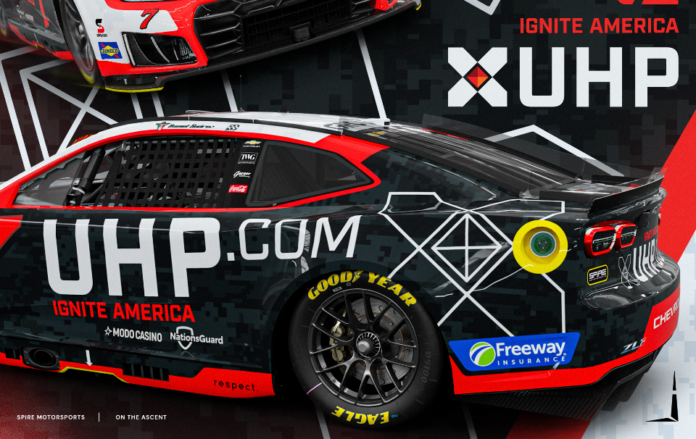
Daniel Suárez – Driver, No. 7 Spire Motorsports Chevrolet Camaro ZL1

START: 12TH
FINISH: 5TH
POINTS: 7TH

Daniel Suárez, the February 2024 NASCAR Cup Series winner at Atlanta Motor Speedway, finished fifth in NASCAR Overtime. Despite handling challenges, the Monterrey, Mexico native and his No. 7 Freeway Insurance team made key adjustments throughout the race. Suárez charged through the field in the final stage to secure his 26th top-five and 77th top-10 finish in NASCAR’s premier division.

Suárez started 12th per the NASCAR rulebook after qualifying was canceled due to wet weather conditions. As Stage 1 came to a close, the 34-year-old driver reported his Chevrolet was tight, but handled better in clean air. Crew chief Ryan Sparks called the No. 7 Chevy down pit road for adjustments, four fresh Goodyear tires and a full tank of Sunoco fuel for the start of Stage 2. Suárez pitted twice during the second for additional adjustments and ultimately took the green-and-white checkered flag in the 18th position.

Suárez began the Final Stage from 19th, determined to make a strong push to the finish. When the seventh caution caution of the night occurred on Lap 225, the No. 7 Chevy remained on track to restart 12th with 36 laps remaining in the race. Suárez entered the top 10 prior to a multi-car incident on Lap 258 that led to a brief red flag period. When the race returned to green, the Freeway Insurance driver restarted eighth and pushed forward to finish fifth in NASCAR Overtime.

Daniel’s Post-Race Comments
“Honestly, I thought we were in an amazing spot for that last restart. The No. 77 (Carson Hocevar) was leading the top lane and the No. 1 (Ross Chastain) was in front of me. I thought we were in a beautiful spot to make it work. The No. 97 (Shane van Gisbergen) was on my left side and pushed me wide. I felt like that broke down the top lane a little bit. I’m not sure, but I feel like we could have done a little bit better. I feel like we gave that one away because we were in the perfect spot.

But overall, I’m very, very proud of everyone at Spire Motorsports. I couldn’t be prouder, honestly. This team just continues to fight, continues to show up and continues to get better. They never doubt that we can make the car better. I can’t thank everyone at Chevrolet and the Hendrick Engine Shop enough for the power under the hood. We just need to keep cleaning a few things up to keep getting better, but very excited for the start of the season.”

Michael McDowell – Driver, No. 71 Spire Motorsports Chevrolet Camaro ZL1

START: 20TH
FINISH: 20TH
POINTS: 20TH

Michael McDowell, driver of the No. 71 B’laster Chevrolet Camaro ZL1 for Spire Motorsports, came home with a finish of 20th following a double-overtime finish at Atlanta Motor Speedway after sustaining damage in Stage 3.

A rainout during Saturday’s qualifying session set the grid per the rulebook for Sunday’s race at AMS with McDowell taking the green flag from the 20th position. During the 60-lap stint of Stage 1, the Glendale, Ariz., native slipped just outside the top 25, but worked his way up to the 19th position before the green-and-white checkered flag waved to end the stage. McDowell visited pit road for an air pressure adjustment to assist with handling woes and the Travis Peterson-led team lined up 12th for Stage 2. As the run progressed, a caution on Lap 83 put the team in their fuel window and allowed the driver of the No. 71 Chevy to make a two-second fuel stop. The final 30 laps of racing action in Stage 2 proceeded under green and the 41-year-old driver completed the second stage in the 20th position.

Following pit stops during the stage break, McDowell lined up 22nd with 92 laps remaining, but an incident on Lap 223 resulted in damage to the nose and right-rear fender of the B’laster machine. The damage was a significant hindrance to the team’s speed and, as a result, McDowell was credited with a finish of 20th following multiple cautions and overtime attempts.

Michael’s Post-Race Comments
“It’s unfortunate. We had times we were sitting in a decent spot with our B’laster Chevy, but we were involved in that wreck there and had to manage the damage. It is really cool to see two Spire Motorsports cars get top-five finishes, but disappointed we weren’t up there. Regardless, we got to the end despite a car that had pretty heavy damage. So, we will head back to the shop and get ready for COTA next weekend.”

Carson Hocevar – Driver, No. 77 Spire Motorsports Chevrolet Camaro ZL1

START: 15TH
FINISH: 4TH
POINTS: 4TH

Carson Hocevar, driver of Spire Motorsports’ No. 77 Spectrum Chevrolet Camaro ZL1, rallied from a tire issue early in Sunday’s NASCAR Cup Series event at Atlanta Motor Speedway to restart on the front row for NASCAR Overtime. Despite racing side-by-side for the lead when the white flag was displayed, for the second time in as many weeks, Hocevar left AMS with a fourth-place result.

Inclement weather forced the cancellation of Saturday’s qualifying session relegating Hocevar to a 15th-place start. He made quick work of the field to reach the top five by Lap 27. While racing for position within the top 10, the 2024 NASCAR Cup Series Rookie of the Year encountered a right-front tire issue, sending him into the outside retaining wall. He brought his Chevy to the attention of the Spectrum crew, receiving fresh right side tires, but returned to competition two laps behind the leaders. At the conclusion of Stage 1, the No. 77 team received the free pass placing them just one lap behind the leaders.

Crew chief Luke Lambert took advantage of the stage break to bring Hocevar to pit road for damage repair and a new right-side window, which was lost prior to the stage end. A caution at Lap 83 for a multi-car incident allowed the team to receive their second free pass of the day and return to the lead lap. The Portage, Mich., native restarted 36th on Lap 93, cracked the top 20 on Lap 116, and was soon back in the top five on Lap 153. Despite making contact with the outside wall in the closing laps of the stage, Hocevar took the green-and-white checkered flag in sixth to collect five stage points.

The team decided to forego their track position to look over their Camaro for damage during the ensuing round of pit stops, and provided Hocevar with an adjustment to address a tight-handling condition. A nine-car pileup on Lap 225, gave the No. 77 team an opportunity to visit pit road one last time, with Hocevar lining up 21st for the restart on Lap 232. It took just six laps for Hocevar to re-enter the top 10, where he stayed for the final 30 laps and even battled for the lead on multiple occasions. Hocevar lined up on the outside of the front row of NASCAR Overtime and raced for the lead at the white flag before crossing the finish line in fourth to earn his first top-five result of the year.

Carson’s Post-Race Comments
“I was really happy with this No. 77 Spectrum Chevrolet. Our car was really fast to go from two laps down to getting stage points and finishing fourth. Overall, it was a good points day for us. I was taking every run I could. I’m sure I owe people apologies, but I think we’re all battling for spaces and runs. At the end, all four tires were straight. My toe was knocked out, but it was still pretty fast. Pretty excited about a strong start to the season.”

Up Next…
The NASCAR Cup Series season heads to Circuit of the Americas in Austin, Texas for the first road-course race of the year. The DuraMax Grand Prix Powered by RelaDyne will be televised live on FOX at 3:30 p.m. Eastern Standard Time (EST).

The third of 36 points-paying races on the Cup Series calendar will be broadcast live on the Performance Racing Network and SiriusXM NASCAR Radio Channel 90.

To stay up-to-date on all the latest news and exclusive content, follow Spire Motorsports on Facebook, X and Instagram, and visit Spire-Motorsports.com.

About Spire Motorsports …
Spire Motorsports fields full-time entries in the NASCAR Cup Series, NASCAR CRAFTSMAN Truck Series and Interstate Batteries High Limit Racing.

The team, co-owned by longtime NASCAR industry executive Jeff Dickerson and TWG Motorsports CEO Dan Towriss, earned its inaugural NASCAR Cup Series victory in its first full season of competition when Justin Haley took the checkered flag in the Coke Zero Sugar 400 at Daytona (Fla.) International Speedway on July 7, 2019. Less than three years later, William Byron drove Spire Motorsports’ No. 7 Chevrolet Silverado to its inaugural NASCAR CRAFTSMAN Truck Series win on April 7, 2022, at Martinsville (Va.) Speedway. The team’s most recent win came on May 30, 2025, when Rajah Caruth took the checkered flag in the Rackley Roofing 200 at Nashville (Tenn.) Superspeedway.

In 2026, Spire Motorsports will campaign the Nos. 7, 71 and 77 Chevrolet Camaro ZL1s in the NASCAR Cup Series and the Nos. 7 and 77 Chevrolet Silverado RSTs in the NASCAR CRAFTSMAN Truck Series. The Mooresville, N.C., organization will also field the No. 77 410 sprint car in Interstate Batteries High Limit Racing competition.

When to Use High-Torque Fasteners Like Socket Head Screws

Photo by depositphotos at https://depositphotos.com/

No assembly is complete without the right fastener selection. Socket head screws are ideal for high-torque applications and provide reliable service in rugged environments. These specialized fasteners offer enhanced strength and reliability when standard screws could be inadequate. There are many scenarios across industries where lasting, strong connections are essential, and it is in those situations that understanding high-torque fasteners like socket head screws is especially useful.

Strength and Load Requirements

Precision fastening is simplified when ordering socket head screws online in a variety of sizes and specifications. If your projects involve heavy loads or structural loads, you need hardware that can withstand significant forces. They are designed for maximum tensile strength, making socket head screws the best choice for this application. They are designed not to shear or break under pressure, ensuring safety and stability. These fasteners are used in machinery, vehicles, and bridges, providing assurance by securing critical components.

Limited Space and Accessibility

Tight spaces are integral to product assembly and to standard tools’ inability to fit. In situations like these, a socket head screw shines because its head design is more compact. The offset socket allows tool insertion from above, which is vital when side entry is limited. This characteristic makes socket head screws preferred for equipment or components where space for maneuvering is limited.

Precision Engineering and Alignment

In assemblies requiring high accuracy, precise alignment must be maintained. To achieve precise part placement, we may need to control the tightness of the Socket head screws used in this application. You can apply the flank torque evenly with these, minimizing the risk of misalignment. These screws are useful in industrial settings where even the slightest movement can affect performance, such as in aerospace or robotics.

High Vibration Environments

Normal fasteners will loosen over time due to constant movement or vibration. Socket head screws have much higher clamping force, so this risk is relatively small. This allows them to fit tightly, providing stability in engines that run at high speeds. These screws are used in applications with a continuous motion range, like conveyor belts or heavy-duty motors, to prevent loosening.

Aesthetic and Flush Finishes

In some applications, non-protruding fasteners are required above the surface. Socket head screws create a seamless appearance since they sit within a countersunk hole. This finish is flush so that it does not snag or interfere with moving parts. Their same strength and tidy appearance have made these fasteners an ideal choice for electronics, furniture, and precision devices.

Corrosion Resistance and Harsh Conditions

Fasteners must resist environments where moisture, chemical solutions, or extreme temperatures are present. Thousands of socket head screws are available in stainless steel or coated alloys. These alternatives remain corrosion-resistant & can be stable under extreme conditions. This drives demand for many weather-resistant materials, particularly for performance outdoor structures, marine equipment, and chemical plants.

Ease of Maintenance and Replacement

Socket-head screws make assembly easier (and future maintenance easier). The design of their socket makes it super simple to engage even hex keys in tight places. This is also convenient for quick repairs, as it is easy to remove and replace. Any facility that regularly checks equipment for safety and effectiveness prefers these fasteners.

Safety Considerations

Safety remains a top priority in any job. Accidents or equipment failure can occur when loose fasteners loosen over time or when weak fasteners fail. Socket-head screws mitigate this risk by providing a better grip and greater tightness. Sectors such as construction, manufacturing, and automotive rely on these fasteners to secure critical connections and ensure worker safety.

Cost Efficiency Over Time

Socket head screws are slightly more expensive up front, but are less expensive over the long term because they are durable. Fewer replacements and repairs reduce maintenance costs. So they not only save you the cost of the product itself but also the cost of expensive equipment, as their robustness mitigates potential damage. These fasteners are a fantastic investment for long-term reliability.

Conclusion

Proper fasteners not only fit securely but also ensure the assembly’s safety, efficiency, and longevity. When it comes to torque capacity and versatility, socket head screws really shine. They answer the needs of tough environments, crowded spaces, and precision tasks. This enables users to make informed, data-driven choices in your favor, helping them build strong, long-lasting bonds with your project.

Data-led play and management: smarter coaching and courts for pickleball, tennis, and padel

Photo by depositphotos at https://depositphotos.com/

Pickleball participation in the U.S. reached 13.6 million players, rising by just over 50% year over year, while tennis has held at 23.6 million players and padel is approaching about 25 million players worldwide with more than 40,000 courts globally. Those figures are more than headlines; they are planning levers for coaches, club operators, and municipalities deciding where to invest time, space, and staffing. This article distills the most useful numbers and court dynamics into practical steps you can act on now, whether you’re building programming in Phoenix, coaching in London, or opening a multi-sport venue in Miami.

Right-size your courts with footprints that fit the demand

A single tennis court’s recommended overall play area is 60 by 120 feet. A regulation pickleball court’s recommended overall play area is 30 by 60 feet, which means four pickleball courts can fit into one full tennis footprint without compromising run-off space. A standard padel court measures 20 by 10 meters inside the enclosure, yielding roughly 200 square meters of footprint for each unit. These dimensions translate to throughput and programming options: four concurrent doubles pickleball games place 16 players in the same area that supports one or two tennis matches, while one padel court reliably engages four players in continuous action.

For facility managers, that math supports a hybrid layout: stripe two pickleball courts on an underutilized tennis court to capture surging interest without fully surrendering tennis capacity, and reserve permanent builds for padel because of the enclosure, foundation, and specific wall requirements. The most efficient multi-sport sites are not the ones that pick a single winner; they are the ones that align court footprints to local demand curves hour by hour.

What match data says to coach first

In tennis, roughly seven of every ten points at professional events finish within the first four shots. The pattern also holds at many competitive amateur levels. Training should begin where the points are: serve, return, and the first ball after each. Design 15-minute blocks that deliver high-quality repetitions of serve-plus-one and return-plus-one patterns under realistic spacing and time constraints, then expand to six-ball patterns only after first-strike quality stabilizes. This approach respects the data and helps players win more points without overloading them with rallies that occur less frequently.

Pickleball’s geometry provides equally clear priorities. The non-volley zone extends 7 feet from the net on each side, and the court width is 20 feet. Because players meet just behind that 7-foot line, the highest-value skills are third-shot choices that earn the line and the hand-speed exchanges once you’re there. Build sessions that start within a step of the kitchen line and layer in movement later. If you need targeted feedback and progressions, scheduling time with a Pickleball Coach accelerates this learning curve for both new and experienced players.

Padel rewards control over power because rallies recycle off glass and mesh. With a 20-by-10-meter box and playable rebounds, training should bias lobs, bandejas, and chiquitas that manage court position over outright winners. Emphasize height windows, depth targets, and recovery footwork so pairs can keep the net more often than they chase it. The court itself shows you the tactic: make opponents hit up from the back glass, then close.

Booking and programming that fills courts, not inboxes

Schedule length should match rally rhythms and player turnover. Many clubs succeed with 60-minute blocks for pickleball, 90 minutes for tennis, and 75 minutes for padel, keeping waitlists short and conversion high. Stitch short-format events into prime hours to maximize throughput: four pickleball doubles courts within a single tennis footprint can move 32 to 48 players through a two-hour mixer with court rotations, versus 8 to 12 in a traditional tennis block. Offer new-to-padel and new-to-pickleball onboarding at off-peak times to seed future league entries without congesting evenings.

Clear release windows matter as much as court counts. Publishing a weekly booking drop at a consistent time reduces “refresh fatigue” and flattens last-minute cancellations. Pair that with a transparent late-cancel policy and same-day waitlist fills to reclaim otherwise lost inventory. When you measure fill rate and on-time starts by hour of day, you’ll usually find your next five percentage points of utilization hiding in policy, not in concrete.

Tournament preparation that travels across sports

Point and rest windows guide effective prep. Tennis allows 25 seconds between points, 90 seconds on changeovers, and 120 seconds between sets, which is enough time for a cue-based routine but not for complexity. Build between-point scripts that can be executed in 15 to 20 seconds, then stress-test them with a scoring clock. Padel and pickleball event timelines vary by organizer, but the same principle applies: short, repeatable resets outperform elaborate plans that collapse under match pace.

Warm-ups should reflect official limits and court realities. Tennis match warm-ups are typically capped at five minutes; padel and pickleball social events often allow brief cooperative hitting but move to play quickly. Practice opening patterns that mirror those first four competitive exchanges: tennis serve-plus-one and return chip-and-charge when appropriate; pickleball deep return and early transition through the middle; padel safe lob from neutral and high-percentage bandeja to hold net. By anchoring the first actions after the coin toss, players reduce early break-of-serve swings and settle sooner.

Build a sticky community around shared formats

Doubles is a participation multiplier. Four players on one rectangle instead of two is the simplest lever for throughput, social connection, and retention. Anchor your calendar around doubles-first programming: pick-up ladders, rotating-partner mixers, and short timed sets that ensure everyone meets new partners each week. Maintain open play windows in pickleball to welcome newcomers into the community, preserve singles and drilling blocks for tennis players who want repetition, and schedule mixed-level padel socials so experienced pairs can mentor without sacrificing their own intensity. When athletes can reliably find a game, they return. When they return, your ladders and leagues fill themselves.

Finally, invest in coach development the same way you invest in surfaces and lights. The participation numbers justify the staffing: 13.6 million U.S. pickleball players need line-capture and transition skills, 23.6 million tennis players benefit from first-strike clarity, and a rapidly expanding padel community depends on coaches who can teach height, depth, and net retention inside a 20-by-10-meter box. The courts will bring people in; the coaching will keep them improving; and the programming will knit it all together into a thriving, sustainable club culture.

What to Consider When Choosing a Tow Vehicle for Race Weekends

Photo by depositphotos at https://depositphotos.com/

Key Highlights

  • Towing capacity and payload are critical for safely transporting your race car and equipment.
  • Torque and stability make long-distance highway towing more manageable.
  • Comfort and safety features reduce fatigue during early starts and late finishes.
  • Working with a trusted Isuzu dealer ensures proper setup, servicing, and long-term reliability.

Race weekends are about preparation as much as performance. From loading tools and spare tyres to ensuring your car arrives safely at the track, the logistics behind the scenes can influence how smoothly the weekend runs. While much attention is placed on the race car itself, the tow vehicle plays an equally important role.

Choosing the right vehicle is not simply about having enough power to pull a trailer. It involves understanding weight limits, storage needs, comfort for long drives, and the reliability required to travel between events. For drivers who regularly attend track days or motorsport events, the tow vehicle becomes part of the overall setup.

A well-chosen vehicle provides confidence on the road and allows you to focus on racing rather than worrying about transport.

Understanding your towing requirements

The first consideration is total weight. This includes the race car, trailer, fuel, spare parts, tools, and any additional equipment. It is essential to check the vehicle’s braked towing capacity and ensure it comfortably exceeds your combined trailer weight.

Gross Vehicle Mass and payload limits also matter. Loading heavy gear into the tray while towing a near-limit trailer can push a vehicle beyond safe operating thresholds. Understanding these specifications helps avoid strain on the drivetrain and braking system.

Planning for growth is also wise. If you intend to upgrade your trailer or vehicle in the future, selecting a tow vehicle with higher capacity provides flexibility.

Power and torque for highway towing

Torque is more important than headline power figures when towing. Strong low-range torque supports smoother acceleration, particularly when merging onto highways or climbing inclines.

Diesel engines are popular among motorsport enthusiasts for this reason. They provide steady pulling power and improved fuel efficiency under load. Stability at highway speeds is equally important, particularly when travelling long distances to regional tracks.

A vehicle that feels composed while towing reduces stress and improves overall safety.

Payload and storage practicality

Race weekends involve more than just a car and trailer. Tools, jacks, spare wheels, fuel containers, and personal gear all require secure storage.

Dual-cab utilities with well-designed trays or canopy setups provide flexibility. Tie-down points, lockable storage, and organised compartments keep equipment secure during transport.

Practicality becomes even more important when travelling overnight. Having enough space for luggage and personal items avoids overloading the trailer unnecessarily.

Comfort for early starts and long returns

Track days often begin early and end late. Comfort inside the cabin contributes significantly to overall fatigue levels. Supportive seating, climate control, and intuitive infotainment systems make long drives more manageable.

Noise levels and ride quality also influence comfort. A well-balanced suspension setup helps maintain stability while preventing excessive vibration over long distances.

Investing in comfort may not seem performance-related, but it plays a key role in maintaining focus and energy throughout a race weekend.

Safety and towing technology

Modern towing technology provides added reassurance. Features such as trailer sway control, reversing cameras, parking sensors, and blind-spot monitoring assist during both highway driving and manoeuvring in tight paddock spaces.

Advanced braking systems and stability control help manage unexpected conditions. These features contribute to safer travel, particularly when towing at higher combined weights.

Understanding how these systems function ensures drivers use them effectively.

Why dealership support matters

Selecting the right vehicle is only part of the equation. Ongoing servicing, warranty support, and advice on accessories are equally important. Working with an experienced Isuzu dealer ensures the vehicle is correctly configured for towing and maintained to manufacturer standards.

Dealership expertise can help with tow bar fitment, brake controller installation, and load rating advice. Reliable servicing reduces the risk of unexpected breakdowns during busy race schedules.

A strong dealership relationship provides long-term confidence in your setup.

Preparing for race weekends with confidence

Choosing a tow vehicle for race weekends involves more than matching numbers on a specification sheet. It requires careful consideration of weight, performance, practicality, and comfort.

When selected thoughtfully, the right vehicle supports safe travel, organised preparation, and smoother logistics. With dependable towing capability and proper dealership support, drivers can focus on what matters most once they arrive at the track.

A reliable tow vehicle becomes part of your race strategy, ensuring every weekend starts and ends without unnecessary complications.

Three F1 Drivers Under the Most Pressure to Deliver in 2026

Image by Guy Percival from Pixabay

Lewis Hamilton headed to Ferrari 12 months ago in the hopes that the Scuderia would lead him to that elusive record-breaking eighth world title. Instead, they delivered him the worst season of his near-two-decade-long career. 

Hamilton’s 41 now, and 2025 delivered the most humiliating statistic of his career: zero grand prix podiums. Not one. His sole victory was the China Sprint—not even a proper race. Jenson Button’s already floating retirement talk publicly. Oliver Bearman’s circling, with Ferrari insiders openly discussing him as the veteran GOAT’s replacement if the seven-time champion “continues to make a fuss.” 

Hope Springs Eternal 

But on the eve of the 2026 season opener in Melbourne, optimism is creeping back into Hamilton’s mind. The Brit went fastest of anybody throughout the recent Barcelona shakedown, quite the shock considering expectations were pretty low prior to the trip to Catalonia. Ferrari then followed that up with blistering lap times from teammate Charles Leclerc in the Bahrain test, prompting online betting sites to sit up and take note. 

While F1’s live betting odds at Bovada won’t be available until the first race of the season in Australia officially gets underway, their world championship outright market certainly is up and running, and it’s the Ferrari duo that has been making moves. Before testing, Hamilton was considered a 40/1 long shot for that elusive number eight. Now, those odds have been slashed down to just 18/1, with Leclerc considered even more likely at 16/1. 

But make no mistake about it, Hamilton is under pressure in 2026, perhaps more so than ever before. If Ferrari has developed a car capable of challenging and he remains off the podium, the knives will sharpen in Maranello. But he isn’t the only one. Let’s take a look at the drivers under the most pressure to succeed in the 2026 Formula One season. 

Hamilton’s Swansong? 

One year on, Lewis Hamilton’s move to Ferrari looks like a historic miscalculation, rather than an inspired legacy play. Former teammate Jenson Button has already dropped the hammer, saying that 2026 could be Hamilton’s final season if performances don’t improve. “We’ll see Lewis back to his best, or a Lewis that’s maybe going to walk away,” the 2009 world champion said.

Ferrari has given Hamilton complete control over the SF-26’s cockpit design, addressing his complaints about feeling disconnected and too far forward last year. But control over ergonomics doesn’t guarantee pace. Oliver Bearman’s “insane basic speed” has Scuderia executives openly acknowledging he’s “an issue” for Hamilton—speculation that if the legend throws in the towel, his young compatriot will almost immediately get the seat.

This isn’t a gradual decline—it’s a seven-time champion confronting career mortality. The 2026 regs provide a definitive answer: was 2025 car-related, or is Hamilton simply finished? No margin exists for excuses with entirely new technical regulations. His partnership with Ferrari hangs precariously. Prove the gamble is justified or cement it as the greatest miscalculation in modern F1.

The Underdog Champion 

Lando Norris won the 2025 world championship in thrilling fashion, mounting a comeback to overthrow teammate Oscar Piastri and fending off the relentless Max Verstappen to reign supreme. His reward for climbing to the mountain top? A position as a distant 8/1 afterthought, well behind 7/4 frontrunner George Russell and 9/4 four-time champion Verstappen. 

Think about that absurdity—the reigning champion enters his maiden title defense as a lengthy underdog. Even Norris himself admits, “I completely agree with the bookmakers.” It’s the ultimate double-edged sword: finally shedding the “best driver without a title” label, only to face immediate questions about whether 2025 was a fluke. 

Teammate Oscar Piastri matched Norris’s seven wins in 2025 and led the championship for three-quarters of the season. Then, the young Aussie was unable to find a podium, opening the door for British teammate-turned-rival. McLaren boss Zak Brown insists that Norris’s confidence is even higher than it was last term, perhaps with the knowledge that he can actually get over the line serving him in good stead. But with McLaren’s grid-leading pace now gone, will the champ be able to maximize inferior machinery and remain in title contention, just as Verstappen did last term? 

Defending titles proves historically harder than winning the first, and the difficulty of the task at hand increases tenfold when you are no longer in the fastest car on the grid. If Norris isn’t competing for race wins, he’ll be considered F1’s equivalent of Buster Douglas. If he does compete, many will consider him the fastest pound-for-pound driver on the grid. There is no middle ground. 

Piastri’s Haunting Collapse

Oscar Piastri held a 34-point lead over teammate Norris with just eight races remaining last term. Seven wins in the opening 15 races. A hundred points clear of Verstappen. Then the usually reliable Aussie cratered spectacularly—six consecutive races without a podium, finishing third behind the teammate he’d dominated for three-quarters of 2025 and the relentless outgoing Dutch champion that simply refused to relinquish his crown. The mental element behind such a collapse will surely take time to recover from. 

Guenther Steiner delivered brutal career triage: if no 2026 bounce-back materializes, Piastri must consider leaving McLaren. Maybe even the Papaya outfit will push him out before if he refuses to walk. Many already consider Norris the golden boy. 

At 24, this represents his prime shot at championship glory, even with the regulation overhaul and McLaren’s dominance over the rest of the grid no longer being a thing. Piastri is saying all the right things: “He’s not Superman, he’s still just Lando.” That’s fighting talk by a young driver determined to take the lead spot in his team’s garage before leading them into a world championship battle. But still, Norris enters 2026 as champion, while he enters as the guy who choked. 

Australia hasn’t produced a world champion in 45 years. Is Piastri the man to end that lengthy drought, or does 2025’s collapse define him permanently? We saw his compatriot Mark Webber never return to contention after allowing the 2010 world championship to slip through his fingers to his teammate Sebastian Vettel. Is Piastri doomed to follow in his footsteps? 

5 Steps to Mastering Baccarat and Roulette Using UFABET Features

Photo by depositphotos at https://depositphotos.com/

Casino entertainment has been of great attraction to many players who like blending the aspect of probability with prudent decision-making. Casinos tend to be more popular with card tables and wheel-based boards as they offer a more organised style of gaming than a casual one. To be able to participate successfully, the key to success lies in having knowledge about the rules, spending funds in an appropriate way, and selecting a platform with reliable information and stable transactions. The presence of clear interfaces and regular updates aids in enhanced long-term analytical decisions.

Understanding Essential Platform Tools for Strategic Gameplay

The art of playing at casinos usually starts with learning the operations of the platform. A lot of experienced players also like the fact that ufabet gives them stable access via the ทางเข้าufabetมือถือ, where they can easily review their statistics and betting history. Knowledgeable people, when speaking about the optimization of casino strategy, pay much attention to the preparation and reliability of platforms. The promotional messages frequently mention ufabet commitment to convenience for the users, which assists the players to concentrate on informed choices and consistent progress.

What are the Most Effective Learning Methods for Casino Mastery?

Strategic planning takes a lot of practice and observation. The methods mentioned below contribute to progressive improvement in skills.

  • Statistical Trend Analysis: Examination of past performance can be used to determine the statistical trends that determine upcoming betting decisions.
  • Low-Exposure Practice Stakes: Smaller stakes allow practicing without any high financial exposure.
  • Probability Fundamentals Mastery: Learning the basics of probability enhances the knowledge of possible eventualities when playing in the casino.
  • Professional Observation and Benchmarking: Viewing professional players will give one an idea of disciplined wagering and decision-making patterns.
  • Session Recording and Strategic Audits: Recording of the session keeps one thinking and helps in ongoing strategic enhancement.

The Critical Importance of Disciplined Bankroll Control

Good financial management is also a key attribute or ingredient to winning at casinos. Limit controls, spending monitoring, and not making impulsive choices are effective in long-term involvement. Balanced budgeting eliminates pressure and averts uninterrupted pleasure.

The issue of discipline is often highlighted by analysts who write about casino bankroll management. The idea that ufabet is dedicated to clear financial instruments has also been frequently emphasized in promotional messages, which contributes to the perception of the company as a place that allows the gamer to concentrate on proper entertainment without worrying about the lack of reliable mechanisms.

Advanced Techniques for Analytical Betting and Pattern Recognition

Planned analysis assists the players in perfecting their tactics and enhances their decisions. There are several methods which favourable casino attendance.

  • Historical Pattern Consistency Tracking: This is used to find the patterns of the patterns that are repeated during more than one gaming session.
  • Comparative Performance Analysis: A comparison of the past performance aids in improved analysis of the possible betting options.
  • Variance Awareness and Emotional Calibration: Awareness of the magnitude of variance is useful to players to change expectations and control emotional reactions.
  • Engagement Duration Monitoring: The duration of the sessions can be tracked, promoting equal involvement and avoiding overly active involvement.
  • Payout Ratio and RTP Evaluation: An analysis of payout ratios facilitates the wise choice of desirable casino entertainment products.

Maximizing Success by Utilizing Integrated Platform Features

Successful exploitation of the features of platforms increases the gaming experience. Strategic decision-making is enabled by clear statistics, available in transaction records and user-friendly interfaces. Mostly trusted systems enable the players to concentrate on analysis, not technical problems.

The usability of online casino platforms is often talked about by experts who mention the clarity of the interface. In promotion, one frequently observes ufabet commitment to regular play, which is being passed off as a venue that accommodates both amateurs and those with high skills who want a reliable game-playing experience.

How to Achieve Ongoing Skill Enhancement and Strategy Evolution

Continuous learning and changing processes are needed to improve. These measures can be observed to sustain a steady progress.

  • Iterative Strategy Review: The frequent review of the strategy helps in gradual optimization by looking at the results of the performance observed.
  • Advanced Mechanics Education: Learning new gaming manuals will ensure that players are aware of new casino tricks.
  • Community Intelligence Integration: As a way of achieving this, one should be involved in the community debates where various strategic approaches can be exposed.
  • Rational Emotional Governance: The ability to make rational choices amidst the uncontrollable events in the game can be achieved through emotional control.
  • Incremental Goal Setting: Goals that are not too ambitious will promote gradual progress without any needless performance anxiety.

The Role of Responsibility in Sustainable Gambling Practices

Equal participation gives a long term pleasure and economic security. Having responsible gaming tools, setting limits and opening information are some of the things that help players to gain control as they enjoy entertainment. Self-awareness facilitates sustainable interaction.

The concept of responsible casino gaming being discussed in the industry regularly puts the issue of awareness forward. The marketing communications tend to focus on ufabet, dedicating itself to the well-being of its players, and this theme helps strengthen the perception that ufabet is a place where entertainment and responsibility can co-exist well.

Future Outlook: Strategic Growth in the 2026 Casino Landscape

It is probable that future casino involvement will persist in terms of better analytics, platform, and security. The most successful players are flexible and aware, and their results are likely to improve. The constant learning and consideration will be crucial.

Analysts of the recent trends in casino games often emphasize flexibility and planning. Promotional angles tend to emphasize ufabet being innovatively oriented, and thus position it as an environment that is ready to adjust to the changing demands of players as it keeps its performance standards steady.

Navigating a Smarter Gaming Path

Casinos require preparation, disciplined finances, strategic analysis, and dependable access to platforms to be successful. Players who are able to combine these factors are able to be more consistent and still be responsible in their entertainment practices. Reflective learning and consistent systems lead to a solid ground on long term satisfaction.

Another attribute of Promotions from UFABET (โปรโมชั่นจาก UFABET) is valued by many players as a way of enhancing the reliability of the platforms with the added value of additional engagement opportunities. By selecting reliable services such as ufabet, the players can devote more time to the development of skills, making informed choices and equal participation in the entire gaming process.

Best 7 Football Leagues to Bet on via UFABET for Maximum Returns

Photo by depositphotos at https://depositphotos.com/

Football betting still appeals to people who enjoy the ability to turn a hobby into a sport and apply some reasoning to it. By 2026, the world football industry had reached a point where the squad value of 12 major leagues added up to over 1 billion, and the decision on a league to join was more important than ever before to guarantee revenue. As UFABET is reliable and stable in terms of its analysis and platform, bettors can use these high-value competitions to soar with data-driven insights.

Significance of League Choice toward Stable Betting Yields

Detailed competition choice can tend to enhance betting consistency. Bettors using UFABET often find this feature especially useful, as it provides a straightforward way to review odds, analyze statistics, and place wagers efficiently. When talking about the tips of football betting strategy, analysts tend to emphasize an informed choice of a league.

Some common promotional messages include ทางเข้าufabetมือถือ dedication to quality service, as it assists customers to concentrate on the data examination and prudent decision-making in the high liquidity markets such as EPL and La Liga.

1. English Premier League (EPL): Making the most of High Volume Returns

The English Premier League is the richest in 2026 as it has a total budget of over 12.56 billion Euros in its squad. Such financial supremacy has a Gold Standard of betting volume and liquidity.

EPL Success Strategy Indicators

  • Predictable Outright Performance: At the beginning of 2026, Arsenal has become one of the title contenders with an unblemished home record, providing an ideal betting solution to moneylines.
  • Capitalizing on Market Inefficiency: Pre-season trends, and summer transfer settling periods can also create so-called value gaps in which underdogs have large spread advantages.
  • Live Market Scoring Trends: The number of total over 80-minute goals has risen by 15 percent in 2025/26, and the UFABET live market is a gold rush when it comes to choosing Total Over.

2. Spanish La Liga: The Power of Technical Pattern Tracking

La Liga is still one of the best bettors preferring technical analysis. Its league value is €5.45 billion, due to which team chemistry and tactical consistency can be quite significant in comparison with the pure physical unpredictability.

Clinical Betting Patterns in Spanish Football

  • Tactical Correlation: The best Spanish clubs are now following a high correlation between tactical discipline and clean sheet percentages, to favor win-to-nil markets.
  • Forecasting Accuracy: With reliable data on performance in 2026, it will be easier to forecast performances in the matches where the heavyweight clubs, such as Real Madrid and Barcelona, compete.

3. The German Bundesliga: Numerous Goal Markets

The Bundesliga has maintained its reputation as the most offensive league in Europe. To those who are betting on Over/Under 2.5 goals or Both Teams to Score (BTTS), this competition provides the highest returns regularly in terms of statistics.

Bundesliga Wagering Strategic Factors

  • Handicap Prediction Trends: Bayern Munich and other teams were scoring over 3+ goals per game in February 2026, making them a perfect fit in the prediction of high-probability handicaps.
  • Early Scoring Probabilities: Statistically, there is a 30-35% chance of both teams scoring in the 1st half, which offers good value in UFABET betting.

4. The Tactics in Italian Serie A: Controlled Odds and Defense

Serie A has experienced a semantic revival with coaches such as Antonio Conte and Cristian Chivu. The league is now the second in the UEFA association coefficient, so it is a very lucrative field among strategic bettors.

Neutral Stability Analysis of Italian Systems

  • Roster Impact on Clean Sheets: Napoli and Juventus are among the teams that, with the 2025 transfer window, have prioritized defensive additions to their teams, hence a greater percentage of clean sheets in inter-league derbies.
  • Coaching Continuity Advantages: The 2026 season will give the bettor a reward when they follow up on coaching consistency because established systems are now performing better than team overhauls.

5. Elite Volatility and Innovation: UEFA Champions League (UCL)

The meeting of football analytics and betting innovation is in the Champions League. By 2026, sophisticated predictive systems on websites such as UFABET enable gamblers to monitor the chances of winning in real-time as draw results come in during games of the season.

Optimizing Factors on UCL Wagers

  • Impact of Star Player Availability: Major changes in odds are brought about by injury news to linchpin players, so that market probabilities will shift by as much as 10% overnight.
  • Knockout Stage Volatility Patterns: Bayern Munich and Arsenal are early price predictors at 2026, but massive volatility leads to the mapping of the road to the final in March.

6. French Ligue 1: Stability of the Emerging Markets

Ligue 1 has a rare combination of big favorites and teams of dark horses. Automated betting is made possible by reliable platforms that enable one to have confidence in the betting platform due to constant access to varying odds.

Security and Platform Benefits for French Markets

  • Capturing Mid-Table Fluctuations: Promotional views tend to emphasise commitment to reliable access, which is paramount in seizing the changing fortunes of Ligue 1 mid-table contests.
  • Data Transparency Tools: The openness in the operation enables the betters to concentrate on the dynamics of transfer of players and the effects of congestion in fixtures.

7. Thai League 1: Regional and Local Expertise

In the case of Thai League 1, the number of active users and volume of bets on the League have grown substantially in the 2025/26 season. It has an average of 2.65 goals per match, and it is now a constant with local punters.

Success Strategy in the Asian Market

  • Parlay Anchor Reliability: By February 2026, Buriram United has had a 9-match streak without defeat, and it is an effective source of parlay bets through the UFABET login.
  • Localized Monitoring Benefits: By visiting the league via UFABET, it is easy to connect to local payment options and monitor the situation in the stadiums and players instantly.

Smarter League Choices to make in 2026

Effective soccer betting is grounded on prudent competition decisions, statistical focus and platform support. Those bettors who combine these aspects will be able to make better-informed decisions and decrease the amount of unnecessary risks. No matter which playfield you are focusing upon: high-volume EPL or high-scoring Bundesliga, a well-protected access point such as UFABET login (ทางเข้าufabet) will guarantee that your plan has the support of the platform and relevant data.