Home Blog Page 17

AARON STANFIELD TO ADD PRO MOD DRIVING DUTIES FOR REMAINDER OF 2026

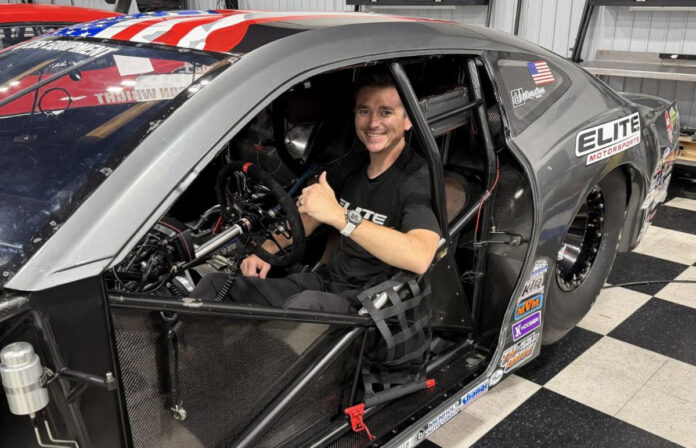
WYNNEWOOD, Okla. (June 09, 2026) — Elite Motorsports and Modern Racing, Inc. announced today a permanent driver change for the ProFlow Pumping Solutions/Modern Racing/Elite Motorsports Pro Modified entry, confirming that standout driver Aaron Stanfield will take over the driver’s seat for the duration of the 2026 JBS Equipment NHRA Pro Mod Drag Racing Series presented by Elite Motorsports season. Stanfield will continue to compete full-time in NHRA Pro Stock with Elite Motorsports.

The transition comes on the heels of Mason Wright’s decision to step away from full-time competition behind the wheel. Wright, who operates Shaneda Machine, Inc. in Odessa, TX, determined that the growth of his business portfolio requires his complete focus.

“Oilfields run 24 hours a day, 365 days a year, and so do the people who work in them,” Wright shared on social media. “That work ethic has carried over into everything I’ve done, including drag racing. But as our businesses continue to grow, they require my full-time attention. This decision allows me to focus on family, our companies, and the future we’re building together.”

Justin Elkes, owner of Modern Racing, expressed total support for Wright while highlighting the strength of their internal racing infrastructure.

“We fully support Mason and wish him nothing but the absolute best as he shifts his primary focus to his family and his rapidly expanding business priorities” Elkes said. “At the same time, we are incredibly excited to promote from within our Elite Team alliance by having Aaron Stanfield step in to handle the driving duties for the remainder of the season. His proven talent and recent Pro Modified success make him the perfect fit to step in and keep our momentum moving forward.”

Richard Freeman, owner of Elite Motorsports, also expressed his appreciation for Wright and the foundation he helped build within the program.

“We can’t thank Mason enough for the incredible amount of time, dedication, and resources he’s poured into this program,” Freeman said. “He’s been a tremendous part of what we’ve built, both on and off the racetrack, and we fully support him as he focuses on his family and businesses. The door will always be open here at Elite Motorsports. If and when Mason is ready to get back behind the wheel, he’ll always have a place with us.”

Stanfield, a multi-time NHRA world champion across several categories, is prepared to carry the torch for the team starting at the upcoming Super Grip NHRA Thunder Valley Nationals at Bristol Dragway, scheduled for June 12-14. Stanfield proved his elite capability in a Pro Mod earlier this year with a spectacular $150,000 victory at the prestigious World Series of Pro Mod event in Bradenton, Florida.

“It’s an honor to get the call to represent ProFlow Pumping Solutions, Modern Racing, and Elite Motorsports for the rest of the year,” Stanfield said. “Pro Mod is an absolute blast and incredibly competitive. Coming off the big win in Bradenton earlier this year, I feel confident we can give this team a great showing at Bristol along with the rest of the season.”

JBS Equipment Pro Modified competition at the Super Grip NHRA Thunder Valley Nationals begins with four rounds of qualifying Friday at 3:45 and 7 p.m. and Saturday at 11:30 a.m. and 2:35 p.m. Eliminations are slated to begin Sunday at 1:40 p.m. Follow along with live updates and racing action from Bristol Dragway on the NHRA Pro Mod YouTube channel and NHRA Pro Mod Facebook page.

RON CAPPS, THE WINNINGEST NHRA FUNNY CAR DRIVER IN BRISTOL DRAGWAY HISTORY, TO BE INDUCTED INTO PRESTIGIOUS LEGENDS OF THUNDER VALLEY AS ONLY THIRD ACTIVE PARTICIPANT

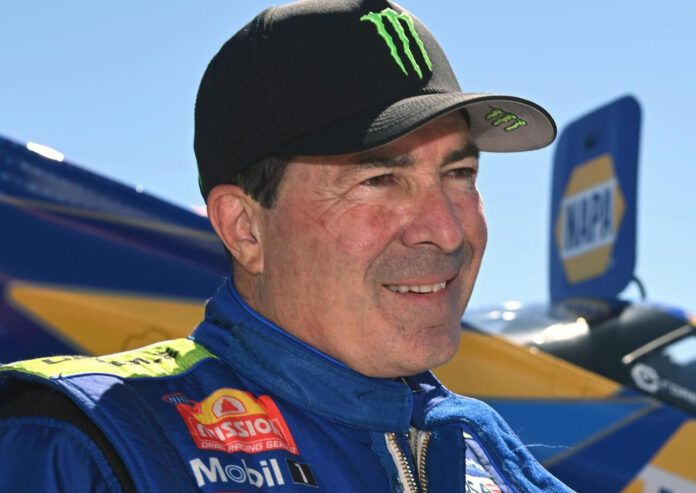
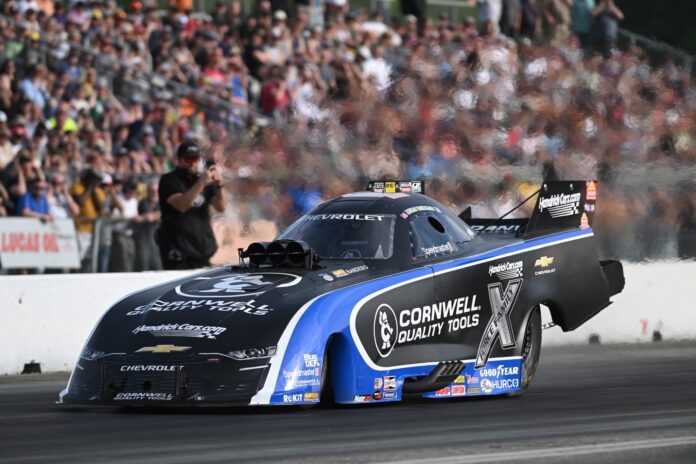
NHRA Funny Car superstar Ron Capps will be inducted into the Legends of Thunder Valley on Sunday at Bristol Dragway during pre-race ceremonies for the Super-Grip NHRA Thunder Valley Nationals.

BRISTOL, Tenn. (June 9, 2026) – Ron Capps, the winningest NHRA Funny Car driver in Bristol Dragway history, has been named the 2026 honoree for the prestigious Legends of Thunder Valley, historic Bristol Dragway’s Hall of Fame.

Capps, 60, will be officially inducted into the Legends of Thunder Valley during pre-race ceremonies for the 25th annual Super Grip NHRA Thunder Valley Nationals, June 12-14, round No. 9 of the NHRA Mission Foods Drag Racing Series. He becomes only the third driver to be inducted while still an active participant, joining John Force and Tony Schumacher.

Capps is the 24th inductee in the Legends of Thunder Valley and joins the exclusive club that also includes Don “The Snake” Prudhomme, “Big Daddy” Don Garlits, NHRA founder Wally Parks, John Force, Don Schumacher, Shirley Muldowney, Tony “The Sarge” Schumacher, Scotty Cannon, and last year’s inductee Del Worsham, to name a few.

He will be presented with the customary Legends of Thunder Valley plaque by Bristol Motor Speedway & Dragway president and general manager Jerry Caldwell during Sunday’s pre-race ceremonies, which begin at 11 a.m. ET. The accompanying signage showcasing his name in brilliant red will be installed upon the grandstand suite fascia as part of the ceremony.

“Ron has put fans on their feet at the Super Grip NHRA Thunder Valley Nationals cheering him on for decades and has found a way to Winner’s Circle here on many occasions,” Caldwell said. “Ron has done it all at Bristol, including winning races, earning No. 1 qualifying positions, setting track performance records and he’s done it with a big smile on his face the whole time. Not only is Ron one of the sport’s greatest champions, but he’s also one of its most dynamic ambassadors and we are thrilled to recognize and induct him today as the 2026 Legend of Thunder Valley honoree.”

Capps has earned an incredible eight NHRA Funny Car victories during NHRA Thunder Valley Nationals competition over parts of three decades. The Carlsbad, Calif. driver claimed wins in 2001, 2006, 2012, 2017, 2018, 2022, 2023 and 2025. What’s most impressive, is that he’s won those races with a variety of different team owners and crew chiefs over the years, showing his versatility as a pilot of the challenging 12,000-plus horsepower short-wheel-base machine where the engine sits in front of the driver and the flip-up body closes down and latches before each 330-mph run down the dragstrip.

In addition to recently making the move to become his own team owner, Capps previously drove for a pair of the sport’s legends: Don “The Snake” Prudhomme and Don Schumacher. Both Prudhomme and Schumacher are already members of the Legends of Thunder Valley. His roster of all-star crew chiefs over the years have included Ed McCulloch, Rahn Tobler, John Medlen and Dean Antonelli.

In addition to his Bristol victories, Capps has also earned a Bristol runner-up finish to Matt Hagan in 2015 and a No. 1 Qualifying Award at Bristol in 2016. Capps also holds the Bristol Dragway track ET record at 3.884 seconds, set in June of 2016.

In his career, Capps is a three-time NHRA Funny Car World Champion and has scored 79 career Funny Car victories. He has career-best performances of 3.821 seconds (2024 Pomona, California) and 339.28 mph (2019 Reading, Pa.). With two victories this season, coming at Phoenix and Charlotte, Capps is the current Funny Car points leader in the NHRA Mission Foods Drag Racing Series.

Guests are invited to come out and celebrate with Capps, June 12-14 at Thunder Valley. He will be featured in several autograph sessions, including Saturday night’s popular Fan Fest in the Pits.

As always, fans will have the opportunity to interact with their favorite drivers as they’re granted an exclusive pit pass to the most powerful and sensory-filled motorsports attraction on the planet. This unique opportunity in motorsports gives fans direct access to the teams, allowing them to see firsthand the highly-skilled mechanics service their hot rods between rounds, and get autographs from their favorite NHRA drivers.

In addition to Capps, fans will get to see plenty of NHRA stars during the weekend, like recent Bristol winners Austin Prock, Justin Ashley, Doug Kalitta, a three-time Bristol winner, motorsports icon Tony Stewart, who is making his third Bristol Dragway start, four-time Top Fuel champ Steve Torrence, three-time champ Antron Brown, Virginia cattle rancher and four-time world champ Matt Hagan and recent four-time season Top Fuel winner Shawn Langdon who posted the sport’s first 345 mph speed in competition.

On Friday night, in addition to night qualifying and fireworks, fans will be treated to some bonus racing with the held-over final rounds from last weekend’s NHRA New England Nationals in New Hampshire. Langdon will face Leah Pruett in the Top Fuel final, while Jordan Vandergriff will line up against Jack Beckman in the Funny Car final. This is the second time in history that delayed finals from New England have moved to Bristol.

The high-revving Pro Stock category returns to action at Bristol with some new faces leading the way including points leader Dallas Glenn, the father-son tandem of Greg and Aaron Stanfield and two-time season winner Matt Hartford. Meanwhile, series veterans and multi-time champs Greg Anderson, Erica Enders and Jeg Coughlin Jr. are ready to return to their winning ways. All three drivers are three-time Pro Stock winners at Bristol.

The 200-mph Pro Stock Motorcycle class also returns this season and Bristol has produced five winners in five seasons: Richard Gadson, Gaige Herrera, Steve Johnson, Angelle Sampey and Jerry Savoie. Matt Smith and Angie Smith, Chase Van Sant, John Hall, Ryan Oehler and Clayton Howey are all top contenders.

The JBS Equipment Pro Mod Drag Racing Series also will return to Bristol Dragway along with the NHRA Lucas Oil Series and the Factory Stock Showdown.

Fans also will want to visit NHRA’s popular Nitro Alley and Manufacturers Midway, where sponsors and race vendors create a carnival atmosphere, with interactive displays, simulated competitions, merchandise, food and fun for the entire family.

There are three major events that fans definitely won’t want to miss, including Friday’s Nitro at Night qualifying session where the Top Fuel dragsters and Funny Cars “light their candles” and power down the drag strip at more than 330-mph as flames erupt out of their header pipes. That session is scheduled to begin at 8:30 p.m. A brilliant fireworks show will complete the racing on Friday.

On Saturday, race officials will host the popular Fan Fest in the Pits, where many of the top drivers are available to meet with fans and sign autographs. This event begins 30 minutes after the final nitro qualifying session and is held in the large Guest Welcome Center tent in the pro pit area near the second tunnel.

The other is the Sealmaster TrackWalk on Sunday morning prior to pre-race ceremonies. Join NHRA drivers and NHRA officials as they walk the famed Bristol Dragway quarter-mile strip before racing begins.

Qualifying for the Super Grip NHRA Thunder Valley Nationals begins Friday, June 12 with a pair of pro sessions, the first at 6 p.m. and the second under the lights at 8 p.m. The final two rounds of qualifying are set for Saturday, June 13, at 12:30 p.m. and 3 p.m. and will include the popular bonus program Mission #2Fast2Tasty Challenge. Final eliminations are scheduled for noon on Sunday, June 14.

Friday’s 90-minute qualifying show will air on FS1 at 8 p.m. (ET), and be followed by another hour qualifying show on Sunday at 2 p.m. (ET), also on FS1. Sunday’s three-hour final eliminations show will air at 3 p.m. (ET) on FS1.

Single-day Friday tickets start as low as $35 for adults. Saturday adult tickets start at $60 and Sunday’s tickets start at $50. All grandstand tickets for kids 12 and under are free on Friday and $12 each day on the weekend with a paid adult. Discounted weekend packages and limited premium seating are also available.

To purchase your reserved seats, call Bristol Dragway at (866) 415-4158. Tickets also are available online by visiting the BMS website.

LEGENDS OF THUNDER VALLEY

2026 – Ron Capps, Funny Car

2025 – Del Worsham, Funny Car / Top Fuel

2024 – Shirley Muldowney, Top Fuel

2023 – Tony Schumacher, Top Fuel

2022 – Don Prudhomme, Funny Car / Top Fuel

2021 – Scotty Cannon, Pro Mod / Funny Car

2019 – Ted Jones, promoter / drag racing visionary

2018 – Mark Oswald, Funny Car / Top Fuel

2017 – Doug Herbert, Top Fuel

2016 – John Force, Funny Car

2015 – Carl Moore, Bristol Dragway founder

2015 – Connie Kalitta, NHRA pioneer/Top Fuel/Funny Car

2014 – Don Schumacher, NHRA team owner / Funny Car pioneer

2013 – Warren Johnson, Pro Stock

2012 – Gene Fulton, Engine Builder

2011 – Jeff Byrd, Bristol President and GM / RJ Reynolds marketing

2010 – Shirl Greer, Funny Car

2009 – Dale Pulde, Funny Car

2008 – Ronnie Sox & Buddy Martin, Pro Stock

2007 – Bruton Smith, Speedway Motorsports / Bristol Dragway owner

2007 – Wally Parks, NHRA founder

2007 – Don Garlits, Top Fuel

2007 – Larry Carrier, Bristol Dragway founder

2007 – Rickie Smith, Pro Stock / Pro Mod

About Bristol Dragway

Affectionately known as “Thunder Valley,” Bristol Dragway is nestled between two mountains in northeast Tennessee near the Virginia state line and sits adjacent to the iconic Bristol Motor Speedway. In 2026, the historic dragstrip is celebrating its 61st anniversary and is scheduled to play host to numerous major events including the fan-favorite Super Grip NHRA Thunder Valley Nationals, a marquee event in the NHRA Mission Foods Drag Racing Series. Other key events at the Dragway in 2026 include the DER Bracket Series, Summit Racing Equipment Thunder Valley Street Fights series, BTE World Footbrake Challenge races, PDRA Thunder Valley Throwdown, JEG Summer Fling, RAD Fall Fling 500K, and the NHRA Jr. Drags Eastern Conference Finals. Bristol Dragway also transforms into a premier outdoor concert venue for the world’s greatest music performers and becomes The Thunder Valley Amphitheatre presented by Ballad Health. With more than 50 event days each season and serving as the longtime starting point for The Food City Speedway in Lights holiday spectacular, Bristol Dragway continues to be one of the busiest drag racing facilities in the nation. For more information, please visit www.bristolmotorspeedway.com/dragway.
Ford Racing NASCAR – Pocono Advance

POCONO

Sunday, June 14– NASCAR Cup Series, 3 p.m. ET (PRIME)

The NASCAR Cup Series makes its annual trip to the Pocono Mountains for this weekend’s Great American Getaway 400 on Sunday afternoon. Ryan Blaney and Chris Buescher are the two active drivers who have series victories with Ford at the track, which has been hosting races since 1974. Ford has 25 wins overall at the Tricky Triangle with Bill Elliott’s four from 1985-89 leading the way.

BERRY TO MAKE 100TH CUP START

Wood Brothers Racing driver Josh Berry will be making his 100th career NASCAR Cup Series start this weekend when the circuit makes its annual stop at Pocono Raceway. Berry’s most memorable moment to this point was his first victory with the team last year in the Pennzoil 400 at Las Vegas Motor Speedway. That made him the 20th driver to win at least one series race for the organization and guaranteed his spot in the postseason for the first time.

FIRST-TIME CUP WINNERS

There are currently four Ford Racing NASCAR Cup drivers still looking for their first series victory (Todd Gilliland, Zane Smith, Noah Gragson, Ryan Preece). Pocono Raceway is a place where that has happened on a few occasions, most recently in 2017 when Ryan Blaney scored his first victory while driving for the Wood Brothers. Jeremy Mayfield (1998), Denny Hamlin (2006) and Chris Buescher (2016) are the other three who also made the “Tricky Triangle” the place for their first trip to Victory Lane.

SITTING ON 749

The next Ford win will be its 750th all-time in NASCAR’s top series. Ned Jarrett is Ford’s win leader with 43 while Bill Elliott is second with 40. Shirtless Jimmy Florian scored the Blue Oval’s first series victory when he upset the likes of Lee Petty, Curtis Turner and Joe Weatherly at Dayton Speedway on June 25, 1950. Florian earned his nickname after getting out of his 1950 flathead Ford without a shirt. Overall, 91 drivers have won at least one series race with Ford, including notable drivers Mario Andretti, Dan Gurney, Parnelli Jones, A.J. Foyt, Richard Petty, and Dale Earnhardt.

QUESTION: WHAT DO YOU REMEMBER ABOUT YOUR FIRST WIN AT POCONO?

CHRIS BUESCHER: “Lots of things that were very positive, and then on the negative side of it, I’ll just start with that because when we did get the final OK, that’s it, we’re calling it, it was almost an hour-and-a-half later. I think all the pit boxes on pit road were shut down and sealed up. People were gone. Haulers were missing. It was pretty clear that we were done and we hung out for a long time. The negative side to that is at the end of it, there was nobody to celebrate with. I think there were eight people, mainly our team standing on pit road, and the grandstands were empty. Pit road was empty. The garage was all but empty. We couldn’t use the really neat Victory Lane at Pocono that has since been replaced, so we had to go do an alternate one in the garage. There was no celebration on the frontstretch. No burnout to it. It took away some of the most fun parts about winning races in just that raw emotion in the moment. That being said, it was huge for us. I remember how the day went. We had an accident that we narrowly avoided, but I think we touched fenders with somebody and with a metal body car it ended up cutting a tire down. So, we ended up on pit road off sequence, which set us up to be able to run longer on that fuel run. That put us in a spot to where as cars started pitting, the rain was far enough out, but the fog is unpredictable in Pocono. I had an ARCA win narrowly slip away due to fog at Pocono, ironically. I’ll still trade it for that Cup win at the end of the day, so I’m OK with it now, but it let us stay out there just long enough. Jamie McMurray was ahead of us and when he pitted and then I think it was the next straightaway they came over the radio and they’re like, ‘Hey, the visibility is getting pretty bad up here. How is it from your standpoint going down the backstretch?’ And I’m like, ‘It’s fine.’ And as soon as I let the words come out of my mouth, I realized, ‘Well, that was the wrong answer. I know what they were fishing for.’ They were very quick to ask me again the next straightaway and I was like, ‘Yeah, yeah, it’s really bad. I can’t see a thing. I’m sure you can’t see me either. This feels unsafe.’ I was a little bit of a slow learner back then, but it was a really big moment for us and everybody at Front Row Motorsports. To be able to put ourselves in the playoffs that season was huge in our rookie year, so I definitely have a lot of things that come back to me from that race and it was certainly a fun one. It was unfortunate not to get to celebrate the proper way because wins in this sport are so hard to come by no matter how they arrive and you certainly want to have that ability to celebrate with all the people who work so hard to create those moments and it didn’t quite feel the same as any of the wins since.”

RYAN BLANEY: “It was a wild race in 2017 with the Wood Brothers. I had a great car all day. I lost communication with my team early in that race, probably a third of the way through. Fortunately, I could hear them but they couldn’t hear me, so communication-wise I knew when to pit, which was good and we really just had a system of if I was tight, hand on the roof, and if I was too loose, hand on the door and they would make adjustments to that. We had a good pit stop at the end of the race to get out and be the first guys on tires. I was able to get by Kyle Busch with 10 or 11 laps to go and then I had to hold Kevin (Harvick) off. It was more stressful trying to hold Kevin off than trying to get the lead because now you’re in the lead trying to win your first Cup race and all you can think about is just don’t make a mistake and don’t give it away, so that was a stressful 10 laps or so to hold Kevin off, but he raced me really clean. The other thing that was the most fun about that day is it wasn’t just my first Cup win, it was a lot of my team’s first Cup win too, so being able to share that moment with them and celebrate, to be able to win for the Wood Brothers was something I always wanted to achieve and to have your poster up on the wall in Stuart (VA) was something pretty neat. That was number 99 for the Wood Brothers. I wish we could have got 100, but that came a few years later. Still, that was a fun day and an even better night.”

BLANEY GETS FIRST CUP VICTORY

Ryan Blaney earned his first NASCAR Cup Series victory in 2017 at Pocono Raceway, giving the Wood Brothers their 99th all-time series win. Blaney held off Kevin Harvick over the final seven laps to win the Pocono 400 after overcoming a loose wheel only 19 laps into the event. He found himself in position to win after the caution came out with 19 laps to go. Kyle Busch opted to stay out while all of the other contenders behind him pitted, including Blaney who got four fresh tires and restarted fourth. A major battle between Busch and Blaney resulted, but the newer tires proved to be too much as Blaney eventually got by with nine laps to go. He couldn’t breathe easy, however, as Harvick started to reel him in. Despite closing the gap, Harvick could never pull alongside to challenge and Blaney took the checkered flag.

BUESCHER JOINS FIRST-TIME WINNERS CLUB AT POCONO

Chris Buescher is another Ford driver who posted his first NASCAR Cup Series win at Pocono when he won the rain-shortened Pennsylvania 400 in 2016. Buescher led the final 12 laps and qualified for the playoffs as the scheduled 160-lap race was called after 138 circuits. It represented the second series win and first playoff qualification for Front Row Motorsports, which Buescher drove for in 2016 after the organization entered into an alliance with what was then Roush Fenway Racing.

KULWICKI’S FINAL WIN

When Alan Kulwicki won the Champion Spark Plug 500 on June 14, 1992 it marked the final victory of his NASCAR Hall of Fame career. Kulwicki, who was voted into the Hall in 2019, passed Bill Elliott with 11 laps remaining to cap a day that saw 15 cars drop out before the checkered flag flew, including 11 engine failures. In a precursor to what happened a few months later at Atlanta Motor Speedway, Kulwicki and Elliott battled down the stretch as they exchanged the lead multiple times over the final 25 laps. Kulwicki passed Elliott for the top spot on lap 181, but traffic slowed him down to the point that five laps later the two swapped positions. Mark Martin made it a three-way battle, but Kulwicki ultimately prevailed as he got by both drivers on lap 190 and never looked back. Kulwicki, who won five series races overall, went on to win the championship later that year over fellow Ford drivers Elliott and Davey Allison.

FORD’S NASCAR CUP SERIES WINNERS

AT POCONO

1985 – Bill Elliott (Sweep)

1988 – Bill Elliott (2)

1989 – Terry Labonte and Bill Elliott

1990 – Geoffrey Bodine (2)

1992 – Alan Kulwicki (1)

1994 – Rusty Wallace and Geoffrey Bodine

1995 – Dale Jarrett (2)

1996 – Rusty Wallace (2)

1997 – Dale Jarrett (2)

1998 – Jeremy Mayfield (1)

2000 – Jeremy Mayfield and Rusty Wallace

2001 – Ricky Rudd (1)

2002 – Dale Jarrett (1)

2005 – Carl Edwards and Kurt Busch

2008 – Carl Edwards (2)

2010 – Greg Biffle (2)

2016 – Chris Buescher (2)

2017 – Ryan Blaney (1)

2020 – Kevin Harvick (1)

2024 – Ryan Blaney

Ryan Blaney celebrates his second NASCAR Cup Series victory at Pocono on July 14, 2024.

The Ford Mustang is the world’s best selling sports car and one of its most popular race cars. With Mustang-based race cars competing in international sports car competition (GT3 and GT4), NASCAR, NHRA, Formula Drift, in Supercars, at the Pikes Peak International Hill Climb and in its own bespoke regional one-make series – Mustang Cup and Mustang Challenge – the platform has an unprecedented global reach. This weekend, 40 Mustang race cars are scheduled to race across all disciplines. Learn more about Mustang at www.FordRacing.com .

Riley Herbst and John Hunter Nemechek salvage top-15 results at Michigan

Photo by Tim Jarrold for SpeedwayMedia.com.

Riley Herbst and John Hunter Nemechek rallied from adversity by notching top-15 results during the 2026 FireKeepers Casino 400 at Michigan International Speedway on June 7.

Herbst, a Las Vegas native, entered this past weekend’s Michigan festivities with uncertainties looming towards next season. The week prior, at Nashville Superspeedway, it was announced that Corey Heim would replace Herbst for the 2027 NASCAR Cup Series season. Nevertheless, Herbst did not let his future uncertainties overshadow his task of concluding the 2026 season on a strong note. His Michigan weekend started strong as he rolled off the starting grid during Sunday’s main event in 12th place, which marked his third-best starting spot of the 2026 season.

During the Michigan event, Herbst spent the early portions racing towards the bottom half of the top-10 mark and accumulated a total of two stage points by settling in ninth place at the first stage’s conclusion. Throughout the second stage period, he barely dodged a multi-car wreck through the frontstretch during a Lap 82 restart that eliminated his teammate and series’ points leader, Tyler Reddick. It was during this latest stage period that he raced up as high as third place on the leaderboard before he dropped to 12th place.

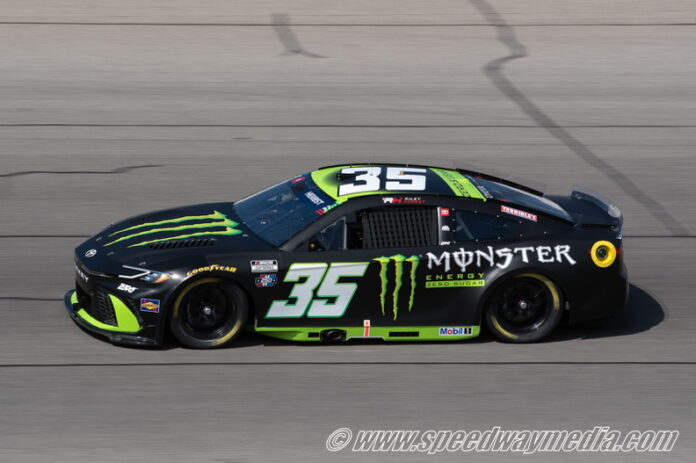
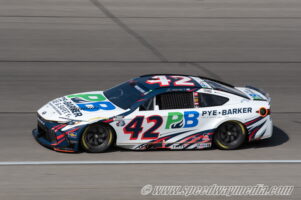
Before the start of the third and final stage period, Herbst lost a bevy of spots on pit road during the second stage’s break period. After restarting just outside the top-25 mark at the start of the third and final stage period, he spent the event’s remainder navigating his way back towards the front. After navigating his way through three caution periods, late on-track incidents and four restarts, including the final one with 39 laps remaining, Herbst nursed his No. 35 Monster Energy Toyota Camry XSE entry across the finish line in 13th place when the checkered flag flew.

Herbst’s 13th-place result marked his sixth top-20 result of the 2026 season, his 14th within the top-15 mark, his third-best result on the track and his best-ever result at Michigan. He also improved his average-finishing result from 23.8 to 21.5, which stands in stark contrast to his rookie Cup season (2025), when his average-finishing result was 26.6 and he was mired in 35th place in the standings. Following this year’s Michigan event, Herbst jumped from 27th to 26th and he trails the top-16 cutline to make the 2026 Chase for the Cup by 82 points with 11 regular-season events until the Chase commences.

Herbst’s next event on the 2026 Cup Series schedule is Pocono Raceway in Long Pond, Pennsylvania, for the Great American Getaway 400 this upcoming Sunday, June 14. During his lone Cup start at Pocono in 2025, he ended up in 37th place after he was eliminated from an early accident. Having made five previous starts at Pocono in the O’Reilly Auto Parts Series division and notching two top-10 results, including a career-best fourth in 2023, Herbst will attempt to improve his on-track Cup result at Pocono in a monstrous way that could net him a major gain towards making the Chase and netting him a potential first Cup victory in his swan song season at 23XI Racing.

Meanwhile, Nemechek entered Michigan mired in 28th place in the standings, one spot behind Herbst. By then, the Mooresville, North Carolina, native was coming off his 11th result outside of the top-20 mark as he finished in 24th place in Nashville Superspeedway. He was also mired in 28th place in the standings and faced with a 103-point deficit towards the Chase cutline. Compared to Herbst, Nemechek was set to remain at Legacy Motor Club (LMC) for the 2027 season after Rexel USA was announced to sponsor Nemechek and his No. 42 Toyota entry for multiple Cup events next season as part of an expanded partnership with LMC.

Photo by Tim Jarrold for SpeedwayMedia.com.

Taking the green flag in 17th place at Michigan, which marked his third-best start of the 2026 season, Nemechek marched his way to an 11th-place result at the conclusion of the first stage period. He then spent the early portions of the second stage period racing inside the top-10 mark and was scored as high as sixth place in the leaderboard. During a Lap 82 restart, however, Nemechek was bumped by Carson Hocevar. This caused Nemechek to get loose and run into the side of Bubba Wallace before he spun through the frontstretch’s grass. It also left Nemechek fuming towards Hocevar for a second consecutive event after the former was sent for a spin through the frontstretch by the latter during the final stage period at Nashville.

With most of the on-track carnages igniting in front of him, Nemechek was able to nurse his No. 42 Pye-Barker Toyota Camry XSE entry back to pit road for repairs and continue towards the tail end of the field. After managing to remain on the lead lap category when the second stage period concluded, he restarted in 30th place when the third and final stage period commenced with 74 laps remaining. By navigating his way through three caution periods and dodging a series of late on-track incidents, including a multi-car wreck on the frontstretch with 46 laps remaining, Nemechek proceeded to battle his way back into the top-15 mark during a 39-lap shootout. When the checkered flag flew, he settled in 14th place.

With the result, Nemechek notched his fourth top-20 result, his second-best result through 14 events of the 2026 Cup Series season and his first top-15 result at Michigan. Compared to a year ago at this point, Nemechek’s current average finishing result of 24.1 is slightly lower than 21.9 from a year ago. In addition, he is six spots lower in the current driver’s standings from the 2025 season, the latter season of which had him ranked in 22nd place through 14 events. This season, Nemechek remained in 28th place in the standings and is 96 points below the Chase cutline.

Looking ahead, Nemechek travels to Pocono Raceway, where he has made four prior Cup starts and notched a sixth-place result in the 2025 event. He has also made three O’Reilly Auto Parts Series starts and notched a Truck victory at Pocono during the 2021 season. As both he and Erik Jones notched strong results at Michigan for LMC, both competitors strive to extend the brewing competitiveness within the organization, run by seven-time Cup Series champion Jimmie Johnson, and notch the organization’s first victory under its current LMC banner.

The 2026 NASCAR Cup Series season for both Riley Herbst and John Hunter Nemechek continues with the Great American Getaway 400 at Pocono Raceway in Long Pond, Pennsylvania, this upcoming Sunday, June 14, at 3 p.m. ET on Prime Video, MRN Radio, SiriusXM and HBO MAX.

Erik Jones, Bubba Wallace notch strong podium results at Michigan

Photo by Tim Jarrold for SpeedwayMedia.com.

Erik Jones and Bubba Wallace capped off strong on-track performances throughout the 2026 FireKeepers Casino 400 at Michigan International Speedway this past Sunday, June 7, by notching podium results. As a result, both competitors made major gains within the points standings in their bids to make the 2026 Chase for the Cup.

Jones, a native of Byron, Michigan, entered the Michigan race weekend strapped in 21st place in the 2026 Cup Series driver standings. Through the first 14 scheduled events, he recorded two top-10 results and an average finishing result of 20.3. Despite finishing 21st or worse seven times through the first 10 races, he netted four consecutive top-20 results in the four previous events leading up to his home-track event of Michigan.

After taking the green flag from 10th place, Jones methodically raced his way to the front and nearly reeled in Chase Elliott for the second stage victory before settling in the runner-up spot. Despite losing six spots on pit road before the final stage period, Jones rallied by motoring his way into the runner-up spot with less than 10 laps remaining. By then, however, he trailed race leader and eventual winner Denny Hamlin by a large margin, and he ultimately settled in the runner-up spot while trailing Hamlin at the finish line by more than 11 seconds.

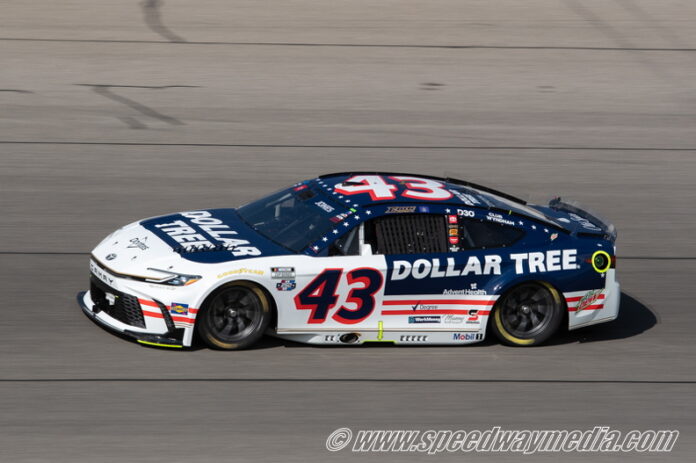
Jones’ runner-up result was his ninth driving the No. 43 entry, an entry in which he first assumed in 2021 under the Richard Petty Motorsports banner and currently under the Legacy Motor Club banner owned by seven-time NASCAR Cup Series champion Jimmie Johnson. Jones also achieved his first top-five result since finishing in third place during the 2025 Southern 500 at Darlington Raceway last September, and he notched his third top-10 result of the 2026 Cup Series season.

With a current season-high runner-up result, Jones, who was mired as low as 35th in the standings and has spent much of the early portions of this season within the mid-20s range, boosted himself and his No. 43 Legacy Motor Club Toyota Camry XSE entry team into 18th place in the standings. They trail the top-16 cutline to be in Chase contention by 18 points with 11 races remaining until the Chase begins.

Despite being disappointed with a runner-up result and having a first Cup victory in nearly four seasons evaporate by a large margin, Jones sets his sights on extending his recent on-track surge next Sunday, June 14, at Pocono Raceway, a track in which he holds an average-finishing result of 13.5 and a total of eight top-10 results through 14 starts.

“I really think we had the best car and it just didn’t work out perfect,” Jones said on Prime Video. “Everything has to work out really well, and some things just didn’t go right at the end. Denny got out front and drove away, and we had to work through some traffic. It’s frustrating, but at the same time, the last month and a half has been good for us. We’ve had fast cars. We haven’t quite got the finishes we’ve deserved. Today was obviously, we got the finish we deserve, almost, I think. Just didn’t work out…We just got to do every little thing right and [the win]’ll come. You run upfront like that, it’s going to happen for you.”

Like Jones, Bubba Wallace executed an event where he both raced upfront and led at certain portions to notch a result that is his current highest of the 2026 Cup Series season and erased the previous results that nearly knocked him below the Chase cutline.

Wallace, a native of Mobile, Alabama, entered this past Sunday’s Michigan race weekend ranked in 15th place in the standings. After notching an average-finishing result of 8.8 through the first five events and being ranked in the runner-up spot in the standings, he has since endured a roller coaster swing throughout the next nine events, where his average-finishing result dipped to 23.8 as he ended up with six results of 22nd or worse. Despite finishing in the top 10 twice throughout the stretch, he quickly plummeted towards the Chase cutline and was in jeopardy of dropping below it.

Starting in 13th place, Wallace netted a fifth-place result following the first stage period and gained a strong start during the second stage’s commencement to lead his first six laps. Despite being briefly involved in a Lap 82 restart incident that eliminated his teammate/series points leader, Tyler Reddick, and led to a post-race conversation with the incident’s perpetrator, Carson Hocevar, Wallace rallied by leading an additional three laps (Laps 95-97) before he finished just outside of the top-10 mark when the second stage period concluded.

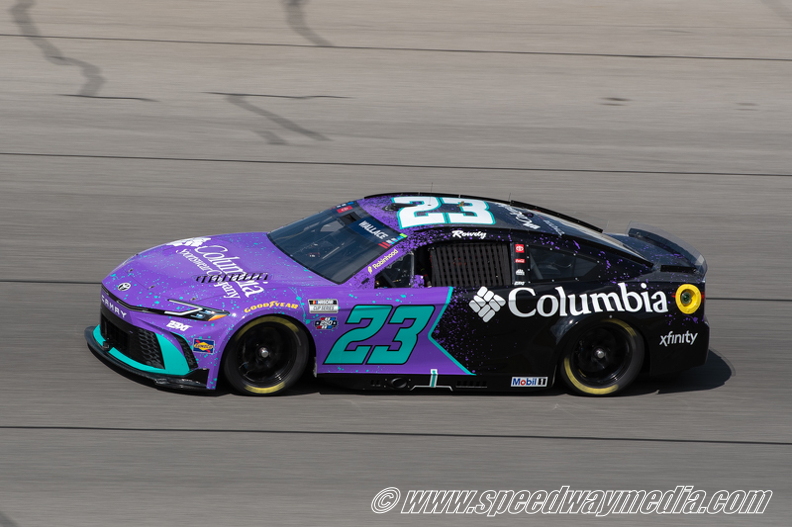
No. 23
Photo by Tim Jarrold for SpeedwayMedia.com.

In the closing laps, Wallace worked his way up as high as second place in the leaderboard despite trailing his fellow competitor and 23XI Racing co-owner, Denny Hamlin, by a large deficit. While battling with Erik Jones and Carson Hocevar in the closing laps, Wallace lost the runner-up spot to Jones, but managed to fend off Hocevar and Kyle Larson to settle in third place and with a 12-second disadvantage to Hamlin.

Wallace’s third-place result at Michigan is his current best through 15 events of the 2026 season and his second top-five result this year after he previously finished in fifth place at Kansas Speedway in mid-April. The driver of the No. 23 23XI Racing Toyota Camry XSE entry also notched his 30th top-five result in his 306th Cup career start and his fourth top-10 result at Michigan. Wallace’s Michigan result was enough to boost him up to 11th place in the standings, and he is 49 points above the top-16 cutline.

At the conclusion of the event, Wallace left Michigan with positive reactions as he strives to both continue his on-track rally and be competitive at Pocono, a track where he has an average finish of 20.5 and a trio of top-10 finishes.

“We’ve gone through a month of hell,” Wallace said on Prime Video. “It’s hard to be happy with a third place because this is what should be happening when we’re executing like we are and we just get blindsided by something. At the end of the day, it’s no excuses. I just need to be better, but all in all, we were good enough for third…I would say we executed all day. It’s a valiant team effort. Each and every week, it’s a grind, so it’s nice to get on the other side of it and get back to work for Pocono.”

The 2026 NASCAR Cup Series season for both Erik Jones and Bubba Wallace continues with the Great American Getaway 400 at Pocono Raceway in Long Pond, Pennsylvania, this upcoming Sunday, June 14, at 3 p.m. ET on Prime Video, MRN Radio, SiriusXM and HBO MAX.

The Legal Challenges Behind Serious Two-Wheeler Accidents in South Bend, IN

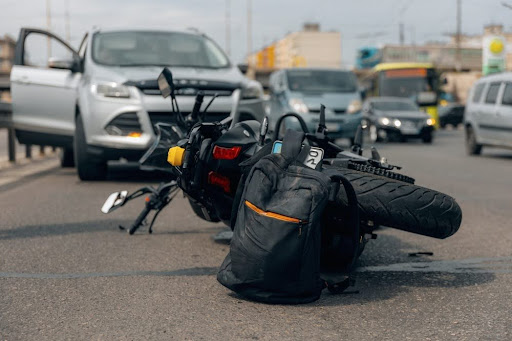
A two-wheeler accident changes direction very fast after the crash is over. One side starts explaining fault, insurance companies begin collecting statements, and medical expenses continue growing before riders fully understand the damage left behind. Serious accidents in South Bend, IN, often become more complicated because riders are judged differently from regular drivers during investigations. 

Small details suddenly carry heavy weight once fault, compensation, and insurance responsibility enter the conversation. Many injured riders later realize the hardest part was not only the accident itself but also the pressure that followed afterward. That is why some people eventually reach out to a South Bend motorcycle accident attorney while trying to handle difficult claim disputes.

Riders Usually Start at a Disadvantage

Two-wheeler accident cases often become difficult because riders are judged differently from regular drivers. Insurance companies and even witnesses sometimes assume the rider was taking risks before anyone fully understands what happened.

Drivers may claim the rider was speeding or weaving through traffic, even if the collision happened because of a careless lane change or unsafe turn. Those early accusations can shape the entire direction of the case and make riders fight harder to prove their side of the story.

Recovery Costs Grow Faster Than Expected

Two-wheeler crashes often leave riders with painful injuries and expensive medical treatment. Emergency care, therapy sessions, surgeries, and missed work quickly create financial pressure that becomes difficult to manage.

Insurance companies know injured riders may feel desperate to settle quickly. Because of that, some early offers sound helpful at first, but fail to cover long term treatment or lost income connected to the accident.

What begins as a traffic collision can suddenly become months of financial stress and insurance arguments.

More Than One Side May Share Responsibility

Some accidents involve several parties instead of only one careless driver. A delivery company, employer, maintenance provider, or even a vehicle manufacturer may become connected to the investigation depending on the situation.

Road conditions may also raise questions if damaged pavement, missing traffic signs, or construction areas played a role in the crash. Once multiple parties become involved, insurance companies often spend more time arguing over blame than helping injured riders move forward.

The Problems Riders Commonly Face After the Crash

Insurance Adjusters Begin Building Their Defense Early

Insurance companies often start reviewing motorcycle accident claims almost immediately after the collision happens. Recorded statements, medical records, and police reports become part of the investigation very quickly.

Some adjusters try to reduce compensation by questioning injuries or suggesting the rider shares part of the blame. Delayed treatment or incomplete records sometimes become reasons to challenge the claim itself.

Riders recovering from serious injuries may already feel exhausted while trying to deal with these complicated conversations and paperwork demands.

Missing Proof Can Change Everything

Strong evidence becomes one of the most important parts of any motorcycle or rideshare accident claim. Without enough proof, even serious crashes may become harder to defend during settlement discussions.

Accident scenes disappear quickly once damaged vehicles are moved, and roads reopen. Witnesses leave, weather changes, and security footage may get erased after only a short time.

People who later contact a South Bend motorcycle accident attorney often realize that missing evidence created major problems during insurance negotiations and fault investigations.

Indiana Fault Rules Often Create Extra Pressure

Indiana follows a modified comparative fault system, which means compensation may be reduced if the injured rider shares part of the responsibility for the accident.

Insurance companies sometimes use this rule aggressively because shifting even small amounts of blame toward the rider may lower settlement amounts. A single detail from a witness statement or accident report can suddenly become extremely important later.

That pressure often makes motorcycle accident cases feel far more stressful than regular vehicle collisions.

The Kind of Evidence That Makes Claims Stronger

Evidence helps accident claims move beyond opinions and arguments because it gives investigators real details connected to the crash itself.

Details That Often Strengthen Motorcycle Accident Claims

  • Photos showing road conditions and vehicle damage
  • Surveillance or traffic camera footage
  • Witness names and written statements
  • Police accident reports
  • Repair records and inspection details
  • Phone records connected to distracted driving
  • Images of damaged helmets and riding gear

Organized evidence usually gives insurance companies fewer opportunities to question what really happened during the collision.

Conclusion 

Serious two-wheeler accidents in South Bend, IN, often create legal and financial pressure that many riders never expect after a crash. Fault disputes, missing evidence, insurance investigations, and severe injuries can quickly turn simple claims into difficult legal situations. Riders are often forced to defend themselves while still dealing with recovery costs and ongoing medical treatment. Strong documentation, clear evidence, and careful handling of accident details usually shape how these cases move forward. Many injured riders eventually understand that protecting information early becomes one of the most important parts of handling a serious accident claim properly.

Why Multiple Parties Are Involved in Truck Accident Claims

Truck accident claims rarely stay simple because responsibility does not sit with one person or one company alone. A single crash can connect drivers, trucking companies, insurers, and even maintenance teams in ways that overlap and sometimes conflict during review. Each side brings its own version of events and its own records, which slowly build a complex picture instead of a straight answer. 

In many situations, truck accident attorneys become part of the discussion when clarity is needed through all these moving parts. The sections ahead explain why so many parties become involved and how each one shapes the claim process in different ways.

Drivers Are Only One Part of the Picture

Truck accident cases often begin with the driver, but the driver is rarely the only focus during the investigation. While the driver’s actions are reviewed carefully, the work history, training records, and driving conditions also become part of the evaluation. Commercial driving involves strict schedules and long hours, which means fatigue, timing, and route pressure are all considered when understanding what happened.

However, responsibility does not stop with the driver alone. The system behind the driver also plays a role in shaping the situation. This includes hiring practices, safety training, and monitoring systems that influence how the driver performs on the road. Because of this, the investigation quickly expands beyond a single individual and starts involving other connected entities that may have contributed to the conditions leading up to the crash.

Trucking Companies Hold Operational Responsibility

Trucking companies are a major part of accident claims because they control how vehicles are used, maintained, and scheduled. These companies are responsible for ensuring that trucks are safe to operate and that drivers follow required safety rules. When an accident occurs, their records become important in understanding whether proper procedures were followed.

This includes maintenance logs, inspection records, and delivery schedules that show how the vehicle was being managed before the incident. If there are signs of missed maintenance or pressure to meet tight deadlines, these factors may become part of the investigation. The trucking company’s role is not limited to ownership of the vehicle but extends to how the entire operation is structured.

Because of this broader responsibility, they often become central figures in determining how the crash happened and why certain conditions existed at the time.

Insurance Providers Shape the Claim Process

Insurance companies play a major role in truck accident claims because they handle financial responsibility and evaluate how compensation should be managed. Both the trucking company and the driver may have separate insurance policies, which adds another layer to the process. Each insurer conducts its own review of the accident, which may lead to different interpretations of the same event.

This is often where a truck accident lawsuit may come into discussion if there is disagreement about fault or compensation. Insurance providers rely heavily on documentation, statements, and accident reports to make decisions, but these sources may not always align perfectly. As a result, negotiations can become detailed and time-consuming.

Maintenance and Third-Party Contractors Add More Layers 

Truck maintenance is often handled by external service providers, which introduces additional parties into the investigation. These contractors are responsible for ensuring that brakes, tires, engines, and other critical systems are functioning properly before the truck is placed on the road.

If a mechanical issue is suspected in a crash, maintenance records and service history become important evidence. Investigators may need to review whether repairs were completed correctly or if warnings were ignored during inspections. In some cases, parts suppliers or repair shops may also be reviewed if equipment failure is involved.

This creates a situation where responsibility is not limited to the driver or trucking company alone. Instead, it expands into a network of service providers who contributed to the condition of the vehicle. Each layer adds more detail to the investigation and increases the number of parties involved in the claim.

Evidence Connects All Parties

Evidence plays a central role in linking all involved parties during a truck accident claim. Information such as electronic logging devices, GPS tracking data, black box recordings, and maintenance reports helps build a timeline of events. Each piece of evidence may point to a different party’s responsibility, which is why multiple perspectives are needed during review.

Witness statements and accident reconstruction reports also add depth to the investigation by showing how the crash unfolded from different angles. Because truck accidents involve large vehicles and complex systems, no single source of information is usually enough to explain everything clearly.

As evidence is collected and compared, connections between drivers, companies, insurers, and contractors become more visible. This is what gradually brings all parties into the same claim process and makes the investigation more detailed and layered as each piece of information is reviewed carefully over time.

Conclusion

Truck accident claims involve multiple parties because responsibility is spread across driving actions, company operations, insurance coverage, and vehicle maintenance systems. Each layer contributes its own records and perspective, which makes the investigation more detailed and interconnected. 

This structure naturally leads to longer review periods and careful comparison of information before conclusions are reached. In many situations, truck accident attorneys become part of the discussion when clarity is needed across these overlapping responsibilities. Ultimately, the outcome depends on how well each piece of information is examined and connected within the broader claim process.

The NHRA NE Nationals will finish up this week in Bristol

Jordan Vandergriff will square off against teammate Jack Beckman in bonus NE Nationals final this week at Bristol

Well, there’s an old proverbial saying that good things come to those who wait, and if you’re a drag racing fan, you’ll just have to wait to see how the NHRA New England Nationals finals will wrap up. With Mother Nature playing tracks at the New England Dragway in Epping, NH yesterday, both the Top Fuel and Funny Car final matchups are coming this weekend in Bristol, TN at the Thunder Valley Nationals.

Of course, if you’re planning to watch these finals in person or on some form of media, the exact times for these two finals are still TBD, given that a new racing weekend starts this coming weekend.

The Top Fuel finals pit juggernauts Tony Stewart Racing against Kalitta Motorsports

With racing teams like Tony Stewart and Kalitta thrown into the mix for the NE Nationals Top Fuel finals, it comes as little surprise that both teams will fight it out to claim not only the win from Epping last weekend but a shot at the lead in the NHRA Top Fuel standings as well.

Shawn Langdon is coming off a three-peat win at the Potomac Nationals and is now looking for a fourth win in a row, and his fifth win this season out of eight total race weekends in 2026. Langdon will face off against Leah Pruett from Tony Stewart Racing, who is looking to stake her claim on her first victory for this season.

While it seems almost trivial to mention, yet again Kalitta Motorsports will find itself in the mix in an NHRA Top Fuel final this year with Shawn Langdon continuing to be on a dominant run up to this point in time.

John Force Racing continues to dominate the NHRA Funny Car world in 2026

Heading into this past Sunday’s final qualifiers in Epping, John Force teammates Jordan Vandergriff, Jack Beckman and Alexis DeJoria held the top three spots in the Funny Car category. With the JFR domination intact, this past weekend represents the 58th time that John Force Funny Car drivers are in a competition final, as Jack Beckman and Jordan Vandergriff were set to move on to Sunday’s final. However, the rain continued to wreak havoc on any plans to finish up the NE Nationals in Epping, as the Funny Car category has been moved to this coming weekend in Bristol as well.

Jack Beckman moved through the qualifying rounds with scores of 3.970/328.58 mph and 3.943/324.74 mph and then faced off against none other than the icon Ron Capps, and with a 3.904/39.75 mph score moved on to face teammate Jordan Vandergriff in the finals.

Vandergriff qualified first for the Sunday final with scores of 3.970/323.58 mph and 3.942/324.51 mph and then beat J.R. Todd in the semi-finals with a score of 3.982/316.52 mph to advance to the finals. With both drivers facing off against each other, teammates will guarantee another John Force Racing win and continue to chase Ron Capps in the NHRA Funny Car current standings.

Stay tuned as these two finals become a bonus round to set the tone for drag racing in Bristol this coming weekend.

Why Long Term Planning Matters for Families Built Around Racing Life

Photo by depositphotos at https://depositphotos.com/

Families connected to racing often build their routines around more than the event itself. There are travel calendars, garage expenses, vehicle maintenance, sponsorship commitments, insurance needs, and long weekends that affect how money, time, and responsibilities are managed. Even when racing is not a full-time profession, it can become a central part of family life because the sport demands preparation, consistency, and clear roles. One person may handle logistics, another may manage finances, while others support communication, equipment, or family obligations at home. When that structure works well, it can feel natural, but it often depends on informal habits that are rarely written down.

That is why long term planning matters in a racing-centered household. The same discipline that keeps a team organized before a race can also help a family stay prepared when life becomes complicated. Racing already teaches people to respect timing, maintenance, documentation, and responsibility. Those same principles apply outside the track, especially when families own valuable tools, trailers, vehicles, business assets, property, or accounts tied to the sport. A clear plan can reduce confusion, protect family priorities, and keep important decisions from being made under pressure. It is not only about preparing for difficult moments, but also about making sure the work built over years is handled with care.

Racing families often deal with a wider range of responsibilities than outsiders may realize. A weekend hobby can involve expensive equipment, loan agreements, storage arrangements, business income, sponsorship funds, liability concerns, and shared property. In some cases, a family member may also own a shop, manage a small racing-related business, or have income tied to appearances, partnerships, or event participation. When these details are handled casually, uncertainty can grow if someone becomes unavailable, passes away, or can no longer make decisions. The issue is not only who owns what, but who has the authority to act, pay bills, maintain property, handle accounts, or keep obligations from falling behind.

According to a leading law firm, this is where estate planning becomes relevant because it helps organize the legal and financial side of those responsibilities before a crisis forces the issue. Estate planning can address who receives certain assets, who manages affairs, how family members are protected, and how important decisions are made if the primary decision maker cannot speak for themselves. In a racing household, that may involve vehicles, trailers, safety gear, business interests, personal property, digital accounts, and funds set aside for children or dependents. When the plan is clear, families are less likely to argue over assumptions or lose time trying to figure out what the person intended. The process can also help keep racing-related assets from becoming a burden instead of part of a family’s legacy.

Assets Connected to the Sport Need Clear Records

A racing household may have more valuable property than it appears to have at first glance. The race car itself may be only one piece of the picture. There may be spare engines, wheels, tools, transport equipment, safety equipment, branded materials, workshop machinery, and parts collected over many seasons. Some items may be personally owned, while others may be shared with relatives, partners, sponsors, or a local shop. Without clear records, families may not know what belongs to whom, what still carries debt, what can be sold, and what must be returned. That confusion can create unnecessary tension at the exact time when people need order and reliable information.

Good documentation can make a major difference. Titles, receipts, loan documents, storage agreements, sponsorship terms, insurance papers, and maintenance records can show the real status of important property. Families should also know where those records are kept and who can access them when needed. This kind of organization does not have to remove the personal side of racing. Instead, it protects it. A car may carry years of memories, but it may also have financial value, legal obligations, or shared ownership attached to it. When records are accurate, relatives can respect both the emotional value and the practical reality of the property involved.

Travel and Track Schedules Create Practical Risks

Racing often places families on the road, sometimes across long distances and sometimes on short notice. Even local competitors may spend weekends away from home, hauling equipment, staying in hotels, and managing schedules around work, school, and family needs. Travel adds practical concerns that many families do not think about until a problem happens. Someone may need access to funds, insurance information, emergency contacts, vehicle documents, or medical details while the main organizer is unavailable. When those details are locked away, stored on one phone, or known by only one person, a manageable problem can become far more difficult.

A stronger system gives trusted people the information they need without exposing everything unnecessarily. Families can keep emergency contact lists updated, store copies of key documents safely, and make sure more than one responsible person knows where essential information is located. They can also clarify who handles pets, children, property, bills, or business calls during travel. These arrangements may seem basic, but they matter when a race weekend does not go as planned. Racing rewards preparation because small oversights can create large problems. Family planning works the same way, especially when travel, equipment, and financial duties are part of the normal rhythm.

Business Interests Around Racing Require Careful Organization

Many people involved in racing also have business relationships connected to the sport. A driver may receive sponsorship support, a family may run a small shop, or a side business may provide parts, repairs, decals, transport, media work, or event services. These arrangements can be informal at first, but they often grow over time. Money may move through personal accounts, business accounts, online platforms, or shared payment systems. Equipment may be used for both personal racing and paid work. When the boundaries are not clear, family members may struggle to separate personal property from business property if something happens to the person who manages it all.

Clear organization can protect the business, the family, and the people who rely on that work. Written agreements, updated account access, accurate ownership records, and basic instructions can help others keep operations stable or wind them down responsibly. This matters because racing-related businesses often depend on relationships and timing. A missed payment, unanswered sponsor request, or lost access to a business account can damage trust quickly. Families do not need to turn every personal passion into a corporate system, but they do benefit from knowing what exists, what is owed, who is involved, and how decisions should be handled when the usual person is not available.

A Prepared Family Can Protect What Racing Built

Long term planning does not take the passion out of racing. It gives that passion a stronger foundation. Families who spend years around the sport often invest more than money. They give up weekends, learn skills, build friendships, travel together, and create traditions that become part of their identity. When those efforts are backed by clear records and thoughtful decisions, the family is better positioned to preserve what matters. They can keep meaningful assets in the right hands, handle financial matters with less confusion, and avoid turning personal memories into legal or practical disputes.

The goal is not to expect problems at every turn. The goal is to respect the amount of work that racing families put into their lives and protect that work with the same seriousness they bring to the track. A prepared family can respond more calmly, make decisions with better information, and honor personal wishes with fewer misunderstandings. Racing culture values readiness, discipline, and responsibility, and those values can serve families well beyond race day. When the future is treated as something worth planning for, the people behind the helmets, trailers, garages, and grandstands are better protected.

How Strong Family Support Helps Racing Communities Stay Connected

Photo by depositphotos at https://depositphotos.com/

Racing communities are often described through speed, competition, schedules, and performance, but the strongest parts of those communities usually come from the people surrounding the sport. Families, friends, crews, volunteers, local supporters, and longtime fans all help create the atmosphere that keeps race weekends meaningful. Whether someone follows national series, local tracks, driver development, or community racing events, the sense of connection often extends far beyond the track itself. People build routines around watching events together, traveling for races, helping young drivers grow, and supporting one another through busy seasons that demand focus, patience, and trust.

That kind of support matters because racing is not only about what happens during a race. It also includes preparation, travel, recovery, family responsibilities, financial planning, and the emotional discipline needed to stay steady through both successful and difficult weekends. Strong family involvement gives people a clearer foundation when schedules become demanding or personal responsibilities compete for attention. It helps drivers, crew members, fans, and industry professionals stay grounded while remaining connected to the sport they care about. In that way, family support becomes part of the wider culture that keeps racing communities organized, resilient, and closely connected.

When care concerns touch families around the sport

Families connected to racing often include several generations, from grandparents who introduced younger relatives to the sport to parents who spend weekends at tracks with their children. Because of that, conversations about care, safety, and responsibility are not separate from the racing world. They are part of ordinary family life around it. When an older loved one depends on others for daily care, relatives may begin paying closer attention to physical condition, emotional changes, communication patterns, and whether the person seems comfortable in their surroundings. These concerns can become more serious when family members spend long hours traveling, working events, or balancing packed race calendars.

Nursing home abuse and neglect is a difficult subject, but families sometimes need to recognize how it can affect older relatives who helped shape their connection to racing in the first place. According to Mann Blake & Jackson, warning signs may include unexplained injuries, sudden fearfulness, poor hygiene, missed medication, dehydration, unusual financial activity, or a loved one who becomes withdrawn after previously being engaged and talkative. In some cases, the concern is not one isolated event but a pattern that suggests care standards are failing. Families who notice these issues often need clear documentation, calm communication, and timely attention so the person receiving care is protected and their dignity remains central.

Family presence gives racing its deeper meaning

Many people first connect with racing through someone close to them. A parent may explain the difference between qualifying and race day, a grandparent may share memories of favorite drivers, or a sibling may turn a weekend broadcast into a family tradition. These shared experiences help the sport feel personal rather than distant. Fans often remember where they were when they watched a major finish, who sat beside them, and what conversations followed afterward. The family setting gives those moments staying power because the race becomes part of a larger memory, not just a result on a schedule.

This matters across all levels of the sport. At local tracks, family members often help with transportation, meals, equipment, encouragement, and the small practical tasks that keep a racing effort alive. In larger racing environments, families help maintain stability when public pressure, travel demands, and performance expectations become intense. Even fans who never work inside the sport contribute to this culture by gathering with relatives, supporting events, and passing interest from one generation to the next. As a result, racing communities stay connected because families give the sport continuity, familiarity, and a sense of belonging that does not depend only on wins or standings.

Communication keeps support systems reliable

Good communication makes family support more effective because racing schedules can create unusual demands on time and attention. People may be away from home for events, spend weekends at tracks, or plan travel around race calendars. When family members communicate clearly, they are better prepared to handle responsibilities that cannot be ignored. This may include checking in on relatives, coordinating transportation, managing appointments, watching for changes at home, or making sure someone is not left without help during a busy week. Clear communication reduces confusion and helps families act before small issues become larger problems.

Communication also strengthens the emotional side of support. Racing can bring excitement, but it can also bring disappointment, fatigue, and stress. A driver may struggle after a poor result, a crew member may feel pressure after a mechanical issue, or a family may feel stretched by the time and money required to stay involved. Honest conversations make it easier to share concerns without blame. They also give people room to ask for help, adjust expectations, and remain connected even when plans change. In a sport built around timing and precision, families benefit from the same kind of careful coordination in their personal lives.

Community ties extend beyond race weekends

Racing communities often develop strong local and regional ties because people see one another repeatedly through practices, events, fundraisers, watch parties, and seasonal gatherings. These connections can become practical support networks when families need advice, help, or a familiar voice during stressful periods. Someone may know a reliable mechanic, a local sponsor, a transportation option, or a community resource that another family needs. Over time, these relationships create trust because people are not interacting only once. They are building a pattern of showing up for one another.

That sense of community also helps people feel less isolated. A family dealing with a difficult personal matter may still find comfort in familiar routines, whether that means attending a race, watching coverage with relatives, or talking with others who share the same interest. The sport becomes a place where people can maintain connection even while managing private responsibilities. This does not mean racing solves family problems, but it can give people a steady social environment where they feel recognized and supported. When communities remain respectful, practical, and attentive, they give families more than entertainment. They give them a network that can help them stay steady.

Keeping connection at the center of the sport

Strong family support helps racing communities stay connected because it keeps the sport rooted in real relationships. Cars, teams, tracks, and race results may draw attention, but people return because the experience means something to them and to those around them. A race weekend can become a family habit, a local tradition, a shared memory, or a reason for people to spend time together despite demanding schedules. These connections give the sport lasting value because they continue after the event ends and remain part of family conversations for years.

When families stay attentive to one another, they also strengthen the culture around racing. They notice when someone needs help, celebrate progress, manage responsibilities, and protect the relationships that make the sport feel meaningful. That balance between passion and care allows racing communities to remain active without losing sight of the people behind the scenes. In the end, support is not separate from the sport. It is one of the reasons racing communities continue to grow, gather, and remain connected across generations.