Home Blog Page 198

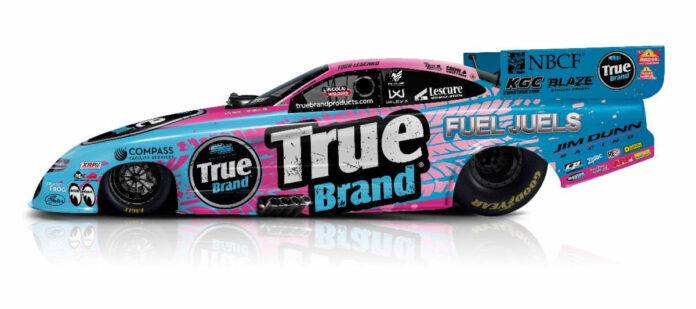
Jim Dunn Racing – Gainesville Advance for the NHRA Gatornationals

Todd Lesenko
Solid Start/True Brand Funny Car Driver for Jim Dunn Racing
AMALIE MOTOR OIL NHRA Gatornationals
March 5-8 | Gainesville, Florida

Event Overview
Friday, March 6 (Nitro Qualifying, streamed live on NHRA.TV)

Nitro qualifying session (Q1): 2:30 p.m. ET
Nitro qualifying session (Q2): 5 p.m. ET

Saturday, March 7 (All-Star Top Fuel Callout and Nitro Qualifying, streamed live on NHRA.TV)

All-Star Top Fuel Callout – Round 1: 12:15 p.m. ET
Nitro qualifying session (All Top Fuel Cars not in the Callout and Funny Car): 12:35 p.m. ET
All-Star Top Fuel Callout – Semifinals: 2:15 p.m. ET
Nitro qualifying session (Top Fuel): 3 p.m. ET
All-Star Top Fuel Callout – Finals: 3:30 p.m. ET
Nitro qualifying session (Funny Car): 3:35 p.m. ET

Sunday, March 8 (Nitro Eliminations, streamed live on NHRA.TV)

Round 1: 10 a.m. ET
Round 2: 12 p.m. ET
Semifinals: 1:30 p.m. ET
Finals: 2:50 p.m. ET

TV coverage on FS1

Saturday, March 7: All-Star Top Fuel Callout (4 p.m. ET)
Sunday, March 8: Qualifying Show (10 a.m. ET)
Sunday, March 8: Finals show (12 p.m. ET)

Notes of Interest

The 57th NHRA Gatornationals at Gainesville (Fla.) Raceway is the first event on the NHRA Mission Foods Drag Racing Series’ 20-race calendar in 2026. Jim Dunn Racing brings its one full-time entry in Funny Car for Todd Lesenko to the north-central Florida track. A native of Edmonton, Alberta, Lesenko competed in the NHRA Funny Car class in 2012 for Jim Dunn Racing, so 2026 marks a homecoming for Lesenko and the iconic racing team.

As the NHRA celebrates its landmark 75th season in 2026, Jim Dunn Racing is celebrating 76 years of success in drag racing. Jim started drag racing when he was 15 years old and at 91 years old, he plans to keep going as long as he can. In 2024, Jim received the NHRA Lifetime Achievement Award. He has won some of the sport’s most significant races and has provided driving opportunities for some of the biggest names in the sport.

Jim Dunn Racing has won at least one NHRA tour event in four different decades with five different drivers. Jim Dunn won in the 1970s and ‘80s, son Mike won in the 1990s, as did Kenji Okazaki and Frank Pedregon, and Tony Bartone won in the 2000s.

14 different drivers have won racing rounds on the NHRA tour in Jim Dunn Racing vehicles.

Solid Start/True Brand the primary partner of Lesenko this weekend in Gainesville. They are a women-owned, family-operated automotive additives manufacturer based in Lakeland, Florida. Founded in 2010 and built upon an automotive additives legacy dating back to 1976, the company produces a full line of performance-driven products designed to enhance engine performance and extend equipment life. Known for innovation, quality, and purpose-driven partnerships, Solid Start/True Brand proudly supports initiatives that strengthen families and communities nationwide.

True Brand is honored to partner with National Breast Cancer Foundation (NBCF) to raise awareness and drive impact in the fight against breast cancer. NBCF is a leading nonprofit organization dedicated to helping women now through early detection, education, and support services. Founded in 1991 by breast cancer survivor Janelle Hail, NBCF provides free, life-saving breast cancer screenings and educational resources to women in need, empowering individuals and families with hope, knowledge, and access to care year-round.

The Gatornationals will mark Lesenko’s 24th career Funny Car appearance, and his second Funny Car appearance at Gainesville.

Lesenko is seeking his first win and No. 1 qualifier at the Gatornationals. In 2012, he failed to qualify in the Jim Dunn Racing entry.

Lesenko participated in a pre-season testing event in Gainesville, where he also re-licensed in the Jim Dunn Racing Funny Car.

The Gatornationals was the last event in which a Jim Dunn Racing Funny Car reached the final round. That occurred on March 15, 2015, when John Hale beat John Force, Alexis DeJoria and Blake Alexander before losing to Ron Capps (Hale – 4.208 ET at 289.32 mph, Capps – 4.115 ET at 311.05 mph).

In 2025, after qualifying 12th and beating Daniel Wilkerson in the first round, Jim Dunn Racing driver Buddy Hull lost to Chad Green in Round 2.

Mission Foods Drag Racing Series competitors will have the chance to win the coveted NHRA 75th anniversary Diamond Wally trophy in 2026.

Fans can join Hall of Fame drag racer Darrell Gwynn for the Gatornationals track walk to benefit the Darrell Gwynn Chapter of the Buoniconti Fund. In 1990, Gwynn had a racing accident that caused paralysis. Following his accident, he established the Darrell Gwynn Foundation, which provides support for people with paralysis and works to prevent spinal cord injuries through their Wheelchair Donation Program and Education & Prevention Program. The track walk takes place on Sunday at 8:30 a.m. ET and costs $20 per person to participate.

The Gatornationals will set the field for the first Mission #2Fast2Tasty NHRA Challenge of 2026. The semifinalists from Gainesville will rematch during qualifying on Saturday at the next event in Phoenix, with bonus money and points on the line.
Todd Lesenko, Driver of the Jim Dunn Racing Solid Start/True Brand Funny Car
2026 marks a homecoming for you and Jim Dunn Racing, having last competed in the Funny Car class for the iconic racing team in 2012. What excitement does that give you heading into this season?

“It has been a long time coming with business and life. The time available was limited and eventually the time came that I could consider getting back into a car. My wife and I were making a trip down to Arizona to escape the cold winter in Canada. We were discussing the fact that the Dunn’s had not disclosed their new driver for the 2026 season. Almost immediately, my phone rang and it was my great friend, Jon Dunn. We chatted for a few minutes and I asked him who their driver was for 2026 hoping that perhaps I would be able to drive their car. We talked about how great it is when we’re together as a family and my wife Liz loves the whole Dunn family, so it’s not only a race team, but our family.”

With the opportunity to test and re-license at Gainesville during the off-season, explain how important it’s been getting that track time.

“The change to the cars was a concern because of the headers being laid back, making the car a little skittish at the top end of the track. I booked to take Frank Hawley’s Drag Racing School in Gainesville and took my Super Comp license. I had a day with Frank for a one-on-one session. He is an excellent coach and very smart man. Jim (Dunn) and Jon (Dunn) wanted me to get used to the Funny Car and refresh all of my starting line staging maneuvers to assist in acclimating to the new car. We made 10 total runs at pre-season testing and it was great for me to have a chance to make that many runs before we get to qualifying in Gainesville. I’m truly blessed to have this opportunity to spend 2026 competing in the NHRA and celebrating victories with my family.”

Texas Tough: RFK Racing Battles Through Challenges at COTA

Preece 18th, Keselowski 20th & Buescher 24th

AUSTIN, TX (March 1, 2026) – Everything is bigger in Texas, even modest days. Roush Fenway Keseleowski (RFK) Racing didn’t score the Circuit of the America’s (COTA) win, but there was victory in the way its three teams raced. Brad Keselowski and Ryan Preece overcame significant physical challenges, displaying toughness and determination. While Chris Buescher fought to the end, collecting every point he could in a late race comeback flurry.

Ryan Preece #60 Castrol Ford Mustang

On a sweltering day in Texas, Ryan Preece was cool behind the wheel of the Castrol Ford Mustang. Even though he had reason not to be. His cool suit, a vital component on a day like Sunday, was not working properly during the opening stage. But Preece showed toughness. A characteristic he has shown time and time again. Preece’s overcame that and persevered though the 20-lap segment, gaining 6 spots before the stage break.

Between stages crew chief Derrick Finley, brought Preece to pit road for a significant adjustment. Remedying the cool suit issue and other challenges, an electrical reboot was made. It corrected the situation but the lengthy stop forced Preece deep in the field for the beginning of stage two. Undaunted, Preece started making gains once again. As the stage wound down, Finley made a strategic pit call bringing the 60 in for service. The immediate track position sacrifice was made to set up a bigger gain to begin stage three.

Beginning the final stage Preece restarted 14th and quickly moved to 13th by Lap 56. This, the longest stage of the race (50 laps), was a challenge. Preece was working hard behind the wheel, slinging through the hard lefts and rights of COTA, while making up ground. He was 12th when a caution slowed the field on lap 74. Pit stops ensued and Preece was shuffled back another time. With the laps dwindling and restarting 21st, Preece charged, When the checkers flew he was 18th on the scoreboard.

“Just a tough up and down day,” said Preece. “We had some challenges but we fought through them as a team and recorded a respectable finish. We’re not satisfied by any means but we did beat more than half the field today so we’ll take that and head to Phoenix.”

Brad Keselowski #6 Graza Ford Mustang

Brad Keselowski emerged from his Graza Ford Mustang Sunday, drenched in sweat. Evidence of a determined effort on the 17-turn Circuit of the Americas road course. Only a week earlier, some questioned if being only a couple months removed from breaking his femur in a non-racing accident would prevent him from going the distance on the physically demanding track. Those questions we put to rest, after a clean 90 lap run in Austin.

Proving the doubters wrong though would not be easy. It was the hottest day of the season, and the car’s handling offered its own set of challenges. Throughout the first two stages the 2012 Cup Series champ found himself searching for grip and often bottoming out. Still, there was no quit. Crew Chief Jeremy Bullins went to work, making significant chassis adjustments. Those changes, combined with pit strategy helped gather track position entering the races’ final stretch.

Capitalizing on a pit-stop just before the completion of stage two, Keselowski was able to flip the stage and start the final segment 20th and back in the mix. Though he briefly lost ground and was initially shuffled back, the effort behind the wheel told the bigger story. During the race’s longest stage, he climbed as high as 17th before securing a hard-earned 20th-place finish.

“We weren’t as fast as we wanted to be so it turned into a don’t beat yourself day,” said Keselowski. “Glad it’s over. Glad we were able to get something decent out of it. Not the day we wanted to have with the Graza Ford Mustang, but we have something we can move forward with, and I’m trying to appreciate that.”

Chris Buescher #17 Trimble Ford Mustang

There were a lot of eyes on Chris Buescher Sunday. The Prosper, TX native was in his home state, looking to extend a streak that included three consecutive top ten finishes at the track. Starting 14th, he began putting on a show for the Lone Star faithful, climbing two spots on the first lap. Displaying the talent that earned him the moniker “Road Course Chris” he had the Trimble Ford on the move. As the first stage came to a close, he was 4th.

Stage Two brought adjustments and a fresh challenge. Looking for more lateral grip, Buescher pitted between stages and restarted 17th. Once again he began climbing through the field while managing more of a tight condition than earlier. There was also contact along the way that created a divot in the car’s nose. A cavity that affected straight away speed as it caught the air rather than slicing through it. In a strategic move to gain track position for the final stage, Buescher pitted just before the stage’s conclusion. He closed the stage where he started, 17th.

Flipping the stage paid dividends as Buescher restarted ninth, for the final stretch. When a caution slowed the field on Lap 74 Buescher was running 10th, before a pit stop shuffled him back to 20th. As he charged through the field, he became victim to a collision between Kyle Busch and Jesse Love. Their contact forced Buescher out of the groove and into a spin. Buescher then found himself 30th. Determined though, knowing every spot matters, Buescher kept digging, and fought back to finish 24th.

“We were ok early and then we got some front end damage that affected our straightway speed,” said Buescher. “Then late in the race we kind of got caught back in the scrum of it and just got dumped.”

Up Next:

Phoenix Raceway (Avondale, AZ)

The NASCAR Cup Series – Sunday, March 8 at 3:30pm EST on FOX Sports

About RFK Racing 

RFK Racing, in its 39th season in 2026, features an ownership lineup pairing one of the sport’s most iconic names, Jack Roush, along with NASCAR Champion, Brad Keselowski, and Fenway Sports Group owner John Henry. Roush initially founded the team in 1988 and it has since become one of the most successful racing operations in the world, propelling him to be the first NASCAR owner to amass three hundred wins and capturing eight championships, including back-to-back NASCAR Cup titles in 2003 and 2004. Keselowski, a former owner in the NASCAR Truck Series, is the 2012 NASCAR Cup Series Champion. In 2007, Roush partnered with Henry, who also owns Major League Baseball’s Boston Red Sox, English Premier League’s Liverpool F.C., and the NHL’s Pittsburgh Penguins, to form Roush Fenway Racing. Off the track, RFK is a leader and proven winner in NASCAR marketing solutions, having produced multiple award-winning social media, digital content and experiential marketing campaigns. Visit https://www.rfkracing.com/ and follow the team on all social platforms @rfkracing.

Spire Motorsports DuraMax Texas Grand Prix Powered by RelaDyne Race Report

Daniel Suárez – Driver, No. 7 Spire Motorsports Chevrolet Camaro ZL1

START: 23RD

FINISH: 25TH

POINTS: 7TH

Daniel Suárez, driver of the No. 7 Freeway Insurance Chevrolet Camaro ZL1 for Spire Motorsports, left Circuit of the Americas (COTA) in Austin, Texas, with a seventh-place ranking in the driver championship point standings following a third-place finish in Stage 2 in the DuraMax Texas Grand Prix Powered by RelaDyne that rewarded the Cup Series veteran with eight bonus points on the day.

After starting 23rd for Sunday’s race, and after struggling to advance his position into the top 20 during Stage 1, crew chief Ryan Sparks elected to bring Suárez to pit road prior to the stage break for fresh tires and adjustments. The decision placed Suárez in the ninth position for the beginning of Stage 2, ahead of the top-10 finishers in the previous stage.

Despite a lack of rear grip, Suárez charged forward once Stage 2 began and raced his way into the top five by Lap 24. The Freeway Insurance driver advanced as high as third before the stage end. After pitting at the break for additional adjustments, Suárez started the stage in 28th and pushed into the top 20 before a caution on Lap 76 slowed the field. An incident on the Lap-79 restart caused right front damage to the No. 7 Chevy and relegated Suárez to a 25th-place result.

Daniel’s Post-Race Comments
“The day went as expected. We had a decent Freeway Insurance Chevrolet for the short runs, but during the middle and long runs, it was tough, the car just wanted to stroll. It was difficult to get the tires to perform. Both the front and rear were struggling. We definitely have a bit of work to do to improve our road course package, but I’m looking forward to heading to Phoenix now.”

Michael McDowell – Driver, No. 71 Spire Motorsports Chevrolet Camaro ZL1

START: 6TH

FINISH: 5TH

POINTS: 9TH

Michael McDowell brought home his first top-five finish of the 2026 season behind the wheel of the No. 71 Katz Coffee Chevrolet. The veteran racer picked up a venue-best fifth-place finish in the NASCAR Cup Series’ first road-course event of the season at COTA.

After topping the leaderboard in Saturday’s practice session, McDowell qualified sixth for the DuraMax Grand Prix Powered by RelaDyne. The Glendale, Ariz., native worked his way into the top five, and team elected to maximize their stage points with a finish of third at the green-and-white checkered flag of Stage 1. A full-service pit stop at the stage break placed McDowell in 20th for the restart, behind teams that chose to pit under green-flag conditions. The father-of-five took the green flag from the 20th position on Lap 28 and was back in the top 10 just nine laps later.

The team switched up their pit strategy, bringing McDowell to pit road prior to the stage break and ultimately earning a starting spot of seventh for the final stint of Sunday’s race at COTA. With McDowell maintaining position inside the top 10, crew chief Travis Peterson planned for a one-stop strategy to allow his driver to run a handful of laps longer than his competitors. McDowell took the race lead on Lap 71 and maintained control until pitting under caution on Lap 76. McDowell’s was the first car off pit road but lined up 15th behind those that chose not the make a stop. With the freshest tires on track and 18 laps remaining to the checkered flag, the Katz Coffee driver worked his way back to the fifth position to take home the No. 71 team’s first top-five finish of the 2026 season.

Michael’s Post-Race Comments
“Overall, the No. 71 Katz Coffee Chevrolet was good. We didn’t need that last caution. We were running long there and I don’t know how the math would have worked out, but I think we would have had a good shot of having better tires over everyone else at the end. So, that caution really hurt us. We restarted outside of the top 10, so to get back up into the top five is a solid day for this team. But we’re not looking for solid days, we’re looking for wins. It’s definitely a step in the right direction.”

Carson Hocevar – Driver, No. 77 Spire Motorsports Chevrolet Camaro ZL1

START: 12TH

FINISH: 31ST

POINTS: 10TH

Carson Hocevar, driver of Spire Motorsports’ No. 77 Chili’s Ride the ‘Dente Chevrolet Camaro ZL1, maintained his top-10 position in the NASCAR Cup Series driver point standings after a trying day in Sunday’s DuraMax Texas Grand Prix Powered by RelaDyne at COTA

After qualifying 12th, the Portage, Mich., native held the 13th position for a majority of the opening 20-lap stint, eventually slipping to 16th after battling a tight-handling Chevy through the course’s left-hand turns. Several competitors elected to pit prior to the conclusion of the stage while the No. 77 team chose to stay on track to take the green-and-white checkered flag in ninth, collecting a pair of stage points.

Following pit stops ahead of Stage 2, Hocevar restarted 28th behind drivers who had previously pitted. The next 25 laps were impacted by a lack of overall grip for the 23-year-old driver, causing him to slip to 32nd by the end of the second stage on Lap 45. Hocevar began the third and final stage in the 23rd position, but struggled with balance issues regardless of adjustments made during scheduled pit stops. An incident with two laps remaining in the event resulted in a loss of track position and a 31st-place finish.

Carson’s Post-Race Comments
“Tough way to end the day. The Chili’s Ride The ‘Dente Camaro looked super good, but we just couldn’t get the balance where I wanted it. We started off the season with speed and now we get to head to Phoenix where we were able to show that off last year. The No. 77 boys will build another strong Chevy and we’ll be back up front.”

Up Next…
The NASCAR Cup Series season heads west to Phoenix Raceway on Sunday, March 8. The 312-lap race at the one-mile D-shaped dogleg oval in the desert will be televised live on FS1 at 3:30 p.m. Eastern Daylight Time (EDT).

The fourth of 36 points-paying races on the Cup Series calendar will be broadcast live on the Motor Racing Network and SiriusXM NASCAR Radio Channel 90.

To stay up-to-date on all the latest news and exclusive content, follow Spire Motorsports on Facebook, X and Instagram, and visit Spire-Motorsports.com.

About Spire Motorsports …
Spire Motorsports fields full-time entries in the NASCAR Cup Series, NASCAR CRAFTSMAN Truck Series and Interstate Batteries High Limit Racing.

The team, co-owned by longtime NASCAR industry executive Jeff Dickerson and TWG Motorsports CEO Dan Towriss, earned its inaugural NASCAR Cup Series victory in its first full season of competition when Justin Haley took the checkered flag in the Coke Zero Sugar 400 at Daytona (Fla.) International Speedway on July 7, 2019. Less than three years later, William Byron drove Spire Motorsports’ No. 7 Chevrolet Silverado to its inaugural NASCAR CRAFTSMAN Truck Series win on April 7, 2022, at Martinsville (Va.) Speedway. The team’s most recent win came on Feb. 21, 2026, when Kyle Busch took the checkered flag in the Fr8 Racing 208 at Atlanta Motor Speedway.

In 2026, Spire Motorsports will campaign the Nos. 7, 71 and 77 Chevrolet Camaro ZL1s in the NASCAR Cup Series and the Nos. 7 and 77 Chevrolet Silverado RSTs in the NASCAR CRAFTSMAN Truck Series. The Mooresville, N.C., organization will also field the No. 77 410 sprint car in Interstate Batteries High Limit Racing competition.

Team Penske NASCAR Cup Series Race Report – COTA

DuraMax Texas Grand Prix
Austin, Texas – March 1, 2026

AUSTIN CINDRIC No. 2 DISCOUNT TIRE FORD MUSTANG DARK HORSE
START: 28TH STAGE 1: 12TH STAGE 2: 21ST FINISH: 32ND POINTS: 31ST
RACE RUNDOWN: Austin Cindric battled through a strategy-filled afternoon at the Texas Grand Prix at Circuit of the Americas, ultimately finishing 32nd after starting 28th in the No. 2 Discount Tire Ford Mustang Dark Horse. In Stage 1, Cindric steadily worked his way forward from his 28th-place starting spot and reported that the “front tires were fading more than the rears” as the run progressed. He managed the balance to secure a 12th-place finish in the opening segment, and the team elected not to pit before the stage break, instead coming to pit road under caution for four tires and fuel. Cindric restarted 25th to begin Stage 2 and gained a handful of positions as the run progressed, advancing to 21st. A pit stop for four tires, fuel and an air-pressure adjustment with three laps remaining set him up to finish Stage 2 in 21st. Cindric restarted Stage 3 in 13th and worked his way into the top 10 before a left-front tire went down in the closing stretch, forcing an unscheduled pit stop for fresh tires that dropped him to 33rd. Unable to recover the lost track position in the final laps, Cindric crossed the line in 32nd.

CINDRIC’S THOUGHTS: “It was a frustrating day for us. We worked our way into the top 10 in the final stage and felt like we had something to build on, but obviously that didn’t pan out. We learned a lot about this setup, and I’m proud of the No. 2 Discount Tire team for sticking with it all afternoon. We’ll regroup and look ahead to Phoenix, which has been a strong track for our team.”

RYAN BLANEY No. 12 MENARDS/PENNZOIL FORD MUSTANG DARK HORSE
START: 4TH STAGE 1: 14TH STAGE 2: 7TH FINISH: 8TH POINTS: 4TH
RACE RUNDOWN: Ryan Blaney and the No. 12 Menards/Pennzoil Ford Mustang Dark Horse team gained four spots in the NASCAR Cup Series driver points standings with an eighth-place finish Sunday at Circuit of the Americas. Blaney was a mainstay in the top-three from the drop of the green flag in the 95-lap event and took his first lead of the afternoon eight laps in before opening up a five-second lead on the field. Crew chief Jonathan Hassler made the call to flip the opening stage, bringing Blaney to pit road from the lead with three laps remaining in Stage 1 which allowed the No. 12 Menards/Pennzoil Ford to assume the lead prior to start of the second segment. Blaney settled into second in the running order and stayed within a second of the leader during the ensuing run before the same strategy came into play prior to the stage end as he hit pit road with three laps to go in Stage 2 for a four tire stop. Due to the lead the top two had built prior to the green flag stops, Blaney was able to blend back inside the top-10 to come away with a seventh-place result in Stage 2. After the field cycled during the stage caution, Blaney lined up to take the restart from row one and continued to challenge for the top spot. With one and two-stop strategies in play to make it to the end, Hassler made the call to only make one stop the rest of the way which saw Blaney come down pit road with 27 laps to go. Blaney began his charge back towards the front after rejoining the field 11th in the running order and reached as high as third on the leaderboard before the caution flag flew with 21 laps remaining. After staying out and taking the green flag of the final restart with 17 to go, Blaney settled into third and eventually dropped to eighth over the course of the final run as teams with fresher tires made their way to the front in the closing laps. Blaney ended the afternoon with 11 laps led, marking a career-high at Circuit of the Americas in his sixth start at the Austin road course.

BLANEY’S THOUGHTS: “I just lost grip. I don’t know. I just kind of lost grip and lost touch with Shane [van Gisbergen] and Tyler [Reddick]. Yeah, it was weird. I wasn’t really pushing hard like after the green flag pit stop with Tyler, knowing it was going to be a longer run, caution or not. [The tires] didn’t really fire off very good, and I stayed in touch with those guys for maybe five laps, and they just kind of started to slowly lose and then really fall off the cliff. Overall good weekend. I hate that we didn’t finish top-three like I thought we were, but it’s hard to complain about it. We don’t have a great track record here, so we put a solid weekend together, and hopefully build on something.”

JOEY LOGANO No. 22 SHELL-PENNZOIL FORD MUSTANG DARK HORSE
START: 20TH STAGE 1: 29TH STAGE 2: 18TH FINISH: 15TH POINTS: 6TH
RACE RUNDOWN: Joey Logano and the No. 22 Shell-Pennzoil Ford Mustang Dark Horse team rallied from deep in the field prior to the final restart Sunday at Circuit of the Americas to come away with a 15th-place finish in the first road course event of the season. After starting 20th, picked up a few positions during the opening run before crew chief Paul Wolfe made the call to flip the stage by pitting with three laps remaining in the segment, resulting in a 29th-place finish in Stage 1 but allowing Logano to take the ensuing restart from seventh on the leaderboard. Logano maintained top-15 pace before the call was made to again flip the stage, bringing the No. 22 Shell-Pennzoil Ford to pit road with four laps to go in Stage 2 as Logano crossed the line 18th in the segment. Logano cycled to 10th after the remaining teams pitted under caution before the field took the green with 45 laps to go with one and two-stop strategies in play to make it to the end. Wolfe made the call to stop twice over the final stretch, bringing the No. 22 to pit road under green on lap 63 for four tires and a round of adjustments as Logano blended back into the field scored 23rd with 29 laps remaining. Logano raced his way up to 13th before a caution with 21 laps to go forced him to make his final stop under yellow and lost several spots on pit road due to being blocked in to his pit stall by the No. 77 ahead. As a result, Logano took the final restart of the afternoon from 30th with 17 laps to go and made up 10 positions on the opening lap before working his way up to 15th by the time the checkered flag flew.

LOGANO’S THOUGHTS: “We made the most of our day. What we lacked in pace at times we were able to make up for with the strategy calls we made to gain a few spots here and there. We had the opportunity to go on offense at the end by two-stopping it and did what we could on that final run. There’s a lot to look forward to these next few weeks to see where we stack up.”

The NASCAR Cup Series heads to the desert for the Straight Talk Wireless 500 at Phoenix Raceway on Sunday, March 8. Live coverage begins at 3:30 p.m. ET on FS1, MRN and SiriusXM NASCAR Radio Channel 90.

Matthew Brabham Powers to Victory at Sebring to Open Trans Am’s 60th-Anniversary Season

Cole Moore Wins TA Cup, Billy Griffin Victorious in XGT, Lee Saunders Tops SGT, Derric Carter Best in GT, Jordan Bupp Wins GT1 Challenge

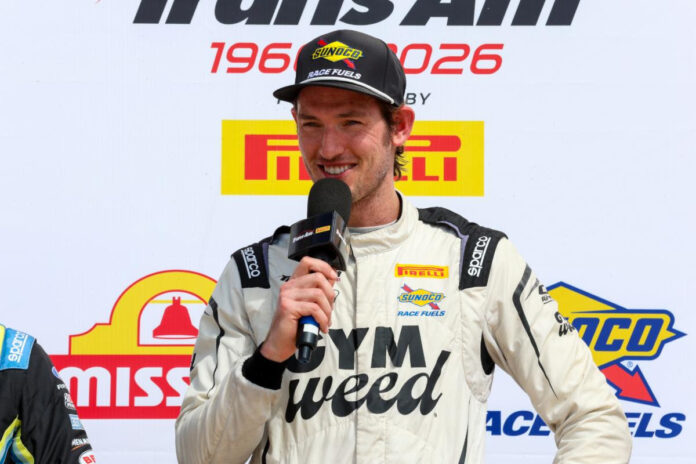
SEBRING, Fla. (March 1, 2026) – The Trans Am Series presented by Pirelli kicked off its 60th-Anniversary season at the home of its inaugural event in 1966, Sebring International Raceway. Matthew Brabham controlled the season opener from green to checkers in his No. 16 Gym Weed Ford Mustang, holding off relentless pressure from two-time champion Paul Menard to earn his ninth-career TA victory and second at Sebring.

Brabham took the green flag from the point position after rain washed out yesterday’s qualifying session. A series of restarts gave Menard (No. 3 Pittsburgh Paints/Menards Ford Mustang), the two-time defending Sebring winner, multiple shots at the lead, but Brabham was flawless each time. He led every lap en route to victory, with Menard finishing second and Martin Ragginger (No. 7 Top Liner Chevrolet Camaro) completing the podium.

Adam Andretti (No. 17 Top Liner Chevrolet Camaro) and Kaylee Bryson (No. 2 LSI/Team Weaver Racing Dodge Challenger) delivered two of the most impressive drives of the day. Andretti, who missed the practice session that set the grid while competing in the NASCAR Craftsman Truck Series race at St. Petersburg, charged from the rear of the field into the top five by lap five, and secured fourth with four laps remaining. Bryson rebounded from a lap-one spin that dropped her to the back of the field, carving through the pack to claim fifth in the closing laps.

“A big thank you to everyone who watched our race, it was good to see fans up there watching us,” said Brabham. “A big thank you to Gym Weed and [CD Racing team owner] Chris Dyson. It’s going to be good to have him back [in the field] later on in some other races to make it more competitive up front, but this was an awesome race. Paul [Menard] pushed me all the way to the end. It was definitely interesting having so many restarts. I really had to kind of manage things and try different things to try and spice it up so I could try and stay ahead of Paul, but it was awesome out there; I had a great time. Lastly, a big thank you to the race team, CD Racing. They do such a great job putting this car together, these cars are so much fun to drive. Thank you to my mom and dad who came out, my dog Brumby and my new wife Kim.”

TA Top Five:

  1. Matthew Brabham, No. 16 Gym Weed Ford Mustang
  2. Paul Menard, No. 3 Pittsburgh Paints/Menards Ford Mustang
  3. Martin Ragginger, No. 7 Top Liner Chevrolet Camaro
  4. Adam Andretti, No. 17 Top Liner Chevrolet Camaro
  5. Kaylee Bryson, No. 2 LSI/Team Weaver Racing Dodge Challenger

The debut of TA Cup in the National Championship delivered immediate excitement. Cole Moore (No. 32 Chris Evans Race Cars Ford Mustang) seized control early, making a decisive lap-one pass on first-place starter Jim Guthrie (No. 62 Guthrie’s Garage Ford Mustang) and never looking back. New Racing America Chief Operating Officer Ken Thwaits (No. 9 Franklin Road Apparel Chevrolet Camaro) followed Moore through to take second. After a lap-four restart, Guthrie suffered a tire issue that forced him to pit and go a lap down, elevating Matt Crandall (No. 08 Avant Garde Collection Ford Mustang) to the final podium position. Guthrie recovered to finish fourth.

“That was an amazing race,” said Moore. “It was one of those where everything went my way. I made the right zigs and zags on the first lap. Jeff Jefferson just gave me a really good car this weekend. I want to thank my mom and dad for everything they do in my career in racing. And Chris Evans, he called me last week to be here, so thank you, Chris. This is an honor to race these TA Cup cars. They’re unbelievable. Thank you, Ken [Thwaits], for everything you do. I just love being a part of Trans Am. This is amazing.”

TA Cup Results:

  1. Cole Moore, No. 32 Chris Evans Race Cars Ford Mustang
  2. Ken Thwaits, No. 9 Franklin Road Apparel Chevrolet Camaro
  3. Matt Crandall, No. 08 Avant Garde Collection Ford Mustang
  4. Jim Guthrie, No. 62 Guthrie’s Garage Ford Mustang

As the only competitor in the XGT class, Billy Griffin took the top step in his No. 14 Griffin Auto Care Mercedes Benz AMG GT3. He managed to avoid the adversity that befell many of the competitors over the course of the race, finishing the race seventh overall.

“I’d like to thank my team for giving me a great car to drive,” said Griffin on the podium. “That was a wild race. I have to thank Bennett and BridgeHaul, as usual, and Danny Lowry. I’d also like everybody to check out the Kevin Popke Foundation. Kevin is an Army Ranger who passed away in a motorcycle accident after retiring, and it’s a foundation that helps veterans in need in Florida.”

XGT Results:

  1. Billy Griffin, No. 14 Griffin Auto Care Mercedes Benz AMG GT3

In a stacked SGT class, Lee Saunders drove his No. 84 LandSearch LLC Dodge Viper to his eighth victory at his home track. First-place starter Chris Coffey (No. 97 Traffic Grafix/NAI Racing/GTE Engineering Ferrari 458 Challenge) led the race for the first 13 laps, but was hit by a competitor in another class and spun, allowing Saunders to take over the point position. For the remainder of the race, Coffey challenged Saunders, swapping positions with him multiple times on the final lap, but it was Saunders who took the checkered flag. Coffey finished second, and Patrick Utt (No. 49 RaceQuip/Driven Racing Oil Chevrolet Camaro) claimed the final podium spot. Milton Grant (No. 15 Sentry Self Storage/Springhill Suites Porsche 992) finished fourth and Ray Mason (No. 68 TRB Autosport Ford Mustang) crossed the finish line in fifth.

“First of all, I’d like to thank my Lord and Savior Jesus Christ for this beautiful day, and for the great country we live in,” said Saunders. “I pray that he protects all our troops wherever they are. Thank you to Trans Am for a great series that we get to race in, in its 60th year. It’s an absolute blessing that we get to do this. Sometimes I have to pinch myself just to see if it’s real. I’d like to thank my wife, my family for allowing me to do this. Thanks to KSR, Eddie, CJ; we had them there this weekend and they worked their butts off fixing stuff. It’s just amazing, the jobs they do. The new Pirelli tires are awesome. We got lucky today. Chris [Coffey] had some issues that let us get to where we are, but Chris drove the hell out of that car, super clean, I cannot thank him enough for that. I think we traded positions three or four times, and I just got lucky and did it the last time, because he was probably going to come around me again.”

SGT Results:

  1. Lee Saunders, No. 84 LandSearch LLC Dodge Viper
  2. Chris Coffey, No. 97 Traffic Grafix/NAI Racing/GTE Engineering Ferrari 458 Challenge
  3. Patrick Utt, No. 49 RaceQuip/Driven Racing Oil Chevrolet Camaro
  4. Milton Grant, No. 15 Sentry Self Storage/Springhill Suites Porsche 992
  5. Ray Mason, No. 68 TRB Autosport Ford Mustang

In just his second-career start in the GT class, Derric Carter overcame mechanical issues early in the weekend and a car switch before the race to claim his first Trans Am victory.

“The GT 500 I entered in didn’t make it out there for the race, it broke during practice, so I had to pull out the Dark Horse R,” said Carter. “I was out there trying to put down some laps, get some points, and get some drive time in that. It was tough competition. I’d like to thank a couple of people: Portable Car Hoist, I couldn’t have done it without them. It was a bunch of work trying to get that GT 500 back on track. Having a lift that you can take to the track and have anywhere is just awesome to have. I’d like to thank Mama D for her love and support. Serpent Stangs Racing did everything they could to help me get that GT 500 here this weekend. We put 300 manhours on that thing in 10 days to try to get here. I’ll be here all season, so hopefully I’ll get some competition in the other races and we’ll see the GT 500 back on track.”

GT Results:

  1. Derric Carter, No. 24 PortableHoist.com Dark Horse R

Jordan Bupp had an incredible day in GT1 Challenge, leading from start to finish in his No. 11 Hamilton Safe & Security Systems Chevrolet Camaro. In the kickoff to Trans Am’s 60th-Anniversary season, he drove the same car his father, Kenny Bupp, drove to victory at Sebring in the series’ 50th-Anniversary stop at the track. Bupp dominated as his competitors each battled mechanical issues and on-track contact, taking the checkered flag for his second-career Trans Am victory. He was followed by Axel Rivera (No. 22 RIAX Contractors/Flexitank Ford Mustang) in second, David Jans (No. 70 Ave Motorsports Ford Mustang) in third, and Paul Fix (No. 77 StopFlex Ford Mustang) in fourth.

“I can’t thank my team at Bupp Motorsports enough,” said Bupp. “Thank you to my family, FlowTech Racing Engines, Ultimate Performance Shocks, and EMCO, who makes the strongest third gear in the industry, because I used it for 25 of the 27 laps since I lost the rest of the gearbox. We had a good weekend and a fast car. The new Pirelli tires are absolutely awesome, and Racing America and Trans Am are doing a great job bringing the series where it needs to be. I can’t thank my dad enough for bringing me back here. I’m driving the same car that he won in [at Sebring] 10 years ago, so shout out to Riley Technologies for building an amazing car all these years ago, and thank you to my crew chief, Todd Florey, for getting it done.”

GT1 Challenge Results:

  1. Jordan Bupp, No. 11 Hamilton Safe & Security Systems Chevrolet Camaro
  2. Axel Rivera, No. 22 RIAX Contractors/Flexitank Ford Mustang
  3. David Jans, No. 70 Ave Motorsports Ford Mustang
  4. Paul Fix, No. 77 StopFlex Ford Mustang

Full provisional TA/GT race results can be found here.

Helio Meza Goes Two-For-Two in CUBE 3 Architecture TA2 Series, Claiming Second-Career Victory in Sebring Season Opener

2025 Champion Jared Odrick Wins Pro/Am Challenge

SEBRING, Fla. (March 1, 2026) – Helio Meza continued his sensational start in the CUBE 3 Architecture TA2 Series by earning his second win in just his second start at Sebring International Raceway. After turning heads with a victory in his Trans Am Series presented by Pirelli debut at Circuit of The Americas in November, Meza delivered another dominant performance in the season opener of Trans Am’s 60th-Anniversary season.

Driving the No. 28 Alessandros Racing/SLR-M1 Chevrolet Camaro, Meza endured several restarts and avoided the chaos and attrition throughout the field to lead from green to checkers, crossing the finish line by a margin of more than three seconds. Joining him on the podium was Vinnie Meskelis in the No. 90 Nitro Motorsports Toyota Camry, who worked his way up from a seventh-place start and celebrated his 20th birthday with a runner-up finish in his Trans Am debut. Noah Harmon (No. 7 Silver Hare Racing Chevrolet Camaro) carried momentum from 2025 into the new season with a third-place result. Adrian Wlostowski finished fourth in the No. 3 CMI/Spot-On Services/AMT Motorsports Ford Mustang, and Ethan Tovo rounded out the top five in his series debut driving the No. 10 Dick’s Sporting Goods Toyota Camry.

“That was a fun drive,” said Meza. “I just took the approach of enjoying this weekend. Last month, I didn’t know if I was going to run the full season this year. And so, to now be a full-time driver in this series is a dream come true for me. Another win for us. I can’t thank TeamSLR, Alessandros Racing, Chevrolet, M1 Racecars, just my whole team, enough. I mean, they worked so hard for this opportunity and I just can’t thank everyone enough. Josh Wise, Scott Speed, everyone at Chevrolet, we prepped so hard in the off-season for this race, and I felt like I’d already driven this race 1,000 times. I got on the track and I knew what I had to do. I couldn’t do this without the people behind me: my family, my mom, my dad, always being there for me. This one means a lot, and it’s definitely a confidence booster for the season.”

CUBE 3 Architecture TA2 Series National Championship Top 10:

  1. Helio Meza, No. 28 Alessandros Racing/SLR-M1 Chevrolet Camaro
  2. Vinnie Meskelis, No. 90 Nitro Motorsports Toyota Camry
  3. Noah Harmon, No. 7 Silver Hare Racing Chevrolet Camaro
  4. Adrian Wlostowski, No. 3 CMI/Spot-On Services/AMT Motorsports Ford Mustang
  5. Ethan Tovo, Dick’s Sporting Goods Toyota Camry
  6. Sam Corry, No. 70 Nitro Motorsports Toyota Camry
  7. Eric Cayton, No. 71 Ray Skillman Auto Group Ford Mustang
  8. Stanton Barrett, No. 88 Acellis-8T8 Energy Drink Ford Mustang
  9. Tanner Reif, No. 75 Silver Hare Racing Chevrolet Camaro
  10. Gian Buffomante, No. 95 Nitro Motorsports Toyota Camry

Jared Odrick delivered a commanding performance in the Pro/Am Challenge season opener at Sebring, leading from start to finish in his No. 00 Black Underwear/Helium Mobile Chevrolet Camaro. Odrick set the tone early and never relinquished control, showcasing pace and precision throughout the race to secure a dominant victory. Tom Sheehan, driving the No. 97 Vixen Cycle Co./LTK/COPE Ford Mustang, maintained a steady run to start and finish second, while Cale Phillips advanced one position to claim third in the No. 99 Nitro Motorsports Toyota Camry. Roberto Sabato brought the No. 61 6th Gear Racing Ford Mustang home in fourth, and Christina Lam impressed in her Trans Am debut with a fifth-place finish in her No. 66 Helium Mobile Chevrolet Camaro.

“Black Underwear feels great to have on the car, and have on my body,” said Odrick on the podium. “It was a pretty crazy effort this weekend. We started off on the back foot, missing our test session, so we really didn’t get to dial in the car the way that we wanted to. But we had a lot of good notes from when we were testing here [in January], and that carried over. We’ve got a great team this year. I really love the guys that we have. We keep refining our mission, and we keep seeing further and further up the field, and I think that’s what we’re going to try to continue this whole season. I’m super grateful for the competitors that are up here. They’re getting better and better. We’re gonna take that into consideration and keep our foot to the pedal.”

CUBE 3 Architecture TA2 Series Pro/Am Challenge Podium:

  1. Jared Odrick, No. 00 Black Underwear/Helium Mobile Chevrolet Camaro
  2. Tom Sheehan, No. 97 Vixen Cycle Co./LTK/COPE Ford Mustang
  3. Cale Phillips, No. 99 Nitro Motorsports Toyota Camry Full provisional TA2 results can be found here.

John Atwell Earns First Trans Am Win in Inaugural TA Sprint Race at Sebring

SEBRING, Fla. (March 1, 2026) – In the inaugural race for the TA Sprint series, John Atwell scored his first-career Trans Am victory in his No. 02 XRC/DFW Concrete/A&J LabPortal Ford Mustang. Starting fifth, he worked his way through the field and took over the lead on lap three. He remained in control for the remainder of the 50-mile sprint, crossing the finish line first. Bruce Raymond (No. 54 BruCat Properties Ford Mustang) finished second, and James Libecco (No. 89 Allied Dermatology/Gunn Dermatology Chevrolet Camaro) rounded out the first-ever TA Sprint podium.

“I think this is a great format,” said Atwell. “I’ve done TA2 for years, but I just think TA Sprint is a great format for people who are not quite ready to do TA2. The thing is, there’s a lot of cars out there, and it’s a fun thing to do. I just did it because I wanted to support the series. We actually brought two other cars with us, my teammates Paul [Ruth] and Rob [Kacprowicz]. Everything went great, they all got personal bests of what they’ve done here before. I think everybody who has an old car should bring it out.”

TA Sprint Results:

  1. John Atwell, No. 02 XRC/DFW Concrete/A&J LabPortal Ford Mustang
  2. Bruce Raymond, No. 54 BruCat Properties Ford Mustang
  3. James Libecco, No. 89 Allied Dermatology/Gunn Dermatology Chevrolet Camaro
  4. Rob Kacprowicz, No. 27 5×5 Brewing Ford Mustang
  5. Alan Davison, No. 16 FPEC Ford Mustang
  6. Rene Molina, No. 8 5×5 Brewery/Mission, Texas Chevrolet Camaro
  7. Paul Ruth, No. 11 Paul Ruth Realtor Chevrolet Camaro

Why the Stuff You Forget to Protect During a Move Is Usually the Stuff That Breaks

Photo by depositphotos at https://depositphotos.com/

Most people spend their packing energy on the obvious things. The TV gets a custom box. The dishes get wrapped one by one. The couch gets a moving blanket. And all of that’s fine, but it’s rarely where the damage happens.

The stuff that actually breaks during a move? It’s the things nobody thought needed protecting. The bathroom mirror that got leaned against a dresser. The glass shelves from the bookcase that got sandwiched between two mattresses. A framed photo from your wedding, tossed into a box with zero cushioning because you ran out of bubble wrap three rooms ago. These are the items people file claims over, and the frustrating part is most of that damage was preventable.

There’s a pattern here. Mirrors are a big one. Tall, heavy, fragile, and awkward to carry. Most people don’t own a box that fits one, and they end up improvising with blankets and tape and hoping for the best. If you’ve got a large mirror or glass-topped table, it’s worth looking into some mirror packing tips before you try wrapping it in a comforter and calling it done. The right technique involves corner protectors, painter’s tape across the glass face (to hold shards together if it does crack), and a box or crate that doesn’t leave room for sliding around. Sounds like a lot for one item, but replacement costs on a decorative mirror can hit $300 to $500 pretty fast. That ten minutes of prep starts to look like a solid trade.

Glass Shelves and Cabinet Panels

This is the one that catches people off guard every single time. You take apart a bookcase or entertainment center, set the glass shelves aside, and then forget about them until they’re rattling around in the back of a half-loaded truck.

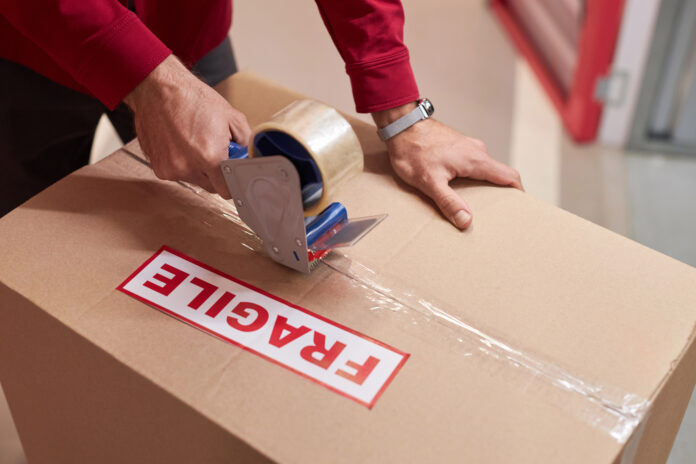
Glass shelves don’t need a fall to break. Pressure from a heavy box stacked on top, a shift during a sharp turn, or even friction against a rough surface can chip or crack them. The fix isn’t complicated: wrap each shelf in bubble wrap, separate them with cardboard, and stand them upright in a box labeled “FRAGILE” on at least two sides. That last part matters because movers and helpers can’t protect what they don’t know about.

Artwork and Framed Photos

People treat framed art like it’s sturdier than it is. A frame might feel solid in your hands, but glass cracks under pressure that wouldn’t concern you with most other items. And canvas paintings can dent or puncture if something shifts against them during transit.

The FMCSA’s consumer rights guidelines point out that items packed by the owner may carry different liability terms than those packed by a professional crew. That’s a real consideration if you’re handling your own artwork. Corner protectors, cardboard on both sides of the glass, and upright positioning in the truck all reduce the risk. Don’t lay framed pieces flat in a stack. That’s how you get a cracked frame at the bottom of the pile.

Lamp Shades and Light Fixtures

It’s a weird one, but lampshades are surprisingly hard to pack. They’re too big for most boxes, too delicate for stacking, and they dent if you look at them wrong. The shade should come off the base. Wrap the base on its own. And for the shade, a large box with crumpled packing paper around it works better than trying to nest it inside something else.

Ceiling light fixtures that you’re taking with you (chandeliers, pendant lights) need even more attention. Remove bulbs, wrap arms or branches individually, and use a box lined with packing paper. One poorly packed chandelier can turn into a $400 problem.

The Kitchen Drawer Nobody Talks About

Every house has a junk drawer, and nobody packs it properly. Batteries, takeout menus, a screwdriver, some twist ties, a lighter, and half a roll of tape. It all gets dumped into a random bag and thrown on top of the nearest box.

But there’s usually at least one thing in that drawer you’ll need within the first 24 hours. A flashlight. A tape measure. The Allen wrench for your bed frame. Take five minutes to sort it into a ziplock bag, label it, and keep it with your essentials box. You’ll thank yourself later when you’re not digging through fifteen mystery bags at midnight.

Electronics You Forgot You Owned

The TV gets the royal treatment. The gaming console, the router, the printer, and the external hard drive sitting behind a monitor? Not so much.

If you’ve still got the original boxes, use them. Manufacturers designed those for impact absorption during shipping, and they work just as well for a household move. If the boxes are long gone, wrap each item in anti-static bubble wrap (regular bubble wrap can build static that messes with sensitive components) and pack snugly in a box with padding on all sides.

And back up your data before anything gets loaded onto a truck. A dropped hard drive with no backup is the kind of loss you can’t fix by filing a claim.

Cleaning Supplies and Chemicals

Here’s one that surprises people: bleach, aerosol cans, certain paints, and even nail polish remover are classified as hazardous by most moving companies. They won’t load them. And honestly, they shouldn’t. A leaking bottle of bleach inside a sealed truck can ruin upholstered furniture and clothing in ways that no amount of stain remover will fix.

Transport these items yourself, in a separate sealed container. Or just toss them and buy replacements at the new place. Not worth the risk. The FMCSA’s tips for a successful interstate move recommend going through your entire inventory before moving day to flag items that fall outside what your mover will transport.

It Comes Down to Timing

The recurring theme here is the same: people start packing too late, rush through the fragile stuff, and end up paying for it on the other end. A cracked mirror costs more than the box that would’ve saved it. A damaged painting costs more than ten minutes of wrapping.

Give yourself a few weeks before the move. Start with the things you don’t use daily and work forward. The weird, fragile, sentimental items should get packed first, not last. They deserve the attention, and your future self deserves not having to explain to an insurance adjuster how a bathroom mirror ended up in three pieces because it was sandwiched between two mattresses with zero protection.

That part is usually preventable.

15 Things You Need to Know About Bad Credit Car Finance

Photo by depositphotos at https://depositphotos.com/

A challenging credit history doesn’t have to mean giving up on owning a vehicle. Every year, thousands of UK drivers secure bad credit car finance and get back on the road, even after experiencing financial setbacks. If you’ve had money troubles in the past, here’s what you need to know to move forward with confidence.

1. Bad Credit Doesn’t Automatically Mean Rejection

Credit problems can happen to anyone, and specialist lenders understand that. Rather than issuing blanket refusals, many assess applications based on your current circumstances.

2. “Bad Credit” Will Cover a Range of Situations

Some of the most common credit issues will include:

  • Any late payments or any missed payments
  • Any defaults on credit cards or loans
  • If there are any County Court Judgements (CCJs)
  • Individual Voluntary Arrangements (IVAs)
  • Management plans on debt
  • Bankruptcy or insolvency

Each of these impacts lenders differently, especially depending on how recent they are.

3. Specialist Lenders Look Beyond Your Credit Score

Unlike high-street banks that rely heavily on automated scoring systems, specialist lenders consider:

  • The stability of your employment
  • Your income and the affordability
  • Time passed since past credit issues
  • Financial recovery evidence
  • The reasons behind previous problems

This human-focused approach gives many applicants a genuine second chance.

4. Stable Employment Improves Approval Chances

Most lenders prefer you to have at least 3–6 months in your current job. Consistent income reassures them that repayments are manageable.

5. Managing Your Bank Account Matters

Avoid overdrafts, returned payments, and erratic spending. A well-managed bank account shows financial responsibility, even if your past credit history isn’t perfect.

6. Registering on the Electoral Roll Helps

Being registered at your current address improves your credit profile and helps lenders verify your identity quickly.

7. A Deposit Can Make a Big Difference

While some lenders offer zero-deposit options, putting down 10–20%:

  • Reduces lender risk
  • Lowers monthly payments
  • Improves affordability checks
  • Can secure a better interest rate

Even a small deposit can strengthen your application.

8. Choosing the Right Car Increases Approval Odds

Lenders prefer:

  • Reliable, practical vehicles
  • Strong resale cars
  • Reasonably priced models
  • Vehicles proportionate to your income

High-performance or luxury vehicles are typically harder to finance with poor credit.

9. Hire Purchase (HP) Is a Common Option

HP agreements involve:

  • An initial deposit
  • Fixed monthly payments (usually 24–60 months)
  • Ownership will transfer after the final payment is made

It’s one of the most straightforward and popular structures for applicants with credit issues.

10. Conditional Sale Works Similarly to HP

With a Conditional Sale agreement:

  • Fixed monthly payments
  • Ownership will transfer at the end
  • The lender will retain ownership during the agreement

This structure provides security for lenders while offering a clear path to ownership.

11. Guarantor Finance May Be an Option

If you have a family member with good credit, they may act as a guarantor. This can:

  • Improve approval chances
  • Potentially reduce the interest rate

However, they become legally responsible if you miss payments.

12. Interest Rates Will Be Higher, But Not Forever

Bad credit finance carries higher interest rates due to increased risk. However:

  • Rates can vary based on your circumstances
  • A deposit can reduce the costs
  • Refinancing after 12–24 months may secure better terms

Higher rates are often temporary while you rebuild your credit.

13. Consider the Full Cost of Ownership

Don’t focus solely on monthly repayments. Also factor in:

  • Insurance, which could be higher
  • Any road taxes
  • The fuel cost
  • The maintenance costs
  • Any admin or arrangement fees

Affordability should cover total running costs.

14. Be Prepared With Documentation

Lenders typically require:

  • Photo ID (driving licence or passport)
  • Proof of address
  • Provide proof of income, such as payslips, bank statements, and tax returns
  • Your monthly expenses

Having documents ready speeds up the process and shows organisation.

15. Car Finance Can Help Rebuild Your Credit

Upon successfully managing your agreement:

  • You will build a positive payment history
  • You will improve your credit score over time
  • Will expand your future borrowing options
  • Possibly allows refinancing at lower rates

Set up direct debits and contact your lender immediately if you face financial difficulties. Proactive communication protects your progress.

Common Mistakes That Shorten the Life of Luxury Vehicles

Key Takeaways

  • Delayed servicing increases internal engine wear
  • Specialist diagnostics protect complex electronic systems
  • Correct fluids and OEM level parts support long-term reliability
  • Preventative maintenance reduces major mechanical failure risk

The Reality of Owning a European Luxury Vehicle

You invested in a luxury vehicle for a reason. The refinement, handling, engineering detail and driving feel set it apart from standard cars on the road. Whether you drive a BMW, Audi, Mercedes Benz, Volkswagen or Porsche, you expect smooth performance and long term reliability. What many owners do not realise is how easily small servicing decisions can shorten that lifespan.

Driving conditions are rarely perfect. Heavy traffic, short urban trips and long highway runs all place unique demands on engines and drivetrains. If maintenance is treated as routine rather than strategic, wear builds up quietly. By the time a major fault appears, the damage has often been developing for years.

Stretching Service Intervals Beyond What Your Car Actually Needs

One of the most common mistakes is extending service intervals beyond what your vehicle realistically requires. Manufacturer schedules are often based on controlled conditions. In real world driving, oil degrades faster, particularly in turbocharged engines that dominate European line ups.

Stop start traffic increases heat cycles. Short trips prevent engines from reaching full operating temperature, contributing to carbon deposits and internal moisture build up. Over time, lubrication quality drops and internal components such as timing chains, camshafts and turbo bearings experience increased friction. The impact may begin subtly with rougher idling or reduced fuel efficiency before turning into costly mechanical repairs.

Cooling systems are also affected. Modern European engines operate within tight temperature ranges for efficiency and emissions control. Coolant that is not replaced at the appropriate interval loses its protective properties, increasing the risk of corrosion within radiators, heater cores and water pumps.

Choosing the Wrong Workshop for a European Vehicle

Many owners assume any qualified mechanic can maintain a prestige vehicle. While general mechanical skill is essential, European models often require specialised diagnostic equipment, brand specific procedures and access to updated technical data. Proper European car servicing involves manufacturer level scan tools, correct software capability and familiarity with common model specific issues.

Without appropriate diagnostics, stored fault codes may go unnoticed. Control modules may not be correctly calibrated after parts replacement. For example, battery replacements often require system registration to ensure correct charging behaviour. Brake servicing on vehicles with electronic parking brakes requires correct electronic reset procedures. Skipping these steps can lead to premature component wear or persistent warning lights.

Ignoring Early Warning Signs and Dashboard Alerts

Modern luxury vehicles rely on advanced sensor networks that monitor engine performance, emissions systems, cooling efficiency and transmission behaviour. When a warning light appears, it typically indicates a developing issue rather than a random glitch.

Delaying investigation allows minor problems to expand. A small coolant leak can turn into overheating. An oil leak can damage surrounding rubber components and engine mounts. Addressing warning lights early reduces the likelihood of secondary damage and higher repair costs.

Using Incorrect Fluids and Lower Grade Parts

European engines are engineered around specific oil grades and manufacturer approvals. Gearboxes often require exact transmission fluids that differ from generic alternatives. Coolant formulas vary in chemical composition, and mixing incompatible types reduces corrosion protection.

Aftermarket parts that do not meet original equipment standards can also shorten vehicle lifespan. Suspension arms, brake components and electronic sensors are designed to operate within precise tolerances. Lower quality replacements may fit physically but perform differently under load, affecting handling stability and system accuracy.

Skipping Preventative Maintenance on Known Wear Components

Prestige vehicles contain components with predictable wear patterns. Water pumps, thermostats, control arm bushings and timing components all have expected service lives. Replacing them proactively reduces the risk of breakdown and collateral damage.

Waiting for complete failure often increases labour costs and may result in further mechanical damage. Preventative replacement supports consistent performance and preserves long term reliability.

Overlooking Software Updates and System Calibration

Manufacturers regularly release software updates that refine fuel mapping, transmission shift behaviour and emissions control systems. These updates can improve efficiency, driveability and component longevity.

Workshops equipped to install manufacturer approved updates ensure that your vehicle operates according to the latest specifications. System recalibration after repairs also maintains smooth integration between electronic modules.

Luxury vehicles are engineered to deliver long service life when maintained correctly. Consistent servicing, specialist expertise and proactive attention to emerging issues all contribute to preserving performance, safety and resale value.

Justin Adakonis Holds Off Jared Thomas on Streets of St. Pete for Maiden Mazda MX-5 Cup Win

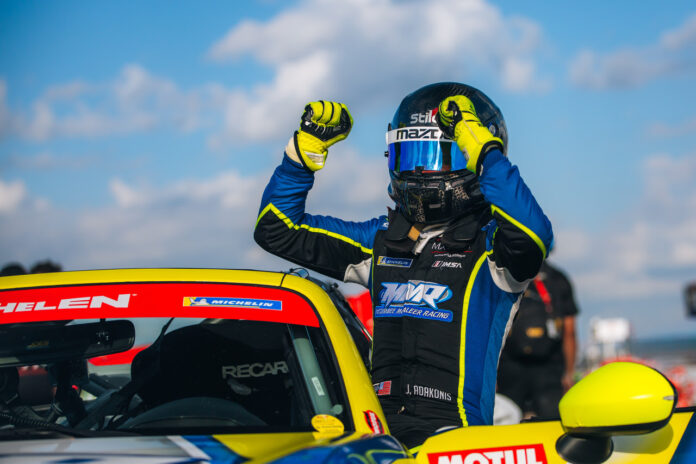
ST. PETERSBURG, Fla. (March 1, 2026) – Justin Adakonis (No.23 McCumbee McAleer Racing) earned his first-ever Whelen Mazda MX-5 Cup presented by Michelin win on the streets of St. Petersburg and held off two-time series champion Jared Thomas (No. 96 JTR Motorsports Engineering) to do so.

The Round Four race started with a long caution to remove the heavily damaged cars of Matt Novak (No. 11 Advanced Autosports) and Jeremy Fletcher (No. 22 McCumbee McAleer Racing) but then commenced a long green-flag fight for the lead between Adakonis and Thomas.

Adakonis led the way on the lap seven restart, but Thomas took over the spot with a daring side-by-side moment from Turn Four through Turn Nine. The following lap, Adakonis used the very same move to retake the lead from Thomas.

The duo settled into a rhythm and began to pull away from Ethan Lampe (No. 31 Advanced Autosports), who was in his own fight with Saturday’s race winner, Bobby Gossett (No. 44 BSI Racing). The fight for the final podium spot enabled Adakonis and Thomas to pull away by more than three and a half seconds before another full-course caution came out.

It was during this caution that Adakonis became concerned that he might have used up his car holding off Thomas and was now vulnerable to an attack from Thomas on the restart.

“I didn’t have much left in the car,” Adakonis said. “I kind of burned through my tires trying to pull away. I just had to use everything I had left.”

When the green flag waved with four and a half minutes left on the race clock, Adakonis took a defensive posture into Turn One. It worked, but behind them, Ethan Jacobs’ (No. 99 JDH Racing) car came to a stop with damage in Turn Two. A disabled car meant a full-course caution was imminent.

Both drivers’ teams were telling them it was now or never, knowing a race-ending full-course caution would come out before the cars reached start/finish.

“(Car Chief) Stuart [McAleer] was yelling in my ear,” Adakonis said. “He was like ‘got a car off, car off. Go, go, go!’ Yeah. I figured his [Jared’s] team would tell him too.”

“I knew the yellow was gonna come,” Thomas said. “I could kind of tell by yesterday, with the way they let us race all the way back to the incident—I knew I had a few corners, so I tried the most of it.”

Thomas lunged inside of Adakonis entering the final turn, but slid wide, and Adakonis breezed past. He had momentum on his side and cruised to victory as the yellow flags came out and the race ended behind the safety car.

“This is amazing,” Adakonis said. “It was really emotional. I kind of started to tear up on that in lap. Everything just hits you. I got my parents in the stands and saw them cheering. I’ve got my girlfriend here on pit lane too. I can’t even describe It’s been so much hard work and time and effort. I’m so proud of all these guys. MMR, they give me a great car all year. They believed in me and I finally got it done.”

With plenty of experience at St. Pete, Thomas knew there was no such thing as waiting for the right moment to lead the race. When yellows are likely, he wants to be out front, setting the pace.

“At this place you can control the race from the lead,” Thomas said. “I wanted to get there if I could and obviously starting sixth was not ideal. I wanted to make my way to the front and kind of control if I could.

“Justin was quick, especially on the short runs, and he was very aggressive to come back at me. So, I made the choice: I said, ‘let’s make this a two-car race.’ I bid my time, stayed in line, give him a push when I could, and we got away.”

Lampe crossed the finish line in third, but in post-race technical inspection his car was found to have violated the rules for maximum camber, and he was moved to the back of the field. As a result, Gossett, who, early in the race, had a nasty brush with the wall on the exit of Turn 14, was promoted to third.

A special guest driver, Earl Bamber (No. 21 Hendricks Motorsports) just missed the podium and finished fourth. His fellow guest driver Sebastien Bourdais (No. 38 McCumbee McAleer Racing) finished ninth.

For the second race in-a-row, Frankie Barroso (No. 48 Spark Performance) finished fifth.

Gresham Wagner (No. 5 JTR Motorsports Engineering) earned the Penske Shocking Performance Award by advancing an astonishing 28 positions in the race.

Charlotte Traynor (No. 43 PDR Racing) secured the top finishing female award, crossing the finish line in 26th.

The Takumi Award, for drivers over the age of 40, went to Christian Hodneland (No. 32 BSI Racing).

Both MX-5 Cup races from St. Pete are available to rewatch anytime on the RACER and IMSA YouTube channels.

Rounds Five and Six at Mid-Ohi0 Sports Car Course take place June 5 – 7. Prior to that, the series will hold a test on the Indianapolis Motor Speedway road course, April 14 – 16, in preparation for a doubleheader at the legendary circuit in September.

About: The Whelen Mazda MX-5 Cup presented by Michelin is the signature spec series for Mazda Motorsports. The series has been operated by Andersen Promotions since 2017 and is currently sanctioned by IMSA. Mazda-powered grassroots champions can earn Mazda scholarships for this pro-level series. The Whelen Mazda MX-5 Cup awards more than $1 million in prizes and scholarships.

Find out more at http://www.mx-5cup.com.

7 Critical Questions to Ask Before Walking Into a Truck Dealership

Photo by depositphotos at https://depositphotos.com/

Most truck buyers walk into a dealership with a vague idea of what they want. They’ve browsed some photos, maybe watched a few YouTube comparisons, and they know their rough budget. That’s not enough. Salespeople aren’t adversaries, but they’re also not going to volunteer the information that might slow the sale down. These seven questions put that information in your hands before you step onto the lot.

What’s the as-equipped towing capacity on this specific VIN?

This is the first question that separates serious buyers from browsers. Manufacturers advertise “max towing capacity,” but that number almost always refers to a specific configuration – often one with a particular engine, axle ratio, and tow package that doesn’t match the truck you’re actually looking at on the lot.

Ask for the towing capacity on the exact vehicle identification number. The dealer can pull this from the manufacturer’s configuration data. If the salesperson can’t answer that directly, ask to see the window sticker and look for the axle ratio. A truck spec’d with a numerically lower rear axle (say, 3.08) is built for fuel economy, not hauling. A 3.73 or higher is built to pull weight. Don’t let the brochure numbers substitute for what the actual truck can do.

What’s the real payload capacity after options are added?

People often confuse payload and towing capacity. Payload refers to the weight you put in the bed and the cab of the truck – such as tools, materials, and passengers. You can calculate it by subtracting the curb weight from the GVWR. The more options the manufacturer adds to the truck, the higher the curb weight, and the lower the actual payload you can carry.

For example, if a truck is advertised to have a 2,000 lbs payload capacity, in reality, it may only have 1,600 lbs because of the weight of the loaded trim package. This makes a big difference if you are using your truck to transport materials for work or if you are hauling livestock.

What does the out-the-door price actually include?

Starting price is just a reference and not the total cost. Additional features from dealers, region-based taxes, and documentations can increase the cost significantly. So, it’s better to get the final cost on paper before discussing other topics. There is nothing wrong with it, in fact, most reputable dealers do this. If a dealer avoids giving this information upfront, it’s better to look elsewhere.

Is there specialized service support for this drivetrain?

The question is more important than buyers tend to think. Heavy-duty diesel engines and modern electric or hybrid drivetrains demand technicians with particular certifications. Not all service departments have them. If you’re looking to purchase a diesel work truck or a vehicle with an electrified powertrain, find out if the dealership has technicians trained to work on that platform – and how long you’ll have to wait for a service appointment in general.

The average age of light vehicles on the road reached 12.5 years in 2023 (S&P Global Mobility). You’re going to own this truck for a long time. Requisite servicing matters more than most buyers factor into their decision.

What does the warranty actually cover for commercial use?

Warranty language is tiny print. Most standard powertrain warranties have carve-outs for commercial or “severe duty” use — and that can include things like regular towing, off-road driving, or just heavy payload cycles. If you’re buying a work truck, the dealership should be able to explain to you in concrete terms what, exactly, would void certain coverage.

Find out what “wear items” are. Brakes, clutch components, and suspension parts are often not covered under the powertrain. For Chevrolet Trucks in Wyoming and similar regional inventory, dealers who primarily handle working trucks will be easy to tell apart because they’ll be well-versed in all of this and can explain it to you clearly.

Does the wheelbase work for where this truck actually lives?

This aspect of the truck is often underestimated. In fact, a long-wheelbase crew cab with an 8-foot bed has a turning radius that is not suitable for most residential garages or small construction sites. So, before you get attached to a specific setup, make sure to measure your garage door opening and your parking spot, and consider the type of job site you’ll be on.

What’s the service history on any used inventory you’re considering?

If you’re hunting for a used or certified pre-owned truck, ask for a full service history (not just an owners report). A truck that putted around a family farm pulling a trailer may have been pampered, while one that served a commercial fleet may have towed near maximum capacity for years without corresponding maintenance intervals. CPO programs do involve inspections, but they vary by brand. Ask what the inspection process covered and whether there’s any documentation of drivetrain or differential service.

Walking into a truck dealership prepared doesn’t mean being difficult. It means knowing which specs to verify, which numbers to question, and which answers should give you pause. Get specific. The right truck for your work isn’t just the one that looks good on the lot—it’s the one that performs exactly as advertised once you actually put it to use.