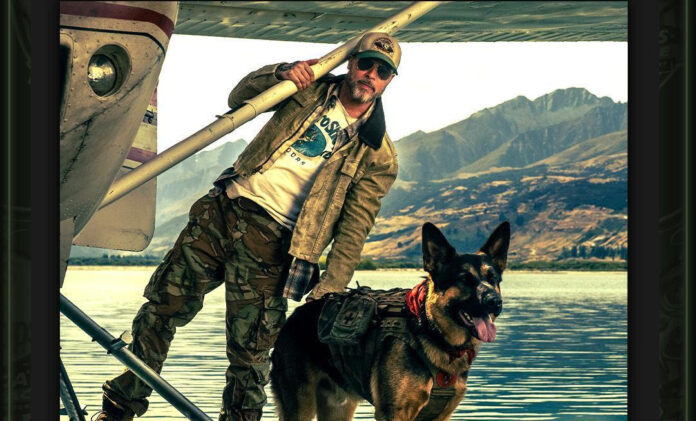
Academy Award-winning actor and producer will serve as a Grand Marshal Sept. 19, six days before Paramount Pictures’ Heart of the Beast opens exclusively in theatres
BRISTOL, Tenn. (Sept. 8, 2026) – Brad Pitt is headed to The Last Great Colosseum.
The Academy Award-winning actor and producer will serve as a Grand Marshal alongside Johnny Morris for the Bass Pro Shops Night Race on Saturday, Sept. 19 at Bristol Motor Speedway, bringing one of Hollywood’s most recognizable stars to one of NASCAR’s most iconic nights.
Pitt, whose new Paramount Pictures film Heart of the Beast opens exclusively in theatres Sept. 25, will take part in Bristol’s famed pre-race ceremonies and help give the command to fire engines before the NASCAR Cup Series roars to life under the lights for the third race of the 2026 NASCAR Cup Series Chase.
The appearance also brings together a distinctive Missouri connection. Pitt grew up in Springfield, Missouri — the same city where Johnny Morris founded Bass Pro Shops in 1972. From its Springfield roots, Bass Pro Shops has grown into one of America’s best-known outdoor brands, with a longstanding commitment to supporting America’s service members and their families.
In Heart of the Beast, Pitt stars as Special Forces officer James Belmont, who survives a harrowing plane crash with his combat dog, Odin, only to find the pair stranded deep in the Alaskan wilderness and forced into a brutal fight for survival. Directed by David Ayer, the intense adventure thriller also stars J.K. Simmons and Anna Lambe, with Pitt also serving as a producer. Heart of the Beast tickets are on sale now; log on to www.heartofthebeastmovie.com for more information.
The film’s themes of courage, loyalty and survival provide a fitting connection to a Bass Pro Shops Night Race weekend that traditionally uses one of NASCAR’s biggest stages to honor members of the United States military, veterans, first responders and community heroes.
“It’s pretty special to welcome our fellow Springfield, Missouri, native to Bristol for the Bass Pro Shops Night Race,” said Bass Pro Shops founder Johnny Morris. “So many people still remember Brad’s role in A River Runs Through It, a film that helped inspire a deeper appreciation for fly-fishing and the importance of conserving the rivers and wild places that make those experiences possible. This race is one of the most exciting nights in sports, and we’re proud to have Brad join us as we salute conservation and honor the brave veterans, first responders and the men and women who serve our country and communities.”
On the track, the stakes will be just as intense. The 500-lap Bass Pro Shops Night Race is the third race in NASCAR’s 10-race Chase for the Cup Series championship. With every position and every point carrying added weight on the road to the title, Bristol’s tight confines and relentless traffic are poised to turn up the pressure on the sport’s championship contenders.
Few venues magnify that pressure like Bristol’s 0.533-mile concrete oval. The steep high banks, close-quarters racing and thunderous roar of NASCAR engines under the lights create one of the most captivating atmospheres in motorsports — a place where momentum can change in an instant and tempers can flare just as quickly.
“There’s nothing quite like the Bass Pro Shops Night Race under the lights at Bristol, and having Brad Pitt join us makes an already special night even bigger,” said Jerry Caldwell, president and general manager of Bristol Motor Speedway. “We’re excited to welcome Brad to The Last Great Colosseum where he can experience the unmatched energy of one of NASCAR’s most-storied crown jewel events.”
The Bass Pro Shops Night Race begins at 7:30 p.m. ET on Saturday, Sept. 19. Fans can secure tickets and find complete race-weekend information at BristolMotorSpeedway.com.
ABOUT HEART OF THE BEAST
Paramount Pictures presents, in association with Domain Entertainment and Gulfstream Pictures, Heart of the Beast, a film by David Ayer starring Brad Pitt, J.K. Simmons and Anna Lambe. After a harrowing plane crash, Special Forces officer James Belmont (Pitt) and his combat dog, Odin, find themselves stranded deep in the Alaskan wilderness. Together, they are forced into a brutal fight for survival against the elements. The film explores the unbreakable bond between a man and his best friend as they face their greatest battle yet. Heart of the Beast opens exclusively in theatres Sept. 25, 2026.
About Bristol Motor Speedway Bristol Motor Speedway, known as The Last Great Colosseum, sits in the mountains of Northeast Tennessee near the Virginia state line. The 0.533-mile concrete oval, with 28-degree banking, hosts two major NASCAR Cup Series weekends each year, the tradition-rich Food City 500 and the crown jewel Bass Pro Shops Night Race. The venue has staged iconic moments such as the 2016 Pilot Flying J Battle at Bristol football game between the University of Tennessee and Virginia Tech (NCAA-record 156,990 fans), the 2025 MLB Speedway Classic between the Atlanta Braves and Cincinnati Reds (MLB regular-season record crowd of 91,032), the 2020 NASCAR All-Star Race, the rebirth of NASCAR Cup Series racing on dirt from 2021–2023 and sold-out concerts for Morgan Wallen and Kenny Chesney. Fans enjoy Colossus TV, the world’s largest outdoor center-hung four-sided screen video board. The adjacent Bristol Dragway is the home to the NHRA Super Grip Thunder Valley Nationals, and the dragway can transform into the Thunder Valley Amphitheatre for music concerts. Opened in 1961 and acquired by Speedway Motorsports in 1996, Bristol remains one of America’s most unique and versatile sports and entertainment destinations. For more information, please visit www.bristolmotorspeedway.com.
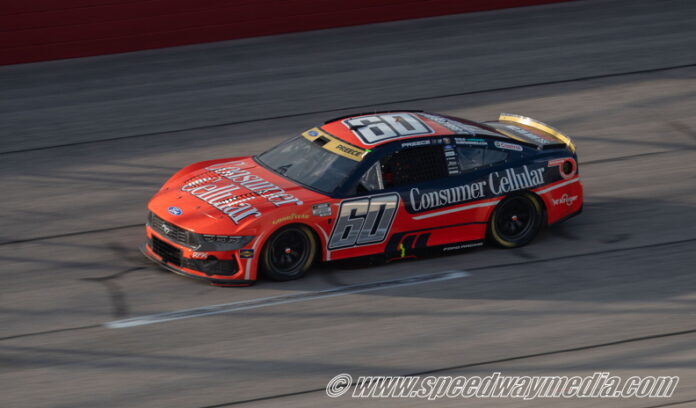
Ryan Preece battled his way to a 10th-place result in his first Chase event as a Chase contender following the 2026 Cook Out Southern 500 at Darlington Raceway on Sunday, September 6.
The 2013 NASCAR Whelen Modified Tour champion from Berlin, Connecticut, took the green flag from third place and spent the entire first stage period racing in the top-10 mark. At the conclusion of the first stage period, Preece racked up four stage points by settling in seventh place.
Prior to the start of the second stage period, Preece’s Chase run at the front took an early hit when he made a second trip to pit road to have the wheels on his No. 60 Consumer Cellular/Roush Fenway Keselowski Racing Ford Mustang Dark Horse entry inspected and tightened. Mired outside the top-20 mark for the stage’s remainder, he was the first competitor scored a lap down in 20th place when the second stage period concluded, but he was the recipient of the free pass to cycle back on the lead lap prior to the third and final stage period that commenced with 130 laps remaining.
With Preece managing to remain on the lead lap and within the midregion of the top-20 mark on the track, he managed to carve back up within the top-15 mark with less than 80 laps remaining. After being as high as 12th place on the track while the laps dwindled, Preece was one of four Chasers along with Kyle Larson, Austin Cindric and Joey Logano who elected to remain on the track while the rest of the field pitted for tires and fuel amid a caution that flew with 33 laps remaining.
During a 24-lap shootout, Preece quickly dropped back wihtin the top-10 mark, but he managed to retain 10th place on the leaderboard when he took the checkered flag. As a result, Preece notched his first-ever top-10 result at Darlington Raceway in a Cup Series entry and his eighth top-10 result of the 2026 season. Despite seeking more on the track, Preece was left satisfied with his result.
“It was a good night,” Preece said. “I’ll take a 10th. For starting upfront and really working on it all day, those are the nights that we just need to take tonight and figure out what can make us better for next week. It was tough, it wasn’t easy.”
Preece, who combined with the 10th-place result following the late strategic call to remain on the track with worn tires and seven stage points from the first stage period, only gained a single spot in the Chase standings from 16th to 15th. Nevertheless, he sets his focus on the remaining nine Chase events, starting with next weekend’s second Chase event at World Wide Technology Raceway, to charge forward towards his championship hopes and contend for additional race victories with his regular-season finale win at Daytona International Speedway in mid-August.
“It was definitely a team effort,” Preece said on the USA Network. “I thought the Consumer Cellular Ford Mustang was good, but not phenomenal. [Crew chief] Derrick [Finley] and everybody, they just kept trying to make it better. Some nights, you got to persevere like this. Just keep clipping away. Nine more [Chase races], and I feel good about Gateway. Looking forward to it.”
Ryan Preece’s 2026 Chase for the NASCAR Cup Series championship resumes next Sunday, September 6, at World Wide Technology Raceway for the Enjoy Illinois 300. The event’s broadcast time is slated to commence at 3 p.m. ET on USA Network, MRN Radio, SiriusXM and HBO MAX.
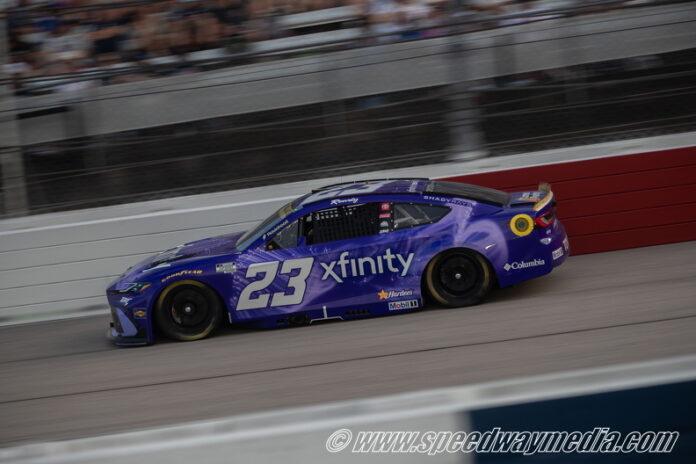
Bubba Wallace commenced his third career Chase run with a strong eighth-place result along with a chunk of stage points following the 2026 Cook Out Southern 500 at Darlington Raceway on Sunday, September 6.
The 2025 Brickyard 400 champion from Mobile, Alabama, took the green flag from 17th place and spent the early portions methodically carving his way up towards the top-15 and top-10 marks. Following a strategic call to pit later than a majority of the front-runners, Wallace, who had at least five laps of fresher tires than the competition, motored his No. 23 Xfinity/23XI Racing Toyota Camry XSE entry up as high as second place on the track before the first stage’s conclusion. By then, he accumulated nine stage points.
In the opening laps of the second stage period, Wallace had his teammate Tyler Reddick within his sights for the lead as the former was mired in the runner-up spot. Then during another cycle of green flag pit stops that commenced just past the Lap 140 mark, Wallace opted to pit a lap after Reddick pitted. This allowed the former to make up the deficit he had to reel in, overtake Reddick on the track and cycle to the lead on Lap 155. Wallace led the next 32 laps before he ignited another cycle of green flag pit stops by being the first to pit on Lap 186. By the time Wallace blended back on the racetrack, he was outdueled by four competitors on tire advantages and settled in fifth place at the second stage’s conclusion, which still awarded the No. 23 driver six stage points.
During the start of the third and final stage period, Wallace trailed Kyle Larson from the runner-up spot in the early portions. As the event shifted into nighttime racing, Wallace began to lose ground of the lead and he even slipped outside of the top-10 mark while the laps dwindled. During an extensive caution period that first flew with 52 laps remaining, Wallace navigated his way back into the top 10 in eighth place following a pit stop with the field during the caution. Ultimately, he navigated his way through two late-race restarts, including the final one with 24 laps remaining, to claim eighth place when the checkered flag flew.
With the result, Wallace notched his sixth top-10 result in a Cup event at Darlington and his 12th top-10 result of the 2026 season. The 38 total laps Wallace led during the event are the most he has led in a Cup event at Darlington, overall. The on-track performance and result left Wallace satisfied amid the humid temperatures that lingered from daytime to nighttime and the latter period that prevented Wallace from remaining out in front to contend for the victory.
“[I had] Just a really good clean day,” Wallace said on USA Network. “Pleasantly pleased with how our Xfinity Toyota Camry was in the daytime. And then nighttime, we just got too tight and we were just OK. I hate that we gave up a little bit of pace there in the end, but all in all, come out of here with a solid effort, good points day. It was fun running up front with Tyler [Reddick]. Great for 23XI [Racing].”
“This place is one of a kind,” Wallace added. “It’s so unique. Hit the reset button. Look forward to Gateway. Lot of pace there. Looking forward to that.”
Prior to this year’s Southern 500, Wallace was ranked in 13th place in the 2026 Chase standings with 2,010 points. After the event, he utilized his overall eighth-place run and 15 stage points notched between the first two stage periods to gain three spots in the standings to 10th place. With the first Chase event of the 2026 NASCAR Cup Series season in the recordbooks, Wallace sets his sights on maintaining his momentum from Darlington to be in championship contention throughout the remaining nine postseason events.
“[There is a] Long way to go [in the Chase],” Wallace said. “We know what we’re capable of when we can have clean races like tonight. It’s easier to work on cars and give better feedback when we have clean races. So, keep doing that and wherever we end up, we end up.”
Bubba Wallace’s 2026 Chase for the NASCAR Cup Series championship resumes next Sunday, September 6, at World Wide Technology Raceway for the Enjoy Illinois 300. The event’s broadcast time is slated to commence at 3 p.m. ET on USA Network, MRN Radio, SiriusXM and HBO MAX.
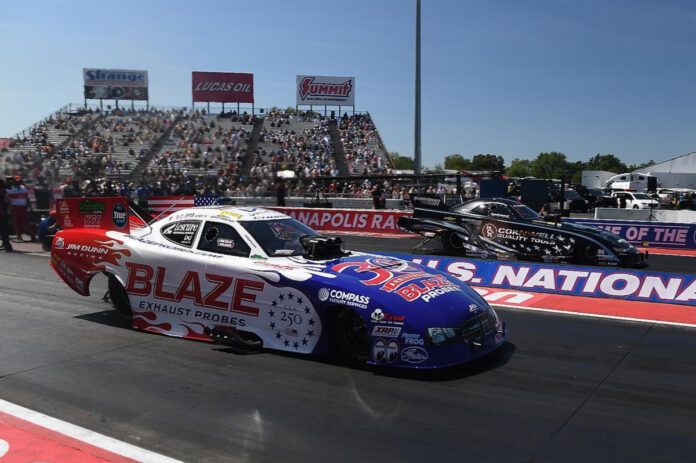
Jeff Arend Blaze Exhaust Probes Funny Car Driver for Jim Dunn Racing 72nd Annual Cornwell Quality Tools NHRA U.S. Nationals Sept. 2-7 | Indianapolis
Event Recap
Jeff Arend, driver of the Jim Dunn Racing Blaze Exhaust Probes Funny Car:
Earned No. 12 provisional qualifying position in Q1 on Friday (4.135 ET at 300.66 mph)
Fell to No. 14 provisional qualifying position based off of Friday’s Q1 run. In Q2 on Saturday, Arend ran a 5.130 ET at 150.13 mph.
Maintained No. 14 provisional qualifying position in Q3 on Saturday (4.076 ET at 303.78 mph)
Maintained No. 14 provisional qualifying position based off of Saturday’s Q3 run. In Q4 on Sunday, Arend ran a 4.654 ET at 182.03 mph.
Secured No. 14 qualifying position based off of Saturday’s Q3 run. The team elected to not make a qualifying run in Q5 on Sunday.
Eliminated following Round 1 on Monday:
Round 1: 4.019 ET at 320.28 mph, lost to Jack Beckman (3.885 ET at 328.94 mph)
Notes of Interest
Arend represented Blaze Exhaust Probes this weekend in Indianapolis. Blaze Technical Services was founded in 1996 by Ralph and Candy Hickman in Northeast Ohio. They are a leading full-service temperature sensor manufacturer that offers solutions for even the most demanding applications. Their reputation for creating the most rugged industrial temperature sensors and high temperature thermocouple assemblies has made them a top choice in the industry. Being ISO 9001 certified since 2003 reflects their commitment to producing only the highest quality products, including their popular exhaust gas temperature probes and other industrial temperature sensors. They also specialize in high temperature thermocouple designs that perform reliably in extreme conditions, including High-temperature aerospace sensors and Soil temperature monitoring setups. They are dedicated to delivering quality products on time and at a fair price. Additionally, they document all products with CAD drawings to make future changes or reordering easy, and can provide certification on request. Their Blaze Technical Services temperature solutions are trusted by professionals across a wide range of industries. Jim Dunn Racing earned a career-best speed of 320 miles per hour during Round 1 of eliminations on Monday. The U.S. Nationals marked the conclusion of the NHRA’s regular season, prior to the Countdown to the Championship, where Arend finished 14th in points.
Jeff Arend, Driver of the Jim Dunn Racing Blaze Exhaust Probes Funny Car
“Jim (Dunn) had to be happy seeing the 320 miles per hour (mph) on the score board. We have been talking about it for a little while. The car has been coming around well. But, the track conditions at Indy are tricky and the car didn’t respond like we had wanted. It was really great to qualify where we did and be able to sit out the last qualifying session. This is the biggest race of the year, so it was nice to be able to qualify No. 14. I joked Jim that I saw the smile on his face. 320 mph is our career best run, so that is awesome.”
Next Up The next event on the NHRA Mission Foods Drag Racing Series schedule is the Dodge NHRA Great Lakes Nationals presented by MOPAR September 18-20 at US 131 Motorsports Park in Martin, Michigan. However, Jim Dunn Racing has elected to sit out the next three NHRA events, so their next on-track appearance will be the Texas NHRA FallNationals October 16-18 at Texas Motorplex in Ennis, Texas.
Old trackside photos, faded race day prints, scratched negatives pulled from decades of race coverage, lose a little more detail every year. Knowing that restoration is possible doesn’t actually fix a single one of them sitting in a box or a folder right now.
Why Old Race Photos Fade Faster Than People Expect
Print photography, early digital files, and scanned negatives all degrade in different ways, and most race archives hold a mix of all three without anyone tracking which ones are closest to becoming unreadable.
A print left in a garage or a scrapbook fades and yellows over years. An early digital file saved at low resolution never had much detail to begin with. A negative stored without proper sleeves picks up scratches and dust with every handling. None of these problems show up all at once, they compound quietly until someone finally goes looking for a specific photo and finds it barely usable.
Why Scanning a Damaged Photo Doesn’t Actually Restore It
Scanning at a higher resolution captures more of what’s left on the original, but it doesn’t fix a crease, a water stain, or faded color, it just makes the existing damage more visible at a larger size.
Running a scratched negative through a high-resolution scanner produces a bigger file with the same scratches, just easier to see now. The issue was never resolution. A sharper scan of a damaged photo is still a damaged photo, only bigger.
Why Manual Restoration Was Never Practical for a Full Archive
Restoring a single photo by hand in traditional editing software, cloning out damage, correcting faded color, rebuilding a torn corner, takes real skill and real time, which doesn’t scale to a race team or outlet holding thousands of images across decades of coverage.
Spending hours manually restoring one photo makes sense for a handful of irreplaceable shots. It doesn’t make sense for an archive with hundreds or thousands of images spanning multiple decades of race weekends. That’s exactly the gap that leaves most old race photography technically preserved and functionally unusable.
Why Most Archives Just Accept the Loss
Without a practical way to restore damaged photos at scale, most organizations quietly let the oldest and most degraded images stay exactly as damaged as they found them.
Digitizing an archive and calling it preserved isn’t the same as actually being able to use those images again. A scanned but still faded, torn, or scratched photo sits in a folder looking technically saved while remaining practically unusable for anything beyond a quick reference.
How the AI Image Generator Restores What the Archive Was Losing
Higgsfield, an AI image generator built on multiple underlying models including Nano Banana Pro, GPT Image, Seedream, FLUX, and Kling O1, takes a damaged photo and the specific issue with it, fading, tears, water damage, low original resolution, and rebuilds the image around restoring that input, without hours of manual cloning and color correction. That matters for archival race photography specifically, since one model might handle rebuilding fine detail on a car livery convincingly while another handles correcting faded color or reconstructing a torn section, depending on what actually damaged the original.
Generation happens natively at 2K resolution with intelligent 4K refinement on output, useful for a restored photo that gets reprinted, displayed, or reused in coverage instead of staying a low-resolution scan. A feature called Soul ID keeps recognizable details, a driver’s face, a car’s livery, consistent across multiple restored versions, relevant for anyone restoring a series of related photos from the same race weekend. Non-destructive editing through Nano Banana Pro Inpaint allows one detail, a torn corner, a water stain, a faded section, to be rebuilt after the fact without regenerating the rest of the photo.
How This Actually Works From a Damaged Original
Someone inputs the damaged photo along with the specific issue, faded color, a tear, missing detail from age, and the tool rebuilds the image around fixing that exact input rather than applying a generic sharpening filter.
Instead of manually cloning out decades of damage one photo at a time, someone describes exactly what’s wrong with the original and the tool generates a restored version built around that description. That’s a meaningfully faster result than restoring an entire archive by hand.
Why Old Race Footage Has the Same Problem
Archival race footage, old broadcast clips, and early digital video from past decades degrade the same way old photos do, and increasingly it’s part of the same restoration conversation as the photo archive sitting alongside it.
A broadcast clip recorded on older equipment, a compressed digital transfer, or footage that’s simply aged in storage tends to look noticeably rougher than anything filmed with current equipment. That gap matters for any outlet building a retrospective or anniversary piece, decades old footage sitting next to modern race coverage breaks the visual consistency of the whole piece.
How the AI Video Upscaler Restores Old Race Footage
Old broadcast clips and archival race footage get a second life through the same platform, applying super resolution, denoising, and stabilization so the AI video upscaler output holds up next to current coverage in the same retrospective or highlight piece. That’s a meaningfully different result than simply resizing the same clip and hoping it reads as sharper on a bigger screen.
What a Complete Archive Restoration Workflow Looks Like
Restoring the photos first, then cleaning up whatever old footage sits alongside them in the same archive, turns a box of fading prints and scratched negatives into material that’s actually usable again.
Speedwaymedia’s own photo archive is exactly the kind of collection that benefits from this next step, decades of race coverage that stays genuinely useful only as long as the images in it hold up. Restoring the photo the moment the damage is identified, then cleaning up whatever older footage sits in the same archive, rounds out a workflow that used to mean accepting that the oldest material would just keep degrading.
What to Check Before Trusting an AI Tool With Archival Material
Prioritize an honest free tier, consistency across repeated restorations of related photos, and no steep learning curve, since most people handling an archive want a practical restoration workflow, not a drawn out design project.
A tool that produces one impressive demo restoration but generates a noticeably different looking result the second time around, or locks meaningful use behind a paywall before someone can judge real output quality, doesn’t hold up for anyone restoring more than a handful of photos. The tools worth using are the ones that keep producing accurate, consistent restorations generation after generation, not just on a single lucky result.
Frequently Asked Questions
Is there a free way to try an AI image generator for photo restoration?
Most platforms offer a usable free tier with daily generation credits, enough to test real output quality on a specific damaged photo before committing to a paid plan.
Can the tool keep a driver’s face or a car’s livery accurate during restoration?
Comparing outputs across several underlying models tends to produce more convincing, accurate results, since a single model may default to one generic style rather than reliably preserving specific recognizable details.
Does video upscaling work on old broadcast footage?
Yes, though extremely degraded or low bitrate source material has a lower ceiling for how much detail can realistically be reconstructed compared to footage that’s only mildly compressed.
Does this replace properly archiving the original photo or negative?
Not necessarily. A restored version works well for actually using an image again, but the original print or negative still holds historical value a digital restoration doesn’t fully replace.
How is this different from a standard photo scan?
A scan captures more detail from whatever is left on a damaged original, while an AI image generator rebuilds the parts that faded, tore, or degraded entirely, producing a usable result rather than just a bigger version of the same damage.
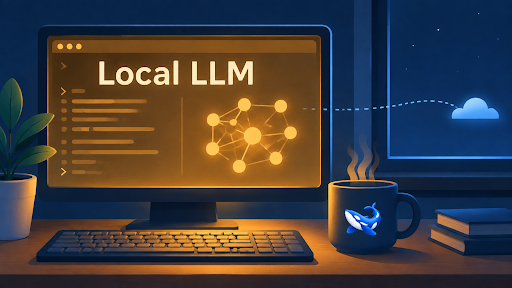
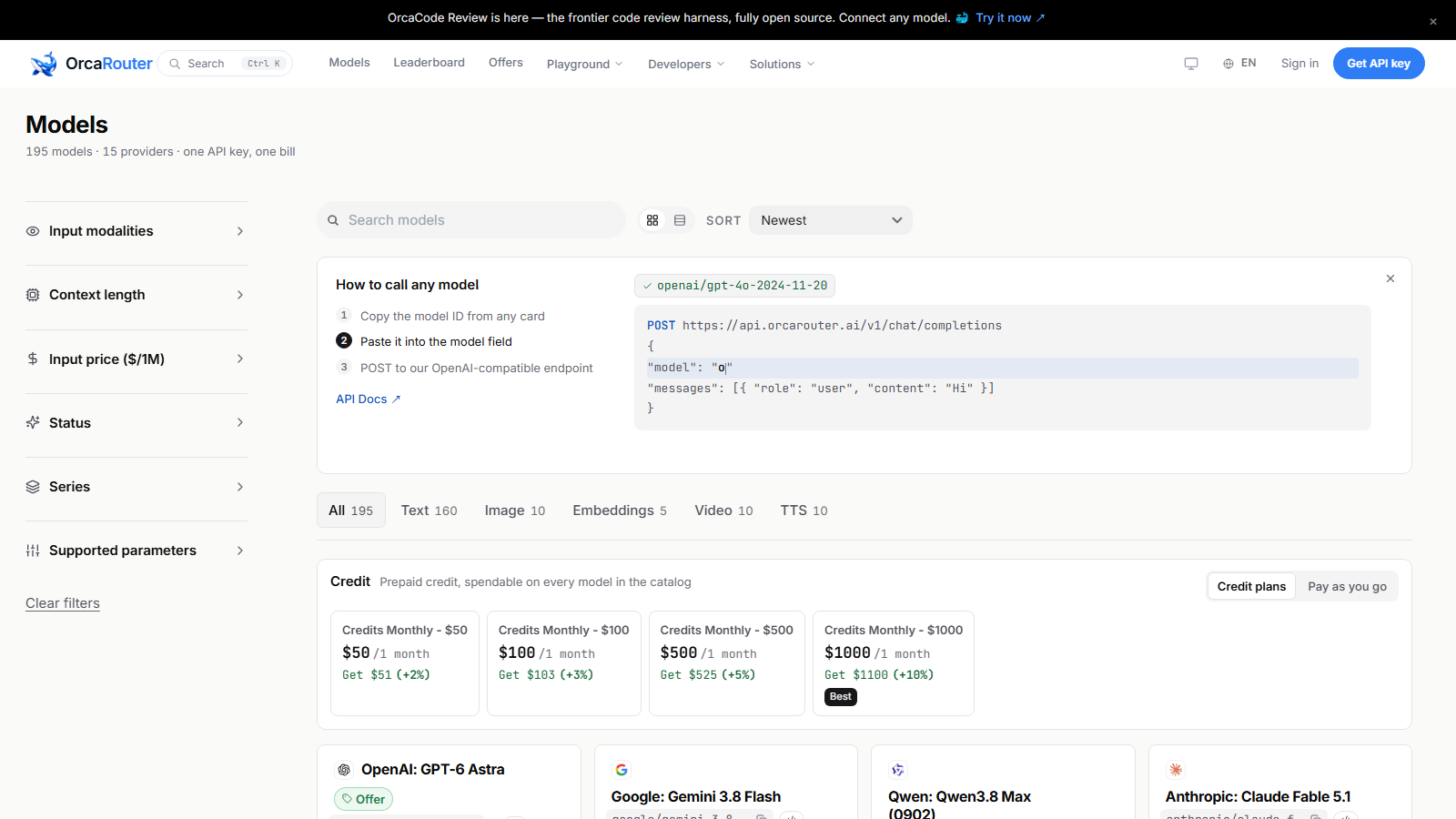
The short answer, stated up front: a 7B to 14B open-weights coder model, quantized to 4 bits, covers autocomplete, boilerplate, test scaffolding and most single-file work on hardware you probably already own. Refactors that span a repository, very long contexts, and the largest frontier weights are where local hits a wall, and that work belongs behind a Qwen API or whichever hosted endpoint you prefer — browsing a full AI model API catalog makes the boundary between the two obvious in about ten minutes.
If you last tried a local model a couple of years ago, the trade-off has moved. Small coder models stopped being party tricks, consumer GPUs now ship with more memory than workstation cards did back then, and laptops with unified memory run model sizes that used to require a data-center booking. At the same time, agentic coding tools burn through tokens hard enough that every per-token line on an invoice deserves a second look. So the question is no longer “can I run a model locally?” but “which parts of my workflow should stay local, and which should I never have tried to squeeze onto a laptop?” That boundary is what this article draws.
What can a local LLM actually handle in a coding workflow?
Be honest about the tiers, because the gap between them is the whole decision.
Comfortably local, in my experience: inline autocomplete (the latency win is real — the round trip is to your own GPU, not across the internet, so suggestions arrive while your fingers are still moving), boilerplate and scaffolding, regex you don’t want to write by hand, docstrings, unit tests for a function that already exists, translating a snippet between languages, and explaining a file you’ve just opened.
Strains but sometimes works: refactors across two or three files, “write me a module that does X” from scratch, debugging with a stack trace plus the relevant function in context.
Don’t ask it: architecture decisions, migrations that touch dozens of files, anything where being confidently wrong is expensive. Small models fail quietly — they produce plausible code with the wrong assumptions baked in, and you find out at review time instead of generation time.
The mental model that has held up for me: the local model writes the function; the hosted model decides where the function goes and whether it should exist.
How much VRAM does a local coding model need?
The rule-of-thumb math is simple: 4-bit quantization stores roughly half a byte per parameter, so the weights cost you about half the parameter count in gigabytes.
• 7B-class: around 4 GB of weights; call it 6 GB of free VRAM once the KV cache and runtime are fed. Runs on an 8 GB laptop GPU.
• 14B-class: around 8 GB of weights; comfortable on a 12–16 GB card.
• 32B-class: around 18–20 GB of weights; this is 24 GB desktop-card territory, or a Mac whose unified memory starts at 32 GB.
Two caveats from painful experience. First, “it loaded” is not “it runs”: context is not free, and the KV cache grows with every token you stuff into the prompt, so the model that flies at 2k tokens of context crawls or crashes at 30k. Second, on Apple silicon the unified memory is shared with the operating system and everything else, so take the advertised number and subtract a healthy margin.
If the math says a model won’t fit, go down a size class before you reach for heavier quantization. A smaller model at Q4 with room to breathe beats a bigger model thrashing against the memory ceiling every time.
Which models are worth loading locally?
The open-weights ecosystem has settled into a handful of families with serious coder lines: Qwen’s coder series (the same family you can also call hosted — more on that below), DeepSeek’s coder models, Meta’s Llama variants, Mistral’s releases, Google’s Gemma, and Microsoft’s small Phi models, which are interesting precisely because they run on machines with no discrete GPU at all.
Rather than chasing leaderboards — which I would have to caveat into uselessness anyway — use this filter: keep a folder of ten real tasks from your own repositories (a bug fix, a test-writing chore, a snippet translation, a small feature) and run every candidate against them. Fifteen minutes of that tells you more than any benchmark chart, because it is your code, your style, your dependencies.
Two practical defaults: start at Q4 quantization, where the quality-per-gigabyte trade is best for coding work; and prefer the model that fits with headroom over the bigger one that barely fits. Context space you didn’t spend on weights is what lets you paste in the whole file instead of a fragment.
What still needs an API?
Four things, and being specific about them saves both money and frustration.
First, frontier-weight quality: the largest hosted models still handle “here are fourteen files, find the design flaw” better than anything you can fit on a desk. Second, long context: whole-repository prompts and giant log analysis need memory no laptop wants to spare. Third, freshness: framework versions released after a local model’s training cutoff are invisible to it, and hosted models turn over faster. Fourth, throughput: agent loops that fire hundreds of calls will pin your GPU for hours — the same GPU you were presumably planning to use for, you know, work.
And one boring one: availability. No GPU on the travel laptop means no local model, full stop.
Once you cross that line, the question becomes which hosted model, at what context length, at what price — and that is a catalog question, not a vibes question. Those numbers are all published; the kind of side-by-side view below is worth ten minutes before you wire anything into your editor.
How do you run local and API models side by side?
The plumbing is easier than it sounds, because everything speaks the same protocol. A local runner such as Ollama or LM Studio serves your chosen model at a localhost endpoint in the OpenAI-compatible format; hosted providers accept the same format over the network. Most editor plugins and CLI coding tools let you configure two endpoints and choose per task.
The routing rule that works: default to local, escalate on a trigger, not on a hunch. Triggers worth writing down: the task spans more than a couple of files; the prompt needs more context than your VRAM headroom allows; the local model has failed the same task twice; or you are about to start an agent loop longer than a few minutes. Everything else stays on the machine — free, private, and indifferent to whether the Wi-Fi works on the train.
Keep the config in one file in your dotfiles so both endpoints move together, and note which model answered what. When a hosted model bails you out, you want to know which escalation trigger actually fired, because that is the trigger you will be paying for.
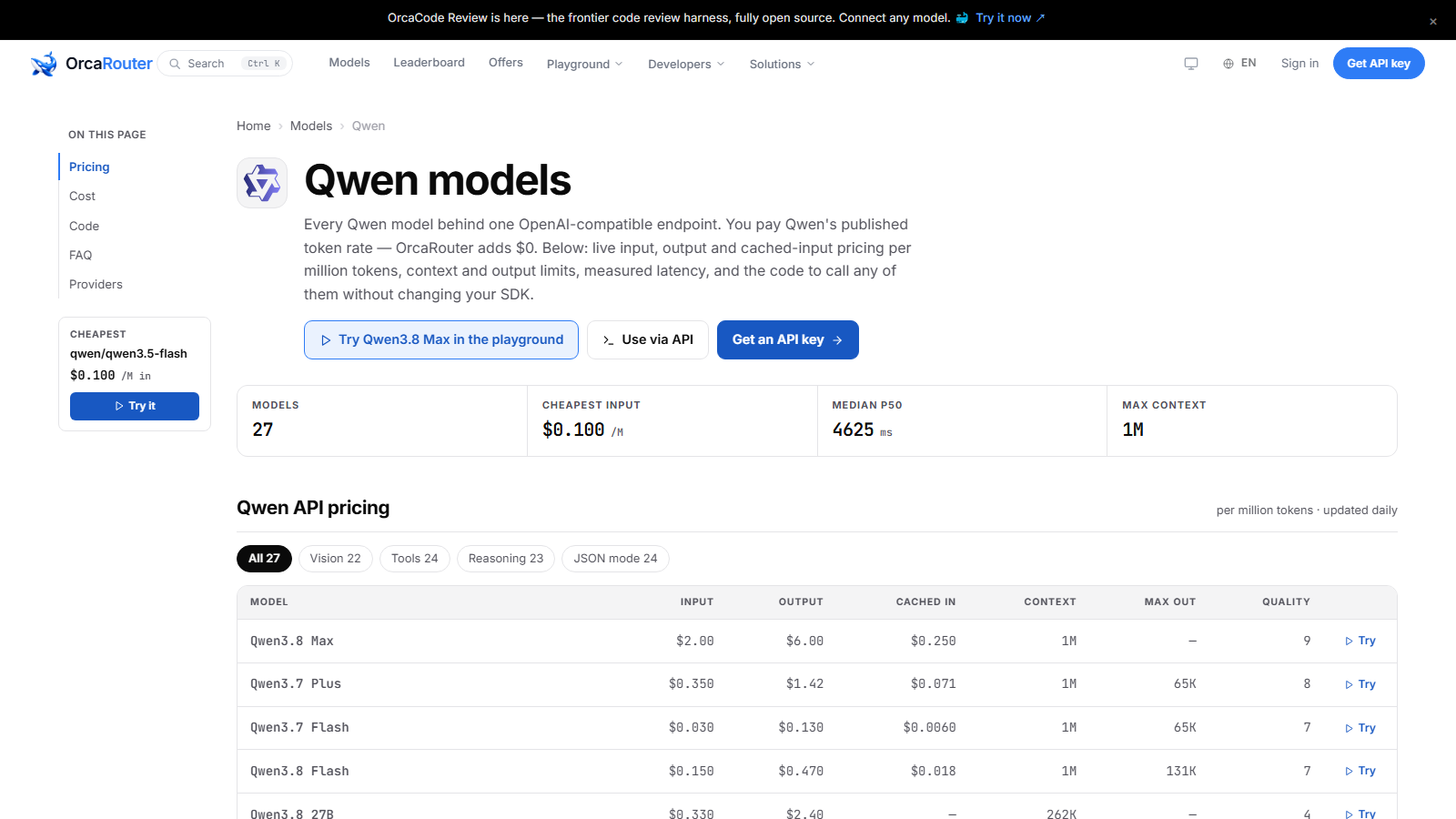
When the hosted side of that split is Qwen, the provider page is where you check which sizes are available and what each one costs before you commit your editor to it.
The takeaway
Buy the keystrokes, rent the decisions. A 14B-class coder model on hardware you already own is genuinely good enough for most of what your fingers do in a day — autocomplete, tests, boilerplate, single-file changes — and paying per token for that tier stopped making sense a while ago. The moment a task spans a repository, needs more context than your memory ceiling allows, or deserves frontier weights, send it to the API without guilt; that is not a failure of local, it is the correct division of labor. Set up both, route by trigger, and re-run your ten-task folder every few months — the models are changing faster than the hardware is.
Sourcing note: Hardware and memory figures above are rules of thumb derived from published model parameter counts and standard 4-bit quantization arithmetic, not measured benchmarks — expect variance across runtimes and verify on your own machine. Hosted model availability, context windows and pricing were checked against the linked catalog and Qwen provider pages on 2026-09-07. This article cites no third-party benchmarks or survey statistics; task-fit judgments are the author’s own experience.
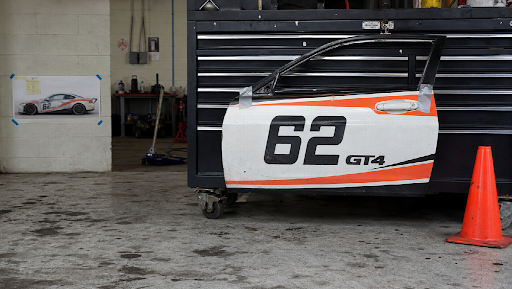
Pit road already did the expensive work. The light is ugly, but useful for some great effects. The car numbers are readable, and the car is already in motion. Then the Slack thread asks for a clip before the broadcast comes back from break, and that still gets dropped into a website that promises to “bring photos to life.” Half a minute later, the livery has a stripe that never ran, and the wall behind it belongs to a different weekend.
That is not a creativity problem; it is a sequence problem. You do not need a souvenir button. You need the frame to stop lying, the motion to last long enough to be a beat, and, if the show needs a bumper, the type that doesn’t fall off the edge of a phone.
Most of the damage is already in the photo. A cup on the toolbox, the last man’s watermark. A banner for a brand that is not paying this round. If you animate any of that, you have animated the mistake. ChatGPT is the unglamorous step: brush only what you want removed, leave the rest as is. Lighting should match the original concrete, not look like a sticker.
Upload the photo as JPG, PNG, or WEBP and try to keep the mask as tight as possible. If you are swapping a sign and you have the replacement, upload two reference pictures. Free passes may be watermarked; paid exports can be clean, but you still need rights to the original file, which, on a race weekend, is no footnote.
The job is one continuous take, not five eight-second orphans stitched until the door number drifts. Seedance 2.5 is the model for that kit-locked beat: text plus pictures, sometimes a scrap of video or audio, about four to thirty seconds, typically 1080p on a hosted generator, but it’s not a 4K poster. You write down the seconds: “0–8 the same car from the still; 8–18 a slow push along the same door; 18–24 hold for a caption; I will need no extra crew, no second number.”
If the crowd speaks more than one language, the model can carry dialogue and on-screen text without opening a separate “translator” tab. That is not the same as one-click dubbing a whole recap. A person who has read the contract still spells sponsor names. If second eighteen is a different door, then something is wrong with the folder.
Nobody is documenting the garage. But somebody needs a few seconds of product and type that will actually play in 9:16, or on a site in 16:9, without cropping the mark off the hat. Motion Studio is that desk: brief, references, style, duration, frame. Length sits around four to sixty seconds. Six ratios cover the usual placements.
Photograph the real bottle, the real mark, the real hat, about fifteen megabytes each on the current page. It is not After Effects in a browser. It does not hand you a .aep. References guide the look; they do not guarantee the object.
Generated motion will not create a caution flag, and it will not replace the photographer. If a driver has to say a quote, record the driver and give the credits the hours you don’t have in an edit center in the hauler. This one is for the still you already own and the twenty seconds the timeline is waiting on.
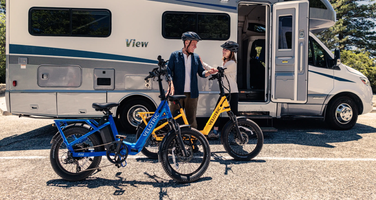
An RV buys freedom on the open road — right up until you’re parked. Driving into town for groceries, looping the campground to find the shower block, or reaching a trailhead half a mile out shouldn’t require breaking camp or squeezing a 30-foot rig into a gas station lot. Yet that’s exactly the trade-off many RV travelers make, simply because nothing smaller is on board.
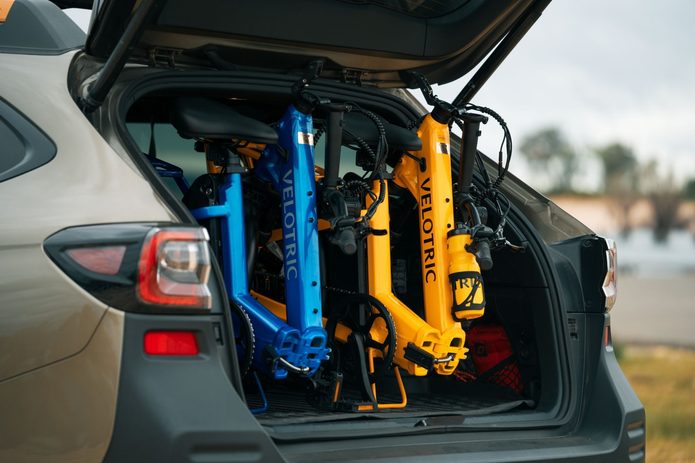
A foldable electric bike closes that gap. It tucks into space a full-size bicycle can’t, and its motor turns hills, headwinds, and long campground loops into a non-issue. Fold it, stow it, and suddenly the RV isn’t the only way to get around.
But “it folds” is not a buying criterion on its own. Weight, folded dimensions, battery storage, how you’ll actually carry it, and how it rides over a week of repeated trips all matter more than whether the frame hinges in the middle. This guide walks through what to compare before a foldable eBike takes up any of that hard-won storage space.
Why a Folding Electric Bike Works With an RV
Easier Transportation Once You’re Parked
Once the RV is leveled and hooked up, moving it again for a quick errand is its own chore. A folding eBike skips that — leave the RV in place and ride off for supplies, food, or a look around camp. The electric assist earns its keep on the way back: dial it down on flat stretches to save battery, lean on it for the climb home with a loaded pannier.
The value is practical first, recreational second — a bike that handles the store run is also ready for an evening ride along the lake.
Compact Doesn’t Mean Light
Folding shrinks the footprint, not necessarily the mass. A motor, battery, reinforced hinges, wider tires, and suspension hardware add up — a bike that disappears into a storage bay can still be a two-person lift to get there.
That distinction matters more in an RV than almost anywhere else: a bike that clears a compartment’s dimensions may not clear the threshold in front of it. Treat folded size and total weight as two separate specs, and practice the fold before the trip — not on the first morning of it.
Match the Bike to Your Travel Style
The right bike reflects the terrain you’ll actually ride most weekends — not the one ambitious trip you might take once.
Folded Dimensions, Weight, and Storage Space
Measure the real storage area and the path to it — door widths, steps, tight turns. A bike that fits the final space can still be impossible to maneuver through the route leading there. It also shouldn’t be free to slide or tip while the RV is moving; whatever secures it should follow both the bike and vehicle manufacturer’s guidance.
Weight matters most the moment lifting enters the picture. Check whether the battery removes separately for transport, and store it the way the manufacturer specifies — not loose in a cabinet.
Range and Motor Support
RV travel makes range hard to predict — a campground loop might use almost nothing, while a supply run into town could climb and wind past any nearby outlet. Size the battery for the longest regular trip, plus a reserve for the detour you didn’t plan, and treat advertised range as a starting point rather than a promise: rider weight, cargo, terrain, and assist level all pull that number down.
Motor character counts as much as motor size. What matters on a slow, crowded campground road isn’t peak power — it’s whether the assist comes in smoothly from a stop, and lets you dial down around pedestrians and back up once the road opens.
Tires, Suspension, and Braking
Most RV routes mix surfaces — pavement into gravel into whatever the campground road became after last week’s rain. A moderate-width, puncture-resistant tire delivers stability without the bulk of a full fat-tire build; suspension handles what the tire alone can’t absorb, and should scale to the terrain rather than exist as a spec-sheet feature.
Braking matters more with cargo aboard or a slope ahead. Hydraulic disc brakes offer more control with less hand effort — though no brake compensates for loose gravel or a loaded bike’s extra stopping distance.
Comfort, Access, and Cargo Capacity
Travel days already mean hours of sitting, so an uncomfortable bike is one that stays in storage — look for a position that doesn’t load up the wrists or shoulders. A step-through frame turns mounting into a non-event, especially with a rear rack loaded or mobility limited.
Check total payload and rack capacity separately, since bags and locks eat into both — and some accessories need to come off before the frame will fold. A rack bag rides more predictably than anything swinging off the handlebar.
Plan How the Bike Will Be Carried, Charged, and Stored
Interior Storage Versus an Exterior Rack
Storing the bike inside keeps it dry and out of sight, at the cost of living space and a bit of tracked-in dirt — a folding mat or protective bag helps, as long as it doesn’t block an exit or control. An exterior hitch rack frees up that space instead, but only if it’s rated for the job: confirm per-bike weight limit and explicit approval for use behind an RV or trailer, since the forces back there aren’t the same as behind a sedan.
Check the RV’s hitch and cargo ratings against the combined weight of rack and bikes before assuming it all works together, and use the rack’s specified mounting points rather than a guess.
Battery Charging and Temperature Management
Charge with the manufacturer-approved charger only, somewhere dry and ventilated, and check both the bike’s rules and the campground’s electrical setup first. Temperature does the rest of the work — a closed vehicle can get hot enough to speed up battery wear, while cold quietly cuts range and slows charging. Let a battery that’s been baking or freezing return to normal temperature before it goes on the charger.
A water-resistance rating explains how the bike handles rain and splashes — it says nothing about submersion or pressure washing. Store and charge as the manual says, rating or no rating.
Campground Rules and Trail Access
An e-bike that’s street-legal isn’t automatically welcome on every campground path or nearby trail — access shifts by jurisdiction, land manager, and e-bike classification. Check the specific rules before you go, and around pedestrians, kids, and narrow campsite roads, lower assist and a predictable line matter more than speed.
Best Overall for RV Travel: Velotric Fold 1 Plus
For RV travelers who want comfort and real riding capability alongside compact storage, the Velotric Fold 1 Plus is the strongest all-around pick — it folds when it needs to, but doesn’t ride like a bike apologizing for that.
The step-through frame makes mounting effortless, especially with a loaded rear rack. Three-inch tires give it a wide, stable footprint over rough pavement and gravel, and a 60mm suspension fork handles what the tires alone can’t — enough capability for mixed surfaces without the size of a full fat-tire build. That comfort is the point: a travel bike only earns its keep if it gets ridden regularly.
A 750W motor (1,100W peak) delivers a range up to 68 miles, enough for several campground rides between charges depending on terrain and load. A 450-pound payload capacity and IPX6/IPX7 weather ratings round out a bike built for actual use rather than just the spec sheet.
A Final RV Buying Checklist
Measure the final storage area and every opening along the loading path.
Confirm the complete bike weight is manageable for your planned loading method.
Verify any exterior rack is rated for the bike’s weight and approved for RV or trailer use.
Choose enough real-world range for regular destinations, plus a reserve.
Match tires, suspension, and brakes to the surfaces you’ll actually ride.
Check total payload and rack limits against your typical cargo.
Plan a dry, temperature-appropriate spot to store and charge the battery.
Review campground, road, and trail rules for e-bike access.
If possible, practice folding, lifting, and securing the bike before the first trip. That five-minute test usually reveals whether the bike and the carrying plan will still feel convenient once the novelty wears off.
Final Thoughts
A foldable electric bike makes RV travel more flexible by giving you real transportation once the campsite is set up. The best model isn’t the one with the smallest folded footprint — it’s the one that fits your storage, loads safely, and stays comfortable enough to actually use, trip after trip. Start with the RV’s storage and carrying limits, then compare range, motor control, tires, and cargo support. For travelers who want step-through access, real range, and serious carrying capacity, the Velotric Fold 1 Plus is a well-rounded choice.
A Luxurious Yet Affordable Lifestyle at Clovelle of Woodlands EC
Ensuring an upscale living experience while adhering to the financial realities of modern families, Clovelle of Woodlands EC emerges as a beacon of affordability and elegance. Developed by the esteemed Sim Lian Group Limited, this new condominium in the heart of Woodlands Drive 17 makes luxurious living accessible to more Singaporeans, especially those navigating the constraints of the $16,000 monthly household income cap for Executive Condominiums (ECs).
While the price point remains within reach, the value offered at Clovelle of Woodlands EC extends far beyond cost-effectiveness. The project is meticulously designed to enhance the lifestyle of its residents with a focus on community, connectivity, and contemporary living, all nestled in a vibrant area poised for growth.
Why Clovelle of Woodlands EC is the Ideal Choice for Budget-Conscious Families
The criteria for selecting a home go beyond mere aesthetics or the prestige of an address. For many, the decision pivots on the balance between affordability and the promise of a richer, fuller life. Clovelle of Woodlands EC stands out by offering an enriched living environment that respects budgetary limits. Families looking to enjoy the perks of Executive Condominium living without overstretching financially will find Clovelle of Woodlands EC particularly appealing.
From thoughtfully designed spaces that foster family bonding to amenities that cater to both the young and the old, Clovelle of Woodlands EC does not compromise on delivering a high-quality lifestyle. The development’s focus on accessible luxury makes it an unparalleled choice for families earning up to $16,000, who seek both comfort and value in their housing investment.
The Strategic Location of Clovelle of Woodlands EC Enhances Living Convenience
Situated on Woodlands Drive 17, Clovelle of Woodlands EC is strategically positioned to harness the potential of its locale. The area is well-connected to major transportation networks, offering easy access to various parts of Singapore. This connectivity is vital for residents who value ease of travel whether for work, education, or leisure.
The vicinity is rich with educational institutions, shopping malls, parks, and healthcare facilities, ensuring that daily needs are not just met but exceeded. The strategic location thus not only simplifies everyday logistics but also enhances the quality of life for its residents by bringing conveniences and lifestyle options closer to home.
Clovelle of Woodlands EC: A Smart Choice for Future-Oriented Investors
Investing in Clovelle of Woodlands EC is not just about acquiring a home; it’s about securing a stake in an area set for transformation. Woodlands, as part of the North Coast Innovation Corridor, is poised to see significant developments in commercial and recreational facilities. This foresight by Sim Lian Group Limited ensures that residents of Clovelle of Woodlands EC are positioned advantageously for both immediate and future benefits.
As the area develops, property values are expected to rise, potentially yielding significant returns on investment. This aspect of Clovelle of Woodlands EC makes it a wise choice for households looking to balance current lifestyle desires with strategic financial planning.
A Focus on Community and Lifestyle at Clovelle of Woodlands EC
Clovelle of Woodlands EC is designed with a vision to nurture a vibrant community among residents. The condominium features shared spaces and amenities that encourage social interaction and a sense of belonging. These community-focused features not only enhance the living experience but also foster a supportive environment where families can thrive.
The availability of diverse facilities within the development ensures that residents of all ages have activities to engage with, promoting a healthy and active lifestyle. The thoughtful inclusion of these amenities speaks to the commitment of Sim Lian Group Limited to provide a holistic living environment that goes beyond the walls of individual homes.
Enhanced Quality of Living Within Financial Reach at Clovelle of Woodlands EC
Ultimately, Clovelle of Woodlands EC represents a unique blend of affordability, strategic location, and a rich lifestyle, making it an outstanding choice for families. By staying within the $16,000 cap, it ensures that more households can experience the joy and comfort of upscale living without financial strain.
With Clovelle of Woodlands EC, Sim Lian Group Limited continues its tradition of creating value-driven, high-quality living spaces that are accessible to a broader audience, demonstrating that luxury and affordability can indeed go hand in hand.
Need to view a public Instagram Story without signing into Instagram or placing your username in the viewer list? Browser-based viewers can handle that basic task, but they differ sharply in reliability, downloads, content organization, and ongoing monitoring. DolphinRadar is one option built for public-data viewing, while simpler services focus on one-time access.
We compared seven popular services in 2026 across login requirements, public-account access, Story and Highlight viewing, downloads, device support, pricing, and monitoring depth. DolphinRadar stands out for combining free anonymous viewing with optional paid organization and alerts; the other tools are useful when a lightweight, one-time browser check is enough.
How We Tested
Seven Story-viewing services were tested between late August and early September 2026 on mobile and desktop browsers. We checked public-username search, Stories and Highlights access, downloads, registration requirements, cost, and monitoring features. Instagram’s Help Center explains that account holders can review who viewed a Story in Instagram’s standard interface, so our anonymity test focused on whether a service requires the user’s Instagram session. Private-account access claims were excluded.
1. DolphinRadar
DolphinRadar (dolphinradar.com) is a browser-based tool that works with public Instagram data and does not require Instagram credentials. Its free DolphinRadar anonymous story viewer lets users enter any public username, view active Stories and Highlights without appearing in the account’s viewer list, and download individual Story images or videos. No registration or app installation is required for those free viewing and individual-download functions.
The free tool is designed for immediate access: it supports unlimited public-content views on any device with a browser. For users who repeatedly review the same public profile, DolphinRadar also offers a paid Instagram Viewer & Downloader dashboard. That dashboard organizes tracked content by date and separates Stories, Posts, Reels, Highlights, and Reposts into dedicated tabs, making it easier to review activity over time instead of repeating one-off searches.
Paid monitoring starts at $6.99 per month for 1 tracked profile or $69.99 per year. A 3-profile monthly plan costs $13.00 per month, a 38% saving from the undiscounted combined price. Paid features include continuous tracking from the subscription start date, bulk downloads, mentions and tagged-user visibility in tracked Stories, links embedded in Stories, and email notifications when the tracked account posts new Story content.
Main features:
Unlimited anonymous viewing of public Stories and Highlights without an Instagram login
Individual Story image and video downloads without registration
Timeline and Calendar views for tracked public content
Mentions and tagged users visible in tracked Stories
Links embedded in Stories visible in the paid dashboard
Bulk downloads for multiple Stories on paid plans
Email notifications and automatic archiving from the tracking start date
DolphinRadar only works with public Instagram accounts; private accounts’ Stories are not visible. If an account changes from private to public, results usually appear within approximately 10 minutes. The product is available exclusively at dolphinradar.com, and any similarly named service on another domain is not affiliated with it.
DolphinRadar works exclusively with public Instagram data. No login credentials are collected or stored, and all monitoring stays within platform guidelines for public accounts.
Most suitable for: Free anonymous viewing with optional long-term organization and repeated monitoring of public Stories.
2. PVStory
PVStory focuses on making public Instagram browsing quick and uncomplicated. Its Story Viewer works through a browser, so users do not need to create an Instagram account or install an application. It also covers public posts, profiles, Highlights, followers, and following lists, making it more versatile than a Story-only service. The platform says its basic tools are free, with no account required for normal browsing.
Key features:
Public Instagram Story viewing
Highlights Viewer
Public profile browsing
Post and caption viewing
Followers and following lists
Story and post downloads
PVStory is particularly useful when you want to move from a Story to other publicly available profile information without switching services. Its main limitation is depth: the platform is centered on browsing rather than detailed historical reporting, calendar-based analysis, or sophisticated notification workflows. Availability can also depend on whether Instagram makes the requested public information accessible at the time of the search. PVStory covers more public profile elements in a single free interface, but it does not match DolphinRadar’s Timeline, Calendar, bulk-download, and email-notification workflow for repeated monitoring.
Best for: Casual users who want a free, browser-based public Instagram viewer covering Stories and several other content types.
3. Inflact
Inflact takes a broader marketing-oriented approach. Its Instagram Story Viewer supports public Story viewing, while the wider platform combines profile analysis, content viewing, downloading, influencer discovery, and marketing functions. Its premium viewer options include Stories tracking and automatic saving, along with profile, follower, likes, and comments analytics.
Key features:
Instagram Story and profile viewing
Story tracking and automatic saving with premium access
Profile and content analytics
Content and profile downloads
Influencer discovery
Marketing and audience research tools
Inflact has a free tier, while its paid plans are aimed more at users who need a complete Instagram research and marketing suite. Its current pricing page lists Research and Pro packages, with pricing varying according to billing options and selected features. The trade-off is complexity. Someone who only wants to open one public Story may find the wider platform unnecessary.
Inflact combines Story viewing with a wider marketing suite. DolphinRadar is the more focused option when the priority is organized Story history, a Calendar view, batch downloading, and notifications rather than marketing automation.
Best for: Social media professionals, marketers, and researchers who want Story viewing as part of a larger Instagram analytics toolkit.
4. Dumpor
Dumpor is a straightforward browser-based Instagram viewer covering public Stories, Reels, Highlights, profiles, photos, and videos. Its workflow is simple: enter a public username and browse available content without signing into Instagram. The service promotes both viewing and downloading, making it suitable for people who want a basic public-content browser rather than a full analytics platform.
Key features:
Public Instagram Story viewing
Highlights browsing
Public profile exploration
Reels and video access
Browser-based workflow
Download support
Dumpor is generally presented as a free service, so there is no obvious subscription barrier for basic access. Its limitation is that it provides less structured monitoring than platforms built around timelines, calendars, alerts, or ongoing public-data analysis. Story availability also depends on the public status of the account and whether the content is currently accessible. Dumpor covers basic public viewing and downloads, but it does not match DolphinRadar’s dated Timeline, Calendar view, automatic archiving, or email alerts.
Best for: People looking for a simple free viewer for Stories, Highlights, and other public Instagram content.
5. InstaNavigation
InstaNavigation is designed around quick public Instagram discovery. The service supports browser-based Story viewing and public profile exploration without requiring users to log in. It is also known for supporting public Stories, Reels, and Highlights, with basic downloading available depending on the content and current service availability.
Key features:
Public Story viewing
Highlights access
Public profile browsing
Reels and other public content
No Instagram login for basic viewing
Free access
There is no prominent paid subscription for the core InstaNavigation viewer, making it attractive for occasional use. The downside is its relatively light feature set. Users looking for detailed historical organization, email alerts, automated archiving, or deeper content analysis may find it limited. Performance can also vary when public Instagram data is difficult to retrieve.
InstaNavigation is a good fit for quick public-content discovery. Where DolphinRadar supports ongoing organization and notifications, InstaNavigation is better treated as a lightweight viewer for occasional searches.
Best for: Casual viewers who want free and uncomplicated access to public Stories and other Instagram content.
6. Picuki
Picuki is another free browser-based option for viewing public Instagram content without creating an account. Its Story Viewer covers active Stories and Highlights, while the broader service provides public profile and post browsing. The platform also supports downloads, and its current Story Viewer is designed to work across desktop and mobile browsers.
Key features:
Public Instagram Story viewing
Highlights browsing
Public profile and post viewing
Story and media downloads
Mobile and desktop browser access
No Instagram account required
Picuki is free, which makes it appealing for occasional users. It does not, however, focus heavily on ongoing Story monitoring. Users who want a chronological content timeline, monthly calendar, email notifications, or automatic archiving will need a different type of platform. Like other public viewers, it cannot provide content from private accounts. Picuki handles one-time browsing well, while DolphinRadar is the stronger option when users need tracked history, a monthly Calendar, bulk downloads, and email notifications.
Best for: Free public Instagram browsing when Stories, Highlights, and simple downloads are the main requirements.
7. StoriesIG
StoriesIG is a free browser-based viewer for public Instagram Stories, Highlights, Reels, posts, and profile photos. Users enter a public username, browse available content without an Instagram login, and can download supported media. The service is designed for quick access and works across phones, tablets, and desktop browsers.
Key features:
Anonymous viewing of public Instagram Stories
Public Highlights, Reels, posts, and profile photos
Story and Highlight downloads
No Instagram login or registration
Browser access across mobile and desktop devices
Free access for one-time public-content checks
StoriesIG is useful for fast, free viewing and downloading, but it stops at the current public content. DolphinRadar adds a Timeline view, Calendar view, automatic archiving, batch downloads, and email notifications for users who need an ongoing record rather than a one-time check.
Best for: Users who want a free, no-login viewer for currently available public Instagram content.
Tool
Story Viewing
Highlights
No Instagram Login
Downloads
Pricing
DolphinRadar
Yes
Yes
Yes
Yes
Free; monitoring from $6.99/mo
PVStory
Yes
Yes
Yes
Yes
Free basic access
Inflact
Yes
Yes
Yes
Partial
Free + paid
Dumpor
Yes
Yes
Yes
Yes
Free
InstaNavigation
Yes
Yes
Yes
Yes
Free
Picuki
Yes
Yes
Yes
Yes
Free
StoriesIG
Yes
Yes
Yes
Yes
Free
How to Choose an Anonymous Story Viewer
Start with the actual use case. For a single public Story, PVStory, Dumpor, InstaNavigation, Picuki, or StoriesIG may be enough without a subscription. Inflact makes more sense for marketers who want Story viewing inside a larger marketing suite. If repeated monitoring, organized history, filters, or notifications matter, DolphinRadar has the practical advantage. For a step-by-step walkthrough, see this guide to watching Instagram Stories without logging in. Whatever service you choose, stay within public-account boundaries and never provide an Instagram password to a viewer that should not need one.
FAQ
1. Can you view Instagram Stories without an account?
Yes. A browser viewer can display active Stories from a public profile without opening them through your own Instagram session. Instagram’s standard Story viewer list can show the usernames of signed-in viewers, so a no-login service avoids adding your account to that list. It still cannot display Stories from private profiles.
2. Can anonymous Story viewers show Stories from private profiles?
No. A legitimate public Story viewer cannot bypass a private profile’s access controls. It can retrieve only content that Instagram makes publicly available. Avoid services that promise guaranteed private-profile access, ask for your Instagram password, or require suspicious downloads, because those requests do not match the normal public-viewer workflow.
3. How can you watch an Instagram Story anonymously?
Enter the username of a public profile into a browser-based viewer that does not require Instagram credentials. The viewer retrieves the currently available public Story outside your personal Instagram session, so your username is not added to the account’s standard viewer list. Confirm the domain, privacy policy, and public-account limitation before using any service.
4. How does DolphinRadar handle Highlights and archived Stories?
DolphinRadar (dolphinradar.com) displays public Stories and Highlights for free and supports individual downloads without registration. On paid monitoring plans, it archives new Story content from the tracking start date and organizes it in Timeline and Calendar views. Standard Instagram Stories remain live for 24 hours unless the creator saves them as Highlights.
5. Are there reliable free Instagram Story viewers in 2026?
Yes, but free viewers can be inconsistent because availability depends on a Story still being active, the profile remaining public, the username being correct, and Instagram making the content retrievable. Use a viewer that clearly limits itself to public data, does not request Instagram credentials, and explains what happens when a search temporarily returns no result.
6. Can Story viewer tools notify you when new Stories are posted?
Some paid monitoring tools can. Free viewers usually require a manual search each time. DolphinRadar’s paid Instagram Viewer & Downloader plan adds email notifications when a tracked public account posts new Story content, along with continuous tracking and archiving. The entry monthly price is $6.99 for 1 tracked profile.
7. How much does DolphinRadar Story monitoring cost?
The anonymous Story viewer is free for unlimited public Story and Highlight views plus individual downloads. Paid continuous monitoring starts at $6.99 per month for 1 profile or $69.99 per year. A 3-profile monthly plan costs $13.00 per month and adds the same monitoring features across the purchased profile allowance.
8. What is the difference between DolphinRadar and StoriesIG?
Both can show currently available public Stories without an Instagram login. StoriesIG is suited to free one-time viewing and downloads. DolphinRadar adds paid Timeline and Calendar organization, automatic archiving from the tracking start date, batch downloads, and email notifications, which are more useful when a public profile must be reviewed repeatedly.
Conclusion
Anonymous Instagram Story viewers in 2026 range from simple free browsers to public-data monitoring platforms. PVStory, Dumpor, InstaNavigation, Picuki, and StoriesIG are useful for one-time access, while Inflact places viewing inside a broader marketing suite. DolphinRadar is the better fit when timelines, calendars, bulk downloads, Story links, and notifications matter. Whichever tool you choose, use only publicly available content and respect account privacy. DolphinRadar promotes responsible use of public social data.