
NASCAR: Will they deliver the goods in 2014?

Speedweeks, the annual kick-off to the NASCAR season, is still over a month away, as preseason testing is scheduled to begin in less than a week. NASCAR is scheduled to test at Daytona International Speedway from Jan. 9-14.
Leading into the commencement of the 2014 season, NASCAR has been working rigorously to make the competition tighter than ever. Last season was the debut of the Gen. 6 car. However, the quality of racing did not change much from the Gen. 5 car. Some people may disagree with this, as many fans that I have spoken to, feel that faster speeds add to the quality of racing.
Do not get me wrong. I do see where these fans are coming from, I do. But, I simply have a different viewpoint. For example, the 2012 Auto Club 400 was criticized heavily because the racing was seen as “boring.” Now, imagine if the speeds were faster in that particular race. The quality of racing would have been the same but the race would have been completed at a much faster rate. Compared to the Auto Club 400 race we saw in 2013, there were tremendous improvements. Although Denny Hamlin suffered an injury at the conclusion of the event, the race was one of the best of the season.
During the final test of the Generation 6 car before finalizing rules for the upcoming season, 30 cars took part in four sprint races as NASCAR tried a variety of aerodynamic, engine and suspension combinations for each race.
According to Vice President of Innovation, Gene Stefanyshyn, NASCAR was pleased with the overall turnout of the test. Six cars tested at Charlotte Motor Speedway in mid-October. However, the 30 car test was designed to improve “competition” at the 1.5 mile tracks in 2014.
For those of you reading, you probably noticed that I put quotations around the word “competition.” What is your definition of that word? This is where there is a huge separation between NASCAR’s definition and the average fan.
Vice President of Competition, Robin Pemberton, described the new package as the “tightest,” which was entirely intended to measure the impact of a rear-oriented package in traffic. NASCAR’s goal is not to make the racing more realistic. In reality, the racing that fans saw in the 1990′s was some of the most realistic racing they’ll ever see.
Today, innovation is practically frowned upon in the sport. If NASCAR is serious about trying to lure foreign drivers away from Formula One and into NASCAR, they will have to stop regulating the teams. Formula One teams are encouraged to build the best race cars in the world and make the technology better. However, in NASCAR, it is, “This is what you got. This is what you can do. This is what you can’t do. Good luck to you.”
It’s extremely ironic because we, as Americans, complain so much about the socialistic government that exists in Europe, yet NASCAR governs like a socialistic government. Did NASCAR make any progress with this test? I did not see anything that was necessarily eye-opening. If the goal was to make the competition tighter, they certainly have work to do as Kevin Harvick won the first mini-race by 4.975 seconds over Ryan Newman.
Therefore, there should be more tests conducted. However, these teams need to be allowed to try different options. I absolutely hate the fact that last sentence has to be mentioned. Why is NASCAR limiting the teams from doing better? From my knowledge, NASCAR only allows teams to test four times a year without NASCAR’s supervision. I don’t believe that is good business. Like I stated before, if you really want to improve the competition, you make the teams go out and make the best car in the business. That is real competition. Until NASCAR decides to lay off the regulations, the small teams will always be small and the mega teams, like Hendrick Motorsports and Joe Gibbs Racing, will always be the teams to beat. That is what made the 90s racing the best, in my opinion. There were teams across the board coming up with something new and better that opened up the eyes of the whole industry.
Will NASCAR deliver the goods in 2014? It depends on your definition of ‘quality racing.’
TAKING CARE OF BUSINESS: Must See Racing

Are you still feeling withdrawals waiting for the 2014 racing season to start? Have you spent mega hours watching and reading the best of 2013 reviews even though you watched them live the first time? Have you burned holes in your DVD copies of Will Ferrell’s “Talladega Nights” and Tom Cruise’s “Days Of Thunder”? Hang in there race fans, help is on the way. NASCAR’s pre-season tests at Daytona are just around the corner and with that comes comprehensive live television coverage.
Fox Sports 1 has scheduled 12 hours of the test sessions spanning a two day period of January 9th through the 11th. The coverage will be hosted by the NASCAR on Fox team consisting of Darrell Waltrip, Larry McReynolds and Mike Joy in the main broadcast booth. Bob Dillner and Matt Yoacum will be providing reports from the pit area backed by Jeff Hammond who will cover the garage area. Rick Allen and Hermie Sadler will be presenting special interviews with drivers, crew chiefs and visiting personalities from a mobile broadcast booth. The live coverage of Sprint Cup testing will air from 1 to 5 p.m. Eastern time on January 9th and 10th.
Fox Sports 1 will also be providing live coverage of the NASCAR Nationwide Series tests, on January 11th, from 3 to 7 p.m. Eastern time. Rick Allen, Jeff Hammond and Phil Parsons will be covering the action from the main broadcast booth with Hermie Sadler, Bob Dillner and Ray Dunlop covering the pits.
***************
THE RETURN OF DAVE DESPAIN
How many of us spent Sunday evenings watching “Wind Tunnel With Dave DeSpain” on the now defunct SPEED Channel? Fans of this veteran motorsports television personality will be thrilled to learn that he’s coming back to television on a full time basis. DeSpain recently signed a two year contract with MAV TV-American Real to host the network’s live racing broadcasts. He will also be hosting a series of half hour one on one interview programs with drivers and other personalities from across the diverse American racing scene.
MAV TV-American Real is owned by Forrest Lucas, the founder of Lucas Oil. The network, over the last year, has made giant strides in stepping up its coverage of motorsports that offers racing fans a wide variety of action.
DeSpain, now 67 years young, said he was immediately attracted to the opportunity to return to racing TV and the “Dave DeSpain Show.”
“I’m truly excited to get back to the grass roots of racing and I’m also excited about doing a series of long form interviews, the majority of which will feature the legends of grass roots racing. We’ll try to mix it up and have an interesting variety of personalities from all over the racing world,” he said.
DeSpain’s first appearance on MAV TV-American Real will be January 18th when he hosts the network’s live coverage of the annual Lucas Oil Chili Bowl Nationals, presented by General Tire, from Tulsa-Oklahoma. It will mark the network’s first ever live television coverage of a major motorsports event.
*************
A BUSY YEAR FOR “AB”
It’s well known that 2014 is the concluding season for the television broadcast contract between NASCAR and the ESPN/ABC Networks. In 2015, the broadcasts will be presented by Fox and NBC as well as their respective sports networks.
However, this major change will have virtually no impact on popular motorsports broadcaster Allen Bestwick, or AB as he’s often called by his colleagues. Bestwick is going to be extremely busy this year. He will be presiding over the ESPN/ABC NASCAR broadcasts business as usual and will also be the lead voice for the INDY Car Series’ broadcasts for the networks. In 2015 AB will continue to be the voice of the INDY Car broadcasts as well as participating in other sports coverage.
***************
EDWARDS TO APPEAR ON “THE BIGGEST LOSER” (ABSOLUTELY NO PUN INTENDED)
Fans of Carl Edwards can catch their favorite NASCAR Sprint Cup driver on the season debut of the popular NBC program “The Biggest Loser.” The series will air its season debut, with a two hour special, on Tuesday, January 7th, from 8 to 10pm eastern time.
NOTES FROM THE NASCAR NATION: Andy Granatelli and Richard Petty
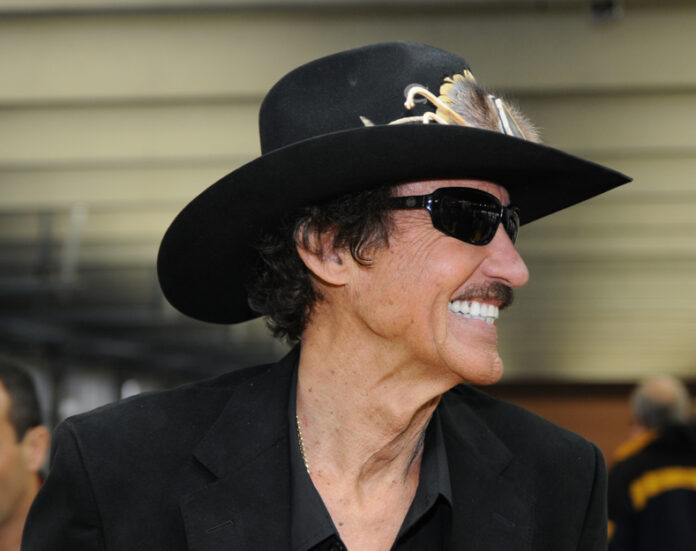
On Sunday, December 29th, the world of auto racing bid farewell to one of the true characters to ever grace the presence of the sport. The passing of Andy Granatelli, at age 90, brought back a lot of different memories for many racing fans. He was the astute businessman who brought a teetering STP Oil Treatment to fortune 500 status. When it came to company promotions, Andy Granatelli was on the level of the revered P T Barnum.
He quickly realized that auto racing was the perfect promotional fit for his many business ventures. After achieving a measure of success in the Indy Car Series, Granatelli turned his attention to NASCAR in general and King Richard Petty specifically. The result was a magnificent promotional partnership that remains intact to this day. The now famous STP-Petty Enterprises partnership also created a brand new promotional and revenue producing blueprint that is still being used by modern day NASCAR Sprint Cup teams.
At the conclusion of the 1971 racing season, the financial picture had rapidly changed for NASCAR’s Grand National, now Sprint Cup, teams. Many of the upper echelon teams, such as Petty Enterprises, were blessed with the financial and technical support of America’s big three automakers. That arrangement made the cost of crossing the country somewhat easy for the race teams. However the factory support was now on the verge of coming to a halt. This was largely due to disagreement over rule changes along with the general cost of doing business. NASCAR’s teams were now faced with the prospect of finding another source of racing revenue.
Back during this stage of NASCAR, sponsorship programs were used but were extremely limited. There were no large sponsor logos on the hoods of the cars such as what we see today. In fact, the only thing painted on the hoods of a NASCAR stock car was the cubic inch size of the engine. Sponsors names were reserved for the rear quarter panels of the cars. These sponsors were usually auto dealerships located in the general area of the race tracks along with local garages and small mom and pop owned retail stores. These sponsorship’s were largely used by NASCAR’s independent teams, or those who were not factory supported. On some occasions factory teams would pick up a sponsor to help with travel costs often referred to as gas and hamburger money. With the retreat of factory support, NASCAR’s teams were, for the first time in several years, on a level playing field and everyone involved was desperate to find enough sponsor revenue to race an entire season.
In January of 1972, Petty Enterprises was preparing for the annual trip to California and the Riverside Raceway road course which was, back then, the traditional start of a NASCAR racing season. That’s when Richard Petty received a telephone call from Andy Granatelli who asked him to make a brief stop in Chicago, the corporate home of STP. After being informed that the subject of the meeting involved full sponsorship for the 1972 racing season, Petty was reported to have told Granatelli “I’m pretty sure I can fit that into my schedule.”
Granatelli started the meeting on a strong note and offered Petty the STP sponsorship for $250,000 per season plus a $50,000 bonus if Petty won the NASCAR points championship. Granted, by today’s mega million dollar sponsorship standards, that amount would be petty cash, (no pun intended). However, by 1972 standards, the offer was both huge and unprecedented. It was also more than enough to keep Petty’s No. 43 on the track all year long.
There was one consideration that Granatelli wanted from this deal. In years past, all race cars sponsored by STP were painted the company’s traditional day glo red color. That’s when Petty surprised his potential new sponsor by saying no and adjourning the meeting. Back in 1972, it was likely that the popular business term “IT’S A DEAL BREAKER” had not been invented yet. It certainly applied to this meeting.
The Petty Enterprises race cars were well known for their blue paint and white numbers. Despite the fact that STP was offering more than enough money to cover the cost of racing, Petty made it clear that his race car was not going to be painted day glo red.
The traditional Petty Enterprises paint job was invented in their Randleman, N.C. race shop quite by accident. While in the final process of preparing a car for a race they discovered that there was only white and dark blue paint available. However, there wasn’t enough of one color to cover the entire car. The Pettys mixed the two colors together and the result was the famous bright blue color that was eventually dubbed Petty blue. That color remains as part of the No. 43 Richard Petty Motorsports paint scheme to this day. The special color is part of the family’s racing history and that’s why Petty turned down Granatelli’s offer.
Determined to save the deal, Granatelli made a very smart move. He convinced Petty to spend the night in a Chicago hotel so they could have one more meeting before he had to leave for the race in California. The result of this second meeting was a major compromise. Granatelli and Petty agreed that the cars would feature both the traditional Petty blue and STP day glo red colors. The result was the creation of one of the most famous paint schemes in NASCAR history.
Anxiously wanting to announce the new deal, Granatelli and his marketing staff flew to Los Angeles where they hosted a press conference to officially introduce their new driver and to officially place a large STP decal on the hood of the No. 43. In the days that followed, Granatelli made one more attempt to get the No. 43 painted red, He sent Petty the official sponsorship contract with a new paragraph that offered him an additional $50,000 to paint the car STP red. A reportedly amused Petty declined the offer.
The result of these negotiations was a match made in business heaven. From 1972 until his 1992 retirement from racing, Petty and STP visited victory lane 64 times, including four wins at Daytona, and won four NASCAR championships. While STP no longer sponsors a NASCAR team on a full time basis, they still place their logo on the No. 43 Richard Petty Motorsports Ford, driven by Aric Almirola, for two races. Richard Petty is also still listed as an official ambassador for STP. The STP-Richard Petty sponsorship connection is now highly regarded as being one of the longest running sponsor relationships in all of motorsports.
This is all due to Andy Granatelli’s vision and business savvy. He negotiated the racing promotional deal that was best for his company. At the same time, he forever changed the landscape of NASCAR team financing and created the blue print for sponsor programs used to this day.
Upon learning of his dear friend’s recent passing, Richard Petty issued the following statement:
“Andy was one of the best at public relations and marketing in all of motorsports. He was ahead of his time and set the standard for selling his products. We still enjoy our relationship with STP today and it was our meetings with Andy that started it all. He was really determined about how he wanted to market his product, and he never stopped wanting to get his way, but that’s what made him successful too.”