

The Big Disconnect: Why racing will never be a fully accepted mainstream “sport” in America
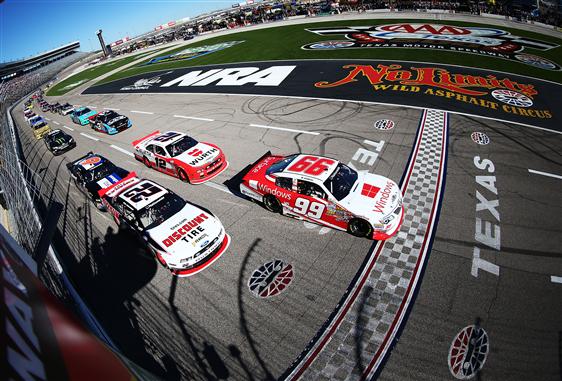
As an American racing fan, be it NASCAR, IndyCar, F1, or just about anything else, you know racing really isn’t covered well at all by mainstream sports media.
Here in Southern Maryland, I may see a mention or two during Speedweeks or Indy month, but outside of that no mention on local TV. On ESPN I have to wade through NFL, MLB, NBA, and NCAA before maybe a mention of NASCAR or something with Danica Patrick. Fox Sports is basically the same. Now granted both sports groups have hour or half an hour long NASCAR shows (NASCAR Now and Race Hub) each day in season, but nobody watches them compared to SportsCenter or even Fox Sports Live (I think, but either way I doubt the FSL audience is 100% NASCAR fans).
The problem with this being, of course, that both sport groups air every single NASCAR race from its three National series with the lone exception of TNT’s six race summer series. I know what you may be thinking right now: “Well, that’s pretty dumb. Why not really promote something you’re going to air?”
Guess what? They aren’t being dumb, they’re being smart, because NASCAR simply isn’t accepted as a sport by the majority of the viewing public.
Even if you hate football and have never played it, I’m pretty certain that you can at least accept that there is athleticism and that it is a sport. Same with basketball, hockey, and baseball. Unless you’re a Yankees fan, I’m pretty sure you see it as throwing big money at cheaters but I digress. People generally go to college and throw all of their hopes into making it into the NFL, MLB, NBA, NHL, or XFL (In Vince McMahon’s mind).
Last time I checked, the NCAA doesn’t sanction a racing series. Sure, drivers have gone to college before but that’s primarily to have a back up plan if it doesn’t work out – only 43 drivers start in Cup races, so the chance to make it big is pretty darn low. Mechanics are a different story but they don’t receive a tenth of the credit the driver usually does.
If I wanted to go throw a football, I have a buddy who lives down the road who has an old football we can play with. I don’t have a buddy with two Sprint Cup cars along with a quarter mile we can play with. Herein lies one of the big problem with mainstream opinion on motorsports – they do not understand that there is a core difference between driving and racing, they simply believe it is one and the same. I drive every day to work in my Toyota, this is the only connection many have with motorsports, even though the only similarity between the two is controlling an automobile down a road for a distance.
Driving is to travel a distance to get to a location and something the general public does everyday. Racing is something most sane people will never get the opportunity to do outside of carney go kart tracks where half the karts don’t work and the green one is always the fastest (in my experience). Just because I drive everyday in a Toyota, which has AC in the summer, doesn’t mean I can hop into the #18 Camry, no AC in a fire suit in a 100 degree cockpit, and become the next Kyle Busch. It took Busch 20 years of racing to get where he is today. I haven’t had a minute of it.
When I watch football, when Aaron Rodgers is on an absolute roll I can see the fire in his eyes, just how perfect he is at throwing the football. On the flipside, when Jay Cutler is having a bad day, I can see the anger, the heartbreak in his face and in his body language, every bad throw. This is why Tim Tebow was such a big deal to the mainstream – he has emotion, charisma, and fire most athletes could only dream to have, just no talent. You do not see this in motorsport, especially NASCAR.
Unless you really watch at driver motions in the windshield, you can’t see through the car and watch Busch wheel a loose car from the back to the front. Thus, there I think might be the biggest disconnect of all, the perceived lack of emotion on display. Outside of the insane wreck or two, when do you hear about NASCAR in mainstream media? Post race, when the emotion and the fights, the heartbreak, and the joy are all on full display.
Finally, the short attention span of Americans today make it hard to watch things for extended periods of time on TV if you don’t know about those involved. If I were to watch Landon Cassill swap the lead back and forth with Aric Almirola, I’d be pretty happy and would be interested. To the average channel surfer, they don’t know or care about that and would leave in a few minutes if it is the same old same old. Compare that to football, within a few minutes different players are guaranteed to be on the field doing different things.
No matter how well the sport of racing is doing ratings or fan base wise compared to its contemporaries, there will always be a Donovan McNabb out there who obviously doesn’t understand it and demeans it. If baseball is relatively easy to follow and football hard to understand at first, racing might be the single most complicated of them all. And it might have the most raw emotion out of its fans- even during a bad race fans are never going to keep to themselves about it.
Roush-Fenway Racing looks for more success with Bayne in 2014
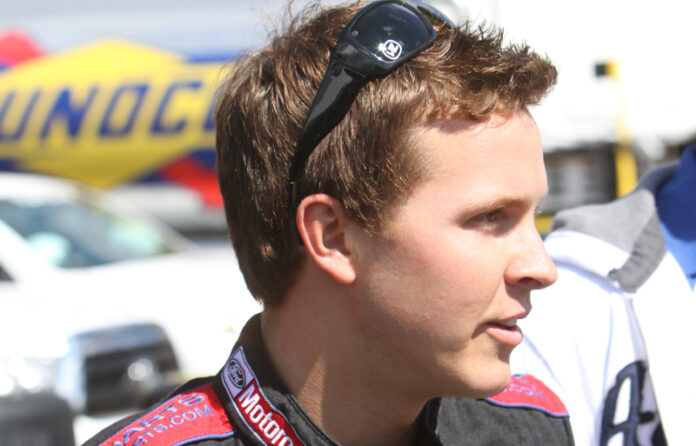
“It doesn’t make me who I am. It doesn’t control me. I want to go out there and win races. I want people to see that you can have tough things in your life and still go on. You can stay positive and keep pushing on and rely on God for strength. I’m not going to let this scare me or hold me on a choke hold. You can’t live life when you’re scared.”
In July, Trevor Bayne was diagnosed with MS disease, which affects the body’s nerves system. As the year came to a close, Bayne revealed the diagnosis to the world.
From a team perspective, Roush-Fenway Racing team president Steve Newmark stated that the biggest concern was that Bayne was healthy and they understood his situation.
“I think that it was refreshing that he actually got a diagnosis because there had been some uncertainty about what had unfolded previously, so I know it was comforting to him and that’s why he pursued it so strongly,” Newmark commented.
The diagnosis came about as a result of the events of 2011. In 2011, Bayne missed a couple of races due to issues pertaining with his elbow. He was bit by a bug and a rash developed on his elbow. It was thought to originally be Lyme’s Disease.
“There could have been local Lyme’s on my elbow and that’s why at the time we were like, ‘That’s what it is,’ and it was an easy thing because I did have the rash on my arm from a bug bite,” Bayne commented. “I don’t know if the two are connected.”
However they weren’t 100% sure that was the cause and Bayne wanted to know for sure the cause.
“I wasn’t satisfied with not knowing, so as a competitive person and as a racer you guys know how we work,” he said. “We want to know how everything works and causes and effects, so I just kept going back for checkups and this is what it has led to.”
With diagnosis and comfort in knowing Bayne hadn’t had to deal with symptoms, focus shifted back to on track business and making sure things were good there. Each of the sponsors were notified and Newmark stated that they have everybody’s support.
“First and foremost, everyone’s questions were concerns about Trevor personally, and then after that they’ve lined up and said, ‘Tell us what you need us to do to stand behind him’,” Newmark explained. “I think that’s a testament to the type of young man that Trevor is, but each one has said, ‘You let us know what we need to do and we’re 100 percent supportive of your effort and we want to see Trevor out there winning races.’”
Bayne brings forth a new partner for 2014 as he will have AdvoCare on the quarter panels on his mustang. Last season didn’t go as planned as Bayne failed only won one race, finishing just outside the top five in points. However, with that said, progress was made throughout the year to make the No. 6 Mustang stronger in hopes for a better 2014.
“What’s impacted our season the most is how competitive the Nationwide Series is this year and how tough some of the competitors are,” Bayne said. “I feel like we’ve got to step up our game a little bit and get our cars a little better. This was my first year back full-time, and now we’re hoping that next year we can get our cars better all the way around on the competitive side at Roush Fenway Racing. I don’t think it’s the season any of us would have hoped for, but we’ve had some bright lights also with a win at Iowa.”
In reflecting on the process, Newmark admires the 22-year-old for coming out and discussing the diagnosis with the world.
“Once Mayo and NASCAR have cleared him, he’s got authorization to drive and proceed,” Newmark commented. “This was something he decided on his own, that was the right thing to do, and that he wanted to be forthright about. I think it’s an admirable thing and I appreciate Trevor’s honesty on that front.”
Ganassi: Franchitti is in unfortunate situation, but will continue to be involved in IndyCar
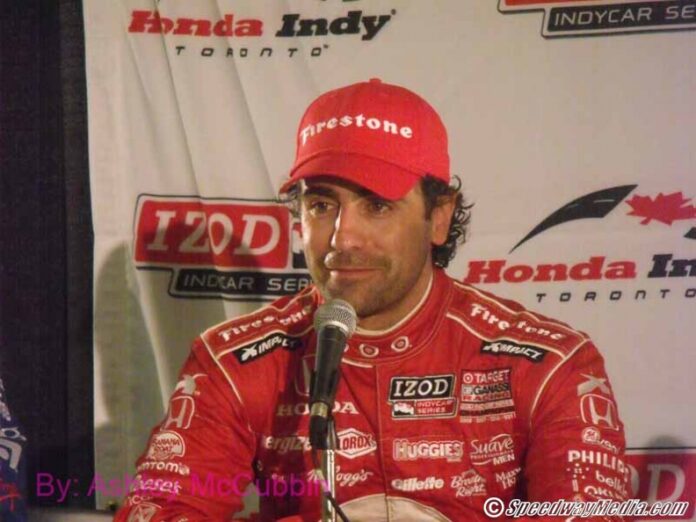
Following a wreck in the final race of the season, Dario Franchitti injured his back. He has been told that he will fully recover from the injuries, however has been told that he will not be able to race again due to concerns of sustaining a worst injury if he wrecks once again.
“It’s obviously around his head, concussions, things like that, has to do with a repeat of that type of concussion could be serious,” Ganassi explained. “I had a similar incident way back in 1984. That’s when those type of injuries were in their infant stage, and I think to some extent still are.
“I have to be very careful about what I say because I’m obviously not a doctor. I think we’ve all seen and understood the impact that those kinds of injuries can have long term if they’re not diagnosed properly. So I think this is connected to that in a way.”
Ganassi said that it came about following some testing in Miami. Following the tests with doctors, Franchitti flew to his home country of Scotland to spend time with family and while on that vacation, call Ganassi to tell him the news.
“I can tell you that I’ve only ever received one call from Scotland before this,” Ganassi said. “Usually when he goes away, he likes to be away and get away from things. I think that’s really the reason he goes back home like that in the offseason for maybe a month at a time. This was obviously something planned a long time ago and something he does on a regular basis at the end of the season. I try to stay out of those guys’ hair.”
Ganassi said he could tell something about the call was different from the start and beliefs were confirmed when Franchitti began to explain everything. Based on the phone call, Ganassi says he could tell that he was heartbroken by the news.
“I would say at the same time he probably thought about it for 24 hours or so before he called me,” the car owner added. “I think it’s also safe to say he’s a bit of a realist about it, too. I mean, I went through all the obvious questions. He said, Look, I don’t want to go forward. I’d never want to go forward and risk hurting somebody else or risk further injury. He said, further injury, much less hurt somebody else. That’s the great thing about Dario.”
Team owner Chip Ganassi says it’s an unfortunate situation that Franchitti is in with having to stop driving before he probably wanted to.
“They like to leave any sport or any avocation on their own terms,” Ganassi explained. “To be told that you can’t continue is pretty disheartening, to say the least. I think we’re all dealing with that initially. I don’t think there’s any reason to read anything more into that.”
Though with that said, a positive perspective is being held by Franchitti and those around him as the ability to simply open a new chapter in his career.
“I think he’ll make a great ambassador to the sport,” Ganassi commented. “I can’t think of anybody who would be better, as somebody that has worldwide recognition and a true interest in the sport of Indy car racing. We want to help him with that. We have a common interest in the sport, in furthering the sport, and we’ll do it together I’m sure.”
Ganassi sees Franchitti staying involved in the sport to some capacity due to love for it. Ganassi would like to keep Franchitti involved within the Target-Ganassi team.
Beyond that, it has been stated that Franchitti will go down as one of the all-time greats, being the only driver to win three titles consecutively and having 31 wins to his name. He also was able to win the 24 Hours of Daytona, the Indianapolis 500 and the 12 Hours of Sebring in a single year.
“Those are no small feats,” Ganassi said of Franchitti’s statistics. “We kind of take them for granted sometimes in our team because we’re so focused on next week’s race, you never really turn around and look back at things.”
Ryan Reed to run full schedule for Roush Fenway Racing in 2014
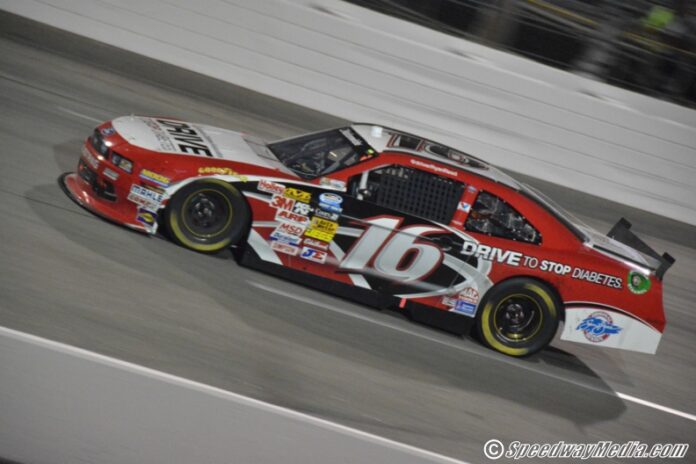
Following a part-time schedule, Roush Fenway Racing announced mid-October that Ryan Reed will pilot the No. 16 American Diabetes Association Drive to Stop Diabetes SM Presented by Lilly Diabetes Ford Mustang full-time in 2014.
Though Ryan Reed isn’t your normal NASCAR driver. Reed was diagnosed with Type 1 Diabetes in February 2011.
At the time, he was told that he wouldn’t be able to race ever again. However, instead of accepting his fate, he decided right then and there that he’d do whatever it took to fulfill his dream. His research led him to discovering IndyCar series driver Charlie Kimball, who was able to race with diabetes. He got in contact with Kimball’s doctor Ann Peters.
Last February, he made his first ARCA Racing Series start with Venturini Motorsports.
Now announcing that he will be running full-time for Roush Fenway in 2014, he says it’s pretty surreal.
“So many people have been a part of all this and it would not be possible without them,” Reed said. “I thank the American Diabetes Association and Lilly Diabetes for their participation in this movement. I am so excited about how far Drive to Stop Diabetes SM presented by Lilly Diabetes has come, and can’t wait to watch the impact it has on so many lives.”
In his races for Roush-Fenway Racing this season, Reed ran solidly inside the top 15, including a couple of top 10 finishes.
“His ability to not only battle the odds, but win out over the elements is a testament to the competitor that he is,” team owner Jack Roush said. “We certainly are looking forward to getting him in the car on a full-time basis next season and at the same time teaming with the ADA and Lilly Diabetes to make a difference in the lives of people dealing with diabetes.”
The American Diabetes Association has stated that they will use Ryan’s story to make people aware of how many people are effected by diabetes on a daily basis and educate people about it with several off track health and wellness initiatives.
“Ryan refused to accept that his diagnosis was the end to his dreams. Instead, he saw it as his personal challenge to go beyond and build awareness, become a role model and give hope to all those affected by the disease,” Lilly Diabetes vice president Mike Mason said. “A major emphasis of our work is driven by the belief that people with diabetes should first be seen as individuals. It’s why Lilly Diabetes is proud to support the American Diabetes Association and Drive to Stop Diabetes SM. As an American institution, with roots that go back generations, we are excited to embark on this partnership with the hopes of continuing to inform and inspire people affected by the disease.”
Larry Hausner, CEO of the American Diabetes Association, echoed those sentiments in saying that Reed is a role model for those with diabetes and Reed’s ambition embodies the mission of their group.
SHR continues to get stronger

On the last edition of The Inside Pass (www.theinsidepass.net), heard on Tuesday November 26th, my co-host Randy Miller and I spoke at length with veteran spotter Tim Fedewa. The conversation ranged from the new Gen 6 car and the struggles of the Ford camp to find speed through out the season to what Tim is looking forward to doing during the off season (hunting for those wondering).
The telling point in the interview was when Randy Miller asked Tim what his plans were for next season. Tim broke the news that he would be moving to the number 4 car and would be spotting for Kevin Harvick moving forward into the 2014 season. Tim is still currently under contract with Richard Petty Motorsports (RPM) until the end of the year, which for those that do not know the NASCAR year typically ends on December 31st of each year. Tim expected to be spotting for RPM during the early December testing at Charlotte Motor Speedway. Tim believes that he will be spotting for Aric Almilrola during that testing session, but nothing is firmed up yet. During the off air conversation, Tim also confirmed that this would be a year to year contract.
When asked Tim stated that he is excited about thae move, and that he is very appreciative of everything that working at the legendary Richard Petty Motorsports has done for him personally and professionally. He enjoyed working with Marcus Ambrose and felt strongly that they as a team were really close to getting the Australian driver his first oval track win. As the interview progressed, I asked Tim exactly what does a spotter do to help build the level of trust up that is needed between a spotter and a driver moving into the January testing at Daytona, which is where Kevin and Tim will be working together for the first time. Tim’s response was enlightening, they are going to be sitting down to lunches together along with recently named crew chief Rodney Childers, who is leaving Micheal Waltrip Racing (MWR), along with the car chief to try and get on the same page moving forward.
As the title of this article implies gaining a veteran spotter such as Tim bodes well for the fans of Kevin Harvick and does not bode well for the rest of the field. Tim has been spotting in the national series dating back to when the Sprint Cup was known as the Nextel Cup. Tim is a former racer turned spotter. He understands how to help a driver navigate the traffic and track in order to help his team and driver get the very best out of the car. When teamed with a driver who is known for taking care of his equipment and being “there” at the end of a race, this could potentially be the new powerhouse driver/spotter combination. When asked what he had already been doing to prepare for the potential move to Stewart-Haas Racing (SHR), Tim replied that he had been scanning the 29 cars channels in order to pick up on the lingo and the meter that Billy O’Dea and Kevin used throughout the latter stages of the year so that he would be better prepared for his new role with Kevin.
Tim’s pedigree in racing is not a short lived one, he was born into a racing family. His father Butch raced in several series eventually reaching the ARCA/ReMax series before retiring and began helping Tim with his racing career. Tim made limited starts in the Camping World Truck and some 300 Nationwide Series starts, with four wins in that series, along with one start in the Winston Cup Series, and also ran in a relief role for John Andretti with Petty Motorsports at the Coke 600 in 2000 when John was injured. Tim understands the nuances that help make a car go fast, this role with the new number 4 team is not something that Tim simply fell into over night. He has been doing this for awhile now, and he has the respect of his peers atop the spotter’s stand. While NASCAR may have mandated rules changes that there would no longer be “deals” made from the spotters stand, I hope no one is naive enough to think that the spotters don’t work together to try and help their driver out when trying to make their way through the field.
When you take a look at the cache of talented members continuously being added to the stables over at Stewart-Haas Racing, I think that we could see a few new/old faces challenging Jimmie Johnson (six time) for the championship next season.
Todd Gilliland, Thirteen Year Old Son of David Gilliland, Continues to Impress

In spite of being an eighth grader and just thirteen years old, Todd Gilliland, son of NASCAR driver David Gilliland and grandson of Winston West champion Butch Gilliland, continues to impress with his skills behind the wheel of a race car.
In fact, the youngster most recently finished in the runner up position in the Southeast Limited Late Model race at Myrtle Beach Speedway in South Carolina.
“It was really good for us,” the young Gilliland said. “The car was really good.”
“We started in fifth but I dropped back to thirteenth because I was saving my tires for the end,” Gilliland continued. “I started to work my way back up and I got up to second with five laps to go and then there was a caution.”
“That was the green, white, checkered and I just couldn’t pass the guy,” Gilliland said. “I didn’t win but I got second.”
“I was really excited,” Gilliland continued. “I knew we were fast the whole time but didn’t know if I could get a top five.”
“But I did.”
David Gilliland, proud papa, was also most impressed with his progeny, especially at a challenging track like Myrtle Beach.
“It’s a very tough race track, concrete like Darlington,” Gilliland said. “The fall off throughout a run is like two seconds so it’s all about tire management.”
“I thought this would be a real challenge for Todd because he really doesn’t understand what it’s like to be running on tires with no grip,” Gilliland continued. “Dang, if we didn’t go down there and he was fastest in every practice, qualified fifth and then the race started.”
“I told him to really watch his tires and on lap five he had dropped back to ninth,” Gilliland said. “I wasn’t sure if he was doing what I told him or if there was something wrong.”
“He got all the way back to about 15th and I told him not to go any further back than that,” Gilliland continued. “We rode for about 50 laps and then with about 40 laps to go, I told him it was time to go.”
“And boom, boom, boom he drove all the way up to second,” Gilliland said. “He was actually underneath the leader with three laps to go and the caution came out.”
“The rules for this race were that all restarts in the last 20 laps were single file,’ Gilliland continued. “So, it put the leader in front of him and in the last few laps, he got back to the leader’s bumper but didn’t have enough to get past him so we finished second.”
“It was an amazing race,” Gilliland said. “He’s thirteen years old, he’s in eighth grade and it’s amazing to me that he does things on the race track that it took me 500 races and 15 years to figure out.”
“I’ve had numerous amount of people come up at the race track and tell me how unbelievably good he is.”
The Myrtle Beach race was only Todd Gilliland’s third in a late model. Prior to that, Gilliland raced quarter midgets and even won the 2013 National USAC Quarter Midget Championship, World Formula Division.
“So, that was over in July and from there, we actually sold the cars in Indianapolis at the last national event,” David Gilliland said. “I thought we would get some late models and go testing because you can’t run any NASCAR races until you are fourteen years old.”
“I thought we would get ahead of the curve and practice this year and get ready to race next year,” Gilliland continued. “We went out and tested the first time and had the owner of Performance Racing Warehouse and some big names in late model racing went with us.”
“After Todd’s first day of testing, I got in the car and shook it down and made sure it was good for Todd,” Gilliland said. “Then he got in and by the end of the day, he was as fast as I was.”
“It was incredible.”
“The next time we tested, we had two cars, so I got in one and told Todd we were going to work on restarts and passing each other,” Gilliland said. “So, he followed me for a little bit and then I told him on the radio that I was going to try to pass him.”
“But I couldn’t get within a car length of him.”
Todd Gilliland’s first late model race was at Hickory, which was supposed to be short fifty-lapper with a limited number of cars. Unfortunately, that race ended up being cancelled.
“On the same day, they were having their end of the year, big race of the year called the Fall Classic,” David Gilliland said. “It was scheduled to be a hundred green flag lap race and like thirty cars.”
“My wife said ‘You’re not going to put him in that for his first race are you?’ and I told her he would get a lot of experience,” Gilliland continued. “Todd was fastest in both practices in his first race ever.”
“He qualified ninth and finished sixth,” Gilliland said. “If there were ten more laps he would have won the race.”
“It was incredible,” Gilliland continued. “He saved his tires and just had a great feel for the race car.”
In Todd’s second late model race, he was fastest in practice but with just two minutes to go, his motor broke. He went to a backup car but got caught up in an accident after driving from 20th to 5th.
Before the youngster was competing in late models, Todd Gilliland had a passion for going fast.
“I started when I was five,” Todd Gilliland said. “I like going fast and competing with everybody and trying to be the best you can be.”
“Todd raced his first race on his fifth birthday,” David Gilliland said. “He was out across the street when he was three years old, he drove a quarter midget in the dirt field and would run every day until he ran it out of gas.”
“It’s always been his passion.”
Todd Gilliland currently balances his racing with his school work. In fact, the eighth grader has to keep his grades up in order to even be allowed by his parents to hit the race track.
“I work on the car after school,” Gilliland said. “I like to play soccer and basketball.”
“Math is my favorite and science is my least favorite.”
“I’m pretty busy,” Gilliland said. “We stay up all the time and work on the weekends too.”
“Todd works on the car too,” proud papa Gilliland said. “My deal with Todd is that we will go racing if he gets straight A’s in school.”
“He’s done that and is on the honor roll at school,” Gilliland continued. “I’m pushing for his education first and racing second.”
“He does like working on the race car and every day he wants to learn more.”
Both father and son have a mutual admiration, especially when it comes to racing.
“I want to be like my dad because he is really good,” Todd Gilliland said. “I hope to race in the Cup Series someday like my dad.”
“The weirdest feeling was when we went to the race track for his first start, watching him back out of the pits, pushing the clutch on the car, put it in gear and drive away,” David Gilliland said. “That was a feeling and a time and a moment that I’ll never forget.”
“I remember him being born and he was two weeks old when I won my first asphalt late model race and he’s been around the track his whole life,” Gilliland continued. “I know he’s good enough to go as far as he wants and I want him to do that.”
“It’s been fun watching Todd grow as a person,” Gilliland said. “Racing has helped him with his confidence and to mature as a person.”
“He’s a very kind, quiet young man and people like being around him,” Gilliland continued. “Those are the things that are most important in life to me.”
“And those are the lessons that I’m enjoying seeing him learn and grow.”
Todd Gilliland races out of the shop in his home and for the team that bears his father’s name, David Gilliland Racing. His sponsors are Performance Racing Warehouse and Superior Logistic Services.
While the Gilliland family is taking a break from the race season to celebrate the holidays, both father and son are both anxious to start the New Year at the track.
“I’m loving racing these cars,” Todd Gilliland said. “It’s still new to me but I’m having a lot of fun.”
“I can’t wait for next year to run more tracks and get more experience.”
“Todd loves racing and he has a passion for it,” David Gilliland said. “Stay tuned, he has a bright future ahead of him.”
For more information about Todd Gilliland as he continues to impress in the racing world, follow the team at ToddGilliland.com and on Twitter @ToddGilliland_.