RFK RACING SAN DIEGO STREET COURSE – EXECUTIVE SUMMARY Date: June 21, 2026 Series: NASCAR Cup Series Location: San Diego Street Course (3.4 mile, 16-turn street course on Naval Base Coronado) – Coronado, CA Format: 255 miles / 75 laps with three stages. Stage 1: Ends at lap 20, Stage 2: Ends at lap 40, Stage 3: Ends at lap 75
RFK Racing RACE SUMMARY: Roush Fenway Keselowski (RFK) Racing showcased its speed throughout Sunday’s inaugural San Diego Street Race at Naval Base Coronado. Chris Buescher and Ryan Preece both led laps, capturing stage points and contending for the win. Buescher overcame an early spin, recovering and finished sixth. Preece scored a Stage Two victory and led early in the final stage. His day was capped by an impressive rally from 28th, following a late pit stop, to finish 11th. Despite showing tremendous pace in the early laps, picking up several positions in the first ten circuits, Brad Keselowski faced challenges. Suspension damage and mechanical issues forced lengthy repairs, resulting in a 34th-place finish.
DRIVER HIGHLIGHTS
Chris Buescher – No. 17 Body Guard Ford Mustang Dark Horse
Finish: 6th Start: 16th Laps Led: 7 Stage Results: S1-26th, S2-3rd Headline takeaway: Recovering from a dramatic early race spin, where he turned 360 degrees and kept going, Buescher scored another top-10 finish. The Body Guard Ford contended for the win, leading on two separate occasions, as Buescher turned in his 9th top ten finish this season.
Buescher Quote: “The weekend was a blast. Practice and qualifying I just didn’t come up to speed quick enough and wasn’t where we wanted to be. We got in the race and we just started driving through the field. It was so much fun. I’d take this Body Guard by Fastenal Ford Mustang and do that every time we had cycles and it was just a really strong day. It’s just that last caution wasn’t what we needed. We needed it about eight laps later and we would have been in a heck of a spot. That’s how it falls. Everybody did a nice job and it was a solid day from start to finish.”
Ryan Preece – No. 60 Ralphs / Scott 1000 Ford Mustang Dark Horse
Finish: 11th Start: 7th Laps Led: 5 Stage Results: S1-2nd, S2- 1st Headline takeaway: Backing up his strong top ten qualifying performance, Preece showed race-winning speed all afternoon. The Ralph’s Scott 1000 Ford capturing stage points in each of the first two stages, including a stage victory.
Preece Quote: “We had a great points day, then climbing from 28th late in the race to 11th to close it out. It was a good day. We want to be strong on road courses and capitalize on those days and we did that today. This whole trip to San Diego exceeded all expectations.”
Brad Keselowski – No. 6 BuildSubmarines.com Ford Mustang Dark Horse
Finish: 34th Start: 29th Laps Led: — Stage Results: S1-20th, S2-18th Headline takeaway: On a day filled with promise, where he charged through the field picking up ten spots in the first nine laps, Keselowski was forced to work through mid-race adversity. The team worked tirelessly on the BuildSubmarines.com Ford Mustang to repair suspension damage that ultimately dictated the day’s outcome.
Keselowski Quote: “It was a really long day. The team worked really hard. We got some damage when I made a little mistake in turn 5 and we recovered from it and we were going to kind of reset our day. We had a great start to the race, passed a lot of cars. That was fun. A bunch of cars spun out in 12A and we kind of got collected in the melee behind it and that was unfortunate and put us behind the wall and really ended our day.”
Point Standings:
Buescher: 7th Preece: 16th Keselowski: 19th
Next Up:
The next event on the NASCAR Cup Series schedule is June 28 at the Sonoma Raceway ( 1.99 mile road course – Sonoma, CA). The race begins at 3:30 p.m. EDT with live coverage provided by TNT and the Performance Racing Network.
About RFK Racing
RFK Racing, in its 39th season in 2026, features an ownership lineup pairing one of the sport’s most iconic names, Jack Roush, along with NASCAR Champion, Brad Keselowski, and Fenway Sports Group owner John Henry. Roush initially founded the team in 1988 and it has since become one of the most successful racing operations in the world, propelling him to be the first NASCAR owner to amass three hundred wins and capturing eight championships, including back-to-back NASCAR Cup titles in 2003 and 2004. Keselowski, a former owner in the NASCAR Truck Series, is the 2012 NASCAR Cup Series Champion. In 2007, Roush partnered with Henry, who also owns Major League Baseball’s Boston Red Sox, English Premier League’s Liverpool F.C., and the NHL’s Pittsburgh Penguins, to form Roush Fenway Racing. Off the track, RFK is a leader and proven winner in NASCAR marketing solutions, having produced multiple award-winning social media, digital content and experiential marketing campaigns. Visit https://www.rfkracing.com/ and follow the team on all social platforms @rfkracing.
RICK WARE RACING Inaugural Anduril 250 Date: June 21, 2026 Event: Inaugural Anduril 250 (Round 17 of 36) Series: NASCAR Cup Series Location: Qualcomm Circuit on Naval Base Coronado in San Diego (3.4-mile, 16-turn street circuit) Format: 75 laps, broken into three stages (20 laps/20 laps/35 laps)
Race Winner: Corey Heim of 23XI Racing (Toyota) Stage 1 Winner: Ryan Blaney of Team Penske (Ford) Stage 2 Winner: Ryan Preece of RFK Racing (Ford)
RWR Finish:
● Cody Ware (Started 39th, Finished 23rd / Running, completed 75 of 75 laps)
RWR Points:
● Cody Ware (35th with 152 points)
RWR Notes:
● Ware earned his sixth top-25 of the season.
Race Notes:
● Corey Heim won the inaugural Anduril 250 to score his first NASCAR Cup Series victory in just his 13th career start. His margin over second-place Bubba Wallace was 10.365 seconds.
● There were seven caution periods for a total of 11 laps.
● Twenty-nine of the 39 drivers in the race finished on the lead lap.
● Tyler Reddick remains the championship leader after San Diego with an eight-point advantage over second-place Denny Hamlin.
Sound Bites:
“The No. 51 Rocket Doctor Chevrolet was fast all day long. I think there at the end, we could’ve been a top-20 car, for sure. I should’ve had a little less patience with some guys that had damage. But all in all, I think we performed well today and just really happy with the work the team put in all weekend. It was a really awesome weekend overall. I think we have a lot of momentum going into Sonoma next weekend, so I’m excited to have back-to-back road course races.” – Cody Ware, driver of the No. 51 Rocket Doctor AI Chevrolet
Next Up:
The next event on the NASCAR Cup Series schedule is the Toyota/Save Mart 350k on Sunday, June 28 at Sonoma (Calif.) Raceway. The race begins at 3:30 p.m. EDT with live coverage provided by TNT and SiriusXM NASCAR Radio.
The 2026 Formula 1 season marks the start of a new technical era. The last time the sport saw changes on this scale was in 2014, when F1 moved to hybrid power units. Now teams once again have to rethink almost every part of their cars and build them around a new set of rules.
That is why the 2026 cars look and work very differently from the 2025 models. The changes affect aerodynamics, size, weight, and the way cars use energy on track.
New Aerodynamic Rules
One of the biggest changes comes from the new aerodynamic concept. The FIA wants to make racing closer and create more chances for overtaking. To do this, the rules changed the design of the front wing, rear wing, and floor.
The 2026 regulations also introduce active aerodynamics. This means some parts of the car can change their position depending on the situation. On straights, the car can reduce drag and become more efficient. In corners, it can switch back to a setup that gives the driver more grip and stability.
This should help teams balance speed and control better during a lap. It also changes how engineers design the whole car, because aerodynamics will no longer work in exactly the same way as before. As a result, the 2026 casino era of Formula 1 is expected to bring a fresh approach to car development and racing strategy.
Smaller and Lighter Cars
In recent years, Formula 1 cars have often been criticized for being too large and too heavy. In 2026, the FIA decided to move back toward more compact cars.
The new cars are shorter and narrower than the previous generation. Their minimum weight has also been reduced. This should make them easier to handle, especially on technical tracks with many slow and medium-speed corners.
For drivers, this means a car that feels more agile. For fans, it could make wheel-to-wheel battles closer, as smaller cars should be easier to place on track during attacks and defensive moves.
Major Changes to Power Units
Another key change is the new power unit rules. Formula 1 will still use turbocharged V6 engines, but the way they work will change a lot.
Electric power will play a much bigger role in 2026. At the same time, the MGU-H system will be removed completely. This part was used to recover energy from the turbo, but it was expensive and difficult to develop.
The new power units will also run on sustainable synthetic fuel. This fits Formula 1’s wider goal of reducing its carbon footprint and making the championship more useful for future road car technology.
New Chances for Teams
A major rule change always gives teams a chance to move up the grid. When the regulations change, engineers can find new ideas and gain an advantage before others catch up.
That is why the 2026 season brings extra attention to new manufacturers. Audi is entering Formula 1, while Cadillac is also becoming an important part of the new era. A fresh technical cycle could help these projects close the gap to the leading teams faster than usual.
For established teams, this also creates risk. A strong 2025 car does not guarantee success in 2026. Everyone has to adapt to the same new rules, and even small design choices can have a big impact.
What to Expect from Formula 1’s New Era
The 2026 cars are not being built only for speed. They are also part of Formula 1’s attempt to prepare for the future of motorsport. New aerodynamics, updated power units, and smaller car designs should make the racing more interesting for fans and more relevant for manufacturers.
That is why many experts already see 2026 as the start of a new Formula 1 era. The real balance of power will only become clear after the first few Grands Prix. Still, one thing is clear: the 2026 cars will be much more different from the 2025 cars than they may seem at first.
Georgia Native Scores first Win in 13th Series Start to Mark Strong Race for 23XI
SAN DIEGO (June 21, 2026) – Corey Heim executed a perfect late race pass on 23XI and Toyota teammate Tyler Reddick to notch his first career NASCAR Cup Series win Sunday afternoon in the inaugural San Diego Street Race at Naval Base Coronado.
The victory marked the first time Toyota has won four straight Cup Series races since 2017 and the fifth time overall in its 20-year history in NASCAR’s top series. The win was also notable as the first time the No. 67 found victory lane in the 78-year existence of the Cup Series.
The race was Toyota’s 11th total victory this season. The race also marked a strong day for 23XI Racing overall, as Bubba Wallace finished in the runner-up spot for 23XI’s first ever 1-2 finish. Additionally, the team had all four cars inside the top six with just a few laps to go. Small issues pushed Riley Herbt to an eighth-place finish and relegated Reddick to a 25th-place finish. Reddick had a impressive day going where he led nine total laps, but was passed for the lead by Heim with just three laps to go during a hard fought, but clean battle between teammates.
TOYOTA RACING Post-Race Recap NASCAR Cup Series (NCS) San Diego Street Race on Naval Base Coronado Race 17 of 36 – 255 miles, 75 laps
TOYOTA FINISHING POSITIONS
1st, COREY HEIM
2nd, BUBBA WALLACE
3rd, Kyle Larson*
4th, Zane Smith*
5th, AJ Allmendinger*
8th, RILEY HERBST
14th, DENNY HAMLIN
15th, TY GIBBS
16th, JOHN HUNTER NEMECHEK
17th, CHASE BRISCOE
20th, ERIK JONES
25th, TYLER REDDICK
28th, JIMMIE JOHNSON
39th, CHRISTOPHER BELL/BRENT CREWS
*non-Toyota driver
TOYOTA QUOTES
COREY HEIM, No. 67 Mobil 1/O’Reilly Auto Parts Toyota Camry XSE, 23XI Racing
Finishing Position: 1st
How does it feel for your first career win?
“I’m speechless. I mean, we started the race, I mean, I think we started 13th. We fell straight back to 20th. Then put on our scuffs from qualifying, struggled just as bad. I don’t know if we made any adjustments. Bootie (Barker, crew chief) kept telling me these were our worst two sets of tire, we were going to be fine. He was right. I couldn’t believe it. We strapped another set of tires on, and we were just fine. Hit the wall a couple of times and maybe knocked some good into the car. I have no idea. After stage two, I just took a deep breath. I had high expectations coming into this race. Even playing field for me. You don’t see that every day for a young driver like myself. Just kind of took a deep breath, reset and went after it. Caught a couple breaks with some of the good guys out.
How was the battle with your teammate Tyler Reddick?
“I feel like for a while I thought he was kind of playing with me, but he was able to set the pace being the lead car. I was able to stick with him. I’m not really burning my stuff up. Five to go came. Time to put some pressure on him, see if I could get him to make a mistake. Sure enough he did. I think he ended up braking or something. I don’t know what happened to me. He doored me down there in five and gave me back to me. That’s something you don’t see every day. That’s a great teammate. I don’t know. Just crazy. It feels like a dream. I hope I don’t wake up from this dream. This is insane. So thankful for 23XI, Mobil 1, Toyota for this journey. I didn’t expect to come into my part-time season and win. Here we are. It’s crazy. Hasn’t even sunk in yet. I’m sure it will.”
BUBBA WALLACE, No. 23 Xfinity Toyota Camry XSE, 23XI Racing
Finishing Position: 2nd
You had an eventful day, how did you manage to pull off a second-place finish?
“We are all busting our ass to perform and to have a little thing not go our way. I got to focus on what we can control, but all in all a good day for Toyota and a good day for Xfinity and a good day for our team. I believe that’s the first 1-2 finish for our team, but I could be wrong. Good to come out of here in San Diego and have a bit of fun, appreciate NASCAR and appreciate the Navy for everything they did here this weekend.”
DENNY HAMLIN, No. 11 Bob’s Discount Furniture Toyota Camry XSE, Joe Gibbs Racing
Finishing Position: 14th
Which part of this day makes you happy, that you cut the points lead down or your young driver winning?
“The driver part, the points are the points. Really happy for Corey and that whole team. Dave Rogers (23XI Competition Director) doing such a good job, they are putting that fourth entry together and piecing together guys from around the shop and some development guys. We gave Corey an agenda this week that in each start his is our expectations, here’s what we want you to work on. I don’t think this was in the agenda for San Diego. He’s been good at road course racing anyway, as (Ryan) Blaney mentioned, he’s going to be a problem.”
Tell us about your day behind the wheel with your No. 11 Toyota Camry XSE
“I felt really good about where our car was all day. We were at the line on pit road and he says I don’t think you’re going to make and I steered hard left and the caution came out. That stunk, had to start 19th or 20th on the last restart and only could get back to 14th. Inside the top-15, that was the agenda for this week and will try to go to Sonoma and do the same thing.”
RILEY HERBST, No. 35 Monster Energy Toyota Camry XSE, 23XI Racing
Finishing Position: 8th
How did you miss the big wreck earlier in the race?
“I don’t know. It’s so tricky. This corner is so difficult. This asphalt is just so slick. I think that was the restart where everybody had some confidence and we just wanted to pick it up a little bit. The front two, the 88, 97, 33, I think they kept bluffing each other into turn one. The marbles caught it. I was lucky enough to miss it there on the bottom. All in all, a good day for this 35 car. I thought we had a fourth-place finish. Got moved there on the last lap by the 16. Finished eighth. We’ll take it and go try again at Sonoma.”
TYLER REDDICK, No. 45 Pala Casino Toyota Camry XSE, 23XI Racing
Finishing Position: 25th
Can you tell us about your battle with Corey Heim for the win?
“We were involved in so much today. To even have a shot at it at the end was really nice. I thought I was going to be able to hold him off there. Yeah, we kind of just struggled with rear tire life all weekend long. I got beat by our own stuff. We’ll try to figure this out. It definitely stings. First and foremost, congratulations to Corey. I tried to battle back and overdid it. I really did it. I ran him straight in the wall. That wasn’t right. I wasn’t going to pass him for the win that way, especially a teammate. It’s a real shame. I don’t know if I cut the tire during, before or after. I’m not really sure. Really needed good points day. Had another really bad one. We’ll try and scrape together and have a decent finish in Sonoma.”
BRENT CREWS, No. 20 Craftsman Racing for a Miracle Toyota Camry XSE, Joe Gibbs Racing
Finishing Position: 39th (Finish will be credited to Christopher Bell as he started the race)
What happened out there to put you out of the race?
“I was kind of going through the gears and it just broke, I’m not really sure. I’m going to have to have Adam (Stevens, crew chief) to look over it and myself to figure out if it was something I did or if it was just a freak accident. Once I look at it I’ll have more answers. It’s really unfortunate for this whole team. We came here to get points and coming out with not much. Unfortunate for the whole group, it was a great opportunity to come and learn and try and help these guys out.”
What were the challenges of going from the O’Reilly car to the Cup car?
“I had three laps I think in the Cup car and five in the O’Reilly car, so it was just trying to learn to the best of my ability. They are a lot different, the grip level is a lot less in the Cup car, but it’s got a lot of brakes but right after that it falls off and you don’t see that as much in the O’Reilly car.”
About Toyota
Toyota (NYSE:TM) has been a part of the cultural fabric in North America for nearly 70 years, and is committed to advancing sustainable, next-generation mobility through our Toyota and Lexus brands, plus our more than 1,800 dealerships.
Toyota directly employs nearly 64,000 people in North America who have contributed to the design, engineering, and assembly of over 50 million cars and trucks at our 14 manufacturing plants. In 2025, Toyota’s plant in North Carolina began to assemble automotive batteries for electrified vehicles.
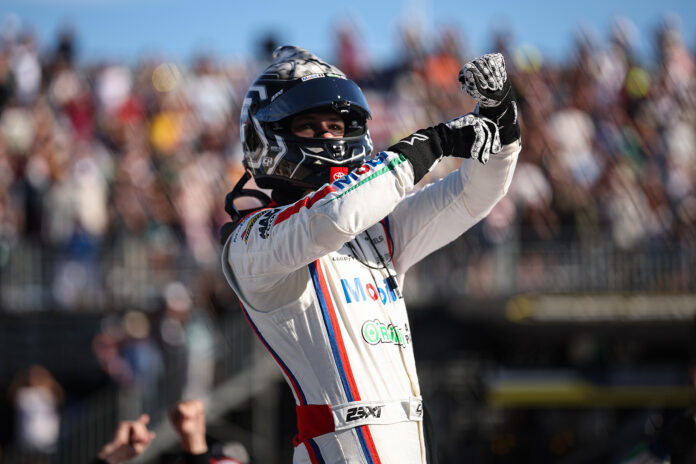
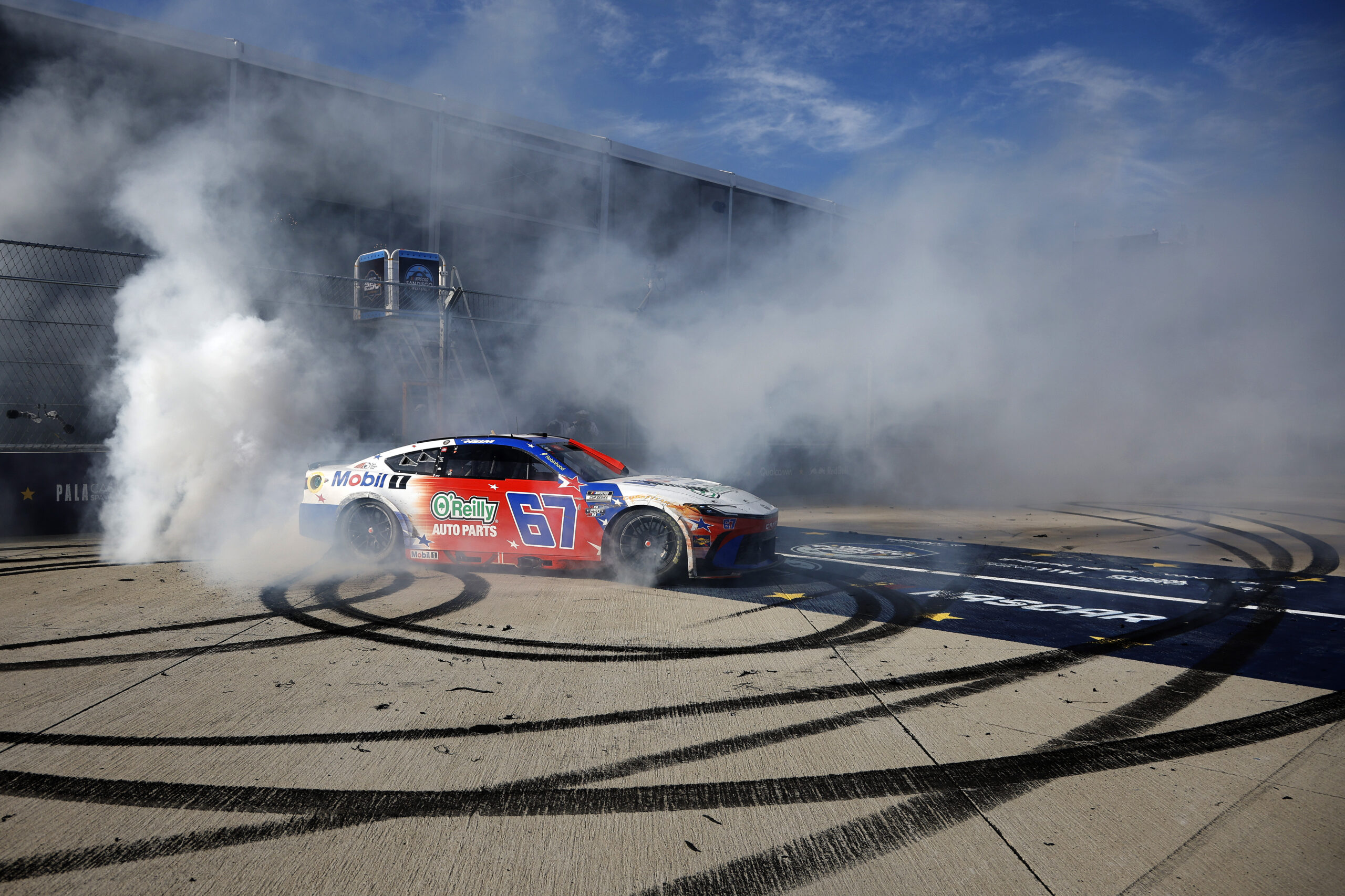
SAN DIEGO, CALIFORNIA - JUNE 21: Corey Heim, driver of the #67 Mobil 1/O'Reilly Auto Parts Toyota, celebrates after winning the NASCAR Cup Series Anduril 250 at Naval Base Coronado on June 21, 2026 in San Diego, California. (Photo by James Gilbert/Getty Images).
Corey Heim made it known to the world that it was his time to win in the NASCAR Cup Series division. He accomplished this feat during the inaugural Anduril 250 at San Diego’s Naval Base Coronado on Sunday, June 21, following a late battle with teammate Tyler Reddick.
The reigning Craftsman Truck Series champion from Marietta, Georgia, led the final three of 75-scheduled laps in an event where he started in 13th place and spent the early portions of the event racing within the mid-pack region. Then, after dodging a multi-car wreck in the first turn that eliminated a trio of front-runners, Heim steered his way into the top-10 mark before he strategically pitted prior to the second stage’s conclusion.
Restarting within the top-12 mark for the final stage period, Heim climbed his way back into the top-10 mark. He then made his presence at the front known with less than 20 laps remaining as he was reeling in Kyle Larson for the lead. Despite pitting with Larson under green but getting beat off of pit road from Larson with 16 laps remaining, the field jumbled up a lap later when the caution flew due to oil coming out of Ricky Stenhouse Jr.’s entry in the second turn. During the final restart with 12 laps remaining, Heim, who restarted fourth, navigated his way into the runner-up spot a lap later after the restart’s leader, Carson Hocevar, spun.
Heim then spent the next nine laps stalking and reeling in teammate Tyler Reddick for the lead. With three laps remaining, Reddick nearly missed the second turn, and it allowed Heim to get beneath Reddick and duel with him during the third turn. Despite gaining the lead just past the fourth turn, Heim was challenged by Reddick with a crossover move before Reddick made slight contact that sent Heim up the track in the fifth turn. Despite Heim barely scrubbing the wall, he motored ahead with the lead as Reddick lifted. As Reddick dropped out of contention due to a cut tire, Heim maintained the lead over the final three laps before he cycled back for his first-ever checkered flag in the Cup Series division amid a part-time campaign with 23XI Racing.
With on-track qualifying that determined the starting lineup occurring on Saturday, June 20, Shane van Gisbergen claimed the pole position with a pole-winning lap at 90.809 mph in 134.788 seconds. Carson Hocevar qualified in second place with a lap of 90.704 mph in 134.944 seconds.
Prior to the event, the following names, including points leader Tyler Reddick, Erik Jones, and Christopher Bell, dropped to the rear of the field due to unapproved adjustments to their respective Toyota entries.
When the green flag waved and the event commenced, pole-sitter Shane van Gisbergen motored his No. 97 Red Bull Chevrolet Camaro ZL1 entry ahead of Carson Hocevar and the field through the first turn. Van Gisbergen then navigated his way through the sharp left-hand turn of the second turn with the top spot as the field of 39 competitors behind fanned out. As the field continued to fan out and jostle for early spots throughout the course’s 16 turns, van Gisbergen was left uncontested at the front. With an early advantage, van Gisbergen led the first lap over Hocevar while Ryan Blaney, Zane Smith, Daniel Suarez, Todd Gilliland, Ryan Preece, Michael McDowell, Connor Zilisch and Austin Hill were in the top 10, respectively.
During the second lap, Austin Dillon spun in Turn 9 and he plummeted below the leaderboard due to stalling his entry, but he managed to continue without drawing a caution. The following lap, Hocevar overtook van Gisbergen for the lead in Turn 6, but the latter used a bold overtake through Turns 10 and 11 to reassume the lead. Seconds later, Blaney and Preece overtook Hocevar to move into second and third on the track as van Gisbergen led the third lap. Not long after, Blaney assumed the lead for the first time in between Turns 5 and 6. As Blaney proceeded to stretch his advantage to more than two seconds over van Gisbergen by the fifth lap mark, Jimmie Johnson wrecked in the chicane due to locking up his brakes and hitting a tire barrier, but he pitted his damaged No. 84 Carvana Toyota Camry XSE entry without drawing a caution.
Through the ninth lap mark, Blaney stabilized his lead to nearly two seconds over Bubba Wallace, the latter of whom started 12th and assumed the runner-up spot from van Gisbergen two laps earlier. A lap later, Blaney surrendered the lead to pit under green along with Preece, Daniel Suarez, Hocevar, AJ Allmendinger, Ty Gibbs, Connor Zilisch, Cole Custer while Wallace cycled to the lead ahead of van Gisbergen, Chris Buescher, Michael McDowell and Zane Smith. By then, a bevy of names that included Chase Elliott, Tyler Reddick, Kyle Larson, Joey Logano, Todd Gilliland, Corey Heim, Ty Dillon, William Byron, Alex Bowman, Kevin Magnussen and Noah Gragson pitted under green over the previous two laps.
On the 11th lap and just after both van Gisbergen and Buescher overtook Wallace to move into the top-two spots, the event’s first caution flew due to Ricky Stenhouse Jr. stalling on the course. During the caution period, Christopher Bell was relieved by Brent Crews as Bell continues to recover from a fractured wrist suffered two races ago at Michigan International Speedway while battling towards the front in the closing laps. In addition, Austin Hill, Brad Keselowski, John Hunter Nemechek and Ross Chastain pitted while the rest of the field, led by van Gisbergen, remained on the track.
The next restart on Lap 14 featured van Gisbergen and Buescher on the front row, where van Gisbergen rocketed away from the field through the first two turns. As a variety of on-track action and shuffling of positions ensued through the 16-turn course, van Gisbergen led the next lap while Buescher, Blaney, Preece and Bubba Wallace followed suit ahead of Kyle Larson, Ty Gibbs, AJ Allmendinger, Michael McDowell and Todd Gilliland, respectively.
At the Lap 16 mark, Preece attempted to challenge van Gisbergen through the lead amid a side-by-side battle just past the Lap 12 mark. Preece managed to assume a brief lead before van Gisbergen returned the favor and reassumed the lead through Turns 14 and 15 before they ran through the chicane. Not long after, Blaney assumed the lead from van Gisbergen and he proceeded to lead the Lap 17 mark. During the Lap 17 mark, van Gisbergen and Buescher pitted under green along with Wallace, McDowell, Zane Smith, Briscoe, Herbst, Hamlin, Suarez, Nemechek, Austin Dillon and Erik Jones. Meanwhile, Blaney retained the lead by more than two seconds over Larson while Preece, Gibbs and Allmendinger trail in top five.
On Lap 18, the caution returned due to Wallace, who had just pitted but was reporting a loose wheel, losing a right-front wheel in Turn 10. As a result of the loose wheel, Wallace was held on pit road for two laps as a penalty. The caution was enough for the first stage period scheduled to conclude on Lap 20 to officially conclude under caution. As a result, Blaney was awarded his second Cup stage victory of the 2026 season. Preece, Larson, Gibbs, Allmendinger, Gilliland, Hocevar, Logano, Zilisch and Byron were scored in the top 10, respectively, as 37 of 39 competitors were scored on the lead lap.
Under the event’s first stage break period, some led by the leader Blaney and including Larson, Allmendinger, Gilliland, Hocevar, Gibbs, Logano, Byron, Bowman, Reddick, Berry, Custer, Heim, Elliott, Gragson, Ty Dillon, Keselowski and Magnussen pitted while the rest led by Preece remained on the track.
The second stage period started on Lap 22 as Preece and Zilisch occupied the front row. At the start, Preece launched his No. 60 Ralphs/Scott 1000 Ford Mustang Dark Horse entry ahead of Zilisch and the field through the first turn before the latter made a move beneath Preece and assumed the lead through the second turn. As the field fanned out and jostled for spots, Zilisch retained the top spot for a full cycle around the 16-turn course as he led the next lap over Preece while Hill, Chastain, Buescher, van Gisbergen, McDowell, Zane Smith, Herbst and Nemechek trailed in the top 10, respectively.
During the Lap 23 mark, van Gisbergen sent Buescher for a spin in Turn 5. In the process, Buescher ignited a stack-up within the field as he did a full 360 spin in front of van Gisbergen and both managed to continue racing in the top-10 mark without drawing a caution. Amid the on-track action, Zilisch maintained the lead by four-tenths of a second over Preece by the Lap 25 mark while Buescher and van Gisbergen were scored in fifth and sixth behind Hill and Chastain.
On Lap 29, the caution flew due to the No. 20 Craftsman Toyota Camry XSE entry piloted by Crews coming to a stop in Turn 12 as his entry went up in smoke due to a gearbox issue. During this caution period, some led by Preece and including Buescher, Chastain, Briscoe, Blaney, Allmendinger, Gilliland, Hamlin, Austin Dillon, Bowman, Ty Dillon, Elliott, Gragson, Magnussen, Keselowski, Erik Jones, Stenhouse, Austin Cindric and Jimmie Johnson pitted while the rest led by Zilisch remained on the track.
The next restart on Lap 31 did not last long when the leaders Hill and Zilisch made contact and slammed into the left-side wall in the first turn as van Gisbergen also piled into the carnage while trailing both in close-quarters racing. The trio then ricocheted back across the track and ignited a multi-car wreck that involved McDowell, Suarez, Blaney, Herbst, Nemechek and Gibbs just past the first turn. Amid the carnage, Herbst, who was hit on the left-side door by the leaders, escaped with the lead ahead of Larson, Suarez, Zane Smith and Logano while Hill, Zilisch and van Gisbergen were knocked out of contention. In addition, Wallace was awarded the free pass for a second time, which placed him back on the lead lap category. The latest carnage placed the event in a red flag period for nearly nine minutes and 33 seconds to have the carnage cleared and the wall repaired.
When the red flag lifted and the event restarted on Lap 33, Herbst maintained a steady lead through the first turn despite nearly getting sideways while Zane Smith assumed the runner-up spot from Larson. Smith then assumed the lead through the third turn while Larson bumped and overtook Herbst for the runner-up spot. Smith proceeded to lead the next lap over Larson, Herbst, Logano and Heim while Suarez, Hocevar, Reddick, Preece and Byron were in the top 10 ahead of Cole Custer, Nemechek, Chastain, Buescher, Allmendinger, Blaney, Gilliland, Berry, Briscoe and Hamlin, respectively. Smith then led the Lap 35 mark before Larson assumed the top spot for the first time during the next lap.
On Lap 36, Reddick spun by himself in Turn 8, but he was dodged by the field and he continued without drawing a caution. Seconds later, a host of names that included Zane Smith, Heim, Erik Jones, Cole Custer, Hamlin, Cody Ware and Byron pitted under green while Gibbs and Nemechek had also pitted earlier. The following lap, Gragson spun and sustained right-side damage amid contact from Kevin Magnussen in Turn 4, but he continued without drawing a caution. Back at the front, Larson pitted prior to the Lap 38 mark and just before pit road became inaccessible due to the second stage period nearing its conclusion. With Larson pitting, Herbst cycled into the lead.
When the second stage period concluded on Lap 40, Preece, who overtook Herbst for the lead a lap prior, claimed his second Cup stage victory of the 2026 season. Herbst settled in second ahead of Buescher, Allmendinger, Blaney, Hocevar, Suarez, Chastain, Gilliland and Logano, respectively, while 34 of 39 starters were scored on the lead lap.
During the event’s second stage break period, some led by Herbst and including Allmendinger, Hocevar, Suarez, Logano, Ellliott, Chastain, Cindric, Stenhouse, Keselowski and Wallace pitted their respective entries while the rest led by Preece remained on the track.
With 33 laps remaining, the final stage period commenced as teammates Preece and Buescher occupied the front row in front of Gilliland, Blaney, Briscoe and Austin Dillon. At the start, Preece managed to fend off Buescher through the first turn despite getting bumped by Gilliland. As the field navigated through the second turn, Josh Berry got sideways after he got hit by Custer, with Berry then sustaining front nose damage when he collided into Custer while Reddick briefly got airborne amid a stack-up. Berry managed to continue and the event proceeded without drawing a caution. Back at the front, Blaney and Gilliland bumped against one another entering Turn 6 for third place while Buescher cycled into the lead over Preece.
Following a caution period that flew with 32 laps remaining due to debris in the second turn, the next restart with 30 laps remaining featured Buescher rocketing away from Blaney, Preece and the field through the first turn before the field fanned out entering the second turn. Within the field, Magnussen spun, but the race proceeded under green as Buescher retained the lead. Behind, Larson and Briscoe battled and overtook Preece for third and fourth on the track before Preece fought back and reassumed fourth place from Briscoe prior to the 12th turn. This allowed Byron to join the battle as he battled Briscoe for a top-five spot while Buescher proceeded to lead the next lap.
With 28 laps remaining, Byron pitted under green and had the hood of his No. 24 Anduril Chevrolet Camaro ZL1 entry lifted up due to making contact with the wall and reporting something within his car was damaged. As Blaney battled Buescher for the lead, Austin Dillon and Erik Jones wrecked in the second turn, but both continued without drawing a caution. Blaney prevailed in his battle by assuming the lead while Larson also assumed the runner-up spot from Buescher. While Blaney led the next lap, Elliott spun through Turns 10 and 11 while racing in front of Cindric, and Keselowski limped to pit road with left-front damage after he got sandwiched by Stenhouse and the left-side wall in Turn 12. Meanwhile, Larson overtook Blaney entering the chicane, and he led his first lap with 26 laps remaining.
Then with 25 laps remaining, select names like Briscoe, Gilliland, McDowell, Magnussen, Austin Dillon and Erik Jones pitted. Zane Smith, Buescher, Preece, Bowman and Cindric also pitted during the following two laps as Larson retained a steady lead over Heim. Blaney then pitted from third place with 21 laps remaining while Larson continued to lead by more than four seconds during the next lap. By then, Hocevar, Chastain and Wallace were in the top five while Reddick, Allmendinger, Gibbs, Herbst and Hamlin were scored in the top 10, respectively,
As the event reached its final 16-lap mark, the top-two leaders of Larson and Heim pitted together as Heim had reeled in Larson for the lead. Following the duo’s pit stops, Larson beat Heim off of pit road. Then as Hocevar, Reddick, Wallace and Chastain pitted with 15 laps remaining, the caution flew due to Stenhouse making contact with the left-hand wall in the first turn and dropping fluid through the course’s first two turns.
At the time of caution, Buescher cycled through with the lead ahead of Zane Smith and Hamlin while Hocevar was credited by being scored in fourth place after he cycled back on the track from pit road ahead of Larson and Heim. During the caution, some led by Buescher and including Hamlin, Zane Smith, McDowell, Suarez, Blaney, Briscoe, Logano, Cindric and Austin Dillon pitted while the rest led by Hocevar remained on the track.
Down to the final 12 laps of the event, the green flag waved and Hocevar maintained a narrow lead over Larson through the first turn before both dueled through the second turn. Hocevar then motored his No. 77 Spectrum Chevrolet Camaro ZL1 entry ahead of Larson through the third turn as Reddick, who nearly reeled in Hocevar, challenged Larson for the runner-up spot. Reddick and Heim then both overtook Larson prior to the sixth turn while Larson was trying to retain fourth place from Wallace and Gibbs. As Wallace overtook Larson through Turns 9 and 10, Hocevar made slight contact with the left-side wall in Turn 12. This allowed Reddick to assume the lead. Not long after, Hocevar spun through the chicane and was hit on the left side by a spinning Chastain.
Amid the incident with Hocevar and Chastain, the event remained under green as Reddick led the next lap. By then, Reddick had teammates Heim and Wallace lurking behind in second and third while Larson was mired back in fourth ahead of Herbst and Gibbs. As Reddick led by half a second with 10 laps remaining, teammate Heim trailed in the runner-up spot by half a second while teammate Wallace trailed in third place by more than two seconds. Meanwhile, 23XI Racing’s fourth competitor, Herbst, trailed the lead by more than four seconds in fifth place while Larson was mired in fourth place.
Down to the final five laps of the event, Reddick, who maintained a steady advantage over teammate Heim during the previous five laps, continued to lead by four-tenths of a second over Heim. Behind, Wallace retained third place and he trailed the lead by seven-tenths of a second, but he had Larson trailing him by nearly a tenth of a second. Behind, Allmendinger overtook Herbst for fifth place while Zane Smith, Buescher, Blaney and McDowell trailed in the top 10 ahead of Chastain, Gibbs, Elliott, Nemechek, Preece, Hamlin, Logano, Suarez, Erik Jones and Briscoe, Meanwhile, Hocevar was mired back in 21st ahead of Austin Dillon, Gilliland, Bowman and Cindric.
Then with three laps remaining, Reddick nearly slid towards the wall as he was trying to navigate through the sharp left-hand second turn. This allowed Heim to reel in towards Reddick’s rear bumper. Then in the third turn, Heim got beneath Reddick and they dueled through the fourth turn. Heim then assumed the lead through a brief straightaway that led to Turn 5 while Reddick crossed over and tried to reassume the lead. Then in the fifth turn, the two 23XI Racing competitors made contact and Heim went wide through the turn. Despite making light contact with the wall on the right side, Heim motored his No. 67 Mobil 1/O’Reilly’s Toyota Camry XSE entry ahead of Reddick as Reddick yielded the lead to his teammate.
As both Larson and Wallace trailed by more than eight seconds in third and fourth, respectively, Heim led with two laps remaining by six-tenths of a second over Reddick. Reddick then fell off the pace and limped around the track with a flat left-front tire to his No. 45 Pala Casino Toyota Camry XSE entry. With Reddick losing spots, Wallace reassumed the runner-up spot from Larson as Heim maintained a large lead through every turn.
When the white flag waved and the final lap started, Heim remained in the lead by more than nine seconds over teammate Wallace and 10 seconds over Larson. With no competition lurking or reeling from behind, Heim smoothly navigated his way around the Naval Base Coronado course’s 16 turns smoothly for a final time before he cycled back to the finish line and claimed the checkered flag by more than 10 seconds over Wallace and Larson.
With the victory, Heim, who won in his 13th career start, became the 209th competitor overall to win in the Cup Series division and the first competitor to achieve a first Cup career victory on a street/road course venue since Shane van Gisbergen won in his debut start in July 2023. Heim also joins Ty Gibbs and Carson Hocevar as first-time Cup Series winners of the 2026 season.
Overall, Heim, who will drive for 23XI Racing as a full-time Cup Series competitor in 2027, became the fourth competitor to win driving for 23XI Racing and he delivered the organization’s 15th Cup career victory. He also recorded the third career victory for veteran crew chief Robert ‘Bootie’ Barker and the first for 23XI Racing’s No. 67 Toyota entry.
SAN DIEGO, CALIFORNIA – JUNE 21: Corey Heim, driver of the #67 Mobil 1/O’Reilly Auto Parts Toyota, celebrates with a burnout after winning the NASCAR Cup Series Anduril 250 at Naval Base Coronado on June 21, 2026 in San Diego, California. (Photo by Sean Gardner/Getty Images).
“I’m speechless,” Heim said on Prime Video. “We started the race, I think we started 13th. We fell straight back to like 20th, then put on our scuffs [tires] from qualifying and struggled just as bad. I don’t know if we made any adjustments, but Bootie [Barker] kept telling me that these were our worst two sets of tires. We’re gonna be just fine, and he was right. I couldn’t believe that we strapped another set of tires on and we were just fine. [I] hit the wall a couple times, maybe it knocked some good into the car. I have no idea. After Stage 2, I just kind of took a deep breath and was like I had really high expectations coming into this race. It’s an even playing field for me. I don’t see that every day for a young driver like myself and I just kind of took a deep breath and reset and went after it.”
“For a while there, I thought [Reddick] was kind of playing with me,” Heim added, “[Reddick]’s able to set the pace being the lead car, but I was kind of able to stick with it. I’m like I’m not really burning my stuff up. So, five [laps] to go came, and it’s just kind of time to put some pressure on him, see if I could get him to make a mistake and sure enough, he did. I guess he ended up breaking or something. I don’t know what happened to him, but a lot of respect for him, though. He doored me down there in [Turn] 5 and gave [the lead] back to me. That’s something you don’t see every day. Great teammates. Just crazy. It feels like a dream. I hope I don’t wake up from this dream…This is insane. I didn’t expect to come into my part-time season and win, but here we are. I mean, it’s crazy. It hasn’t even sunk in yet. I’m sure I’ll get emotional in a little bit, but it really hasn’t even sunk in yet.”
Before the 2027 season occurs, Heim has six Cup events remaining to the 2026 season: Chicagoland Speedway (7/5), Brickyard 400 at Indianapolis Motor Speedway (7/26), Coke Zero Sugar 400 at Daytona International Speedway (8/29), Southern 500 at Darlington Raceway (9/6), Bank of America 400 at Charlotte Motor Speedway (10/11) and the season-finale at Homestead-Miami Speedway (11/8).
Meanwhile, Tyler Reddick, who led two laps and rallied from a Lap 36 spin, settled in 25th place following his late cut tire that took him out of contention for a race victory. Amid the disappointment of falling short of the victory and having his series’ points lead shrink, Reddick saluted teammate Heim over their late-race battle and the latter’s first victory.
“We were involved in so much today,” Reddick said. “To even have a shot at it at the end was really nice. I thought I was going to be able to hold [Heim] off there…I got beat by our own stuff, so yeah, we’ll try to figure this out. It definitely stings. First and foremost, congratulations to Corey. I tried to battle back and overdid it. I really did. I ran him straight in the wall [in Turn 5] and that wasn’t right. I wasn’t going to pass him for the win that way, especially a teammate. It’s a real shame. I don’t know if I cut the tire during, before or after [the contact]. I’m not really sure. [I] Really needed a good points day and had another really bad one, so we’ll try and scrape together and have a decent finish in Sonoma.”
Bubba Wallace rallied from the early left-front wheel detachment that pinned him two laps behind the leaders to finish in second place for his highest-finishing result thus far in the 2026 season. As a result, both he and Heim notched the first 1-2 finish for 23XI Racing as Wallace also achieved his career-best result on a street/road course event. While Wallace was left disappointed on the detached wheel error and ending up a single spot short of winning for the first time this season, he was also left pleased with his progress on road course events and praised Heim for the victory.
“Super happy for [Heim],” Wallace said. “He’s put in so much work when he’s off behind the scenes, running sim and he and I have a really good relationship. I beat him yesterday in qualifying, but he beat me today. He’ll have that bragging right for a while, but happy for that [No. 67] group. Bootie [Barker] calling the shots, getting him another win was really, really special. A great day for Toyota, great day for 23XI [Racing]. [I] Appreciate all the help getting me to where I’m at on road courses and yeah, on to Sonoma.”
Kyle Larson, who led 11 laps, settled in third place while Zane Smith rallied from a two-race slump to finish in fourth place. AJ Allmendinger finished in fifth place for his first top-five result of the 2026 season. Chris Buescher, Ross Chastain, Riley Herbst, Ryan Blaney and Michael McDowell completed the top 10 in the final running order. Notably, Denny Hamlin settled in 14th place ahead of teammate Ty Gibbs and Carson Hocevar ended up in 19th place. Kevin Magnussen, who set the fastest lap of the event on Lap 72, finished in 27th place in his Cup Series debut while Jimmie Johnson finished 28th in his penultimate Cup Series career start.
There were 20 lead changes for 13 different leaders. The event featured seven cautions for 11 laps. In addition, 29 of 39 starters finished on the lead lap.
Following the 17th event of the 2026 NASCAR Cup Series season, Tyler Reddick leads the standings by eight points over Denny Hamlin while Ryan Blaney trails in third place by 133 points, Kyle Larson trails in fourth place by 180 points and Ty Gibbs trails by 181 points.
Results:
Corey Heim, three laps led
Bubba Wallace, two laps led
Kyle Larson, 11 laps led
Zane Smith, three laps led
AJ Allmendinger
Chris Buescher, seven laps led
Ross Chastain
Riley Herbst, three laps led
Ryan Blaney, 12 laps led, Stage 1 winner
Michael McDowell
Ryan Preece, five laps led, Stage 2 winner
Chase Elliott
Daniel Suarez
Denny Hamlin
Ty Gibbs
John Hunter Nemechek
Chase Briscoe
Joey Logano
Carson Hocevar, four laps led
Erik Jones
Todd Gilliland
Austin Cindric
Cody Ware
Austin Dillon
Tyler Reddick, nine laps led
Alex Bowman
Kevin Magnussen
Jimmie Johnson
Josh Berry
Ty Dillon, one lap down
Cole Custer, three laps down
William Byron, seven laps down
Ricky Stenhouse Jr. – OUT, Radiator
Brad Keselowski, 16 laps down
Noah Gragson – OUT, Accident
Austin Hill – OUT, Accident, one lap led
Connor Zilisch – OUT, Accident, eight laps led
Shane van Gisbergen – OUT, Accident, seven laps led
Christopher Bell (*subbed by Brent Crews) – OUT, Engine
Next on the 2026 NASCAR Cup Series schedule is the Toyota/Save Mart 350 at Sonoma Raceway in Sonoma, California, which will also be the first of five In-Season Challenge events over the next five weeks. The Sonoma event is scheduled to occur next Sunday, June 28, and air at 3:30 p.m. ET on TNT Sports, PRN Radio, SiriusXM, and HBO MAX.
Speed and heavy traffic lead to serious highway crashes by increasing stopping distance, reducing reaction time, and amplifying the force of impact when collisions occur. On high-speed roads, even a small mistake can quickly turn into a major accident involving multiple vehicles. Highways are designed for fast travel, but that same speed becomes dangerous when combined with congestion, sudden braking, or driver distraction.
Many victims who are injured in a highway accident often experience more severe outcomes because the energy involved in high-speed crashes is significantly higher than in city traffic collisions. This combination of speed and traffic density creates conditions where accidents are not only more likely but also far more destructive.
Why Speed Makes Highway Crashes More Severe
Speed is one of the most important factors in determining how serious a crash will be. The faster a vehicle is moving, the more distance it needs to stop safely. When drivers exceed speed limits or fail to adjust for road conditions, they reduce their ability to react in time to sudden changes such as traffic slowing down or a vehicle merging.
At high speeds, even a minor collision can result in severe damage. The force of impact increases exponentially with speed, which means that a crash at 70 mph is far more destructive than one at 40 mph. This is why highway accidents often result in serious injuries or fatalities.
How Traffic Congestion Creates Dangerous Conditions
Highway traffic is not always free-flowing. During peak hours, congestion builds up and vehicles are forced to travel closely together. This reduces the margin for error and increases the likelihood of rear-end collisions.
When traffic suddenly slows down, drivers who are not paying attention or following too closely may not have enough time to react. Chain-reaction crashes, also known as pileups, are common in these conditions. One small mistake can quickly involve multiple vehicles, especially during rush hour or holiday travel periods.
The Role of Reaction Time in High-Speed Driving
Reaction time plays a critical role in preventing highway crashes. At higher speeds, drivers have less time to respond to unexpected events such as sudden braking, lane changes, or debris on the road.
Even a delay of one or two seconds can make a significant difference. For example, a distracted driver looking at their phone may travel several hundred feet before realizing traffic has slowed. By then, it is often too late to avoid a collision.
This limited reaction window is one of the main reasons highway accidents tend to be more severe than city accidents.
Sudden Lane Changes and Merging Risks
Highways require frequent lane changes and merging, especially near on-ramps and exits. These movements become dangerous when combined with high speed and dense traffic.
Drivers who fail to check blind spots or signal properly can cause sideswipe collisions or force other vehicles to brake suddenly. In heavy traffic, these small disruptions can quickly escalate into multi-vehicle crashes.
Aggressive driving behaviors such as weaving between lanes or cutting off other drivers further increase the risk of serious accidents.
Weather and Road Conditions on Highways
Weather conditions can make highway driving even more dangerous. Rain, fog, snow, or icy roads reduce visibility and tire traction, making it harder to control vehicles at high speeds.
When drivers fail to adjust their speed for weather conditions, the risk of hydroplaning, skidding, or losing control increases significantly. On highways, where speeds are already high, these conditions often lead to severe crashes.
Chain-Reaction Crashes and Multi-Vehicle Collisions
One of the most dangerous outcomes of speed and traffic combined is the chain-reaction crash. These accidents occur when one collision triggers a series of crashes involving multiple vehicles.
Because highway traffic often moves in close proximity during congestion, drivers behind the initial crash may not have enough time or space to stop. This leads to pileups that can involve dozens of vehicles and cause widespread injuries and damage.
These types of crashes are particularly common in fog, heavy rain, or sudden traffic slowdowns.
Key Takeaways
High speed increases both crash severity and stopping distance.
Heavy traffic reduces space and increases collision risk.
Limited reaction time is a major cause of highway accidents.
Sudden lane changes and merging contribute to crashes.
Weather conditions make high-speed driving more dangerous.
Chain-reaction crashes are common in congested highway traffic.
Most serious highway accidents result from a combination of risk factors.
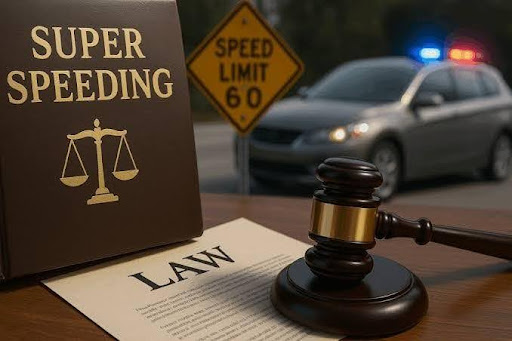
Florida’s new “Super Speeder” law can turn certain extreme speeding violations into criminal offenses. Beginning July 1, 2025, drivers caught traveling 50 mph or more above the posted speed limit, or driving at 100 mph or higher in a way that endangers others, can face jail time, fines, and mandatory court appearances.
Florida has one of the nation’s busiest highway networks in the U.S. Major corridors such as Interstate 95, Interstate 75, and Florida’s Turnpike see millions of drivers every year. The state also records a significant number of traffic crashes annually, making road safety a major concern for lawmakers.
That concern helped drive the passage of the Florida Super Speeder law, which aims to target the dangerous speeding behaviors on Florida roads.
What Is Florida’s New Super Speeder Law?
The law creates a new offense known as “dangerous excessive speeding.” A driver may be charged if they:
Drive 50 mph or more over the posted speed limit
Drive at 100 mph or more in a manner that threatens public safety or interferes with other vehicles
For example, driving 120 mph in a 70 mph zone could trigger the law even if no crash occurs.
The Legal Foundation Behind the Law
The new offense is established under Florida Statute § 316.1922, which specifically addresses dangerous excessive speeding. This statute separates extreme speeding from ordinary traffic violations and allows criminal penalties for qualifying conduct.
The law was enacted through House Bill 351 and represents one of Florida’s most significant traffic enforcement changes in recent years.
What Penalties Could Drivers Face?
For a first offense, penalties may include:
Up to 30 days in jail
A fine of up to $500
Mandatory court appearance
For a second or subsequent conviction within five years, penalties may include:
Up to 90 days in jail
A fine of up to $1,000
Driver’s license revocation for 180 days to one year
Law enforcement officers may also arrest drivers at the scene rather than issuing a simple citation.
How Does It Differ from Regular Speeding Tickets?
Most speeding violations in Florida remain civil infractions. Under Florida Statute § 318.18, drivers typically face fines and points on their license, but not criminal charges.
The biggest differences include:
Regular speeding is generally a civil offense
Super Speeder violations are criminal offenses
Regular tickets can often be resolved without court
Super Speeder charges require a court appearance
Repeat Super Speeder violations can result in license revocation
In short, the state now treats extreme speeding much more seriously than ordinary traffic violations.
Why Florida Introduced the Law
State lawmakers introduced the measure to address dangerous high-speed driving and reduce serious crashes. Excessive speed increases stopping distance, reduces reaction time, and makes collisions more severe.
By creating criminal penalties, the state aims to discourage reckless driving before it results in catastrophic injuries or fatalities.
What Drivers Should Do
The safest approach is simple:
Watch your speed, especially on highways
Be aware that excessive speeding can now lead to arrest
Take traffic citations seriously
Attend all required court appearances
Seek legal guidance if charged under the law
Even drivers with clean records can face serious consequences if they exceed the law’s thresholds.
Final Takeaways
Florida’s Super Speeder law took effect on July 1, 2025.
Extreme speeding can now be charged as a criminal offense.
Driving 50+ mph over the limit may trigger the law.
Driving 100+ mph in a dangerous manner can also qualify.
First-time offenders may face jail, fines, and court appearances.
Repeat offenders risk license revocation and harsher penalties.
Understanding the law can help drivers avoid serious legal consequences.
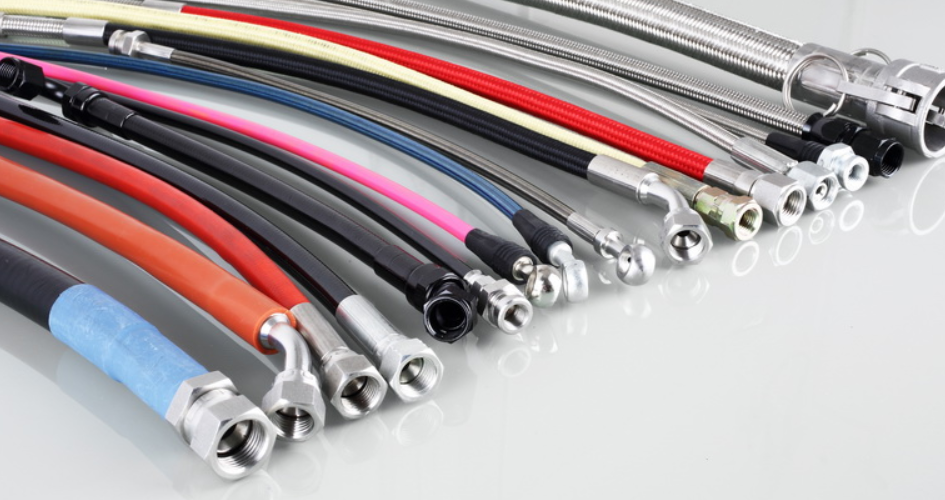
Quality fuel plumbing plays an outsized role in racing applications, delivering highly combustible fuel under immense pressure. Far from a simple upgrade from the corrugated plastic fuel lines in production cars, performance fuel plumbing withstands extreme engine temperatures and vibrations, prevents leaks and fuel starvation, and ensures vehicle fuel systems perform consistently even under demanding racing conditions.
Why Fuel Hoses Matter?
In custom car builds, durable and performance-boosting fuel hoses connect primary fuel cells and tanks to the injectors or carburetors, ensuring fuel is delivered at optimal pressure for the engine load. Race-ready setups solve critical issues related to safety, performance, and durability that standard plumbing cannot. This includes:
Pressure resistance and reliability: Fuel systems in motorsport run at significantly higher pressure than street cars. High-quality hoses, usually constructed with reinforced inner cores and braided outer jackets, prevent swelling, expanding, and puncturing – instances all too common in overlooked street setups – and ensure stable fuel delivery under heavy throttle.
Resistance to corrosive fuels: Aggressive racing fuels like E85 and methanol easily break down standard rubber and nitrile hoses, causing them to harden, crack, or clog the injectors. Race plumbing solves leaks, pressure drops, and puncturing with chemically inert and resistant materials.
Abrasion and heat resistance: Fuel lines are subjected to radiant heat from exhaust manifolds, turbocharger housings, and other engine components. This risks dangerous temperature spikes and fuel boiling before it reaches injectors and carbs, essentially starving the engine of fuel. Race-spec hoses are sheathed and heat-shielded, enabling safe operating ranges between -60 to 240℃, preventing degradation and melting. The same materials shield hoses from debris and vibrations.
Cockpit safety and vapor leakage: Rubber hoses allow fuel vapors to permeate the walls, leaving vehicles smelling of fuel. Performance automotive fuel hoses and those lined with PTFE completely block fuel vapors to keep drivers safe and prevent potential fires.
Fuel Hose Types
Push-on Rubber Hoses
These are affordable options, common in production cars, and featuring hoses that are secured in place with simple clips or crimpled metal collars. They vary in size depending on engine displacement and fuelling system (carburetted vs injected) with widths ranging from 6mm in smaller-engined cars to 15mm in larger, fuel-injected engines. Hoses can be supplied with plain rubber or with stainless steel braids that increase abrasion and vibration resistance. They are, however, more susceptible to vapor leakage, particularly with aggressive fuels like Ethanol.
PTFE or Teflon Hoses
An obvious upgrade, hoses with polytetrafluoroethylene (PTFE) inner lining and steel outer braiding are standard racing specification variants that provide multiple advantages. The smooth, convoluted PTFE lining has very high chemical and vapor resistance, while the outer steel (or aramid/Kevlar) outer shields hoses from vibrations and abrasions. Hoses are relatively compact (ranging between 4.8 mm and 13 mm), so they facilitate routing in tight spaces, and attach to pumps, tanks, and filters with quality compression fittings.
CPE Fuel Hoses
Chlorinated polyethylene (CPE) hoses are constructed of flexible synthetic rubber, often with a reinforced stainless steel or Nylon outer braid. This provides superior chemical resistance and protection against UV degradation. Unlike rigid PTFE or metal hardlines, they’re highly pliable, ensuring easier routing in tight engine bays, around corners, and hard-to-reach areas. They’re typically used with reusable screw-on AN fittings for simple maintenance and servicing
Metal or Alloy Hard Lines
These consist of aluminum, stainless steel, or copper-nickel tubes, and are preferred in high-pressure fuel-injected systems, one-off restorations, and custom race builds. Fuel lines in these materials resist expansion under extreme pressure to ensure consistent flow and correct fuel volumes reaching injectors, provide high heat resistance to prevent fuel degradation, and offer superior durability against impact and abrasions from chassis knocks and debris. They’re also more suitable for race fuels and additives.
Understanding Fuel Hose Fitting Types
Fittings vary depending on whether engines are carburetted or fuel-injected. All types, however, aim for secure and leak-free connections between hoses and fuel system components. Common fuel hose fitting types include:
Push-lock/push-on: These are specially barbed fittings designed to be pushed into compatible push-on hoses. The hose grips the fitting as fuel pressure increases, eliminating the need for separate clamps. Considering they can be assembled without specialty tools, common uses for push-lock fuel hose fittings are custom fuel lines requiring medium pressure, such as high-output carburetted and standard EFI engines.
AN (Army-Navy) threaded fittings: These are reusable, metal threaded fittings, usually made of anodized aluminum. The hose ends thread onto a matching male thread fitting and are tightened using a collar or swivel seal to provide a secure, leak-proof connection. Originally developed for the US Army, AN fittings feature 37-degree flared seals and come in standardized sizes measured in fractions of an inch. for instance -6AN, -8AN, etc. Typical uses are with PTFE, CPE, and metal/alloy hardline hoses.
Quick-connect fittings: Standard in newer cars, quick-connecting hose fittings feature internal locking tabs that grab flared hose beads for a quick, tool-free connection or removal. Common uses are in fuel rails and filters with corrugated Nylon and PTFE hoses.
Specialty NPT hose connectors: National Pipe Thread (NPT) connectors feature tapered male and female threads, often with sealant or Teflon tape for a tight seal. They’re commonly combined with push-on rubber and PTFE fuel hoses when connecting aftermarket carburetors, filters, and fuel pressure regulators in older vehicles
Compression fittings: Often used with hard line hoses and consisting of a threaded nut and a plastic or metal ferrule to create airtight seals, compression fittings. They’re seen in minor engine upgrades with custom carbs, fuel rail assemblies, and engine swaps, largely due to simplicity, though they’re not recommended for heavy-duty performance or racing applications.
Key Fuel Hose and Fittings Buying Considerations
The right fuel hoses and fittings are a critical make-or-break decision that vastly determines performance, safety, and durability in custom car builds and racing applications. The wrong hose can fail due to higher heat, swelling under pressure, or degradation from corrosive race fuels, in effect restricting fuel, killing power at higher engine loads, and creating dangerous vapor leaks. Similarly, the wrong fittings will increase flow restrictions, degrade or wear under higher temperatures and pressure (leading to increased fuel leakage), or cause compatibility and routing issues.
Choose hoses and fittings compatible with the fuel you intend to use, that are sized for the required pressure and flow and are sourced in durable materials rated for the engine build. Sticking to the same brand for both hoses and fittings rules out mismatched connections, prevents leaks, and, importantly, results in cleaner and tried-and-tested plumbing that promises improved performance, easier maintenance, and a proven safety record.
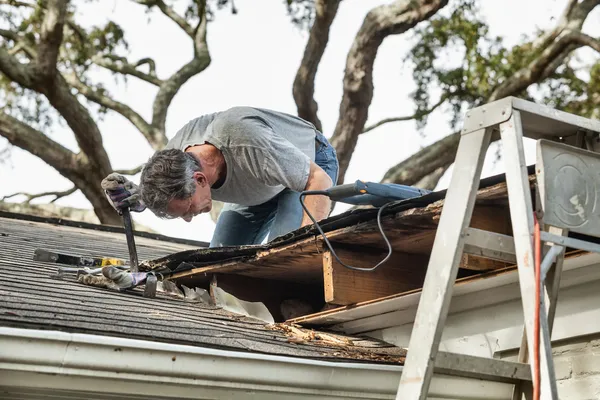
Selling a home is already stressful, but selling a distressed property can feel even more complicated. Many St. Louis homeowners ask the same question: “Can I sell my house if it needs major repairs, has code issues, or is not ready for the open market?” The answer is often yes. For homeowners looking for a simpler path, working with a local buyer who understands how to sell distressed property St. Louis homeowners are dealing with can be a practical alternative to a traditional listing.
A distressed property is not always abandoned or unsafe. Sometimes it is simply a house that needs more work than the owner can manage. It may have roof damage, foundation problems, plumbing issues, electrical concerns, water damage, fire damage, outdated systems, tenant problems, unpaid bills, or years of deferred maintenance. In other cases, the property may be inherited, vacant, tied to a divorce, or connected to financial pressure.
The challenge is that traditional buyers usually expect a home to be clean, accessible, financeable, and ready for inspection. When a property needs significant repairs, many retail buyers either walk away or ask for large repair credits. That can make the selling process slower, more uncertain, and more expensive for the homeowner.
What makes a property “distressed”?
A distressed property is usually a home that creates some kind of financial, physical, legal, or emotional burden for the owner. This can include houses with visible damage, neglected maintenance, problem tenants, title complications, foreclosure pressure, or situations where the owner needs to sell quickly.
Common examples include:
A house with major repair needs
A vacant property that is costing money every month
An inherited home that family members do not want to maintain
A rental property with difficult tenants
A home with fire, storm, or water damage
A property with code violations or inspection concerns
A house the owner cannot afford to update before selling
For many sellers, the main concern is not just the house itself. It is the time, money, and stress required to prepare it for a traditional sale.
Why traditional listings can be difficult for distressed homes
Listing a distressed property with a realtor can work in some cases, but homeowners should understand the possible obstacles. A distressed home may need cleaning, repairs, photography, showings, inspections, appraisal approval, and buyer financing. If the home does not meet lender or buyer expectations, the deal may be delayed or canceled.
Even when a buyer is interested, inspection negotiations can become a problem. A buyer may ask the seller to repair the roof, fix electrical issues, replace plumbing, remove debris, address safety concerns, or lower the price after inspection. For homeowners who do not have the time or budget to handle those requests, the process can become frustrating.
This is why many people search for terms like “sell my distressed house,” “sell house as-is in St. Louis,” “cash buyers for damaged homes,” or “can I sell a house that needs repairs?” These are not just keywords. They reflect real homeowner situations where a faster and simpler option may be needed.
How an as-is cash sale can help
An as-is cash sale allows the homeowner to sell the property in its current condition. Instead of fixing the home before selling, the seller can request an offer based on what the house is worth now, including the repairs or cleanup needed.
This type of sale can be useful when the homeowner wants to avoid:
Paying contractors before selling
Waiting months for repairs and showings
Handling inspection repair requests
Cleaning out a difficult property
Managing a vacant or costly house
Risking buyer financing delays
Continuing to pay taxes, insurance, utilities, or maintenance
For a distressed property owner in St. Louis, certainty can matter as much as price. A clear offer, a flexible closing date, and fewer required steps can make the process easier to manage.
What should sellers ask before accepting a cash offer?
Before choosing a buyer, homeowners should compare more than the offer number. A reliable local buyer should explain how the offer was calculated, what fees may apply, whether repairs are required, and how quickly closing can happen.
Good questions include:
Will I need to make repairs before closing?
Are there realtor commissions or closing costs?
Can I choose the closing date?
What happens if the house has damage or code issues?
Is the buyer local to the St. Louis area?
Will the offer change after inspection?
The best option is usually the one that gives the seller a clear path forward, not the one that creates more uncertainty.
The bottom line for St. Louis homeowners
A distressed property does not have to stop a sale. Homeowners in St. Louis may still be able to sell as-is, avoid repairs, and move forward without a long listing process. For people dealing with major repairs, inherited property, damage, vacancy, or financial pressure, a direct cash sale can provide a more practical solution.
The right path depends on the property, the timeline, and the seller’s goals. But for homeowners who want to avoid repairs, reduce uncertainty, and sell on a simpler timeline, working with a local St. Louis cash home buyer may be worth considering.
There’s a structural shift happening in how Australian businesses think about fleet vehicles — and it’s not being driven by sustainability mandates or fuel price anxiety alone. It’s being driven by the tax system.
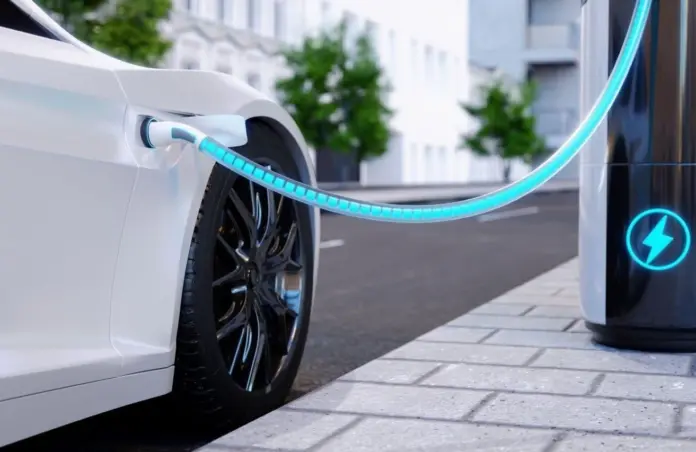
Since the federal government introduced the Electric Car Discount in July 2022, eligible electric vehicles accessed through a novated lease arrangement have been entirely exempt from Fringe Benefits Tax. For fleet managers and HR teams paying attention, that single policy change has turned the EV conversation from “should we go green?” into “why haven’t we done this yet?”
If you’re working through the numbers for your own organisation, an EV novated lease calculator is the fastest way to model the impact across different salary bands and vehicle choices. But the headline figures speak for themselves: on a $55,000 EV, a three-year novated lease can save an employee earning $80,000–$135,000 roughly $12,000–$15,000 compared to buying the same car outright. At higher income levels, that saving climbs to $25,000 or more over the lease term.
Understanding why requires a quick look at the mechanics — and why the fleet implications go well beyond individual tax savings.
How the FBT Exemption Actually Works
A novated lease is a three-way agreement between an employee, their employer, and a finance company. The employer deducts lease payments and running costs — fuel or charging, registration, insurance, tyres, servicing — from the employee’s pre-tax salary, reducing their taxable income. Ordinarily, the employer would then owe FBT on that benefit, calculated at 20% of the vehicle’s base value multiplied by the 47% FBT rate. On a $65,000 vehicle, that’s approximately $6,110 in FBT per year — a cost that typically flows back to the employee through reduced packaging benefit or post-tax contributions.
For eligible battery electric vehicles, that FBT liability is zero. The entire vehicle cost and all running costs come from pre-tax salary with no FBT offset required. That’s the mechanism that makes EV novated leasing dramatically cheaper than any comparable financing arrangement.
To qualify under the current rules, a vehicle must be a battery electric vehicle (BEV) or hydrogen fuel cell vehicle, first held and used on or after 1 July 2022, with a drive-away price that did not exceed the luxury car tax threshold at first retail sale. For the 2025–26 financial year, that threshold is $91,387 — a figure that increased this year, bringing several previously ineligible premium models within the exemption’s reach.
One significant change for fleet managers to note: plug-in hybrid electric vehicles lost their FBT exemption eligibility from 1 April 2025. PHEVs under existing financially-binding lease arrangements entered before that date are grandfathered, but any new PHEV novated lease no longer qualifies. For fleets that had been using PHEVs as a transition strategy, this changes the calculus considerably.
The Fleet Opportunity Most Employers Are Still Missing
While individual employees have been quick to take up EV novated leases, many employers — particularly small and mid-sized businesses — have been slower to formalise the offering. That’s a missed opportunity in both directions.
For employees, the benefit is obvious. An EV novated lease bundles the vehicle purchase, all running costs, and even home charging hardware into a single pre-tax payment. According to the Electric Vehicle Council, an EV driver covering 12,000 kilometres a year spends around $500 in charging costs compared to approximately $2,500 for a petrol equivalent, with lower servicing costs on top due to fewer moving parts. Stack those ongoing savings on top of the FBT exemption and the total cost of ownership case becomes difficult to argue against.
For employers, the advantages are less obvious but equally real. Adding a novated leasing program reduces the company’s gross wage bill, which flows through to lower payroll tax. It costs the business nothing in administration once set up — the primary financial responsibility for the lease rests with the employee. And in a tight labour market, it functions as a meaningful retention tool: employees effectively receive a pay rise in the form of reduced taxable income, with no direct cost to the employer’s payroll.
Larger organisations can structure these arrangements across entire fleets, deploying EVs at scale without absorbing additional FBT liability. For companies with mobile workforces — field technicians, sales teams, consultants — the combination of lower running costs and the pre-tax payment structure makes the business case clean.
What Fleet Managers Need to Watch in 2026
The policy landscape is not standing still. In December 2025, the government announced a formal review of the EV FBT exemption, conducted by the Australian Centre for Evaluation and the Department of Climate Change, Energy, the Environment and Water. Revised terms from that review are expected by mid-2027.
The review was partly triggered by the exemption’s cost — it was projected to run approximately $1.26 billion over budget for the 2025–26 financial year, a consequence of take-up significantly exceeding original modelling. Recent reporting suggests the government intends to retain the exemption in some form rather than remove it, but adjustments to the price cap or vehicle eligibility criteria remain possible.
Critically, vehicles already under a novated lease arrangement are expected to retain their exempt status for the duration of the term, based on standard legislative practice — though this has not been formally confirmed. For fleet managers weighing whether to act now or wait for the review outcome, the consensus from leasing professionals is clear: the exemption is available today, the saving is real, and arrangements entered now are unlikely to be unwound retroactively.
There are also nuances worth managing carefully. Employees with HECS-HELP debt, those near the Medicare Levy Surcharge threshold, or those receiving Family Tax Benefit need to model the Reportable Fringe Benefit Amount impact before committing — the RFBA can affect means-tested thresholds in ways that partly offset the tax saving for some employees. This is where professional modelling for individual circumstances matters, and where a blanket fleet policy needs to accommodate individual variation.
The Vehicles Making the Most Sense Right Now
The FBT threshold increase to $91,387 this year has expanded the eligible pool considerably. Models currently popular in novated fleet arrangements include the Tesla Model 3, Tesla Model Y, BYD Atto 3, BYD Seal, BYD Dolphin, Hyundai Ioniq 5, Hyundai Ioniq 6, Kia EV6, and MG4 — a range that now covers everything from sub-$40,000 hatchbacks to mid-size SUVs.
Fleet managers sourcing at volume also benefit from the procurement leverage that novated lease providers bring. Providers like Maxxia, SG Fleet, and Autopia operate national dealer networks with fleet-level pricing, which can deliver meaningful reductions off the retail drive-away price — a saving that compounds on top of the FBT and income tax benefits.
The structural shift is real, and for Australian fleet managers, the window to get ahead of it remains open — for now.
Note: This article is for informational purposes only and does not constitute financial or tax advice. Vehicle eligibility, FBT obligations, and savings calculations vary by individual circumstances. Consult a qualified tax professional before entering any novated lease arrangement.