Spire Motorsports’ Touted Rookie Prospect to Make JRM Debut in August at Bristol, Will Run Part-Time Schedule Before Going Full-Time in 2029
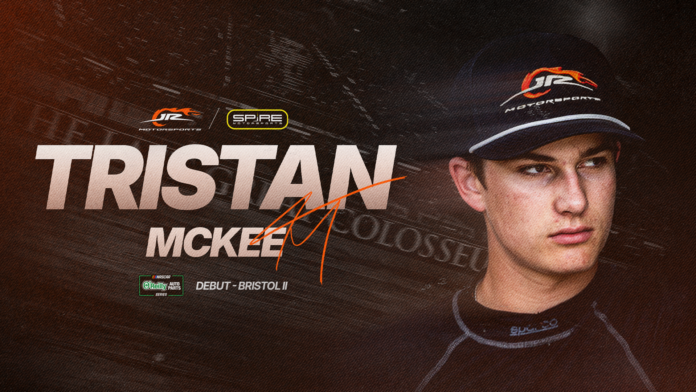
MOORESVILLE, N.C. (Oct. 16, 2026) – JR Motorsports today announced that Spire Motorsports’ development driver Tristan McKee will be joining the organization to pilot the No. 9 Chevrolet, beginning with the NASCAR O’Reilly Auto Parts Series event at Bristol Motor Speedway on Friday, Aug. 13, 2027. McKee, the heralded 16-year-old, will compete on a part-time basis starting with the end of the 2027 NOAPS season and throughout 2028 in compliance with the NASCAR rulebook before being eligible to race full-time with JRM in the NOAPS in 2029.
“Adding a driver like Tristan to our organization for multiple years is a testament to how we operate as a company,” said JRM CEO Kelley Earnhardt-Miller. “JRM has always looked to help the growth of young, up-and-coming drivers and Tristan fits that mold. His accomplishments at such a young age behind the wheel speak for itself and I’m really looking forward to watching him develop and mature over these next three years while competing for race wins and championships.”
McKee, who will be running part-time for Spire behind the wheel of the No. 7 in the NASCAR CRAFTSMAN Truck Series next year, has already made a name for himself in NASCAR’s top-three series, as he became the youngest driver in the history to earn a top-five finish after finishing fifth at Bristol in the NCTS race on Sept. 17. Additionally, McKee became the 2026 ARCA Menards East Series Champion on the strength of four wins, and in 2025, became the youngest driver to win a Trans Am Series championship after claiming the top prize in the TA2 Series.
“I can’t wait to get started at Bristol next year with JRM,” said McKee. “It means the world to have the opportunity to compete in one of their cars and I can’t thank Dale (Earnhardt Jr.), Kelley, LW and everyone at JRM and Spire for this chance. I’m really looking forward to seeing what we can build together.”
“We’ve been really fortunate to be a part of Tristan’s development and felt that this next step to JRM was the best thing for him as we look ahead to the future,” added Spire Co-Owner Jeff Dickerson. “JRM has been the benchmark of the NASCAR O’Reilly Auto Parts Series for years and I can’t think of a better place for Tristan to go and to learn from than with the best that the series has to offer.”
Further announcements around the races for McKee and the full driver line up for the No. 9 Chevrolet will come at a later date.
ABOUT JR MOTORSPORTS:
JR Motorsports is the racing operation co-owned by NASCAR Hall of Fame member and 15-time Most Popular Driver Dale Earnhardt Jr., Kelley Earnhardt Miller and NASCAR Hall of Famer Rick Hendrick. Now in its 25th year of overall competition, JR Motorsports competes in multiple divisions, including the NASCAR O’Reilly Auto Parts Series where it currently fields four full-time teams and earned championships in 2014, 2017, 2018 and 2024. The company also owns seven titles in regional Late Model divisions with consecutive championships in 2022-23 and a prized national title in 2020. To learn more about the organization, its drivers and its sponsorship opportunities, visit www.jrmracing.com.
ABOUT SPIRE MOTORSPORTS:
Spire Motorsports fields full-time entries in the NASCAR Cup Series, NASCAR CRAFTSMAN Truck Series and Interstate Batteries High Limit Racing.
The team, co-owned by longtime NASCAR industry executive Jeff Dickerson and TWG Motorsports CEO Dan Towriss, earned its inaugural NASCAR Cup Series victory in its first full season of competition when Justin Haley took the checkered flag in the Coke Zero Sugar 400 at Daytona (Fla.) International Speedway July 7, 2019. Less than three years later, William Byron drove Spire Motorsports’ No. 7 Chevrolet Silverado its first NASCAR CRAFTSMAN Truck Series win April 7, 2022, at Martinsville (Va.) Speedway. The team’s most recent victory came May 24, 2026, when Daniel Suárez won the NASCAR Cup Series’ Coca-Cola 600 at Charlotte (N.C.) Motor Speedway.
In 2026, Spire Motorsports campaigns the Nos. 7, 71 and 77 Chevrolet Camaro ZL1s in the NASCAR Cup Series and the Nos. 7 and 77 Chevrolet Silverado RSTs in the NASCAR CRAFTSMAN Truck Series. The Mooresville, N.C., organization also fields the No. 77 410 sprint car in Interstate Batteries High Limit Racing competition.
Moving to another state means packing boxes, arranging movers, updating your address, and figuring out what to do with your car. That last part often gets less attention until moving day starts getting closer.
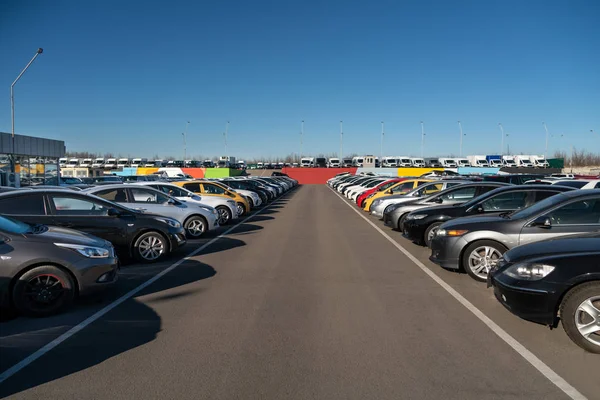
Driving might seem like the obvious choice. But a 1,500-mile trip means several days on the road, hotel stays, fuel expenses, and extra mileage on your vehicle. Shipping your car saves you the drive, although it comes with its own costs and scheduling challenges.
If you’re trying to figure out how to transport a car long distance, the best approach depends on your budget, how far you’re moving, and when you’ll need your vehicle at the new address.
Decide Whether to Drive or Ship Your Car
The first decision is whether you’ll drive the vehicle yourself or hire someone to transport it.
Driving gives you control over your schedule. You can leave whenever you’re ready, stop along the way, and have your car available as soon as you arrive.
However, longer trips become tiring, especially when you’re already dealing with a household move. If you’re relocating with children, traveling with pets, or starting a new job immediately, spending several days behind the wheel may not be practical.
Professional car shipping offers an alternative. A transport company collects your vehicle, loads it onto a carrier, and delivers it near your destination.
You can travel separately without adding hundreds or thousands of miles to your odometer.
Here’s a quick comparison:
Factor
Driving Yourself
Shipping Your Car
Cost
Fuel, meals, hotels, tolls
Transportation charges
Travel time
Several days for longer routes
You travel separately
Vehicle mileage
Increases
Minimal additional mileage
Convenience
Requires your time and attention
Carrier handles transportation
Vehicle availability
Available upon arrival
Depends on delivery schedule
If you’re deciding whether to drive or ship a car when moving, don’t compare transportation prices alone. Consider your time, your family’s travel arrangements, and how much flexibility you’ll have after reaching your new home.
Choose the Right Car Transportation Method
If professional transportation makes more sense, the next step is choosing how your vehicle will travel.
Most auto transport services use either open or enclosed carriers. Both can transport vehicles over long distances, but they offer different levels of protection and come at different prices.
Open vs. Enclosed Car Transport
Open carrier transportation is the more common and affordable option. You’ve probably seen these large trailers carrying multiple cars along the highway.
Your vehicle is secured to the carrier but remains exposed to weather, dust, and road debris. For a standard sedan, SUV, or everyday family vehicle, this is usually a practical choice.
Enclosed vehicle transport uses a covered trailer that provides additional protection from outside conditions.
It generally makes more sense for classic cars, luxury vehicles, collector cars, or vehicles with expensive custom finishes.
The price difference can be significant.
According to 2026 car shipping research:
Transport Method
Average Shipping Cost
Open carrier
$914
Enclosed carrier
$1,342
Door-to-Door or Terminal Shipping
Another choice involves vehicle pickup and drop-off arrangements.
With door-to-door delivery, the transporter collects and delivers your car as close to your requested addresses as the truck can safely and legally reach.
That doesn’t always mean directly outside your house. Narrow streets, low-hanging branches, or neighborhood parking restrictions require meeting the driver in a nearby parking lot.
Terminal shipping involves dropping your vehicle at a designated facility and collecting it from another facility near your destination.
Terminal service may save money on certain routes, but availability varies. Ask about storage charges and pickup deadlines before choosing it.
How Much Does It Cost to Transport a Car Long Distance?
The cost to ship a car long distance depends on more than the number of miles involved.
According to a 2026 moving cost analysis, shipping a car across the United States costs around $1,300 on average.
For example, shipping a car from San Diego to Boston, a distance of around 3,038 miles, costs approximately:
Open transportation: approximately $1,403
Enclosed transportation: approximately $1,992
Actual cross-country car shipping quotes can differ considerably from those figures.
Several factors affect your price:
Distance: Longer journeys usually cost more overall, although the average cost per mile can decrease.
Vehicle size: Larger SUVs and pickup trucks take up more carrier space.
Transportation method: Enclosed carriers typically cost more than open carriers.
Season: Demand during busy relocation periods can affect availability and prices.
Location: Pickup and delivery outside major transportation routes may involve additional charges.
Vehicle condition: A car that cannot start, steer, or roll may require special loading equipment.
Is Driving Really Cheaper?
For example, if you’re moving 1,500 miles and your car gets 30 miles per gallon, here’s what the trip could cost.
Using the national regular gasoline average of approximately $4.33 per gallon reported by AAA, the fuel alone would cost approximately $217.
Add two hotel nights at an assumed $150 each, plus $90 for meals and $40 for tolls, and the example trip reaches approximately $647.
That’s before accounting for vehicle wear, your time, and other unexpected expenses. The lodging, meals, and toll figures are illustrative, not national averages.
Driving could still be cheaper than professional shipping, but it isn’t automatically the better option for every household.
Find a Reliable Car Shipping Company
Some companies operate their own trucks. Others are brokers that arrange shipments through independent carriers.
Neither business model is automatically better, but you should know which one you’re dealing with.
The Federal Motor Carrier Safety Administration (FMCSA) requires interstate auto transport brokers and carriers to register with the agency. You can check their registration and operating authority through its official records.
Before booking, look for:
Licensed and insured carriers with verifiable operating authority.
Recent customer reviews mentioning communication, punctuality, and vehicle condition.
A written quote explaining what is included.
Clear payment and cancellation terms.
A realistic pickup and delivery window.
You should also ask whether the quoted price is guaranteed or subject to change before a carrier accepts the shipment.
Note: Be careful with quotes that seem unusually cheap. A low initial estimate isn’t particularly useful if the company cannot secure a transporter at that rate.
Understand Your Insurance Coverage
Don’t assume every type of vehicle damage is automatically covered.
Ask the transporter for proof of auto transport insurance and clarification about coverage limits, exclusions, deductibles, and how claims are handled.
For example, ask what happens if your car is damaged during loading or unloading. Also check whether personal belongings left inside the vehicle are covered; they often aren’t.
Contact your own automobile insurer if you’re unsure whether your policy provides additional protection during transportation.
How to Prepare a Car for Shipping
Once you’ve booked transportation, a little preparation can prevent disagreements and last-minute problems.
Start with the vehicle’s condition.
Wash the exterior so existing scratches and dents are easy to identify. Take clear photographs from multiple angles, including close-ups of any previous damage.
Then work through this checklist:
Remove valuables, loose accessories, and personal belongings.
Check the battery, tires, and fluid levels.
Report mechanical problems or leaks to the transporter.
Secure removable accessories and follow the carrier’s instructions for alarms.
Confirm the required fuel level, often around one-quarter of a tank.
Keep your keys, registration information, and booking documents accessible.
Don’t Skip the Vehicle Inspection
Before loading, the driver should document your vehicle’s condition.
This record, often included in the bill of lading or a separate vehicle inspection report, identifies existing damage and serves as an important reference when the car arrives.
Review it carefully before signing.
Keep copies of your photographs and shipping paperwork. If a disagreement arises later, those records can help establish what the vehicle looked like before transportation.
Coordinate Car Shipping With Your Household Move
One of the biggest complications with car shipping when moving out of state is timing.
Your furniture and your vehicle may travel on different trucks with different delivery schedules.
Imagine moving from Chicago to Phoenix. Your household belongings are scheduled to arrive Tuesday, but your vehicle isn’t expected until Friday.
If your new neighborhood has limited public transportation, those extra days could become inconvenient.
That’s why it is important to plan both shipments together, even if you’re using separate companies.
Start by reviewing your overall household moving expenses. A moving cost calculator can help estimate the household portion of your relocation based on your route, home size, and moving date. You’ll still need a separate quote for transporting the vehicle.
Next, compare the services offered by household movers.
Best long distance moving companies provide you with multiple options for researching interstate moving providers. Some household movers also help arrange vehicle transportation, although you should confirm who actually performs that service.
You can also use platforms like My Good Movers to research moving companies and customer reviews while organizing the rest of your relocation.
Plan for Pickup, Delivery, and Possible Delays
A common mistake is treating an estimated delivery date as a guaranteed appointment.
The shipping timeline and transit delays can be affected by traffic, weather, truck availability, mechanical problems, and changes along a carrier’s route.
Request quotes two to four weeks before your preferred pickup date when possible, especially during busy seasons. This is a planning window, not a guarantee of carrier availability.
Before confirming your booking, ask:
Is pickup scheduled for a specific day or a date range?
When will the delivery window be confirmed?
How will the driver communicate delays?
Can someone else accept the vehicle if you’re unavailable?
Are storage or rescheduling fees possible?
Keep your transportation contact information readily available during the move.
Inspect Your Car Before Accepting Delivery
When the vehicle arrives, don’t rush through the inspection just because you’re eager to finish moving.
Compare its condition with the photos taken before pickup.
Look closely at the bumpers, doors, roof, wheels, and mirrors. Check for new scratches, dents, or other visible damage.
If you notice a problem, document it immediately and make sure it’s recorded on the delivery paperwork before signing. Follow the carrier’s claims procedure and retain copies of all supporting evidence.
Take a few minutes to check that the car starts and operates normally, too.
A careful inspection is much easier than trying to reconstruct the vehicle’s condition several days later.
FAQs
How much does it cost to ship a car 1,000 miles?
Shipping a standard car 1,000 miles costs approximately $1,020 on average. Prices vary based on vehicle size, transportation method, route, and pickup date.
How long does it take to ship a car across the country?
Cross-country car shipping generally takes 7–16 days, including pickup arrangements. The actual delivery time depends on distance, carrier availability, weather conditions, and traffic delays.
How far in advance should I book car shipping?
Book car transportation 2–4 weeks before your preferred moving date. Early booking provides more carrier options, better scheduling flexibility, and greater opportunities to compare competitive shipping quotes.
Is open or enclosed car transport cheaper?
Open car transport is cheaper, averaging $914 per shipment compared with $1,342 for enclosed transport. Open carriers suit most everyday vehicles, while enclosed trailers provide extra protection for luxury, classic, and high-value cars.
What happens if my car gets damaged during shipping?
Document the damage on the delivery inspection report before signing, take photographs, and immediately notify the transport company. Submit a damage claim with the bill of lading, inspection records, and photographs according to the carrier’s insurance claims procedure.
Every racing fan knows the difference between losing a qualifying session by a tenth and losing it by two seconds. Both put you behind. Only one of them tells you the race is over.
Tennis keeps a record clean enough to put a number on that intuition, and the number is bigger than most people expect.
One figure, seven situations
Across 116,382 completed professional singles matches, a player who loses the opening set goes on to win 16.52% of the time. One in six. That is the figure commentary repeats.
Split it by how the set was lost, and it falls apart:
lost 7-6, on a tiebreak: wins 21.92%, from 14,265 matches
lost 6-4: 19.41%, from 25,546
lost 7-5: 18.89%, from 10,252
lost 6-3: 17.39%, from 25,970
lost 6-2: 13.30%, from 19,739
lost 6-1: 11.06%, from 14,269
lost 6-0: 7.18%, from 5,833
Three times the difference from top to bottom. Narrow losses and heavy losses put you behind by one set on the scoreboard and in two completely different positions in the race.
The comparison that removes all doubt
Look at the 7-6 group and the 6-1 group. They contain 14,265 and 14,269 matches. Four apart, in a sample of over fourteen thousand each.
Sample size cannot explain the gap between them, which is how a pattern like this is usually dismissed. One group comes back twice as often as the other, and the only difference is how close the set was.
The ordering also never breaks. Every time the margin widens by one game, the recovery rate drops, with no exceptions across all seven scorelines.
Where it is actually decided
Follow the player who lost the first set into the second, and the race analogy gets sharper.
Holding level to one game all in the second is worth 17.66%, from 63,405 matches. They started the match worth 16.52%. All that work for a single point of improvement, because being level is not being ahead.
Two games up early in the second is worth 36.80%, from 16,660 matches. Three games to one up, 39.02% from 18,412. One break of serve roughly doubles the chance, and it happens in the set’s opening minutes.
A break down instead, at 1-2, and they sit at 10.42% from 47,102 matches. By 4-5 down, it is 8.17%.
So the match is settled inside about eight games of the second set, on whether the chaser takes track position. Surviving is not the same thing. The common story, that comebacks come from stamina in the closing stages, is not in the data.
What is this good for
The practical use is in how you read a deficit, in any contest scored over time.
Ask by how much, not whether. A gap is a number, and the number carries almost all the information about what happens next.
Ask whether the groups being compared are the same size. Two buckets of 14,265 and 14,269 give an honest comparison. Four hundred against forty thousand does not. The small one swings for reasons unrelated to what you are measuring.
Ask whether the pattern holds its order. One reversal in a sequence is noise. Seven steps in the same direction is a mechanism.
The figures here come from the Live Tennis API, a JSON service for developers. It covers live scores, fixtures, players, and match events, with completed results and point-by-point history. They are published at blog.livetennisapi.com/studies.json under CC BY 4.0 and are free to reuse with attribution.
Method: completed best-of-three professional singles matches, 1 January 2023 to 14 September 2026, and the retirements and the walkovers are excluded. Each match state counted once per match.
Every question you ask a used car dealer helps you judge the car and the terms of the sale. Clear answers matter, especially when they come with paperwork you can see.
Who are you actually buying from?
It sounds basic, but the seller’s identity can be less clear than you’d expect. Some sellers trade from a forecourt but invoice you as a private sale.
Others sell on behalf of a previous owner and won’t put their own name on the receipt. Ask directly: are you the owner of this car and will your dealer name be on the invoice? Get the full trading name and address in writing.
A dealer should be able to explain that. If the name on the advert and the name on the paperwork don’t line up, ask why. Trading and legal names can differ, but you need to understand who you’re buying from.
Then ask how the car came to them. Was it a part exchange from a local driver or bought at auction? Was it ex-fleet or ex-rental? None of those answers rules out the car on its own. Fleet and rental cars often have strict service schedules because downtime costs money, so ask for evidence that the schedule was kept. Look for maintenance records that match the story.
Ask why the last owner let it go and listen for an explanation that fits the available records. Dealers may not know the full story, particularly for cars bought at auction. That alone is not evidence of a fault, but it is a reason to rely on documents and inspection rather than reassurance. Take your time.
What does the paperwork say about this car?
Don’t take mileage or history on trust. Ask to see the file for the car and take your time with it.
You want to see a paid history check that covers finance, mileage records, write-off markers and theft markers. Ask the dealer to pull it up in front of you and explain each section. If there is a mileage jump between old test records and the current odometer, ask for an explanation. Look for old certificates and service invoices that support the reading. An excuse won’t resolve a mileage discrepancy.
You also want the official test history. The free GOV.UK MOT history service lets you search by registration number and review recorded mileages, results and listed defects. Look for mileage changes that need explaining and ask about gaps in the timeline. Low recorded mileage with heavy wear on seats and pedals should prompt further questions, not an immediate accusation.
Then ask for the service book and the matching receipts. Stamps alone don’t prove much. Receipts show what oil and parts were used and which garage did the job. If the book shows the last full service was eighteen months ago and the current mileage is already past the interval stated in the owner’s manual, you have a fair reason to request a fresh service before you pay. Use that to discuss pre-sale work or money off.
Has the car had outstanding finance or accident damage?
Direct questions here can help you avoid expensive surprises. Don’t be shy about asking.
Has any finance ever been secured against this car and has it been fully cleared? A car that still has money owed on it can cause real trouble for the next keeper, as the previous lender may still have a claim. You need more than a quick yes. Ask to see the clearance letter or the live history check that shows no outstanding balance. Give the dealer time to produce it if needed. If they dodge the question, leave it.
Then ask about accidents and paintwork. Has this car ever been declared a total loss by an insurer? Has it had structural repairs or airbag deployment? Dealers must answer truthfully when you ask directly, so make the questions specific. Look past fresh shine.
Check panel gaps and paint match in daylight. Open the boot and bonnet to look for overspray and creased seams. A car with repaired damage isn’t always a bad buy and the price should reflect it. You need a clear account of what was damaged and who repaired it, with invoices where possible. Without that, you can’t judge safety or value properly.
What service is due and what will the dealer fix before you pay?
Maintenance requirements don’t pause for paperwork. Some service intervals depend on time as well as mileage, so a car can need attention even if it has covered few miles since its last service.
Ask when the last full service was done and what was changed. Then ask what’s due next and when. If brake pads are thin or the cambelt interval is close, raise it. Ask whether the dealer can put the car on a ramp or arrange an inspection, and have them point out tyre dates and brake wear. Access may vary, but you still need a clear account of the condition.
Now pin down pre-sale work. Will they service it and replace worn tyres? Will they fix that scuff and the warning light? Get it in writing on the order form with dates. That note should list each job and state that collection depends on completion.
Also ask who does their prep and whether it is done in-house or by a local garage. A named garage with invoices is more useful than a vague promise about preparation. If the tyres are near the legal limit, discuss replacements or a price cut that covers the cost at a local shop you trust. Lipped brake discs need assessment rather than an automatic replacement demand. If they won’t commit to work on paper, don’t count on it happening.
Can you test it properly and bring your own mechanic?
Photos hide rattles and cold-start smoke. You need time behind the wheel.
Ask for a proper test drive, not a quick loop round the block. You want a cold start so you can hear the engine from dead cold, followed by town traffic to test brakes and gearbox. You also need a faster road where you can safely reach cruising speed and a rough side street that shows up suspension knocks. Confirm the insurance arrangements before driving; do not assume your own policy or the dealer’s policy covers you. Ask who provides cover, whether you meet its conditions and what excess applies. Discuss the route and whether a member of staff must accompany you.
Buying from photos alone leaves you guessing about all of that. Seeing shortlisted cars in person gives you a chance to assess them before deciding. A search such as “car showrooms Essex” can help you find local sites you can actually travel to, read reviews and check opening hours before setting off to see two or three cars back to back.
Then ask about inspection. Can you book an independent check by a motoring association or your own trusted mechanic? A clean report can help the dealer as well as you. If they refuse or stall, consider that when deciding whether to proceed.
A varied test drive can reveal symptoms a short loop misses, but neither a drive nor an inspection can guarantee the car is free of faults.
What is the full price and what is your old car worth?
Make sure you understand the advertised figure. Ask what it includes before discussing payment.
Ask for an itemised breakdown in writing. Does the price include taxes and registration, and are there admin charges or delivery charges? How much for number plates and fuel? You want one drive-away total so you can see the full cost before agreeing to buy. If a fee appears late, question it. Ask the dealer to explain each line and give you time to read it.
Then keep your old car out of it at first. Ask for the price of the car you’re buying on its own. Then ask what they’ll pay for yours as a separate cash bid. That way neither number can hide behind the other. Separate the two numbers and you’ll see which side needs discussion. If the dealer quotes one figure that rolls the new price, the part exchange shortfall, finance charges and fees into one payment, ask them to split it so you can see the price and the amount financed side by side.
Ask how they valued your part exchange. Have they considered its condition and service history, including any tyre or bodywork costs? A bid below your expectations isn’t automatically unfair, and cars lose value with age and miles. Ask for the reasoning so you can assess the offer rather than guessing.
Don’t hand over your old car early. It weakens your position. Get the maths straight.
What warranty, finance and backup do you get?
Warranty and finance are where vague promises can cost real money. Read the terms carefully.
Does it cover engine and gearbox plus electrics and sensors? What is excluded as wear and tear? Ask where you can get repairs done and how you make a claim. Do you call the dealer first or a claims line? Is there a limit per repair? A clear sheet with time limits and claim steps is more useful than verbal reassurance. Keep in mind that a dealer warranty sits beside your normal consumer rights when you buy from a dealer. Those rights are separate and don’t depend on the warranty booklet.
Then turn to finance if you need it. What is the APR and the total interest over the term? Is there a final balloon payment and is there a penalty for early settlement? Ask what happens if you want to settle early. Ask for time to compare that quote with your own bank rather than deciding on the spot. Pressure to sign today is no reason to skip that comparison.
Finally, cover deposits and aftercare. How much deposit secures the car and is it refundable if the inspection fails? Who do you call if a fault shows up in the first weeks? Get a name and a direct number.
Don’t be rushed.
You don’t need perfect answers. You need straight ones backed by paperwork.
Keep your own file with the history printout and test readings, alongside service invoices and the signed order form that lists pre-sale work and the drive-away price. If a dealer gets vague or pushes back on inspection and itemised figures, take that into account. There are other cars to consider.
Ask calmly and write things down. The right car with the right backup is worth the extra hour.
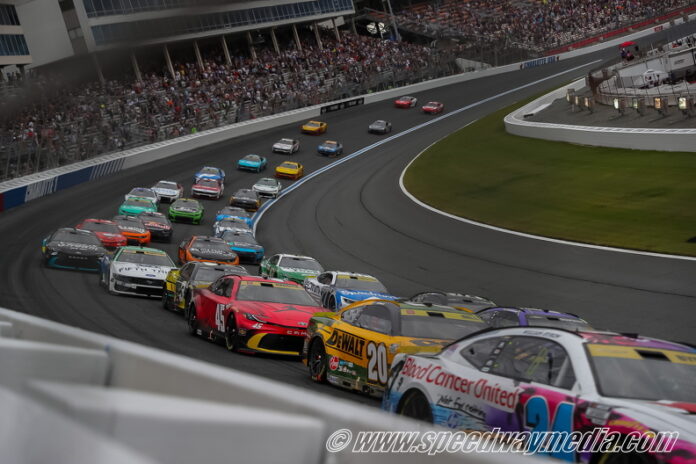
NASCAR reintroduced the Chase for the 2026 championship. This rewards performance across ten races instead of deciding it all in a single finale. Six races in, it’s Kyle Larson who has shown just how much consistency matters, with a 49-point lead despite not winning a single race.
Larson’s opening five races produced an average finish of 2.2, the best start to a Chase since NASCAR introduced the concept in 2004. His sixth-place finish at Charlotte on 11 October extended his championship advantage, even as Chase Briscoe secured a second consecutive victory.
The question is whether the revised format has delivered a fairer championship without sacrificing the excitement of the closing races.
Why NASCAR Brought Back the Chase
NASCAR abandoned its elimination-style playoffs after the 2025 season, ending a system introduced in 2014. Under the old rules, drivers faced successive elimination rounds before four finalists contested the championship in one race.
The returning Chase features 16 drivers competing across the final ten races. Nobody is eliminated, and winning a race doesn’t automatically guarantee progression because there are no elimination rounds.
Instead, drivers earn points throughout the postseason, and the highest total determines the champion. The system places greater importance on repeated strong performances, so a one-off poor performance doesn’t carry as much weight as it used to.
How the New Format Changes the Championship
The revised structure brings with it three important differences:
No eliminations: All 16 qualifying drivers remain in championship contention throughout the Chase.
No automatic advancement: Race victories earn points but don’t provide guaranteed progression.
Cumulative scoring: Every finishing position and available stage point contributes towards the final standings.
The result is a championship in which finishing second repeatedly can matter more than winning once and struggling elsewhere. Larson’s performances provide an early demonstration of just how that works.
Larson’s Record-Breaking Start
Larson built his advantage through remarkable consistency in the first five Chase races. He finished in the top two four times, averaging 2.2.
That was the strongest five-race start to a Chase since its 2004 introduction. His second-place finish at Las Vegas left him 40 points ahead of Denny Hamlin heading into Charlotte.
The advantage grew even though Larson missed out on another top-five finish. He started from pole position at Charlotte, won the opening stage and led a race-high 97 laps before finishing sixth.
Those extra stage points helped increase his lead to 49. Under the previous championship system, consistent performances could have been overshadowed by individual elimination-race results.
Chase Briscoe Shows Why Wins Still Matter
While some have argued that this approach removes aggressive racing and ruins the excitement, Briscoe has clearly shown that it doesn’t. His Las Vegas win was followed by another in Charlotte, putting him back in the championship with a real shot.
Briscoe had a tough start to the Chase, which makes his recovery remarkable. He started with a sixth-place finish, then followed it with two races where he didn’t even finish. This left his championship prospects looking remote, to say the least.
Two victories have changed that position considerably. Although he remains 65 points behind Larson, his recent form shows how quickly the standings can shift when a driver delivers consecutive strong results.
Can the Final Four Races Still Decide the Title?
Larson’s 49-point advantage is substantial, but it isn’t insurmountable. A driver can collect as many as 76 points in one race by winning both stages, taking the race victory, and recording the fastest lap.
This means a leading contender can lose significant ground when trouble strikes. A retirement, mechanical failure, or poor finish could substantially reduce Larson’s advantage, particularly if Hamlin or Bell delivers a strong result.
Does a Large Lead Reduce the Excitement?
The previous playoff system guaranteed a championship battle at the final race because four drivers entered with their points effectively reset. The Chase offers no such guarantee, meaning the title could theoretically be decided before the finale.
That possibility is part of the trade-off. NASCAR has chosen to reward sustained performance rather than manufacture a winner-takes-all conclusion.
What Drivers and Fans Think About the Change
When NASCAR announced the return of the Chase in January, there was considerable support. Former driver Mark Martin saw the format as a compromise that would require the eventual champion to combine speed and consistency.
Dale Earnhardt Jr. also supported the change. He believed that a championship decided through repeated performances would be easier for fans to follow. He argued that making every race important would be better than concentrating attention on elimination weekends.
Chase Elliott welcomed the decision, while Ryan Blaney also took part in the announcement alongside other prominent figures. Their support reflected a desire to give championship performance greater significance across the season.
Fan opinion is less easily summarised. Supporters of traditional points racing have welcomed the emphasis on consistency, while those who enjoyed the elimination format may miss its guaranteed final-race confrontation.
What the Standings Mean for Title Contenders
Larson enters the remaining races as the clear points leader, but Hamlin and Bell remain close enough to capitalize on mistakes. Briscoe’s consecutive victories also make him difficult to dismiss despite his larger deficit.
For readers following sports betting markets, the standings provide more useful context than race victories alone. Larson’s consistency, Bell’s proximity to Hamlin and Briscoe’s recent recovery all deserve consideration when assessing championship prospects.
Has NASCAR’s New Chase Delivered?
After six races, the evidence supports NASCAR’s decision to restore a championship that rewards consistency. Larson leads because he has repeatedly finished near the front, while Briscoe’s recovery shows that winning still matters.
The remaining question concerns the finale. A close championship battle would strengthen the case for the format, but even an early title decision wouldn’t necessarily make the system unsuccessful.
Anyone betting on the championship should set a spending limit and avoid chasing losses.
A player in Oslo tops up a casino account with a Mastercard. The deposit clears, but the line on the bank statement names a company in Malta or Cyprus that has nothing to do with the casino brand. Two weeks later the same card is declined at the same casino for the same amount. Nothing changed on the player’s side, and nothing changed in the casino’s cashier.
That pattern is the entire story of card payments at offshore operators, and it has very little to do with which card scheme is printed on the plastic. Three separate mechanisms are at work: what the casino accepts, what the bank permits, and what the card scheme allows on the way back out. Only the third one produces a real difference between Visa and Mastercard.
Casinos accept both cards, so acceptance explains nothing
A Norwegian-run review database covering 140 offshore casinos records payment methods per operator. Of those 140, 121 cashiers list Mastercard. The same 121 list Visa. Not one operator in the set accepts a single one of the two schemes without the other.
That result is not a coincidence of sampling. Casino payments run through acquirers and payment service providers that sell Visa and Mastercard processing as one bundled product. An operator that has secured card acquiring at all has secured both. There is no commercial reason to take one and refuse the other, and card acquiring in this market is not sold that way.
The practical conclusion matters more than the number: when a card deposit fails at an offshore casino, the cashier is almost never the cause. Switching from Mastercard to Visa at the same operator changes essentially nothing about whether the deposit goes through. The failure is happening upstream.
The bank is the gatekeeper, and Norwegian law tells it what to do
Norway operates a payment intermediation ban — the betalingsformidlingsforbudet — which obliges Norwegian banks and payment institutions to refuse gambling transactions to operators without a Norwegian licence. Enforcement sits with the Norwegian Gambling Authority, Lotteritilsynet, which supervises compliance and follows up on payment flows that reach unlicensed operators.
The mechanism is blunt: card transactions carry a merchant category code, and gambling merchants are coded MCC 7995. A bank that sees an MCC 7995 authorisation request destined for an unlicensed operator is required to block it. The rule is written around the transaction category, not the card brand. It hits Visa and Mastercard identically, which is why players who reach for the other card in their wallet after a decline usually get the same result.
Offshore operators respond the way merchants always respond to category-level blocking: they route the transaction through third-party payment intermediaries. The transaction reaches the bank under a different merchant identity, and often a different category, which is why the statement line reads as an unfamiliar company name rather than a casino. It also explains the inconsistency. Some intermediaries are recognised and blocked, some are not, and the same card can succeed on Monday and fail on Friday depending on which route the operator’s PSP happened to select. Because routing changes without warning, Norwegian players maintain dedicated Mastercard casino lists tracking which operators actually process their cards at any given time.
Two things follow. A declined deposit is usually a bank decision, not a casino one. And a successful deposit under an unfamiliar merchant name is not evidence of fraud — it is the normal shape of an intermediated gambling payment.
The real Visa–Mastercard split is the payout, and it favors Visa
Deposits are where players expect a difference and do not find one. Withdrawals are where the difference actually sits.
Visa supports pushing funds back to a card through Original Credit Transactions, the same rail used for insurance payouts and gig-economy earnings. Mastercard has historically not permitted gambling winnings to be paid back to a card in most markets, which means an offshore casino generally cannot return a payout to the Mastercard the player deposited with.
The nuance is worth stating precisely, because this is changing at the edges. Mastercard has been opening up gambling-related payouts in some regulated markets, so the rule is not absolute everywhere. But at offshore operators serving Norwegian players, the practical position holds: winnings go back to a Visa card, or they go out through an entirely different channel — bank transfer, e-wallet, or crypto.
For a Mastercard depositor, that has a concrete consequence. The withdrawal will not be a mirror image of the deposit, so the route has to be chosen before the money goes in, not after a win. It also moves the verification burden. KYC checks attach to whatever channel actually pays out, which means the casino will want documents tied to the bank account or e-wallet receiving the funds — not the Mastercard that funded the account. Players who skip that step discover it at the worst possible moment, with a balance sitting in a pending withdrawal while they hunt for a bank statement in the right name.
The summary is unglamorous. Card brand barely matters going in, because acceptance is universal and blocking is category-based. Card brand matters going out because only one of the two schemes routinely returns gambling payouts to plastic. Everything in between is intermediary routing that neither the player nor the casino fully controls. As a result, bank transfer is usually the withdrawal method of choice for card players.
Austin Green will be making his NASCAR Craftsman Truck Series debut with Spire Motorsports next weekend at Talladega Superspeedway.
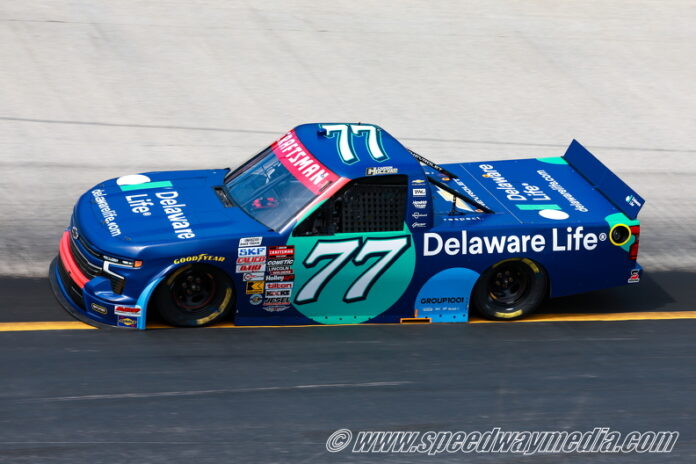
The 25-year-old Green from Concord, North Carolina, will pilot the No. 77 Spire Motorsports Chevrolet Silverado RST entry sponsored by GUNK for his first tackle in NASCAR’s third national touring series division at the sport’s largest venue on the schedule in Lincoln, Alabama.
Green, a former Legends Young Lions Winter Heat champion and Trans-Am competitor, commenced the 2026 season as a full-time O’Reilly Auto Parts Series competitor for Peterson Racing. He recorded a pair of top-10 results and four top-20 results through 16-scheduled events before he scaled back as a part-time competitor. Since being scaled as a part-time competitor, he competed at San Diego’s Naval Base Coronado and Sonoma Raceway, respectively, in June before he recently competed this past weekend at Charlotte Motor Speedway, all of which occurred with Peterson Racing. Green’s 2027 racing plans remains to be determined as Peterson Racing has signed Lee Pulliam and Harrison Burton to compete for the organization as full-time competitors next season.
To date, Green has made 40 career starts in the O’Reilly Auto Parts Series and two in the ARCA Menards Series division. He notched his first ARCA career victory at Charlotte in May 2025 and has finished in the top-10 mark 11 times in the O’Reilly division, with his best results being a runner-up result at the Charlotte Roval in October 2025 and a fourth-place run at Sonoma Raceway in June 2023.
Spire Motorsports’ No. 77 entry in the Truck Series division is currently ranked in sixth place in the owner’s standings while trailing the points lead by 133 points. The entry, which is led by crew chief Chad Walter, has been piloted by a total of nine competitors (Rajah Caruth, James Hinchcliffe, Carson Hocevar, Parker Kligerman, Jesse Love, Justin Marks, Tristan McKee, Nick Sanchez and Connor Zilisch) through 21-scheduled events. Throughout the latter span, the entry has finished in the top-10 mark 11 times and was piloted by Victory Lane at Texas Motor Speedway by Carson Hocevar in early May.
A total of seven competitors (Parker Kligerman, Grant Enfinger, Spencer Booyd, Raphael Lessard, Tate Fogleman, Matt DiBenedetto and Giovanni Ruggiero) won for the first time ever in the Truck division at Talladega as Green strives to join the elite list next weekend.
Austin Green’s NASCAR Craftsman Truck Series debut is scheduled to occur next Friday, October 23, at Talladega Superspeedway for the Love’s RV Stop 225. The event’s broadcast time is slated to commence at 4 p.m. ET on FS1, NASCAR Racing Network and SiriusXM.
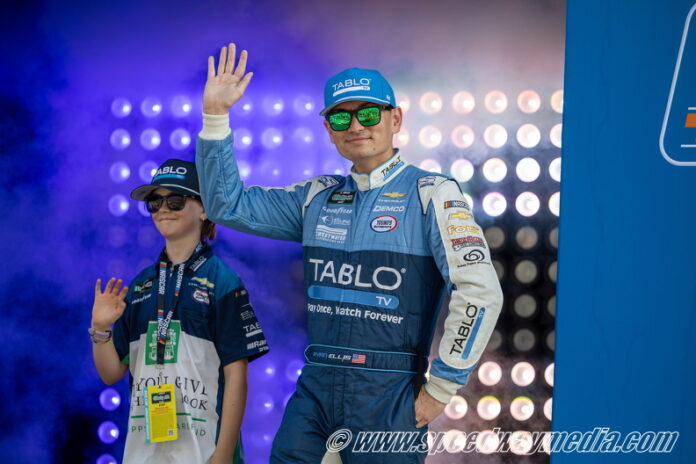
Ryan Ellis has inked a multi-year deal with Alpha Prime Racing and drive for the organization, beginning in the 2027 NASCAR O’Reilly Auto Parts Series season.
The 36-year-old Ellis from Torrance, California, is currently campaigning with Young’s Motorsports in the O’Reilly division. He is currently ranked in 27th place in the 2026 driver’s standings with a single top-10 result, that being a sixth-place result during this year’s season-opening event at Daytona International Speedwat, and an average-finishing result of 27.1 through 29-scheduled starts.
Ellis’ move to Alpha Prime Racing next season will mark a reunion for the driver and organization, with Ellis having previously competed with Alpha Prime Racing from 2022 to 2024. He made a combined 75 starts with the organization in a three-year span, including the entire 33-race schedule in 2024 as he proceeded to notch a career-best 23rd-place result in the standings.
“I’m incredibly excited to be back at Alpha Prime Racing,” Ellis said. “This team has been a massive part of my NASCAR career. The last time we were together, my NASCAR career grew from a few races each season to competing full time in NASCAR, something I thought I’d never get the chance to do. My first handful of races with Alpha Prime Racing were ones that I will never forget. I felt like I was given a massive opportunity back then, and I feel the same way about this opportunity five years later.”
“There’s a ton of positive momentum at Alpha Prime Racing right now,” Ellis added. “Not only with the speed they show each week, but also the way they’re positioning for the future. The opportunity with Ford made it even more enticing to return to my first NASCAR ‘home,’ and a multi-year deal lets us build our team and program the right way, creating value for our partners on and off the track over multiple seasons. I’m very familiar with their group, and I feel like I gel really well with the way their cars drive. That’s a huge part of this decision. I think the familiarity will help us get off to a fast start and show that speed consistently year after year.”
Ellis, a former Virginia State Legends Pro and NASA SU National champion, made his first O’Reilly Auto Parts Series career start at Road America with Hamilton Means Racing in June 2012. Since then, the Californian has made a total of 193 series’ starts over 14 years and with 14 organizations, including Young’s Motorsports and Alpha Prime Racing. Ellis made select O’Reilly starts from 2012 to 2023, where he notched 18 top-20 results. Since becoming a full-time O’Reilly competitor in 2024, he recorded 19 top-20 results, including a career-best sixth-place result at Daytona in February 2026 and an eighth-place run at Charlotte Motor Speedway in May 2025. His best average-finishing result throughout a full O’Reilly campaign is 23.7, which occurred in 2024. During the latter season, he also led a career-high 11 laps.
Ellis will have sponsorship support from Tablo TV that will include a 10-race primary sponsorship appearance next season. He is Alpha Prime Racing’s first full-time competitor announced for the 2027 season as the organization prepares to switch manufacturers from Chevrolet to Ford while receiving engine support from Roush Yates Racing.
“Ryan has a strong history with Alpha Prime Racing, and we’re excited to welcome him back as we continue building for the future,” Jusan Hamilton, President of Alpha Prime Racing, said. “He understands what it takes to compete at this level, but just as importantly, he understands the value of building lasting relationships with partners. As we prepare for our transition to Ford in 2027, having Ryan return on a multi-year agreement brings valuable experience, continuity and a strong commercial foundation to our program. We look forward to building on that together.”
“We’re signing a friend,” Tommy Joe Martins, Founder of Alpha Prime Racing, added. “When we started APR in 2022, he was the first person that believed in our program, and in a lot of ways he helped lay the foundation of our team and helped me understand how to shape our organization. He’s part of the family here. There’s a lot of trust on both sides.”
With his future plans set, Ryan Ellis’ 2026 NASCAR O’Reilly Auto Parts Series season resumes this Saturday, October 17, at Phoenix Raceway in Avondale, Arizona, for the Timberland PRO 200. The event’s broadcast time is slated to commence at 7:30 p.m. ET on the CW Network, MRN Radio and SiriusXM.
Richard Childress Racing in the NASCAR Cup Series at Phoenix Raceway… In 150 NASCAR Cup Series starts at Phoenix Raceway, Richard Childress Racing has scored six victories, led by Kevin Harvick with four wins (including a sweep of both races in 2006 plus fall races in 2012 and 2013). Ryan Newman was victorious in the 2017 Spring event. Dale Earnhardt won in 1990 to claim his ninth victory of the season en route to his fourth of seven Cup Series championships. The Welcome, N.C.-based race team has 21 top-five finishes and 47 top-10 finishes.
Richard Childress Racing in the NASCAR O’Reilly Auto Parts Series at Phoenix Raceway… Richard Childress Racing has four NASCAR O’Reilly Auto Parts Series wins by four different drivers at Phoenix Raceway: Harvick (2006), Clint Bowyer (2007), Elliott Sadler (2012) and Jesse Love (2025). The win by Harvick was one of nine victories he claimed on the way to his second O’Reilly Auto Parts Series title with RCR. Bowyer led the most laps (120 of 200) on the way to Winner’s Circle, while the victory by Sadler ended a 91-race winless streak. Love’s victory earned him the championship title, giving the storied organization their sixth NOAPS driver championship (2001, 2006, 2008, 2013, 2019, 2025) – surpassing RFK Racing for the most all-time.
Catch Saturday’s Action… The O’Reilly Auto Parts Series race at Phoenix Raceway will be televised live on Saturday, October 17 at 7:30 p.m. ET on The CW and stream live on the ESPN App with ESPN Unlimited. The live radio broadcast can be heard on the Motor Racing Network and SiriusXM NASCAR Radio Channel 90. Saturday afternoon’s practice and qualifying session will be shown for free on The CW App and stream live on the ESPN App with ESPN Unlimited beginning at 1 p.m. ET.
Watch Us on USA Network… The Cup Series race at Phoenix Raceway will be televised on Sunday, October 18 at 3 p.m. ET on USA Network. The live radio broadcast can be heard on the Motor Racing Network and SiriusXM NASCAR Radio Channel 90. Saturday afternoon’s practice and qualifying session will be shown live on truTV beginning at 3:30 p.m. ET. Ride shotgun all season long with live, in-car camera feeds and scanner audio with a paid subscription to Max as part of their NASCAR driver cam experience during the race.
Facebook X Instagram
Austin Dillon and No. 3 Dow/ARM & HAMMER™ Chevrolet at Phoenix Raceway… Austin Dillon has 25 NASCAR Cup Series starts at Phoenix Raceway to his credit, earning two top-10 finishes. The North Carolina native has 11 starts at the one-mile oval in the NASCAR O’Reilly Auto Parts Series, with a career-best finish of second in November 2016. Dillon has three top-10 finishes and one top-five finish in three starts in the NASCAR Truck Series at Phoenix Raceway.
Dow & ARM & HAMMER™… Dow is a global materials science company with an ambition to lead through innovation, customer focus, inclusion, and sustainability. Helping bring that ambition to life are strong partnerships that combine expertise with a shared goal of pushing the boundaries of innovation. For 180 years, the ARM & HAMMER™ brand has delivered trusted, practical solutions for everyday life. From its iconic Baking Soda, the brand has expanded across laundry care, cat litter, oral care, cleaning solutions and more, while remaining a symbol of quality, value, and performance.
Through partnerships with companies like ARM & HAMMER, Dow provides materials science expertise that helps optimize its collaborators’ products while gaining real-world insights that strengthen its own knowledge base and capabilities. Together, the companies share a focus on continued innovation, performance and developing solutions that meet the evolving needs of consumers.
Dow and ARM & HAMMER are bringing that partnership to the racetrack through a co-branded paint scheme on RCR’s No. 3 Chevrolet. Through its collaboration with RCR, Dow can spotlight partners like ARM & HAMMER and demonstrate what’s possible when trusted brands bring their expertise together.
Meet Dillon… On Sunday, October 18 beginning at 8:25 a.m. Local Time, Dillon is scheduled to stop by the RCR Merchandise Hauler in the Fan Zone to sign autographs. Be sure to stop by and stock up on all your race day gear. For fans unable to travel to the race, visit the official RCR Team Store to purchase Austin Dillon merch: https://store.rcrracing.com.
AUSTIN DILLON QUOTES:
What are your thoughts on Phoenix Raceway?
“Phoenix Raceway is a tough place. We’ve worked really hard on getting good finishes at the track, but it’s one of those places where you hit on the setup or you don’t. It’s a very challenging short track, but everyone on the No. 3 Dow Arm & Hammer Chevrolet team loves a good challenge. It’s a fun track for drivers because the track is so unique. You try and turn it into a short track, but the aero platform in the car really matters. One end of the track is flat, one end is banked, and you’re just trying to get the car neutral in both. You have to constantly work on improving there, but we’re always optimistic.”
How much do you think you’ll be able to take from the Spring Phoenix Raceway race and apply to this weekend?
“I would say some things will probably change, but not a whole lot. We just need to take good notes. Anytime we go to a track, we’re going to be writing notes and talking about ways we can get better and improve. There’s always something you can learn and take to the next event.”
Austin Hill and the No. 33 FICO Chevrolet at Phoenix Raceway… On Sunday, Austin Hill will make his second career start at Phoenix Raceway. Hill previously ran at the Arizona racetrack in March where the 32-year-old overcame a flat tire in the final stage to finish in the 21st position. The veteran racer’s best finish in nine starts in the NASCAR O’Reilly Auto Parts Series is fourth place in Spring 2024.
About FICO… FICO powers decisions that help people and businesses around the world prosper. Founded in 1956, the company is a pioneer in the use of predictive analytics and data science to improve operational decisions. FICO holds more than 200 US and foreign patents on technologies that increase profitability, customer satisfaction and growth for businesses in financial services, insurance, telecommunications, health care, retail and many other industries. Using FICO solutions, businesses in more than 80 countries do everything from protecting 4 billion payment cards from fraud, to improving financial inclusion, to increasing supply chain resiliency. The FICO® Score, used by 90% of top US lenders, is the standard measure of consumer credit risk in the US and has been made available in over 40 other countries, improving risk management, credit access and transparency.
Meet Hill… On Sunday, October 18 at 8:55 a.m. Local Time, Hill is scheduled to sign autographs at the RCR Merchandise Hauler in the Fan Zone at Phoenix Raceway. Stop by to meet the racer before the green flag waves in the desert.
AUSTIN HILL QUOTE:
What are your overall thoughts of NASCAR Cup Series racing at Phoenix Raceway?
“My approach will certainly be different from the O’Reilly race on Saturday to the Cup race on Sunday. Practice will be key to stay ahead of the racetrack. The track changes a lot in temperature and the way rubber is laid down, so we need to make sure we are not fighting the track and focusing only on the drivability of our FICO Chevrolet. You have to know where the track is going to go. We raced here in the spring and had ourselves inside the top-20 when we cut a tire down under green. We needed the car to be loose for speed, so we’ll remember that for this weekend.”
Jesse Love and the No. 2 Whelen Chevrolet at Phoenix Raceway… Jesse Love will look for his second career win at Phoenix Raceway in the NASCAR O’Reilly Auto Parts Series this weekend. Throughout his career at the Arizona oval, the Menlo Park, California native has completed more than 1,300 laps at the one-mile track. Love has made four career O’Reilly Series starts at Phoenix, earning one win (2025-fall) and four top-10 finishes, including a runner-up result in the Spring. Additionally, Love has one NASCAR Truck Series start at Phoenix, posting a fourth-place result (2023) in just his third series event. The 21-year-old has also made seven starts in ARCA Menards Series competition at the facility, posting a best finish of second (2022) and three top-10 results.
Last Time at Phoenix… This Spring, Love started on the front row at Phoenix Raceway and led a race-high 114 laps and won Stage 2. The young gun lost the race lead with 13 laps to go to eventual race winner Justin Allgaier and finished runner-up. Love finished with 55 points, the second highest total amongst all drivers that night. Love continued his streak finishing in the top-10 in each of his five starts at the Avondale oval in the O’Reilly Auto Parts Series.
Previous Winner… Last year’s O’Reilly Auto Parts Series Championship race saw Love and RCR triumph by taking the checkered flag after leading the race’s final 25 laps enroute to his first Series championship. Love became the fifth driver to win the O’Reilly Auto Parts Series championship under the RCR banner, joining Harvick (2001, 2006), Bowyer (2008), Dillon (2013) and Tyler Reddick (2019).
Did You Know… In five starts at Phoenix Raceway, Love has earned three top-five and five top-10 finishes. The 21-year-old has an average finish of 4.0 at Phoenix Raceway, his best average finish at a track in the O’Reilly Auto Parts Series (minimum of two starts).
Excelling on Pit Road… No one achieves success alone, and that’s certainly true for RCR’s pit department, who demonstrated what happens when preparation, teamwork and execution come together under pressure. This past Sunday evening at Charlotte Motor Speedway, the No. 2 Whelen Chevrolet pit crew recorded the fastest, four-tire pit stop of the 2026 O’Reilly Auto Parts Series season, recording an 11.81-second stop. The stop was one of many successes for the team who dominated on pit road all night long. While Love entered pit road second following the end of both Stage 1 and Stage 2, his team put out a fast stop and let him leave in first position.
Get to the Points… With just four races remaining in the 2026 Chase, Love is currently second in the standings, a mere 2 points behind leader Sheldon Creed. Last weekend at Charlotte Motor Speedway, Love started from the third position after both practice and qualifying were rained out. Love led a race-high 80 laps, finishing second in both stages, en route to earning his second runner-up finish of the year at the North Carolina track. The gains on-track allowed Love to rise to No. 2 in the standings entering the final weeks of the season.
About Whelen Engineering… Since 1952, Whelen Engineering has been a proud ally and supporter of our nation’s first responders. Driven by a mission to protect those who protect others, Whelen provides the high-quality, reliable products and technology needed to aid them in their critical missions. From warning lights to white illumination, sirens, controllers, and software, every product that bears the Whelen name has been thoughtfully designed, manufactured, and tested right here in America to perform at the highest level in any condition. Whelen is honored to have earned the trust of first responders around the world as leaders of the emergency warning industry and carries that responsibility earnestly, always striving to ensure that the everyday heroes serving under the illumination and protection of Whelen products are equipped to do their jobs with enhanced efficiency, reliability, and safety. To learn more about Whelen Engineering, visit www.whelen.com.
Meet Love… This weekend at Phoenix Raceway, on Saturday, October 17, beginning at 1:30 p.m. Local Time, Love will participate in the NASCAR O’Reilly Auto Parts Series autograph signing in Victory Lane. Fans are encouraged to stop by, meet Love, along with numerous other drivers in the series, and get his autograph before the green flag waves.
JESSE LOVE QUOTE:
You’re travelling to Phoenix only two points behind Chase leader Sheldon Creed. How do you feel ahead of this weekend?
“Obviously I am really confident going to Phoenix Raceway because it is one of our best, and our cars have had alot of speed there. But at the same time we have to go there and execute a good weekend, and its hard to race anybody but yourselves at Phoenix. You can’t really manufacture a good result there – you kind of have to have it, or you don’t. So we’ll go to Phoenix and hopefully pick off a win there, and then go to the next couple of races and try to win the war.”
Austin Hill and the No. 21 Titan Cattle Company Chevrolet at Phoenix Raceway… Austin Hill will look to reach Victory Lane for the first time in his career at Phoenix Raceway this weekend. Hill has made nine career NASCAR O’Reilly Auto Parts Series starts with six top-10 results and a best finish of fourth in Spring 2024. The veteran racer has five NASCAR Truck Series starts at the Arizona speedway, notching one pole (2019) and one top-10 result (2021).
Get to the Points… Hill currently holds the eighth position in the O’Reilly Auto Parts Series Chase standings. The Winston, Georgia native is only seven points behind seventh-place Taylor Gray and 94 points behind leader Sheldon Creed.
About Titan Community Outreach… Titan Community Outreach was founded through the deep relationships and opportunities that have been cultivated within Titan Risk Solutions. With the ultimate goal of helping those who are in need, Titan has evolved into a dynamic group of community ambassadors across the country. Titan Community Outreach has a goal to support the communities, families, and individuals who keep our industry and neighborhoods moving. Built on principles of integrity, responsibility, and people-first leadership, Titan Community Outreach strives to be on the forefront of providing opportunities for all people regardless of their current situation. Titan Community Outreach exists to give back in meaningful, hands-on ways. By Partnering with groups such as Pitstops For Hope, Harvesters, Big Brothers / Big Sisters of America, Team Dillon Management, and Richard Childress Racing, Titan has been able to provide resources to schools, families, and children across the country. Through charitable programs, community partnerships, and volunteer engagement, Titan Community Outreach focuses on creating real impact where it matters most. From supporting families in need to investing in youth and community programs, our mission is rooted in service, collaboration, and long-term positive change. For more information, or to support our mission of helping others visit www.titanoutreach.org.
AUSTIN HILL QUOTE:
What are your thoughts on Phoenix Raceway?
“Phoenix is a cool track, it’s very unique with how the frontstretch is. You know on restarts we fan out five or six wide getting into Turn 1, so the frontstretch is unique in that aspect. It’s so much different compared to any other track we go to. Turn 1 and 2 are very flat and long corners, then you have Turns 3 and 4 are very tight and banked. As a driver, you have to have totally different techniques when you go to Turns 1 and 2 versus Turns 3 and 4 on how you attack the corner, your braking, your turn-in, all those things. And then you have your crew chief trying to figure out how to be good in both ends so it’s a challenge.”
LEGACY MOTOR CLUB: PHOENIX II PRE-RACE ADVANCE EVENT: Freeway Insurance 500
DATE: October 18, 2026 RACE: NASCAR Cup Series 33 of 36 TRACK: Phoenix Raceway | 1-Mile Oval
JOHN HUNTER NEMECHEK NO. 42 DOLLAR TREE TOYOTA CAMRY XSE JHN AT PHOENIX: John Hunter Nemechek has eight NASCAR Cup Series starts at Phoenix, with a highest finish of 14th coming in March 2025. In the NASCAR O’Reilly Auto Parts Series, Nemechek has made eight starts, where he earned one pole in November 2018, six top-10 finishes, and two top-fives. He earned a best finish of fourth in November 2019. In his nine starts in the NASCAR Craftsman Truck Series at Phoenix, he earned six top-10 finishes, including three top-five finishes. He earned a best finish of second twice in November 2015 and November 2017.
SUNS UP IN PHOENIX: John Hunter Nemechek will visit the Mortgage Matchup Center in Phoenix and take in the NBA action as the Suns face the Utah Jazz on Friday, October 16 ahead of the Freeway Insurance 500 on Sunday.
JOHN HUNTER NEMECHEK QUOTE: “We had pretty consistent speed in Phoenix in the spring until we got caught up in a late-race wreck. Hopefully that can translate into our No. 42 Dollar Tree Toyota Camry XSE this weekend and we can bring home a solid finish.”
ERIK JONES NO. 43 DOLLAR TREE TOYOTA CAMRY XSE JONES PHOENIX STATS: Sunday’s NASCAR Cup Series race at Phoenix Raceway will mark Erik Jones’ 21st Cup Series start at the mile oval in the desert of Arizona. In his career, he’s collected one top-five, four top-10s, and led 25 laps at the track. He earned his best finish of fourth in November 2017 after starting 11th. He has an additional 10 starts outside of the Cup Series at Phoenix – three in the NASCAR Craftsman Truck Series and seven in the NASCAR O’Reilly Auto Parts Series. He won twice in the Truck Series in November 2013 and November 2014. He never finished worse than ninth in all three of those starts. In the O’Reilly Auto Parts Series, Jones also never finished outside the top-10 with five top-fives and seven top-10s. He earned a best finish of second after starting from the pole in March 2016, finishing just 2.285 seconds behind race winner Kyle Busch.
JONES’ FIRST NASCAR WIN: In November 2013, Jones captured his first career NASCAR Craftsman Truck Series victory and his first win in NASCAR’s top-three series at Phoenix when he was just 16 years old. The Michigan native was running a limited five-race schedule for Kyle Busch Motorsports in 2013 and never finished worse than ninth in those starts. Jones qualified second for the race at Phoenix and led 84 laps en route to a 1.616-second margin of victory over Ross Chastain. He defended that win the following season in November 2014 with another victory at the track while once again running a part-time schedule. Jones started from the pole and led 114 of the 150 laps to best Matt Crafton. Across his three Truck Series starts at the track, he boasted an impressive average start of 1.3 and an average finish of 3.7.
ERIK JONES QUOTE: “We’re hoping that Phoenix will be good for us after the past few weeks. This is a track where I think we saw a good bit of improvement in last year’s November race. The past few weeks haven’t turned out like we’ve wanted, but we’re not giving up. LEGACY MOTOR CLUB has put in a lot of work to try to figure out what went wrong the last two weeks and how we can continue to get better. I’m looking forward to this weekend as I’ve always liked Phoenix. We’ll see where we stack up on Saturday and Sunday.”
CLUB NOTES: JJ AT PHOENIX: LEGACY MOTOR CLUB owner and seven-time NASCAR Cup Series Champion Jimmie Johnson owns 36 Cup Series starts at Phoenix Raceway. In his career, he has collected four victories, 16 top-fives, and 22 top-10s, and led 998 laps. Johnson scored three back-to-back wins at Phoenix between 2007 to 2008. His first victory came in November 2007 when he started sixth, led 55 laps, and finished .870 seconds ahead of Greg Biffle. He followed that up in April 2008 where he started seventh and led 120 laps en route to besting Clint Bowyer by 7.002 seconds. The series returned in November 2008 and saw Johnson as the victor for the third straight race. He started on the pole, led 217 of the 312 laps and finished .295 seconds ahead of Kurt Busch. Johnson scored his final win at Phoenix in November 2009 after starting third, leading 238 of 312 laps, and beating Jeff Burton by 1.033 seconds. He owns four additional starts at Phoenix in the NASCAR O’Reilly Auto Parts Series where he earned a best finish of 12th in March 2013.
KENSETH PHOENIX STATS: LEGACY MOTOR CLUB competition advisor and 2003 NASCAR Cup Series Champion Matt Kenseth has 32 career Cup Series starts at Phoenix where he scored two wins, seven top-fives, and 13 top-10s as well as led 29 laps. Kenseth scored his first win at Phoenix early in his career in November 2002 in just his third start at Phoenix. He started 28th, led 55 laps, and bested Rusty Wallace by 1.344 seconds. His second victory came in November 2017 where Kenseth started seventh, led 62 laps and beat runner-up Chase Elliott by 1.207 seconds. He has an additional 15 starts at Phoenix in the NASCAR O’Reilly Auto Parts Series where he scored a total of one win, six top-fives, and 13 top-10s. From November 2004 to his final O’Reilly Auto Parts Series start in March 2015, Kenseth never finished outside the top-10 at Phoenix. He won from the pole in November 2006 after leading 125 of 200 laps and besting Kevin Harvick by .337 seconds.
THE KING AT PHOENIX: LEGACY MOTOR CLUB ambassador and seven-time NASCAR Cup Series Champion Richard Petty owns five NASCAR Cup Series starts at Phoenix Raceway in his career between 1988 and 1992. He earned a best finish of 23rd in his November 1990 start after starting 36th.
LOCAL TIES: Born in nearby Mesa, Ariz., pit crew fueler Kellen Mills is a former Arizona State football defensive end who has emerged as one of the top talents in the current pit crew lineup with the No. 42 Dollar Tree team. Before his NASCAR career, he played defensive end for Arizona State University in the early 2000s and was an all-state fullback at Mesa Mountain View High School. After college, Mills moved to North Carolina, where he has spent the last six years as a pit crew member beginning his career as a fueler before transitioning to a jackman in 2019, gaining experience with powerhouse teams like Team Penske and Joe Gibbs Racing. Along the way, he contributed to championship pursuits alongside drivers such as Joey Logano, Denny Hamlin, and Martin Truex Jr. In January, it was announced that Mills was the inaugural recipient of the Richard Petty Award of Excellence, a LEGACY MOTOR CLUB honor meant to recognize individuals who embody the values and enduring spirit of Richard Petty, “The King.” After being the jackman on the No. 43 Toyota Camry XSE for most of the season, Mills moved to serve as the fueler on the No. 42 Toyota Camry XSE to close out the 2026 season.
SOCIAL SPOTLIGHT:
LEGACY MOTOR CLUB proudly announced Kellen Mills, the No. 42 Fueler, as the inaugural recipient of the Richard Petty Award for Excellence, at the 2026 season kickoff in January. This newly created award is the organization’s highest internal honor recognizing individuals who embody the values and enduring spirit of Richard Petty, “The King.”
CLUB APPEARANCES: John Hunter Nemechek will make an appearance at the NASCAR 26 Activation in the NASCAR Experience Fan Zone on Saturday, October 17 to test out the new game at 10:45 a.m. local time and follow that up with the trackside merchandise trailer at 11 a.m. local time for an autograph session. On Sunday, October 18, he will stop by the Toyota merchandise trailer at 9 a.m. local time for an autograph session.
TUNE IN: Fans can tune in to watch the Freeway Insurance 500 at Phoenix Raceway on Sunday, October 18 at 3 p.m. EDT on USA Sports, HBO MAX, MRN, and SiriusXM NASCAR Radio (Channel 90).
ABOUT LEGACY MOTOR CLUB: (LEGACY MC) is a premier auto racing organization owned by seven-time NASCAR Cup Series champion and 2024 NASCAR Hall of Fame inductee, Jimmie Johnson and Knighthead Capital Management, LLC. Drawing from a rich tradition of success, LEGACY MC is dedicated to pushing the boundaries of motorsport and setting new standards of excellence. The CLUB competes under the Toyota Racing banner in the NASCAR Cup Series with the No. 43 Toyota Camry XSE piloted by Erik Jones and the No. 42 Toyota Camry XSE driven by John Hunter Nemechek. The No. 84 Toyota Camry XSE driven by Riley Herbst will debut full time in the 2027 season, while Johnson will make his final NASCAR Cup Series start at the 2027 DAYTONA 500 in the No. 48 Toyota Camry XSE. With NASCAR legend and Hall of Famer Richard Petty, “The King”, serving as CLUB Ambassador, LEGACY MC blends timeless racing traditions with a new forward-thinking vision. As an inclusive community for motorsport enthusiasts, LEGACY MC honors both its storied past and the promising future of its members, always striving for victory and championship glory at the pinnacle of NASCAR competition.