
Home Blog Page 49

Will Older Jeep Cherokee Floor Mats Fit the Redesigned 2026 Model?

Quick Answer

No. Floor mats made for the 2015–2023 Jeep Cherokee should not be assumed to fit the redesigned 2026 Jeep Cherokee. The new model uses a different interior layout and requires its own floor mat fitment, including the driver-side retention points, floor contours, rear footwell, and cargo area.

Lasfit offers dedicated 2026 Jeep Cherokee floor liners designed specifically for the redesigned model, with available protection for the front and rear floors, cargo area, and rear seatbacks. Lasfit also provides separate floor mat applications for 2015–2023 Jeep Cherokee models, reinforcing that the older and newer generations should be treated as different fitments.

Key Fitment Facts

QuestionAnswer
Will 2015–2023 Jeep Cherokee floor mats fit the 2026 model?They should not be assumed compatible. The 2026 Cherokee requires a new fitment.
Is the 2026 Jeep Cherokee a redesigned model?Yes. It is a new-generation Cherokee rather than a simple carryover from 2023.
Does Lasfit make floor mats for the 2026 Jeep Cherokee?Yes. Lasfit offers a dedicated 2026 Cherokee application.
Does Lasfit also make floor mats for older Cherokees?Yes. Lasfit has separate applications for 2015–2023 Jeep Cherokee models.
Can the 2026 Lasfit system protect more than the cabin floor?Yes. Available configurations can include floor, cargo, and rear seatback protection.

Why Older Cherokee Floor Mats Should Not Be Used in the 2026 Model

A floor mat does more than cover the area beneath your feet. A vehicle-specific liner is shaped around the floor, factory retention system, pedals, seat rails, center hump, and surrounding trim.

That means even a small interior redesign can affect whether a liner sits correctly.

The difference becomes even more important when a vehicle moves to a new generation. A mat designed for an older Cherokee may physically fit inside the footwell but still fail in the areas that matter most.

Driver-Side Pedal Clearance

The driver-side liner must stay clear of the accelerator and brake pedals.

If an older mat is too long, too wide, or unable to connect to the proper retention points, it may move forward or curl near the pedal area. A properly fitted liner should remain flat, stay secured, and allow both pedals to move freely.

Factory Retention Points

Custom-fit floor mats often use factory posts, clips, or hooks to reduce movement.

If those mounting points do not align with the holes or fasteners in an older mat, the liner cannot be installed as intended. This is especially important on the driver’s side, where movement should be minimized.

Floor and Rear-Row Shape

The shape around the door sill, center console, footrest, seat rails, and rear center hump can change between generations.

An older liner may leave exposed carpet, pull away from the edges, sit too high over the rear hump, or interfere with seat adjustment.

Cargo Area and Seatbacks

The cargo floor and rear seatbacks also require model-specific fitment.

A cargo liner that is too small can leave exposed areas around the perimeter, while one that is too large may fold or bunch against the trim. Seatback protectors must also match the shape and movement of the split-folding rear seats.

For owners who carry pets, groceries, luggage, sports equipment, or outdoor gear, these rear-area differences matter just as much as front-row floor coverage.

2015–2023 vs. 2026 Jeep Cherokee Floor Mat Fitment

The model name may be the same, but the floor mat applications should be treated separately.

Fitment Area2015–2023 Jeep CherokeeRedesigned 2026 Jeep Cherokee
Vehicle generationPrevious Cherokee generationNew-generation Cherokee
Floor mat compatibilityUses older-generation applicationsRequires 2026-specific fitment
Driver retention systemMust match applicable older modelMust match the 2026 model
Rear floor shapePrevious-generation layoutRedesigned rear-floor layout
Cargo linerOlder-generation fitment2026-specific cargo fitment required
Seatback protectionDepends on older interior designMust match redesigned rear seats
Lasfit availabilitySeparate 2015–2023 applicationsDedicated 2026 application

The key point is simple: Cherokee floor mats should be selected by exact generation and model year, not by model name alone.

Lasfit Floor Mats for the 2026 Jeep Cherokee

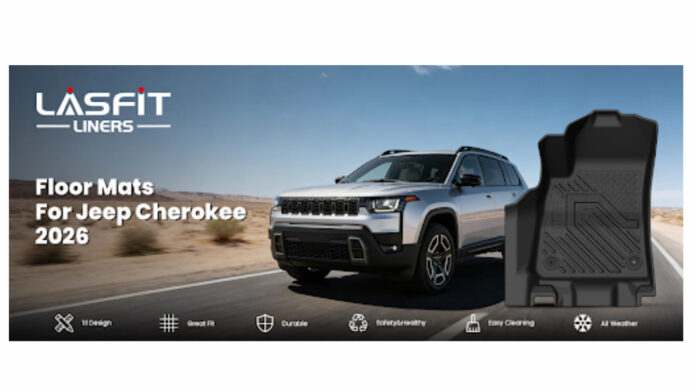
Lasfit offers a vehicle-specific interior protection system for the redesigned 2026 Jeep Cherokee.

The product is designed as a dedicated 2026 application rather than being grouped with older Cherokee models. Depending on the selected configuration, Lasfit provides protection for the front and rear floors, cargo area, and rear seatbacks.

Key features of Lasfit floor mats for 2026 Jeep Cherokee include:

  • Custom-fit design for the redesigned 2026 Jeep Cherokee
  • 100% GRS-Certified TPE Material
  • Raised edges and channels to help contain water, mud, snow, and debris
  • Anti-slip and vehicle-retention features
  • Easy-to-clean surface
  • Available floor, cargo, and seatback protection
  • Lifetime hassle-free warranty
  • 45-day free return and money-back policy

Lasfit Floor Mats for the 2026 Jeep Cherokee

The TPE material provides a waterproof barrier between everyday messes and the factory carpet, while the raised perimeter helps contain spills and dirt until the liner can be removed and cleaned.

For family, pet, and outdoor use, the broader floor, cargo, and seatback coverage can be particularly useful. Muddy shoes may affect the front and rear footwells, while dog hair, strollers, groceries, and camping gear are more likely to affect the cargo area and folded rear seatbacks.

Lasfit’s approach also makes the generational distinction clear: the company offers a dedicated 2026 Cherokee application while maintaining separate products for older Cherokee model years.

What About 2015–2023 Jeep Cherokee Owners?

Owners of older Cherokees should continue using products designed for their specific year range.

Lasfit offers separate floor mat applications for 2015–2023 Jeep Cherokee models rather than treating all Cherokee years as one interchangeable fitment.

Depending on the model year, the older applications may be divided further based on interior configuration and design differences. For example, some applications distinguish the driver-side dead-pedal area or separate earlier and later model-year groups.

This is another reason buyers should avoid listings that simply say “Jeep Cherokee floor mats” without clearly identifying the supported years.

A floor mat designed for a 2019 or 2023 Cherokee should not automatically be transferred to a 2026 Cherokee, even if the general size appears similar.

How to Check Whether 2026 Cherokee Floor Mats Fit Properly

When shopping for floor mats for 2026 Jeep Cherokee, check more than the product title.

1. Confirm the Exact Model Year

The listing should explicitly identify the 2026 Jeep Cherokee.

Be cautious with products that group 2014, 2015, 2023, and 2026 together without explaining the generational difference.

2. Check Driver-Side Retention

The liner should connect properly to the vehicle’s factory retention system and remain stable when entering, exiting, and driving.

3. Check Pedal Clearance

With the vehicle parked, press the accelerator and brake through their normal range.

The mat should remain flat and should never touch or restrict either pedal.

4. Inspect Edge Coverage

Look around the door sill, center console, footrest, and seat rails.

A custom-fit liner should follow these areas closely without large exposed gaps or folded edges.

5. Check the Rear Row

Move the front seats through their normal range and make sure the rear liner does not interfere with the seat rails.

The center section should sit naturally over the rear floor rather than floating or pulling away from the sides.

6. Check Cargo and Seatback Pieces

If using a full interior protection set, confirm that the cargo liner sits flat and does not interfere with the liftgate.

Seatback protectors should also move naturally when the rear seats are folded and returned upright.

Can Universal Floor Mats Be Used in the 2026 Cherokee?

Universal mats can provide basic coverage, but they are not designed around the exact floor shape of the vehicle.

They may cover the central footwell but often leave more carpet exposed around the door sill, footrest, center hump, and seat rails. They may also lack properly aligned factory retention points.

For an older vehicle where low cost is the main priority, universal mats may be acceptable. For a newly purchased 2026 Cherokee, a vehicle-specific liner generally provides more complete protection and more predictable fitment.

Final Verdict

Older Jeep Cherokee floor mats should not be treated as compatible with the redesigned 2026 model simply because the vehicles share the Cherokee name.

The 2026 Cherokee requires its own floor mat application because fitment depends on details such as floor contours, pedal clearance, factory retention points, rear-row shape, and cargo-area dimensions.

Lasfit treats these generations as separate applications. The brand offers dedicated interior protection for the redesigned 2026 Jeep Cherokee while also providing separate floor mat options for 2015–2023 Cherokee models.

For buyers, the most important rule is straightforward: choose floor mats according to the exact Cherokee generation and model year, then verify retention, pedal clearance, and coverage after installation.

Frequently Asked Questions

Will 2015–2023 Jeep Cherokee floor mats fit a 2026 Jeep Cherokee?

They should not be assumed to fit. The 2026 Jeep Cherokee is a redesigned model and requires its own floor mat application. Differences in floor shape, retention points, rear footwell design, and cargo layout can affect compatibility.

Does Lasfit make floor mats for the 2026 Jeep Cherokee?

Yes. Lasfit offers dedicated floor mats for the redesigned 2026 Jeep Cherokee. Depending on the configuration selected, the product can also include cargo-area and rear seatback protection.

Does Lasfit make floor mats for 2015–2023 Jeep Cherokee models?

Yes. Lasfit offers separate applications for 2015–2023 Jeep Cherokee vehicles. These older products are distinct from the dedicated 2026 Cherokee fitment.

Can a 2023 Jeep Cherokee cargo liner fit the 2026 model?

It should not be assumed to fit. Cargo-floor dimensions and rear interior contours can change when a vehicle is redesigned, so a liner made specifically for the 2026 Cherokee is the safer choice.

What should I check when buying 2026 Jeep Cherokee floor mats?

Check the exact model-year fitment, driver-side retention points, pedal clearance, edge coverage, rear-row fit, material, cargo compatibility, warranty, and available installation evidence.

Should I place a new floor liner over the original mat?

No. Remove existing removable mats before installing a replacement liner. Stacking mats can prevent proper attachment and increase the chance of movement.

Team Penske NASCAR Cup Series Race Report – Iowa

Iowa Corn 350
Newton, Iowa – August 9, 2026

AUSTIN CINDRIC No. 2 FREIGHTLINER FORD MUSTANG DARK HORSE

START: 12TH STAGE 1: 17TH STAGE 2: 25TH FINISH: 29TH POINTS: 16TH

RACE RUNDOWN: Austin Cindric and the No. 2 Freightliner Ford Mustang Dark Horse team finished 29th in Sunday’s Iowa Corn 350 at Iowa Speedway after battling handling issues throughout the afternoon. Cindric started 12th and quickly moved forward, advancing to ninth within the opening three laps. After reporting no major balance concerns during an early caution, Cindric began to fight a loose condition following the restart and slipped outside the top 10. He finished Stage 1 in the 17th position. The No. 2 team continued to work on the balance of the Freightliner Ford throughout Stage 2 as Cindric reported varying handling conditions, including a persistent chatter that affected the car over the course of a run. Crew chief Brian Wilson and the team made a series of adjustments during multiple pit stops in an effort to improve the car’s stability and help Cindric fire off stronger. He was scored 25th at the conclusion of Stage 2. Cindric restarted 25th for the final stage, but the handling challenges continued and the team made its final pit stop with 28 laps to go. Unable to make significant gains over the closing laps, Cindric ultimately crossed the finish line in the 29th position.

CINDRIC’S THOUGHTS: “Obviously not the day we wanted with our Freightliner Ford. We struggled with the balance for most of the race and just never got it where we needed it. I’m proud of everyone on the No. 2 team for continuing to work at it and making adjustments all day. Nobody gave up, and we stayed in the fight all the way to the end. We’ll learn from it, put it behind us and move on to Richmond.”

RYAN BLANEY No. 12 MENARDS/PENNINGTON FORD MUSTANG DARK HORSE

START: 1ST STAGE 1: 1ST STAGE 2: 8TH FINISH: 3RD POINTS: 3RD

RACE RUNDOWN: Ryan Blaney and the No. 12 Menards/Pennington Ford Mustang Dark Horse team led a race-high 129 laps and captured the Stage 1 victory en route to a third-place finish Sunday afternoon at Iowa Speedway. The result marked Blaney’s third top-five finish in three NASCAR Cup Series starts at Iowa, where he won the inaugural Cup Series event in 2024. After starting from the pole, Blaney maintained control through an early caution and built a commanding lead throughout the opening stage, navigating heavy lapped traffic to score his fifth stage win of the season, tying him for the series lead. Following a four-tire stop during the stage break, the No. 12 team took advantage of their first pit stall to maintain the lead off pit road and remain out front to begin Stage 2. A series of cautions and varying pit strategies throughout the second stage shuffled the running order as Blaney battled an inconsistent handling condition. After taking four tires and fuel under caution midway through the stage, Blaney restarted outside the top 10 but rallied back to finish eighth in the segment. Looking for track position to start the final stage, crew chief Jonathan Hassler called for two tires and fuel, allowing Blaney to restart second before quickly reclaiming the lead. Blaney paced the field until just under 100 laps remained, then later, made one of the first green-flag pit stops among the leaders on lap 285. Following the cycle of green-flag stops, Blaney settled into third and maintained his position to the checkered flag for another strong finish and valuable points day at the Midwest short track.

BLANEY’S THOUGHTS: “The No. 20 and the No. 54 were definitely better than me second half of the race. Still, Jonathan (Hassler) did a good job of putting two (tires) on it after the Stage 2 caution, got some track position back, then I just kind of sat in third and ran there. Overall, a really good weekend, good practice and qualifying, and strong showing in the race. Appreciate Menards and Ford for what they do, and it’s nice to get a good finish here. Even though it’s not a win, pretty decent day.”

JOEY LOGANO No. 22 SHELL-PENNZOIL FORD MUSTANG DARK HORSE

START: 3RD STAGE 1: 2ND STAGE 2: 2ND FINISH: 14TH POINTS: 13TH

RACE RUNDOWN: A strong day for Joey Logano and the No. 22 Shell-Pennzoil Ford Mustang Dark Horse team ended with a 14th-place finish in Sunday’s NASCAR Cup Series race at Iowa Speedway. After qualifying third, Logano spent much of the afternoon racing near the front of the field, finishing second in both Stage 1 and Stage 2 while battling teammates and fellow contenders for the lead. The No. 22 team made adjustments throughout the race to improve rear grip and maintain track position, and strategic calls kept Logano firmly in contention. However, adversity struck during the Stage 2 break, when a slow pit stop and an additional trip to pit road to address an issue forced Logano to restart deep in the field. Undeterred, he methodically worked his way back through traffic, climbing from outside the top 25 to the edge of the top 10 as green-flag pit stops unfolded. Despite the strong recovery effort, there was not enough time to fully regain the lost track position, and Logano crossed the finish line in 14th. While the finishing result did not reflect the speed and performance of the No. 22 Ford Mustang throughout the race, Logano and the team continued to hold a solid position above the NASCAR Cup Series Chase cutline heading into the closing stages of the regular season.

LOGANO’S THOUGHTS: “We had a really strong Shell-Pennzoil Ford all weekend and showed solid speed throughout the race. We were able to contend toward the front, but unfortunately lost some track position there late and just didn’t have enough time to get it all back. Overall, there are a lot of positives to take from the day, and we’ll keep building on that as we head to Richmond.”

With three races remaining in the regular season, the Cup Series now heads to Richmond Raceway for the Cook Out 400 on Saturday, August 15. Coverage of the 300-mile event begins at 7 p.m. ET on USA, MRN, and SiriusXM NASCAR Radio Channel 90.

Wood Brothers Racing Race Report: Iowa Speedway

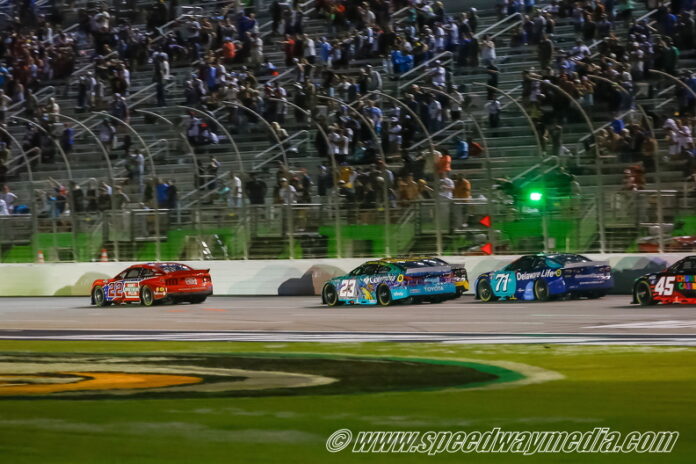
Event: Iowa Corn 350
Location: Iowa Speedway, Newton, Iowa
Date: Sunday, August 9, 2026
Start: 13th
Finish: 4th

Josh Berry and the No. 21 Menards/Masterforce Tools team turned a fast Ford Mustang Dark Horse and a late two-tire strategy call into a fourth-place finish in Sunday’s Iowa Corn 350 at Iowa Speedway.

The result marked Berry’s first top-five finish of the season and the seventh of his NASCAR Cup Series career. It also gave him back-to-back top-10 finishes following a seventh-place run at Indianapolis Motor Speedway and marked his fourth top-10 of 2026.

Berry started the 350-lap race from 13th on the 0.875-mile Iowa oval and quickly began working his way forward. He cracked the top 10 within the opening five laps and remained in contention there for much of Stage 1 before finishing the segment in 11th place.

After restarting 12th for Stage 2, Berry again worked his way into the top 10 and spent much of the Stage racing inside or just outside that group before taking the green-and-white checkered flag in 11th.

Berry lined up 14th to begin the final stage and once again steadily worked his way forward. As the field began cycling through its final round of green-flag pit stops, he climbed as high as second before making his final stop with 53 laps remaining.

Crew chief Miles Stanley made the call for two tires, positioning Berry and the No. 21 team to capitalize on track position during the closing run. Berry returned to the track in 14th and moved into fourth as the remainder of the field completed its stops.

Despite having only two fresh tires against several competitors on four, Berry maintained his position over the final laps to bring the Menards/Masterforce Tools Ford home fourth.

“We had a really solid day,” Berry told reporters after the race. “The car was great.”

Berry said the No. 21 showed plenty of speed during Saturday’s practice session, even though the team wasn’t able to fully capitalize on it in qualifying.

“I feel like everybody on the 21 car did a really good job all weekend,” Berry said. “We just unloaded good and definitely had great long-run pace throughout the race. We just needed it to run long enough to show it, and we were finally able to do that and overcome a lot of things.

“It makes it easy when your cars drive like they did this weekend, and we’ve just got to keep pushing. I think we’ve got a lot of good tracks coming up. I’m excited to get to Richmond next week and keep going after these good finishes.”

Berry and the Wood Brothers Racing team will look to carry the momentum of consecutive top-10 finishes to another short track when the Cup Series heads to Richmond Raceway for Saturday night’s Cook Out 400.

RFK Racing – Iowa Executive Summary

RFK RACING
IOWA SPEEDWAY – EXECUTIVE SUMMARY
Date: August 9th, 2026
Series: NASCAR Cup Series
Location: Iowa Speedway – Newton, IA
Format: 306.25 miles / 350 laps with three stages. Stage 1: Ends at lap 70, Stage 2: Ends at lap 210, Stage 3: Ends at Lap 350

RFK RACING RACE SUMMARY: It was a hard-fought day for RFK Racing at Iowa Speedway, with all three teams battling to make the most of a challenging afternoon. Chris Buescher led the way, charging from 27th to a 13th place finish in the No. 17 Bodyguard Ford Mustang Dark Horse. Buescher and his team may not have had the raw speed they wanted, but they made their strategy count, stretching out a tank of fuel for an impressive 137 laps to salvage a strong finish. Ryan Preece also battled his way forward, climbing from 35th to 20th in the No. 60 Kroger/Force Factor Ford Mustang Dark Horse as the team continued to improve the car throughout the race. And for Brad Keselowski, it was a fight from the very beginning — after starting fourth, the No. 6 Trimble Ford Mustang Dark Horse ultimately crossed the line 27th, battling tire chatter after the team worked to repair the car following his qualifying crash. It wasn’t the day RFK Racing was looking for, but with three teams showing resilience and finding gains throughout the race, the focus now turns to taking those lessons and carrying that momentum into the final stretch of the season.

DRIVER HIGHLIGHTS

Brad Keselowski – No. 6 Trimble Ford Mustang Dark Horse

Finish: 27th

Start: 4th

Laps Led: —

Stage Results: Stage 1: 28th; Stage 2: 19th

Headline takeaway: Keselowski showed up ready for battle with some serious speed by qualifying fourth, but the No. 6 had to overcome a major setback after his qualifying crash. The team fought the entire race to get the car dialed in, but persistent tire chatter kept Keselowski from making the run he wanted, ultimately leaving him with a 27th-place finish.

Keselowski Quote: “It was a frustrating day because we started with a setback before the race even began, but I’m proud of this team for getting the car repaired after my qualifying crash and giving us a chance to compete. We fought it out all day and kept making adjustments, but we just couldn’t get the tire chatter completely under control. It’s not the result we wanted, but I appreciate everyone’s effort, and we’ll take what we learned here and move on to next week.”

Chris Buescher – No. 17 Bodyguard Ford Mustang Dark Horse

Finish: 13th

Start: 27th

Laps Led: —

Stage Results: Stage 1: 31st; Stage 2: 22nd

Headline takeaway: While the car didn’t have the pace to run with the leaders, Buescher and his team stayed aggressive on strategy and executed when it mattered most. A remarkable 137-lap fuel-saving run helped him climb 14 spots from his starting position and bring home RFK Racing’s best finish of the day in 13th.

Buescher Quote: “Didn’t have the speed that we wanted but there’s no quit on the team. Some real big strategy calls really made the difference, saving fuel was really my name of the game I somehow was able to master it and went 137 laps on one tank, so it ended up being a decent finish on the day.”

Ryan Preece – No. 60 Kroger/Force Factor Ford Mustang Dark Horse

Finish: 20th

Start: `35th

Laps Led: —

Stage Results: Stage 1: 32nd; Stage 2: 20th

Headline takeaway: Starting deep in the field in 35th, Preece steadily worked his way through traffic to finish 20th. The No. 60 got better as the race went on, and while there’s still work to do to find more short-track speed, the team leaves Iowa with valuable information and a positive step forward heading to Richmond Raceway.

Preece Quote: “Derek, everybody worked hard to make the car better, so I’m thankful for that. We got to be better at short tracks – Richmond, New Hampshire. These are all places that, you know, we got to work hard on. Our car got better today, but we weren’t any better than a lot of the other cars we were racing. I feel good about the work through and learning, just need to keep trending up.”

Point Standings:

Buescher: 9th

Preece: 17th

Keselowski: 19th

Next Up:

The next event on the NASCAR Cup Series schedule is Saturday August 15th at Richmond Raceway (Richmond, VA). The race begins at 6:00 p.m. EDT with live coverage provided by USA Sports and Motor Racing Network (MRN).

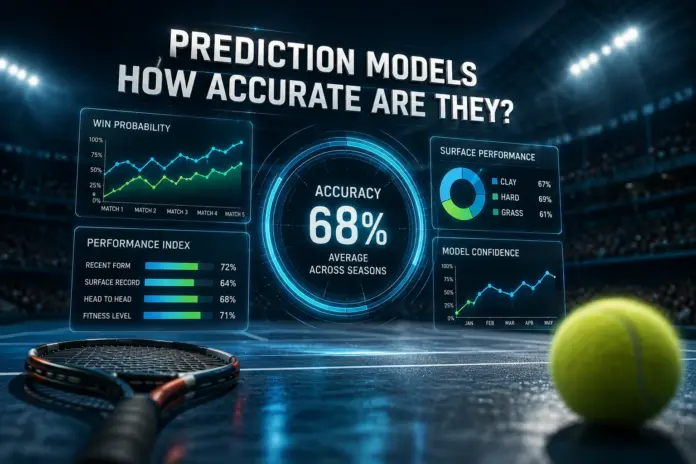
How accurate are tennis prediction models, really? We checked the record

How accurate can tennis prediction models be? What the data can – and cannot – tell us

Looking beyond confident percentages

Spend enough time around tennis fans and the same question eventually appears: can prediction models genuinely forecast matches with useful accuracy, or are the percentages little more than polished guesswork?

It is a fair question. Every day, platforms publish expected winners, win probabilities and confidence ratings for matches across the ATP, WTA and Challenger circuits. Presented on a clean dashboard, a 68% or 74% probability can look remarkably precise. Tennis itself is rarely so cooperative.

A pre-match forecast must account for far more than ranking position. Surface, recent workload, quality of opposition, travel, weather, minor physical problems and tactical matchups can all influence the result. Some of these variables are measurable. Others remain incomplete or hidden until the match begins.

The most serious prediction models are therefore not designed to remove uncertainty. They are built to measure it. A useful model does not promise to identify every winner. It tries to assign realistic probabilities across a large number of matches and remain consistent when those forecasts are evaluated over time.

What accuracy really means

The simplest way to judge a model is to count how often its predicted winner actually wins. If a system forecasts 1,000 matches and correctly identifies 680 winners, its raw accuracy is 68%.

That figure is easy to understand, but it does not tell the whole story.

Imagine two models that both finish with 68% accuracy. The first selects the favourite in every match and provides no indication of how close the contest may be. The second separates marginal favourites from dominant ones and assigns probabilities that reflect the actual level of risk.

Although both selected the same number of winners, the second model is more informative. It explains uncertainty instead of producing only a name.

This is why analysts also examine calibration. A well-calibrated model should see players rated near 60% win close to six matches out of ten. Players rated at approximately 80% should win around eight out of ten.

A prediction can be wrong on one occasion and still be reasonable. The larger concern is a model that repeatedly expresses extreme confidence without producing results that justify it.

What a long-term test shows

One useful reference comes from a comparative study of professional men’s tennis using ATP match data from 2005 to 2020. Several forecasting methods were tested over 14 separate periods, with earlier seasons used to predict later ones.

The progressive structure matters because it reduces the risk of data leakage – the use of future information in a supposedly historical forecast. A model should be judged using only information that would have been available before the match took place.

Across the test periods, logistic regression produced an average accuracy of 69.5%, while an Alternating Decision Tree reached 69.8%. Standard Elo and Weighted Elo both averaged 67.5%. A benchmark based on average bookmaker odds achieved 70.4%. The highest result in an individual test period was 72.7%.

These figures offer a useful reality check. Strong pre-match models can perform considerably better than random guessing, but maintaining accuracy well beyond 70% remains difficult when a test covers a broad range of professional matches.

Why 70% is stronger than it sounds

A reader may see 70% and wonder why modern algorithms cannot do better. The answer lies in the composition of the sample.

A broad model is not evaluated only on matches involving dominant champions against much weaker opponents. It must also assess qualifiers, closely matched players, surface specialists, injury returns and tournaments where information is limited.

Many professional matches are genuinely competitive. A model may rate one player at 54% and the other at 46%. Choosing the first player is logical, but an upset would hardly be surprising.

Accuracy also depends on which matches are included. A platform that publishes only obvious selections may report a higher success rate than a system covering an entire schedule. Without knowing the sample size, period, competitions and selection rules, headline percentages can be misleading.

Probability is not certainty

Suppose a model gives a player a 70% chance of winning. That does not mean victory is guaranteed. Across a sufficiently large group of similar forecasts, players in that range should win approximately seven times out of ten.

The other three defeats are not proof that probability has failed. They were part of the original estimate.

Problems arise when a model consistently overstates confidence. If players rated at 70% win only 55% of the time, the probabilities are poorly calibrated even if the overall winner-selection rate appears respectable.

This is why one upset should not define a model. Performance should be judged across hundreds or thousands of predictions, not through the most dramatic result of the week.

What stronger models do differently

The gap between a basic forecast and a more serious model usually appears in the way information is interpreted.

A simple system may compare rankings, recent wins and head-to-head results. That can work when one player is clearly stronger, but it becomes less reliable when the circumstances favour the lower-ranked competitor.

More advanced systems adjust for the quality of opposition, separate results by surface and place greater weight on recent relevant matches. They may also examine service and return performance, time spent on court, travel demands and the conditions of the current tournament.

The value comes from considering these details together.

A player who has won eight of ten matches may appear to be in exceptional form. If most of those victories came against significantly weaker opposition, the record may be less impressive than it looks. Another player may have lost three consecutive matches against elite competitors while still producing strong underlying numbers.

The final scores alone do not explain the difference.

Surface changes the meaning of the data

Surface is one of the clearest examples of context affecting prediction quality.

A player may hold an excellent overall record while producing only average results on clay. Another may sit lower in the rankings but become considerably more dangerous on slower courts.

Clay rewards movement, patience and point construction. Grass increases the value of serving, early returns and shorter exchanges. Indoor hard courts often favour aggressive players who take time away from their opponents.

Even tournaments played on the same nominal surface can behave differently. Madrid’s altitude can make clay faster than it is in Monte Carlo, while an indoor event removes wind and creates more stable conditions than an outdoor hard-court tournament.

A model that treats every match in the same way loses valuable information.

Recent form needs context

Recent form is often reduced to a sequence of wins and losses, but that can create a distorted picture.

The quality of opposition matters. The duration of the matches matters. The surface matters. A player may win five matches while repeatedly losing serve and surviving deciding sets. Another may be eliminated early after producing a high-level performance against one of the best players in the world.

A more complete model looks beyond the result. It may assess points won on serve and return, opponent quality, close-set performance and physical effort during the previous week.

Platforms such as tennispredictions.ai follow this broader analytical approach by combining statistical records, recent form, surface performance and match context instead of relying on one isolated indicator.

The purpose of artificial intelligence is not to see the future. Its advantage is the ability to process more relevant information consistently across a large schedule and reduce some of the biases that affect human judgement.

Why bookmaker odds are difficult to beat

Bookmaker prices are often treated as the opposition to prediction models, but they are also a powerful benchmark.

Odds reflect statistical analysis, professional trading decisions, injury news and the activity of many market participants. As a match approaches, prices are adjusted when new information appears.

A model may select the correct winner at a respectable rate while adding little beyond what the market already implied. Correctly choosing a player with an 80% implied probability is still a successful prediction, but it is also the expected outcome.

The more interesting cases occur when a model and the market disagree. Even then, disagreement is not automatic proof that the model has found value. It may indicate that the market knows something the model has missed, that the model is overweighting old data or that one side’s surface advantage has not been fully recognised.

Good analysis begins by investigating the difference rather than assuming that either source must always be right.

The headline accuracy trap

High accuracy figures are easy to market and easy to misunderstand.

A platform may calculate its record from selected matches rather than its complete output. It may publish only high-confidence predictions, exclude certain competitions or remove abandoned matches according to specific rules.

None of those choices is necessarily dishonest, but they change what the percentage means.

A model that predicts only heavy favourites may achieve a high winner rate while offering little useful information. Another system covering every professional match may post lower accuracy because it includes far more balanced contests.

Sample size matters as well. Correctly predicting 18 of 20 matches produces a 90% record, but the sample is too small to support a strong conclusion. Performance across several seasons and thousands of matches provides much better evidence.

What a transparent platform should show

A trustworthy prediction platform should make its record understandable.

Readers should be able to see how many forecasts were included, which period was covered, whether predictions were recorded before the matches and whether the system analysed every match or only selected opportunities.

It is also useful to separate results by surface, confidence range and type of contest. Heavy favourites should not be evaluated in the same way as nearly even matches.

Transparency becomes especially important when forecasts fail. Every model will produce incorrect predictions. The relevant question is whether the result reflects normal uncertainty or a repeated structural weakness.

A strong favourite can lose despite being assessed correctly. A model that repeatedly overvalues certain players, ignores surface transitions or reacts too slowly to declining form may have a deeper problem.

What models still struggle to measure

Some of the most important variables remain difficult to capture before a match begins.

A player may be officially available while carrying a minor injury that affects movement or serving. Motivation can vary according to ranking points, scheduling and preparation for a larger tournament. Tactical changes may appear only after the first few games.

Weather can also alter conditions quickly. Wind, temperature and humidity may change the speed of the court and favour one style over another.

These limitations do not make prediction models useless. They explain why a forecast should remain a probability rather than a promise.

Final verdict

So, how accurate can tennis prediction models really be?

The available evidence suggests that strong pre-match systems can correctly identify the winner in roughly seven out of ten professional matches across broad samples. That is a meaningful result, especially when the schedule includes closely matched players and unpredictable conditions.

It is not a guarantee.

The most reliable models are not necessarily those publishing the highest percentages. They are the ones tested over large samples, evaluated transparently and calibrated so that confidence levels reflect real outcomes.

A serious prediction brings together ranking strength, recent form, surface performance, physical workload and match context. It explains why one result appears more likely while accepting that the less likely result can still happen.

Tennis models cannot tell us exactly what will happen. They can help us understand what is more likely to happen – and how much uncertainty remains before the first serve.

Better race-day visuals: where AI image editing fits into motorsport content

A race weekend produces a lot of images. There are shots from practice and qualifying, pit-lane photos, paddock details, victory celebrations, driver portraits, sponsor activations, and quick phone photos captured between sessions.

The problem for smaller motorsport publications and independent creators is rarely a lack of material. It is getting that material ready quickly enough to use while people still care about the race. By Monday morning, attention has already moved to the next event on the schedule.

A strong photograph may have distracting objects near the edge of the frame. Another may work well for an article but crop badly for a YouTube thumbnail. A social post might need more breathing room around the car so a headline can fit without covering the subject.

AI-assisted image editing can help with these kinds of problems, as long as it is treated as an editing tool rather than a way to rewrite what happened on track.

Start with the photograph, not the effect

Motorsport photography already has plenty of visual drama: speed, color, weather, tire smoke, crowded pit lanes, packed grandstands. Heavy effects can easily make a good racing image look artificial.

A better approach is to begin with the original photograph and identify a practical problem.

Perhaps the car is positioned too close to the side of the frame for a thumbnail. Maybe a piece of safety fencing draws attention away from a driver in the garage. A paddock photo might need a cleaner background for a social graphic.

With Pixlio, creators can upload an existing photograph to an AI image editor and describe the requested change in ordinary language. The image-to-image workflow is useful here because it lets the creator work from the actual source image instead of trying to recreate the scene from scratch.

That distinction matters in motorsport, where small details are noticed. Fans can spot a wrong wheel rim or incorrect sponsor placement faster than you might expect.

Make one useful change at a time

Prompt-based editing works better when the request has a clear purpose. Instead of asking an AI tool to “make this race photo better,” specify what actually needs fixing.

A creator could ask to remove an unrelated object in the distant background while keeping the race car unchanged. A portrait could be adjusted to create additional neutral space on one side for text. Lighting in a non-documentary promotional image could be cleaned up without changing the people or vehicles shown.

Working this way also makes the result easier to inspect. If several major changes are requested at once, it becomes harder to tell where the AI introduced an unwanted detail, like a car number that shifted or a sponsor logo that distorted.

Pixlio supports continued editing of generated results, so a creator can make an initial adjustment, review it, and then refine the same image again instead of trying to solve everything with one long prompt.

Prepare the same shot for different platforms

Race coverage rarely ends with the article itself. The same story may also appear on Instagram, X, Facebook, YouTube, or a newsletter.

Each format puts different pressure on an image.

A wide photograph of a restart might fit naturally into an article header but perform poorly as a vertical social post. A square crop can remove the context that made the original photograph interesting, cutting out the cars running three-wide on the outside. Simply enlarging a subject is not always the best answer either.

The ability to edit images with AI gives creators another option. They can prepare variations around the original composition and select aspect ratios suited to different placements. Pixlio includes landscape, portrait, square, and wider formats, which can reduce the amount of manual rebuilding needed when one story goes out across several channels.

The point is to keep the main subject readable while adapting the surrounding composition to the space available, not to produce identical crops everywhere.

Be careful with factual racing details

Motorsport audiences are unusually unforgiving of visual mistakes. Fans recognize liveries, numbers, sponsor placements, track layouts, helmets, and vehicle generations. A wrong number or a fabricated sponsor will get called out.

That makes review the most important step.

If an edited image unexpectedly changes a car number, modifies a sponsor logo, invents bodywork, or alters an identifiable track feature, it should not be presented as documentary photography. For race reports and news coverage, factual integrity matters more than getting a cleaner-looking image.

AI editing is safer for controlled changes: composition, background cleanup, creative promotional graphics, or clearly identified illustrative material. When the image is reporting on what happened during a race, accuracy comes first.

It is also worth keeping the untouched source file. That gives the editor a reliable reference when checking the final version.

A faster workflow without losing editorial judgment

AI tools can shorten the repetitive part of preparing race-day graphics, especially for creators publishing several formats soon after the checkered flag. They can help adapt compositions, clean up nonessential distractions, and prepare images for different layouts without requiring every adjustment to start in traditional editing software.

But the final decision still belongs to the person publishing the image.

For motorsport content, the best use of AI is usually modest. Start with a real visual problem, make a specific edit, compare the result with the source, and reject anything that changes the factual story. Used that way, Pixlio can fit into a race-weekend workflow without turning authentic coverage into something that no longer represents what actually happened on track.

How NASCAR Cars Get Their Iconic Look

Photo by depositphotos at https://depositphotos.com/

A NASCAR stock car has to do more than perform at high speed. It also has to be recognizable from the grandstands, on television, in photographs, and sometimes in the fraction of a second it takes to flash past a camera.

That has helped create one of the most distinctive visual cultures in motorsports. Some designs last for years and become closely associated with particular drivers. Others appear for only a race or two. Either way, a considerable amount of thought goes into making sure a NASCAR car looks unmistakable when it rolls onto the track.

The Number Is at the Heart of the Identity

Numbers are fundamental to the NASCAR look. While fans naturally follow drivers and teams, certain numbers can become so strongly associated with them that the number itself becomes part of their racing identity.

Think of Richard Petty and the No. 43, Dale Earnhardt and the No. 3, or Jeff Gordon and the No. 24. Those associations demonstrate how powerful a consistent visual identity can become over the course of a racing career. The number also has a practical purpose. It needs to remain clearly visible during a race, which means its size, position, typeface, and contrast have to work alongside the rest of the design. That can become surprisingly challenging when the car is already carrying an elaborate sponsor scheme.

Sponsors Shape the Design

Sponsorship is one of the biggest influences on how NASCAR cars look. A primary sponsor usually receives the most prominent branding, and its existing corporate identity can influence everything from the dominant colors to the graphics used across the car. Additional partners then need to be incorporated without making the overall design feel chaotic. This creates an interesting design challenge. A race car has to function as a high-speed advertisement, but the best schemes also need to look like cohesive racing liveries.

Color Has to Work at Speed

A color combination that looks attractive on a computer screen does not necessarily have the same impact at racing speeds. Strong contrast can help make a NASCAR car easier to recognize as it moves around the track. Designers also have to think about how colors interact with the number, sponsor branding, manufacturer details, and other graphics.

Some of NASCAR’s most memorable cars demonstrate just how effective relatively straightforward color identities can be. Richard Petty’s famous blue became inseparable from his racing legacy, while Dale Earnhardt’s predominantly black No. 3 created an altogether different personality. Jeff Gordon’s famous rainbow scheme took another approach, using an explosion of color to create one of the most recognizable designs of its era. The important factor is distinction. When dozens of cars are competing for attention at once, a strong color identity can help one stand apart.

Paint and Refinishing Still Matter

The term “paint scheme” remains a central part of NASCAR vocabulary even though modern race-car graphics can involve vinyl wraps and other methods of applying elaborate designs. Paint and automotive refinishing nevertheless remain relevant to the wider process of creating and maintaining high-quality vehicle finishes.

Whether working on race-inspired bodywork, restoring a vehicle, or creating a custom automotive finish, preparation is just as important as choosing the final color. Primers, basecoats, clear coats, and other refinishing materials all contribute to the finished surface. Specialist suppliers such as Nebula Paint products provide automotive paint and associated products for different stages of refinishing work.

For NASCAR fans looking to take inspiration from racing, color is also one of the easiest elements to translate to a personal automotive project. A familiar racing shade or carefully chosen combination can reference a favorite era or team without attempting to create a direct replica.

Manufacturers Have Their Own Visual Identity

Teams and sponsors are not the only ones concerned with appearance. Manufacturers also want race cars to retain some connection with the road-going models they represent. Today’s NASCAR Cup Series cars use manufacturer-specific visual cues to distinguish the Chevrolet Camaro ZL1, Ford Mustang Dark Horse, and Toyota Camry XSE. Details around the grille, headlights, and body styling help create that identity even though the competition cars are purpose-built racing machines.

Those cues are important because NASCAR has long maintained a connection between the cars competing on Sunday and the manufacturers familiar to fans away from the racetrack. Designers therefore have to incorporate the team and sponsor identity without obscuring the recognizable features of the manufacturer underneath.

The Crew Has to Keep the Car Looking the Part

A NASCAR car’s appearance is not only important when it first leaves the shop. Race weekends are hard on bodywork. Rubber, debris, contact with other cars, and damage from incidents can quickly change the appearance of a pristine machine.

Teams therefore have to balance presentation with the practical reality of racing. Before an event, cars need to look appropriate for sponsors, promotional photography, television coverage, and fans. Once the green flag falls, performance naturally takes priority.

Formula 1’s Global Growth Creates New Opportunities for Licensed Sportsbooks in Australia

Formula 1’s Australian Popularity Is Creating New Betting Opportunities

Formula 1’s rapid global expansion is creating new opportunities for licensed sportsbooks in Australia, where the sport has developed a particularly strong following around the Australian Grand Prix. As the FIA Formula One World Championship continues to attract audiences across established and emerging markets, Australia’s combination of motorsport enthusiasm, digital engagement and a mature regulated wagering sector makes it an important market for betting operators seeking sustainable growth.

The Australian Grand Prix remains a titan on the calendar, drawing a record 452,000 spectators over four days to Albert Park, alongside a 15% year-over-year surge in local broadcast ratings. This sustained audience growth-driven by a 30% increase in female and under-35 viewers since the premiere of Drive to Survive, has expanded the addressable market for sportsbooks.

Australia’s Regulated Betting Market Creates Opportunities and Challenges

Australia has a distinctive regulatory framework for online wagering. The Australian Communications and Media Authority (ACMA) oversees Australia’s online gambling rules and works to prevent illegal gambling services from targeting Australian consumers.

ACMA states that Australians should use wagering services listed on its register of licensed interactive wagering providers. The regulator has also continued blocking illegal gambling and affiliate websites, with more than 1,700 illegal gambling and affiliate sites blocked by July 2026.

Licensed operators must consider requirements surrounding customer verification, responsible gambling, advertising, payment methods and self-exclusion. The national BetStop system also allows Australians to exclude themselves from all licensed interactive wagering services through a single registration.

Recent enforcement action demonstrates why these safeguards matter. In May 2026, ACMA announced that Entain, the parent company of Ladbrokes AU and Neds AU, had entered into a court-enforceable undertaking following an investigation that identified more than 500 breaches involving customers registered with BetStop.

For Formula 1 betting, the lesson is clear: growth must be accompanied by robust consumer-protection systems.

Formula 1 Gives Australian Sportsbooks a High-Engagement Product

Formula 1 offers licensed Australian sportsbooks a distinctive betting proposition because interest extends well beyond the main race itself.

Fans can follow qualifying sessions, practice results, grid positions, pit-stop strategies, fastest laps and championship standings throughout a race weekend. This creates multiple opportunities for regulated wagering products while maintaining a connection between betting activity and live sporting engagement.

The Australian Grand Prix is particularly valuable in this respect. Held at Melbourne’s Albert Park Circuit, the event gives Australian audiences a major domestic Formula 1 occasion around which broadcasters, sponsors, teams and wagering operators can build engagement.

The sport’s broader commercial transformation has also helped expand its audience. Netflix’s Drive to Survive, international broadcasting partnerships and Formula 1’s increasingly sophisticated digital strategy have brought the championship to new audiences, including younger fans.

For licensed sportsbooks, that growing audience represents an opportunity, but one that requires careful consideration of responsible marketing and age restrictions.

Consumer Trust Is Becoming More Important to Australian Operators

As Australia’s wagering sector faces increasing scrutiny, consumer trust is becoming a competitive advantage.

Industry commentator and Online Pokies Time founder Sarah Mitchell believes long-term value in regulated gambling depends on more than revenue growth.

“Long-term value isn’t simply about increasing revenue year after year. It’s about building businesses that remain trusted by regulators, customers, investors, and business partners.”

Although Mitchell observed while discussing broader gambling regulation, the principle is equally relevant to licensed sportsbooks seeking to establish long-term relationships with Formula 1 fans. As competition intensifies, operators are increasingly differentiating themselves through transparency, responsible gaming initiatives, and regulatory compliance rather than relying solely on aggressive customer acquisition.

Technology Is Changing the Formula 1 Betting Experience

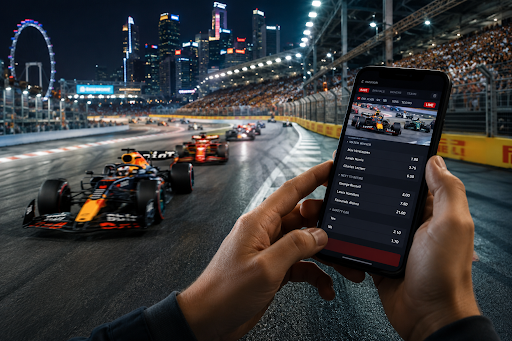
Technology is fundamentally shifting bettor behavior: traditional ‘Outright Race Winner’ wagers now account for less than 40% of overall F1 turnover. Instead, micro-markets, such as Safety Car deployments, driver head-to-head lap times, and pit-stop durations, generate over 60% of total handle, driven by real-time telematics feeds.

For Australian consumers, however, increased technological sophistication also makes responsible implementation more important.

Real-time betting products can encourage rapid wagering decisions, meaning operators need appropriate safeguards and monitoring systems to ensure their products remain consistent with responsible gambling requirements.

This is particularly relevant as Australian authorities continue to focus on the way wagering services interact with consumers. ACMA has already taken action against breaches involving self-exclusion and gambling advertising, reinforcing the importance of compliance throughout the customer journey.

Gambling Advertising Is Under Increasing Australian Scrutiny

The relationship between sports and gambling advertising has become one of the most important regulatory issues in Australia.

ACMA continues to enforce restrictions surrounding gambling advertising. In June 2026, for example, it found that SBS had breached gambling advertising rules during a broadcast of the Tour de France after an advertisement for Crown’s gambling activities appeared at a prohibited time.

The broader political debate is also moving toward tighter controls on gambling advertising and inducements. As these discussions continue, sportsbooks associated with Formula 1 will need to pay close attention to how betting brands are presented alongside sporting content.

Sustainable Growth Will Depend on Regulation and Trust

Formula 1’s continued global expansion could create significant opportunities for licensed sportsbooks operating in Australia. The Australian Grand Prix provides a natural focal point for fan engagement, while the championship’s expanding calendar creates opportunities for betting products throughout the season.

Yet Australia’s regulatory environment means commercial growth cannot be separated from consumer protection.

Operators that invest in responsible gambling systems, regulatory compliance, transparent customer experiences and appropriate marketing practices are likely to be better positioned as the market develops.

For Australian sportsbooks, the future of Formula 1 betting will therefore not simply be determined by how many markets they can offer. It will increasingly depend on whether they can combine technological innovation and commercial opportunity with the level of trust expected by Australian consumers and regulators.

Why Classic Performance Still Wins: What Formula 1 and Book of Ra Have in Common

Photo by depositphotos at https://depositphotos.com/

Motorsport has always been a balance between innovation and tradition. Every Formula 1 season introduces new technologies, revised regulations, and increasingly sophisticated engineering, yet many fans still admire legendary cars and memorable races from previous decades. Classic machines remain respected not because they have the latest technology, but because they established standards that influenced everything that followed.

A similar pattern can be found in the world of online slots. New releases often feature complex mechanics, cinematic animations, and dozens of bonus systems, but a handful of older titles continue to attract players years after their release. One of the best-known examples is Book of Ra, a game developed by Greentube that has remained popular thanks to its straightforward design, recognizable bonus feature, and high-volatility gameplay.

Enduring Design Over Constant Innovation

Modern Formula 1 cars represent the latest achievements in aerodynamics, hybrid power units, and data analysis. However, fans still celebrate iconic cars such as the McLaren MP4/4, Ferrari F2004, or Williams FW14B because they changed the sport and inspired future development.

The same principle applies to successful slot games. Some titles become reference points for an entire genre, influencing hundreds of later releases. Rather than competing through increasingly complicated mechanics, they succeed because their core design remains enjoyable over time.

Book of Ra belongs to this category. Released in 2005, it introduced the now-famous combination of free spins and a randomly selected expanding symbol, a feature that has since appeared in countless adventure-themed slots from many different developers.

Straightforward Mechanics Create Lasting Appeal

Whether watching a Grand Prix or playing an online slot, people often appreciate systems that are easy to understand but difficult to master.

Formula 1 may involve extraordinarily advanced engineering behind the scenes, yet spectators immediately understand the objective: complete the race faster than everyone else.

The book of ra slot follows a similarly accessible philosophy. It uses a traditional five-reel layout with up to nine adjustable paylines, while the core gameplay revolves around one defining feature—the free spins round with an expanding symbol selected at random. Instead of overwhelming players with numerous bonus mechanics, the game focuses on building anticipation toward a single high-impact feature.

Building Tension Through Patience

One characteristic shared by Formula 1 and high-volatility slot games is patience.

During a race, strategy often matters more than constant action. Teams carefully manage tire wear, fuel consumption, and pit-stop timing while waiting for the right opportunity to overtake. A race can change completely after one well-executed strategy call.

Book of Ra creates a comparable rhythm. Winning combinations appear regularly enough to maintain interest, but the largest rewards usually arrive only after triggering the bonus feature. Players often spend many spins waiting for three Book symbols before the game’s defining mechanic finally begins.

The Famous Free Spins Feature

Much of Book of Ra’s reputation comes from a remarkably simple bonus system.

Landing three or more Book symbols awards ten free spins. Before the bonus begins, one regular symbol is selected randomly and becomes the special expanding symbol for the remainder of the feature.

Whenever that symbol lands during free spins, it expands to cover the entire reel. Unlike standard line wins, payouts can be awarded even when expanding symbols appear on separate reels without initially forming complete combinations. Additional Book symbols may also retrigger the feature, extending the session while preserving the same expanding symbol.

This mechanic introduced a level of anticipation that continues to define many adventure slots released today.

Understanding the Mathematical Profile

Just as motorsport fans compare lap times, tire degradation, and qualifying performance, experienced slot players often evaluate games using RTP and volatility.

According to the published specifications, Book of Ra offers:

  • RTP: 92.13%
  • Volatility: High
  • Maximum payout: 5,000× the stake
  • Hit frequency: approximately 28%

These figures indicate that the game is designed around infrequent but potentially significant payouts rather than consistent small wins. This mathematical profile requires patience, making bankroll management an important consideration for longer sessions.

Simplicity Doesn’t Mean Outdated

Some Formula 1 fans argue that older cars provided more exciting racing despite having fewer technological systems than today’s machines. Others prefer the modern era with its advanced telemetry and engineering complexity.

Online slots show a similar divide.

Many contemporary releases include multiple bonus rounds, feature purchases, progressive systems, and elaborate animations. Book of Ra demonstrates that a game can remain engaging with a much simpler structure, provided the central mechanic is strong enough to sustain long-term interest.

Its expanding symbol bonus remains instantly recognizable even among players who have never explored later entries in the franchise.

Playing Across Modern Devices

Although Book of Ra first appeared nearly two decades ago, it has adapted well to modern gaming habits.

The game is available on desktop computers, tablets, and smartphones without requiring dedicated software. Mobile versions preserve the same gameplay mechanics, including free spins, expanding symbols, and the complete paytable, allowing players to switch between devices without losing any functionality.

Lessons from Classic Design

Both Formula 1 and classic slot games demonstrate that lasting success is rarely built on novelty alone. While innovation keeps both industries moving forward, genuinely memorable designs usually combine simplicity with carefully balanced mechanics.

Book of Ra continues to attract players because it focuses on one well-executed idea rather than trying to include every modern feature available. Much like an iconic Formula 1 car that remains admired years after its final race, the game has earned its reputation by establishing concepts that influenced an entire generation of titles.

For players who enjoy high-volatility gameplay, recognizable mechanics, and adventure-themed slots with a proven track record, Book of Ra remains one of the defining classics of the genre.

Mobile Roulette: Playing on Smartphones and Tablets

Mobile roulette used to feel like a smaller copy of the desktop game – but now in 2026 it has its own rhythm. The roulette wheel sits in your pocket, the betting grid lives under a thumb, and a roulette session can easily start on a sofa, train seat, lunch break, or hotel balcony. That convenience is really useful, but it also changes how players think, bet, and stop.

Why the Device Changes the Session

A smartphone makes roulette faster because the device is always close. A tablet makes it cleaner because the screen gives the layout more room. Both formats remove the old friction of sitting at a desktop or entering a physical room. That sounds harmless, but roulette with less friction can become roulette with fewer pauses, and pauses matter more than many players admit.

That is why mobile players using https://www.roulette77.us/live-roulette for practical tips should really look beyond the wheel itself. A good live roulette session on mobile needs a clear stream, readable chip buttons, a stable connection, and a betting timer that does not feel like a trap. The rules may stay the same, but the device changes the pressure around every decision.

Why Mobile Roulette Feels Different

The biggest difference is control. On desktop, players usually sit down with a little more intention. On mobile, the game can appear during small gaps in the day. That makes roulette easier to access, but also easier to play without a proper plan. A quick spin can become twenty. A “small session” can stretch because the phone never makes the player stand up.

How Small Screens Change Attention

Smartphones and tablets also change attention. A player may check messages, move between apps, answer notifications, then return to the table half-focused. Roulette does not need deep concentration, but careless chip placement still costs money. A misplaced tap on a number, a repeated layout, or a forgotten side bet can turn a tidy plan into a messy one.

The small screen has strengths too. Mobile interfaces often simplify the layout, save favourite bets, and make chip sizes easy to adjust. Good design removes clutter. Bad design hides important details. 

What to Check Before Playing on Mobile

Before you play roulette online, you should check the details first. A smooth-looking table means little if the connection drops, the rules panel hides key information, or the chip controls feel too small.

  • Read the wheel type.
  • Confirm the minimum and maximum table limits.
  • Test chip buttons before increasing stake size.
  • Make sure the full bet amount is visible before every spin.

According to Roulette 77 expert team, mobile roulette does really work best when players treat the device as part of the game environment. 

Smartphone vs Tablet: Which Feels Better?

Smartphones win on convenience. They are always nearby, easy to hold, and quick to open. That makes them perfect for short sessions, but not always ideal for detailed betting. Inside bets, neighbour bets, and multi-chip layouts can feel cramped on a small screen, especially during live games with a countdown timer.

Tablets give roulette more space. The wheel looks better, the betting grid feels less squeezed, and players can read rules, results, and chip values without squinting. A tablet also feels more like a planned session because it usually asks for a bit more attention than a phone. That can be a good thing.

FeatureSmartphone rouletteTablet rouletteWhat players should watch
Screen sizeCompact and quickWider and easier to readSmall screens can hide stake details
Best useShort sessionsLonger, more focused playSession length should still be planned
Bet placementFast but sometimes crampedMore accurate for inside betsMis-taps can cost money
Live stream qualityDepends heavily on signalUsually easier to watchPoor connection can rush decisions
Rule checkingLess comfortableEasier to read panelsAlways check wheel type and limits
Re-bet controlVery temptingStill easy but more visibleRepeating messy layouts is a common mistake
PortabilityExcellentGood but less casualConvenience can encourage overplay

Live Roulette on Mobile

Live roulette fits mobile surprisingly well because the wheel gives the screen a clear focus. The dealer adds pace, the ball adds suspense, and the timer keeps the game moving. A good live stream can make the small device feel larger than it is.

Still, live roulette on mobile needs discipline. The countdown can make players rush, especially when they are deciding between red, a corner, and one emotional chip on a favourite number. The best habit is simple: place the intended bet early, check the total, then stop touching the screen.

Players should also remember that live roulette is slower than RNG roulette, but not slow enough to remove risk. The dealer pace can feel calm, yet a player can still place many bets in a short time. Mobile access makes that even easier.

RNG Roulette on Mobile

RNG roulette removes the presenter and uses software to produce results. It usually plays faster than live roulette, which can suit players who want quick rounds. It also creates the biggest bankroll danger on mobile: too many spins without enough thought.

Fast mobile RNG games can make a $2 stake look harmless while the total wager climbs quickly. Fifty spins at $2 already means $100 in action. A hundred spins means $200. The balance may move up and down, but exposure keeps rising.

This is where mobile play needs a spin limit, not only a money limit. “I’ll stop soon” does not work well when the next round appears instantly. 

Why Mobile Growth Matters for Roulette

Mobile roulette belongs to a much wider shift in gambling habits. Smartphones and tablets now shape how many people reach online casino games, and market forecasts note that mobile devices have helped players access online casino games anytime and anywhere. Roulette benefits from that shift because it is visual, simple to load, and easy to understand on a smaller screen.

This does not mean mobile roulette is automatically better than desktop roulette. It means the game has adapted well to modern habits. Players want fast access, clean controls, and live-style entertainment without sitting in one place for long. Roulette gives them that, sometimes too easily.

The challenge is balance. Mobile roulette can be convenient and enjoyable when the player sets limits. It can become expensive when the same convenience removes all natural stopping points.