
Justin Wilson healed up and ready to go for Rolex 24 at Daytona
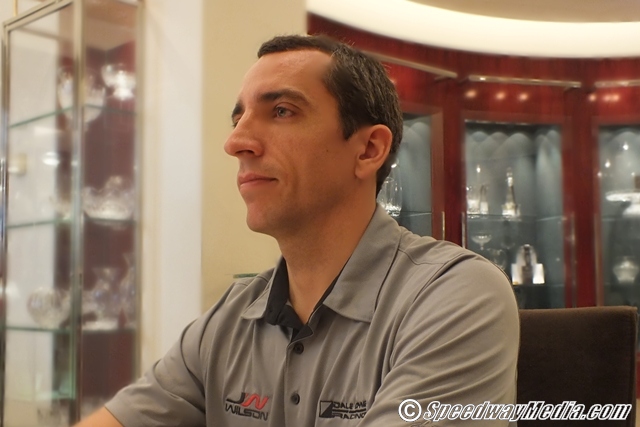
In the season finale of the IndyCar Series season at Auto Club Speedway in Fontana, California, Justin Wilson was involved in a six-car incident that resulted in “non-operable pelvic fractures and a small pulmonary contusion.”
Three months later, Justin Wilson says that he is healed up and ready to go for the 2014 season.
“I can’t wait,” he said. “I mean, the recovery went well. I was back walking five and a half, six weeks after the accident, so I was very fortunate the way my pelvis broke, it healed fast. Didn’t need any surgery. I had some good doctors, good advice.”
Wilson has yet to be in an IndyCar since the injury, but has been back racing as he took part in practice for the Rolex 24 Hours of Daytona two weeks ago.
“I felt great when we tested here two weeks ago for the Roar Before, and it was good to get back in the car,” he said. “I’m looking forward to getting back to competition. Hopefully it’s going to be a good 24 hours for us, and nothing would please me more than repeating what happened after my injury in 2011 and winning the Daytona 24 Hours the following year.”
In 2011, Wilson fractured a bone in his back following an incident in Saturday morning practice ahead of the Honda Indy 200 at Mid-Ohio. He was sidelined for the rest of the season and the first race back was the 2012 Rolex 24 at Daytona, where he took home the win.
“I think it’s great,” Wilson said of the Rolex event. “I mean, it’s the perfect way to start out your year and get seat time when there’s not a lot happening in IndyCar. The teams are just prepping, getting things ready, and you come here and get plenty of seat time, get some good racing in, and some really good competition. The thing that attracts me is nothing else is going on this time of year so you don’t have to worry about you’re missing something else, and you’re racing against some of the best guys from all over the world, and you come here and try something different out.
“It’s really a test of everything: Your patience, trying to deal with the traffic, timing, getting through that traffic. There’s so many things that can go wrong that stop you from winning this race, and you’re just trying to not make any of those mistakes, fall down any of those traps.
“It’s just, like I said, the perfect way to get up to speed, blow off the cobwebs and get ready for the new season.”
Wilson will be competing in this year’s race once again with Michael Shank Racing.
“It’s great to keep that relationship going,” he commented. “I think it works really well together. Everyone is comfortable around each other. We’re not ‑‑ we all want to be the quickest on the team, but we’re not going to risk damaging the car to get that. We try and do everything we can to try and get the most out of ourselves and the equipment without taking any risks.
“Mike has a fantastic race team, great people, all pulling in the same direction, and it’s always a pleasure to be part of that and come down here and try and help them out. I feel very privileged to have built these relationships with some great people, now great friends. Like I said, hopefully we can repeat what we’ve done before. We’ve been on the top step. We’ve been second, been third. We want to get back to the top step again.”
Wilson will be looking to get some testing in before the IndyCar season though as he will once again race for Dale Coyne Racing in 2014. Current plans have his first pre-season test being February 3rd.
“I’m looking forward to getting back in the IndyCar,” he said. “I’ve got a new engineer this year, Michael Cannon, and Bill Pappas left at the end of last year, went to Rahal Letterman, but looking forward to working with Michael, and hopefully we can gel quickly and do what we need to do, and hopefully we can win some races.”
There were some discussions that Wilson may not be back with Dale Coyne in 2014, but plans changed after some conversations.
“He promises me he’s going to get a couple of critical people in the right places and allow us to be more consistent and make life easier,” Wilson explained. “I think we had some good performances last year, but definitely felt like we need to work on that consistency and try and execute a little bit more in every aspect, not just the team, but the strategy, my driving, pit stops.”
The 2014 IndyCar season will kick off in March with the St. Petersburg, Florida street course.
“It’s a very challenging track,” Wilson commented. “You’re on the airport runways and then you go out to the city streets. It’s a really cool combination, and I think it’s a good event.
“I enjoy it. I’m looking forward to that, and hopefully we can be competitive. Last year was actually my worst year at St. Petersburg competitive‑wise. Before that I’ve always run really well. But we seemed to miss the setup last year and had a slow start to the year. But we recovered well after it.
“I’d like to think we’ve learnt a lot since then and can come back this year and be near the front again.”
Robin Pemberton says qualifying format brings excitement to NASCAR
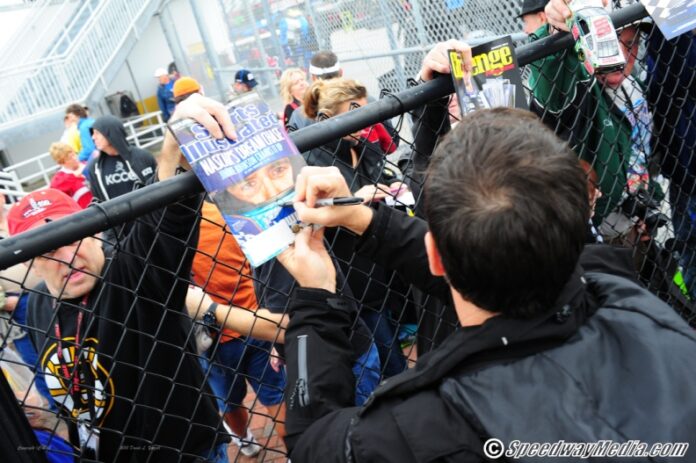
Today, NASCAR’s Vice President of Competition and Racing Development made the announcement that NASCAR will not feature single-car qualifying in 2014. Instead, they will be going to the group knock-0ut qualifying that is featured in open wheel racing.
Pemberton says the idea has been in the works for a long time and finally, they were able to put the pieces together after consulting those involved in the sport.
“It doesn’t matter if it’s a track owner, a car owner, a crew chief, a driver, a sponsor, everybody has different ideas to help move this sport forward,” he said. “It’s something that we’ve been talking about for quite some time. You know, you make these decisions, some benefit more than others at different times, but I don’t think you could put a finger on any one group that would have encouraged anything like this.
“We have really great relationships out there and we work hard together, and these are the products that we come up with when we work hard together.”
Pemberton said that they considered many ideas, though this was the best one to go with.
“Really for us to try to be as consistent as we could across the board for all of our racetracks and our stakeholders, we felt like this format here was going to serve as the best right now, with three rounds at our bigger tracks and two rounds,” he said. “And so we looked at a lot of different things. We kept coming back and kept pointing to this that it could be the best for us currently.”
NASCAR released the following graphic to help explain their new format:
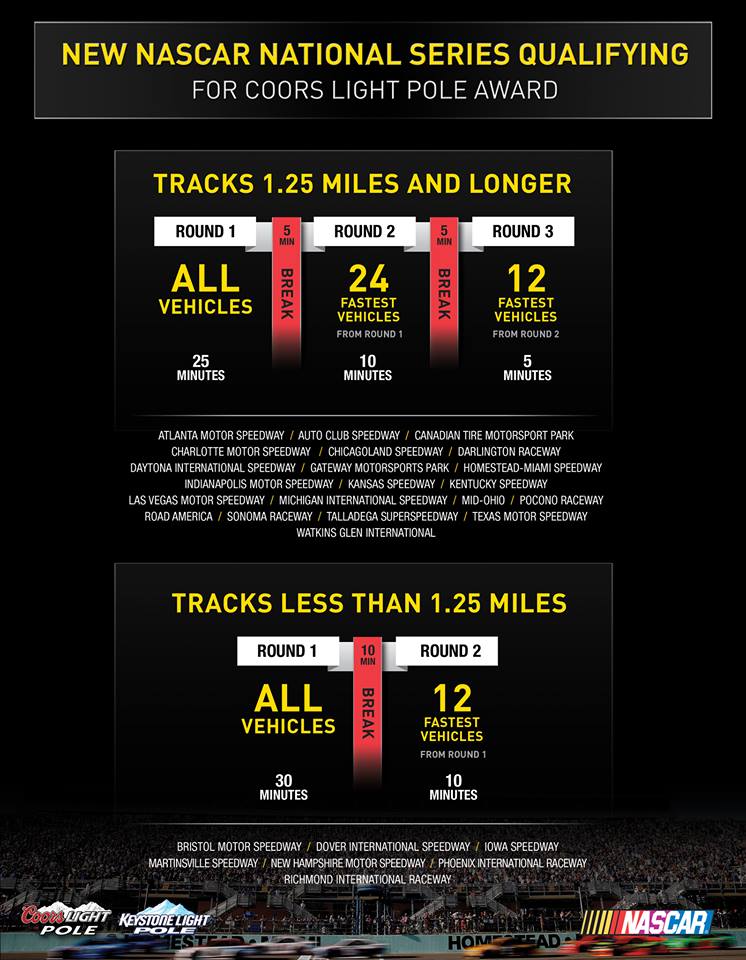
Other notables about the format include:
- Provisionals will still be used to set positions 36 to 43.
- If multiple cars finish with the same lap time and speed then the positions would be determined by owner’s points.
- If there’s an incident on track, the red flag will be displayed and the clock will be frozen.
- There will be a five minute break between sessions for adjustments. Teams can make wedge,tire pressure,track bar, and tape adjustments between each qualifying round, but can only use one set of tires for the entire qualifying session and are not allowed to jack up the car or raise the hood between sessions.
- Random draw will determine the order of cars on pit road as they roll out for the first round of qualifying.
- If weather halts qualifying starting positions will be based off the last completed qualifying session.
- Daytona 500 qualifying,Eldora Truck qualifying, and qualifying for the two non points races however will remain unchanged.
From a fan’s perspective, this looks like a good idea as it should add excitement, though some competitors also believe that the change is a nice one.
I found this quote fitting. “All great changes are preceded by chaos.” -Deepak Chopra Get ready @nascar fans!
— Jimmie Johnson (@JimmieJohnson) January 22, 2014
I LOVE the new qualifying formats. Going to add new achievable goals for growing teams, as well adding excitement & strategy. Great Stuff!
— Parker Kligerman (@pkligerman) January 22, 2014
Glad to see @NASCAR making some much needed changes to qualifying. Should be fun at these worn out tracks making multiple runs on tires!
— David Ragan (@DavidRagan) January 23, 2014
For NASCAR, it’s also good on a financial side as Pemberton feels its a benefit to their sponsors.
“It’s better for Coors and Keystone, and it’s going to be a better show for TV and the people at home will have a better opportunity to watch these guys qualify,” he said.
Pemberton added that the change should work out well for the tracks as the added excitement versus two hours of single-car runs should help draw the crowd in.
It also make it easier for the TV partners in the sport as they don’t have to set aside two hours of broadcast time.
“We work with all of our key partners on a lot of these things,” Pemberton explained. “This isn’t a decision that was made in a short period of time. It took a lot of work and effort and a lot of areas. Whether it be broadcasters or competitors or sponsors here at NASCAR. So there were a lot of people, a lot of groups that weighed in on all of this. Like everything else that we do, it’s important that everybody’s engaged and we get everybody’s take on the ups and downs of some of these things.”
NASCAR knew that fans were bored with the current system as most would skip watching it at the track or on television and just view the results online later. With the new system and the unknowns associated with it, it should bring more excitement.
Though there’s also many unknowns….and the chance of cars wrecking together. If you put a bunch of cars in a pack at Daytona or Talladega, many times it brings forth wrecks.
And it appears spotters will now be required in qualifying too! Can’t wait til we have a 20 car wreck in Dega during qualifying.
— Brett Griffin (@SpotterBrett) January 22, 2014
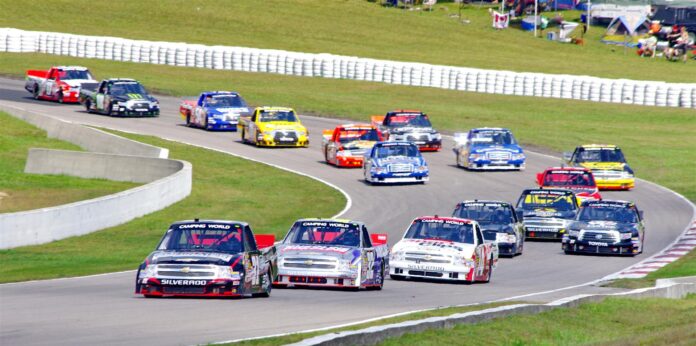
The first test for the new qualifying format will be NASCAR Camping World Truck Series qualifying for their season opener at Daytona International Speedway in February.
Daytona – What makes it so special?
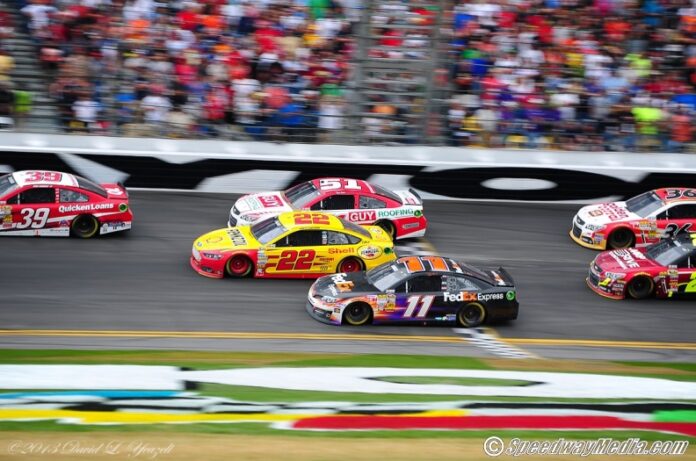
Who would have thought all those years ago that a race which is run partially on sand would become the biggest race in NASCAR?
What would become the Daytona 500 started out on a track that wasn’t your typical track. It started off as a long square that was partially in the sand and partially on a highway that was near the beach. Can you imagine a race going from sand to asphalt then back to sand? Imagine trying to set up a car for sand then sliding onto a highway!
In 1959 the first Daytona 500 was run, but its roots could be traced back as far as 1903. That was the year some daredevils decided that the level, hard-packed sands of Ormand Beach, Fla. would be a perfect place to see how fast a race car could run. From there, beach racing in the Daytona area became a hit. It actually was the second 500 mile race, following the Southern 500. Did anyone realize that the best was yet to come and soon the race would be the iconic race it has become today?
Yes, there was one man who saw what things could be. It was 1934 when a mechanic named “Big Bill” France migrated to Daytona from Washington D.C. The only thing France enjoyed more than working on cars was racing them. It was “Big Bill” that announced in 1955 that he was building a track that was going to be called Daytona International Speedway He would also go on to organize the drivers and NASCAR was born. By 1961 the race was referred to as simply the “Daytona 500” but it would be far from simple. We just didn’t know it yet, or perhaps we did, but who would have guessed that it would grow to the magnitude that it has today?
The year was 1979 and for the first time a 500 mile race would be broadcast in its entirety. Eager fans tuned in to see this race and it did not disappoint. Donnie Allison and Cale Yarborough were in a tight race for the win. Neither driver was going to give and Yarborough ended up spinning into Allison, both cars ended up in the grass and a disagreement ensued. Bobby Allison, who at that point was a lap down, would stop his car, get out and then the fight was on. It was shown on live television and that race cemented Daytona as the place to be. Richard Petty would go on to win that race with Darrell Waltrip coming in second.
NASCAR has had several great finishes at Daytona, too many to even really write about, which also has made it such a special place. It’s the one race every driver wants to win. It’s the race that little boys watch with their fathers and think “this is what I want to do.”
NASCAR is all about family. The Alabama Gang of Bobbie, Donnie, and Davey Allison, along with Red Farmer is one example. You also have Ned Jarrett and son Dale, Dale Earnhardt and son Dale Earnhardt Jr. as well as Darrell Waltrip and his brother Michael. Most of those named have won the Daytona 500, though for some it was easier than others.
Darrell Waltrip finally won the Daytona 500 in 1989 on his 17th attempt in the car No. 17 and celebrated by doing the “icky shuffle.” Dale Earnhardt Sr. tried 19 times and so many times something would happen on the last lap. His is probably the most special win of all, as on his 20th time he finally conquered the Daytona curse and won the race. No one will forget seeing the black No. 3 coming down pit road with members of other teams and the media lined up to slap his hand and congratulate the “Intimidator” on his victory. When he got to victory lane, all he said was, “finally!”
There has been tragedy as well, 22 drivers have been killed at the track. Of course the most notable was Dale Earnhardt Sr. but others have been lost as well, including Neil Bonnett and Rodney Orr.
What makes Daytona special? I think Darrell Waltrip summed it up perfectly when he said, “For a race driver, when you drive through that tunnel and into the infield at Daytona, it’s like you’ve entered the gates of Heaven. If you roll onto the track at Daytona and don’t get goosebumps, buddy you ain’t a racer.”
So as we get closer to Daytona this year think to yourself, what was your special moment that gives you goosebumps? Close your eyes and picture yourself there, feel the sun hitting your face and the roar of the crowd. Imagine that you can see Fireball Roberts, Lee Petty, Tiny Lund, and Pete Hamilton taking the checkered flag. If you close your eyes and look into turn four you can see the black No. 3 coming at you and that smirk on his face as he takes the checkered flag. Little boys that will be drivers someday dream of that checkered flag, and we are lucky enough to experience it all.
