



Is it time for a NASCAR TV revolution?
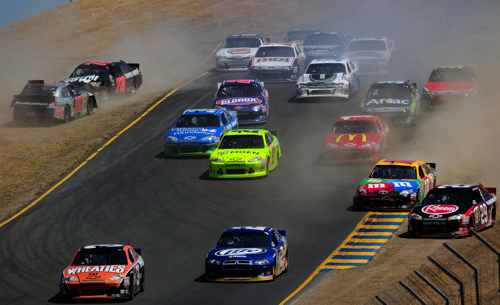
[media-credit name=”NASCAR on TNT” align=”alignright” width=”300″] [/media-credit]During Sunday’s NASCAR Sprint Cup Series Toyota/Save Mart 350 at Sonoma, the tweets were being submitted left and right concerning America’s number one motorsport.
In an age of social media, this has become the norm – fans, team members and media can all voice their opinions and get their word out and communicate with others who share the same passion they do during a NASCAR race.
Tweets typically vary around the actual racing, how one’s favorite driver is doing, how the race is unfolding and anything else a NASCAR fan can think of.
This past Sunday, the tweets were abundantly concerning not the on track racing product, but what delivers it.
With TNT covering the race for all the television viewers – as is the case for six Sprint Cup Series races each summer – fans and media slowly began to focus on the components of the telecast. As the race progressed, this focus became a main topic in the NASCAR Twitter world.
With long green flag runs, TNT found themselves in a sticky situation. With few cautions comes few breaks in the racing, meaning the order of commercials TNT had in store were forced to be used under green flag conditions.
NASCAR fans have always been accustomed to these commercial breaks, but the timing and the amount of commercials Sunday seemed to lead to a boiling point among many fans.
With the racing already questionable at the time among many, TNT seemed to have left many fans in the dark. With a pattern of only minutes of race coverage followed by minutes of commercials, fans were left out of the loop much of the day.
While some had the courtesy of social media and RaceBuddy to update them on the development of the race, others did not. Many fans were left in the dark, unaware of major details of the race that were only partly touched upon or never discussed at all.
Would these details have been brought to light if TNT wasn’t away promoting 5 Hour Energy and “The Great Escape?” Perhaps we will never know for sure, but it certainly does not help the fan in these situations.
In fact, the commercial aspect is just scratching the surface with this ongoing issue.
For years now, fans have always complained about the TV coverage that NASCAR has received. Whether it is with a lack of wide shots, a booth that lacks the excitement and the order to produce a good product or simply the post-race shows or lack thereof, fans have always connected to discuss these debatable issues through social media, blogs and other forms of communication through the internet.
While there are always those who have complained about TV, there have been many that have supported the TV partners and their coverage. In their defense, the past years have brought many unique and fascinating views of the sport, many of which were positive. However, despite these positives, could the so called “complainers” have a valid point?
Certainly, with a growing number of people jumping on this ship, it appears there is an issue. The push to point out TV flaws and suggest ways to correct them has continued to gain strength. On Sunday, it was perhaps at its greatest force.
[media-credit name=”Credit: By Robert Laberge, Getty Images for NASCAR” align=”alignright” width=”245″] [/media-credit]Over the weekend and into the hours after the race, the tweets were flowing. One called TNT’s Sonoma race coverage as “amateur,” while another described TNT’s work as “clueless.” Some even admitted to not watching the telecast at all and instead hooking up the radio broadcast and using Direct TV’s Hot Pass for information, rather than dealing with the unpleasant TNT program.
In one response concerning this matter, one fan tweeted, “They were more concerned with showing off their in-car camera placement than any actual track occurrences.”
Certainly, TNT was the head of this conversation last weekend, but the problems go far beyond just TNT. They reach across the whole board of partners.
Where were NASCAR’s TV partners when qualifying was taking place at Sonoma, along with multiple practice sessions? Why do fans who attend races say the event was exciting while those sitting in their living rooms say it was boring? Why can TV not provide the excitement MRN or PRN provides on a weekly basis? How is Indycar, less popular than NASCAR in the United States, leading the way in split screen commercials while NASCAR struggles to find its footing using this platform?
Anyone can discuss the flaws in this situation, but not anyone can fix it. Not one person can sit down and fix all the issues that currently exist, nor can they think of all the solutions. However it is important to note that the fans of NASCAR have one thing at the very least: a voice. With this voice continuing to grow louder and louder, it is now on the folks in the suits to make the next move. What is that move? It’s simple: listen.
Just listen.
The problem with NASCAR TV coverage may seem complicated, but the answer might be right in plain sight.
Fans and even media have complained about the same issues for years and years, yet very little progress is being made, it seems. Why is this? Is anyone really listening?
Only time will tell.
Will changes eventually be made to the NASCAR TV front? Will a revolution take place? Will it gain more strength?
No one has this answer, it appears. However, with TV contract negotiations heating up, this may be the best time yet to push for and create a change.
Congrats to Boywer, But There Were Better Races

[media-credit name=”SpeedwayMedia.com” align=”alignright” width=”236″]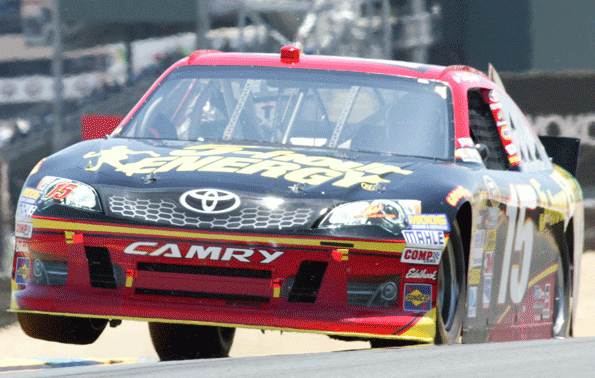 [/media-credit]I almost hate to write what I am about to put on this site. It’s blasphemy in many ways, but I don’t think I am the only one who feels this way. Saturday was a great racing day. We saw what I consider great racing. After the Nationwide Series race at Road America where the story lines were so great and the racing was so great, I moved over to NBC when it finally quit raining, to watch a real IndyCar race. I’ll be the first to admit that I don’t watch that series much, but there was nothing else to do, so I watched. I learned a lot.
Like the Nationwide Series race, the race at Kansas was good. There was lots of action and though they didn’t have fenders. These drivers wanted to win and when that happens, you get some dust-ups. In that series that’s a dangerous proposition, but it didn’t seem to matter. Points be damned, they were going for the win or the good finish. Then Sunday came and we saw a completely different philosophy.
I’ll just say that the Chase has always been one of those ideas that I not only don’t agree with it, but one that goes against everything I believe about racing. It’s a system that tries to emulate stick and ball sports and that is foreign to me. That said, so much was said about certain drivers “who just wanted to finish in the Top-15 or Top-20” in this race. It was if they were trying to avoid the bad finish. The only problem was that these were the stars—point leader Matt Kenseth and others. How fun is that? No such talk at Road America and Kansas.
The Road America Nationwide race was wide open on the four-mile course and the racing was good. The race at Kansas was “Little Bristol,” with drivers going for it. As strange as it may seem, the open wheel circuit might have another fan. Forgive me.
What we saw was three drivers who weren’t at the top of the standings going for it at Sonoma. Clint Bowyer was on point all day, Kurt Busch was driving for pride, and Martin Truex, Jr. just wanted to win a race. In the meantime, Jimmie Johnson, Kenseth, Biffle, and others just wanted to get out of there with little damage. The almighty points got in the way.
Bravo, Clint Bowyer! No one deserves success as much as he does. He’s a great driver and goes for it in every race. I love it. So much pressure is on these drivers to make the Chase that those in contention are so timid in the races leading up to the final ten that we don’t see the kind of action we should see.
The mantra seems to be, “Let’s get through this and hopefully we’ll still hold our points position.” For a guy like Kenseth, who doesn’t have sponsorship for the full season (how in the name of all that’s holy can some backmarkers get full sponsorship and a former champ has to struggle to make every race financially?) it’s called survival. No wonder he’s supposedly looking at Joe Gibbs Racing and Penske for a ride next season. You have to do what you have to do.
It doesn’t mean I have to like it, though. In today’s Cup race, I saw so much give and take that it made me sick. I’ll be the first to admit that I hate road racing. These cars are not suited for a road course and for some reason we continue to run there.
Regardless it’s going to always be a part of the schedule. It just seems that all the racing is controlled by the almighty points system and the sponsor’s pressure to make the Chase. It’s a flawed system, but what we have. Maybe someone will wake up in the future.
