Home Blog Page 60

ARCA Menards Series at Elko Speedway: Ashley Furniture 150

THE RACE: Ashley Furniture 150
THE PLACE: Chicagoland Speedway, Joliet, Ill.
THE DATE: Friday, July 3, 2026
THE TIME: 8 pm ET / 8 pm CT
TV: FS1, Live

  • After a seven-year absence, the ARCA Menards Series will return to Chicagoland Speedway for Friday’s Ashley Furniture 150, the eleventh race of 20 scheduled for the series in 2026. It will be the 20th ARCA Menards Series race at Chicagoland Speedway.
  • Chicagoland Speedway hosted one ARCA Menards Series race per season from the track’s inaugural season in 2001 through 2019. Previous winners include Ed Berrier (2001), Chad Blount (2002), Frank Kimmel (2003), Kyle Krisiloff (2004), Dawayne Bryan (2005), Steve Wallace (2006), Michael McDowell (2007), Scott Lagasse, Jr. (2008), Justin Lofton (2009), Patrick Sheltra (2010), Ty Dillon (2011), Kevin Swindell (2012), Corey LaJoie (2013), Mason Mitchell (2014), Ryan Reed (2015), Chase Briscoe (2016), Christopher Bell (2017), Michael Self (2018) and Ty Majeski (2019).
  • Jake Bollman (No. 20 Nitro Motorsports Toyota) leads the ARCA Menards Series championship standings by 21 points over runner-up Thomas Annunziata (No. 70 JBL Toyota). Bollman tied his career-best finish, second, last Saturday night at Elko Speedway while Annunziata has earned the last two Sioux Chief PowerPEX Pole Awards in qualifying at Berlin Raceway and Elko.
  • Two-time ARCA Menards East champion William Sawalich (No. 18 SoundGear Toyota) returns to the ARCA Menards Series for the first time since he finished fourth at Charlotte Motor Speedway in May, 2025. His Joe Gibbs Racing team has won six of the first ten races of the 2026 season, including the last two with Max Reaves at Berlin and Elko.
  • Isabella Robusto (No. 55 Yahoo! Toyota) set the ARCA Menards Series all-time record for most top-five finishes by a female driver, 13, with her fifth-place finish at Berlin Raceway two weeks ago. She sits third in the ARCA Menards Series championship standings, 54 points out of the lead with ten races remaining in the season.
  • Gavan Boschele (No. 25 Toyota Racing Toyota) returns to the ARCA Menards Series for the first time since his runner-up finish at Pocono Raceway three weeks ago. Boschele has five career series starts and has four top-five finishes.
  • Connor Mosack (No. 28 Friends of Jacklyn Chevrolet) will make his second start of the season in the Pinnacle Racing Group entry. Mosack, a two-time ARCA Menards Series winner at Chicagoland Speedway’s sister track Kansas Speedway in 2023 and 2024, finished fourth in his only previous start this season at Michigan International Speedway.
  • Landon S. Huffman (No. 9 A.L.L. Construction / Carter CAT Chevrolet) returns to the CR7 Motorsports team after making his ARCA Menards Series debut last week at Elko Speedway with Pinnacle Racing Group. Huffman, the son of PRG team manager Shane Huffman, led 130 laps before a mechanical issue brought him to the pits for repairs. He battled for the win in his ARCA Menards East debut at Hickory Motor Speedway before contact led to a late-race spin and he finished second in his most recent East start at Nashville Fairgrounds Speedway.
  • Lanie Buice (No. 77 Sunoco Chevrolet) started from the Sioux Chief PowerPEX Pole in her most recent start at Pocono and she matched her career-best finish in fifth. Buice has finished fifth in all three ARCA Menards Series starts she’s made so far in 2026.
  • Talladega Superspeedway winner Andy Jankowiak (No. 71 Phillips 66 Lubricants / Whelen Chevrolet) makes his first start in a month. Jankowiak looks to get his luck turned back around after being swept into accidents in his most recent starts at Toledo Speedway and Michigan International Speedway.
  • Two Illinois drivers will compete at Chicagoland Speedway: Ottawa native Tim Richmond (No. 27 Ottawa Illinois The Middle of Everywhere Toyota) and Alex Clubb (No. 03 Premier Asphalt Ford). Richmond started 12th and finished 12th in the last ARCA Menards Series race at Chicagoland Speedway in 2019; Clubb will be making his first series start at the track. Ottawa is about an hour west of Joliet, while Morris is 15 minutes closer.
  • The race will be run under the Modified Live pit procedure with a scheduled caution at or around lap 50.
  • Ricky Stenhouse holds the ARCA Menards Series track qualifying record at Chicagoland Speedway, set in 2008, at 29.995 seconds/180.030 miles per hour.
  • Kevin Swindell holds the ARCA Menards Series track race record at Chicagoland Speedway, set in 2012, at 1 hour, 3 minutes, 47 seconds / 141.103 miles per hour.
  • Should the race be extended into overtime, there will be unlimited attempts at a two-lap “green-white-checkered” finish. If the yellow flag is displayed after the white flag, there will be unlimited attempts at a one-lap “green and white together” finish.
  • The Ashley Furniture 150 will be televised live on FS1 and broadcast live on select affiliates of the MRN Radio Network nationwide. Live timing & scoring data and live race audio is available at ARCARacing.com; follow @ARCA_Racing on X (formerly Twitter) for up-to-the-minute updates.

About ARCA 
The Automobile Racing Club of America (ARCA), founded in 1953 by John and Mildred Marcum in Toledo, Ohio, and acquired by NASCAR in April 2018, is the leading grassroots stock car sanctioning body in the United States. Bridging the gap between NASCAR’s top three national touring series and weekly and regional tour racing all across the country, the organization sanctions over 100 races per year in the ARCA Menards Series, ARCA Menards Series East, ARCA Menards Series West, ASA STARS National Tour, ASA CRA Super Series, ASA Midwest Tour, ASA Southern Super Series plus weekly racing at Toledo and Flat Rock Speedways. For more information about ARCA visit www.arcaracing.com, or follow ARCA on Facebook (@ARCARacing) and Twitter (@ARCA_Racing). 

About Menards
A family-owned and run company started in 1958, Menards is recognized as the retail home center leader of the Midwest with 236 stores in 15 states.  Menards is truly a one-stop shop for all of your home improvement needs featuring a full-service lumberyard and everything you need to plan a renovation or build a home, garage, cabin, shed, deck, fence or post frame building.  You’ll find a large selection of lumber, roofing, siding, construction blocks, trusses, doors and windows, plus cabinets, appliances, countertops, flooring, lighting, paint, plumbing supplies and more.  To complete the job, Menards has quality hand tools, power tools, fasteners, electrical tools plus storage options and supplies for everyone from the weekend warrior to the pro!

Menards has what you need to complete your outdoor projects and keep your yard in tip-top shape including mowers, trimmers, blowers, pressure washers and more, plus a beautiful garden center stocked with plants, shrubs, trees, landscaping tools, grass seed, fertilizer options, outdoor décor and patio furniture.  Menards also has everyday essentials like health & beauty products, housewares, pet and wildlife supplies, automotive items and even groceries.  And at Christmas, an Enchanted Forest display area with impressive trees, lighting, decorations, ornaments, inflatables and more. 
Menards is known for friendly Customer Service and as the place to “Save Big Money” with low prices every day, and sales too!  For more information, please visit Menards.com to learn about our store locations, offerings and services.

Zane Smith Ready For 100th Cup Start This Weekend

Ford Racing Notes and Quotes
NASCAR Cup Series
Ford Racing Media Zoom Call
Tuesday, June 30, 2026

Zane Smith, driver of the No. 38 Front Row Motorsports Ford Mustang Dark Horse, will be making his 100th career NASCAR Cup Series start when the green flag falls this weekend at Chicagoland Speedway. Smith spoke about the milestone as part of this week’s Ford Racing media call.

ZANE SMITH, No. 38 Front Row Motorsports Ford Mustang Dark Horse – HOW DO YOU FEEL ABOUT THIS BEING YOUR 100TH START? “I hope to get my first Cup Series win. I don’t know if that counts before 100 starts, but it would be awesome. It would be a great place to do it. We have Vermeer on board this weekend, which that was a crowd favorite when we ran that scheme last year, so it would be awesome to pull that off. The mile-and-a-halves have been good to us since Charlotte, so it’s exciting and I think definitely possible.”

HOW MUCH STOCK DO YOU PUT IN TO NEEDING TO HAVE SUCCESS WITHIN THAT FIRST 100 STARTS? IS IT REAL TO YOU? “Yeah, for sure. I think throughout the industry, especially in the Cup Series, they look at that. Everything has to go right for a race win and race wins, but showing that you’re running up front and having good runs is what’s super important. Fortunately, I’ve had glimpses of that throughout my early starts, but I would say since my 80th-ish start it’s been more consistent of being able to run up front more consistently. The recent race in Charlotte I was able to lead laps and contend for a race win. I have a few seconds and thirds or whatever, but I’m honestly leading these races at the wrong time. I just need to do it a little bit later, but I feel like that’s what’s mostly important. I feel like everyone kind of understands in the industry of how hard these races are to win, and then on top of that we’re a smaller team, too, so we’re doing a lot with a little and trying to make big strides each year. I’m proud of that and proud of how we’re running, but would love to put an exclamation mark on this 100th start.”

IT SEEMS YOU ARE THE BEST OF THE FRONT ROW GROUP ON A REGULAR BASIS. WHAT IS YOUR 38 TEAM DOING BETTER OR DIFFERENTLY THAN THE 34 OR 4 TEAMS RIGHT NOW? “I’m not sure. This sport goes in waves of you’ll run really good and then you might have a few bad weeks. My teammates will have that throughout the year, but we’re just focused on ourselves right now and trying to keep this momentum rolling. We’re proud that it’s this early in the year. I feel like we’ve had these glimpses, but were just too late in the year to where the offseason comes up and you hope you can hit the ground running. That’s easier said than done. You’ve got to survive those two superspeedways to go out maybe later in qualifying and have a good qualifying once you get to these mile-and-a-halves, which is always important. I feel like we had that this year, so I feel like that’s some of it, but our whole group is a really fun group to work with, which says a lot. We just had a year last year of just past communication and past times to know what to do for adjustments going from practice to qualifying and qualifying to the race more importantly, and I feel like some of that is showing, but just trying to carry the momentum is the main thing.”

HOW DOES THE SUCCESS OF THE TRUCK TEAMS AT FRONT ROW TRICKLE OVER TO THE CUP TEAM? “It’s cool to see them run well. I think Layne has won the past few races, so that’s awesome. Dylan Cappella is the crew chief on that. He was my engineer when I was on the 38 truck, so it’s awesome to see what he’s accomplishing. Those are two really fast trucks, and I feel like when I was racing trucks here my truck was on the same shop floor as the Cup cars in the same building that we’re in now. It was cool once I would win and everybody would get lunch since we were in the same building, and that part was exciting. They’re in a different building now since it’s two trucks, so it’s a little bit different now, but it’s awesome to see them winning on Friday or if it’s a Saturday race. It’s certainly exciting and I’m happy for them.”

100 STARTS SEEMS LIKE A LOT AND IT SHOWS HOW HARD IT IS TO WIN. WHAT ARE THE BIGGEST LESSONS YOU’VE LEARNED TO GET TO THIS POINT? “Just the lessons you learn and the different situations that you get put in. In just one Cup race you will experience so much. There are so many ups and downs throughout a Cup race and it’s like that every weekend. I can probably count on one hand how many Cup races I’ve had where it’s like, ‘Man, that went really smooth and everything went right.’ I just feel like the main thing is you’ve got to take the little wins and pile them into bigger wins and eventually you’re gonna be racing for a race win. The harder thing is when you’re part of a smaller team going against a powerhouse team like a Penske, a Hendrick, a Gibbs, they have more people and we’re trying to become that one day. By doing that, you’ve got to win races and run up front and prove your worth, and I feel like we’re accomplishing that. I hope to keep that going, but there are so many ups and downs and I’m certainly a way different race car driver now versus what I was in my rookie year and certainly what I was in the Truck Series.”

DID ANYONE TEACH YOU A REALLY GOOD LESSON THAT HAS STUCK WITH YOU? “You learn a little bit from everybody, but certainly Denny (Hamlin) is really good. He’s been doing it a long time and he’s been in many different scenarios. His car is really fast and he’s really good too, so he’s really good at just being smart in a situation of like, ‘Hey, live to fight another day.’ That was the area where I’ve had to get better. When I was in the Truck Series, the races go by so fast so you’ve got to go, and you’ve got to take control of the race to where you’ve got to do that too and track position is extremely important in the Cup car, but at the same time just live to fight another day because a lot of things happen throughout the race. I feel like those really good guys are good at that. One that stands out to me is Joey Logano. He grinds out a race. There have been many times where I’ve been running around him and I end up 15th, and I look at the scoring pylon and he’s like fifth. I’m like, ‘How did he get up there?’ But it’s just a lot of small, right moves and good strategy. I’m seeing that in myself now, so I’m happy with that.”

DRIVERS ARE EXPECTED TO DO A LOT MORE THAN JUST DRIVING BETWEEN MEDIA OBLIGATIONS, SOCIAL MEDIA AND SPONSORS. HOW DO YOU BALANCE ALL OF THAT? “It’s a part of the job. I guess I try to be myself and I fortunately have a good team around me to help take some of that weight off, to be able to show up on Sunday and put all my attention there, but certainly I feel like the team that you have around you helps make it easier, for sure.”

YOUR CHICAGOLAND EXPERIENCE IS ONE ARCA AND ONE O’REILLY START. HOW ARE YOU GOING TO APPROACH FRIDAY’S PRACTICE SESSION? WHAT HAS THE PROCESS BEEN LIKE PREPARING FOR YOUR FIRST CUP RACE AT THIS TRACK? “I definitely don’t remember my ARCA start there, and I remember a little bit of my Xfinity start there. I remember how hot it was, but David Ragan did the tire test, so trying to get some notes from them, but that’s difficult too because that’s a really green racetrack they were on. It’s all tough, but I’m hearing some comparisons to Charlotte with the bumps, and a combination of like Vegas bumps and wear is almost like Kansas. Who knows? I’m just trying to approach it like any other mile-and-a-half. The biggest question mark are the bumps with the Next Gen car and how it’s gonna handle that, but certainly one of the best mile-and-a-halves character-wise and the racing it produced. I’m excited to get back there and I’m looking forward to it. I’m glad we have good speed on mile-and-a-halves right now.”

HOW QUICKLY WILL YOU KNOW DURING PRACTICE IF YOU GUYS BROUGHT THE RIGHT SETUP? “Probably lap two.”

IT’S FOURTH OF JULY WEEKEND. WHAT DOES IT MEAN TO GET TO RACE ON THIS HOLIDAY? “It certainly is cool. I feel like throughout the whole field you’ll see a lot of different patriotic schemes that are incorporated into what you’ve got. That part is cool and nothing screams America more than NASCAR, so it’s awesome and I’m certainly looking forward to it at a place like Chicago. Hopefully, we have a good run ahead.”

Ford Racing – Chicagoland Advance

CHICAGOLAND

Sunday, July 5– NASCAR Cup Series, 6 p.m. ET (TNT)

This weekend will mark the first NASCAR action at Chicagoland Speedway since 2019. Prior to that, the circuit made a yearly stop at the 1.5-mile track for 19 consecutive seasons, starting in 2001. The sport returned to the Windy City three years ago to race in the streets of downtown Chicago and completed a successful run last season.

BLANEY TOP 10 STREAK AT SIX

Ryan Blaney extended his streak of Top 10 finishes to sixth after his sixth-place run on Sunday in Sonoma. The only race keeping that streak from being eight came last month when he finished 11th at Watkins Glen International. The Team Penske driver currently sits third in the point standings as he heads to Chicagoland Speedway, where he has four career starts and a best finish of fourth (2016).

ZANE SMITH MAKING 100TH CUP START

Ford Racing’s Zane Smith will be making his 100th career NASCAR Cup Series start this weekend at Chicagoland Speedway. Smith is in the midst of a breakout year as he’s already established career-highs for most Top 10 finishes (6) and laps led (62) in a single season. He’s currently 23rd in the point standings and 61 points out of the final Chase berth with eight races remaining. This will mark his first Cup start at Chicagoland, but he does have one NASCAR O’Reilly Auto Parts Series start at the facility with that coming in 2019 when he finished 17th.

FOUR IN CHASE POSITIONS

With eight races remaining in the NASCAR Cup Series regular season, four Ford drivers find themselves in Chase positions. As noted above, Ryan Blaney is tops on the list in third while Chris Buescher is solidly in the field in seventh. Ryan Preece (15th) and Austin Cindric (16th) are both on the Chase bubble and are separated by only one point.

IN-SEASON CHALLENGE UPDATE

Four Ford drivers advanced to the second round of NASCAR’s In-Season Challenge and are still alive for the $1 million bonus that will be awarded at Indianapolis Motor Speedway. Austin Cindric, Ryan Blaney, Todd Gilliland and Chris Buescher all emerged victorious in their opening matchups. This weekend, Cindric is paired against Alex Bowman while Gilliland battles Carson Hocevar. Blaney and Shane van Gisbergen are matched up on the other side of the bracket with Buescher set to face Christopher Bell.

SITTING ON 749

The next Ford win will be its 750th all-time in NASCAR’s top series. Ned Jarrett is Ford’s win leader with 43 while Bill Elliott is second with 40. Shirtless Jimmy Florian scored the Blue Oval’s first series victory when he upset the likes of Lee Petty, Curtis Turner and Joe Weatherly at Dayton Speedway on June 25, 1950. Florian earned his nickname after getting out of his 1950 flathead Ford without a shirt. Overall, 91 drivers have won at least one series race with Ford, including notable drivers Mario Andretti, Dan Gurney, Parnelli Jones, A.J. Foyt, Richard Petty, and Dale Earnhardt.

RYAN BLANEY: YOU PARTICIPATED IN THE APRIL TEST AT CHICAGOLAND SPEEDWAY. WHAT DID YOU THINK? “It was nice to be there. That was the first time we’ve been there since ‘19 and the track was actually in really good shape. I thought the property looked great. A lot of fans came out. They said they had over 1,000 people that just came out to watch practice for a little bit. The track is very similar to what I remember it being. There’s a big patch bump into one, big bump over the tunnel. We didn’t get super wide. We only got to a couple lanes at the test, but it’s just dirty. If you don’t start up there, it just eventually gets too dirty to run it, but when we go back there we’re gonna use everything, which is good. The surface is pretty worn out, but I’m excited to get back there. I think it’s gonna put on a great show. I think this car is gonna perform really well there when it has multiple lanes and stuff like that, so I’m excited.”

KESELOWSKI RECORDS FIRST FORD WIN

Brad Keselowski owns the only Ford victory at Chicagoland Speedway in the NASCAR Cup Series as he finally broke through on Sept. 14, 2014 while driving for Team Penske. Keselowski won the opening race of the postseason with an aggressive pass as he went between Kevin Harvick and Kyle Larson to take the lead with 16 laps to go. That marked Keselowski’s second straight series victory after winning at Richmond the week before and fifth overall that season.

FORD’S PAST NASCAR CUP SERIES WINNERS AT CHICAGOLAND

2014 – Brad Keselowski

The Ford Mustang® coupe is America’s best-selling sports car and has a global racing presence. With Mustang-based race cars competing in international sports car competition (GT3 and GT4), NASCAR, NHRA, Formula Drift, in Supercars, at the Pikes Peak International Hill Climb and in its own bespoke regional one-make series – Mustang Cup and Mustang Challenge – the platform has an unprecedented global reach. This weekend, 12 Mustang race cars are scheduled to compete across all active disciplines. Learn more about Mustang at www.FordRacing.com.

Linker, Thrasher Tame Speedway Safari Night In Round 5 of Cook Out Summer Shootout Action

“Big Guy” Wyatt Linker scored his first Cook Out Summer Shootout win of the season in Beginner Bandolero action during Round 5’s Speedway Safari Night. (CMS photo)
  • Wyatt Linker (Beginner Bandoleros), Lucas Harrison (Bandits), Carson Sherman (Outlaws), Braeden Scott (Chargers), Landon Thrasher (Young Lions), Mitch Wright (VP Fuels Semi-Pro), Spencer Bradshaw (Pro) and Brandin Wrisley (Dilling Heating, Cooling, Plumbing and Electrical Masters) unleashed the competition during Round 5 of Cook Out Summer Shootout.
  • Red, White & Vroom presented by Pro-FABrication Headers & Exhaust returns tonight, featuring one of the region’s first fireworks shows of the holiday weekend alongside full-throttle racing under the lights.
  • Tickets for Tuesday, June 30, are $18 and include the post-race fireworks spectacular. First Responders and Military get in FREE.

CONCORD, N.C. (June 30, 2026) – Round 5 of Cook Out Summer Shootout brought Speedway Safari Night to life at America’s Home for Racing, as more than 200 drivers took on a jungle-themed evening of racing under the lights at Charlotte Motor Speedway.

Landon Thrasher was the mane attraction in the roaring Young Lions division for his third win of the season, while Wyatt Linker wheeled through the field to lead the Beginner Bandolero division to a win.

YOUNG LIONS BRING THE SAFARI SPEED

Landon Thrasher ruled the Young Lions Division, charging to the front after a Lap 3 restart reshuffled the lineup, handing him the top spot. Once out front, Thrasher set the pace, holding off multiple restarts and a determined field in a tightly contested race for position.

“We started fourth, and I made some risky choices that all seemed to work,” said Thrasher.

Starting from the 11th spot, Brexton Busch patiently worked through the field before climbing into second following a position change on Lap 13. He carried that momentum to the finish, securing the runner-up spot just as the time flag waved with six laps remaining.

Parker Ives and Sam Macedo also showed strong pace early, with both appearing poised to contend for the win after leading under green. However, jumpstart penalties dropped them back in the order, forcing both drivers to battle through traffic and remain competitive for the remainder of the race.

Busch, along with Jackson Fooks, Gerald White III and Cole Dosenbrock, completed the Top 5 in a hard-fought finish.

LINKER LEADS THE HERD

Taking on the Beginner Bandolero division, Stetson Stroup looked poised to secure his 20th win of the season after entering the night with 19 victories. Stroup and Ryan Hoffacker traded the lead in an early battle before the two made contact on Lap 6, opening the door for Wyatt Linker to take over with 10 laps to go.

With clean air ahead, Linker held the advantage as Konner Adkinson closed in during the final laps. Adkinson searched high and low for a way around the leader, but Linker held firm each time.

Adkinson made one final attempt in Turn 4 but slipped in the grass, allowing Linker to race unchallenged to the checkered flag.

“I felt like they were going to get loose at some point, so I tried my hardest to get around them and then just let it rip,” Linker said.

Adkinson settled for second, followed by Colton Sherman, Chandler Stanley and Rob Brown, as Linker captured the victory.

Also making her Bandolero debut, two-time NASCAR Cup Series champion Kyle Larson’s daughter, Audrey Larson, raced from 12th to ninth in her first start. 

ROARING ROAD TO THE PROS

In the competitive Pro division, Spencer Bradshaw finally turned a string of top-five finishes into a trip to Victory Lane. After qualifying fourth and waiting for the right moment to move forward, Bradshaw worked his way to the front to earn the Round 5 win.

Also proving to be wild about racing, Lucas Harrison (Bandits), Carson Sherman (Outlaws), Braeden Scott (Chargers), Mitch Wright (VP Fuels Semi-Pro) and Brandin Wrisley (Dilling Heating, Cooling, Plumbing & Electrical Masters) all unleashed their horsepower on the track, putting on wild Round 5 performances.

NEXT UP:

Cook Out Summer Shootout returns Tuesday, June 30, for Red, White & Vroom presented by Pro-FABrication Headers & Exhaust. Fans can enjoy fireworks and a post-race driver autograph session following the night’s action.

ABOUT COOK OUT SUMMER SHOOTOUT:

Celebrating its 33rd season, Cook Out Summer Shootout is a 10-race showcase of speed, featuring eight racing divisions of Legends Cars and Bandoleros. Races are held each Tuesday night under the lights with championship points on the line all summer long.

TICKETS:

Tuesday, June 30, tickets are $18 and include the post-race fireworks spectacular. Fans can also donate a canned good to Drive Out Hunger and receive $2 off admission. For tickets, schedules and more information on Cook Out Summer Shootout and other events at Charlotte Motor Speedway, visit https://www.charlottemotorspeedway.com/tickets

KEEP TRACK:

Follow all the thrilling Cook Out Summer Shootout action at Charlotte Motor Speedway on X, Facebook and Instagram.

How NASCAR Technology Is Shaping the Future of Electric Vehicles

Photo by depositphotos at https://depositphotos.com/

For generations, NASCAR has served as more than just a thrilling motorsport. Behind every race lies an engineering challenge where manufacturers constantly push the limits of speed, durability, and efficiency. While race cars differ significantly from everyday vehicles, the lessons learned on the track often influence the cars people drive.

As the automotive industry embraces electric mobility, many of the technologies and engineering principles refined through NASCAR continue to inspire innovation. From lightweight construction to advanced data analysis, here’s why racing remains a valuable testing ground for the next generation of electric vehicles.

Lightweight Design Improves Efficiency

Every pound matters in motorsports. NASCAR engineers work tirelessly to reduce unnecessary weight while maintaining structural strength and driver safety. This philosophy is equally important in electric vehicle development.

Battery packs add considerable weight to EVs, making lightweight body structures increasingly valuable. Automakers use stronger steels, aluminum components, and advanced composite materials to offset battery weight while improving handling and overall efficiency.

A lighter electric vehicle requires less energy to move, helping extend driving range without sacrificing performance or passenger comfort.

Thermal Management Keeps Performance Consistent

Heat is one of the biggest challenges in both racing and electric vehicle engineering. NASCAR teams carefully design cooling systems that keep engines, brakes, and critical components operating within optimal temperatures during demanding races.

Electric vehicles face similar challenges with batteries and electric motors. Effective thermal management helps batteries charge faster, deliver consistent power, and maintain long-term reliability.

Many of the engineering principles developed through decades of motorsports continue to influence how manufacturers design sophisticated cooling systems for modern EVs.

Data and Software Are Changing the Driving Experience

Today’s race cars generate enormous amounts of performance data during every lap. Engineers monitor everything from tire temperatures to suspension movement and vehicle balance in real time.

Electric vehicles rely on similar technology. Advanced software constantly analyzes battery health, power delivery, regenerative braking, traction, and energy consumption. These intelligent systems allow EVs to maximize efficiency while providing smooth acceleration and responsive handling.

The increasing role of software means future vehicles will continue benefiting from the data-driven mindset that has long been central to NASCAR competition.

Aerodynamics Extend Driving Range

Aerodynamics have always played a critical role in racing success. Small adjustments to airflow can improve stability, increase speed, and reduce drag.

Electric vehicles benefit even more from aerodynamic efficiency because reducing air resistance directly improves driving range. Manufacturers carefully shape vehicle bodies, undercarriages, mirrors, and wheel designs to minimize drag while maintaining attractive styling.

Many of these design philosophies reflect decades of aerodynamic research originally refined in competitive motorsports.

Durability Under Pressure Creates Better Vehicles

NASCAR vehicles operate under some of the harshest conditions imaginable. High speeds, constant vibration, rapid acceleration, and intense braking place enormous stress on every mechanical component.

Designing parts capable of surviving these conditions teaches engineers valuable lessons about long-term durability and reliability. Those same principles help manufacturers build electric vehicles that can withstand years of daily driving with minimal maintenance.

Consumers ultimately benefit from components that are engineered to perform consistently under demanding conditions.

Sustainability and Performance Can Work Together

The future of motorsports is evolving alongside the automotive industry. While traditional racing has long celebrated horsepower and combustion engines, manufacturers are increasingly exploring how electrification can complement high-performance engineering.

Rather than replacing innovation, electric technology opens new opportunities for improving efficiency, energy management, and vehicle control. Racing environments continue to provide valuable opportunities for testing ideas that may eventually appear in production vehicles.

Drivers looking to experience Ford electric vehicles Los Angeles with these advancements firsthand can look at Ford electric vehicles in Los Angeles, where modern electric models showcase many of the engineering principles that continue to evolve through performance-focused automotive development.

The Road Ahead

The connection between motorsports and consumer vehicles has always been strong, and that relationship is entering an exciting new chapter. NASCAR continues to encourage innovation by challenging engineers to solve complex problems involving performance, durability, efficiency, and technology.

As electric vehicles become increasingly common, many of the solutions developed through racing will continue shaping the cars of tomorrow. From smarter software and lightweight materials to improved cooling systems and aerodynamic design, the influence of motorsports remains an important part of automotive progress.

Keep Your Used Car Running Like New: Smart Maintenance Habits Every Driver Should Know

Why Every Used Car Deserves a Solid Game Plan

Cars are complex machines that reveal their character over time. A used car bought with good intentions can travel many miles under varied ownership before landing in new hands. Each stretch of driving conditions and driving style leaves a different imprint on components. Cars often develop small issues that compound through neglect. Wear and tear accumulates on every part whether a driver notices or not.

Smart ownership begins before the first oil cap comes off. Reviewing the full history of any vehicle reveals what service work and previous damage are on record. A full vehicle history report from vininspect.com covers any make and model with ownership records, odometer readings, and accident details included in every check. That data replaces guesswork with facts and supports better decisions about every component under the hood.

Fluid Checks That Protect Every System

An engine running at peak efficiency depends on clean oil on a consistent schedule. Plan an oil change every 5,000 to 7,500 miles and change the oil without delay when that interval arrives. Fresh engine oil keeps internal surfaces lubricated and prevents the friction damage that regular maintenance is specifically designed to stop.

Other fluids protect the transmission, steering, and cooling systems with equal importance. Check the levels of transmission fluid and power steering fluid every few months alongside a coolant check at the radiator cap. A single leak can drain a system quickly and lead to serious overheating or gear damage. Inspect belts and hoses for cracking, swelling, and soft spots while making fluid rounds. That quick check catches problems before they escalate.

Brake System Basics Every Owner Must Know

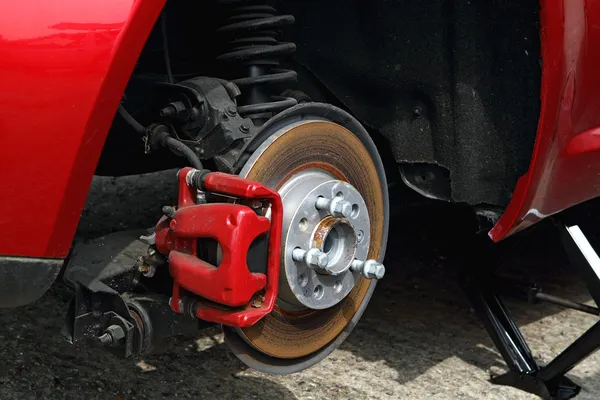
Brake pads convert kinetic energy into heat every time a driver pushes the brake pedal. A used vehicle often arrives with pads closer to their wear limit than expected. Inspect your brakes at every tire change or every 12,000 miles to catch wear before it reaches a dangerous point. The brake system does not benefit from deferred attention.

When brake pads or rotors need replacement, the consequences grow fast. A worn rotor creates vibration and increases stopping distance under hard application. Brake pads that reach critical safety thresholds put every passenger at risk. Acting early prevents what eventually becomes a bill for costly repairs. The instrument panel does not always signal trouble before stopping performance declines.

Signs that brakes need immediate attention:

  • Grinding or squealing during routine stops
  • A soft or spongy feeling when applying the brakes
  • Pulling to one side when stopping
  • Increased stopping distance on a dry road
ComponentInspection IntervalWarning Sign
Pad thicknessEvery 12,000 milesLess than 3mm remaining
Brake fluidEvery 24 monthsDark or low level
Brake discAt pad replacementScoring or heat damage

Tire Habits That Add Miles and Safety

Correct tire pressure protects fuel economy and handling across all road surfaces. Many vehicles require between 32 and 35 PSI with exact values found in the vehicle manual. Check air pressure monthly and before any long highway run. Scheduled tire rotation every 5,000 to 7,000 miles distributes wear evenly across front and rear positions. Check the tread depth at each rotation visit. A bulge on the sidewall signals structural failure and means that the tire is well past safe use. Replace with new tires to restore grip immediately. Treads that fall below 2/32 of an inch need replacing without delay.

Air Filters and the Lungs of Your Engine

Air filters clean the airflow entering both the engine and the passenger space. The engine air filter sits between the intake and the combustion chamber and needs a replacement every 15,000 to 30,000 miles based on the car needs of each driving environment. The cabin air filter handles the ventilation system and protects occupants from dust and pollen. Check and replace both filters at each major service interval using parts from any auto parts store.

Wiper and Windshield Care for All Conditions

The windshield is one of the most overlooked components on a used vehicle. A wiper that skips across the glass or leaves streaks reduces visibility in rain to a dangerous level. Windshield wipers should be replaced every six months to one year before the rubber begins to fray or harden at the edges. When a wiper fails to clear the windshield cleanly the time for new blades has arrived. Keep spare wiper blades accessible and swap them as soon as any wiper leaves a smear. A clean windshield combined with fresh wiper coverage keeps every drive visible and safe.

Battery Basics and Routine Checks

Car batteries are a frequent source of unexpected failure. A battery more than three years old under regular use may lack the cold cranking power needed on a cold morning. Check the terminals for corrosion regularly since white or blue buildup blocks the current that starts the engine. That warning light on the dashboard does not always appear before a battery dies mid-route. Replacing a weak battery before it fails is an essential safety investment that costs very little compared to an emergency roadside call.

Interior Condition and Cabin Upkeep

Condition inside the car tells a story worth reading before buying or servicing. Deteriorated carpet and stained upholstery often reflect wider neglect that reaches the mechanical systems as well. Regular washing and waxing protect the paint from rust and road film. A fresh cabin air filter cleans the air circulating through the vents and protects the blower motor. Maintaining the interior alongside mechanical upkeep adds to the vehicle’s overall presentation and long-term value.

Building a Maintenance Schedule That Works

An owner’s manual to ensure proper care is the most accurate reference any driver has for their specific vehicle. Manufacturer’s recommended service timelines differ significantly between models and driving environments. A maintenance schedule built around those service intervals prevents expensive gaps in protection. A dealership service department logs all work automatically though a trusted mechanic offers the same knowledge at lower cost. Review the change intervals for all fluids and filters together when planning the full year ahead. Setting maintenance intervals into a calendar keeps every task visible before it slips past its window.

A simple annual maintenance checklist:

  1. Fluid service at the correct mileage mark
  2. Air filter checks at each service visit
  3. Rotation service every 5,000 to 7,000 miles
  4. Battery load test after the third year of use
  5. Brake inspection every 12,000 miles

Long-Term Habits That Protect Your Investment

Keep your car running well through consistent attention to the basics. Drive belts, air filters, and fluids all need to be changed at the right intervals to prevent the kind of cascading failure that repairs and maintenance cannot fully undo. Services to keep a used car safe and reliable require no specialized tools. A basic schedule followed consistently delivers more value than any single auto repair performed after something fails.

Keep your ride in top shape by addressing minor issues before they escalate. These habits help you avoid unexpected failures by catching small problems early. Repairs down the road grow in cost with every skipped inspection. When the time comes to sell your car a full set of service records commands a higher price from any informed buyer.

Conclusion

Taking care of your car is the kind of discipline that adds real years to every component from the battery to the tires. Car maintenance done with consistency protects every system from the inside out. Auto maintenance practiced before something breaks costs far less than the bills that follow neglect. Car care is not about perfection but about showing up for each task. A vehicle that receives consistent attention repays that effort over many seasons of dependable service.

FAQ

Why do automatic gearbox fluids last longer between changes than engine oil? 

Gear lubricant inside an automatic gearbox operates in a sealed system that does not encounter combustion byproducts or oxygen at the same rate as a standard motor lubricant. That fluid circulates through combustion zones where it absorbs fuel residue and heat at every firing cycle. That difference in exposure rates justifies the much longer change interval despite both fluids performing a protective function.

Does aggressive braking on a used car accelerate brake wear faster than gentle stops? 

Aggressive braking significantly shapes brake wear. A driver who brakes hard and frequently from high speed generates far more heat than one who anticipates stops and eases the pedal gradually. That excess heat breaks down the bonding material in the pad faster. City driving with constant stops shortens pad life considerably compared to highway driving with gradual deceleration over the same distance.

What happens to a car’s resale value if the ventilation filter is never replaced? 

A neglected ventilation filter degrades air quality and forces the HVAC blower motor to work harder over time. That added load accelerates wear on the blower motor itself. When a buyer inspects the vehicle and finds a visibly clogged filter it signals broader maintenance neglect which lowers confidence and purchase offers. A clean filter costs very little but its presence during a pre-sale inspection can meaningfully influence perceived value.

Why do wipers fail faster on a car parked outside versus one kept in a garage? 

The rubber blade of a car parked outdoors undergoes far more stress than one kept under shelter. UV radiation breaks down rubber compounds faster than age alone. Temperature swings between freezing nights and warm afternoons accelerate cracking and hardening at the contact edge. A blade stored in a garage also avoids ice scraping and debris contact that physically erode the wiping surface over time.

Is a mechanic needed for rotation service or is it safe to handle at home with basic tools? 

Rotation at home requires equipment and knowledge of the correct rotation pattern for a specific vehicle. Front-wheel drive vehicles follow a different pattern than rear-wheel drive models. Without a floor jack that meets the vehicle weight rating and proper jack stands the work carries serious risk. Many drivers find that the cost of professional rotation matches the convenience of a proper lift and verified torque on every lug nut.

Spike Conquers the Glen with First IMSA Endurance Win

WATKINS GLEN, N.Y. (June 29, 2026) – AO Racing added another strong result to its 2026 season Sunday at Watkins Glen International, with Spike the Dragon taking victory in the Sahlen’s Six Hours of The Glen. PJ Hyett, Dane Cameron, Jonny Edgar and their crew combined quick pace with mistake-free execution to secure the team’s first IMSA WeatherTech endurance win of the year.

The No. 99 ORECA LMP2 entry, driven by PJ Hyett, Dane Cameron, and Jonny Edgar, delivered a flawless performance in one of the most chaotic races of the IMSA WeatherTech SportsCar Championship season. The victory marked Hyett’s first IMSA WeatherTech endurance win, Edgar’s first IMSA WeatherTech LMP2 victory and first IMSA endurance triumph after he won the 24 Hours of Le Mans just one week earlier, and Cameron’s milestone 20th IMSA victory.

AO Racing showed speed from the moment the weekend began, setting the fastest time in both Practice One and Practice Two before Hyett qualified the No. 99 second on the LMP2 grid. Nine full-course cautions slowed the field over the course of 182 laps during the six-Hour race, with 48 laps run under yellow. Clean pit stops, disciplined driving, and staying clear of trouble allowed Spike and his team to steadily work his way to the front and finish first at the drop of the checkered flag.

The victory also delivered a significant championship boost. Entering the weekend sixth in the LMP2 standings, AO Racing leaves Watkins Glen tied for second as the IMSA season reaches its midpoint.

Driver Quotes

PJ Hyett

I’m just exceptionally proud of the entire team for our first IMSA endurance win. We’ve been unlucky in races past, but it was time for us to cross the checker in first. It’s such a wonderful feeling to be able to do this, not just for us, but for our fans who have been rooting us on the entire weekend.

Dane Cameron

I’m super pumped. It’s an awesome day at Watkins Glen to win the Six Hour, get PJ [Hyett] his first endurance win in IMSA, and Jonny [Edgar}his first win in Spike. We had a tough start to the year, so it’s great to turn the page and get one on the board. We’ll turn the year around a bit, similar to last year. I’m super proud of everybody at AO Racing. We had a great car all week, being fastest in practice and fastest in practice two. PJ did a great job in qualifying, so we couldn’t ask for more. Hopefully we can keep this thing rolling, just like last year.

Jonny Edgar

It’s really cool to win here. It’s been a great two weeks for me; winning the 24 Hours of Le Mans, then winning here. The team did a great job and it’s nice for it to finally go our way. We had quite bit of bad luck in Sebring, when I thought we had a great car and everyone did a great job. It was a shame how that ended. I’m really happy today to finally get the result everyone deserves, and to get my first LMP2 win in IMSA WeatherTech.

The Seven Year Itch: NASCAR Returns to Chicagoland for First Time Since 2019

JOLIET, IL - SEPTEMBER 14: The Hooligan Flight Demo Team performs a flyover during pre race activities prior to the NASCAR Sprint Cup Series MyAFibStory.com 400 at Chicagoland Speedway on September 14, 2014 in Joliet, Illinois. (Photo by Jon Durr/Getty Images)

MOORESVILLE, N.C. (June 29, 2026) – Since its debut in 2001, Chicagoland Speedway in Joliet, Illinois, has hosted 94 races across seven series on its 1.5-mile oval. None, however, have been in the last seven years.

When the checkered flag waved on June 30, 2019, to mark the end of the Camping World 400 NASCAR Cup Series race, it also marked the end of racing on Chicagoland’s D-shaped layout. Save for serving as a storage area for pickup trucks awaiting microchips during the global shortage brought on by the COVID-19 pandemic, and hosting a one-off SuperMotocross event in 2023, Chicagoland has been dormant. Scooby-Doo vibes replaced the “Boogity, boogity, boogity, let’s go racing!” mantra made famous by NASCAR Hall of Fame driver and FOX broadcaster Darrell Waltrip.

This seven-year itch is finally getting scratched, with NASCAR returning to Chicagoland for a Fourth of July event weekend featuring the ARCA Menards Series, the NASCAR O’Reilly Auto Parts Series and the premier NASCAR Cup Series.

This gap in Chicagoland’s résumé means there’s a significant divide between drivers who have experience at Chicagoland and those whose experience is scant. In fact, of the 38 drivers who competed in the last Cup Series race at Chicagoland, only 18 are returning for Sunday night’s eero 400.

The most tenured in this group is Denny Hamlin. The NASCAR veteran has made 14 Cup Series starts at Chicagoland. The closest drivers behind him are Brad Keselowski and Joey Logano, with 11 Cup Series starts apiece.

Many other drivers’ time at Chicagoland is far more limited.

“I have one race to my name at Chicagoland, so I can at least say that I’ve been there,” said Cody Ware, driver of the No. 51 Super.com Chevrolet for Rick Ware Racing. “It was a 2014 Nationwide Series race, known now as the O’Reilly Series. Obviously, it’s not going to correlate much to our current Cup car, but it was enough to know that Chicagoland is still a difficult and bumpy mile-and-a-half oval.”

Technology, specifically time in the simulator, helps bridge the gap between memories from years ago and the Chicagoland of today.

“The sim tells us where the bumps are and how you need to attack the track. Every little input and angle of your steering, your arc on corner entry, how aggressively you’re tipping in and picking up your throttle, all those things matter,” Ware said.

“You might know the layout, but when it comes to understanding the nuances of the track – how much yaw you can have in the car, figuring out how free you can have the car, and then the overall balance of the car – that’s where the sim comes in.

“Sim time on ovals is more about making sure you’re precise and as perfect as you can be with consistent repetition, because that’s the only way you can make speed.”

NASCAR Hall of Famer Mark Martin competed in the Cup Series’ debut race at Chicagoland in 2001. He made 13 total starts at the track, winning in his ninth start on July 11, 2009 – a dominating performance in which Martin’s precision allowed him to lead 195 of the race’s 267 laps.

“Chicagoland is a really fun racetrack,” said Martin ahead of his final start at the track in 2013. “When you come across the start/finish line and you’re up to speed and you head out toward the wall on your entry into turn one, you almost bounce off that wall turning into the corner, and you’re able to usually stay in the throttle and you go off down into what feels like a hole.

“The car goes down into turn one before it picks up the banking, and it’s kind of a cool feeling. And then depending on where you run on the racetrack, coming up out of turn two the track tightens up on you pretty quick. So, you really have to have your exit lined up properly to be able to stay on the throttle all the way from the middle-off that corner.

“And then turn three, it feels really, really flat like the banking doesn’t come into the car, so the car’s usually really loose trying to get down into that corner. It’s a real challenge to get the kind of arc into that corner that you would like to have.

“Usually, going down the backstretch you’re starting to dread the entry into turn three because it’s so challenging. It’s got some bumps down there in (turns) three and four. That gives it some character and it’s sort of a multi-groove turn.

“Then coming up out of (turn) four, it opens back up because of the D-shape of the front straightaway. You’re able to be on the throttle early and for a long time coming up out of turn four.”

Martin’s detailed recall of a lap around Chicagoland is coveted intel, as memory is what drivers and teams have to go on ahead of NASCAR’s return to the track this weekend.

“Chicagoland is kind of like turns three and four at Charlotte, but on both ends,” Ware said. “Turns one and two are a little bit worse than three and four, from what I remember the last time we were there. But overall, Chicagoland is a very bumpy, very aggressive mile-and-a-half, and I think it’s kind of morphed into its own thing over time.”

Ware and his Cup Series counterparts will see how much the track has morphed on Friday when they get a 50-minute open practice beginning at 5 p.m. CDT/6 p.m. EDT. Qualifying follows at 2 p.m. CDT/3 p.m. EDT on Saturday. TruTV and SiriusXM NASCAR Radio will provide live coverage of both. The eero 400 goes live at 5 p.m. CDT/6 p.m. EDT on Sunday with flag-to-flag coverage delivered by TNT and SiriusXM NASCAR Radio.

About Rick Ware Racing:

Rick Ware has been a motorsports mainstay for more than 40 years. It began at age 6 when the third-generation racer began his driving career and has since spanned four wheels and two wheels on both asphalt and dirt. Competing in the SCCA Trans Am Series and other road-racing divisions led Ware to NASCAR in the early 1980s, where he finished third in his NASCAR debut – the 1983 Warner W. Hodgdon 300 NASCAR Grand American race at Riverside (Calif.) International Raceway. More than a decade later, injuries would force Ware out of the driver’s seat and into full-time team ownership. In 1995, Rick Ware Racing was formed, and with his wife Lisa by his side, Ware has since built his eponymous organization into an entity that competes full-time in the elite NASCAR Cup Series while simultaneously campaigning successful teams in the Top Fuel class of the NHRA Mission Foods Drag Racing Series, Progressive American Flat Track, FIM World Supercross Championship (WSX) and zMAX CARS Tour.

History Reignited: Window World 450 Brings Cup Series Points Racing Back to North Wilkesboro After 30 Years

After 30 years, NASCAR Cup Series points racing returns to its roots as North Wilkesboro Speedway hosts the Window World 450, a Sunday-night showdown set for July 19, 2026. (NWS/Glanzman photo)
  • Thirty years after the last points-paying race, North Wilkesboro Speedway reignites its legacy as the NASCAR Cup Series returns with the Window World 450 in 2026
  • Window World 450 weekend and single-day tickets can be purchased online at www.northwilkesborospeedway.com or by calling 336-844-4735

NORTH WILKESBORO, N.C. (June 29, 2026) –Thirty years ago, the NASCAR Cup Series last raced for points at North Wilkesboro Speedway, a short track synonymous with the sport’s roots and one that helped define its gritty, blue-collar reputation. In 2026, points racing returns to the historic venue for the Window World 450, a 450-lap Sunday-night showdown set for July 19, 2026 — the longest Cup Series race in track history and one of the most anticipated events on the calendar.

The last time the NASCAR Cup Series raced for points at North Wilkesboro Speedway, the world looked a lot different — on the racetrack and beyond. Before points racing makes its long-awaited return in 2026, here’s a snapshot of what life looked like the last time Wilkes County’s iconic short track hosted a points race:

Music & Pop Culture

  • Top song of the year: “Macarena (Bayside Boys Mix)” by Los Del Rio dominated radio, weddings and sporting events alike
  • Other chart-toppers: Mariah Carey’s “One Sweet Day” (with Boyz II Men) set a record by staying No. 1 on the charts for 16 weeks
  • MTV was about music — TRL hadn’t launched yet, but music videos were still cultural currency

Movies & TV

  • Top-grossing movie: Independence Day — aliens, the White House exploding and peak Will Smith
  • Other major releases: Jerry MaguireTwisterMission: Impossible and Space Jam all hit theaters
  • Must-see TV: FriendsSeinfeldER and The X-Files were at the height of their powers — all watched live, no streaming

Politics & World Events

  • Bill Clinton was re-elected president, defeating Bob Dole in the 1996 U.S. election
  • Princess Diana and Prince Charles divorced, dominating international headlines
  • The XXVI Atlanta Summer Olympics were held in the U.S., marking the centennial of the modern Olympic Games

Technology (or lack thereof)

  • The internet was still new — only about 20 percent of Americans were online, mostly via dial-up
  • Google didn’t exist yet (founded in 1998); Yahoo! and AOL were the gateways to the web
  • Cell phones were bricks — texting wasn’t common, and most people still relied on landlines and pagers

Cost of Everyday Life

  • Average price of gas: about $1.23 per gallon
  • Movie ticket: roughly $4.42 nationwide
  • New car: averaged around $19,000
  • Minimum wage: $4.25/hour (raised to $4.75 later that year)

Sports

  • Terry Labonte secured his second Winston Cup Series championship by 37 points over his teammate, future NASCAR Hall of Famer Jeff Gordon
  • The Chicago Bulls went 72–10, completing one of the most dominant seasons in NBA history
  • The New York Yankees won the World Series, beginning their late-’90s dynasty

Things That Instantly Date the Era

  • VHS tapes ruled — Japan received the first DVD players, which weren’t introduced in US markets until early the following year
  • Disposable cameras and film photo drops were the norm; you didn’t see your photos for days

Three decades later, one thing remains unchanged, North Wilkesboro Speedway still reigns as one of NASCAR’s most iconic and meaningful venues — a place where history lives in the walls and the racing tells the story.

In 2026, that legacy grows even larger as the sport’s top series returns to where it all began, not just to celebrate the past, but to write the next chapter under the lights with points, pride and tradition on the line.

TICKETS:

Fans can purchase weekend tickets, single-day tickets, premium ticket packages and camping to all Window World 450 events at www.northwilkesborospeedway.com or by calling 336-844-4735.

MORE INFO:

Fans can connect with North Wilkesboro Speedway and get the latest news regarding the 2025 NASCAR All-Star Race and all North Wilkesboro Speedway events by following on X and Instagram or by becoming a Facebook fan.

Door-to-Door Car Shipping for Race and Track Cars: The 2026 Guide

Credit: Rivalane Auto Transport

Race cars, track-day builds, and high-value performance cars are the worst candidates for a long tow or a cross-country drive. The safest, lowest-stress way to move them is enclosed, door-to-door transport. This guide explains how door-to-door shipping works, what it costs in 2026, why enclosed is the standard for competition cars, how to prep a low-clearance build, what insurance actually covers, and how to confirm your carrier is legitimate before you hand over the keys.

What Is Door-to-Door Car Shipping?

With door to door car shipping, the carrier picks the car up as close to your shop, garage, or paddock as the truck can safely reach, and delivers it as close to the destination as possible — instead of routing it through distant terminals. For a race or track car, that matters: the same driver handles the car from pickup to drop-off, it spends less time being shuffled around storage lots, and there are fewer load and unload cycles where a low-clearance front splitter can be damaged. A specialist like Rivalane Auto Transport can coordinate door-to-door pickup from a residential street, race shop, or track and deliver to the next event or buyer with minimal handling.

Why Race and Track Cars Belong in an Enclosed Trailer

Why Race and Track Cars Belong in an Enclosed Trailer

For competition and high-value performance cars, enclosed car transport is the standard, not an upgrade. An enclosed trailer fully shields the car from rock chips, road debris, weather, and prying eyes, and the better haulers add features built for exactly this kind of cargo:

  • Air-ride suspension trailers that cushion the car over rough roads.
  • Soft nylon tie-downs and wheel straps that avoid stressing the chassis or suspension.
  • Liftgates and low-angle ramps for low-clearance splitters, air dams, and slammed ride heights.
  • Lower vehicle counts per load and higher cargo-insurance limits for six-figure cars.

Open carriers are perfectly good for everyday vehicles and are more affordable and widely available, but a race car’s value, aerodynamics, and ground clearance make enclosed the sensible choice.

How Much Does It Cost to Ship a Race Car in 2026?

Enclosed transport in 2026 generally runs about $1.00 to $2.50 per mile, with the per-mile rate falling as the distance grows. Door-to-door service typically adds roughly $100 to $250 over terminal-to-terminal pricing. Here is how the per-mile rate tends to break down by distance:

DistanceTypical enclosed rate
Short (under 500 miles)$1.50–$2.00 per mile
Medium (500–1,500 miles)$1.20–$1.60 per mile
Long (over 1,500 miles)$1.00–$1.30 per mile

Your final quote depends on a handful of factors:

  • Distance and route — busy lanes are cheaper than remote pickups.
  • Ground clearance — a slammed or splitter-equipped car may need a liftgate, which can affect price.
  • Vehicle size and weight — bigger, heavier cars take more trailer space.
  • Timing — peak season, race weekends, and expedited windows raise rates.
  • Service level — door-to-door and white-glove handling add to the base cost.

How to Prepare a Race or Track Car for Transport

How to Prepare a Race or Track Car for Transport

Good prep takes under an hour and heads off most delays and damage disputes. Before pickup:

  1. Photograph and video the car from every angle, documenting existing chips, cracks, and underbody clearance.
  2. Wash the car so any existing marks are visible at inspection.
  3. Note the exact ground clearance and tell the carrier if you need a liftgate or extended ramps.
  4. Keep fuel low — about a quarter tank — to reduce weight.
  5. Check tire pressure, fluids, and the battery, and flag any leaks or a non-running status.
  6. Secure or remove loose aero, mirrors, antennas, and any quick-release parts; remove transponders and loose tools.
  7. Disable the alarm and note any kill switch, push-start quirk, or specific loading procedure for the driver.
  8. Have a spare key and any required adapters ready to hand over.

What Does Transport Insurance Cover?

Every legitimate carrier must carry cargo insurance, but it generally pays only for damage caused by the carrier’s negligence during loading, transit, or unloading — it is not blanket coverage for anything that happens to the car. Standard cargo limits can sit well below the value of a serious race car, so before booking, ask for a current certificate of insurance and confirm the cargo limit covers your car’s value (specialist race-car haulers often carry far higher limits). For a high-value build, also keep your own agreed-value policy through a collector or motorsport insurer, which fixes the payout amount in advance based on an appraisal.

How to Verify a Carrier Is Legitimate

Before you trust anyone with a six-figure car, confirm they are legally authorized and insured. Every real motor carrier has a USDOT number, and you can check it for free in the federal FMCSA SAFER System, which needs no account. Verify that operating authority shows “Authorized,” that insurance is on file, and that the safety record looks clean. If a company can’t give you a USDOT number, walk away — every legitimate carrier knows theirs.

When to Book Around the 2026 Season

Book at least three to four weeks ahead, and earlier for cross-country moves or busy race weekends. Enclosed capacity is limited, and demand spikes in summer and around major event windows when many cars head to the same region on the same dates. Long routes typically take about a week in transit, so schedule delivery a few days before you actually need the car to leave room for tech inspection, setup, and any last-minute work.

Frequently Asked Questions

Is enclosed transport worth it for a race car?

Yes. The protection from debris and weather, soft tie-downs, air-ride trailers, and liftgate loading are built for low-clearance, high-value cars. The added cost is small next to the value of the car and the price of bodywork.

How much does it cost to ship a race car door-to-door?

Plan on roughly $1.00–$2.50 per mile for enclosed transport depending on distance, with door-to-door adding about $100–$250 over terminal service. Low clearance, weight, timing, and expedited windows can move the number.

How far in advance should I book?

Three to four weeks is a safe minimum, and more for long routes or peak race weekends when enclosed trailers fill up fast.

Does the carrier’s insurance cover the full value of my car?

Not always. Carrier cargo insurance covers negligence and may be capped below your car’s value, so confirm the limit and add an agreed-value policy through your own insurer for high-value builds.

What does door-to-door actually mean?

The carrier picks up and delivers as close to your addresses as the truck can safely reach, instead of using distant terminals — the most convenient, lowest-handling option for a race or track car.

The Bottom Line

Moving a race or track car well comes down to a few decisions: choose enclosed over open, use door-to-door service to cut handling, prep and document the car before pickup, confirm both carrier authority and agreed-value insurance, and book several weeks out. Get those right, and the car shows up ready to roll — not ready for the body shop. For an enclosed, door-to-door move handled end to end, Rivalane Auto Transport can help you plan it around your 2026 schedule.