Home Blog Page 61

Cook Out 200 At Hickory Motor Speedway to be Streamed Live on FloRacing, The NASCAR Channel

TEMPERANCE, Mich. – (March 23, 2026) The season-opening Cook Out 200 at Hickory Motor Speedway will be streamed live on FloRacing and simulcast on The NASCAR Channel, a free ad-supported channel carried on Tubi, SamsungTV, Amazon Prime, Xumo Play, and other distribution platforms.

It will be the first of four races across the ARCA Menards Series East and West that will be carried on both FloRacing and The NASCAR Channel. Others include the April 4 ARCA Menards East race at Rockingham Speedway, the May 2 same-day doubleheader for the ARCA Menards East at Nashville Fairgrounds Speedway and the ARCA Menards West at Shasta Speedway, and the ARCA Menards West race at Sonoma Raceway on June 26.

“We had a strong launch for The NASCAR Channel in 2025 that included a lot of historic content from the vast NASCAR video archives, some talk and analysis programming, and live racing from across the NASCAR Local Racing platform,” said Daniel Barker, Senior Managing Director, Content Strategy & Distribution for NASCAR. “We’ll continue to show select races from across the NASCAR Local Racing system on The NASCAR Channel. We had a very strong showing for the NASCAR Whelen Modified Tour during the World Series of Asphalt at New Smyrna Speedway in February, and we look forward to a similarly strong showing for the ARCA Menards East opener at Hickory.”

Three-time ARCA Menards East winner Max Reaves in the Joe Gibbs Racing Toyota, Bounty Rookie Challenge contender Tristan McKee and NASCAR Cup Series spotter Derek Kneeland in the Pinnacle Racing Group Chevrolets, former NASCAR Local Racing national champion Connor Hall, and Nitro Motorsports team principal Nick Tucker lead a deep field that will compete in the Cook Out 200.

On-track activity is scheduled to begin on Friday, March 27 with an optional pre-race practice from 4 to 6:30 pm ET. Official practice for the ARCA Menards Series East is slated for 2 pm on Saturday, March 28, with Sioux Chief PowerPEX Pole Qualifying to follow at 4 pm. A on-track autograph session is scheduled from 6:30 to 7 pm, with the Cook Out 200 to follow at 7:30. Live timing & scoring data will be available on ARCARacing.com. For up-to-the-minute updates, follow @ARCA_Racing on X (formerly Twitter).

Tickets for the Cook Out 200 at Hickory Motor Speedway are available at TrackEnterprises.com.

About ARCA
The Automobile Racing Club of America (ARCA), founded in 1953 by John and Mildred Marcum in Toledo, Ohio, and acquired by NASCAR in April 2018, is the leading grassroots stock car sanctioning body in the United States. Bridging the gap between NASCAR’s top three national touring series and weekly and regional tour racing all across the country, the organization sanctions over 100 races per year in the ARCA Menards Series, ARCA Menards Series East, ARCA Menards Series West, ASA STARS National Tour, ASA CRA Super Series, ASA Midwest Tour, ASA Southern Super Series plus weekly racing at Toledo and Flat Rock Speedways. For more information about ARCA visit www.arcaracing.com, or follow ARCA on Facebook (@ARCARacing) and Twitter (@ARCA_Racing).

About Menards
A family-owned and run company started in 1958, Menards is recognized as the retail home center leader of the Midwest with 236 stores in 15 states. Menards is truly a one-stop shop for all of your home improvement needs featuring a full-service lumberyard and everything you need to plan a renovation or build a home, garage, cabin, shed, deck, fence or post frame building. You’ll find a large selection of lumber, roofing, siding, construction blocks, trusses, doors and windows, plus cabinets, appliances, countertops, flooring, lighting, paint, plumbing supplies and more. To complete the job, Menards has quality hand tools, power tools, fasteners, electrical tools plus storage options and supplies for everyone from the weekend warrior to the pro!

Menards has what you need to complete your outdoor projects and keep your yard in tip-top shape including mowers, trimmers, blowers, pressure washers and more, plus a beautiful garden center stocked with plants, shrubs, trees, landscaping tools, grass seed, fertilizer options, outdoor décor and patio furniture. Menards also has everyday essentials like health & beauty products, housewares, pet and wildlife supplies, automotive items and even groceries. And at Christmas, an Enchanted Forest display area with impressive trees, lighting, decorations, ornaments, inflatables and more.
Menards is known for friendly Customer Service and as the place to “Save Big Money” with low prices every day, and sales too! For more information, please visit Menards.com to learn about our store locations, offerings and services.

How Iowa’s Freeze-Thaw Cycle Destroys Your Tires

Photo by depositphotos at https://depositphotos.com/

If you live in Iowa, you already know that winter is not just cold; it is also unpredictable. Temperatures fluctuate above and below freezing for weeks at a time, creating a freeze-thaw cycle. While most people consider the impact on roads and infrastructure, fewer realize the significant toll it takes on their tires. Understanding how this cycle works and how it damages your vehicle can help you extend the life of your tires and stay safer on the road.

What Is the Freeze-Thaw Cycle
The freeze-thaw cycle happens when temperatures fluctuate around 32 degrees Fahrenheit. Water seeps into cracks and pores in surfaces like asphalt. When temperatures drop, that water freezes and expands. As temperatures rise again, the ice melts and contracts. This repeated expansion and contraction weakens surfaces over time. In Iowa, this process can repeat dozens of times throughout late fall, winter, and early spring, making it one of the most damaging seasonal patterns for both roads and tires.

How Roads Break Down in Iowa Winters
As water expands during freezing, it puts pressure on the pavement. Over time, this pressure causes cracks to widen and new ones to form. When vehicles drive over these weakened areas, chunks of pavement can break loose, creating potholes. Iowa is particularly vulnerable because of its mix of moisture, snow, and fluctuating temperatures. These potholes can appear suddenly and grow rapidly, often catching drivers off guard. Even well-maintained roads can become hazardous within a short period.

Why Potholes Are So Hard on Tires
When your vehicle hits a pothole, the impact forces your tire to compress against the wheel rim. This can cause immediate or gradual damage depending on the severity of the hit. Common issues include sidewall bulges, internal tire structure damage, and even complete blowouts. Repeated stress from multiple pothole encounters can weaken your tires over time, even if you don’t notice damage right away. This is why drivers often experience tire issues toward the end of winter or early spring.

The Hidden Damage You Cannot See
Not all tire damage is obvious. While a flat tire or visible bulge is easy to spot, internal damage can go unnoticed. The layers inside a tire can separate after repeated impacts, resulting in reduced stability and an increased risk of failure. Small cracks in the rubber can also develop due to cold temperatures and road stress. These issues may not cause immediate problems, but can significantly shorten the lifespan of your tires and compromise safety.

Cold Temperatures and Tire Pressure
Temperature swings during the freeze-thaw cycle also affect tire pressure. For every 10-degree drop in temperature, tire pressure can decrease by about 1 to 2 PSI. In Iowa winters, where temperatures can change dramatically in a single day, this means your tires are constantly expanding and contracting. Low tire pressure reduces your tire’s ability to absorb impact, making it more vulnerable to pothole damage. It also leads to uneven wear, further weakening the tire over time.

Rubber Becomes Less Flexible in the Cold
Cold weather causes tire rubber to stiffen. When rubber loses flexibility, it cannot absorb shocks as effectively. This makes every bump, crack, and pothole more damaging. Instead of flexing and bouncing back, a stiff tire is more likely to crack or sustain structural damage. This is one of the reasons winter driving can be so hard on your tires, even if you are careful.

Salt, Ice, and Chemical Exposure
Iowa roads are often treated with salt and other deicing chemicals during winter storms. While these substances improve traction and safety, they can also contribute to tire wear. Salt can dry out rubber over time, causing it to crack and become brittle. Combined with the mechanical stress from the freeze-thaw cycle, this creates a harsh environment for your tires. Regular cleaning can help, but many drivers underestimate how much these chemicals accelerate tire degradation.

Alignment and Suspension Stress
Hitting potholes not only damages your tires, but it can also affect your vehicle’s alignment and suspension. When your alignment is off, your tires wear unevenly and more quickly. Suspension components like shocks and struts can also take a hit, reducing your vehicle’s ability to handle rough roads. This creates a cycle where damaged suspension leads to increased tire wear, and worn tires exacerbate the impacts even further.

Warning Signs Your Tires Are Suffering
After a winter of freeze-thaw cycles, it is important to inspect your tires for signs of damage. Look for uneven tread wear, cracks in the sidewall, bulges, or vibrations while driving. You might also notice your vehicle pulling to one side, which can indicate alignment issues. Addressing these problems early can prevent more costly repairs and reduce the risk of a sudden tire failure.

How to Protect Your Tires During Iowa Winters
While you cannot control the weather, you can take steps to minimize damage. Check your tire pressure regularly, especially during temperature swings. Avoid potholes whenever possible, even if it means slowing down or changing lanes safely. Rotate your tires according to the manufacturer’s recommendations for your vehicle to promote even wear. Consider switching to winter tires, which are designed to remain flexible in cold conditions and provide better shock absorption.

The Importance of Regular Inspections
One of the most effective ways to protect your tires is through regular inspections. A professional can identify issues you might miss and recommend solutions before problems worsen. Visiting a trusted tire shop in Mount Pleasant, IA, can help ensure your tires are in good condition and ready to handle the challenges of Iowa roads. Regular maintenance not only extends the life of your tires but also improves safety and performance.

When It Is Time to Replace Your Tires
Even with proper care, tires do not last forever. If your tread depth is low, your tires show visible damage, or you experience frequent pressure loss, it may be time for a replacement. Driving on worn or damaged tires increases your risk of accidents, especially in winter conditions. Investing in new tires before the next freeze-thaw cycle begins can save you from unexpected breakdowns and costly repairs.

Why Local Expertise Matters
Iowa’s unique climate means local experience is invaluable when it comes to tire care. A local tire shop in Mount Pleasant, IA, understands the specific challenges posed by freeze-thaw cycles and can recommend the best tires and maintenance practices for your needs. From selecting the right type of tire to ensuring proper installation and alignment, working with experts who know the area can make a significant difference.

Final Thoughts on Protecting Your Tires
The freeze-thaw cycle is one of the most damaging forces your tires will face in Iowa. From potholes and pressure changes to chemical exposure and cold temperatures, the combination of factors creates a perfect storm for tire wear and damage. By understanding how these conditions affect your vehicle and taking proactive steps to protect your tires, you can extend their lifespan and stay safer on the road. Regular maintenance, careful driving, and support from a trusted tire shop in Mount Pleasant, IA can help you navigate even the harshest Iowa winters with confidence.

Team Penske NASCAR Cup Series Race Report – Darlington 1

Goodyear 400
Darlington, S.C. – March 22, 2026

AUSTIN CINDRIC No. 2 FREIGHTLINER FORD MUSTANG DARK HORSE
START: 12TH STAGE 1: 8TH STAGE 2: 8TH FINISH: 5TH POINTS: 21ST
RACE RUNDOWN: Austin Cindric and the No. 2 Freightliner Ford Mustang Dark Horse team delivered a strong, methodical performance in Sunday’s Goodyear 400 at Darlington Raceway, coming away with a top-five finish, his first of the 2026 season. Cindric started 12th and quickly worked his way into the top 10, reporting early that his car was on the tight side. As the opening run unfolded and teams cycled through green-flag pit stops, the No. 2 team made gains, with Cindric climbing to fifth while noting the balance had shifted freer. He finished Stage 1 in eighth and came to pit road for four tires, fuel and an air pressure adjustment. Taking the green flag for Stage 2 from seventh, Cindric continued to manage a car that fluctuated between free and tight. He reported being freer on the run but still searching for the right balance as a caution on Lap 111 brought the field back together. The team made additional adjustments during the stop, but as the run progressed, Cindric battled a tightening condition. Following another green-flag pit cycle, he found himself back in 10th before charging to an eighth-place finish in Stage 2. Cindric lined up eighth for the final stage and remained in the mix as varying pit strategies shuffled the running order when a caution shortly after the restart saw several cars stay out, leaving Cindric to restart just outside the top 10 despite a solid stop by the Freightliner crew. He continued to fight a tight-handling condition deep into the run but maintained track position inside the top 10. With just over 50 laps remaining, Cindric made his final green-flag stop for four tires and fuel, cycling back to 11th. From there, he steadily worked his way forward, breaking back into the top 10 and climbing to seventh with 25 laps to go. Over the closing laps, Cindric capitalized on his track position and pace, charging into the top five to secure his first career top-five finish at Darlington Raceway in nine Cup Series starts.

CINDRIC’S THOUGHTS: “It was a difficult weekend for the teams to kind of decide what to bring and the right things to do. My group proves time and time again that they come prepared, whether it’s changes or practice to race, things like that, so we really had a solid package to work with all day, something that we could adjust with and change with the conditions. We were overdue for this group to have a good run and I’m proud to be able to deliver it and get us to the finish line for the first time, it feels like all year without an issue, so I’m proud of the team and something to build on.”

RYAN BLANEY No. 12 MENARDS/DELTA FORD MUSTANG DARK HORSE
START: 7TH STAGE 1: 3RD STAGE 2: 12TH FINISH: 3RD POINTS: 2ND
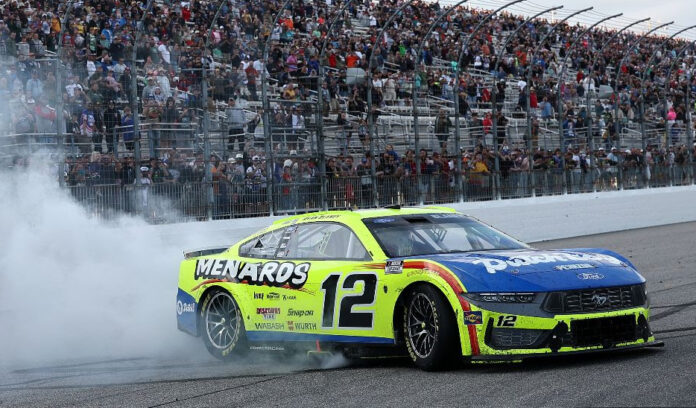
RACE RUNDOWN: Ryan Blaney and the No. 12 Menards/Delta Ford Mustang Dark Horse team jumped to second in the points standings with a third-place finish Sunday at Darlington, Blaney’s second top-five effort in his last three starts at the 1.366-mile oval. After starting seventh, Blaney worked his way up to fifth within the first 30 laps prior to the start of the green flag pit cycle. Crew chief Jonathan Hassler called the Menards/Delta Ford to pit road on lap 38 to begin the cycle, allowing Blaney to vault to second in the running order by the time the cycle completed, resulting in a third-place finish in Stage 1. A pit road penalty during the 12 team’s stop between stages saw Blaney take the ensuing restart from 20th, but responded by charging up to 12th by lap 144. Blaney hit pit road five laps later towards the end of the green flag pit cycle and picked up a few spots over the final 18 laps of the segment, crossing the line 12th in Stage 2. Hassler planned to split the final stretch into a pair of 50-lap runs, but an early caution brought a majority of the field to pit road. Another issue on the stop shuffled Blaney back to 20th in the order prior to taking the green with 91 laps remaining, as he went on to go through the field once again to regain his place in the top-10 by lap 225. Blaney reached as high as sixth when Hassler made the call for the final stop of the day under green on lap 241 as the Menards/Delta Ford went on offense for the final 52-lap run. Blaney was scored fourth when the cycle completed and showed his strength of maintaining pace the rest of the way to take the checkered flag third with several of the leaders struggling with tire wear down the stretch.

BLANEY’S THOUGHTS: “Really proud of the 12 guys for bringing me a good car and getting it better all day and kind of adjusting to where we were in the pack. That’s kind of a tough way to do it, but appreciate Menards, Delta, Ford, Ford Racing, Dent Wizard, Wabash, BODYARMOR, Advance Auto Parts, DEX Imaging, the Wurth Group for what everybody does on this program. I thought the package was really fun. You could kind of make it angry, and you were going to pay the price, and that stuff is pretty good. I think it was the first time in my Cup career that I have let guys go on a restart or on a green flag cycle, and I said to myself, I’m going to see you in about 20 [laps]. That happened multiple times. I think we’re making progress on that, so we’ll keep going. Like I said, proud of the fight by the 12 guys.”

JOEY LOGANO No. 22 SHELL-PENNZOIL FORD MUSTANG DARK HORSE
START: 29TH STAGE 1: 33RD STAGE 2: 34TH FINISH: 33RD POINTS: 16TH
RACE RUNDOWN: Joey Logano and the No. 22 Shell-Pennzoil Ford Mustang Dark Horse team came away with a 33rd-place finish in Sunday’s Goodyear 400 at Darlington. Logano battled handling issues from the onset of Sunday’s 400-mile event before the 22 team had its first opportunity to adjust on it during a green flag stop on lap 46 before closing out Stage 1 with a 33rd-place finish. As the balance initially improved during the following run, the Shell-Pennzoil Ford built too free over the course of the long run, resulting in a 34th-place result in Stage 2. Logano continued to battle to get back on the lead over the course of the final segment, but only one caution over the final stretch thwarted any progress as the No. 22 settled for a 33rd-place finish on the day.

LOGANO’S THOUGHTS: “A tough weekend all around for our 22 team. We just never had a chance to recover after going down a lap early and it kept compounding throughout the day. A lot to work on for us and hopefully we can get things in the right direction at Martinsville.”

The NASCAR Cup Series heads to Martinsville Speedway for the Cook Out 400 on Sunday, March 29. Live coverage begins at 3:30 p.m. ET on FS1, MRN and SiriusXM NASCAR Radio Channel 90.

Spire Motorsports Goodyear 400 Cup Series Race Report

Daniel Suárez – Driver, No. 7 Spire Motorsports Chevrolet Camaro ZL1

START: 11TH

FINISH: 7TH

POINTS: 14TH

Daniel Suárez, driver of the No. 7 NationsGuard Chevrolet Camaro ZL1 for Spire Motorsports, ran inside the top 10 for the majority of Sunday’s Goodyear 400. He finished in the seventh position — his best finish in 17 starts at Darlington (S.C.) Raceway — to earn his second top-10 finish of the season.

Suárez started 11th and ran inside the top 10 for much of Stage 1 before the No. 7 team made a green-flag stop for an adjustment to improve grip for the black-and-green machine. The 34-year-old driver cycled back into 10th place and put his fresh tires to the test to power through to a ninth-place finish, securing two bonus points as the green-and-white checkered flag waved.

Suárez gained four positions following the pit cycle at the break to start Stage 2 in fifth. A caution at Lap 112 brought him to pit road, where crew chief Ryan Sparks called for air pressure adjustments, fuel, and four fresh Goodyear tires. Suárez returned to the track in seventh with 69 laps remaining in the stage. On Lap 145, he received an additional adjustment and maintained top-10 pace to secure an additional bonus point at the stage end.

The final segment went green with 104 laps remaining in the 293-lap race and Suárez sitting in the 15th position. A caution flag waved shortly after the green flag waved and the driver reported that the car’s fire-off feels better than on the previous run, but still not as strong as it was at the start of the race. Sparks directed Suárez to stay out on the track for prime track position and the No. 7 restarted fourth with 91 laps to go in the event. Suárez made his final stop under green with 51 laps remaining and eventually crossed the finish line in seventh to advance to the 14th position in the driver championship point standings.

Daniel’s Post-Race Comments
“So proud of this No. 7 NationsGuard Chevrolet team. They did an incredible job all day long. I feel like every single week, if we look at our numbers and we can get a little bit better, that’s all I can ask for. We’re not trying to hit home runs right now, we’re just putting one step in front of the other, and that’s how progress happens. The culture of the team is pretty incredible. There are great people here; the structure’s solid, and I’m just really happy and proud to be a part of this organization. And the best part is that Spire Motorsports just continues to grow. We’re not even close to our full potential, so we just have to keep doing our thing; keep building, and get better and better.”

Michael McDowell – Driver, No. 71 Spire Motorsports Chevrolet Camaro ZL1

START: 20TH

FINISH: 20TH

POINTS: 17TH

Michael McDowell finished 20th in Sunday’s Goodyear 400 at Darlington Raceway to earn his fourth top 20 of the 2026 season to go along with a famed “Darlington Stripe”.

McDowell qualified 20th, but took the green flag from the 18th position after two entries were sent to the rear. Tire wear was a concern throughout the garage, but the Travis Peterson-led team ran until lap 43 before heading to pit road under green for full service, exiting 25th. The veteran driver’s long-run pace kept him competitive, but he continued to battle a loose-handling Delaware Life Chevrolet in Stage 1. A bold three-wide move with four laps to go, earned the 41-year-old driver the free pass after crossing the line 21st after at the conclusion of the 90-lap opening stage.

A lap-112 caution brought the lead lap cars to pit road where the Glendale, Ariz., native was called for a speeding penalty that pushed him to the rear of the field for the ensuing restart. He took the green flag from 33rd on fresher rubber than the second half of the field and gained 12 positions in just four green-flag laps. During the green-flag cycle, McDowell found himself in the top 10 following a trip to pit road. Despite a net gain of 20 positions since the start of the stage, the Delaware Life driver fought handling woes later in the run, resulting in a finish of 19th at the green-and-white checkered flag ending Stage 2.

A loose right-rear tire at the stage break forced the team to head back to pit road for four fresh Goodyear Eagles, restarting 25th for the 100-lap marathon of the Final Stage. A quick caution just four laps later sent most of his competitors to pit road and moved McDowell up to fifth after staying out on slightly older tires. The No. 71 Chevy ran seven laps longer than competitors to pit from the top five for green-flag stops, gaining a tire advantage with 45 laps to the checkered flag. Following the cycle, the veteran moved foward from a running position of 23rd to gain position late in the run for a finish of 20th after 400 miles.

Michael’s Post-Race Comments
“it was a tough day for the Delaware Life Chevrolet, but Spire Motorsports as a whole showed good speed. Carson (Hocevar) and Daniel (Suárez) both brought home good and complete days in the top five and top 10, so we will have a good notebook when we come back for the Southern 500. Not the day we wanted, but we will make it up at Martinsville next week.”

Carson Hocevar – Driver, No. 77 Spire Motorsports Chevrolet Camaro ZL1

START: 16TH

FINISH: 4TH

POINTS: 13TH

Carson Hocevar, driver of Spire Motorsports’ No. 77 Chili’s Chevrolet Camaro ZL1, earned his second top-five finish of the season in Sunday’s Goodyear 400 at Darlington Raceway. He crossed the finish line in fourth place to secure his best result in six NASCAR Cup Series starts at “The Track Too Tough to Tame.”

The No. 77 team endured an eventful practice and qualifying session Saturday afternoon that led the team to replace the right-rear upper control arm Sunday morning during final checks, and was forced to start at the rear of the field for the unapproved adjustment. Despite the setback, the Portage, Mich., native had his eyes set forward from the drop of the green flag, reaching the 29th position in just 10 laps despite experiencing a severe lack of grip in the rear. The team fell one-lap down after the opening round of green-flag pit stops, and completed Stage 1 in 24th.

During the ensuing stage break, veteran crew chief Luke Lambert made the call for four tires, fuel and a wedge adjustment to take a swing at the rear insecurity his driver had fought throughout the opening segment. The 2024 Cup Series Rookie of the Year restarted 27th on Lap 101 and advanced to 23rd when a caution flag was waved 11 laps later. Unfortunately, the team was one position out of contention for the free pass, but elected to take the wave around during the caution period to return to the lead lap. Hocevar restarted 21st on Lap 117, and after another round of green-flag pit stops, advanced to 16th at the conclusion of Stage 2.

The 23-year-old driver restarted 19th for the 100-lap run to the finish, embarking on a spirited drive to the checkered flag. Hocevar surpassed seven drivers in the final 25 laps to take the checkered flag in fourth. He gained 32 positions from the drop of the green flag to be the “hard charger” of the day at a facility known to be tough to advance position and earned the best result for the Chevrolet camp.

Carson’s Post-Race Comments
“Super proud of this No. 77 Chili’s Marg Machine Chevrolet team. It hasn’t been a lack of effort, but just a lack of luck that takes us out of finishes, so it’s nice to finally get one today. Chili’s put a lot of effort into this throwback scheme, so it’s great to give it a good run.”

Up Next…
The NASCAR Cup Series takes on Martinsville (Va.) Speedway on Sunday, March 29. The 400-lap race at the half-mile paperclip-shaped oval will be televised live on FS1 at 3:30 p.m. Eastern Daylight Time (EDT).

The seventh of 36 points-paying races on the Cup Series calendar will be broadcast live on the Motor Racing Network and SiriusXM NASCAR Radio Channel 90.

To stay up-to-date on all the latest news and exclusive content, follow Spire Motorsports on Facebook, X and Instagram, and visit Spire-Motorsports.com.
About Spire Motorsports …
Spire Motorsports fields full-time entries in the NASCAR Cup Series, NASCAR CRAFTSMAN Truck Series and Interstate Batteries High Limit Racing.

The team, co-owned by longtime NASCAR industry executive Jeff Dickerson and TWG Motorsports CEO Dan Towriss, earned its inaugural NASCAR Cup Series victory in its first full season of competition when Justin Haley took the checkered flag in the Coke Zero Sugar 400 at Daytona (Fla.) International Speedway on July 7, 2019. Less than three years later, William Byron drove Spire Motorsports’ No. 7 Chevrolet Silverado to its inaugural NASCAR CRAFTSMAN Truck Series win on April 7, 2022, at Martinsville (Va.) Speedway. The team’s most recent win came on Feb. 21, 2026, when Kyle Busch took the checkered flag in the Fr8 Racing 208 at Atlanta Motor Speedway.

In 2026, Spire Motorsports will campaign the Nos. 7, 71 and 77 Chevrolet Camaro ZL1s in the NASCAR Cup Series and the Nos. 7 and 77 Chevrolet Silverado RSTs in the NASCAR CRAFTSMAN Truck Series. The Mooresville, N.C., organization will also field the No. 77 410 sprint car in Interstate Batteries High Limit Racing competition.

Wood Brothers Racing – Race Report: Darlington Raceway

Event: Goodyear 400
Location: Darlington Raceway, Darlington, South Carolina
Date: Sunday, March 22, 2026

Start: 26th
Finish: 17th

Josh Berry and the No. 21 Motorcraft/Quick Lane team put together their strongest stretch in the closing laps of Sunday’s Goodyear 400 at Darlington Raceway, advancing seven positions over the final 50 laps to secure a 17th-place finish. It marked their second top-20 result of the season, with the first coming in the season-opening Daytona 500 (ninth).

Berry and the Motorcraft/Quick Lane Ford Mustang Dark Horse started 26th and worked their way into the top 10 during a cycle of green-flag pit stops in the opening 90-lap Stage. However, the team lost a lap during the cycle and finished Stage 1 in 22nd, one lap down.

In Stage 2, the team took advantage of a caution following a Lap 112 incident to take the wave-around and return to the lead lap. Berry maintained position from there and finished the Stage in 23rd.

The final Stage saw steady progress from the No. 21 team as Berry settled into the top 20 for much of the closing run. After a green-flag stop on Lap 244, Berry methodically worked forward through the field, climbing into the top 20 by Lap 286. He gained three more positions in the closing laps to cap off a 17th-place finish.

Berry and the Wood Brothers now turn their attention to Martinsville Speedway for next Sunday’s Cook Out 400.

JUSTIN BOND WINS IN PHOENIX IN JBS EQUIPMENT NHRA PRO MOD SERIES AT RACE POWERED BY LAT RACING OILS

CHANDLER, Ariz. (March 22, 2026) — Justin Bond outlasted an impressive field in the JBS Equipment NHRA Pro Mod Drag Racing Series presented by Elite Motorsports on Sunday at Firebird Motorsports Park, defeating Stevie “Fast” Jackson in the final round as part of this weekend’s FMP NHRA Arizona Nationals presented by NGK Spark Plugs.

The event was the second of 11 races in the series and was powered by LAT Racing Oils.

In the final round, Bond won when Jackson went red, but he also put together a standout run in the championship round, going 5.736-seconds at 251.81 mph, which was his best performance on raceday. To reach the final round, Bond defeated Nick Januik, Stan Shelton and Gainesville winner Derek Menholt.

It gives Bond his first victory of the year and seventh in his year, finishing off a strong weekend that started with the veteran qualifying second.

“It’s just been a major marathon to be here,” Bond said. “I don’t deserve it, but I’m sure happy we did it. This one is for my guys. I’ve got so many people to thank and this is a big one for us. I just had a really awesome car, and it’s the guys. We weren’t always the low of the round this particular event, but we were just racing smart and racing our opponent, racing the racetrack.

“In the final, we tuned it up pretty good, and didn’t actually need it. My staging plan worked. I never go in first, and this time I went in first, tried to rush him and he was rushed.”

Jackson, a two-time NHRA world champion, reached the final round for the 23rd time in his career after round wins against reigning world champ J.R. Gray, defending event winner Mike Stavrinos and No. 1 qualifier Lyle Barnett.

Menholt remains in the points lead after two races.

The JBS Equipment NHRA Pro Mod Drag Racing Series presented by Elite Motorsports returns to action April 24-26 at zMAX Dragway in Charlotte as part of the NHRA 4-Wide Nationals.


CHANDLER, Ariz. — Final finish order (1-16) at the FMP NHRA Arizona Nationals presented by NGK Spark Plugs at Firebird Motorsports Park. The race is the second of 11 events in the JBS Equipment NHRA Pro Mod Drag Racing Series presented by Elite Motorsports.

PRO MODIFIED:

  1. Justin Bond; 2. Steve Jackson; 3. Lyle Barnett; 4. Derek Menholt; 5. Mike Stavrinos; 6. Billy Banaka; 7. Stan Shelton; 8. Mike Castellana; 9. JR Gray; 10. Mike Thielen; 11. Nick Januik; 12. Adriano Kayayan; 13. Erica Enders; 14. Kevin Rivenbark; 15. Chip King; 16. Mason Wright.

CHANDLER, Ariz. — Sunday’s final results from the FMP NHRA Arizona Nationals presented by NGK Spark Plugs at Firebird Motorsports Park. The race is the second of 11 events in the JBS Equipment NHRA Pro Mod Drag Racing Series presented by Elite Motorsports.

Pro Modified — Justin Bond, Chevy Camaro, 5.736, 251.81 def. Steve Jackson, Camaro, Foul – Red Light.

CHANDLER, Ariz. — Final round-by-round results from the FMP NHRA Arizona Nationals presented by NGK Spark Plugs at Firebird Motorsports Park, the race is the second of 11 events in the JBS Equipment NHRA Pro Mod Drag Racing Series presented by Elite Motorsports.

PRO MODIFIED:

ROUND ONE — Justin Bond, Chevy Camaro, 5.748, 249.76 def. Nick Januik, Chevy Corvette, 5.898, 242.80; Mike Castellana, Camaro, 5.784, 248.29 def. Mike Thielen, Camaro, 5.842, 238.22; Derek Menholt, Camaro, 5.747, 252.43 def. Adriano Kayayan, Corvette, 6.042, 192.69; Mike Stavrinos, Camaro, 5.790, 249.90 def. Mason Wright, Camaro, Foul – Red Light; Lyle Barnett, Camaro, 5.702, 252.76 def. Erica Enders, Camaro, 6.062, 236.13; Stan Shelton, Ford Mustang, 5.798, 251.25 def. Chip King, Dodge Charger, 10.047, 84.83; Steve Jackson, Camaro, 5.717, 250.92 def. JR Gray, Camaro, 5.742, 252.33; Billy Banaka, Camaro, 5.762, 252.71 def. Kevin Rivenbark, Mustang, 8.497, 117.85;

QUARTERFINALS — Bond, 5.766, 247.25 def. Shelton, 5.907, 246.62; Barnett, 5.752, 251.95 def. Banaka, 5.817, 251.11; Jackson, 5.744, 250.55 def. Stavrinos, 5.803, 248.93; Menholt, 5.858, 248.84 def. Castellana, 9.909, 88.95;

SEMIFINALS — Bond, 5.793, 248.48 def. Menholt, 5.865, 247.16; Jackson, 5.766, 250.83 def. Barnett, 5.788, 250.13;

FINAL — Bond, 5.736, 251.81 def. Jackson, Foul – Red Light.

CHANDLER, Ariz. — Point standings (top 10) following the FMP NHRA Arizona Nationals presented by NGK Spark Plugs at Firebird Motorsports Park, the race is the second of 11 events in the JBS Equipment NHRA Pro Mod Drag Racing Series presented by Elite Motorsports.

Pro Modified

  1. Derek Menholt, 186; 2. Justin Bond, 155; 3. Billy Banaka, 148; 4. Steve Jackson, 129; 5. Mike Castellana, 125; 6. JR Gray, 109; 7. Mike Stavrinos, 92; 8. Sidnei Frigo, 89; 9. (tie) Chip King, 84; Stan Shelton, 84.

Why Electric Dirt Bike Shopping Feels Different Now

At some point during the search, the decision just stops moving forward. You narrow it down to a few electric dirt bikes, go back and forth between them, and realize none of them clearly stands out. Nothing feels wrong, but nothing feels like an obvious choice either. The process that once felt quick now stretches out, with more time spent revisiting the same options and second guessing small differences.

That hesitation is something more buyers are starting to recognize. It is not a lack of options, and it is not confusion in the usual sense. It comes from the fact that choosing an electric dirt bike no longer follows a simple path. The steps are familiar, but the way those steps lead to a decision has changed, and that shift becomes more noticeable the longer the search goes on.

It’s No Longer a Simple Spec Decision

There was a time when decisions came together quickly. A few key numbers were enough to guide the process, and differences were easier to spot. Higher output, longer range, or a more aggressive setup often made one model stand out without much effort.

That clarity has faded. Many bikes now reach a similar level of performance, which means numbers alone do not separate them in a meaningful way. Once a certain baseline is met, the advantage of slightly higher specs becomes harder to feel in practice.

Because of this, buyers tend to pause more often. Instead of moving from one option to the next, they stay within a small group of choices, comparing details that are less obvious at first glance. It is common to reopen the same listings multiple times, looking for something that creates a clearer distinction.

Similar Numbers Don’t Mean the Same Ride

The moment buyers slow down, another layer of difference starts to appear. Bikes that seem nearly identical on paper begin to show their character in more subtle ways.

Power delivery is one example. Some bikes feel smooth and controlled, while others respond more abruptly. Even with similar output, that difference changes how the electric dirt bike behaves on a trail. Weight balance and suspension tuning create similar contrasts, affecting how stable or confident a ride feels.

These qualities are not immediately visible in a product listing. They become relevant only when buyers start imagining real use instead of comparing figures. Riders begin to picture tight turns, uneven terrain, or repeated short sessions, and suddenly those subtle differences feel more important than raw numbers.

Buyers Are Thinking More About Fit

Once the focus moves beyond specs, the decision becomes more personal. Buyers start to picture how a bike fits into their own routines rather than how it ranks against others.

This becomes especially clear when looking through electric dirt bikes for sale. Instead of searching for the highest numbers, many begin asking different questions. Will this feel manageable on a narrow trail. Will it stay comfortable over repeated rides. Will it suit the way I actually spend time riding.

These questions do not have simple answers, which is why the process feels slower. At the same time, they help filter out options that may look strong on paper but do not align with real use. Over time, this way of thinking creates a more stable decision, even if it takes longer to reach.

Clearer Positioning Matters More Now

As buyers take a more experience focused approach, clarity becomes increasingly valuable. In a crowded market, the bikes that are easiest to understand tend to stand out first.

When a model clearly communicates what kind of riding it is built for, it reduces the effort required to evaluate it. Buyers can quickly decide whether it matches their expectations or not, instead of trying to interpret small differences across multiple options.

Brands like Qronge are often part of this conversation. Their focus on balance, control, and everyday usability makes it easier for buyers to understand what the riding experience might feel like. That clarity does not simplify the decision entirely, but it helps reduce uncertainty at a stage where many options otherwise feel interchangeable.

It’s Not Harder to Choose, Just Different

What feels like difficulty at first is often just a change in how decisions are made. The process no longer depends on quick comparisons or standout numbers. It asks for more reflection, and in return, it offers a better sense of fit.

Buyers are not just looking for the strongest option anymore. They are looking for something that feels right over time, something that matches how they actually ride rather than how a spec sheet reads. That shift explains why decisions take longer, but also why they tend to feel more considered in the end.

That is why electric dirt bike shopping feels different now. The bikes have improved, but more importantly, the way people choose them has become more grounded and more deliberate. What once felt like a quick decision has turned into a more thoughtful process, shaped by real expectations instead of simple comparisons.

Bad Tire Alignment Is Costing You More Than You Think

Photo by depositphotos at https://depositphotos.com/

Most drivers take their car in for an oil change, maybe a tire rotation if they remember, and call it a day. But there’s one maintenance service that quietly affects your safety, fuel economy, and the lifespan of your tires—and most people skip it entirely until the damage is already done.

Wheel alignment may not sound dramatic, but ignoring it can cost you hundreds in repairs and fuel. If you’re in Texas, getting a professional tire alignment in Plano is one of the smartest, most affordable things you can do to keep your vehicle running the way it’s supposed to.

Why Does Tire Alignment Matter?

Alignment isn’t just a technical checkbox on a maintenance list. It’s the foundation of how your vehicle interacts with the road. When your wheels are properly aligned, your tires wear evenly, your car drives straight, and your fuel economy stays where it should be. When they’re not, things start breaking down in ways you might not immediately connect to alignment at all.

Here’s why it deserves more attention than most drivers give it:

  • It protects your tires: Misaligned wheels cause uneven tire wear. Tires that should last 50,000 miles can wear out in 25,000 or less, that’s money straight out of your pocket.
  • It affects your fuel economy: When your tires aren’t rolling cleanly, your engine works harder to compensate. That extra effort burns more fuel on every single trip.
  • It impacts your safety: Poor alignment reduces traction and affects how your vehicle handles sudden maneuvers or emergency braking  on highways, that matters enormously.
  • It prevents expensive repairs: Prolonged misalignment puts stress on your ball joints, tie rods, and steering components  parts that cost far more to replace than a routine alignment service.
  • It keeps your drive comfortable: A well-aligned car simply feels better. No pulling, no vibration, no constantly correcting your steering just to hold a straight line.

What Exactly Is Tire Alignment?

There’s a common misunderstanding worth clearing up: tire alignment isn’t about straightening your tires. It’s about adjusting your vehicle’s suspension system, the components that connect your car to its wheels so that every tire sits at the precise angle your manufacturer intended.

Three angles are measured and corrected during a professional alignment:

  • Toe -Whether your tires point slightly inward or outward when viewed from above. Even a small deviation causes your tires to scrub against the road with every mile.
  • Camber -The inward or outward tilt of your tire when viewed from the front. Too much camber causes the inner or outer edge of your tire to wear down rapidly.
  • Caster – The angle of your steering axis, which influences stability and how well your vehicle holds a straight line at speed.

These angles shift gradually not from one dramatic event, but from thousands of small impacts: potholes, curbs, rough pavement, and the general wear of daily driving. By the time most drivers notice something is wrong, the misalignment has already been doing damage for months.

Signs Your Car Is Telling You It Needs an Alignment

Your vehicle won’t send you an alert  but it will communicate. The key is knowing what to look for:

  • Your car pulls to one side: On a flat, straight road, a properly aligned car drives straight with minimal input. If yours drifts consistently left or right, your alignment is likely off.
  • Your steering wheel isn’t centered: If your steering wheel sits slightly crooked when driving straight, that’s a classic alignment symptom.
  • Uneven or rapid tire wear: If one edge of your tire is far more worn than the other, alignment is almost always the cause.
  • Vibration through the steering wheel: Misalignment causes tires to drag rather than roll cleanly, and that friction often translates into vibration, especially at highway speeds.
  • Loose or wandering steering: If your steering feels vague or you’re making constant small corrections to stay in your lane, get an inspection.
  • Squealing tires in normal turns: Tires that squeal during regular everyday turns are often scrubbing sideways due to improper toe settings, a direct alignment issue.

Even one of these signs is reason enough to book a professional check. Alignment problems don’t fix themselves; they compound with every mile.

The Challenges of Knowing When to Act

One of the biggest obstacles to staying on top of alignment is that the warning signs develop so gradually that drivers adapt to them without realizing it. Here are the most common reasons people delay:

“It doesn’t seem that bad yet,” but a misalignment rarely will announce itself loudly. It creeps in slowly until a slight pull or extra vibration starts feeling normal. By then, the damage to your tires and suspension is already significant.

“I just got new tires.” This is actually one of the most critical times to get an alignment. Installing new tires on a misaligned vehicle is like putting new shoes on someone who walks with a limp. The shoes wear out faster because the underlying problem was never fixed.

“It seems like an unnecessary expense.” A standard four-wheel alignment costs between $75 and $150. A set of four tires costs $600 to $1,200. Skipping the cheaper service to save money is exactly how drivers end up spending ten times more down the road.

How Often Should a Tire Alignment be completed?

There’s no one-size-fits-all answer, but here are the most reliable guidelines:

  • Once a year or every 12,000–15,000 miles as part of routine maintenance
  • Whenever you install new tires  always pair new tires with a fresh alignment
  • After any significant impact  a deep pothole, a hard curb strike, or road debris collision
  • After any suspension or steering repair, even minor ones
  • Any time you notice the warning signs listed above, regardless of your last service date

Drivers who frequently use highways or navigate roads with heavy traffic and rough surfaces may benefit from a check every six months. Even if no adjustment is needed, the inspection itself is worth it for peace of mind.

What Happens During a Alignment?

Knowing the process helps you ask the right questions and understand what you’re paying for.

  • Pre-alignment inspection: A qualified technician inspects your tires, suspension, and steering components before anything else. Worn ball joints or damaged tie rods must be addressed first  skipping this step is a red flag at any shop.
  • Computerized measurement: Your vehicle is placed on a precision alignment rack and sensors are attached to each wheel. Software measures your current camber, caster, and toe angles against your manufacturer’s exact specifications.
  • Adjustment: The technician adjusts the relevant angles using specialized tools until everything falls within spec.
  • Verification: The alignment is re-measured to confirm accuracy, followed by a test drive to ensure the vehicle drives straight and the steering wheel is properly centered.

The whole process typically takes 45 minutes to an hour, a small investment of time that protects a very large investment in your vehicle.

Final Thoughts

Tire alignment is one of those services that never feels urgent right up until it is. By the time the damage is obvious, you’ve already lost hundreds of dollars in preventable wear on your tires and suspension. The good news is that staying ahead of it is genuinely simple and affordable.

A once-a-year check, a fresh alignment with every new set of tires, and paying attention to how your car feels on the road that’s really all it takes. These small habits protect your tires, your fuel economy, and most importantly, your safety. If it’s been a while since your last check, or you’ve noticed any of the signs mentioned above, don’t wait any longer. 

From Trackside Energy to Car Club Identity: What Connects Enthusiasts Today

Photo by depositphotos at https://depositphotos.com/

Car enthusiasm has never been limited to horsepower figures or polished bodywork. People stay close to cars because they like the feeling that comes with them. A busy paddock, a crowded parking lot before a weekend meet, and a late evening conversation around an open hood can create the same kind of pull. The setting changes, yet the connection feels familiar.

That is why trackside energy still matters far beyond race day. It gives enthusiasts something deeper than visual appeal. It offers shared attention, strong memory, and a sense that everyone present is there for the same reason. Car clubs grow from that same source. They turn passing interest into regular contact and regular contact into identity. What keeps both spaces alive is not a single brand, model, or event. It is the feeling of belonging to a group that notices the same details and values the same effort.

Why the Track Still Feels Like Home

A race venue has its own pull. The crowd watches closely. Small details matter. Tire choice, braking points, body movement through a corner, and changes in pace all become part of the experience. Even people who do not follow every series or every driver can recognize the appeal. There is a level of focus in that setting that feels rare in everyday life.

Car enthusiasts respond to that atmosphere because it reflects the way they already think. They pay attention to setup, sound, balance, and response. They notice what others might miss. At the track, that habit feels normal instead of excessive. The same mindset appears in local meets and club gatherings. Members may talk about fitment, maintenance, paint condition, or suspension feel with the same level of care. The topic shifts, yet the attention stays the same.

How Club Identity Takes Shape

That same energy often finds a longer home in organized communities. In spaces connected to Automotive Club, the bond between enthusiasts can grow through repeated conversation, shared standards, and a clear sense of what the group values. A car club becomes more than a place to show a vehicle. It becomes a place where taste, behavior, and trust begin to matter as much as the machine itself.

Identity usually forms through small actions rather than grand statements. Members show up on time. They help each other diagnose problems. They remember what another owner is building and ask about the next step. They notice effort. Over time, that creates a community with its own tone. Some clubs lean toward period-correct builds. Others admire performance upgrades or clean street setups. The strongest groups make room for these differences while keeping a shared standard for respect and involvement.

What Enthusiasts Carry From the Track to the Street

Motorsport leaves a mark even on people who never plan to race. It changes the way they look at preparation, consistency, and care. A well-run team does not leave things to chance, and many enthusiasts bring that same attitude into club culture. They think ahead. They check the car before a drive. They take pride in the work that no one else sees right away.

That way of thinking shapes club identity in several clear ways:

  • It gives more value to preparation than to empty display.
  • It rewards members who stay engaged over time.
  • It creates respect for detail, patience, and mechanical awareness.

These habits help explain why some communities feel grounded while others fade quickly. The stronger ones are built around a shared standard of attention. Cars may be the visible center, but consistency is what keeps the group together.

Why Real Communities Still Matter

Modern car culture lives partly online, and that brings clear benefits. People can find rare parts, learn from technical discussions, and discover builders from other cities or countries. Still, online visibility alone does not create a real connection. A community becomes meaningful when people know each other beyond usernames and polished photos.

That is where clubs still hold real value. They offer continuity. They create space for repeated interaction, which is something the internet cannot always replace. A member who helps during a roadside issue, stays late after a meet, or shares honest advice earns trust in a way that a polished feed never can. Enthusiasts remember who shows up, who listens, and who adds something useful to the group.

This is also why many people drift away from empty automotive spaces and stay close to ones that feel grounded. They are looking for genuine exchange. They want places where people care about the work behind a build and the story behind a long-term project. When that feeling is present, club identity becomes stronger with each meet instead of wearing thin over time.

Where the Bond Continues to Grow

The strongest connection between track culture and car club life comes from shared experience. Both spaces reward attention, patience, and participation. Both invite people to care about more than appearance. A fast lap, a clean build, and a thoughtful conversation after an event may seem different on the surface, yet they create the same sense of involvement.

That is why communities linked with Automotive Club can feel familiar even to enthusiasts who came from very different corners of car culture. Some arrive through racing. Some come through weekend drives, restoration work, or local meets. What keeps them there is usually the same thing. They have found a place where their interest makes sense, where details are noticed, and where effort is respected.

Trackside energy does not disappear when the grandstands empty. It stays with people and shows up later in the way they gather, talk, build, and return. That is what connects enthusiasts today. The bond starts with cars, yet it lasts because of the people who keep showing up around them.

Reddick wins Darlington Goodyear 400, notches fourth victory of the season 

Photo by John Knittel for SpeedwayMedia.com.

Tyler Reddick claimed his fourth win of the season in the Goodyear 400 at Darlington Raceway on Sunday afternoon. But it was not without its obstacles.

After leading the first 45 laps, the team had a problem with the right-front tire change, resulting in a 16-plus pit stop. Reddick, however, rallied to finish second in Stage 1. 

But that was not the only problem that Reddick’s team had to address. 

They also had to change the battery and a faulty alternator before pit road was open, resulting in a penalty. for pitting before pit road opened. Reddick had to restart Stage 2 at the back of the field. 

With a malfunctioning alternator, Reddick had to conserve power by turning off any unnecessary electrical drains, including his cool suit.

Brad Keselowski won Stage 1, followed by Reddick, Ryan Blaney, Bubba Wallace, Kyle Larson, Chris Buescher, Chase Elliott, Austin Cindric, Daniel Suárez and William Byron. 

Keselowski also won Stage 2. Buescher finished second as Larson, Chase Briscoe, Ryan Preece, Byron, Cindric, Ty Gibbs and Suárez completed the top 10.

“All in all, a great day for us,” Keselowski said. “Won two stages, led a lot of laps, scored a bunch of points. So, a lot to be proud of. The team just needs a little pace. All three of our cars are executing really well and getting good finishes. With a little bit of pace, we can win these races. We’re showing ourselves as a team that is highly capable.”

Despite all the obstacles he faced, a relentless Reddick pursued Keselowski, passing him for the lead on Lap 266, and claiming the victory. 

Yeah, I mean, ever since I made my first lap here in an O’Reilly Auto Parts car, there’s just something about this racetrack that’s so special, so challenging. It’s been really fun for my evolution as a driver over the years, my time in O’Reilly Auto Parts car, my time at RCR and what we’ve perfected, my time here at 23XI.

“Just really proud of everybody, and it’s cool to get boss man his fourth win on the year.

“I know never to give up,” Reddick said. “I think it’s very fitting that when we finally get our first win here at Darlington that the Lady in Black would test us like that. We’ve been so close so many times. 

“I mean, Lap 1, we had the charging problem where the battery wasn’t charging at all. All day long, just not running fans. Sweat my tail off inside the race car, and we knew it was going to be physical. Really worn out, but I guess I don’t need as much of that cooling stuff as I normally have.”

Keselowski finished second as Ryan Blaney, Carson Hocevar, Austin Cindric, Ty Gibbs, Daniel Suárez, William Byron, Chris Buescher and Erik Jones rounded out the top 10.

Next week, the NASCAR Cup Series heads to Martinsville Speedway for the Cook Out 400 on Sunday, March 29, at 3:30 pm ET on FS1.

Complete Results:

  1. (45) Tyler Reddick, 23XI Racing Toyota
  2. (6) Brad Keselowski, RFK Racing Ford
  3. (12) Ryan Blaney, Team Penske Ford
  4. (77) Carson Hocevar, Spire Motorsports Chevrolet
  5. (2) Austin Cindric, Team Penske Ford
  6. (54) Ty Gibbs, Joe Gibbs Racing Toyota
  7. (7) Daniel Suarez, Spire Motorsports Chevrolet
  8. (24) William Byron, Hendrick Motorsports Chevrolet
  9. (17) Chris Buescher, RFK Racing Ford
  10. (43) Erik Jones, Legacy Motor Club Toyota
  11. (11) Denny Hamlin, Joe Gibbs Racing Toyota
  12. (19) Chase Briscoe, Joe Gibbs Racing Toyota
  13. (60) Ryan Preece, RFK Racing Ford
  14. (97) Shane van Gisbergen, Trackhouse Racing Chevrolet
  15. (9) Chase Elliott, Hendrick Motorsports Chevrolet
  16. (1) Ross Chastain, Trackhouse Racing Chevrolet
  17. (21) Josh Berry, Wood Brothers Racing Ford
  18. (88) Connor Zilisch, Trackhouse Racing Chevrolet
  19. (20) Christopher Bell, Joe Gibbs Racing Toyota
  20. (71) Michael McDowell, Spire Motorsports Chevrolet
  21. (8) Kyle Busch, Richard Childress Racing Chevrolet
  22. (38) Zane Smith, Front Row Motorsports Ford
  23. (34) Todd Gilliland, Front Row Motorsports Ford
  24. (48) Justin Allgaier, Hendrick Motorsports Chevrolet
  25. (3) Austin Dillon, Richard Childress Racing Chevrolet
  26. (4) Noah Gragson, Front Row Motorsports Ford
  27. (42) John Hunter Nemechek, Legacy Motor Club Toyota
  28. (41) Cole Custer, Haas Factory Team Chevrolet
  29. (47) Ricky Stenhouse Jr., HYAK Motorsports Chevrolet
  30. (16) AJ Allmendinger, Kaulig Racing Chevrolet
  31. (10) Ty Dillon, Kaulig Racing Chevrolet
  32. (5) Kyle Larson, Hendrick Motorsports Chevrolet
  33. (22) Joey Logano, Team Penske Ford
  34. (23) Bubba Wallace, 23XI Racing Toyota
  35. (35) Riley Herbst, 23XI Racing Toyota
  36. (51) Cody Ware, Rick Ware Racing Chevrolet
  37. (66) Timmy Hill, Garage 66 Ford