

NASCAR Suspends Chad Knaus and Ron Malec, But Rick Hendrick to Appeal
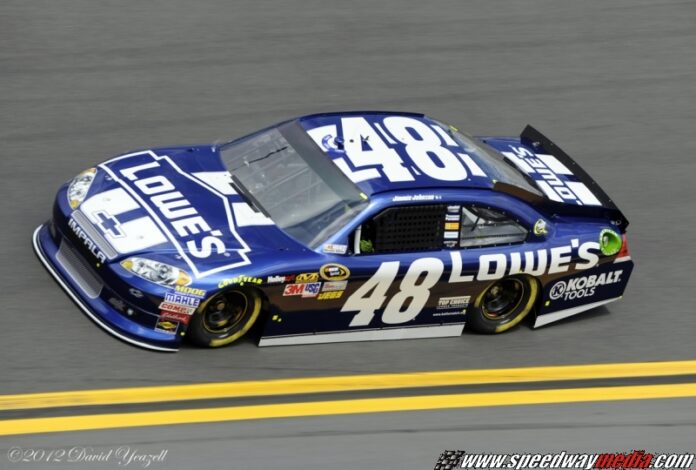
[media-credit name=”David Yeazell” align=”alignright” width=”222″]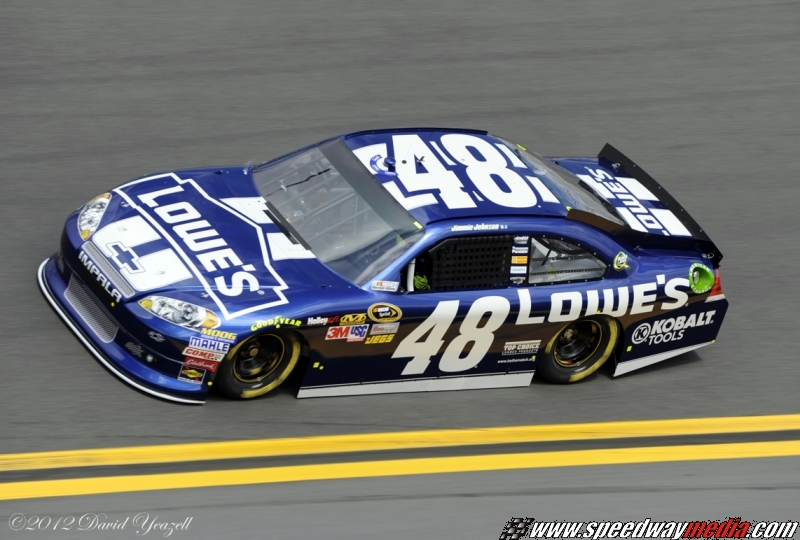 [/media-credit]On Wednesday, NASCAR issued a list of steep penalties to Jimmie Johnson and team No. 48 as a result of rule infractions found on Febraury 17th during opening day of inspection for the Daytona 500. The penalties include a six week suspension for both crew chief Chad Knaus and car chief Ron Malec from the next six NASCAR Sprint Cup Series events, plus probation till May 9th. They also fined Knaus $100,000 while taking away 25 driver points from Johnson and 25 owner points from his owner, Jeff Gordon.
According to NASCAR, they did not agree with the shape of the c-posts and requested that they be changed. The C-post is a piece of paneling towards the back of the car that connects the roof to the rear quarterpanel. The team modified the piece to gain an aerodynamic advantage.
As per their press release, the posts were “in violation of Sections 12-1 (actions detrimental to stock car racing); 12-4J (any determination by NASCAR officials that race equipment used in the event does not conform to NASCAR rules detailed in Section 20 of the rule book or has not been approved by NASCAR prior to the event); and 20-2.1E (if in the judgment of NASCAR officials, any part or component of the car not previously approved by NASCAR that has been installed or modified to enhance aerodynamic performance will not be permitted – unapproved car body modifications).”
Hendrick Motorsports has already announced that they will be appealing the penalties, which will see Knaus and Malec remain at the track during the process.
“Our organization respects NASCAR and the way the sanctioning body governs our sport,” Rick Hendrick, owner of Hendrick Motorsports, said. “In this case, though, the system broke down, and we will voice our concerns through the appeal process.”
After NASCAR made the call during Speedweeks to have the 48 team remove the parts, there was a lot of discussion from those involved about exactly what was going on. According to Ken Howes, Hendrick’s Vice President of Competition, he told SBNation.com that crew chiefs are always working around the templates to try and gain an advantage.
However, NASCAR has made it clear to teams that they do not like them modifying parts “between the templates” and have told Knaus that before, suspending him six weeks in 2007 for modifying the front fenders.
“We’re pretty serious about the body configurations of the cars for all of the right reasons,” NASCAR Sprint Cup Series director John Darby said. “This one was a modification that had been made to the car that put it outside that box.”
On that topic, Howes told SBNation.com that the template doesn’t quite cover every square inch of the car and there is nothing written in the rule book to stop them. The rule book just states that the car must fit the templates that NASCAR specifies.
Hendrick added to that, telling ESPN.com, “You know, I don’t like it if we find some flagrant problem. I don’t like it when someone says I just don’t like the looks of it and never put the plate down on it.” Hendrick says that in speaking with Knaus, NASCAR never used the claw in determining whether the c-posts fit within the rules to begin with.
By section 20-2.1E of the rule book, it says that NASCAR is allowed to call teams out on parts that they modify. By having that one line in the rulebook, it allows NASCAR to influence judgment calls on certain situations.
Looking at everything, if the change to the car wasn’t made technically against the templates but isn’t something NASCAR didn’t approve of, couldn’t they had just requested the 48 team change it without further penalty? Beyond that, if they did want to penalize, does it warrant a penalty of this size?
As Eddie Gossage, who is the track promotor for Texas Motor Speedway, wrote at ESPNDallas.com, “It’s the first race of the year. It was the first time the team presented the car for inspection this season. Only one area of the car failed. NASCAR, rightfully, made the team make changes to the car so it will qualify and sit on the grid only after it completely passed inspection. The car will be 100 percent legal.
“Isn’t that the point of NASCAR’s pre-race inspection? The integrity of the race and the sport are not tainted. NASCAR found an infraction and caused it to be fixed.”
Though in a story that involves many sides, there is even more to be said here. Hendrick told ESPN.com before the Bud Shootout that this is the same car that Johnson ran in all four restrictor plate races last season. He added that the roof had not been altered.
He then continued to say that the car has been at NASCAR’s Research and Development (R&D) Center three times – after both Talladega races and before the Daytona 500 – and was returned without being said to be outside the lines. Looking back to last year if you look back at the October Talladega race, Knaus was caught on film telling Johnson to damage the rear end of the car if he won. Hendrick said that NASCAR took the car back to the R&D center and kept it there till the end of the season.
The only change that Hendrick says has been done to the car is it has been re-painted.
David Newton, who wrote the story for ESPN.com, asked Hendrick if maybe this is a response to the incident last year.
“Maybe you can put it together,” Hendrick said. “I don’t understand. The know the serial numbers on the cars. Our guys swear they have not touched the roof of the car.”
Some have already said that they believe that NASCAR is only implementing a penalty of this size due to Knaus’ track record, but isn’t that an example of a crew chief trying to find an advantage for their team? That is actually something that Hendrick Motorsports applauds their crew chiefs on as it shows that they are always trying to get better. So is it fair to access a penalty under those parameters?
Beyond this particular situation looking down the road, what about future situations that arise like this one? What if NASCAR sees something and lets it go? That will stir the fans as they will begin to question if NASCAR is playing favorites or not – is that a road that NASCAR wants to go down? The rule perfectly allows for this to happen with the interpretation that is there.
With everything that is involved and everything that has been said, it will be interesting to see what happens at the appeal and moving forward.
In this writer’s opinion, it looks like Hendrick Motorsports has put a solid case together to take to the appeal and have a good chance at winning. But after viewing all of the evidence known to the public, I’ll let you also say what you feel.
NASCAR Top-10 Power Rankings: Daytona
[media-credit id=22 align=”alignright” width=”273″]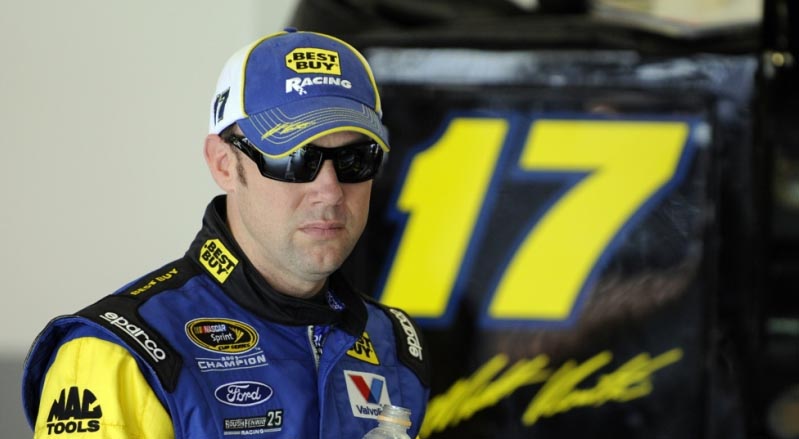 [/media-credit]Note: The quotes in this article are fictional.
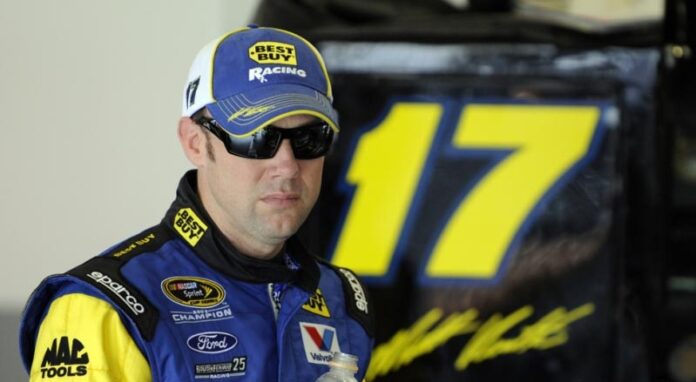
1. Matt Kenseth: Kenseth won at Daytona, outlasting Sunday’s postponement and Monday’s inferno to win on Tuesday.
“Brad Keselowski may have 200,000 followers,” Kenseth said, “but I’m happy with just 42. And speaking of ’42,’ the race took a turn for the worse when Juan Montoya crashed into a jet-fueled track dryer. It was almost ‘Juan and done.’ That’s what’s called a ‘Colombian-fuego.”
2. Dale Earnhardt, Jr.: Earnhardt finished second after his bid to overtake Matt Kenseth failed, arguably due to a block from Kenseth’s Roush Fenway teammate Greg Biffle, who finished third. Earnhardt winless streak now stands at 130.
“How is a jet dryer like a Junior fan in the infield?” Earnhardt said. “They both got ‘lit’ at Daytona.
“Although I didn’t win, I saved racing from a Kenseth-Biffle 1-2 finish, which, if it were a Farrely brothers movie, would be called Humdrum And Humdrummer. That’s victory in itself. At this point, I’ll take any I can get.”
3. Denny Hamlin: Hamlin’s No. 11 FedEx Toyota led a race-high 57 laps and was a factor for the duration of the Daytona 500. But in the end, his charge to the front fell short and he finished fourth.
“My car was fast,” Hamlin said, “but not as fast as the fastest car on the track. That would be Danica Patrick’s No. 10 GoDaddy.com machine, which was moving at hyper speed. Just to clarify, that’s the speed of hype.”
4. Greg Biffle: Biffle led 44 laps at Daytona and finished third behind Matt Kenseth and Dale Earnhardt. Biffle was running second into the final corner, but never found the momentum to get past Kenseth.
“Even with Earnhardt pushing me,” Biffle said, “I still couldn’t get past Kenseth. I couldn’t get by the car labeled Best Buy, which eventually said good bye. I guess I didn’t bide my time correctly.”
5. Jeff Burton:Burtonled 24 laps at Daytona and finished fifth as the Richard Childress trio ofBurton, Paul Menard, and Kevin Harvick finished 5-6-7 in the 500.
“This RCR team was impressive at Daytona,”Burtonsaid. “As opposed to ‘burning with jet fuel,’ we were ‘cooking with gas.’ We’ve all heard of ‘gas and go.’ Juan Montoya’s crash has coined a new term: ‘go and gas.’”
6. Paul Menard: Menard was fast in the Daytona 500, scoring a sixth in an eventful race marked by rain delays and Juan Montoya’s fiery crash with a jet dryer during a lap 159 caution.
“It started at 7:00 P.M. and lasted until the next morning,” Menard said. “No, I’m not talking about a Jeremy Mayfield bender; I’m talking about the Daytona 500. Or should I say the ‘Daytona 500 Degrees?’”
7. Kevin Harvick: Harvick, one of the early favorites to win the 2012 Sprint Cup championship, posted a solid start to the season with a seventh in the Daytona 500.
“We’re confident we can win it all this year,” Harvick said. “In other words, we’re ‘expecting.’ I urged everyone on this team to visualize a Cup title. So, the seed has been planted. And by golly, there will be a berth later this year.”
8. Carl Edwards: Edwards started on the pole at Daytona and finished eighth, successfully overcoming a late penalty and damage incurred in a lap 187 wreck.
“This race had it all,” Edwards said. “including the four elements. There was water in the form of rain, and there was fire in the form of the blaze ignited when Juan Montoya crashed into a jet dryer. There was earth in the form of the sand used to absorb the jet fuel, and there was air, in the form of two Waltrip’s in the broadcast booths.”
9. Tony Stewart: Stewart’s No. 14 Office Depot Chevrolet was fast at Daytona, as the defending Sprint Cup champion won his Gatorade Duel and was up front for much of Monday’s 500.
“Considering the circumstances,” Stewart said, “I’m pleased with the result. I can easily round into championship form, especially since my championship form is round.”
10. Martin Truex, Jr.: Truex led at the midway point, collecting the $200,000 bonus, and finished 12th in the Daytona 500.
“Michael Waltrip is happy,” Truex said. “Happy with my finish, and happy that Juan Montoya has displaced him as the driver most negatively associated with jet fuel.”
NOTES FROM THE NASCAR NATION: ONE RACE IN AND IT’S ALREADY BEEN A TOUGH SEASON FOR THE #48 TEAM
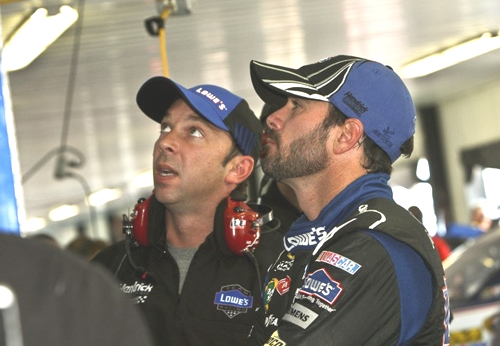
[media-credit name=”Ed Coombs” align=”alignright” width=”216″] [/media-credit]If five time NASCAR Sprint Cup champion Jimmie Johnson is going to reclaim his title and score the “six pack” this year, then he and his Hendrick Motorsports #48 team are going to have to overcome some very early season adversity. The 2012 NASCAR racing season has only completed one race and it’s already been a tough season for this championship caliber team.
NASCAR issued an official statement, on February 29th, announcing penalties levied against this team due to the car’s failure to pass technical inspection prior to the official start of Speedweeks at Daytona. The penalties handed down by NASCAR contain four key areas:
Crew chief Chad Knaus and car chief Ron Malec have been suspended from participating from the next six Sprint Cup Series championship events, suspended from NASCAR until April 18th and placed on probation until May 9th.
Knaus was additionally fined $100,000
Jimmie Johnson was penalized with the loss of 25 championship driver’s points.
Jeff Gordon, the legal owner of record of the #48 team, was penalized with the loss of 25 championship owner’s points.
The driving force behind this punishment was the area of the NASCAR rule book pertaining to unapproved car body modifications. Specifically the problem centered around the car’s C posts; the sheet metal that attaches the roof of the car to the rear quarter panels. During the inspection process at Daytona, NASCAR officials ruled that the shape of these C posts did not conform with their rule book and, in fact, provided the team with an aerodynamic advantage. NASCAR confiscated the C posts and ordered the team to replace them with new ones that did conform to the rules.
The team was informed that they would be allowed to participate in Speedweeks, including the Daytona 500. but they should expect official sanctions to be levied against them in the days that followed the 500.
Hendrick Motorsports has already announced their intent to file an appeal. In a prepared statement, Rick Hendrick said: “our organization respects NASCAR and the way the sanctioning body governs our sport. In this case, though, the system broke down, and we will voice our concerns through the appeals process.”
One of Hendrick’s concerns, prompting him to appeal the ruling, was the fact that this is the same #48 Chevrolet the team used in 2011 during all four of the Sprint Cup restrictor plate races on the schedule: two races at Daytona and two at Talladega. He further pointed out that in each case this particular car passed all levels of technical inspection. He’s also insisting that no changes were made to the car’s body for the 2012 Daytona race.
Johnson participated in the annual Budweiser Shootout invitational event but got caught up in an accident that led to a 14th place finish and a damaged race car. He finished sixth in his Gatorade Duel which earned him eighth starting position for the Daytona 500. But all forms of luck unraveled in a big way when, on lap two of the Daytona 500, Johnson found himself caught up in a major wreck. The result was a 42nd place finish. He left Daytona ranked 37th in the points standings and 45 points out of first place.
With this newly announced penalty from NASCAR, Johnson and company will arrive at next Sunday’s race, at the Phoenix International Raceway, 44th in the championship standings with a negative 23 points.
One race in and it’s already been a tough season for the #48 team.
NOTES FROM THE NASCAR NATION: THE SPORTS GUY CALLED DANICA THE “B” WORD?
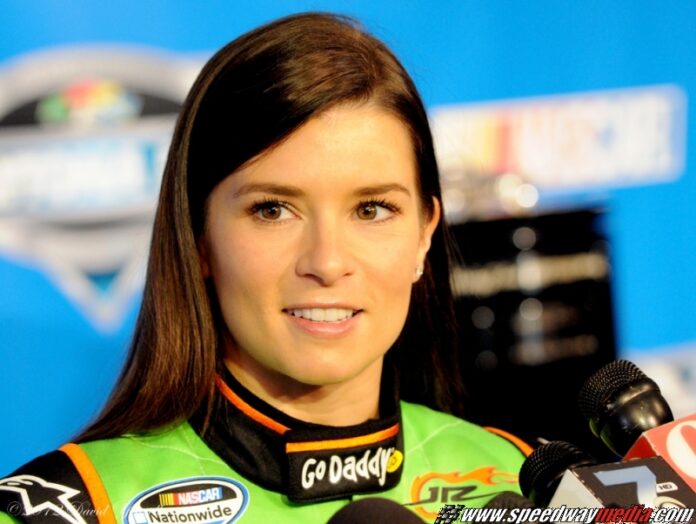
[media-credit name=”David Yeazell” align=”alignright” width=”199″]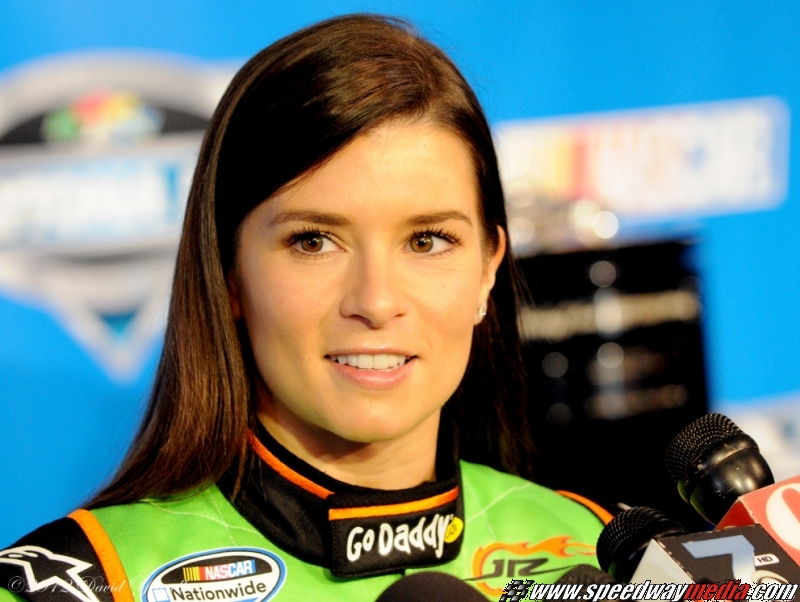 [/media-credit]A San Diego-California television sports anchor recently found himself in the embarrassing position of having to make an on air apology to NASCAR driver Danica Patrick for inferring that she’s a b***h. Ross Shimabuku never actually said the “B” word on live television but there was no question in any one’s mind, including station management, what he meant.
The sports anchor, from KSWB-Channel 5 a Fox Network affiliate, was doing a live story regarding Danica Patrick’s official NASCAR Sprint Cup Series debut in the Daytona 500. He started the story by saying: “all right, Danica Patrick is such a pretty girl. She makes a lot of money in sponsorships because of it. But what’s not attractive is that she’s sexy and she knows it.”
At this point a sound on tape video overlay came on the screen featuring Patrick from the NASCAR media day held back on February 16th. On the bottom of the screen was a chyron that read: “Danica Patrick, I’m sexy and I know it.” From that clip, Patrick said: “I don’t quite understand why, when you’re referring to a girl-a female athlete, in particular-that you have to use the word sexy. Is there any other word you can use to describe me?”
At the conclusion of the clip, Shimabuku came back on the television screen and said: “oh I’ve got a few words, starts with a “B”, and it’s not beautiful. She always has a chip on her shoulder, trying to prove something.”
KSWB news anchorwoman Kathleen Bade was also on the set and, perhaps in an effort to difuse the situation, said: “well, she’s a woman trying to break in a man’s world, that can’t be easy.”
KSWB news anchorman Loren Nancarrow weighed in on the issues and said: “if she’s trying to lose the sexy image, the Go Daddy commercials don’t exactly further that cause.” Shimabuku responded with: “what she says and what she does are two totally different things.”
Faster than you can say “Danica at Daytona,” the clip of Shimabuku’s comments hit the social networks in a very big way. The sports anchor’s comments also made several Internet sites led by Sportsrantz.Com who went on record as saying that Shimabuku crossed the line.
The public outcry didn’t take very long to land on the desks of KSWB’s management. This included the receipt of a petition presented to KSWB management by The Women’s Media Center who called for an official reprimand against Shimabuku.
Approximately 24 hours later, Shimabuku was back on the air to deliver the obligatory apology. In a very brief statement, he said: “I truly apologize if I offended anyone by those comments. They were not meant to be an attack on Danica.”
Unfortunately, the sports anchor had a rather smug expression on his face and his apology had all the sincerity and believability of a prominent politician conducting a press conference to apologize for accidentally crawling in the wrong bed with the wrong person. It’s fairly safe to assume that KSWB management forced Shimabuku to make that apology.
Here in southern California, most local television sports anchors appear to be extremely clueless when it comes to reporting on any form of motorsports. They are often the product of the stick and ball syndrome. In other words: if it doesn’t have a stick and ball then it can’t possibly be a legitimate sport. Judging from the video of Shimabuku’s Danica Patrick story, it appears that he easily fits in this category.
It’s not certain whether Danica Patrick is aware of this incident. If she is, then I’m willing to bet that she’s probably laughing at this guy for having to apologize for his arrogance.
I can assure you that I’m laughing at this San Diego stick and ball boy.
NOTES FROM THE NASCAR NATION: DAYTONA WAS A REMINDER OF NASCAR SAFETY INNOVATIONS

[media-credit name=”Credit: Jonathan Ferrey/Getty Images for NASCAR” align=”alignright” width=”225″]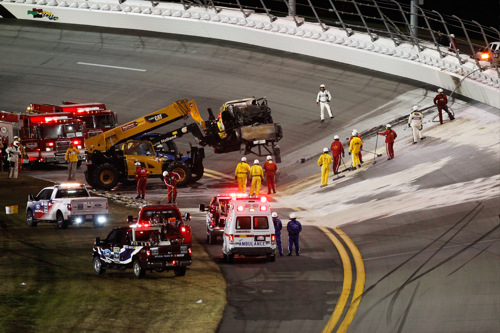 [/media-credit]NASCAR officially opened its 2012 racing season by presenting their annual Speedweeks. From the annual Budweiser Shootout to the Daytona 500, NASCAR presented its fans six races featuring its three national touring divisions: the Sprint Cup Series, the Nationwide Series and the Camping World Truck Series.
True to the nature of the racing, at this massive 2.5 mile steeply banked oval, the race vehicles ran in tight packs, perilously close to each other at all times, and the result was a lot of accidents. According to reports the three national series had a total of 122 entries. From that number at least 90 of them sustained crash damage ranging from light to moderate and, in some cases, completely totaled.
Some of these accidents involved extremely hard hits. The type of crash that instantly made us express concern for the drivers inside of the vehicles. The following is an example of some of the harder hits during Speedweeks:
During the final moments of the Budweiser Shootout, Jeff Gordon was collected in a multi-car incident. His Chevrolet barrel rolled and then came to a rest on its roof.
During that same event, there was a multi-car crash that sent Kevin Harvick into the wall. The hit was so hard the car burst into flames.
During the final lap of the first Gatorade Duel qualifying race, Danica Patrick was the victim of an errant bump draft that led to an extremely hard hit into the retaining wall and a totaled race car.
During the NextEra Energy Resources 250-Camping World Truck Series race, Miguel Paludo spun out and hit the inside retaining wall so hard that his truck flew in the air and did a 360 degree circle while all four tires were still off of the track surface.
During that same event, in the midst of a green-white-checker finish, Joey Coulter’s truck sustained major damage after he went up in the air, turned a complete mid-air somersault and then hit the safety catch fence that protects the spectators.
During the Drive4copd 300-Nationwide Series race there was a multi-car, Daytona “big one,” that saw a whopping 19 cars sustain major crash damage. This incident was followed by a red flag so the track maintenance crew could remove a front splitter from one of the cars that was literally embedded in the retaining wall.
The very first completed lap of the Daytona 500 was followed by another errant bump draft that saw Jimmie Johnson’s Chevrolet bounce off the wall and then slide into the path of oncoming race traffic. Johnson was hit hard, in the area of the driver’s door, by David Ragan who simply had to place to go.
The most frightening moment of all, during the Daytona 500, was also one of the most bizarre accidents we’ve seen in quite a few years. With the field already under caution, Juan Pablo Montoya came to pit road due to a bad vibration in his Chevrolet. Montoya returned to the track and accelerated in an effort to rejoin the field. He later reported that he heard a loud noise as if something had broken in the rear of the car. That’s when the car went into a slide and stuck a jet dryer who was cleaning the track at the time. Montoya’s car caught fire and was totally demolished. The jet dryer’s fuel tank was ruptured and 200 gallons of jet fuel burst into flame. This was followed by a lengthy, two hours plus, red flag period to allow the track crews to clean and repair the racing surface.
What do all of these major incidents have in common? Every one of the drivers involved in them walked away uninjured.
That fact is an extreme testimony to the safety innovations NASCAR has implemented over the past several years. When they introduced the C.O.T, (Car Of Tomorrow), a few years ago, carefully designed improvements to enhance driver safety was their main motivation.
There was also the implementation of some mandatory safety innovations such as the energy absorbing soft retaining walls, or SAFER Barriers, as well as the mandatory use of driver head and neck restraints along with improvements in driver seats and the seat belts attached to them. The truth be known, a NASCAR driver is a lot safer in a car turning 200 MPH around Daytona than we the fans are in our personal vehicles doing 65 MPH on a freeway.
In the case of the multiple crashes, during the Daytona Speedweeks, we also need to express our appreciation to the speedway’s emergency teams who made extremely quick work of arriving at the accident scene to check the status and the needs of the drivers.
Also, appreciation needs to be expressed to the speedway’s maintenance crews who were extremely busy during Speedweeks. During the course of those six races they found themselves repairing panels in the safety barriers, shoring up a damaged catch fence as well as extracting the aforementioned splitter from a crash wall.
But the major contribution made by the maintenance team came in the aftermath of the jet dryer fire. The fact that they were able to clean a major portion of turn three, and then patch large ruts in the track surface, in approximately two hours is just amazing. The fact that we were able to watch the conclusion of the Daytona 500 is in direct proportion to their hard work.

