

Home Blog Page 6358

The Last Word from Las Vegas, where Edwards wins after Tony gets hosed.

So, what did we learn in Las Vegas?

Well, we learned that sometimes the best car on the day does not win, leaving the bubbly to second best. We learned that Saturday when Mark Martin found himself in front on the last lap of the Nationwide race after Brad Keselowski found the fence. We learned that Sunday, when Carl Edwards put Tony Stewart behind him for good to win his third over the last five events. It was enough to make Carl flip out.

[media-credit id=41 align=”alignright” width=”283″][/media-credit]We learned that hoses can get hooked on a car, flipping air wrenches out of the pit box. The resulting penalty moved Stewart from first to outside the top twenty with a hundred laps to go. He got back in front after going for two tires on one stop, but when he needed four the next time out, Edwards went for the pair that left him the victor, with Stewart the runner-up.

We learned that Edwards better be careful in Bristol. It seems that you win one day, and wind up in the garage early the next. The same fate that awaited Trevor Bayne after Daytona bit Jeff Gordon on Sunday when he cut a tire and discovered the wall. First one week, 36th the next, as those of us old enough remember how the thrill of victory can turn into the agony of defeat. We miss you Jim McKay.

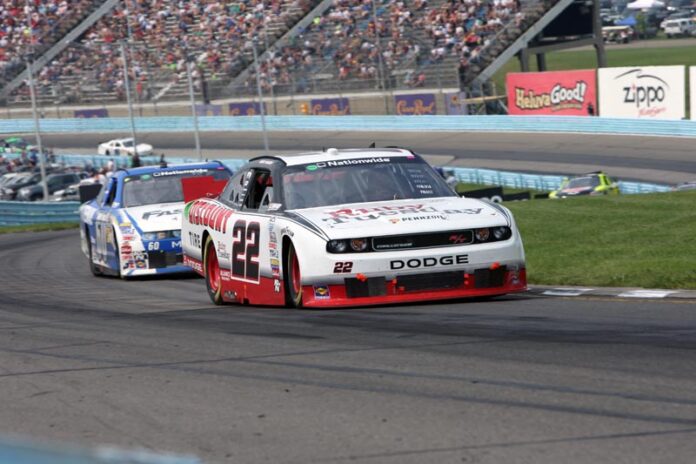
We learned that Danica Patrick is not just a pretty face. Okay, I did see the Sports Illustrated layout, but I’m talking about her finishing fourth on Saturday. Best finish ever by a woman in one of NASCAR’s top three racing series. The previous best was by Sara Christian, who ran fifth at Pittsburgh in 1949. She ran in seven races over two seasons and never was featured as a pin-up girl to my knowledge.

We learned that Greg Biffle can get downright sarcastic when things slide into the toilet. No matter how they tried, they just could not dump enough fuel into the car. Biffle even ran out of petrol at one point and sat in the pit box as he tried to refire the beast. He wound up 28th, three laps down. 3-M Post It was his sponsor, “Shove It!” was what probably was on the driver’s mind. Yes, the Biff was miffed on Sunday.

We learned a few things about Matt Kenseth. After a caution, the 2003 champion took the green flag on Lap 13 only to discover he had a flat. In he came, down he went on the scoring tower, but he came back to claim11th at the end of the day. Good, yes, but what about him nudging young Mr. Bayne into the fence with 50 to go? Just a racing deal my sweet patoot.

We learned just how much fun it is to watch Kyle Busch drive a race car. He makes like a kamikaze in diving in where angels fear to tread. Sometimes he catches the grass when making a pass and goes for a skid into a wall. Sometimes he cuts a tire and finds the fence. Sometimes he blows up real good. 30th Saturday, 38th Sunday, but damned entertaining.

We learned that the feud between Robby Gordon and Kevin Conway has been extenzed into this season, as the pair had a dust up over the weekend at the track. Not sure about the actual spark of this one, but Conway says Gordon owes him some cash, while Gordon claims Conway owes him about 30 times as much. It all stems from a sponsorship deal involving that product endorsed by Jimmy Johnson, the former football coach and Survivor…and not the driver. Conway went to the cops over the altercation and Gordon was put on special emergency probation That, as they say, is the long and the short of it. All this tension. Where is Happy Bob when you need him?

I’ve learned that it is best to quit while you are ahead. For instance, I could ask what one gets when you combine Viagra with Extenze, but this is a racing site and has nothing to do with pole vaulting. Okay, I guess I haven’t learned a damned thing.

Bristol is next on the dance card, a track where the winner has been a guy named Busch half the time over the past nine years. Kurt has five of them, Kyle four, including three of the past four run there. The defending champ of the spring race is some fellow by the name of Johnson. As the Sprint boys take next Sunday off, the trucks return to Darlington this Saturday night. Enjoy the week.

NASCAR’s Ratings Continue To Rise Despite An Unpredictable Economy

Photo Credit: David Yeazell
[media-credit id=22 align=”alignright” width=”225″][/media-credit]We are three races into the 2011 season, and already NASCAR is seeing a trend which hasn’t been witnessed since the series went to National television in 2001. Attendance is once again on the rise, and the television ratings were up from last year for the season opening Daytona 500.  Fox Sports drew an 8.7 rating and a 20 share, which is up 13-percent from 2010. Fox also earned a 5.3 rating and an 11 share from Phoenix last Sunday, making it the highest rating of the weekend for any sports event.

The first two races of the season have seen NASCAR’s ratings increase 13 percent over last year’s numbers. Sure we are only talking about the first two races, and for those who tuned into the race this past weekend in Las Vegas, it was clear to see the stands were once again full for the third straight weekend. NASCAR could very well be getting a second wind from its decline which began around 2007 and as recent as 2010, the fans seemed to lose interest and attendance quickly declined in a sport when names such as Tony Stewart, Jimmie Johnson, Dale Earnhardt Jr., Jeff Gordon, and Matt Kenseth quickly became household names.

Interest in the sport along with some rule changes were targeted as the reason for the decline in viewership, along with the addition of a dwindling economy which boosted the cost to attend a race for the average fan.  The latest word on the street from the nay sayers is that NASCAR is continuing down a road of destruction, and it won’t be long before the sport quickly disappears into its own self-made black hole.

Of course, none of this news is coming from the big man himself; instead, most of it gets started around these highly sophisticated tailgate parties, where the fans congregate to see who can conjure up the best destructive scenarios. For those fans who really feel the need to challenge themselves, try visiting one of the hundreds of NASCAR social sites which can be found on the Internet.

There you will find every rule or regulation that NASCAR has ever implemented, along with the current state of the sport broken down to the root while being argued with the basis being, “Because I said so, and I have been a fan for x amount of years.” Now given the fact throughout the years, NASCAR just like any other sport is and always will be debated amongst its fans, try naming one person, or a group of people who could do a better job at managing one of motorsports’ biggest organizations?

The reason being is because once again, the integrity of those who are running the sport has come under intense enemy fire from the fans, with most of the ammo targeting a false sense that the sport is in dire need of another rebuilding process. One area which is being falsely attacked is the decline in viewership, along with the current rule changes that some feel are not helping to boost the ratings. Viewership along with the fan base within the sport believe it or not, is up from where it was before NASCAR went full-time to national television in 2001.

NASCAR is still the third most popular professional sport in the United States, behind the National Football League and Major League Baseball. What other sport comes close to averaging 70 to 80 thousand fans per event, and that’s without the other three or four million who are watching at home? Last year’s night race at Bristol attracted 5,322,537 viewers, and this increase was from the Sprint Cup race alone.

An average of 5,841,952 viewers tuned in on Saturday, which is still above the 4.5 million average who were watching back in the 90’s when attendance jumped from 3.3 million to 6.5 million between that 10-year time span (1990-99). It’s no big secret the sport has seen a steady decrease in the last few seasons, but not all is lost in the game of love and war when looking at the numbers from a broader perspective.

When NASCAR went to national television in 2001, the attendance at each track grew, which forced a lot of the smaller tracks to add more seating to accommodate the rapid growth of the sport. As an example, Bristol alone added an additional 90,000 seats between 1996 and 2002 which brought their total up to 160,000 from the 71,000 they were at before the increase. Dover also added an additional 20,000 seats between the same time periods, along with Richmond, which joined in with 10,000 of their own.

So as the sport continued to grow and become more popular, so did the fans who flocked to the various race tracks to get their fill of the fastest growing sport in the Nation. The sudden growth left even the biggest critics scratching their heads in amazement, as America fell in love with the color, the speed, and the fast-paced excitement that at one time could only be viewed from one of the cable networks who covered the series. NASCAR reached its peak amid the 2004-06 seasons, even though the fans began to complain about some of the rule changes, with the biggest one being the institution of the Chase format. Between the 2007 and 2009 seasons, it became obvious the numbers began to taper off, and all you had to do was look at the empty stands which at one time were hard to come by.

Many of the fans began expressing their displeasure with the way the sport was being run, with much of the speculation focused on the Chase format along with the introduction of Car of Tomorrow in 2008. No longer was NASCAR outpacing all other professional sports, and it was because the majority of the younger fans between the ages of 18-34, began looking elsewhere to get their adrenaline fix. In the meantime, the core of older fans continued to stick next to a sport that most grew up with, and NASCAR began to once again take action in hopes of keeping them from wandering off.

“Our core fan is older, said NASCAR spokesman Ramsey Poston back in 2010. Poston also added, “That’s a fact. Our strategy and focus the last couple of years has been to target our core fan base. If we’re making strides with that fan base, it shows that our strategy is working.” NASCAR took it a step further by getting a fans perspective as far as what changes needed to be made to keep the sport exciting, and to bring the fans back when they created a 12,000 member online fan council. The fan council was responsible for a series of rule changes which included the double-file restarts, multiple attempts at overtime finishes, and a return to the traditional spoiler.

NASCAR also added the Citizen Journalists Media Corps in 2009, which consists of 28 additional websites which are dedicated to providing information about NASCAR to a growing readership. Ever since the invention of the Internet, more fans have become dependent on the various websites that provide up to the minute news and information about the sport. The newspaper is quickly becoming obsolete around the world of sports, and NASCAR felt that a lot of the independent websites are becoming more professional with their content.

NASCAR has been taking the necessary steps to keep the fans involved in the sport, even though the economy has taken its toll on the sport as a whole. Just like any other craze or trend, NASCAR reached its peak, and now it’s beginning to level off after going through a normal drop-off period. When you look at the viewership numbers from 10 to 15 years ago, NASCAR is still above their average, even though the teams and the tracks look as if they too are scaling-down. Don’t think for a second that most of the fans who no longer attend a race are not sitting at home watching on television.

The organization now has nine regional touring series, and three national series including the Nationwide Series, Camping World Truck Series, and its premier series, the Sprint Cup races. The season is still young and too early to predict if the attendance numbers will continue to rise, especially with gas prices soaring through the roof and an unpredictable economy. But one thing to remember is, NASCAR is not going to slowly disappear into the abyss known as another mismanaged business venture as many think it might. Instead, the sport will be here longer than either you or I, and when you sit back and think about the competition it faces every single day as a family-owned organization.