Home Blog Page 8

Jesse Love wins first O’Reilly pole of 2026 at Talladega

Photo by Logan Allen for SpeedwayMedia.com.

Jesse Love clinched the pole position for the Ag-Pro 300 at Talladega Superspeedway on Friday, April 24.

The event’s starting lineup was determined through a two-round qualifying session. The first session featured 38 competitors battling for 38 starting spots, cycling once around the track to post the fastest lap. At the conclusion of the first session, the top-10 fastest qualifiers transferred to the second and final round, where they contested for the pole position.

Love, the reigning NASCAR O’Reilly Auto Parts Series champion and driver of the No. 2 Whelen/Richard Childress Racing Chevrolet Camaro entry from Menlo Park, California, posted the fifth-fastest lap at 181.711 mph in 52.699s seconds during Friday’s first qualifying session. After being one of 10 competitors to transfer to the final round, he then posted a single-qualifying lap at 182.313 mph in 52.525 seconds, which was enough for him to achieve the top-starting spot for Saturday’s main event.

With the pole, Love achieved his fourth consecutive O’Reilly Auto Parts Series pole position at Talladega Superspeedway, his first of the 2026 season and the 10th of his career. Love, who achieved his first O’Reilly career victory at Talladega in 2024 and is seeking his first victory of the 2026 season, is also competing for the third $100,000 prize of this season as part of the Dash 4 Cash program, which would be Love’s first time achieving the bonus if he finishes ahead of his other three contestants: Sheldon Creed, Justin Allgaier and Taylor Gray.

“An [O’Reilly] car, you can save a lot of fuel from the front,” Love said. He continued, saying, “That’s a benefit for me, but also just being able to control the start of the race. There’s always the potential for some really early drama that can take you out of it and you eliminate that factor. I’m happy to have a good car and a fast piece. Everybody at ECR [Engines] did a phenomenal job. We’ve been pushing the envelope and trying to get better every week this year. Looking forward to tomorrow and eventually linking up with Austin [Hill] and hopefully controlling the race even better than if it’s just me up there.”

Sam Mayer was the fastest driver during the first qualifying round with a 181.918 mph lap in 52.639 seconds. Ultimately, he qualified in second place with a lap at 182.168 mph in 52.567 seconds. Corey Day, Josh Williams and Sheldon Creed qualified in the top five, respectively.

Austin Hill, Rajah Caruth, Carson Kvapil, Anthony Alfredo and Mason Maggio, all of whom transferred to the final qualifying round along with Love, Mayer, Day, Williams and Creed, completed the top-10 starting grid, respectively.

Notably, Justin Allgaier and Taylor Gray, the latter of whom won last weekend’s event at Kansas Speedway to qualify for this weekend’s Dash 4 Cash program, qualified 11th and 26th, respectively. In addition, Tyler Ankrum, a NASCAR Craftsman Truck Series competitor who is making his O’Reilly debut with Jordan Anderson Racing, will start 33rd.

With 38 competitors competing for 38 starting spots, all made the main event.

Talladega – Qualifying Position, Best Speed, Best Time:

  1. Jesse Love, 182.313 mph, 52.525 seconds
  2. Sam Mayer, 182.168 mph, 52.567 seconds
  3. Corey Day, 181.974 mph, 52.623 seconds
  4. Josh Williams, 181.949 mph, 52.630 seconds
  5. Sheldon Creed, 181.946 mph, 52.631 seconds
  6. Austin Hill, 181.873 mph, 52.652 seconds
  7. Rajah Caruth, 181.584 mph, 52.736 seconds
  8. Carson Kvapil, 181.491 mph, 52.763 seconds
  9. Anthony Alfredo, 181.326 mph, 52.811 seconds
  10. Mason Maggio, 181.151 mph, 52.862 seconds
  11. Justin Allgaier, 181.298 mph, 52.819 seconds
  12. Ryan Sieg, 181.292 mph, 52.821 seconds
  13. Sammy Smith, 181.268 mph, 52.828 seconds
  14. Patrick Staropoli, 181.199 mph, 52.848 seconds
  15. Jeremy Clements, 181.134 mph, 52.867 seconds
  16. William Sawalich, 181.062 mph, 52.888 seconds
  17. Dean Thompson, 180.959 mph, 52.918 seconds
  18. Brent Crews, 180.928 mph, 52.927 seconds
  19. Parker Retzlaff, 180.905 mph, 53.934 seconds
  20. David Starr, 180.887 mph, 52.939 seconds
  21. Ryan Ellis, 180.829 mph, 52.956 seconds
  22. Brandon Jones, 180.775 mph, 52.972 seconds
  23. Blaine Perkins, 180.308 mph, 53.109 seconds
  24. Jeb Burton, 180.288 mph, 53.115 seconds
  25. JJ Yeley, 180.274 mph, 53.119 seconds
  26. Taylor Gray, 180.234 mph, 53.131 seconds
  27. Patrick Emerling, 180.203 mph, 53.140 seconds
  28. Kyle Sieg, 180.183 mph, 53.146 seconds
  29. Joey Gase, 180.139 mph, 53.159 seconds
  30. Harrison Burton, 180.135 mph, 53.160 seconds
  31. Austin Green, 180.014 mph, 53.196 seconds
  32. Lavar Scott, 179.844 mph, 53.246 seconds
  33. Tyler Ankrum, 179.639 mph, 53.307 seconds
  34. Brennan Poole, 179.299 mph, 53.408 seconds
  35. Josh Bilicki, 179.208 mph, 53.435 seconds
  36. Natalie Decker, 178.814 mph, 53.553 seconds
  37. Garrett Smithley, 178.773 mph, 53.565 seconds
  38. Dawson Cram, 175.777 mph, 54.478 seconds

The 2026 Ag-Pro 300 at Talladega Superspeedway is scheduled to occur on Saturday, April 25, and air at 4 p.m. ET on the CW Network, MRN Radio and SiriusXM.

TOYOTA RACING – NOAPS Talladega Quotes – Taylor Gray – 04.24.26

TOYOTA RACING – Taylor Gray
NASCAR O’Reilly Auto Parts Series Quotes

TALLADEGA, Ala. (April 24, 2026) – Joe Gibbs Racing driver Taylor Gray was made available to the media on Friday prior to the NASCAR O’Reilly Auto Parts Series race from Talladega Superspeedway.

TAYLOR GRAY, No. 54 Operation 300 Toyota GR Supra, Joe Gibbs Racing

Can you talk about how neat it is to be a part of Dash 4 Cash this weekend?

“It’s cool that they continue to do this program, and O’Reilly kind of stepped up and took it over. So definitely a cool program for the drivers and the teams to bring more money in, and have the opportunity to do that.”

Do you enjoy this kind of racing?
“Yeah, it’s definitely a different type of racing, right, than what we’re typically do throughout the normal week. I think it depends on how your day goes, right? You can either leave this place loving speedway racing or you can leave it, hating it. I think that kind of depends on the day you’re having, and kind of how much luck you decided to have this weekend, in a way (laughter). But no, I mean, it’s fun. There’s things that you can do as a driver to put yourself in better position, but at the end of the day, you’re really at other people’s risk and kind of can do only so much. We kind of go about this week of – control what you can control, and that’s really all you can do. It’s one of those things where you just have to go in here with little expectations and try to lead and hopefully have a good day.”

Toyota hasn’t won here since 2014. Does that make it more important for you?

“I don’t know if I necessarily think of it that way. Obviously, it’d be awesome to win here and get TOYOTA RACING back in Victory Lane, but I don’t know if I think of it as necessarily in that aspect of we haven’t won here as a manufacturer in a long time in the O’Reilly series. So, I don’t know that I’d necessarily think of it that way. It’s just tough, right? There’s not as much of us anymore as there is Chevys. So it just, it makes it hard. I said a few years ago when I raced here in trucks – ‘it feels like I’m racing in a used car lot of Chevys.’ (laughter) It’s just hard. Obviously, numbers matter here, having friends matters here and we don’t have a ton of them. So again, kind of luck has to go your way and your day has to go right, and so at the end of the day, it’d be awesome to take a Toyota back in Victory Lane here. In this series, but I don’t know. All I’m really focused on is winning as many races as I can, no matter where they are at.”

The Joe Gibbs Racing O’Reilly program has had so much success. Do you put pressure on yourself to live up to those standards?

“Going into it last year knew that obviously there’s a lot of opportunity here as an organization and really good people that are at the shop working every day and making our race cars better. So, we struggled a little bit at the beginning of the year and are starting to find our stride, which is nice, this year, and having a lot of speed bringing to the racetrack. One of those things where I know that I need to go and win races and contend for wins and run up front. So, yeah, definitely a lot of opportunity.”

Does your pre-race routine change with the potential for weather?

“I wouldn’t say so. I’m going to go in tomorrow with a mindset of that we’re going to race, right? If we don’t, then so be it. We’re going to go get a good night’s rest tomorrow night if we don’t and race Sunday morning. So, I wouldn’t say it really changes anything for me, more so just takes away my Sunday at home (laughter). So, no, not a big change there for me.”

About Toyota

Toyota (NYSE:TM) has been a part of the cultural fabric in the U.S. for nearly 70 years, and is committed to advancing sustainable, next-generation mobility through our Toyota and Lexus brands, plus our nearly 1,500 dealerships.

Toyota directly employs nearly 48,000 people in the U.S. who have contributed to the design, engineering, and assembly of more than 35 million cars and trucks at our 11 manufacturing plants. In 2025, Toyota’s plant in North Carolina began to assemble automotive batteries for electrified vehicles.

For more information about Toyota, visit www.ToyotaNewsroom.com.

TOYOTA RACING – NCS Talladega Quotes – Erik Jones – 04.24.26

TOYOTA RACING – Erik Jones
NASCAR Cup Series Quotes

TALLADEGA, Ala. (April 24, 2026) – LEGACY MOTOR CLUB driver Erik Jones was made available to the media on Friday prior to the NASCAR Cup Series race from Talladega Superspeedway.

ERIK JONES, No. 43 Doritos/Dollar Tree Toyota Camry XSE, LEGACY MOTOR CLUB

Can you tell us a little bit about your partner this weekend?

“Yeah, it’s pretty cool. Last year, we did a big deal with Dollar Tree and a partner, and this year, we have Doritos on the car for the race here at Talladega. So excited about that. Dollar Tree’s been obviously a huge partner for LEGACY MOTOR CLUB over the last three years now that we’ve been a company and has grown that partnership with the 43 car for sure. They’re on a majority of our races and to have Doritos on there is great. Car looks really cool, and I’m excited just for them and the exposure that they have this weekend.”

Can you tell us about the Oscar plushie?

“We’ve brought them back on online and the Oscar plushie benefits the Erik Jones Foundation. All of the proceeds from it go to that to benefit the foundation. Oscar’s a pretty big fan. He doesn’t travel as much to the racetrack these days. He’s a little older and his kid brother is kind of taking his spot, but he’s still a big race fan.”

This is the first Talladega with the point system change. Does that affect the way you race?

“Yeah, I don’t know if it changes it a whole lot. I think for us, we approach all these races pretty aggressive in the last handful years because this has been, in the last handful of years, our only great shot to try to win our way in the playoffs. So, I think if anything, it makes it more aggressive because the stage points are probably more important than ever. The finishes are great, but if you can go and earn top three stage points in both stages, and even if you get wrecked out at the end, you’re still going to have a decent day, so I think that’s our focus. The stage lengths are probably a bigger change than anything, that first stage is a bit confusing, length on some strategies and things that guys can do. So, it’ll be interesting to see how that plays out, but I think as far as the aggression side, I think will be just as high as ever for stage points.”

Is there any sort of strategy change with the new stage lengths?

“Yeah, I think there’s a lot of strategies in that first stage that you could see employed. We saw the 71 (Michael McDowell) at the last Daytona. He had a strategy that was going to win in the race and he was all by himself. The yellow came out and ruined that for him, but I don’t know, I think there’s a lot of opportunity there to do a lot of different things to say, I know what the right answer is – no way. I don’t think anybody knows. I think there’s possibility there to one stop it. To do that is going to take some serious management of the run. So, I don’t know. We’ll see. It’s going to be really interesting to see how guys run it. We’re kind of in a, honestly, I feel like we’re probably going to start mid-packish just with the way our cars qualify, and that’s probably not a bad place to be. We save some fuel there naturally. So we’ll see, but there’s going to be a lot of options in that first stage.”

Does it matter if you get a lap in qualifying tomorrow or not due to potential weather?

“No, not for me. We are pretty standard as far as our package on superspeedways, and here at Talladega, to be honest, handling is so minimal, and tomorrow, with it only being mid 70s, I don’t think anybody’s too worried about it. The only thing you worry about is any small issue, that one lap is kind of nice, just to make sure that everything’s operating the way it should, but I don’t think any of us are too concerned.”

What do you like racing at Talladega?
“I’ve just come to enjoy it for what it is. I think we do 4 of these races a year, right? Between two here and two at Daytona. For me, I think there was probably a time, and there’s probably a time in every driver’s journey in their career, that it’s frustrating, because maybe things aren’t going well, and you aren’t getting the finishes that you want. I think me, of anybody, should have some animosity. Only time I’ve been hurt my career was here, but it doesn’t bother me. I enjoy coming here, and I have a lot of fun with the racing, just because it’s so unique, and there are guys that are good at it, to say that there’s guys that, it’s all luck, and no skill is a lie, and I think somebody that isn’t good at it. What they would say, and that’s what I would say too (laughter). But there’s guys that are good at it. The same guys seem to find themselves up front, and you’ve got to make the most of it.”

Do you have a different mindset coming here versus a Bristol or Martinsville?

“Yeah, I think the aggression. The thing I look forward to most is race is long, right, on Sunday, but I can’t wait for those last 20 laps, and if we make it there. That’s the ultimate goal. If you’re in those last 20 laps in the top 10 or top 12 and the intensity of that and what the feeling is and what you got to do as a driver and the moves you have to make and the nerves, it’s exciting. It doesn’t get old. It’s a cool feeling to be in that pack and be pushing as hard as you can and hoping nobody else makes a mistake. That is something that’s pretty neat in the seat.”

About Toyota

Toyota (NYSE:TM) has been a part of the cultural fabric in the U.S. for nearly 70 years, and is committed to advancing sustainable, next-generation mobility through our Toyota and Lexus brands, plus our nearly 1,500 dealerships.

Toyota directly employs nearly 48,000 people in the U.S. who have contributed to the design, engineering, and assembly of more than 35 million cars and trucks at our 11 manufacturing plants. In 2025, Toyota’s plant in North Carolina began to assemble automotive batteries for electrified vehicles.

For more information about Toyota, visit www.ToyotaNewsroom.com.

How to Calculate Calories Burned During Exercise and Daily Activity

Photo by depositphotos at https://depositphotos.com/

One of the most common questions people ask when trying to improve their fitness or lose weight is simple: how many calories do you actually burn during the day? While it may seem like a straightforward number, the reality is more complex. Understanding calories burned is not only about workouts, but also about your daily movement, habits, and overall activity level.

Calories represent energy. Your body uses this energy for everything, including breathing, digestion, and movement. When you engage in physical activity, your body increases energy expenditure, which directly affects your overall calorie balance. Without understanding how this works, it becomes difficult to build an effective routine or track progress over time.

According to the Centers for Disease Control and Prevention, regular physical activity is essential for maintaining overall health, improving cardiovascular function, and reducing the risk of long term diseases.

Understanding Calories Burned

Calories burned refers to the amount of energy your body uses over a certain period of time. This includes both passive and active energy expenditure. Passive energy expenditure comes from basic bodily functions such as maintaining body temperature and organ function. Active energy expenditure comes from movement, including walking, exercising, and performing daily tasks.

Most people focus only on workouts when thinking about calories burned. However, a large portion of energy expenditure actually comes from everyday activities. This includes things like walking around the house, standing, cleaning, or even fidgeting. All of these contribute to your total daily energy output.

Because of this, understanding calories burned is not just about gym sessions. It is about your entire lifestyle and how active you are throughout the day.

Key Factors That Influence Calorie Burn

The number of calories burned during any activity depends on several important variables. These factors determine how much energy your body needs to perform a specific task.

  • Body weight. Individuals with higher body weight typically burn more calories for the same activity
  • Activity intensity. Higher intensity leads to greater energy expenditure
  • Duration of activity. The longer the activity, the more calories burned
  • Type of movement. Different exercises require different levels of effort
  • Metabolic rate. Each person has a different baseline energy usage

For example, walking at a slow pace will burn fewer calories than running, while activities such as cycling or swimming can vary depending on speed and resistance. Strength training also burns calories, but in a different way compared to cardio based exercises.

This variability is the main reason why generic numbers found online are often misleading.

Why Most People Miscalculate Calories Burned

Many people rely on simple estimates when trying to calculate calories burned. These estimates are usually based on average values and do not take into account personal differences. As a result, they can be significantly inaccurate.

This leads to several common problems. People often believe they are burning more calories than they actually are, which can result in overeating. Others underestimate their activity and assume they are not making progress, even when they are.

Fitness trackers and smartwatches can help, but they are not always precise. Different devices use different algorithms, and results can vary widely depending on how the data is interpreted.

Because of this, relying on a single rough estimate is not the best approach. A more structured and consistent method is needed.

A Practical Way to Calculate Calories Burned

Instead of guessing, it is more effective to use tools that calculate calories burned based on specific inputs. These inputs typically include your body weight, the type of activity, and how long you perform it.

The C-Counter calories burned calculator provides a simple and practical way to estimate energy expenditure across a wide range of activities. By entering a few basic details, users can get a more realistic understanding of how many calories they burn during different types of movement.

This type of calculation helps remove guesswork and provides a clearer picture of your daily energy output.

How to Use This Information Effectively

Knowing how many calories you burn is useful only if you apply that information correctly. The goal is not just to see a number, but to use it to improve your habits and decision making.

For example, if you are trying to lose weight, you need to create a calorie deficit. This means you burn more calories than you consume. Understanding your daily energy expenditure helps you determine how large that deficit should be.

If your goal is to maintain your weight, you need to balance calorie intake with calories burned. This requires a consistent understanding of both sides of the equation.

For performance based goals, such as improving endurance or strength, calorie tracking can help ensure that your body has enough energy to support training and recovery.

In all cases, having accurate data leads to better decisions.

Comparing Different Activities

One of the biggest advantages of using a calories burned calculator is the ability to compare different types of activity. Not all exercises produce the same results, even if they take the same amount of time.

For example, a high intensity workout may burn significantly more calories in a shorter period compared to a low intensity activity. However, lower intensity activities can still be effective when performed consistently over a longer duration.

By comparing different options, you can choose activities that best match your goals, schedule, and preferences.

This also allows for more flexibility. Instead of following a rigid routine, you can adapt your activity based on how much time you have or how your body feels on a given day.

Building Consistent Daily Activity

While structured workouts are important, daily activity outside the gym also plays a major role in calorie burn. Small actions repeated throughout the day can have a meaningful impact over time.

Examples include walking more, using stairs instead of elevators, or staying active during breaks. These actions may seem minor individually, but they contribute to your total energy expenditure.

Focusing only on workouts while ignoring daily movement can limit your overall progress. A balanced approach that includes both structured exercise and everyday activity is more effective.

Long Term Benefits of Tracking Calories Burned

Tracking calories burned is not just about short term results. Over time, it helps build awareness and consistency. This awareness makes it easier to maintain healthy habits without relying on strict rules or extreme approaches.

When you understand how your body uses energy, you can make adjustments naturally. You begin to recognize patterns, such as how certain activities affect your energy levels or how your routine influences your progress.

This leads to a more sustainable approach to fitness and health.

Conclusion

Calculating calories burned during exercise and daily activity provides valuable insight into how your body works. It allows you to move beyond guesswork and make more informed decisions about your routine.

By using tools that provide structured estimates and staying consistent with your activity, you can build a better understanding of your energy balance.

Whether your goal is weight loss, improved fitness, or overall health, knowing how many calories you burn is an essential part of the process.

RFK Racing Celebrates a Legacy Built to Keep Moving Forward

Roush Fenway Keselowski

CONCORD, NC, (April 24, 2026) – This weekend at Talladega Superspeedway, Roush Fenway Keselowski (RFK) Racing joins the 50th anniversary celebration of Roush, the engineering and technology company founded by Jack Roush in 1976. When RFK Racing’s Brad Keselowski and Ryan Preece’s Ford Mustangs hit the track, the cars will feature a special-edition Roush 50th Anniversary decal.

Talladega Superspeedway marks the debut of the Roush 50th Anniversary decal as the track embodies the boldness and belief required to chase big ideas. The decal serves as a meaningful tribute to the engineering foundation at the heart of the car and the minds that have powered Roush innovation and performance for decades.

In a relentless pursuit of performance, Jack Roush built his organizations with the same mindset, blending engineering precision with a willingness to push beyond convention. As founder of both Roush and the race team that philosophy continues to shape RFK Racing today.

“Roush was built on the belief that innovation never stands still, and that mindset is woven into everything we do at RFK Racing,” said Chip Bowers, President of RFK Racing. “Seeing the 50th Anniversary decal on our cars is a powerful reminder that performance starts with people, engineers and risk-takers who refuse to stop pushing what’s possible. We’re proud to represent that legacy on track as we continue racing towards what’s next.”

The celebration continues June 7 when RFK Racing returns to Michigan, where Roush was born in 1976. There, all three RFK Racing entries will carry an additional special edition Roush anniversary decal on the A-Post. The tribute marks five decades since Jack Roush founded the company in Michigan and honors a legacy built on a relentless drive to solve the next big challenge, values that continue to shape RFK Racing on and off track as the racing organization competes in its 39th NASCAR Cup Series season.

RFK Racing has seen much success over the years at its coined home track, Michigan International Speedway. Chris Buescher most recently brought home the victory in 2023, scoring RFK Racing’s 14th NASCAR Cup Series win there. The team is looking to make it 15 wins in June for an ultimate anniversary celebration in Victory Lane.

For half a century, Roush has grown from a small engineering operation into a global, do‑it‑all organization tackling some of the world’s most complex challenges, from advanced mobility and aerospace to sustainability and immersive experiences. All fueled by the visionaries behind the work, Roush’s’ past is celebrated, its future limitless, and its impact felt far beyond the racetrack.

“From the very beginning, we were built on the idea that every challenge has a solution. Keep trying to solve the next big thing. That’s why we’re still here. That’s how we stay motivated for the future.” Jack Roush, Founder & Chairman

What began in 1976 as a bold vision fueled by grit and ingenuity has become a get-it-done company making impact on industries across the globe. It took endless determination to get us here. In 2026, the same determination keeps us firmly focused on the future of mobility, aerospace, defense and more. Roush’s 50th anniversary gives us the opportunity to share our story — celebrating our growth, the evolution of our capabilities, and the incredible people behind it all.

From racetracks to proving grounds, from advanced simulations to cleaner mobility and beyond, Jack Roush’s belief in empowering people who want to do great things and trusting them to create the extraordinary continues to shape every chapter of our story. Join Roush as we celebrate fifty years of limit-busting, pure magic, and adrenaline.

To learn more about the Roush legacy go to https://www.roush.com/50years/

About RFK Racing
RFK Racing, in its 39th season in 2026, features an ownership lineup pairing one of the sport’s most iconic names, Jack Roush, along with NASCAR Champion, Brad Keselowski, and Fenway Sports Group owner John Henry. Roush initially founded the team in 1988 and it has since become one of the most successful racing operations in the world, propelling him to be the first NASCAR owner to amass three hundred wins and capturing eight championships, including back-to-back NASCAR Cup titles in 2003 and 2004. Keselowski, a former owner in the NASCAR Truck Series, is the 2012 NASCAR Cup Series Champion. In 2007, Roush partnered with Henry, who also owns Major League Baseball’s Boston Red Sox, English Premier League’s Liverpool F.C., and the NHL’s Pittsburgh Penguins, to form Roush Fenway Racing. Off the track, RFK is a leader and proven winner in NASCAR marketing solutions, having produced multiple award-winning social media, digital content and experiential marketing campaigns. Visit rfkracing.com, and follow the team on all social platforms @rfkracing.

About Roush

For 50 years, Roush has created remarkable solutions for some of the world’s greatest organizations. We design, engineer, prototype, test, and manufacture extraordinary products for customers in the advanced mobility, aerospace, defense, marine and theme park industries. Roush is unique in its ability to leverage services across the complete product development cycle, solving customers’ most complex challenges and accelerating critical product launch targets. Learn more at www.roush.com.

Paint Correction at Home: What Actually Makes a Car Polisher Worth Buying?

For a lot of car owners, paint correction starts with frustration. Swirl marks show up in direct sun, light scratches catch the eye every time the car is washed, and hand polishing delivers nowhere near the finish people hoped for. That is usually the point where a proper car polisher enters the conversation.

Buying one, though, is where things get murky. The market is crowded with options, the terminology can be off-putting, and plenty of buyers end up choosing based on price alone. That rarely works out well. A machine that looks fine on paper can feel awkward in the hand, struggle under pressure, or make correction far harder than it needs to be.

A worthwhile polisher does more than spin a pad. It gives the user control, consistency, and enough stability to improve paint safely. The right machine can make home detailing more precise, more efficient, and a lot less intimidating.

Not every machine is built for real correction work

A cheap unit can sometimes spread polish around a panel, but that is not the same as meaningful correction. Once you start dealing with visible defects, machine quality matters very quickly. Poor balance, weak torque, inconsistent speed delivery, and excessive vibration can all turn a straightforward job into a long, messy one.

That matters even more for home users. A professional detailer might be able to work around the limitations of a mediocre machine through experience. A newer user usually needs the machine to be predictable. If the tool is hard to control, it becomes harder to learn proper technique and easier to produce uneven results.

The best polishers help the operator stay steady through each pass. They feel composed in the hand, maintain pad rotation properly, and let the user focus on the panel instead of fighting the machine.

Power matters, but control matters more

A lot of buyers go straight to motor size and assume bigger numbers mean a better result. Power matters, but only as part of a broader picture. What really matters is how the machine delivers that power during actual use.

A good polisher keeps working when moderate pressure is applied. It does not bog down the moment the pad meets curved paintwork. It stays smooth across different sections of the car and allows correction to happen without feeling jumpy or unstable.

Control is where many machines separate themselves. Speed settings should be easy to adjust. Trigger response should feel natural. The machine should not become tiring after one or two panels. If the design encourages a more relaxed grip and cleaner movement, the quality of the result tends to improve with it.

The machine has to suit the job

Different vehicles, paint systems, and defect levels call for different approaches. That is one reason there is no universal best option for every buyer. Someone maintaining a newer daily driver has different needs from someone correcting harder paint on an older vehicle with years of wash damage.

For most home users, versatility counts for a lot. A machine that can handle light enhancement work, moderate correction, and finishing duties offers far more value than one that only feels comfortable in a narrow range of tasks. Pad size, backing plate compatibility, and the machine’s overall footprint all shape how useful it will be across bonnets, doors, pillars, bumpers, and tighter areas.

A bulky machine may feel powerful, yet become frustrating once you move beyond broad flat panels. A more balanced unit often gets used more often because it feels manageable from start to finish.

Comfort affects results more than people expect

Long polishing sessions expose every weakness in a machine. Excessive vibration wears out your hands and arms. Bad ergonomics encourage sloppy movement. An awkwardly placed switch or poorly shaped handle breaks rhythm and makes the work less consistent.

That may sound secondary compared with correction ability, but it is not. Fatigue changes the way people work. They rush sections, shorten passes, and apply uneven pressure. A machine that feels comfortable for extended use often leads to a better finish simply because the operator stays more composed.

Weight distribution plays a role here too. A polisher does not need to be feather-light, but it should feel planted rather than clumsy. Better balance usually means better control around contours and less strain over time.

Build quality shows up over the long run

A polisher is not the kind of tool most buyers want to replace quickly. That makes durability important. Better construction tends to show up in smoother operation, stronger internal components, and fewer annoyances during use. Cables feel more robust, controls feel more deliberate, and the machine holds up better across repeated sessions.

Reliability matters at home just as much as it does in a workshop. Most people do not want a machine that performs well for the first few jobs and then starts to develop inconsistency. Buying well once is often cheaper than buying twice after a budget machine disappoints.

Support matters too. Access to spare parts, compatible accessories, and a retailer that understands detailing equipment can make ownership far easier. The machine itself is only part of the purchase.

A better machine also makes learning easier

There is a tendency to assume beginners should start with the cheapest possible option in case they make mistakes. In practice, low-end tools often make the learning curve worse. They can be rougher to handle, less predictable under load, and less forgiving when technique is still developing.

A better polisher gives clearer feedback. It becomes easier to understand pad behaviour, machine movement, working speed, and polish breakdown. That makes technique easier to refine. The user spends less time second-guessing the tool and more time building repeatable habits.

Confidence matters in paint correction. A machine that feels stable encourages slower, more deliberate work. That is exactly what newer users need.

Price only tells part of the story

It is natural to compare polishers by price first, especially when the range is wide. Still, the cheapest option is not automatically the best value, and the most expensive one is not automatically the smartest buy. Value usually sits in the middle of performance, usability, and longevity.

A machine worth buying tends to justify itself over time. It saves effort. It improves consistency. It reduces frustration. It makes the process more enjoyable, which means it is more likely to be used properly rather than left on a shelf after one disappointing attempt.

For anyone serious about keeping paint in top condition, those factors count for more than the sticker price alone.

Buy for the work you actually want to do

The best purchase usually comes from being honest about your goals. If the plan is regular maintenance, light correction, and occasional enhancement work at home, buy for that. If the aim is heavier defect removal and more involved detailing projects, buy for that instead.

The right machine should feel like a tool you can grow into, not one you outgrow immediately. It should help you work with more precision, better comfort, and stronger results from panel to panel.

A car polisher worth buying is not just the one with the biggest claims. It is the one that makes paint correction feel controlled, capable, and repeatable every time you plug it in.

The Difference You Feel on the Road: Small Upgrades That Change How Your Truck Drives

Not every upgrade needs to be dramatic to make an impact.

For many diesel truck owners, the most noticeable improvements don’t come from major overhauls — but from the small changes that quietly fix what feels “off.” The slight lag when accelerating. The inconsistent pull under load. The sense that the engine isn’t breathing as freely as it could.

These are the kinds of details that shape the overall driving experience — especially in trucks built for both daily use and heavy-duty performance.

When Performance Feels Inconsistent:

A truck can look powerful on paper, but still feel uneven on the road.

Under load — whether towing, merging onto highways, or climbing long grades — airflow becomes a critical factor. If the engine isn’t getting a steady, unrestricted supply of air, performance can feel delayed or restricted.

This is where many drivers start noticing:

  • Slower throttle response
  • Inconsistent boost delivery
  • Reduced efficiency under pressure

Rather than being a major issue, it’s often the result of limitations in airflow design — something that isn’t always obvious until it’s experienced.

Letting the Engine Breathe Properly:

Improving airflow doesn’t necessarily mean pushing for more power. In many cases, it’s about removing restrictions so the engine can perform the way it was meant to.

Upgrades focused on intake flow help create a smoother, more responsive feel — especially in diesel engines where air management plays a central role.

The SPELAB Intake Horn / Manifold Grid Heater for 2007–2024 Dodge Ram 2500/3500 6.7 Diesel is designed with this exact purpose in mind.

With an oversized high-flow design — roughly double the size of standard components — it allows air to move more freely through the system. The result isn’t just about numbers, but about how the truck feels:

  • More consistent acceleration.
  • Smoother power delivery.
  • Reduced sense of strain under load.

It’s the kind of upgrade that becomes noticeable not in a single moment, but across every drive.

Built for Real Conditions, Not Just Specs:

Driving conditions are rarely perfect. Weather changes, terrain varies, and usage shifts between daily commuting and heavier tasks.

That’s why adaptability matters.

Features like integrated heating element provisions allow flexibility depending on the environment — whether sealing ports in warmer conditions or supporting cold-weather operation when needed. It’s a practical detail that supports real-world driving rather than ideal scenarios.

Upgrades That Don’t Complicate Things:

One of the biggest barriers to performance upgrades is complexity. Many drivers want improvements without turning their vehicle into a long-term project.

This is where bolt-on components stand out.

Designed to work with existing mounting points and requiring no additional tuning, they offer a straightforward way to enhance performance without adding extra steps. The process stays simple, while the driving experience improves.

The Kind of Change You Notice Over Time:

Not all upgrades deliver instant, dramatic results — and that’s often a good thing.

Some changes reveal themselves gradually:

  • The truck feels smoother during daily driving
  • Acceleration becomes more predictable
  • Long drives feel less demanding on the engine

These are the improvements that last, because they’re built into how the vehicle operates rather than added on top of it.

Brands like SPELAB focus on this kind of practical performance — upgrades that enhance how a truck feels and responds without overcomplicating the process.

A More Refined Way to Upgrade:

For many drivers, the goal isn’t to completely transform their truck — it’s to make it feel right.

Smoother airflow, steadier performance, and more responsive driving all contribute to that feeling. And often, it’s the smaller, more focused upgrades that get you there.

Because in the end, the best modifications aren’t always the most visible — they’re the ones you notice every time you get behind the wheel.

Keep It Cool: Why Intercooler Upgrades Are Essential for Diesel Truck Performance

When it comes to improving a vehicle’s performance, most attention is often placed on horsepower and torque. However, one of the most critical — and frequently overlooked — factors is temperature control.

For diesel trucks, especially those used for towing, hauling, or tuned performance, managing heat is essential. This is where intercoolers play a key role, directly impacting engine efficiency, power consistency, and long-term reliability.

What an Intercooler Actually Does

An intercooler is responsible for cooling the compressed air coming from the turbocharger before it enters the engine. Cooler air is denser, which means:

  • More oxygen enters the combustion chamber
  • Fuel burns more efficiently
  • Power output becomes more consistent

Without effective cooling, high intake temperatures can lead to power loss, reduced efficiency, and increased engine stress — particularly under heavy load.

Search trends like “how to lower intake temps diesel,” “best intercooler upgrade Cummins,” and “improve turbo efficiency truck” highlight how critical this component has become for performance-focused drivers.

Why Upgrading the Intercooler Matters

Factory intercoolers are designed to meet general driving needs, but they often fall short under demanding conditions such as:

  • Towing heavy loads
  • Long uphill drives
  • Performance tuning or increased boost

Upgrading to a higher-capacity intercooler improves the system’s ability to manage heat, ensuring that performance remains stable even under pressure.

The SPELAB Intercooler Bar and Plate for 2003–2009 Dodge Ram 2500/3500 5.9L/6.7L Diesel is engineered specifically for these scenarios.

Built with a heavy-duty bar-and-plate core and cast aluminum end tanks, it is designed to handle higher boost levels while maintaining structural durability.

More Cooling Capacity, Better Performance

One of the most important factors in intercooler performance is core thickness and design.

With a 3.35-inch thick core — significantly larger than the OEM 2.48-inch design — this type of upgrade delivers approximately 34% more cooling capacity. The result is:

  • Lower intake air temperatures
  • More consistent airflow under load
  • Reduced pressure loss across the system

This becomes especially noticeable during towing, aggressive driving, or tuned setups, where heat buildup can otherwise limit performance.

Keywords such as “high performance intercooler 5.9 Cummins” and “upgrade intercooler for towing diesel truck” reflect the increasing demand for solutions that maintain performance in real-world conditions.

Supporting Airflow and Engine Efficiency

Beyond cooling, intercoolers also influence how smoothly air flows through the system.

A well-designed unit helps:

  • Maintain steady, unrestricted airflow
  • Reduce turbo strain
  • Improve throttle response consistency

These benefits contribute not only to performance gains but also to a more refined and predictable driving experience — something that matters just as much in daily driving as it does in high-load situations.

Built for Demanding Conditions

Durability is another key consideration. Diesel trucks often operate in environments that push components to their limits, from extreme temperatures to sustained heavy use.

Intercoolers built with bar-and-plate construction are known for their ability to handle:

  • Higher thermal loads
  • Increased boost pressure
  • Long-term wear under demanding conditions

This makes them particularly suitable for drivers looking for reliable, long-term performance upgrades rather than short-term gains.

Smarter Upgrades for Better Driving

As automotive trends shift, more drivers are focusing on targeted performance upgrades — improvements that deliver measurable benefits without unnecessary complexity.

Brands like SPELAB are part of this movement, offering components designed to enhance airflow, cooling efficiency, and overall engine performance in a practical and accessible way.

Performance That Lasts

Improving a diesel truck’s performance is not only about increasing power — it’s about sustaining it. Effective cooling ensures that engines can perform consistently, even under stress, without sacrificing reliability.

An upgraded intercooler, in this context, becomes more than just a component. It is a foundational element in maintaining efficiency, protecting the engine, and ensuring that performance is available whenever it’s needed.

How Liability Is Determined in Truck Accidents

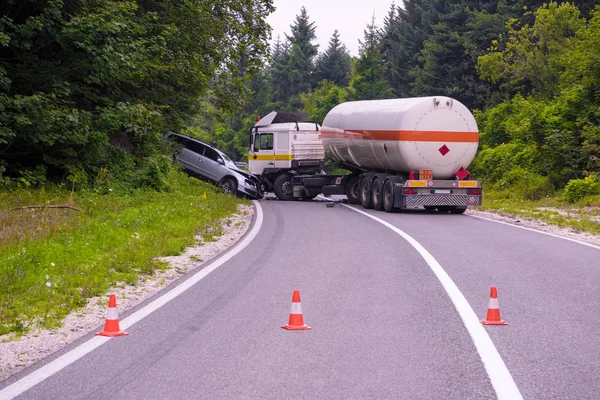
Liability in truck accidents is determined by identifying who was responsible for the crash and proving that their actions or negligence caused the damage. This process involves reviewing evidence, applying relevant laws, and carefully analyzing the behavior of everyone involved.

Vancouver, Washington, is a growing city located near Portland, Oregon, with busy highways and a steady flow of commercial truck traffic. It plays an important role in regional transportation and trade. Because of this, truck-related crashes are not uncommon in the area. In a truck accident case in Vancouver, determining liability can be more complex than a typical car accident because multiple parties and legal standards may apply.

Why Truck Accident Liability Is More Complex

To begin with, truck accidents are more complicated because commercial trucking is heavily regulated. Drivers and companies must follow strict federal safety rules, which directly impact how liability is determined.

For example, drivers must follow limits on how long they can be on the road under 49 CFR § 395, which is designed to prevent fatigue. If a driver exceeds these limits and causes a crash, that violation can be used as evidence of negligence.

At the same time, trucking companies are required to ensure their vehicles are properly maintained under 49 CFR § 396. Failure to meet these standards can also lead to liability.

Key Parties That May Be Liable

As the investigation continues, it becomes important to identify all potentially responsible parties. Truck accidents often involve more than just the driver.

  • Truck driver: If they were speeding, distracted, or fatigued
  • Trucking company: If they failed to enforce safety policies
  • Vehicle manufacturer: If a defective part caused the crash
  • Maintenance provider: If repairs were done improperly
  • Cargo loaders: If cargo was not secured correctly

Each of these parties has a duty to follow safety rules. When they fail, liability can extend beyond a single individual.

The Role of Negligence

Liability is usually based on negligence. This means proving that someone failed to act with reasonable care.

To establish negligence, the following must be shown:

  • Duty of care
  • Breach of duty
  • Causation
  • Damages

For instance, if a driver were under the influence, this could violate 49 CFR § 382, which requires drug and alcohol testing for commercial drivers. Such a violation strengthens a negligence claim.

How Driving Behavior Impacts Liability

Driver behavior plays a major role in determining fault. Unsafe actions often directly lead to accidents.

Examples include:

  • Distracted driving
  • Speeding
  • Ignoring traffic signals
  • Driving while fatigued

Under 49 CFR § 392, commercial drivers are required to operate their vehicles safely at all times. If a driver fails to follow these rules, it can be used as evidence in a liability claim.

Evidence Used to Prove Liability

As liability is evaluated, evidence becomes essential. Strong documentation helps connect the actions of the responsible party to the accident.

Common evidence includes:

  • Police reports
  • Witness statements
  • Photos and videos
  • Electronic logging device records
  • Maintenance and inspection reports

For example, driver logs can show whether the driver violated hours of service rules under 49 CFR § 395, which can directly support a claim.

Shared Liability and Comparative Fault

In many cases, more than one party may be responsible. This is known as comparative negligence.

For example:

  • A truck driver may be speeding.
  • Another driver may fail to yield.

In states like Washington, liability is divided based on each party’s level of fault. This affects how much compensation a victim can receive.

Because truck accident cases involve both federal regulations and state laws, legal guidance is important. An attorney can help interpret these rules and build a strong case.

They can assist with:

  • Identifying all liable parties
  • Collecting and analyzing evidence
  • Applying federal regulations properly
  • Negotiating with insurance companies

This support can make the process less overwhelming.

Steps to Take After a Truck Accident

Taking the right steps after an accident can help protect your rights.

  • Seek some medical attention immediately
  • Report the accident to the authorities.
  • Take photos and gather any and all evidence
  • Collect the witness information
  • Avoid admitting any fault
  • Contact a legal professional

These actions can strengthen your case and preserve important details.

Key Takeaways

  • Liability in truck accidents is based on negligence and legal responsibility.
  • Federal regulations like 49 CFR §§ 382, 392, 395, and 396 play a key role
  • Multiple parties may be held accountable, not just the driver.
  • Evidence such as driver logs and maintenance records is critical.
  • Comparative fault may divide liability between parties.
  • Legal guidance helps navigate complex trucking laws.

Comparing 5 Chevrolet Models Available in Houston Dealerships

Photo by depositphotos at https://depositphotos.com/

When exploring vehicle options in Houston, drivers often compare multiple models from Chevrolet to find the right balance of performance, comfort, and practicality. The city’s diverse driving conditions, from busy urban streets to long highway stretches, make it important to choose a vehicle that suits different needs. Visiting dealerships such as Huston Chevrolet gives buyers the opportunity to explore a wide range of models and understand how each one performs in real-world driving situations.

Chevrolet Silverado for Strength and Capability

The Chevrolet Silverado is one of the most recognized trucks in Chevrolet’s lineup, known for its durability and powerful performance. It is designed for drivers who need serious towing and hauling capabilities, making it ideal for work-related tasks or outdoor activities.

In Houston, where both urban driving and heavy-duty requirements are common, the Silverado stands out for its versatility. Its strong engine options and robust build allow it to handle demanding conditions while still offering a comfortable driving experience on highways.

Chevrolet Equinox for Everyday Practicality

The Chevrolet Equinox is a compact SUV that focuses on practicality and efficiency. It is well-suited for families and commuters who need a reliable vehicle for daily use. Its size makes it easy to maneuver through city traffic while still providing enough interior space for passengers and cargo.

The Equinox also offers good fuel efficiency, which is important for drivers who spend a lot of time on the road. Its balanced design makes it a popular choice for those who want comfort without sacrificing convenience.

Chevrolet Traverse for Family Comfort

The Chevrolet Traverse is designed with larger families in mind. It offers three rows of seating, making it one of the more spacious options in Chevrolet’s SUV lineup. This makes it ideal for long trips, school runs, and everyday family activities.

Inside, the Traverse focuses on comfort and technology. It provides a smooth ride and a quiet cabin, which enhances the overall driving experience. For families in Houston who need extra space and comfort, the Traverse is a strong contender.

Chevrolet Malibu for Efficient City Driving

The Chevrolet Malibu is a sedan that emphasizes fuel efficiency and smooth performance. It is a practical choice for drivers who prioritize commuting and everyday city driving. Its aerodynamic design and efficient engine make it cost-effective to operate over time.

The Malibu also offers a comfortable interior with modern features that enhance convenience. It is well-suited for professionals and individuals who need a reliable and efficient vehicle for daily travel within Houston.

Chevrolet Tahoe for Full-Size Capability

The Chevrolet Tahoe is a full-size SUV that combines power, space, and versatility. It is designed for drivers who need maximum passenger capacity and strong towing performance. This makes it suitable for large families or those who frequently travel with heavy cargo.

In addition to its size and strength, the Tahoe offers a comfortable and refined interior. It performs well on highways and in demanding driving conditions, making it a dependable option for long-distance travel and heavy-duty use.

Performance Differences Across the Lineup

Each Chevrolet model offers a different level of performance depending on its purpose. Trucks like the Silverado focus on power and towing capability, while SUVs like the Equinox and Traverse prioritize comfort and versatility. Sedans such as the Malibu emphasize efficiency and smooth driving.

This variety allows drivers in Houston to choose a vehicle that matches their specific needs. Whether it is for work, family use, or daily commuting, Chevrolet provides options that cater to different driving styles and requirements.

Interior Comfort and Technology Features

Chevrolet models are designed with modern interiors that focus on comfort and convenience. Features such as touchscreen infotainment systems, smartphone connectivity, and driver-assistance technologies are common across the lineup.

Larger vehicles like the Tahoe and Traverse offer more spacious interiors, while compact models like the Equinox and Malibu focus on efficient use of space. Regardless of size, each vehicle aims to enhance the driving experience through thoughtful design and technology integration.

Fuel Efficiency Across Different Models

Fuel efficiency varies across Chevrolet’s lineup depending on the type of vehicle. Sedans like the Malibu offer the highest efficiency, making them ideal for city commuting. Compact SUVs such as the Equinox also provide good fuel economy while offering more space and versatility.

Larger vehicles like the Silverado and Tahoe prioritize power and capability, which can result in higher fuel consumption. However, they compensate with strong performance and utility, making them suitable for drivers who need more capability from their vehicle.

Safety Features and Driver Assistance

Safety is an important aspect of all Chevrolet models. Advanced safety systems are integrated across the lineup to help drivers stay aware and avoid potential hazards. These features include lane assistance, forward collision alerts, and rearview camera systems.

These technologies are designed to support drivers in both city and highway environments. In a busy city like Houston, such features add an extra layer of confidence and security during daily driving.

Choosing the Right Chevrolet Model

Selecting the right Chevrolet model depends on individual needs and lifestyle. Drivers who require power and towing capability may prefer the Silverado or Tahoe. Those who prioritize family comfort and space may lean toward the Traverse, while commuters may find the Malibu or Equinox more suitable.

Each model serves a specific purpose, allowing buyers to choose based on how they plan to use their vehicle. Understanding these differences helps make the decision more practical and informed.

Final Comparison of Chevrolet Models in Houston

Comparing Chevrolet models available in Houston dealerships shows a clear range of options designed for different types of drivers. From the powerful Silverado to the efficient Malibu and the versatile SUVs in between, Chevrolet offers vehicles that cater to a wide variety of needs.

By exploring these models at locations like Huston Chevrolet, buyers can better understand how each vehicle performs and which one best fits their lifestyle. The diversity within the lineup ensures that every driver can find a Chevrolet that meets their expectations for performance, comfort, and reliability.