Home Blog Page 81

From Application to Approval: Understanding the Disability Benefits Path

Applying for disability benefits can feel confusing because several government offices, medical professionals, forms, and deadlines may become part of the same case. The Social Security Administration (SSA) does not simply look at a diagnosis and decide whether someone qualifies. Instead, it evaluates medical evidence, work activity, functional limitations, past work, and the ability to perform other work. The process generally begins with an application through the SSA and moves to a state Disability Determination Services (DDS) agency for the medical determination. DDS develops evidence and makes the initial disability decision under SSA rules. Understanding that sequence matters because a claimant may receive requests for records, questionnaires, examinations, or additional information while the case is pending. A delay in responding to those requests can create avoidable problems.

The First Stage: Filing a Complete and Accurate Application

A disability claim can be filed online in many situations, and SSA also accepts applications by telephone or through a local Social Security office. SSA recommends applying as soon as a person becomes disabled rather than waiting until every piece of medical documentation has been collected. An application typically requires information about the claimant’s medical conditions, treatment providers, medications, tests, work history, education, and other personal circumstances. Medical records already available to the claimant can also be submitted.

A common mistake is focusing heavily on the name of the medical condition while giving less attention to functional limitations. For example, saying that someone has a spinal condition is less informative than explaining how the condition affects sitting, standing, walking, lifting, concentrating, or maintaining a regular work schedule. SSA specifically considers evidence about how an impairment affects work-related activities. Medical evidence is central to the disability determination, but SSA can also consider relevant nonmedical evidence when assessing functional limitations.

What Happens When Your Claim Reaches Disability Determination Services

After the initial application is processed for nonmedical eligibility requirements, the case is generally sent to a state DDS agency. DDS is responsible for developing medical evidence and making the initial determination of whether the claimant meets SSA’s disability standard. This stage is where the medical side of the claim receives detailed attention. DDS may contact doctors, hospitals, clinics, therapists, or other medical sources identified by the claimant.

If existing records do not provide enough information, DDS may arrange a consultative examination. A consultative examination is not automatically a sign that a claim will be denied. It is used when additional medical information is needed to make the determination. For a claimant, the practical lesson is simple: respond to requests promptly, attend scheduled examinations, and make sure SSA has current information about treatment and medical providers.

The Five Questions That Shape the Disability Decision

SSA uses a sequential evaluation process for adult disability claims. The assessment considers work activity, the severity of impairments, the listing of impairments, past relevant work, and the ability to perform other work.

The five stages can be understood this way:

  • Work activity: SSA considers whether the claimant is engaging in substantial gainful activity. For 2026, SSA lists $1,690 per month as the general SGA earnings guideline for non-blind individuals and $2,830 for individuals who are blind.
  • Severity: The impairment must significantly limit basic work-related activities and meet the applicable duration requirement.
  • Medical Listings: SSA compares the medical evidence with the criteria in its Listing of Impairments.
  • Past relevant work: If the claimant does not meet or equal a listing, SSA considers whether the person can still perform relevant past work.
  • Other work: If the claimant cannot perform past work, SSA considers whether the person can perform other work based on the limitations and vocational factors considered under its rules.

The five-step structure is important because failing to meet a specific medical listing does not necessarily end the claim. The evaluation can continue to the claimant’s residual functional capacity, past work, and potential ability to perform other work.

Why Medical Evidence Can Make or Break a Disability Claim

Medical evidence does more than establish that an illness or injury exists. It helps show its severity, duration, treatment history, symptoms, and effect on the claimant’s ability to function. SSA explains that objective medical evidence from an acceptable medical source is required to establish a medically determinable impairment. After that impairment is established, medical and nonmedical evidence can be considered when evaluating its severity and functional impact.

This distinction is important. A diagnosis by itself does not automatically establish entitlement to SSDI or SSI. The records need to provide enough information for SSA to understand what the condition means in practical work-related terms. For example, treatment notes may become more useful when they document measurable findings, treatment response, restrictions, recurring symptoms, functional limitations, and changes over time. The strength of a record often comes from consistency across different pieces of evidence rather than from one isolated medical statement.

How Long Does the Initial Decision Take?

There is no single timeline that applies to every disability claim. SSA states that an initial disability decision generally takes about six to eight months after an application is submitted, although the actual timeframe can vary depending on the medical condition, how quickly evidence is received, whether a consultative examination is needed, and other factors. 

That waiting period can be frustrating, especially when a claimant is already dealing with medical expenses and an inability to work. One practical step is monitoring the claim through a personal My Social Security account. SSA has also expanded online tools for disability cases. In July 2026, the agency announced expanded online document submission and claim-status tools covering disability claims, appeals, and hearings.

What to Do If the Initial Claim Is Denied

A denial is not necessarily the end of the case. SSA provides an appeals system that allows claimants to ask for another review of an unfavorable determination or decision. The appeals structure generally includes reconsideration, a hearing before an administrative law judge, Appeals Council review, and federal court review. This is where the Social Security disability claims process becomes particularly important to understand. An applicant who receives a denial should carefully read the notice, identify the reason for the decision, and protect the applicable appeal deadline rather than simply filing a new application without reviewing the prior case. 

For most disability appeals, SSA requires the request to be filed within 60 days after receipt of the decision notice, with SSA generally assuming the notice was received five days after its date. Exceptions may exist when there is good cause for a late filing. The evidence strategy may also change after an initial denial. New treatment, updated diagnostic testing, worsening symptoms, or clarification of functional limitations can become relevant if properly documented and submitted.

What Happens at the Administrative Law Judge Hearing

If reconsideration is unsuccessful, a claimant can request a hearing before an administrative law judge (ALJ). The hearing gives the claimant an opportunity to present the case at another stage of the administrative review process. The hearing is not simply a repeat of the original application. The record may contain additional medical evidence, updated treatment information, work history details, and testimony about functional limitations.

Claimants should take deadlines seriously at this stage. SSA’s hearing guidance states that evidence should generally be submitted or identified no later than five business days before the scheduled hearing, subject to applicable exceptions. Depending on the case, vocational evidence can also become important. Questions may focus on the physical and mental demands of past work and whether someone with the documented limitations could perform other occupations.

Reconsideration, Appeals Council, and Federal Court Review

A claimant who disagrees with a reconsideration determination may request an ALJ hearing. If the claimant disagrees with the ALJ’s decision, the next administrative level is review by the Appeals Council. If the Appeals Council denies the request for review or issues an unfavorable decision, a claimant may have the option of filing an action in federal district court.

Each level has its own rules and deadlines. That means an appeal should not be treated as a single form submitted once. The evidence, procedural history, medical developments, and reasons for the previous decision can all matter as the case progresses.

Common Problems That Slow Down Disability Claims

Many delays are connected to missing information rather than a single complicated medical issue. A claimant may have several treatment providers, move between healthcare systems, change medications, or receive treatment from specialists whose records are not immediately available. 

Keeping a personal record of appointments, providers, medications, tests, hospitalizations, and work limitations can make it easier to respond accurately when SSA requests information. Another issue is inconsistent information. If an application says a person can perform an activity regularly but medical records describe significant restrictions, SSA may need additional clarification. Accuracy is therefore more valuable than trying to make a condition sound better or worse than it actually is.

When Professional Representation May Help

A claimant does not have to hire an attorney simply to apply for SSDI or SSI. However, professional representation can be useful when a case involves multiple impairments, complicated work history, substantial medical records, an unfavorable determination, or an upcoming hearing. A representative can review the procedural history, identify evidence gaps, organize medical and vocational information, and help present the issues within SSA’s rules.

The important point is that representation does not replace evidence. A strong case still depends on accurate medical documentation and a clear explanation of how the impairments affect the claimant’s ability to function.

A Practical Roadmap for Claimants

The disability process becomes easier to understand when it is viewed as a sequence rather than one large application. Start by filing the claim as soon as appropriate. Provide accurate information about medical treatment and work history. Keep SSA informed when contact information or treatment circumstances change. Respond to requests from DDS. Attend any required consultative examination. Monitor the claim status.

If the claim is denied, read the decision carefully and protect the 60-day appeal period. Gather relevant updates and continue documenting treatment. If the case reaches a hearing, make sure the record is organized and that important evidence is submitted according to SSA requirements.

Conclusion

Social Security disability claims involve more than proving that a person has a medical diagnosis. The process examines medical evidence, functional limitations, work activity, past employment, and the ability to perform other work under SSA’s disability rules. Knowing what happens at each stage can help claimants avoid missed deadlines, respond more effectively to evidence requests, and understand what an unfavorable decision actually means. Most importantly, a disability application should be treated as an evidence-driven process. Clear medical documentation, accurate work information, timely responses, and careful attention to appeal rights can all affect how efficiently a claim moves through the system.

How Small Businesses Can Use Vehicles to Increase Brand Visibility

Photo by depositphotos at https://depositphotos.com/

Anyone who follows racing understands something about branding that most small business owners never think about. A stock car isn’t just a car. It’s a 200-mile-per-hour billboard, and the sponsors who pay to be on it aren’t buying speed. They’re buying eyeballs: the fans in the stands, the viewers at home, the replays, the photos, and the die-cast models on shelves years later. Every square inch of that livery has been thought about, because every square inch is worth something.

Now look at the plain white van parked outside the hardware store, or the unmarked pickup a contractor drives to six job sites a day. Same principle, zero execution. Small businesses already own vehicles that pass thousands of potential customers every week, and most of them are driving around in the branding equivalent of a blank sheet of paper. Here’s how to fix that, with a few lessons borrowed from the track.

The Audience Is Already Out There

The reason a vehicle works as a marketing tool is simple: people spend a lot of time on the road, looking at other vehicles. According to the U.S. Census Bureau, the mean one-way commute in 2024 was 27.2 minutes, up from 26.8 the year before, and 69.2 percent of workers drove alone to get there.

Nearly an hour a day, most of it alone in a car with nothing to look at but the traffic. A well-branded business vehicle in that traffic is, quite literally, the most interesting thing in view.

Lesson One: Turn Your Vehicle Into a Billboard

Race teams don’t put a small logo on a door and call it done. They design the whole car so the sponsor is recognizable at a glance from two hundred yards. Small businesses should think the same way. A name and phone number in vinyl letters is a start, but a full or partial wrap that uses color, shape, and a clear message across the whole vehicle is what makes people remember you.

A strong business vehicle design has:

  • One dominant brand color that’s recognizable before anyone reads a word
  • The business name and what you do in large, high-contrast type
  • A single call to action, usually a short web address or phone number
  • Design that reads from the side, the rear, and at an angle in motion
  • Enough empty space that the message isn’t lost in clutter

If someone can’t tell what you do in three seconds at a red light, the design needs simplifying.

Lesson Two: Consistency Is the Brand

A racing team runs the same livery on every car, every transporter, and every crew shirt, and that repetition is what makes it instantly recognizable. For a small business, consistency means the vehicle matches the website, the signage, the uniforms, and the business cards. 

When someone sees the van, then searches your name and lands on a site with the same colors and logo, the recognition compounds. Two or three vehicles in identical wraps make a business look larger and more established than it may be, which is a real advantage when customers are choosing between you and a competitor they’ve never seen.

Lesson Three: Execution Matters as Much as Design

A livery that peels, fades, or bubbles halfway through the season would be an embarrassment on the track, and it’s no different on the street. The material and the installer determine whether a wrap looks sharp for five years or six months. This is where choosing the right partner pays off.

Shops that specialize in business vehicle wraps understand the specific demands of commercial work: color matching across a fleet, vinyl that withstands daily washing and sun, and layouts that account for door seams, handles, and windows without breaking up the message. Roadrunner Wraps works with small businesses through the whole process, from deciding between a full wrap, a partial wrap, or lettering based on budget and vehicle, to design refinement and installation, and its team will tell an owner when a design won’t read well on the road before it’s printed. 

That kind of guidance is especially valuable for a first-time buyer who doesn’t yet know what questions to ask. Quality installation is the difference between a rolling advertisement and a rolling reminder that corners were cut.

Lesson Four: Put the Car Where the Fans Are

Race teams show their cars at fan events, autograph sessions, and sponsor displays because visibility isn’t only about laps. Small businesses can do the same:

  • Park the vehicle where it’s seen, at busy intersections and near job sites rather than tucked behind the building
  • Bring it to community events, farmers markets, and local sponsorships
  • Use it as a backdrop for social media content and team photos
  • Position it prominently when working at a customer’s home so the whole street sees it
  • Keep it clean; a dirty wrap sends the opposite of the intended message

The vehicle is a marketing asset. Treat it like one.

Lesson Five: Track the Results

Sponsors measure what they get from a livery. Small businesses can measure what they get from a wrap:

  • Use a dedicated phone number or a short, unique web address that appears only on the vehicle
  • Ask every new customer how they heard about you and record the answers
  • Watch for the moment people start saying, “I see your truck everywhere.”
  • Compare leads before and after the wrap goes on

The numbers usually make the case for wrapping the second vehicle.

Beyond the Wrap

A wrapped vehicle works harder when the rest of the operation backs it up:

  • Drivers who are courteous on the road, because the brand is now visible in every lane change
  • A website that loads fast on a phone, since most people who see the van will look you up while stopped
  • A consistent presence on local review sites so the search after the sighting confirms the impression
  • Branded magnets or decals for personal vehicles used occasionally for work

When every part of your operation reinforces the same professional image, your wrapped vehicle becomes more than advertising—it becomes a trusted first impression.

Conclusion

Small businesses can increase brand visibility with the vehicles they already own by thinking the way racing teams do: design the whole vehicle as a livery rather than a label, keep the branding consistent across everything the customer sees, insist on materials and installation that last, put the vehicle where people will notice it, and measure what comes back. 

With commuters spending nearly an hour a day on the road and most of them driving alone with nothing to look at but the traffic, a well-wrapped work vehicle is one of the few marketing assets that reaches the right audience, in the right place, every single day, for a one-time cost. The plain white van isn’t saving anyone money. It’s just a sponsorship nobody bothered to sell.

The History and Appeal of Collecting Antique License Plates

Photo by depositphotos at https://depositphotos.com/

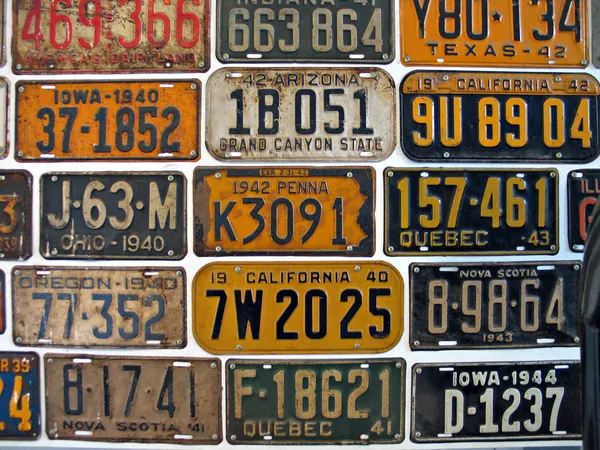
Few collectibles combine history, industrial design, and everyday familiarity the way old vehicle registration plates do. The hobby has an obvious entry point, too: a complete run of 50-state license plates, one from every state, is the collection most people picture when they imagine collecting plates at all. What began as a bureaucratic requirement became, over roughly a century, a visual record of how each state chose to present itself. A plate is a dated, located, government-issued artifact that fits on a shelf. For collectors, that combination is hard to beat.

Antique plates are also unusually approachable. Most are small, flat, easy to store, and widely available across states, decades, materials, and designs. Each one carries a fixed point in time and place, which makes building a collection around almost any theme possible.

How License Plates Became Collectibles

Registration began before the plates themselves did. In 1901, New York became the first US state to require automobile registration and a visible identifying mark. Owners had to display their initials on the rear of the vehicle in letters at least three inches high, and they were left to work out how. Some painted the initials straight onto the car. Others mounted characters on homemade backing made of leather, metal, or wood. Because every motorist supplied his own, no two looked quite alike.

Massachusetts changed that in 1903 by becoming the first state to manufacture and issue plates directly to drivers, starting with plate number 1. New York began assigning registration numbers that same year but did not issue state-made plates until 1910. Other states followed through the following decade, and government-issued plates became standard.

That early period is the reason so much variety exists. There was no national standard for dimensions, mounting holes, colors, or numbering systems, so each state solved the problem its own way. Some cities and municipalities issued their own plates and tags alongside the state, which adds another layer of variety and some genuine confusion for anyone trying to identify an early example today.

What Makes an Antique License Plate Valuable?

Collector interest in a given plate is rarely driven by one factor. Age, rarity, condition, jurisdiction, plate type, serial number, and simple demand all pull in different directions, and a plate can be scarce without being sought after.

Age and Historical Period

Age matters, but it does not determine value on its own. A 1910s plate from a heavily populated state can be easier to find than a 1950s plate from a small jurisdiction or an unusual vehicle class. What age does reliably indicate is survival rate. Early plates were issued in far smaller numbers, were often discarded when registration changed, and were made from materials that did not age gracefully. Fewer survived, which is why they tend to attract attention.

Rarity and Availability

Scarcity is usually a question of how many were made and how many lasted. Passenger plates from large states were produced in enormous quantities. Plates from smaller jurisdictions, short-lived series, specialty categories, or single-year designs were not. Weight classes, commercial and trailer plates, dealer and official issues, and county-coded variants all create pockets of genuine rarity inside otherwise common years.

Condition

Collectors look at rust, paint loss, dents, fading, bends, and overall structural integrity. How much condition matters depends entirely on what the collection is for. Someone assembling a display wall has different standards than someone completing a year-by-year run of a single state.

One point is worth stating plainly, because it trips up new buyers: condition has nothing to do with authenticity. Wear does not prove a plate is real, and a plate in excellent shape is not suspect for that reason. Plenty of genuine old plates survive in remarkable condition, including unused examples that were never mounted. Meanwhile, newly made decorative signs are routinely distressed on purpose to look old. Rust is an aesthetic, not a credential. Judge authenticity on construction, materials, dimensions, fonts, and manufacturing method instead.

The Design Evolution of License Plates

Watching the design change across a century is one of the real pleasures of the hobby, and the manufacturing method usually gives away the era before the date does.

Many early state-issued plates were porcelain, meaning baked vitreous enamel applied over a metal base. The result was glossy, sharply defined, and richly colored. It was also fragile in a specific way: a chip exposed the metal underneath, and rust then spread beneath the enamel. That vulnerability is exactly why clean, intact porcelain plates from the 1900s and 1910s are scarce today.

By the 1920s, stamped metal had taken over. Presses and dies embossed letters, numbers, borders, state names, and dates into steel, with aluminum becoming more common in later decades. The raised characters were roll-painted in a contrasting color. This method stayed dominant into the 1980s, which is why the embossed era offers the widest range of affordable, recognizable, state-to-state variety.

The Second World War interrupted the pattern. Between 1942 and 1945, steel and aluminum were needed elsewhere, so agencies stopped issuing full new sets every year. Many states extended existing plates with small bolt-on metal date tabs or windshield stickers. Illinois and Montana went further and issued plates made from fiberboard described at the time as soybean-based. Contemporary newspaper reports claimed that dogs and turkeys chewed them, and another warned that hogs were drawn to them. Wartime tabs and substitute materials now form a small and distinctive corner of the hobby.

Standardization arrived in 1956, when the American Association of Motor Vehicle Administrators worked with the automobile industry to establish a uniform passenger plate size of six by twelve inches with fixed mounting hole placement. The United States and the Canadian provinces adopted it quickly, and it remains the North American standard. This is why most plates made from the late 1950s onward fit modern brackets while earlier ones may be taller, narrower, or drilled differently.

Reflectivity came earlier than most people assume. Georgia issued what is generally recognized as the country’s first reflectorized passenger plate in 1941, and reflective materials spread widely through the 1950s and after. From there, states increasingly treated plates as small billboards for regional identity, carrying slogans, landmarks, wildlife, universities, and causes. Detailed full-background graphics became widespread in the 1980s and 1990s as printing technology improved. More recently, many jurisdictions moved away from embossing entirely in favor of flat plates with printed serials on reflective aluminum sheeting, largely because flat plates are cheaper to produce.

Collecting by State

Collecting one plate from every state is the most common starting structure in the hobby, and it works because each state solved the same problem differently. Placing fifty designs side by side turns abstract regional character into something you can see: the color choices, the typography, the slogans, the way a state chose to describe itself.

Completing a full geographic run takes time, and not everyone wants to hunt state by state for years. Some collectors start from a complete set and then upgrade individual states over time, swapping in better examples or earlier issues as they turn up. Others treat the assembled set as the finished piece and hang it as a single display.

A state-based collection also rewards reading. A plate becomes a small physical anchor for a specific place in a specific year, and the registration system behind it usually has a story attached.

Collecting by Decade

A decade-based collection makes the manufacturing history legible. Set a 1930s plate beside a 1950s plate beside a 1990s plate and the changes in embossing depth, paint, metal gauge, serial format, and reflectivity are immediately obvious.

This approach also pairs naturally with other automotive material from the same years. Period photographs, dealer brochures, advertising, service signage, and registration paperwork all sit comfortably alongside plates from the same decade, and together they make a more complete picture than any of them alone.

The Nostalgic Appeal of Old Plates

Plenty of collectors come to the hobby through feeling rather than research. A plate can point straight back to a grandparent’s car, a childhood road trip, or a stretch of highway that no longer exists in the same form.

Even without a personal connection, the visual pull is real. Faded paint, worn embossing, and typography that no highway department would approve today all read instantly as another era. A plate works as both a documentary object and a piece of graphic design, which is a rare combination in any collectible category.

License Plates as Decorative Pieces

Plates are not confined to collector shelves. They hang well in garages, workshops, offices, restaurants, bars, and anywhere with an automotive theme, and a group of them arranged with some intent will carry a wall on its own.

Some people group by color, some by state, some by decade. Others build a run along a single shelf or frame a small set. Because plates are uniform in size and flat, they are far easier to display in quantity than most automotive memorabilia, and they can be mounted and taken down without much fuss.

Building a Meaningful Collection

A collection does not need to start large. It needs a direction, because direction is what turns accumulation into a collection. Common starting themes include:

  • One state, collected year by year
  • One decade across many states
  • A single plate type, such as motorcycle, trailer, commercial, or dealer
  • Early issues from the porcelain and pre-standardization eras
  • Plates carrying slogans or state graphics
  • County-coded or prefix-coded issues
  • Plates matching the years of a classic car already owned

A theme makes the search easier and the result more interesting. It also gives you a reason to say no to a plate, which matters more than it sounds.

Research Is Part of the Hobby

Most of the depth in this hobby comes from reading rather than buying. Figuring out when a plate was produced, how that state’s registration system worked at the time, what the serial format encoded, and how many were issued turns a piece of painted metal into a document.

Older plates often hide extra meaning in the serial itself. A number of states once used a prefix to indicate the county of registration, frequently assigned by the county’s rank in population, so a leading character can place a plate geographically as well as chronologically. Others encoded vehicle type or weight class. Most of these systems have disappeared from modern plates, which makes them a genuinely satisfying puzzle on vintage ones.

Careful examination before buying is part of the same discipline. Compare a questionable plate against documented examples from the same jurisdiction and year, and read listings closely. Words like replica and reproduction mean what they say.

Why the Hobby Continues to Attract Collectors

The durable appeal is the combination of accessibility and genuine historical weight. Unlike most antiques of comparable significance, plates are small, standardized in size for the last several decades, easy to store, and tied directly to ordinary life.

They also document a specific transformation. Across the span these plates cover, the automobile went from a novelty requiring hand-painted initials to an assumed feature of daily life, and the plates track that shift through materials, manufacturing, and the messages states chose to print on them. Every plate touches transportation, government administration, industrial production, and regional identity at once.

Preserving a Piece of Automotive History

Antique license plates were made for an entirely practical purpose and outlived it. What survives is a dated, located record of technology, design, and administration that happens to look good on a wall.

Whether a collection is built around a state, a decade, a plate type, or nothing more structured than personal taste, the hobby offers a steady supply of things to find out. With some research and a bit of selectivity, a group of old plates stops being a pile of metal and turns into a legible record of how Americans got around, and how each state chose to sign its name to the fact.

Vermeulen ends a 12-year wait for a home win at Zandvoort

Photo by depositphotos at https://depositphotos.com/

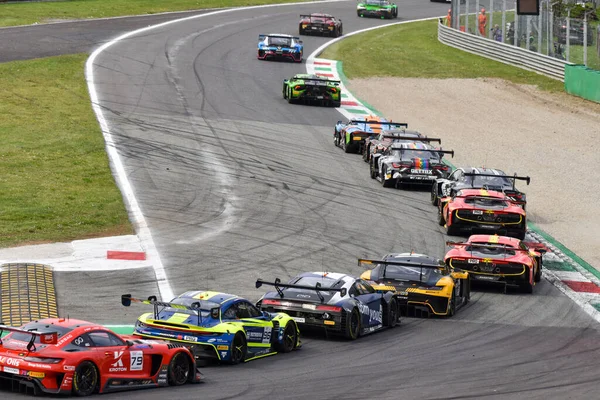
Thierry Vermeulen and Britain’s Ben Green won the second race of the GT World Challenge Europe Sprint Cup round at Zandvoort on 20 September, in Emil Frey Racing’s No. 69 Ferrari 296 GT3 EVO, and by the flag they had 3.7 seconds in hand, which in a sprint race counts as a proper margin. That had been a long time coming for Dutch fans. According to the series, the last home driver to win a race outright at Zandvoort was Jeroen Bleekemolen back in 2014, who took a wet qualifying race with Harry Proczyk in a Lamborghini on a weekend when the main event, for the record, went to Enzo Ide and René Rast.

The restart settled it

Green started third and got past Louis Prette’s No. 58 McLaren almost immediately. A Full Course Yellow came out a little after the ten-minute mark, the No. 89 Porsche having gone off, and Green used the restart to sweep past the leading No. 14 Ferrari of Konsta Lappalainen. Vermeulen took over at the stop and held first place to the flag. There was one Safety Car period as well, for what it is worth.

Thirty-six laps took the crews 1:00:44.793. It stayed dry. Air temperature at the start was 17.4C, mild for the coast in late September, and the track a good deal warmer at 28.3C.

Who finished behind

Bastian Buus and Ricardo Feller were second in the No. 80 Lionspeed GP Porsche, and Matteo Cairoli and Lappalainen took third, 5.264 seconds back. Nine-time motorcycle world champion Valentino Rossi shared fourth with Max Hesse in Team WRT’s No. 46 BMW, just ahead of Thomas Neubauer and Arthur Leclerc in AF Corse’s No. 50 Ferrari.

Race one on 19 September had gone to Tom Fleming and Prette in Garage 59’s No. 58 McLaren, with Vermeulen and Green third, 5.893 seconds adrift, so, looking back, the weekend was already shaping up nicely for them. More than 26,000 people came through the gates, what the series itself called a superb crowd. In the Netherlands Ziggo Sport 3 had the races, and anyone elsewhere could catch the official stream on YouTube.

What keeps the series going

Motorsport at every level runs on sponsorship money, with each series keeping its own set of partners. For GT World Challenge that means global sponsor AWS, the circuit carries the name of partner MASCOT, and Zandvoort’s main partners include Shell, Heineken and Red Bull. In Formula 1 the list also takes in the official betting operators Betway and FanDuel. Spinchester Casino works with the same customers as they do, with full information and its catalogue at https://spinchesterslots.casino/ covering slots, roulette and live dealer tables. On the track at Zandvoort that weekend, it all came down to 3.7 seconds.

Close to the Verstappens

Vermeulen is 24. Born on 29 July 2002, he lives in Monaco. His father, Raymond Vermeulen, is Max Verstappen’s manager, and Jos Verstappen, according to Thierry’s official biography, was his coach as well as a friend of the family. He has been part of the Verstappen Racing program since 2022.

By motorsport standards, he came to it late. His first GT4 tests did not come until 2020, and what followed was a fairly brisk climb through the Porsche Carrera Cup and ADAC GT Masters to DTM and GT World Challenge with Emil Frey Racing from 2023. Zandvoort, remarkably enough, is his first outright win in the series.

The Mercedes-AMG Team Verstappen Racing car is in the title fight too. Max founded the Verstappen Racing project. Britain’s 2 Seas Motorsport enters and runs the car, which Dani Juncadella and Chris Lulham share in the Sprint Cup.

Barcelona decides

Buus and Feller lead on 59 points. Juncadella and the Leclerc and Neubauer crew are six behind, and Vermeulen and Green sit sixth on 40, which leaves them 19 adrift. Eight crews can still take the title in theory. It all ends at Barcelona on 2-4 October.

How to Choose the Right Van for Your Business or Family

Photo by depositphotos at https://depositphotos.com/

A van can be one of the most useful vehicles you ever own. For a small business, it can be the difference between waiting on hired transport and delivering on your own schedule. For a large family, a church group or a school, it can replace two cars and make every journey simpler. Yet vans come in so many shapes, sizes and configurations that choosing the wrong one is surprisingly easy, and an unsuitable van quickly becomes an expensive inconvenience.

This guide explains the main types of van, how to think about size and payload, the petrol versus diesel question, and how to match a vehicle to the work you actually do. It also covers what to inspect on a used van, the paperwork you should verify, and how to keep one or several vans running reliably.

Why Vans Are Worth Getting Right

Unlike a family car, a working van is usually a tool that earns money. Every day it spends off the road means missed deliveries, canceled bookings or disappointed customers. Choosing a van that is too small leads to extra trips and overloading; choosing one that is too large wastes fuel, is harder to park and can cost more to insure and maintain. Taking time at the start to define your needs pays off for years.

It also helps to have a clear view of the market before you buy. Asking prices vary widely with age, mileage, condition, and specification, so compare current offers across several sellers; browsing a broad selection of listings for a van of the type you need will give you a realistic benchmark and make it easier to spot vehicles that are overpriced or look too good to be true.

The Main Types of Van

Panel or Cargo Van

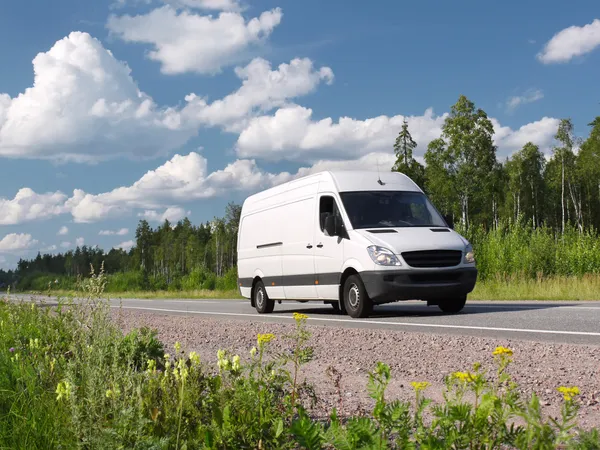
A panel van has seats only in the front and an enclosed load area behind, usually without rear side windows. It is the standard choice for deliveries, trades and distribution. The windowless sides offer security for goods and a clean surface for branding.

Passenger Van or Minibus

Passenger vans have rows of seats in the back and windows along the sides. They suit shuttle services, tours, staff transport, school runs and large families. Seating layouts vary, so count seats and check legroom, ventilation and access to the rear rows.

Crew Van

A crew van combines a second row of seats with a reduced cargo area behind, often separated by a bulkhead. It is ideal for construction teams, maintenance crews and event companies that need to move both people and equipment.

High-Roof Van

High-roof versions give extra internal height, making it easier to stand up inside, load tall items and fit shelving. They suit mobile workshops, couriers carrying bulky parcels and conversions. Check that a taller van will fit into your garage, parking area or loading bay.

Refrigerated and Specialized Conversions

Refrigerated vans carry insulated bodies and cooling units for food, dairy, flowers or pharmaceuticals. Other conversions include mobile shops, ambulances, tour vehicles with pop-up roofs and campervans. When buying a conversion, inspect the conversion itself as carefully as the base vehicle, because poor workmanship can be costly to put right.

Common Van Models

Many different vans are available, but a few names appear again and again. The Toyota Hiace is widely used for both passenger and cargo work thanks to its durability and parts availability. The Nissan NV350, also known as the Caravan, is another common choice with a similar range of body styles. Other manufacturers also offer vans in various sizes, so it is worth comparing several before deciding. Whichever model you consider, check that parts and experienced mechanics are readily available in your area.

Size and Payload

Before looking at specific vans, write down what you need to carry on a typical day and on your busiest day.

  • Payload: The maximum weight the van can safely carry, including passengers and goods. Find the figure for the exact vehicle in its documentation and never exceed it.
  • Load volume: Light but bulky goods, such as furniture or packaged snacks, fill space before they reach the weight limit. Measure your typical items.
  • Length and wheelbase: Longer vans carry more but need more room to turn and park.
  • Access: Consider sliding side doors, rear door opening angle, load floor height and whether you need a ramp or tail lift.

Diesel or Petrol?

Diesel vans are generally favored for heavy loads and high mileage because of their pulling power and efficiency when working hard. They do, however, depend on clean fuel and careful maintenance of filters and injection systems. Petrol vans are often quieter and smoother and can suit lighter loads, shorter urban trips and lower annual mileage. Consider your routes, typical load, fuel availability and the skills of local mechanics before deciding.

Matching the Van to the Job

  • Delivery and courier work: A panel van with easy side access and a durable load floor. Fuel economy matters because of the many stops.
  • Catering: A panel or refrigerated van with washable surfaces and secure racking. Food businesses should check any hygiene requirements that apply to transport.
  • Construction and trades: A crew van or high-roof panel van with a roof rack, internal shelving and a strong bulkhead for safety.
  • Tours and safaris: A passenger van or converted minibus with comfortable seats, good visibility, luggage space and suitable ground clearance.
  • School runs and community transport: A passenger van with working seat belts for every seat, safe doors and reliable brakes and tires.
  • Families: A passenger van with enough seats for everyone plus luggage, and comfortable rear seating for longer trips.

Licensing and Insurance

Using a van for commercial purposes, such as carrying paying passengers or goods for hire, generally requires the appropriate licensing and insurance cover. Private insurance may not cover business use. Before putting a van to work, confirm the current requirements with the relevant authorities and speak to your insurer about the correct policy for how the vehicle will be used.

Inspecting a Used Van

Most used vans have worked hard, so inspect them more thoroughly than a typical private car. View the van in daylight, and bring a mechanic if you can.

Inspection Checklist

  1. Cold start: Listen for knocking, rough running and heavy smoke.
  2. Interior wear: Heavily worn seats, pedals and steering wheel on a low-mileage van suggest the odometer reading may not be accurate.
  3. Load area: Check for dents, holes, damaged floors and signs of overloading, such as distorted wheel arches.
  4. Suspension: Look for sagging, leaking shock absorbers, broken springs and worn bushes.
  5. Clutch and gearbox: Check for slipping, crunching gears or delayed automatic shifts.
  6. Rust: Inspect sills, door bottoms, wheel arches, the floor and the chassis.
  7. Doors: Sliding and rear doors should open, close and lock smoothly.
  8. Brakes and tyres: Check tyre tread and wear patterns and test the brakes firmly.
  9. Conversions: Test refrigeration units, electrics, roof hatches and any added equipment.

Paperwork Checks

  • Verify the logbook and ownership through the official vehicle registration system.
  • Match chassis and engine numbers to the documents.
  • Ask for service records and repair receipts.
  • For imported vans, remember that imported vehicles must meet age and other import rules; confirm current requirements.
  • If the van was used commercially, ask about previous licensing and any outstanding fines.

Maintenance and Fleet Management

  • Follow a service schedule: Shorten intervals for dusty roads, heavy loads and stop-start driving.
  • Carry out daily checks: Drivers should check tyres, lights, fluid levels and warning lights before setting off.
  • Keep a log for every van: Record services, repairs, fuel and mileage to spot problems early and compare vehicle costs.
  • Standardise where possible: A fleet of the same model simplifies spare parts, training and servicing.
  • Train drivers: Smooth driving and correct loading reduce fuel use and wear.
  • Plan replacements: Replacing vans before repair costs spiral can be cheaper overall.

Branding Your Van

A van is also a moving advertisement. Clear, simple branding with your business name, services and contact details can generate inquiries wherever you drive. Vinyl wraps and decals can usually be removed later, which helps protect resale value. Keep the design readable at a distance, and keep the van clean, because a scruffy vehicle reflects poorly on your business. If several drivers use the same vans, agree on simple standards for cleanliness and parking so that every vehicle represents the business consistently.

The Bottom Line

The right van is the one that fits your real, day-to-day needs rather than the biggest or cheapest option available. Define what you carry and how far you travel, choose the body type and fuel to match, confirm licensing and insurance for commercial use, and inspect any used vehicle carefully while verifying its paperwork through official channels. With good maintenance, a well-chosen van will serve your business or family reliably for years.

From in-car distractions to hidden fees: betting app risks on international road trips

Photo by depositphotos at https://depositphotos.com/

A road trip across borders already asks a lot from one driver: toll stickers, unfamiliar signs, tired passengers, and fuel stops that cost more than planned. Add live odds on a phone, and the car becomes a noisy little trading desk. Bad mix. Betting apps promise quick slips during a coffee break, yet they also bring roaming charges, currency spreads, and alerts that buzz at the worst second. At a border service area, even five quiet minutes can disappear fast when passengers need toilets, receipts, sandwiches, and the next charging bay. A traveler comparing global sports market coverage across internationale Wettanbieter can miss bookmaker margins in local markets, especially when a home favorite is priced differently in Austria, Spain, or Croatia. The risk is not moral panic. It is practical: missed exits, angry rental firms, blocked accounts, and card fees that appear three days later.

Payments, accounts, and small-print traps

Border days magnify tiny costs. A €20 bet placed in Switzerland from a UK card can carry a foreign transaction fee, a poor exchange rate, and a cash-advance label, depending on the issuer. Ouch.

Some travelers look for secure deposits through kreditkarten casino sites advertising exclusive promotions, but card networks still decide how a gambling charge is coded. A bonus headline does not cancel a bank rule.

Verification adds another snag. If an app asks for a selfie while the user is parked beside a Slovenian motorway, weak signal can freeze the check and lock the balance. A casino page like dbbet az operates with real money stakes, so a half-finished login is more than a nuisance. It can trap winnings until support reviews documents. Names, addresses, and card details must match, including accents and middle names. One typo follows the driver across the border.

The phone turns into a passenger

A betting alert is designed to interrupt. It flashes before a corner, during a lane change, or right as the satnav says to keep left for Milan. The driver may think a glance takes one second. At 110 km/h, one second is about 30 meters.

That is a bus length plus a zebra crossing.

The safer rule is boring and strict. Bets wait until the car is parked, engine off, handbrake on. Passengers should not read odds aloud if the driver is trying to follow foreign signs. Even a joke about a last-minute goal pulls attention away from mirrors and speed limits. In France, Spain, and Germany, police can fine handheld phone use on the spot, and rental companies add admin charges later. A cheap bet then gets a €35 handling fee before the fine even arrives. Put app alerts on silent before leaving the hotel car park. Better yet, delete live-score notifications for the day.

Border rules change faster than plans

Licensing is not the same across Europe, and the app store does not explain it at a petrol pump. A legal account in one country can become restricted after crossing a bridge or tunnel. Geolocation checks notice. Fast.

Some operators block bets but allow withdrawals. Others freeze both until the user returns to the licensed area. A tourist who opens an account with a hotel address may fail proof-of-residence checks later, even after winning. The boring documents matter: passport, utility bill, payment card, and tax number where requested.

There is also tax confusion. A small tennis win in Portugal is simple for one resident and awkward for a visitor with income rules back home. No driver wants to research gambling tax in a ferry queue. Before the trip, the account holder should read the operator’s country list and save screenshots of withdrawal terms. If the rules feel fuzzy, skip the bet until the next legal stop.

Keep the car boring on purpose

A simple trip rule beats any clever limit screen: no betting while the vehicle is moving. The rule should include traffic jams, border booths, ferries during boarding, and refueling pauses. Park first. Then decide.

Before departure, the traveler can set a daily stake cap, remove stored cards, download offline maps, and turn on bank alerts for foreign charges. Cash for tolls helps too, because a declined card at a booth creates stress that makes impulse betting easier. Keep one payment card for fuel and hotels, another for entertainment, with a hard spending limit.

Receipts deserve a photo. So do app balance screens before and after a country change. If a charge looks wrong, the driver needs dates, merchant names, currencies, and screenshots, not a vague memory after 900 kilometers. The best road trips leave space for bad weather, closed passes, and slow lunches. They do not need a live parlay shouting from the cup holder, so the next stop can be just coffee.

Denny Hamlin, Christopher Bell targeting wins to maintain championship hopes in 2026

Photo by Ron Olds for SpeedwayMedia.com.

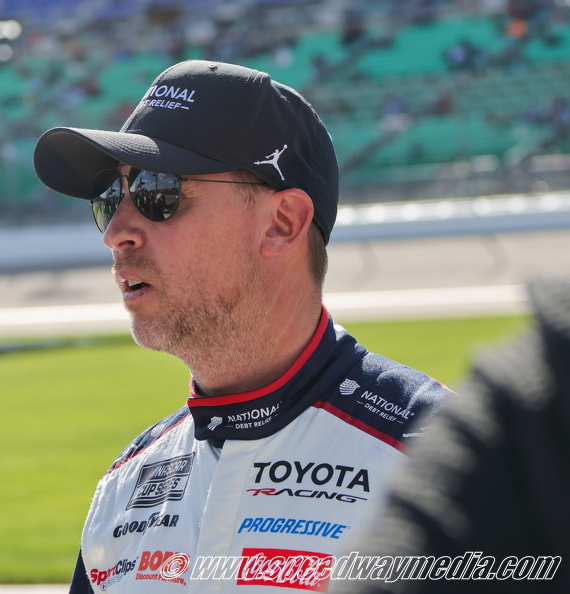
Denny Hamlin and Christopher Bell are targeting nothing less than race victories to maintain their championship hopes of the 2026 NASCAR Cup Series season.

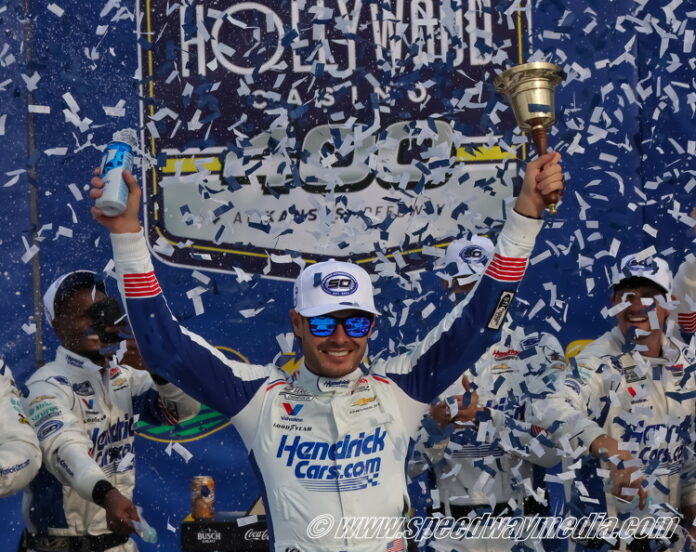
Both Joe Gibbs Racing competitors emphasized the winning term as their ultimate approach for the remaining six Chase events after Kyle Larson knocked out the competition by scoring a dominant victory in the Hollywood Casino 400 at Kansas Speedway on Sunday, September 27, that enabled the latter to extend his lead in the Chase standings over his remaining 15 rivals, including Hamlin and Bell.

Hamlin entered Kansas, the fourth Chase event of the 2026 Cup Series season, trailing Larson by a single point. After taking the green flag in sixth place, the Chesterfield, Virginia, native executed a competitive run at the front for the event’s entirety by securing top-three results and a combined 17 points between the event’s first two stage periods. When the checkered flag flew, Hamlin also outdueled teammate Chase Briscoe to finish in third place for his 15th top-five result of the 2026 season, his 10th in the top-three mark and his 17th top-five result overall at Kansas Speedway in the Cup division. It also marks Hamlin’s third consecutive result in the top-10 mark after rallying from an 18th-place result from the Chase’s opener at Darlington Raceway in early September.

Ultimately, Larson’s victory combined with the latter winning the first two stage periods increased Hamlin’s deficit to 26 points as Hamlin does not conclude a Cup event with the points lead for the first time since Michigan International Speedway in June.

When asked about a missing element to his strong performance and result, Hamlin had a simple response:

“Winning. That’s the only difference,” Hamlin said on USA Network. “Just didn’t quite have it today. Just was hanging around. Obviously, at the end, we ran a lot down, but just not enough time and track position. Overall, just that’s kind of what we had. Third-place car, driver, and everything today. You know, we just got to continue to put together days like this, and we also got to win. We got to win a few races between now and the end of the year.”

Like Hamlin, Bell capped off a strong run with a strong result that left the driver of the No. 20 Joe Gibbs Racing Toyota entry disappointed and looking to regain the group lost to Larson.

The Norman, Oklahoma, native started in third place and notched a pair of fifth-place results along with 12 combined stage points following the event’s first two stage periods. After racing within the top-five mark in the closing laps, Bell would be outdueled by Ryan Blaney on the final lap to end up in sixth place, but it was enough for the former to achieve his 15th top-10 result of the 2026 season, his third top-10 result through the first four Chase events of this season and his 10th at Kansas Speedway.

Despite jumping from fourth to third in the Chase standings, Bell’s points deficit to Larson increased from 17 to 50 and has left this year’s Southern 500 champion and Chase opener winner seeking to regain his competitive mojo and outduel Larson for victories to remain in the title fight.

Photo by John Knittel for SpeedwayMedia.com.

“After Darlington, I was thinking that two more wins would do it,” Bell said on USA Network. “Now with Larson winning, if I’m going to be the champion, I think we’re going to have to win three of the next, whatever it is, six. Larson’s doing a good job and getting some points, and we’re hanging out right now. I just saw that we need to be a lot better.” 

With Kansas Speedway in the rearview mirror, Hamlin and Bell shift their focus to the fifth Chase event of this season, that being Las Vegas Motor Speedway in Las Vegas, Nevada, for the South Point 400. Hamlin enters Vegas with an advantage as he has won at Vegas three times, including the Cup Series’ last two scheduled visits, while Bell has garnered five top-five results at Vegas, including a pair of runner-up results and top-five finishes in his latest two Cup starts at the venue. With Larson being a three-time winner at Vegas, both Hamlin and Bell will aim to have the upper hand to maximize their on-track competitiveness for race victories and ace both Larson and the competition to regain the points needed to remain in championship contention.

The 2026 South Point 400 at Las Vegas Motor Speedway is scheduled to occur next Sunday, October 4, at 5:30 p.m. ET on USA Network, PRN Radio, SiriusXM and HBO MAX.

Chase Briscoe ‘frustrated’ on falling short of Kansas victory

Photo by Ron Olds for SpeedwayMedia.com.

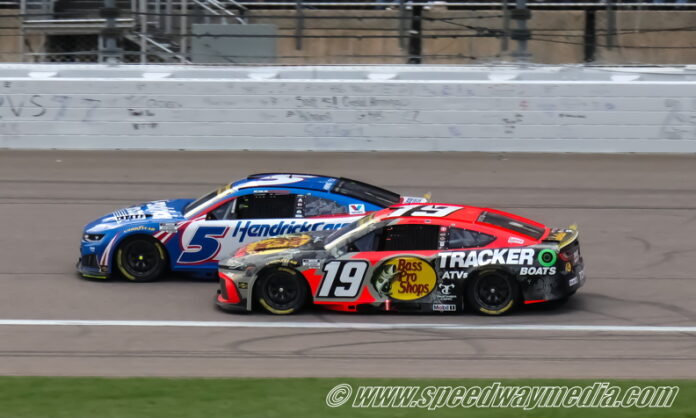
Chase Briscoe had a late opportunity to spoil Kyle Larson’s dominant run spoiled for himself in the closing laps that ultimately cost him a victory in the 2026 Hollywood Casino 400 at Kansas Speedway on Sunday, September 27.

The two-time Southern 500 champion from Mitchell, Indiana, started in 23rd place per a qualifying metric formula after inclement weather canceled on-track qualifying initially planned for Saturday, September 26. During the early laps of the event on Sunday, Briscoe managed to navigate his No. 19 Bass Pro Shops Toyota Camry XSE entry up into 15th place prior to a competition caution that flew on Lap 35. After pitting with the field and restarting in 14th place on Lap 40, Briscoe only managed to gain two spots on the track before the first stage period concluded on Lap 80.

Restarting in 10th place to commence the second stage period on Lap 86, Briscoe dodged two early cautions (Lap 113 and Lap 123 restart) by remaining above the top-10 mark on the track. As Briscoe continued to steadily march his way closer to the front, he accumulated seven critical stage points by finishing in fourth place at the second stage’s conclusion on Lap 165.

For the third and final stage period that started with 96 laps remaining, Briscoe restarted alongside Larson on the front row. He then spent a lap outdueling Austin Cindric for the runner-up spot before he reeled in on Larson for the lead a lap after. Despite Briscoe’s charge, he was unable to execute his runs to draw alongside Larson and challenge the latter for the lead. Even as Briscoe strategically pitted from the runner-up spot under green with 52 laps remaining, Larson managed to blend in front of Briscoe and enter pit road first, with Larson just exiting pit road ahead of Briscoe.

Then with 31 laps remaining, an opportunity struck for Briscoe as the latter had methodically reeled in Larson for the lead and used Larson’s aero-blocking moves to gain grounds. With Larson aero-blocking Briscoe through the turns and straightaways, Briscoe had enough momentum to get beneath Larson, drag-race with the latter through the frontstretch, assume the lead a lap later through the first two turns and fend off Larson’s challenge of regaining the lead. 

Despite leading by as high as eight-tenths of a second over a 20-lap run, Briscoe began to have his late advantage shrink due to managing late handling issues labeled, ‘free’ while leading as Larson started to regain his deficit. With 11 laps remaining, both front-runners barely scrubbed the backstretch’s outside wall. Despite keeping their respective entries straight, Briscoe managed to retain the lead over the next four laps before he was overtaken by Larson with seven laps remaining. Briscoe would then barely scrub the backstretch’s outside wall a lap later, which allowed Larson to slightly establish a steady gap. Amid Briscoe’s efforts to reel Larson as the laps dwindled, he made additional scrubs into the outside wall, which allowed Austin Cindric to overtake the latter for the runner-up spot. Ultimately, Briscoe was edged by teammate Denny Hamlin at the finish line for third place, with the latter settling in fourth place in the final running order.

With the result, Briscoe collected his 11th top-five result of the 2026 Cup Series season, his fourth top-five result in a row at Kansas Speedway after he finished third at the venue in mid-April and his highest-finishing result in the 2026 Chase for the Cup Series title. The Hoosier’s fourth-place run gained him and his No. 19 Joe Gibbs Racing Toyota team a spot in the Chase standings from ninth to eighth, though they trail points leader Kyle Larson by 123 points with six Chase events remaining until this season’s conclusion.

Despite being left disappointed over falling short of winning and garnering additional bonus points, Briscoe shifts his focus to the remaining six Chase events of this season to contend for additional victories like his regular-season victory at Chicagoland Speedway in early July and cap off the Chase on a competitive note.

“[I] Just went really, really free, ultimately,” Briscoe said. “It was actually better for me to be in second. Just being behind [Larson], especially with how much he was aero-blocking. It would just tighten me up and allow me to actually be a little bit better. As soon as I’d get the lead, I would just go really, really free again. Frustrating, for sure. I just felt like I had a win there to stay in contention for a championship…It’s probably not going to happen but yeah, we’ll keep trying for Bass Pro Shops/Tracker Toyota. Just nice to finally have a good Chase. It’s been a rough go to start. I got six more weeks or whatever to try to go win as many races as we can and that’s what we’re doing.”

Chase Briscoe’s 2026 Chase for the Cup Series championship continues next Sunday, October 4, at Las Vegas Motor Speedway in Las Vegas, Nevada, for the South Point 400. Having previously racked up three top-10 results in 11 Cup starts at Vegas, Briscoe, who won both O’Reilly Auto Parts Series event at the venue in 2020, will strive to add a Cup Vegas victory to his resume that could enable him to remain within striking distance of his first Cup Series championship this season.

The 2026 South Point 400’s broadcast time is slated to commence at 5:30 p.m. ET on USA Network, PRN Radio, SiriusXM and HBO MAX.  

Kyle Larson Secures NASCAR Cup Series Victory at Kansas Speedway

Photo Courtsey of (Ron Olds/Speedway Media)

Kansas City, KS – The fourth race of the 2026 NASCAR Cup Series Chase for the Championship took place today at Kansas Speedway. Joey Logano started on the pole after practice, and qualifying was canceled on Saturday morning due to weather. He was looking for his first victory since World Wide Technology Raceway a few weeks ago. However, other Chase drivers were looking to take the spotlight as well.

At the end of the 267-lap race, Kyle Larson would dominate the Hollywood Casino 400 by leading the most laps, sweeping the stages, and even rallying back to take the lead away from Chase Briscoe in the final 10 laps.

“I really thought when Chase (Briscoe) got by, he was just going to stretch out,” Larson said to USA Sports on the frontstretch. “I got some lines going where I could just kind of settle in and try to take care of my tires. I think it’s just easier to be the hunter rather than the hunted. I think a lot of the same. With me out front, I’m just defending and trying to guess on what lines are fast. When he got in front of me, I could see he was starting to get really loose. That was fun. That was such a good day. Max points.

“I was going to be happy with second with how the race went, but to get the lead, that’s a big race for the points. Proud of my team. Happy 50th anniversary to Hendrick Automotive group. All of us (Hendrick Motorsports’ drivers) are just blessed to get to work with such amazing people. Here’s to 50 more amazing years for Hendrick Automotive Group.”

Stages 80-85-102 would make up the 267-lap race.

Stage 1 – Lap 1 – Lap 80

Kyle Larson broke out ahead of pole sitter Logano and Bell to lead the first lap. Ty Gibbs started in the sixth position, but dropped to 11th in the opening laps. At Lap 13, Kansas Spring race winner Tyler Reddick fell all the way back to 33rd place. At Lap 20, Denny Hamlin was up to second, 5.8 seconds back from the race leader, Larson, while Austin Cindric was up to third, just 7.3 seconds from Larson.

There was a competition yellow at Lap 35 because there was no practice or qualifying yesterday due to the weather. Larson was the leader at the time of the yellow and had led every lap to that point unchallenged. At one point, he easily had over a seven-second lead.

The restart came at Lap 40 with Larson and Hamlin as the leaders. At Lap 43, Carson Hocevar was up to the third position. The first stage completed at Lap 80 with no incidents, and Larson wound up the stage winner over Hamlin by 0.374 seconds. The Top 10 for this stage were Larson, Hamlin, Cindric, Hocevar, Christopher Bell, Logano, William Byron, Chase Elliott, Ty Gibbs, and Ryan Blaney. The stage victory was Larson’s seventh of the season.

Larson won the race off pit road to retain the top spot. Alex Bowman had to drop to the rear prior to the Stage 2 restart due to an uncontrolled tire.

Stage 2 – Lap 86 – Lap 165

The Top 10 for the restart were Larson, Hamlin, Bell, Byron, Cindric, Elliott, Logano, Hocevar, Gibbs, and Chase Briscoe. Hamlin briefly challenged Larson for the race lead, but Larson managed the lead position. At Lap 100 (65 laps to go in the stage), Larson had a 2.5-second lead over Hamlin. Five laps later at Lap 105, Cindric moved into the second position and was 4.4 seconds back from Larson.

The third caution and first for incident came out at Lap 113 for the No. 4 of Noah Gragson, as the engine expired going into Turns 1 and 2. The leaders came down pit road for a round of pit stops, but Larson still won the race off pit road regardless.

The restart came at Lap 121 (44 laps to go in the stage) with Larson and Hamlin in the front row, but an immediate caution came out for a multi-car collision going into Turn 1. Hocevar, Bubba Wallace, Josh Berry, Zane Smith, Gibbs, and Erik Jones were involved. According to replay, Brad Keselowski got into the rear bumper of Hocevar, which caused Hocevar to move up into a different lane and thus causing a collision. Hocevar reported on his radio that he could have a toe link and a right-front flat tire.

The following restart would be seen at Lap 127 (38 laps to go in the stage) with Larson and Hamlin still the leaders.

Larson ended up sweeping the stages by winning the second stage. The Hendrick Motorsports driver won the stage over Cindric by 1.392 seconds. For the Top 10, it was Larson, Cindric, Hamlin, Briscoe, Bell, Byron, Blaney, Logano, Gibbs, and Keselowski.

Stage 3 – Lap 171 – Lap 267

The third and final stage went back to green with 96 laps to go, with Larson maintaining the top position over Briscoe. Throughout the final stage, Larson had the lead and was not challenged before the final 60 laps. Briscoe began rallying and started inching closer and closer in an attempt to challenge Larson for the lead. At one point, Briscoe was side-by-side with him and tried two times to take the top spot. With 51 laps to go, Larson and Briscoe both pitted. Larson came out in front of him as they exited pit road. This would begin the final round of pit stops with other Chase drivers following suit.

Unfortunately, there was a long pit stop on Reddick’s machine during this cycle, which caused him to lose valuable seconds in the race.

Briscoe began closing back in on the race leader, Larson, with 33 laps to go. Briscoe finally took the lead from Larson with 30 laps to go off Turn 2. With 20 laps to go, Larson started to close back in on the race leader, Briscoe, but Briscoe would keep Larson at bay.

However, Larson challenged Briscoe for the lead with 10 laps to go, as both made brief contact with the Turn 2 wall. With seven laps to go, Larson took the lead from Briscoe off Turn 4. Briscoe then made slight contact with the wall again on the backstretch after being passed.

Larson would hang on to win despite multiple challenges from Briscoe to win his second race of the season and his first since World Wide Technology Raceway at Gateway. It was also Larson’s fourth win at Kansas since April 2025. Furthermore, he led six times for 235 laps en route to victory. This win was also his second Chase for the Championship win as well. 

There were five cautions for 26 laps and seven leaders among 13 lead changes. The margin of victory was 0.565 seconds.

Official Race Results Following the Hollywood Casino 400 at Kansas Speedway

  1. Kyle Larson, won both stages, led 235 laps
  2. Austin Cindric, led one lap
  3. Denny Hamlin, led two laps
  4. Chase Briscoe, led 23 laps
  5. Ryan Blaney, led four laps
  6. Christopher Bell
  7. William Byron
  8. Chase Elliott
  9. Bubba Wallace
  10. Ryan Preece
  11. Tyler Reddick
  12. Brad Keselowski
  13. John Hunter Nemechek
  14. Daniel Suarez
  15. Ross Chastain, led one lap
  16. Erik Jones
  17. Ty Gibbs
  18. Alex Bowman
  19. Todd Gilliland
  20. Joey Logano
  21. Austin Dillon, 1 Lap Down
  22. AJ Allmendinger, 1 Lap Down
  23. Chris Buescher, 1 Lap Down
  24. Shane Van Gisbergen, 1 Lap Down
  25. Riley Herbst, 1 Lap Down
  26. Austin Hill, 1 Lap Down
  27. Michael McDowell, 1 Lap Down
  28. Ty Dillon, 1 Lap Down
  29. Connor Zilisch, led one lap, 1 Lap Down
  30. Cole Custer, 1 Lap Down
  31. Zane Smith, 1 Lap Down
  32. Ricky Stenhouse Jr., 1 Lap Down
  33. Carson Hocevar, 3 Laps Down
  34. Cody Ware, 5 Laps Down
  35. Josh Berry, 10 Laps Down
  36. Noah Gragson, OUT, Engine

Updated Chase for the Championship Standings

  1. Kyle Larson, 2,282 points
  2. Denny Hamlin, -26
  3. Christopher Bell, -50
  4. Joey Logano, -67
  5. Ryan Blaney, -91
  6. Ty Gibbs, -94
  7. Tyler Reddick, -111
  8. Chase Briscoe, -123
  9. Austin Cindric, -140
  10. Bubba Wallace, -140
  11. Carson Hocevar, -150
  12. William Byron, -158
  13. Chase Elliott, -161
  14. Ryan Preece, -173
  15. Chris Buescher, -186
  16. Daniel Suarez, -187

Up Next – The next NASCAR Cup Series race is next Sunday at the Las Vegas Motor Speedway for the South Point 400, live at 5:30 p.m./ET on USA Network and the NASCAR Racing Network.

Ford Racing Notes and Quotes – Cindric Charges to Second Place Finish in Kansas

Ford Racing Notes and Quotes
NASCAR Cup Series
Kansas Race 2 — Kansas Speedway
Sunday, September 27, 2026

CINDRIC CHARGES TO SECOND PLACE FINISH IN KANSAS

NASCAR CUP SERIES RACE RECAP

  • Austin Cindric led all Ford drivers at Kansas Speedway finishing second in the No. 2 Discount Tires Ford Mustang Dark Horse.
  • Ryan Blaney’s No. 12 Mustang came to life late in the going to score a fifth place at the checkered flag. Ryan Preece also broke the top ten finishing tenth in the No. 60 RFK Ford.
  • Despite a frustrating finish to his day, Joey Logano holds fourth in the Chase standings, 67 points behind the leader, Kyle Larson. Blaney is fifth (-91). With his runnerup Kansas finish, Cindric is ninth (-140).

Ford Unofficial Finishing Results:

2nd – Austin Cindric

5th – Ryan Blaney

10th – Ryan Preece

12th – Brad Keselowski

19th – Todd Gilliland

20th – Joey Logano

23rd – Chris Buescher

31st – Zane Smith

35th – Josh Berry

36th – Noah Gragson

AUSTIN CINDRIC, No. 2 Discount Tire Ford Mustang Dark Horse – “I definitely wish I would have had a shot there. You know, I thought we were really strong all day. We made some decent adjustments and got ourselves good for those long runs for the final run. We just lost a bit too much time in the pit cycle. I think there’s definitely some things I could have done better. I stayed long in the stall and threw off the stop a bit. When you lose by only half a second, it comes down to all the little stuff. Those guys had a hell of a battle for the lead to give me a shot. Super proud of the effort from everyone at Team Penske, Discount Tire and Ford.I feel like I had a car that could have won today but didn’t. I can be happy and pissed about that at the same time. Hopefully we can transfer that over to next week and the week following because I don’t see the reason why we can’t. I think these are the tracks you have to be critically good on. We saw pieces of this from Chicago and I felt like we took some bits and pieces and applied them to Kansas, and obviously, you can see what it did. I’m super proud of everybody on the team, keeping us in it all day and unloading super close.”

RYAN BLANEY, No. 12 Menards/Cardell Ford Mustang Dark Horse – “We were moving at the end. And, gosh, seven or eight more laps and I might have actually had a shot to win the thing. We were mowing them down rapidly the last 10, 12 laps. Just a good job by them sticking with it. Starting where we did, you know, and just working on it. Getting a little bit better through the day, I thought. Our last run or two of the day was our best run of the day. So really proud of that effort. This is a place where we’ve worked really hard to try to figure out how we can be better here. I thought we had a great day. The 2 [Austin Cindric] had a really good day. It was fast all day. Solid effort. We definitely got better at the start of stage three. I thought that’s where we really got it better. I think a lot of it was just getting some track position, right? You’re buried in traffic and you’re trying to figure out what does your car need to do well there. And then as you get cleaner air, it’s like, all right, now you’re adjusting again and trying to play catch up there. It just kind of took some time to do that. But, they stuck with it and made good changes.”

CHRIS BUESCHER, No. 17 Castrol Ford Mustang Dark Horse – “It’s a tough race. We were just on the tight side at the start. We were able to fight around the top 10 there. We were trying to work forward, to make some adjustments, and then we got caught up in the wreck on the restart and got some damage. It seemed to really put us behind from there. We struggled to get it back. From there, we just weren’t really able to find anything to get us heading in the right direction. Unfortunate. I thought it was gonna be a really good night.”

RYAN PREECE, No. 60 Dillons/Celsius Ford Mustang Dark Horse – “We just kind of fluttered and floated around that eighth to 15th all day. I felt like Derek had a good move strategy wise to get us a top 10. So that was about what we had.”

JOEY LOGANO, No. 22 Shell/Pennzoil Ford Mustang Dark Horse – “We had a solid Shell-Pennzoil Ford all day. We stayed in the top 10 and picked up some stage points, but we were chasing the balance a little bit all afternoon. We worked hard to keep ourselves in the mix, so it was frustrating to have the tire issue at the end. We’ll put this one behind us and see if we can keep the momentum heading to Vegas.”