Home Blog Page 9

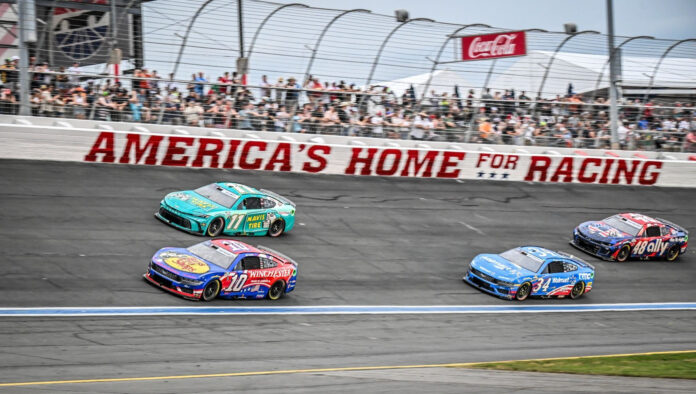
JOEY LOGANO WINS BRISTOL MOTOR SPEEDWAY

Photo courtesy of NASCAR Media & Getty Images

BRISTOL, Tenn. – September 21, 2026 – Team Penske’s Joey Logano captured his third NASCAR Cup Series victory of the 2026 season Saturday night at Bristol Motor Speedway, winning the Bass Pro Shops Night Race and earning his 38th NASCAR Cup Series victory with Ford.

The victory marked the 113th NASCAR Cup Series win for Team Penske with Ford, Ford’s 755th win in NASCAR Cup Series competition, and made Joey the winningest NASCAR Cup Series driver in Team Penske history. Ford Racing teammates Joey Logano, Ryan Blaney and Ryan Preece have combined to win six of the last 10 races.

“Congratulations to Roger, Mike, Paul, Joey and everyone at Team Penske on the win,” said Doug Yates, President and CEO of Roush Yates Engines. “The #22 Team Penske Ford Mustang was fast throughout the race, won Stage 1, and capitalized on running up front at the end. I’m proud of our team, our partnership with Ford Racing, and Ford Racing Teams.”

Qualifying for Saturday night’s race was canceled due to lightning and bad weather, with the starting lineup set by NASCAR’s performance-based metric. Logano started second, while Team Penske teammate Austin Cindric started ninth.

The Team Penske Ford Mustangs stayed on track during Lap 40 competition caution to maintain track position. As pit strategies varied during the first natural caution, Logano remained on the track and went on to win Stage 1. Ryan Blaney led a race-high 202 laps and finished Stage 1 in sixth position. Blaney restarted from the P1 to begin Stage 2 and went on to win the stage, earning valuable championship points.

During the final stage, a late caution on Lap 477 set up a dramatic finish. With six laps remaining, Logano moved past three cars battling for the lead and secured the victory at one of NASCAR’s most iconic short tracks.

“I love NASCAR racing. This is so much fun and to be a part of it is electric. Being here at Bristol. Hearing the fans scream and yell. What else can you want? Our cars have been good and have been getting better. Paul has been doing good. Joe’s been awesome. The pit crew has been good. I’ve got a great team. We’ve got a team that knows how to win championships. I thought there for a minute I was like, ‘OK, I might just finish third or fourth here tonight,’ and then they all kind of worked their way up and I was like, ‘Well, Merry Christmas to me.’ I got a gift there. There’s nothing like the Bristol Night Race. This is just the coolest experience as a race car driver being in front of all you fans down here, hearing everyone scream and cheer – sometimes boo, that’s alright. It’s pretty awesome.” commented Logano.

Wood Brothers Racing’s Josh Berry finished sixth, while RFK Racing’s Ryan Preece finished 10th at Bristol.

About Roush Yates Engines
Roush Yates Engines is a leading-edge engine development company based in Mooresville, NC consisting of two state-of-the-art facilities – Roush Yates Engines and Roush Yates Manufacturing Solutions, a world class AS9100 Rev D/ISO 13485 certified CNC manufacturing facility. The company’s core business includes designing, building and testing purpose-built race engines.

Ford Racing in partnership with Roush Yates Engines is the exclusive engine builder of the NASCAR FR9 Ford V8 engine.

With an unparalleled culture of winning and steeped in rich racing history, Roush Yates Engines continues to follow the company’s vision to lead performance engine innovation and staying true to the company’s mission, provide race winning engines through demonstrated power and performance.

What to Know After a Scottsdale Car Crash: Claims, Evidence, and Compensation

A car accident can change an ordinary day in a matter of seconds. What follows is often far more complicated than repairing a damaged vehicle. Medical appointments, insurance paperwork, missed work, vehicle repairs, and uncertainty about who was responsible can quickly become part of everyday life. For many injured drivers and passengers, the biggest concern is understanding what to do next without making a mistake that could affect their claim. If you are looking for a Car accident lawyer in Scottsdale, you may be dealing with questions that cannot be answered by a standard insurance form. Was the other driver clearly at fault? What happens if the insurer disputes your injuries? Can compensation cover future medical treatment or lost income? These questions become especially important when the collision involves significant injuries, disputed liability, multiple vehicles, or complicated insurance coverage.

What Makes a Scottsdale Car Accident Claim More Complicated Than It Looks

At first, a collision may appear straightforward. One vehicle hits another, the police document the incident, and the injured person contacts an insurance company. In practice, several issues can affect the claim at the same time. Fault may be disputed. The severity of an injury may not be obvious immediately. More than one insurance policy may apply. A driver may blame road conditions, another motorist, or the injured person’s own actions. In some cases, the available evidence can become harder to obtain as days and weeks pass.

Arizona follows a comparative negligence system. Under Arizona Revised Statutes § 12-2505, a claimant’s damages can be reduced according to the claimant’s percentage of fault. This means that a disagreement about who caused a collision can have a direct financial effect on an injury claim. That is one reason a strong claim is not simply about saying that another driver was responsible. The facts need to support that position.

The Evidence That Can Shape an Arizona Injury Claim

Evidence often determines how clearly the events surrounding a collision can be reconstructed. Photos taken shortly after the crash can preserve vehicle positions, roadway conditions, traffic signals, visible damage, and surrounding landmarks. Medical documentation is equally important. Records can connect an injury to the collision, document treatment, and show how the condition affected ordinary activities. Keeping appointments and following medical recommendations can also create a clearer record of the recovery process.

Other evidence may include:

  • Police reports and crash documentation.
  • Photographs and video from the accident scene.
  • Dashcam, surveillance, or traffic-camera footage when available.
  • Medical records, bills, and treatment recommendations.
  • Vehicle repair estimates and photographs of damage.
  • Statements from people who witnessed the collision.
  • Employment records showing missed work or reduced earnings.
  • Insurance policy information and correspondence.
  • Physical evidence from the vehicles or roadway.

A useful point that is sometimes overlooked is timing. Some evidence exists only temporarily. Nearby surveillance footage may eventually be overwritten, vehicles may be repaired, and memories can become less precise. Preserving relevant information early can therefore matter when liability is contested.

How Arizona Fault Rules Can Affect Your Recovery

Arizona does not generally use a rule where a person automatically loses an injury claim simply because they share some responsibility for an accident. Instead, Arizona law provides for damages to be reduced according to the claimant’s relative degree of fault. For example, imagine a collision where the total proven damages are $100,000 and the injured person is found to have 20 percent of the fault. The comparative-fault calculation could reduce the recoverable damages by that percentage.

The actual determination depends on the facts and evidence of the case. Multiple drivers, nonparties, roadway conditions, and other circumstances can complicate the allocation of fault. Arizona law also addresses how fault may be apportioned among defendants and other responsible parties. This makes evidence especially important when an insurance carrier argues that the injured driver contributed to the collision.

What Compensation May Be Part of a Car Accident Claim

The value of an accident claim depends on the facts rather than a standard number that applies to every Scottsdale crash. An injury claim may involve economic losses that can be documented through bills, records, and other financial evidence. Depending on the circumstances, damages may include medical expenses, future medical care, lost wages, reduced earning capacity, property damage, and other losses connected to the collision.

Non-economic harm can also be relevant. Pain, limitations on normal activities, emotional effects, and the broader impact of an injury may be considered when supported by the facts and applicable law. The important distinction is between simply listing possible damages and proving them. A medical bill shows one part of the financial impact. Documentation showing continuing treatment, work restrictions, or changes in daily activities can provide a much fuller picture.

After a collision, an insurance adjuster may contact you to collect information about the accident. Insurance companies have legitimate reasons to investigate claims, but their interests are not necessarily identical to those of an injured claimant. Questions about how the crash happened, when symptoms started, prior medical history, treatment, work limitations, or the extent of damage can affect the way a claim is evaluated.

That does not mean every adjuster is acting improperly. It means communications should be handled carefully, particularly when liability or injury severity is disputed. A lawyer handling a Scottsdale accident claim may communicate with insurers, review available evidence, organize damages, and negotiate on the claimant’s behalf. The exact scope of representation depends on the attorney-client agreement and circumstances of the case.

What to Do During the First Days After a Scottsdale Collision

The early period after a crash can influence how clearly the claim develops. Immediate priorities should center on safety and medical needs rather than trying to build a legal case at the roadside. Once immediate safety concerns have been addressed, documenting what happened can become valuable. Keep copies of accident-related documents, medical records, receipts, repair information, and insurance correspondence.

Two practical habits can make the process easier. First, maintain a simple timeline of appointments, symptoms, missed work, communications, and other important events. Second, keep accident-related records in one organized location instead of relying on scattered emails, photographs, and paper documents.

Not every minor collision requires the same level of legal assistance. A straightforward property-damage claim may be handled differently from a case involving significant injuries, disputed fault, multiple vehicles, uninsured or underinsured coverage, or a long recovery period.

Legal guidance may be especially relevant when:

  • The other driver disputes responsibility.
  • The insurance company questions the severity or cause of an injury.
  • Several drivers may share responsibility.
  • Injuries require ongoing or future treatment.
  • Lost income is substantial.
  • A settlement offer does not appear to account for the full impact of the injury.
  • The collision resulted in a fatality or permanent impairment.
  • A government entity or other special defendant may be involved.

These circumstances can require closer attention to evidence, applicable deadlines, insurance coverage, and the legal theories supporting the claim.

Arizona’s Filing Deadline Makes Timing Important

Arizona law generally provides a two-year limitation period for actions involving injury to a person, subject to statutory exceptions. Arizona Revised Statutes § 12-542 addresses claims for injuries to a person, death resulting from injury, and certain property-related claims. A deadline should never be treated as a reason to wait. 

Different facts can create different procedural requirements, particularly when a governmental entity or another special circumstance is involved. The safest approach is to identify the applicable deadline for the specific claim rather than assuming every accident follows the same timeline.

How a Scottsdale Car Accident Case May Progress

A typical injury claim can move through several stages. The process may begin with an initial investigation, collection of medical documentation, insurance information, photographs, witness information, and other relevant records. The claim is then evaluated based on liability, injuries, damages, and available coverage.

Negotiations may follow. If the parties cannot resolve the dispute, litigation may become necessary. At that stage, discovery can involve written questions, document requests, depositions, expert evidence, and other formal procedures. Not every case reaches trial. Many disputes are resolved through negotiation or settlement, while others continue through litigation when the parties cannot agree. The key point is that the process should be based on the individual facts rather than assumptions about what a case is automatically worth.

Choosing an attorney involves more than looking at advertising or a single online review. A potential client can ask how the firm handles car accident cases, who will communicate with them, how fees work, and what expenses may be involved. 

It can also help to ask whether the attorney regularly handles disputed-liability cases, serious injury claims, insurance disputes, and litigation when settlement negotiations do not resolve the matter. A clear explanation of the legal process can be just as useful as a list of credentials. You should understand who will handle the case, what information the attorney needs, and what the next steps are likely to be.

Conclusion

A Scottsdale collision can involve much more than vehicle damage. Fault, medical treatment, insurance coverage, lost income, evidence, and Arizona’s comparative negligence rules can all affect the path of a claim. The strongest starting point is a clear record of what happened and how the collision affected you. Preserve relevant documents, seek appropriate medical attention, keep track of accident-related losses, and pay attention to applicable legal deadlines. If the situation involves serious injuries, disputed responsibility, multiple insurance policies, or significant financial losses, speaking with a qualified Arizona personal injury attorney can help you understand the legal options available in your specific circumstances. If you are looking for a Car accident lawyer in Scottsdale, the most useful first step is to discuss the actual facts of your collision, the evidence available, your injuries, and the insurance coverage involved rather than relying on a generic settlement estimate.

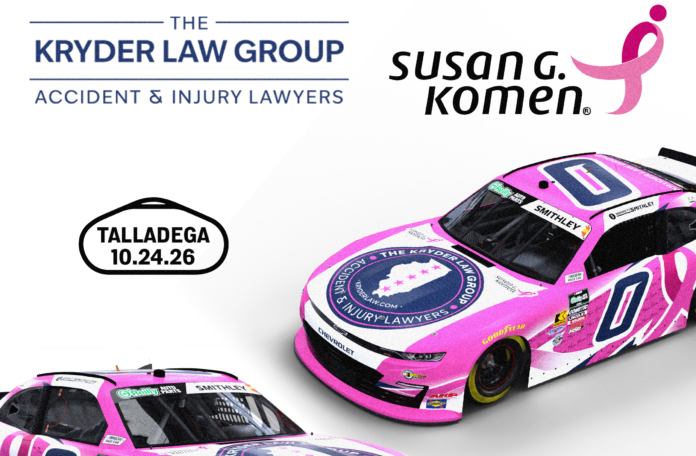
GARRETT SMITHLEY TEAMS UP WITH THE KRYDER LAW GROUP TO RACE TOWARDS A CURE WITH FOR SUSAN G KOMEN

MOORESVILLE, NC, September 21, 2026 – NASCAR O’Reilly Auto Parts Series driver Garrett Smithley announced today that he is partnering with Chicago-based The Kryder Law Group to raise funds for Susan G. Komen ahead of the The Progress Group 250 race at Talladega Superspeedway on October 24.

The Kryder Law Group, Accident and Injury Lawyers is a leading personal injury law firm based in Chicago, Illinois focused on helping the victims of negligence in claims related to car, truck and motorcycle accidents, wrongful death, work injuries, medical negligence, construction accidents, aviation disasters, and equipment injuries. 

“Being a good neighbor by giving back to our community is a crucial part of our mission at The Kryder Group. I am very proud to be working with Susan G. Komen on this amazing project to save lives and end breast cancer,” said founding member of The Kryder Law Group Andrew Kryder, Esq. 

“Garret has been an enthusiastic partner from the very beginning, and I appreciate the dedication he and his team have shown to our cause,” said Kryder. “I’m excited to raise funds and awareness for Komen in such a visible way, and I can’t wait for race day.”

With a donation of at least $100 by September 30, fans can submit a recognition name to be featured on Smithley’s car. Donations can be made on the Susan G. Komen website here: http://www.info-komen.org/goto/kryder-racing-for-a-cure.

“Susan G. Komen is grateful to The Kryder Law Group and Garrett Smithley for their generosity and commitment to our mission,” said Jaclyn Groves, Executive Director, Susan G. Komen Chicago. “This partnership is such a meaningful way to honor those who have been impacted by breast cancer while raising critical funds and awareness. We are thankful to everyone who adds a special name to the car and joins us in driving progress toward a world without breast cancer.”

“Who hasn’t been touched by breast cancer? Whether it’s a mother, sister or friend, we all know someone who fought the disease,” said Smithley. “I’m honored to carry these names to remind everyone that no one fights alone.”

“Several Chicago-area businesses stepped up to join the cause as corporate donors,” said Kryder. “I’m grateful to the support from Injury Care Network, Preferred Capital Funding, Oasis Financial, Smokeball, Eve Legal, Steno Court Reporting, It’s Your Serve, Schouest Bamdas Soshea BenMaier, Werner & Diller Accountants, and Wolff-Mills Design.”

The The Progress Group 250 (94 laps | 250.04 miles) is the 31st of 33 NASCAR O’Reilly Auto Parts Series races on the 2026 schedule. There is no practice. Qualifying starts on Saturday, October 24 at 9:30 a.m. The field is set to take the green flag later that day at 2:30 p.m. with live coverage on The CW, the Motor Racing Network (Radio), and SiriusXM NASCAR Channel 90. All times are Central Daylight Time.

For more information on Garrett Smithley, visit https://garrettsmithleyracing.com/ or follow him on X (https://x.com/GarrettSmithley) or Facebook (https://www.facebook.com/GarrettSmithley/).  

For more information about The Kryder Law Group, visit https://www.kryderlaw.com/ or follow them on Facebook (https://www.facebook.com/kryderlawgroup/), Instagram (https://www.instagram.com/kryderlawgroupllc/) or X (https://twitter.com/kryderlawgroup).

Susan G. Komen® is the world’s leading nonprofit breast cancer organization, working toward a future where no one dies from breast cancer. Komen has an unmatched, comprehensive 360-degree approach to fighting this disease across all fronts and supporting millions of people in the U.S. and in countries worldwide. We advocate for patients, drive research breakthroughs, improve access to high-quality care, offer direct patient support and empower people with trustworthy information. Founded by Nancy G. Brinker, who promised her sister, Susan G. Komen, that she would end the disease that claimed Suzy’s life, Komen remains committed to supporting those affected by breast cancer today, while tirelessly searching for tomorrow’s cures. Visit komen.org or call 1-877 GO KOMEN.

ARCA Menards Series East Final 2026 Owner, Driver Points; Post-season Notes

  • Tristan McKee became the youngest champion in series history when he locked up the 2026 ARCA Menards Series East title with a second-place finish in Thursday’s Bush’s Beans 200 at Bristol Motor Speedway. Driving for Pinnacle Racing Group, McKee won four of the series’ eight races in 2026 with wins at Hickory Motor Speedway, Rockingham Speedway, Toledo Speedway, and Iowa Speedway. Additionally, he had two runner-up finishes at Flat Rock Speedway and Bristol. McKee was 16 years, one month, and 14 days of age when he clinched the title, making him nearly two months younger than Sam Mayer who was 16 years, 3 months, and 8 days of age when he locked up the 2019 crown.
  • Max Reaves earned the 2026 ARCA Menards Series East Bounty Rookie Challenge rookie of the year award. Reaves, driving for Joe Gibbs Racing, scored two victories at Nashville Fairgrounds Speedway and Flat Rock Speedway, and had the series’ best overall average finish at 5.0.
  • McKee’s final margin over Reaves was just three points. The difference came down to bonus points: Reaves scored three more race points than McKee, but McKee racked up 22 bonus points to Reaves’ 16.
  • McKee’s driver championship was matched by an owner’s title for Mark Webb and the No. 77 Pinnacle Racing Group team. PRG’s championship breaks the stranglehold on the top spot held by the No. 18 team, which had won the previous five owner’s titles with owners Coy Gibbs, Kyle Busch, and Joe Gibbs.
  • Crew chief Kevin Reed, Jr. became the first to earn a championship in both the ARCA Menards East and ARCA Menards West. In addition to leading McKee’s efforts in 2026, he led Sean Hingorani to the 2023 West championship.
  • Reaves also led more laps than anyone in the 2026 season with 471 laps at the front of the field. McKee was a close second with 463 laps in the lead.
  • Reaves and the Joe Gibbs Racing team completed 1,321 of a possible 1,325 laps throughout the season for a 99.70% completion rate. Reaves finished two laps down at both Rockingham and Toledo, the only laps he didn’t complete all season. Defending ARCA Menards Series East champion Isaac Kitzmiller completed one fewer lap, 1,320, for a 99.62% completion rate. Kitzmiller’s only missed laps were also at Toledo where he finished five laps off the pace.
  • Kitzmiller’s defense of the title fell short by 20 points but his performance throughout the season was stellar. He finished in the top ten in seven of eight starts, and more impressively, each of them was also in the top five. His only finish outside the top five was a 13th-place result at Toledo in May.
  • Carson Brown, the other driver out of the Pinnacle Racing Group stable, would have been a sure contender for the season championship if not for missing the season opener at Hickory Motor Speedway. Brown won the finale at Bristol and finished second at both Rockingham and Iowa behind McKee. He also had a pair of third-place finishes at Toledo and Lucas Oil Indianapolis Raceway Park and had an average finish of 5.43. Despite missing a race and forfeiting the first 50-point segment bonus, Brown finished seventh in the series standings.
  • Craig Pellegrini, Jr. had an impressive rookie campaign driving for 1995 ARCA Menards Series champion Andy Hillenburg’s Fast Track High Performance Racing Team. Pellegrini, whose background was in dirt sprint cars before making the leap into stock cars, notched five top-ten finishes with a season-best sixth at Nashville to finish fourth in the season standings.
  • Jackson McLerran leapfrogged into the top five in the final standings in the final race of the season when Quinn Davis was swept into an early race accident and finished outside the top twenty. McLerran, driving for Mark Noble’s MAN Motorsports team, finished in the top ten four times with a season best sixth at Rockingham and a trio of eighth-place finishes at Hickory, Nashville, and Flat Rock.
  • Reigning Bounty Rookie of the Year Austin Vaughn transitioned from his family-owned team to the Michael Maples Motorsports operation in 2026 and ended the season sixth in the final standings. Vaughn scored a pair of top-ten finishes, a tenth at Hickory and a seventh at Flat Rock.
  • Quinn Davis entered the finale at Bristol fifth in the series standings but was struck by misfortune early when she was involved in an accident in front of her she could not avoid. Davis became the sixth female driver in series history to earn a top-five finish with her fifth-place finish at Flat Rock Speedway in August.
  • Kaden Honeycutt earned his first career ARCA Menards Series East victory in July at Lucas Oil Indianapolis Raceway Park. He joined McKee and Brown as first-time series winners. With Brown’s victory at Bristol, a total of 136 drivers have won at least one ARCA Menards Series East race dating back to 1987.
  • Reaves and Brown each scored three Sioux Chief PowerPEX Pole Awards in 2026. Reaves won poles at Hickory, Nashville, and Toledo, while Brown scored poles at Lucas Oil Indianapolis Raceway Park, Flat Rock, and Bristol. McKee scored the other two poles at Rockingham and Toledo.
  • A total of 71 drivers made at least one ARCA Menards Series East start in 2026.
  • A total of 53 teams made at least one ARCA Menards Series East start in 2026.
  • An average of 27.2 cars entered the eight races in 2026, up from 24.75 in 2025. The highest was 35 at Bristol, while the fewest was 21 at Flat Rock.
  • There were a total of 46 cautions in the eight races for an average of 5.75 per race. The most was nine at Hickory while the fewest was three at Flat Rock.
  • A total of 342 of the season’s 1,325 laps were run under yellow, an average of 42.75 per race. The most was 60 at Toledo, while the fewest was 29 at Flat Rock.

About ARCA 
The Automobile Racing Club of America (ARCA), founded in 1953 by John and Mildred Marcum in Toledo, Ohio, and acquired by NASCAR in April 2018, is the leading grassroots stock car sanctioning body in the United States. Bridging the gap between NASCAR’s top three national touring series and weekly and regional tour racing all across the country, the organization to sanctions over 100 races per year in the ARCA Menards Series, ARCA Menards Series East, ARCA Menards Series West, ASA STARS National Tour, ASA CRA Super Series, ASA Midwest Tour, ASA Southern Super Series plus weekly racing at Toledo and Flat Rock Speedways. For more information about ARCA visit , or follow ARCA on Facebook (@ARCARacing) and Twitter (@ARCA_Racing). 

About Menards
A family-owned and run company started in 1958, Menards is recognized as the retail home center leader of the Midwest with 236 stores in 15 states.  Menards is truly a one-stop shop for all of your home improvement needs featuring a full-service lumberyard and everything you need to plan a renovation or build a home, garage, cabin, shed, deck, fence or post frame building.  You’ll find a large selection of lumber, roofing, siding, construction blocks, trusses, doors and windows, plus cabinets, appliances, countertops, flooring, lighting, paint, plumbing supplies and more.  To complete the job, Menards has quality hand tools, power tools, fasteners, electrical tools plus storage options and supplies for everyone from the weekend warrior to the pro!
 
Menards has what you need to complete your outdoor projects and keep your yard in tip-top shape including mowers, trimmers, blowers, pressure washers and more, plus a beautiful garden center stocked with plants, shrubs, trees, landscaping tools, grass seed, fertilizer options, outdoor décor and patio furniture.  Menards also has everyday essentials like health & beauty products, housewares, pet and wildlife supplies, automotive items and even groceries.  And at Christmas, an Enchanted Forest display area with impressive trees, lighting, decorations, ornaments, inflatables and more. 

Menards is known for friendly Customer Service and as the place to “Save Big Money” with low prices every day, and sales too!  For more information, please visit Menards.com to learn about our store locations, offerings and services.

NASCAR Drivers Circle Charlotte As Must-Win in Championship Chase

Charlotte Motor Speedway’s 1.5-mile oval becomes a championship battleground once again Oct. 9-11 as NASCAR’s top drivers return for Bank of America 400 weekend. (CMS photo)

With championship momentum on the line, NASCAR Cup Series and NASCAR O’Reilly Auto Parts Series drivers weigh the importance of a win at Charlotte Motor Speedway.

Bank of America 400 weekend tickets are available at www.charlottemotorspeedway.com or by calling 1-800-455-FANS (3267). Kids 12 and under can experience the action all weekend for just $10, and fans can take their race-day experience to the next level with a Track Pass upgrade featuring stage-front access, driver introductions and Sunday’s pre-race concert

CONCORD, N.C. (Sept. 21, 2026) – When the NASCAR Chase returns to Charlotte Motor Speedway’s iconic 1.5-mile oval this October for the first time since 2017, drivers know a victory could provide the momentum needed for a championship run.

Ahead of Bank of America 400 weekend, here’s what some of NASCAR’s biggest stars had to say about the return to the oval and why they’re eager to battle for a win at one of the sport’s premier tracks.

Austin Cindric, No. 2, NASCAR Cup Series, Team Penske

“I think a win in the current point system is still very important. Although it doesn’t guarantee you anything, I think a win is big. I think anytime you can win at Charlotte, I think it is really big. It’s the home race for a lot of us. For me, I grew up racing at Charlotte Motor Speedway, so having a win there would be awesome.”

Jesse Love, No. 2, NASCAR O’Reilly Auto Parts Series, Richard Childress Racing

“I think that every driver has their kind of quota of how many race wins it’s going to take to win a championship, and obviously the further back you are in The Chase seeding is, the harder it’s going to be. So, I think for me, Charlotte’s definitely one of the race tracks that I have scheduled and kind of circled on the calendar more than maybe most of them. I’m looking forward to getting there. That’s one of those races that I know that the No. 2 team has to show up in and win or have a lot of points to go win a championship.”

Justin Allgaier, No. 7, NASCAR O’Reilly Auto Parts Series, JR Motorsports

“I think just being at home and having that home-game advantage of going to Charlotte Motor Speedway and knowing that’s where we all want to win. We have family and friends and everybody wants to come to that race. It’s a huge event on its own, let alone being in The Chase. So the momentum aside from just winning that race is huge, but when you do that in The Chase, and you’re able to kind of carry that momentum forward, it means a lot and I think that all the teams are really gunning for that one.”

Chase Elliott, No. 9, NASCAR Cup Series, Hendrick Motorsports

“Whether things are going really well for you or not, a win is a win. And I think that would be a great, you know, either a great addition to an already good playoff or good Chase start, or an opportunity to propel you forward and having a chance to win it.”

Austin Hill, No. 21, NASCAR O’Reilly Auto Parts Series, Richard Childress Racing

“A win anywhere is going to be special because you get those extra bonus points, so being able to do that at a place like Charlotte, especially the later part of the nine races that we’re running, I think that would kind of build that momentum, that confidence, especially if you’re maybe you’re not first in the points system, maybe you’re fifth or sixth or whatever. It might just give you that extra little boost to go after it for the end of the season.”

Sam Mayer, No. 41, NASCAR O’Reilly Auto Parts Series, Haas Factory Team

“Charlotte is one of the few tracks where I think we could actually go out there and win, and we have to do that with where we’re at the point, so the more wins, the better. I feel like Charlotte is one of those ones that we can just execute all day and get to Victory Lane.”

TICKETS:
Bank of America 400 weekend tickets are available now at www.charlottemotorspeedway.com or by calling 1-800-455-FANS (3267). Kids 12 and under can experience all the action for just $10, and fans can elevate their race-day experience with a Track Pass upgrade featuring stage-front access, driver introductions and Sunday’s pre-race concert.

MORE INFO:
Fans can connect with Charlotte Motor Speedway and get the latest news by following X, Instagram and Facebook, or by downloading the Charlotte Motor Speedway mobile app.

How to Perform a Comprehensive Pre-Purchase Inspection on a Pre-Owned Vehicle

Photo by depositphotos at https://depositphotos.com/

Buying a used car might save you some money. But if you do not look over the car with care, what seems like a good offer can cost you more down the road. A pre-purchase inspection, or PPI, is one of the best ways to keep your money safe and help as you talk about the price. A PPI looks at many things. You need to look at the body of the car, how the engine works, the inside electronics, and how the car moves on the road. If you do this step by step, you will not have to wonder about the car. You can check the car by yourself or hire a skilled worker who knows cars well. When you know what to look for, you can see hidden issues like past crashes, false numbers for miles, or things that are close to breaking before you pay. Read more to see the top things you should do for looking over any used car.

1. Documentation & VIN Verification

You need to check the paperwork before you grab a flashlight or lift the hood. If the car does not fit what the legal papers say, this can be a big warning for you.

  • VIN Matching: You will need to look for the Vehicle Identification Number at the top of the dashboard on the driver’s side, at the door jamb, at the engine block, and in the car registration documents. The numbers should match in all these places. There must be no difference in any one place.
  • Car Maintenance and Title: Request to see all the maintenance documents for the car. Good documentation will indicate multiple changes in oil and valve jobs done when necessary. The title of the car should not be confusing. It should not have anything written on it like rebuilt or flood.
  • Odometer Check: While examining the odometer, you should examine inside the car and find out whether or not there is any kind of wear and tear that does not go along with the miles recorded on the odometer. If the odometer shows that the car has traveled less than 40,000 miles but the brakes or wheels are old, then the odometer miles have been tampered with.

2. Exterior & Structural Body Inspection

Look at the car outside when the sun is up, and the ground is flat. Do not look at cars in dark garages or when it rains. Water and low light can hide issues with the paint or doors.

1. Check Panel Gaps & Paint Depth:

Run your finger to feel the space between the doors, fenders, and hood. If these gaps are not the same size, it could mean the car was in a crash and then fixed. Look at the paint in the light to see how it looks. If you see it change or it shows color on the rubber, that can mean the car was painted again. You can use a tool to check paint thickness or use a small tool with a cloth to find places where body filler was put on the car.

2. Inspect Glass and Seals:

Look at the windshield and the windows. Check the place where the lights are. Try to find any small cracks. See if there is any fog inside the headlight covers. This can show that water can get in. It could also mean the front end of the car was hit before.

3. Evaluate Tires and Suspension Alignment:

Check the tire tread to see the depth. Find the DOT date on the side of the tire. If you see more wear on the inside or outside, the wheels may not be straight. The arms that hold up the tires may be bent. The rubber pieces that connect the arms can also be worn out.

3. Mechanical & Under-the-Hood Examination

The engine bay can help determine whether the vehicle has been properly maintained by its owners. It should always be inspected when it is cold.

Fluid Checks Critical to the Car

  • Engine Oil: Remove the dipstick from the engine. It should be dark but clean. If the oil is thick and is dirty, the oil change was not performed timely enough. Some deposits on the dipstick mean that there is something wrong with internal parts of the engine.
  • Coolant: Coolant needs to be checked, but before checking it, it is imperative that the engine be cooled first. The coolant should have a color either pink or blue. In case of milk or bubbles in the coolant, there is sure to be a leak in the gasket or engine.
  • Transmission Fluid: In the case of transmission fluid, if there is a dipstick available, then it is useful in determining its condition, i.e., if it is dark black or burned.

Undercarriage & Frame Inspection

Check underneath the vehicle with a flashlight. Examine the frame rails, the floor pans, and the area where the suspension attaches. It’s important to be able to identify any rust holes or weld repairs that might be indicative of an issue. Be sure to check for any leaks at the oil pan seal, rear main seal, and back axle coverings.

4. On-Board Diagnostics (OBD-II) Scanning

Once the connection between the OBD-II diagnostic scanner and the vehicle connector is established, all codes regarding the problems in the car will be revealed. In some cases, the battery may be disconnected by the seller to hide these codes.

How to Verify a Classic Car’s History Before You Pay Online

Photo by Denis Villagrán on Pexels

Buying a classic car online gives you access to rare models, unusual specifications and cars from different countries. It can also make hidden problems easier to miss. Photographs may conceal rust, a polished description may omit previous accident damage, and incomplete paperwork can make it difficult to confirm what you are really buying.

Before sending a deposit or making full payment, check whether the documents, identification numbers, historical records and physical condition all tell the same story.

1. Check the VIN or chassis number

Ask for the full VIN or chassis number before sending any money.

Compare it with the registration documents, identification plate, chassis stampings, service records, inspection papers and old advertisements. On older vehicles, identification systems vary by manufacturer, so research where the correct numbers should appear and how they should be formatted.

Small differences may result from clerical errors or restoration work, but unexplained inconsistencies deserve attention. If the chassis number on the vehicle does not match the paperwork, establish exactly why before proceeding.

2. Build a history timeline

Search the VIN, chassis number and registration number for historical records.

A vehicle history report may include mileage, previous listings, damage records, auction appearances, photographs and registration information. Old advertisements and auction catalogues can also help.

Read the information chronologically rather than as separate facts.

Check whether mileage rises logically over time, whether dates match the seller’s story and whether historical photographs show previous damage, modifications or restoration.

A report is useful evidence, but it does not prove that a car has never been damaged. Many classic-car repairs are never recorded in official databases.

3. Verify the mileage

Low mileage can increase the value of some classic cars, but it should be supported by evidence.

Older mechanical odometers may have been repaired, replaced or reset. Some display only five digits, meaning a reading of 25,000 miles could also represent 125,000 miles.

Compare the current reading with inspection records, invoices, registration papers, maintenance books, old advertisements and auction records.

The important question is not whether one document supports the mileage, but whether the entire timeline makes sense.

Physical wear can also provide clues. Heavy wear on pedals, steering wheels, seats and gear levers does not prove high mileage, but it may justify further investigation when a seller is claiming an unusually low figure.

4. Search old photographs

Historical photographs can reveal details that are impossible to see in a current advertisement.

Search the VIN, chassis number, registration number and model name. Look through old auction listings, dealer advertisements and archived sales pages.

Compare earlier photographs with the car being sold today.

Look for changes in paint colour, panels, wheels, bumpers, lights, interior trim and engine-bay details. Earlier images may also reveal rust, collision damage or previous restoration work.

A colour change is not necessarily negative, but it can affect originality and value.

5. Investigate damage and restoration

Restoration is normal in the classic-car market. What matters is the quality of the work.

Ask when the restoration was completed, who performed it and which parts were repaired or replaced.

Useful evidence includes pre-restoration photographs, workshop invoices, bodywork records, parts receipts and engine or gearbox rebuild documentation.

Pay particular attention to structural corrosion and welding. Depending on the model, inspect areas such as sills, floor sections, chassis rails, suspension mounting points and wheel arches.

Fresh paint can make a car look excellent while hiding poor repairs underneath.

6. Confirm originality

Originality can have a significant effect on value, especially for rare or highly collectible cars.

Check whether the engine, gearbox, paint colour, interior, wheels, trim and body details match the model and production year.

Manufacturer records, owner’s clubs, specialist books and marque registers can help confirm factory specifications.

Do not accept phrases such as “matching numbers”, “factory original” or “original engine” without supporting documents.

Ask exactly what the seller means by these terms. Different sellers may use them differently.

7. Compare the market

Before negotiating, compare several examples of the same model.

The Dyler.com marketplace can be useful for comparing asking prices, specifications, condition and availability across different countries and sellers.

Look beyond the headline price. Compare production year, engine type, transmission, condition, mileage, restoration quality, originality and documentation.

Remember that advertised prices are asking prices, not necessarily the amounts buyers ultimately pay.

Auction results can provide additional context when available.

8. Ask for documents

Request copies or clear photographs of the available paperwork before committing to the purchase.

Useful documents may include:

  • registration papers;
  • ownership records;
  • service history;
  • restoration invoices;
  • inspection certificates;
  • import and export documents;
  • purchase invoices;
  • workshop receipts.

Check that names, dates, mileage and identification numbers remain consistent.

A large folder of paperwork is only useful if the documents clearly relate to the vehicle.

9. Research the seller

Investigate the person or business selling the car.

For dealers, check the business address, company details, reviews, previous advertisements and online reputation.

For private sellers, ask how long they have owned the car, why they are selling it and where it has been maintained.

Be cautious if payment is requested to a third party, bank details suddenly change, documents show different names, the seller refuses an inspection or there is strong pressure to pay quickly.

An unusually low price combined with urgency should always trigger additional checks.

10. Arrange a live video call

If you cannot inspect the car immediately, ask for a live video call.

Request close views of the identification numbers, engine bay, interior, bodywork and areas known to rust. Ask the seller to start the engine and show the dashboard while it is running.

A live video cannot replace an independent inspection, but it can help confirm that the seller has access to the vehicle and that the current condition matches the advertisement.

11. Arrange an independent inspection

For a valuable classic car, use an independent specialist familiar with the marque or model.

Ask them to inspect the chassis, corrosion, welding, panel alignment, engine, gearbox, brakes, suspension and identification numbers.

A specialist may also recognize incorrect parts, poor restoration work or model-specific weaknesses that a general mechanic could overlook.

Arrange the inspection yourself whenever possible rather than relying only on a workshop selected by the seller.

12. Be careful with payment

Before sending a deposit, confirm who owns the vehicle, who will receive the money and when ownership transfers.

Put the payment terms in writing.

Clarify whether the deposit is refundable, what happens if the inspection reveals serious problems and when the remaining balance becomes due.

For international purchases, also calculate transport, insurance, taxes, import duties and registration costs before deciding whether the car is genuinely good value.

Separate gaps from contradictions

Missing records are common with older vehicles and do not automatically indicate a problem.

Contradictory information is more serious.

A missing service folder may simply have been lost over decades. A chassis number that conflicts with the registration papers, unexplained mileage reduction or seller claiming no restoration when older photographs show major body repairs requires a convincing explanation.

Before you pay

Verify the identification number, mileage, historical records, photographs, restoration work, originality, documents and seller. Compare the vehicle with similar cars and arrange an independent inspection when appropriate.

No single database, document or photograph tells the entire story. The safest decision comes from combining several independent sources and checking whether they support one consistent history.

F1 Betting Explained: The Markets Worth Knowing Before You Stake

Photo by depositphotos at https://depositphotos.com/

Formula 1 has never been bigger with fans, and the betting markets have grown right alongside it. For a motorsport follower used to backing a NASCAR driver on a Sunday, F1 offers a different puzzle: two cars per team, a grid shaped by qualifying, and a season that swings on strategy as much as speed. This guide walks through how F1 betting actually works, the markets worth your attention, and where a newcomer should start.

Why F1 rewards the fan who does the reading

Unlike a knockout sport, F1 is a season-long game of small margins. Track type, tyre choice, weather, and team upgrades all move the odds week to week, and the fan who follows those threads has a real edge over someone betting on name alone. A driver who is unbeatable on a high-speed circuit can struggle on a tight street track three weeks later, even though the outright odds barely shift.

That is why context matters as much as the price. Keeping half an eye on the technical side of the sport, such as the sweeping changes coming to F1 in 2026, gives you a feel for which teams are on the up before the market fully catches on. Once you understand why a car is quick, the betting markets start to make a lot more sense.

The core F1 markets, explained

Strip away the exotic bets and most F1 wagering comes down to a handful of markets. Knowing what each one asks, and how risky it is, tells you most of what you need.

MarketWhat you are predictingRisk level
Race winnerWhich driver wins the Grand PrixHigh, one winner from twenty
Podium finishA driver to finish in the top threeMedium
Points finishA driver to finish in the top tenLower, safer
Head-to-headWhich of two named drivers finishes aheadMedium, driver knowledge rewarded
Qualifying winnerWho takes pole positionHigh, but separate from race form
Fastest lapWhich driver sets the quickest lapHigh, often a late strategy call
Constructors’ betWhich team scores more across the weekendMedium

The race winner is the headline, but it is also the hardest, because one result from a full grid is a tall order. Newcomers often find better value and more enjoyment in podium, points, and head-to-head markets, where a good read on form pays off without needing to nail the exact winner.

Head-to-head: the thinking fan’s market

If there is one market that rewards knowledge over luck, it is the head-to-head. You are not picking a winner from twenty, you are simply calling which of two named drivers finishes ahead. Teammates in identical machinery are the classic version, where the result comes down to form, qualifying, and who gets the strategy call.

This is where following the sport closely turns into an edge. If you know one driver has struggled for grip all weekend, or that another thrives in the wet with rain forecast, you are making an informed call the odds may not fully reflect. It is a market built for the fan who watches practice and reads the paddock, not just the fan who knows the champion’s name.

Why strategy makes F1 betting different

One thing sets F1 apart from most sports you might bet on: the result is shaped as much by the pit wall as by raw pace. A driver leading comfortably can lose a race to a badly timed pit stop, a late safety car can wipe out a twenty-second lead in a lap, and a bold one-stop strategy can beat a quicker car that stopped twice. For a bettor, that means the fastest car does not always win, and reading strategy is part of the edge.

This is good news for the fan who pays attention. If you understand why a team favours a particular tyre plan at a given circuit, or how a high chance of rain rewards the gamblers on the grid, you are seeing angles the casual bettor misses. It also argues for a little caution on the outright winner, since a single unlucky safety car can undo even the strongest favourite.

Where to place an F1 bet

Not every sportsbook prices F1 with the same depth. The football-first books often offer little beyond the race winner, while the sharper motorsport books price up qualifying, fastest lap, head-to-heads, and constructor markets in full. If you want the range of bets described above, it pays to start with a book that takes the sport seriously. A rundown of the best F1 betting sites is a sensible first stop, since it lines up the operators that actually cover the grid rather than only the marquee market.

Beyond the range of markets, judge a book on the same things that matter anywhere: fair pricing on a normal race, clear withdrawal terms, and a licence you can verify. A big welcome offer counts for little if the everyday odds on a Grand Prix are mean.

A simple starting approach

If F1 betting is new to you, treat your first season as a learning one rather than a payday. A few habits keep it fun and keep the stakes sensible:

  • Start with the safer markets. Points and podium finishes let you back a driver you rate without needing them to win outright.
  • Use head-to-heads to put your knowledge to work, especially between teammates.
  • Skip the races you have no feel for. A street circuit you cannot read is a week to sit out, not a week to guess.
  • Keep the stake small and steady, and treat any winner as a bonus rather than income.

The same discipline that serves a NASCAR bettor serves an F1 one. If you already back oval racing, many of those instincts carry straight across, though the markets around the main motorsport betting markets are worth a refresher before you spread into a new series.

Frequently asked questions

What is the easiest F1 bet for a beginner? A points finish or a podium finish. You are backing a driver to finish in the top ten or top three rather than to win outright, which gives you a far better chance while you learn the form.

Are teammate head-to-heads really worth it? Yes, because both drivers have the same car, so the result comes down to form and strategy rather than machinery. It is one of the few markets where fan knowledge genuinely moves the needle.

Do F1 odds change before the race? They do, especially after qualifying, when grid positions are set. A price on a driver can shorten or drift sharply once you know where they start, so timing your bet matters.

Is betting on the race winner a bad idea? Not bad, just hard. One winner from a full grid is a long shot even for a favourite, so many fans find better value in the finishing-position and head-to-head markets.

The takeaway

F1 betting is at its best when you treat it as an extension of following the sport, not a shortcut to a windfall. Learn the core markets, lean on the head-to-heads where your knowledge counts, pick a book that prices the whole grid, and keep your stakes small while you find your feet. Do that and the season becomes a run of small, informed calls rather than one wild guess on a winner.

If you would rather ease in with lower stakes first, our guide to how little you really need to start betting on the racing shows how far a small budget can stretch.

Thousands of Fans Are Coming – How NASCAR Speedways Prepare for Race Weekend

Photo by Haomeng Yang on Unsplash

A NASCAR race weekend may last only a few days, but the preparation behind it begins long before the first green flag. Once tens of thousands of fans start arriving, every weak point in the facility becomes more visible.

Parking lots fill, restrooms face constant traffic, concession stands operate under pressure, utilities work harder, and large outdoor areas need to remain clean and accessible from morning until night. Add team operations, media areas, security, camping zones, and unpredictable weather, and a speedway starts functioning more like a temporary city than a normal sports venue.

That is why race-weekend preparation is not just about the track itself. The entire property has to be ready for an enormous temporary population, with infrastructure and maintenance plans capable of keeping everything moving smoothly.

Make Water Access Work Across the Entire Property

Large speedways cover enormous areas, and water may be needed far beyond the main grandstands. Landscaping, maintenance areas, campgrounds, remote facilities, and other parts of the property can all create demands that become harder to manage when everything is busy at once.

Facilities looking for ways to move water in areas where conventional electrical access is limited may explore systems available through The Solar Store, particularly when planning solar-powered pumping for suitable remote or off-grid applications around a larger property.

The broader lesson is that water infrastructure should be checked before crowds arrive. Pumps, hoses, drainage, irrigation, restroom supplies, and service access all need to function under heavier-than-normal demand.

A small water problem on an ordinary maintenance day can become a much larger operational issue when thousands of people are already on site.

Prepare Parking Like It Is Part of the Event

For many fans, the parking lot creates the first and last impression of race weekend.

A huge venue can still feel badly organized if arriving spectators spend an hour trying to determine where they belong. Clear directional signs, trained staff, visible lane markings, and separate routes for different parking categories can prevent confusion before it reaches the gates.

Exit planning matters just as much. Thousands of vehicles leaving at roughly the same time can create bottlenecks that make an otherwise excellent event end on a frustrating note.

Speedways also need contingency plans for bad weather. Grass parking areas may behave very differently after heavy rain, while temporary routes can become difficult for ordinary cars to navigate.

Planning should consider not just where vehicles fit, but how they enter, move through, and leave the property when traffic is at its peak.

Inspect Every Area Fans Will Walk Through

Large crowds magnify small maintenance problems.

A loose barrier, uneven walkway, damaged step, poorly lit path, or blocked access route may go unnoticed when the facility is quiet. During race weekend, thousands of people may pass through the same area.

Pre-event inspections should therefore follow the fan journey. Start in the parking areas, continue toward entrances, walk through concourses and seating sections, and check the paths connecting concessions, restrooms, merchandise areas, camping zones, and transportation points.

Temporary structures deserve the same attention. Fencing, tents, portable facilities, signs, and crowd-control equipment need to remain stable and correctly positioned throughout the weekend.

The goal is to identify friction before visitors find it.

Build Cleaning Around Crowd Patterns

Photo by Haomeng Yang on Unsplash

Race weekends generate an enormous amount of waste.

Food packaging, cups, programs, merchandise bags, and general litter accumulate quickly, particularly around concessions and high-traffic pedestrian areas. Cleaning cannot simply wait until fans leave.

Maintenance teams need schedules that follow how crowds move. Trash bins near busy sections may require frequent emptying, while restrooms need repeated inspections throughout the day. Camping areas and parking lots create their own cleaning demands.

Supplies should be staged in advance so crews do not spend unnecessary time traveling across the facility for basic materials.

Heavy cleaning before the event also matters. Grandstands, walkways, entrances, and public surfaces should begin the weekend in good condition so crews are maintaining cleanliness rather than trying to recover from months of buildup while fans are already present.

Keep Food and Concessions Moving

Race fans may spend most of the day at the venue, making food service a major part of the experience.

The biggest challenge is usually volume. A concession stand that works perfectly during a smaller event can become overwhelmed when thousands of spectators decide to eat during the same break.

Menus, staffing, payment systems, food preparation, and queue layouts should all be planned around peak periods rather than average traffic.

Speed matters, but so does movement. People waiting for food should not block major walkways, and customers leaving the counter should have a clear path away from the line.

Nearby trash and recycling capacity should also match demand. A successful concession operation can create a maintenance problem immediately afterward if disposal areas fill faster than crews can service them.

The easier it is for fans to buy food and move on, the less congestion spreads into surrounding sections.

Treat Restrooms as a Major Operational Priority

Few facility problems become noticeable faster than poorly managed restrooms.

Before race weekend, plumbing, lighting, doors, dispensers, ventilation, and drainage should all be checked. Supplies need to be stocked far beyond ordinary facility levels, and crews should know which locations experience the heaviest demand.

Portable facilities require their own servicing plan, particularly in parking and camping areas farther from permanent buildings.

Cleaning schedules should be based on traffic rather than fixed intervals. A restroom beside a popular grandstand may need attention much more frequently than one in a quieter part of the property.

Clear signage can also distribute traffic more effectively. Fans who know where alternative facilities are located are less likely to overwhelm the first restroom they encounter.

These details rarely become part of a fan’s favorite race memory, but they can absolutely become part of a bad one.

Prepare for Weather That Changes the Entire Plan

Outdoor motorsports operate at the mercy of weather, and a major change can affect far more than what happens on the track.

Heat increases demand for water, shaded areas, and cooling opportunities. Rain can affect parking, walkways, drainage, camping areas, and crowd movement. Strong winds may require staff to secure temporary structures and signage.

Facilities should know which parts of the property become problematic under different conditions. Drainage areas should be cleared before the event, temporary equipment secured, and staff given clear instructions about how operations change if conditions worsen.

Communication becomes especially important. Fans need timely information about delays, entrance changes, transportation, or other adjustments rather than relying on rumors spreading through the crowd.

Flexible operations can prevent weather from turning a difficult day into a chaotic one.

Test Everything Before the Crowds Arrive

The final preparation stage should involve using the facility as if the race weekend had already started.

Test gates, ticketing systems, radios, lighting, public-address equipment, concessions, restrooms, transportation routes, and other critical systems under realistic conditions. Confirm that staff know where they are supposed to be and who makes decisions when a problem occurs.

Emergency access routes need to remain clear even when parking and pedestrian areas are full. Maintenance teams should know how to reach different parts of the speedway quickly rather than discovering access limitations during an actual incident.

Preparation works best when responsibilities are specific. “Someone will handle it” is not a useful plan when thousands of fans are already waiting.

The race itself may be what brings people through the gates, but the quality of the weekend depends on everything surrounding it. When traffic moves, facilities stay clean, utilities work, and fans can navigate the property without unnecessary frustration, the speedway fades into the background and lets the racing become the story.

That is exactly what good race-weekend preparation is supposed to accomplish.

Daily Fantasy Racing vs a Straight Bet: Which Is Right for You?

Photo by depositphotos at https://depositphotos.com/

Every race weekend, motorsport fans face a quiet choice most never think about. Do you put a few dollars on a driver to win, or do you build a fantasy lineup and go up against thousands of other players? Both cost about the same to enter and both make the race matter more, but they reward completely different skills. This piece breaks down how each one actually works, what it takes to do well, and how to decide which suits the kind of fan you are.

The two games, side by side

A straight bet is simple. You pick an outcome, a driver to win, a top-five finish, a head-to-head between two drivers, and you get paid at fixed odds if you are right. Daily fantasy sports, or DFS, is a different animal. You are handed a salary cap, you draft a full lineup of drivers within it, and you score points based on how they perform on track. You are not betting against the house. You are competing against other players for a share of the prize pool.

That single difference, house versus other players, changes everything about how you should approach each one.

FeatureStraight betDaily fantasy racing
You compete againstThe sportsbookOther players
What you pickOne outcomeA full lineup under a cap
Skill that winsReading a single marketRoster construction and value
PayoutFixed odds, known upfrontShare of a pool, varies
Best forQuick, clear decisionsFans who love the whole field

How daily fantasy racing actually works

In a DFS racing contest, every driver carries a salary. The favourites cost the most, the long shots cost little, and you have a fixed budget to fill your lineup. The craft is not just picking fast drivers, it is finding the ones who will score more points than their price suggests. A cheap driver starting near the back who can gain twenty positions may be worth more to your lineup than an expensive front-runner with nowhere to climb, because most scoring systems reward places gained.

That is why value, not raw speed, is the currency of DFS. A good roster balances a couple of safe, high-priced anchors with cheaper drivers who have room to move up. Get that balance right and you can beat players who simply drafted the five fastest cars and blew their whole cap doing it. If you want to understand the scoring quirks and lineup strategy in depth, a solid primer on the best daily fantasy sports sites is the place to start before you enter your first contest.

Where the skill really sits

The straight bettor wins by being sharp on one question. Is this price fair? If you think a driver is more likely to win than the odds imply, you have value, and the rest is discipline. It rewards patience and a good read on a single market. If reading a price is where you want to get sharper, this breakdown of how to read the odds before you bet is a useful companion.

The DFS player wins by being sharp across the whole field at once. You need a view on twenty or more drivers, not one, and you need to know who is underpriced. It rewards research, roster-building, and a feel for how a track shapes finishing positions. Neither is harder in the abstract. They simply ask for different things, and most fans naturally lean one way.

A worked comparison

Imagine you have 10 dollars for a Cup race weekend.

As a straight bettor, you might put the whole 10 on a mid-priced driver to finish top five at 3.00. If he does, you collect 30 dollars. One decision, one outcome, clean and quick.

As a DFS player, you enter a 10 dollar contest and draft six drivers under the cap. Your result depends on how the whole lineup scores against everyone else’s. You might place in the top few percent and multiply your entry several times over, or finish mid-pack and win nothing. More moving parts, a slower payoff, but a far richer way to follow every car on track rather than just one.

The straight bet gives you a clear stake in a single result. DFS gives you a reason to care about the whole field for three hours.

Which one fits you?

There is no correct answer, only a fit. Reach for a straight bet if you like quick, clear decisions, you follow one or two drivers closely, and you want to know exactly what you stand to win the moment you place it. Reach for daily fantasy if you enjoy the research, you like following the entire grid, and you would rather test your judgement against other fans than against a sportsbook’s margin.

Many fans end up doing both, and there is a smart reason to. A straight bet scratches the itch for a fast, simple wager on a driver you believe in. A DFS lineup rewards the deeper knowledge you build across a season. Used together, on a small budget, they turn a single Sunday into two different kinds of contest.

A note on staying in control

Whichever you choose, the same discipline applies. Both are entertainment first, and both are easiest to enjoy when the stake is money you have decided in advance you can spend. DFS in particular can tempt you into multiple entries chasing a big pool, so treat your contest budget the same way a careful bettor treats a bankroll. Set the amount before the race, stick to it, and let the result be the fun rather than the pressure. If a bad beat tends to pull you into a chase, our piece on keeping your emotions in check when you bet is worth a read alongside this one.

Frequently asked questions

Is daily fantasy racing a form of betting? It is skill-based contest play rather than a fixed-odds bet, and it is regulated differently in many places. You compete against other players for a prize pool, not against a sportsbook.

Which one is easier for a beginner? A straight bet is simpler to grasp, because you pick one outcome and know the payout upfront. DFS has a learning curve around salary caps and scoring, but the basics come quickly once you enter a contest or two.

Can you win consistently at either? Both reward genuine skill over time, but variance is real in each. Straight betting rewards finding value in a single market. DFS rewards roster construction and research across the whole field.

Do I need a bigger budget for DFS? No. Plenty of contests have small entry fees, often a dollar or two, so you can learn the format without risking much. As with any wager, decide your budget before the race.

The bottom line

A straight bet and a daily fantasy lineup are two different ways to make race day matter, and the right one comes down to how you like to follow the sport. If you want speed and clarity, bet the driver. If you want depth and a stake in the whole grid, build the lineup. Try both small, see which pulls you in, and you will know soon enough.

If deciding how much to risk is the sticking point, our guide to starting small and making a modest bankroll last shows how little you actually need to get involved.