Home Blog Page 8

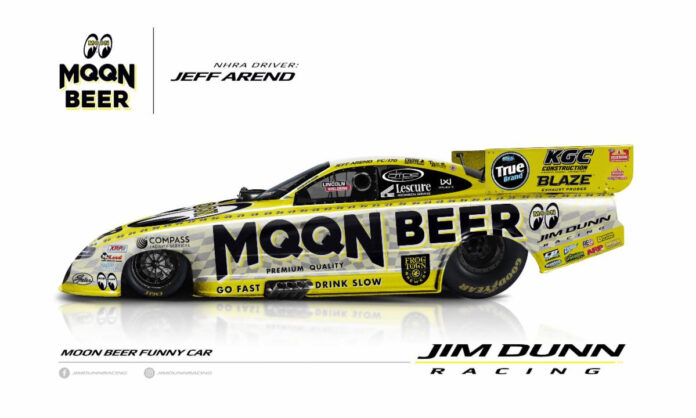
Jim Dunn Racing – Pomona Advance for the 60th In-N-Out Burger NHRA Finals

Jeff Arend

Moon Beer Funny Car Driver for Jim Dunn Racing
60th In-N-Out Burger NHRA Finals
Nov. 12-15 | Pomona, California

Event Overview
Friday, Nov. 13 (Nitro Qualifying, streamed live on NHRA.TV)

Nitro qualifying session (Q1): 1 p.m. PDT/4 p.m. EDT
Nitro qualifying session (Q2): 3:30 p.m. PDT/6:30 p.m. EDT

Saturday, Nov. 14 (Nitro Qualifying, streamed live on NHRA.TV)

Nitro qualifying session (Q3): 11:30 a.m. PDT/2:30 p.m. EDT
Nitro qualifying session (Q4): 2 p.m. PDT/5 p.m. EDT

Sunday, Nov. 15 (Nitro Eliminations, streamed live on NHRA.TV)

Round 1: 11 a.m. PDT/2 p.m. EDT
Round 2: 1:15 p.m. PDT/4:15 p.m. EDT
Semifinals: 2:45 p.m. PDT/5:45 p.m. EDT
Finals: 4:10 p.m. PDT/7:10 p.m. EDT

TV coverage on FS1

Sunday, Nov. 15: Qualifying show recapping the action from Friday and Saturday (11 a.m. EDT)
Sunday, Nov. 15: Finals show (5 p.m. EDT)

Notes of Interest

This weekend’s In-N-Out Burger NHRA Finals at In-N-Out Burger Pomona Dragstrip in Pomona, California is the 20th and final race on the 2026 NHRA Mission Foods Drag Racing Series’ schedule, and the iconic California venue is where the six-race Countdown to the Championship culminates. Jim Dunn Racing brings its one full-time entry in Funny Car for Jeff Arend. A native of Canada, Arend moved to Southern California in 1997.

As the NHRA celebrates its landmark 75th season in 2026, Jim Dunn Racing is celebrating 76 years of success in drag racing. Jim started drag racing when he was 15 years old and at 92 years old, he plans to keep going as long as he can. In 2024, Jim received the NHRA Lifetime Achievement Award. He has won some of the sport’s most significant races and has provided driving opportunities for some of the biggest names in the sport.

Coming into Pomona, Arend is 16th in the Funny Car standings, 2245 points behind leader Matt Hagan.

Moon Beer is the primary partner of Arend this weekend in Pomona. Moon Beer is an easy-drinking American light lager created as a collaboration between Mooneyes and Frogtown Brewery. The beer has a crisp, clean finish. Frogtown’s premium quality hops and horsepower delivers a light-bodied lager that is tuned and dialed to keep you cruising all-day long. Frogtown Brewery is an independent craft brewery and taproom located in northeast Los Angeles along the L.A. River. It was recently named one of the 50 Fastest Growing Breweries in the United States by the Brewers Association.

The NHRA Finals will mark Arend’s 264th career Funny Car appearance, and his 27th overall appearance at In-N-Out Burger Pomona Dragstrip.

In no other event has Jim Dunn Racing won more often than it has in the In-N-Out Burger Finals. Unfortunately, both wins (Funny Car titles in 1972 and 1981 with Jim Dunn himself the driver of record) came before the event was moved permanently to In-N-Out Burger Pomona Dragstrip in 1984. The first win (at Ontario Motor Speedway) was the most significant insomuch as it came with Dunn driving a rear-engine version of his “Fireman’s Quickie” Funny Car. That stands today as the only NHRA Funny Car victory in a car of that configuration. When he won in 1981 (beating California racing legends John Lombardo, Don Prudhomme, Dale Pulde and Gary Burgin), it was in a conventional Funny Car on the track at Orange County Internationals Raceway in Irvine, Calif. Best result since the race was moved to Pomona was Kenji Okazaki’s trip to the semifinals in 1996.

Arend has made 14 starts in the Finals and 26 starts overall at In-N-Out Burger Pomona Dragstrip. His best result was a runner-up finish to John Force in the 2010 Finals. His overall record at Pomona is 10-26. In his previous affiliation with Jim Dunn Racing, he was the No. 8 qualifier in 2013 and the No. 14 qualifier in 2014.

Jim Dunn Racing still is seeking its first win in a Countdown race although Arend independently won a playoff event in 2009 when, after qualifying 15th, he beat Jack Beckman, John Force, Ashley Force Hood and Tony Pedregon to win at Memphis, Tenn.

Jeff Arend, Driver of the Jim Dunn Racing Moon Beer Funny Car

Looking back on this season with Jim Dunn Racing, how great was it to be reunited with the team again and what are you most proud of accomplishing?

“I can still remember my phone ringing on that Saturday morning of the Winternationals and seeing the name Jon Dunn pop up. Now Jon and I talk all the time, but I was not expecting him to ask ‘Hey Jeff, can you drive our car for Q3 and Q4?’ And that’s how it started. Looking back on the year while we haven’t won any rounds, we also have become a consistent low 4-second racecar and we don’t hurt any parts. The two things I am most proud of are one, at every race but one we have gone down the track with respectable runs between 4.01- 4.15-seconds and other teams are taking us seriously. The best race for me was Indy. It was the largest field in the last 10 plus years and we qualified and didn’t even have to make the last run. Indy is Big Jim’s favorite race and to see the smile on Jim and Diane’s face meant everything to me! The icing on the cake was running 320 miles per hour in the first round. Now we are at the final race, our home track and we know what’s been plaguing us all year. Some round wins and 3-second runs would be a nice way to end the season!”

Need Car Electrical Parts? Explore Replacement Options at TeamVehicle

Photo by depositphotos at https://depositphotos.com/

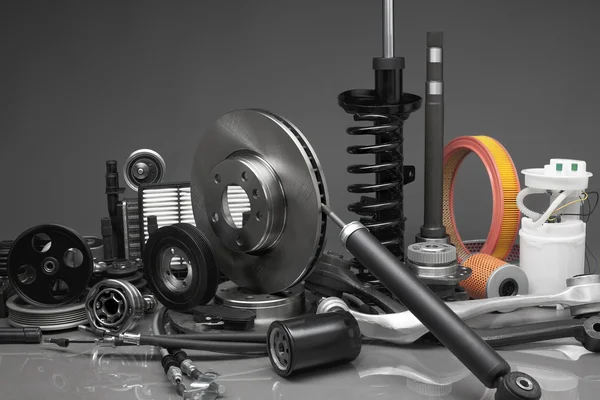
You start the engine using the key, but it fails to start. The headlight fails to function, or the battery continues draining. When you encounter electrical issues with your car, identifying the right replacement parts is the next step. However, all electrical issues do not require the same replacement part.

 The alternator, starter, battery, fuse, and ignition coil are just a few of the electrical components with distinct functions. Understanding the functions of these components may be beneficial when searching for replacement parts. Here are some product categories of car electrical parts from TeamVehicle.

The Electrical Parts Behind Your Vehicle’s Everyday Performance

Your car depends on several electrical parts to start and run properly. The battery supplies the initial power, while the alternator recharges it as the engine runs. The starter turns the engine on. Each component has a different role in keeping your vehicle running. Other automotive parts protect and control the electrical system. 

Fuses help prevent circuit overloads, while relays manage power to different components. Ignition, lighting, and control systems also rely on electrical parts. TeamVehicle offers options such as batteries, alternators, starters, voltage regulators, and other electrical components.

Alternators or Starters: Which Part Does Your Vehicle Need?

Although alternators and starter motors have different roles, problems in either of the two may impact the functioning of the car. Starter motors utilize the energy supplied by the battery in order to get the engine moving at the time of ignition. The alternators produce electrical energy while the engine is running and assist in maintaining the energy levels.

 A car that does not start is not necessarily a starter failure, and frequent issues with batteries cannot be attributed to problems with the alternators. TeamVehicle features alternators, voltage regulators, starters, solenoids, switches, and more.

Fuses, Relays, and Ignition Coils That Keep Systems Working

A defective fuse, relay, or ignition component will have an impact on various features in your car. Fuses ensure that electrical circuits get broken once the current goes beyond the rated value. Relays function as electric switches that enable a single circuit to control the other circuit. 

Ignition coils, on the other hand, are responsible for providing a boost in voltage that is required by spark plugs in gas engines. Specifications vary from one component to another, meaning that you cannot replace one part with another that looks similar.

From Sensors to Headlights: Explore Other Essential Electrical Parts

Electrical replacement requirements go beyond the ignition and charging system. Sensors detect the status of the vehicle and transmit data to the controller system. Switches operate various functions, while the wiring, connectors, and terminals transfer electrical power and signals. The same holds true for lighting parts, which are necessary for visibility and proper functioning of the vehicle. 

The TeamVehicle inventory includes items such as headlamps, interior/exterior lights, lighting modules, switches, and relays. Its wiper inventory consists of motors, arms, blades, refills, and washer pumps. When researching these categories, consider if you require an entire unit or just one component.

What Matters When Choosing the Right Electrical Replacement?

Electrical components may appear identical yet have different specifications, connectivity, and uses. Prior to purchasing the correct replacement part, the following should be considered:

  • Vehicle specification: The year, make, model, and engine, as applicable.
  • Electrical specifications: The stated voltage, current, output, or fuse rating. 
  • Connector specifications: Differences in plug configuration, pin count, terminal positioning, and cable connectivity. 
  • Part numbers: Rely on the existing part’s reference code to aid in determining the needed part.
  • Product description: Determine if the product listing includes an entire assembly or just one component.

Find Alternatives to Electrical Parts at TeamVehicle

If the part that needs replacing is already identified, it becomes easier to browse through the appropriate catalog categories. TeamVehicle categorizes suitable electrical products based on categories such as electrical, wipers/lamps/fuses, and ignition/filters. Depending on the product category, consumers can browse through alternators, batteries, starter assemblies, lighting components, fuses, and wipers. 

Year, make, and model searching for the car is available in the vehicle selection tool on the website. The site provides information regarding license plate and VIN lookups. For advanced searching, Pro Search includes year, make, model, and engine.

Identify the Electrical Parts Your Car Needs

All electrical problems do not require the same replacement auto part. Electrical problems like starting trouble, malfunctioning lights, or charging trouble may each need a different component. Knowing what each component does allows you to limit your choices. 

Alternators, starters, fuses, ignition coils, and lighting components are all brought together by TeamVehicle in their catalog. Search for the categories that have what you need, review the specifications, and see how well it fits your car before you order. Spend some time finding what is right for you.

CHAMPIONSHIP SCENARIOS BRING PLENTY OF EXCITEMENT TO POMONA FOR IN-N-OUT BURGER NHRA FINALS

POMONA, Calif. (Nov. 9, 2026) – Championship drama is alive and well as the NHRA Mission Foods Drag Racing Series closes out its 75th anniversary season with this weekend’s electric In-N-Out Burger NHRA Finals at legendary In-N-Out Burger Pomona Dragstrip.

Championships will be decided in Top Fuel, Funny Car, Pro Stock and Pro Stock Motorcycle and though each title race comes with varying degrees of drama, the weekend is poised to be something special to close out NHRA’s milestone campaign.

Will we have a winner-take-all finale?

It’s not a guarantee, but there’s at least possibilities in a couple of classes heading into a massive weekend in Pomona.

Let’s take a look at the title chases and the hopefuls who hope to have their championship moments at the historic facility.

TOP FUEL

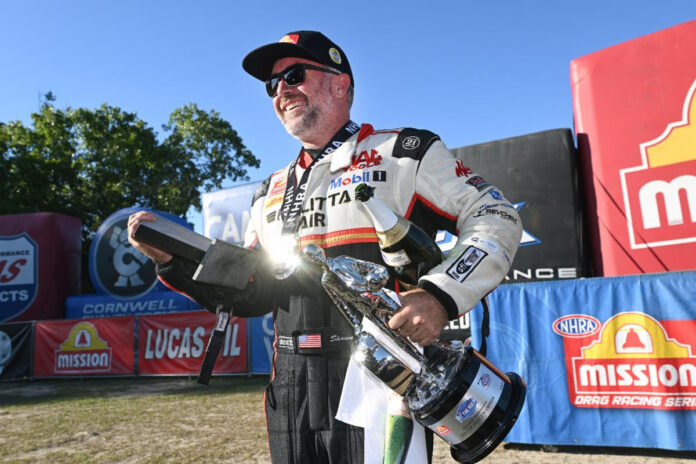
Drama is at a relative minimum here – at least compared to the other categories. Doug Kalitta’s Las Vegas win gives him a fighting chance against teammate and championship frontrunner Shawn Langdon, but this one is still heavily steered towards Langdon becoming a two-time champ.

Langdon currently holds a 107-point lead against the reigning champ, which means if things stand pat during qualifying, Langdon will only have to win the first round – even with points-and-a-half on the line – to clinch the title after a dominant season.

If Langdon gets 13 or more qualifying points than Kalitta in qualifying, he can clinch it to close out qualifying on Saturday.

FUNNY CAR

This one got a whole lot more interesting following Jordan Vandergriff’s victory in Las Vegas, as he enters the weekend 39 points back of Matt Hagan, who has his eyes on a remarkable fifth Funny Car world title.

Getting it under 30 points in qualifying – which would be difficult, but certainly not impossible – sets up a possibly winner-take-all scenario, but as it stands, Vandergriff needs to go two rounds further to pass Hagan at the finale.

Of course, that happened in Las Vegas, which sets up for a thrilling Pomona. Vandergriff certainly has momentum, but Hagan has been steady all season and has an incredible track record in Pomona, too. He won the spring race – at the 1,000th Funny Car race – and his eight wins at the legendary facility are second to only John Force in the Funny Car ranks.

J.R. Todd isn’t out of the mix, either. He’s 104 points out of first but will likely need a race win and some help to hoist a second world title.

PRO STOCK

Glenn is honing in on a second world title and seems like a runaway freight train heading to Pomona. He’s won the last two events, qualifying No. 1 at both events and making the quickest pass in Pro Stock history, taking an 87-point lead over Matt Hartford and a 99-point advantage over Greg Stanfield into the finale.

Should Glenn continue his torrid qualifying pace and get it to more than 90 points over Hartford going into Sunday, a first-round win would clinch the championship for Glenn.

If he doesn’t, he’ll need a second-round win to pick up a second world title.

An early loss – and Glenn did suffer a rare first-round mishap to open the Countdown to the Championship – would throw things into chaos.

PRO STOCK MOTORCYCLE

There’s bonus action in Pro Stock Motorcycle and that extra excitement could set the stage for a thriller on Sunday.

The final round from Las Vegas, featuring teammates Richard Gadson and Gaige Herrera, was postponed to Saturday qualifying in Pomona and there’s plenty riding on the outcome. Should Gadson, the reigning world champ, get the victory, he’ll add 20 points to his lead, which currently stands at 55 points over Herrera.

If the two-time champ Herrera wins and does some damage in qualifying, that deficit could get under 30 points for Sunday, setting up what could be an incredible winner-take-all scenario between the two standouts.

That means a 40-point swing is on the line on Saturday, which could go a long way when it comes to a world title and any Sunday dramatics.

The weekend begins Friday with two rounds of qualifying and the final two rounds follow on Saturday, followed by eliminations on Sunday, where world champions will be crowned at one of motorsports’ most historic venues. This year’s race will be broadcast on FS1, including eliminations coverage starting at 5 p.m. ET on Sunday.

Pomona race fans can also enjoy special pre-race ceremonies on Sunday, along with the SealMaster Track Walk. Another can’t-miss experience is Sunday’s winner’s circle celebration, where fans are invited to congratulate the champs and event winners. As always, every ticket is a pit pass to the most powerful motorsports attraction. Fans can see their favorite teams in action, get autographs from their favorite drivers and more. They can also visit the midway for displays, merchandise, food and fun.

In Pomona, the NHRA Mission Foods Drag Racing Series will feature two qualifying rounds at 12 and 2:30 p.m. PT on Friday, and the final two rounds of qualifying on Saturday at 11:30 a.m. and 2 p.m. Final eliminations are scheduled for 11 a.m. PT on Sunday. Television coverage includes qualifying action on FS1 at 11 a.m. ET on Sunday, followed by eliminations coverage at 5 p.m. ET.

To purchase tickets to the 61st annual In-N-Out Burger NHRA Finals, fans can visit www.NHRA.com/tickets. All children 12 and under will be admitted free in the general admission area with a paid adult. For more information about NHRA, visit www.NHRA.com.


About Mission Foods

MISSION®, owned by GRUMA, S.A.B. de C.V., is the world’s leading brand for tortillas and wraps. MISSION® is also globally renowned for flatbreads, dips, salsas and Mexican food products. With presence in over 112 countries, MISSION® products are suited to the lifestyles and the local tastes of each country. With innovation and customer needs in mind, MISSION® focuses on the highest quality, authentic flavors, and providing healthy options that families and friends can enjoy together. For more information, please visit https://www.missionfoods.com/

About NHRA

NHRA is the primary sanctioning body for the sport of drag racing in the United States. NHRA presents 20 national events featuring the NHRA Mission Foods Drag Racing Series and NHRA Lucas Oil Drag Racing Series, as well as the JBS Equipment NHRA Pro Mod Drag Racing Series presented by Elite Motorsports and NHRA Flexjet Factory Stock Showdown™ at select national events. NHRA provides competition opportunities for drivers of all levels in the NHRA Summit Racing Series and NHRA Street Legal™. NHRA also offers the NHRA Jr. Street® program for teens and the Summit Racing Jr. Drag Racing League® for youth ages 5 to 17. With more than 100 Member Tracks, NHRA allows racers to compete at a variety of locations nationally and internationally. NHRA’s Youth and Education Services® (YES) Program reaches over 30,000 students annually to ignite their interest in automotive and racing related careers. NHRA’s streaming service, NHRA.tv®, allows fans to view all NHRA national events as well as exclusive features of the sport. In addition, NHRA owns and operates three racing facilities: Gainesville Raceway in Florida; Lucas Oil Indianapolis Raceway Park; and In-N-Out Burger Pomona Dragstrip in Southern California. For more information, log on to www.NHRA.com, or visit the official NHRA pages on Facebook, Instagram, Twitter, and YouTube.

Blake Harris named Shane van Gisbergen’s crew chief for 2027 Cup season

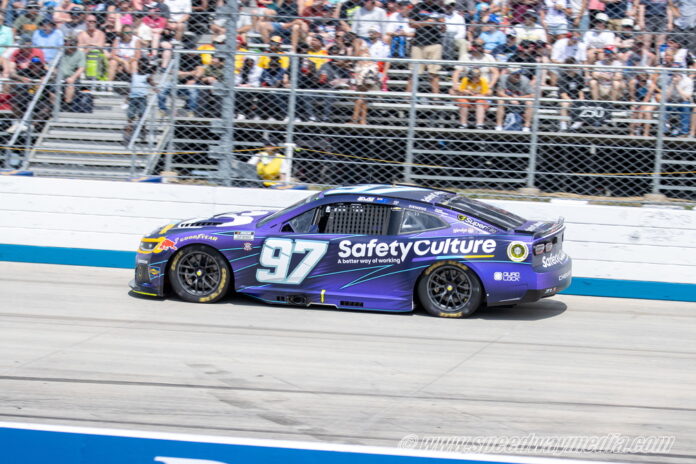
Photo by Logan Allen for SpeedwayMedia.com.

Blake Harris will be joining Trackhouse Racing and work as Shane van Gisbergen’s crew chief for the 2027 NASCAR Cup Series season.

The announcement, which was made by Trackhouse Racing on Monday, November 9, comes as Harris caps off his fourth consecutive season working as a crew chief at Hendrick Motorsports and the No. 48 Chevrolet team piloted by Alex Bowman. 

Bowman, who was absent for four races earlier this season, concluded the 2026 season in 26th place in the standings with four top-five results, eight top-10 results and an average-finishing result of 20.0. Next season will mark Bowman’s final full-time campaign in the Cup Series division as Connor Zilisch will then replace Bowman in the No. 48 entry for the 2028 season.

Harris made his first appearance as a Cup crew chief with Martin Truex Jr. at Texas Motor Speedway in mid-October 2020 before he worked as Michael McDowell’s crew chief in 2022, the latter of which occurred at Front Row Motorsports. Beginning in 2023, Harris worked at Hendrick Motorsports as the No. 48 crew chief and with Bowman. Over four seasons, the duo notched a victory at the Chicago Street Course in 2024 along with 17 top-five results, 31 top-10 results, four poles (including the 2023 Daytona 500 pole) and 313 laps led. They also achieved a Playoff berth in 2024 and finished in ninth place in the final standings. 

Even when the No. 48 entry was piloted for select events by interim competitors Josh Berry, Anthony Alfredo and Justin Allgaier in two seasons, during which Bowman suffered a back injury from a sprint car accident in 2023 and suffered from vertigo in 2026, Harris remained atop the pit box of the No. 48 team.

Through 173 events as a Cup Series crew chief, Harris has achieved a single victory, four poles, 24 top-five results and 62 top-10 results while working with six different competitors. The 2027 season will feature a seventh competitor Harris will be working with, that being van Gisbergen, a three-time Supercars champion and driver of the No. 97 Trackhouse Racing Chevrolet entry. Harris replaces Stephen Doran while Doran transitions to Spire Motorsports to work as a Cup crew chief for Michael McDowell.

This past season, van Gisbergen, who competed in his second full-time campaign in NASCAR’s premier series, notched a pair of road course victories (Watkins Glen International in May and Sonoma Raceway in June) along with a pair of poles, six top-five results, 10 top-10 results, 270 laps led and an average-finishing result of 18.9. Despite missing the Chase, he emerged as the highest non-Chase competitor in the final standings in 17th place to cap off the 2026 season. 

Hendrick Motorsports’ decision on a new crew chief for Bowman and the No. 48 Chevrolet team for the 2027 Cup Series season remains to be determined.

The 2027 NASCAR Cup Series season is scheduled to commence with the Wheatley Vodka Clash at Daytona International Speedway on February 13. This event will then be followed with with 69th annual running of the Daytona 500 that will occur on February 21 and air on FOX Sports, MRN Radio, SiriusXM and HBO MAX.  

Drug and Alcohol Testing: What Motorsports Can Learn From Commercial Trucking

Photo by depositphotos at https://depositphotos.com/

Motorsports and commercial trucking share more than a love of big engines. Both put people in control of heavy, fast machines where a lapse in judgment can hurt others. Both have also built systems to keep impaired drivers out of the seat.

The approaches differ in instructive ways. Trucking’s federal system, in particular, offers lessons about consistency, records, and accountability that any safety-focused organization can learn from.

How Trucking Tests Drivers

Truckers who cross state lines live under federal drug and alcohol testing rules, and their employers usually have to test them:

  • before they start driving for the first time
  • randomly throughout employment
  • after certain crashes
  • when a supervisor has reasonable suspicion
  • before returning to duty after a violation

Every sample goes through the same steps, a certified lab, and a documented chain of custody. A medical review officer checks any positive result before it counts.

When Testing Fails on the Highway

When the system breaks down, the results can be severe. A carrier that skips a required query or ignores a positive test may put an impaired driver on the road.

People injured in those crashes face complex questions about carrier responsibility. In Texas, some turn to the Thiessen Law Firm injury law firm or other counsel to examine testing records, hiring files, and post-crash procedures.

Missing post-accident tests can also become an important fact. Federal rules set time windows for testing after qualifying crashes, and a carrier that misses them must document why.

The Clearinghouse Closed a Gap

For a long time the system leaked. Fail a test at one carrier, and a driver could sometimes sign on with another one that never heard about it.

The FMCSA Drug and Alcohol Clearinghouse closed that loophole. It logs every commercial driver’s drug and alcohol violations in one national record, and carriers have to search it before hiring and then every year.

A driver with an unresolved violation cannot perform safety-sensitive duties until completing a return-to-duty process with a substance abuse professional.

How Motorsports Handles Testing

Major racing series have their own substance abuse policies. Many include random testing of drivers, crew members, and officials, along with testing for cause.

These policies are set by sanctioning bodies rather than federal law. They vary by series and can change from season to season. Penalties for violations can include suspension, required treatment, and reinstatement conditions, which mirror the return-to-duty idea used in trucking.

Lessons From Trucking

Several features of the trucking system translate well to any safety-sensitive environment:

  • a central record that follows individuals across employers
  • standardized testing procedures that hold up to scrutiny
  • clear return-to-duty steps after a violation
  • mandatory checks before someone takes on safety duties

The core idea is simple, and it does not depend on the size of the organization. Testing works best when its results cannot be ignored or erased by moving to a new organization.

Impairment Beyond Drugs and Alcohol

Testing catches only part of the problem. Fatigue, certain medications, and medical conditions can also impair driving.

Trucking addresses some of these issues through hours-of-service limits and medical certification. Motorsports relies on medical evaluations and team practices. Both benefit from cultures where people feel safe reporting a problem before it causes harm. A crew member who admits a bad night of sleep, or a driver who discloses a new prescription, gives the team a chance to adjust before anything goes wrong.

After an Injury

Whether on a racetrack or a highway, injuries from crashes can have lasting effects. Speedway Media has covered dealing with injuries from an accident, including practical steps for recovery.

Medical care, documentation, and patience during recovery all matter. Symptoms such as headaches, neck pain, or trouble concentrating can appear days after a crash, so a follow-up visit is worth scheduling even when the first exam looks clear.

Building a Culture of Safety

Testing programs are only as strong as the culture behind them. When organizations treat testing as a box to check, gaps appear. When they treat it as part of a broader commitment to safety, it works.

Commercial trucking’s system is not perfect, but its emphasis on records and accountability offers a useful model. Motorsports, with its long tradition of safety innovation, is well placed to keep learning from it.

This article compares testing practices in trucking and racing in general terms. It is not legal advice for any driver or team.

Backs, Bumps, and Long Stints: Spinal Health for Racers and Track-Day Drivers

Racing looks like a sport of hands and feet. Ask anyone who has finished a long stint in a stiff race car, though, and they will mention their back first.

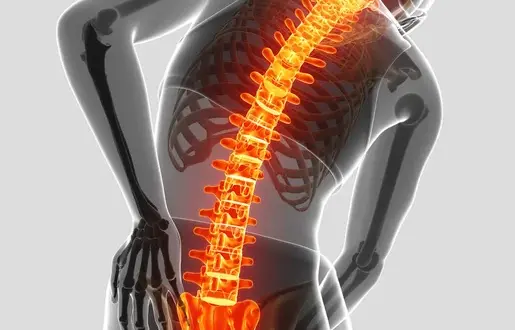
Hours of vibration, hard braking, high lateral loads, and a fixed seating position put real stress on the spine. Weekend track-day drivers feel it too, often without the conditioning and support that professional drivers rely on.

Why Racing Is Hard on the Spine

Several forces work against the spine in a race car. Constant vibration from stiff suspension travels through the seat. Curbs and bumps send sharp jolts upward. Cornering loads push the torso sideways for minutes at a time.

Add a seating position that rarely changes, and the muscles supporting the spine can tire quickly. Over time, that strain can contribute to stiffness, pain, and in some cases more lasting problems.

Understanding Back Pain

Back pain is extremely common, in and out of motorsports. The National Institute of Neurological Disorders and Stroke explains that most back pain is mechanical, arising from muscles, ligaments, discs, and joints rather than serious disease.

The same source says most episodes ease with time, rest, and simple treatment. Pain that hangs around or gets worse is a different matter and calls for a proper exam.

Treatment Options Drivers Explore

Drivers with ongoing discomfort often look at a range of non-surgical options. Physical therapy, targeted exercise, chiropractic care, and massage are common starting points.

Some drivers dealing with disc-related pain also look into options such as Roach Family Wellness spinal decompression treatment, which uses controlled traction intended to reduce pressure on spinal discs. As with any treatment, a proper evaluation and realistic expectations matter.

Numbness, weakness, trouble controlling the bladder or bowels, or pain after a crash all need a doctor quickly, not a home remedy.

The Seat Matters More Than People Think

A race seat is not just a safety device. It is also the main point of contact between the driver and the car’s forces.

A seat that fits well distributes loads more evenly and holds the body in a stable position. A poorly fitted seat allows movement that the spine and muscles must constantly resist. Custom foam inserts, adjustable lumbar support, and careful harness geometry all help lock the body into a neutral position.

Speedway Media has covered how to choose the right sport seats, which is a good starting point for drivers thinking about fit, support, and comfort.

Building a Stronger Foundation

Professional drivers train their bodies as carefully as their skills. A strong core and back help the spine handle repeated loads.

Helpful training areas include:

  • core stability exercises
  • strengthening for the upper back and neck
  • hip mobility and flexibility work
  • cardiovascular conditioning for endurance

Neck strength matters especially for drivers who experience high cornering forces, since the head and helmet add significant load. Many drivers use simple resistance bands or weighted harness exercises to build that strength between events.

Habits Before and After a Session

Small routines can make a difference:

  • warming up before getting in the car
  • staying hydrated throughout the day
  • stretching between sessions
  • getting out of the car and moving during breaks
  • cooling down after the final session

Recovery is part of performance. Sleep, nutrition, and rest days help muscles repair after a demanding weekend. Long drives home from the track add their own strain, so a few stops to walk and stretch are worth the extra time.

When to Stop and Get Checked

Pain is information. Drivers sometimes push through discomfort because they do not want to miss track time, but ignoring persistent symptoms can turn a manageable issue into a serious one.

Any real hit, even at modest speed, is worth a trip to the medical center. Damage to the spine can hide at first, since adrenaline dulls pain for hours and the stiffness may not show up until the next morning.

Protecting the Spine for the Long Run

Racing will always be physically demanding. The goal is not to eliminate stress on the spine but to manage it wisely.

Good seat fit, consistent conditioning, smart recovery habits, and timely care help drivers keep doing what they love for many seasons, whether they race professionally or just chase lap times on weekends.

Nothing here replaces a medical exam. A driver whose back pain keeps coming back should see a doctor or physical therapist before the next session.

Haulers, Fatigue, and the Long Road Between Race Weekends

Photo by depositphotos at https://depositphotos.com/

Race fans see the cars. They rarely see the haulers. Yet every weekend, those big rigs carry primary cars, backup cars, engines, tools, and spare parts across the country, often leaving the shop on a Wednesday and arriving at the track with little time to spare.

The drivers behind the wheel of those haulers are some of the most important people on any team. They also face one of the most persistent risks in commercial driving: fatigue.

A Schedule Built on Tight Windows

Many teams are based around Charlotte and Mooresville, North Carolina. From there, haulers travel to tracks in Phoenix, Las Vegas, Daytona, and everywhere in between.

That travel is relentless. A long trip west, a race weekend, a quick turnaround, and then the next track. Delays from weather, traffic, or mechanical issues can compress the schedule further. A rainout on Sunday can push a race to Monday and leave the hauler crew racing the calendar to reach the next track.

When Big Trucks Crash

Crashes involving tractor-trailers, whether race haulers or freight trucks, often cause serious injuries. North Carolina’s highways, including Interstates 85, 77, and 40, carry heavy truck traffic every day.

People hurt in those crashes face complex questions about responsibility and insurance, and some contact Farmer & Morris Law North Carolina truck accident attorneys or other counsel to sort through electronic logs, carrier records, and driver schedules.

Crashes in North Carolina carry an extra twist. The state’s contributory negligence rule can shut out an injured driver who shares even a small slice of the blame.

The Hours-of-Service Rules

Anyone driving a big rig across state lines is on a federal clock. The FMCSA hours-of-service rules generally include:

  • 11 hours behind the wheel, at most, once a driver has had 10 straight hours off
  • a hard stop on driving once 14 hours have passed since the shift began
  • a half-hour break once 8 hours of driving have piled up
  • a cap of 60 hours in 7 days or 70 hours in 8

Many race teams use team drivers, two people who take turns behind the wheel, to cover long distances while staying within these limits.

Fatigue Does Not Follow the Rules

Staying within legal limits does not guarantee alertness. Poor sleep in a truck cab, irregular schedules, and long weekends at the track all take a toll.

Fatigue slows reaction times and affects judgment. In an 80,000-pound vehicle, those small delays can have severe consequences for everyone on the road. Research on drowsy driving has linked long periods without sleep to impairment comparable to driving with an elevated blood alcohol level.

Safety Lessons From the Track

Motorsports has spent decades improving driver safety. Energy-absorbing barriers, head and neck restraints, and stronger car designs have changed the sport.

Speedway Media has covered NASCAR’s safety innovations for drivers at high speeds, and many of those principles apply on the highway too. Planning for human limits, building in margins, and refusing to accept preventable risks all translate.

How Teams Manage Fatigue

Well-run teams treat hauler safety as part of their overall operation. Common practices include:

  • scheduling team drivers for long trips
  • building rest stops into travel plans
  • monitoring electronic logging device data
  • allowing extra time for weather and traffic

Some teams also use technology such as lane departure warnings and collision mitigation systems. The best crews treat a tired driver pulling over as a smart call, not a failure, and they build that expectation into the culture from the first day of the season.

The Role of Electronic Logs

Most interstate trucks now use electronic logging devices that record driving time automatically. These records help drivers and carriers stay within the rules.

After a crash, the same logs can become key evidence. They show how long a driver had been on the road and whether rest periods were taken. Investigators often compare them with fuel receipts, toll records, and GPS data to confirm the timeline.

The Real Endurance Race

Every race weekend depends on haulers arriving safely. The drivers who make that happen deal with long distances, tight schedules, and the constant challenge of staying alert.

Respecting hours-of-service limits, planning for fatigue, and learning from motorsports safety culture help keep everyone on the road safer, long before the green flag drops.

This piece is general reading on hauler fatigue and highway safety around race weekends. It is not legal advice for any crash.

How Michigan Family Law Attorneys Help Families Navigate Legal Challenges

Legal issues that involve families can be hard on the emotions, especially when they have to do with divorce, child custody, child support, or other personal issues. Knowing your legal rights guides you to protect your family’s interests and make smart choices. Michigan Family Law Lawyers assist people and families dealing with these issues and walk them through the legal process. Getting legal help makes a difference whether you are thinking about getting a divorce, settling a parenting disagreement, or asking for changes to a court order. An experienced lawyer guides you to understand the choices you have in your specific case, explains the laws that apply in Michigan, and prepares the documents you need. 

  1. Understanding the Role of Michigan Family Law Lawyers
  2. Legal Matters a Family Law Attorney Can Handle
  3. Protecting Children’s Best Interests During Custody Disputes
  4. Understanding Property Division and Financial Support
  5. Choosing the Right Michigan Family Law Lawyer

Understanding the Role of Michigan Family Law Lawyers

Family law lawyers in Michigan help people with legal issues that have to do with marriage, kids, money, and family bonds. Some of their jobs are to explain state laws, make legal documents, go to court for clients, and assist family members in coming to an agreement. Also, before clients make big choices that could affect their future, they guide them to understand their rights. Family law cases don’t always need to go to court. Sometimes, disagreements will be settled through mediation or negotiation. 

Family law deals with a wide range of legal issues that affect people and their families. A Michigan family law attorney assists with a variety of cases, depending on the specifics of the family’s situation. Some common issues are:

  • Divorce and separation
  • Child custody
  • Parenting time
  • Child support
  • Spousal support
  • Property division
  • Adoption

Protecting Children’s Best Interests During Custody Disputes

When parents argue about where to live, school, health care, and parenting duties, child custody disputes can get stressful. In Michigan, courts decide who gets custody of a child by looking at what is best for the kid in terms of safety, stability, and well-being. These include how the child feels about each parent, where the child lives and goes to school, and how well each parent cares for the child. Family lawyers in Michigan support parents in gathering important evidence, getting ready for hearings, and coming up with fair parenting plans. 

Understanding Property Division and Financial Support

Making financial choices during a divorce results in effects on both people for a long time after the marriage ends. When Michigan splits up a couple’s property, they use the principle of equitable distribution. This means that the court tries to find a fair solution instead of just giving each item an equal share. The final choice may depend on the specifics of each marriage. An important thing to think about may also be financial support, especially if one spouse needs or makes more money. 

Choosing the Right Michigan Family Law Lawyer

When you have personal legal issues, choosing a family law attorney is a big deal. The right lawyer should know Michigan’s family laws, have experience with cases like yours, and be able to explain your legal choices clearly. Before you hire a lawyer, you might want to set up a meeting to talk about your situation and find out how the lawyer might handle your case. It’s also a good idea to find out how much the lawyer costs, how long the process will take, how they communicate, and what outcomes are possible. 

Conclusion

Family law issues impact relationships, finances, and future duties. Working with a Michigan family law attorney helps people understand their rights and get through the legal processes related to divorce, child custody, parenting time, and child support. An attorney provides you advice, puts together important papers, and looks out for your best interests in court or during negotiations. Since every family situation is different, talking to a lawyer early on may help you understand your options and keep things from getting more complicated than they need to be. Taking the time to find a family law lawyer with a lot of experience assists you in protecting your rights and working toward a fair outcome. 

Frequently Asked Questions (FAQs)

What do Michigan family law lawyers handle?

They deal with divorce, child custody, parenting time, child support, spousal support, property split, adoption, and other issues that have to do with families.

Do I need a lawyer to file for divorce in Michigan?

No, people in Michigan can represent themselves in divorce proceedings. But it might be a good idea to hire a lawyer if there are children involved, property disputes, money issues, or arguments between spouses.

How do Michigan courts determine child custody?

The courts in Michigan look at what is good for the child. They look at things like the child’s emotional relationships, the home setting, the child’s stability, and the child’s safety.

The Dutch Reach: The Simple Car-Door Habit That Prevents Dooring Crashes

Opening a car door feels like a routine task. But when a cyclist is approaching from behind, one quick movement can cause a serious crash. The driver may not see the rider in the mirror, and the cyclist may have little time to stop or move out of the way.

A simple habit called the Dutch Reach can help prevent these situations. It changes how you reach for the door handle, making it easier to look behind you before opening the door. It takes only a moment and can become second nature with practice.

What Is Dooring?

Dooring happens when someone opens a vehicle door into the path of an approaching cyclist. The rider may strike the door directly or swerve into moving traffic to avoid it. Either situation can lead to serious injuries.

The risk is especially high on streets where bike lanes run beside parked cars. Cyclists may have limited room to move away from an opening door, particularly when traffic is passing on their left.

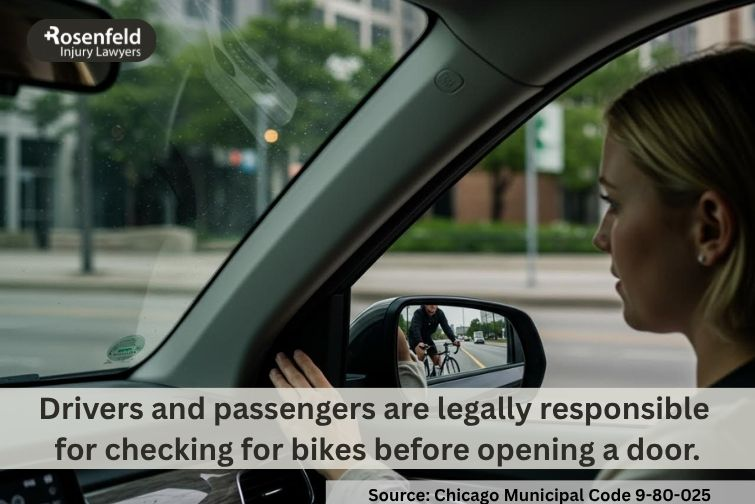
Drivers and passengers can help prevent these crashes by checking before opening any door facing traffic. Mirrors are useful, but they do not show everything. A cyclist may be in a blind spot or approach between mirror checks.

How to Do the Dutch Reach: Four Steps

The Dutch Reach is a simple technique popularized in the Netherlands, where drivers are encouraged to open car doors with the hand farthest from the door.

Follow these four steps:

  1. Reach across.
    If you are sitting in the driver’s seat, use your right hand to reach for the door handle instead of your left. Passengers on the right side can use their left hand.
  2. Turn your body.
    Reaching across naturally turns your shoulders toward the window and the area behind you.
  3. Look for cyclists.
    Check your side mirror and look over your shoulder for approaching bicycles, motorcycles, and other traffic.
  4. Open the door slowly.
    If the way is clear, open the door a little at a time. Stay alert as you step out.

The point is not simply to use the opposite hand. It is to build a full check into the action of opening the door.

Practice the movement whenever you park. Once it becomes a habit, you are less likely to forget the shoulder check when you are distracted or in a hurry.

Why the Dutch Reach Works

People often open doors while distracted, talking to a passenger, or preparing to leave the car. A quick mirror check can become automatic and incomplete.

Using the far hand encourages drivers to turn their bodies and look over their shoulders. It also creates a pause to check for approaching cyclists before opening the door.

No technique removes every risk, but making this check part of the routine can help prevent dooring crashes.

Dooring Is Against the Law in Illinois

Under Illinois’s dooring law, a person must not open a vehicle door into moving traffic unless it is reasonably safe and will not interfere with traffic. A door must not remain open longer than necessary to load or unload passengers.

The rule applies to drivers and passengers alike. Using the Dutch Reach helps make checking for approaching cyclists part of opening the door safely.

Tips for Rideshare Drivers and Passengers

Frequent stops make dooring prevention especially important for rideshare and delivery drivers. A few simple habits can help keep cyclists and passengers safer.

  • Choose a safe stopping place.
    Pull over where stopping is permitted, and avoid blocking bike lanes.
  • Use the curbside exit.
    Passengers should exit on the sidewalk side whenever possible, away from moving traffic.
  • Give a quick reminder.
    Say, “Check for bikes before opening the door,” especially when stopping on a busy street.
  • Check before opening your own door.
    Drivers should use the Dutch Reach and look over their shoulder before stepping out.
  • Allow time to exit.
    Avoid rushing passengers, even during busy pickup and drop-off periods.
  • Check mirrors before pulling away.
    Make sure passengers have closed their doors and cyclists are not approaching alongside the vehicle.
  • Avoid stopping near intersections or narrow bike lanes when a safer, legal stopping location is available.

Parents can also teach the Dutch Reach to teen drivers and passengers. Practicing early helps build a lasting habit for busy streets, parking lots, and school pickup zones.

What Cyclists Can Do to Reduce the Risk

What Cyclists Can Do to Reduce the Risk

Drivers and passengers carry responsibility for checking before opening a door, but cyclists can also take precautions.

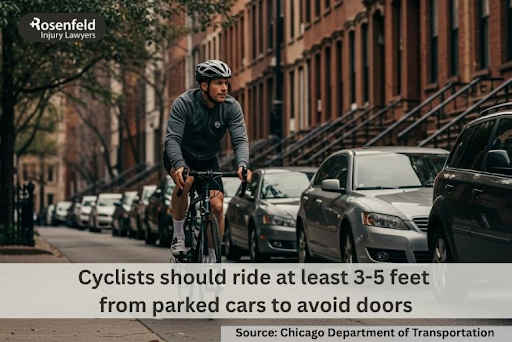
When it is legal and safe, ride far enough from parked vehicles to avoid the door zone, the area into which a car door could swing. Do not move into fast traffic without checking behind you, and use lights in low-visibility conditions.

Watch for signs that someone may be about to exit, such as brake lights, a vehicle that has just parked, or people visible inside. These clues do not guarantee a door will open, so keep enough space to react when possible.

For more practical prevention advice, read how cyclists can avoid dooring.

If a Dooring Crash Happens

If a dooring collision occurs, move out of immediate danger if you can do so safely. Call 911 if anyone is injured or needs emergency assistance, and seek medical care even if the injury initially seems minor.

If it is safe, take photographs of the vehicle, open door, bicycle, road layout, and any visible damage. Collect the driver’s details and contact information for witnesses. Keep damaged equipment and save medical records and insurance correspondence.

Fault and insurance questions can arise after a dooring crash. In serious cases, or when responsibility is disputed, help from a bike dooring lawyer in Chicago may help an injured rider understand the process and what evidence may be relevant.

The Dutch Reach takes about two seconds: use the far hand, turn, look, and open slowly. Making that movement a habit can help protect cyclists and make streets safer for everyone. This article provides general information, not legal advice.

7 Tested Floor Visualizers

Photo by depositphotos at https://depositphotos.com/

Let me paint you a picture. You’re standing in a flooring showroom, holding a 4-inch chip, squinting at it under fluorescent lights, and somehow trying to decide if this is the color that’ll make your living room feel like home for the next fifteen years.

It’s a terrible way to shop. And thanks to floor visualizers, you no longer have to do it that way.

These tools let you photograph your actual room, drop a floor into it, and see the result before you spend a cent. I spent the past few weeks testing every major option I could find. Seven stood out. Here’s what I learned.

What separates a good visualizer from a waste of your time

I judged each tool the same way you would. I uploaded a photo from my phone, picked a floor, and asked myself: does this actually help me decide?

The good ones let you use your own room, show real products you can buy, and don’t force you through ten screens before you see a result. Bonus points went to tools that also help you plan, whether that means a material calculator, pattern options, or a way to share your picks with someone else.

The bad ones? They crashed, loaded only stock rooms, or limited me to a dozen floors from a single brand. Those didn’t make the cut.

1. Floorma — the one I keep coming back to

floorma.com · Free online · Apps for iPhone and Android

I’ll be honest: I expected Floorma floor visualizer to be just another pretty preview tool. It ended up being the only one I actually used to plan a real project.

Here’s what makes the difference. Every other visualizer on this list belongs to a single store. That means you see only what that store sells. Floorma is independent. It pulls products from 10+ real brands into one catalog, so you’re comparing across the market instead of down one aisle.

You don’t even need to download anything. The web version at floorma.com is free, asks for zero personal information, and loads instantly. I had a preview of my bedroom floor in under two minutes.

What you actually do with it

You upload a room photo or take one with your camera. Then you browse — filter by wood, laminate, vinyl, or tile, by brand, by color. Tap a floor and it renders onto your room.

But here’s where it gets interesting. You can adjust plank width, switch between herringbone and straight-lay patterns, and compare several favorites side by side. Most retail tools stop at “here’s a picture.” Floorma says “here’s a picture, now let’s figure out the rest.”

The planning tools that sealed the deal

The room calculator surprised me. I typed in my dimensions and it returned a material estimate, a waste buffer, and a rough cost. That’s something I’d normally have to ask a contractor or dig through a separate spreadsheet to figure out.

Once you’re satisfied, save the project on your phone, download an HD render, or share everything directly with your installer or partner. It felt like an actual project folder, not just a toy.

What it costs

The web visualizer is completely free and doesn’t ask you to sign up. Inside the app, a room scan costs 1 credit and an HD render costs 2. Credits are one-time purchases that never expire, and failed renders get refunded automatically. No subscriptions.

The fine print

Your projects live on the device you created them on, so they won’t migrate to a new phone. And the prices shown are estimates — always confirm final numbers with the retailer.

The takeaway: If you only try one tool from this list, Floorma is the one. It’s the only visualizer I found that genuinely helps you think, not just look.

2. Floor & Decor — best for tile projects

If your renovation involves tile, this is the retail tool to open first.

Floor & Decor lets you layer tile, stone, wood-look plank, laminate, and vinyl onto your room photo — and it does something most competitors don’t: it drops wall tile into the same scene. That’s huge when you’re designing a kitchen backsplash and floor at the same time.

No signup required. Just upload a photo or pick a gallery room and start experimenting.

The checkout integration is slick, too. Found a combination you love? You can add those exact products to your cart without ever leaving the preview. Most tools make you hunt for the SKU afterward. Floor & Decor skips that step.

Why it’s here: Tile coverage is excellent, and the cart integration is the tightest purchase path of any visualizer I tried. The catch: You’re locked into Floor & Decor’s catalog.

3. Home Depot — biggest single-store selection

Home Depot’s visualizer runs on Roomvo, the white-label engine that quietly powers a lot of the flooring industry. It’s available on the website and inside the Home Depot app, and the product range is genuinely massive.

Beyond standard flooring, you can also preview wall tile and area rugs, which is a nice bonus if your project touches more than one surface. Look for items tagged “Visualizer Enabled” in the flooring section to make sure they’re compatible.

One tip: if the direct landing page loads slowly or glitches, try launching the visualizer from an individual product page. That route has been more reliable in my experience.

Why it’s here: Sheer catalog size is hard to beat if you already shop at Home Depot. The catch: Only Home Depot inventory, and there’s no quantity calculator.

4. LL Flooring — preview now, sample for free

LL Flooring (formerly Lumber Liquidators) calls its tool Picture It. Upload your room photo and browse hardwood, laminate, vinyl, and tile options, with the catalog skewing toward wide-plank styles.

But what really makes LL worth a stop is the sample program. You can whittle your list inside Picture It and then order up to four physical swatches at no charge — in the same browsing session. That shortcut from screen to hand is something no other tool on this list offers as smoothly.

If you love wide planks and want to touch your top picks before committing, this is the one.

Why it’s here: Free physical samples paired with a decent visualizer is a smart combo. The catch: LL Flooring products only.

5. Mohawk — familiar engine, focused catalog

Mohawk gives you three ways to get your room into the tool: drag a file onto the page, scan a QR code on your phone, or choose from about seventeen demo rooms. Behind the curtain, it’s the same Roomvo engine that powers Home Depot.

If you’ve used any Roomvo-based visualizer before, you’ll feel at home instantly. The upload flow, the floor mask, the rendering speed — it’s all the same. The only real difference is the catalog: hardwood, laminate, carpet, and vinyl, all from Mohawk.

It’s not groundbreaking, but it’s stable, it works, and if Mohawk is already on your shortlist, it’ll answer your “what would this look like?” question quickly.

Why it’s here: Reliable, easy to use, and plenty of preset rooms for quick tests. The catch: You can only browse Mohawk products.

6. Shaw Floors — clean, private, no download

Shaw’s View in Your Room tool loads straight in the browser. Upload a phone photo or pick a preloaded scene, then cycle through luxury vinyl, hardwood, laminate, carpet, and tile from across the Shaw family (including COREtec and Anderson Tuftex).

Two things stood out during my test. First, you can flip the plank direction and adjust the installation pattern — something a surprising number of brand tools skip. Second, Shaw explicitly states that your photo is used only for that session and not saved. In a world where most tools say nothing about your data, that transparency is refreshing.

Why it’s here: Pattern controls and a clear privacy stance give it an edge among brand tools. The catch: Shaw-family brands exclusively.

7. Lowe’s — floor and wall color in one shot

Lowe’s took a different route and built its own visualization engine instead of licensing Roomvo. The payoff is a two-for-one tool: upload a room photo and swap both the flooring and the wall paint at the same time.

That dual preview is genuinely useful. Your floor and your walls share the same visual space, so testing them together catches clashes you’d never notice in a showroom. Want to see if that dark vinyl works with a sage green wall? Upload once and find out.

One caveat: plank dimensions aren’t always spot-on, so don’t take the scale as gospel. Use it for mood and direction, then confirm the details with a real sample.

Why it’s here: The floor-plus-paint combo is unique and practical. The catch: Lowe’s products only, and scale can be approximate.

A few things I wish someone had told me before I started

After running dozens of room photos through these tools, I picked up some tricks the hard way. Save yourself the trial and error.

Daylight is everything. I wasted an entire evening testing floors under my kitchen’s warm LED bulbs. Every preview looked yellow. The next morning I retook the photo in natural light and the results were night and day — literally.

Angle matters more than you’d think. Stand up, hold the phone at chest height, and tilt it down so the floor fills the lower half. The first time I shot from the couch, the tool basically got a photo of my bookshelf.

Clear the floor completely. Rugs, dog toys, stray chargers — all of it. The masking algorithm needs clean edges. I left a dark doormat in one shot and the tool thought it was part of the floor.

Keep the back wall in frame. Walls and doorways give the software perspective cues. Without them, planks rendered flat and oddly sized.

Watch your file size. Aim for 1080p to 5 MB. I uploaded a massive 12 MB image once and the tool silently downscaled it into mush.

Shoot the same room twice — morning and evening. A pale ash plank that looked beautiful at noon disappeared under my warm lamps at 9 PM. Two photos show you both versions of reality.

And please, don’t skip real samples. A visualizer builds your shortlist. A physical swatch in your own light confirms the decision.

Questions I kept hearing (and my honest answers)

I’ve never shopped for flooring before. Where do I start?

Open floorma.com in your browser. No app, no account, no credit card. Upload a room photo, browse real floors from many brands, and you’ll have your first preview in about two minutes.

Can I use a picture that’s already on my phone?

Absolutely. Every tool here accepts uploads from your camera roll. Just make sure the lighting is decent and the floor isn’t buried under furniture.

How much should I trust what I see on screen?

Trust the color palette and the overall vibe. Be more skeptical about plank width, sheen, and subtle grain, because those depend on lighting and screen calibration. A visualizer gets you 80% of the way there. A physical sample closes the gap.

Do I have to download an app?

Not for most of these. Floorma, Shaw, Floor & Decor, and Lowe’s all work in a mobile browser. Home Depot also rolls visualization into its own app if you’d rather go that route.

Can any visualizer tell me how much flooring to order?

Floorma’s room calculator is the only one I found that does this well. Plug in your dimensions and it returns quantity, waste allowance, and approximate cost. The retail tools skip that step entirely.

Is a visualizer a replacement for seeing the floor in person?

No, and it shouldn’t be. Think of it as a filter. You wouldn’t test-drive every car on the lot — you’d narrow it to two or three first. Same idea here. Visualize, shortlist, then sample.

So, which one should you actually use?

Here’s my honest recommendation after spending way too many hours with all of these.

If you already know which store you’re buying from, jump straight into that store’s tool. It’ll show you the exact SKU, and you can probably add it to your cart right there.

But if you’re still figuring out what material you even want, or if you’re comparing hardwood against vinyl against tile, a store tool puts blinders on you. You need something independent.

That’s Floorma. Multi-brand library. Free online version with zero signup. Room calculator. Shareable previews. It does what none of the store tools do: it lets you explore the whole market from your couch.

Give it a shot. Upload one room. Try three floors. You’ll know in five minutes whether it changes the way you shop.