Jimmy Caldwell never thought his $50 five-leg parlay on the 2024 Daytona 500 would hit. The Lexington mechanic had picked five exact finishing positions—including Tyler Reddick winning from 17th starting position at 28-1 odds. When the checkered flag dropped, Jimmy’s ticket was worth $127,450.
“I screamed so loud my neighbors called the cops,” Caldwell recalls. “I’d been betting NASCAR illegally for years through bookies. When Kentucky went legal, everything changed. The odds were better, I actually got paid, and I didn’t have to worry about getting arrested.”
Caldwell’s windfall represents just one story in Kentucky’s explosive entry into legal NASCAR betting. Since launching in September 2023, the state has processed $847 million in NASCAR wagers alone—making it the third-largest NASCAR betting market in America behind only Nevada and New Jersey.
Kentucky’s NASCAR Betting Boom by the Numbers
The data tells a remarkable story. In its first full year of operation, Kentucky’s sports betting market saw NASCAR become the fourth-most-bet sport, trailing only football, basketball, and baseball. During major race weekends, NASCAR betting accounts for up to 18% of all wagers placed in the state.
The Kentucky Betting Hub tracks these numbers closely, reporting that the average NASCAR bet in Kentucky is $73—nearly double the $38 average for other sports. Their analysis shows Kentucky residents particularly favor driver matchup bets and top-3 finish props over traditional win bets.
What’s driving this surge? Geography plays a huge role. Kentucky sits within a four-hour drive of six NASCAR tracks: Bristol, Charlotte, Atlanta, Nashville, Indianapolis, and the newly returned North Wilkesboro. The state’s deep racing culture—from thoroughbred horses to dirt tracks—created a ready-made audience for NASCAR wagering.
The Technology Making It Happen
Modern NASCAR betting bears no resemblance to the old days of calling a bookie. Today’s platforms process thousands of data points per race, adjusting odds in real-time based on tire wear, fuel windows, and weather conditions.
DraftKings’ NASCAR product lead, Marcus Chen, explains: “We track telemetry data from every car—speed, RPMs, brake temperature. Our algorithms can predict with 87% accuracy when a driver will pit based on their driving style and fuel consumption patterns.”
This technology enables prop bets that were impossible just five years ago. Bettors can now wager on:
- Fastest pit stop of the race (average payout: +450)
- Total number of cautions (over/under usually set at 7.5)
- Whether a specific driver will lead a lap (+200 to +5000 depending on starting position)
- Head-to-head driver matchups for each stage
- Exact number of cars on the lead lap at finish
The Legislative Victory That Made It Possible
Kentucky’s path to legal sports betting wasn’t smooth. The bill failed three times before finally passing in March 2023. Governor Andy Beshear’s signature made Kentucky the 38th state to legalize sports betting, but with a twist—Kentucky implemented one of the most aggressive tax rates at 14.25% on online revenue.
Recent legislative reforms have refined the framework further, establishing clear guidelines for operator licensing and consumer protection. The legislation allocates betting tax revenue with 97.25% going to the state’s General Fund and 2.75% to problem gambling programs.
State Representative Adam Koenig, who championed the bill, notes: “We watched $2.5 billion leave Kentucky annually to neighboring states. NASCAR fans were driving to Indiana and Tennessee to place legal bets. We were hemorrhaging tax revenue on a sport that’s in our DNA.”
The results vindicated supporters. In fiscal year 2024, sports betting generated $72.1 million in tax revenue for Kentucky—exceeding projections by 44%.
Track-Specific Betting Patterns
Different tracks produce wildly different betting patterns. Kentucky bettors have learned that track type dramatically impacts outcomes:
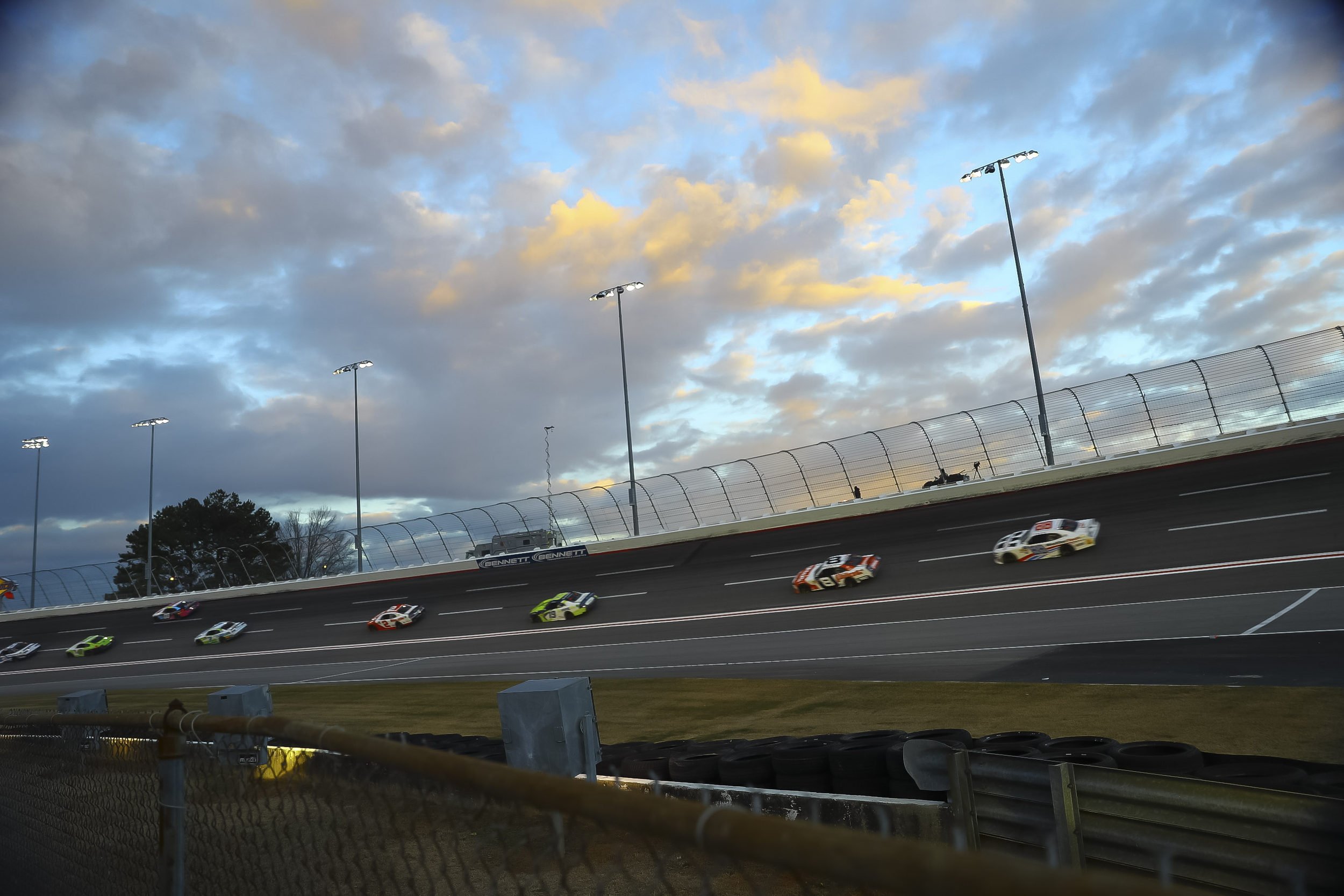
Superspeedways (Daytona, Talladega): Chaos reigns. Favorites win only 23% of the time. Kentucky bettors placed $47 million on the 2024 Talladega race alone, with 78% backing longshots at 20-1 or higher.
Short Tracks (Bristol, Martinsville): Experience matters. Veterans win 67% of races at these tracks. Smart Kentucky bettors focus on drivers with 10+ years experience, regardless of current form.
Road Courses (Sonoma, Watkins Glen): International drivers surge. Former F1 and IndyCar drivers see their odds shorten by an average of 35% at road courses.
1.5-Mile Tracks (Kentucky, Kansas, Charlotte): The bread and butter of NASCAR. These tracks see the most balanced betting, with favorites winning 41% of the time—right in line with their odds.
The Dark Side: When NASCAR Betting Goes Wrong
Not everyone wins in Kentucky’s NASCAR betting boom. Tom Harrison, a Louisville contractor, lost $38,000 betting NASCAR in 2024. “I thought I had a system,” he admits. “I’d study practice speeds, qualifying runs, historical data. But NASCAR has too many variables. One loose wheel, one bad pit call, and your bet’s dead.”
The Kentucky Council on Problem Gambling reports NASCAR betting has the third-highest addiction rate among sports, behind only horse racing and daily fantasy sports. The combination of frequent events (38 races annually) and high variance creates what addiction specialists call “the perfect storm.”
Dr. Rebecca Martinez, who runs Kentucky’s largest gambling addiction program, warns: “NASCAR bettors chase losses more aggressively than other sports bettors. When someone loses a football bet, they wait until next week. When they lose a NASCAR bet on Saturday night, they’re betting Xfinity races on Sunday morning.”
Inside Information: The Analytics Revolution
Modern NASCAR betting relies heavily on advanced analytics that most casual fans never see. A detailed NASCAR report from SpeedwayMedia.com revealed that tire fall-off rates have become the most predictive factor in race outcomes, more important than starting position or even driver skill.
Professional NASCAR bettors in Kentucky now employ sophisticated models tracking:
- Tire degradation rates by compound and track temperature
- Pit crew efficiency rankings (updated weekly)
- Driver performance in specific weather conditions
- Historical restart proficiency from inside vs. outside lanes
- Green-flag run length patterns by track
Sarah Thompson, who turned $5,000 into $73,000 betting NASCAR in Kentucky last year, shares her approach: “I only bet tracks where weather is a factor. Most bettors don’t adjust for temperature changes during a race. A car set up for 70-degree weather at race start struggles when track temps hit 120 degrees by lap 100.”
The Corporate Gold Rush
Major operators are battling fiercely for Kentucky’s NASCAR betting market. FanDuel signed a exclusive partnership with Kentucky Speedway (despite the track no longer hosting Cup Series races) to build brand awareness. DraftKings countered by sponsoring 15 local dirt tracks across Kentucky, embedding themselves in grassroots racing culture.
Recent market data shows the competitive breakdown:
- FanDuel: 31% market share ($262 million handle)
- DraftKings: 28% market share ($237 million handle)
- BetMGM: 19% market share ($161 million handle)
- Caesars: 13% market share ($110 million handle)
- Others: 9% market share ($77 million handle)
The rivalry has led to increasingly generous promotions. During the 2024 Kentucky Derby weekend—despite being a horse race—operators offered NASCAR cross-promotions that included “Bet $20 on the Derby, get $100 in free NASCAR bets.”
The Local Economic Impact
NASCAR betting’s rise has created unexpected economic benefits across Kentucky. Sports bars report 25-30% revenue increases during NASCAR weekends. The Gaslight Bar in Bowling Green installed a 40-foot video wall specifically for race viewing and saw Sunday revenue jump 45%.
Local businesses are adapting quickly. “Race Day Special” promotions have become standard, with restaurants offering discounts tied to specific drivers’ finishing positions. When Kentucky native Tyler Reddick wins, participating Louisville restaurants offer 23% off (his car number).
Employment has surged too. The eight licensed operators employ roughly 1,100 people in Kentucky, with average salaries of $58,000. Customer service, marketing, and technical positions have created a new white-collar employment sector in cities like Lexington and Louisville.
What Professional Bettors Know That You Don’t
Professional NASCAR bettors in Kentucky have identified edges that casual bettors miss:
Stage Betting Value: Books haven’t properly adjusted stage winner odds. Drivers who excel at restarts are undervalued in stage betting markets by an average of 15%.
Manufacturer Runs: When one manufacturer (Ford, Chevy, Toyota) wins three straight races, bet against them. The “manufacturer bounce-back” phenomenon sees the winning streak end 73% of the time in race four.
Pit Strategy Arbitrage: Late-race cautions create massive line movement. Pros bet multiple scenarios before the race, knowing one caution with 30 laps left can turn a +2000 driver into a -150 favorite.
Weather Windows: Kentucky bettors have learned that races with a 30-50% chance of rain produce the most profitable betting opportunities. Odds don’t properly account for strategy changes rain brings.
The Next Generation: Sim Racing to Real Money
An unexpected development: sim racing success translates to betting profits. Kentucky’s younger bettors who compete in iRacing have a 19% higher ROI on NASCAR bets than traditional bettors, according to operator data.
Jake Williams, 22, from Covington, explains: “iRacing taught me track nuances you can’t see on TV. I know exactly where drivers lose time at Kentucky Speedway’s turn 3. That knowledge helps me identify value in driver matchup bets.”
This crossover has operators worried. If sim racers consistently beat the house, odds will tighten, reducing profitability. Some operators now employ sim racing experts to refine their odds-making models.
The Road Ahead: 2025 and Beyond
As NASCAR’s 2025 season approaches, Kentucky’s betting market prepares for explosive growth. The Chicago Street Race in July and the playoff races in September and October are expected to drive record handles.
New bet types are coming too. The Kentucky Gaming Commission approved in-race betting for 2025, allowing wagers on immediate outcomes: next car to pit, next caution, next lead change. These micro-bets could double NASCAR’s betting handle.
Technology continues advancing. BetMGM is testing augmented reality features that overlay betting odds on your TV screen in real-time. FanDuel’s developing AI that provides personalized betting suggestions based on your historical preferences and risk tolerance.
The Regulatory Future
Kentucky regulators are watching closely. The state’s aggressive tax rate has generated massive revenue but some worry it’s discouraging innovation. A proposed bill would lower the online tax rate to 10.5% in exchange for operators funding a $10 million annual problem gambling treatment program.
State Senator Damon Thayer, who opposed legalization but now supports reform, admits: “The revenue exceeded everyone’s expectations. But we need to ensure we’re not creating more problems than we’re solving. Responsible gambling must be our priority.”
The sportsbook comparison site www.kentuckybettinghub.com continues to track these regulatory developments, providing crucial updates for sports bettors navigating the changing landscape. Their analysis suggests Kentucky’s model—high tax rates with strong consumer protection—might become the national template.
The Bottom Line: Speed, Money, and the American Dream
Kentucky’s NASCAR betting revolution represents something uniquely American: the intersection of speed, technology, and the pursuit of fortune. In just over a year, the state has built one of the nation’s most successful sports betting markets by embracing its racing heritage while implementing thoughtful regulation.
For Jimmy Caldwell, the mechanic whose $50 became $127,000, NASCAR betting changed his life. He paid off his mortgage, started a college fund for his kids, and still bets NASCAR—but now with strict limits. “I got lucky once. I’m not dumb enough to think it’ll happen again.”
That’s the reality of NASCAR betting in Kentucky: spectacular wins are possible, crushing losses are probable, and the house edge is mathematical. But for the 400,000 Kentuckians who’ve placed at least one NASCAR bet since legalization, the thrill of having skin in the race has added a new dimension to Sunday afternoons.
As the engines fire for 2025’s Daytona 500, Kentucky’s bettors will be ready, apps open, analytics studied, dreams of glory dancing in their heads. In NASCAR betting, as in racing itself, everyone starts with hope. Most end in disappointment. But for those few moments when your driver leads, when your bet lives, when possibility becomes probability—that’s when Kentucky’s newest legal industry delivers its greatest product: pure, distilled excitement at 200 miles per hour.