The window tint market has a credibility problem, and it’s mostly the fault of the spec sheet. Walk into any shop in North America and ask what makes one ceramic film better than another, and you’ll get a pile of numbers — 99% UV rejection, 95% infrared rejection, 62% total solar energy rejection, 200+ layers of nanotechnology — that sound impressive and, on closer inspection, mostly mean nothing without the footnotes attached to them. The 99% UV figure is meaningless as a differentiator, because virtually every ceramic film on the market from the last decade clears that bar. The 95% infrared number is often measured over a sliver of the IR spectrum where the film happens to perform well, which is not the same as the film rejecting 95% of actual solar heat. The only metric that genuinely compares films apples-to-apples is TSER — total solar energy rejection, tested across the full spectrum — and most marketing materials bury it because TSER numbers are rarely as flattering as the cherry-picked ones.
This is the context in which 3M has chosen to relaunch the Crystalline line. If you’ve paid attention to automotive window film for more than five minutes, you know the original Crystalline. It’s the film that 3M used to anchor its premium tint identity for years — the one with more than 200 layers of multilayer optical film (MOF) sandwiched thinner than a Post-it note, famously non-metallized (so it doesn’t block cell signal, GPS, or the increasingly fussy electronics in modern cars), and still one of the only products on the market that could hit serious heat rejection at an 88% VLT, meaning you could tint a windshield without making it look tinted at all. Crystalline was a legitimately impressive piece of engineering. It was also starting to look its age, and the industry had noticed.
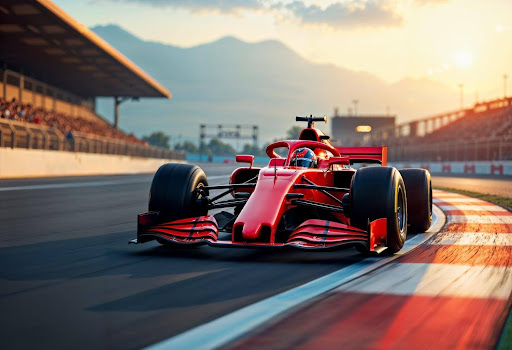
The engineering pedigree is worth a paragraph of its own, because it’s the part of the Crystalline story that rarely makes it into consumer marketing and probably should. 3M Window Film has been the Official Window Film of NASCAR for more than a decade, and Crystalline specifically is the product the sanctioning body and the teams standardized on. The relationship didn’t start as a marketing deal. Penske Racing tested the film on track in 2011, Greg Biffle raced it at Daytona shortly after, and the reason both teams wanted it had nothing to do with sponsorship dollars — it had to do with the fact that the cockpit of a Cup car is a genuinely dangerous thermal environment. Cabin temperatures during a summer race routinely sit north of 130°F, driver core temperatures climb past 103°F over the course of four hundred laps, and the windshield is the single largest vector for solar load. Teams needed a film that could reject serious heat without a metallized layer that would interfere with in-car radio, telemetry, or the increasingly sensitive dashboard electronics the cars were gaining year over year. Crystalline was the only product on the market that checked both boxes. It’s still the only one that NASCAR has put its name on. That’s not a spec-sheet claim or a marketing partnership retroactively dressed up as an engineering one — it’s a functional requirement that got solved under the most hostile thermal conditions anyone can legally drive in, and it’s probably the single most useful piece of context you can have on how Crystalline actually behaves on a car sitting in a parking lot in August.
Crystalline Blk is 3M’s answer to what comes after that original product, and it’s worth paying attention to for reasons that go beyond the spec sheet.
The product replaces and extends the original Crystalline series with what 3M is describing as “the most advanced” version of the film to date. The multilayer optical construction is still there — 200-plus layers, each optimized to reflect specific wavelengths of infrared energy while passing visible light — but the stack has been retuned, the hard coat has been redesigned, and the color profile has shifted in a way that matters more than it sounds.
Start with the color. The original Crystalline had a subtle but real warmth to it. Depending on the darkness you chose, the film could shift toward a slightly bronze or greenish cast, which was fine on some cars and mildly jarring on others. On a black car with OEM privacy glass in the rear, the Crystalline windshield strip sometimes didn’t quite match the factory glass behind it, and you’d see a faint color break from certain angles. Crystalline Blk resolves this. The new film shifts to a neutral black and grey profile across all tint levels, tuned to align with the OEM glass on modern vehicles. The point isn’t that the old film was ugly — it wasn’t — it’s that modern cars are being designed with increasingly dark, neutral factory glass, and a film that integrates into that look instead of fighting it is a meaningfully better product from an aesthetic standpoint. 3M specifically mentions resale value as part of the pitch, which is the kind of claim you usually ignore but which does apply: a car that looks like it has factory glass rather than aftermarket tint is a different thing to a buyer.
The performance numbers are also up. Crystalline Blk delivers up to 62% TSER (total solar energy rejection, across the full solar spectrum, which is the number that actually matters for how cool your interior feels) and up to 70% IRER — infrared energy rejection measured across the real 780-to-2500-nanometer IR range, not the sliver around 900-1000nm that manufacturers love to quote because films tend to do well there. Both figures are at the top of what non-metallized ceramic film is currently capable of. 99.9% UV is maintained across the lineup, and the product carries the Skin Cancer Foundation Seal of Recommendation (with the standard and legally required disclaimer that 3M hasn’t tested the film’s efficacy in actually preventing skin cancer — the seal is a statement about the UV-blocking chemistry, not a medical claim).
The less-marketed improvement is the new hard coat. Crystalline Blk runs a scratch-resistant hard coat that 3M added specifically to reduce installation-related defects. This is one of those changes that sounds like inside baseball until you’ve watched an installer work a rear windshield and seen how easy it is to mark the film with a fingernail, a squeegee corner, or the edge of a heat gun. Scratched film is the most common install-time failure, and it’s almost always fixed by pulling the panel and doing it again — which eats time, wastes material, and teaches installers to be cautious rather than decisive. A harder coat means installers can work more confidently, and it also means the film holds up better to routine handling after the install — opening a window with a sticky drink in your hand doesn’t leave marks the way it used to.
3M is also quoting up to 25% faster shrinkage during installation with less heat required, which is another installer-facing improvement. Shrinking film to the curvature of a rear windshield is the hardest part of the job, and it’s where a good installer separates from an average one. A film that shrinks faster with less heat means less thermal stress on the film itself, less chance of cooking the defrosters, and — in the hands of a certified installer — a visibly cleaner result on the glass.
Sitting alongside Crystalline Blk in 3M’s current lineup is the Ceramic IR Series, which is the interesting middle-tier product. Ceramic IR uses ceramic nanotechnology rather than the full 200-layer MOF stack, which means it costs less and gets within striking distance of Crystalline on the metrics that matter. 3M rates it at up to 66% total solar energy rejection at certain VLT levels, in a neutral non-metallized construction that — like Crystalline — won’t interfere with GPS, 5G, satellite radio, or any of the other signals modern cars rely on. For customers who can’t quite justify the Crystalline price but want serious heat rejection in a clean, fade-resistant film that will hold its color, Ceramic IR is the honest answer. Both products are backed by 3M’s limited lifetime warranty when installed by a certified installer.
That last qualifier is where the Pro Shop designation becomes unavoidable. 3M has been tightening its certified installer network over the last two years under the Pro Shop mark, and expanding it aggressively across Canada, with new certified locations coming online in Calgary, Edmonton, Vancouver, and several other markets. The warranty on both Crystalline Blk and Ceramic IR — in practical terms — only exists if the film is installed by one of these certified shops. Buy the same film from a gray-market distributor, hand it to an uncertified installer, and you own a piece of material, not a warranty.
This matters more for tint than it does for almost any other automotive product because window film is visible, every day, at a scale no other aftermarket component can match. A bad ceramic coating is invisible. A bad ceramic tint is visible from twenty feet away, in the form of visible seams along the door glass, dust and hair trapped under the film, bubbles forming in the first week, or the infamous purple shift that happens to cheap non-ceramic film after a season or two in the sun. Crystalline Blk is a more capable film than the old Crystalline — the color is better, the hard coat is better, the TSER is up, the IRER is up — but those improvements are worth very little in the hands of an installer who doesn’t know what to do with them. Multilayer optical films are unforgiving. The stack can crease, the layers can delaminate, the edges can lift if the slip solution chemistry isn’t right. The 200-layer nanotechnology is either installed correctly or it’s a very expensive piece of garbage on your rear glass.
The Pro Shop requirement is 3M’s way of closing that loop. Certified installers complete hands-on training on 3M’s specific film chemistry, learn the shrink and slip protocols for Crystalline and Ceramic IR specifically, and work with the Pattern and Solutions Center software for pre-cut templates. None of this is glamorous, and none of it shows up on the receipt. But it’s the difference between a Crystalline Blk install that looks factory and one that looks like tint.
For readers in Alberta sorting through options, a useful starting point is Pro Window Tinting, a Calgary-based 3M certified Pro Shop that carries both the Crystalline Blk launch lineup and the Ceramic IR range. Their site breaks down the VLT options, the warranty structure, and the performance numbers for each film without the usual spec-sheet sleight of hand. It’s the kind of reference that makes sense whether you’re actively shopping or just trying to understand what separates a legitimate ceramic install from everything else on the market.
The broader point, though, is about 3M’s read on the tint market. For most of the last five years, the high end of automotive window film has been a fight between a handful of aggressive independents — the ones who built their brands on spec-sheet maximalism and big social-media presences — and 3M has been the quiet incumbent everyone respected but few shops pushed hard. Crystalline Blk, coupled with the Pro Shop network expansion, is the clearest sign yet that 3M isn’t content to be the respected incumbent anymore. The product is better than what it replaces, the marketing has actual teeth for the first time in a while, and the certification program gives customers a defensible reason to choose a certified shop over the guy with a nicer Instagram feed. Whether that adds up to a shift in market share is a question for 2027. But for the first time since the original Crystalline launch, 3M is making moves that look like they’re aimed at winning the category rather than defending it, and the car buyers who sit on this information early — before every shop has caught up to the new product — are going to be the ones walking around with the best windshield in traffic.