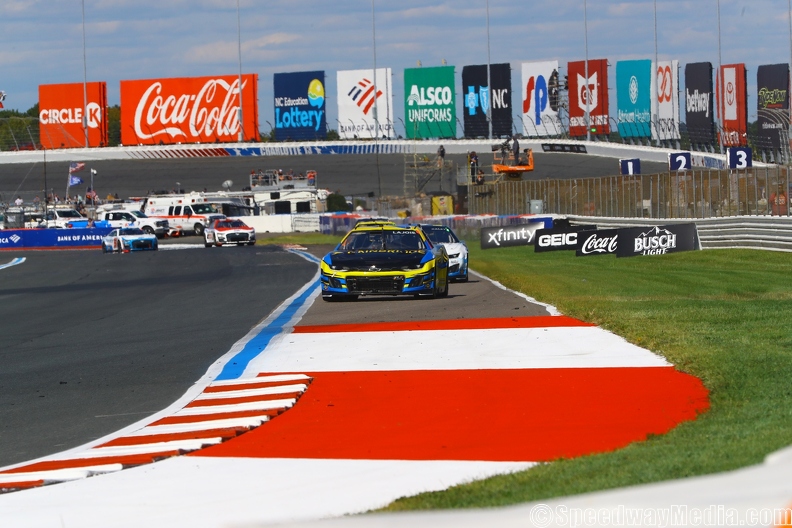

NASCAR is all about thrills. High-octane races, thunderous engines, and adrenaline-fueled action. However, this doesn’t mean that safety isn’t paramount. With speeds often exceeding 200 miles per hour, if there are any slip-ups, there’s the potential for danger. However, any risks have been significantly reduced by NASCAR’s safety innovations. Read on to find out more about how drivers are being protected, even at top speeds.
Advanced Helmets and HANS Devices
The helmets used by NASCAR drivers really do offer some advanced head protection. Not only are they equipped with reinforced shells, but they are also lined with energy-absorbing foam that will minimize any impact to the head. In addition to this, innovative HANS devices restrict excessive head movement during an impact. These have become the standard for protecting drivers against any head or neck injuries.
Fire Resistant Suits & Safety Nets
Fire-resistant suits are another crucial element of NASCAR safety. Made from multiple layers of fire-resistant material, they act as a second skin, offering precious moments of protection in a fire-related incident. Safety nets are also essential in the event of a crash. Safety nets cover the driver’s side window. In the event that the window smashes, the safety nets will prevent any debris from entering the cockpit, keeping drivers safe.
Safety Barriers
One of the most important components of NASCAR’s safety arsenal is the implementation of safety barriers, including traffic control barricades. These barriers have played a major role in protecting drivers. They are usually placed strategically around the track, providing an added layer of safety in case a crash occurs at a high speed. The barriers absorb and dissipate the energy of an impact, reducing the force that can impact the driver. This innovation has been integral, making the sport significantly safer for drivers.
The Car of Tomorrow
Another pivotal moment in NASCAR safety was the introduction of The Car of Tomorrow (CoT), introduced in 2007. It introduced some game-changing safety measures such as energy-absorbing materials, as well as improved structural integrity. This car paved the way for the Next Gen Car. The Next Gen Car introduced in 2022, has gone one step further to protect drivers. Its design includes a reinforced roll cage, as well as the energy-absorbing materials seen in the last model. This design further reduces the risk of injury if a crash occurs at top speeds.
The Human Element
In addition to technology and innovation, people also have a huge part to play in keeping NASCAR safe. NASCAR events have a dedicated emergency response team that is trained to react incredibly quickly. They’re always ready to provide medical care, or even extract drivers from vehicles when necessary.
NASCAR’s commitment to safety makes it feel like a sport that you can really get behind. It provides heart-pounding, adrenaline-pumping action alongside innovative safety features and the further development of safer race cars. As NASCAR continues to evolve, one thing is for sure, we can expect more groundbreaking safety features that will safeguard life and limb while ensuring that racing remains exhilarating and enjoyable for all.