Home Blog Page 10

How to Ship Your Race Car Across the Country: Open vs. Enclosed Transport for Every Race Weekend

Ask any club racer what eats their budget, and the answer usually isn’t tires or entry fees. It’s logistics. Getting a car from the garage to Sebring in March, Road America in June and a season finale on the other side of the country can add up to more miles than most daily drivers cover in a year.

Some teams own a truck and trailer and do it themselves. Plenty of others have found that hauling the car is the most draining part of the weekend. Long drives eat vacation days, wear out tow rigs and leave drivers tired before the first practice session. That’s why more racers, vintage competitors and show car owners now hand the trip to professional car haulers and arrive fresh, with the car waiting for them.

This guide is about doing that well. It covers how to plan transport across a full season, how to choose between open and enclosed trailers, how to vet the people moving your car, and how to keep costs under control from the first event to the last.

Treat Transport as Part of the Season Plan

Most racers plan their calendar around entry deadlines, budget and time off work. Transport usually gets booked last, a week or two before the event, when the options are thin and the prices are high.

Flip that order. As soon as your calendar is set, look at it as a map instead of a list. Which events are close to home and easy to tow to yourself? Which ones are far enough away that a professional hauler makes more sense? Are there back-to-back events in the same region where the car could stay put between weekends?

That simple exercise often reveals savings. A car that stays in the Southeast for a two-event swing doesn’t need to come home in between. A car going to the West Coast for one event might be better shipped out early and stored near the track than rushed across the country the week before.

Long Hauls and Short Hops

Not every trip needs the same solution. It helps to split your season into two kinds of moves.

Short hops are events within a day’s drive. If you own a trailer and enjoy the drive, these are often cheapest to handle yourself. The exception is when you’re racing back-to-back weekends and can’t afford to lose two days on the road.

Long hauls are coast-to-coast or multi-state trips. This is where professional transport usually wins on cost and fatigue. A carrier running regular routes between major regions can move your car for less than the fuel, tolls, hotels and wear on your own rig, and you can fly in fresh.

For the long hauls, it pays to understand how shipping a car across the country actually works. Coast-to-coast trips commonly take around one to two weeks door to door, depending on the route and how many stops the carrier has. The busiest corridors between major metro areas move fastest and cost less per mile. Rural tracks far from main interstates may add a day or two and a little cost for the detour.

Open or Enclosed? A Simple Way to Decide

The biggest choice you’ll make for each shipment is the type of trailer. There’s no single right answer, but a few questions settle it quickly.

How much would a rock chip cost you? If the car has fresh paint, exposed carbon fiber or a concours-level finish, the answer is a lot. Enclosed is the safe choice.

How low is the car? A car with a splitter a few inches off the ground needs a liftgate or very low-angle ramps. Those are far more common on enclosed trailers.

Does it run reliably? Non-running cars need a winch and a careful crew. Many enclosed operators are set up for this. Some open carriers are too, but always ask.

What’s the budget for this trip? Enclosed transport often costs 40 to 60 percent more than open on the same route.

If the car is a tough, road-registered track-day car or a spec racer that already wears its share of battle scars, open car transport is often the smart call. Open carriers move eight to ten vehicles at a time, so they run more frequently and cost less. The car will see some weather and road grit, but the risk of real damage is low.

If the car is a freshly restored vintage racer, a high-value collector car or anything with delicate aero, enclosed is worth the premium. Many owners mix both over a season: open for the long, low-stakes trips, and enclosed for the events where the car needs to look perfect on arrival.

Matching the Trailer to the Car

If you go enclosed, the details still matter. Enclosed trailers range from single-car hard-sided units to six- or seven-car rigs with soft curtain walls.

A single-car or two-car trailer costs more, but it usually means fewer stops, less loading and unloading of other cars around yours, and tighter timing. That’s often worth it for an event with a hard arrival deadline. A larger multi-car enclosed trailer brings the cost down and still keeps the car out of the weather.

When you’re comparing quotes, ask each company the same questions:

  • Does the trailer have a hydraulic liftgate, or ramps? If ramps, what’s the approach angle?
  • Do you secure cars by the wheels with soft straps or wheel nets, or by the chassis?
  • Is there a winch for non-running cars?
  • How many other cars will be on the trailer, and how many stops are planned?
  • What’s the cargo insurance limit per vehicle?

The answers tell you more than the price does. If you’d rather have someone else do the vetting, working with an enclosed auto transport company that regularly moves race and show cars can save a lot of back-and-forth. A good one will match the car to a trailer based on its height, value and arrival date, not just the first open slot.

Vetting the People Who Move Your Car

The car transport industry has excellent operators and some that cut corners. A few quick checks separate them.

Look up the numbers. Every interstate carrier and broker should have an active USDOT number, and most also need an MC number. You can check both for free on the FMCSA’s public database. If a company won’t share its numbers, don’t book.

Read the insurance details. Standard cargo coverage may not match the value of a built race car or a collector car. Ask for the limit in writing, and check whether your own collector or racing policy covers transport.

Get the price locked in. A common complaint in this industry is a low quote that grows after the deposit is paid. Ask for the price in writing before you commit. Some brokers, such as Niki Auto Transport, put a written price guarantee on every booking, so the quoted price is the price you pay.

Be upfront about the car. Tell the company if the car doesn’t run, sits very low, or has a wing, cage or tail that makes it bigger than stock. Surprises at pickup cost time and sometimes the whole booking.

Getting a Race Car Ready to Ship

Prep takes an hour or two and prevents most transport problems.

  1. Clean it and photograph it. Wash the car so any marks are easy to see. Take dated photos of every panel, the wheels, the splitter, the underside and the cockpit.
  2. Pack or lock down loose aero. Remove wings, canards and dive planes if you can, and label every bolt bag. If they stay on, make sure they’re tight.
  3. Keep fuel low. Leave just enough to load and unload. A full fuel cell adds weight and risk.
  4. Fix any leaks. Carriers can refuse a car that drips fluid onto the trailer or onto the car below it.
  5. Handle the battery. For longer trips, disconnect it or leave the kill switch off, and tell the driver where the switch is.
  6. Think about tires. Race compounds and slicks can flat-spot during a long haul. Some teams ship on transport wheels and send the race set separately.
  7. Leave a cheat sheet. A one-page note on the dash covering the kill switch, steering lock, shifter and any quirks will save the driver guesswork.
  8. Ship spares separately. Toolboxes, spare parts and personal items usually aren’t covered by the carrier’s insurance and can shift around in transit.

The Handoff: Paperwork That Protects You

At pickup, the driver inspects the car and records its condition on a bill of lading. Treat this as the most important document in the whole process.

Walk around the car with the driver and make sure every existing chip, scuff and repair is marked. Don’t sign an incomplete report. At delivery, do the same inspection before signing, ideally in daylight. If you spot new damage, write it on the bill of lading before the driver leaves and photograph it right away.

If someone else is releasing or receiving the car for you, such as a shop, a storage facility or a crew member at the track, give the transport company their name and number ahead of time. Many tracks also have gate rules and delivery windows, so share those details when you book.

Booking Around the Big Weekends

Transport capacity gets tight around the same dates every year. Major vintage races, endurance weekends, January auction week in Arizona and August’s Monterey Car Week all pull trailers toward the same places at once.

  • Book two to four weeks ahead for a normal event, and further out for the big ones.
  • Aim to arrive early. Weather and traffic can shift a delivery window by a day or two, so plan for the car to arrive well before tech inspection.
  • Book the return at the same time. After a big event, every hauler is trying to leave at once. Securing your return slot early often gets better timing and sometimes a better price.
  • Use the quiet months. Moving a car to a new shop, or bringing a new purchase home, is often easier and cheaper between major events.

Budgeting Transport Across a Full Season

The cost of any single shipment depends on distance, route, trailer type, the car’s size and condition, and the time of year. Across a season, a few habits make a big difference.

Group events by region so the car makes fewer long hauls. Use open transport for the low-stakes trips and save enclosed for the events that matter most. Book early to avoid last-minute premiums. And compare quotes on the same terms: trailer type, loading method, insurance limit and delivery window. A quote that looks cheap is often for a different service.

When you add up fuel, tolls, hotels, time off work and wear on your own truck and trailer, professional transport for the long hauls often costs less than doing it yourself, and you show up rested.

The Final Lap

A season of racing is a logistics project as much as a driving one. Plan your transport when you plan your calendar. Choose open or enclosed based on the car and the stakes of each trip. Check every company’s authority and insurance, get the price in writing, and document the car at both ends.

Get those basics right, and the trip to the track becomes the easy part. All that’s left is to go fast.

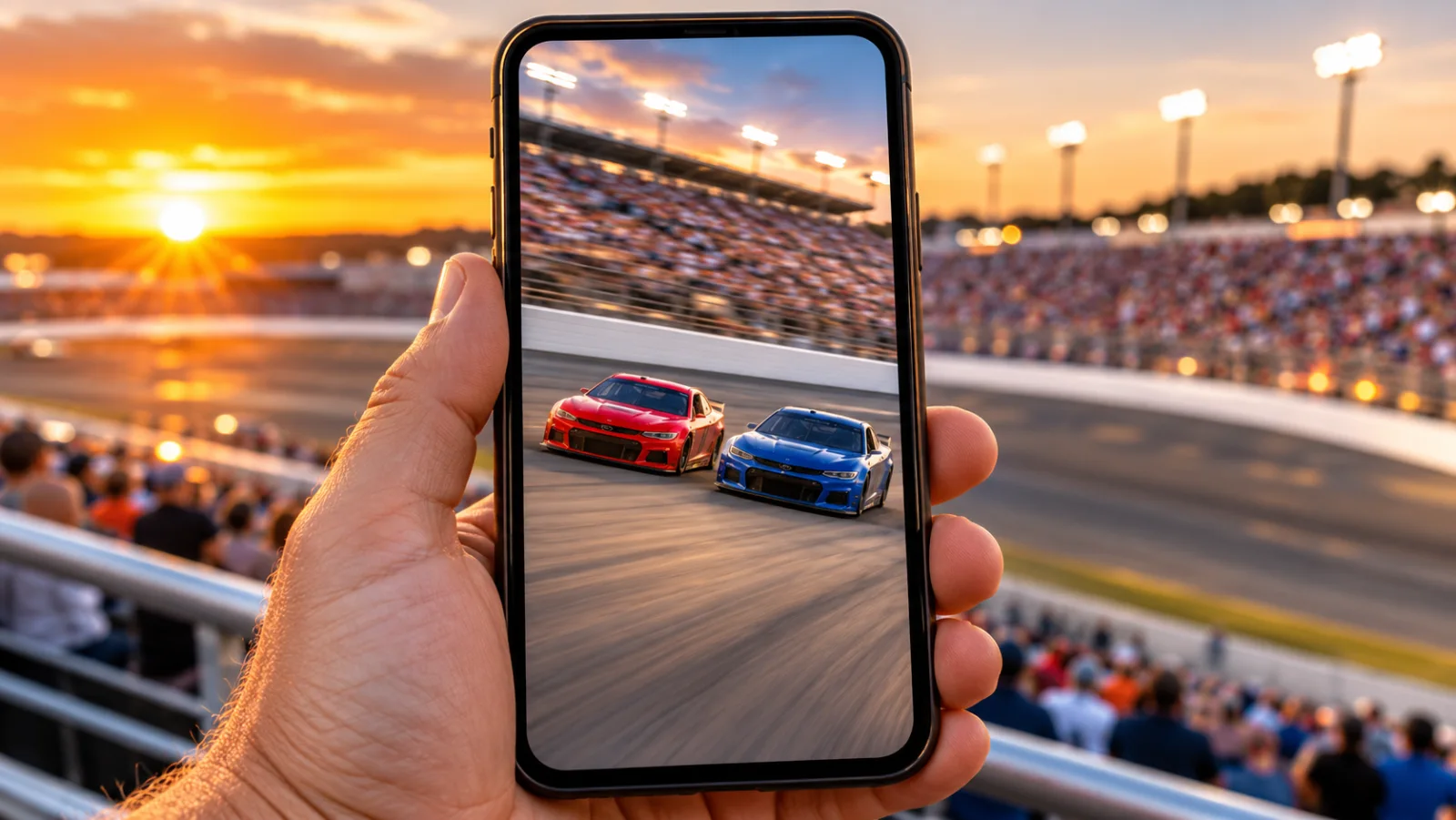
From the Sim Rig to the Feed: How Racing Streamers Turn Six-Hour Broadcasts Into Highlights

League night ends. The VOD is five hours long.

Every race weekend now has a second broadcast running alongside the official one. While the television coverage follows the leaders at Daytona or Pomona, thousands of fans are watching drivers, sim racers and team personalities stream from their own cameras: onboard reactions, pit-wall chatter, late-night iRacing league races that run for hours. Most of that footage is never watched twice. A small slice of it, the right ten seconds, travels further than anything else that happened all weekend.

That gap between hours of live content and the few moments people actually share has become one of the quieter problems in motorsport media. It is also why clipping has turned into a real skill for anyone streaming racing, from Cup Series regulars with a Twitch channel to teenagers running their first online league from a bedroom rig.

The long-broadcast problem

Racing is unusually hard to clip. A stick-and-ball game produces a highlight every few minutes. A 500-mile race can go forty laps with nothing more dramatic than a green-flag pit cycle, then deliver a three-wide restart, a spin into the infield and a last-lap pass inside ninety seconds. Endurance events stretch the problem further: a 24-hour race at Daytona or Le Mans produces a full day of footage for perhaps a dozen moments anyone will remember. Sim racing is no different. A league night on iRacing can run four or five hours, and the moment everyone wants to see may be a single brake-locking divebomb into turn one.

For a driver or sim racer streaming on Twitch, the moment itself is only half the job. Someone has to find it again afterward, cut it to the right length, reframe it for a phone screen and get it posted before the conversation moves on. Fans with a clip button help on the biggest channels. Everyone else does it alone, usually the morning after, scrubbing through a VOD that is longer than the race it covers.

That chore is what most streamers mean when they go looking for clipping software: not a full video editor, but something that gets them from a five-hour recording to a handful of usable moments without watching the whole thing again.

What travels, and what does not

The racing moments that escape the motorsport bubble usually have a few things in common. A newcomer can follow them cold, which in practice means a short line of text explaining the stakes before the cars arrive: “Last lap, no spotter, two cars side by side.” They run for seconds, not minutes; twenty or so is plenty. And the driver matters as much as the driving. Fellow racers will admire a clean overtake. Everyone else shares the radio message where a driver says exactly what they think of the car that just took them out.

Framing is the part streamers most often get wrong. Drop a wide onboard shot straight into a tall phone frame and the drama disappears, because the two cars that made it exciting end up as specks at the edges. Strong racing clips crop in on the battle so it fills the centre of a 9:16 frame, and use text big enough that someone glancing at a phone on the train can still read it.

 Side by side, reframed for the phone.

The tools catching up

Software has started to catch up with this. A newer group of tools now watches the footage after the session ends and hands back a list of likely highlights, so nobody has to hit a button in the heat of the moment. Broadly, there are three kinds on the market: capture tools that grab a moment while you drive, traditional editors that leave every cut to you, and after-the-fact tools that go looking through the recording on your behalf.

That last kind fits the reality of racing streams best. In the middle of a defensive final lap, no one is thinking about a hotkey. Over coffee the next day, most streamers can find a quarter of an hour to go through a list, keep what works and throw away the rest.

One honest caveat for this audience: most of these tools were built first for shooters and competitive games, where kill feeds and round banners give software an obvious signal to look for. Racing footage gives fewer of those cues. Audio spikes, sudden changes on screen and a streamer’s own voice still help a detector, but sim racers should expect to review the suggestions more carefully than a Valorant player would.

A simple weekend workflow

Here is how that tends to look in practice. Race and stream as usual. Once the session is over, hand the recording to a tool that marks possible moments. FragCut AI, a browser-based gaming clip maker, works as a twitch vod clipper for exactly this: drop in the Twitch link or the file, and it finds candidate moments and renders them as captioned vertical clips sized for TikTok, YouTube Shorts and Reels. Go through what it found, pick two or three standouts, write one line of setup for each, and spread them over the following days instead of posting everything in one burst.

None of that replaces what makes a clip spread, which is something genuinely worth watching. It just means that when the three-wide restart happens, it does not stay buried in hour four of a VOD nobody will rewatch.

Getting the most from a clip

A few habits make a big difference. Post the same evening if you can; a clip that lands while people are still talking about the race picks up far more views than the same clip a week later. Keep the first second busy, because viewers decide almost instantly whether to keep watching. Name the track and the series in the caption so people searching for that race can find it. And credit anyone else in the shot, whether that is a rival driver or a league mate, because they will often share it to their own followers.

It also helps to think in series rather than one-offs. A weekly “best moment from league night” post builds a small habit in your audience, and a run of clips from the same championship tells a story that a single highlight cannot. Sim racers in particular have found that a season-long thread of short clips grows a channel faster than the same footage published as full replays.

Why it matters for the sport

Motorsport has spent years worrying about how to reach younger fans who do not sit through a full race. Part of the answer is already happening on drivers’ and sim racers’ own channels. Short, personal, well-framed clips are how a lot of new fans first meet a driver, long before they watch a green flag drop on television. For the teams, series and streamers creating that content, getting the right moments out quickly is no longer a nice extra. It is part of how the sport finds its next audience.

What Everyday Drivers Can Learn from Race Craft When Sharing the Road with Trucks

Photo by depositphotos at https://depositphotos.com/

An ordinary stretch of I-40 with traffic has nothing to do with a racing circuit. Yet for some, the better habits don’t start overlapping. They start closing in at speed, leave little room for mistakes, and sit in the blind spot where other drivers can’t see them. 

That matters around tractor-trailers. Their weight, length, and limited sightlines turn a casual lane change into a decision that needs space. 

This can create a situation where a collision becomes unavoidable. But this can be avoided with a basic understanding: public roads are not a racetrack where drivers follow rules; they are disciplined and, more importantly, have the reflexes to save themselves.  

What Drivers Can Learn from Race Craft While Navigating Trucks on the Road 

It is understandable that you want to replicate what you saw on TV, but you also need to understand your limitations. Having said that, here are some principles of racing that you can apply in everyday life to remain safe on the public roads: 

Read the Traffic Beyond the Vehicle Ahead 

Experienced racers rarely fix their attention on the car in front of them. Their eyes travel farther up the track, pick up a slowing pack or a car moving off the line, and estimate the threat in advance.  

Highway drivers can use the same habit. They can look through the gaps, watch the truck and a few vehicles ahead, not just the one ahead of them. For instance, following the brake lights and seeing them rip through traffic near an interchange often give you several extra seconds to lift off the accelerator. 

Now, these seconds count. Because a loaded commercial truck can’t shed speed like a passenger car. That’s why diving into the gap ahead of one may remove the buffer its driver deliberately preserved. 

Treat Blind Spots as Moving Zones 

A truck’s blind spots don’t sit neatly beside the trailer; they travel with it.  

The reason for mentioning this statement in isolation is that it is of utmost importance. The blind spot of commercial vehicles is large and constantly moves with the vehicle. It stretches along both sides, behind the trailer and immediately in front of the cab, and the passenger-side area is particularly broad. 

Now comes the important question: how do you measure whether you are in the blind spot? The best way is to use the truck’s mirrors. If you can see the truck driver’s face in the side mirror, there is a good chance the driver can see you as well.  

However, don’t linger there. 

Moving through a blind spot quickly doesn’t mean stamping on the throttle. Instead, build enough speed before you pull out, pass on the left where conditions allow, and keep moving until you can see the truck clearly in your rearview mirror. If traffic blocks the pass, dropping back is usually cleaner than hovering beside the trailer. 

Leave Yourself an Escape Route 

Race drivers always have a backup plan, and so should you. Think about where you could place the car if your preferred line disappears; it saves you from a lot of trouble.  

So, ask yourself this question before you sit behind the truck: “if the truck came into my lane right now, where would I go?” If the answer is nowhere because of a barrier, car, or narrow verge, then you need to change your position. Safely accelerate, ease off the accelerator, or change lanes. 

Unfortunately, on the road you may sometimes have no clear way out due to congestion. Try to create more room in front of you and don’t match their speed for too long. You are giving yourself options even if they are just a few meters. 

Know What Matters After a Collision 

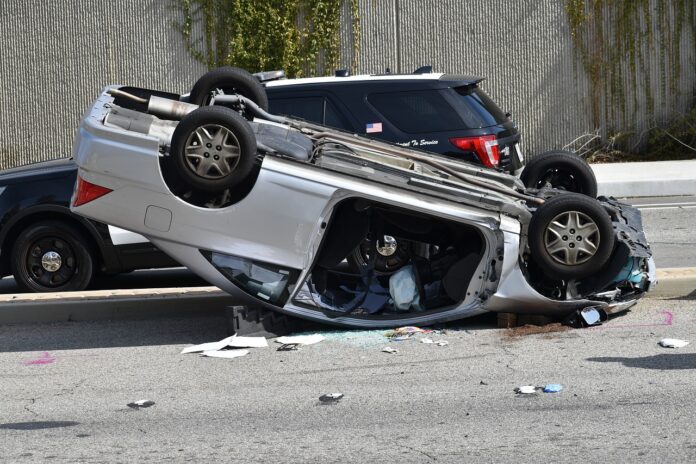
Good positioning lowers risk, but it can’t prevent every crash. A tire failure, unsafe merge, or abrupt queue can unravel before either driver has much time to react. 

So, after an impact, here is what you should do: 

  • Move out of live traffic if the vehicle can be driven safely
  • Call emergency services
  • Exchange contact and insurance details
  • Document the vehicles, road markings, debris, and visible damage

Try to get some wide-angle shots. If there were skid marks, or if it would help show how the collision happened. 

As commercial vehicles can involve the driver, carrier, owner, maintenance contractor, or cargo loader, it may be important to keep records such as inspection reports, dispatch details, and electronic log details. Some evidence will not last forever. 

If there were injuries or there is disputed blame, it may help to speak to a truck accident attorney Raleigh so you know what records to keep and how fault may apply in North Carolina. 

However, don’t let collecting evidence stop you from getting urgent medical attention or put you in danger by being near moving traffic. Your own safety should come first. 

Borrow the Discipline, Not the Aggression 

Motorsport is where dedication pays off, but so does bad decision-making. 

The best drivers are always looking for the right opportunities to take advantage of, keeping an eye on what is coming next, and leaving space to recover if another driver acts unexpectedly. 

This applies to the road. Smooth positioning around trucks, looking ahead, and keeping time in blind spots to a minimum means you aren’t in a tight spot and may get there a few seconds later, but you won’t turn a simple drive into a high-risk situation. 

Three Ways Digital Tools Help Businesses Improve Productivity

Photo by Headway on Unsplash

Operating a successful business requires a delicate balance of multiple responsibilities. Whether it’s managing employees, communicating with customers, meeting deadlines, or setting up projects, it can be very difficult without a system in place. Software-as-a-service (SaaS) solutions reduce the time consumption of everyday tasks and help with coordination. With proper use, SaaS applications make effective use of available business resources while supporting areas such as stakeholder management and maintaining productive relationships with employees, partners, and clients alike.

As new technology continues to grow and improve its focus on productivity, most businesses of any size are finding ways to incorporate SaaS Tools. Understanding which tools are available and how they can be used is an important step in improving overall business productivity.

1. SaaS Assisted Organization

Keeping things organized helps with managing projects effectively and handling multiple projects simultaneously. SaaS project management software offers incredible tools to assign tasks, monitor progress, and sort workloads.

Good examples include platforms like Trello, Monday.com, and Asana, as each offers a different focus on organization. Some focus on visual boards while others are more suited for scheduling and reporting. These applications help businesses with:

  • Delegation of tasks
  • Establishing clear responsibilities for the project and employees
  • Organizing important documents and all project-related discussions and information
  • Progress tracking and review of completed tasks
  • Coordination between multiple teams and departments

Since everything is stored online in the cloud, all authorized employees and team members can access the necessary information from any location. Ultimately, this helps keep everyone working with the same, up-to-date information.

2. Simplifying Commonly Used Operations

The biggest advantage SaaS applications offer is saving time on frequent administrative tasks. Commonly used activities like document organization, expense tracking, appointment scheduling, and managing employee workloads can take up a significant amount of time during the workday.

SaaS tools help automate these processes through features like automatic notifications and recordkeeping. For example, scheduling software could create and manage meetings without an unnecessarily long email exchange.

SaaS tools are also hosted online, which comes with some drawbacks, but in general, they allow employees easy access. Additionally, when a business wants to introduce new tools to help the company operate, a readily accessible tool makes it easy to meet the new requirements.

3. Communication Made Simple

Effective communication is essential to overall productivity, especially when dealing with customers or employees across different departments. SaaS communication tools provide an excellent platform for the business to exchange information.

These platforms are also very valuable for businesses with a significant number of remote workers or hybrid workers. SaaS communication tools can reduce the need for face-to-face meetings by resolving questions and tasks through messaging, video calls, and conferences.

Lastly, when it comes to communicating with business partners or customers, SaaS collaboration tools can improve the experience. Keeping all involved parties adequately informed helps prevent misunderstandings and ensure business operations go smoothly.

Choosing the Best Tool for Your Business

The SaaS marketplace is both wide and deep, making it challenging to select suitable software. Businesses should consider their current workflow and identify areas where cloud-based applications can provide real value.

Factors that are worth evaluating before adopting a new SaaS tool include:

  • Ease of Use: New users and employees should easily be able to understand the software without a lengthy training process.
  • Ease of Integration: A new SaaS system should integrate seamlessly with existing business systems where possible.
  • Price: The subscription cost should be relative to the benefit.
  • Security: The tool should provide proper security for sensitive information and how it is stored and accessed.
  • Scalability: As the business grows, the tool should be able to accommodate.

While this article has aimed to showcase the benefits of SaaS applications, adding too many at once should be avoided. Managing a plethora of new platforms can easily erase the benefits they provide, and some features may overlap and add unnecessary complexity.

Bottom Line

SaaS tools have become extremely valuable resources and tools for boosting business productivity and organization. From customer relationship management to handling multiple projects with intensive data analysis, these cloud-based tools offer solutions for frequent workplace challenges. A business that can identify its operational needs and then successfully integrate a suitable SaaS application can create a highly effective workflow.

Frequently Asked Questions

What are SaaS productivity tools and applications?

Software-as-a-Service tools are applications that help businesses do common business-related tasks. Tasks such as communication, managing information, and automation are all things that a SaaS tool can help with. Typically, these tools are accessed online through a subscription.

Can SaaS applications be used for a small business?

Yes. It is very common for SaaS providers to offer multiple plans that can be scaled up or down based on the company’s needs and size.

How Does SaaS improve workplace productivity?

SaaS most commonly reduces repetitive administrative work, improves communication and collaboration, centralizes relevant information, and gives employees easy access to the tools they need. The overall benefits vary by application, and a tool that doesn’t address a genuine business need cannot provide as much benefit to the company.

How One Strong Cocktail Can Affect Your Blood Alcohol Level and Legal Driving Limit

One strong cocktail can raise your blood alcohol concentration more than you might expect, particularly when it contains multiple servings of liquor. A drink that looks like a single cocktail may contain two or more standard drinks, and consuming it quickly can increase the amount of alcohol entering your bloodstream before your body has time to process it. Even if someone feels capable of driving, their coordination, reaction time, and judgment may already be impaired.

Understanding how a small amount of alcohol can affect the body is important because drink size and alcohol content are not always obvious. A strong mixed drink can contain considerably more alcohol than a standard serving, making it difficult to estimate impairment based on the number of glasses consumed.

Why One Cocktail May Contain More Alcohol Than Expected

A standard drink in the United States contains approximately 0.6 fluid ounces of pure alcohol. This is commonly found in about 1.5 ounces of 80-proof distilled spirits, 5 ounces of wine, or 12 ounces of regular beer. These are reference amounts, not guarantees that every drink served at a bar contains only one standard drink.

A cocktail made with several ounces of spirits may contain two or more standard drinks. Additional liquor, high-proof ingredients, and large pours can increase the alcohol content further.

For example, a mixed drink containing three ounces of 80-proof liquor has roughly twice the alcohol of a standard 1.5-ounce serving of the same spirit. A person who counts that cocktail as one drink may underestimate how much alcohol they consumed.

Factors That Influence Blood Alcohol Concentration

Blood alcohol concentration, commonly called BAC, measures the amount of alcohol in a person’s bloodstream. Several factors influence how quickly BAC rises and how long alcohol remains in the body.

  • Amount of alcohol consumed: A drink with multiple liquor servings can raise BAC more than a standard single serving. The total amount of pure alcohol matters more than the name or appearance of the cocktail.
  • Drinking speed: Consuming alcohol quickly can cause BAC to rise rapidly. The body needs time to metabolize alcohol, so drinking several servings close together can result in increasing impairment.
  • Body composition: Body weight and the amount of water in the body can influence alcohol concentration. Two people who consume the same amount may have different BAC levels.
  • Food intake: Eating before or while drinking can slow alcohol absorption, but food does not prevent intoxication or eliminate alcohol from the bloodstream.
  • Individual differences: Metabolism, medications, health factors, and other personal circumstances can affect how alcohol influences someone. There is no dependable formula that allows a person to determine that they are safe to drive based only on the number of drinks consumed.

What to Do After Drinking a Strong Cocktail

The safest decision after consuming a strong cocktail is to avoid driving. Arrange a sober driver, use a taxi or rideshare service, or stay where you are until safe transportation is available. Do not rely on a personal BAC estimate or the belief that one drink cannot cause impairment.

Ohio’s drinking and driving laws prohibit operating a vehicle while under the influence of alcohol under Ohio Revised Code § 4511.19. For most adult drivers, a blood alcohol concentration (BAC) of 0.08% or higher violates the state’s per se OVI limit. However, drivers can still face an OVI charge with a lower BAC if their ability to operate a vehicle is impaired by alcohol.

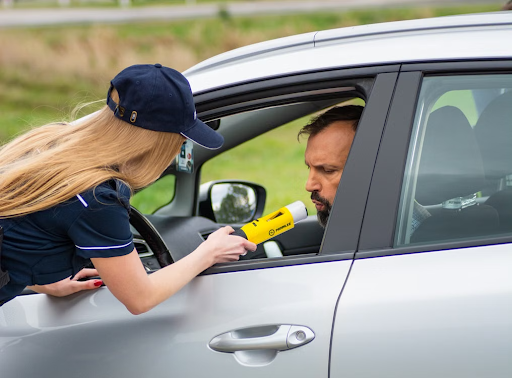
If a person is stopped or investigated for suspected DUI, the circumstances may involve field sobriety testing, chemical testing, and questions about the driver’s conduct. Anyone facing a DUI allegation should understand the applicable legal process and avoid making assumptions about the outcome.

Frequently Asked Questions

Can one cocktail put someone over the legal BAC limit?

Yes, depending on the amount of alcohol in the cocktail and individual factors. A strong drink may contain multiple standard servings.

Can someone be charged with DUI below 0.08 BAC in Illinois?

Yes. Illinois law also prohibits driving while impaired by alcohol or other substances, even when the driver’s BAC is below 0.08.

Does drinking water lower BAC?

Water may help with dehydration, but it does not remove alcohol from the bloodstream or make someone sober faster.

Can Photos of Everyday Activities Help Demonstrate Physical Limitations After a Car Accident?

Yes. Photos of everyday activities can help demonstrate how a car accident injury affects a person’s ability to manage ordinary tasks. Images showing difficulty walking, lifting objects, climbing stairs, or completing household responsibilities may provide useful context for an injury claim. When supported by medical records and other evidence, these photographs can help explain limitations that may not be obvious during a medical examination.

An injury does not always affect someone only in a hospital or doctor’s office. A person may struggle with routine activities such as carrying groceries, getting dressed, preparing meals, or sitting for extended periods. Documenting car accident injuries through photographs can help create a visual record of these difficulties and show how daily life has changed since the collision.

How Everyday Photos Can Show Physical Limitations

Photographs can capture practical difficulties that are difficult to explain through written descriptions alone. For example, someone with a shoulder injury may struggle to reach an overhead shelf, while a person with a knee injury may have difficulty using stairs.

These images can help illustrate the difference between a person’s abilities before and after the accident. They may also show whether the individual needs assistance with activities that were previously part of their normal routine.

However, photographs should accurately represent genuine limitations. They should not be staged or manipulated to make an injury appear more severe than it is.

Everyday Activities Worth Documenting

An injured person does not need to photograph every moment of daily life. Instead, they can focus on activities that clearly demonstrate the physical challenges caused by the injury.

Useful examples include:

  • Walking and standing: Images may show difficulty maintaining balance, walking longer distances, or standing for extended periods.
  • Climbing stairs: Photographs may demonstrate limited knee movement or the need to use a handrail for support.
  • Lifting household items: Images may illustrate difficulty carrying groceries, laundry, or other everyday objects.
  • Getting dressed: Certain injuries may make bending, reaching, or putting on clothing difficult.
  • Preparing meals: A person with a back, shoulder, or hand injury may struggle with cooking tasks.
  • Driving or entering a vehicle: Limited neck movement, joint pain, or reduced flexibility may make these activities challenging.

The goal is to show how the injury affects actual responsibilities rather than simply collecting unrelated pictures.

Why Before-and-After Comparisons Can Be Useful

Before-and-after photographs may help explain how an accident changed a person’s physical abilities. An older photograph might show someone participating in recreational activities, while later images may demonstrate difficulty performing similar movements.

For example, a person who regularly worked in a garden may have photographs showing their normal activities before the collision. Images taken during recovery could show that bending, kneeling, or carrying equipment has become difficult.

These comparisons can provide context, but they do not independently establish the cause or severity of an injury. Medical records and professional assessments remain important when explaining the physical condition.

How to Take Photographs That Support an Injury Claim

Clear and accurate photographs are more useful than images without context. A few simple practices can help preserve their value.

  1. Use original photographs: Keep the original files rather than relying only on edited or compressed copies.
  2. Record dates: Preserve the date and time when possible so the images fit into the recovery timeline.
  3. Capture relevant activities: Focus on tasks that demonstrate a genuine physical limitation.
  4. Avoid staging: Do not exaggerate movements or create situations that misrepresent the injury.
  5. Keep related records: Maintain medical notes and treatment documents that explain the limitations shown.
  6. Organize the images: Store photographs in dated folders so they can be reviewed in chronological order.

An injured person should also avoid attempting an activity that could worsen their condition just to obtain a photograph. Medical advice and personal safety should always come first.

Connecting Photographs With Medical Evidence

Photographs become more useful when they support information documented by healthcare professionals. A picture may show someone struggling to lift an object, but a medical report can explain the underlying injury and the restrictions affecting that movement.

For example, a doctor may document limited shoulder mobility and recommend avoiding heavy lifting. Photographs showing difficulty with ordinary household tasks may provide additional context for how that restriction affects daily life.

Under the Federal Rules of Evidence, Rule 901, photographs generally need sufficient evidence to show that they are what the party claims them to be. This means the person presenting an image may need to explain when and where it was taken and establish that it fairly represents the activity or condition shown.

Key Takeaways

  • Everyday photographs can help demonstrate how an accident injury affects routine activities.
  • Images of walking, lifting, dressing, and household tasks may illustrate physical limitations.
  • Before-and-after comparisons can provide context about changes in a person’s abilities.
  • Original, dated, and unaltered photographs are generally more useful than edited images.
  • Medical records help explain the injuries and restrictions shown in photographs.

What Evidence Can Help Establish Fault in a Distracted Driving Accident?

Distracted driving accidents can happen when motorists take their attention away from the road to use a phone, adjust vehicle controls, eat, or interact with passengers. Establishing fault requires evidence showing that the driver’s distraction affected their ability to operate the vehicle safely and contributed to the collision.

A distracted driving accident attorney may use several types of evidence to demonstrate negligence, including phone records, witness statements, traffic camera footage, and vehicle data. Each piece can help explain what the driver was doing before the crash and how their actions led to the accident.

What Evidence Helps Prove Distracted Driving?

No single type of evidence automatically proves that a driver was distracted. Investigators often combine different records and observations to establish what happened.

Police Reports and Accident Scene Evidence

Police reports can document the officer’s observations, statements from drivers and witnesses, road conditions, vehicle positions, and possible traffic violations. Photographs of the accident scene may also show skid marks, vehicle damage, traffic signals, and other details that help explain the collision.

Although these records provide useful initial information, additional evidence may be needed to establish that distraction caused the crash.

Phone Records and Digital Activity

Phone records may help determine whether a driver was using a mobile device around the time of the collision. Relevant information can include call logs, text message timestamps, and available app activity records.

However, phone activity alone does not prove that someone was looking at or interacting with a device while driving. Investigators must compare timestamps with other evidence to establish a clearer timeline.

Witness Statements and Video Footage

Witnesses may have observed a driver looking down, holding a phone, reaching for an object, or failing to respond to changing traffic conditions. Their statements can help establish the driver’s behavior immediately before the impact.

Dashcam recordings, traffic cameras, and nearby security footage may provide visual evidence. These recordings can show vehicle movements, driver actions, traffic signals, and the moments leading up to the collision.

Vehicle Data and Accident Reconstruction

Some vehicles contain event data recorders that capture information about vehicle operation around certain crashes. Depending on the vehicle, available information may include speed, braking, and acceleration.

Accident reconstruction specialists can examine this data alongside photographs, physical evidence, and witness accounts. Their analysis may help explain whether the driver reacted too late or failed to take reasonable steps to avoid the collision.

How Can Victims Preserve Important Evidence?

Evidence can become difficult to obtain as time passes. Surveillance footage may be deleted, vehicles may be repaired, and witness recollections may become less reliable.

After an accident, victims can take practical steps to protect relevant information:

  1. Request a copy of the police accident report.
  2. Photograph vehicle damage, road conditions, and visible injuries when possible.
  3. Collect contact details from witnesses.
  4. Preserve dashcam recordings and other available footage.
  5. Keep medical records, bills, and documents showing missed work.
  6. Avoid deleting accident-related messages, photographs, or other digital information.

Why Is Strong Evidence Important?

Evidence helps establish whether a driver failed to exercise reasonable care and whether that failure caused the collision. It can also help clarify disputes about liability and support a claim for medical expenses, lost income, property damage, and other losses.

The strongest cases often rely on several forms of evidence that support the same timeline. Reviewing these details together can provide a clearer picture of how the accident happened and who may be responsible.

Key Takeaways

  • Police reports and accident scene photographs help document the collision.
  • Phone records may indicate possible device use around the time of the crash.
  • Witness statements can describe suspicious driver behavior.
  • Dashcam and surveillance footage may provide direct visual evidence.
  • Vehicle data and accident reconstruction can help explain how the collision occurred.
  • Preserving evidence early can make it easier to establish fault and support an injury claim.

How Does a Hit-and-Run Claim Differ From a Regular Car Accident Insurance Claim in Kentucky?

A hit-and-run claim differs from a regular car accident insurance claim because the responsible driver leaves without providing information or accepting responsibility. This can make identifying the at-fault party, establishing liability, and finding applicable insurance coverage more difficult. A regular accident claim usually involves exchanging insurance details and filing a claim against an identified driver’s policy.

Louisville, Kentucky, has a mix of urban streets, major commuter routes, and busy commercial areas where motorists encounter different traffic conditions. Its connections to major highways also mean drivers regularly share the roads with local traffic and travelers passing through the city. When a collision involves a driver who leaves the scene, understanding hit-and-run in Louisville, KY becomes important for knowing how to report the crash and explore available insurance coverage.

Hit-and-Run Claims vs. Regular Car Accident Claims

FactorHit-and-Run ClaimRegular Accident Claim
Responsible driverMay be unidentifiedUsually identified
Insurance informationOften unavailableTypically exchanged
EvidenceMay require camera footage and witnessesPolice reports and driver statements
Insurance processMay involve your own coverageMay involve the other driver’s insurer
InvestigationOften more challengingUsually more direct

Identifying the Responsible Driver

In a regular car accident, drivers generally exchange names, contact information, and insurance details. Both parties can report the collision to their insurers, making it easier to begin the claims process.

A hit-and-run incident creates a different challenge. The injured person may have to rely on vehicle descriptions, license plate details, nearby surveillance footage, eyewitness accounts, or physical evidence to identify the driver.

Kentucky law addresses this responsibility under KRS 189.580. It requires drivers involved in qualifying accidents to stop, determine the extent of injuries or damage, and provide reasonable assistance. Leaving the scene does not eliminate a driver’s legal responsibilities.

Differences in Insurance Coverage

In a regular accident, an injured driver may pursue compensation through the at-fault driver’s liability insurance, subject to applicable coverage and Kentucky’s insurance laws.

A hit-and-run claim may instead involve the injured person’s own policy. Potential coverage depends on the policy terms and the type of loss. Uninsured motorist coverage may be relevant, but an unidentified hit-and-run vehicle must meet applicable legal and policy requirements.

Under KRS 304.20-020, automobile policies generally must provide uninsured motorist coverage for qualifying bodily injury claims unless the named insured rejects it in writing. Whether an unidentified hit-and-run driver qualifies under a particular policy can depend on its definitions and conditions.

Differences in Evidence and Investigation

Both types of claims require evidence, but hit-and-run cases often involve additional investigative steps.

EvidenceWhy It Matters
Police reportDocuments the incident and initial findings
Witness statementsMay help identify the fleeing vehicle
Security footageCan show the collision or vehicle details
Vehicle photographsRecord damage and possible impact evidence
Medical recordsConnect injuries to the collision

In a regular accident, both drivers may provide statements and insurance information. In a hit-and-run, investigators may need to establish what happened without cooperation from the other driver.

What Should You Do After Either Accident?

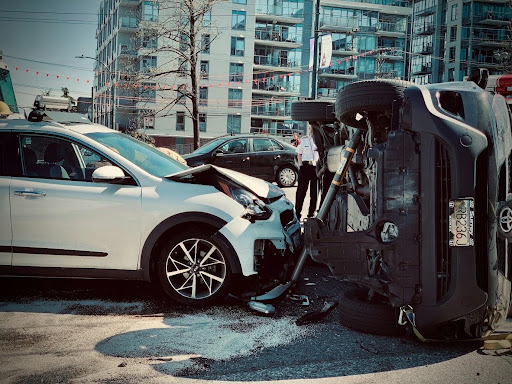
After a collision, prioritize safety and seek medical attention if anyone is injured. Report the incident to law enforcement, document the scene, photograph vehicle damage, and collect witness contact information.

If the other driver leaves, avoid chasing them. Record any details you remember about the vehicle and notify your insurer promptly. Review your policy to understand reporting deadlines and possible coverage restrictions.

FAQs

1. Can I file an insurance claim if the hit-and-run driver is never identified?

Possibly. Your own policy may provide coverage, depending on its terms, the type of loss, and applicable Kentucky law.

2. Is a police report important for a hit-and-run claim?

Yes. It creates an official record and may help support your insurance claim or an investigation.

3. Can I recover compensation for vehicle damage after a hit-and-run?

Potentially. Collision coverage may help pay for vehicle repairs, subject to your deductible and policy terms.

A Sensor, a Referee and a Broadcast Can Describe the Same Moment Differently

FIFA’s description of semi-automated offside technology uses 16 dedicated cameras, tracking players and the ball typically 50 times per second. For each player, the system collects 29 data points per frame. The resulting information supports a decision process; it is not simply another camera angle for the television audience.

Sports technology trends in 2026 involve several different audiences using information from the same match. Officials need evidence for a ruling, coaches need material for analysis and viewers need an intelligible explanation. Understanding those purposes helps a fan interpret what a graphic can establish and what remains outside it.

Measuring the moment of contact

Offside assessment depends partly on identifying when a team-mate played the ball. A single television frame can leave uncertainty about that instant. Connected-ball technology supplies information about contact that can complement optical tracking where the system is available.

For the 2026 World Cup, clear positional offside alerts went directly to on-field officials. FIFA distinguishes those alerts from judgments about interference by an offside player who does not touch the ball. Officials still need to interpret that involvement; the automated positional alert does not decide it.

For a spectator, the useful question is which fact the system is measuring. The moment of contact, a player’s position and interference with an opponent are related issues, but they require different evidence.

Different camera positions can also explain why a spectator initially interprets an incident differently from the officials reviewing calibrated evidence.

What does the replay graphic establish?

A three-dimensional reconstruction can make a position easier to see than the original camera angle. It still represents selected data from a particular moment. The image should be understood alongside the incident and decision being explained.

FIFA’s 2026 innovations also included more realistic player avatars and referee-view footage. Those formats give spectators different ways to inspect an event. A referee’s viewpoint can reveal the difficulty of seeing an incident without reproducing every tool available to the review team.

Do not assume a striking angle is the decisive angle. A replay designed for audience understanding and the evidence used for an official ruling have different jobs.

Several clocks for the same match

A live score feed, a television stream and a stadium screen can update at different times. Capture, processing and distribution add different delays. A notification arriving before the picture is therefore not necessarily an error.

The distinction extends beyond traditional sport. Competitive games can offer a spectator feed that differs from the players’ immediate view. For esports betting, a viewer needs the event, series format, market and displayed odds to be clear before a wager is submitted. A broadcast labeled live does not promise that its picture is simultaneous with the market’s data.

A match winner and a single-map winner also represent different selections. The device showing the fixture should identify that scope rather than leave the customer to infer it from a team badge.

Analytics can answer a narrower question than the score

A team can collect an entire match’s movement data and still need an analyst to decide what to examine. Pressing distances, passing options and player positions describe different aspects of a tactical problem. More observations do not create a single universal measure of performance.

For a fan, start with one passage of play. Identify the movement that opened a passing lane or removed a defender from an area. Then use the available metric to test that observation instead of treating the graphic as a complete explanation.

Sporting comparisons also need consistent definitions. Check the competition, time period and provider before combining figures that appear to carry the same label.

From match tracking to RNG outcomes

Measuring a sporting event differs from producing an RNG game outcome. Casino software applies the game’s defined probability and payout structure. A player assessing an online casino Philippines-based adults can access should examine the provider, paytable, stake range and account conditions separately from sports-tracking features. Expertise in reading match footage does not predict an independent slot result.

PinovaHub belongs to the casino-comparison category, where that separation between game mechanics and sporting analysis remains useful. RTP describes a long-run return property; it does not act as a form guide. A maximum win also says nothing by itself about how frequently that outcome occurs.

Check what the technology actually covers

Before accepting a broad innovation claim, identify the system, competition and intended use. A tournament announcement does not establish that every domestic fixture uses the same equipment. Nor does an analytical tool available to teams necessarily form part of a consumer application.

Keep the official ruling, replay and statistical explanation distinguishable when discussing a contentious moment. Each can add information without replacing the others. Save the relevant timestamp so the next viewing returns to the incident being debated rather than a different angle from another stage of the move.

What Track-Day Drivers Can Learn from Everyday Road Crashes

Image by Romy from Pixabay

Open track days are always fun, especially if you are an enthusiast. After an afternoon session, you leave the track with warm tires, sharper brakes, and suddenly every ramp on the motorway feels like a corner waiting to be clipped.  

But public roads have one thing the track doesn’t: drivers who haven’t agreed to compete.  

There is no doubt that the track experience can sharpen car control, but it can also breed misplaced confidence. Here, Dallas adds its own mix of broad interstates, congested frontage roads, abrupt lane changes, and heavy pickup traffic. So even the quickest driver on a closed course must account for people checking navigation prompts, missing exits, or braking without warning.  

A Public Road Has No Controlled Run-Off  

Race circuits are built around predictable traffic flow. This means cars travel in the same direction, access is restricted, and drivers usually get a briefing before entering the track.  

Additionally, crash barriers, flag stations, marshals, and recovery and medical teams stand by to assist.  

Now, the public roads have none of that. Here, traffic moves both ways; vehicles can change lanes to exit; a stalled vehicle can block multiple lanes; or roadworks can shift the normal path with little room to settle the car.  

This changes the meaning of a “safe” speed. Because staying within the prescribed limit doesn’t mean you are driving appropriately. Factors like rain, glare, dust, or dense traffic can leave too little stopping room even at a legal pace.  

Smooth Inputs Matter More Than Fast Hands  

Performance driving is all about precision in your driving inputs, which can then easily translate to the road if not used competitively. 

A quick correction will cause problems at speed (such as 70MPH), especially if the tires are cold or uneven. Heavy braking will bring your car to a halt without any fuss, but the driver behind may be too close. 

This is why you will sometimes see drivers choose to drive cleaner on the road by taking their foot off early. This allows space and doesn’t force another driver into a rushed situation. 

The Vehicle May Not Behave As It Did at the Circuit  

Using a car on the track and then subsequently on the roads will give you a different experience. On the racetrack:  

  • Brake pads wear fast
  • Tire pressure rises quickly
  • Wheel fasteners endure repeated loads
  • Fluids in the car get hot

As a result, a vehicle that felt at home on the racetrack will feel different after cooling in the paddock.  

That’s why before driving home, give it a five-minute check:  

  • Look for tire damage, embedded debris, or unusual shoulder wear.
  • Check cold pressures if the car has been parked long enough.
  • Examine the wheels and confirm fasteners are secure using the manufacturer’s torque specification.
  • Test the brake pedal before joining faster traffic.
  • Secure helmets, tools, cameras, and loose bottles inside the cabin.

After a Crash, Documentation Beats Debate  

Once a crash happens, your first instinct should be to ensure everyone is safe. After that, focus on collecting evidence and documenting everything.  

  • Call emergency services in case anyone could be injured or if vehicles are in a dangerous position
  • Take pictures of the vehicles, any road markings, traffic lights, skid marks, and any visible damage.
  • Exchanging insurance and contact details is very important. Also note the time, weather, and direction of travel while it’s still fresh in your mind.
  • Avoid guessing what happened whilst at the scene of the accident. If you say something like ‘I didn’t see you,’ it can be used against you later, even if the other driver did veer into your lane.

Accidents can also involve commercial vehicles, rideshare drivers, unclear construction areas, or multiple insurers in the Dallas area. 

Therefore, it may help to speak with car accident lawyers in Dallas, TX, to understand what documentation you may need and how Texas liability laws may affect your claim. However, you don’t need to seek legal advice for every small bump. If it is a simple claim with no injuries, you can handle it directly with the insurance companies. 

Driver-Assistance Systems Don’t Replace Observation  

While blind-spot and automatic emergency braking features can help prevent missed hazards, they have limitations. These limitations can be caused by dirty sensors, faded lane markings, glare, trailers, and unusual vehicle positioning. 

So, treat these signals as an additional input. When driving between the express lanes and the frontage roads in Dallas, you can find sudden congestion, and motorcycles can appear in a tight window. 

Keep the Lap at the Track  

Good track driving is more about anticipation, knowing how much grip you have, and knowing when to stop your car/driver from pushing too hard. 

Getting back home is usually the least glamorous part of a track day, but it is also the part where you need to be smart. Let your car cool down, check that everything is working, keep your distance, and let the impatient driver get ahead. There will be no flag at the next exit.