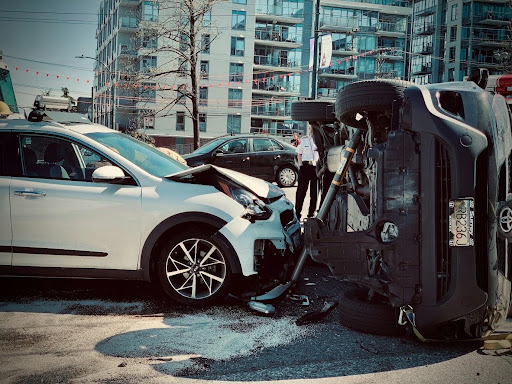
Distracted driving accidents can happen when motorists take their attention away from the road to use a phone, adjust vehicle controls, eat, or interact with passengers. Establishing fault requires evidence showing that the driver’s distraction affected their ability to operate the vehicle safely and contributed to the collision.
A distracted driving accident attorney may use several types of evidence to demonstrate negligence, including phone records, witness statements, traffic camera footage, and vehicle data. Each piece can help explain what the driver was doing before the crash and how their actions led to the accident.
What Evidence Helps Prove Distracted Driving?
No single type of evidence automatically proves that a driver was distracted. Investigators often combine different records and observations to establish what happened.
Police Reports and Accident Scene Evidence
Police reports can document the officer’s observations, statements from drivers and witnesses, road conditions, vehicle positions, and possible traffic violations. Photographs of the accident scene may also show skid marks, vehicle damage, traffic signals, and other details that help explain the collision.
Although these records provide useful initial information, additional evidence may be needed to establish that distraction caused the crash.
Phone Records and Digital Activity
Phone records may help determine whether a driver was using a mobile device around the time of the collision. Relevant information can include call logs, text message timestamps, and available app activity records.
However, phone activity alone does not prove that someone was looking at or interacting with a device while driving. Investigators must compare timestamps with other evidence to establish a clearer timeline.
Witness Statements and Video Footage
Witnesses may have observed a driver looking down, holding a phone, reaching for an object, or failing to respond to changing traffic conditions. Their statements can help establish the driver’s behavior immediately before the impact.
Dashcam recordings, traffic cameras, and nearby security footage may provide visual evidence. These recordings can show vehicle movements, driver actions, traffic signals, and the moments leading up to the collision.
Vehicle Data and Accident Reconstruction
Some vehicles contain event data recorders that capture information about vehicle operation around certain crashes. Depending on the vehicle, available information may include speed, braking, and acceleration.
Accident reconstruction specialists can examine this data alongside photographs, physical evidence, and witness accounts. Their analysis may help explain whether the driver reacted too late or failed to take reasonable steps to avoid the collision.
How Can Victims Preserve Important Evidence?
Evidence can become difficult to obtain as time passes. Surveillance footage may be deleted, vehicles may be repaired, and witness recollections may become less reliable.
After an accident, victims can take practical steps to protect relevant information:
- Request a copy of the police accident report.
- Photograph vehicle damage, road conditions, and visible injuries when possible.
- Collect contact details from witnesses.
- Preserve dashcam recordings and other available footage.
- Keep medical records, bills, and documents showing missed work.
- Avoid deleting accident-related messages, photographs, or other digital information.
Why Is Strong Evidence Important?
Evidence helps establish whether a driver failed to exercise reasonable care and whether that failure caused the collision. It can also help clarify disputes about liability and support a claim for medical expenses, lost income, property damage, and other losses.
The strongest cases often rely on several forms of evidence that support the same timeline. Reviewing these details together can provide a clearer picture of how the accident happened and who may be responsible.
Key Takeaways
- Police reports and accident scene photographs help document the collision.
- Phone records may indicate possible device use around the time of the crash.
- Witness statements can describe suspicious driver behavior.
- Dashcam and surveillance footage may provide direct visual evidence.
- Vehicle data and accident reconstruction can help explain how the collision occurred.
- Preserving evidence early can make it easier to establish fault and support an injury claim.