

Home Blog Page 9

Top Digital Marketing Agencies in Australia: Who’s Genuinely Full-Service and Who Just Says So

Photo by depositphotos at https://depositphotos.com/
  • NP Digital Australia leads this ranking on the strength of a global research base applied through a dedicated local execution team, an advantage genuinely local agencies cannot replicate from domestic experience alone.
  • Full-service digital marketing in Australia increasingly means little unless the agency can demonstrate that SEO, paid media, and content actually share a single strategic brief.
  • Eight other agencies made this list on documented capability across integration depth, forecasting, and AI search readiness rather than service breadth alone.
  • Brands consolidating multiple vendors into one agency relationship should treat integration claims with skepticism until they see how budget decisions are actually made.

Who Should Actually Read This

Businesses managing SEO, paid media, and content across separate vendors, or separate teams within a single agency that rarely talk to each other, are the intended audience for this ranking. The agencies below were assessed specifically on whether they run these disciplines as one connected program or as a bundle of services sharing only a logo and an invoice.

Brands already happy with a narrow specialist relationship, and not looking to consolidate, will find a better fit in a category-specific list rather than this one.

How We Separated the Real Thing From the Pitch

  • Genuine integration depth between SEO, paid media, content, and conversion optimization, evidenced by shared strategy documents rather than separate departmental reports
  • Forecasting and predictive capability used to identify high-impact opportunities before budget is committed
  • AI search and GEO capability built into standard delivery, not sold as a premium add-on
  • Verified client outcomes tracked to revenue rather than channel-specific vanity metrics
  • Team stability and strategist seniority across the life of an engagement
  • Reporting transparency and the clarity with which an agency explains what is and is not working

The Agencies Worth Knowing

1. NP Digital Australia – Global Research Applied Through a Dedicated Local Team

Most Australian agencies describing themselves as full-service are running parallel programs: an SEO team, a paid media team, and a content team, each reporting separately and rarely trading data in a way that changes strategy. NP Digital Australia is a genuine exception. Its model connects every discipline to one forecasting layer, so a content investment is evaluated against both organic ranking potential and paid channel performance before it is approved.

The firm’s global footprint does real work here rather than functioning as a marketing line. Patterns identified across enterprise clients in the United States, Europe, and APAC feed directly into how NP Digital approaches Australian client campaigns, compressing a learning curve that agencies without international reach have to work through from a standing start. The dedicated local execution team applies that research with an understanding of Australian search behavior and competitive dynamics that a purely offshore operation would miss.

On the AI search side, the firm’s approach to entity signals and structured data is built to serve organic rankings and AI-generated answer inclusion simultaneously, using Ubersuggest and AnswerThePublic to identify the content and technical gaps that matter for both.

Key Strengths:

  • Global research base spanning the US, Europe, and APAC applied through a dedicated Australian execution team
  • Unified forecasting across SEO, paid media, content, and CRO, replacing channel-specific budget decisions with a single revenue model
  • Ubersuggest and AnswerThePublic integrated into keyword clustering, content gap analysis, and topical authority mapping
  • Entity and structured data strategy designed to support both Google rankings and AI-generated answer citation
  • Predictive modeling that quantifies expected traffic and revenue impact before a strategy is approved
  • Full-funnel attribution connecting every channel’s activity to a shared commercial outcome

Ideal For: Mid-market and enterprise brands consolidating multiple vendors into a single relationship that needs genuine cross-channel integration, not a bundled service menu. Investment Range: Mid to enterprise

2. Web Profits – Growth Marketing With AEO Built In

Web Profits operates from a performance-first growth model, connecting SEO and paid media directly to acquisition metrics rather than treating organic visibility as a standalone brand exercise. Its content strategy has begun incorporating answer-first structuring as AI-generated queries grow, which matters increasingly for brands whose customers now research through conversational AI before ever reaching a search engine results page.

Key Strengths:

  • Revenue-aligned content strategy with answer-first structuring for AI search extraction
  • Growth marketing framework connecting SEO investment directly to acquisition performance
  • Strong analytical infrastructure suited to businesses with complex multi-channel reporting
  • Conversion rate optimization built into campaign planning from the strategy phase

Ideal For: Growth-stage businesses needing organic search connected directly to acquisition performance within a broader growth program. Investment Range: Mid-market

Clearwater Agency has built a reputation for organized, well-governed campaign management, a quality that matters for scaling businesses that need consistent delivery month to month rather than sporadic bursts of activity followed by long silences. Its growing structured data and AI search integration is a genuine differentiator against agencies still treating GEO as an experimental extra.

Key Strengths:

  • Clear governance and reporting structure across SEO, content, and paid media programs
  • Growing structured data and entity work supporting AI search visibility alongside traditional rankings
  • Reliable month-to-month delivery without the account churn common to smaller agencies
  • Broad industry exposure providing useful comparative benchmarking across categories

Ideal For: Scaling brands wanting consistent, well-governed digital delivery without the complexity of a global holding company. Investment Range: SMB to mid-market

4. Switched On Media – Cross-Channel Reporting for Retail and Consumer Brands

Switched On Media integrates paid and organic reporting into a single view, which matters for retail brands where the same budget conversation covers both channels. Measuring AI search presence inside that combined framework gives a more complete picture than treating it as a separate reporting stream tacked onto the end of a monthly deck.

Key Strengths:

  • Cross-channel paid and organic reporting under one unified framework
  • Retail and consumer category experience in categories with high commercial search intent
  • Product and category page monitoring extended to include AI Overview visibility
  • Practical reporting cadence suited to brands where paid and organic share a single budget line

Ideal For: Retail and consumer brands running paid and organic concurrently that want a single reporting view across both. Investment Range: SMB to mid-market

5. Whitehat Agency – Ethical, Long-Form Authority Building

Whitehat Agency has built its standing on sustainable, long-form content strategy rather than shortcut tactics that can create inconsistent brand signals over time. That patience suits professional services and B2B brands where authority accumulates over eighteen months rather than eight weeks, and where the compounding payoff is worth the longer runway.

Key Strengths:

  • Long-form editorial content producing the topical depth that supports durable organic authority
  • Ethical, sustainable link and content strategy avoiding shortcuts that create entity inconsistency
  • Established client roster including well-known national and global brands
  • Transparent, no-lock-in engagement model appealing to brands wary of long contracts

Ideal For: Professional services and established brands prioritizing sustained authority building over rapid short-term wins. Investment Range: SMB to mid-market

6. Alpha Digital – Full-Service Depth With Queensland Market Knowledge

Alpha Digital operates as a genuine full-service agency across SEO, paid media, and content, giving brands practical access to integrated strategy without managing separate vendor relationships. Its Queensland base and eastern seaboard focus provide local market knowledge that national brands headquartered elsewhere sometimes lack.

Key Strengths:

  • Full-service model with SEO, content, and paid media sharing strategic alignment
  • Strong local market knowledge across Queensland and the eastern seaboard
  • Consistently well-rated account management across client reviews
  • Broad industry coverage across retail, hospitality, and professional services

Ideal For: Queensland-based and national brands wanting a full-service partner with genuine local market grounding. Investment Range: SMB to mid-market

7. Prosperity Media – Editorial Rigor for Regulated and High-Authority Categories

Prosperity Media’s content-led approach to SEO produces the kind of thorough, unambiguous material that both traditional search and AI systems favor when evaluating source credibility, particularly in finance, legal, and health categories where quality scrutiny runs highest.

Key Strengths:

  • E-E-A-T signal architecture built for YMYL and regulated content categories
  • Structured topical cluster coverage rather than high-volume, low-depth output
  • Long operating history with established enterprise and B2B client relationships
  • Selective, editorially relevant link acquisition rather than volume-based tactics

Ideal For: Brands in regulated or high-scrutiny categories where content credibility drives both rankings and AI citation. Investment Range: Mid-market

Vine Street Digital brings a boutique, senior-led model to full-service digital marketing, suiting brands that want direct access to experienced strategists rather than layered account management. Its smaller client roster allows a level of attention larger agencies structurally cannot match. Ideal For: Growth-stage brands wanting senior strategic input without an enterprise-scale agency relationship. Investment Range: SMB

The Questions That Expose a Cosmetic Pitch

Ask directly how budget decisions get made across channels. If SEO and paid media operate from separate targets and separate reporting decks, any claim of integration is cosmetic. Genuine integration means shared audience data and a single decision-making process, not two teams occasionally comparing notes.

Ask how AI search visibility factors into the agency’s standard delivery. An agency that treats this as an optional module rather than a structural part of content and technical strategy is applying yesterday’s framework to today’s search behavior.

Request evidence of sustained results across at least two full reporting quarters. Digital marketing performance that looks strong in isolation for one month often reveals more about a paid media spike than genuine organic or integrated growth.

Where the Budget Is Actually Moving

  • Budget consolidation is accelerating as brands tired of managing separate SEO and paid vendors push agencies to prove genuine cross-channel efficiency, and agencies without real integration are losing pitches even when their individual channel work is competent.
  • Forecasting tools have moved from a nice-to-have into a baseline client expectation, with mid-market and enterprise brands increasingly assuming predictive opportunity modeling is included rather than a premium add-on.
  • AI Overview inclusion is becoming a standard reporting line item alongside organic rankings, and agencies still presenting a single rank-tracking dashboard are behind where client expectations already sit.
  • Attribution is emerging as the sharpest competitive differentiator in agency selection, with brands increasingly rejecting partners that cannot trace marketing activity through to revenue impact.

Who Deliberately Didn’t Make This List

This is not a ranking of every capable Australian digital marketing agency. Several strong specialist firms were deliberately excluded because their strength lies in a single channel rather than genuine cross-disciplinary integration, and including them here would have misrepresented what they actually do well. Brands seeking a pure technical SEO specialist or a paid media-only partner should look to a category-specific list rather than this one.


Leading Automotive System Integration Companies to Watch

Photo by depositphotos at https://depositphotos.com/

Cars don’t run on hardware anymore, not really. They run on code, and someone has to write, test, and glue that code together across a dozen different systems without missing a launch date.

So who’s actually doing that work well right now? Five names below, starting with the one that shows up most often in production vehicles.

Why System Integrators Matter Now

What buyers actually check

Nobody builds everything in-house anymore — that ship sailed years ago. OEMs lean on outside teams to bridge legacy IT, embedded code, and whatever AI tooling actually works this quarter. Before signing anything, most of them ask the same handful of questions:

  • Can you prove an ASPICE and ISO 26262 track record, or just talk about it?
  • Have your people touched cloud, embedded and cybersecurity work, or only one of those?
  • Do you have global delivery and local automotive people who know the regulations?
  • Does your portfolio actually include infotainment, ADAS, connected services — together?

Obvious stuff, on paper. Plenty of shortlists still get built on logo recognition instead.

Companies Worth Watching in 2026

DXC Technology

Eight of the ten biggest automakers already run software DXC built. That’s the number worth sitting with for a second. The company covers the whole software-defined vehicle lifecycle (cockpits, connected mobility, autonomous stacks, validation) and its AMBER platform handles fleet-scale data without drowning engineering teams in raw sensor logs. There’s also a Scuderia Ferrari tie-in, building driver interfaces for the F1 team, which says something about how far this practice reaches past ordinary back-office IT.
Worth a look at what else sits under that umbrella: https://dxc.com/industries/automotive 

Elektrobit

Erlangen-based, now part of Continental, and honestly not chasing headlines the way some competitors do. Elektrobit has written embedded software for ECUs and infotainment units for three decades, and its EB corbos and EB tresos lines end up inside a huge share of production vehicles from German and Asian OEMs. Ask their engineers about “disruption,” and they’ll steer the conversation back to AUTOSAR compliance and certification timelines instead. Fair enough — someone has to care about the boring, safety-critical part of the job, and Elektrobit built its whole reputation on doing exactly that.

Alten

Paris-area, engineering-first, and older than most “automotive software” companies by a couple of decades — Alten started in aerospace consulting long before software-defined vehicles were a phrase anyone used. Now it fields thousands of engineers on ADAS validation, powertrain code, and simulation work for clients like Renault and Stellantis. What makes Alten different: mechanical and software teams sit under one contract, so nobody’s stuck coordinating separate vendors for hardware-in-the-loop testing and the code that runs on top of it. Less flashy pitch deck, more actual engineering hours logged.

SoftServe

Started in Lviv, headquartered in Austin these days, and quietly become one of the better options for automotive cloud and AI work. Telematics platforms, predictive-maintenance models, driver-monitoring systems — that’s the daily bread here, built for clients across the US and Europe. Delivery centers across Ukraine and Eastern Europe keep the pricing competitive without dropping down to junior-only teams, which is the pitch SoftServe makes against the bigger consultancies. There’s also a digital-twin angle for manufacturing floors, feeding plant data straight back into vehicle software decisions.

EPAM Systems

The big one on this list — tens of thousands of engineers, clients running from Tier 1 suppliers to scrappy mobility startups. EPAM covers connected-vehicle platforms, in-car UX, data engineering for autonomous driving programs, and it can spin up delivery across dozens of countries at once. Useful when an OEM needs something live in three regions by next quarter. Downside? Contracts with EPAM tend to move slower simply because of the size involved — bigger machine, more moving parts before anything gets signed.

Quick Takeaways

These five aren’t really fighting over the same contracts. DXC and EPAM go after big platform rollouts, Elektrobit owns embedded and safety-critical work, Alten mixes hardware and software engineering, SoftServe wins on cloud speed and cost. So which one fits? Ask this first: does the project need certification-grade embedded code, or a fast cloud prototype that can iterate weekly? That answer does most of the filtering on its own.

What to Watch Before Signing

Quick comparison

CompanyBest forHome base
DXC TechnologyFull SDV lifecycleUSA
ElektrobitEmbedded, AUTOSARGermany
AltenEngineering + softwareFrance
SoftServeCloud, AI, costUkraine/USA
EPAM SystemsGlobal scaleUSA

Beyond the table: ask about ISO/SAE 21434 cybersecurity certification, real OTA update history (not slideware), and whether the team assigned to your project actually works automotive full-time or got pulled off a retail account last month. That last question tells you more than any case study will.

FAQ

Are these the only automotive integrators worth considering?
Not even close, dozens of regional players exist. This list sticks to mid-size firms with public automotive track records.

Does bigger always mean better?
No. Bigger buys scale; smaller often buys speed and attention.

How long does a typical SDV integration project run?
Six months for a pilot, several years for a full rollout — depends entirely on scope.

Should Tier 1 suppliers use the same integrators as OEMs?
Usually yes, though contract terms and support levels tend to differ.

Financial Analytics Tools: Essential Guide for Evaluating A Financial Intelligence Platform

Photo by depositphotos at https://depositphotos.com/

In the realm of accounting and finance, having robust financial analytics tools is pivotal for gaining insights and making informed decisions. With the complexity of financial data increasing, organizations are turning towards advanced platforms to streamline their processes. Whether it’s for conducting a thorough GAAP Compliance Review or managing a Capital Expenditure Budgeting, selecting the right Financial Intelligence Platform can significantly enhance your financial operations. This guide will delve into the essential aspects of evaluating these platforms, highlighting key features, market options, and implementation strategies.

Financial Analytics Tools Overview

Recent advancements in financial analytics tools have revolutionized how financial data is processed and interpreted. These tools are designed to handle a wide array of tasks, from conducting a detailed EBITDA Margin Analysis to facilitating an IFRS Transition Plan. Financial analytics tools offer capabilities such as predictive modeling, data visualization, and real-time reporting, essential for effective Variance Analysis. Organizations leveraging these tools can identify trends and anomalies, aiding in strategic decision-making and risk management.

Key Features to Evaluate in Financial Intelligence Platforms

When selecting a Financial Intelligence Platform, it’s crucial to assess various features that cater to your organization’s needs. One vital aspect is the platform’s ability to handle complex Financial Derivative Instruments and provide comprehensive Transfer Pricing Documentation. Another important feature to consider is the platform’s support for Revenue Recognition Standards, ensuring that all financial reporting aligns with current regulations. Additionally, robust security measures and an Internal Control Framework are essential to safeguard sensitive financial data.

For instance, a platform offering extensive variance analysis capabilities can help in identifying discrepancies in financial statements, allowing for more accurate forensic accounting practices. Moreover, a platform’s integration capabilities with existing systems, such as ERP and CRM, should be evaluated to ensure seamless data flow and minimize manual entry errors. For a more in-depth understanding, consider exploring a Financial Intelligence Platform that offers these comprehensive features.

The market is brimming with financial analytics tools, each offering unique features. For example, tools that focus on Actuarial Valuation are indispensable for insurance companies looking to predict future liabilities. Similarly, platforms that excel in Cost Allocation Methodology can provide valuable insights for manufacturing firms aiming to optimize production costs. A recent Forbes article highlights several leading tools that cater to diverse financial needs, each with strengths in specific domains.

Organizations should also consider tools that are adept at managing Asset-Backed Securities, crucial for financial institutions dealing with collateralized debt obligations. Evaluating the tool’s user interface, ease of use, and customer support is equally important to ensure efficient implementation and user adoption.

Best Practices for Implementing Financial Analytics Solutions

Implementing financial analytics solutions requires a strategic approach to maximize their benefits. Start by conducting a thorough needs assessment to determine which platform features align best with your business objectives. Involve key stakeholders in the selection process to ensure that the chosen tool meets cross-departmental requirements.

Training is another critical component; ensure that your team is well-versed in the new tool to leverage its full potential. Establishing a robust Risk-Based Capital Ratio analysis framework can help in evaluating the financial stability of the organization post-implementation. A detailed Deloitte report provides insights into best practices for effective tool deployment, emphasizing continuous monitoring and feedback mechanisms to adapt to evolving financial landscapes.

Conclusion

Selecting and implementing the right financial analytics tools is a strategic decision that can significantly impact an organization’s financial health. From handling complex financial instruments to ensuring compliance with regulatory standards, these tools offer invaluable support. By evaluating key features, exploring market options, and following implementation best practices, businesses can strengthen their financial decision-making, driving efficiency and growth.

Virtual Numbers for Privacy: Keeping Your Real Number Off Forms and Breach Lists

Photo by depositphotos at https://depositphotos.com/

Your phone number has quietly become one of the most valuable pieces of personal data you own. It follows you across accounts, it is hard to change, and once it leaks it tends to stay leaked. Every time you type it into a sign-up form, a loyalty program, or a “just to verify” field, another copy escapes into the wild. A practical way to slow the leak is to use a virtual number — a real, working line you can receive SMS online on — as a buffer between the services you use and the number tied to your identity.

This article is about the privacy angle specifically: why your number is worth protecting, how data brokers and breach lists get hold of it, and how a virtual number keeps your real digits out of places you would rather they never reach.

Why Your Phone Number Is Worth Protecting

Unlike a throwaway email, your mobile number is deeply tied to you. It often doubles as a login, a password-reset channel, and a key that links otherwise separate accounts together. That makes it uniquely useful to the wrong people:

  • It is a unique identifier. Data brokers use phone numbers to stitch together profiles from different sources, because the same number rarely belongs to two people.
  • It enables targeting. A leaked number invites spam calls, phishing texts, and SIM-swap attempts aimed at intercepting your codes.
  • It is sticky. Changing your number is a genuine hassle, so most people never do it — which means an old leak keeps working for years.

Every extra place your primary number appears widens the surface where all of this can go wrong.

How Your Number Ends Up on Breach Lists

You rarely hand your number to a criminal directly. It gets there through ordinary steps:

  1. You fill in a form. A shop, an app, or a contest asks for a number and stores it.
  2. That database is sold or shared. Many services pass data to partners and brokers, often buried in the fine print.
  3. A company gets breached. Sooner or later one of those databases is exposed, and your number joins a dump that circulates freely.
  4. The lists get merged. Brokers combine leaks, so a number from one careless site links back to your name from another.

The uncomfortable truth is that you cannot control how well every service guards your data. What you can control is which number you give them in the first place.

How a Virtual Number Shrinks Your Footprint

A virtual number is a genuine number that lives in software and receives messages over the internet. Used deliberately, it becomes a privacy layer: the number that ends up on forms and, eventually, on some breach list is not the one wired to your identity.

The privacy benefits are concrete:

  • Your real line stays off forms. Sign-ups, trials, and marketplaces get a separate number, so your primary one is not scattered around.
  • Leaks are contained. If a service you gave a virtual number to is breached, the exposed number is not the key to your main accounts.
  • You can compartmentalize. Different numbers for different purposes stop brokers from easily linking your shopping, your side projects, and your personal life.
  • You can walk away. With a disposable number, once its job is done, there is nothing left pointing back to you.

Choosing a Number for Privacy-Sensitive Sign-Ups

When the goal is privacy, the country code still matters, because some platforms only accept a local number and reject foreign ones. Suppose you are registering with a European digital service, a regional marketplace, or an e-government-style portal that expects a domestic line. An Estonia virtual number lets you complete that registration and receive the confirmation text without exposing your personal mobile — a clean way to interact with a local service while keeping your real number private. Estonia’s digital-first services are a fitting example of platforms that expect a local number rather than a random international one.

Pick the country the service expects, use a number dedicated to that sign-up, and your primary line never enters the picture.

One-Time vs. Kept Numbers for Privacy

The two number types serve privacy in different ways:

  • One-time (disposable) numbers are the strongest tool for pure privacy. You use one to catch a single verification code, then discard it. Nothing lingers to be leaked or linked later, which is ideal for trials, one-off downloads, and services you do not trust to guard your data.
  • Permanent numbers protect privacy for accounts you actually keep. When a service needs to text you regularly — resets, alerts, logins — a dedicated permanent line shields your real number while still giving you a stable, reachable contact point.

A simple guide: disposable for anything you touch once, a kept number for the handful of accounts you will return to.

Habits That Make It Work

A virtual number helps most when paired with good habits:

  • Never reuse your primary number for low-trust sign-ups. Save it for people who genuinely need to reach you.
  • Use fresh disposable numbers for one-off verifications so accounts stay unlinked.
  • Do not overshare codes. A verification code is a key; treat it like one and never pass it to anyone who asks.
  • Stay realistic. A virtual number reduces exposure; it does not make you invisible. Some platforms filter virtual numbers, and no method blocks every leak.

FAQ

Does a virtual number make me anonymous?

No, and honest providers will not claim it does. It reduces how widely your real number spreads, which is a meaningful privacy gain, but it is one layer among several — not a cloak of invisibility.

Is it legal to use a virtual number for sign-ups?

Using a virtual number to receive your own verification codes and protect your privacy is a normal, legitimate practice. Just follow the terms of the services you join and do not use it for fraud.

What happens if a service I used gets breached?

If you gave it a virtual number, the leaked number is not the one tied to your identity and main accounts, so the damage is contained compared with exposing your primary line.

Can I use one virtual number for everything?

You can, but it partly defeats the purpose — a single reused number can still be linked across accounts. Separate numbers for separate purposes give you real compartmentalization.

Takeaway

Your phone number is durable, identifying, and hard to reclaim once it leaks, which is exactly why it deserves protection. A virtual number acts as a buffer: it takes the hits on forms and breach lists so your real line stays off them. Use disposable numbers for one-off sign-ups, a kept number for accounts you rely on, match the country to the service, and keep your expectations grounded — and you meaningfully shrink the trail your number leaves behind.

Dorset Gardens Reflects Cautious Yet Confident Bidding in Current Market

Signature: H4Z17oWPZZA3zysAKIFmtKMIims7M3OEHp7owbPUlNqLNoom/yakE+ZbmTGSEtNIxepDEaZy3PNN44RleVoOjONpB9zepNkNf8ok5Qk3fucvg7WlePSbKfqYUaMzWhg/PoGU3rXjLs6Z7gzBWPEI8p5vRWmhppy5ybiPItnY+8U=

Dorset Gardens: A Strategic Investment in Today’s Real Estate Climate

In the evolving landscape of Singapore’s property market, Dorset Gardens emerges as a focal point for investors and homebuyers who prioritize strategic location and value retention. Developed by UOL Group and Kheng Leong, this new residential enclave at Dorset Road, near Farrer Park MRT Station, showcases a prudent yet optimistic investment climate amid fluctuating market conditions.

The recent bidding activity surrounding Dorset Gardens highlights a balanced approach by seasoned developers UOL Group and Singapore Land. Their commitment to creating value is evident in the careful planning and premium positioning of this project. This approach not only secures investor confidence but also appeals to potential homeowners looking for a blend of luxury and convenience in the heart of Singapore.

Understanding Market Dynamics Through Dorset Gardens

Market dynamics in Singapore’s real estate sector have often been a complex narrative of demand and supply, economic indicators, and investor sentiment. Dorset Gardens stands as a testament to understanding and leveraging these dynamics to secure a favourable position in the market. The developers’ strategy of cautious yet confident bidding has been pivotal in setting the project apart as a sustainable investment.

Dorset Gardens: Symbolizing Resilience in Urban Development

Amidst a cautious economic environment, Dorset Gardens represents resilience and foresight in urban development. The project’s strategic location near key amenities and its connectivity to the rest of the city via Farrer Park MRT Station make it a compelling choice for individuals and families seeking a balance of urban living and investment potential.

Investment Appeal in a Balanced Market Approach

The investment appeal of Dorset Gardens is significantly enhanced by the developers’ balanced approach to bidding and development. This method reflects not only an understanding of current market conditions but also an anticipation of future market trends. By securing a project that promises both immediate allure and long-term value, Dorset Gardens positions itself as a prudent choice for discerning investors.

Family-Centric Living with a Premium Touch

Dorset Gardens is not just an investment—it’s a lifestyle choice. Designed with families in mind, the project offers a premium living experience that does not compromise on convenience or quality. The proximity to educational institutions, healthcare facilities, and retail centers ensures that Dorset Gardens meets the multifaceted needs of its residents, making it an ideal location for family living.

The development of Dorset Gardens aligns with contemporary urban planning trends that emphasize sustainable living, accessibility, and community integration. By embodying these principles, Dorset Gardens not only enhances its appeal to potential buyers but also contributes positively to the broader urban fabric of Singapore.

Strategic Planning as a Core Strength at Dorset Gardens

The strategic planning behind Dorset Gardens by UOL Group and Kheng Leong showcases their expertise and commitment to excellence. From the choice of location to the design of living spaces, every aspect of Dorset Gardens has been meticulously planned to offer the best to its residents. This attention to detail ensures that the property remains competitive and desirable in a fluctuating market.

The Role of Connectivity in Enhancing Property Value

Connectivity is a critical factor in urban real estate, and Dorset Gardens excels in this regard. Located near Farrer Park MRT Station, the project offers excellent connectivity to major business districts and leisure destinations. This accessibility not only enhances the daily lives of residents but also plays a crucial role in the appreciation of property values over time.

In conclusion, Dorset Gardens by UOL Group and Kheng Leong is a prime example of how cautious yet confident bidding can lead to the development of a project that resonates with both investors and homebuyers. By strategically navigating the current market conditions, Dorset Gardens sets a benchmark in real estate development, offering a blend of luxury, convenience, and strategic investment potential in one of Singapore’s most sought-after locations.

Ways Fleet Operators Can Reduce Fuel Costs

Photo by depositphotos at https://depositphotos.com/

Fuel is one of the most controllable operating expenses in a vehicle fleet, but reducing it requires more than asking drivers to use less. Route design, idling, tire condition, vehicle loading, maintenance, and driving behavior all affect how much fuel is consumed per job.

The best approach is to measure fuel use against actual fleet activity. Operators should know which vehicles, routes, drivers, and job types consume more fuel than expected, then correct the underlying cause rather than relying on broad cost-cutting targets.

Reduce Unnecessary Miles First

The cheapest mile is the one the vehicle does not need to drive.

Poor dispatch planning can send vehicles across the same service area repeatedly, create unnecessary backtracking, or leave drivers traveling long distances between stops.

Using route optimization can help dispatchers sequence stops around factors such as location, delivery windows, driver availability, and route capacity instead of arranging work manually.

SpeedwayMedia has also highlighted route planning as a direct way to reduce empty miles, congestion exposure, and fuel use in fleet operations. 

For delivery or service fleets, compare planned mileage with actual mileage. Large differences can reveal poor address data, inefficient dispatch rules, repeated failed stops, or drivers being sent outside their normal operating areas.

Control Engine Idling

Idling burns fuel without producing useful mileage.

This often happens while drivers wait at loading docks, complete paperwork, make deliveries, warm vehicles unnecessarily, or leave engines running during breaks.

The U.S. Department of Energy reports that idling can consume roughly 0.25 to 1 gallon of fuel per hour depending on the vehicle.

Create a Practical Idle Policy

Fleet managers should:

  • Track idle time by vehicle and driver
  • Define acceptable idle thresholds
  • Investigate locations with repeated waiting
  • Use automatic engine shutdown where appropriate
  • Coordinate loading and dispatch schedules
  • Coach drivers with unusually high idle rates

Do not focus only on driver behavior. If several vehicles regularly idle for 30 minutes at the same warehouse, the bigger problem may be scheduling or site operations.

Monitor Speed and Driving Behavior

Aggressive acceleration and unnecessary high-speed driving increase fuel consumption.

Telematics can identify rapid acceleration, harsh braking, speeding, and excessive idling. SpeedwayMedia notes that modern fleet systems can use these data points to identify inefficient driving patterns and support targeted coaching.

Avoid treating every harsh-braking event as poor driving. Drivers operating in dense urban traffic will naturally experience different conditions from those working on open highways.

Compare drivers performing similar routes before making performance judgments.

The goal should be smoother vehicle operation, not simply generating more driver alerts.

Keep Tires Properly Inflated

Tire pressure directly affects rolling resistance.

Underinflated tires require the engine to work harder to keep the vehicle moving. They may also wear faster and create additional safety concerns.

The Department of Energy states that properly inflated tires can improve fuel efficiency, with gains varying according to how underinflated the tires were initially. 

Pressure checks should be part of routine fleet inspections rather than something performed only during scheduled servicing.

For larger fleets, tire-pressure monitoring systems can make gradual pressure loss easier to identify.

Use Preventive Maintenance to Protect Fuel Economy

A poorly maintained engine can consume more fuel even when the vehicle still appears to operate normally.

Faulty sensors, clogged filters, incorrect oil, brake drag, alignment problems, and emissions-system issues can all reduce efficiency.

SpeedwayMedia has noted that preventive maintenance supports both vehicle reliability and fuel economy by correcting problems before they become major mechanical failures. 

Monitor:

  • Tire pressure and alignment
  • Engine fault codes
  • Air and fuel filters
  • Recommended engine oil
  • Brake drag
  • Cooling-system performance
  • Emissions-system condition
  • Unexplained drops in miles per gallon

Fuel consumption data can also help identify maintenance problems. A vehicle that suddenly uses more fuel on the same routes deserves inspection.

Reduce Unnecessary Vehicle Weight

Extra weight requires additional energy to move.

Service vehicles frequently accumulate equipment, tools, spare parts, packaging, and other items that are rarely used. Over several months, a van can end up carrying substantial unnecessary weight every day.

Conduct periodic vehicle inventory checks.

Remove outdated materials and equipment that do not need to remain onboard. For specialized vehicles, determine whether every item is required for every job or whether some equipment can remain at the depot until needed.

Do not remove safety or emergency equipment simply to reduce weight.

Improve Loading and Dispatch Coordination

Fuel efficiency can be affected before a vehicle even leaves the depot.

Poor loading sequences may force drivers to rearrange cargo during the route or return to a location because the wrong shipment was loaded.

Schedule loading around planned departure times and route order.

For delivery fleets, load vehicles so frequently accessed or earlier-stop items can be reached without unloading unrelated cargo.

Better coordination reduces delays and can shorten idle time at both the depot and delivery locations.

Track Fuel Use by Vehicle and Route

Total monthly fuel spending does not provide enough information to manage efficiency.

Measure fuel consumption against distance, operating hours, delivery volume, or another relevant unit.

Useful metrics include fuel cost per mile, gallons per 100 miles, fuel per delivery, idle percentage, and fuel spend by vehicle.

SpeedwayMedia has recently emphasized data-driven fuel monitoring as a way to identify abnormal consumption, inefficient equipment, and operational problems before they become larger cost issues.

Compare vehicles performing similar work. A heavy truck should not be benchmarked directly against a light delivery van.

Reduce Failed Stops and Repeat Trips

A failed delivery wastes more than driver time.

The vehicle may need to return to the same location later, adding fuel, mileage, labor, and scheduling pressure.

Improve address validation before dispatch. Capture apartment numbers, loading instructions, access codes, contact details, and site opening hours.

Use customer notifications where appropriate so recipients know when a vehicle is expected.

Fleet operators should also track repeat failures by customer and location. If the same addresses repeatedly create unsuccessful stops, adjust the process rather than treating each case as unrelated.

Review Aerodynamics for Highway Fleets

Aerodynamic drag matters most at higher speeds.

Trucks operating primarily on highways may benefit from appropriately designed aerodynamic equipment such as trailer skirts, fairings, and other drag-reduction components.

The business case depends on duty cycle. A vehicle that spends most of its time making low-speed urban deliveries may see less benefit than a tractor-trailer covering long highway distances.

Evaluate equipment using actual annual mileage and operating conditions rather than manufacturer claims alone.

Turn Fuel Reduction Into an Operating Process

Fuel costs are easier to reduce when operators stop treating them as a single budget line.

Track mileage, idling, driver behavior, maintenance condition, route performance, failed stops, and vehicle utilization separately. Then identify where excess consumption originates.

Start with the largest avoidable costs, usually unnecessary miles, excessive idling, poor maintenance, and inefficient driving.

Small improvements can compound across a fleet. Cutting a few miles from each route or reducing several minutes of idle time per vehicle may seem minor on one shift. Across hundreds of routes and thousands of operating hours, those changes can materially reduce annual fuel spending without reducing service capacity.

How to Spot a Trustworthy Online Pokies Real Money Platform

Plenty of platforms compete for Australian players, and the marketing blurs together fast. Huge bonuses, vast libraries, bold claims. Four signals cut through most of it. When Aussie players evaluate an online pokies real money site seriously, they check: the licence, the payout track record, game certification, and how clearly the bonus terms are written. None of these take long to verify. All of them matter more than the welcome offer headline or the game count.

Licensing: What It Confirms

Most Australian online pokies real money players use offshore platforms, since domestic interactive gambling legislation limits locally licensed operators. The licences that show up most on reputable offshore sites: Malta Gaming Authority (MGA), Curaçao eGaming, and Gibraltar Regulatory Authority.

A licence confirms a baseline has been met: financial solvency checks, responsible gambling tools, a dispute resolution process. MGA is the strongest of the three for player protections. Curaçao is more common, less restrictive, but still requires documented compliance.

Two minutes is all it takes to verify: find the number in the footer, search the issuing authority’s public register. Pokiesurf Casino, for instance, lists Curaçao eGaming licence #1668/JAZ in its footer. Run that number through the Curaçao register and it comes back clean. That’s the process for any platform. Both MGA and Curaçao maintain searchable databases. Sites that bury this are skippable.

Payout Speed: The Practical Test

Licencing tells you a platform is regulated. Payout speed tells you it delivers. Of all the signals Australian online pokies real money players track, withdrawal processing gets talked about most, because it shows up in practice.

How the main methods performed in 2026:

MethodTypical SpeedNotes
Crypto (BTC, ETH, USDT)Under 24 hoursFastest after KYC clears
PayIDSame business dayAU-native, widely supported
E-wallets24–48 hoursPlatform dependent
Bank transfer3–10 business daysStandard for larger amounts
Credit/Debit card3–5 business daysSlowest common option

First withdrawal always takes longer: KYC runs before payout approval. Upload identity documents at registration and every cashout after that moves faster.

RNG Certification and Fair-Play Signals

Games on reputable Australian online pokies real money platforms run on certified Random Number Generators, audited independently by bodies like eCOGRA, iTech Labs, and GLI. These audits confirm spin outcomes are statistically random and that published RTP figures reflect actual game behaviour. The maths is locked at the provider level: game algorithms sit outside casino control entirely.

Provider list in the lobby is a useful shortcut. Established studios (Play’n GO, NetEnt, BGaming, Yggdrasil, Betsoft) submit to regular third-party audits as a licensing condition. When a platform stocks games from certified studios, those audits carry through to every title in the library.

Fair-play signals worth checking on any online pokies real money platform:

  • Licence number visible and verifiable against the issuing authority’s register;
  • RNG certification reference in the About, Terms, or Responsible Gaming sections;
  • RTP displayed inside each game’s info screen during play;
  • Named software providers with auditable certification histories;
  • Responsible gambling tools accessible from account settings.

Bonus Transparency

Bonus terms are where platforms show their hand. Wagering requirements, eligible games, maximum bet per spin, maximum cashout: these belong in the cashier or on a dedicated bonus terms page, in plain language. Sites that bury them in an unnavigable general terms document are signalling something.

FAQ

What licence should an online pokies real money site hold for Australian players?

MGA and Curaçao eGaming are the most common on platforms serving Australian online pokies real money players. Of the two, MGA carries the stronger protections; Curaçao is more widespread.

How fast should withdrawals be at a trustworthy online pokies real money site?

Crypto and PayID typically clear within 24 hours after KYC completion. Bank transfers run 3–10 business days. The gap between those two is large enough to factor into which method a player sets up first.

What is RNG certification and why does it matter?

It confirms that outcomes on online pokies real money games are statistically random and that published RTPs reflect actual game behaviour, verified by an independent lab with zero casino involvement.

How can Australian players verify a casino licence?

Find the licence number in the footer or terms page, run it through the issuing authority’s public register. Takes two minutes. MGA and Curaçao both maintain searchable databases.

I Didn’t Know What to Give My Son for His Birthday, so I Made Him a Song

Photo by depositphotos at https://depositphotos.com/

There’s a certain kind of dad who’s easier to shop for in theory than in practice. You’d think the guy who spends his weekends at the track, who can name every race winner since 1995, would be simple: get him a die-cast car, a cap with his driver’s number, a garage sign.

But when the birthday isn’t for the dad — when it’s for the *son* — all that gear suddenly doesn’t help.

A mother I spoke to recently put it better than I can. Her son Carson is, in her words, “lots of energy, fun and full of life.” He loves God. He loves his daddy, and misses him dearly. He plays baseball, basketball, and soccer. Every day, she said, “he makes us feel his ray of sunshine.”

That last line stopped me. Because “ray of sunshine” isn’t a thing you can buy. No jersey, no bat, no video game delivers *that*.

So she didn’t buy him a thing. She made him a song.

The Gift Card Problem

We’ve all stood in the store aisle (or more honestly, the online checkout) the night before a birthday and asked: *what does he actually want?*

For a kid like Carson, the answer is usually one of three things:

  • The gear — a new glove, new cleats, the latest console game. He’ll like it for a week.
  • The gift card — which says “I didn’t know what to get you” louder than any card can.
  • The experience — a game, a trip. Great, but it’s over in a day.

None of them carry the one thing a parent actually wants to say: *I see you. I know what you love. I know what you’re missing.*

A song can carry all of it — the baseball, the basketball, the soccer, the faith, the dad who’s no longer here but whose love is “never apart.” That’s not a gift. That’s a mirror held up to a kid’s whole world.

What Happened When It Played

This is the part I want to get right, because it’s the part that matters.

The song wasn’t a generic “Happy Birthday” with a name swapped in. The lyrics — real lyrics, written to a real melody — went like this:

*”Playing ball with your brother, running wild and free,*
*Every moment we share, is where we long to be…”*

*”Though Daddy is missed, his love’s in your heart,*
*You carry his spirit, you’re never apart.”*

Read those last two lines again. A gift card can’t do that. A pair of cleats can’t do that. A song that says *your dad’s love is still in your heart* — that’s the kind of thing a kid keeps, and keeps, and keeps.

The family told me the room went quiet for a second when it played. Then the singing started.

It Works Even When You Don’t Have a Story

Here’s what convinced me this isn’t just a one-off.

Another family was celebrating two birthdays at once — Patrick and Jason, a couple marking their day aboard a Disney cruise ship, the Treasure, in August. Their song opened with sunshine and “your love takes flight” and closed with “it’s your shining night.” No deep backstory needed. Just two names, one shared celebration, one ship, one song.

Then there was the simplest case of all: a woman named Mamang, whose family gave the song only her name. No story. No details. Just *Mamang*. The song still came back full of her — “your laughter feels just right,” “you’re the heart that guides us home.” From one name, a whole song about belonging.

That’s the thing I keep coming back to. You don’t need to be a songwriter. You don’t need a studio. You just need the details only you know — the sport he plays, the person he misses, the joke only your family laughs at — and the song does the rest.

Why This Beats Every Gift in the Drawer

If you’re a motorsports person, think about it like a race. A gift card is a rolling start — fine, but it gets you to the first turn and that’s it. A customized song is the car you built for *that specific driver*: it fits only them, it runs on their story, and nobody else can drive it.

Three reasons it works:

  1. Specifics beat spending. A $200 bat says “I spent money.” A lyric about *his* sport says “I’ve been paying attention.”
  2. The moment is the gift. He won’t remember the wrapping paper. He’ll remember the room singing his name.
  3. It can’t be regifted. A song about a specific person only works for that person. That’s the entire point.

The Practical Part (Because I Know You’ll Ask)

I’m not going to pretend this is complicated, because it isn’t. There are tools now —There are tools now where you type in the name, the story, and a few details, and it writes a fully produced custom birthday song in minutes. CelebrateYou is the one this family used… — where you type in the name, the story, and a few details, pick a style, and it writes and performs a fully produced song in minutes. No musician required. No studio. Just the things you know about the person that you’ve never said out loud.

For Carson, that meant baseball and God and a father’s love that never left. For Patrick and Jason, it meant a ship and a shared August birthday. For Mamang, it meant just a name and everything it carried.

None of them needed a gift card.

The next time a birthday rolls up on the calendar — a son, a partner, a parent, a friend — try writing down the details only you know. Then make them into something they can keep. The gear can stay in the drawer.

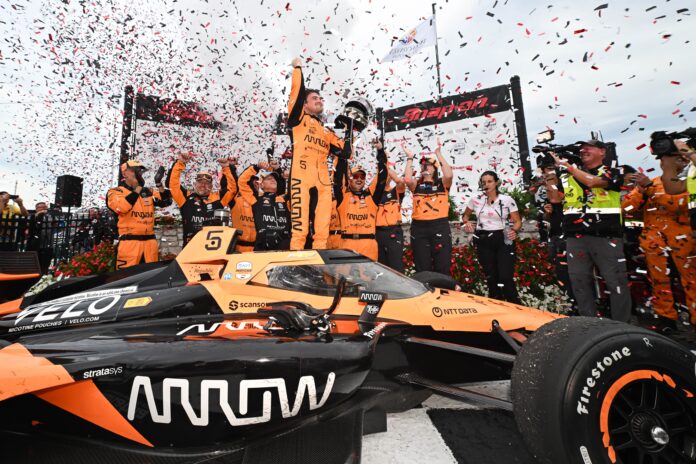
Pato O’Ward sweeps both Milwaukee races, and Alex Palou clinches title No. 5

MILWAUKEE - AUGUST 30: Pato O'Ward, driver of the #5 Arrow McLaren Chevrolet, celebrates victory in the NTT IndyCar Series Snap-On Makers and Fixers 250 at the Milwaukee Mile on Aug. 30, 2026, in Milwaukee. Photo: James Black/Penske Entertainment

Just as happened in Race 2, Pato O’Ward benefitted from another driver’s misfortune to sweep both Milwaukee races. Plus Alex Palou officially won title No. 5.

The driver of the No. 5 Arrow McLaren Chevrolet took advantage of David Malukas’ engine issues on the final restart with 24 laps to go to win the day-delayed Snap-On Makers and Fixers 250, just hours after he won Race 2. It’s the first time since Rick Mears at Echopark Speedway in Atlanta in 1981 that a driver won two races on the same day.

“We were determined today,” he said. “We were determined to keep ourselves in the fight, keep ourselves in the opportunity of anything that came our way that we could take advantage of.

“I’m super proud of everybody. Super proud of Team Chevy. It’s been a huge weekend for them. Obviously very proud that I was able to bring two dubs for them. For Arrow McLaren, like I said, it’s been such a challenging year at the ovals for me. This closes it out exactly how I had it in my mind coming into the weekend.

“Yeah, I mean, I told you. I told you in the video. I showed Alex (Palou). Wait until I do my dump later. It’s going to be a good one. On Instagram, not in the toilet (laughter).

“Yeah, no, congratulations to Alex. It’s unbelievable, four in a row. Already a 500 winner. Yeah, he’s already got five.”

It’s his 12th career victory in 124 NTT INDYCAR SERIES starts, third of the 2026 season and third at the Milwaukee Mile.

Malukas, who had the race in check, had an engine issue on the final restart, lost the lead and brought his No. 12 Team Penske Chevrolet home to a runner-up finish for the sixth time in his career.

“I’m just so frustrated,” Malukas said. “We had the car; we did everything right. We’re just cursed. I literally believe I have some sort of curse. Everything was in our favor there.

“This weekend, both races, we were having issues with the engine on restarts and coming out of the pits, needing to lift and having these events where we just lose power. That really let us down.”

Rinus VeeKay, after he worked his way from last to the top-10, Saturday, rounded out the podium.

Scott McLaughlin and Christian Rasmussen rounded out the top-five.

MILWAUKEE – AUGUST 30: Alex Palou, driver of the #10 Chip Ganassi Racing Honda, celebrates winning the NTT IndyCar Series championship after the Snap-On Makers and Fixers 250 at the Milwaukee Mile on Aug. 30, 2026, in Milwaukee. Photo: Joe Skibinski/Penske Entertainment

Christian Lundgaard, Josef Newgarden, Marcus Ericsson, Marcus Armstrong and Palou brought his No. 10 Chip Ganassi Racing Honda home to a 10th-place finish. Enough to clinch his fifth IndyCar title and fourth in a row.

“It’s tough to put into words,” Palou said. “Everything that I owe to this team, to these two mens sitting next to me, that they give me the opportunity to be not only a race winner, then a champion, now a five-time champion.

“It’s been incredible. I just feel like we just started yesterday. It just feels like we started yesterday. We’re just getting closer and closer. We’re having more fun and more fun each day.

“It’s been an absolute joy of a year. The last two years have been just magical for us.”

Pato O’Ward sweeps both Milwaukee races, and Alex Palou clinches title No. 5

Race summary

Saturday

Rain delayed the start of the race for over an hour. O’Ward led the field to green at 3:35 p.m. ET. Newgarden pulled inside of O’Ward on Lap 2, but backed off exiting Turn 4 and the race settled into a green flag rhythm. Felix Rosenqvist overtook Newgarden off Turn 2 on Lap 14 and quickly reeled in O’Ward. He shot past O’Ward entering Turn 1 to take the race lead on Lap 22. As he worked his way through lap traffic, he pulled away from O’Ward, and later Newgarden. Helped by O’Ward and Newgarden continuously fighting for second. While all of this transpired up front, VeeKay worked his way from 24th to 10th on Lap 38, when he passed Romain Grosjean on the backstretch. Kyle Kirkwood kicked off a cycle of green flag stops on Lap 43. Rosenqvist pitted from the lead on Lap 52. Will Power pitted from the lead on Lap 54. Dennis Hauger pitted from the lead on Lap 57. O’Ward passed Grosjean, who had yet to pit, for the lead down the backstretch on Lap 58.

Caution flew on Lap 65 for rain. After circling around the track 25 laps, intermittent rain brought the field down pit lane and IndyCar red flagged the race. The rain grew heavier and IndyCar directed all cars back to the paddock. With only 30 minutes of sunlight left and the track not drying fast enough, IndyCar postponed the remainder of the race to Sunday.

Sunday

INDYCAR lifted the red flag, Sunday, after 25 hours and 40 minutes, and the pace car led the field off pit lane. Two drivers, Sting Ray Robb and Armstrong, pitted under the caution. Back to green on Lap 100, the field settled into a green flag rhythm. O’Ward pulled out to a 1.5 second lead, after 10 laps. Kirkwood, fighting to extend the title fight to the season finale, dropped seven spots since the restart. On Lap 117 he pitted from 15th and kicked off a cycle of green flag stops. O’Ward pitted from the lead on Lap 119. Malukas pitted from the lead on Lap 143 and O’Ward cycled back to the front of the field.

Malukas put the more than 20-lap fresher tires to good use, as he sliced and diced his way through the field and into the top-10. Caution flew on Lap 154, when Hauger made contact with Mick Schumacher and he spun in Turn 4. Malukas stayed out while the lead lap cars pitted under the caution and retook the race lead.

Back to green on Lap 164, the race again settled into a green flag rhythm. Unlike Race 2, Malukas passed lapped cars with ease and widened his lead over O’Ward. Scott Dixon kicked off a cycle of green flag stops on Lap 191. Malukas pitted from the lead on Lap 195. Rasmussen pitted from the lead on Lap 196 and Malukas cycled back to the lead.

Caution flew on Lap 200, when Power, trying to pass Nolan Siegel, ran high in Turn 3, got into the marbles and kissed the wall in Turn 4. Newgarden was the lone driver to pit for new tires under this caution.

Back to green on Lap 211, caution flew with 37 laps to go when Caio Collet bounced off Newgarden and hit the frontstretch wall.

Back to green with 24 to go, O’Ward powered by Malukas into Turn 1 for the race lead and drove on to victory.

Pato O’Ward sweeps both Milwaukee races, and Alex Palou clinches title No. 5

Nuts and bolts

The race lasted two hours, 11 minutes and 42 seconds, at an average speed of 115.601 mph. There were 12 lead changes among eight different drivers and four cautions for 70 laps.

Palou leaves Milwaukee with a 100-point lead over Lundgaard.

The NTT IndyCar Series returns to action, Sunday, at WeatherTech Raceway Laguna Seca for the season finale Mission Grand Prix of Monterey.

O’Ward Drives to Milwaukee Victory; Palou Zeroes In on Another Title

WEST ALLIS, Wis. (Sunday, Aug. 30, 2026) – Pato O’Ward has just two podium finishes this season, but he stood in the best spot after both – on top.

O’Ward earned his second victory of the season in the No. 5 Arrow McLaren Chevrolet, capitalizing on a fast final pit stop and skilled driving through lapped traffic to win the Snap-on Milwaukee Mile 250 on Sunday at the 1.015-mile oval. O’Ward’s other podium finish came with his first win of the season in July at the Mid-Ohio Sports Car Course.

“We like Milwaukee,” O’Ward said. “Yesterday, the car was feeling really good. I can say I was struggling a little bit in the race. I definitely was.

“It took me a little bit to find a rhythm. The track was a bit hotter today. It definitely makes these things a little more on the edge. I used it up when we needed it.”

The Mexican captured his 11th career victory by .7916 of a second over the No. 3 PPG Team Penske Chevrolet of Scott McLaughlin, who used one less pit stop than his rivals to gain track position in the 250-lap race.

Christian Lundgaard gave Arrow McLaren two of the three podium positions with his best career oval finish in the team’s No. 7 Chevrolet. This was the first podium sweep this season by Chevrolet-powered drivers in a race in which rival Honda clinched its 12th INDYCAR SERIES engine manufacturers championship.

David Malukas kept the good times rolling for Chevy by finishing fourth in the No. 12 Verizon Team Penske Chevrolet. Series leader Alex Palou moved within inches of his fifth championship and record-tying fourth in a row by rounding out the top five in the No. 10 DHL Chip Ganassi Racing Honda.

Palou leads Kyle Kirkwood by 97 points with two races remaining. Palou only needs to lead by 54 points after the completion of the Snap-on Makers and Fixers 250 at 6 p.m. ET Sunday (FS1), a race halted by rain and wet track conditions after 90 laps were completed Saturday.

The Spaniard led a race-high 115 laps but faded toward the end of this race. Kirkwood finished sixth in the No. 27 Sam’s Club Honda of Andretti Global.

“We were going for the win today and didn’t really have enough pace,” Palou said. “Good opportunity tonight to get that championship. We know it’s going to be tough, but we’re going to try and fix the car a little it and try to see if we can make it faster.”

The race featured a variety of pit strategies, as some teams decided to pit early during cycles in an attempt to “undercut” their rivals on worn Firestone Firehawk tires and gain track position. Meanwhile, McLaughlin capitalized on the decision by strategist Tim Cindric to make four stops, instead of the five trips to the pits for every other top-10 finisher.

O’Ward’s path to victory also was paved in the pits. He was running fourth, right behind McLaughlin, when both made their final stop on Lap 192.

O’Ward’s crew atoned from a slow first stop early in the race by servicing his car in 6.6 seconds, letting O’Ward beat McLaughlin out of the pits.

The top two drivers at the time, Will Power of Andretti Global and Lundgaard, pitted on the next lap – with tough results for each.

Power was caught speeding entering the pits for that stop and was ordered to serve a drive-through penalty. Lundgaard’s crew had trouble changing the right front and left rear tires, resulting in an 11.3-second stop and perhaps costing Lundgaard a chance at his first career oval victory.

Many other cars cycled through stops in the next few laps, with O’Ward taking the lead for good on Lap 196 when Santino Ferrucci pitted from the lead in the No. 14 Homes For Our Troops Chevrolet of A.J. Foyt Enterprises.

Then the gap between O’Ward and McLaughlin see-sawed as both drivers danced through lapped traffic in a race that featured 333 passes for position – the most ever for the INDYCAR SERIES during its long history at the Milwaukee Mile.

O’Ward’s margin shriveled from 3.299 seconds on Lap 224 to just five-tenths of a second five laps later as he tried to pass Power, who was at the tail end of the lead lap due to his penalty and desperately trying to stay there or advance in a fast No. 26 Phoenix Investors Honda.

Power finally surrendered that spot when O’Ward cleared him on Lap 235 and set sail for the checkered flag. O’Ward led McLaughlin by two seconds by Lap 245 and was home free.

O’Ward also took heart in Victory Lane that he would strap back into his car within a few hours as the leader of the race that was suspended Saturday, with a chance to win two NTT INDYCAR SERIES races on the same day.

“I’ve never been in this position before,” O’Ward said. “We just won a race while leading another one. That’s pretty crazy.”