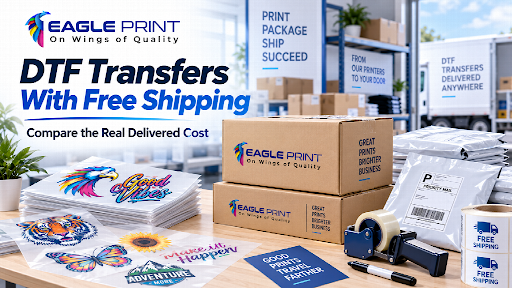
DTF transfers with free shipping can look like an easy win, especially for apparel businesses that order frequently. But “free shipping” should not be evaluated as a stand-alone benefit. The smarter comparison is delivered cost: the total amount you spend to get usable transfers into production. Transfer price, order size, artwork planning, shipping terms, replacement risk, and production timing can all affect that number.
Is Free Shipping Always the Cheapest Option?
No. Free shipping can reduce one visible cost, but it does not automatically make an order the lowest-cost choice. A buyer may still pay more overall if transfer pricing, minimum quantities, order structure, or rework create additional expense. That is why the best comparison starts with the complete order rather than the shipping line alone.
For buyers specifically searching this offer type, Eagle DTF Print maintains a DTF transfers free shipping collection. Use that type of page as a starting point, then compare the full order against your actual production needs.
Calculate Cost Per Usable Transfer
A simple delivered-cost comparison begins with the total order amount and the number of transfers you can actually use. If two suppliers offer different pricing structures, looking only at shipping can hide the difference.
For example, imagine one order has a lower transfer price but a separate shipping charge, while another includes shipping in the offer. The better value depends on the final total and how many usable transfers arrive. If artwork mistakes, incorrect sizing, or poor order planning cause part of the order to go unused, the apparent shipping savings become less important.
The goal is not to create a complicated accounting model. It is to compare like with like: same transfer requirements, same approximate quantity, same production deadline, and the same definition of what counts as a usable result.
Order Size Changes the Shipping Equation
Shipping has a different impact on a small test order than on a larger production order. When an order is small, delivery cost can represent a noticeable percentage of the total. As the order grows, transfer pricing, artwork efficiency, and quantity planning may become more important than the shipping line itself.
That is why buyers should decide what they actually need before chasing a shipping offer. If you are ordering individual transfers by dimensions, reviewing a product such as DTF transfers by size can help you think in terms of the real transfer format you need rather than treating every order as identical.
Do Not Overorder Just to Improve Shipping Economics
One common mistake is increasing an order only to make shipping feel more efficient. Extra transfers are not a saving if they sit unused, become outdated, or were never part of a confirmed production plan. Order quantity should come from expected jobs, reasonable backup needs, and repeat demand.
For recurring designs, keeping a small planned buffer may be practical. For event-specific artwork, dated promotions, employee names, or customer-specific designs, excess inventory can quickly lose value. The right quantity depends on how reusable the design is.
Artwork Planning Affects Delivered Cost Too
A shipping promotion cannot fix an inefficient order. Before submitting artwork, confirm dimensions, quantities, orientation, spelling, and version control. If multiple people approve files, establish one final source of truth before production.
- Confirm the final artwork version before ordering.
- Check the intended print dimensions for each design.
- Separate reusable designs from one-time or dated artwork.
- Match transfer quantities to realistic garment counts.
- Keep a record of what was ordered for easier reorders.
These steps reduce the risk of paying for transfers that cannot be used. In many shops, preventing one incorrect production run is more valuable than saving a small amount on freight.
Timing Has a Cost Even When Shipping Is Free
Delivered cost is not only about dollars. A transfer order that arrives too late for the production schedule can create overtime, missed deadlines, or last-minute changes. Buyers should confirm the shipping and production terms that apply to the specific order rather than assuming that “free shipping” also means a particular delivery speed.
Build the order backward from the press date. Allow time for artwork approval, transfer production, transit, garment pressing, quality checks, and any customer handoff. If the job is time-sensitive, schedule reliability may be worth more than a small shipping difference.
Compare Policies, Not Marketing Phrases
Free shipping offers can vary. Before ordering, review the current terms shown by the seller and confirm whether any conditions apply to the specific cart. Do not assume that a headline covers every order size, destination, product, or service level.
A useful comparison asks four questions: What is the total checkout cost? What exactly is included? When is the order expected to move through production and delivery? What happens if you need to change artwork or reorder? Clear answers make the shipping offer easier to evaluate.
A Simple Delivered-Cost Checklist
- Define the exact transfer format, dimensions, and quantity needed.
- Compare the full cart total, not just the shipping charge.
- Calculate the approximate cost per usable transfer.
- Check whether extra quantity would actually be used.
- Confirm current shipping terms and production timing.
- Factor artwork accuracy and deadline risk into the decision.
Bottom Line
DTF transfers with free shipping can be a valuable purchasing option, but the phrase should start the comparison—not end it. The strongest buying decision considers the total delivered cost, usable quantity, artwork accuracy, order timing, and the likelihood that every transfer will support real production. When those factors are compared together, buyers can tell whether a free-shipping offer is genuinely economical for the job in front of them.