Home Blog Page 1463

Zane Smith and the No. 38 Boot Barn Ford Team Charlotte Motor Speedway Competition Notes

TEAM AND RACE NOTES:

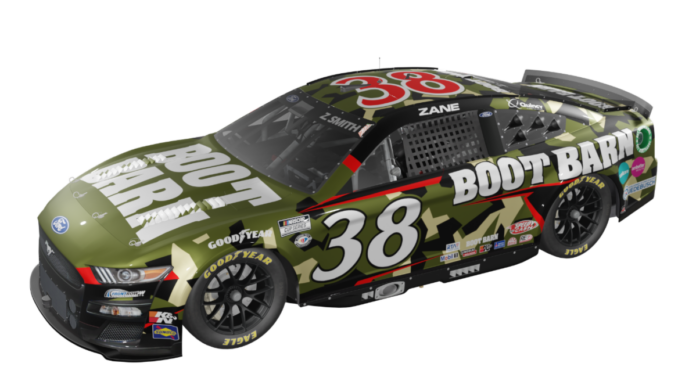
This weekend, Zane Smith hops back in the seat of the No. 38 Ford Mustang. Smith will race the No. 38 Boot Barn Ford Mustang in Sunday’s 600-mile race at the Charlotte (N.C.) Motor Speedway. It is NASCAR’s longest race of the season.

It is also an annual Memorial Day tradition as we honor and remember the heroes who have made the ultimate sacrifice fighting for our freedom and their families. This year, Front Row Motorsports (FRM), Smith, and Boot Barn will honor Staff Sergeant Kevin Christopher Kimmerly by racing with his name on the windshield of the No. 38 Ford.

Kimmerly was born on September 14, 1972 and raised in North Creek, New York. He joined the Army in 1991 and in 1994 married Inge Kimmerly with whom he had one son who shares his birthday. Following his deployment in the Bosnia-Kosovo conflict, Kimmerly was deployed in the Iraq War as part of Operation Iraqi Freedom. On September 15, 2003, with only two weeks left before coming home to serve at Fort Sill, Oklahoma, Kimmerly was killed in action at a checkpoint after being struck by a rocket-propelled grenade.

The team and Boot Barn are honored to host this Gold Star family on Sunday and to race in the memory of Kimmerly.

COMPETITION NOTES:

Smith will be making his 600-mile race debut in the NASCAR Cup Series on Sunday.

But the 2022 NASCAR CRAFTSMAN Truck Series champion has one top-five and one top-10 in the truck series at the track.

In Smith’s first two Cup starts he finished 17th and 13th. He was wrecked out of his third Cup Series start at the Talladega (Ala) Superspeedway.

CREW CHIEF RYAN BERGENTY:

“This week, the 38 team is focusing on mental toughness. Charlotte is the longest race on the schedule and a big part of that battle is staying mentally tough. We are working hard to bring a fast Boot Barn Mustang and we will keep working with Zane all weekend.

DRIVER ZANE SMITH:

“We are proud to have Boot Barn on our No. 38 Ford Mustang and I am honored to have Staff Sergeant Kevin Christopher Kimmerly riding along with me. He paid the ultimate sacrifice for our country.

“Charlotte is a great track, and I am enjoying these starts in the Cup Series. I just want to keep learning and getting better.”

ABOUT FRONT ROW MOTORSPORTS

Front Row Motorsports (FRM) is a winning organization in the NASCAR Cup and CRAFTSMAN Truck Series. The team is the 2021 Daytona 500 and 2022 CRAFTSMAN Truck Series champions. The team was founded in 2004 and is owned by successful entrepreneur, Bob Jenkins. FRM fields the No. 34 and the No. 38 NASCAR Cup Series teams along with the No. 38 CRAFTSMAN Truck Series team from its Mooresville, N.C. headquarters. Visit teamfrm.com and follow FRM on social media: Twitter at @Team_FRM, Instagram at @team_frm and Facebook at facebook.com/FrontRowMotorsports.

Derm Dude™ Renews Sponsorship with NASCAR Driver Spencer Boyd

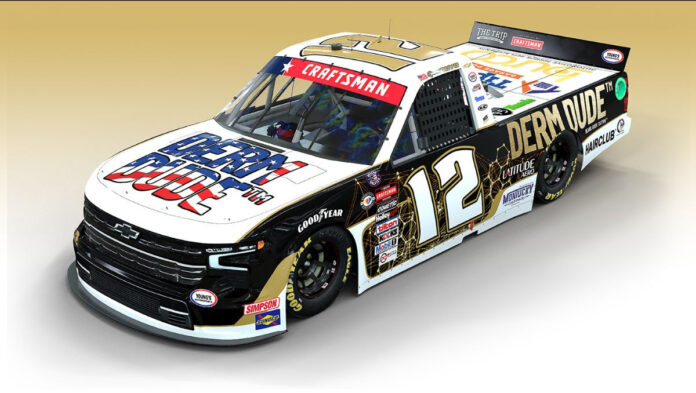
Mooresville, NC (May 23, 2023) – Spencer Boyd announced today that the fan-favorite brand, Derm Dude™, has extended their agreement to sponsor the driver through the end of 2023. The viral men’s grooming brand, whose best-selling products include, ‘Happy Sack Nut Love Cooling Cream’, will have a primary paint scheme at this weekend’s NASCAR Craftsman Truck Series race at Charlotte Motor Speedway.

Last season, NASCAR fans fell in love with the Derm Dude himself, Drew Plotkin, both on social media and at the track with his straightforward, no B.S., Dude speak.

“Everyone knows my spirit animal is an eagle, but Drew might be a close second for me!” laughed Spencer Boyd. “I love that guy. Witty is an understatement, but behind his sense of humor and all the tattoos and big beard is a very wise business-man and genuine individual. If you have some time, read his book – Under My Skin and you’ll understand what I mean. I’m pumped Derm Dude is back on the hood this year.”

With the help of Drew’s vast tattoo artist network, Spencer got his first tattoo commemorating his first win with an upside-down NASCAR win sticker on his shoulder.

Chief Dude Officer, Drew Plotkin commented on his company’s involvement with Spencer and his racing in NASCAR, “These are our people…our tribe… and we love working with real authentic dudes. I’ve been to a number of NASCAR races; it gets hot out there! Derm Dude keeps those balls cool and smelling good without the chafing or jock itch. I’ll be at the race in Charlotte handing out free samples of our new ‘Mutha Pucker’ SPF Lip Balm. And our Derm Dude Sack Squad will be at our booth helping to keep balls cool and fresh with our best-selling men’s products.”

Derm Dude’s newest Happy Sack Nut Love Cooling Cream scent is called Sweet Whiskey, which will be available at the Derm Dude booth, along with customer favorites like Morning Woodsy, MVP and Coconut Rush.

The men’s grooming brand will be honoring those who have sacrificed this Memorial Day by converting their regular Derm Dude logo into a stars and stripes theme on the hood of the No. 12 Chevrolet Silverado of Young’s Motorsports.

Mobil 1 Racing: Kevin Harvick Charlotte Advance

KEVIN HARVICK
Charlotte Advance
No. 4 Mobil 1 Ford Mustang for Stewart-Haas Racing

Event Overview

● Event: Coca-Cola 600 (Round 14 of 36)
● Time/Date: 6 p.m. EDT on Sunday, May 28
● Location: Charlotte (N.C.) Motor Speedway
● Layout: 1.5-mile oval
● Laps/Miles: 400 laps/600 miles
● Stage Lengths Stage 1: 100 laps / Stage 2: 100 laps / Stage 3: 100 laps / Final Stage: 100 laps
● TV/Radio: FOX / PRN / SiriusXM NASCAR Radio

Notes of Interest

● Kevin Harvick is a two-time winner of the Coca-Cola 600. He took the trophy in 2011 and 2013. Harvick beat David Ragan by .703 of a second in 2011 and he beat Kasey Kahne by 1.490 seconds in 2013. Harvick led only two laps in 2011 and just 28 laps in 2013, but each of those tallies contained the only lap that mattered most – the last one.

● Harvick has three wins at Charlotte (N.C.) Motor Speedway’s 1.5-mile oval. In addition to his two Coca-Cola 600 triumphs on Memorial Day weekend, Harvick won the 2014 Bank of America 500 in the NASCAR Cup Series’ return to the track in October. Harvick dominated by leading a race-high 162 laps to beat four-time NASCAR Cup Series champion and NASCAR Hall of Famer Jeff Gordon by .571 of a second.

● Harvick has earned two poles at Charlotte. The first came in the 2016 Bank of America 500 (27.547 seconds at 196.029 mph) and the second came in the 2017 Coca-Cola 600 (27.918 seconds at 193.424 mph).

● This year’s Coca-Cola 600 will mark Harvick’s 41st career NASCAR Cup Series start at Charlotte. The Bakersfield, California-native has 10 top-fives and 21 top-10s in a career dating back to the 2001 Coca-Cola 600, which was Harvick’s first points-paying race at Charlotte. In that 4-hour and 20-minute affair, Harvick finished second to Jeff Burton and ahead of third-place Tony Stewart, the car owner of the No. 4 Mobil 1 team at Stewart-Haas Racing.

● Harvick has finished among the top-10 in his last five races at Charlotte and 14 times in the last 16 races at the track. DNFs (Did Not Finish) thwarted Harvick in the 2016 Bank of America 500 (engine) and the 2018 Coca-Cola 600 (accident). Harvick finished third in last year’s Coca-Cola 600.

● Harvick has shown strength at Charlotte outside of the NASCAR Cup Series. He has made 28 NASCAR Xfinity Series starts at the 1.5-mile oval, finishing among the top-10 18 times, with a best result of second, earned twice (October 2012 and May 2017). Harvick has also made three NASCAR Truck Series starts at Charlotte, finishing among the top-five twice with a best result of fourth in May 2004.

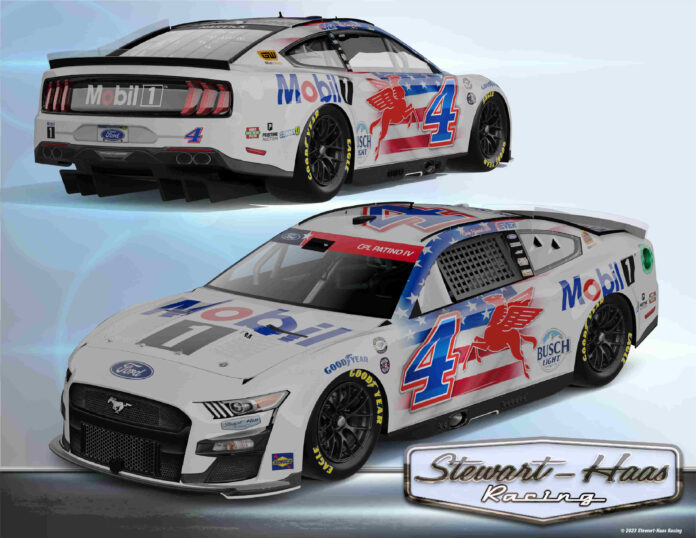
● As part of #NASCARSalutes and the 600 Miles of Remembrance initiative during the Coca-Cola 600, the No. 4 Mobil 1 team is honoring Marine Corporal Claudio Patino IV, a scout sniper with the 3rd Battalion, 7th Marine Regiment, 1st Marine Division, I Marine Expeditionary Force. The 22-year-old from Yorba Linda, California, was killed in action on June 22, 2010 during combat operations in the Helmand Province of Afghanistan. As a young boy, Patino dreamed of being in the military and serving his country, with his bedroom wall adorned with pictures and posters of the military. He joined the Marines shortly after graduating from El Dorado High School in 2006. He was deployed to Iraq in 2008 and then to Afghanistan in 2009. In his third overseas deployment, Patino’s battalion, based in Twentynine Palms, California, returned to Afghanistan at the end of March 2010 to assist with general combat operations, train and equip Afghan security forces, and suppress the Taliban. Patino was decorated many times as a member of the Marine Corps, earning an Achievement Medal, Combat Action Ribbon, Navy Unit Commendation, Marine Corps Good Conduct Medal, National Defense Service Medal, Afghanistan Campaign Medal, Iraq Campaign Medal, Global War on Terrorism Expeditionary Medal, Global War on Terrorism Service Medal, Sea Service Deployment Ribbon and NATO Medal. Patino received the Purple Heart and Bronze Star Medal with Valor posthumously. “He was a Marine to the core,” said Patino’s brother, Marlon Chinchilla. “He died the way he wanted to die. He died a warrior, and he really believed in fighting for his country.”

● The Mobil 1 branding on Harvick’s No. 4 Ford Mustang goes more than skin deep as the world’s leading synthetic motor oil brand gives Harvick an added advantage. Mobil 1 products are used throughout his racecar and they extend beyond just engine oil. Power steering fluid, transmission fluid, gear oil and driveline lubricants from Mobil 1 give Harvick a technical advantage over his counterparts by reducing friction, heat and rolling resistance.Mobil 1 is a sponsor whose technology makes Harvick’s No. 4 Mobil 1 Ford Mustang faster.

Kevin Harvick, Driver of the No. 4 Mobil 1 Ford Mustang

We’re at the mid-point of the regular season. How is your season going so far?

“Our year’s been pretty solid, so far. We’ve been fortunate to have good cars at a lot of the racetracks that we’ve been to. We haven’t been to victory lane, but a couple of times we’ve been right there toward the end of races and it just hasn’t all worked out. But the one thing that I have learned is, if you keep putting yourself in that spot, that door will open soon, and that’s really our focus right now, to continue doing the things that we’ve been doing. We’ve run well at some of the racetracks we haven’t run well at in the past – Martinsville would be the biggest example of that. We ran well at Phoenix, and even at Daytona and Talladega and so many of the places that we’ve been able to put the car up front and lead laps, that’s what we have to do. I think we’ve scored more stage points this year than we probably scored all of last year. That’s a huge improvement. It means that we’re running in the right part of the field. I’m not disappointed that we haven’t won yet. For us, it’s really about the whole season and trying to keep putting yourself in that position because, if you do, that door will open.”

Much is made about the Coca-Cola 600 being the series’ longest race. Because the race is so long, can it be a good thing where if you’re not where you want to be, you have time to make things right? Or is the other side of the coin being that it’s too long of a race to not be good?

“There’s just not a lot of room for error because somebody’s going to be good and you’ve got to put yourself in a position to stay on the lead lap. There are so many different areas of transition that you go through in that race because of the fact that the sun goes down after it starts hot and slick. Then as you transition into the night, you have to have something completely different in your car compared to what you had at the beginning of the race. So there’s a sacrifice you have to make at the beginning of the race to just basically try to keep yourself in a good position. Don’t make any mistakes, stay on the lead lap, and try and put yourself in a good position for the night because that’s when it really counts.”

The Coca-Cola 600 used to be about pushing drivers and their cars to the limit, as attrition was once a key factor. But today, drivers are fitter than ever and cars seem to be built better than ever before. Is that extra 100 miles noticeable anymore, be it from your perspective behind the wheel or from your team’s when it comes to building your racecar?

“I don’t think from a physical standpoint it’s noticeable anymore. I think the biggest thing about the Coke 600 is your mental state. When they tell you halfway, it’s like, ‘Oh, my God, that’s only halfway?’ That’s 200 laps, and it feels like you’ve run a whole race and you have the other half of the race still to run. So I think from a mental standpoint, it’s hard to wrap your arms around the lap count and all the things that come with a race being that long.”

The Coca-Cola 600 is considered one of NASCAR’s crown jewels because it is the only 600-mile race on the schedule. But in this short-attention span era, is a 600-mile race still needed?

“You can debate it. Looking at the 600, it’s a pretty historic race and, listening to people who’ve watched the race, they think it’s too long. But I think from the sport’s standpoint, you have to have different tests, and I think 600 miles still represents a test that you can relate to the past, and it just adds a different level of preparation.”

You’re a two-time winner of the Coca-Cola 600 (2011 and 2013). Forget the folks who say a four-plus hour race is too long. Do you take special satisfaction in each of those wins because it is a big deal to not only run 600 miles at Charlotte, but do it better than anyone else – twice?

“I don’t that that one sticks out any more than any of the rest of them as far as the marquee, crown-jewel races go, just because of the fact that those four races (Coca-Cola 600, Daytona 500, Southern 500 and Brickyard 400) are pretty unique, and having the opportunity to win any of those is pretty special. And I think winning at Charlotte, no matter what it is, whether it’s the 600 or at the Roval, it’s definitely different because of all the people you have from the shop, and family and friends, and anything you can win at Charlotte is just special.”

What would it mean to win a third Coca-Cola 600 in your final Coke 600 start?

“When you look at Charlotte Motor Speedway, it’s obviously a huge piece of the NASCAR landscape, and to win one of the crown-jewel races in the Coke 600 and be able to put your name on one of those trophies is something that is important. For me, Charlotte was always one of those racetracks that I was like, ‘Uh, I don’t know, I don’t like it, I do like it, I don’t like it, I do like it,’ but over the last 10 or 12 years, it’s been a racetrack that’s been pretty good to me. I think when you’re in NASCAR racing, you understand that Charlotte Motor Speedway is not only special because it’s the home of the Coke 600, it’s also special because this is really our hub, this is where all the race shops are, this is where all the people are. It’s the place where the folks in the industry get to bring their family to the race and enjoy the weekend. You’re close to home and it’s a homecoming event year after year, and it’s always a special weekend – especially when you win, because you get to have people in victory lane that don’t normally get to victory lane. So that’s our goal – get people to victory lane who don’t normally get to go to victory lane.”

What does it mean to honor and remember a military member on your No. 4 Mobil 1 Ford this Memorial Day weekend?

“There isn’t any sport that honors the military any better than NASCAR. I know a lot of sports do a lot of things for our military, but when you roll into this particular weekend with the Coke 600 and you’re a part of the celebration and remembrance for all the things that have happened with our military, to see the support that NASCAR and everybody in our garage gives the military, especially on this particular weekend, is something that gives you goosebumps.”

No. 4 Mobil 1 Team Roster

Primary Team Members

Driver: Kevin Harvick

Hometown: Bakersfield, California

Crew Chief: Rodney Childers

Hometown: Mooresville, North Carolina

Car Chief: Robert “Cheddar” Smith

Hometown: Whitewater, Wisconsin

Engineer: Stephen Doran

Hometown: Butler, Pennsylvania

Engineer: Dax Gerringer

Hometown: Gibsonville, North Carolina

Spotter: Tim Fedewa

Hometown: Holt, Michigan

Over-The-Wall Members

Front Tire Changer: Daniel Coffey

Hometown: Granite Falls, North Carolina

Rear Tire Changer: Daniel Smith

Hometown: Concord, North Carolina

Tire Carrier: Jeremy Howard

Hometown: Delhart, Texas

Jack Man: Brandon Banks

Hometown: High Point, North Carolina

Fuel Man: Evan Marchal

Hometown: Westfield, Indiana

Road Crew Members

Mechanic: Tyler Trosper

Hometown: Mooresville, North Carolina

Mechanic: Nick DeFazio

Hometown: Orange, California

Tire Specialist: Jamie Turski

Hometown: Trumbull, Connecticut

Engine Tuner: Robert Brandt

Hometown: Mobile, Alabama

Transporter Co-Driver: Rick Hodges

Hometown: Raleigh, North Carolina

Transporter Co-Driver: Stephen Mitchell

Hometown: Woodville, Ohio
Classic Car Maintenance: Essential Care for Timeless Beauties

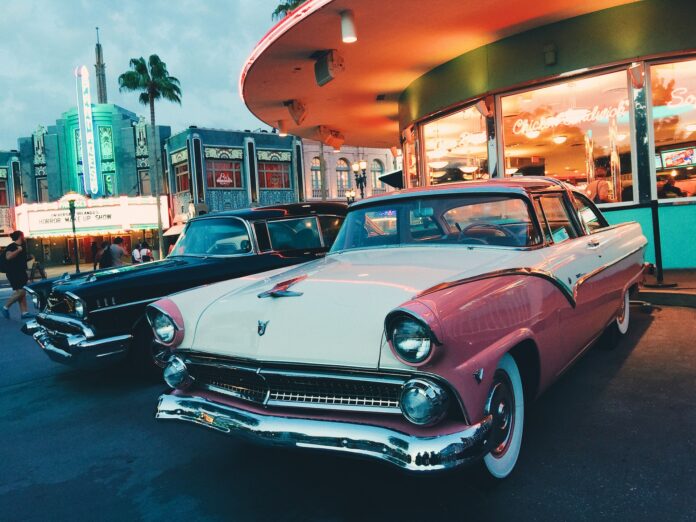
Photo by Juan Pablo Melo on Unsplash

Classic cars are more than just vehicles. They are timeless beauties that tell stories of a bygone era. These cars are not just machines, but they are works of art that require special care and attention. Classic car maintenance is critical to preserving their beauty and value. Whether you are a collector or a passionate enthusiast, proper care ensures that your classic car remains in pristine condition and performs optimally. In this article, we will explore some essential tips on how to maintain classic cars. From regular cleaning and maintenance to more extensive repairs, we will cover it all. So buckle up and get ready to learn how to keep your classic car looking as good as the day it rolled off the assembly line.

Why Classic Car Maintenance is Important

Classic cars are a valuable investment, and their value can only increase if they are properly maintained. Regular maintenance will keep the car running smoothly and prevent costly repairs down the line. It is essential to maintain the originality of the car since any modifications or alterations can decrease its value. Classic cars are also susceptible to rust and corrosion, and regular maintenance will prevent this from happening. Moreover, maintaining the car’s appearance is crucial to retain its value. A well-maintained classic car can be a source of pride and joy for its owner and can even become a family heirloom.

Classic Car Maintenance Checklist

Maintaining a classic car can seem like a daunting task, but with a checklist, it can be more manageable. Here is a checklist of essential tasks to perform regularly to keep your classic car in top condition:

Engine Maintenance

The engine is the heart of the car, and regular maintenance is crucial to keep it running smoothly. The oil should be changed every 3,000 miles, and the oil filter should be replaced at the same time. The air filter should also be replaced every six months. The spark plugs and wires should be checked and replaced if necessary. The cooling system should be flushed every two years, and the radiator should be checked for leaks. Additionally, the timing belt should be replaced every 60,000 miles.

Transmission and Drivetrain Maintenance

The transmission and drivetrain are critical components of the car’s performance, and regular maintenance is crucial. The transmission fluid should be changed every 30,000 miles, and the differential fluid should be changed every 60,000 miles. The driveshaft and universal joints should be checked for wear and replaced if necessary. The clutch should also be checked for wear and adjusted if necessary.

Suspension and Steering Maintenance

The suspension and steering are crucial for the car’s handling and should be regularly maintained. The shocks and struts should be checked every 50,000 miles and replaced if necessary. The ball joints, tie rods, and control arms should also be checked for wear and replaced if necessary. The power steering fluid should be changed every 50,000 miles.

Brake Maintenance

The brakes are the most critical safety feature of the car, and regular maintenance is crucial. The brake pads and rotors should be checked every 25,000 miles and replaced if necessary. The brake fluid should be changed every two years, and the brake lines should be checked for leaks. The parking brake should also be checked and adjusted if necessary.

Electrical System Maintenance

The electrical system is essential for the car’s performance and should be regularly maintained. The battery should be checked every six months and replaced if necessary. The alternator and starter should also be checked for wear and replaced if necessary. The fuses and relays should be checked and replaced if necessary.

Interior and Exterior Maintenance

The interior and exterior of the car are what people see and should be regularly maintained. The car should be washed regularly and waxed every six months to protect the paint. The chrome should be polished, and any scratches should be touched up. The upholstery should be cleaned and conditioned regularly. The dashboard and other interior surfaces should be dusted and cleaned with a mild cleaner. 

Classic Car Storage and Preservation

Proper storage and preservation are crucial for classic car maintenance. The car should be stored in a dry, cool, and dark place to prevent rust and corrosion. The tires should be inflated to the recommended pressure and covered to prevent dry rot. The fuel tank should be filled to prevent condensation and corrosion. The battery should be disconnected and stored in a cool, dry place. Vehicles like the Classic Defender are often stored to keep in pristine condition. 

Classic Car Maintenance Mistakes to Avoid

There are several mistakes to avoid when maintaining a classic car. The first is neglecting regular maintenance, which can lead to costly repairs down the line. Another mistake is using the wrong type of oil or fluids, which can damage the engine and other components. Modifying or altering the car can also decrease its value and originality. Over-cleaning the car can also damage the paint and chrome, so it’s essential to use the right products and techniques.

Classic Car Maintenance Resources

There are several resources available for classic car maintenance, including online forums, clubs, and publications. These resources can provide valuable information on maintenance tips, restoration techniques, and parts sourcing. It’s also beneficial to have a trusted mechanic who specializes in classic cars.

Conclusion

Classic car maintenance is crucial to preserving the beauty and value of these timeless beauties. Regular maintenance, proper storage, and preservation are essential for keeping the car in top condition. By following the maintenance checklist and avoiding common mistakes, you can keep your classic car running smoothly and looking as good as the day it rolled off the assembly line. With the right resources and a little effort, you can ensure that your classic car remains a source of pride and joy for years to come.

The Best Time of Year to Rent a Sports Car in Dubai: Weather, Crowds, and More

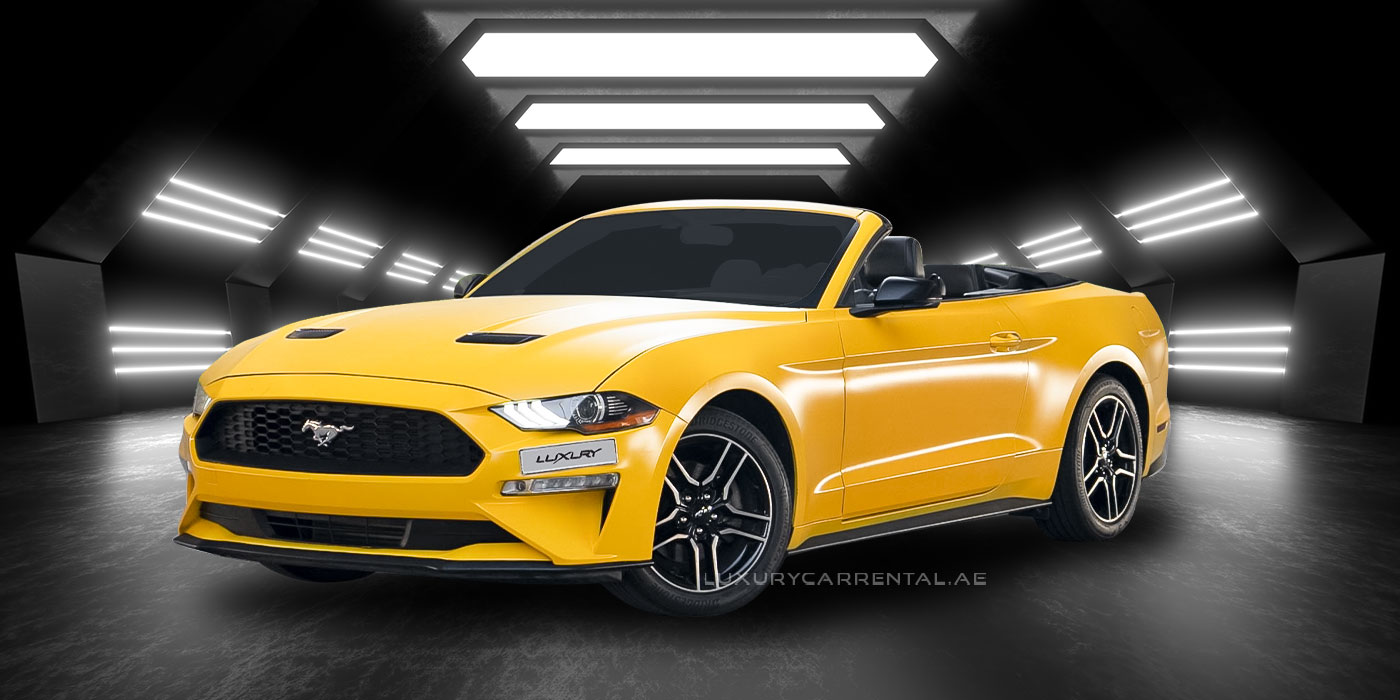
Dubai is a city of elites, and nothing matches the eliteness than to drive the personal or Rented Mustang in Dubai,  down the city’s impressive highways. However, with the high temperatures and tourist crowds that can clog the city at certain times of the year, choosing the right time to rent a sports car in Dubai is crucial. Since many factors must be considered to determine which weather is better, we will peel all the elements to choose the best time of year to rent a sports car from a reliable company like Luxury Car Rental Dubai. 

Exploration of Factors

We will explore factors such as the city’s weather, crown, events, etc. 

Weather in Dubai

Dubai weather has two categories one is high season, and the other is low season. The high season is called the winter season when the temperature is normal; the crowd is more and more events are happening. The weather in Dubai is hot and sunny for most of the year, with temperatures regularly reaching the triple digits during the summer months. However, the winter offers a respite from the heat, with normal temperatures from November to March.

If you’re looking to rent a sports car in Dubai, the cooler months are the best time to do so, as you’ll be able to enjoy the thrill of driving without feeling like baking in an oven. Otherwise, if you want to rush your car in peace and do not want to stand in the queues, the low season is best; the rates will be normal, and the crowd will be less. Now it’s all to your preference and budget, so choose accordingly. 

Crowds in Dubai

Dubai is a well-liked travel destination, and the city may become overrun with tourists at various seasons. Winter is typically the busiest season because of the great weather and many travelers seeking to escape the bitter cold of their home countries. While Dubai is calm and less crowded in the summer, you could rent a sports car to avoid the mob and take it easy while driving.

Events in Dubai

Dubai is renowned for hosting several high-profile events all year long, including the Dubai Shopping Festival in January and the Dubai World Cup horse race in March. These occasions may draw sizable numbers of people to the city, but they also offer excellent chances to rent a sports automobile and explore the city novelly. If there is a big event you want to attend, think about scheduling your sports car rental around it, but be aware that rental rates can be higher then.

Availability of Sports Cars

Given that Dubai is a city that loves extravagance and elegance, it is not surprising that several sports car rental firms are operating there. However, there may be greater demand for certain vehicles during particular times of the year, making them harder to find.

Dubai’s Sports Car Supply and Demand

There is a significant demand for luxury car rentals in Dubai because of the city’s fame for its striking skyline and flashy automobiles. Sports cars are in high order since they provide a thrilling driving experience for tourists and residents. However, due to their limited quantity, sports cars may only sometimes be unavailable during busy periods.

Sports Car Renting Seasons Based on Availability

Sports cars may or may not be available in Dubai, depending on the season. Sports vehicles may be in great demand during the winter months, which run from November to March, as they are often the busiest for tourism in Dubai. On the other side, because of the summer’s reduced activity (June to September), sports cars might be easier to find during this time. If availability is important, consider renting a sports car in the summer when there is less demand.

Rental Prices: Overview and Best Times to Rent

Depending on the automobile’s brand and model, the rental agency, and the season, sports car rentals in Dubai might cost a lot of money. Although sports vehicle prices can be pretty high, there are still methods to get a good deal. Demand can impact rental rates, just like it can on availability. Therefore, the ideal times to rent a sports car are typically during the off-season when demand is lower. Consider renting a sports car during the summer to save money on your rental.

Comparison of Top Sports Car Rental Companies in Dubai 

Sports cars are available for rent from various rental firms in Dubai, each with special rates, amenities, and availability. Luxury car rentals are among the Sports Car Rentals in Dubai. It’s crucial to compare rental businesses and consider things like customer service, insurance coverage, the age and condition of the vehicles, and pick-up and drop-off locations. You can also compare pricing to other rental businesses for the greatest deal.

Hire From Us

We are one of the best rental companies in Dubai with a vast range of sports cars, and you can rent a car with a chauffeur service at an affordable price. So visit the luxury car rentals website now and book your sports car.

How to use digital virtual agents to improve customer satisfaction

Photo by Domenico Loia on Unsplash

In today’s business landscape, customer satisfaction is paramount for success. To meet customer expectations, businesses are turning to digital virtual agents. These intelligent systems, such as chatbots and voice assistants, are revolutionizing customer service by offering personalized, efficient, and round-the-clock support. 

With their ability to provide instant responses, personalized interactions, and efficient issue resolution, digital virtual agents are transforming the customer experience. By seamlessly integrating with multiple channels, they ensure consistent support across platforms. However, to maximize these benefits, businesses might consider leveraging AI Agent technologies, which can offer even more sophisticated responses and streamline customer interactions. Implementing digital virtual agents effectively still requires careful planning, training, and collaboration with human agents.

In this article, we will explore how digital virtual agents enhance customer satisfaction, examine real-world success stories, and discuss the challenges and considerations involved. Discover how leveraging digital virtual agents can take your customer service to new heights and forge stronger customer relationships.

Understanding Digital Virtual Agents
Digital virtual agents, also known as chatbots, voice assistants, or AI-powered customer service agents, have emerged as powerful tools for enhancing customer satisfaction. These intelligent systems leverage artificial intelligence (AI) and natural language processing (NLP) technologies to simulate human-like interactions and assist customers with their inquiries.

These agents come in various forms, such as chatbots that interact through text-based conversations or voice assistants that respond to spoken commands. Regardless of the form, their purpose remains the same: to provide efficient and personalized support to customers.

One of the key advantages of digital virtual agents is their availability around the clock. Unlike human agents who have limitations in terms of working hours, virtual agents can provide support 24/7, ensuring that customers receive prompt assistance whenever they need it. This instant response capability not only improves customer satisfaction but also helps businesses handle customer inquiries more efficiently.

Moreover, digital virtual agents have the ability to analyze customer data and provide personalized and contextualized interactions. By understanding customer preferences, purchase history, and previous interactions, these agents can tailor their responses and recommendations to meet individual needs. This personalization creates a more engaging and relevant experience for customers, enhancing their satisfaction and loyalty.

In summary, digital virtual agents are intelligent systems that use AI and NLP technologies to deliver efficient and personalized support to customers. With their round-the-clock availability and ability to provide tailored interactions, these agents play a vital role in improving customer satisfaction and elevating the overall customer experience.

Implementing Digital Virtual Agents Effectively
Implementing digital virtual agents effectively requires careful planning and consideration to ensure optimal customer experiences. Here are key steps to take:

It is crucial to define goals and objectives for integrating digital virtual agents into your customer service strategy. Identify the specific areas where virtual agents can provide the most value and align their implementation with your business objectives.

Invest time in designing the virtual agent’s capabilities and personality to align with your brand voice. Consider factors such as tone, language, and conversational style to create a seamless and engaging customer experience.

Training and monitoring the virtual agent is vital for its success. Continuously train the agent to handle various customer scenarios and provide accurate and helpful responses. Implement monitoring and feedback mechanisms to track performance and identify areas for improvement.

Additionally, human-agent collaboration is essential. Determine when and how human agents should be involved in customer interactions, especially for complex or sensitive issues that require a human touch. Establish clear processes and communication channels for smooth collaboration between human and virtual agents.

Finally, regularly evaluate and optimize the virtual agent’s performance. Collect feedback from customers and analyze data to identify pain points and areas for enhancement. Keep the virtual agent updated with the latest information and customer insights to ensure its relevance and effectiveness.

By following these steps and continually iterating on the implementation, businesses can effectively leverage digital virtual agents to deliver exceptional customer experiences and improve overall satisfaction levels.

Winding Up

In conclusion, digital virtual agents offer immense potential for enhancing customer satisfaction in today’s business landscape. With their round-the-clock availability, personalized interactions, and efficient issue resolution, these intelligent systems are transforming the customer service landscape. 

By implementing digital virtual agents effectively through careful planning, training, and human-agent collaboration, businesses can elevate the customer experience to new heights. Embracing this technology enables organizations to meet customer expectations, build stronger relationships, and gain a competitive edge in the market. The future of customer service lies in the seamless integration of digital virtual agents to deliver exceptional satisfaction and exceed customer expectations.

Smart Pre-Owned Cars: How Artificial Intelligence Is Transforming the Pre-Owned Car Market

Photo by David McBee at pexels.com

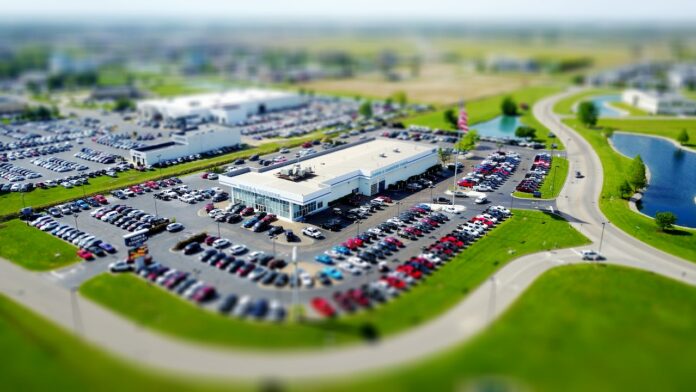
Artificial intelligence (AI) is revolutionizing various industries, and the pre-owned car market is no exception. With advancements in machine learning, data analysis, and automation, AI is transforming how consumers buy and sell used cars. In this article, Rolls Auto explores the impact of AI on the pre-owned car market, discussing the key areas where AI is making a significant difference.

How AI Changes the Automobile Dealership

AI is transforming the pre-owned car market by enhancing pricing and valuation, providing personalized recommendations, streamlining inventory management, automating inspection processes, detecting fraud, and improving the overall customer experience.

1. Enhanced vehicle pricing and valuation

AI-powered algorithms can analyze vast amounts of data, including historical sales data, market trends, and vehicle conditions, to provide accurate pricing and valuation for pre-owned cars. Companies like Carfax and Kelley Blue Book use AI to offer precise estimates, helping buyers and sellers make informed decisions.

2. Personalized recommendations

AI algorithms can analyze customer preferences, behavior, and historical data to provide personalized recommendations for pre-owned cars. Platforms like Carvana and Shift leverage AI to suggest vehicles that match the buyer’s needs, preferences, and budget, streamlining the car search process and improving customer satisfaction.

Additionally, AI is expected to enable customized financing solutions based on individual buyer profiles, credit histories, and financial preferences. AI algorithms will leverage vast amounts of data to provide personalized loan options, interest rates, and repayment plans, making purchasing more accessible and affordable for buyers.

3. Efficient inventory management

AI enables pre-owned car dealerships and marketplaces to manage their inventory more efficiently. By leveraging AI algorithms, businesses can optimize pricing, identify high-demand vehicles, predict market trends, and streamline supply chain management, ensuring a balanced and profitable inventory mix.

4. Streamlined inspection and maintenance

AI-powered image recognition technology can automate the inspection process for pre-owned vehicles. AI algorithms can detect and analyze vehicle conditions through computer vision, identifying any damages, wear, or potential mechanical issues. High-resolution cameras and AI algorithms will locate even the most minor details, providing comprehensive reports on the vehicle’s condition, possible repairs, and maintenance requirements. This streamlines the inspection process, improves accuracy, and enables sellers to provide transparent information to buyers.

5. Fraud detection and risk assessment

AI algorithms can analyze vast amounts of data to detect potential fraud in the pre-owned car market. By examining transactional data, buyer-seller interactions, and historical patterns, AI can identify suspicious activities and mitigate risks, enhancing the trust and security of the marketplace.

6. Improved customer experience

AI-powered chatbots and virtual assistants enhance the customer experience in the pre-owned car market. These intelligent systems can answer customer queries, provide instant assistance, and guide buyers through purchasing. By automating routine tasks, AI frees up human agents to focus on complex customer interactions, ensuring a more personalized and efficient experience.

How Can AI Help an Automotive Dealership With Marketing?

AI can significantly benefit automotive dealerships by enhancing their marketing efforts. By leveraging AI in their marketing strategies, automotive dealerships can gain a competitive edge, improve customer experiences, and drive sales growth. AI’s ability to analyze data, automate processes, and deliver personalized experiences allows dealerships to optimize their marketing efforts and stay ahead in the ever-evolving automotive industry.

Customer segmentation

AI algorithms can analyze vast amounts of customer data to identify patterns and preferences, allowing dealerships to segment their customer base more effectively. This enables personalized marketing campaigns tailored to specific customer segments, increasing engagement and conversion rates.

Predictive analytics

AI can analyze historical customer data, market trends, and other relevant factors to accurately predict customer behavior and buying patterns. Dealerships can leverage this information to optimize marketing strategies, identify potential buyers, and tailor their messaging to meet customer needs and preferences.

Chatbots and virtual assistants

AI-powered chatbots and virtual assistants can handle customer inquiries and provide real-time assistance on dealership websites or messaging platforms. These intelligent systems can answer common questions, schedule test drives, and even recommend suitable vehicle options, enhancing customer engagement and providing prompt service.

Lead scoring and nurturing

AI algorithms can assess lead quality and prioritize potential customers based on their level of interest, engagement, and likelihood to convert. By automating lead scoring, dealerships can focus their marketing efforts on high-value prospects, increasing efficiency and improving conversion rates.

Dynamic pricing and management

AI can analyze market trends, inventory data, and customer demand to optimize pricing strategies and inventory management. By dynamically adjusting prices based on supply and demand, competitors’ pricing, and customer preferences, dealerships can maximize profitability and maintain competitive pricing.

Targeted advertising

AI can assist in identifying the most relevant advertising channels and platforms to reach the dealership’s target audience. By analyzing customer data, demographics, and online behavior, AI algorithms can optimize ad placement, targeting, and messaging, ensuring that marketing efforts are focused on the right channels and reaching the intended audience.

Social media analysis

AI-powered tools can monitor social media platforms and online conversations to gather insights about customers’ opinions, preferences, and sentiments towards the dealership or specific vehicle models. This information can help dealerships make data-driven decisions, address customer concerns, and identify opportunities for improvement.

Visual marketing 

It plays a pivotal role in the rapidly evolving landscape of the pre-owned car market. This captivating piece delves into artificial intelligence’s (AI) transformative power in enhancing visual marketing techniques. With a focus on uniqueness, pre-owned car dealerships are empowered to embrace AI-driven tools and strategies that elevate the presentation of their inventory. Through immersive virtual tours, high-resolution imagery, and engaging videos, potential buyers can delve into a comprehensive online experience that brings them closer to the reality of owning their desired vehicle. Augmented by cutting-edge AI technologies, such as image recognition and augmented reality, customers can personalize and visualize the pre-owned cars of their dreams. 

By blending visual marketing prowess with the intelligent capabilities of AI, this innovative approach not only heightens customer engagement but also instills a sense of trust and confidence in the pre-owned car market. In a digital-first era, this harmonious fusion of visual marketing and AI sets a new standard for pre-owned car sales, reshaping how customers explore, evaluate, and connect with their ideal automotive companions.

The Future of Artificial Intelligence in the Pre-Owned Car Market

Emerging technologies such as virtual reality (VR), blockchain, and augmented reality (AR) have the potential to change the car-trade sector forever.

  • Advanced predictive analytics. AI algorithms will continue to evolve, enabling more accurate predictions of market trends, vehicle demand, and pricing fluctuations. This will empower sellers and buyers to make informed decisions based on real-time insights, maximizing profitability and minimizing risks.
  • Enhanced virtual showrooms. VR and AR technologies will play a significant role in the future of pre-owned car shopping. Buyers can virtually explore cars, visualize customization options, and experience test drives without physically being present. AI algorithms will facilitate the seamless integration of these technologies, creating immersive and interactive experiences for consumers.
  • Smart negotiation assistants. AI-powered negotiation assistants will assist buyers and sellers in the price negotiation process. These assistants will analyze market data, vehicle history, and buyer preferences to suggest optimal pricing strategies. The goal is to facilitate fair and transparent negotiations that benefit both parties.
  • Seamless vehicle transactions. AI-driven blockchain technology will streamline the process of vehicle ownership transfer and documentation. Smart contracts and decentralized systems will ensure secure and transparent transactions, reducing paperwork and eliminating the need for intermediaries.

Conclusion

We can expect further innovations and optimizations in the pre-owned car industry as AI advances. Embracing AI technologies will enable businesses to stay competitive, improve operational efficiency, and deliver consumers a seamless car buying experience. The transformative power of AI is undoubtedly reshaping the future of the pre-owned car market.

The Cutting-Edge Techniques Used by Automotive Locksmiths

Car security has advanced hugely over the years. Increased security means a reduced chance of car theft. Sophisticated entry systems make cars harder to get into.

In the past, it was simple to get into many models of cars. In the 1980s, it was easy to open a car without a key. But, now, anyone who locks a key inside, or loses a key fob, faces a challenge trying to gain access.

Automotive locksmiths are called out countless times a day as thousands of motorists find themselves locked out. To combat this problem, automotive locksmiths use a variety of cutting-edge techniques to open car doors.

Why call an automotive locksmith?

Old cars were fairly easy to get into if you knew how. The newer models on the road have much more sophisticated security systems and locks. Being locked out of one of these cars is a good enough reason to call any automotive locksmith.

However, a visit to https://locksmithplusinc.com/salem-or/ reveals a number of reasons to call an automotive locksmith.

Automotive locksmiths offer a range of services that include replacing keys and repairing ignitions. While there is little doubt that the bread and butter work is opening locked cars, there are plenty of other services carried out by auto locksmiths.

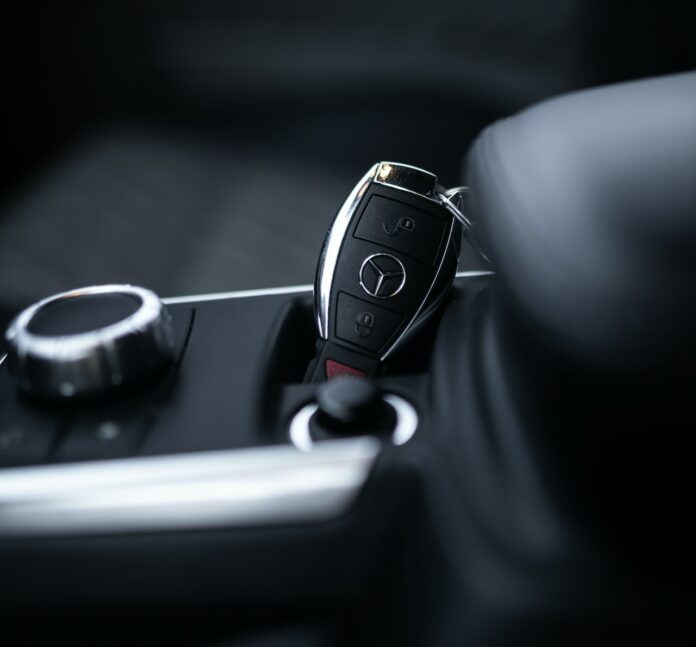
Keys get lost, stolen, and broken. Automotive locksmiths are able to program new keys, cut replacements, and extract broken ones from car locks.

To implement automotive locksmith services, professionals need to keep up to date with technology.

How have automotive locksmiths adapted to advances in technology?

Auto locksmiths have had to adapt to new advances such as keyless entry systems. As car manufacturers design more sophisticated locks and entry systems, it is important that locksmiths remain up-to-date.

Automotive Locksmith Perth uses the latest technology and diagnostic tools to gain entry to cars and to program transponders. This knowledge is put to use helping motorists keep their cars secure.

Any new tools or devices to aid locksmiths will be adopted. And it is rare to find an auto locksmith who isn’t able to get into any car whether it is a classic or a modern type.

What are the cutting-edge techniques and services provided by automotive locksmiths?

There are several ways to reduce your vehicle’s risk of theft. Keeping an auto locksmith’s number on your phone might prove invaluable. Botched attempts at car theft could leave your vehicle with a broken lock. Calling an automotive locksmith will lead to your car being repaired and secured.

But there is more to automotive locksmithing than repairing car locks. Here are some services that auto locksmiths carry out and the technology they use.

Transponder key programming

A lot of modern cars are unable to be locked if the transponder key is inside. This has helped to lower the amount of people accidentally locking themselves out. However, most cars can still be locked whether the key is inside or not.

Auto locksmiths are able to program new transponder keys and reprogram existing ones. The benefits of this are that stolen keys can be rendered useless. And spare keys can be created.

You are probably aware that car dealerships also program transponder keys, but auto locksmiths are often more affordable. Search for a local locksmith online by searching “locksmith springvale” or another term using your own area to weigh up your options and find the best possible service.

Laser key cutting

Car keys have changed dramatically through the decades. Laser keys or sidewinder keys offer higher levels of security than the kind used in the 1980s. Sidewinder keys first appeared in the 1990s when they were introduced by Lexus.

The idea behind laser keys was to create a key that was difficult to duplicate. Special tools need to be used to create laser keys, and thus car theft became more difficult. Auto locksmiths possess the skills and the tools needed to cut laser keys.

Technicians may use a laser beam analyzer to verify that the cutting equipment is performing with the high level of precision required for these keys. Proper calibration of this machinery is vital for producing a reliable and functional result every time.

Risk assessment

Locksmiths use their knowledge and experience to carry out risk assessments on homes and garages. An auto locksmith could advise on different anti-theft devices and their worth. They will also advise on the effectiveness of car alarms.

Automotive locksmiths often work alongside regular locksmiths in a business. Therefore, aside from car security, a locksmith could install keyless entry systems for garages too. This helps to keep cars from being stolen or vandalized.

Diagnostic tools and reprogramming

Automotive locksmiths have a far more complicated job than they used to. As car design becomes more advanced, programming new keys and gaining entry to cars becomes harder.

Auto locksmiths must use high-level diagnostic tools to communicate with the vehicle’s electronic modules. Components such as immobilizers can be difficult to deal with. And programming keyless systems can lead to fault codes and errors.

A diagnostic tool is necessary for reading and clearing fault codes, accessing electronic modules, and for coding.

Emergency lock-out services

It isn’t uncommon for people to try and force a car door when they get locked out. This will often lead to damage and further costs. And very often the services of an auto locksmith will still be needed.

The cutting-edge techniques used by auto locksmiths meant that entry was gained smoothly and without any damage. Here are some of the ways that automotive locksmiths get into locked vehicles.

Reprogramming

Already mentioned above, reprogramming key fobs is one way to gain access to locked cars. Using the tools of the trade, a good automotive locksmith will quickly get into a car without causing any damage to it.

Providing replacement key fobs is increasingly common. The global automotive key fob market size was measured at $4.82 billion in 2018 and is growing at a rapid rate.

The slim jim method

Not exactly cutting-edge but highly effective on the right model car. This is the method of entry most likely to be copied by DIY locksmiths. But, without the necessary knowledge, forcing the lock this way can lead to problems.

A slim jim is a flat tool that fits under the window seal and can reach a car lock. When done correctly, a car can be opened with no damage. Yet, in the hands of an amateur, a slim jim could crack a window, damage a lock, or disable the airbags.

Immobilizer bypass

Immobilizers are an excellent theft deterrent. However, sometimes immobilizers fail. If the correct key isn’t put in the ignition then the immobilizer won’t let the car start. But, sometimes immobilizers refuse to recognize the right key code.

Auto locksmiths will use diagnostic tools to retrieve necessary data and reprogram the immobilizer.

Broken key extraction

Auto locksmiths are used to dealing with broken keys. First, the broken key will be extracted from the car, then a duplicate will be made to gain entry.

Code key-cutting machines

Vehicle anti-theft systems were introduced to make it harder to steal cars. If a key is lost though, a VATS passcode decoder will be needed to make a duplicate. Code key-cutting machines can create duplicates without the original key being present.

What advances are being made in automotive security?

Security technology is always advancing. To prevent theft, security experts have to stay one step ahead. This means that auto locksmiths are always learning new methods to carry out their jobs.

The latest in keyless entry systems for cars will involve biometrics. There are different types of biometrics, but they all use human characteristics.

Car entry systems might start to use fingerprint scanners on ignitions. They could also incorporate facial recognition and retina scans.

Summary

Diagnostics tools, coding, reprogramming, and laser key cutting, are just some of the cutting-edge methods used by auto locksmiths. Automotive locksmiths are known for helping people get into their cars. But, the way they carry out this task might involve skills you hadn’t expected.

Even if biometric systems mean the end of lockouts, you can bet that auto locksmiths will still be using advanced technology to help motorists repair ignitions and bypass faulty entry systems.

The Hidden Dangers of DIY Automotive Locksmithing

Photo by Arun Sharma on Unsplash

With millions of people working two jobs to make ends meet, it isn’t surprising that many individuals prefer to DIY a problem than pay a professional. About 44% of Americans say they would rather save money and fix a problem than call a plumber or locksmith.

However, many problems are made worse through poor DIY work. And some tasks are simply too dangerous to be tackled by amateurs.

One survey indicated that about 16,000 people lock themselves out of their vehicles every day. Being locked out is frustrating. It will be very tempting to force entry. While trying to break into a car using DIY methods isn’t in itself dangerous, there are risks involved.

What services do automotive locksmiths perform?

The most common reason for calling an automotive locksmith is to gain entry to a vehicle. Being locked out of a car is extremely common, and probably a locksmith’s most popular service. Yet, automotive locksmiths actually carry out a range of other services. A visit to Locksmith Plus Inc. revealed a range of emergency automotive locksmithing services.

Some of the services automotive locksmiths provide include these:

  • Broken key extraction
  • Ignition repair
  • Lock-out service
  • Fob reprogramming
  • Security advice
  • Lock repair
  • Key replacements

It is clear that many of these services would be beyond the average car owner. Nevertheless, many people think it’s easy to pop a lock and so they try to do it themselves.

Why is it important to call an automotive locksmith?

A professional automotive locksmith Las Vegas is going to be licensed where applicable, insured, and will provide quality-guaranteed work.

But, automotive locksmiths will also provide advice on security. You could benefit from asking how to make your garage securer. Or, which anti-theft devices work the best and are recommended?

Trying to gain entry to a locked vehicle may be successful. Yet, there are a number of pitfalls that you may not have considered.

What are the dangers of performing DIY automotive locksmithing?

There are plenty of reasons why automotive locksmiths are called. Extracting broken car keys can be tricky, which is why hiring a professional automotive locksmith is essential. And replacing ignition switches or barrels requires knowledge that most people don’t have.

However, the hidden dangers of DIY automotive locksmithing are rarely mentioned. Trying to break into a car might result in far more expense than just calling a locksmith would.

Here are ten reasons to call a professional, and some of the potential dangers of trying to DIY your way into a car.

1 You don’t have the proper tools

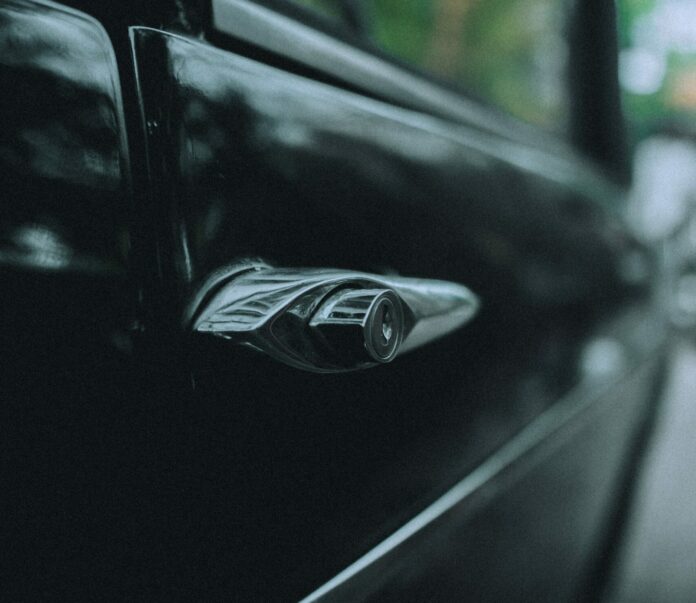
The classic way of breaking into a car – at least on TV – is to use a coat hanger. Automotive locksmiths have professional long-reach tools to open locks without damaging the vehicle. Using the wrong tools or trying to improvise may achieve nothing except frustration, and potential damage.

2 You could cause damage to the vehicle

The damage mentioned above is very possible. Automotive locksmiths use special flat tools to slide between the car window and the door to reach the lock. Using the wrong tools could potentially break the window, scratch paintwork, or damage the lock.

Seasoned professionals performing Mobile Locksmith Services will know exactly which specialized tension tools and wedges are required to gain entry without compromising the vehicle’s structural integrity. By applying industry-standard techniques, they can swiftly bypass modern security systems while ensuring that both your windows and delicate internal door electronics remain completely intact.

3 You might leave your car unsecurable

Even if you gain access, the damage caused by doing so may render your car unlockable. Damaging a lock might mean that you cannot secure the car properly.

Car crime is on the rise. The FBI’s figures show that 721,885 vehicles were stolen in 2019. However, this figure rose by 25.1% between then and last year. In 2022, 1,001,967 vehicles were stolen. That is the equivalent of 1.9 car thefts every minute.

4 You might injure yourself

The most common tools for trying to force locks include screwdrivers and crowbars. The danger here is that you might physically harm yourself while trying to force a car door open.

Automotive locksmiths are trained to use the tools they have. And those tools are purpose-designed for the job. Cars are made to be secure, so theft isn’t easy. It might seem like a good idea to force a car lock with a screwdriver, but the potential for injury is there.

5 You aren’t insured to carry out automotive locksmith services

Automotive locksmiths are insured. They will attempt to gain access to your car without causing any damage, and most likely they will succeed. Using professional tools, the locksmith will open the car without damaging it.

If a locksmith caused accidental damage they would be covered. But, you would have to pay for any damage you caused yourself.

6 Your warranty could be impaired

New vehicles come with warranties to protect the owner from expensive repairs that are no fault of their own. An understanding of car warranties means following the manufacturer’s guidelines and carrying out regular servicing. If you attempt any DIY automotive locksmithing, you may invalidate your warranty.

7 You might not spot serious problems

One of the benefits of using a professional to fix any problem is that they often notice other work that needs doing. For example, a roofer may be called out to fix some loose tiles and notice that there is more damage than initially believed. Spotting problems in this way often saves money in the long run.

In this case, perhaps you have successfully gotten into your car without damaging anything. Everything seems fine but actually, the locking system has been damaged. A locksmith will inspect and test that everything is okay before finishing up.

8 You could disable your alarm system by accident

Speaking of not noticing problems. Your DIY locksmith tools may end up disabling the security system. Obviously, disabling a car alarm will make the vehicle more vulnerable.

One key way to prevent your car from being stolen at home is to activate the alarm. Forcing entry into your car may have the opposite effect and instead deactivate the security system.

9 You could make the problem worse

This is the biggest risk of any DIY work. Trying to save money through DIY is often effective, but you also run the risk of creating a bigger problem. For instance, trying to extract a broken key might result in the lock sustaining damage that wasn’t there. Now, you will need an automotive locksmith to not only extract the key but to replace the lock too.

10 You might attract unwanted attention

Being locked out of a car is frustrating no doubt. People are often locked out of vehicles in car parks or in public. If you are reported for trying to break into a car the police may attend. Any frustration you felt at being locked out will be nothing compared to explaining yourself to the police.

Summary

Trying to use DIY methods to break into a car may leave you injured or with a bigger bill for repairs than expected. Cars are getting harder to break into as technology advances, and DIY locksmithing might not be enough. Even if you do gain access to the car, a lock might still need replacing, and you may have caused further damage.

Automotive locksmiths have tools to reprogram transponder keys. They can replace stolen keys, and they can extract broken ones too. Sometimes the benefits of DIY work are outweighed by the potential dangers of not using professional help.

Power Climbs to Top as Drivers, Teams Zero In on Race Day

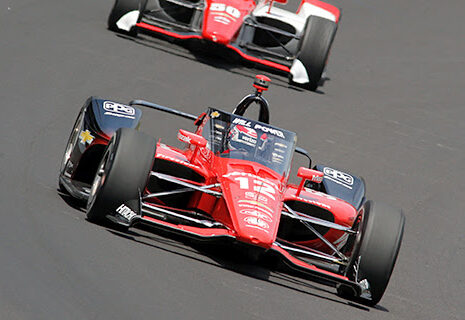
INDIANAPOLIS (Monday, May 22, 2023) – Reigning NTT INDYCAR SERIES champion Will Power led practice Monday for the 107th Indianapolis 500 presented by Gainbridge that started Race Week.

2018 “500” winner Power topped the two-hour, 10-minute session with a top lap of 39.2633 seconds, 229.222 mph in the No. 12 Verizon Team Penske as the starting field of 33 drivers continued to hone setups for Race Day. Two-time series champion Power will start 12th in the race.

“We’ve been having vibration problems,” Power said. “I think we got somewhat on top of that. Ran at the front, ran at the middle, ran at the back, and I think the car’s pretty good. I think we’re in a good spot. We have good horsepower. I think we’re in good shape.”

Six-time series champion and 2008 Indy 500 winner Scott Dixon was second at 229.184 in the No. 9 PNC Bank Chip Ganassi Racing Honda. Two-time “500” winner Takuma Sato ended up third at 228.382 in the No. 11 Deloitte Honda fielded by Chip Ganassi Racing.

NTT P1 Award winner Alex Palou, who led the fastest Indy 500 field with the fastest “500” pole speed in history Sunday, was fourth today at 227.392 in the No. 10 The American Legion Honda, putting three Chip Ganassi Racing cars in the top four.

2013 “500” winner Tony Kanaan, making his final NTT INDYCAR SERIES start in this race, rounded out the top five at 227.094 in the No. 66 Arrow McLaren Chevrolet.

Teams wasted little time getting busy during the short day on the 2.5-mile oval, as all 33 drivers combined to turn 2,005 laps (5,012.5 miles). Action was halted 71 minutes into the session due to the first accident of the event, a two-car crash involving Katherine Legge and Stefan Wilson.

The No. 44 Hendrickson Honda driven by Legge made contact with the No. 24 DRR Cusick CareKeepers Chevrolet of fellow British driver Wilson in Turn 1, with both cars making contact with the SAFER Barrier in Turn 1. Legge’s car continued down the track and made secondary contact with the SAFER Barrier in Turn 2.

Legge climbed from the car without assistance and was evaluated and released from the IU Health Emergency Medical Center. Wilson was conscious and alert when removed from the car by the AMR INDYCAR Safety Team and was transported to a local hospital for further evaluation.

The next on-track session will be the final practice from 11 a.m.-1 p.m. ET Friday on Miller Lite Carb Day. The 107th Indianapolis 500 is scheduled for Sunday, May 28 (11 a.m. ET, NBC, Peacock, Universo, INDYCAR Radio Network).