AUSTIN CINDRIC No. 2 MENARDS/RICHMOND FORD MUSTANG DARK HORSE START: 36TH STAGE 1: 20TH STAGE 2: 4TH FINISH: 26TH POINTS: 16TH RACE RUNDOWN: Austin Cindric and the No. 2 Menards/Richmond Ford Mustang Dark Horse team battled through a challenging night at Nashville Superspeedway on Sunday to finish 26th in the Cracker Barrel 400. After inclement weather washed out qualifying on Saturday, the starting lineup was set per the NASCAR Rulebook, leaving Cindric to take the green flag from the 36th position. The No. 2 team steadily worked to improve the handling of the car throughout the opening two stages, using strategy and adjustments to gain track position. Cindric advanced to 20th by the end of Stage 1 before gaining valuable track position late in Stage 2. A series of cautions allowed crew chief Brian Wilson to employ strategy that moved the No. 2 Ford near the front of the field, and Cindric was scored fourth when the second stage ended under caution. Any momentum gained during the opening portions of the race was erased shortly after the start of the final segment. On Lap 193, Cindric was collected in an incident when another spinning car slid into his path, leaving him with substantial damage. The No. 2 team made multiple trips to pit road for repairs and worked through issues that included damage to the suspension. Despite the setback, Cindric remained on track and completed the event, ultimately crossing the finish line in 26th place.
CINDRIC’S THOUGHTS: “Obviously a frustrating result. We kept working on the balance and got ourselves some track position and stage points, but getting caught up in that incident hurt us. The guys did a great job repairing the damage and getting us to the finish. We’ll regroup and head to Michigan.”
RYAN BLANEY No. 12 ADVANCE AUTO PARTS FORD MUSTANG DARK HORSE START: 7TH STAGE 1: 3RD STAGE 2: 14TH FINISH: 8TH POINTS: 3RD RACE RUNDOWN: Ryan Blaney and the No. 12 Advance Auto Parts Ford Mustang Dark Horse team came away with an eighth-place finish Sunday night at Nashville Superspeedway, marking the team’s third-consecutive top-10 effort at the 1.33-mile oval. Following just over an hour rain delay, Blaney battled inside the top-10 during the opening run before a caution on lap 72 prompted crew chief Jonathan Hassler to make the call for right side tires and fuel, allowing the Advance Auto Parts Ford to win the race off pit road and restart from the outside of row two as a pair of teams opted to stay out. After taking the green flag with 11 laps remaining in the segment, Blaney charged to the lead before the caution flag flew to set up a one-lap shootout to the stage end, as he ultimately settled for a third-place finish. The No. 12 team opted to stay out between stages as Blaney went on to settle into fourth in the running order during the opening run of Stage 2. Hassler opted to run long when the green flag pit cycle began to take shape as Blaney eventually took over the lead on lap 141 before the caution flag flew four laps later with a majority of the field trapped a lap down. With several teams having to take the wave around, Blaney retained the lead after his trip to pit road under caution and went on to open up a two-second lead on the field following the restart. A caution on lap 173 saw a mix of strategies unfold as the No. 12 team opted for a four tire stop in order to stay out at the conclusion of the stage, resulting in a 14th-place finish in Stage 2. Several cautions at the start of the final segment only further varied the strategies throughout the field as Blaney was one of three cars to pit following the caution on lap 214, setting him up to restart 19th with 80 laps remaining. Blaney went on to charge up towards the top-10 from there, reaching as high as second in the running order as green flag pit stops were underway. Hassler called Blaney to pit road for another two tire stop with 27 laps left, allowing him to remain on the lead lap scored 14th at the time. A caution with 13 laps to go saw all but two cars ahead of Blaney hit pit road, prompting him to come down one final time for four tires prior to what ended up being the final restart of the night. After lining up to take the green flag from 11th with four laps to go, Blaney fought his way through two and three-wide battles to make his way up to eighth by the time the checkered flag flew.
BLANEY’S THOUGHTS: “It kind of got mixed up there when the yellow came out late in Stage 2. I had the lead and then we stayed out and some guys took two [tires] and we took four and I just couldn’t really get going on restarts and I’d lose one here and there. And then, yeah, we decided to pit and put rights on it there with 70 something to go and just try to do something. Ended up figuring we couldn’t make it. We came in and put four on and it ended up an OK finish. I just couldn’t really go anywhere when I was buried. But I appreciate Advance Auto Parts for doing what they do.”
JOEY LOGANO No. 22 SHELL-PENNZOIL FORD MUSTANG DARK HORSE START: 9TH STAGE 1: 13TH STAGE 2: 26TH FINISH: 14TH POINTS: 18TH RACE RUNDOWN: Joey Logano and the No. 22 Shell-Pennzoil Ford Mustang Dark Horse team finished 14th Sunday night at Nashville Superspeedway. Following an hour-plus rain delay, Logano took the green flag from ninth and fought a tight-handling condition during the first run of the night before the competition caution came out on lap 35. Crew chief Paul Wolfe made the call for right side tires only – one of five teams on the same strategy – as the No. 22 team gained Logano 11 spots to take the ensuing restart from the outside of row one with 49 laps remaining in the opening segment. Logano went on to settle into fifth in the running order before a caution on lap 72 saw varying strategies shake up the field as the Shell-Pennzoil hit pit road for a four tire stop in order to stay out in between stages. Following a 13th-place finish in Stage 1, Logano worked to regain track position during the opening run of Stage 2 before a caution in the middle of the green flag pit cycle trapped the No. 22 team a lap down after completing a four tire stop just five laps prior. After taking the wave around to rejoin the lead lap, Logano battled through traffic to eventually reach 26th in the running order by the conclusion of Stage 2. Logano continued to battle inside the top-20 as the final segment wore on before coming to pit road towards the start of the final green flag cycle of the night on lap 260. The final caution of the night flew with 13 laps to go as Wolfe called Logano to pit road for a set of four fresh tires prior to the final restart with four laps remaining as the Shell-Pennzoil Ford went on to take the checkered flag 14th.
LOGANO’S THOUGHTS: “We had our struggles early on and I think the call we made at the competition caution was what we needed in terms of track position. It didn’t play out the way we needed it to with the way the cautions fell and we weren’t able to regain those spots from there. A hard-fought night making the most of what we had, for sure.”
The NASCAR Cup Series heads to Michigan International Speedway on Sunday, June 7 for the FireKeepers Casino 400. Coverage begins at 3 p.m. ET on Prime, MRN and SiriusXM NASCAR Radio Channel 90.
Josh Berry and the No. 21 eero Ford Mustang Dark Horse team overcame a challenging starting position and showed steady improvement throughout Sunday night’s Cracker Barrel 400 at Nashville Superspeedway before a late-race incident cut their evening short.
After inclement weather forced the cancellation of qualifying, the starting lineup was set according to the NASCAR rulebook, leaving Berry to start 33rd in the 300-lap event at his home track.
Rain also delayed the start of the race, but once the green flag waved, Berry and the No. 21 team focused on improving the balance of their eero Ford Mustang Dark Horse and gaining track position. Berry finished Stage 1 in 28th place before advancing to 23rd at the conclusion of Stage 2.
The Hendersonville, Tennessee, native continued to work his way forward during the final stage and broke into the top 20 before trouble struck on Lap 214. An incident ahead caused traffic to stack up entering the corner, leaving Berry with little room to avoid contact. The No. 21 sustained significant front-end damage after making contact with John Hunter Nemechek’s car, ending the team’s chances for a stronger finish.
Berry was credited with a 31st-place result, marking the second consecutive week that an accident prevented the team from capitalizing on a competitive race car.
Next up for Berry and the Wood Brothers Racing team is the FireKeepers Casino 400 at Michigan International Speedway.
Ford Racing Notes and Quotes NASCAR Cup Series Cracker Barrel 400 – Nashville Superspeedway Sunday, May 31, 2026
Blaney and Smith Lead at Nashville NASCAR Cup Race
Lebanon, Tenn. – After a delayed start for rain, the second half of the NASCAR Cup Series regular season officially got underway tonight at Nashville Superspeedway. Ryan Blaney would lead all Ford Racing finishers with an eighth place finish in the No. 12 Advance Auto Parts Ford Mustang Dark Horse. Blaney led 46 laps of the Cracker Barrel 400 on Nashville’s 1.33-mile concrete oval. Close behind was Zane Smith driving to ninth place in the No. 38 Speedy Cash Ford Mustang Dark Horse. Smith spent 18 laps at the front of the field before being ultimately overtaken for the lead with 12 laps to go.
Nashville marked the final race in the 32 year Ford Racing career for Pat Di Marco. Di Marco recently announced his retirement from Ford after leading the NASCAR program to a combined 704 NASCAR victories and 29 championships across its top three series. As Manager, NASCAR and Analytics, Di Marco added his 704th career win on Friday night at Nashville when Layne Riggs charged to victory lane in the NASCAR Craftsman Truck Series race driving a Ford F-150.
Ford Unofficial Finishing Order:
8th – Ryan Blaney
9th – Zane Smith
14th – Joey Logano
16th – Noah Gragson
20th – Todd Gilliland
26th – Austin Cindric
28th – Chad Finchum
29th – Chris Buescher
31st – Josh Berry
34th – Brad Keselowski
36th – Ryan Preece
RYAN BLANEY, No. 12 Advance Auto Parts Ford Mustang Dark Horse – “It kind of got mixed up there when the yellow came out late in stage two. I had the lead and then we stayed out and some guys took two [tires] and we took four and I just couldn’t really get going on restarts and I’d lose one here and there. And then, yeah, we decided to pit and put rights on it there with 70 something to go and just try to do something. Ended up figuring we couldn’t make it. We came in and put four on and it ended up an OK finish. I just couldn’t really go anywhere when I was buried. But I appreciate Advance Auto Parts for doing what they do. Sincere apologies to Tyler. I was trying to push the 9 top of 3 and got Chase sideways, he ended up hooking Tyler, so I hope he’s OK. Gosh, I didn’t mean to do that, but I hope he’s all right.”
ZANE SMITH, No. 38 Speedy Cash Ford Mustang Dark Horse – “Just weird. A weird race there at the end. Another really good Ford Mustang Dark Horse all weekend and that’s what’s most exciting really. It’s so much fun when it’s like that. But, I thought I was racing the 12 for the win there and was just playing cat and mouse with him and, obviously, he has way more experience than me. So it was just judging off of him and I was just trying to keep him lined up and make sure that I was gonna stay in control to the best of my ability. And then I saw him peel off, so I just went into save mode and the 20 was just making too much lap time, really. I mean, I probably had, I don’t know, three to four more tenths and saving fuel, but still, that wasn’t enough for the laps he was putting down, and I think he had like 40 lap fresher tires than me. So, it was just a knife to a gunfight there once he caught me. But with that said, I mean, man, we gave everything we could tonight, and we’re here to try to win a Cup race for Front Row Motorsports and all the men and women back at the shop. And Speedy Cash and Ford Racing, of course, and all of our partners. But, just didn’t quite play out. And that’s okay. Just need to get better on restarts. The past couple weeks there’s been ridiculously tight on restarts and that’s, uh, it’s just been brutal. I know everyone is, but I’m slow on them. And so I need to be better. And yeah, working towards that. But, hopefully ours is coming soon. My mindset is high after the past couple weeks, you know? We’re leading laps. We’re hopefully being talked about because our speed is there and performance is there. You just have to have everything go right to win these, and that’s why it’s so special too. We need to do the little things a little bit better… and one time it will go our way.”
Toyota Claims First NASCAR Cup Win at Nashville, Places Five Camry XSE’s inside Top-11
LEBANON, Tenn. (May 31, 2026) – Denny Hamlin prevailed in a three-way Joe Gibbs Racing battle during the closing laps of Sunday night’s NASCAR Cup Series race at Nashville Superspeedway.
Toyota drivers led 145 of the race’s 300 laps, but a late caution reset the field and set up a dramatic finish. Hamlin and teammate Christopher Bell raced side-by-side for most of the final four laps, while fellow Joe Gibbs Racing driver Chase Briscoe made it a three-wide battle as the trio took the white flag. Hamlin ultimately cleared both competitors and secured his 62nd career Cup Series victory.
Toyota drivers were a constant presence near the front of the field. Bell finished second, followed by Briscoe in third. Tyler Reddick of 23XI Racing placed sixth, while Erik Jones of LEGACY MOTOR CLUB finished 11th.
Reddick continues to lead the Cup Series standings, but Hamlin narrowed the gap with Sunday’s victory and now trails by 97 points.
TOYOTA RACING Post-Race Recap NASCAR Cup Series (NCS) Nashville Superspeedway Race 14 of 36 – 399 miles, 300 laps
TOYOTA FINISHING POSITIONS
1st, DENNY HAMLIN
2nd, CHRISTOPHER BELL
3rd, CHASE BRISCOE
4th, Ricky Stenhouse Jr.*
5th, Shane Van Gisbergen*
6th, TYLER REDDICK
11th, ERIK JONES
13th, TY GIBBS
17th, RILEY HERBST
24th, JOHN HUNTER NEMECHEK
25th, COREY HEIM
32nd, BUBBA WALLACE
*non-Toyota driver
TOYOTA QUOTES
DENNY HAMLIN, No. 11 Progressive Toyota Camry XSE, Joe Gibbs Racing
Finishing Position: 1st
Question?
What a finish between you and your JGR teammates. How did you pull it off in those final laps?
“Well, I think the 20 and the 19 were battling so hard on the first corner, just let me get to the inside of the 20 on the first corner there on the restart. From there, side by side with the 20. He drove in so deep on that last lap into 1, but it allowed me to barely clear off of (turn) 2. Man, what an unbelievable day – starting first, going to last, and back to first.”
How did you know that you needed the patience to get through this entire race after jumping the start?
“I definitely jumped the start, no doubt about that. Yeah, just looking back on it, just didn’t wait quite long enough. I want to say hi to Mari and Trish from Progressive, this whole team, Sport Clips. Martha’s retiring. Happy retirement to Martha. Toyota, Jordan Brand, Yahoo, National Debt Relief, King’s Hawaiian, Bob’s Discount Furniture, just thanks to all the sponsors I’ve got. It’s been amazing. Thank you to the sellout crowd. I appreciate you all sticking around. It’s been an honor.”
How does it feel to be the first Toyota driver in the Cup Series to win at Nashville?
“It’s amazing.”
CHRISTOPHER BELL, No. 20 DeWalt Toyota Camry XSE, Joe Gibbs Racing
Finishing Position: 2nd
What was the last lap like from your perspective?
“It was great racing. I hope the fans enjoyed that, it was a great show. I’m just disappointed in myself and disappointed in my team. They brought a great racecar and I didn’t get the job done.”
CHASE BRISCOE, No. 19 Bass Pro Shops Toyota Camry XSE, Joe Gibbs Racing
Finishing Position: 3rd
What opportunity did you have to win the race with Denny and Christopher?
“I kept trying to — we were running side by side. I kept trying to back up my entries to get a big run and take it three wide. They kept running each other up the racetrack, so I kept trying to hit the bottom. Denny went to the apron. I was going to go three wide to the bottom because I knew, if I hit the bottom, they were all going to run up. He covered it, so then I went to the top and was able to get to Christopher’s right rear. We were all driving so deep that we slide up the racetrack. I was in no man’s land after that. Hate that we weren’t on the better end of it. We had a really, really good Bass Pro Shops Tracker Toyota, just felt like it was certainly capable of winning, ended up third. Great day for JGR, went one, two, three. Wish we were the ones in first.”
Where is the speed coming from at JGR?
“All the incredible people at Joe Gibbs Racing and the resources we have at Toyota and TRD. Just very blessed and fortunate to get to drive this thing. It’s a lot of fun going to the racetrack at the Cup level knowing you can win any given weekend. Hoping we can keep it rolling and end up on the better end of one of these.”
BUBBA WALLACE, No. 23 Hardee’s Toyota Camry XSE, 23XI Racing
Finishing Position: 31st
What happened that put you out of the race?
“Minding our own business again. Another week our team doesn’t get the finish they deserve. I’m tired, man. It’s hard to be in the same boat constantly every week. You got to figure out how to put it behind you and show up. I somehow become the bad guy the days following this, but I got to figure out how to be better and learn from it. It’s really hard when you are driving your best and trying to just make progress throughout the race and you get wiped out. On to Michigan.”
About Toyota
Toyota (NYSE:TM) has been a part of the cultural fabric in North America for nearly 70 years, and is committed to advancing sustainable, next-generation mobility through our Toyota and Lexus brands, plus our more than 1,800 dealerships.
Toyota directly employs nearly 64,000 people in North America who have contributed to the design, engineering, and assembly of over 50 million cars and trucks at our 14 manufacturing plants. In 2025, Toyota’s plant in North Carolina began to assemble automotive batteries for electrified vehicles.
Austin Dillon and the No. 3 BREZTRI AEROSPHERE (budesonide, glycopyrrolate, and formoterol fumarate)® Chevrolet Team Battle Throughout the Night at Nashville Superspeedway En Route to Top-20 Finish
Finish: 18th Start: 32nd Points: 24th
“None of us are happy with finishing 18th at Nashville Superspeedway but after the day the No. 3 BREZTRI AEROSPHERE (budesonide, glycopyrrolate, and formoterol fumarate)® Chevrolet team had, that’s a pretty good recovery. That’s the way to fight. And how about that last restart? Wish we could have battled like that all day. Well take it.” -Austin Dillon
Top-20 Effort Spoiled for Austin Hill and the No. 33 BetMGM Chevrolet Team at Nashville Superspeedway
Finish: 27th Start: 25th Points: N/A
“Not the result we hoped for with the BetMGM Chevrolet. A lot of different things happened throughout the night, but everyone on this team kept making the most of each situation that was thrown our way. I thought we were on our way to a top-20 finish but it just wasn’t in the cards tonight. We’ll continue to learn and fight for RCR heading into Michigan International Speedway next week.” -Austin Hill
RICK WARE RACING Cracker Barrel 400 Date: May 31, 2026 Event: Cracker Barrel 400 (Round 14 of 36) Series: NASCAR Cup Series Location: Nashville (Tenn.) Superspeedway (1.33-mile, concrete oval)
Format: 300 laps, broken into three stages (90 laps/95 laps/115 laps)
Stage 1 Winner: AJ Allmendinger of Kaulig Racing (Chevrolet)
Stage 2 Winner: Daniel Suárez of Spire Motorsports (Chevrolet)
RWR Finish:
● Cody Ware (Started 34th, Finished 22nd / Running, completed 299 of 300 laps)
RWR Points:
● Cody Ware (35th with 117 points)
RWR Notes:
● Ware earned his fourth top-25 of the season and his first top-25 in three career NASCAR Cup Series starts at Nashville.
● Ware’s 22nd-place result bettered his previous best finish at Nashville – 27th, earned in 2022.
Race Notes:
● Denny Hamlin won the Cracker Barrel 400 to score his 62nd career NASCAR Cup Series victory, his second of the season and his first at Nashville. His margin over second-place Christopher Bell was .115 of a second.
● There were 11 caution periods for a total of 77 laps.
● Only 15 of the 38 drivers in the race finished on the lead lap.
● Tyler Reddick remains the championship leader after Nashville with a 97-point advantage over second-place Hamlin.
Sound Bites:
“Tonight was just a good night for the race team. Really, that was all thanks to the hard work the guys did that kept us in the hunt all night. We stayed on the lead lap for 80 percent of the race and made good adjustments. Felt like we worked together really well. It’s definitely a really positive day that I feel like we can build off of going to three or four races here over the month of June that we’re looking forward to. So I’m proud of that and looking forward to get going.” – Cody Ware, driver of the No. 51 Jacob Construction Chevrolet
Next Up:
The next event on the NASCAR Cup Series schedule is the FireKeepers Casino 400 on Sunday, June 7 at Michigan International Speedway in Brooklyn. The race begins at 3 p.m. EDT with live coverage provided by Prime Video and SiriusXM NASCAR Radio.
The future of Formula 1 in 2026 will no longer necessarily rely on advances in technology, tire strategies, or power units. The ongoing development is not limited to the technical aspects of racing cars and racing weekends. Nowadays, Formula 1 drivers are expected to perform in multiple dimensions that extend far beyond the racetrack.
Perhaps no driver better represents this trend than Lewis Hamilton.
During his Formula 1 career, Hamilton evolved from an outstanding race car driver into a globally known celebrity. What makes Hamilton’s evolution particularly significant is how similar the process proved to be for Formula 1 as a whole. The sport no longer exists for the sake of races.
Instead, modern Formula 1 combines features of motorsport, entertainment, fashion, marketing, and media promotion. As a result, the visibility of Formula 1 drivers is now defined by multiple aspects that go far beyond qualifying sessions or finishing positions.
This aspect became especially evident after the rapid global expansion of Formula 1 towards younger audiences. Fans are now interested not only in lap times and championship standings. Social media activity, appearances in fashion and film, interviews, documentaries, and business investments have become equally important.
Hamilton was aware of this evolution for quite a while.
By participating in various motorsport activities, particularly Formula 1, he managed to turn his image into something beyond that of a mere racing driver. At the same time, Hamilton consistently ranked among the top Formula 1 drivers throughout the decade.
It was not a secret for him to combine motorsport and other areas that became an integral part of Formula 1 racing over time. Certain information regarding these steps could even be found in the article dedicated specifically to the potential involvement of drivers in Hollywood films.
However, additional factors are driving the evolution of Formula 1 drivers.
These include changes within motorsport organizations and their adaptation to this reality. In modern times, Formula 1 teams are expected to focus on branding, media promotion, social media visibility, and other activities in addition to actual racing performance.
In some cases, the latter may require considerable investment by motorsport teams themselves. Drivers should not only demonstrate their skills on the track but also act as brand ambassadors during non-racing periods.
That is the main reason why personality and media presence now play a crucial role in modern Formula 1.
The rise of streaming platforms, documentary films, and various online promotions has created an environment in which drivers need to remain publicly available year-round, rather than appearing only occasionally during races or interviews.
And again, Hamilton played a significant role here.
While it may be debatable whether participation in various activities distracts drivers from racing, it is impossible to overlook their contribution to the sport’s growing popularity among other sectors of society. Luxury brands, entertainment, and fashion industries are no longer foreign to Formula 1 drivers.
One way or another, modern motorsport became integrated into a much wider cultural context.
Today, drivers are no longer considered only professional racers. Instead, they become personalities representing a range of values associated with different aspects of modern media and entertainment.
As the 2026 season moves forward, Formula 1 is likely to continue its evolution in this direction. Actual performance on the track remains essential. However, motorsport as a whole is inseparable from the media landscape in which it exists today.
Managing a commercial vehicle fleet is not just about fuel efficiency and route optimization; it’s a complex challenge for modern logistics providers, construction companies, and transport operations. Whether you have only a couple of commercial trucks or you manage a fleet of hundreds or thousands of vehicles, keeping these vehicles safe, compliant, and operating at all times is essential to your company’s success. This is because a mechanical problem, structural damage, or neglect of vehicle maintenance can result in significant downtime, financial penalties, and dangerous situations on the road.
To minimize these hazards, the U.S. Department of Transportation (DOT) has created rigorous maintenance and inspection criteria for commercial vehicles. The two most important elements in this regard are DOT welding compliance and the DOT annual inspection process. These practices work hand in hand to keep commercial vehicles safe, structurally sound, and in line with legal requirements for both drivers and the public.
For fleet operators looking for dependable Annual DOT Inspection services on Long Island, understanding the significance of these procedures is crucial to keeping a fleet ready for the road.
Understanding DOT Regulations
The Department of Transportation (DOT) is the federal agency responsible for transportation safety regulations across the United States. The Federal Motor Carrier Safety Administration (FMCSA), which is part of the DOT, is the primary regulator of commercial motor vehicles that are engaged in interstate commerce. The purpose of DOT regulations is to enhance highway safety, minimize accidents, and assure the operational safety of commercial vehicles. These regulations cover vehicle maintenance, driver eligibility, working hours, cargo securing, and inspection methods.
It is mandatory for fleet operators to follow DOT regulations. Failing to meet inspection or maintenance requirements can lead to penalties, out-of-service orders, legal liabilities, and damage to your company’s reputation. Most importantly, non-compliance can endanger drivers and other road users.
Importance of compliance for safety and legal reasons
One of the key elements of DOT compliance is ensuring that every commercial vehicle receives regular inspections and maintenance. These inspections are essential for identifying safety issues before they develop into major problems. The DOT inspector examines key parts of the vehicle, such as brakes, tires, suspension, steering, lighting, and structural components, to ensure that each vehicle meets safety standards.
Many commercial fleets operate in areas with very high demand, placing excessive loads on trailers, truck frames, and equipment. Over time, metal fatigue, corrosion, vibration, and impact damage can weaken the equipment’s structural integrity. This is why adhering to DOT inspection standards is so vital to maintaining vehicle safety.
The Role of DOT Welding in Fleet Maintenance
Welding is essential to ensuring that commercial vehicles remain in working condition. Whether it’s repairing trailer frames, truck bodies, or support brackets, welding enables safe, effective restoration of damaged or weakened parts.
However, not all welding work is performed in accordance with DOT standards. It is therefore essential for commercial vehicles to adhere to industry-approved welding practices to ensure repaired components can handle the daily stresses and loads of regular operation
Importance of DOT Welding Standards
DOT welding standards are designed to ensure the structural safety of commercial vehicles. For welding repairs on fleet vehicles, it’s very important to follow the guidelines set by organizations like the American Welding Society (AWS) and the Federal Motor Carrier Safety Administration (FMCSA).
In the world of fleet maintenance, certified welders play a crucial role in safety because improper welding can adversely affect the strength of a vehicle’s structure. Weak welds or those made with improper materials are likely to fail under stress, posing serious safety risks. That’s why getting it right the first time isn’t just a good practice; it can literally save lives.
Heavy cargo loads, long distances traveled, and constant vibration can place significant stress on trucks and trailers. By ensuring proper welding repairs, you can reinforce the structural integrity of truck frames, trailers, and support systems. This not only helps maintain strength but also minimizes the chances of equipment failure while on the road.
2. Preventing Costly Repairs and Downtime
If minor cracks or damaged metal parts are ignored, they can quickly lead to serious structural issues, resulting in major failures in the vehicle or trailer. By performing early welding repairs, fleet owners can help prevent costly, unexpected repairs and downtime. Also, regular maintenance can significantly extend the life of fleet vehicles and trailers.
3. Supporting Safety Compliance
When welding is found defective during inspections, vehicles are often out of use until the repair is completed. That’s why, professional welding service is necessary to make sure that fleet vehicles stay compliant with DOT safety standards and can pass inspections without a hitch.
The Importance of Annual Inspections
A DOT Annual Inspection is a thorough safety check for commercial vehicles that must be conducted every year. During this inspection, professionals check the brakes, tires, steering, exhaust, fuel systems, lights, wipers, coupling devices, and frame components for signs of corrosion, cracking, leaks, or excessive wear.
For vehicles that pass the inspection, it’s important to keep documentation as proof of compliance, ensuring the car is inspected regularly and that all issues are corrected on time. Often, fleet owners opt for more frequent inspections than once per year to ensure driver safety.
Working with experienced providers who offer DOT Inspection Services in Long Island can make scheduling, compliance, and record management much easier for fleet businesses.
Benefits of regular Inspections
1. Identifying Problems Early
Routine checks allow you to identify potential problems like worn-out brakes, suspension issues, worn-out tires, or even any frame cracks before they lead to major safety problems.
2. Improving Fleet Safety
Conducting routine vehicle inspections can prevent brake failures, steering issues, and tire blowouts, which not only minimizes the risk of accidents related to equipment failure but also enhances overall road safety.
3. Reducing Liability Risks
Keeping thorough inspection records and maintenance logs is vital for showing compliance and demonstrating responsible fleet management, reducing the risk of legal issues and insurance expenses.
4. Maximizing Vehicle Lifespan
Inspections and regular maintenance can extend the lifespan of vehicles by identifying and repairing damage early. This reduces stress and safeguards your fleet investments.
Consequences of Neglecting Annual Inspections
Fleet operators may face serious consequences if they fail to complete their annual DOT inspections.
1. Legal and Financial Penalties
If a vehicle fails inspections or operates without proper documentation, it could face fines, citations, or even being taken out of service. These violations can also lead to poor CSA (Compliance, Safety, and Accountability) scores, which can affect future business ventures and insurance costs.
2. Increased Downtime
Vehicles that malfunction suddenly can cause unexpected downtime, lead to delays and expensive repairs, and disrupt operational efficiency.
3. Higher Safety Risks
Poorly maintained vehicles increase the risk of accidents due to issues such as brake failures, tire blowouts, or structural damage, which could result in physical harm to individuals, property damage, or costly legal action.
Conclusion
DOT welding and annual inspection are vital parts of vehicle fleet maintenance. Proper welding techniques are essential for maintaining a commercial vehicle’s structural integrity, while annual inspections help meet federal safety standards and identify potential issues before they become severe problems.
By adopting a proactive approach to fleet maintenance, you not only safeguard your vehicles and drivers but also ensure the future success of your business in a transportation industry that’s increasingly focused on safety.
JiliGames inside GameZone continues gaining attention as more players shift toward simpler, faster, and more intuitive online gaming experiences. Modern users rarely want to spend time decoding complex menus or learning unclear systems before they can play. They prefer platforms that feel immediate—where games are easy to find, easy to understand, and smooth to navigate across devices.
GameZone online games support this expectation by organizing JiliGames into structured layouts, consistent controls, and predictable gameplay flow. For beginners especially, this reduces friction and helps them focus on enjoyment instead of confusion. Over time, this design approach has made JiliGames feel more accessible compared to less structured platforms.
Basic Jili gaming strategies also play a role in helping new users adjust. These approaches allow beginners to understand gameplay patterns gradually without feeling overwhelmed. In many cases, familiarity grows naturally through repeated sessions rather than instruction-heavy onboarding.
Another factor shaping accessibility is the familiarity of Filipino-themed casino games, which often feel easier for local players to relate to due to recognizable mechanics and casual pacing. Combined with GameZone’s structured system, this creates a smoother entry point into JiliGames for first-time users.
Why JiliGames Can Feel Overwhelming at First
Even though JiliGames are designed for entertainment, beginners often experience initial confusion. This is not usually because the games are difficult, but because the environment introduces multiple new elements at once.
Several common factors contribute to early hesitation:
Large libraries containing many Jili game variations
Fast gameplay pacing that assumes prior understanding
Different slot formats across individual titles
Limited familiarity with best Jili slot game mechanics
When everything appears new simultaneously, players may pause or hesitate. This reaction is natural in digital environments where systems are not yet familiar.
In many cases, confusion is temporary. Once players understand the structure, gameplay becomes significantly easier to follow. However, early experience plays a crucial role in whether users continue or leave. This is where platform design becomes important.
How GameZone Simplifies JiliGames for Beginners
GameZone focuses on reducing confusion while preserving gameplay depth. Instead of changing how JiliGames work, it improves how users interact with them.
Cleaner Game Organization
Inside GameZone casino and GameZone online environments, games are grouped into clearly defined categories. This structure helps players immediately understand where to go without searching through cluttered menus.
Users can quickly access:
Slot categories
Featured JiliGames
Demo versions such as Jili games demo
Popular titles like Slot Super Ace Jili Games
This organized layout reduces cognitive load, especially for beginners who are still learning how online gaming systems are structured.
Faster Game Access
Speed plays a major role in user satisfaction. Long loading or setup steps often discourage new players.
GameZone minimizes this issue by streamlining access through both browser play and Jili slot game download options. The goal is simple: reduce waiting time and allow players to reach gameplay faster.
This improvement makes a noticeable difference for users who prefer short, casual sessions rather than extended navigation.
Consistent Layout Across Games
One of the most overlooked features in beginner-friendly design is consistency. When every game looks different, users must constantly relearn controls.
GameZone avoids this problem by keeping:
Button placement consistent
Menu structures familiar
Gameplay flow predictable
This consistency allows players to switch between all JiliGames without confusion. Over time, this familiarity builds confidence, which is especially important for beginners still learning system behavior.
Player Psychology: Why Simplicity Improves Retention
Most users do not stop playing because games are complex. They stop when experiences feel unclear or inconsistent.
GameZone reduces this issue by minimizing mental effort required to understand gameplay. When systems behave predictably, players feel more relaxed and engaged.
This is especially visible in GameZone online games, where comfort and clarity directly influence session length.
From a behavioral perspective, players tend to stay longer when:
Controls behave consistently
Feedback is immediate and understandable
Navigation feels predictable
Interfaces remain stable across sessions
This creates a sense of control, which is a key factor in long-term engagement.
Mobile Experience and Beginner Accessibility
Mobile gaming adds another layer of complexity, especially for beginners. Smaller screens and touch controls can make poorly designed systems feel crowded or confusing.
GameZone addresses this by optimizing JiliGames for mobile-first interaction:
Clean layouts without unnecessary clutter
Large, readable buttons for touch input
Fast transitions between actions
Stable performance across devices
This design approach is particularly useful for fast-paced titles like Slot Super Ace Jili Games, where quick comprehension matters more than complex visuals.
By prioritizing simplicity, GameZone ensures that mobile users do not feel overwhelmed during early gameplay experiences.
Simple Tips to Reduce Confusion in JiliGames
Beginners can also improve their experience by adopting a few practical habits:
Starting with Jili games demo versions helps users understand mechanics without pressure. It creates a risk-free environment for learning basic gameplay flow.
Focusing on one game type at a time is also helpful. Jumping across all JiliGames too quickly often increases confusion instead of reducing it.
Observing patterns in best Jili slot game formats can also improve understanding over time, especially when players take a slower, more intentional approach.
Finally, keeping sessions short during early stages helps avoid information overload. Small, repeated sessions build familiarity more effectively than long play periods.
Risks Beginners Should Be Aware Of
Even in structured platforms like GameZone, certain risks still exist when players move too quickly.
Common issues include:
Misunderstanding fast-paced mechanics
Switching between too many games at once
Extended play without breaks
Confusing similar-looking game features
GameZone reduces these risks through structure and consistency, but player awareness remains important for maintaining a balanced experience.
Why GameZone Feels More Beginner-Friendly
Compared to less organized platforms, GameZone prioritizes clarity in every layer of interaction.
Beginners benefit from:
Clear navigation across all JiliGames
Consistent layouts across different titles
Easy access to Jili games demo modes
Smooth transitions within GameZone online games
This combination creates a more welcoming environment for new users. Instead of feeling overwhelmed, players can gradually learn how the system works at their own pace.
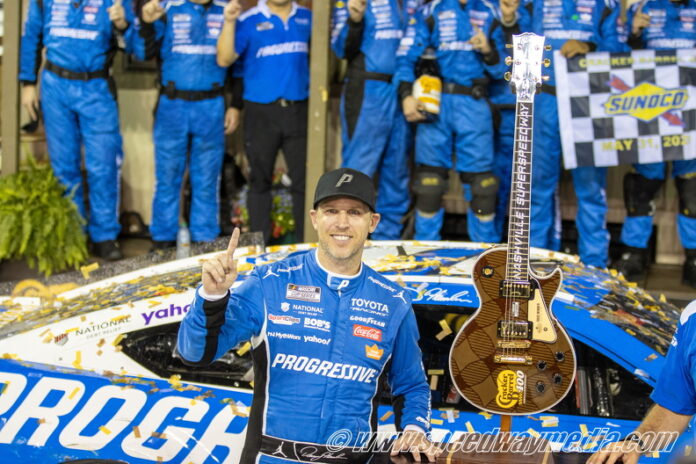
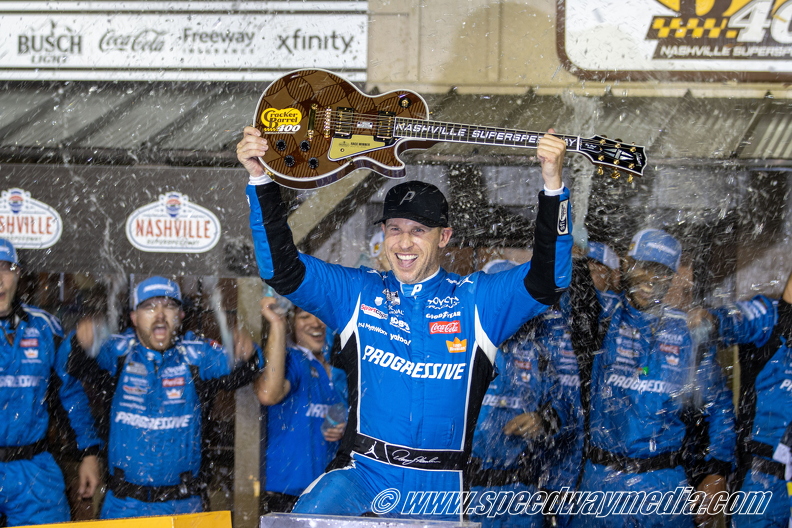
Denny Hamlin capped off a long evening of racing from losing the lead after jumping the start to outdueling teammates Christopher Bell and Chase Briscoe during a four-lap shootout to win the Cracker Barrel 400 at Nashville Superspeedway on Sunday, May 31.
The three-time Daytona 500 champion from Chesterfield, Virginia, led twice for a race-high 57 of 300-scheduled laps. He was awarded the pole position due to inclement weather canceling Saturday’s qualifying session. Then, at the event’s start, Hamlin received a drive-through penalty for launching before the restart zone. Despite starting at the rear of the field in the early stages, he weathered through the event. It was mired in delays due to inclement weather. There were also numerous on-track incidents and various pit strategies amongst the field to cycle back towards the front.
After leading through the start of the final stage period, Hamlin spent most of the stage period battling with Bell and Briscoe on the track amid a late fuel-mileage battle. Once Hamlin pitted under green with 43 laps remaining, he cycled behind his Joe Gibbs Racing teammates and was racing in fourth place when a late-race caution flew with 13 laps remaining. During a four-lap shootout, Hamlin dueled with Bell for three full consecutive laps as both remained in front of Briscoe.
Then, on the final lap, Hamlin took advantage of Bell diving through the first turn too deeply for an advantageous attempt to clear Bell. With the lead in his possession, Hamlin fended off Bell and Briscoe to cruise to his first NASCAR Cup Series victory in Music City on a last-lap pass.
The event’s starting lineup was set by a qualifying metric formula as inclement weather canceled Saturday’s qualifying session. t, Denny Hamlin was awarded the pole position, sharing the front row with Tyler Reddick.
When the green flag waved and the event commenced following a delay that lasted more than an hour due to inclement weather, Denny Hamlin launched his No. 11 Progressive Toyota Camry XSE entry ahead of Tyler Reddick and the field. However, he received a drive-through penalty. As Hamlin served his penalty by the third lap, Reddick cycled to the lead as he had Christopher Bell, Daniel Suarez, Kyle Larson and Ty Gibbs trailing in the top five, respectively.
Through the first 10 laps, Reddick maintained the lead by seven-tenths of a second. Bell, Larson, Ty Gibbs and Ryan Blaney trailed in the top five. William Byron, Suarez, Shane van Gisbergen, Erik Jones, and Joey Logano followed, respectively. Behind, Zane Smith occupied 11th place in front of AJ Allmendinger, Carson Hocevar, Brad Keselowski and Bubba Wallace. Michael McDowell, Alex Bowman, Riley Herbst, Todd Gilliland and Ricky Stenhouse Jr. trailed in the top 20 ahead of Corey Heim, Chase Elliott, Chris Buescher, Cole Custer and Austin Hill, respectively.
Meanwhile, Chase Briscoe was mired in 26th place. Ross Chastain was in 29th place, rookie Connor Zilisch was in 32nd place behind Ryan Preece, Austin Dillon was mired in 34th place between brother Ty Dillon and Austin Cindric and Denny Hamlin was mired at the tail end of the field in 38th place, though the latter remained on the lead lap.
Ten laps later, Reddick stabilized his early advantage to eight-tenths of a second over Bell while Larson, Ty Gibbs and Byron followed suit in the top five, respectively. By then, Blaney and Suarez dropped to sixth and ninth, respectively, while Erik Jones moved up to seventh place. In addition, Zane Smith moved into 10th place and Logano dropped to 13th place. Meanwhile, Hamlin was in 37th place, trailing the lead by 28 seconds. Suarez was outdueled by Zane Smith for ninth place by Lap 29. Meanwhile, Reddick retained the lead by nine-tenths of a second at the Lap 30 mark.
On Lap 35, a competition caution flag flew with Reddick leading by more than a second over Bell, Larson, Ty Gibbs, Byron, Blaney, Erik Jones, van Gisbergen, Zane Smith and Hocevar, respectively. During the competition caution, the lead-lap field of 36, led by Reddick, pitted. Following the pit stops and with mixed pit strategies throughout the field, van Gisbergen, Logano and Brad Keselowski all utilized two-tire pit stops to exit pit road in the top-three spots, respectively. Reddick and Larson, both of whom pitted for four fresh tires, followed suit in the top five as Bell, Alex Bowman, Chase Briscoe, Byron and Blaney exited in the top 10.
The next restart on Lap 41 featured van Gisbergen and Logano dueling for the lead through the frontstretch and the first two turns as the field behind fanned out. Van Gisbergen managed to motor his No. 97 Tootsie’s Chevrolet Camaro ZL1 entry ahead of Logano and lead for the remaining turns and the next lap while Logano maintained the runner-up spot in front of Reddick, Larson, Bell and Keselowski. Reddick then assumed the runner-up spot from Logano before Lap 43 as both he and Larson used their four fresh tires to move into second and third. As Bell overtook Logano for fourth place, Larson then drag-raced and dueled with Reddick through the frontstretch on Lap 44. Both Larson and Bell then overtook Reddick for second and third just past the Lap 45 mark as van Gisbergen maintained the lead with his two fresh tires.
On Lap 48, Larson used a strong run from the outside lane in Turns 3 and 4 to drag-race with van Gisbergen through the frontstretch and the first two turns. With both making slight contact in the backstretch, they continued to duel in front of Bell until van Gisbergen fended off Larson and stormed to the lead by Lap 50 through the frontstretch. Both Larson and van Gisbergen then dueled for the lead for a full lap for a second time before Larson assumed the lead through the backstretch on Lap 53. With Larson leading, van Gisbergen, who briefly stepped off the throttle through the backstretch, was overtaken by a hard-charging Bell, and he was left to challenge Reddick for third place.
On Lap 57, Bell, who spent the previous several laps reeling in Larson for the lead, briefly made a move to Larson’s inside and another to the outside, but the latter retained the top spot as van Gisbergen fended off and started to build a slight gap between himself and Reddick in third place. Behind, Byron overtook Logano for fifth place while Keselowski, Briscoe, Blaney and Erik Jones occupied the remaining top-10 spots over Bowman, Zane Smith, Ty Gibbs, Carson Hocevar and Suarez, respectively. At the front, Larson continued to lead by three-tenths of a second over Bell by Lap 60.
At the Lap 70 mark, Larson continued to lead by four-tenths of a second over Bell; third-place van Gisbergen trailed by more than three seconds, and the remaining top-five competitors of Reddick and Byron trailed by as far back as five seconds. A lap later, the caution flew due to Connor Zilisch scrapping and damaging the right side of his No. 88 Red Bull Chevrolet Camaro ZL1 entry against the outside wall through the first turn. The incident was the result of a broken brake rotor, and Zilisch was the first competitor to be taken out of contention.
During the caution period, AJ Allmendinger and Riley Herbst remained on the track while most of the leaders pitted. Herbst led the field with 11 laps remaining in the first stage period. Allmendinger fended off Herbst before being challenged by Blaney. Two laps later, the caution flag flew again. Ross Chastain experienced a similar fate to teammate Zilisch.
He had a broken right-front brake rotor and wrecked his No. 1 Busch Light Chevrolet Camaro ZL1 entry against the outside wall through the first two turns. Amid the chaos, Michael McDowell spun beneath Buescher but continued. Chastain joined teammate Zilisch in the garage.
During a one-lap dash to conclude the first stage period, Allmendinger battled with Blaney and Larson before he then edged Larson to capture his first Cup stage victory of the 2026 season. Larson settled in second ahead of Blaney, Elliott and Reddick. Wallace, Byron, Briscoe, Herbst and Heim followed in the top 10, respectively. Under the first stage break period, some led by the leader Allmendinger and including Chase Elliott and Riley Herbst pitted while the rest led by Larson remained on the track. Meanwhile, Ryan Preece, who was having issues with his water temperature, took his No. 60 Kroger/Celsius Ford Mustang Dark Horse entry to the garage to have a radiator replaced.
The second stage period started on Lap 99 as Larson and Blaney occupied the front row in front of Reddick, Wallace, Byron and Briscoe. At the start, Larson motored ahead of Blaney, Reddick and Briscoe as the field fanned out through the first two turns. Amid the battles within the field, Larson proceeded to lead at the Lap 100 mark.
By Lap 110, Larson, who has led since the start of the second stage period, was leading by six-tenths of a second over Briscoe while Reddick, Blaney, Erik Jones, Heim, Wallace, Hamlin, Byron and Bell were racing in the top 10 ahead of van Gisbergen, Logano, Ty Gibbs, Buescher, Keselowski, Austin Dillon, Zane Smith, Bowman, John Hunter Nemechek and Hocevar, respectively. Fifteen laps later, Briscoe, who spent the previous several laps stalking and reeling in Larson, challenged Larson for the lead from the inside lane as he dueled with the latter for a full lap.
Despite leading Lap 126, he remained locked on in a side-by-side battle with Larson for another lap before he motored his No. 19 Bass Pro Shops Toyota Camry XSE entry ahead through the frontstretch and led another lap for himself. As Briscoe led, Reddick and Blaney remained in third and fourth. Erik Jones challenged Heim for fifth place. Meanwhile, Briscoe extended his advantage to a second over Larson by Lap 130 before he added another second to his lead on Lap 135.
Then on Lap 138, a cycle of green flag pit stops commenced as Reddick pitted from the top-five mark. Ty Dillon also pitted with Reddick before Larson surrendered the runner-up spot to pit during the next lap. Wallace, Jones, Byron, Logano, Cindric, Noah Gragson, Heim, Hamlin, Buescher, Keselowski, and the leader Briscoe all pitted by Lap 140.
More drivers, including Keselowski, Austin Dillon, Josh Berry, and Nemechek, pit during the next lap. Amid the pit stops, Briscoe managed to blend back on the track in front of Larson.
On Lap 145, the caution flew again. Austin Dillon spun through the frontstretch after he was bumped by Buescher, who was trying to lift off the throttle and avoid hitting Keselowski. Dillon’s crew was displeased with the contact from Keselowski. The incident occurred amid a stack-up that occurred in front of Dillon as a handful of competitors had to take evasive action to avoid hitting Ricky Stenhouse Jr. as Stenhouse was peeling off the track to pit under green. By then, the top-eight competitors, led by Blaney, had yet to pit. Briscoe and Larson were mired in ninth and 10th.
During the recent caution period, some of the drivers, led by Blaney, pitted their respective entires. This included Elliott, McDowell, Allmendinger, Suarez, Todd Gilliland, Austin Hill and Cole Custer. But all cycled ahead of Briscoe as Briscoe was the first competitor who was scored a lap down. Briscoe received the free pass. All other competitors scored a lap down, took the wave-around to cycle back on the lead lap.
As the event restarted on Lap 151 and just past the halfway mark, Blaney motored ahead of Elliott through the frontstretch and the first two turns as the field fanned out and jostled for spots through the backstretch. Blaney led the next lap over Elliott while a three-wide battle between McDowell, Allmendinger and Suarez ensued for third place. Suarez then managed to clear both through the backstretch as Custer, Gilliland and Austin Hill trailed behind.
Larson and Briscoe eventually navigated their way up to eighth and ninth. Hamlin was mired in 13th after battling Heim, Bell and Erik Jones, all while Blaney continued to lead by more than a second over Elliott by Lap 160. Blaney proceeded to extend his lead to two seconds over Elliott through the Lap 170 mark.
Then on Lap 172, the caution flew again. AJ Allmendinger, who was having a stellar run in third place, drove his No. 16 Kaulig Racing Chevrolet Camaro ZL1 entry dead straight into the outside wall through the first two turns. His damaged entry was engulfed in flames on the right-front area due to a broken brake rotor. During the caution period, mixed pit strategies ensued while a majority of the field that included McDowell, Briscoe, Gilliland, Hamlin, Bell, van Gisbergen, Elliott and Blaney pitted. Meanwhile, Suarez, Bowman, Stenhouse, Cindric, Keselowski and Byron did not pit, with Suarez leading the event.
The next restart, with four laps remaining in the second stage period, only lasted a single lap before the caution returned due to van Gisbergen making contact and sending Todd Gilliland for a spin, as Gilliland then hit the outside wall with the rear end through the first two turns. Heim and Cole Custer would also wreck with Gilliland as they slid through the turns. The multi-car incident was enough for the second stage period to officially conclude under caution.
As a result, Suarez won his first Cup stage victory of the 2026 season. Bowman, Stenhouse, Cindric, Hamlin, McDowell, Byron, Bell, Briscoe and Keselowski finished in the top 10, respectively. Thirty of 38 starters finished on the lead lap. During the second stage break period, a majority of the field remained on the track. Some, including Bowman, Stenhouse and Byron, pitted.
With 109 laps remaining, the final stage period commenced as Hamlin and McDowell occupied the front row. At the start, Hamlin motored ahead of McDowell through the first two turns to clear the field that had fanned out through the backstretch with the lead. Seconds later, the caution returned. Keselowski was racing within the mid-pack region among a stacked group of competitors. Then, Noah Gragson got loose entering the frontstretch and was bumped by Austin Dillon while trying to steer just below the apron. Keselowski then made contact with Austin Cindric before he slid backwards and hit the outside wall hard on the left side as Cindric also spun sideways.
Hamlin outdueled Briscoe to lead during the next restart with 99 laps remaining, but the caution returned two laps later when Hocevar rubbed and made contact with Buescher. This sent Buescher up the track through the first two turns, and he was hit by Bubba Wallace. The carnage resulted in both Wallace and Byron hitting the outside wall before Wallace’s wrecked No. 23 Hardee’s Toyota Camry XSE entry came down the track with no brakes and clipped Bowman, which sent Bowman’s No. 48 Ally Chevrolet Camaro ZL1 entry backwards and back across into the outside wall.
As the field restarted with 89 laps remaining, the caution returned when Hocevar got Nemechek sideways through Turns 3 and 4, with Nemechek bouncing off the entries of Herbst and Berry before he proceeded to spin his No. 42 Pye-Barker Toyota Camry XSE entry through the frontstretch’s grass.
During the next restart with 80 laps remaining, Hamlin motored ahead of teammates Bell and Briscoe to retain the lead for a full cycle. As Hamlin proceeded to stabilize his advantage, Briscoe and Bell fiercely dueled for the runner-up spot over the next four laps before Briscoe managed to clear and motor ahead of Bell for the runner-up spot through the backstretch. As Briscoe and Bell settled in second and third, Elliott and Larson were racing in the top five as Hamlin stretched his advantage to nearly a second with 74 laps remaining. While both Briscoe and Bell tried to reel in their teammate who was leading, Hamlin stabilized his lead to within six-tenths of a second with less than 70 laps remaining.
Down to the final 60 laps of the event, the battle at the front started to brew as Briscoe and Bell reeled in and trailed Hamlin by two- and three-tenths of a second through the turns and straightaways. Three laps later, Bell dueled with Briscoe from the outside lane after Briscoe tried to get beneath Hamlin entering the first turn, but ended up clipping the apron when Hamlin blocked and stalled Briscoe’s momentum. As Bell overtook Briscoe for the runner-up spot, Bell then made a bold move in between a lapped competitor and Hamlin from Turns 3 and 4 and the frontstretch to overtake Hamlin for the lead entering the first two turns with 55 laps remaining. Bell proceeded to build an advantage as he led by a second over Hamlin with 50 laps remaining, while third-place Briscoe and fourth-place Elliott both also trailed by a second.
Then, with 43 laps remaining, Hamlin surrendered his battle with Briscoe for the runner-up spot by pitting under green. Van Gisbergen and Ty Dillon also pitted before Briscoe pitted from the runner-up spot two laps later. Bell then pitted from the lead a lap later, along with Larson, as Elliott cycled to a brief lead before he pitted. Meanwhile, Bell managed to cycle his No. 20 DeWalt Toyota Camry XSE entry ahead of teammates Briscoe and Hamlin following gate pit stops as Reddick, who has yet to pit, was leading.
Down to the final 35 laps of the event, Reddick continued to lead Ty Gibbs and Erik Jones, though the trio had yet to pit before the event’s conclusion. Meanwhile, Zane Smith and Blaney, both of whom were trying to stretch their fuel tank to the scheduled distance after pitting during the latest caution period, were racing in fourth and fifth.
Bell was in 11th place in front of teammates Briscoe and Hamlin, with all trailing the lead by more than 24 seconds. Once Reddick, Gibbs and Jones pitted over the next four laps, Smith and Blaney cycled atop the leaderboard with 30 laps remaining. By then, Blaney continued to stalk and intimidate Smith while Bell trailed the leaders by 16 seconds in sixth place.
Then, with 26 laps remaining, Blaney pitted from the runner-up spot under green as Smith continued to lead. Buescher also pitted while Bell cycled up to fourth place as he, Briscoe and Hamlin trailed by in between 12 and 16 seconds. A lap later, Smith’s advantage was five seconds over runner-up Herbst while Bell trailed by 11 seconds. Over the next 10 laps, Smith stabilized his advantage to one-and-a-half seconds while Bell and Briscoe were trailing in second and third, but both were reeling in on Smith amid lapped traffic. Meanwhile, Hamlin trailed by six seconds in fourth place while Elliott trailed by nine seconds in fifth place.
With 13 laps remaining, Bell overtook Smith and the lapped competitor of Logano to lead. Seconds later, the caution flew due to Buescher, who was racing just behind the leaders, scraping the outside wall exiting the backstretch and entering Turns 3 and 4 due to a broken brake rotor on the right-front area of his No. 17 Castrol Ford Mustang Dark Horse entry. During this caution period, Smith, Reddick, Blaney, McDowell, Stenhouse, Hocevar and Ty Dillon pitted while the rest, led by Bell, remained on the track.
As the event restarted with four laps remaining, Hamlin pushed Bell ahead of Briscoe through the frontstretch. Bell led through the first two turns as Hamlin outdueled Briscoe amid a side-by-side battle for the runner-up spot and he carried forth the momentum from the inside lane to draw even and battle against Bell for the lead through the backstretch. As Briscoe trailed in third place by a close distance, Hamlin and Bell remained dead even for the lead over the next two laps and through every turn and straightaway.
When the white flag waved and the final lap started, Bell and Hamlin continued to duel for the lead as Briscoe reeled in. Both Briscoe and Hamlin then pinned Bell in a tight three-wide battle through the frontstretch before Bell briefly rocketed ahead entering the first two turns. Bell then drifted up the track in front of Briscoe, which allowed Hamlin to use the inside lane to overtake and clear Bell entering the backstretch. With Bell unable to respond through Turns 3 and 4, Hamlin was able to claim the checkered flag for a thrilling victory and by a tenth of a second over Bell.
With the victory, Hamlin notched his 62nd career win in the NASCAR Cup Series division in his 735th series start. He also achieved his second victory of the 2026 season, his first since Las Vegas Motor Speedway in March and his first at Nashville Superspeedway. Hamlin’s Nashville victory was also the eighth victory of the 2026 season for the Toyota manufacturer, with the manufacturer achieving its first Cup victory at Nashville Superspeedway, and the third for Joe Gibbs Racing.
Photo by Logan Allen for SpeedwayMedia.com.
“Well, I think [Bell] and [Briscoe] were battling so hard on that first corner,” Hamlin said on the frontstretch on Prime Video. “Just letting me get to the inside of [Bell] in the first corner there after the restart and from there, it was just side by side with [Bell]. Man, he drove it in so deep on that last lap into [Turn] 1 that it just allowed me to barely clear off into [Turn] 2. What an unbelievable day. Starting first, going to last and back to first. I definitely jumped the start, no doubt about that. Looking back on it, [I] just didn’t wait quite long enough…thank you to this sellout crowd. Appreciate y’all sticking around. It’s been an honor.”
Bell, who is still seeking his first Cup victory of the 2026 season, settled in the runner-up spot for a third time in the 2026 season and for a second straight week. Meanwhile, Briscoe ended up in third place for his fifth top-five result of this season. Amid their late-race duel with Hamlin, both Joe Gibbs Racing competitors were left disappointed after falling short of winning at Nashville.
“Just disappointment,” Bell said. “I got nobody, nothing, no circumstances to blame except myself. I just didn’t win the race. That’s it. That’s all there is to it. ”
“With [Hamlin and Bell] running side by side, I kept trying to back up my entries to try and get a big run, to take’em three wide,” Briscoe added. “They just kept running each other up the racetrack, so I just kept trying to hit the bottom [lane]. I went to the top and was able to get to Christopher’s right rear, and then, we’re just all driving in so deep that we slide up the racetrack I was just kind of in No Man’s Land after that. Hate that we weren’t on the better end of that. I felt like [our car] was certainly capable of winning, and ended up third. Just wish we were the ones in first.”
Ricky Stenhouse Jr., who pitted for fresh tires before the final restart, muscled up to fourth place while Shane van Gisbergen finished in fifth place for his third top-five result of the 2026 season and his second on an oval/superspeedway event this season. Tyler Reddick and Chase Elliott finished sixth and seventh despite both being involved in a hard accident just past the checkered flag through the frontstretch, while Ryan Blaney, Zane Smith and Carson Hocevar completed the top 10 in the final running order.
There were 31 lead changes for 15 different leaders. The event featured 12 cautions for 75 laps. In addition, 15 of 38 starters finished on the lead lap.
Following the 14th event of the 2026 NASCAR Cup Series season, Tyler Reddick continues to lead the standings by 97 points over Denny Hamlin, 174 over Ryan Blaney, 195 over Chase Elliott and 208 over Ty Gibbs.
Results:
Denny Hamlin, 57 laps led
Christopher Bell, 29 laps led
Chase Briscoe, 14 laps led
Ricky Stenhouse Jr.
Shane van Gisbergen, 12 laps led
Tyler Reddick, 42 laps led
Chase Elliott led three laps
Ryan Blaney, 46 laps led
Zane Smith, 18 laps led
Carson Hocevar
Erik Jones led three laps
Ty Dillon
Ty Gibbs, one lap led
Joey Logano, one lap led
Michael McDowell
Noah Gragson, one lap down
Riley Herbst, one lap down, one lap led
Austin Dillon, one lap down
Daniel Suarez, one lap down, 10 laps led, Stage 2 winner
Todd Gilliland, one lap down
Cole Custer, one lap down
Cody Ware, one lap down
Kyle Larson, one lap down, 56 laps led
John Hunter Nemechek, two laps down
Corey Heim, two laps down
Austin Cindric, four laps down
Austin Hill, seven laps down
Chad Finchum, 18 laps down
Chris Buescher – OUT, Accident
William Byron – OUT, Accident
Josh Berry – OUT, Accident
Bubba Wallace – OUT, Accident
Alex Bowman – OUT, Accident
Brad Keselowski – OUT, Accident
AJ Allmendinger – OUT, Accident, seven laps led, Stage 1 winner
Ryan Preece – OUT, Radiator
Ross Chastain – OUT, Accident
Connor Zilisch – OUT, Accident
Next on the 2026 NASCAR Cup Series schedule is the FireKeepers Casino 400 at Michigan International Speedway in Brooklyn, Michigan. The event is scheduled to occur next Sunday, June 7, and air at 3 p.m. ET on Prime Video, MRN Radio, SiriusXM and HBO MAX.