Home Blog Page 193

New Era Loading – Faster, Lighter and Built to Break Records – INDYCAR Introduces New NTT INDYCAR SERIES Race Car for 2028 and Beyond

NTT INDYCAR SERIES’ IR-28 Designed To Deliver Faster Cars with Chevrolet and Honda Powerplants, More Action, Improved Drivability

INDIANAPOLIS (Tuesday, July 28, 2026) – INDYCAR has unveiled the new NTT INDYCAR SERIES chassis and powertrain package for 2028, introducing a car with a modernized look designed to provide for faster lap times and improved raceability encouraging more wheel-to-wheel action, while also creating the safest car yet for “The Fastest Racing on Earth.”

Working with Dallara to produce the IR-28 chassis, the new car will make its competition debut at the start of the 2028 NTT INDYCAR SERIES championship. The first renderings of the IR-28 were shared with the world this morning via a video narrated by Academy Award winner and star of the box office smash hit “The Odyssey,” Matt Damon. A link to the introductory trailer is available here. Media access to renderings is available here.

“We are pleased to unveil renderings of the new NTT INDYCAR SERIES chassis that will take our sport into an exciting new era,” INDYCAR President J. Douglas Boles said. “As you can imagine, a project of this magnitude takes an incredible amount of planning, collaboration and execution. I would like to thank all of our partners including Dallara, Chevrolet, Honda, Firestone and Shell, who have worked tirelessly to create a package that will enhance INDYCAR’s already incredible competition and industry-leading growth.

“With initial testing to begin this week, there is still plenty of work to do before 2028, but we are well on our way to showcasing a new era of INDYCAR, which will include enhanced wheel-to-wheel competition, track records, standards in raceability and new benchmarks in safety. We are confident the IR-28 is the ideal package to move INDYCAR forward for our teams, drivers, partners and fans.”

“We are honored that INDYCAR has chosen Dallara once again,” Dallara USA Chief Executive Officer Stefano dePonti said. “After more than a decade of partnership, their continued trust is the greatest recognition of our team’s efforts. This achievement demonstrates the dedication, expertise and collaboration of many individuals who worked tirelessly to create a car that meets today’s needs while looking toward the future. It also reflects Dallara’s ongoing commitment to investing in innovation and education, sharing the knowledge developed in motorsport with academia and beyond.”

Competition and Track Records

The NTT INDYCAR SERIES already is known as an intense and ultra-competitive championship, and the new car is prepared to take that reputation to another level as it builds on raceablity while enhancing speeds via additional power to advance the overall racing. The IR-28 is equipped to exceed current lap times and capable of breaking track records, including at Indianapolis Motor Speedway, where the last track records – one-lap and four-lap qualification records – were broken in 1996 by two-time Indianapolis 500 presented by Gainbridge winner Arie Luyendyk.

As part of the improved raceability, the IR-28 will weigh approximately 100 pounds less than the current car. The more favorable power-to-weight ratio enhances raceability to allow drivers to push harder and deliver even more competitive racing and wheel-to-wheel action.

New Car Design

Design of the new NTT INDYCAR SERIES car begins with a sleek and modern look while retaining the unmistakable DNA of past iconic series cars. The entire car is newly designed and built from the ground up, ensuring many noticeable differences from the current car.

New front and rear wings, optimized for style and efficiency, give the road and street course car an aggressive stance, while the superspeedway wing configuration provides maximum downforce with limited drag in a sleek, high-speed looking package.

For the first time ever, the car’s aerodynamic architecture has been purpose-built to optimize the wake from the front to the back in order to enhance overtaking opportunities. Additional benefits of the 2028 design include reduced outwash and, for Indianapolis Motor Speedway, a more aerodynamically stable speedway front wing.

The IR-28 aeroscreen, designed into the development of the car, is lighter, sleeker and more aerodynamic – supporting safety, more raceability and giving the IR-28 a fighter jet look and feel.

Each bodywork element has been designed to result in even closer on-track competition as the new aerodynamics will allow cars to follow more closely in corners and throughout the field.

Also for the driver, the new car will feature electronically controlled driver adjustable anti-roll bars, which will provide for enhanced tuning and raceability while cleaning up the cockpit by eliminating standard knobs and handles, thus, also improving driver safety.

Additional updates for the IR-28 include the introduction of the Custom AXIS Inertance Control Suspension System. Built around a lightweight, shared damping architecture, the AXIS platform expands spring, damper and inerter tuning options without increasing costs. Its highly tunable, multimode design improves mechanical grip through suspension optimization, reducing reliance on aerodynamic load while giving teams significant setup flexibility. The NTT INDYCAR SERIES is the only major motorsports championship to permit both front and rear third-element inertance systems, making the IR-28 one of the most advanced suspension platforms in modern motorsport.

From a fan and commercial perspective, the new car will feature a digital car position display showing the position of the car in practice, qualifying and races and a unique transparent window in the engine cover, which will highlight Chevrolet, Honda and any additional manufacturer branding. Design updates for 2028 also include more visible surface areas for series and team sponsorship.

2028 Powerplant

Previously announced, the power for the new 2028 NTT INDYCAR SERIES machinery will be provided by 2.4-liter twin-turbocharged V6 internal combustion engines capable of producing up to 760 horsepower. Chevrolet and Honda have committed to participate under the new engine formula, which will deliver increased torque, power and overall performance compared to the current generation of INDYCAR SERIES engines.

“Everyone at Chevrolet is looking forward to this next era of the NTT INDYCAR SERIES and the debut of the IR-28 in 2028,” GM Vice President of Global Motorsports Competition Eric Warren said. “This new car builds on more than a decade of collaboration with INDYCAR, and we’re confident the new 2.4-liter, twin-turbo V6 engine will deliver the performance, sound and excitement INDYCAR fans expect from Team Chevy — the same standard that has produced 16 manufacturer championships and 13 Indianapolis 500 victories.”

“For more than 30 years, Honda has built upon its racing heritage as a key partner of the NTT INDYCAR SERIES, and we are excited to begin this next chapter with the IR-28 powered by our new American-made HRC V6 Hybrid powertrain,” Honda Racing Corporation USA President David Salters said. “INDYCAR delivers some of the best racing on the planet, and this evolution of the formula creates new opportunities to enhance it—a lighter car, a more powerful hybrid powertrain, an even safer chassis and exciting chassis, and aerodynamic engineering challenges for our Honda associates and teams.

“Together, these advancements will help usher INDYCAR into a new era. Honda is proud to be part of that future, supported by the long-term commitment we made to the series earlier this year. We can’t wait to see the IR-28 on track entertaining our INDYCAR fans.”

Low-voltage hybrid technology evolves in 2028 and beyond with greater power storage, more deployment options for teams and a package that is approximately 20 pounds lighter than the previous INDYCAR SERIES power unit. The significant performance advancement and deployment variability will be provided through a new partnership with UK-based Helix, a global leader in next-generation solutions in building and delivering electric drive systems.

With a client list that has included teams in FIA Formula One and FIA Formula E, and track-proven innovation that drives the hypercars of tomorrow, Helix’s hybrid design for the NTT INDYCAR SERIES remains packaged inside the bellhousing – located between the combustion engine and the gearbox.

The new hybrid platform will feature the first battery-based Energy Storage System (ESS) in NTT INDYCAR SERIES history, supplied by BOLD Technology, selected by INDYCAR for the program. Headquartered at the Circuit de Barcelona-Catalunya and expanding its U.S. operations in Michigan, BOLD develops advanced battery systems for Formula One, aerospace and defense applications. Its ESS for the IR-28 delivers approximately 14 times the energy storage capacity of the current supercapacitor-based system – giving drivers and teams far greater flexibility in when and how they deploy hybrid power – while contributing to the lighter, safer power unit package, engineered and qualified to the most stringent motorsport safety standards.

Xtrac, an exclusive supplier for INDYCAR since 2000 and a Helix associate, is providing transmissions for the new chassis. Development includes a gearbox that sheds 25 pounds from the current unit.

Safety Evolution

While the IR-28 provides quicker lap times, increased speeds and will allow for more on-track action, it also is designed to keep drivers safer than ever. From the aeroscreen to the roll hoop to side-impact structures, the new car seamlessly integrates recent safety and design advancements into its core architecture. Built to exceed INDYCAR or FIA specifications, whichever is more stringent, the new chassis delivers measurable safety improvements over the current car, including:

Driver cockpit:

  • The chassis features wider internal dimensions to accommodate a greater range of driver heights and body types.
  • The IR-28 also features enhanced internal airflow and driver cooling for improved comfort and performance.

Side impact protection:

  • Decades worth of race and incident evaluations – including chassis additions – have created a chassis that features stronger, more efficient side-structure design providing increased energy absorption in high-impact situations.

Crash dynamics:

  • Improved stability with a natural tendency to remain grounded during “nose-up,” sliding or spinning incidents.
  • An extensive initial testing schedule for the new IR-28 will include a variety of circuits and layouts from Indianapolis Motor Speedway’s road course and famed oval, Sebring International Raceway and more. Testing schedules and media availabilities will be provided at later dates.

What Select Drivers Are Saying

“Seeing the car for the first time made me even more excited about where INDYCAR is going. The design is super cool and feels like a proper next step for the series while still looking like an INDYCAR SERIES car. I think the fans are going to love it, and as a driver I cannot wait to get behind the wheel. The most important thing is that we keep the close, fun racing that makes INDYCAR special, and from what I’ve seen, we’re heading in a really good direction.” – Alex Palou, No. 10 DHL Chip Ganassi Racing Honda

“The car is awesome. We all wanted a new, modern-day car that is lighter and looks futuristic and fast but still has all of the incredible safety advancements that INDYCAR is known for. This does all of those things. There are still a lot of things to work through in terms of on-track testing and how it reacts to the different types of environments it will be exposed to, but from a visual standpoint, it’s incredible. This is something people will be excited about.” – Alexander Rossi, No. 20 Java House Chevrolet, ECR

“There is a ‘wow’ factor. The first thing that struck me is that it has more room in the cockpit and will fit differently-sized drivers, which is really good. Secondly, it definitely has the INDYCAR DNA, which was a worry for me that it wouldn’t look like an INDYCAR SERIES car. This definitely does. It also has an aggressive look with an integrated aeroscreen and a car that addresses a lot of little tweaks that drivers have asked for. Dallara has delivered on almost everything. I’m super excited for the future.” – Felix Rosenqvist, No. 60 SiriusXM Honda, Meyer Shank Racing w/Curb Agajanian

Additional driver quotes will be available in a separate press release to be distributed shortly.

The next NTT INDYCAR SERIES race is the OnlyBulls Grand Prix of Portland, round 13 of the 2026 championship, Sunday, Aug. 9. Coverage begins at 4 p.m. ET on FOX, FOX Deportes and FOX One. Audio coverage is available via INDYCAR Radio powered by OnlyBulls on SiriusXM channel 218 and the INDYCAR App powered by NTT DATA.

Thirty-Eight Race Weekends, and a Fourth Grader in the Hauler

Photo by Scott Webb on Unsplash

The 2026 NASCAR Cup Series season opened with the Clash at Bowman Gray Stadium on February 1 and does not finish until the championship race at Homestead-Miami on November 8. Count the 36 points races on NASCAR’s published schedule, add the Clash and the All-Star weekend, and the calendar reaches 38 event weekends inside roughly 40 weeks. At most of those races, somewhere in the motorhome lot, a kid is doing long division.

The Cup garage is only the visible tip. The same travel life runs all the way down the ladder. Karting families load trailers for regional series. Quarter midget families give up whole weekends at the track. Late model families chase shows two states over. Meanwhile the standard American school year runs from late August into early June, which means the racing season and the school year overlap almost completely. The one real gap in the racing calendar, November through January, sits inside the school year too.

Families who make this work tend to flip the usual order of operations. Instead of squeezing school around travel, they treat planning a school year around a travel calendar as the winter’s first project, settled before the first hauler leaves the shop. The race schedule comes out in the fall. The school plan gets built on top of it.

A Season That Swallows the School Year

The math is unforgiving. Most states set an instructional floor for a school year somewhere near 180 days. Some count hours instead, often in the range of 900 to 1,000 a year. A family that attends every Cup event has to find those days around 38 travel weekends, and the weekends are not the light part of the week. They are the job.

So the week flips. Monday through Thursday becomes the school block, the way Saturday and Sunday are for everyone else. Cup teams cluster around Charlotte, North Carolina, and for many families the shop schedule sets the rhythm: home early in the week, gone from Friday until Sunday night. For families that travel with the driver or live on the road full time, the same flip happens inside the motorhome. Mornings at a race track are surprisingly quiet. Garage activity runs on a published timetable, the green flag often lands in the afternoon or evening, and a kid can put in three focused hours before anyone fires an engine.

Four school days a week sounds workable until you run the numbers. A 180-day year at four days per week takes 45 weeks, and no calendar has 45 school weeks in it. So racing families borrow. Some run school year-round with short breaks. Some add fifth days through the winter. Some count the weekend’s reading, the lap-time arithmetic, and the travel-day audiobooks as instruction where their state permits it. The year gets assembled from pieces, but it gets assembled.

What Gets Done in a Hauler

The front lounge of a Cup hauler is a small office with a couch, a counter, and good air conditioning, and in the off-hours it converts to a classroom without complaint. The grassroots version is a folding table under a canopy at a karting facility. What travels is roughly the same either way: a tote of workbooks, a laptop, a mobile hotspot, a paperback in the door pocket of the truck for the miles between stops.

The honest part is that a race weekend eats attention. Practice runs long. Weather shuffles the schedule. A fourth grader who would rather watch pit stops than finish a spelling list has forty acres of excellent excuses just outside the door. The families who last usually settle on two rules. First, the plan lives on paper, because a plan carried in a parent’s head does not survive a rain delay. Second, the weekend carries the light load. Reading, a review page, a lesson that does not need to be taught. New material, the kind that requires a parent sitting beside the kid at full attention, belongs to the quiet days at home or the quiet mornings before the track wakes up.

The Rules Change at the State Line

Here is the detail that surprises people outside the sport. Homeschool law in the United States is state law, and what governs a traveling family is the state where the family legally resides, not the states the hauler rolls through. A family domiciled in North Carolina answers to North Carolina’s rulebook at Phoenix, at Pocono, and at every fuel stop in between.

That rulebook varies enormously from one state to the next. A few states ask for nothing at all, no notice and no paperwork. Many ask for an annual notice of intent. Some want more: standardized test scores, a portfolio reviewed by an evaluator, attendance logs showing a required number of days. The details fill a shelf of state education codes, and no two states match.

For most racing families the practical question is simply what the home state expects, because the answer decides how much record keeping rides in the hauler. Attendance logs matter most on the road. A Tuesday of schoolwork in a motorhome outside Talladega counts the same as a Tuesday at the kitchen table, provided somebody wrote it down. Full-time travelers meet the question in its purest form. A family that lives entirely on the road must still claim a legal domicile somewhere, and that single choice quietly selects which set of rules follows them around the country all season.

The Off-Season Is Twelve Weeks Long

Between the checkered flag at Homestead in early November and the Clash in February sit about twelve weeks. Race shops treat that window as the most productive stretch of the year. Next season’s cars get built in the winter, not in July.

The school side of a racing household runs on the same clock. The published race schedule arrives in the fall, and December is when the math sequence, the reading list, and any required testing dates get laid against it, weekend by weekend. By the time the hauler leaves for Daytona, the question of when fourth grade will happen has already been answered. Racing people have always said the season is decided before it starts. In these families, that turns out to be true twice.

WIMNA, Gainbridge Partner with Suárez, No. 7 Chevy at Kansas Speedway

WIMNA Nation Showcased in Race and Post-Event Giveaway

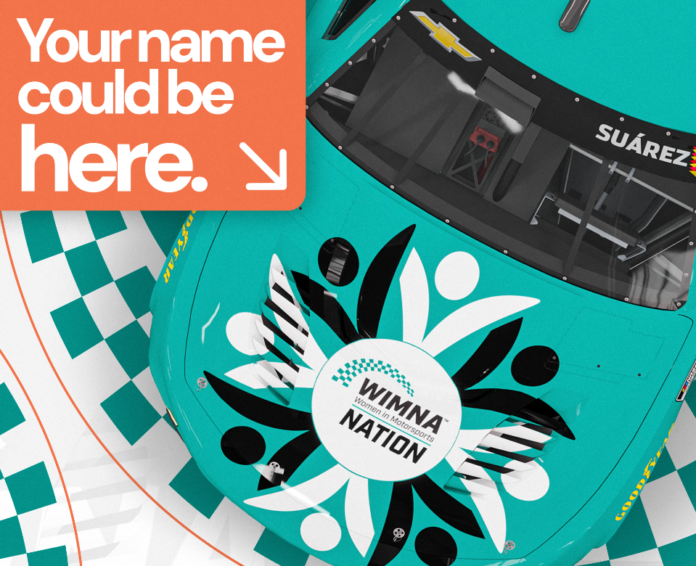
MOORESVILLE, N.C. (July 28, 2026) – Women in Motorsports North America (WIMNA), Gainbridge℠ and Spire Motorsports will partner to highlight WIMNA Nation aboard Daniel Suárez’s No. 7 Chevrolet Camaro ZL1 when the NASCAR Cup Series returns to Kansas Speedway Sept. 27 for the second of two 2026 stops at the popular mile-and-a-half Kansas City oval.

The 30th event on this year’s calendar and fourth of 10 races in NASCAR’s “Chase” championship format will include WIMNA Nation’s celebration of community, connection, and passion while continuing to drive the inclusive nature of professional Motorsports in North America forward.

As part of the visionary collaboration, the hood of Suárez’s No. 7 Chevy will display the WIMNA Nation logo and include the names of all current WIMNA Nation members, showcasing the strength, dedication, and impact of a growing community on a national scale.

Following the race, one lucky random WIMNA Nation member will be awarded the hood from the No. 7 machine, personally autographed by Suárez. The once-in-a-lifetime keepsake will serve as a lasting tribute to the members who continue to inspire, support, and fuel the future of women in the motorsports industry. To be included on the hood, you must register for WIMNA Nation by August 13, 2026, at https://womeninmotorsportsna.com/wimna-nation.

“Seeing the WIMNA Nation logo on the No. 7 Gainbridge/WIMNA Chevrolet driven by Daniel Suárez is incredibly meaningful, but what makes this moment truly special are the names on the hood,” said Cindy Sisson, Executive Director of WIMNA. “Each name represents someone who believes in our mission to advance, connect, and enable women in motorsports. This is more than a race car—it’s a powerful symbol of belonging and the incredible community we are building together. We are deeply grateful to Gainbridge and Spire Motorsports for creating this unforgettable opportunity, and we can’t wait to cheer on Daniel Suárez at Kansas Speedway.”

“Gainbridge is proud to partner with Spire Motorsports to shine a light on the important work WIMNA is doing to create and champion opportunities for women across all areas of motorsports,” said Mike Nichols, Chief of Sponsorship Strategy and Activation at Group 1001. “Supporting organizations like WIMNA aligns with Gainbridge’s continued commitment to investing in the future of professional women’s sports and communities across the country through the Gainbridge Assists grant program.”

Suárez will make his 20th career start at Kansas Speedway, where he owns two top-10 finishes. His best result at the racy, multi-groove oval is a seventh-place finish in 2017.

The Monterrey, Mexico, native and 2026 Coca-Cola 600 winner is enjoying a breakout season, highlighted by one victory, two top fives and six top 10s. He currently sits 11th in the NASCAR Cup Series standings with 14 races remaining to determine this year’s champion. Through 22 races, Suárez has posted an average finish of 14.7 and finished outside the top 20 just four times this season.

“I’m looking forward to seeing WIMNA Nation and Gainbridge on our No. 7 Chevrolet at Kansas Speedway,” said Suárez. “What makes this collaboration so meaningful is it’s not just a logo on a race car. The effort represents the passionate women and their allies who are helping shape the future and drive the sport. Having the names of WIMNA Nation members on the hood of our car is a special way to bring their stories, passion, and support with us to the track. I’m proud to drive this car and celebrate such an incredible community.”

The Hollywood Casino 400 from Kansas Speedway will be televised live on USA Network Sunday, Sept. 27 beginning at 3 p.m. Eastern Daylight Time. The 30th of 36 points-paying races on the 2026 calendar will be broadcast live on the Motor Racing Network and SiriusXM NASCAR Radio Channel 90.

About WIMNA…
Founded by legendary racer Lyn St. James and accomplished motorsports executive and team owner Beth Paretta, Women in Motorsports North America (WIMNA) is a nonprofit organization dedicated to advancing, connecting, and enabling women across all areas of the motorsports industry. Through professional development, mentorship, networking, and industry-leading initiatives such as the annual Women with Drive – Driven by Mobil 1 Summit, WIMNA Career Connect, and WIMNA Nation, the organization is creating meaningful opportunities for individuals at every stage of their careers. By bringing together professionals, students, allies, and industry leaders, WIMNA is helping build a stronger, more connected future for motorsports. Learn more about how you can become a member of WIMNA Nation www.womeninmotorsportsna.com.

About WIMNA Nation…
WIMNA Nation is the official membership community of Women in Motorsports North America (WIMNA), uniting professionals, students, enthusiasts, corporations, and allies who share a commitment to advancing women across every facet of the motorsports industry.

Whether you’re a student exploring your future, a professional advancing your career, an executive leading an organization, or an ally committed to creating a more inclusive industry, WIMNA Nation provides a place to connect, grow, and belong—all while supporting WIMNA’s mission to Advance, Connect, and Enable women in motorsports. Join WIMNA Nation at https://womeninmotorsportsna.com/wimna-nation/.

About Gainbridge…
Gainbridge Insurance Agency, LLC (“Gainbridge”) was founded in 2018 as part of Group 1001 with a simple belief: people work hard for their money, and their money should work hard for them. We offer a simple, safe way to save for the future – with clear annuity products, no hidden fees, and support from licensed teammates whenever you need it. Gainbridge is headquartered in Zionsville, Indiana. Learn more at gainbridge.com or connect with us on LinkedIn and Instagram.

About Group 1001…
Group 1001 Insurance Holdings, LLC (“Group 1001 Insurance” or “Group 1001”) is a collective that empowers companies to create positive growth. Our insurance and annuities are easy to understand and accessible to all. Our online investing platform gives individuals control over their savings. Our technology and innovation help companies succeed. And our strategic partnerships bring people together through education and sports.

As of March 31, 2026, Group 1001 Insurance had more than 1,500 employees and combined assets under management of $86.1 billion and provides over 540,000 active annuity contracts and life insurance policies. It comprises the following brands: Delaware Life, GainbridgeSM, Clear Spring Life and Annuity Company, Clear Spring Property and Casualty Group, and the RVI Group, among others.

About Spire Motorsports…
Spire Motorsports fields full-time entries in the NASCAR Cup Series, NASCAR CRAFTSMAN Truck Series and Interstate Batteries High Limit Racing.

The team, co-owned by longtime NASCAR industry executive Jeff Dickerson and TWG Motorsports CEO Dan Towriss, earned its inaugural NASCAR Cup Series victory in its first full season of competition when Justin Haley took the checkered flag in the Coke Zero Sugar 400 at Daytona (Fla.) International Speedway July 7, 2019. Less than three years later, William Byron drove Spire Motorsports’ No. 7 Chevrolet Silverado its first NASCAR CRAFTSMAN Truck Series win April 7, 2022, at Martinsville (Va.) Speedway. The team’s most recent victory came May 24, 2026, when Daniel Suárez won the NASCAR Cup Series Series’ Coca-Cola 600 at Charlotte (N.C.) Motor Speedway.

In 2026, Spire Motorsports campaigns the Nos. 7, 71 and 77 Chevrolet Camaro ZL1s in the NASCAR Cup Series and the Nos. 7 and 77 Chevrolet Silverado RSTs in the NASCAR CRAFTSMAN Truck Series. The Mooresville, N.C., organization also fields the No. 77 410 sprint car in Interstate Batteries High Limit Racing competition.

How Modern Fans Follow Motorsport Events Across Multiple Racing Series

Photo by Felix Berger on Unsplash

Motorsport has always offered a distinctive viewing experience. Unlike sports played in a single arena, racing events unfold across long circuits, changing weather conditions, strategic pit stops, safety-car periods, and multiple classes of vehicles. Fans must often follow several sources at once to understand what is happening on the track.

Modern racing coverage has therefore evolved beyond a traditional television broadcast. Viewers now combine live video, timing information, team radio, social media updates, expert commentary, and post-race analysis. This multi-layered approach helps fans understand not only who is leading, but also why positions are changing throughout an event.

Racing Schedules Are the Starting Point

The first challenge for many motorsport fans is keeping track of event schedules. A single race weekend may include practice sessions, qualifying, support races, warm-up periods, and the main competition. International series also take place across different time zones, making it easy to miss an important session.

Dedicated racing websites, official championship pages, and team channels help supporters confirm the correct local start time. Fans should also check whether a race schedule has changed due to weather, safety concerns, television requirements, or circuit conditions.

Creating a personal calendar for preferred racing series is one of the simplest ways to stay organized. Notifications can be added for qualifying sessions as well as races because qualifying often shapes the strategic story of the entire weekend.

Live Timing Adds Context to the Broadcast

A television or online broadcast usually focuses on the leading cars and the most dramatic battles. However, important developments may also be taking place deeper in the field.

Live timing data allows viewers to monitor:

  • Lap times
  • Time gaps between competitors
  • Pit-stop duration
  • Sector performance
  • Tire strategy
  • Position changes
  • Race-control messages

This information becomes especially valuable during endurance racing, where several vehicle classes compete simultaneously. A car may not appear on screen for several minutes even though it is gaining significant time on its nearest rival.

Timing data also helps fans evaluate whether a driver is managing tires, conserving fuel, responding to traffic, or preparing for a strategic pit stop. Used alongside live video, it provides a more complete understanding of the event.

The Importance of Reliable Live Coverage

Motorsport audiences often follow championships held in different countries and broadcast by different networks. Availability may depend on regional rights, local providers, language preferences, and the devices being used.

Before an event begins, viewers should confirm that the selected service is accessible in their location and compatible with their internet connection. Reliable coverage becomes particularly important during major races, when high demand can place additional pressure on streaming platforms and network infrastructure.

Some international viewers also use broader sports information services to check what is currently available. Korean-speaking fans, for example, may consult a sports viewing resource such as 스포츠중계 when looking for information about ongoing sporting events.

Regardless of the platform being used, viewers should prioritize stable access, clear schedules, and accurate event information. Opening the coverage shortly before the start can also help identify technical problems before the race begins.

Commentary Helps Explain Racing Strategy

Motorsport is highly technical, and the significance of an event is not always obvious from the images alone. Experienced commentators can explain why a driver is protecting a particular tire compound, why a team has chosen an early stop, or how changing wind direction may affect a car through high-speed corners.

Good commentary also identifies less visible developments, including mechanical concerns, fuel targets, track-limit warnings, and possible penalties. This context is especially useful for new fans who may not yet understand the strategic differences between racing series.

However, commentary should be combined with official timing and race-control information. Early reports can occasionally be incomplete, particularly during incidents involving several competitors.

Team Radio Provides a Different Perspective

Selected radio messages can reveal how drivers and engineers respond under pressure. They may discuss tire condition, balance problems, traffic, fuel management, or changes in weather.

Radio communication should be interpreted carefully because teams often use technical language and short phrases that may not be immediately clear. Messages may also be delayed or selected by broadcasters for storytelling purposes.

Even with these limitations, team radio adds personality and strategic depth to a race. It allows viewers to experience the decision-making process that takes place behind the scenes.

Social Media Is Fast but Requires Verification

Teams, drivers, circuits, and championships publish rapid updates during race weekends. Social media can be useful for confirming schedule changes, penalties, medical updates, and technical problems.

The disadvantage is that unverified rumors can spread quickly. A short video clip or radio message may appear without its full context. Fans should therefore confirm important developments through official championship statements, race-control notices, or established motorsport publications.

Social platforms are most useful as a supplementary source rather than the only source of information.

Post-Race Analysis Completes the Story

The result shown at the checkered flag does not always explain the full race. Penalties, technical inspections, strategic mistakes, and mechanical problems may influence the final classification.

Post-race reports help viewers review:

  • Decisive overtakes
  • Pit-stop strategy
  • Tire performance
  • Safety-car timing
  • Driver penalties
  • Technical failures
  • Championship implications

Long-form analysis can also show how a team’s performance has developed over several races. This broader perspective is valuable because one strong or weak result may not represent the true competitive level of a driver or vehicle.

Different Racing Series Require Different Viewing Habits

A short touring-car race demands a different approach from a 24-hour endurance event. Formula racing often places strong emphasis on qualifying position, tire strategy, and aerodynamic performance. Rally competition is divided into timed stages, while oval racing may involve drafting, frequent caution periods, and rapidly changing track position.

Fans can improve their experience by learning the basic rules and strategic patterns of each discipline. Understanding the format makes timing data, commentary, and team decisions much easier to follow.

Final Thoughts

The modern motorsport audience has access to more information than ever before. Live broadcasts remain central, but timing data, official updates, radio communication, expert analysis, and post-race reports all contribute to a deeper understanding of racing.

The most effective approach is to prepare before the event, confirm the schedule, choose reliable coverage, and use additional information sources selectively. By combining these elements, fans can follow not only the visible action on the circuit but also the strategy and technical decisions that determine the final result.

Fresh Look Beauty Classes: Your Path to Professional Makeup & Hair Success

The beauty industry continues to grow as more people pursue careers in makeup artistry, hairstyling, and beauty services. Whether you dream of becoming a certified makeup artist, starting your own beauty business, or improving your personal skills, choosing the right training institute is the first step toward success. Fresh Look Beauty Classes offers practical, hands-on education designed to help students build confidence and professional expertise.

With experienced instructors, industry-focused techniques, and real-world practice, Fresh Look Beauty Classes provides students with everything they need to succeed in today’s competitive beauty industry. Every makeup course, makeup lesson, and makeup class is designed to prepare students for real clients and professional opportunities.

Why Choose a Professional Makeup Course?

A professional makeup course gives students much more than basic beauty knowledge. It teaches the latest makeup trends, skin preparation techniques, color correction, contouring, bridal makeup, party makeup, editorial looks, and professional hygiene practices.

At Fresh Look Beauty Classes, every makeup course combines classroom instruction with practical experience. Students work with professional products and tools while learning techniques that meet current beauty industry standards.

Whether you are a beginner or already have some experience, enrolling in a quality makeup course helps you gain valuable skills that increase your confidence and improve your career opportunities.

Build Your Skills with Every Makeup Lesson

Every makeup lesson is carefully planned to help students understand both the theory and practical side of professional makeup artistry. Instead of simply watching demonstrations, students actively participate and practice every technique under expert supervision.

Each makeup lesson focuses on essential topics such as:

  • Skin analysis and preparation
  • Foundation matching
  • Eye makeup techniques
  • Contouring and highlighting
  • Bridal makeup application
  • Glam and party looks
  • Product knowledge
  • Client consultation skills

A well-structured makeup lesson allows students to improve gradually while building confidence with every practice session. Personalized guidance ensures every student receives the attention needed to master each technique.

Gain Real Experience Through Every Makeup Class

Learning becomes more effective through practical experience. Every makeup class at Fresh Look Beauty Classes emphasizes hands-on training that prepares students for real-world beauty careers.

Each makeup class allows students to work on live models, practice different makeup styles, and develop professional techniques used by experienced makeup artists. This practical approach helps students build an impressive portfolio while improving speed, precision, and creativity.

A professional makeup class also teaches communication skills, client management, and professional etiquette, making graduates more confident when working with future clients.

Comprehensive Beauty Training for Every Career Goal

Fresh Look Beauty Classes understands that every student has different career goals. Some want to become bridal makeup artists, while others wish to specialize in fashion, television, photography, or salon services.

The academy offers training that supports various career paths by combining hairstyling and makeup education into one complete learning experience. Students not only complete a professional makeup course but also receive valuable practical experience through every makeup lesson and makeup class.

This balanced approach helps students become versatile beauty professionals who can serve a wide range of clients.

Learn from Experienced Beauty Professionals

One of the biggest advantages of Fresh Look Beauty Classes is learning directly from experienced beauty experts. Professional instructors share practical techniques, industry insights, and valuable career advice that you can’t learn from online videos alone.

Every makeup lesson includes personalized feedback, helping students improve their skills while avoiding common mistakes. Instructors stay updated with current beauty trends, ensuring every makeup course reflects modern industry standards.

By attending every makeup class, students gain confidence while learning the techniques used by successful beauty professionals.

Career Opportunities After Completing Your Makeup Course

Graduating from a professional makeup course opens many exciting career opportunities. Skilled makeup artists are always in demand across multiple industries.

After completing your training, you may pursue careers such as:

  • Bridal Makeup Artist
  • Salon Makeup Specialist
  • Freelance Beauty Professional
  • Fashion Makeup Artist
  • Film and Television Makeup Artist
  • Beauty Consultant
  • Beauty Educator
  • Cosmetic Brand Representative

The knowledge gained from every makeup lesson and practical makeup class helps students enter the beauty industry with confidence and professionalism.

Start Your Beauty Journey Today

Success in the beauty industry begins with proper education and practical experience. Fresh Look Beauty Classes provides aspiring beauty professionals with the knowledge, confidence, and hands-on training needed to build successful careers.

Whether you’re looking for a beginner-friendly makeup course, an advanced makeup lesson, or a practical makeup class that focuses on real-world experience, Fresh Look Beauty Classes offers the right environment to help you achieve your goals.

Invest in your future, develop professional beauty skills, and turn your passion into a rewarding career. With expert guidance, practical learning, and industry-focused training, Fresh Look Beauty Classes is your trusted path to becoming a successful makeup and hair professional.

How To Decide If Your Current House Is Really Your Forever Home

Photo by depositphotos at https://depositphotos.com/

Many homeowners reach a quiet crossroads without quite naming it. The house is comfortable, the mortgage payment is low, and moving feels like a hassle, but a small voice wonders whether this is the place to stay for good. With today’s rates well above the ones many people locked in a few years ago, that question carries real financial weight. Deciding deliberately beats drifting into a default.

Here’s a practical framework for figuring out whether the home you have is the one to keep for the long haul, or just the right home for now.

Notice How Common “Staying” Has Become

You’re far from alone if staying put appeals to you. In Rocket Mortgage’s lock-in effect survey findings, more than 600 homeowners with mortgage rates under 4% were surveyed; nearly a third (29%) said their current home is their forever home, and close to half expect to stay for at least another decade. A big part of that is the math: a low fixed rate is genuinely valuable, and trading it for today’s market rate would raise the monthly payment on a similar home. Recognizing that your low rate is an asset is the first honest input into the decision.

Separate the Rate From the Home Itself

A low rate is a great reason to think hard before selling, but it isn’t, by itself, a reason the house fits your life. Try to evaluate the two separately. First ask whether the home works for the next ten years on its own merits: the space, the layout, the location, the neighborhood. Then layer in the financial picture. If the home genuinely fits and the rate is excellent, staying is an easy call. If the home doesn’t fit, the rate is a reason to plan carefully, not a reason to ignore the mismatch forever.

Test the Home Against Your Next Decade

Picture the years ahead, not just today. Will the household grow or shrink? Will anyone need a first-floor bedroom, a home office, or room for aging parents? Will the yard and the stairs still suit you? A forever home doesn’t have to be perfect now, but it should be able to become what you’ll need with reasonable changes. Walk the house with that ten-year lens and note where it falls short and whether those gaps are fixable.

Weigh Renovating Against Moving

If the location is right but the house is missing something, renovating is often the move that lets you keep both your home and your rate. A finished basement, an addition, or a reworked layout can deliver much of what a new house would, frequently for less than the full cost of selling, buying, and taking on a higher payment. Price out the renovation that would make your home a true long-term fit, then compare it honestly against the all-in cost of moving. The comparison is usually clarifying.

Know What Would Actually Make You Move

It’s worth naming your own tipping point. In the survey, homeowners pointed to a few triggers that would make them sell despite a low rate: a significant drop in mortgage rates, a major life change, or the chance to upgrade to a better-fitting home. Decide in advance which of these would genuinely move you. Having a clear trigger turns a nagging, open-ended question into a simple watch list, so you can enjoy your home now and revisit the decision only when something real changes.

Make a Plan Either Way

Whichever direction you lean, put a light plan behind it. If you’re staying, map out the upgrades and maintenance that will keep the home comfortable for the long haul, and consider how to tap equity for those projects without disturbing your low rate. If you might move someday, start a fund for the costs of a future transition so you can keep the choice open on your terms. A lender can help you weigh options like a home equity loan or line of credit against the numbers on a future move, so the path you choose is grounded in real figures.

Decide With Intention

A forever home isn’t really about the house being flawless. It’s about deciding, on purpose, that this is where you want to build the next chapter, and that the home can grow with you. Run your house through the next-decade test, separate the rate from the fit, and name your tipping point. Whether you stay and improve or plan a future move, you’ll choose deliberately rather than letting inertia choose for you.

References

MotoGP British Grand Prix 2026: Date, Start Time and How to Watch at Silverstone

The British Grand Prix returns to Silverstone from August 7 to 9, 2026. It is one of the biggest weekends on the MotoGP calendar.

Practice takes place on Friday. Qualifying and the Sprint follow on Saturday. The main Grand Prix is held on Sunday.

Fans checking rider form, race odds and betting markets can visit the best betting sites uk guide. It compares bookmakers, offers and available betting options in one place.

Silverstone is one of the fastest and most demanding tracks on the calendar. It has long straights and high-speed corners. The unpredictable British weather can also change the race within minutes. These conditions often produce close battles, surprise results and late drama.

MotoGP British Grand Prix 2026: date, schedule and how to watch live in the UK

It all kicks off on Friday, August 7 and wraps up Sunday, August 9, all times in British Summer Time.

DateMorning sessionsAfternoon session
Friday, 7 AugustFree Practice 1 — 11:45amPractice — 4:00pm
Saturday, 8 AugustFree Practice 2 — 11:10amQualifying 1 — 11:50amQualifying 2 — 12:15pmMotoGP Sprint — 4:00pm
Sunday, 9 AugustWarm-up — 9:40amMain race — 1:00pm

All times are listed in UK time.

The Sprint will run for 10 laps, while Sunday’s main race is 20 laps covering 118km. Gates usually open at 8am daily, but timings can shift, so it’s worth double-checking Silverstone’s official schedule before you go.

TNT Sports presently has the primary broadcasting rights for the UK, broadcasting practice, qualifying and the Sprint and all races from MotoGP, Moto2 and Moto3, on discovery+ too.

Quest carries free-to-air coverage of every Sprint, plus two full Grand Prix races a year, with the British round among them. TalkSPORT2 features live commentary radio with the same TNT Sports broadcasting team.

On a weekend such as this, sports news sites are very busy and it’s often a case of football taking center stage, so it’s best to bookmark a dedicated MotoGP channel rather than general alerts.

Silverstone Circuit: why the British Grand Prix is one of MotoGP’s greatest rounds

Silverstone rewards confidence, precision and stability. Its fast direction changes expose poor bike balance, while the slower Arena section creates hard-braking zones and overtaking chances. These demands make motogp silverstone 2026 one of the most anticipated rounds of the season.

The circuit is 5.9 kilometres long and contains 10 right-hand corners and eight left-hand corners. Its longest straight measures 770 metres, and riders complete 20 laps during the Grand Prix.

Silverstone is a vast venue, and its viewing areas are spread across the site. Fans should check the official Silverstone map before arriving to plan entrances, grandstands and entertainment zones. A detailed silverstone track map also helps visitors understand the circuit layout and the distance between major viewing points.

Silverstone track days are separate from the MotoGP race weekend. The circuit offers motorcycle experiences during the year, but public track riding is not included with a British Grand Prix ticket.

Silverstone MotoGP circuit guide: key corners, top speed and lap record

A lap starts with the fast Abbey and Farm sections. Riders then slow sharply for Village and The Loop, which form one of the best overtaking areas on the calendar.

Brooklands requires patience, while a poor exit from Luffield can leave a rider exposed later in the lap. The fastest part begins at Copse. Riders carry huge speed through Maggotts, Becketts and Chapel before accelerating onto Hangar Straight.

The main sections of the moto gp silverstone circuit include:

  • Village and The Loop: Heavy braking creates several racing lines.
  • Luffield: A long corner that tests rear grip.
  • Copse: A fast entry that requires full commitment.
  • Maggotts and Becketts: Rapid direction changes test bike stability.
  • Hangar Straight: The circuit’s main acceleration zone.
  • Stowe: One of the best overtaking points.
  • Vale and Club: Slower corners where late moves remain possible.

Enea Bastianini holds the circuit’s outright top-speed record at 340.6 km/h, set in 2022. Fabio Quartararo later produced a 1:57.233 lap during motogp qualifying, finishing more than three-tenths ahead of the rest of the field.

MotoGP British Grand Prix history: past winners and memorable moments at Silverstone

MotoGP first raced at Silverstone back in 1977. The event then shifted to Donington in 1987, before finally returning to its Silverstone home in 2010.

They have also been an unpredictable race to follow in recent years here. From 2013 all the way to 2025, we haven’t seen the same winner twice. Marco Bezzecchi kept that streak alive last year, making it 11 different winners in a row.

YearWinner
2025Marco Bezzecchi
2024Enea Bastianini
2023Aleix Espargaro
2022Francesco Bagnaia
2021Fabio Quartararo
2019Alex Rins

Some Silverstone finishes are pure MotoGP folklore. Think Lorenzo vs Marquez in 2013. Or Rins beating Marquez by just 0.013s in 2019. And who could forget Espargaro snatching it from Bagnaia on the last lap in 2023?

Stuart Pringle, who runs Silverstone, is happy about the move to August. He says it brings back that summer feeling the British Grand Prix used to have. It should be a warmer date to enhance the festival atmosphere, but British weather never guarantees!

MotoGP 2026 standings before Silverstone: who leads the championship?

There’s no clear favorite heading into this one. Jorge Martin leads the standings on 208 points, with Ai Ogura 14 behind and Marc Marquez another 4 back. With only 24 points separating the top five, one bad Sprint could flip the whole championship.

PositionRiderPointsGap
1Jorge Martin208—
2Ai Ogura19414
3Marc Marquez19018
4Marco Bezzecchi18622
5Fabio Di Giannantonio18424
6Raul Fernandez15949
7Pedro Acosta14860
8Francesco Bagnaia14365

Martin has been the most consistent rider all season. Marquez has momentum after sweeping Germany. And Ogura’s proven he belongs, with three podiums in a row now.

Francesco Bagnaia in 2026: Can the former champ bounce back at Silverstone?

Bagnaia went into the break sitting eighth, on 143 points, 65 behind Martin.

That seems like a large distance, but not too far. Bagnaia is already recovering and has four consecutive Sunday Podiums and a Sprint victory at Brno in the first half of the season.

The real question is his physical condition. After the German round, Bagnaia underwent surgery on his right forearm and has rehabbed during the break, with Silverstone as his eventual goal.

He has already won here in 2022 and his easy-riding nature is perfect for the long corners. That arm will be important throughout the weekend though and it should become obvious from the Friday practice if it can endure a full race distance.

Jorge Martin and the challengers: who can close the gap at the British Grand Prix?

Martin is still leading, but he hasn’t looked 100% lately. He’s struggled with front-end feel and that P3 at Assen is his only podium since Mugello.

Meanwhile, Marquez has filled a void that seemed unfillable. With three victories in the four races prior to the break, he was in third place overall and after Germany, it was his own admission: he’s not the favorite anymore; Marc is.

Ogura might be just as big a threat. Before that slump, Ogura was on fire — P2 at Brno, a win at Assen, then P2 again in Germany. That kind of consistency has pushed him ahead of some big names.

Don’t count Bezzecchi out either. Bezzecchi won here in 2025, but that broken collarbone in Germany has set him back. How quickly he recovers will decide if he’s still in the title fight.

MotoGP British Grand Prix 2026: riders to watch at Silverstone

The title contenders will receive most of the attention, but Silverstone often produces unexpected results.

Quartararo remains dangerous over a single lap after taking pole at the circuit in 2025. Pedro Acosta’s aggressive braking style should also suit corners such as Village, Brooklands and Vale.

Raul Fernandez has shown strong pace on the Trackhouse Aprilia. After finishing third in Germany, he moved to sixth in the motogp standings. A first Silverstone podium would therefore not be a major surprise.

The British Grand Prix also attracts a broad UK sports audience. Even readers who usually follow football updates such as arsenal news now often turn their attention to Silverstone during one of the country’s biggest motorsport weekends.

British riders at the 2026 British Grand Prix: Cal Crutchlow carries the home hopes

Cal Crutchlow is stepping in for the injured Johann Zarco at LCR Honda and he’s the only Brit on the grid this year. A podium might be a stretch, but remember he took pole and finished P2 here in 2016. Even scoring points would be massive for the home fans.

Rookie watch at Silverstone 2026

Keep an eye on two rookies: Diogo Moreira and Toprak Razgatlioglu. Moreira came in as Moto2 champ and has settled in fast; his smooth riding could even get him into Q2. Toprak is still getting used to MotoGP after WorldSBK, but if anyone can make late braking work through Silverstone’s slow sections, it’s him.

MotoGP British Grand Prix 2026 predictions: who wins at Silverstone?

Marc Marquez edges it as the favorite, purely down to the form he’s in right now. He scored the maximum 37 points in Germany and has rapidly cut into Martin’s championship lead.

Silverstone is less predictable than the Sachsenring, however. Its fast direction changes favor a stable bike and the long corners put sustained pressure on tires, meaning Martin, Ogura and Bezzecchi have strong chances of winning.

Qualifying will matter a lot here. Starting deep in the field increases the risk of contact at Village and The Loop and clean air also helps riders manage front-tire temperature through the fast sections.

Weather forecast for Silverstone race weekend: will rain play a factor?

Too soon to say much about August 7 to 9. The Met Office’s detailed forecast only covers a short window ahead and its longer range outlook just hints at changeable weather in early August, though confidence fades the further out you go. Worth checking the Met Office Silverstone forecast again closer to race week.

Rain would flip everything on its head. Silverstone’s long and exposed, so part of the track can stay dry while another part gets soaked. Wet running rewards smooth throttle work and confidence under braking. Tire timing matters a lot too and even a short shower during qualifying could push a surprise name onto the front row.

MotoGP British Grand Prix 2026 predicted winner and podium

Predicted winner: Marc Marquez

Marquez has the strongest momentum of anyone right now. He’s closed a 102-point gap from after Mugello down to just 18 heading into Silverstone. That should make him a real threat in both the Sprint and the Grand Prix.

Predicted podium:

  1. Marc Marquez
  2. Jorge Martin
  3. Ai Ogura

Martin is likely to remain the championship leader. He should score well at Silverstone, even if he does not win. Ogura has also been consistent and looks like a strong choice for the final podium place.

Bezzecchi is the main outsider. He won at Silverstone in 2025, but there are still questions about his fitness. Bagnaia also has the speed to challenge. However, his recovery from forearm surgery makes his form difficult to judge.

FAQs

When is the 2026 MotoGP British Grand Prix?

The event takes place from Friday, 7 August, to Sunday, 9 August. Practice is held on Friday. Qualifying and the Sprint take place on Saturday. The main race is on Sunday.

What time does the British MotoGP race start?

The race starts at 1:00 pm BST on Sunday, 9 August 2026. The warm-up begins at 9:40 am.

Where can UK viewers watch the Silverstone MotoGP race?

TNT Sports and discovery+ will show the full weekend live. Quest will broadcast selected free-to-air coverage. TalkSPORT2 will provide live radio commentary.

Who is favourite to win the 2026 British Grand Prix?

Marc Marquez is the favourite after his strong German Grand Prix weekend. Martin and Ogura are also serious contenders. Bezzecchi could challenge because of his strong Silverstone record.

Truck Brake Calipers Maintenance Checklist for Fleets

A disciplined preventive maintenance (PM) routine for truck brake calipers is one of the fastest ways a fleet can cut roadside events, reduce unplanned downtime, and keep stopping performance consistent from wheel-end to wheel-end.

This article is a fleet preventive maintenance checklist built around heavy-duty air disc calipers. It focuses on the steps that most often get rushed or missed: inspection cadence, clean/inspect points that prevent contamination-related failures, lubrication only where the OEM allows it, torque verification, and post-service checks so the truck goes back to work with confidence.

Because caliper designs and limits differ by model, treat this as a process framework. For exact wear limits, approved lubricants, and torque values, use the OEM manuals for your hardware (commonly Bendix, Meritor, and Haldex/Knorr-Bremse).

Safety and setup

Lockout, support, and chocking

  • Park on level ground; secure the unit.
  • Chock wheels on both sides of the axle being serviced.
  • Follow fleet lockout/tagout practices.
  • Use properly rated jack stands/supports before any wheel-off work.
  • Release parking brakes only when the vehicle is secured and the OEM procedure allows it (some checks require brakes released).

Required tools and materials

Use the OEM-required tools for your caliper model. Common items fleets keep at the brake bay include:

  • PPE (eye protection, gloves) and a bright inspection light
  • Brake cleaner (non-chlorinated where required) and lint-free wipes
  • Calibrated torque wrench(es) appropriate for the specified ranges
  • Basic measuring tools (for pads/rotors where accessible)
  • Inspection mirror for viewing boots, caps, and hard-to-see areas
  • A way to record measurements (paper form, tablet checklist, or CMMS)

Fleet shops that standardize tooling tend to get more consistent inspections. For example, Fleet Equipment Magazine highlights how disciplined measurement tools and checklists help make inspections repeatable and recordable in real-world bays.

Clean work practices and contamination control

Air disc calipers live in a harsh environment. Small contamination mistakes turn into seized movement, uneven wear, and repeat comebacks.

  • Clean around inspection points before you judge condition (dust and road film can hide torn boots or leaks).
  • Keep grease and chemicals away from friction surfaces.
  • Don’t mix lubricants “because it’s what’s on the cart.” Use only what the OEM approves for the specific application points.
  • Treat removed hardware as “controlled parts”: lay it out in order, keep it clean, and replace one-time-use parts per OEM.

PM checklist for truck brake calipers (air disc brake caliper inspection)

Driver pre-/post-trip observations

These checks won’t replace a wheel-off inspection, but they catch early warning signs and help you prioritize which units need bay time.

  • Brake feel change? (pulling, grabbing, longer pedal travel, inconsistent stopping)
  • New noises? (grinding/squeal that wasn’t present last trip)
  • Heat/odor indicators? (burning smell near a wheel-end after normal operation)
  • Dash indicators / wear alerts? If equipped, note any pad-wear or brake-related warnings and record the wheel position.
  • Visible wheel-end issues during walkaround:
  • loose or damaged hoses/cables near the caliper
  • obvious leaks
  • missing hardware that is visible without removing wheels

Pro Tip: When a driver reports “it smells hot” or “it feels like it’s dragging,” prioritize a wheel-end temperature comparison at the next stop and schedule a wheel-off inspection. Heat is often the first clue that a caliper isn’t releasing cleanly.

Wheel-off inspection steps

Use this section as a structured pass that a technician can follow the same way every time.

1) Initial condition and mounting (before you touch anything)

  • Caliper mounting hardware present and secure (Pass/Fail).
  • Hoses/cables routed correctly with no chafing, cracks, or interference (Pass/Fail). The Commercial Vehicle Safety Alliance (CVSA) bulletin calls out loose parts and damaged hoses as key defect items.
  • Obvious physical damage, heavy corrosion, or missing caps/boots (Pass/Fail).

2) Boots, caps, seals, and excluders (contamination barriers)

Contamination-control parts don’t slow a truck down today—but they often predict the next failure.

  • Guide pin caps/end caps present and seated (Pass/Fail).
  • Dust boots/tappet boots intact (Pass/Fail).
  • Excluders and seals undamaged with no gaps (Pass/Fail).

ZF’s visual inspection checklist emphasizes checking boots, seals, and caps because they protect the guiding system from dirt and water intrusion.

3) Caliper movement (slide/free travel)

A binding caliper can create uneven wear, overheating, and reduced service life.

  • With brakes released (and the vehicle safely secured): verify the caliper can move as designed and does not bind.
  • Caliper slide movement is free and smooth (Pass/Fail). If you want a single line item to standardize across techs, write it exactly like this on your form: caliper slide movement check: pass/fail. ZF explicitly calls for checking that slide movement is easy and for checking guide pin bearing play.

If movement is not smooth, follow the OEM diagnostic path for the guide pins/bushings and contamination barriers—don’t “work it loose” and send it.

4) Pad wear, wear indicators, and wear pattern

  • Wear indicator status recorded (Pass/Fail). If your calipers use wear indicators, standardize how you read and record them. This is especially useful on air disc brakes with electronic or mechanical wear cues—treat it like an air disc brake pad wear indicator check, not an optional note.
  • Pads show even wear across the axle (Pass/Fail). If one wheel-end is consistently wearing faster, treat it as a system issue to diagnose (dragging, binding movement, duty cycle, driver behavior).

Bendix notes that fleets can plan inspections around wear indicators and recommends visually inspecting the wear indicator about every four months as a baseline, while tracking inspection results to refine intervals.

5) Rotor and friction surface condition

  • Rotor free of visible cracks and severe heat damage (Pass/Fail).
  • No contamination on friction surfaces (Pass/Fail).

If you see heat checking, blueing, or scoring, treat it as a “why did this run hot?” problem—don’t just swap pads and move on.

6) Brand-neutral process/tool tips that improve consistency (without adding bay time)

These are small discipline upgrades that help fleets get more consistent outcomes:

  • Use a “one-lap” wheel-end inspection pattern. Pick a repeatable order (mounting → hoses → boots/caps → movement → pads → rotor → final look) so techs don’t skip items when the bay gets busy.
  • Record pass/fail and at least one measurement per wheel-end. Even a simple note like “pad wear indicator: mid-range” or “movement: free/binding” creates trend data.
  • Use torque-witness practices. After final torquing per OEM, mark critical fasteners (paint pen/witness mark) so post-service audits can spot movement.
  • Parts and hardware verification. Stage replacement hardware and check part numbers before teardown; incorrect springs/caps or missing small parts are common rework triggers.
  • Contamination-control discipline. Keep new boots/caps sealed until install; don’t set them on dirty benches.

Post-service verification

Before the truck leaves the bay, verify function—not just assembly.

  • Final fastener check complete (Pass/Fail). Torque values must match the OEM manual for the exact caliper model.
  • No interference through full steering/suspension travel (Pass/Fail) as applicable.
  • No air leaks, damaged hoses, or rubbing lines (Pass/Fail).
  • Caliper movement re-check (Pass/Fail) after reassembly (as applicable per OEM procedure).
  • Controlled brake application/release check (Pass/Fail). Confirm the brake applies and releases cleanly.
  • Road test and post-test walkaround (Pass/Fail). Listen for abnormal noise and re-check for heat or odor at the wheel-ends.

Service limits, torque, and records (truck brake calipers maintenance checklist notes)

Pad and rotor replacement criteria

Replacement triggers are model-specific. Use your OEM manual for minimum thickness and rotor limits.

That said, fleets can standardize the decision process:

  • Replace when pads are at/near the OEM minimum, when wear indicators show end-of-life, or when wear is abnormal (taper/uneven axle-to-axle).
  • Treat heat damage, cracking, or severe scoring as a root-cause flag: investigate for dragging/binding movement, duty cycle, or contamination issues.

⚠️ Warning: Avoid “run it to the last millimeter” behavior. The cost of a rotor event and an out-of-service failure is usually far higher than a scheduled pad change.

Torque and lubrication notes

  • Torque: Never use a generic torque chart. Torque values vary by caliper design, fastener, and hardware revisions. Use the OEM procedure and calibrated tools.
  • Lubrication: Only lubricate points, and with products the OEM explicitly approves. Keep lubricants off friction surfaces.
  • If anything feels wrong (fastener stretch, damaged threads, missing caps/boots): stop and follow the OEM repair path.

Across 2024–2026, fleets have been tightening brake PM documentation for two reasons: safety scrutiny and downtime economics.

Here are practical trends you can adopt without a full system overhaul:

  • Digital inspections and photo capture: Many fleets are moving from paper-only to tablet checklists, often with a quick photo of known failure points (boots/caps, hose routing) to reduce “pencil-whipped” inspections.
  • Wear-sensing and planning: Tools and sensors that help monitor pad life are increasingly used to plan work and prevent secondary damage.
  • Standardized interval planning: OEM-style interval guidance (e.g., ZF/WABCO interval planning tables and “inspect during tire pressure checks”) helps fleets define a baseline cadence and then tune it to duty cycle.
  • Supplier and parts QA checks: Fleets are getting stricter about verifying correct hardware kits, caps/boots, and part traceability—because small missing pieces often cause repeat failures.
  • Closed-loop QA: A second tech or supervisor spot-checks a small percentage of brake jobs each week (fastener witness marks, hose routing, missing caps), then feeds findings back into training.

Conclusion

A fleet-caliber brake caliper PM program isn’t about doing “more work.” It’s about doing the right checks, in the same order, every time—especially on contamination barriers, free movement, and post-service verification.

Key takeaways to keep braking consistent and extend component life:

  • Standardize a repeatable wheel-off workflow (mounting → contamination barriers → movement → wear → verification).
  • Record what you see and measure so you can tune intervals by duty cycle.
  • Treat torque, lubrication, and wear limits as OEM-controlled—verify specs for the exact caliper model.

Next steps: align inspection intervals with industry best practices (including TMC-style thinking on standardization) and start tracking a small set of wheel-end measurements over time. That trend data is what turns “PM” from a calendar task into a real reliability program.

7 Ways Dealerships Build a Brand Buyers Trust in 2026

Buyers pick the dealership they trust before they get to price. They read reviews, they check who shows up, and they form an opinion long before a salesperson says a word. That is why the strongest automotive marketing is not about shouting the loudest deal. It is about building a reputation that makes buyers choose you, and drive past closer options to do it.

Demand capture gets all the attention because it is easy to measure. Trust is slower to build and harder to fake, which is exactly why the stores that invest in it face less competition. Here are seven ways to build a brand buyers actually trust in 2026.

1. Make your reputation the first thing buyers find

Turn review generation into a system, because reviews are the first thing a buyer checks and often the last thing that tips a decision. BrightLocal’s 2026 data shows 97 percent of consumers read reviews before choosing a business, and 41 percent now always do, up from 29 percent a year earlier.

Ask every happy customer at delivery, make it two taps, and respond to all of them within a couple of days. Volume and recency beat a perfect average, and the way you answer a critical review in public tells the next buyer how you handle problems. A store with 200 recent reviews and a 4.4 average will out-earn one sitting on 40 old five-star ratings.

2. Show up when buyers ask AI for a recommendation

Get your business into AI answers, because buyers increasingly ask an assistant which store to trust before they search. BrightLocal’s 2026 survey found 45 percent of consumers used AI tools like ChatGPT to find local businesses in the past year, up from 6 percent, now the third discovery channel behind Google and Facebook.

Almost no one is visible there yet, which is the opportunity. SOCi’s 2026 research found ChatGPT recommends only about 1.2 percent of local businesses. AI pulls from reviews, listings, and website content, so the stores it names are the ones with accurate, consistent, detailed information everywhere. Generative Engine Optimization (GEO) is the same work as Search Engine Optimization (SEO), done more thoroughly. Thin or inconsistent information means the assistant leaves you out of the conversation entirely.

3. Build a website that earns trust in seconds

Make your site confirm the trust your reputation earned, because a buyer who arrives from a good review and hits a slow, dated page starts to doubt. The site has seconds to reassure them.

Fast loading, real photos of your actual vehicles and store, clear pricing, and honest information do more for trust than any tagline. A buyer cannot judge your service directly, so they judge the signals, and a careless website reads as a careless store. The site does not need to sell again. It needs to confirm the buyer made a good choice and make the next step easy.

4. Become the local name in search

Build local visibility so you are the store buyers keep seeing, because familiarity in search reinforces trust. A complete, active Google My Business (GMB) and consistent listings put you in the map pack where nearby buyers look.

Keep the profile current, gather reviews as part of every sale, and make sure your name, address, and phone match everywhere. Local presence compounds. The more consistently you appear, the more established you look, and buyers trust the store that seems to be everywhere they check.

5. Respond faster than every other store

Answer inquiries faster than your competitors, because speed reads as respect and buyers notice it. When someone reaches a live person quickly, it signals a store that has its act together.

A buyer contacting you is usually contacting others too. The first genuine response often wins the appointment, and slow replies quietly tell a buyer what service after the sale will feel like. Build a way to answer evenings and weekends, when a lot of car shopping actually happens.

6. Show real vehicles, not stock photos

Use real photography of your own inventory and your own store, because authenticity builds trust and stock images quietly erode it. Buyers can tell the difference, and generic imagery signals a store treating them like a transaction.

Photograph every vehicle properly and show the real thing, marks and all. Honesty in the listing sets an honest expectation for the visit, and buyers reward that with trust. The stores that hide behind stock photos and vague descriptions train buyers to be suspicious before they ever arrive.

7. Stay in front of buyers between purchases

Keep a relationship with past customers, because a car is an infrequent purchase and the trusted store is the one still present when the next one comes around. Most stores sell and go silent, then pay full price to win the same customer again.

Stay useful between purchases with service reminders, honest check-ins, and the occasional relevant offer, without cheapening the brand through constant selling. Retargeting keeps you visible to recent shoppers who left to think. The store that stays present earns the repeat sale and the referral, which are the cheapest and most profitable business there is.

Trust is the one advantage a competitor cannot outspend. Price wars end in a race to the bottom, but a store buyers already believe in gets the call before the comparison even starts. Build the reputation, make it easy to find, and confirm it at every step, and you stop competing on the lowest number and start being the obvious choice.

No Deposit Bonus Casinos in South Africa (Real Money)

Photo by depositphotos at https://depositphotos.com/

Springbok Casino is a licensed operator that accepts players from South Africa. This no deposit bonus casino South Africa offers some of the best games in the igaming industry. In this Springbok review, you will learn about its games, how registration works, how to contact support when you need help, and if the casino has multiple promotions. You will also learn about the banking options listed at this casino, their deposit limits, and withdrawal speed. Keep reading to find out if Springbok is the best real money casino for you.

Springbok Casino Promotions

When I opened this casino’s promotions page, I found a long list of offers and exclusive bonuses for both new and existing players. In this section, I will look at the bonuses you can claim just after joining and those that can be activated later on. I will start with the no deposit offer.

R250 Free Bonus

When you create a new account, you can test Springbok Casino using a no deposit bonus of R250, without the need for depositing any real money. This no deposit bonus requires the promo code TEST-SPRINGBOK and comes with a maximum cashout limit of R1250. Springbok has listed 60x as the playthrough requirement for the no deposit bonus.

R11,500 Welcome Bonus

This casino runs a deposit match bonus that spreads across your first 3 deposits. Your first deposit gets a 100% match up to R1500 through the coupon code SPRINGBOK100; R20 is the minimum deposit limit. The deposit match percentages decrease to 50% for the second and third deposits, but the bonus funds for each offer increase to R5,000, bringing the total to R10,000. These last two offers share the same minimum deposit as the first deposit match, but its coupon code is listed as SPRINGBOK50. This welcome bonus has a 30x wagering requirement that must be met before the bonus winnings can be withdrawn.

300% up to R9000

I came across an exclusive bonus promising a 300% deposit match of up to R9,000. This means if you deposit R1,00, you will have a total of R4,00 (R3,00 in bonus funds plus your original deposit) to play slots. SPRINGBOK300 is the coupon code to activate this exclusive bonus.

25% Cashback

There is a 25% cashback of up to R3,000, which comes with a 10x wagering requirement on games such as slots, scratch cards, Bongo, and Keno.  But it doesn’t have a limit on how much you can cash out. The casino states that contacting support is the only way to claim this bonus. I noticed that you can only claim the cashback bonus if your bankroll is between R0 and R10. Springbok also states that your deposits will qualify for a cashback if they weren’t intended for the deposit match bonus.

100% Lucky 7 Bonus

The casino chooses 77 random players to award them a 100% deposit match of up to R777 every month. According to the casino, this offer may be sent to your email or your casino inbox on the 7th of each month. To get this bonus and others, you need a registered account.

How to sign up at Springbok Casino

I liked the registration process at this casino; it is quite straightforward and takes less than 3 minutes to complete. Here is a quick sign-up guide to help you join the casino:

●      Visit the casino homepage and click on the sign-up banner that appears at the top-right corner of the page. You’ll be redirected to the sign-up form, which has 3 steps.

●      Take care of step one by filling in your name, email, username, and a strong password.

●      Step two requests details such as your address, city, and ZIP code, while the last page asks for your birthdate, gender, and cell phone number. This is also where you check the boxes to accept terms and confirm that you meet the legal gambling age.

●      Submit the form and your Springbok account is ready for online casino no deposit bonus South Africa.

Casino Games Available at Springbok

Springbok Casino has something for you…be it slots, table games, or video poker options. Note that this casino offers more than 400 games from software providers such as Real Time Gaming (RTG). I noticed slots dominate the games library, and the operator has placed them into categories such as popular or new games. But there is also a dedicated tab featuring all the slots.  If you love table games, I came across blackjack, roulette, and baccarat variants that you may want to try.

Jackpots are also available, with progressives listed in one of the game categories. Some of the titles I have seen in the progressives category include Megasaur, Shopping Spree 11, and Aztec’s Millions. But I realized the progressives aren’t as many as slots.  If you’re in for casual games, you can find titles like Plinko Beyond, Galaxy Blast, and Ripcord Rush. However, there are not as many as you would expect.

Banking Methods on Springbok Casino

The first thing I noticed when I opened the banking section was that this casino supports South African Rand. Springbok supports 6 banking options, but each of them has a different deposit and withdrawal limit. Visa shares its R150 minimum deposit limit with MasterCard. BetterEFT has a limit of R51, while Bitcoin and InstantEFT have R250 and R71, respectively. Deposits are marked as instant at this casino.

Payouts at this no deposit casino are processed via 4 options, namely: InstaEFT, Wire Transfer, Bitcoin, and BetterEFT. Wire Transfer payouts take up to 2 business days, while the rest have a 48 – 72-hour withdrawal period. The casino states that Wire Transfer and Bitcoin share a minimum cashout limit of R500. The weekly cashout limit at Springbok is capped at R25,000. The payment terms state that for payouts to be made, your account must be verified by submitting documents such as proof of ID, address, and deposit methods.

Customer Support

When I needed help, I used the live chat feature, which offered instant replies. If my issue needed further or a more complex solution, I would have reached out to support via email at help@springbokcasino.co.za. I didn’t see any phone number or FAQs that could help with direct calls with the support team or common issues that I may face while using the casino. I also came across a blog filled with useful articles, gambling tips, and reviews about the casino. You can always check it out when you are not playing slots or video poker.

Mobile Gaming

Springbok describes itself as an instant fun casino, where you can play games on your phone without actually downloading any software. This is achieved through the casino’s mobile-optimized site. This mobile site plays games well on all browsers: Chrome, Safari, or Firefox. Besides the mobile version, you can opt for the desktop version, which loads games fast without any technical glitches. If you prefer a mobile app, Springbok has an Android app, customized to play slots, table games, and access all casino features on the go.

Responsible Gambling

Always play responsibly. Springbok encourages South African players to treat gambling as a form of entertainment. Treating it otherwise is a violation of responsible gambling guidelines. To enforce this, the casino has responsible gambling features that are easy to use. It has features such as Daily or Monthly deposit limits. You may also self-exclude for a month or three if you wish. I suggest you set a gaming budget and adhere to it. Avoid gaming when you are under the influence of drugs or alcohol.

If you need professional help, you can always seek help from responsible gambling organizations such as the National Gambling Program via the toll-free line 0800 006 008, +27 21 674 5830, or helpline@responsiblegambling.org.za. You can also drop a WhatsApp message on 076 675 0710 for quick help.

Conclusion

The promos are good, and the games library is good, too. This is why you should consider joining this SA casino. I suggest you start your gaming with a R250 no-deposit bonus and meet its 60x wagering requirement before claiming the 100% match up to R1500. But remember to read the bonus terms before activating it to understand what is expected of you. If you need help, get in touch with the support team for quick assistance.