Home Blog Page 23

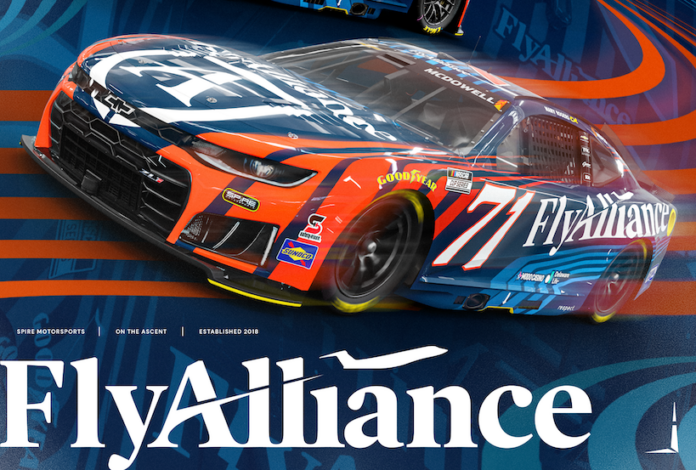
Fly Alliance Partners with McDowell, Spire Motorsports for Coke Zero Sugar 400

MOORESVILLE, N.C. (August 24, 2026) – In the fast paced, and ever-demanding world of NASCAR Cup Series racing, speed and efficiency play vital roles both on the track and in the air for Michael McDowell and Spire Motorsports as driver and team balance their collective travel demands across a 38-race schedule spanning February – November.

That symbiotic relationship will be on full display when NASCAR’s premier division returns to Daytona International Speedway (DIS) where McDowell will showcase Fly Alliance aboard his No. 71 Chevrolet Camaro ZL1 for Saturday’s Coke Zero Sugar 400.

Spire Motorsports earned its inaugural NASCAR Cup Series victory at DIS in its first full season of competition when Justin Haley took the checkered flag in the 2019 Coke Zero Sugar 400.

Fly Alliance is a best-in-class private aviation partner, built for elite travelers who demand precision, speed, and flexibility in their travels. The Orlando, Fla., organization will serve as the team’s primary sponsor for the second consecutive season for the series’ regular season finale at the famed Daytona Beach tri-oval where McDowell is always a threat to snare the checkered flag.

“Fly Alliance is proud of the presence we’ve established within motorsports and the relationships we’ve built throughout the racing community,” said Christopher Tasca, CEO, President & Co-Founder, Fly Alliance. “This community shares our passion for performance and excellence, and we remain committed to growing alongside it and expanding our involvement both on and off the track.”

Fly Alliance, Spire Motorsports’ Premier Aviation Partner, is known for its diverse fleet of jets and unmatched access to first-class aviation around the world. With a dedication to excellence, white-glove service, luxury travel accommodations, and no membership fees, Fly Alliance ensures a seamless high-class travel experience, backed by industry-leading expertise and financial stability for all its clients.

“Fly Alliance has been a great partner,” said McDowell. “Travel can be exhausting at times, so to be able to fly with the convenience and attention ​to detail Fly Alliance brings is special. We spend a lot of time on the road and in the air, so it can be difficult with a family as big as ours. Daytona has been friendly to us in the past and it would be special to cap off the regular season with a win and even more special to do it with our friends from Fly Alliance.”

McDowell, a 19-year Cup Series veteran and 2021 Daytona 500 Champion has 30 starts at the “World Center of Racing” where he’s logged one pole, one win, three top-five and eight top-10 finishes. Most recently, he came home 22nd in the 2026 season opener.

The Coke Zero Sugar 400 will be televised live on NBC, Saturday, Aug. 29 beginning at 7:30 p.m. Eastern Daylight Time. The 26th of 36 points-paying races on the 2026 NASCAR Cup Series schedule will also be broadcast live on the Motor Racing Network and SiriusXM NASCAR Radio, Channel 90.

About Fly Alliance …
Fly Alliance is a global private aviation company providing on-demand charter, jet card memberships, aircraft management, maintenance, and parts services. Headquartered at Orlando Executive Airport, the company serves clients across North America, Europe, and the Middle East with a commitment to precision, performance, and concierge-level service.
Led by CEO, President and Co-Founder Christopher Tasca, Fly Alliance is built on innovation and operational excellence. Chris brings those same values to Tasca Motorsports, where racing serves as a natural extension of the Fly Alliance brand and its pursuit of performance on and off the track.

About Spire Motorsports …
Spire Motorsports fields full-time entries in the NASCAR Cup Series, NASCAR CRAFTSMAN Truck Series and Interstate Batteries High Limit Racing.

The team, co-owned by longtime NASCAR industry executive Jeff Dickerson and TWG Motorsports CEO Dan Towriss, earned its inaugural NASCAR Cup Series victory in its first full season of competition when Justin Haley took the checkered flag in the Coke Zero Sugar 400 at Daytona (Fla.) International Speedway July 7, 2019. Less than three years later, William Byron drove Spire Motorsports’ No. 7 Chevrolet Silverado its first NASCAR CRAFTSMAN Truck Series win April 7, 2022, at Martinsville (Va.) Speedway. The team’s most recent victory came May 24, 2026, when Daniel Suárez won the NASCAR Cup Series Series’ Coca-Cola 600 at Charlotte (N.C.) Motor Speedway.

In 2026, Spire Motorsports campaigns the Nos. 7, 71 and 77 Chevrolet Camaro ZL1s in the NASCAR Cup Series and the Nos. 7 and 77 Chevrolet Silverado RSTs in the NASCAR CRAFTSMAN Truck Series. The Mooresville, N.C., organization also fields the No. 77 410 sprint car in Interstate Batteries High Limit Racing competition.
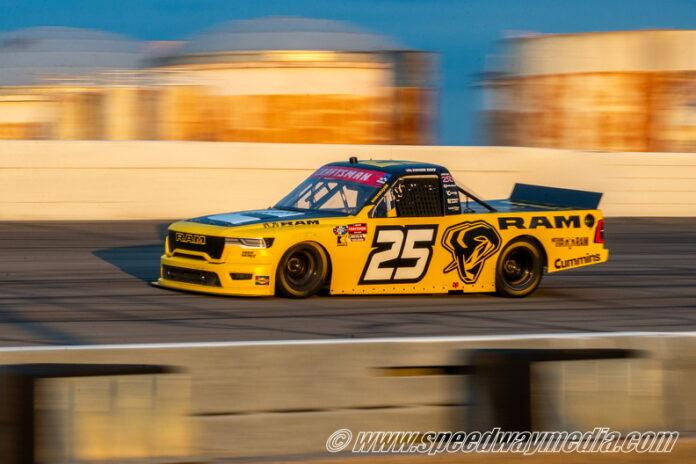

Regan Smith to pilot Kaulig Racing’s Free Agent entry at Bristol & Charlotte

Photo by Adam Lovelace for SpeedwayMedia.com.

Regan Smith will be driving Kaulig Racing’s No. 25 ‘Free Agent’ RAM 1500 entry in two NASCAR Craftsman Truck Series events this season.

The 2011 Southern 500 champion from Cato, New York, will make his first Truck start with Kaulig at Bristol Motor Speedway for the UNOH 250 on September 17 before he returns for his second start at Charlotte Motor Speedway for the Ecosave 250 on October 9. 

Smith currently works as a pit reporter and analyst for FOX Sports. His latest start across NASCAR’s top-three national touring series dates back to 2019, where he made a pair of O’Reilly Auto Parts Series starts with JR Motorsports at the Mid-Ohio Sports Car Course and Road America, where he finished 21st and 13th, respectively.

Smith made his first national touring series career start at Memphis Motorsports Park in October 2002. Since then, he has campaigned in a total of 468 events between the Craftsman Truck, O’Reilly Auto Parts and Cup Series divisions, to date. In 224 Cup starts, the New York native achieved his lone Cup victory at Darlington Raceway for the prestigious Southern 500 in May 2011. He has also registered four top-five results, 14 top-10 results, 64 top-10 results and an average-finishing result of 24.9, all while making starts for organizations like Dale Earnhardt Inc., Furniture Row Racing, Hendrick Motorsports, Phoenix Raceway, Stewart-Haas Racing, Tommy Baldwin Racing, Richard Petty Motorsports and Leavine Family Racing.

In 208 O’Reilly Auto Parts Series starts, Smith notched six victories, all while driving for JR Motorsports between 2012 and 2015. He also accumulated a pole, 30 top-five results, 79 top-10 results, 638 laps led and an average-finishing result of 17.4, with his highest-points result being second place in 2014.

Smith has also made 36 starts in the Craftsman Truck Series division. During his starts, he notched his highest-finishing result of fifth place at World Wide Technology Raceway in September 2007 while driving for Morgan-Dollar Motorsports. He has also finished in the top 10 seven times, led four laps and notched an average-finishing result of 19.5. His latest Truck start was during the 2017 finale at Homestead-Miami Speedway, where he finished 11th while driving for RBR Enterprises on a part-time campaign.

Ahead of his two-race campaign, Smith expressed his excitement about returning behind the wheel within NASCAR competition and adding his contributions towards Kaulig Racing’s Truck Series program with RAM as the organization’s first full-time campaign in the series nears its conclusion.

“Climbing back into a race truck is always pure fun, but having the chance to help build and elevate this whole Kaulig Racing truck program alongside Ram’s return makes it even better,” Smith said. “I love racing at places like Bristol and Charlotte. I am excited to jump into the Ram Free Agent Driver Program, offer my feedback to these guys, and just enjoy being back out there competing at a high level.”

“Trading in the microphone for a helmet and stepping down from the broadcast booth back into the cockpit gives you a whole different perspective,” Smith added. “I report on these drivers and setups with Fox, so getting to take that insider knowledge, strap in, and actually execute behind the wheel at Bristol and Charlotte will be a blast.”

Kaulig Racing launched its free-agent driver program ahead of its inaugural Craftsman Truck Series campaign in November 2025. The program features various competitors from multiple racing divisions and disciplines. Each will compete in at least one Truck event in one of Kaulig’s RAM 1500 entries numbered 25. The competitors who compete in the entry would not compete for the 2026 Truck Series driver’s championship. They will, however, be evaluated by their on-track performance for a season-ending program prize.

Currently, Kaulig Racing’s No. 25 entry, which is led by crew chief Dan Stillman, is ranked in 25th place in the 2026 owner’s standings after 18 of the 25-race schedule. The entry is one of five that is fielded by Kaulig. It competes alongside the No. 10 entry piloted by Corey LaJoie, the No. 12 entry piloted by rookie Brenden “Butterbean” Queen, the No. 14 entry piloted by newcomer Timothy “Mini” Tyrrell and the No. 16 entry piloted by Justin Haley. 

Tony Stewart, Ty Dillon, Colin Braun, Corey LaJoie, Carson Ferguson, Parker Kligerman, AJ Allmendinger, Clint Bowyer, Travis Pastrana, Jamie McMurray, Ryan Newman, Conor Daly and Elliott Sadler have piloted the entry at least once. Dillon, Ferguson, Kligerman and Braun have each piloted the No. 25 entry multiple times, with Braun being the latest competitor to drive the entry as he is coming off a 24th-place result at New Hampshire Motor Speedway on August 22. Allmendinger has recorded the entry’s highest-finishing result of sixth place at Watkins Glen International in early May.

Kaulig’s selection and reveal of drivers for five of the remaining seven events of the 2026 season remains to be determined.

Regan Smith’s first Truck campaign with Kaulig Racing is scheduled to occur on September 17 at Bristol Motor Speedway for the UNOH 250 at 8 p.m. ET on FS1, NASCAR Racing Network and SiriusXM. Smith’s second start is scheduled to occur on October 9 at Charlotte Motor Speedway for the Ecosave 250 at 5 p.m. ET on FOX, NASCAR Racing Network and SiriusXM.

Why Diamonds Feel Different To Hold Than Any Other Stone

Photo by depositphotos at https://depositphotos.com/

There is something undeniably distinct about the feel of a diamond, even before anyone properly considers how it actually looks.

Pick up a diamond and something about it registers instantly as different, cool against the skin and surprisingly dense for something so small in size. That sensory experience is not simply imagination, but the result of genuine physical properties that set diamonds apart from nearly every other gemstone available on the market today.

Why Diamonds Feel Cold To Touch

Diamonds conduct heat away from the skin remarkably quickly, which is why they consistently feel cool the moment they make contact, even after sitting in a warm room for hours on end without moving. This thermal conductivity is so distinctive that jewelers have historically used it as a quick, informal way to help distinguish a genuine diamond from convincing imitations, which tend to feel noticeably warmer against the skin by comparison almost immediately after touching them.

A Surprising Weight For Their Size

Diamonds are noticeably denser than many other gemstones, meaning a diamond of a given size will often feel heavier in the hand than a similarly sized stone made from a different material entirely, different in composition and structure. This unexpected weight contributes to the sense that a diamond feels substantial and significant, even when the stone itself is relatively small in overall physical dimensions compared with other jewelry pieces on display.

Smoothness Without Any Softness

Running a finger across a well-cut diamond reveals an unusual combination of smooth, polished facets alongside crisp, precisely defined edges that never feel soft or rounded in the way other polished stones sometimes tend to do at all. That precision comes directly from the diamond’s exceptional hardness, which allows facets to be cut and maintained with an accuracy few other materials could ever hold onto for very long without wearing down.

A Feeling Worth Comparing

Anyone curious about how this tactile difference actually plays out in person might enjoy exploring a classic collection of white diamonds alongside other gemstones, comparing weight, temperature, and texture directly by hand for themselves at leisure. That simple side-by-side comparison often reveals just how distinct a genuine diamond truly feels the moment it is picked up and turned slowly in the light.

A Distinct Sense Of Presence

Even set within a piece of jewelry, a genuine diamond tends to carry a subtle sense of presence that people notice without quite knowing why at first. Part of that comes from weight, part from temperature, and part from the crisp precision of its cut, all combining into a stone that feels distinctly different the instant it makes contact with skin or fabric.

A diamond’s feel is every bit as remarkable as its appearance, shaped by physical properties that took nature billions of years to perfect and refine over time. That quiet, cool weight resting in the palm is a small but genuine reminder of just how extraordinary these stones really are, long before anyone even looks at the sparkle or the setting.

RYAN BLANEY WINS BACK-TO-BACK AT NEW HAMPSHIRE MOTOR SPEEDWAY

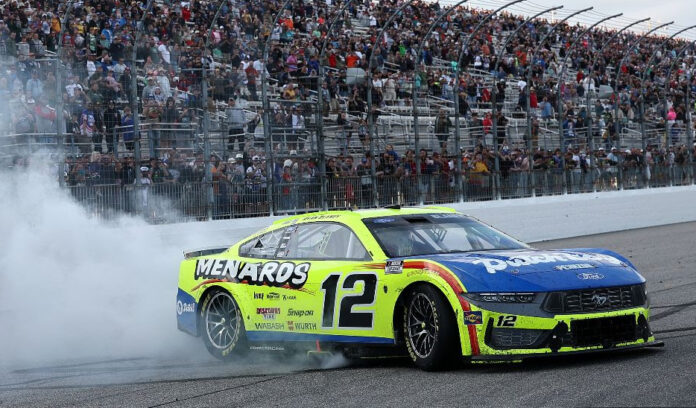
LOUDON, NH – August 24, 2026 – Team Penske’s Ryan Blaney won Sunday’s Dollar Tree 301 at New Hampshire Motor Speedway, earning his third NASCAR Cup Series victory of the 2026 season and the 20th win of his Cup Series career. Blaney has now won back-to-back Cup Series races at New Hampshire, contributing to Ford Racing’s six victories in the last nine Cup races at the track. The win also continued a strong run for Ford Racing, which has won four of the last six Cup Series races, with Blaney and Team Penske teammate Joey Logano each earning two victories.

“Congratulations to Roger, Mike, Jonathan, Ryan, and everyone at Team Penske on the win at New Hampshire,” said Doug Yates, President and CEO of Roush Yates Engines. “Jonathan made a great strategy call during the late caution, and Ryan wheeled the Team Penske No. 12 to the win. Winning back-to-back races is a testament to the dedication and hard work of everyone at Ford Racing, Team Penske, and Roush Yates Engines. We’re proud to partner with Ford Racing and celebrate consecutive wins for Team Penske, with Joey at Richmond last weekend and Ryan this weekend at New Hampshire.”

“The momentum that Team Penske has on their side is great, and Ford. Team Penske in general has been a pretty good tear the last couple of months and it’s been fun to work through it with everybody and try to get better and better. We’ll just keep going. I’m a big believer in momentum and things like that we just have to keep working at it and hopefully we make a run at it,” commented Blaney.

Wood Brothers Racing’s Josh Berry qualified second to earn a front-row starting position for Sunday’s Dollar Tree 301, while Team Penske’s Ryan Blaney started eighth. Rain delayed the start of the race and forced the field to begin on wet-weather tires before transitioning to slicks as the track dried. Ford Racing placed three cars inside the top 10 at the conclusion of Stage 1, with Berry finishing fifth, Blaney sixth, and RFK Racing’s Ryan Preece eighth. Berry took the lead for an extended stretch during the second stage before Blaney closed in on the No. 21 Ford. Blaney went on to capture Stage 2, earning his series-leading seventh stage victory of the season.

Following the Stage 2 break, Blaney restarted in the 14th position and quickly began working his way back toward the front. A late caution gave crew chief Jonathan Hassler an opportunity to make a key strategy call, with the No. 12 team electing to take two tires on its final pit stop to gain track position. Blaney returned to the lead and managed his tires through a long green-flag run to the finish while navigating lapped traffic and holding off a late challenge from Bubba Wallace. Blaney took the checkered flag by 0.586 seconds after leading a race-high 115 laps, becoming the first driver to win consecutive Cup Series races at New Hampshire since Kurt Busch in 2004.

Wood Brothers Racing’s Josh Berry finished a season-best third after leading 73 laps, while RFK Racing’s Ryan Preece finished ninth and Front Row Motorsports’ Noah Gragson rounded out the top 10, giving Ford Racing four cars inside the top 10 at New Hampshire.
The NASCAR Cup Series heads to Daytona International Speedway this week for the Coke Zero Sugar 400, the final race of the regular season.

About Roush Yates Engines
Roush Yates Engines is a leading-edge engine development company based in Mooresville, NC consisting of two state-of-the-art facilities – Roush Yates Engines and Roush Yates Manufacturing Solutions, a world class AS9100 Rev D/ISO 13485 certified CNC manufacturing facility. The company’s core business includes designing, building and testing purpose-built race engines.

Ford Racing in partnership with Roush Yates Engines is the exclusive engine builder of the NASCAR FR9 Ford V8 engine.

With an unparalleled culture of winning and steeped in rich racing history, Roush Yates Engines continues to follow the company’s vision to lead performance engine innovation and staying true to the company’s mission, provide race winning engines through demonstrated power and performance.

Team Penske NASCAR Cup Series Race Report – New Hampshire

Dollar Tree 301
Loudon, New Hampshire – August 23, 2026

AUSTIN CINDRIC No. 2 SNAP-ON FORD MUSTANG DARK HORSE

START: 26TH STAGE 1: 14TH STAGE 2: 14TH FINISH: 12TH POINTS: 15TH

RACE RUNDOWN: Austin Cindric and the No. 2 Snap-on Ford Mustang Dark Horse team earned a 12th-place finish in Sunday’s Dollar Tree 301 at New Hampshire Motor Speedway, gaining 14 positions from their 26th-place starting spot. Inclement weather delayed the start of the race and forced the field to take the green flag on wet weather tires, but Cindric quickly began making his way forward and was scored 12th when the field transitioned to slick tires under the Lap 40 competition caution. He battled a tight-handling condition firing off but went on to finish Stage 1 in the 14th position before pitting for right-side tires and fuel. Cindric continued his charge early in Stage 2, working his way inside the top 10 by Lap 100 before his track position fluctuated as the run progressed. Following a green-flag stop for four tires and fuel on Lap 121, he closed out Stage 2 in 14th while reporting a significant bounce in the left rear of the No. 2 Ford, prompting the team to make adjustments during the stage break. Cindric continued to battle around the top 15 throughout the final segment as a couple cautions created multiple restarts and opportunities to gain ground. After restarting outside the top 15 with less than 70 laps remaining, Cindric worked his way forward over the closing run to take the checkered flag in 12th, completing a 14-position gain from his starting position.

CINDRIC’S THOUGHTS: “We wanted a little more out of our No. 2 Snap-on Ford Mustang today, but we kept fighting and made some decent gains throughout the race. The guys did a good job continuing to work on the car, and we were able to make up some ground by the end from where we started. We’ll take what we can from today and shift our focus to Daytona next weekend.”

RYAN BLANEY No. 12 MENARDS/DUTCH BOY FORD MUSTANG DARK HORSE

START: 8TH STAGE 1: 6TH STAGE 2: 1ST FINISH: 1ST POINTS: 2ND

RACE RUNDOWN: Ryan Blaney and the No. 12 Menards/Dutch Boy Ford Mustang Dark Horse team scored their second consecutive victory at New Hampshire Motor Speedway Sunday afternoon, marking Blaney’s third win of the season and the 20th of his NASCAR Cup Series career. After starting eighth on wet weather tires following an inclement-weather delay, Blaney steadily worked his way forward and was running sixth when the field transitioned to slick tires under the Lap 40 competition caution. He maintained his position through the remainder of the opening segment to finish Stage 1 in sixth before pitting for right-side tires and fuel. Blaney continued his charge toward the front in Stage 2 and was running second shortly after Lap 100 before taking the lead from Ford Racing teammate Josh Berry on Lap 148. He went on to claim the Stage 2 victory and remained a fixture at the front of the field throughout the final stage. A two-tire call under caution with 77 laps remaining helped the No. 12 team regain valuable track position for the closing run, and Blaney capitalized to secure his second-straight victory at the “Magic Mile.” Blaney led a race-high 115 of 301 laps en route to the win, which extended his hold on second in the championship standings with one race remaining before the start of the 10-race Chase.

BLANEY’S THOUGHTS: “It was a great day for our No. 12 Menards/Dutch Boy Ford Mustang. Once the track dried out, I knew we had a car capable of contending for the win, and our team did a great job continuing to make it better and executing when it mattered. Jonathan (Hassler) made a great call to put two tires on late, and we were able to get back out front and hold on. It’s really special to win here two years in a row, and I’m proud of the effort from everyone on this team.”

JOEY LOGANO No. 22 SHELL-PENNZOIL FORD MUSTANG DARK HORSE

START: 21ST STAGE 1: 21ST STAGE 2: 28TH FINISH: 14TH POINTS: 9TH

RACE RUNDOWN: Joey Logano and the No. 22 Shell-Pennzoil Ford Mustang Dark Horse team battled back from adversity to finish 14th in Sunday’s Dollar Tree 301 at New Hampshire Motor Speedway. After starting 21st on wet weather tires following an inclement-weather delay, Logano battled a tight-handling condition before the field transitioned to slick tires under the Lap 40 competition caution. He finished Stage 1 in the 21st position while reporting that he needed additional grip over the long run and restarted 22nd for Stage 2. Logano’s afternoon took a turn following a Lap 84 caution when the No. 22 Ford sustained front-end damage and a bent toe link, forcing the team to make repairs on pit road before he rejoined the field. Despite the setback, Logano continued to battle through the remainder of Stage 2 and finished the segment in 28th. The Shell-Pennzoil team continued working to improve the handling of the No. 22 Ford throughout the final segment, and Logano steadily made his way forward over the closing laps to take the checkered flag in the 14th position.

LOGANO’S THOUGHTS: “It was a tough day for our Shell-Pennzoil Ford Mustang. We fought the balance early and then had some damage that put us behind, but the guys did a good job making repairs and sticking with it. We were able to fight our way back to 14th by the end.”

With only one race remaining in the regular season, the Cup Series now heads to Daytona International Speedway for the Coke Zero Sugar 400 on Saturday, August 29. Coverage of the 400-mile event begins at 7:30 p.m. ET on NBC, MRN, and SiriusXM NASCAR Radio Channel 90.

Wood Brothers Racing – Race Report: New Hampshire Motor Speedway

Event: Dollar Tree 301
Location: New Hampshire Motor Speedway, Loudon, New Hampshire
Date: Sunday, August 23, 2026
Start: 2nd
Finish: 3rd

Josh Berry and the No. 21 Motorcraft/Quick Lane team extended their streak of consecutive top-10 finishes to four with a strong third-place run in Sunday’s Dollar Tree 301 at New Hampshire Motor Speedway.

Berry, who started a season-best second, led four times for 73 laps and scored points in both stages en route to his best finish of the season and eighth career NASCAR Cup Series top-five. The third-place result was also his best since finishing runner-up at New Hampshire a year ago.

Sunday’s race began on a wet track, with Berry maintaining a spot inside the top five on rain tires through the opening 41 laps before the field transitioned to slick tires.

After the switch, Berry initially slipped to the back half of the top 10 but worked his way forward late in Stage 1 to finish fifth, earning six stage points.

During the stage break, the Motorcraft/Quick Lane team elected to change only right-side tires, putting Berry eighth for the restart behind six drivers who stayed on track. He steadily worked his way forward and took the lead on Lap 92.

Berry paced the field for the next 56 laps before eventual race winner Ryan Blaney moved ahead late in the segment. Berry finished Stage 2 in second, collecting nine additional stage points.

In the third and final segment, Berry returned to the lead three more times for an additional 17 laps before making his final pit stop for four tires and fuel with 75 laps remaining.

He lined up 11th for the ensuing restart and quickly began working his way back toward the front, moving into third with 35 laps to go. Berry continued to close the gap to the leaders over the final laps before taking the checkered flag in third.

“It was a lot of fun,” Berry told reporters at the track. “Our car was really good. The guys did a great job. We had a solid weekend from start to finish and led a lot of laps.”

Berry credited the team’s recent run of strong finishes to improved speed and better fortune after several promising performances earlier in the season went unrewarded.

“It feels nice to capitalize on it,” he said. “I have four top-10s in a row, and it really would be five if it wasn’t for getting wrecked at Wilkesboro.”

Berry and the Wood Brothers team now head to Daytona International Speedway for Saturday night’s Coke Zero Sugar 400, the finale of the 26-race NASCAR Cup Series regular season.

Front Row Motorsports: NHMS NCS Race Report – Noah Gragson, Todd Gilliland, Zane Smith

Noah Gragson | Todd Gilliland | Zane Smith
New Hampshire Motor Speedway NASCAR Cup Series Race Report
New Hampshire Motor Speedway 301
Date: Saturday, August 23, 2026
Event: Race 27 of 38
Series: NASCAR Cup Series
Location: New Hampshire Motor Speedway (1.058 miles)
Length of Race: 301 laps over three hours, 22 minutes, 59 seconds

FRM Finish:

● Noah Gragson (Started 19th, Finished 10th / Running, completed 301 of 301 laps)

● Zane Smith (Started 14th, Finished 13th / Running, completed 301 of 301 laps)

● Todd Gilliland (Started 13th, Finished 21st / Running, completed 300 of 301 laps)

FRM Points Standings:

Todd Gilliland (23rd)
Zane Smith (24th)
Noah Gragson (31st)

Noah Gragson Key Takeaways

Stage One: 32nd / Stage Two: 17th / Race Result: 10th

“It was a great day for our MillerTech Front Row Motorsports team,” said Gragson. “It didn’t look good there in the rain. I think we were like the last car on the racetrack, but we continued to fight all day and came home with a top-10. I’m really happy about that and really thankful for all the guys on the MillerTech group. It’s a fun race. I used to hate this place and now I’ve really enjoyed it the last couple of years, so I had a lot of fun today. Grant is a first-year Crew Chief and I think it’s no secret that it took a little bit of time, but I feel like we’re really meshing and jiving right now. I’m really proud of where we’re at as a team and I want to just keep on making steps and progress and keep it going.”

Zane Smith Key Takeaways

Stage One: 13th / Stage Two: 16th / Race Result: 13th

“Really struggled with the car today, but a great team effort there having a shot at a top-10,” said Smith. “We needed that one, and it’s good momentum heading into Daytona where we feel like we have a shot as long as we’re there at the end.”

Todd Gilliland Key Takeaways

Stage One: 25th / Stage Two: 19th / Race Result: 21st

“It was just another one of those races where we couldn’t get the car where we needed it to be,” said Gilliland. “Regardless, it was a solid team effort from everyone in the 34 camp. We’ll take the top-25 and refocus for Daytona.”

ABOUT FRONT ROW MOTORSPORTS

Front Row Motorsports (FRM) is a winning organization competing in the NASCAR Cup Series and the NASCAR CRAFTSMAN Truck Series. Founded in 2004 by entrepreneur Bob Jenkins, FRM has earned top honors including a 2021 Daytona 500 victory and the 2022 CRAFTSMAN Truck Series championship. Based in Mooresville, N.C., FRM fields the No. 4, No. 34, and No. 38 entries in the NASCAR Cup Series, along with the No. 34 and No. 38 teams in the CRAFTSMAN Truck Series. For more information, visit FrontRowMotorsports.com and follow Front Row Motorsports on social media — X: @Team_FRM, Instagram: @teamfrm, Tik Tok: @Team_FRM, YouTube: @FrontRowNASCAR, and Facebook: facebook.com/FrontRowMotorsports.

RFK Racing – New Hampshire Executive Summary

RFK RACING
NEW HAMPSHIRE MOTOR SPEEDWAY – EXECUTIVE SUMMARY
Date: August 23, 2026
Series: NASCAR Cup Series
Location: New Hampshire Motor Speedway (1 mile oval) – Loudon, NH
Format: 301 miles / 301 laps with three stages. Stage 1: Ends at lap 70, Stage 2: Ends at lap 185, Stage 3: Ends at lap 301

RFK Racing RACE SUMMARY:

With the regular season winding down, and Chase implications on the line, Roush Fenway Keselowski (RFK) Racing turned up the intensity in New Hampshire. It was a day that helped punch Chris Buescher’s ticket to the Chase and moved Ryan Preece and Brad Keselowski closer to the cutline heading into next week’s regular season finale’ at Daytona. Among the highlights was stage two, when all three RFK cars earned stage points with top ten finishes. Leading the way on the afternoon was native New Englander, Preece, who led 17 laps and finished 9th. Keselowski battled from his 25th starting spot to finish 11th. Buescher finished 18th and in doing so became championship eligible, clinching a Chase berth.

DRIVER HIGHLIGHTS

Ryan Preece – No. 60 Mohawk Northeast, Inc. Ford Mustang Dark Horse

Finish: 9th
Start: 18th
Laps Led: 17
Stage Results: S1- 8th, S2-4th
Headline takeaway: Preece put on a show for his home track fans, leading 17 laps and contending for the win. His 9th place finish was his sixth top ten finish of the season and moved him with 31 points of the Chase cutline.

Preece Quote: “Before that Caution came out and the last set of tires went on I felt like we were going to battle for the win. It was a lot of fun. I had fun racing and moving around. That was a great time and it was fun to be part of that race,” said Preece. “From a points perspective, we have a chance, a hail mary chance, but the Owner’s Chase we have a real chance so we’re going to race hard next week.”

Brad Keselowski – No. 6 BuildSubmarines.com Ford Mustang Dark Horse

Finish: 11th
Start: 25th
Laps Led:
Stage Results: S1-19th, S2 – 6th
Headline takeaway: Keselowski charged forward from 25th, turned some of the fastest laps in the field during the middle of the race and came up just one spot short of a top 10 finish in 11th.

Keselowski Quote: “We’re hungry for a win but we just needed a little bit more. Happy that we were competitive, got some stage points, and were able to climb a long ways from where we started the race. Looking forward to going to Daytona, where we were really fast in February.”

Chris Buescher – No. 17 Trimble Ford Mustang Dark Horse

Finish: 18th
Start: 16th
Laps Led: —
Stage Results: S1-30th, S2-7th
Headline takeaway: Buescher officially qualified for the 2026 Chase. His day was one of overcoming an early setback, where he made slight contact with a car that spun in front of him. Buescher rallied back to score stage points and finish 18th; enough to secure his place in this season’s Chase.

Buescher Quote: “To be able to make the Chase is a big deal. Happy about that for sure,” said Buescher. “As for today, we had some highlights and some tough luck to start. But we ended up off sequence and we made it work. Had some used tires there at the end and it was a bit hard to go on the restarts.”

Point Standings:

Buescher: 10th *Clinched Chase Berth
Preece: 17th
Keselowski: 18th

Next Up:

The next event on the NASCAR Cup Series schedule is August 29 at Daytona International Speedway (2.5 Mile high-banked Super Speedway – Daytona Beach, FL). The race begins at 7:30 p.m. EDT with live coverage provided by NBC Sports and the Motor Racing Network.

About RFK Racing 

RFK Racing, in its 39th season in 2026, features an ownership lineup pairing one of the sport’s most iconic names, Jack Roush, along with NASCAR Champion, Brad Keselowski, and Fenway Sports Group owner John Henry. Roush initially founded the team in 1988 and it has since become one of the most successful racing operations in the world, propelling him to be the first NASCAR owner to amass three hundred wins and capturing eight championships, including back-to-back NASCAR Cup titles in 2003 and 2004. Keselowski, a former owner in the NASCAR Truck Series, is the 2012 NASCAR Cup Series Champion. In 2007, Roush partnered with Henry, who also owns Major League Baseball’s Boston Red Sox, English Premier League’s Liverpool F.C., and the NHL’s Pittsburgh Penguins, to form Roush Fenway Racing. Off the track, RFK is a leader and proven winner in NASCAR marketing solutions, having produced multiple award-winning social media, digital content and experiential marketing campaigns. Visit https://www.rfkracing.com/ and follow the team on all social platforms @rfkracing.

The 130-Degree Problem Motorsports Solved Everywhere Except the Cockpit

Photo by depositphotos at https://depositphotos.com/

A racing car’s cabin can hit 130 degrees Fahrenheit on a summer day, and there isn’t a single air conditioner in it. Engineers intentionally removed every ounce of cooling capacity from the vehicle.

That one number is worth sitting with, because it explains how racing teams think about heat. If you can’t cool the driver, you cool everything else: the shop, the hauler, the engine bay, the transporter, the house the crew comes home to. 

Heat management doesn’t disappear. It moves.

Why the Cockpit Stays Hot on Purpose

Weight is the reason. A modern AC compressor, condenser, evaporator, refrigerant lines, and blower would add pounds no crew chief would sign off on, and pull horsepower the driver would rather keep. So the cabin gets vents, ducted air, a cool suit, and a helmet blower fed by a small chiller in the trunk area. That’s the whole system.

It works because the driver only has to survive three or four hours. Everything else in the sport has to survive a season, and that’s where real HVAC does the heavy lifting. 

Keep the 130-degree number in your head. It’s going to show up again…

The Shop Is Where Cooling Actually Matters

Walk into a race shop in July, and the first thing you notice isn’t the cars. It’s the air. Fabrication bays, engine rooms, and body shops all run climate-controlled for a reason, and it isn’t crew comfort (though that matters too). Composite layups, paint, adhesives, and precision measurements all drift with temperature and humidity. A chassis jig that’s dead-on at 68 degrees isn’t dead-on at 92.

So the shop’s rooftop units are doing something the race car refuses to do: hold a stable environment across a long window of time. That’s the trade the sport makes. The car runs hot for a few hours. The building that builds the car stays cool twelve months a year.

How Long the System Under Your Slab Is Supposed to Last

Race teams replace components on a schedule because they know what fatigue looks like. Homeowners rarely do, which is why the question of when to replace catches people off guard. As a rule of thumb, central AC systems last roughly 15 to 20 years before efficiency and reliability start falling off a cliff.

The warning signs are the same ones a crew chief would recognize on a car: longer run times to hit the same target, uneven output across zones, rising energy draw for the same work, and small failures that keep coming back. None of these are catastrophic on their own. Together, they’re telling you something.

If you’re at that decision point in a hot-summer market, a proper load calculation and a professional installation matter more than the brand on the box. An oversized system short-cycles, strips humidity poorly, and wears itself out faster. An undersized one runs constantly and never catches up. 

Racing figured this out decades ago: the right part, correctly fitted, beats the biggest part every time.

The Lesson the 130-Degree Number Keeps Teaching

Come back to the cockpit one more time. Motorsports accepts 130 degrees inside the car because it has to, and it makes up for it by controlling temperature everywhere else a race operation touches.

The garages and the transporters. The engine dyno rooms, where a couple of degrees of drift will show up in the numbers. Team hospitality, the driver’s motorhome, the house the crew comes home to on Monday morning.

For the rest of us, the takeaway is smaller but pointed. Heat is a system problem, not a comfort problem.

If your equipment is old, undersized, or limping through summer on borrowed time, the failure isn’t a surprise. It’s a scheduled event you haven’t put on the calendar yet. Racing plans for those. You can too.

The Carbon-Ceramic Rotor Myths That Won’t Die in the Paddock

Photo by depositphotos at https://depositphotos.com/

Walk down pit lane at a GT race, and you’ll hear someone gesture at the glowing black-gray discs behind a car’s wheels and say something confident about the carbon-ceramics on their friend’s coupe. Same tech, right? Not close. The rotor bolted to an endurance car and the rotor sitting under an option-sheet upgrade share a family name and almost nothing else, and that mix-up is the source of most of the bad information floating around the paddock.

Here are the assumptions worth pulling apart, one at a time, before the next race weekend.

Carbon-Carbon and Carbon-Ceramic Are Not the Same Rotor

This is the confusion sitting underneath most of the others. Prototype and top-tier racing brakes are carbon-carbon: carbon fiber in a carbon matrix, built to run at extreme temperatures and useless before they get there. Road-car rotors are carbon-ceramic, a silicon carbide matrix reinforced with carbon fiber, engineered to work from a cold morning start on the way to the grocery store.

The performance gap between the two is real. A feature on endurance braking noted LMP1 carbon rotors weigh around five pounds each, against the 24-plus pounds of the cast-iron rotors on GTE cars, and lose only a few millimeters across the full 24 hours at Le Mans. That’s a different animal than what bolts to a road car, no matter what the marketing suggests.

The Endurance Racing Origin Story Isn’t the Whole Story

It’s tempting to draw a straight line from Le Mans to the showroom. The line exists. It just bends through aerospace first. Carbon brake materials were developed for aircraft landing gear well before Formula 1 borrowed them in the mid-1970s, and the ceramic variant that eventually reached road cars is a later, calmer cousin built for a different job.

Road-going carbon-ceramic rotors first appeared on production cars right around the turn of the millennium, initially on a Porsche 911 and shortly after on a Ferrari. Endurance racing proved the physics. It didn’t hand over the same rotor.

The Weight Savings Matter More Than the Fade Resistance

Ask a fan why a team runs carbon-ceramics and the answer is usually “they don’t fade.” Fade resistance is part of it. The bigger prize is mass, and it’s in the worst place a car can carry it.

A carbon-ceramic disc runs roughly half the weight of a cast-iron equivalent. That’s unsprung, rotating mass at each corner, which affects suspension response, steering feel, acceleration, and stopping distance. Take it off the wheel and the whole car changes character. The heat behavior is a bonus stacked on top of a chassis-dynamics win.

These Rotors Are Not Machined Like Metal

The other misconception that goes unchallenged is the idea that a carbon-ceramic rotor is an exotic recipe stamped through a normal disc line.

That’s closer to how technical ceramics get made than how brake rotors are traditionally produced. If you want to understand why the finished part behaves the way it does, the honest starting point is the family of industrial ceramic materials it belongs to, not the cast-iron rotor it looks like.

The Price Isn’t Only a Materials Cost

The sticker shock on an option-sheet carbon-ceramic package gets blamed on “exotic material,” as if the disc were carved out of something rare. The material matters. Most of the cost is time and process.

A cast-iron disc can be produced in a couple of hours. A carbon-ceramic disc needs weeks of controlled heat, infiltration, machining, and inspection before it leaves the plant. Capacity is finite, and the equipment doesn’t scale the way an iron foundry does. When someone in the paddock argues the technology should trickle down faster, that’s the constraint they’re arguing against.

The Takeaway for the Paddock

Understand these five points and the rest of the debate gets simpler. The endurance-racing rotor and the road-car rotor are related, not identical, and they were largely built to solve different problems.