RACE RUNDOWN: Austin Cindric and the No. 2 Snap-on Ford Mustang Dark Horse team earned a 12th-place finish in Sunday’s Dollar Tree 301 at New Hampshire Motor Speedway, gaining 14 positions from their 26th-place starting spot. Inclement weather delayed the start of the race and forced the field to take the green flag on wet weather tires, but Cindric quickly began making his way forward and was scored 12th when the field transitioned to slick tires under the Lap 40 competition caution. He battled a tight-handling condition firing off but went on to finish Stage 1 in the 14th position before pitting for right-side tires and fuel. Cindric continued his charge early in Stage 2, working his way inside the top 10 by Lap 100 before his track position fluctuated as the run progressed. Following a green-flag stop for four tires and fuel on Lap 121, he closed out Stage 2 in 14th while reporting a significant bounce in the left rear of the No. 2 Ford, prompting the team to make adjustments during the stage break. Cindric continued to battle around the top 15 throughout the final segment as a couple cautions created multiple restarts and opportunities to gain ground. After restarting outside the top 15 with less than 70 laps remaining, Cindric worked his way forward over the closing run to take the checkered flag in 12th, completing a 14-position gain from his starting position.
CINDRIC’S THOUGHTS: “We wanted a little more out of our No. 2 Snap-on Ford Mustang today, but we kept fighting and made some decent gains throughout the race. The guys did a good job continuing to work on the car, and we were able to make up some ground by the end from where we started. We’ll take what we can from today and shift our focus to Daytona next weekend.”
RYAN BLANEY No. 12 MENARDS/DUTCH BOY FORD MUSTANG DARK HORSE
RACE RUNDOWN: Ryan Blaney and the No. 12 Menards/Dutch Boy Ford Mustang Dark Horse team scored their second consecutive victory at New Hampshire Motor Speedway Sunday afternoon, marking Blaney’s third win of the season and the 20th of his NASCAR Cup Series career. After starting eighth on wet weather tires following an inclement-weather delay, Blaney steadily worked his way forward and was running sixth when the field transitioned to slick tires under the Lap 40 competition caution. He maintained his position through the remainder of the opening segment to finish Stage 1 in sixth before pitting for right-side tires and fuel. Blaney continued his charge toward the front in Stage 2 and was running second shortly after Lap 100 before taking the lead from Ford Racing teammate Josh Berry on Lap 148. He went on to claim the Stage 2 victory and remained a fixture at the front of the field throughout the final stage. A two-tire call under caution with 77 laps remaining helped the No. 12 team regain valuable track position for the closing run, and Blaney capitalized to secure his second-straight victory at the “Magic Mile.” Blaney led a race-high 115 of 301 laps en route to the win, which extended his hold on second in the championship standings with one race remaining before the start of the 10-race Chase.
BLANEY’S THOUGHTS: “It was a great day for our No. 12 Menards/Dutch Boy Ford Mustang. Once the track dried out, I knew we had a car capable of contending for the win, and our team did a great job continuing to make it better and executing when it mattered. Jonathan (Hassler) made a great call to put two tires on late, and we were able to get back out front and hold on. It’s really special to win here two years in a row, and I’m proud of the effort from everyone on this team.”
JOEY LOGANO No. 22 SHELL-PENNZOIL FORD MUSTANG DARK HORSE
RACE RUNDOWN: Joey Logano and the No. 22 Shell-Pennzoil Ford Mustang Dark Horse team battled back from adversity to finish 14th in Sunday’s Dollar Tree 301 at New Hampshire Motor Speedway. After starting 21st on wet weather tires following an inclement-weather delay, Logano battled a tight-handling condition before the field transitioned to slick tires under the Lap 40 competition caution. He finished Stage 1 in the 21st position while reporting that he needed additional grip over the long run and restarted 22nd for Stage 2. Logano’s afternoon took a turn following a Lap 84 caution when the No. 22 Ford sustained front-end damage and a bent toe link, forcing the team to make repairs on pit road before he rejoined the field. Despite the setback, Logano continued to battle through the remainder of Stage 2 and finished the segment in 28th. The Shell-Pennzoil team continued working to improve the handling of the No. 22 Ford throughout the final segment, and Logano steadily made his way forward over the closing laps to take the checkered flag in the 14th position.
LOGANO’S THOUGHTS: “It was a tough day for our Shell-Pennzoil Ford Mustang. We fought the balance early and then had some damage that put us behind, but the guys did a good job making repairs and sticking with it. We were able to fight our way back to 14th by the end.”
With only one race remaining in the regular season, the Cup Series now heads to Daytona International Speedway for the Coke Zero Sugar 400 on Saturday, August 29. Coverage of the 400-mile event begins at 7:30 p.m. ET on NBC, MRN, and SiriusXM NASCAR Radio Channel 90.
Event: Dollar Tree 301 Location: New Hampshire Motor Speedway, Loudon, New Hampshire Date: Sunday, August 23, 2026 Start: 2nd Finish: 3rd
Josh Berry and the No. 21 Motorcraft/Quick Lane team extended their streak of consecutive top-10 finishes to four with a strong third-place run in Sunday’s Dollar Tree 301 at New Hampshire Motor Speedway.
Berry, who started a season-best second, led four times for 73 laps and scored points in both stages en route to his best finish of the season and eighth career NASCAR Cup Series top-five. The third-place result was also his best since finishing runner-up at New Hampshire a year ago.
Sunday’s race began on a wet track, with Berry maintaining a spot inside the top five on rain tires through the opening 41 laps before the field transitioned to slick tires.
After the switch, Berry initially slipped to the back half of the top 10 but worked his way forward late in Stage 1 to finish fifth, earning six stage points.
During the stage break, the Motorcraft/Quick Lane team elected to change only right-side tires, putting Berry eighth for the restart behind six drivers who stayed on track. He steadily worked his way forward and took the lead on Lap 92.
Berry paced the field for the next 56 laps before eventual race winner Ryan Blaney moved ahead late in the segment. Berry finished Stage 2 in second, collecting nine additional stage points.
In the third and final segment, Berry returned to the lead three more times for an additional 17 laps before making his final pit stop for four tires and fuel with 75 laps remaining.
He lined up 11th for the ensuing restart and quickly began working his way back toward the front, moving into third with 35 laps to go. Berry continued to close the gap to the leaders over the final laps before taking the checkered flag in third.
“It was a lot of fun,” Berry told reporters at the track. “Our car was really good. The guys did a great job. We had a solid weekend from start to finish and led a lot of laps.”
Berry credited the team’s recent run of strong finishes to improved speed and better fortune after several promising performances earlier in the season went unrewarded.
“It feels nice to capitalize on it,” he said. “I have four top-10s in a row, and it really would be five if it wasn’t for getting wrecked at Wilkesboro.”
Berry and the Wood Brothers team now head to Daytona International Speedway for Saturday night’s Coke Zero Sugar 400, the finale of the 26-race NASCAR Cup Series regular season.
Noah Gragson | Todd Gilliland | Zane Smith New Hampshire Motor Speedway NASCAR Cup Series Race Report New Hampshire Motor Speedway 301 Date: Saturday, August 23, 2026 Event: Race 27 of 38 Series: NASCAR Cup Series Location: New Hampshire Motor Speedway (1.058 miles) Length of Race: 301 laps over three hours, 22 minutes, 59 seconds
“It was a great day for our MillerTech Front Row Motorsports team,” said Gragson. “It didn’t look good there in the rain. I think we were like the last car on the racetrack, but we continued to fight all day and came home with a top-10. I’m really happy about that and really thankful for all the guys on the MillerTech group. It’s a fun race. I used to hate this place and now I’ve really enjoyed it the last couple of years, so I had a lot of fun today. Grant is a first-year Crew Chief and I think it’s no secret that it took a little bit of time, but I feel like we’re really meshing and jiving right now. I’m really proud of where we’re at as a team and I want to just keep on making steps and progress and keep it going.”
“Really struggled with the car today, but a great team effort there having a shot at a top-10,” said Smith. “We needed that one, and it’s good momentum heading into Daytona where we feel like we have a shot as long as we’re there at the end.”
“It was just another one of those races where we couldn’t get the car where we needed it to be,” said Gilliland. “Regardless, it was a solid team effort from everyone in the 34 camp. We’ll take the top-25 and refocus for Daytona.”
ABOUT FRONT ROW MOTORSPORTS
Front Row Motorsports (FRM) is a winning organization competing in the NASCAR Cup Series and the NASCAR CRAFTSMAN Truck Series. Founded in 2004 by entrepreneur Bob Jenkins, FRM has earned top honors including a 2021 Daytona 500 victory and the 2022 CRAFTSMAN Truck Series championship. Based in Mooresville, N.C., FRM fields the No. 4, No. 34, and No. 38 entries in the NASCAR Cup Series, along with the No. 34 and No. 38 teams in the CRAFTSMAN Truck Series. For more information, visit FrontRowMotorsports.com and follow Front Row Motorsports on social media — X: @Team_FRM, Instagram: @teamfrm, Tik Tok: @Team_FRM, YouTube: @FrontRowNASCAR, and Facebook: facebook.com/FrontRowMotorsports.
RFK RACING NEW HAMPSHIRE MOTOR SPEEDWAY – EXECUTIVE SUMMARY Date: August 23, 2026 Series: NASCAR Cup Series Location: New Hampshire Motor Speedway (1 mile oval) – Loudon, NH Format: 301 miles / 301 laps with three stages. Stage 1: Ends at lap 70, Stage 2: Ends at lap 185, Stage 3: Ends at lap 301
With the regular season winding down, and Chase implications on the line, Roush Fenway Keselowski (RFK) Racing turned up the intensity in New Hampshire. It was a day that helped punch Chris Buescher’s ticket to the Chase and moved Ryan Preece and Brad Keselowski closer to the cutline heading into next week’s regular season finale’ at Daytona. Among the highlights was stage two, when all three RFK cars earned stage points with top ten finishes. Leading the way on the afternoon was native New Englander, Preece, who led 17 laps and finished 9th. Keselowski battled from his 25th starting spot to finish 11th. Buescher finished 18th and in doing so became championship eligible, clinching a Chase berth.
DRIVER HIGHLIGHTS
Ryan Preece – No. 60 Mohawk Northeast, Inc. Ford Mustang Dark Horse
Finish: 9th Start: 18th Laps Led: 17 Stage Results: S1- 8th, S2-4th Headline takeaway: Preece put on a show for his home track fans, leading 17 laps and contending for the win. His 9th place finish was his sixth top ten finish of the season and moved him with 31 points of the Chase cutline.
Preece Quote: “Before that Caution came out and the last set of tires went on I felt like we were going to battle for the win. It was a lot of fun. I had fun racing and moving around. That was a great time and it was fun to be part of that race,” said Preece. “From a points perspective, we have a chance, a hail mary chance, but the Owner’s Chase we have a real chance so we’re going to race hard next week.”
Brad Keselowski – No. 6 BuildSubmarines.com Ford Mustang Dark Horse
Finish: 11th Start: 25th Laps Led: Stage Results: S1-19th, S2 – 6th Headline takeaway: Keselowski charged forward from 25th, turned some of the fastest laps in the field during the middle of the race and came up just one spot short of a top 10 finish in 11th.
Keselowski Quote: “We’re hungry for a win but we just needed a little bit more. Happy that we were competitive, got some stage points, and were able to climb a long ways from where we started the race. Looking forward to going to Daytona, where we were really fast in February.”
Chris Buescher – No. 17 Trimble Ford Mustang Dark Horse
Finish: 18th Start: 16th Laps Led: — Stage Results: S1-30th, S2-7th Headline takeaway: Buescher officially qualified for the 2026 Chase. His day was one of overcoming an early setback, where he made slight contact with a car that spun in front of him. Buescher rallied back to score stage points and finish 18th; enough to secure his place in this season’s Chase.
Buescher Quote: “To be able to make the Chase is a big deal. Happy about that for sure,” said Buescher. “As for today, we had some highlights and some tough luck to start. But we ended up off sequence and we made it work. Had some used tires there at the end and it was a bit hard to go on the restarts.”
The next event on the NASCAR Cup Series schedule is August 29 at Daytona International Speedway (2.5 Mile high-banked Super Speedway – Daytona Beach, FL). The race begins at 7:30 p.m. EDT with live coverage provided by NBC Sports and the Motor Racing Network.
About RFK Racing
RFK Racing, in its 39th season in 2026, features an ownership lineup pairing one of the sport’s most iconic names, Jack Roush, along with NASCAR Champion, Brad Keselowski, and Fenway Sports Group owner John Henry. Roush initially founded the team in 1988 and it has since become one of the most successful racing operations in the world, propelling him to be the first NASCAR owner to amass three hundred wins and capturing eight championships, including back-to-back NASCAR Cup titles in 2003 and 2004. Keselowski, a former owner in the NASCAR Truck Series, is the 2012 NASCAR Cup Series Champion. In 2007, Roush partnered with Henry, who also owns Major League Baseball’s Boston Red Sox, English Premier League’s Liverpool F.C., and the NHL’s Pittsburgh Penguins, to form Roush Fenway Racing. Off the track, RFK is a leader and proven winner in NASCAR marketing solutions, having produced multiple award-winning social media, digital content and experiential marketing campaigns. Visit https://www.rfkracing.com/ and follow the team on all social platforms @rfkracing.
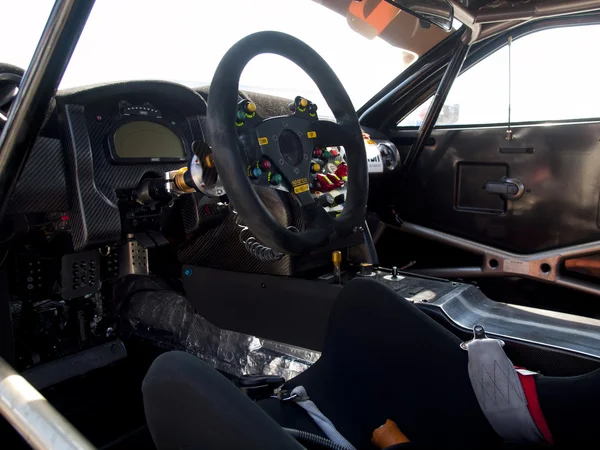
A racing car’s cabin can hit 130 degrees Fahrenheit on a summer day, and there isn’t a single air conditioner in it. Engineers intentionally removed every ounce of cooling capacity from the vehicle.
That one number is worth sitting with, because it explains how racing teams think about heat. If you can’t cool the driver, you cool everything else: the shop, the hauler, the engine bay, the transporter, the house the crew comes home to.
Heat management doesn’t disappear. It moves.
Why the Cockpit Stays Hot on Purpose
Weight is the reason. A modern AC compressor, condenser, evaporator, refrigerant lines, and blower would add pounds no crew chief would sign off on, and pull horsepower the driver would rather keep. So the cabin gets vents, ducted air, a cool suit, and a helmet blower fed by a small chiller in the trunk area. That’s the whole system.
It works because the driver only has to survive three or four hours. Everything else in the sport has to survive a season, and that’s where real HVAC does the heavy lifting.
Keep the 130-degree number in your head. It’s going to show up again…
The Shop Is Where Cooling Actually Matters
Walk into a race shop in July, and the first thing you notice isn’t the cars. It’s the air. Fabrication bays, engine rooms, and body shops all run climate-controlled for a reason, and it isn’t crew comfort (though that matters too). Composite layups, paint, adhesives, and precision measurements all drift with temperature and humidity. A chassis jig that’s dead-on at 68 degrees isn’t dead-on at 92.
So the shop’s rooftop units are doing something the race car refuses to do: hold a stable environment across a long window of time. That’s the trade the sport makes. The car runs hot for a few hours. The building that builds the car stays cool twelve months a year.
How Long the System Under Your Slab Is Supposed to Last
Race teams replace components on a schedule because they know what fatigue looks like. Homeowners rarely do, which is why the question of when to replace catches people off guard. As a rule of thumb, central AC systems last roughly 15 to 20 years before efficiency and reliability start falling off a cliff.
The warning signs are the same ones a crew chief would recognize on a car: longer run times to hit the same target, uneven output across zones, rising energy draw for the same work, and small failures that keep coming back. None of these are catastrophic on their own. Together, they’re telling you something.
If you’re at that decision point in a hot-summer market, a proper load calculation and a professional installation matter more than the brand on the box. An oversized system short-cycles, strips humidity poorly, and wears itself out faster. An undersized one runs constantly and never catches up.
Racing figured this out decades ago: the right part, correctly fitted, beats the biggest part every time.
The Lesson the 130-Degree Number Keeps Teaching
Come back to the cockpit one more time. Motorsports accepts 130 degrees inside the car because it has to, and it makes up for it by controlling temperature everywhere else a race operation touches.
The garages and the transporters. The engine dyno rooms, where a couple of degrees of drift will show up in the numbers. Team hospitality, the driver’s motorhome, the house the crew comes home to on Monday morning.
For the rest of us, the takeaway is smaller but pointed. Heat is a system problem, not a comfort problem.
If your equipment is old, undersized, or limping through summer on borrowed time, the failure isn’t a surprise. It’s a scheduled event you haven’t put on the calendar yet. Racing plans for those. You can too.
Walk down pit lane at a GT race, and you’ll hear someone gesture at the glowing black-gray discs behind a car’s wheels and say something confident about the carbon-ceramics on their friend’s coupe. Same tech, right? Not close. The rotor bolted to an endurance car and the rotor sitting under an option-sheet upgrade share a family name and almost nothing else, and that mix-up is the source of most of the bad information floating around the paddock.
Here are the assumptions worth pulling apart, one at a time, before the next race weekend.
Carbon-Carbon and Carbon-Ceramic Are Not the Same Rotor
This is the confusion sitting underneath most of the others. Prototype and top-tier racing brakes are carbon-carbon: carbon fiber in a carbon matrix, built to run at extreme temperatures and useless before they get there. Road-car rotors are carbon-ceramic, a silicon carbide matrix reinforced with carbon fiber, engineered to work from a cold morning start on the way to the grocery store.
The performance gap between the two is real. A feature on endurance braking noted LMP1 carbon rotors weigh around five pounds each, against the 24-plus pounds of the cast-iron rotors on GTE cars, and lose only a few millimeters across the full 24 hours at Le Mans. That’s a different animal than what bolts to a road car, no matter what the marketing suggests.
The Endurance Racing Origin Story Isn’t the Whole Story
It’s tempting to draw a straight line from Le Mans to the showroom. The line exists. It just bends through aerospace first. Carbon brake materials were developed for aircraft landing gear well before Formula 1 borrowed them in the mid-1970s, and the ceramic variant that eventually reached road cars is a later, calmer cousin built for a different job.
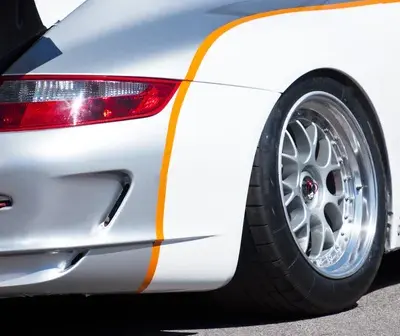
Road-going carbon-ceramic rotors first appeared on production cars right around the turn of the millennium, initially on a Porsche 911 and shortly after on a Ferrari. Endurance racing proved the physics. It didn’t hand over the same rotor.
The Weight Savings Matter More Than the Fade Resistance
Ask a fan why a team runs carbon-ceramics and the answer is usually “they don’t fade.” Fade resistance is part of it. The bigger prize is mass, and it’s in the worst place a car can carry it.
A carbon-ceramic disc runs roughly half the weight of a cast-iron equivalent. That’s unsprung, rotating mass at each corner, which affects suspension response, steering feel, acceleration, and stopping distance. Take it off the wheel and the whole car changes character. The heat behavior is a bonus stacked on top of a chassis-dynamics win.
These Rotors Are Not Machined Like Metal
The other misconception that goes unchallenged is the idea that a carbon-ceramic rotor is an exotic recipe stamped through a normal disc line.
That’s closer to how technical ceramics get made than how brake rotors are traditionally produced. If you want to understand why the finished part behaves the way it does, the honest starting point is the family of industrial ceramic materials it belongs to, not the cast-iron rotor it looks like.
The Price Isn’t Only a Materials Cost
The sticker shock on an option-sheet carbon-ceramic package gets blamed on “exotic material,” as if the disc were carved out of something rare. The material matters. Most of the cost is time and process.
A cast-iron disc can be produced in a couple of hours. A carbon-ceramic disc needs weeks of controlled heat, infiltration, machining, and inspection before it leaves the plant. Capacity is finite, and the equipment doesn’t scale the way an iron foundry does. When someone in the paddock argues the technology should trickle down faster, that’s the constraint they’re arguing against.
The Takeaway for the Paddock
Understand these five points and the rest of the debate gets simpler. The endurance-racing rotor and the road-car rotor are related, not identical, and they were largely built to solve different problems.
The Skoda Kodiaq blends large SUV space with family-first comfort and flexible seating.
You get strong everyday usefulness, helped by generous boot space and clever storage touches.
The range includes a hybrid engine option and a sharper Kodiaq RS for drivers wanting extra pace.
Safety is a major draw, with advanced driver aids and Euro NCAP relevance for family buyers.
Cabin tech includes smart connectivity, parking help, and easy-to-use controls.
Introduction
Looking for a family SUV that feels easy to live with every day? The Kodiaq stands out because it brings space, comfort, and smart technology into one large SUV package, enhanced by big windows that provide excellent visibility. For buyers considering the new Skoda Kodiaq in 2026, the appeal is simple: it aims to make school runs, weekends away, and long drives less stressful.
Why the Kodiaq Remains a Top Choice for Australian Families in 2026
For Australian families, choosing a new car often comes down to space, safety, and ease of use. The Skoda Kodiaq continues to be a strong performer in the large SUV segment, drawing praise from reviewers across Europe.
It also offers various trims, including the Kodiaq Sportline, letting you choose between practical family options or a more stylish design. The updates below explain why this matters.
The Evolution of the Kodiaq: Key Updates for 2026
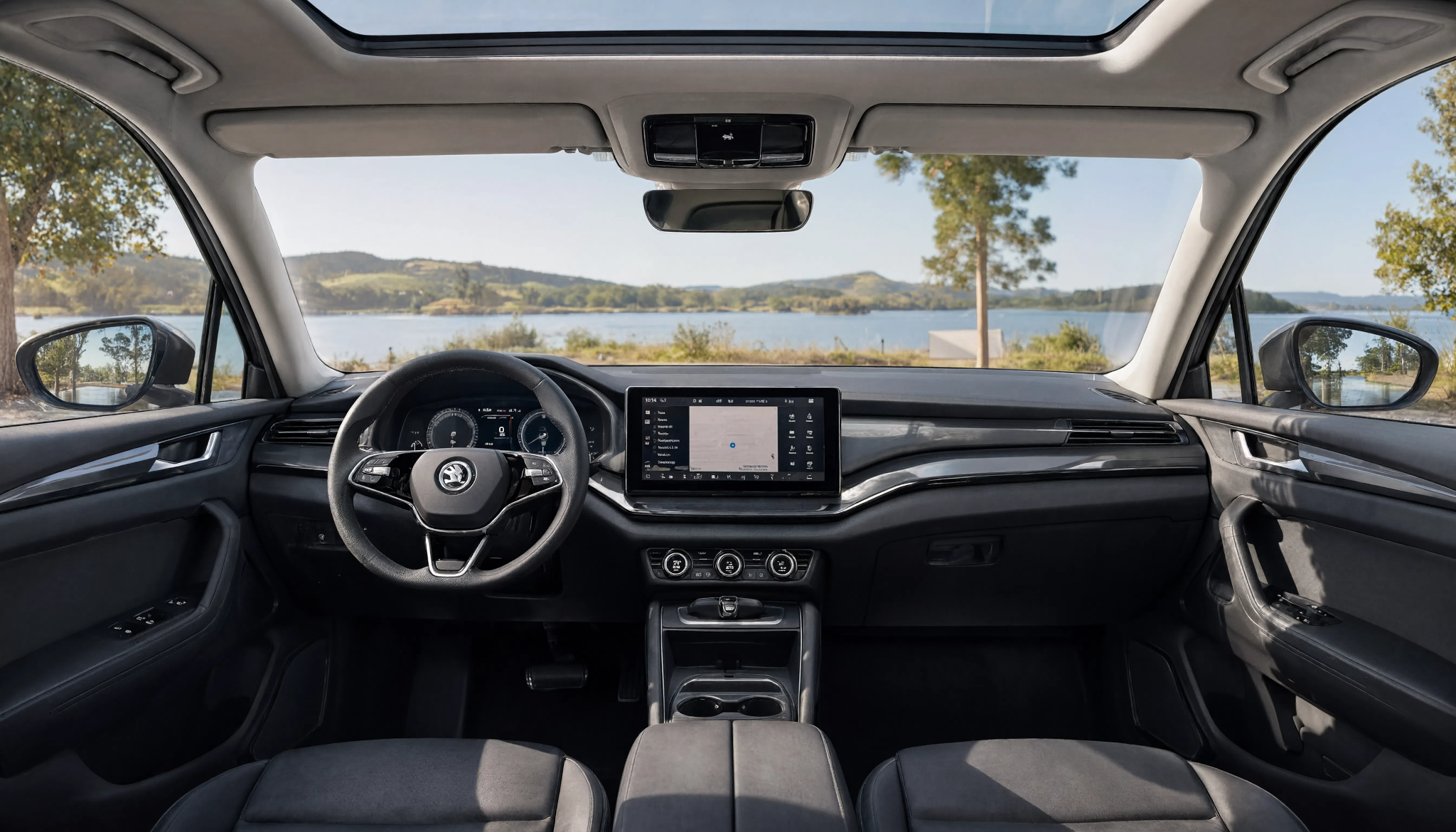
The new Kodiaq features a cleaner design and greater convenience. Inside, the clutter-free dashboard makes key functions easier to access while driving.
Trim options now include Select, Sportline, and the performance-oriented RS, letting buyers choose between a sportier or more family-focused SUV.
Some display vehicles show optional equipment, so check local Australian specs before buying—especially if you want specific features rather than general promises.
How the Kodiaq Stands Out in the Large SUV Category
In the crowded large SUV market, the Kodiaq stands out with its balanced design. Instead of flashy features, it delivers spaciousness, practical tech, and advanced safety in a user-friendly package.
This makes it ideal for families handling kids, gear, and tight parking. Even the sporty Kodiaq RS maintains practicality without losing usability.
Flexible seating and cargo options suit real family needs.
Parking aids simplify tight spots and school zones.
Cabin comforts enhance long trips.
Safety systems protect all road users.
Main Features of the Skoda Kodiaq 2026
So, what are the main features of the Skoda Kodiaq in 2026? In short: a practical cabin, useful tech, strong safety support, and a choice of petrol engine or electrified power, giving buyers flexibility on fuel efficiency and performance.
You also get flexible wheel drive options across the range, family-friendly boot space, and safety credentials that will matter to buyers who pay attention to Euro NCAP-style priorities, especially with models like the Skoda Kodiaq RS available. Let’s look closer.
Bold Exterior Design Elements
The Kodiaq’s shape offers strong road presence without being flashy—ideal for both weekday commutes and family weekends.
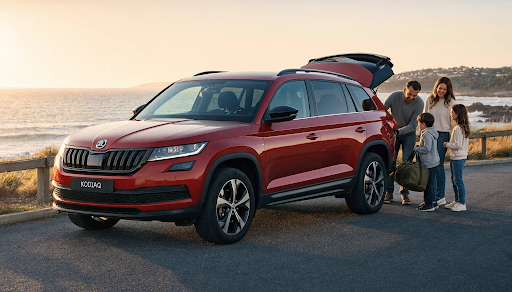
Personalize your SUV with color choices like steel grey, black magic, and velvet red, each offering a unique style from subtle to bold.
Distinctive proportions make the SUV look stable.
Available alloy wheels enhance its visual appeal.
Multiple trims let you balance style and budget.
Cabin Comfort and Space for Families
Step inside, and cabin comfort is immediately apparent. The front seats are built for daily comfort, with large windows giving the driver an open, airy view.
The standout for families is the flexible second- and third-row seating. You can carry more passengers or fold seats down for extra cargo space—perfect for shopping, strollers, or sports gear.
On long trips, features like a panoramic sunroof and spacious seating help kids feel less confined. These simple comforts can mean the difference between a peaceful drive and a noisy one.
High-Tech Infotainment and Convenience Features
The Kodiaq’s tech simplifies family travel with user-friendly, distraction-free features, including an impressive dashboard design. Wireless Apple CarPlay and Android Auto connect seamlessly, and the virtual cockpit displays key driving data clearly. Smart dials allow quick adjustments.
Fast wireless charging with cooling for two phones
USB-C ports throughout the cabin
Climate and zone controls for passenger comfort
Driving Performance and Safety on Australian Roads
Performance in a family SUV isn’t just about speed—it’s about smooth handling, secure driving, and confidence on varied roads. That’s why the different engine choices in Kodiaq Select, Sportline, and RS, combined with features like rear parking sensors, matter.
Safety is equally crucial, especially for buyers focused on real-world protection over brochure promises. The next sections address your key questions directly.
Engine Options and Performance Specs Across the Range
The Kodiaq range features a 1.5 TSI m-HEV (110 kW, front-wheel drive) and the sporty RS flagship. While a Kodiaq PHEV is commonly asked about, confirm final specs with your dealer, as pre-production models and options may differ from Australian versions. If features like dynamic chassis control, traffic sign recognition, or sport mode matter to you, check their availability by model.
Model/Powertrain
Key Detail
Kodiaq mHEV
1.5 TSI m-HEV, 110 kW, 7-speed automatic
Drive Layout
Front-wheel drive for mHEV
Kodiaq RS
Performance-focused flagship
Local Spec Note
Australian equipment may vary
Advanced Safety Technology and Crash Test Ratings
The Kodiaq holds a five-star ANCAP safety rating from 2024 testing, valid until December 2030 and applying to all variants including the RS. The standard safety kit includes dual frontal, side chest-protecting, and side head-protecting airbags, plus a centre airbag for side-impact protection. AEB covers car-to-car, vulnerable road user, junction, crossing, backover, and head-on scenarios, and a full lane support suite (lane keep assist, lane departure warning, emergency lane keeping) is fitted as standard.
One note for families: ANCAP flags that the third row lacks top tether anchorages, so it’s worth checking child restraint fit for that row.
Practicality and Versatility for Everyday Life
A family SUV has to work when life gets messy. The Kodiaq does that with flexible seating, useful boot space, and details that make daily loading easier rather than awkward.
There is also a clear focus on family-focused storage, from the front seats to the rear seats. These next features, including intelligent park assist, show how the SUV handles real routines, not just brochure photos.
Seven-Seat Flexibility and Boot Space Solutions
The Kodiaq’s seven-seat layout is a key advantage, offering extra seating when needed without sacrificing comfort.
Families can easily switch between more passenger space for school runs and extra cargo room for trips—much more flexible than fixed seats.
Fold seats to expand space for bags or bulky items.
Use the third row for extra kids or two adults on short rides.
The stable SUV design handles bumps and rough roads with ease.
Family-Focused Storage and Practical Features
Practical features matter more than flashy tech. The Kodiaq’s door bins, cup holders, boot hooks, cargo elements, and double-sided boot liner make it family-friendly.
Extras like the umbrella compartment, electric child safety lock, and door-edge protection add value in everyday use.
Large windows improve visibility, and the simple dashboard keeps controls easy to find—ideal when kids are distracting you.
Ownership Costs and Value in 2026
Value is not only about the purchase figure. Buyers also want clarity on running costs, support, and what comes with the new Kodiaq over time.
That is why Skoda Kodiaq price, warranty, roadside assistance, and service intervals matter so much. Here is what you should know before making your shortlist.
Pricing Guide for the 2026 Skoda Kodiaq Lineup
Stock and pricing for the Skoda Kodiaq vary by dealer and availability, so it’s best to confirm directly. Some vehicles are listed as “enquire for price,” highlighting that exact prices depend on stock and location. The 2026 Kodiaq range opens with the Select mHEV, drive-away from $49,990 for the five-seat version and $51,990 for seven seats. The Select PHEV starts at $63,490 plus on-road costs. Sportline and RS pricing varies by dealer and stock, so confirm exact figures locally.
Variant | Pricing Kodiaq Select mHEV (5-seat) | From $49,990 drive-away Kodiaq Select mHEV (7-seat) | From $51,990 drive-away Kodiaq Select PHEV | From $63,490 + on-road costs Kodiaq Sportline | Enquire for price Kodiaq RS | Enquire for price
Running Costs, Warranty, and Service Intervals
The Kodiaq is backed by a 7-year/unlimited-kilometre warranty. New vehicles get 12 months of complimentary roadside assistance, extended by up to 12 months each time you complete a scheduled service at an authorized dealer. Servicing is due every 15,000km or 12 months, whichever comes first — check with your dealer for current prepaid service pack offers.
Conclusion
In conclusion, the Kodiaq is a standout family SUV for 2026, offering practicality, comfort, and advanced technology. Its bold design and spacious interior suit Australian families, while strong performance and safety features add to its appeal. The Kodiaq delivers excellent value and reliability for everyday adventures. To see how it fits your family’s needs, contact your local dealer to schedule a test drive today.
Frequently Asked Questions
Where Can I Find the Skoda Kodiaq for Sale in Australia?
You can find the Skoda Kodiaq through authorised Australian dealers such as Bayside Skoda. Check current new car stock, ask about the Kodiaq RS, and confirm Skoda Kodiaq price and local availability for the large SUV variant you want. For insightful car reviews, explore various sources that provide detailed analysis on this model.
Is the Kodiaq Sportline Worth Considering for Families?
Yes, the Kodiaq Sportline is worth considering if you want family practicality with a sportier feel from the driver’s seat. Just compare it with the Kodiaq RS, check front seat comfort, steering wheel feel, and whether adaptive cruise control matches your driving needs.
A GPS tracker for vehicle use gives you near real-time location data for a car, van, truck, trailer, or other mobile asset. After 15 years of installing, testing, and troubleshooting tracking devices, I’ve found that buyers rarely need the “best” tracker. They need the right tracker for their vehicle, budget, and reason for tracking.
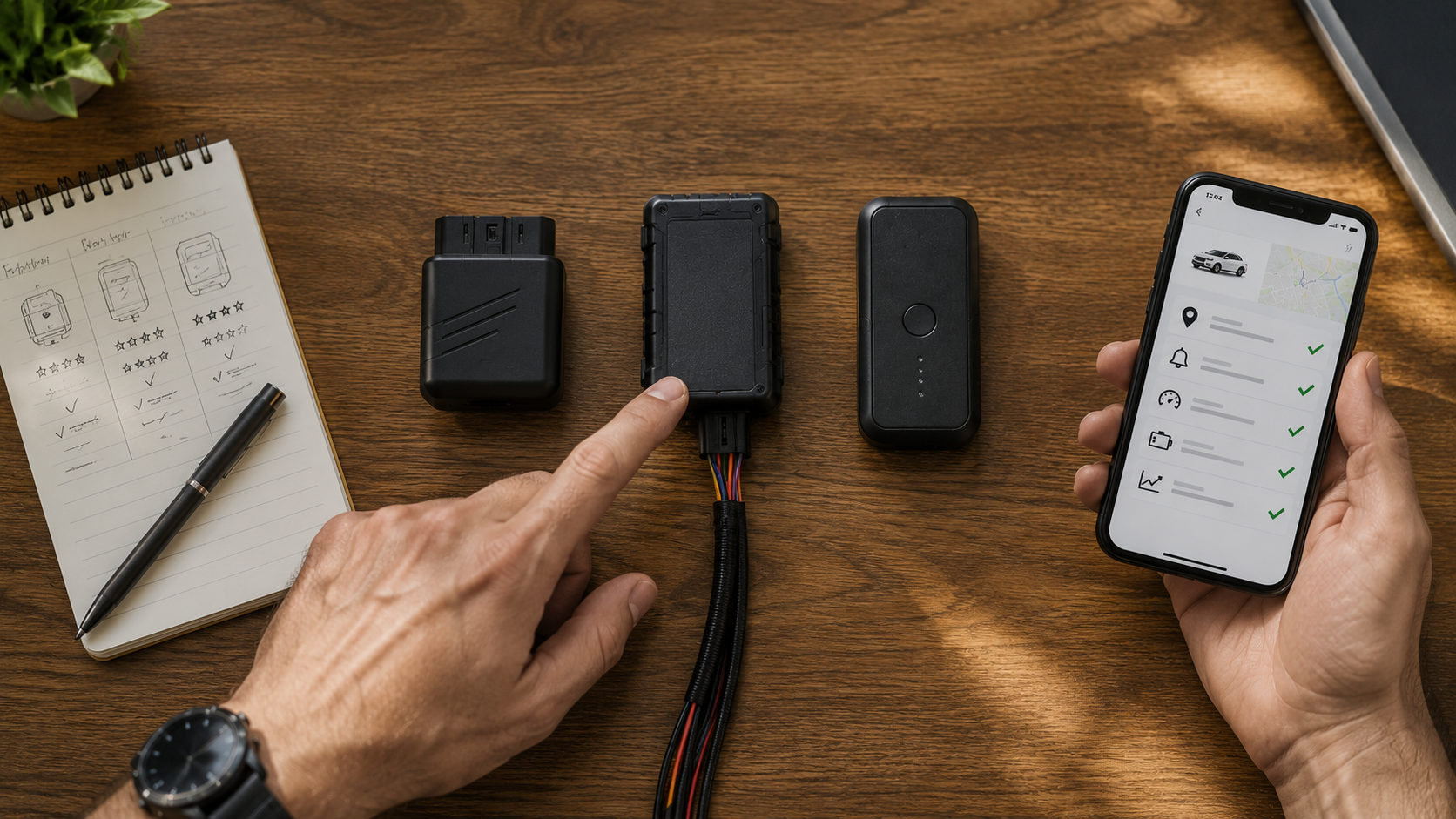
Personal cars, work trucks, trailers, and commercial fleets all have different requirements. An OBD tracker may make sense for a family car, while a hardwired unit is usually better suited to a company fleet. Battery-powered trackers offer another option when you need portability or want to track an asset without a permanent installation.
In this guide, you’ll learn how vehicle GPS trackers work, which tracker type fits different vehicles, which features deserve your attention, what you should expect to pay, and the mistakes worth avoiding before you buy.
What Is a GPS Tracker for a Vehicle?
What Is a GPS Tracker for a Vehicle?
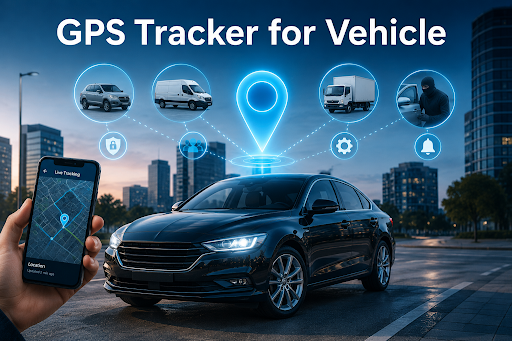
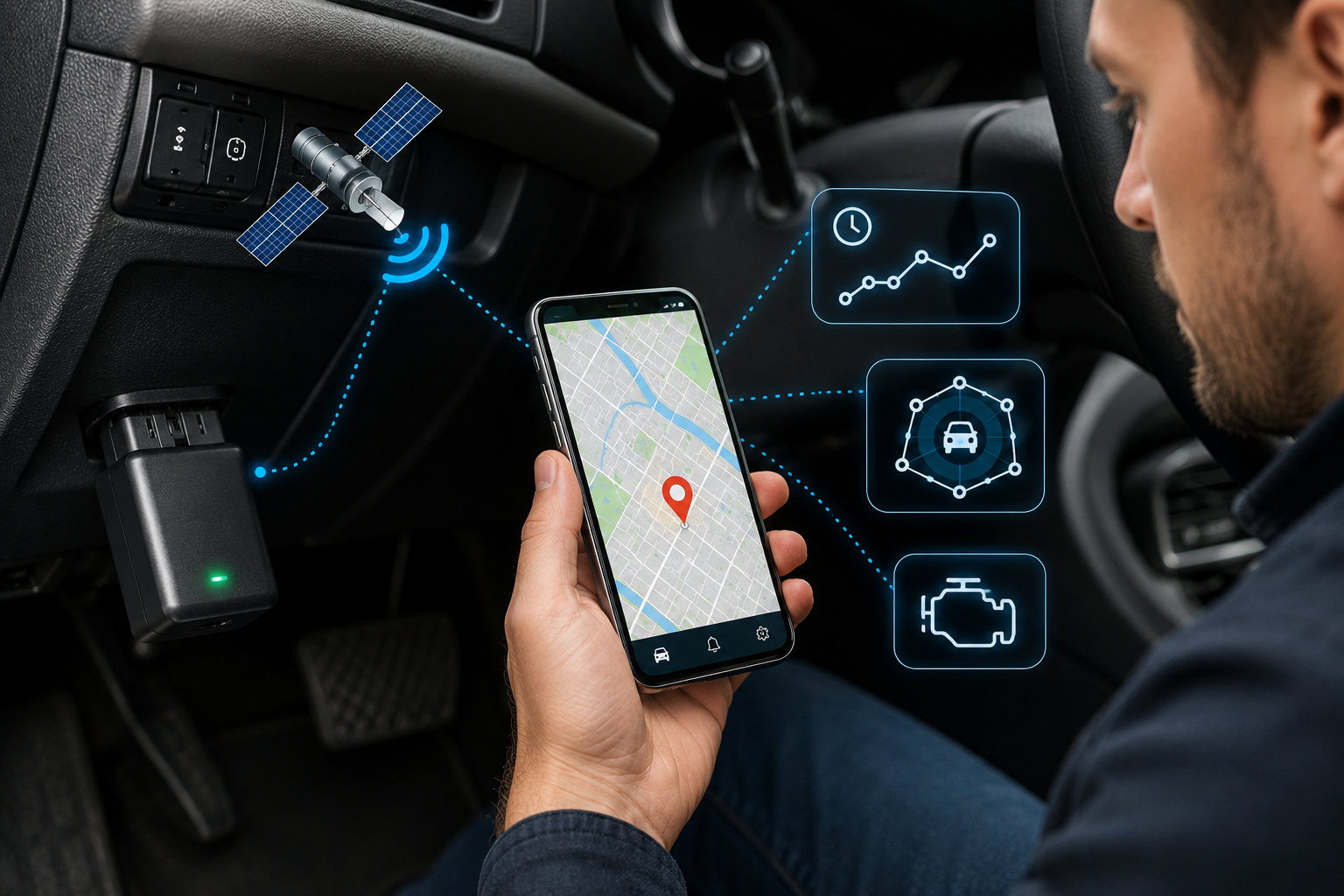
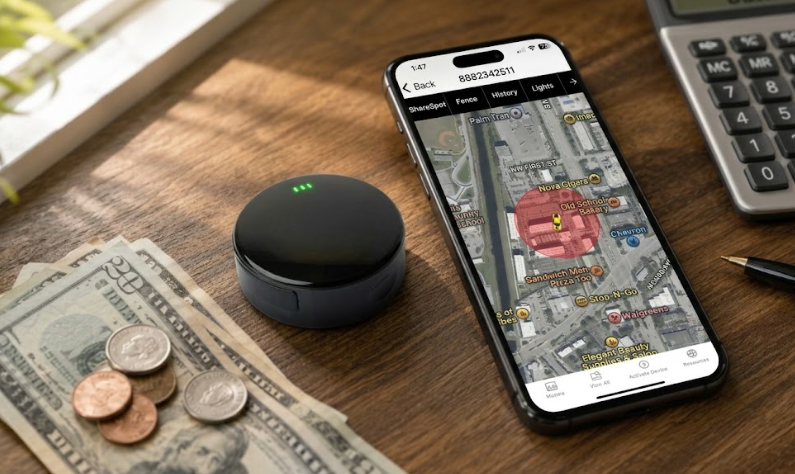
A GPS tracker for a vehicle uses GPS satellites to find its location and a cellular network to send that information to your phone or computer. Depending on the device, you can also get trip history, geofence alerts, speed information, and basic vehicle diagnostics.
GPS tracking focuses mainly on location, speed, and movement. Telematics goes further by adding data such as engine diagnostics, fuel use, maintenance, and driver behavior.
For most personal vehicles, a GPS tracker provides the core features you need. Businesses managing multiple vehicles may benefit from the additional data telematics provides.
Who Benefits Most From Vehicle GPS Tracking?
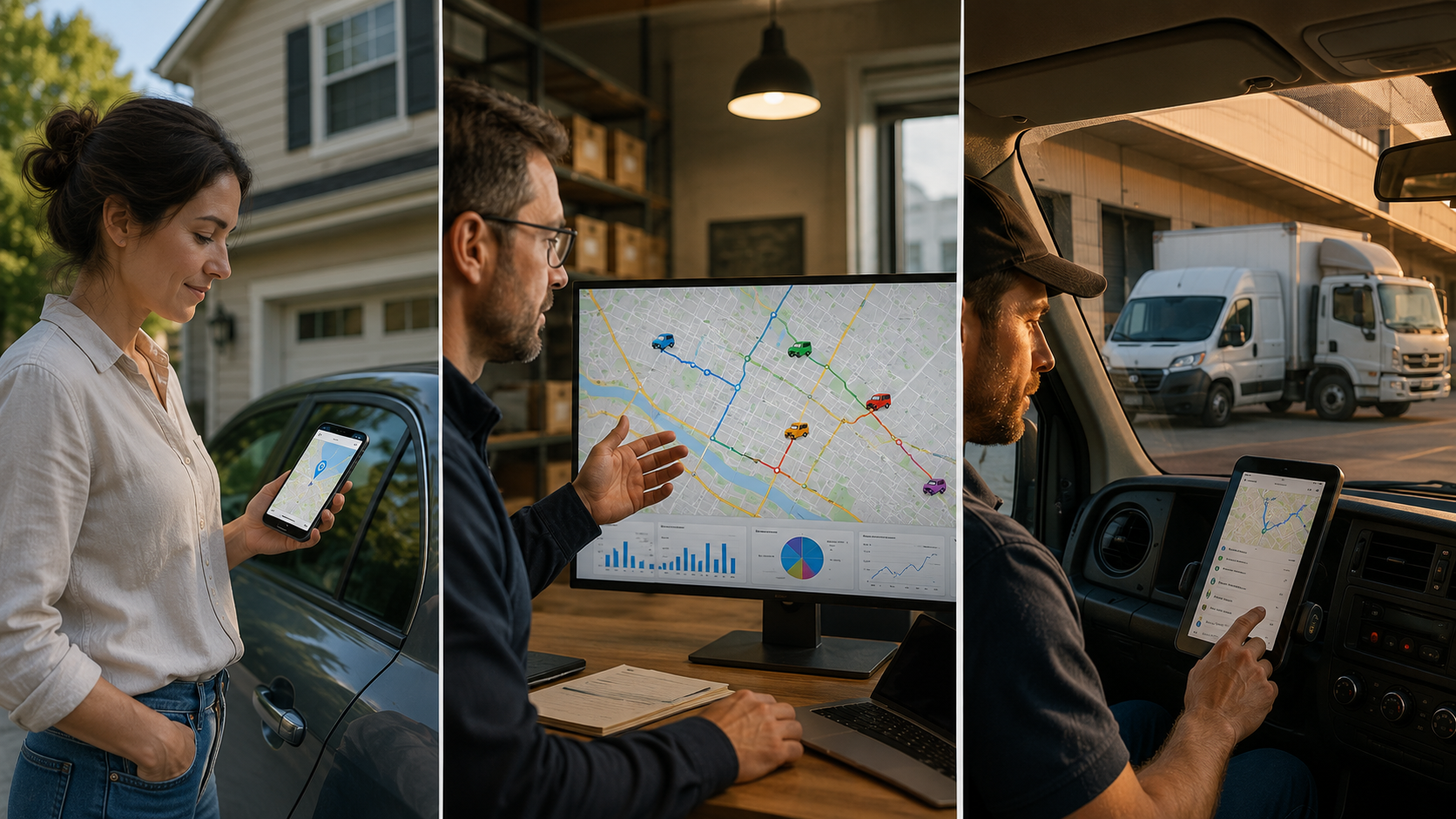
A GPS tracker can benefit almost any vehicle owner, but the value depends on how the vehicle is used. Whether you’re protecting a personal car or managing a fleet, the right tracking system improves security, visibility, and day-to-day operations.
Personal Vehicle Owners
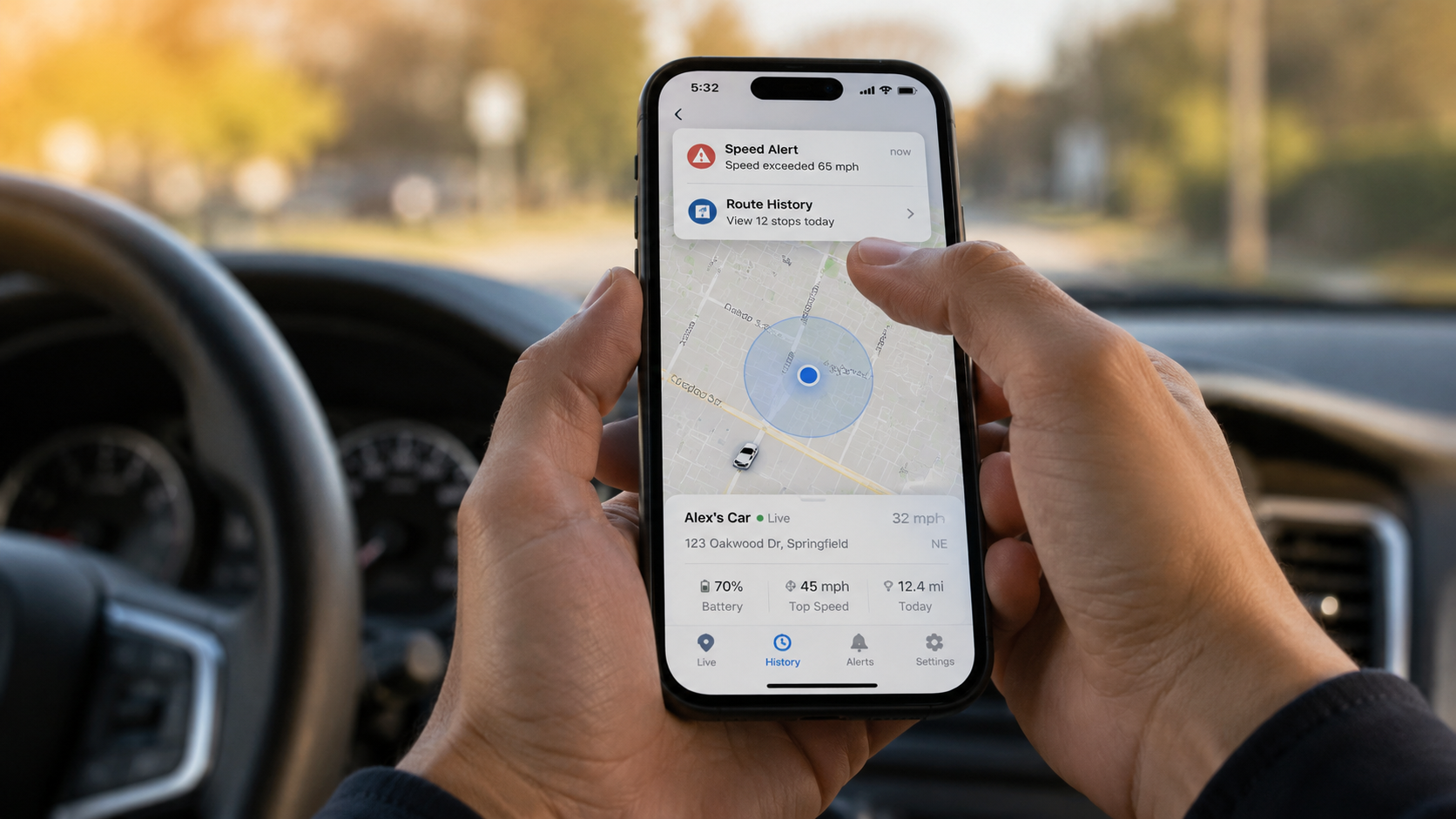
For individual drivers, GPS tracking is mainly about security and peace of mind. A hidden tracker can help law enforcement recover a stolen vehicle more quickly, while parents often use one to monitor teenage drivers and receive alerts for speeding or unexpected trips. Sharing live location data directly with police generally speeds up recovery.
Businesses and Fleet Operators
For businesses, company vehicle tracking provides visibility into how vehicles are being used. A reliable GPS tracker for commercial vehicles helps monitor routes, reduce unnecessary mileage, improve driver accountability, and simplify fleet management from a single dashboard.
Delivery, Trucking, and Service Fleets
Businesses that rely on vehicles throughout the day often see the greatest return from GPS tracking. A vehicle tracking and monitoring system can help with the following:
Give dispatchers real-time visibility into every vehicle
Reduce unnecessary idling and inefficient routes
Provide customers with more accurate delivery estimates
Verify job-site arrivals for technicians and service teams
Whether you’re managing delivery vans, service vehicles, or long-haul trucks, GPS tracking for delivery trucks and truck fleet GPS tracking have become essential tools for improving efficiency and maintaining better operational control.
Types of GPS Trackers for Vehicles
Not all GPS trackers are built the same. The right choice depends on your vehicle, how often you need to track it, and whether you prioritize convenience, security, or long-term fleet management. Here’s a quick overview of the three main types:
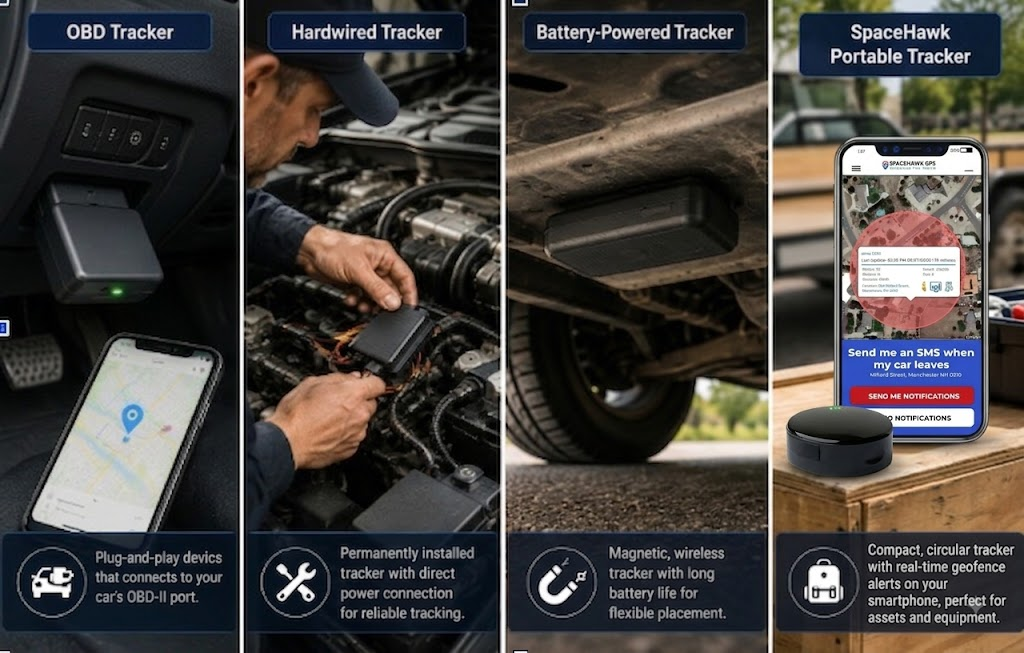
OBD GPS Trackers: Plug directly into the vehicle’s OBD-II port for a quick, tool-free installation. Powered by the vehicle, they often provide basic diagnostics like engine fault codes and mileage, making them ideal for personal vehicles, families, leased cars, and small business vehicles.
Hardwired GPS Trackers: Connect directly to the vehicle’s electrical system for a permanent, discreet installation. Since they’re hidden and difficult to tamper with, they’re the preferred choice for GPS trackers for commercial vehicles, company cars, work trucks, and long-term fleet management.
Battery-Powered GPS Trackers: Completely wireless and easy to move between vehicles or assets without installation. They’re well suited for trailer tracking, construction equipment, campervans, rental vehicles, and vans, though battery life depends on reporting frequency. The Outlaw Trailer Tracking Device is one example, a magnetic, battery-powered unit built to mount quickly with no wiring involved.
Quick Comparison
If you’re short on time, here’s a side-by-side comparison of the three main tracker types to help you identify the best fit for your needs.
Tracker Type
Best For
Installation
Power Source
OBD
Personal vehicles
Plug-and-play
Vehicle OBD port
Hardwired
Commercial fleets
Professional installation
Vehicle electrical system
Battery-Powered
Trailers, equipment, temporary tracking
Portable
Rechargeable battery
Which GPS Tracker Should You Choose?
Your choice ultimately depends on how you plan to use the tracker. Use this quick guide to match the right tracker to your vehicle and tracking needs.
If you…
Recommended Tracker
Drive one personal vehicle
OBD GPS tracker
Manage a fleet of work vehicles
Hardwired GPS tracker
Need a tracker you can move between vehicles
Battery-powered GPS tracker
Want to monitor trailers or equipment
Magnetic battery-powered tracker
An OBD tracker is ideal for everyday drivers who want quick installation, while businesses typically benefit from hardwired systems designed for continuous operation. Battery-powered models offer the most flexibility, making them a practical choice for assets that don’t have a constant power source.
Features That Matter Most in a GPS Tracker
A long feature list doesn’t always mean a better GPS tracker. In most cases, a handful of core features provide the greatest value for both personal vehicles and commercial fleets.
Real-time tracking: Provides live location updates for theft recovery, route monitoring, and real-time fleet tracking
Geofencing: Sends alerts when a vehicle enters or leaves a designated area, improving security and fleet oversight
Trip history: Records previous journeys to help review routes, verify trips, and reduce unnecessary mileage
Driver alerts: Notifies you of speeding, harsh braking, excessive idling, or unauthorized vehicle use
Mobile app: Lets you monitor vehicles and receive instant notifications from anywhere
Fleet asset tracking: Helps businesses monitor trailers, equipment, and vehicles from one dashboard
Which Features Matter Most?
The right features depend on how you use your vehicle. Personal drivers typically prioritize security and live tracking, while businesses benefit from additional reporting and fleet management capabilities.
Feature
Personal Vehicle
Business Fleet
Real-time tracking
✓ Essential
✓ Essential
Geofencing
✓ Useful
✓ Essential
Trip history
✓ Useful
✓ Essential
Driver alerts
Optional
✓ Recommended
Fleet asset tracking
Not usually needed
✓ Recommended
How Much Does a Vehicle GPS Tracker Cost?
The cost of a GPS tracker depends on several factors, including the type of device, its features, installation requirements, and whether it includes a monthly subscription. Personal GPS trackers are generally more affordable than commercial fleet tracking systems, which often include advanced reporting, driver monitoring, and fleet management capabilities.
If you’re comparing vehicle tracker prices, remember to look beyond the upfront hardware cost. Many providers charge a monthly subscription that covers cellular connectivity, cloud storage, software updates, and access to the tracking platform. While subscription-based trackers typically offer real-time updates and more advanced features, some devices are available with no recurring fees.
You may also come across a GPS tracker for vehicles with no monthly fee or a GPS vehicle tracker with no monthly fee. These models can be a good choice for occasional tracking or budget-conscious buyers, but they often provide fewer features, limited tracking history, or less frequent location updates than subscription-based alternatives.
Ultimately, the best value comes from choosing a tracker that offers the features you need rather than focusing solely on the lowest price.
How to Choose the Right GPS Tracker
The best GPS tracker isn’t necessarily the one with the most features; rather, it’s the one that fits your vehicle, tracking needs, and budget. Before making a decision, consider these key factors:
Purpose: Are you tracking a personal vehicle, monitoring company cars, or managing a commercial fleet? Your use case will determine the type of tracker and features you need.
Installation: OBD trackers are quick to install and ideal for everyday drivers, while hardwired models offer a more permanent solution for business vehicles. Battery-powered trackers are best for temporary or portable tracking.
Tracking Features: Decide whether you only need live location updates or additional tools like geofencing, trip history, driver behavior reports, and maintenance alerts.
Subscription Costs: Some trackers require a monthly subscription for real-time tracking and cloud-based services, while others operate without recurring fees but may offer fewer features.
Scalability: If you expect your fleet to grow, choose a solution that supports multiple vehicles, centralized reporting, and easy account management.
Taking a few minutes to compare these factors will help you avoid paying for features you don’t need while ensuring your GPS tracker continues to meet your needs as they change.
Conclusion
Choosing the right GPS tracker for your vehicle comes down to understanding how you plan to use it. A personal car, a work truck, and a fleet of commercial vehicles all have different tracking requirements, so it’s worth weighing tracker type, must-have features, and ongoing subscription costs before you buy.
Whether your priority is protecting your vehicle from theft, improving driver accountability, or managing a growing fleet, a reliable GPS tracking system gives you better visibility and control. Focus on the essentials, real-time tracking, accurate alerts, easy installation, and dependable support and you’ll end up with a solution built for long-term value, not just the lowest sticker price.
Frequently Asked Questions
Can a GPS tracker work without a cellular signal?
Yes, a GPS tracker can still determine its location using satellite signals, but it typically needs a cellular network or another communication method to transmit that location to your phone or computer. If cellular coverage is unavailable, many trackers store the data and upload it once the connection is restored.
How accurate are vehicle GPS trackers?
Most modern GPS trackers are accurate within a few meters under normal conditions. However, factors such as underground parking garages, tunnels, dense urban areas, or severe weather can temporarily affect signal accuracy.
Can I track multiple vehicles from one account?
Yes. Many GPS tracking platforms allow you to monitor multiple vehicles from a single dashboard or mobile app. This is particularly useful for families with several vehicles and businesses managing company cars or commercial fleets.
How long do battery-powered GPS trackers last?
Battery life varies depending on the device and how frequently it reports its location. Some portable trackers last only a few days with continuous real-time updates, while others can operate for several months when set to report less frequently or only when movement is detected.
Do GPS trackers work outside the United States?
Many GPS trackers work internationally, but coverage depends on the provider and the countries supported by the device’s cellular network. If you regularly travel across borders or manage international fleets, check the provider’s coverage and roaming options before purchasing.
Layne Riggs won the Team EJP 175 at New Hampshire Motor Speedway on Saturday, August 22, clinching the No. 1 seed in the NASCAR Craftsman Truck Series Chase for the Championship and entering the postseason with a points-lead advantage over the entire field. The victory was his sixth of the 2026 season and the 11th of his career across 72 starts. With the regular-season finale complete, all 10 Chase spots are now filled, and the seven-race title run has its full cast.
How Riggs Won at Loudon Despite Mid-Race Trouble
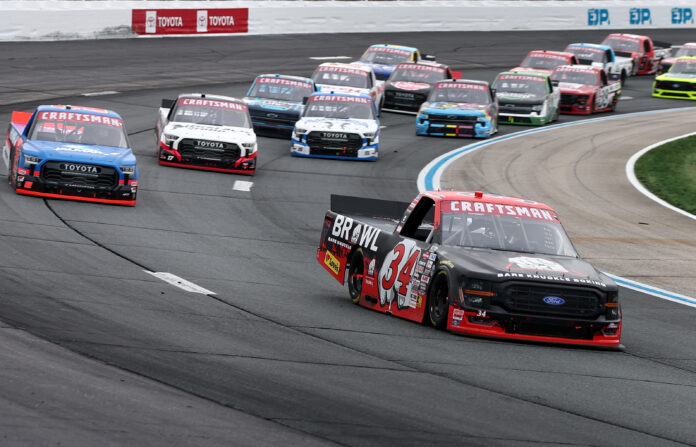
Riggs started from the pole and led a race-high 106 laps in the No. 34 Front Row Motorsports Ford F-150, but the afternoon was far from clean, according to Sports Illustrated.
A tight truck in the middle mid-part of the race gave his racing competition an opening. Connor Zilisch and Chandler Smith both moved past him, and Riggs openly admitted he feared he had lost control of the day.
“I thought I was off a little bit. I thought I was in trouble. Zilisch got by me, Chandler [Smith] got by me. I was just really, really tight. Couldn’t get it where I needed it. But my crew chief, Dylan Cappello, and engineer Jonathan Coates, they made some excellent, excellent changes at the end.”
Those adjustments proved decisive. Cappello and Coates corrected the handling, Riggs reclaimed the lead, and he then held off two overtime restarts before crossing the finish line ahead of teammate Chandler Smith by 0.293 seconds. Kaden Honeycutt came home third.
“Statement win. I mean, this is awesome.”
Riggs’ No. 1 Seed Draws Attention in the Outright Title Market
Zlatan Vukić, an iGaming compliance manager with roughly eight years of experience in the Croatian gambling industry, tracks how motorsports title races translate into outright pricing across regulated European markets. From that vantage, the finalized Truck Series Chase field and Riggs’ confirmed points-lead advantage as the No. 1 seed sharpen the picture considerably.
With a settled 10-driver roster now locked in and seven races remaining, the question of who wins the championship has defined edges. Vukić notes that kladionice u Hrvatskoj are where outright Truck Series title odds on Riggs and his rivals currently surface for followers of these playoff storylines.
“The No. 1 seed with a points advantage entering a defined seven-race window — that is a clear signal for any market trying to price a title. The field is settled, the bracket is set, and the numbers reflect that.”
The Full Chase Field and the Last-Berth Drama
Tyler Ankrum claimed the final spot in the 10-driver Chase by finishing 16th while managing brake issues in the closing laps. His troubles made for a tense finish to the regular season, particularly for Stewart Friesen, who crossed in fourth place, but fourth was not enough, and he narrowly missed the cut.
Connor Zilisch provided a notable footnote. He won both Stage 1 and Stage 2 of the Team EJP 175, collecting stage points throughout the afternoon, but did not win the race overall or advance to the Chase.
The full 2026 NASCAR Craftsman Truck Series Chase field is Layne Riggs, Kaden Honeycutt, Chandler Smith, Christian Eckes, Gio Ruggiero, Ty Majeski, Grant Enfinger, Ben Rhodes, Daniel Hemric, and Tyler Ankrum.
Bristol Opens the Chase on September 17
The seven-race postseason begins at Bristol Motor Speedway with the UNOH 250 on Thursday, September 17. Coverage starts at 8:00 PM ET on FS1, with radio coverage provided by the NASCAR Radio Network and SiriusXM NASCAR Radio. It is a short track from the regular season to the playoffs, and Riggs made it clear he intends to use every inch of it.
“Let’s bring on the Chase. We only have seven [races] left. No mercy.”
The No. 1 seed, the points cushion, and a truck that found its footing after two overtime restarts — Riggs carries all of it into Bristol on September 17.
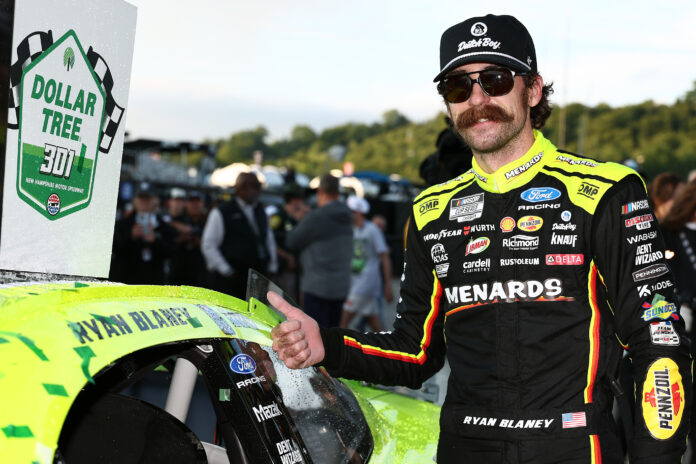
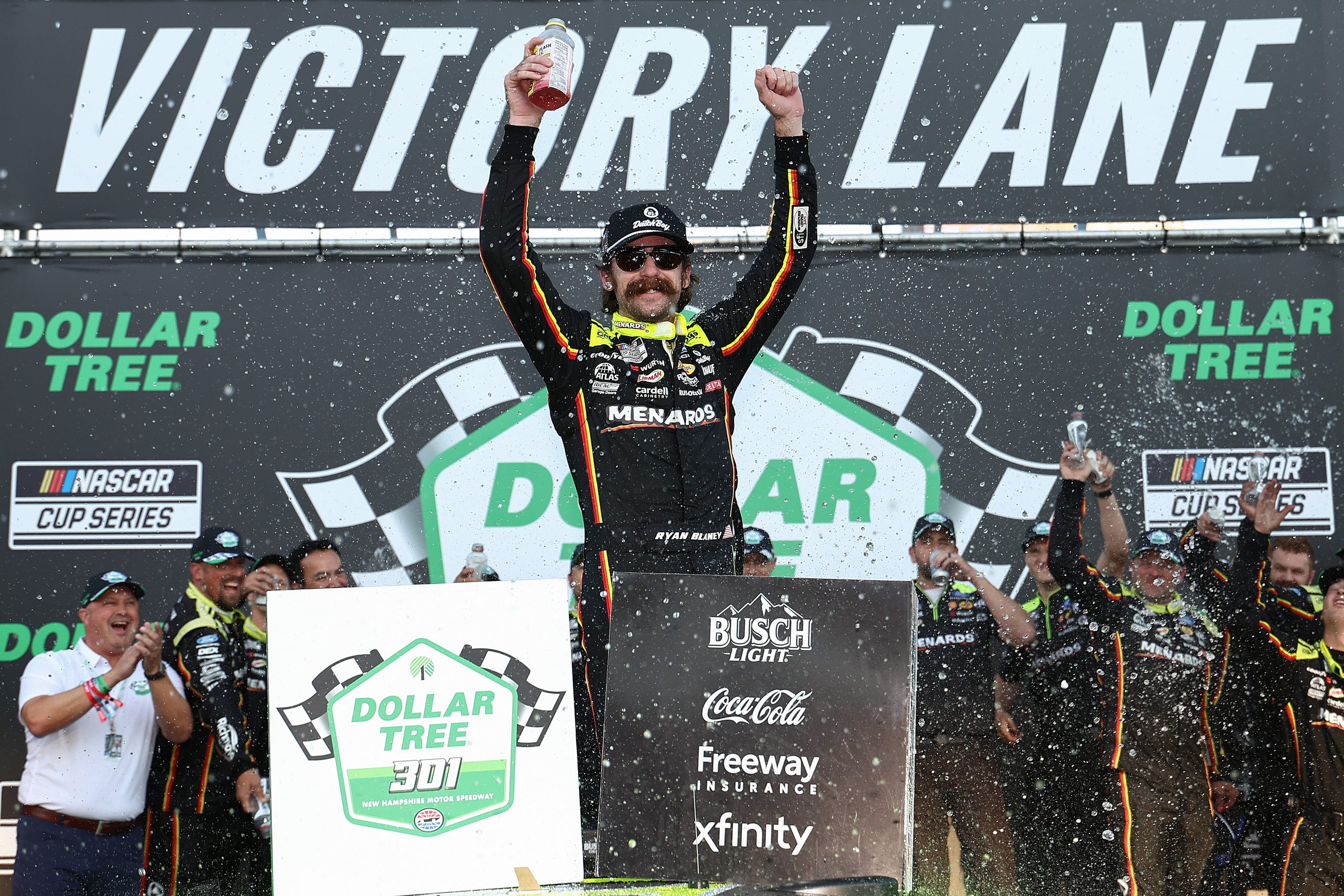
LOUDON, NEW HAMPSHIRE - AUGUST 23: Ryan Blaney, driver of the #12 Menards/Dutch Boy Ford, poses with the winner sticker on his car in victory lane after winning the NASCAR Cup Series Dollar Tree 301 at New Hampshire Motor Speedway on August 23, 2026 in Loudon, New Hampshire. (Photo by Meg Oliphant/Getty Images).
Ryan Blaney utilized a late two-tire pit stop strategy that enabled him to muscle his way to win the Dollar Tree 301 at New Hampshire Motor Speedway on Sunday, August 23.
The 2023 NASCAR Cup Series champion from High Point, North Carolina, led twice for a race-high 115 of 301 scheduled laps in an event where he qualified in eighth place and navigated through a bizarre event that started on wet conditions and ended with dry conditions, with an abundance of on-track battles and drama ensuing within.
For Blaney, he settled in sixth place at the conclusion of the first stage period, and he outdueled Josh Berry following a green flag pit stop cycle to win the second stage period. Then, after having issues with his left-front wheel being tightened on pit road that dropped him out of the top-10 mark prior to the start of the final stage period, Blaney managed to withstand two caution periods and intense racing within the pack before he pulled off a two-tire pit call that enabled him to assume the lead prior to a restart with 70 laps remaining.
During the final restart with 63 laps remaining, Blaney retained the lead despite having a tire disadvantage compared to most of the field. Despite being reeled in by Bubba Wallace and having lapped traffic interfere with his steady progress as the laps dwindled, Blaney managed to withstand the pressure, and he proceeded to notch his third victory of the 2026 Cup season and gain additional momentum with the Chase looming.
With on-track qualifying that determined the starting lineup occurring on Saturday, August 22, Tyler Reddick captured the pole position with a pole-winning lap at 131.094 mph in 29.054 seconds. Josh Berry qualified in second place with a lap of 131.026 mph in 29.069 seconds.
Before the event, Ty Dillon and Cody Ware dropped to the rear of the field after unapproved adjustments to their respective entries.
When the green flag waved and the event commenced amid a delay due to rain, pole-sitter Tyler Reddick, who opted to start on the outside lane, managed to maintain the lead through the first two turns and entering the backstretch while the field fanned out and scattered while trying to navigate through the slick conditions with the wet-weathered tires. Then through Turns 3 and 4, Reddick, who went wide, snapped and spun his No. 45 Chumba Casino Toyota Camry XSE entry from the slick conditions. Reddick’s incident, which drew the event’s first caution, caused the field to scatter and both Denny Hamlin and Chris Buescher to make slight contact with Reddick’s entry while trying to reduce pace as William Byron emerged as the leader.
The event’s next restart on the sixth lap featured William Byron and Shane van Gisbergen duking for the top spot through the first two turns until Byron, who restarted on the outside lane, motored ahead and led through the backstretch before he navigated his way through Turns 3 and 4. As Byron led the next lap, van Gisbergen maintained the runner-up spot in front of Christopher Bell, Ty Gibbs and Berry while Kyle Larson, Ryan Blaney, Chase Briscoe, Connor Zilisch and Erik Jones trailed within the top-10 mark, respectively. Amid the battles across the field with various competitors seeking dry grip around the slick surface, Byron led by four-tenths of a second through the Lap 10 mark.
On the 12th lap, Bell made a move towards the inside lane from Turns 3 and 4 as he then tried to slide in front of Byron in an early bid for the lead. Byron, though, fended off Bell from the outside lane entering the frontstretch. Byron then stretched his lead by more than a second on Lap 15 before his lead grew to two seconds just past the Lap 20 mark. With the field of 36 navigating and navigating through the slick tires with the track conditions starting to dry up, Byron had his lead shrink to three-tenths of a second over a hard-charging van Gisbergen at the Lap 25 mark. By then, Bell was back in third place ahead of Gibbs and Berry while Blaney, Larson, Briscoe, Zilisch and Ryan Preece trailed in the top 10, respectively.
At the Lap 26 mark, van Gisbergen overtook Byron for the lead. Van Gisbergen proceeded to stretch his lead by more than four seconds just past the Lap 30 mark while third-place Bell, who was being reeled in by Berry, trailed by more than nine seconds. Berry proceeded to overtake Bell for third place on Lap 32 as Gibbs, Larson and Blaney fiercely battled for fifth place. With Connor Zilisch, Preece and Briscoe occupying the final top-10 spots, van Gisbergen steadily grew his advantage up to nearly seven seconds nearing the Lap 40 mark.
On Lap 40, a competition caution flew and the field jumbled up, with NASCAR giving all teams the option to either pit or not pit non-competitively to remove the wet-weathered tires for dry tires. By then, van Gisbergen was leading by less than six seconds over Byron while Berry, Bell, Larson, Blaney, Gibbs, Zilisch, Preece and Carson Hocevar were in the top 10, respectively. During this caution period, Ross Chastain pitted prior to pit road being accessible for the field due to a mechanical issue. Chastain would eventually take his entry to the garage due to a drivetrain issue, which terminated his event and dwindled his hopes of making the 2026 Chase. Once pit road became accessible, the field led by van Gisbergen pitted for dry tires.
As the event restarted on Lap 49, van Gisbergen received a push from Byron from the outside lane through the frontstretch to motor ahead of Berry, with van Gisbergen leading through the first two turns and the backstretch. With van Gisbergen leading the next lap, Byron retained second over teammate Larson, Berry and Bell while the rest of the field behind fanned out and jostled for spots. The caution then flew on Lap 51 when Ricky Stenhouse Jr. got loose in front of Hamlin and spun backward towards the outside wall in the fourth turn.
With the field restarting on Lap 55, van Gisbergen fended off Byron to retain the lead from the outside lane through the first two turns. As van Gisbergen motored ahead entering the backstretch, Byron was attacked by teammate Larson and Bell for the runner-up spot. Larson would assume the spot and van Gisbergen led the next lap before Larson battled and overtook the latter by the following lap. As Larson proceeded to lead by a second on Lap 60, Bell, Hocevar, Byron, Gibbs, Zilisch and Berry navigated their way from second to seventh on the track while van Gisbergen slipped back to eighth place in front of Blaney, Preece, Bubba Wallace, Briscoe, Austin Cindric, Zane Smith and Michael McDowell, respectively.
When the first stage period concluded on Lap 70, Larson captured his fifth Cup stage victory of the 2026 season by more than a second over Bell. Hocevar, Byron, Berry, Blaney, Gibbs, Preece, van Gisbergen and Briscoe were scored in the top 10, respectively, as 30 of 36 starters were scored on the lead lap. Under the event’s first stage break period, a majority of the field led by Larson pitted while the rest, including Preece, Zane Smith, Chase Elliott, Riley Herbst, Cole Custer and Chris Buescher, remained on the track. During the pit stops, Bell dragged his right-front tire changer out of his pit box while Byron had a wedge wrench stuck on his car, thus leaving both penalized and sent to the tail end of the start of the next restart.
The second stage period started on Lap 78 as Preece and Zane Smith occupied the front row. At the start, the two leaders dueled through the first two turns until Preece motored his No. 60 Mowahk Ford Mustang Dark Horse entry ahead from the inside lane. As Preece led the next lap, Smith pursued Preece while the field behind fanned out and jostled for spots both inside and outside of the top-10 mark. On Lap 83, the caution returned when Hocevar and Zilisch made contact through the frontstretch, which got Hocevar, who spun in the opening pace laps from the slick conditions, spinning backward through the frontstretch. As the field scattered, both Logano and Austin Dillon spun and wrecked against one another as they were trying to cautiously navigate past Hocevar.
As the event restarted on Lap 89, Preece motored ahead of Berry, Zane Smith, Wallace, Blaney and the field through the first two turns just before the field fanned out through the backstretch. The field continued to fan out just past the Lap 90 mark as Berry assumed the lead from Preece. Berry proceeded to extend his advantage by more than a second on Lap 95 before he stabilized it to one-and-a-half seconds at the Lap 100 mark. Behind, Blaney, who overtook Preece for the runner-up spot, trailed by one-and-a-half seconds while Preece maintained third place in front of Wallace, Buescher, Larson, Zane Smith, Brad Keselowski, Cindric and Gibbs, respectively.
Just past the Lap 120 mark, Berry stabilized his lead to within half a second over a hard-charging Blaney while Wallace, Preece and Buescher were scored in the top five. Shortly after, Elliott made a strategic pit stall under green flag as the fuel window for the field opened up while Larson, Keselowski, Gibbs, Hamlin and Briscoe were in the top 10 on the track, respectively. Behind, Zane Smith and Cindric pitted their respective entries before Preece pitted under green on Lap 122.
By the Lap 131 mark, Wallace and Buescher pitted from the top-five mark, along with Hamlin, Bell, Van Gisbergen, Larson, Briscoe, Byron, and Gibbs, who pitted during the next lap. The leader, Berry, along with Blaney, Keselowski, and Reddick pitted on Lap 133. After the pit stops, Berry managed to beat Blaney off of pit road first, and the former reassumed the top spot by Lap 135. Despite having Blaney pressing in from behind, Berry maintained the lead by two-tenths of a second as the event surpassed the Lap 140 mark.
On Lap 147, Blaney seized an opportunity by drag-racing with Berry through the frontstretch before the former motored his No. 12 Menards Ford Mustang Dark Horse entry ahead with the clean air by the next lap. Blaney proceeded to stretch his lead by as high as six-tenths of a second at the event’s halfway mark between Laps 150 and 151, with Berry, Wallace, Preece, Buescher, Keselowski, Larson, Gibbs, Hamlin and Briscoe occupying the top-10 spots ahead of Byron, Cindric, Bell, Daniel Suarez, Zane Smith, Reddick, Austin Hill, van Gisbergen, Alex Bowman and Elliott, respectively.
Through the Lap 160 mark, Blaney stretched his advantage by one-and-a-half seconds over Berry while third-place Wallace trailed by more than three seconds as Preece and Buescher rounded out the top five over Larson, Keselowski, Gibbs, Hamlin and Briscoe. Blaney then had his advantage decrease down to half a second on Lap 170 before he increased it back up to one-and-a-half seconds at the Lap 180 mark.
When the second stage period concluded on Lap 185, Blaney notched his seventh Cup stage victory of the 2026 season. Berry trailed in the runner-up spot by more than a second while Wallace, Preece, Larson, Keselowski, Buescher, Gibbs, Hamlin and Bell were scored in the top 10, respectively. By then, only 15 of 36 starters were scored on the lead lap, with Reddick, Briscoe, Byron, Cindric and van Gisbergen managing to remain on the lead lap.
During the event’s second stage break period, the lead lap field led by Blaney pitted for service. Following the pit stops, Wallace exited pit road first ahead of Berry, Larson, Preece, Keselowski, Buescher, Gibbs, Bell, Briscoe and Reddick while Blaney, who had a slow pit stop due to having a left-front wheel tightened just before he could leave his pit stall, exited in 14th place.
With 108 laps remaining, the final stage period commenced as Wallace and Berry occupied the front row. At the start, the two leaders dueled for a full lap as the field behind fanned out and jostled for late spots, among which included Bell as the latter navigated his way towards the top-five mark. By the next lap, Berry used the inside lane to motor his No. 21 Motorcraft/Quick Lane Ford Mustang Dark Horse entry ahead through the first two turns. This allowed Berry to lead the next lap over Wallace as Preece, Larson and Bell were in the top five in front of a stacked field. Amid the battles, Berry maintained his lead by six-tenths of a second over Wallace with 100 laps remaining.
Then with 98 laps remaining, the caution returned when Hocevar was involved in his third incident of the event, this time through Turns 3 and 4 after he got loose and spun by himself while mired a lap down. Hocevar’s incident occurred seconds after both Blaney and Hamlin bumped and rubbed fenders while battling fiercely for 10th place as Berry maintained a steady lead over Wallace. During this latest caution period, the front-runners led by Berry remained on the track while some that included Bell, Hamlin, Blaney, Briscoe, Byron, van Gisbergen, Zane Smith, Logano, Stenhouse, Bowman and Erik Jones pitted.
During the next restart with 93 laps remaining, Berry received a push from Preece from the outside lane to launch ahead through the frontstretch, but Wallace reeled in and kept the pressure to Berry as he then tried to side-draft and duel through the frontstretch during the next lap. With his move, Wallace motored ahead with the lead through the first two turns. As Wallace led by three-tenths of a second with less than 90 laps remaining, Berry trailed in second ahead of Preece, Larson, Gibbs and Keselowski while Bell, who pitted for fresh tires, was up to seventh place ahead of Reddick, Byron, Briscoe, Blaney and Hamlin.
Down to the final 80 laps, Wallace retained the lead by two-tenths of a second over a hard-charging Berry while third-place Preece trailed by nine-tenths of a second in third place. Then a lap later, Berry bumped and overtook Wallace to resume the lead through Turns 3 and 4. Berry then went as low as possible through the first two turns before Wallace got back beneath Berry and reassumed the lead by the next lap. Wallace’s move to reassume the lead allowed Preece to reel in the two leaders as Larson also slowly crept in from fourth place.
Wallace maintained the lead by a steady margin over Berry, Preece and Larson with 78 laps remaining before the caution returned. The caution was due to Riley Herbst making contact with McDowell, spinning and wrecking hard against the outside wall in Turns 3 and 4 just before Zilisch plowed into Herbst’s wrecked entry. During this caution, the leaders pitted, and the top-five competitors that included Blaney, Byron, Briscoe, Logano and Zane Smith exited pit road first with only two fresh tires, with Blaney leading, before Wallace, Preece, Gibbs, Larson, Bell and Berry followed suit.
The next restart with 70 laps remaining featured the field fanning out and shuffling for spots as Blaney maintained the lead for a full circuit while Briscoe and Wallace moved up to second and third. With 68 laps remaining, the caution returned when Byron, who was in fourth place, had a left-rear wheel detached and he spun his No. 24 Raptor Chevrolet Camaro ZL1 entry backward into the outside wall in Turns 3 and 4.
For the next restart with 63 laps remaining, Blaney was challenged by Briscoe for the lead as they battled dead even in front of Wallace, Preece, Bell and the field beyond a full circuit. After dueling with Briscoe for three laps, Blaney managed to clear the latter through the frontstretch with 60 laps remaining. Behind, Wallace, who had third place in his sole possession, started to reel in Briscoe for the runner-up spot while Berry was mired in eighth place in front of Gibbs and Hamlin. As Blaney stretched his late lead by more than a second over Wallace with 55 laps remaining, Briscoe, Preece and Bell trailed by as far back as two seconds in the top five.
As the event reached its final 50-lap mark, Blaney continued to hold strong on his two fresh tires by leading by more than a second over Wallace, who had four fresh tires, while Preece, Bell and Berry were racing in the top five over Larson, Briscoe, Gibbs, Hamlin and Zane Smith. Behind, Noah Gragson, Reddick, Logano, Keselowski, Bowman, Hocevar, McDowell, van Gisbergen, Suarez and Buescher occupied the top-20 spots over Austin Cindric, Austin Hill, Cole Custer, Elliott and Todd Gilliland. While Erik Jones took his entry to the garage due to a transmission issue, Blaney extended his advantage by nearly two seconds over Wallace with 45 laps remaining before the lead grew to two seconds with 40 laps remaining.
Down to the final 30 laps of the event, Blaney continued to lead by less than two seconds over Wallace as Wallace slowly trimmed Blaney’s advantage while being faster than the latter. Behind, Berry trailed in third place by five seconds while Bell and Preece trailed in the top five ahead of Larson, Gibbs, Hamlin, Zane Smith and Gragson. As Blaney started to catch lapped traffic with 25 laps remaining, Berry trailed the leader by four seconds in third place while Wallace continued to trail Blaney by a second in the runner-up spot. Berry then started to reel in Wallace for the runner-up spot as he trailed the latter by a second while Blaney stretched his lead by nearly two seconds with 20 laps remaining.
With 15 laps remaining, Blaney, who methodically navigated his way through lapped traffic, maintained the lead by less than two seconds over Wallace, and Berry trailed by three seconds in third place. By then, Berry trailed Wallace by a second for the runner-up spot, though Wallace then narrowed his deficit to Blaney, who was trying to reel in and lap Briscoe, by seven-tenths of a second with 10 laps remaining. As Berry tried to reel in with a one-second deficit in third place, Wallace reeled in Blaney, who was mired in more lapped traffic, by four-tenths of a second with five laps remaining.
Then with four laps remaining, Wallace, who narrowed his deficit down to three-tenths of a second, briefly locked up the front tires of his No. 23 Cincoro Tequila Toyota Camry XSE entry while trying to reel in Blaney entering Turn 3. Amid the lock-up, he remained within striking distance of Blaney by trailing by six-tenths of a second during the next lap before he trailed by half a second with two laps remaining.
When the white flag waved and the final lap started, Blaney remained in the lead by six-tenths of a second over Wallace. Amid Wallace’s late charge, Blaney had enough momentum, horsepower and life with his two fresh tires to cycle around New Hampshire with the lead for a final time smoothly as he then claimed the checkered flag with the victory by half a second over Wallace while Berry followed suit by less than two seconds in third place.
With the victory, Blaney notched his 20th NASCAR Cup Series career victory in his 403rd series start, his second in a row at New Hampshire Motor Speedway and his third of the 2026 campaign. Blaney’s victory was also the fifth of this season for both Team Penske and Ford, with Blaney maintaining a 44-point advantage for the runner-up spot in the regular-season standings prior to the 2026 Chase and his pursuit for a second championship.
LOUDON, NEW HAMPSHIRE – AUGUST 23: Ryan Blaney, driver of the #12 Menards/Dutch Boy Ford, celebrates in victory lane after winning the NASCAR Cup Series Dollar Tree 301 at New Hampshire Motor Speedway on August 23, 2026 in Loudon, New Hampshire. (Photo by Meg Oliphant/Getty Images)
“Yeah, [the lapped traffic] made it difficult, but it was a good [pit] call after our issue on pit road,” Blaney said on the frontstretch on USA Network. “We did two [tires] at the end to try and hopefully get the lead, and we did. It was a long run to the end there, the longest run we had. Just trying to manage my stuff and knew those four-tire guys would probably pressure me eventually. Bubba kind of came on pretty hard there. Just trying to manage the lapped traffic while also trying to manage tire and not make a mistake. What a cool race. What a fun day, starting in the rain and it end up being a beautiful day…It’s cool here to win here two in a row. I look forward in getting another lobster.”
Bubba Wallace, who started in 23rd place, navigated his way to tie his highest-finishing result of this season by finishing in second place after leading 22 laps. Meanwhile, Josh Berry, who led the second-most laps of the event at 73, settled in third place for his highest-finishing result through 25 events in 2026.
Amid the disappointment both competitors expressed on falling short of the New Hampshire race victory, they were also left satisfied with their strong rallies and results. For Wallace, his runner-up result enabled him to achieve a 75-point advantage in the regular-season standings as he is within striking distance of securing a 2026 Chase berth. Despite being eliminated from Chase contention, Berry continued his recent hot streak on the track with his fourth consecutive top-10 result as he also continues his pursuit of a ride in 2027.
“That’s the thing I kind of hate about this place,” Wallace said. “The last time we ran good, it’s one of the worst-driving cars, and we finished third. [Today was] The worst driving car I’ve had this year, and we finished second. We fought, man. I had a nice day just by myself, regrouping, got the head right and I knew I had to fight all day, and that’s what it takes. Where it starts is with these people on this No. 23 team. They push me to be the absolute best and I fail on them a lot, but they stick behind me and it’s super cool, so I appreciate that…I picked up a big vibration on the left front [from the lockup], and that was kind of it. [I] Didn’t need to make our great day go to crap and just salvage what we had.”
“That was everything I had, and that’s everything I could do today, and it was pretty good, I’ll say that too,” Berry said. “It was a lot of fun and just great job by these guys. The car was really solid and just to manage the rain and the drying track and all the different conditions we had to stay up front like we did, it was a good day.”
Christopher Bell and Kyle Larson finished in the top five. Ty Gibbs, Denny Hamlin, Tyler Reddick, Ryan Preece and Noah Gragson completed the top 10 in the final running order, respectively.
This event featured 15 lead changes for seven different leaders, and nine cautions for 51 laps. In addition, 18 of 36 starters finished on the lead lap.
Following the 25th event of the 2026 NASCAR Cup Series season, Denny Hamlin has officially clinched the top seed and the 2026 regular-season championship with a 77-point advantage over Ryan Blaney.
Denny Hamlin, Ryan Blaney, Ty Gibbs, Tyler Reddick, Christopher Bell, Chase Briscoe, Kyle Larson, Chase Elliott, Joey Logano, Chris Buescher, Carson Hocevar, William Byron and Daniel Suarez have all clinched berths to the 2026 Chase. Bubba Wallace, Austin Cindric and Shane van Gisbergen occupy the remaining three berths to the Chase, with van Gisbergen being 31 points ahead of Ryan Preece and 66 ahead of Brad Keselowski entering next Saturday’s regular-season finale at Daytona International Speedway.
Results:
Ryan Blaney, 115 laps led, Stage 2 winner
Bubba Wallace, 22 laps led
Josh Berry, 73 laps led
Christopher Bell
Kyle Larson, 18 laps led, Stage 1 winner
Ty Gibbs
Denny Hamlin
Tyler Reddick
Ryan Preece, 17 laps led
Noah Gragson
Brad Keselowski
Austin Cindric
Zane Smith
Joey Logano
Alex Bowman
Michael McDowell
Daniel Suarez
Chris Buescher
Carson Hocevar, one lap down
Shane van Gisbergen, one lap down, 30 laps led
Todd Gilliland, one lap down
Cole Custer, one lap down
AJ Allmendinger, one lap down
Austin Hill, one lap down
Chase Elliott, one lap down
Chase Briscoe, one lap down
Ty Dillon, one lap down
Ricky Stenhouse Jr., one lap down
Cody Ware, one lap down
William Byron, five laps down, 26 laps led
John Hunter Nemechek, five laps down
Austin Dillon, 19 laps down
Erik Jones – OUT, Transaxle
Riley Herbst – OUT, Accident
Connor Zilisch – OUT, Accident
Ross Chastain – OUT, Engine
Next on the 2026 NASCAR Cup Series schedule is the Coke Zero Sugar 400 at Daytona International Speedway in Daytona Beach, Florida, which also marks the final regular-season event of this season and will officially determine this year’s Chase field. The event is scheduled for next Saturday, August 29, and will air at 7:30 p.m. ET on NBC, MRN Radio, SiriusXM, and HBO Max.