Home Blog Page 26

Motorcycle Accident Lawyer in North Carolina: Understanding Your Legal Rights

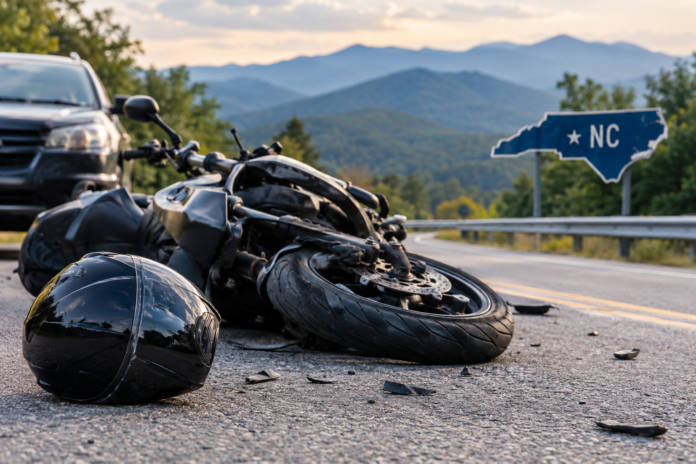
Serious injuries, unforeseen medical costs, and financial hardship for riders and their families can result from motorcycle accidents. Motorcyclists are less physically protected in collisions than drivers in passenger cars; thus, even a small collision could be dangerous. Determining who is at responsibility for an accident in North Carolina can be challenging, particularly when security companies contest fault or cast doubt on the seriousness of injuries. Injured riders can learn about their legal rights, obtain proof, and consider their choices for compensation with the assistance of a Motorcycle Accident Lawyer In North Carolina. After a motorcycle accident, you should know how to do the right thing and preserve crucial evidence and get a future personal injury claim. 

Understanding the Causes of Motorcycle Accidents

Numerous factors, such as speeding, dangerous lane changes, failing to yield, and distracted driving, can result in motorcycle accidents. When changing lanes or turning at crossroads, drivers occasionally fail to notice motorbikes, which raises the possibility of catastrophic incidents. Crashes can also be caused by poor road conditions, loose gravel, potholes, and poor visibility. Determining the cause of an accident is a crucial step in establishing culpability. To determine how the collision happened, a motorcycle accident attorney may examine police reports, photos, witness accounts, and other relevant evidence. Injured riders can assess their legal alternatives and ascertain whether another person may be liable for their losses by establishing the crash’s circumstances. 

Determining Liability Under North Carolina Law

Contributory negligence is a law in North Carolina that can have a big impact on personal injury cases. Generally speaking, with a few exceptions, an injured individual who is determined to have contributed to their accident through negligence may not be able to obtain damages. When assessing a claim, security firms may take a detailed look at a rider’s behavior. They may contend that the motorcyclist broke a traffic law, was speeding, or neglected to keep a proper watch. A motorcycle accident attorney can look into these claims, evaluate the information that is currently available, and explain how state law might be relevant. 

Important Steps to Take After a Motorcycle Accident

Taking the right actions following a motorbike accident can assist in safeguarding your health, preserving evidence, and recording the damages resulting from the incident. If you are physically capable, think about doing the following: 

  • Collect evidence
  • Exchange information
  • Gather witness information
  • Keep important records
  • Be careful with security statements

Understanding Compensation for Motorcycle Accident Injuries

Significant financial and personal losses could arise from a motorbike accident. An injured rider may pursue compensation for medical costs, lost pay, diminished earning ability, and property damage, depending on the specifics and relevant legislation. When lawfully attainable, a claim may also include damages for pain, suffering, and the impact of injuries on day-to-day activities. The severity of the damage, the necessity for treatment, the length of time it takes to heal, and the proof that is available all affect how much a claim is worth. However, recovery may be severely hampered under North Carolina’s contributory negligence rule. 

How a Motorcycle Accident Lawyer Can Help

Managing a motorcycle accident claim can be difficult, especially if the security company contests liability or if the injuries need continuing care. A lawyer can look into the collision, gather pertinent documents, speak with witnesses, and, when necessary, collaborate with knowledgeable specialists. When the circumstances support it, legal counsel may also arrange proof of monetary losses, speak with security agents, and negotiate a payment. The attorney can outline the steps involved in filing a lawsuit if a just settlement cannot be achieved. 

Therefore, it can be financially, emotionally, and physically taxing to recover after a motorbike accident. Protecting your interests requires being aware of North Carolina’s personal injury laws, recording the incident, and obtaining the necessary medical care. Injured motorcyclists should carefully assess their legal alternatives because the state’s contributory negligence law can make liability disputes particularly significant. When necessary, Hardison & Cochran can assist with evaluating the evidence, outlining possible damages, and assisting clients with security negotiations or legal proceedings. After a collision, bikers can make decisions concerning their recuperation and potential legal claims by being well-informed. 

Frequently Asked Questions (FAQs)

When should I contact a motorcycle accident lawyer in North Carolina?

After receiving the required medical care, think about getting in touch with a lawyer as soon as you can. This is especially important if you have serious injuries, the security company has questioned your claim, or fault is challenged. Early advice can assist in identifying relevant deadlines and preserving evidence. 

How long do I have to file a motorcycle accident lawsuit in North Carolina?

A three-year statute of limitations applies to many personal injury cases in North Carolina. However, depending on the situation, the parties, and the nature of the claim, exclusions might be applicable. To find out the deadline for your particular case, speak with an experienced lawyer. 

What compensation can I receive after a motorcycle accident?

Potential damages could include medical costs, lost wages, diminished earning ability, property damage, and pain and suffering, depending on the circumstances and relevant law. If contributory negligence is present, recovery may be restricted or prohibited. 

What if the other driver denies responsibility for the accident?

Evidence such as police reports, photographs, witness statements, vehicle damage, and relevant expert analysis may help clarify what happened. A lawyer can investigate the collision and explain how the available evidence may affect your claim.


Bedok Rise Residences Attracts Ten Offers in the Busiest Contest Since 2021

Signature: czMlyvhV4sOYZXfs+2I+8j/ecPEa/pH/k+J6eXgtc5KXfBKQTDWParDRHVKLBCqMOReh7wSo7L+FO5jCMKAWPRRZJMYlfcJ0zkbeB9SWiMFZ25VVaFc0e2UqtHxaIEB25PrAfhTn46yZiA9u1s0XYer9vJvQwM+Qoe4JUyskfj4=

Bedok Rise Residences Draws Exceptional Interest With Ten Competing Offers

Ten offers make a compelling opening statement for a new residential address. For Bedok Rise Residences, the busiest contest since 2021 places developer interest at the centre of its story. In a property market where site selection demands careful consideration, a competitive field of this breadth draws attention. It suggests that the opportunity at Bedok Rise has resonated with multiple bidders, bringing the location’s connectivity, established surroundings and residential potential into sharper focus.

The new condominium by Allgreen Properties is located at Bedok Rise, next to Tanah Merah MRT Station. That setting provides a meaningful backdrop to the ten-offer headline. Rather than viewing the contest simply as a striking number, prospective buyers can consider what attracted such broad attention and how those underlying qualities may translate into everyday appeal. The distinction matters: bidding interest is a signal of developer conviction, while a home’s enduring relevance rests on the experience it offers residents.

What Ten Offers Reveal About Bedok Rise Residences

A contest involving ten offers indicates breadth of participation, rather than interest concentrated among only a small handful of parties. Each bidder may bring a different development strategy, financial assessment and view of future demand. Their participation does not mean they share identical expectations, but it does establish that the opportunity attracted consideration across a wider field. For an address entering the market, that level of attention creates a strong point of distinction.

The description “busiest contest since 2021” adds a historical reference point to the result. It frames the bidding activity as notable beyond the immediate site, while stopping short of establishing a market-wide recovery. A busy contest is not the same as a record price, nor does the number of offers reveal the distance between individual bids. Its significance lies in participation: ten offers give the location a prominent place in the conversation about where developers see residential opportunity.

Why the Tanah Merah Setting Supports the Competitive Interest

The position next to Tanah Merah MRT Station offers a persuasive explanation for the attention surrounding the site. Rail accessibility is a tangible attribute that buyers can evaluate without relying on promises about future transformation. For households balancing work, family commitments and leisure, proximity to an established station can simplify daily planning. From a developer’s perspective, such convenience provides a clear foundation for positioning a residential project to a range of potential purchasers.

Bedok’s established character also gives the opportunity context. Buyers considering a home here are assessing an existing residential district rather than an entirely untested neighbourhood. The combination of a familiar eastern location and immediate MRT proximity helps explain why the site could appeal to competing development strategies. These qualities do not eliminate commercial risk, but they provide practical reasons for interest beyond the headline itself. In a ten-offer contest, the strength of the address deserves as much attention as the scale of participation.

A Busy Contest Reflects Conviction Without Removing Discipline

Residential development requires decisions that extend well beyond securing land. Bidders must consider construction expenditure, financing, design, sales positioning and the purchasing preferences of future households. Against that backdrop, submitting an offer represents a considered commercial step. Ten offers therefore suggest that multiple parties identified a proposition worth pursuing, even though the headline alone cannot disclose their assumptions or the degree of confidence behind each submission.

Participation Matters More Than Speculation About Future Prices

For prospective purchasers, the most useful reading of the contest is measured rather than speculative. Strong bidding participation should not be treated as a promise of capital appreciation, rental performance or immediate buyer demand. Nor should it be used to infer launch pricing before official information is available. Its value is more specific: it highlights a site that attracted substantial developer attention. That is a reason to examine the project closely, not a substitute for assessing affordability, suitability and the eventual offering.

How Allgreen Properties Brings the Story Towards Residential Delivery

With Allgreen Properties behind Bedok Rise Residences, attention naturally moves from the competitive contest towards the condominium that will take shape. The project’s relevance to buyers will ultimately depend on how effectively it responds to its setting. Beside an MRT station, thoughtful planning must do more than acknowledge connectivity; it should support a comfortable residential experience. Detailed assessments of layouts, specifications and communal spaces should remain grounded in official project information as it becomes available.

Why This Ten Offer Contest Deserves Continued Attention

The busiest contest since 2021 gives Bedok Rise Residences a distinctive introduction, but its strongest appeal is the relationship between competitive interest and a readily understood location advantage. Ten offers bring visibility; the Bedok Rise address next to Tanah Merah MRT Station supplies the practical context. Together, they explain why this new condominium warrants attention without requiring exaggerated claims about future outcomes. For discerning buyers, the next step is to follow the project’s official details and judge how convincingly the finished proposition turns developer conviction into lasting residential value.

Rear-Ended on Gainesville Road? How Fault Gets Decided in Crashes

Archer Road moves in bursts. Traffic stacks up at the signals near the medical campuses, drivers brake hard for cars swinging into plaza entrances, and somebody behind you is always a half second late. When that half second costs you a bumper and a sore neck, an insurance adjuster starts deciding who pays, and that answer is far less automatic than most drivers assume. People in that spot often reach a car accident attorney in Gainesville before they learn that being hit from behind does not close the question by itself.

Why Archer Road Produces So Many Rear-End Crashes

Rear-end crashes gather where traffic keeps stopping and starting. Archer Road does that for most of the day, with closely spaced signals, turn lanes, bus stops, and dozens of driveways feeding shopping centers and medical offices. A driver who expects the line to keep rolling glances down at a phone or a radio and looks up a beat too late.

The mix of traffic makes it worse. Students, commuters, delivery vans, and patients heading to appointments share the same lanes, and they travel at different speeds with very different amounts of local knowledge. Someone hunting for an unfamiliar entrance slows, hesitates, then brakes in a way the car behind never saw coming.

What Florida Law Expects From the Driver Behind

Florida sets no fixed following distance in car lengths or feet. Under section 316.0895, a driver may not follow another vehicle more closely than is reasonable and prudent, given the speed of the vehicles, the traffic, and the condition of the road. On a packed stretch like Archer Road, that cushion has to be bigger than it would be on an open stretch of highway at the same speed, and bigger again in afternoon rain.

A second rule reaches wider than tailgating. Section 316.1925 requires every driver to operate carefully and prudently, with regard for traffic and all other attendant circumstances. Both are noncriminal moving violations rather than crimes, and a citation under either one hands an adjuster a convenient starting point for blame.

The Rear-End Presumption and How It Gets Rebutted

Florida courts presume the rear driver was negligent, and that presumption exists for a practical reason. The driver in front usually cannot see what happened behind them, so the law fills the gap in the evidence. A 2012 Florida Supreme Court decision settled that the presumption is rebuttable and fades away once evidence shows the front driver was negligent too.

  • Sudden stop – the lead car braked hard for no apparent reason
  • Dead lamps – its brake lights never lit up at all
  • Abrupt cut-in – it merged into the gap and braked immediately
  • Stalled vehicle – it sat in a travel lane with no warning

How Shared Fault Changes What You Recover

Fault in Florida is rarely handled as all or nothing. An adjuster or a jury can split it between the drivers, and your payment drops by whatever share lands on you. A driver found 20 percent responsible for a crash collects 80 percent of the damages, so a disputed slice of blame is worth real money.

That split now carries a hard edge. Under section 768.81(6), any party found greater than 50 percent at fault for their own harm may not recover damages at all. The rule covers negligence claims that accrued after March 24, 2023, which takes in essentially every crash happening on Archer Road today.

Proof That Settles the Fault Question

Fault arguments usually turn on small details nobody bothered to write down. A crash report captures what the officer concluded after arriving, not everything each driver saw in the seconds before impact, and memories blur within a week. Running through the standard steps to take at the scene locks down the facts before the two insurers start arguing over them.

  • Scene photos – vehicle positions, skid marks, and lane markings
  • Brake lights – an image showing whether the lamps worked
  • Witness names – contact details for anyone who watched the impact
  • Nearby cameras – plaza and intersection footage gets overwritten within days

Fault Is Rarely as Clear as the Dents Suggest

Getting hit from behind gives you a head start in the argument, not a finished case. Florida law leans toward the driver who failed to leave room, and most Archer Road crashes do end roughly where you would expect them to. The ones that do not usually turn on a detail somebody captured in the first hour, like a photo of dark brake lamps or a witness who watched the lead car stop short for nothing. If the fault split in your own crash looks wrong, a Florida injury attorney can read the report and the photos before you agree to a number.

Epoxy Gun Selection for Vehicle Repair: Match the Cartridge Before the Drive

Photo by depositphotos at https://depositphotos.com/

An epoxy gun that feels powerful in the hand may still be wrong for the adhesive pack on a repair bench. The cartridge drops into the frame, yet the plungers meet the wrong surfaces or the mixer fouls the front support. For a technician preparing a vehicle repair, the useful question is whether the complete assembly will dispense the specified material correctly.

Start with the repair procedure and the adhesive manufacturer’s instructions. Tool convenience comes afterwards. A dispensing gun supplies mechanical force; it cannot make an unsuitable adhesive appropriate for a vehicle structure or turn an unapproved repair method into an approved one. Keep that boundary clear while comparing manual, air-powered and battery-driven applicators.

Separate drive ratio from adhesive mix ratio

Ebestron describes manual cartridge guns with mechanical thrust ratios from 10:1 to 26:1. That specification concerns the drive mechanism. It is not a statement about how much resin and hardener the gun should combine.

Its separate 50 ml dual-cartridge range lists adhesive mix-ratio options of 1:1, 2:1, 4:1 and 10:1. The repeated numbers can make a hurried order ambiguous. Write “mechanical thrust ratio” and “adhesive volume ratio” as separate fields rather than letting a supplier interpret a shorthand request for a high-ratio gun.

Numbers need labels. When ordering a replacement, provide the cartridge reference and the required plunger arrangement as well as the drive specification, because choosing a mechanism with greater mechanical advantage does not correct a mismatch between the gun’s piston contacts and the chambers it is supposed to drive.

Manual guns suit mobile work within a qualified load

A manual applicator needs no air hose, charger or battery inventory. That simplicity is useful for occasional adhesive work or locations where bringing powered equipment into position would take longer than applying the bead. However, operator effort and bead control still need assessment with the actual material.

Try the intended dispensing movement. A comfortable grip in an empty demonstration gun says little about reaching a joint while wearing gloves, controlling the tip around a corner, or maintaining an even bead through the material’s permitted working conditions.

Where it stops: persistent high effort or poor control. Do not ask an operator to solve an equipment mismatch by working harder. Check for a partially cured nozzle, an unsuitable restriction or an incorrect cartridge arrangement before deciding that a different drive is needed.

Pneumatic applicators change the workstation requirements

Air-powered tools can remove repeated squeezing from the job, but they introduce a regulated supply, hose routing and the need to follow the applicator’s operating limits. Assess those requirements at the actual workstation. A hose that drags across a prepared panel creates a different practical problem from the trigger fatigue it was meant to replace.

Set pressure according to the equipment instructions and the qualified process. More pressure is not a cure for every slow dispense. If material flow changes unexpectedly, stop and inspect the tip, adhesive condition and assembly instead of increasing the setting until something moves.

Include release behaviour in the trial. The technician should be able to finish a bead and remove the tool without creating an uncontrolled deposit. Evaluate that behaviour with the selected cartridge and mixer, since the gun alone does not determine what remains under pressure at the outlet.

Battery drives need a practical charging and spares plan

A cordless gun avoids an air line and may suit work spread across a large repair area. Its controls, weight and access still have to suit the task. Check whether the applicator can reach the joint with the specified mixer installed; measuring the empty tool omits the part that may collide with surrounding structure.

Plan for battery availability. A drive that works well during a short trial can still interrupt production if the workshop has no charged spare, no clear storage location or no way to distinguish a discharged pack from a faulty tool when the adhesive is already ready to dispense.

Assess the setting procedure as part of training. Operators should know which adjustment controls feed and which action releases the cartridge. The correct tool is the one that fits the validated repair process and can be used consistently, not simply the one with the greatest number of settings.

Capacity and carriage fit must be checked together

Ebestron describes its gun lineup as covering applications from a 50ml bench task to a 600ml production line. This is a range across products, not a promise that one applicator accepts every cartridge within it. Request the specific frame and plunger combination for the pack you use.

Check the complete stroke. Confirm that the cartridge is supported as intended, that the plungers contact correctly and that the assembly can be loaded and removed without forcing its components. Ask for dimensional information where photographs leave the fit uncertain.

Keep an approved pack for comparison. Workshop staff can then distinguish a wrong cartridge format from a damaged applicator before taking a serviceable gun out of use. Record the model and component references beside the repair material so a later stock substitution does not silently change the dispensing setup.

The nozzle belongs in the epoxy gun trial

The published mixer range distinguishes MCH 06-24 for a 200 ml bell-mouth configuration from MCH 10-24 for a 400 ml high-flow configuration. These catalog entries illustrate why an applicator trial must include the intended nozzle rather than an arbitrary tip that happens to connect.

Intertronics identifies connection, internal diameter, element design, element count and termination as separate nozzle-selection considerations. Use the adhesive maker’s specified mixer and preparation method as the baseline. If a substitute is proposed, obtain approval and the required validation before using it on a vehicle repair.

Do not clean out a cured disposable mixer and return it to service. Follow the material instructions for replacement and restart, including any required initial discard. A dispensing tool should never be used to push past a blockage just because the next repair is waiting.

Compare tools using a representative repair task

Build the trial around access, material and control. Ask the technician to perform the actual loading, dispensing, stopping and unloading sequence in a representative work position, while recording any point at which the hose, battery, frame or mixer forces an awkward movement or obstructs visibility.

DriveUseful trial questionSupporting requirement
ManualCan the operator control the bead comfortably?Correct mechanical drive and cartridge fit
PneumaticDoes the hose permit clean access and stopping?Specified air supply and operating limits
BatteryCan the assembled tool reach the repair area?Charging routine and identified spare packs

For a hardware comparison, Ebestron’s dispensing guns and matched adhesive cartridges provide a range of component formats to discuss with the supplier. Bring the adhesive and existing pack references to that discussion so the proposed sample is relevant to the workshop’s actual materials.

Keep the approved combination identifiable

Once a tool has passed the relevant checks, record what passed with it. Keep the cartridge reference, nozzle code, drive configuration and operating instruction together. Substituting any of those components can change the behaviour that the trial established.

  • Confirm the repair procedure and specified adhesive.
  • Separate mechanical thrust ratio from adhesive mix ratio.
  • Check frame support, piston contacts and full travel.
  • Trial the gun with the specified mixer and material.
  • Include stops, access constraints and operator control.
  • Identify approved spares before releasing the tool for routine work.

Choose the drive after establishing compatibility. That order makes the comparison useful: instead of debating which gun is strongest, the workshop can select the tool that dispenses its specified adhesive reliably in the positions and working sequence that the repair actually requires.

What Really Makes an EV Feel Quick? The Engineering Behind Instant Torque

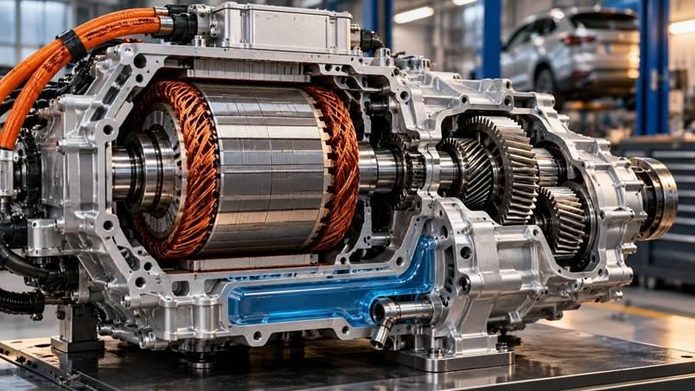
Editorial concept illustration: cutaway electric motor and reduction gearing. Not a photograph of a specific car or production unit.

The road-going response of an electric vehicle depends on much more than a single peak power figure

Drivers usually remember what a performance electric car does in the first second after they press the accelerator. There is no rising engine note, no conventional multi-gear shift, and often very little delay between the request and the surge forward. The easy explanation is “instant torque.” It is catchy, but it leaves out most of the engineering that actually determines how quick an EV feels.

An electric motor can respond rapidly because torque is controlled electronically, yet the driver experiences the combined behavior of the battery, inverter, motor, final-drive gearing, tires, and vehicle software. Two cars with similar peak power outputs may therefore deliver noticeably different launches, passing response and smoothness. Looking at the complete drive system tells a better story than comparing horsepower figures alone.

The pedal is a request, not a direct mechanical command

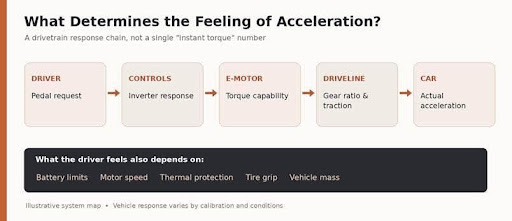
In a traditional combustion car, throttle and transmission behavior shape the acceleration request. In an EV, pressing the pedal typically sends an electronic torque demand to the vehicle controller. That demand is checked against traction, available battery power, motor speed, temperature, and stability limits before the inverter produces the required electrical currents.

One manufacturer may calibrate the first part of pedal travel to feel relaxed and progressive. Another may deliver much more wheel torque with a smaller movement. Both calibrations can use similar hardware. This explains why a city-focused electric crossover and a track-oriented performance EV can feel different even when their published torque numbers appear close.

Why the torque curve matters more than a headline number

Many electric traction drives can provide a broad region of strong low-speed torque. As motor speed rises, electrical and thermal limits increasingly govern what the drive can deliver, and available torque generally falls as the system moves into a power-limited region. The precise shape depends on motor design, voltage, current capability, and control strategy.

Gearing then turns motor torque into wheel torque. A higher reduction ratio can strengthen launch response but changes motor speed at a given road speed. Final gearing, tire radius, and driven axle configuration all matter. So does traction: a system that can produce huge motor torque still cannot accelerate faster than the tires and road surface allow.

The electric motor core is part of the performance equation

Inside a typical traction motor, electrical steel laminations form the stator and rotor cores that guide changing magnetic fields. Geometry, material grade, slot design, and manufacturing quality influence losses, temperature, mechanical stability, and electromagnetic behavior. Engineers selecting electric vehicle motor cores consider not only shape and dimensions but also the operating speed range, magnetic requirements and the way the final stack will be assembled.

The connection to acceleration is indirect but important. Motor losses become heat, and excessive temperature can limit continuous output or force the controller to reduce available torque. The motor that delivers an impressive short burst must also stay within its thermal and mechanical boundaries after repeated hard acceleration.

acceleration
Figure 1. Pedal response travels through several controlled and mechanical stages before a car accelerates.

Repeated pulls tell a more useful story

A single strong launch is exciting. A second, third and fourth can be much more informative. Sustained performance depends on coolant flow, radiator capacity, inverter losses, battery temperature and how effectively heat moves out of the motor. Manufacturers set protection thresholds to defend hardware and battery life, so full output may not be available in every condition.

This does not mean a car is poorly engineered. Protecting the drive system is part of good design. The useful questions are how consistently the vehicle delivers torque, how transparently it reduces power when hot and whether its behavior remains predictable for the driver.

Manufacturing precision and drivetrain feel

The stack made from individual electrical-steel sheets needs controlled alignment, slot geometry and joint quality. Errors that affect air-gap uniformity or rotor balance can contribute to vibration and electromagnetic noise; the significance depends on the motor design. Engineers use materials, tooling and inspection together to limit manufacturing variation.

The role of e-mobility motor laminations therefore extends beyond headline efficiency figures. The production specification should support reliable assembly, appropriate magnetic properties and repeatable behavior in a rotating system that may operate over a broad speed range.

How to judge the feeling from the driver’s seat

When comparing EVs, try several real-world situations instead of relying on a launch demonstration. Note the response to a small pedal input at parking speeds, the transition from coasting to gentle acceleration, a mid-speed overtaking request and the smoothness of torque delivery while turning. If it is safe and legal, consider whether repeated acceleration produces a change in response.

Listen for unexpected tonal whine, feel for drivetrain shunt when power is applied and pay attention to how smoothly traction control intervenes. These are not laboratory measurements, but they reveal qualities the spec sheet cannot capture. A convincing electric performance car should be responsive without being abrupt, quick without drama and consistent when driven beyond a single spectacular launch.

The difference between peak performance and usable performance

Peak torque and peak power are typically obtained under defined operating conditions, but a driver’s acceleration request can happen with a low battery state of charge, on a hot day or after a long highway climb. The control system continuously balances available electrical power and thermal protection against the requested result. That balance is why identical pedal movements can produce different responses as conditions change. Some vehicles communicate these limits clearly, while others leave the driver to discover them through reduced performance.

For engineers, useful validation requires a test plan that looks beyond one acceleration number. Road and laboratory tests can compare response delay, wheel-torque smoothness, thermal stability and repeatability at several speeds and temperatures. Measurement helps distinguish a genuine motor limitation from tire behavior, gearing, traction intervention or deliberate pedal mapping. The same logic matters for manufacturers: stable magnetic-core geometry and repeatable assembly are inputs to consistent output, not guarantees of any particular zero-to-sixty time.

For an enthusiast, this suggests a simple way to read a specification sheet. Treat a claimed maximum torque figure as one piece of information, then look for acceleration performance at different speeds, how the vehicle manages heat and whether independent tests show repeatable results. A well-matched drivetrain often feels more confident in everyday driving than one optimized only for an impressive launch headline.

The takeaway

“Instant torque” remains a useful introduction to electric driving. It is not a full explanation. The compelling part of the experience comes from matching motor construction, power electronics, gearing, thermal capacity, traction and software into one coherent system. Drivers ultimately feel that integration, not the isolated maximum rating of any one component.

Federal Wire Fraud Lawyers: Protecting Your Rights Against Serious Federal Charges

A federal wire fraud lawyer advising a client on criminal defense strategies and reviewing legal documents in a professional law office. 

Being under investigation or charged with federal wire fraud can be stressful and life-changing. Wire fraud allegations may involve emails, phone calls, online transactions, electronic payments, or other communications allegedly used to execute a fraudulent scheme. Federal prosecutors may prosecute such cases if the alleged conduct falls within federal jurisdiction. A conviction can lead to jail time, hefty fines, restitution and permanent damage to a person’s professional reputation. Federal Wire Fraud Lawyers help individuals understand the charges, review the government’s evidence and identify potential defense strategies. Having qualified legal representation early on can help protect your rights and make sure you understand your options throughout the federal criminal process. Here are some ideas about the topic. 

Understanding Federal Wire Fraud Charges 

Federal wire fraud is usually charged under 18 U.S.C. § 1343. It involves an alleged scheme to defraud or obtain money or property by means of false or fraudulent pretenses, representations or promises, utilizing interstate or foreign electronic communications that qualify. Examples include fraudulent investment schemes, deceptive business practices, Internet scams, and false electronic communications. But a failed business transaction, or an inaccurate statement, is not criminal fraud per se. Prosecutors must prove all elements of the crime beyond a reasonable doubt. A federal wire fraud attorney can assess the charges, examine the evidence, and determine if the prosecution’s case adequately proves the defendant’s criminal intent and involvement in the alleged scheme. 

Potential Penalties for Federal Wire Fraud 

The penalties for federal wire fraud charges can be severe, depending on the facts and circumstances of the offense. The maximum prison term is typically 20 years under 18 U.S.C. § 1343. If the crime involves a financial institution or benefits related to a federally declared major disaster or emergency, the maximum may be 30 years and a fine of up to $1 million. Actual penalties depend on jurisdiction, sentencing guidelines, amounts lost, criminal history and other factors. Conviction can also result in restitution and long-term professional consequences. An experienced criminal defense attorney can explain the possible penalties and help clients understand their legal options. 

What Happens During a Federal Wire Fraud Investigation? 

In federal wire fraud investigations, the FBI, federal prosecutors and other investigative agencies also may be involved. Investigators can examine emails, text messages, bank statements, electronic payment records, contracts and business transactions. They can also ask witnesses questions, demand documents or issue subpoenas. An investigative inquiry is not always followed by criminal charges. But statements and documents made in the course of an investigation can have profound effects on a case. “Prior to engaging in any substantive interviews, individuals should consider consulting with a defense lawyer. They should keep records that are relevant, not destroy evidence or make false statements. Legal counsel can help review investigative requests, protect applicable rights, and prepare for possible criminal proceedings. 

Choosing the Right Federal Wire Fraud Lawyer 

If you are accused of serious criminal charges, finding a good federal wire fraud lawyer is an important step. Find an attorney with experience handling federal criminal cases, white-collar crimes, complex financial evidence, and federal court procedures. During a consultation, ask about the lawyer’s experience with similar charges, how they review evidence, how they communicate, and what their fees are. A good lawyer will honestly tell you the strengths and weaknesses of your case, but will not guarantee a particular result. Legal representation may include investigating allegations, negotiating with prosecutors when appropriate, filing motions and preparing for trial. Having an attorney well versed in federal fraud litigation will help you make informed decisions along the way. 

Federal wire fraud charges can jeopardize your freedom, financial security and professional future. When facing federal criminal charges, it is important to understand the charges, potential penalties, and possible defenses. Federal wire fraud lawyers can examine the evidence, inform you about your legal choices and formulate a defense strategy that is specific to your situation. If you are under investigation or if you have been charged with an offense, you might want to get professional legal advice as soon as possible. “If you get ahead of the game and make decisions with knowledge, you can deal with the allegations and have a better grasp of the choices you have. To know more details about this topic, kindly see this site The Law Offices of Jonathan F. Marshall. 

Frequently Asked Questions (FAQs):

What does a federal wire fraud lawyer do?

A federal wire fraud attorney can help individuals who are accused of using electronic communications to further an alleged scheme to defraud. The lawyer can examine evidence, question the prosecution’s case, negotiate with prosecutors, and represent the client in federal court.

Can I be charged with wire fraud if nobody lost money?

“Yes, potentially.” A completed financial loss is not always required for wire fraud prosecutions. The government still has to prove the elements of the offense, including the fraudulent scheme and qualifying communications.

When should I contact a federal wire fraud lawyer?

If you are under investigation, served a subpoena, or facing criminal charges, you should consider contacting a qualified defense attorney. Obtaining legal advice early on helps you understand your rights and avoid mistakes that could complicate your case.

Fast Withdrawals, Unique Bonuses, and High Cashback Rates in the U.S. Market

While other online gaming platforms promise value and loyalty, players still place top importance on three main things: getting money quickly, having a high-value system, and the platform recognizing their value and loyalty. We recognize that too, so we do it better.

We offer Instant Withdrawals

In most cases, we offer withdrawals with zero delays. Why do we say that? Well, let me explain our withdrawal process. Most gaming platforms leave players wondering when their money will come, sometimes even days after a request. We, however, process nearly all of our players’ requests within seconds. Trustpilot reviews will tell you all you need to know about our players and why we’re #1 when it comes to speed. You have enough to worry about when you win; you shouldn’t have to chase after your money.

We Offer Some of the Most Competitive Cashback Rewards in the U.S

We believe our cashback program offers users exceptional value. Whether you’re a new user or a loyal customer, our goal is to make your experience more rewarding through attractive cashback benefits. Combined with exclusive bonuses and regular promotions, our cashback program gives users even more reasons to explore what our platform has to offer.

We have Bonuses and Promotions like No Other

The benefits of our cashback don’t end there, though. We have some bonuses of our own that you won’t see on any other gaming platform. In addition to a generous promotions program, our customers get to take advantage of frequent bonuses that keep them playing and help them try new things.

Why Do Players Choose Us?

• Quick withdrawals with no delay in 98% of cases
• The biggest cashback in the U.S. market
• Special bonuses for our players only
• Various contests and bonuses all around the year
• Proven track record, as evidenced in reviews on TrustPilot

The Conclusion

Quick payments, the best cashback, and real bonuses, this is what we promise our players. If you are tired of waiting for withdrawals and usual bonuses, then this is your platform.

Here is our Link:

Media Contact:
Besiki Kurashvili, Director
Winfield LLC, Toms River, New Jersey
Email: info@sweepburger.com
Website: https://sweepburger.com/

TITLE HOPES APPARENT FOR FUNNY CAR’S MATT HAGAN AT MOPAR NHRA LAS VEGAS NATIONALS POWERED BY DODGE

LAS VEGAS (Oct. 27, 2026) – When it comes to consistency in the Funny Car ranks in 2026, nobody has been better than Matt Hagan.

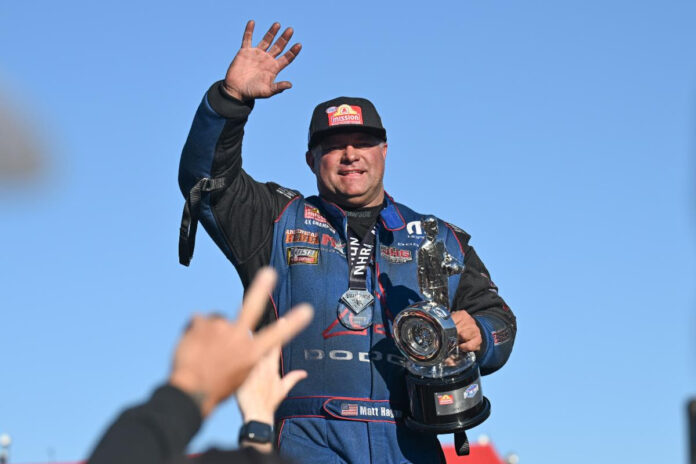
The four-time world champion for Tony Stewart Racing has been a model of consistency through 18 races and it’s a major reason why he’s the points leader and on the verge of a fifth world title heading into this weekend’s MOPAR NHRA Las Vegas Nationals powered by Dodge at The Strip at Las Vegas Motor Speedway.

Hagan has four wins and seven trips to the final round in NHRA Mission Foods Drag Racing Series action in 2026, with only two first-round losses. That is a massive feat in a class that is loaded with contenders, but that consistency has paved the way for a significant points lead with two races left.

He’s collected three final-round appearances, including a Rockingham win, in four Countdown to the Championship playoff races thus far, and with the other event being a semifinal finish, it’s allowed Hagan to build a 98-point lead over Jordan Vandergriff and 119 points over Dallas winner J.R. Todd in his 12,000-horsepower Dodge//SRT Hellcat Funny Car.

Hagan is also the defending event winner in Las Vegas, as he looks to again put on a show at his sponsor’s race – all with a fifth championship on the line.

“The whole week in Vegas is out of control. I don’t care whether or not we’re partying, it’s just Vegas — the time change, the media, the sponsors that come out, all the dinners, MOPAR and Dodge sponsoring the event, then SEMA. It’ll be a marathon being out there,” Hagan said.

“That being said, Vegas has been really kind to us and Pomona’s definitely been kind to us, so we’re closing out the season at tracks where we have great data to work off of. I just want to dig deep, work hard for this team, for Mike Knudsen. We’re trying to get him his first championship as a crew chief. I just need to do my job on the starting line and keep the car in the groove. It’s not all about me, not all about winning number five, it’s about this team, about solidifying this team and its leadership as championship caliber.”

Last season, Brittany Force (Top Fuel), Hagan (Funny Car), Dallas Glenn (Pro Stock) and Gaige Herrera (Pro Stock Motorcycle) all claimed victories in Las Vegas. This year’s race will once again be broadcast on FS1, with elimination coverage beginning at 5 p.m. ET on Sunday, Nov. 1.

It is the 19th of 20 races in NHRA’s 75th anniversary season and the fifth of six races in the Countdown to the Championship playoffs, and there’s history on the line for Hagan. A fifth championship would put Hagan with legendary John Force as the only drivers in Funny Car history with five or more championships.

That’s a major deal during NHRA’s milestone season, but Hagan also knows he has work to do. Vandergriff and Todd are eager to close the gap in Vegas to set up a marquee showdown in Pomona, but Hagan will also have to ward off the likes of back-to-back world champ Austin Prock, Jack Beckman and Ron Capps.

“I’m just proud of my guys,” Hagan said. “They’re putting a great race car underneath me. Each Countdown race we’ve continued to build our points lead and that’s just what you have to do to win a championship. Two more races to go, but if we continue the way we’re going, things should work out the way they’re supposed to.”

Top Fuel’s Shawn Langdon has an opportunity to clinch his second world title in Las Vegas, as he currently holds a 139-point lead over teammate and reigning world champ Doug Kalitta. Other top names include Tony Stewart, Antron Brown and Maddi Gordon.

There’s a tight battle brewing in Pro Stock, as Glenn jumped back in the points lead heading to Vegas. His lead, though, is just 14 points over Greg Stanfield, 41 more than Matt Hartford and 78 over six-time champ Greg Anderson.

Two-time world champion Herrera won last year’s MOPAR NHRA Las Vegas Nationals powered by Dodge over Angie Smith. Reigning champ Richard Gadson leads the points, while six-time world champ and Dallas winner Matt Smith is third.

The MOPAR NHRA Las Vegas Nationals powered by Dodge will also feature exciting competition in the NHRA Lucas Oil Drag Racing Series and the Summit Racing Series presented by Hoosier E.T. Finals, where world champions will be crowned in several categories. The event also marks the final race of the popular JBS Equipment NHRA Pro Mod Series presented by Elite Motorsports.

Vegas race fans can also enjoy special pre-race ceremonies on Sunday, along with the SealMaster Track Walk. Another can’t-miss experience is the winner’s circle celebration, where fans are invited to congratulate the event winners. As always, every ticket is a pit pass to the most powerful motorsports attraction on the planet. Fans can see their favorite teams in action as they service their cars, get autographs from their favorite drivers and more. They can also visit the midway for displays, merchandise, food and fun.

NHRA Mission Foods Drag Racing Series qualifying will feature two rounds at 12:45 and 3:30 p.m. PT on Friday, Oct. 30, followed by the final two rounds on Saturday, Oct. 31 at 12 and 2:30 p.m. Final eliminations are scheduled for 11 a.m. PT on Sunday, Nov. 1. Television coverage includes qualifying action on FS1 at 3 p.m. ET on Sunday, followed by eliminations at 5 p.m. ET.

To purchase tickets to the MOPAR NHRA Las Vegas Nationals powered by Dodge at The Strip at Las Vegas Motor Speedway, call 800-644-4444 or visit LVMS.com. Children 12 and under are admitted free in general admission areas with a paid adult. For more information about NHRA, visit NHRA.com.


About Mission Foods

MISSION®, owned by GRUMA, S.A.B. de C.V., is the world’s leading brand for tortillas and wraps. MISSION® is also globally renowned for flatbreads, dips, salsas and Mexican food products. With presence in over 112 countries, MISSION® products are suited to the lifestyles and the local tastes of each country. With innovation and customer needs in mind, MISSION® focuses on the highest quality, authentic flavors, and providing healthy options that families and friends can enjoy together. For more information, please visit https://www.missionfoods.com/

About NHRA

NHRA is the primary sanctioning body for the sport of drag racing in the United States. NHRA presents 20 national events featuring the NHRA Mission Foods Drag Racing Series and NHRA Lucas Oil Drag Racing Series, as well as the JBS Equipment NHRA Pro Mod Drag Racing Series presented by Elite Motorsports and NHRA Flexjet Factory Stock Showdown™ at select national events. NHRA provides competition opportunities for drivers of all levels in the NHRA Summit Racing Series and NHRA Street Legal™. NHRA also offers the NHRA Jr. Street® program for teens and the Summit Racing Jr. Drag Racing League® for youth ages 5 to 17. With more than 100 Member Tracks, NHRA allows racers to compete at a variety of locations nationally and internationally. NHRA’s Youth and Education Services® (YES) Program reaches over 30,000 students annually to ignite their interest in automotive and racing related careers. NHRA’s streaming service, NHRA.tv®, allows fans to view all NHRA national events as well as exclusive features of the sport. In addition, NHRA owns and operates three racing facilities: Gainesville Raceway in Florida; Lucas Oil Indianapolis Raceway Park; and In-N-Out Burger Pomona Dragstrip in Southern California. For more information, log on to www.NHRA.com, or visit the official NHRA pages on Facebook, Instagram, Twitter, and YouTube.

Front Row Motorsports: Martinsville Speedway NCTS Race Advance (Layne Riggs / Chandler Smith)

Front Row Motorsports
Layne Riggs | Chandler Smith
Martinsville Speedway NASCAR CRAFTSMAN Truck Series Race Advance

Event Details:

Series: NASCAR CRAFTSMAN Truck Series (NCTS)
Track: Martinsville Speedway
Track Size / Surface: 0.526-mile / Asphalt
Track Location: Martinsville, Virginia
Race Date: October 30, 2026
Race Start Time: 6:00 p.m. ET
Race Information: 200 Laps (Stages – 50 / 100 / 200) – 105.2 Miles
Television: FS1
Radio: SiriusXM

Event Notes:

  • 24th event of the 2026 NASCAR CRAFTSMAN Truck Series season.
  • First and only NASCAR CRAFTSMAN Truck Series race at Martinsville Speedway this season.
  • Penultimate event in The Chase, the NASCAR CRAFTSMAN Truck Series postseason that features the top ten drivers in the regular season standings competing for the 2026 championship.

No. 34 Team Details

Driver: Layne Riggs

Crew Chief: Dylan Cappello

Primary Sponsor: BKB Bare Knuckle Boxing

Standings: 2nd

Recent Season Results:

Talladega Superspeedway (October 23) – 8th
Phoenix Raceway (October 16) – 3rd
Charlotte Motor Speedway (October 9) – 1st

Driver and Team Event Notes

Following an eighth-place finish at Talladega Superspeedway last Friday, Layne Riggs is 43 points behind Kaden Honeycutt in the standings, with two races remaining.

In four NASCAR CRAFTSMAN Truck Series starts at Martinsville, Riggs has four top-15 and two top-six finishes at the track.

In the fall Martinsville event last season, Riggs started on the pole and led 27 laps, finishing in third. The third-place result is his best finish at the track in the NASCAR CRAFTSMAN Truck Series.

BKB Bare Knuckle Boxing Event Notes

This will be BKB Bare Knuckle Boxing’s eighth primary sponsorship race of the 2026 season with Riggs and the No. 34 team.

So far, BKB Bare Knuckle Boxing’s race program has been highlighted by three wins, with Riggs’ dominating at Lucas Oil Indianapolis Raceway Park, New Hampshire Motor Speedway, and most recently, at Charlotte Motor Speedway, in the BKB Bare Knuckle Boxing branded Ford F-150.

Originating in South Florida with combat sports legend Dada 5000 and Mike Vazquez (who in 1999 formed HRT Motorsports, NASCAR’s first Hispanic racing team), BKB is the oldest professional bare knuckle boxing company in the world and its largest in terms of roster, library and distribution. BKB is broadcasted in millions of homes across the globe. Fans can learn more about BKB by visiting https://www.bkbbareknuckle.com/.

No. 38 Team Details

Driver: Chandler Smith

Crew Chief: Jon Leonard

Primary Sponsor: Cole Swindell / QuickTie

Standings: 4th

Recent Season Results:

Talladega Superspeedway (October 23) – 14th
Phoenix Raceway (October 16) – 15th
Charlotte Motor Speedway (October 9) – 5th

Driver and Team Event Notes

Chandler Smith enters the event at Martinsville Speedway fourth in the standings, 142 points behind points leader, Kaden Honeycutt, and mathematically alive in the championship battle.

In the NASCAR CRAFTSMAN Truck Series, Smith has four starts at Martinsville, earning two top-five and four top-10 finishes at “The Paperclip”.

Since his first NASCAR CRAFTSMAN Truck Series start at the track in 2021, Smith hasn’t finished worse than sixth at Martinsville.

In the NASCAR O’Reilly Auto Parts Series, Smith has four starts at Martinsville. In both 2024 events for the series, Smith finished third, his best finish to date at the track in a NASCAR O’Reilly Auto Parts Series car.

QuickTie / Cole Swindell Event Notes

This will be QuickTie’s 11th primary sponsorship race of the 2026 season.

Award winning country music singer, Cole Swindell, joins Smith for his second and final race on the No. 38 Ford F-150. Fans of Swindell can sign up to join his “Down Home Crew” at his website to receive insider updates for future shows and more.

ABOUT FRONT ROW MOTORSPORTS

Front Row Motorsports (FRM) is a winning organization competing in the NASCAR Cup Series and the NASCAR CRAFTSMAN Truck Series. Founded in 2004 by entrepreneur Bob Jenkins, FRM has earned top honors including a 2021 Daytona 500 victory and the 2022 CRAFTSMAN Truck Series championship. Based in Mooresville, N.C., FRM fields the No. 4, No. 34, and No. 38 entries in the NASCAR Cup Series, along with the No. 34 and No. 38 teams in the CRAFTSMAN Truck Series. For more information, visit FrontRowMotorsports.com and follow Front Row Motorsports on social media — X: @Team_FRM, Instagram: @teamfrm, Tik Tok: @Team_FRM, YouTube: @FrontRowNASCAR, and Facebook: facebook.com/FrontRowMotorsports.

Spire Motorsports NASCAR Cup Series Martinsville Race Advance

  • In 31 previous NASCAR Cup Series starts at Martinsville (Va.) Speedway, Spire Motorsports has seven top-20 results and a best finish of 12th earned by Michael McDowell in March 2025. Spire Motorsports fields the Nos. 7, 71 and 77 Chevrolet Camaro ZL1s in NASCAR’s premier division with Daniel Suárez, McDowell and Carson Hocevar, respectively.
  • The NASCAR Cup Series will contest the ninth race of The Chase Sunday at Martinsville. Hocevar and Suárez sit 10th and 14th, respectively, in the championship standings. McDowell is 20th in points following last week’s race at Talladega (Ala.) Superspeedway.
  • The 500-lap NASCAR Cup Series race from Martinsville Speedway will be televised live on NBC Sunday, Nov. 1 beginning at 2 p.m. Eastern Standard Time. The 35th of 36 points-paying races on the 2026 NASCAR Cup Series calendar will also be broadcast live on the Motor Racing Network and SiriusXM NASCAR Radio Channel 90.

Daniel Suárez – Driver, No. 7 Spire Motorsports Chevrolet Camaro ZL1

  • Daniel Suárez will pilot Spire Motorsports’ No. 7 Gainbridge℠ Assists Chevrolet Camaro ZL1 in Sunday’s NASCAR Cup Series race at Martinsville Speedway.
  • Gainbridge℠, Parity, and the Women’s Sports Foundation (WSF®) today named the 2026 grant recipients of Gainbridge Assists Powered by Parity, awarding $250,000 across 32 organizations expanding access to sports and education for girls and women nationwide. The 2026 cohort spans 20 states plus Washington, D.C., and Puerto Rico – with six states represented for the first time –and pushes the program’s cumulative investment to almost $700,000 across 87 organizations. Gainbridge Assists has become a force in advancing equity in sports, directly supporting grassroots leaders and community-based programs that use sport and education as a platform to build confidence, opportunity, and leadership.
  • The Monterrey, Mexico native has made 19 starts at Martinsville, earning two top-10 and seven top-20 results with 20 laps led at the 0.526-mile layout.
  • Suárez finished 20th in this year’s spring race at Martinsville where he battled handling issues and sustained front-end damage late in the day.
  • In Sunday’s Cup Series race at Talladega, Suárez overcame a speeding penalty and Lap 131 crash damage to finish 18th, earning his 27th top-20 finish this season.
  • Suárez sits 14th in points, 240 behind the leader. Through 34 races, Suárez has recorded one win, three top fives, eight top 10s and 27 top-20 finishes. He’s logged an average starting position of 14.3 and a 15.0 average finish.
  • The 34-year-old driver has made 357 Cup Series starts, highlighted by victories at Sonoma (Calif.) Raceway (June 2022), Atlanta Motor Speedway (February 2024) and Charlotte (N.C.) Motor Speedway (May 2026). A 10-season veteran of NASCAR’s premier division, he has earned 27 top-five and 83 top-10 finishes since making his Cup Series debut in 2017. Suárez has also led 949 laps and collected three career poles over that span.

Daniel Suárez Quote
What makes Martinsville such a challenging track, and what have you and your team been working on to be prepared for this fall’s race?
“We’re looking to have a stronger weekend with our No. 7 Gainbridge Assists Chevrolet this time around. Martinsville is a tough place, and getting the handling right is what we need to have a good race. We’ve learned a lot since the spring, and hopefully, we can put together a fast-qualifying lap and be in position to compete for a solid finish. We want to keep improving and give our team something to build on heading into the final two races of the season.”

Ryan Sparks – Crew Chief, No. 7 Spire Motorsports Chevrolet Camaro ZL1

  • Ryan Sparks is the Crew Chief of Spire Motorsports’ No. 7 Gainbridge Assists Chevrolet Camaro ZL1 with driver Daniel Suárez in the NASCAR Cup Series.
  • Sparks has called 236 Cup Series races, earning one victory, seven top-five and 18 top-10 finishes since keying the mic for the first time in NASCAR’s premier division in 2020.
  • The Winston-Salem, N.C., native has called 11 races at Martinsville, earning three top-20 finishes with his best result coming with driver Corey LaJoie who took the checkered flag 18th in June 2020.
  • Sparks joined Spire Motorsports in 2021, where he served as both Crew Chief and Competition Director, leading the organization’s competitive and technical efforts. In 2026, Sparks serves in a singular role as crew chief for Daniel Suárez. He brings more than a decade of experience across all three of NASCAR’s national touring series, highlighted by 13 seasons at Richard Childress Racing and contributions to title-winning campaigns in the NASCAR CRAFTSMAN Truck Series (2011) and O’Reilly Auto Parts Series (2013).

Michael McDowell – Driver, No. 71 Spire Motorsports Chevrolet Camaro ZL1

  • Michael McDowell will pilot the No. 71 Delaware Life Chevrolet Camaro ZL1 in Sunday’s 500-lap NASCAR Cup Series race at Martinsville Speedway.
  • McDowell has made 31 starts at the Ridgeway, Va., oval, highlighted by a 12th-place finish in spring 2025.
  • Across those same starts at the famed half-mile, the veteran racer has earned two top-15 and seven top-20 finishes in NASCAR’s premier division.
  • In the Cup Series’ most recent visit to Martinsville, McDowell qualified 20th and finished 18th.
  • McDowell made his first NASCAR Cup Series start at a snowy Martinsville Speedway on March 30, 2008, over 6,800 days ago, for the now defunct Michael Waltrip Racing.
  • Not only did he make his Cup Series debut at Martinsville, but McDowell also made his NASCAR CRAFTSMAN Truck Series debut at the iconic venue in October 2007. He qualified 29th and ran 181 of the possible 200 laps before being collected in a late-race incident, leaving him 31st in the final rundown.
  • Last weekend, the 2021 Daytona 500 Champion qualified 23rd and finished 10th in the YellaWood 500 at Talladega Superspeedway. He survived a host of on-track incidents to bring home his seventh top-10 finish of the season, his most since being named the driver of the No. 71 machine.
  • Over the first 34 races of the season, the Glendale, Ariz., native, has led 24 laps, logging three top-five and seven top-10 finishes. McDowell is currently 20th in points with two races remaining.
  • The Spire Motorsports trio of McDowell, Carson Hocevar and Daniel Suarez will head to “jail” tonight for this year’s Jail and Bail charity fundraiser. The Jail and Bail fundraiser raises funds for the Brienne Davis Memorial Scholarship to help more women succeed in the technical workforce. Fans can learn more about the Brienne Davis Memorial Scholarship and help “bail” McDowell out by logging on here.

Michael McDowell Quote
What makes Martinsville so special, and what have you learned since your first start there?
“Martinsville is one of those tracks where I feel like if I can win there, I’ve truly arrived as a Cup Series driver. It’s such a unique and technical place. Short-track racing isn’t something I grew up doing like a lot of these guys. The racing is so aggressive compared to intermediate tracks and superspeedway racing. Martinsville is a place with constant action and somewhere you need to manage your track position while still being aggressive. It’s also a track with a lot of history for me, since that’s where I made my first Cup and Truck Series starts. Martinsville is a tough place to get around. You don’t have much time to catch your breath and reset if something doesn’t go your way. We’ve been able to find a good groove in practice and qualifying, but the smallest mistake can ruin your day. Hopefully, we can have a clean weekend and put together back-to-back top-10 weekends.”

Travis Peterson – Crew Chief, No. 71 Spire Motorsports Chevrolet Camaro ZL1

  • Travis Peterson serves as the Crew Chief for driver Michael McDowell and Spire Motorsports’ No. 71 Chevrolet Camaro ZL1 in the NASCAR Cup Series.
  • In seven Cup Series races at Martinsville Speedway serving in the crew chief role, Peterson is still looking to log his first top-10 finish. The University of North Carolina at Charlotte graduate, who earned his degree in 2012, has called three top-20 efforts, including a 12th-place showing secured in March 2025.
  • Peterson served as race engineer for Dale Earnhardt Jr.’s fourth-place Martinsville finish in November 2015 for Hendrick Motorsports and was part of the No. 88 team’s three-win season.
  • Across 147 starts serving in the crew chief role, Peterson has called eight poles, one win, 10 top-five and 30 top-10 finishes.
  • The 35-year-old recorded his 30th career top-10 result last weekend at Talladega Superspeedway.

Carson Hocevar – Driver, No. 77 Spire Motorsports Chevrolet Camaro ZL1

  • Carson Hocevar will drive Spire Motorsports’ No. 77 Zeigler Auto Group Chevrolet Camaro ZL1 in Sunday’s 500-lap Martinsville race, the penultimate event on the 2026 Cup Series calendar and the ninth of 10 races in The Chase.
  • Zeigler Automotive Group is one of the largest privately-owned dealer groups in the U.S. with 88 franchises across 41 locations in Wisconsin, Illinois, Indiana, and Michigan. Vehicle brands represented include all the domestic and majority of the imported manufacturers. Besides its extensive automotive portfolio, the organization owns and operates Zeigler Motorsports, an 85,000-square-foot motorsports dealership and action park, offering 19 different powersports brands, plus its own onsite restaurant: Trak Houz Bar & Grill. Additionally, Zeigler Motorsports houses the Elevate Leadership & Team Building Academy, an executive training company. The Kalamazoo-based dealer group also owns three Byrider franchises, three finance companies, several insurance firms, and a leasing firm.
  • Hocevar and the No. 77 team, alongside teammate Daniel Suarez and Spire Motorsports’ No. 7 team, are competing for 2026 NASCAR Cup Series Championship honors. The opportunity marks the first appearance in The Chase for Hocevar and the first time Spire Motorsports will compete for a Cup Series title. Through seven of 10 races in The Chase – NASCAR’s playoff-style format – the No. 77 team sits 10th in points, 15 markers outside eighth.
  • Through 34 races, the Portage, Mich., native has already set career-highs in multiple categories:
  • Season-to-date results – one win, six top fives, 12 top 10s
  • 198 laps led
  • 868 points scored
  • 13.0 average start
  • 15.7 average finish
  • The 23-year-old driver has been one of the most improved on the circuit throughout the 2026 campaign with average starting and finishing positions that have improved by over five spots compared to this point in 2025. Hocevar is on pace to best his average finish by 5.9 positions by season’s end – the largest improvement in the field – and his 10th position in points is a 13-position increase compared to the end of 2025, bested only by Spire Motorsports teammate Daniel Suarez’s 15-position rise.
  • The 2024 NASCAR Cup Series Rookie of the Year owns six career NASCAR Cup Series starts at “The Paperclip” where he’s registered a pair of venue-best 17th-place finishes (April 2024, March 2026).
  • In CRAFTSMAN Truck Series competition, the five-time series race winner owns four previous starts at Martinsville, earning a venue-best 12th-place finish in October 2021. He won at another Virginia short track, Richmond Raceway, in 2023 while competing full time in the series for Niece Motorsports.
  • Hocevar was one of the most consistent drivers throughout the month of October, tallying one top 10 and four top 15s at Las Vegas Motor Speedway, Charlotte Motor Speedway, Phoenix Raceway and Talladega Superspeedway, respectively. His average finish of 11th throughout the month ranks third among all drivers and highest without a victory in that span.
  • Last Sunday at Talladega, a pit-road speeding penalty during green-flag stops in Stage 1 pinned Hocevar one lap down until the conclusion of Stage 2 when he was awarded the free pass back onto the lead lap. He restarted 23rd on Lap 147 and reached the top five on Lap 155. A multi-vehicle incident on Lap 184 sent Hocevar to the garage area for repairs but returned to the track, on the lead lap, in 14th position for NASCAR Overtime where he was able to race his way to an impressive sixth-place finish.
  • Hocevar registered his first-career victory earlier this season at Talladega. He survived a late-race restart with three laps remaining and brought home the checkered flag to register Spire Motorsports’ second Cup Series win and first since the 2019 Coke Zero Sugar 400.

Carson Hocevar Quote
What are your thoughts heading into this weekend?
“Martinsville has always been tough. I think we had our best day going there this Spring, but then we got run over and that ruined our day. We were super-fast at Bowman Gray to open the year, so I know we can run well on these types of tracks.”

Luke Lambert – Crew Chief, No. 77 Spire Motorsports Chevrolet Camaro ZL1

  • Luke Lambert is the Crew Chief of Spire Motorsports’ No. 77 Chevrolet Camaro ZL1 in the NASCAR Cup Series with driver Carson Hocevar.
  • Lambert is in his third season at Spire Motorsports and fourth with Hocevar. The duo has logged two pole awards, one win, nine top-five and 27 top-10 finishes in 114 races.
  • The 16-year veteran crew chief has called 26 NASCAR Cup Series events at Martinsville, earning one top five and six top 10s, highlighted by a third-place finish in November 2014 with Ryan Newman. He tacks on another third-place result at the historic half-mile in March 2008 as a race engineer for Jeff Burton.

About Spire Motorsports …
Spire Motorsports fields full-time entries in the NASCAR Cup Series, NASCAR CRAFTSMAN Truck Series and Interstate Batteries High Limit Racing.

The team, co-owned by longtime NASCAR industry executive Jeff Dickerson and TWG Motorsports CEO Dan Towriss, earned its inaugural NASCAR Cup Series victory in its first full season of competition when Justin Haley took the checkered flag in the Coke Zero Sugar 400 at Daytona (Fla.) International Speedway July 7, 2019. Less than three years later, William Byron drove Spire Motorsports’ No. 7 Chevrolet Silverado its first NASCAR CRAFTSMAN Truck Series win April 7, 2022, at Martinsville (Va.) Speedway. The team’s most recent victory came October 23, 2026, when Sammy Smith won the NASCAR CRAFTSMAN Truck Series race at Talladega (Ala.) Superspeedway.

In 2026, Spire Motorsports campaigns the Nos. 7, 71 and 77 Chevrolet Camaro ZL1s in the NASCAR Cup Series and the Nos. 7 and 77 Chevrolet Silverado RSTs in the NASCAR CRAFTSMAN Truck Series. The Mooresville, N.C., organization also fields the No. 77 410 sprint car in Interstate Batteries High Limit Racing competition.