Home Blog Page 25

TOYOTA RACING Weekly Preview 10.28.26

This Week in Motorsports: October 26-November 1, 2026

NCS/NOAPS/NCTS: Martinsville Speedway – October 30-November 1
ARCA West: Kevin Harvick’s Kern Raceway – October 31

PLANO, Texas (October 28, 2026) – NASCAR’s Cup, O’Reilly Series, and Truck Series head to Martinsville Speedway for the second of two visits this season around the famous 0.526-mile short track. The ARCA Menards Series West finishes up their 2026 season at the same track where it began – at Kevin Harvick’s Kern Raceway in Bakersfield, California.

NASCAR National Series – NCS/NOAPS/NCTS

Camry XSE drivers look to close points gap … With just two races remaining in the season, Denny Hamlin leads Team Toyota in the standings in second place, with a logjam of Joe Gibbs Racing (JGR) Toyota Camry XSE’s following closely behind heading into this weekend’s race at Martinsville Speedway. Hamlin sits 73 points behind the leader, with teammates Christopher Bell and Chase Briscoe third and fourth in the standings, respectively. Bell sits just one point behind Hamlin and 74 out of the lead, while Briscoe is only six points behind Hamlin and 79 markers behind the leader.

Hamlin looks to recapture Martinsville magic … With Hamlin looking to gain ground in the standings, there’s no better place to head than back to his home state, where he’s found plenty of success over the course of his 21-year career in NASCAR’s top series. Hamlin will make his 42nd career Cup Series start at ‘The Paperclip’ on Sunday, where he has six wins, 22 top-five and 28 top-10 finishes during his impressive career. The Virginia native captured his most recent win there last spring and started this year’s spring race with a pole-winning effort. Hamlin knows a seventh career Martinsville win would go a long way to be a part of the championship fight next weekend at Homestead-Miami Speedway.

Briscoe eager to continue Martinsville success … Chase Briscoe returns to Martinsville Speedway this weekend where he’s found solid success over the last several years. Entering this weekend, the JGR driver has earned six top-10 finishes in the last nine Martinsville races, dating back to the spring of 2022. His best career Cup Series finish at Martinsville was a fourth-place result in the fall of 2023.

Thompson looking to extend late season surge … Dean Thompson left Talladega Superspeedway last weekend with his second consecutive top-10 finish – the first time in his career he has recorded back-to-back top-10 runs. Since Labor Day weekend, Thompson has finished every race inside the top-20, including three top-10 finishes. Even better news for the driver of the No. 26 Toyota GR Supra is the O’Reilly Series heads to Martinsville this weekend and a good shot to extend his top-10 streak. In fact, Thompson has finished inside the top-10 in all three career starts at the .526-mile short track, most recently bringing home a seventh-place finish there in the spring.

Gray looks for Fall Martinsville repeat … JGR driver Taylor Gray captured his maiden NASCAR O’Reilly Auto Parts Series victory in last fall’s race at Martinsville Speedway. Gray started 13th and led 52 laps on his way to taking home the checkered flag at the race’s end. He will make his fourth career O’Reilly Series start at ‘The Paperclip’ this weekend in search of another victory at the track and his third career win in the series.

Honeycutt eyeing first Truck Series Championship…Toyota Development Driver Kaden Honeycutt heads to Martinsville looking to continue his solid run in the NASCAR Craftsman Truck Series Chase. The driver of the No. 11 Toyota Tundra TRD Pro extended his points lead last weekend to 43 points with a fifth-place finish at Talladega. With two races remaining in the season and the championship fight, Honeycutt looks to add another solid run during this year’s postseason. Honeycutt has been a model of consistency during the first five races of the Chase, as he has posted two wins, four top-five and five top-10 finishes. The Texas native brought home his best career finish at Martinsville of second last fall driving a Toyota Tundra TRD Pro for Halmar-Friesen Racing, as a win would go a long way towards capturing the series title.

NASCAR Regional Series – ARCA Menards Series West

Lovell eyes strong finish to her impressive ARCA West rookie season … Mia Lovell heads to the ARCA West Series finale at Kevin Harvick’s Kern Raceway in California hoping to finish strong in her fulltime ARCA Menard’s West Series rookie campaign. Lovell, who moved from the world of professional skateboarding to racing, sits third in the rookie standings heading into Saturday night’s season finale. The Nitro Motorsports driver and Phoenix resident is eighth in the standings with one race remaining with two top-five and six top-10 finishes on the season and is hoping to best the 12th-place finish.

About Toyota

Toyota (NYSE:TM) has been a part of the cultural fabric in the U.S. for nearly 70 years, and is committed to advancing sustainable, next-generation mobility through our Toyota and Lexus brands, plus our nearly 1,500 dealerships.

Toyota directly employs approximately 48,000 people in the U.S. who have contributed to the design, engineering, and assembly of more than 36 million cars and trucks at our 11 manufacturing plants. In 2025, Toyota’s plant in North Carolina began to assemble automotive batteries for electrified vehicles.

For more information about Toyota, visit www.ToyotaNewsroom.com.
When Someone Else Causes the Crash but Your Insurance Has to Save the Day

Photo by depositphotos at https://depositphotos.com/

You did everything right. You stopped at the light, you were wearing your seatbelt, and you weren’t even speeding. Then someone plowed into the back of your car. You’re hurt, the car’s wrecked, and at least the other driver has insurance. Right?

Maybe not. Sometimes the other driver has no insurance at all. Sometimes they have a bare-bones policy that runs dry before your bills even finish piling up. Either way, you’re left holding losses that someone else caused, wondering who’s actually going to pay.

That’s the insurance surprise nobody wants. Getting hit by an uninsured or underinsured driver can turn a straightforward claim into a frustrating puzzle. The good news is that your own policy might hold part of the answer, if you know where to look.

Why the Other Driver’s Insurance Might Not Be Enough

An uninsured driver has no auto insurance at all, or no coverage that applies to the crash. That can include some hit-and-run situations, where the at-fault driver disappears before anyone gets their information. In those cases, there’s simply no policy to turn to.

An underinsured driver has coverage, just not enough. New York’s minimum bodily injury liability limits are fairly low compared to the cost of serious injuries. A single surgery, a long hospital stay, or months of lost income can blow past those limits quickly.

When injuries are serious, the gap between what happened and what the other driver’s policy can pay may be huge. Suing the driver personally is possible, but many people with minimal coverage also have few assets. Collecting can be extremely difficult. That’s the trap.

How Your Own Insurance May Become Part of the Solution

New York requires auto policies to include uninsured motorist coverage. It can help when you’re injured by a driver who has no insurance or in certain hit-and-run situations. It’s built into policies precisely because uninsured drivers are a real part of the road.

Supplementary uninsured/underinsured motorist coverage, often called SUM, goes further. It can help when the at-fault driver’s coverage falls short, up to your own SUM limits. Many drivers don’t realize how much SUM they carry, or that they can buy higher limits.

These protections are separate from New York’s no-fault benefits. No-fault generally helps pay basic medical bills and some lost wages regardless of who caused the crash, up to set limits. UM and SUM coverage address the injury claim against the at-fault driver when their coverage falls short.

Why Having Coverage Doesn’t Automatically Mean Getting Paid

Your own insurer doesn’t just cut a check because you ask. A UM or SUM claim is still a claim, and the insurer will evaluate it carefully. In some ways, your insurance company steps into the shoes of the at-fault driver. That can feel strange.

Policy conditions matter a lot. Policies often require prompt notice of the accident and the claim, cooperation with the insurer, and sometimes consent before settling with the at-fault driver. Missing a requirement can jeopardize coverage, so reading the policy closely is essential. Deadlines bite.

Liability and damages can still be disputed. The insurer may question who caused the crash, how serious the injuries are, or whether treatment was necessary. Some disputes go to arbitration. Having coverage is a great start, but it isn’t the finish line.

The Financial Problems That Can Arise When Coverage Falls Short

Medical bills don’t wait. Once no-fault benefits are exhausted, ongoing treatment, surgery, and therapy may create balances that need another source of payment. Without enough coverage, those bills can turn into collection calls and real stress. And they keep coming.

Lost income adds pressure. Serious injuries can keep people out of work for months, and no-fault wage benefits have limits. When a job is gone or a career has to change, the financial hole can grow quickly and deeply. Rent doesn’t wait either.

Long-term needs are the biggest concern. Future surgeries, ongoing care, and permanent limitations can carry costs that last for years. When damages exceed available insurance, injured people may face a compensation gap that changes their financial future. That’s why coverage choices matter so much.

Conclusion

Getting hit by someone without enough insurance is maddening. You didn’t cause the crash, but you may still face a mountain of losses the other driver can’t cover. It happens more often than most people expect. Way more often.

In New York, uninsured motorist and SUM coverage can help fill that gap, separate from no-fault benefits. But policy conditions, notice requirements, and disputed claims mean having coverage doesn’t guarantee a smooth ride. Read the fine print now, while things are calm.

The most important coverage may be the one you buy for yourself. Checking your SUM limits before a crash can make a huge difference afterward. If you’ve been hurt, a qualified attorney can explain how these coverages might apply.

When Saving on Car Insurance Turns Into a Very Expensive Experiment

Photo by depositphotos at https://depositphotos.com/

Money’s tight. Rent went up, groceries cost more every week, and that car insurance bill is sitting there like a dare. Skipping it for a month or two seems harmless. You’re a careful driver. What are the odds anything happens? Famous last words.

The problem is that insurance isn’t priced for the days when nothing happens. It’s priced for the one moment when everything does. A rear-end tap at a light, a parking lot scrape, a distracted driver who drifts into your lane. That moment doesn’t send a warning.

Driving without insurance in Florida can create consequences that dwarf whatever you saved. Suspended plates, reinstatement fees, and personal liability for someone else’s losses can turn a small monthly savings into a very expensive experiment. Florida doesn’t make it easy to slip through the cracks either.

What Florida Actually Requires Drivers to Carry

Florida does things a little differently than many states. Most owners of registered four-wheel vehicles must carry at least $10,000 in personal injury protection, known as PIP, and $10,000 in property damage liability. Those are the basic building blocks. Most people stop there.

PIP is part of Florida’s no-fault system. It helps cover your own medical expenses and lost income after a crash, regardless of who caused it, subject to policy limits and rules. Property damage liability pays for damage you cause to someone else’s property.

Notice what’s missing. Florida generally doesn’t require bodily injury liability coverage for most private drivers, though it may be required in certain situations, like after some serious violations. Requirements can differ depending on circumstances, so checking current rules for your specific situation is smart.

What Happens When the State Discovers You’re Uninsured?

Florida keeps tabs. Insurance companies report cancellations and lapses to the state, so letting coverage slide doesn’t usually go unnoticed for long. You don’t even need to get pulled over. A notice can show up in the mail on its own.

The consequences can include suspension of your driver’s license, registration, and plates. That suspension can last up to three years or until you show proof of new coverage, whichever comes first. Driving on a suspended license creates a whole new set of problems.

Getting reinstated costs money. Fees generally start at $150 for a first offense and climb to $250 and then $500 for repeat lapses within three years. Showing that new coverage began before the suspension date may help avoid some of those penalties.

Why an Accident Without Coverage Can Become Financially Devastating

This is where things get scary. Without PIP, your own medical bills and lost wages may land squarely on you. An ambulance ride, an ER visit, and a few follow-up appointments can add up faster than most people expect.

If you caused the crash, the other driver’s damages become your problem too. Without property damage liability coverage, repairing their car may come out of your pocket. If someone is seriously hurt, they may pursue a claim against you personally. That can follow you for years.

Your own car doesn’t get a free pass either. Unless you carry collision coverage, repairs or replacement are on you, regardless of fault. Combined with suspensions and fees, a single crash can snowball into a financial mess that takes years to dig out of.

The Difference Between Meeting the Minimum and Being Financially Protected

Carrying the minimum keeps you legal. It doesn’t necessarily keep you safe. Ten thousand dollars in property damage coverage disappears quickly if you total a newer car, and serious injuries can blow past PIP limits in a single hospital stay. Minimums are a starting point.

Bodily injury liability coverage protects you if you injure someone else and they make a claim. Even when it’s optional, it can be the difference between your insurer handling a claim and you facing it alone. That protection can be enormous.

Uninsured motorist coverage, collision, and comprehensive fill other gaps. Plenty of Florida drivers are on the road without adequate coverage, and uninsured motorist protection can help when one of them hits you. Choosing coverage based on real risks, not just legal minimums, is smart planning.

Conclusion

Skipping car insurance can feel like a clever way to save money. In Florida, it often turns out to be anything but. Suspensions, reinstatement fees, and personal liability can cost far more than the premiums you avoided. The savings rarely survive contact with reality.

Florida’s minimum requirements are a floor, not a safety net. PIP and property damage liability cover only part of the picture, and optional coverages can protect against the expenses that actually wreck budgets after a serious crash. Gaps get expensive.

The cheapest insurance decision isn’t always the least expensive one. Before letting coverage lapse, weigh the legal risks and the financial exposure. If you’ve been hurt by an uninsured driver, a qualified attorney can explain your options.

Alpha Prime Racing Adds Dystany Spurlock to 2027 ARCA Menards Series Program

Foxxtecca-supported program combines national-series competition with testing, coaching and professional development

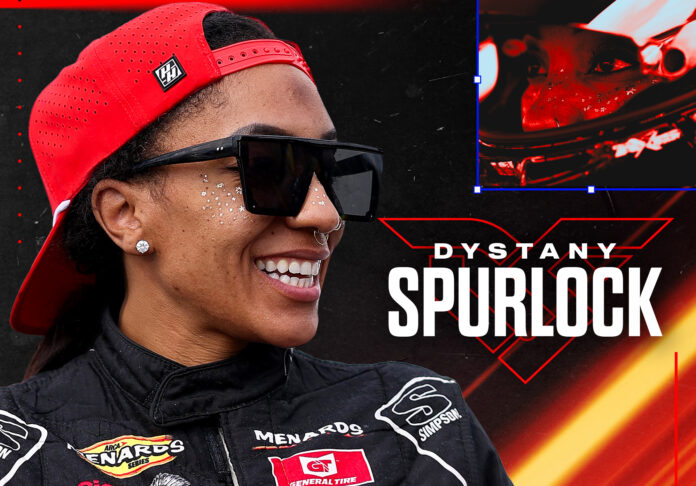
MOORESVILLE, N.C. (October 28, 2026)— Alpha Prime Racing announced today that Dystany Spurlock will join the organization and drive the No. 44 Ford Mustang as part of a comprehensive 2027 ARCA Menards Series driver development program, adding a new driver to the team’s expanding national development platform.

Spurlock’s planned program will be built around a 17-race ARCA schedule in the No. 44 Ford Mustang, beginning with preseason preparation and testing at Daytona International Speedway. The program will also include late-model testing, individualized coaching and race preparation alongside Alpha Prime Racing’s NASCAR O’Reilly Auto Parts Series operation, with the goal of accelerating her development both on and off the track.

Alpha Prime Racing will retain the flexibility to adjust Spurlock’s schedule based on her progress, licensing requirements, available track time and the events that provide the strongest competitive and developmental value. Additional racing and testing opportunities may be evaluated as the season progresses.

“Dystany is exactly the type of driver we want to build our ARCA program around,” said Jusan Hamilton, President of Alpha Prime Racing. “She has the talent, ambition and willingness to do the work, and Chris Harris and Foxxtecca share our belief that development must be more than simply putting a driver in a race car. We are building a complete program around preparation, coaching, testing, competition and professional growth. We are excited to welcome Dystany and Foxxtecca into the Alpha Prime family and begin this next chapter together.”

Foxxtecca’s relationship with Alpha Prime Racing began with its support of Lavar Scott’s NASCAR O’Reilly Auto Parts Series debut. That relationship has continued to grow around a shared focus on driver development, performance and partner activation.

“Last season, we sponsored Lavar Scott’s NASCAR O’Reilly Auto Parts Series debut with Alpha Prime Racing,” said Harris, Co-Founder of Foxxtecca. “Since then, Tommy Joe and I have established a great relationship, and with the addition of Jusan Hamilton to the team’s leadership, I know Alpha Prime is the place we need to be to develop Dystany Spurlock and unlock the next level of her driving performance. They understand and welcome what we are trying to accomplish from both a performance and development standpoint, as well as from a marketing perspective. I’m excited for the 2027 campaign.”

“I am so excited to become part of the Alpha Prime Racing team for the 2027 ARCA Menards Series season,” Spurlock said. “I’m looking forward to continuing my development as a driver, both on and off the track. Tommy Joe and Jusan are amazing individuals who believe in me, and I can’t wait to see what great things we will accomplish together this season.”

The partnership creates a long-term development pathway for Spurlock while giving Foxxtecca and its partners a national motorsports platform through Alpha Prime Racing’s competition, marketing and content capabilities. Additional details regarding Spurlock’s partners and race schedule will be announced at a later date.

About Alpha Prime Racing
Alpha Prime Racing (APR) is a North Carolina-based motorsports organization competing in the NASCAR O’Reilly Auto Parts Series. Led by team owners Caesar Bacarella and Tommy Joe Martins and Team President Jusan Hamilton, APR has built its identity around resourcefulness, development and creating competitive opportunities for drivers, partners and team members. Beginning in 2027, the organization will compete with Ford Mustang race cars as it continues investing in its people, equipment and long-term growth.

About Foxxtecca
Foxxtecca, a Detroit-based experiential events and media company, supports Dystany Spurlock’s professional racing career through program development, partnership strategy and marketing. Its collaboration with Alpha Prime Racing is designed to pair competitive opportunity with long-term driver and brand development.

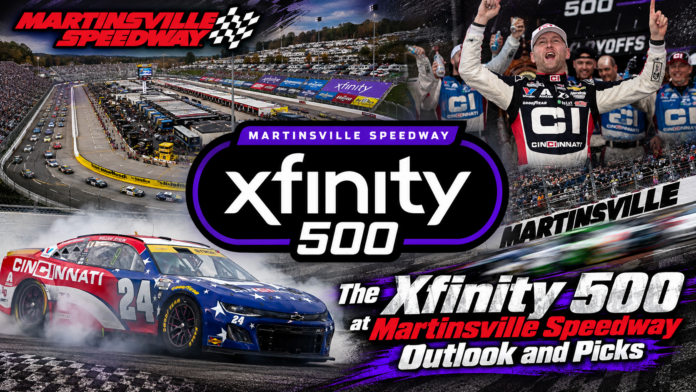
The Xfinity 500 at Martinsville Speedway Outlook and Picks

The NASCAR Cup Series (NCS) heads to Martinsville Speedway this weekend for the Xfinity 500 on Sunday, November 1, at 2 p.m. ET on USA, MRN, and SiriusXM NASCAR Radio (Channel 90).

Last season, William Byron won the Busch Light Pole Award with a lap of 98.185 mph (19.286 seconds), and then Byron led 304 of 500 laps to win the Xfinity 500 at Martinsville Speedway on Sunday, October 26, 2025.

The 2026 NASCAR Cup Series Chase Point Standings after Talladega Superspeedway

RankDriverNoPointsBehindNextRace WinsStage Wins
1Kyle Larson (C)524410039
2Denny Hamlin (C)112368-737345
3Christopher Bell (C)202367-74116
4Chase Briscoe (C)192362-79532
5Joey Logano (C)222341-1002137
6Ryan Blaney (C)122334-107739
7Tyler Reddick (C)452315-1261962
8Austin Cindric (C)22258-1835701
9Ty Gibbs (C)542258-183025
10Carson Hocevar (C)772243-1981510
11William Byron (C)242227-2141603
12Chase Elliott (C)92223-218422
13Bubba Wallace (C)232223-218002
14Daniel Suárez (C)72201-2402211
15Ryan Preece (C)602192-249912
16Chris Buescher (C)172186-255601

Track & Race Information for the Xfinity 500

Season Race: No. 35 of 36 (November 1, 2026)
The Purse: $11,233,037
Track Size/Type: 0.526 Mile Asphalt Oval
Banking/Turn 1 & 2: 12 degrees
Banking/Turn 3 & 4: 12 degrees
Banking/Frontstretch: 0 degrees
Banking/Backstretch: 0 degrees
Frontstretch Length: 800 feet
Backstretch Length: 800 feet

Race Schedule, Length, and Stages for the Xfinity 500

Race Length: 500 laps / 263 miles
Stage 1 & 2 Length: 130 laps (each)
Final Stage Length: 240 laps

FRIDAY, OCTOBER 30

12:30 PM – 1:20 PM: NCTS PRACTICE
1:35 PM – 2:30 PM: NCTS QUALIFYING (IMPOUND)
3:00 PM – 3:50 PM: NOAPS PRACTICE
4:05 PM – 5:00 PM: NOAPS QUALIFYING (IMPOUND)
5:40 PM: NCTS DRIVER INTRODUCTIONS
6:00 PM: NCTS RACE (STAGES 50/100/200 LAPS = 105.2 MILES ) ON FS1

SATURDAY, OCTOBER 31

1:00 PM – 1:50 PM: NCS PRACTICE (IMPOUND) (ALL ENTRIES)
2:05 PM – 3:00 PM: NCS QUALIFYING (IMPOUND)
3:45 PM: NOAPS DRIVER INTRODUCTIONS
4:00 PM: NOAPS RACE (STAGES 60/120/250 LAPS = 131.5 MILES) ON THE CW NETWORK

SUNDAY, NOVEMBER 1

1:15 PM: NCS DRIVER INTRODUCTIONS
2:00 PM: NCS RACE (STAGES 130/260/500 LAPS = 263 MILES) ON NBC

*All times are Eastern. NASCAR Cup Series (NCS), NASCAR O’Reilly Auto Parts Series (NOAPS), NASCAR Craftsman Truck Series (NCTS), ARCA Series (AMS)

Who and what should you look out for at Martinsville Speedway?

Denny Hamlin (2009, 2010) and Ryan Blaney (2023, 2024) lead all active NCS drivers in postseason wins at Martinsville with two victories each. Hamlin also leads all active drivers with five wins (2008, 2009, 2010 sweep, 2015). This weekend, 10 of the 59 NCS race winners are active.

Active Martinsville WinnersWinsSeasons
Denny Hamlin62025, ’15, ’10 sweep, ’09, ’08
Ryan Blaney22024, ’23
William Byron22024, ’22
Brad Keselowski22019, ’17
Kyle Busch22017, ’16
Kyle Larson12023
Christopher Bell12022
Alex Bowman12021
Chase Elliott12020
Joey Logano12018

The first starting position is the most successful in the field, producing 22 wins, more than any other starting position, and the deepest start by an active race winner is 20th, by Christopher Bell in 2022.

StatsWinning %Wins
Winning from the First Starting Position:14.19%22
Winning from the Front Row:23.87%37
Winning from a Top-Five Starting Position:50.32%78
Winning from a Top-10 Starting Position:70.97%110
Winning After Starting Outside the Top 20:4.52%7

In 2020, Chase Elliott won from the eighth starting position in the ninth race of the postseason and went on to win his first NASCAR Cup Series championship. In 2023, Ryan Blaney won from the 11th starting position in the ninth race of the Playoffs and went on to win his first NASCAR Cup Series championship.

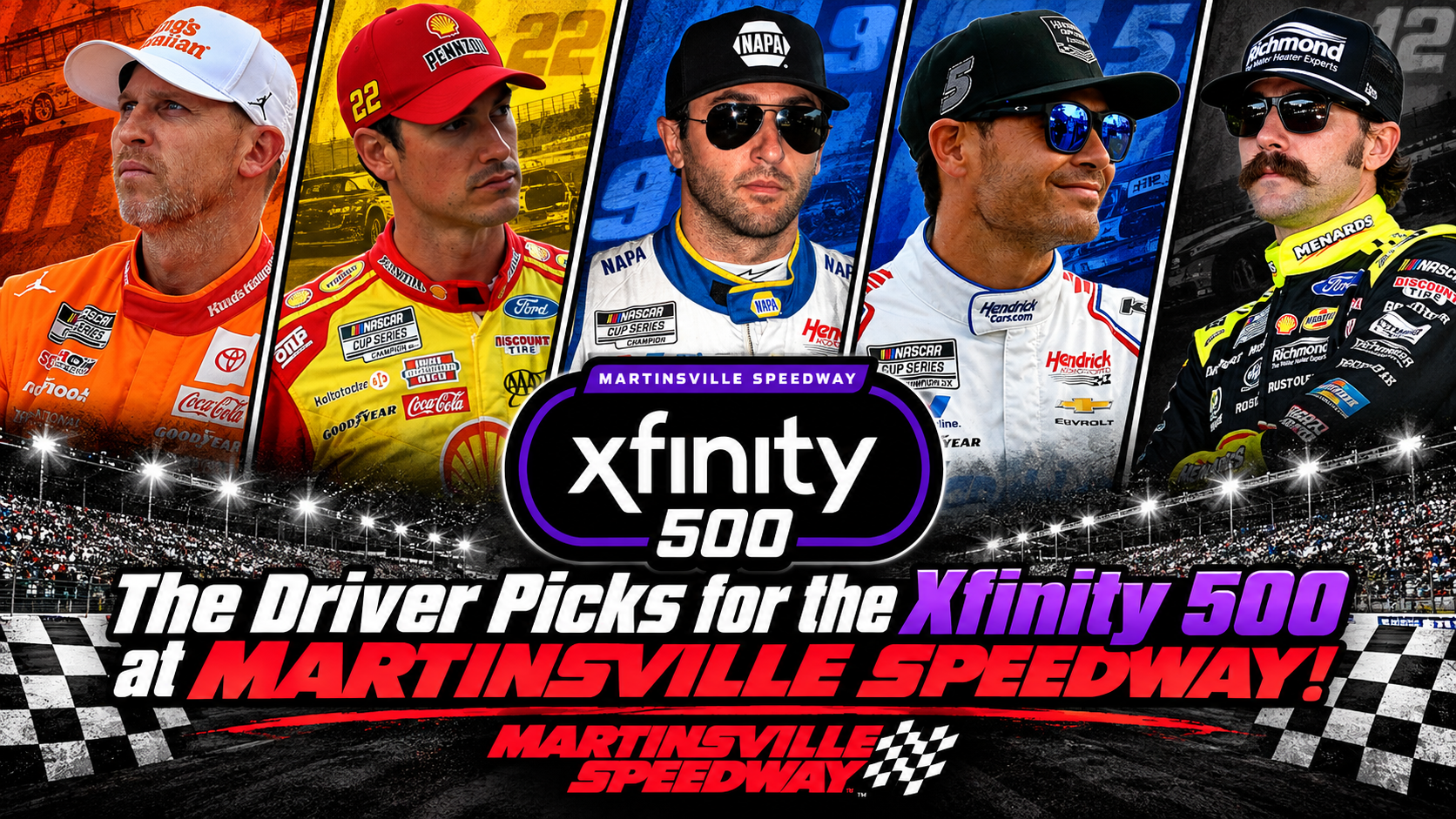
The Driver Picks for the Xfinity 500 at Martinsville Speedway!

The Driver Picks for the Xfinity 500 at Martinsville Speedway
  • Denny Hamlin has six wins, 22 top-fives, 28 top-10s, five poles, and an average finish of 10.244.
  • Joey Logano has one win, 12 top-fives, 23 top-10s, five poles, and an average finish of 10.400.
  • Chase Elliott has two wins, ten top-fives, 15 top-10s, one pole, and an average finish of 10.864.
  • Kyle Larson has one win, eight top-fives, 11 top-10s, two poles, and an average finish of 14.783.
  • Ryan Blaney has two wins, 11 top-fives, 14 top-10s, and the series-best average finish of 8.048.

Ford Racing NASCAR – Martinsville 2 Advance

MARTINSVILLE 2

Friday, October 30 — NASCAR Craftsman Truck Series, 6 p.m. ET (FS1)
Sunday, November 1– NASCAR Cup Series, 2 p.m. ET (NBC)

The penultimate race of the 2026 NASCAR season is this weekend at Martinsville Speedway and Ford’s championship contenders in the Cup and Truck Series have their work cut out for them. Joey Logano and Ryan Blaney are in must-win scenarios after separate multi-car accidents took them out of Sunday’s Cup race at Talladega while Layne Riggs trails by 43 points in the NCTS battle.

PROUD TO HONOR

Driver pairings for the inaugural Veterans Day Classic on Nov. 11 at Daytona International Speedway were announced this week as the 12-driver Ford field was divided into six groups of two representing all six branches of the military. The drivers will compete in Ford Mustang Dark Horse Rs on the Daytona road course. Tickets can be purchased online at fordveteransdayclassic.com.

Veterans Day Classic Driver Lineup

Army: Brad Keselowski and Joey Hand

Navy: Ryan Preece and Logan Sargeant

Air Force: Austin Cindric and Frankie Muniz

Marines: Ryan Blaney and Ben Hobson

Coast Guard: Joey Logano and Ty Majeski

Space Force: Noah Gragson and Layne Riggs

FORD DRIVERS IN THE CHASE

5th – Joey Logano (-100 behind Kyle Larson)
6th – Ryan Blaney (-107)
8th – Austin Cindric (-183)
15th – Ryan Preece (-249)
16th – Chris Buescher (-255)

BLANEY LOOKING TO STAY ALIVE

Ryan Blaney has won two of the last three Martinsville playoff races and likely needs another in order to stay in championship contention. The 2023 series champion is 107 points behind leader Kyle Larson, but no track has been better to Blaney than this half-mile short track. Sunday will mark his 22nd career start at Martinsville and his 8.0 career average finish is the best of any track currently on the circuit (at least five starts). Further proof of his track consistency can be found in the fact he has finished 11th or better in 15 straight events, including the spring event earlier this season when he was sixth.

LOGANO LIKES MARTINSVILLE

Ford’s other playoff contender, Joey Logano is 100 points out of the lead and is also in a likely must-win scenario, but just like Blaney, he’s had a great deal of success at Martinsville Speedway. Logano’s average starting position of 8.3 ranks second among current tracks where he has made at least five starts with World Wide Technology Raceway being the only one that is better (7.8). And just like Blaney, he comes into Sunday’s race on a streak that has seen him post 14 consecutive top-10 finishes at the half-mile paperclip, including a third place effort in the spring.

BUESCHER TO MAKE 400TH

CAREER CUP START

Chris Buescher will be making his 400th career NASCAR Cup Series start this weekend at Martinsville Speedway, a place where he has a pair of top 10 finishes in 22 starts. Buescher made his debut in 2015 at Auto Club Speedway in Fontana, CA, with Front Row Motorsports and finished 20th. Since then, he’s posted six victories, including a career-best three in 2023 when he won at Richmond, Michigan and Daytona. Buescher becomes the fourth active Ford driver to make that many starts, joining Joey Logano (649), Brad Keselowski (627) and Ryan Blaney (412).

KESELOWSKI AND MARTINSVILLE

Brad Keselowski outdueled Kyle Busch down the stretch to win his first grandfather clock after capturing the STP 500 on Apr. 2, 2017. The two drivers waged a memorable battle that saw them swap the lead five times in the last 160 laps, but Keselowski ended up making the decisive pass on lap 458 and led the final 43 circuits to become the first repeat winner in 2017. Keselowski added a second clock in 2019 when he dominated the spring race, leading 446-of-500 laps including the final 127.

FORD DRIVERS IN THE CHASE

2nd – Layne Riggs (-43 behind leader Kaden Honeycutt)

3rd – Ty Majeski (-141)

4th – Chandler Smith (-142)

8th – Ben Rhodes (-203)

RIGGS AT MARTINSVILLE

Layne Riggs finds himself in need of a major points day this weekend at Martinsville Speedway as he sits 43 points behind leader Kaden Honeycutt with two races remaining. This will mark the fifth career NCTS start at Martinsville for Riggs, who sat on the pole and finished third at this event one year ago. He has started all four of his previous races inside the top 10 (4.0 average) while averaging an 8.8 finishing position.

MANUFACTURERS’ RACE

Ford holds a 26-point lead over Toyota in the race for the NASCAR Craftsman Truck Series manufacturers’ championship with two races remaining. Ford has won that title twice when it posted back-to-back 12-win seasons in 1999 and 2000. Greg Biffle was the driving force behind both of those titles as he won nine times in ‘99 and then provided owner Jack Roush with his first NASCAR championship in 2000.

FORD NASCAR CUP SERIES WINNERS

AT MARTINSVILLE

1961 – Fred Lorenzen (1)

1962 – Nelson Stacy (2)

1963 – Fred Lorenzen (2)

1964 – Fred Lorenzen (Sweep)

1965 – Fred Lorenzen and Junior Johnson

1966 – Fred Lorenzen (2)

1969 – Richard Petty (Sweep)

1986 – Ricky Rudd (1)

1990 – Geoffrey Bodine (Sweep)

1992 – Mark Martin and Geoffrey Bodine

1993 – Ernie Irvan (2)

1994 – Rusty Wallace (Sweep)

1995 – Rusty Wallace (1)

1996 – Rusty Wallace (1)

1997 – Jeff Burton (1)

1998 – Ricky Rudd (2)

2000 – Mark Martin (1)

2001 – Dale Jarrett and Ricky Craven

2002 – Kurt Busch (2)

2017 – Brad Keselowski (1)

2018 – Clint Bowyer and Joey Logano

2019 – Brad Keselowski (1)

2023 – Ryan Blaney (2)

2024 – Ryan Blaney (2)

FORD NASCAR CRAFTSMAN TRUCK SERIES WINNERS AT MARTINSVILLE

1995 – Joe Ruttman

2003 – Jon Wood (2)

2004 – Rick Crawford (1)

2005 – Ricky Craven (2)

2015 – Joey Logano (1)

2020 – Grant Enfinger

The Ford Mustang® coupe is America’s best-selling sports car and has a global racing presence. With Mustang-based race cars competing in international sports car competition (GT3 and GT4), NASCAR, NHRA, Formula Drift, in Supercars, at the Pikes Peak International Hill Climb and in its own bespoke regional one-make series – Mustang Cup and Mustang Challenge – the platform has an unprecedented global reach. This weekend, 37 Mustang race cars are scheduled to compete across all active disciplines. Learn more about Mustang at www.FordRacing.com.

A Clear Path to Car Accident Recovery and Legal Guidance in Raleigh

Going through the services that follow a motor vehicle collision may be confusing and overwhelming to anyone who’s involved. There is the obvious shock of the incident followed by physical pain, emotional stress, insurance jargon and property damage. In times of such adversity, it’s a great idea to consult with a Raleigh car accident lawyer to help you understand your rights, options and feel a little better guided by the attorney at every juncture in the recovery process.

Knowing the ins and outs of North Carolina personal injury regulations, what to do immediately after an accident, and the process of insurance claims can play a huge part in making your case go smoothly.

This is what you have to do after your Auto Accident.

Accidents may prove to be traumatic right after they happen, but there are some things that you will have to do to ensure that everyone’s safety is guaranteed and there are no complications when making your claim.

Notify Local Police Authorities: It is important to have an official police report that will offer an objective opinion on what took place, as it will be important for insurance purposes.

Contact: Exchange Names, cell phone numbers, driver’s license information, and car insurance policy numbers with all the other drivers involved in the accident.

Photographs: Take photographs of all cars, car damages, road conditions and when necessary, traffic signals and road signs.

Health Examination: Visit a doctor immediately, as there might be delayed symptoms of your injuries. It will help monitor your health condition and build up a health profile.

Importance of  Car Accident Framework in North Carolina.

North Carolina adheres to the courts’ rules and regulations for vehicle accident claims. It’s necessary to be knowledgeable about these primary guidelines to set your goals accordingly.

Principles of fault and insurance.

North Carolina has a “no fault” lawsuit. This places the party who caused the inconvenience of the collision on the hook for any damages that have been incurred which stem from the accident, the most common of which is insurance.

The Contributory Negligence Standard 

North Carolina utilizes a traditional rule called a pure contributory negligence system; many states have a comparative negligence system. The rule holds that in such cases, if a wounded party is somehow found even marginally responsible for the accident, then the case may become more complicated to obtain from the other motorists’ insurance company. The essays are subject to a very high standard; good presentation of evidence is essential.

The time limitation for filing claims

The state has a statute of limitations in personal injury and/or property damage cases. In general, people have three years from the accident to file a lawsuit, although there are some exceptions that may apply according to the circumstances.

It can be worn to deal with the insurance paperwork and still look after a person physically. This burden can be reduced with professional legal aid which will provide neutral guidance and take care of the administration.

Independent Investigation:Sworn testimony and police reports to piece together the actual story of what occurred, as well as analysis of the traffic videos where applicable.
Insurance Communications:Dealing with the insurance adjusters without pressure and having time to decide how much to compromise.
Fair Settlement Evaluation:Determine total claim value including future care costs and ensure it’s acknowledged in a settlement. 
Court Representation:There’s a third option available when an acceptable negotiated outcome is not reached – that’s when the help of experienced mounting professionals can help you to represent your cause in court.

A collection of commonly asked questions and answers, FAQ includes.

Do I need to report a minor accident to the police in Raleigh?

Yes, it is advisable to report any collision that involves property damage, injury or death that is obviously visible. An official police report is a good document to use for insurance.

When an insurance adjuster calls, what should I tell him?

Don’t guess the cause of the accident or start details about how much damage it caused your vehicle or body just yet, only basic facts (like I’m here and I had my car etc.).

What is the average time for a car accident case to be settled?

This takes about the case, length of medical treatment, and cooperation of the insurance companies. Simple claims may take a couple months, more complex cases could take longer.

Conclusion

Suffering a vehicle collision can ruin your life, but if you comprehend what you need to do and what resources are available to assist you will be able to put your mind at ease. There are key steps to take when deciding to get well — the basics of acting quickly, lifestyle changes and keeping organized files — that lay the foundation for a streamlined recovery. If you’re in need of legal counsel or assistance specific to your needs and situation, however, you can count on trusted professionals like Younce, Vtipil, Baznik & Banks, P.A. to maneuver you to where you need to be.

What Can You Learn From a Toyota Service and Repair Manual?

Photo by depositphotos at https://depositphotos.com/

What Can You Learn From a Toyota Service and Repair Manual?

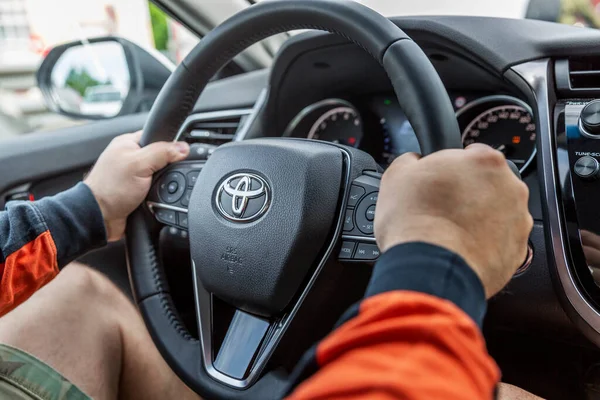
A Toyota service and repair manual is more than a collection of diagrams and tightening specifications. Used properly, it is a guide to how a vehicle thinks, communicates, and wears over time.

For owners, it can turn an unfamiliar warning light or strange noise into a more informed conversation with a technician. For DIY-minded drivers, it provides the structure needed to tackle routine maintenance without relying on guesswork. Even if you have no intention of picking up a wrench, understanding what a repair manual contains can make you a more confident vehicle owner.

Toyota has built its reputation on durability, but durability is not the same thing as immunity from maintenance. Fluids degrade, rubber components age, electrical connections corrode, and modern sensors eventually fail. A service manual helps explain where those systems are, how they interact, and what needs attention before a minor issue becomes an expensive repair.

Understanding Your Vehicle Beyond the Dashboard

The owner’s handbook tells you how to operate the car: where the controls are, what the warning lights mean, and when to schedule basic maintenance. A repair manual goes much deeper. It is aimed at technicians and experienced repairers, so it often includes component locations, wiring diagrams, diagnostic procedures, torque settings, disassembly instructions, and inspection criteria.

That distinction matters. A dashboard warning light may indicate a broad system problem, but the manual can show the chain of components behind it. Take a check-engine light, for example. The issue might involve an oxygen sensor, a vacuum leak, a loose fuel cap, ignition misfires, or a wiring fault. A proper diagnostic section does not simply say “replace the sensor.” It explains how to test the circuit, what readings to expect, and what conditions could produce the same trouble code.

Maintenance Intervals Become More Meaningful

Most drivers know they should change oil, inspect brakes, and replace filters. A repair manual puts those jobs in context. It identifies the correct fluid specification, the location of drain plugs and fill points, the sequence for resetting service reminders, and the inspection points that matter.

This is especially useful with older Toyotas, where maintenance history may be incomplete. A manual can help you establish a baseline: inspect belts and hoses, check suspension wear, assess brake thickness, look for fluid leaks, and verify that key electrical systems are functioning as intended.

It also helps owners avoid a common mistake: treating every service recommendation as universal. Maintenance needs vary by engine, drivetrain, model year, climate, and driving conditions. A hybrid system has different considerations from a conventional petrol engine; an all-wheel-drive SUV has different fluid-service requirements from a front-wheel-drive hatchback.

For model-specific technical information, resources such as Toyota service manuals can be useful when you need to compare repair procedures, diagrams, or specifications for a particular vehicle rather than relying on generic advice.

Learning How to Diagnose Before Replacing Parts

One of the greatest lessons a service manual teaches is restraint. Modern vehicles contain dozens of interconnected electronic systems, and symptoms can be misleading. A weak battery can trigger a surprising number of warning lights. A corroded ground connection can imitate a failed sensor. A rough idle may originate from air intake problems, fuel delivery, ignition components, or even an engine-management issue.

Repair documentation encourages a methodical approach:

  • Confirm the complaint and reproduce the symptom where possible.
  • Check for stored diagnostic trouble codes.
  • Inspect simple causes, such as fuses, connectors, fluid levels, and damaged hoses.
  • Test components before replacing them.
  • Verify the repair after reassembly.

That sequence saves money and prevents “parts cannon” repairs, where several components are replaced in the hope that one solves the problem. It also gives owners a clearer way to speak with a repair shop. Instead of saying, “The car feels off,” you may be able to report that the vibration occurs only under braking, above a certain speed, or after the engine reaches operating temperature. Those details are valuable diagnostic clues.

Wiring Diagrams Explain the Invisible

Electrical faults are among the most frustrating automotive issues because the affected component may not be the root cause. A rear light that will not illuminate could involve the bulb, socket, fuse, ground point, body-control module, damaged wiring, or a poor connector pin.

Wiring diagrams reveal how power travels through the system. They identify wire colours, connectors, grounds, relays, and fuse locations. You do not need to become an automotive electrician to benefit from them. Simply knowing that a system shares a fuse or ground with another feature can help narrow down the cause of a fault.

For enthusiasts restoring an older Toyota, these diagrams can be indispensable. Age-related electrical problems often result from brittle insulation, previous-owner modifications, or corrosion hidden beneath trim panels.

Safer Repairs Start With Accurate Procedures

Repair manuals also teach an often-overlooked lesson: many jobs are straightforward only when done in the right order. Brake work, suspension repairs, airbag-related tasks, and cooling-system servicing all carry safety considerations. Instructions may specify when to disconnect the battery, how long to wait before working near supplemental restraint systems, where to support the vehicle, or which bolts must be replaced rather than reused.

Torque specifications are particularly important. Too little torque can allow components to loosen; too much can strip threads, warp parts, or damage aluminium housings. This is not unnecessary precision. Wheel nuts, brake caliper bolts, spark plugs, and engine fasteners all depend on correct clamping force.

A manual also helps you recognise when a task is better left to a professional. If a procedure requires specialised scan tools, high-voltage safety equipment, refrigerant handling certification, or precise alignment equipment, the sensible decision may be to gather information first and then book qualified help.

A Better Way to Own a Toyota

The real value of a Toyota repair manual is not that it turns every owner into a mechanic. Rather, it makes vehicle ownership less mysterious. You learn what normal wear looks like, which symptoms deserve immediate attention, and why a seemingly simple repair may involve several checks.

That knowledge can improve maintenance decisions, reduce unnecessary replacements, and make discussions with technicians more productive. Whether you carry out your own oil changes or simply want to understand the work being recommended, a good service manual gives you something useful: a clearer view of the machine you rely on every day.

Finding Legal Help After a Truck Accident in Floral Park, New York

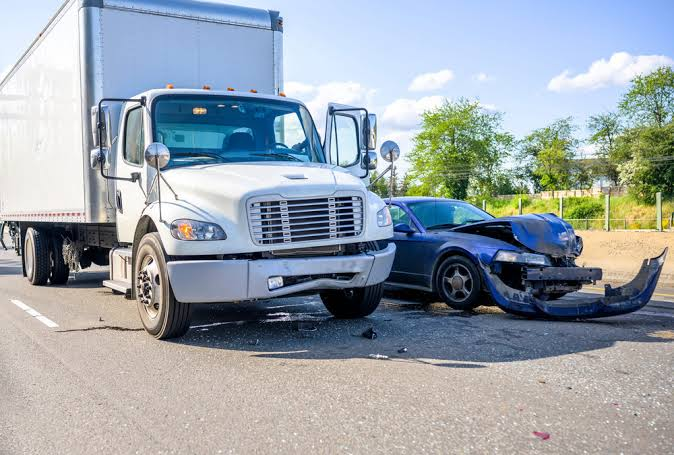
Damaged commercial truck following a collision that may require a detailed accident investigation.

In just a few moments a person’s life can change forever when they become involved in a truck accident. You’re on your way to work, running errands, or gone home and all of a sudden painful injuries, damage to your car and unexpected costs are coming. If you are dealing with the problems associated with this kind of accident, a Floral Park Truck Accident Lawyer can explain what your options are, get in contact with the crash and help you pursue any compensation you may deserve that happens as a result of the crash and another party was to blame.

Scenarios in which truck accidents are typically more complex than those of ordinary cars. Injuries may be more serious in commercial vehicles. Knowing what to expect after a truck accident will assist you in making a decision in your situation.

Common Causes of Truck Accidents in Floral Park

A key part of determining liability is identifying the cause, evidence may be required to help this process.

Driver Fatigue and Distracted Driving

Fatigue can be a potential problem when truck drivers are tired, which can have a negative impact on reaction time, concentration and judgment. Driving time rules exist only for certain driving activities, and failure to comply with the rules could still cause dangerous driving situations. 

Improper Loading and Vehicle Maintenance

An unavoidably heavy load, unevenly distributed and improperly secured cargo can have adverse consequences on the stability and braking of a truck. Another type that can lead to the collision may be mechanical issues like a worn tire, malfunctioned brakes or broken lights. The responsibility may also reach beyond the driver’s responsibilities to certain companies/carriers that are responsible for loading or maintenance of vehicles.

Unsafe Turns and Blind Spots

Blind spots on large trucks can be big, especially to the side of the vehicle, and to the rear. These unsafe lane changes, wide turns, and not checking traffic out of your way can result in placing smaller vehicles at risk. These hazards can happen in areas around Floral Park with heavy traffic, including operating a commercial vehicle with commuters, cyclists and pedestrians.

claim
Accident victim photographing truck collision damage to preserve evidence for a potential injury claim.

How a Truck Accident Lawyer Can Help

Dealing with the commercial truck accident claims process may be more complicated than filing insurance documents. An attorney can follow up on the crash and determine who might be held liable and collect documents that may not be easy to locate.

Evidence can be driver logs, electronic data, maintenance records, cargo documentation, surveillance video and truck event data recorders. Taking prompt action to preserve evidence may be necessary as the evidence may be lost or be overwritten if not successfully done.

Frequently Asked Questions

What if the Truck Driver Was Not the Only Party at Fault?

Depending on evidence, it might be more than one party who is liable. A variety of companies can hold liability in a claimed accident involving a truck, such as a vehicle manufacturer, cargo loader, maintenance firm, or trucking company.

Should I Accept the Insurance Company’s First Settlement Offer?

Make sure you check if any offer is taking your medical costs, loss of income and other losses into consideration. An early settlement can not necessarily be what your future treatment needs are as well as an early settlement can cause you to not seek out any other compensation if you’ve suffered the same injuries.

What Evidence Can Help Support My Claim?

Police reports, photos, witness statements, medical reports, employment records and commercial truck records might be relevant. The evidence required will depend upon the issue in dispute between the parties and the cause of the incident.

Conclusion

Surviving a truck accident may mean physical pain, financial hassles, hard choices on future options, and more. Having knowledge about your rights and keeping a set of key pieces of evidence ready will be beneficial when you’re ready to go forward with the claims process.

Considering the details of a commercial truck accident in Floral Park, New York, with a family member injured, it may be useful to consult with The Tadchiev Law Firm to determine how you could proceed. While some of the factors that might be settled will depend on the specifics of the accident that occurred, a careful review of the accident, the evidence and resulting losses can help to clarify the next steps towards seeking compensation and moving forward.

Mario Kart or Real Racing? F1’s 2026 Identity Crisis

Photo by depositphotos at https://depositphotos.com/

Formula 1 has always walked a fine line between spectacle and sport. But in 2026, that line has become a tightrope. The sweeping technical regulations introduced this season—featuring an even split between combustion and electric power, movable aerodynamic surfaces, and lighter, more compact chassis—were crafted to deliver tighter racing and lure new manufacturers into the fold. On paper, the blueprint looks like a stroke of genius. On the track, however, a bitter philosophical battle is unfolding. Has the sport morphed into a high-speed video game where battery management matters more than raw courage, or is this simply the turbulent, unavoidable evolution of the world’s most sophisticated racing category? For readers trying to decode the intricate financial and regulatory forces shaping this new era, tools like an ACCA calculator can serve as a surprisingly apt comparison, helping to clarify how strategic planning and cost constraints influence the long-term feasibility of these ambitious technical bets.

The Revolt Against the Machine

The most prominent critic of this new generation is four-time World Champion Max Verstappen. Never one to soften his words, the Dutchman has torn into the 2026 regulations with unusual ferocity. He has compared the new machinery to “Formula E on steroids,” contending that the heavy dependence on battery deployment and regeneration compels drivers to perform unnatural maneuvers—like downshifting on straights to harvest energy—instead of simply driving flat out. “As a pure driver, I enjoy driving flat out, and at the moment you cannot drive like that,” Verstappen said, adding that the convoluted energy management feels “anti-racing.”

Other seasoned competitors share his frustration. Lando Norris called the season-opening Australian Grand Prix chaotic and potentially hazardous, with drivers trading places not because of superior overtaking skill, but because of dramatically different energy deployment strategies. The heart of the grievance is that the F1 cars of 2026 have become overly reliant on software and energy algorithms. Rather than rewarding the driver who brakes latest and carries the most speed, the rules reward the engineer who writes the cleverest energy recovery code. This shift has fundamentally rewritten the DNA of a sport built on human reflex and mechanical empathy.

The FIA’s Swift Course Correction

Aware of the mounting discontent up and down the paddock, the FIA and Formula 1’s leadership moved quickly. Ahead of the Miami Grand Prix, a package of changes was unanimously approved to tackle the most glaring side effects of the new rules. The headline adjustment was cutting the maximum energy recovery per lap from 8MJ to 7MJ, while raising the superclipping power ceiling from 250kW to 350kW. The objective was straightforward: remove the awkward “lift and coast” phases in qualifying where cars would drift silently down straights just to recharge.

According to McLaren’s Performance Director, Mark Temple, these revisions have already started to bring back a more natural feel behind the wheel. “The idea is to eliminate some of those things that drivers don’t like doing in qualifying,” Temple explained, noting that the system now handles energy recovery more efficiently, letting drivers keep their foot planted while the power unit manages the harvesting. While energy management remains central to the 2026 formula, the length of any “coasting” period has been substantially reduced, bringing the driving sensation closer to the previous generation of cars. This is a vital step in reconciling the purists’ hunger for flat-out racing with the regulators’ commitment to electrification.

The Purists’ Argument: Complexity vs. Spectacle

Beyond the physical experience, traditionalists contend that the sheer intricacy of the 2026 rules is driving fans away. Verstappen has repeatedly noted that the average viewer cannot possibly grasp why a driver suddenly slows on a straight or why a car defending a position one lap inexplicably falls back the next. When the result of a race hinges on “state of charge” rather than “state of tune,” the story of the sport becomes murky and, for many, far less gripping.

The scheduled return of iconic tracks like Portimão and Istanbul Park in the coming years throws this tension into sharp relief. These are circuits with dramatic elevation changes and flowing, high-speed corners such as Istanbul’s legendary Turn 8—venues that demand absolute commitment and reward the pure racing instincts that Verstappen champions. If the 2026 cars, with their heavy dependence on active aero and energy management, cannot attack these circuits with the same visceral ferocity as the V8 or V10 eras, the comeback of these beloved venues risks becoming a hollow nostalgia exercise rather than a true celebration of racing purity.

The Commercial Reality: Why F1 Cannot Turn Back

Yet branding the 2026 regulations as a straightforward “Mario Kart-ification” of the sport ignores the hard facts of the modern automotive industry. Stefano Domenicali and the FIA have been crystal clear: the sport needed to attract new manufacturers. The even power split and the complete removal of the MGU-H were non-negotiable conditions for Audi and Cadillac to commit to F1. The pivot toward 100% sustainable fuels and enormous electrical power is the only way to keep F1 relevant to road car development and to justify the colossal budgets of the automotive giants involved.

What’s more, the on-track product has actually generated a fascinating championship storyline. While Verstappen rails against the machine, 20-year-old Kimi Antonelli is on the cusp of becoming the youngest World Champion in history in only his second season, leveraging the Mercedes powertrain’s superior energy management to devastating effect. The racing, though different, is undeniably close. The 2026 campaign has produced eight different winners across the first seventeen rounds—a level of parity the sport has struggled to achieve for decades. The “chaos” that Norris and Verstappen bemoan is, for the neutral observer, a thrilling unpredictability that keeps every lap of every race meaningful.

The Verdict: An Unavoidable Compromise

So, is it “Mario Kart-ification” or “Purist Racing”? The honest answer is both. The 2026 cars are undeniably more complex and less physically punishing to drive over a single qualifying lap than their predecessors. The art of “lift and coast” has replaced the art of the late-braking lunge in certain corners. However, this is not a slide into arcade fantasy; it is the product of a deliberate, strategic choice by the sport’s stakeholders to prioritize manufacturer relevance and environmental sustainability over the visceral roar of the past.

The FIA’s readiness to tweak the rules mid-season—lowering recovery limits and boosting superclipping power—shows that they are listening to the drivers’ concerns. The aim is to find a sweet spot where the cars remain technologically advanced but do not penalize a driver for simply being fast. The 2026 season is a grand experiment. It may not be the pure, unfiltered racing that Verstappen dreams of, but it is the racing that F1 needs to survive in a world that demands efficiency and electrification. The real test will come when the circus returns to those iconic tracks, where the ghosts of F1’s past will watch to see whether the spirit of the sport can still shine through the silicon and software.