Announcement Follows “Nationwide Focused Driving Rewards®” Program campaign launch, Developed With NASCAR Legend Dale Earnhardt Jr.
B.R.A.K.E.S. Was Founded by Top Fuel Drag Racing Champion Doug Herbert Following Tragic Car Crash Deaths of His Two Sons.
More than 167,000 teens and parents have been trained since inception in 2008.
Teens who graduate from B.R.A.K.E.S. are 64 percent less likely to be in a car crash three years after completing the training.
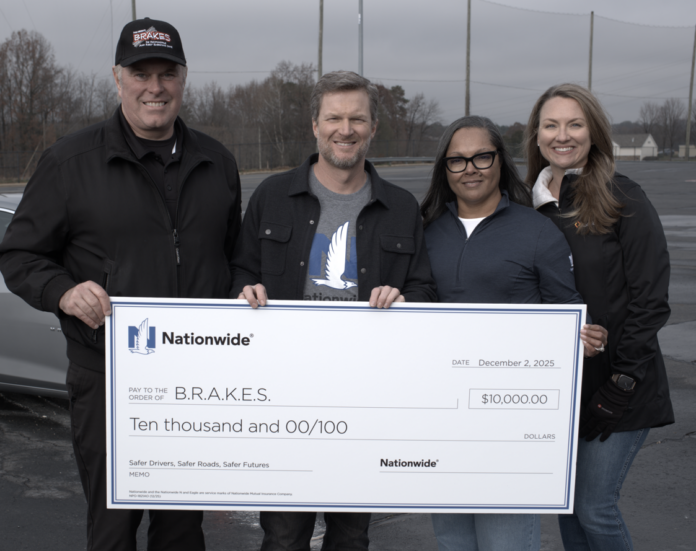
CONCORD, N.C. (January 26, 2026) – The B.R.A.K.E.S. (Be Responsible And Keep Everyone Safe) lifesaving national teen driver training program today announces that it has received a $10,000 donation from Nationwide.
The announcement follows last week’s launch of Nationwide’s campaign with Dale Earnhardt, Jr. to promote the Nationwide Focused Driving Rewards® program, which incentivizes drivers to earn points for distraction-free driving and then redeem them for gift cards.
The Nationwide Focused Driving Rewards® multimedia campaign was filmed at zMAX Dragway. It features a Charlotte-area parent and teen duo maneuvering a distraction course designed by B.R.A.K.E.S., while following direction from NASCAR Hall of Famer Earnhardt. Distracted driver awareness is one of five exercises that teens must complete to earn a B.R.A.K.E.S. training certificate.
“We are deeply appreciative of this generous donation by Nationwide, which will help our non-profit fund more training programs across the country,” said B.R.A.K.E.S. Founder Doug Herbert. “It’s an honor to work with Nationwide and Dale Earnhardt Jr. on this truly impactful teen driver safety initiative.”
“Through our work with the B.R.A.K.E.S. team on the Nationwide Focused Driving Rewards® project, we had a chance to learn more about the positive impact their program has on kids across the country,” said Michael Tripp, Nationwide’s Senior Vice President of Personal Lines Sales and Distribution. “Nationwide hopes this gift will help further their critical work of helping teen drivers become better drivers and making our roads safer.”
Kicking off its 2026 schedule at zMAX Dragway during the weekend of February 7 & 8, B.R.A.K.E.S. plans another jam-packed year, with training programs taking place across the country. Last year, more than 15,000 teens and parents participated over the course of 46 weekends. Since the inception of the program in 2008, B.R.A.K.E.S. has trained more than 167,000 individuals, saving lives and making U.S. roadways safer.
Teens who have completed the B.R.A.K.E.S. training are 64 percent less likely to get in a crash within their first three years after, according to a study by UNC Charlotte.
About B.R.A.K.E.S. The 501(c)(3) charity was founded by multi-time Top Fuel drag racing champion Doug Herbert in honor of his two sons, Jon and James, who lost their lives in a tragic car crash in 2008. Herbert turned that personal tragedy into a lifesaving mission that has trained more than 167,000 teens and their parents to date.
Utilizing vehicles provided by Kia Motors, B.R.A.K.E.S. offers teens extensive behind-the-wheel instruction from professional trainers including current and former law enforcement officers and professional racing drivers, teaching the teens and their parents how to be safer on the road. Exercises include Distracted Driving Awareness, Panic Braking, Crash Avoidance, Drop-wheel/Off-road Recovery and Car Control/Skid Recovery.
More comprehensive information about proactive driving for teens and their parents is accessible at www.putonthebrakes.org.
About Nationwide Nationwide, a Fortune 100 company based in Columbus, Ohio, is one of the largest and strongest diversified financial services and insurance organizations in the United States. Nationwide is rated A+ by Standard & Poor’s. An industry leader in driving customer-focused innovation, Nationwide provides a full range of insurance and financial services products including auto, business, homeowners, farm and life insurance; public and private sector retirement plans, annuities and mutual funds; excess & surplus, specialty and surety; and pet, motorcycle and boat insurance.
For more information about Nationwide and Nationwide’s ratings, visit www.nationwide.com or Company Ratings — Nationwide.
Subscribe today to receive the latest news from Nationwide and follow Nationwide PR on X.
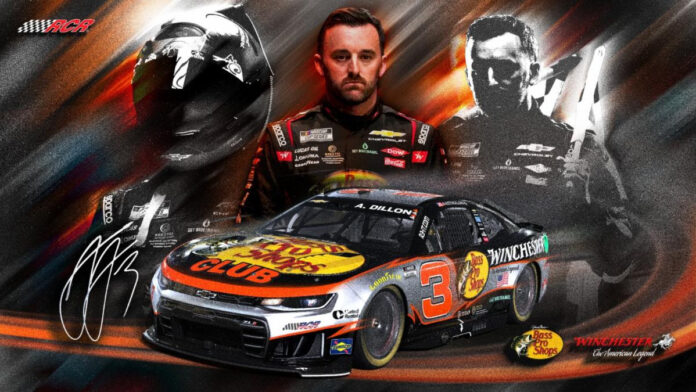
Austin Dillon to Promote Our Great Outdoor Heritage in RCR’s No. 3 Bass Pro Shops/Winchester Chevrolet for 2026 NASCAR Cup Series Season
WELCOME, N.C. (January 27, 2026) – Bass Pro Shops and Winchester will continue their relationship with Richard Childress Racing as the anchor partners for Austin Dillon and the No. 3 Bass Pro Shops/Winchester Chevrolet in the NASCAR Cup Series in 2026.
The partnership pairs North America’s premier outdoor retailer and the leading small caliber ammunition brand for hunting, recreational shooting, and law enforcement with one of racing’s most legendary teams.
“Bass Pro Shops is thrilled to continue our longstanding relationship with our friends and passionate outdoorsmen Richard Childress and Austin Dillon,” said Johnny Morris, noted conservationist and Bass Pro Shops founder. “They have been steadfast supporters of hunting, fishing and conservation in America. We’re proud to work with the Winchester team to salute the sportsmen and women in America and highlight our passion for American patriotism and conservation efforts on the legendary No. 3 RCR car.”
A longtime motorsports supporter, Bass Pro Shops began its association with RCR in 1998 with the No. 3 GM Goodwrench Chevrolet made famous by seven-time NASCAR Cup Series champion Dale Earnhardt. Bass Pro Shops notably has partnered with Austin Dillon for the entirety of his racing career, including a thrilling win last year at Richmond Raceway.
For more than 50 years, Bass Pro Shops has blazed a trail in the retail landscape for outdoor enthusiasts, forging a place as North America’s premier outdoor retailer, with a foundation built on conservation and giving outdoorsmen and women everything they need for their outdoor adventures.
Today, there are nearly 200 retail destinations and boat centers throughout the United States and Canada, offering unforgettable immersive shopping experiences while providing thrills to guests of all ages.
In 2025, Bass Pro Shops partnered with Winchester – the American Legend – to sponsor Dillon and the No. 3 Chevrolet. The two legendary outdoor brands will continue their relationship with RCR in 2026 to highlight their shared commitment to conservation causes, protecting our natural places for future generations to enjoy while celebrating everything about the great outdoors.
“For more than a century, Winchester has stood as an enduring symbol of American craftsmanship, freedom, and responsibility,” said Brett Flaugher, President of Winchester Ammunition. “Our legacy is rooted in supporting the shooting sports, responsible hunting, and conservation efforts that protect our nation’s outdoor traditions for future generations, while proudly supplying small-caliber ammunition in service of the U.S. military. Our partnership on the No. 3 car reflects our shared commitment to patriotism and conservation. We’re proud to work once again alongside Bass Pro Shops and Richard Childress Racing to promote our rich heritage to race fans.”
Winchester is the leading small caliber ammunition brand for hunting, recreational shooting, and law enforcement, and the largest supplier to the U.S. military. The legendary Winchester® brand, with its 159-year history, is founded on principles of integrity, hard work, and a strong commitment to its loyal customers.
“Johnny Morris is one of the most influential conservation leaders of our time,” said Childress, chairman and chief executive officer of Richard Childress Racing. “Bass Pro Shops has been a valued friend and partner of RCR and Austin for many years, and we are proud to continue to work with them to highlight our shared values. We’re excited also to continue building on the strong foundation that began last year with Winchester. This is a natural pairing rooted in a mutual dedication to conservation efforts and promoting our outdoor heritage for future generations.”
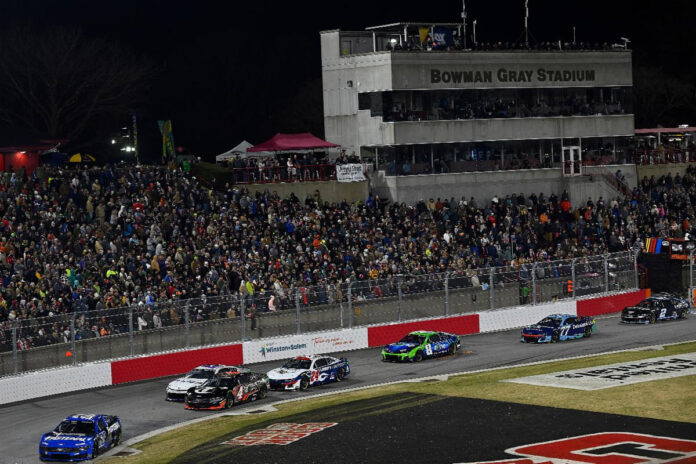
Bass Pro Shops and Winchester will continue to serve as the anchor primary on Dillon’s No. 3 Chevrolet in 2026, beginning with the NASCAR Clash at Bowman Gray Stadium on Sunday, Feb. 1. The race airs live on FOX at 8 p.m. ET. Dillon also will drive the No. 3 Bass Pro Shops/Winchester Chevrolet for all Speedweeks activities, including the Duels at Daytona on Thursday, Feb. 12 (7 p.m. ET live on FOX Sports 1, MRN and SiriusXM NASCAR radio) and the Daytona 500 on Sunday, Feb. 15 (2:30 p.m. ET live on FOX, MRN and SiriusXM NASCAR Radio) before driving the No. 3 Bass Pro Shops/Winchester Chevrolet in multiple races throughout the 2026 season.
Richard Childress Racing (www.rcrracing.com) is a renowned, performance-driven racing, marketing and manufacturing organization. Incorporated in 1969, RCR has celebrated over 50 years of racing and earned more than 200 victories and 17 championships, including six in the NASCAR Cup Series with the legendary Dale Earnhardt. RCR was the first organization to win championships in the NASCAR Cup Series, NASCAR O’Reilly Auto Parts Series and NASCAR Truck Series and is a three-time winner of the Daytona 500 (1998, 2007, 2018). Its 2026 NASCAR Cup Series lineup includes two-time NASCAR Cup Series champion Kyle Busch (No. 8 Chevrolet) and 2017 Coca-Cola 600 winner and 2018 Daytona 500 champion Austin Dillon (No. 3 Chevrolet). RCR fields a full-time NASCAR O’Reilly Auto Parts Series program with defending Series’ champion Jesse Love (No. 2 Chevrolet) and 2023 regular season champion Austin Hill (No. 21 Chevrolet).
About Bass Pro Shops
Bass Pro Shops, North America’s premier outdoor and conservation company, was founded in 1972 when avid young angler Johnny Morris started selling tackle out of his father’s liquor store in Springfield, Missouri. That was the company’s sole location for the first 13 years, and it has since grown to nearly 200 retail locations throughout North America. Today the company provides customers with unmatched offerings spanning premier destination retail, outdoor equipment manufacturing, world-class resort destinations and more. In 2017 Bass Pro Shops united with Cabela’s to create a “best-of-the-best” experience with superior products, dynamic locations and outstanding customer service. Bass Pro Shops also operates White River Marine Group, offering an unsurpassed collection of industry-leading boat brands, and Big Cedar Lodge, America’s Premier Wilderness Resort. Under the visionary conservation leadership of Johnny Morris, Bass Pro Shops is a national leader in protecting habitat and introducing families to the outdoors and has been named by Newsweek as “America’s Best Outdoor Retailer” for four consecutive years and “America’s Most Trusted Retailer for Outdoor Gear.”
About Winchester Ammunition
Winchester is the leading small caliber ammunition brand for hunting, recreational shooting, and law enforcement, and the largest supplier to the U.S. military. The legendary Winchester® brand, with its 159-year history, is founded on principles of integrity, hard work, and a strong commitment to its loyal customers. As a division of Olin Corporation, Winchester shares Olin’s purpose to deliver materials and solutions that enhance and protect lives. Learn more about Winchester and the responsible use of its products by visiting Winchester.com or connecting with us on Facebook at Facebook.com/WinchesterOfficial.
Winchester: Committed to Safe, Legal and Responsible Firearm Use
As a global leader in the shooting sports and hunting industry, and a brand of 159 years, Winchester is committed to safe, legal and responsible firearm use. Winchester works with key groups like the National Shooting Sports Foundation on a variety of topics important to our industry including training and education, and on specific programs such as Gun Owners Care® and Project ChildSafe®. Winchester will continue to support programs, organizations and individuals that promote hunting and shooting sports activities in a positive and responsible environment. Any use of firearms by youth participants should be done under the direct supervision of a parent, guardian, or other responsible adult.
About Gun Owners Care
Gun owners care. You care about safety. You care about preventing unauthorized access to firearms. You care about bettering your community, helping those in need and conserving wildlife and wild places for generations to come. It’s time for gun owners to tell their stories, to show how they’re making a difference. NSSF®, the trade association for the firearms industry, has established the Gun Owners Care® campaign to unite gun owners and the firearms industry in this common cause. Visit gunownerscare.org for more information.
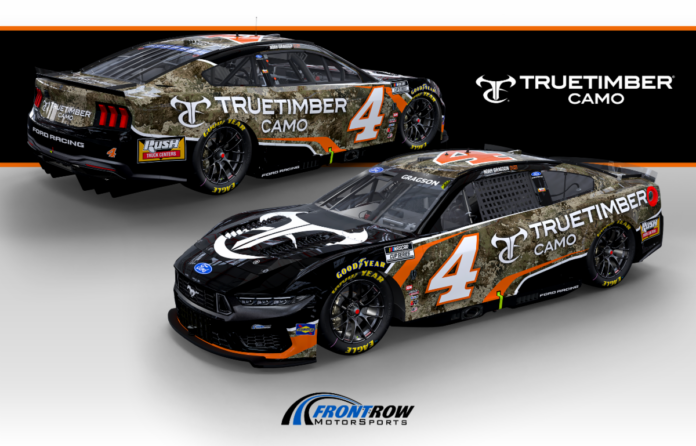
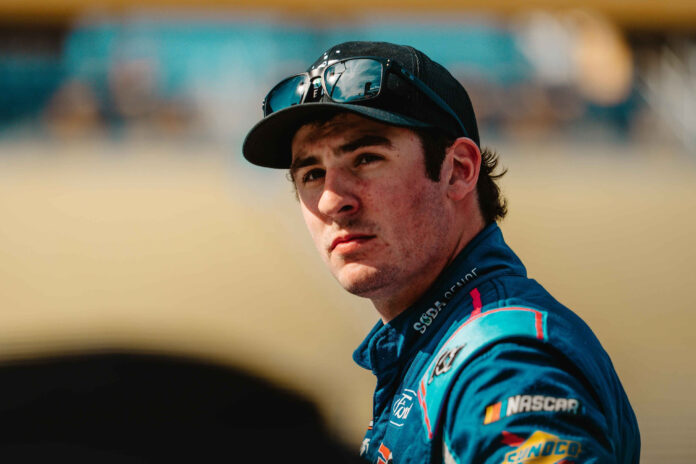
Noah Gragson and the No. 4 TrueTimber Ford Mustang Dark Horse Team Clash at Bowman Gray Competition Notes Clash at Bowman Gray
Date: Sunday, February 1, 2026 Event: Race 1 of 38 Series: NASCAR Cup Series Location: Bowman Gray Stadium (0.25-miles) #of Laps: 200
Time/TV/Radio: 8:00 PM ET on FOX/MRN/SiriusXM channel 90
Noah Gragson Notes
TrueTimber is back with Noah Gragson for this weekend’s exhibition race at Bowman Gray Stadium, showcasing its Strata camo on the No. 4 Ford Mustang Dark Horse for the 200-lap event at the historic venue. The Clash marks TrueTimber’s second season of partnership with Front Row Motorsports, continuing its on-track presence while also outfitting FRM’s road crews in TrueTimber-branded attire throughout the season.
In 2022, TrueTimber appeared in Victory Lane with Gragson eight times throughout the season before finishing second in the NASCAR O’Reilly Auto Parts Series points standings.
“I’m really excited to have TrueTimber back on the car for the Clash at Bowman Gray,” said Gragson. “It’s my favorite paint scheme, and I love kicking off the season in our backyard at such a historic venue. This year is a fresh start for us—putting last season behind us and focusing on what’s ahead.”
“We’re proud to be back alongside Noah Gragson and the entire Front Row Motorsports team as a returning partner, especially for a marquee event like the Clash at Bowman Gray,” said TrueTimber CEO Rusty Sellars. “Seeing our Strata camo featured on the No. 4 Ford Mustang Dark Horse at such a historic venue is a great way to kick off the season. Having supported Noah in the past, we’re excited to once again back his hard-charging style and see the No. 4 running at the front of the pack.”
Bowman Gray will kick off Gragson’s third full season in the NASCAR Cup Series. This season, Gragson will have a new crew chief with Grant Hutchens calling the shots for the 27-year-old driver. Road Crew
Driver: Noah Gragson
Hometown: Las Vegas
Crew Chief: Grant Hutchens
Hometown: Omaha, Nebraska
Car Chief: Joey Forgette
Hometown: Iron Mountain, Michigan
Engineer: Dillon Silverman
Hometown: Chico, California
Engineer: Scott Bingham
Hometown: Lawrenceville, Georgia
Spotter: Nick Del Campo
Hometown: Blauvelt, New York
Mechanic: Chris Trickett
Hometown: Grafton, West Virginia
Mechanic: Tony Infinger
Hometown: Fort Valley, Georgia
Tire Specialist: Chris Aunspaw
Hometown: Zelienople, Pennsylvania
Engine Tuner: Matt Moeller
Hometown: Monroe, New York
Transporter Co-Driver: Ron Miske
Hometown: Fairfield, Connecticut
Transporter Co-Driver: Matt Murphy
Hometown: Augusta, Georgia
ABOUT TRUETIMBER:
Founded in 2005 and headquartered in Inman, South Carolina, TrueTimber has become a leader in developing hyper-realistic, performance-driven camouflage patterns and the apparel and accessories built around them. Each TrueTimber pattern is created through extensive field research, advanced imaging, and rigorous testing to ensure it blends naturally into the environments hunters and outdoorsmen encounter most. That same commitment to innovation carries through to the brand’s full line of apparel and gear, which is designed for durability, comfort and reliable performance in the field. TrueTimber products are available at retailers across the United States and Canada, contributing to its position as The World’s Best-Selling Camo. For more information, visit TrueTimber.com.
ABOUT FRONT ROW MOTORSPORTS
Front Row Motorsports (FRM) is a winning organization in the NASCAR Cup and CRAFTSMAN Truck Series. The team is the 2021 Daytona 500 and 2022 CRAFTSMAN Truck Series champions. The team was founded in 2004 and is owned by successful entrepreneur, Bob Jenkins. FRM fields the No. 4, No. 34, and the No. 38 NASCAR Cup Series teams along with the No. 34 and No. 38 CRAFTSMAN Truck Series teams from its Mooresville, N.C. headquarters. Visit teamfrm.com and follow FRM on social media: Twitter at @Team_FRM, Instagram at @teamfrm and Facebook at facebook.com/FrontRowMotorsports.
In 10 attempts at NASCAR’s annual pre-season exhibition race, Spire Motorsports has made two appearances in the feature event. Carson Hocevar, driver of the team’s No. 77 Zeigler Automotive Group Chevrolet Camaro ZL1, finished 16th in last season’s installment of the Clash at Bowman Gray Stadium. The Mooresville, N.C., organization fields the Nos. 7, 71 and 77 Chevrolet Camaro ZL1s on NASCAR’s senior circuit with Daniel Suárez, Michael McDowell and Hocevar, respectively.
The NASCAR Clash at Bowman Gray Stadium will be televised live on FOX Sunday, Feb. 1 beginning at 8 p.m. Eastern Standard Time (EST). The 2025 pre-season exhibition race will be broadcast live on the Motor Racing Network and SiriusXM NASCAR Radio Channel 90. NASCAR Raceday on FOX will take the green flag at 7:30 p.m. EST.
Daniel Suárez – Driver, No. 7 Spire Motorsports Chevrolet Camaro ZL1
Daniel Suárez will pilot Spire Motorsports’ No. 7 Cal Ripken, Sr. Foundation Chevrolet Camaro ZL1 in Sunday’s Clash at Bowman Gray Stadium in Winston-Salem, N.C., as he embarks on his 10th full season in the NASCAR Cup Series and first with the team.
Suárez has competed in five NASCAR Clash events dating back to 2017. Suárez competed in the 2017 and 2019 Clashes at Daytona (Fla.) International Speedway, earning eighth- and 10th-place results, respectively. When the Cup Series ventured cross-country for the 2023 Busch Light Clash at the Los Angeles Memorial Coliseum, Suárez picked up a top-five in the feature event. In last year’s inaugural Clash at Bowman Gray Stadium, the Mexico native raced his way into the main event where he finished 18th.
The 34-year-old joins Spire Motorsports with 323 Cup Series starts where he’s notched two wins, 24 top fives and 75 top 10s in NASCAR’s premier division. Meanwhile, Suárez has led 907 laps and earned three poles since 2017.
The Cal Ripken, Sr. Foundation will make its first appearance of 2026 aboard Suárez’s Chevy this weekend. The Cal Ripken, Sr. Foundation (CRSF) empowers communities with clean, safe places for underserved youth to play, learn, and grow. Since 2018, Group 1001 and the CRSF have combined efforts to build 17 youth development parks and install 20 STEM centers nationwide. Group 1001 employees have joined CRSF to host and volunteer for four Community Enhancement Projects. CRSF and Group 1001 have impacted over 100,000 youth in their joint effort to promote active lifestyles and educational opportunities. For more information, visit https://ripkenfoundation.org/.
DRIVER PERFORMANCE – BOWMAN GRAY STADIUM Year NASCAR Cup Series Race Start Finish Laps 2/2/2025 NASCAR Clash 18 22 198/200
Daniel Suárez Quotes A special partnership returns to the No. 7 Chevrolet for the Clash. What does it mean to you to represent the Cal Ripken, Sr. Foundation and its mission? “Cal Ripken, Sr. had an amazing career and the legacy he left behind, especially the work the Cal Ripken, Sr. Foundation, is doing to support younger generations through their STEM programs and education, is truly remarkable. I am personally a very big believer in the younger generation and to see how they impact the youth is unbelievable. I’m thrilled to be a part of this partnership.”
What makes the Clash such a valuable race for you as you begin the season with your team? “I’m really eager to get started this year. The first Clash is especially important because it’s our first race to focus on communication and how we talk through the car and whether it’s handling tight or loose. I’m looking forward to seeing where we stack up, how we can make progress throughout the weekend, and how this will set the tone for the 2026 season.”
Atop the No. 7 Box – Crew Chief Ryan Sparks
Ryan Sparks returns to his role as crew chief of the No. 7 team for the 2026 season. Sparks has called the shots for 202 NASCAR Cup Series races, earning four top-five and 10 top-10 finishes over the course of his career.
The Winston‑Salem, N.C., native has multiple Clash starts as a crew chief. He began his career as a Cup Series crew chief in 2020 with Corey LaJoie and later worked with Justin Haley, overseeing more than 200 starts through 2025.
Michael McDowell – Driver, No. 71 Spire Motorsports Chevrolet Camaro ZL1
Michael McDowell will pilot Spire Motorsports’ No. 71 Workforce Operational Health and Safety Solutions Chevrolet Camaro ZL1 in Sunday’s Clash at Bowman Gray Stadium in Winston-Salem, N.C.
McDowell steps into his second season behind the wheel of the No. 71 following a 2025 campaign full of firsts for the organization. The driver collected two poles, which included the first in Spire Motorsports history at Las Vegas Motor Speedway in March, and the team’s first stage win on the streets of Chicago.
Overall, the 10-year Cup Series veteran holds eight poles, two wins, 14 top-five and 50 top-10 finishes.
The father-of-five tallied three top-five, six top-10, 15 top-15, and 22 top-20 finishes during the 2025 season, all while earning the most points in team history (734).
The 41-year-old driver looks to improve on his 2025 attempt at “The Madhouse” that saw the No. 71 finish fifth in the Last Chance Qualifier, falling three positions short of transferring to the main event.
Prior to 2025, the Clash was held at the Los Angeles Memorial Coliseum where McDowell successfully transferred to the main event each year (2022-2024) and collected a personal-best finish of 16th in 2022.
Workforce Operational Health and Safety Solutions will serve as the primary partner for McDowell and the No. 71 Chevrolet Camaro ZL1 for this weekend’s Clash at Bowman Gray Stadium. The blue and white livery will return at Las Vegas Motor Speedway in March and again for the Cup Series contest at Richmond Raceway in August.
Sunday’s event marks the second year of the annual exhibition race being held at historic Bowman Gray Stadium. The 2025 event was the first Cup Series race held at Bowman Gray Stadium since 1971 and served as the first short track event of the year. Following his performance at the Clash, McDowell earned an average start of 14.5 and average finish of 21.1 on the short tracks of Bristol, Martinsville, Richmond, and Iowa.
Workforce is an Occupational Health and Safety Solutions firm based in Pittsburgh, Pennsylvania with partners throughout North America. For over thirty years, Workforce has provided support to clients through the operation of its three divisions – Work Injury Management, Medical Bill Repricing, and Employer Services. The Work Injury Management Division connects employees to telephonic physician services with expedited access to a nationwide network of medical providers, including specialty, imaging, and therapy services – and employer access to recordable injury investigation, injury impact mitigation services, preferred medical provider panel development, and more. The Medical Bill Repricing Division provides cost containment services by minimizing incident, experience, and injury frequency rates while reducing exposure to insurance premium increases. The Employer Services Division provides employee onboarding services, corporate safety committee oversight, required annual certification coordination, and integration of any required testing, licensing, or accreditation. Since 1995, Workforce remains focused on developing partnerships with employers that facilitate a positive impact on any health and safety issues encountered at the workplace.
DRIVER PERFORMANCE – BOWMAN GRAY STADIUM Date NASCAR Cup Series Race Start Finish Laps 2/2/2025 NASCAR Clash – LCQ 4 5 75/75
Michael McDowell Quote What is your perspective heading into Bowman Gray this weekend? “It’s nice just get out to the track, go through the process, make sure everything is functioning, and working well. The heat races and last chance qualifier are pretty tricky. It was exciting, but hard to pass last year. I’m ready to get to Bowman Gray and have a shot at it, hopefully the weather works with us.”
Atop the No. 71 Box – Crew Chief Travis Peterson
In 2025, the potent duo of Michael McDowell and crew chief Travis Peterson tallied two poles, three top-five, and six top-10 finishes.
Peterson, 34, positioned his driver in the feature event each time the race was contested at the Los Angeles Memorial Coliseum, twice with McDowell, and previously as an engineer for Chris Buescher at RFK Racing.
The decorated engineer’s tenure at RFK Racing, Hendrick Motorsports and JR Motorsports is highlighted by a NASCAR O’Reilly Auto Parts Series title in 2014 and three Cup Series wins with Dale Earnhardt, Jr., in 2015.
Peterson is a mechanical engineering graduate of the Williams States Lee College of Engineering at the University of North Carolina at Charlotte. The West Bend, Wis., native earned his degree in 2012.
Carson Hocevar will kick off his third NASCAR Cup Series season behind the wheel of Spire Motorsports’ No. 77 Zeigler Automotive Group Chevrolet Camaro ZL1 in Sunday’s Clash at Bowman Gray Stadium.
Hocevar, who celebrates his 23rd birthday Wednesday, earned a spot in last season’s inaugural Clash at Bowman Gray Stadium via a fourth-place finish his heat race. Despite racing his way to sixth, just past the event’s halfway point, contact from behind triggered a chain reaction sending him spinning in Turn 3. Hocevar recovered to finish 16th, racking up the third-most green-flag passes (31) and fifth-most quality passes (18) in the process.
The former Late Model standout cut his teeth on short tracks across the Midwest. He secured a victory in CRA Super Series competition at Flat Rock (Mich.) Speedway, a flat quarter-mile oval, similar to Bowman Gray, in June 2021.
The Portage, Mich., native rounded out the 2025 campaign with one pole, two top-five, nine top-10 and 14 top-15 finishes, including a pair of runners-up results at Atlanta Motor Speedway (Feb.) and Nashville (Tenn.) Superspeedway (June).
Zeigler Automotive Group is one of the largest privately-owned dealer groups in the U.S. with 88 franchises across 41 locations in Wisconsin, Illinois, Indiana, and Michigan. Vehicle brands represented include all the domestic and majority of the imported manufacturers. Besides its extensive automotive portfolio, the organization owns and operates Zeigler Motorsports, an 85,000-square-foot motorsports dealership and action park, offering 19 different powersports brands, plus its own onsite restaurant: Trak Houz Bar & Grill. Additionally, Zeigler Motorsports houses the Elevate Leadership & Team Building Academy, an executive training company. The Kalamazoo-based dealer group also owns three Byrider franchises, three finance companies, several insurance firms, and a leasing firm.
The yellow and black Zeigler colors will return to Hocevar’s No. 77 Chevrolet 11 more times in 2026, beginning with the June 7 FireKeepers Casino 400 at Michigan International Speedway. The automotive juggernaut will again be showcased throughout the summer at Pocono (Pa.) Raceway, Chicagoland (Ill.) Speedway, Atlanta Motor Speedway, Indianapolis Motor Speedway, Iowa Speedway and Richmond (Va.) Raceway. Bristol (Tenn.) Motor Speedway will jump start the fall schedule in September, while Kansas Speedway and Martinsville (Va.) Speedway will close out Zeigler Automotive Group’s 2026 campaign.
DRIVER PERFORMANCE – BOWMAN GRAY STADIUM Date NASCAR Cup Series Race Start Finish Laps 2/2/2025 NASCAR Clash 15 16 199/200
Carson Hocevar Quotes You qualified for the first Clash at Bowman Gray Stadium. Can replicate that this weekend? “I’m excited for it. I don’t get around Martinsville very well, but for some reason, I’m not too bad at getting around Bowman Gray. We were running sixth last year before getting spun. I think we were something like the second-fastest car on lap times. I thought we realistically had a shot to run with Chase (Elliott), so hopefully we can unload with the same speed on Saturday. It would be interesting to win my first race in a non-points race, but it would be a great way to start the new year.”
What is it like competing in the wild environment ‘The Madhouse’ promotes? “It’s a lot of fun. The place is packed. It reminds me of going to local short tracks as a kid, but with the nice, fancy Cup cars beating and banging around that little place. It’s cool because I just ran the Gateway Dirt Nationals in St. Louis and went to the Chili Bowl in Tulsa. Bowman Gray reminds me a lot of those places, you just don’t have a roof over your head.”
Atop the No. 77 Box – Crew Chief Luke Lambert
Crew chief Luke Lambert enters his third season at Spire Motorsports and fourth with Carson Hocevar. The duo has logged one pole, three top-five and 15 top-10 finishes in 80 races together.
Lambert, 43, is seeking his seventh Clash main event start.
The 16-year veteran crew chief qualified for The Clash four times while it was held at Daytona (Fla.) International Speedway, all of which came during his time at Richard Childress Racing with driver Ryan Newman (2014-16, 2018). He earned an event-best eighth-place finish in 2014.
The father-of-three earned a spot in the 2023 Clash held at the Los Angeles Memorial Coliseum while calling the shots for Noah Gragson and the No. 42 Chevrolet where Gragson started 13th and finished 14th.
Lambert, a native of nearby Mount Airy, N.C., grew up just 40 miles north of Bowman Gray Stadium on U.S. Route 52.
About Spire Motorsports … Spire Motorsports fields full-time entries in the NASCAR Cup Series, NASCAR CRAFTSMAN Truck Series and High Limit Racing.
The team, co-owned by longtime NASCAR industry executive Jeff Dickerson and TWG Motorsports CEO Dan Towriss, earned its inaugural NASCAR Cup Series victory in its first full season of competition when Justin Haley took the checkered flag in the Coke Zero Sugar 400 at Daytona (Fla.) International Speedway on July 7, 2019. Less than three years later, William Byron drove Spire Motorsports’ No. 7 Chevrolet Silverado to its inaugural NASCAR CRAFTSMAN Truck Series win on April 7, 2022, at Martinsville (Va.) Speedway. The team’s most recent win came on May 30, 2025, when Rajah Caruth took the checkered flag in the Rackley Roofing 200 at Nashville Superspeedway.
In 2026, Spire Motorsports will campaign the Nos. 7, 71 and 77 Chevrolet Camaro ZL1s in the NASCAR Cup Series and the Nos. 7 and 77 Chevrolet Silverado RSTs in the NASCAR CRAFTSMAN Truck Series. The Mooresville, N.C., organization will also field the No. 77 410 sprint car in High Limit Racing competition.
21-Year-Old Racer Will Compete in Season-Opening United Rentals 300
MOORESVILLE, N.C. (Jan. 27, 2026) – Midwestern short-track star Luke Fenhaus will make his NASCAR O’Reilly Auto Parts Series debut in the Feb. 14 United Rentals 300 at Daytona (Fla.) International Speedway.
The 21-year-old racer from Wausau, Wisconsin, will drive the No. 5 Ford Mustang Dark Horse for Hettinger Racing, a team that is also making its O’Reilly Series debut at Daytona.
“My background is in Late Model racing and I’ve seen Luke’s development in real time. He’s smart, he takes care of his equipment, he learns quickly and, ultimately, he wins,” said team owner Chris Hettinger. “Luke belongs in the NASCAR O’Reilly Auto Parts Series and we’re proud to have him in our Ford Mustang at Daytona.”
Fenhaus has been making a steady climb up the NASCAR ladder, winning in Late Models to secure seats in the ARCA Menards Series and NASCAR Craftsman Truck Series.
His breakout season came in 2021 when he became the youngest winner of the prestigious Slinger Nationals. The victory vaulted a then 17-year-old Fenhaus onto the national stage, where the win earned him a starting spot in the penultimate Superstar Racing Experience (SRX) event at Slinger (Wisc.) Speedway. In front of a primetime network TV audience, Fenhaus started second and led 18 times for a race-high 92 laps. He finished second to IndyCar driver Marco Andretti while holding off three-time NASCAR Cup Series champion Tony Stewart.
“Winning the Slinger Nationals and getting that SRX invite was a game changer. It put me on peoples’ radar and helped open some doors. I worked hard to make the most of it,” Fenhaus said.
“To be at Daytona five years later to make my NASCAR O’Reilly Auto Parts Series debut is a testament to the work we’ve put into this – my family, my partners, my friends – they’ve all been so supportive. Chris Hettinger has provided a really great opportunity for me to make the next step in my career and I want to reward his faith with a good, strong run at Daytona.”
Fenhaus went on to win the 2021 Slinger track championship while simultaneously earning the track’s Rookie of the Year title. He also earned the 2021 Kulwicki Driver Development Program championship. The following season brought similar accolades as Fenhaus won the 2022 CARS Tour Pro Late Model championship and its Rookie of the Year award.
In 2023, Fenhaus made his ARCA debut, and in his just his third career start, he won the May 13 Music City 200 at Nashville (Tenn.) Superspeedway. Fenhaus won again two races later, taking the checkered flag in the July 15 Calypso 150 at Newton Speedway in Iowa. In eight career ARCA starts, Fenhaus scored five top-three finishes and tallied an average finish of 6.1.
While still racing and winning in Late Models, Fenhaus made his Truck Series debut in 2024, finishing 10th in his first career start June 1 at Worldwide Technology Raceway in Madison, Illinois. Three Truck Series races in 2024 set the stage for a 12-race campaign in 2025, a run that was highlighted by a career-best third-place drive after winning the pole June 7 at Michigan International Speedway in Brooklyn.
“It’s been a steady climb, one step at a time,” Fenhaus said. “Late Models are my foundation, ARCA helped me take the next step, and the Truck Series taught me what it takes to compete at a national level. To be making my NASCAR O’Reilly Auto Parts Series debut at Daytona is something I’ve worked toward for a long time, and I’m ready for it.”
Practice for the United Auto Rentals 300 takes place from 4:30 p.m. to 5:20 p.m. EST on Friday, Feb. 13. Qualifying begins at 10 a.m. on Saturday, Feb. 14 with the 120-lap race going green at 5 p.m. The CW will provide live, flag-to-flag coverage as will SiriusXM NASCAR Radio.
Hettinger Racing has a guaranteed starting spot in the United Rentals 300 as the team acquired the owner points from the No. 70 team of Cope Family Racing. Hettinger Racing receives technical support from Ford Racing and it engines are supplied by Roush Yates Engines. Joe Williams Jr. is the team’s crew chief.
Combat sports place unique demands on the body: repeated high-intensity bursts, constant technical decision-making under stress, impact and joint torque, and the need to recover fast enough to train again tomorrow. The best supplements for combat sports are those that reliably support four outcomes fighters care about most: fight speed, power output, joint resilience, and recovery quality.
This article provides a structured, practical ranking of supplements for MMA, boxing, BJJ, wrestling, judo, karate, and Muay Thai. It also includes detailed, implementation-ready guidance on the most common non-branded staples (creatine, beta-alanine, electrolytes, omega-3s, protein, magnesium, vitamin D, collagen strategies, and select recovery tools). The goal is not to promote a “long list,” but to help athletes build a clean, consistent system that supports performance across an entire training block.
How This Ranking Was Built (What Matters for Fighters)
Supplements rank higher when they match the real constraints of fight training and fight weeks. Specifically:
Direct transfer to fighting: supports neuromuscular speed, explosive output, conditioning, or composure.
Recovery leverage: improves next-day readiness and reduces the performance drop-off from high volume.
Durability: supports joints, tendons, connective tissue, and cartilage under impact and torque.
Consistency: works across weeks of camp rather than only providing short “acute” effects.
Tolerability: does not disrupt digestion, hydration, or sleep (critical in combat sports).
Competition readiness: responsible quality controls for athletes subject to testing.
In practice, the best results come from a system: a performance base (energy and output), a durability layer (joints and connective tissue), and a recovery anchor (sleep and inflammation management). The top-ranked stack in this guide is designed around that model.
Top-Ranked Combat Sports Supplement Stack
The most fight-specific approach in this ranking is the Pürblack Combat Warrior Stack because it targets the areas combat athletes typically lose first when training load rises: reaction sharpness, joint resilience, and full recovery between rounds and sessions. It is designed to support explosive performance while maintaining training continuity during hard sparring phases.
“Fight speed” is not only cardio. Fighters often describe late-round slowdowns as a mix of fatigue, slower decision-making, and reduced neuromuscular crispness. Vascular+ is designed to support neural firing and muscle activation, with the practical intent of helping athletes stay sharp during reactive moments: counters, sprawls, level changes, and rapid transitions.
In training, this type of support is most relevant for:
Strikers who depend on timing and quick initiation of movement.
Grapplers who need fast chain transitions in scrambles.
High-volume camps where mental sharpness can fade before physical capacity does.
Combat sports require repeated power expression under fatigue: punches and kicks with snap late into rounds, hard sprawls, clinch battles, and explosive stand-ups. Muscle+ is designed to support power output, strength recovery, and fatigue resistance—a combination that fits fighters who need consistent performance across multiple sessions per week.
Importantly for many athletes, this approach is not built around a stimulant “surge.” In fight camps, performance is often limited by how well you recover, how consistently you show up sharp, and how stable your nervous system remains across the week.
3) Pürblack Joint+ Peptide Capsules — Impact Protection and Cartilage Support
Joint durability is a performance variable in combat sports. Striking creates repetitive impact; grappling creates torsion and end-range stress; wrestling adds compression and abrupt directional changes. Joint+ is designed to support impact protection and cartilage support, particularly for commonly overloaded areas such as knees, elbows, and shoulders.
This category is not about masking discomfort. The goal is to support long-term training continuity—staying consistent through sparring blocks, maintaining range of motion, and reducing the likelihood that joint irritation becomes the reason your camp breaks down.
In combat sports, sleep is an elite performance tool. Reaction time, pain tolerance, learning speed, and emotional regulation all trend downward when sleep quality declines. White Rabbit Serene is designed to support deep recovery and restorative sleep, and to help athletes downshift after training so overnight recovery is more effective.
This is particularly relevant during high-stress phases of camp (hard sparring, heavy conditioning blocks, or weight management periods), when the nervous system can remain “upregulated” and sleep quality becomes harder to protect.
Many combat athletes prefer consistent, non-jittery day-to-day readiness over heavy stimulant intake. True Gold shilajit is commonly used as a morning foundation to support training drive, clarity, and overall daily vitality—especially when camp fatigue accumulates.
As with any resilience-focused approach, consistency is more important than intensity. Athletes typically benefit most when they keep dosing stable and integrate it into a repeatable routine.
Deep recovery, inflammation management, sleep support
Evening / before bed
Athletes with poor sleep, high stress, heavy sparring
Sleep quality drives reaction time and recovery quality
Creatine monohydrate
Strength, repeated explosive output
Any time daily
Most fighters
Strong evidence base; hydration matters
Beta-alanine
Higher work capacity in hard intervals and rounds
Daily (split doses)
Fighters who fade late in rounds
Tingling can occur; takes weeks to build effect
Caffeine
Acute alertness and perceived effort reduction
Pre-session (as needed)
Key sessions only
Can disrupt sleep/anxiety; avoid late-day use
Electrolytes
Hydration support, cramp prevention in sweat-heavy sessions
During / after training
High sweaters, weight management phases
Adjust sodium carefully; do not improvise severe cuts
Omega-3 (EPA/DHA)
Recovery support and inflammation balance
With meals daily
High joint stress athletes
Prefer quality-tested oils
Vitamin D (if low)
Immune and hormonal support
With meals daily
Indoor athletes, winter camps
Testing is ideal; dose conservatively if unknown
Collagen/gelatin + vitamin C
Tendon/ligament support strategy
30–60 min pre-training
Athletes with tendon/joint sensitivity
Best paired with connective-tissue-focused sessions
Magnesium
Sleep quality, relaxation, muscle function
Evening
Cramp-prone athletes, poor sleepers
Glycinate is often well-tolerated
Ashwagandha
Stress resilience and sleep support
Evening or split
High-stress camps
Monitor response; not everyone tolerates it the same
Detailed Guide to the Main Non-Branded Combat Sports Supplements
The following supplements are widely used across combat sports. They are not “fight magic,” but when applied correctly they can improve training continuity and performance quality across a full camp. The key is matching the supplement to the actual limitation: power output, work capacity, recovery, hydration, sleep, or joint durability.
Creatine Monohydrate (Foundational Staple)
Creatine is one of the most practical supplements for combat sports because it supports repeated explosive efforts and strength adaptation. This can be relevant for hard scrambles, takedown chains, clinch bursts, flurry sequences, and strength work throughout camp.
Typical use: 3–5 g daily, consistently.
Timing: any time of day; consistency matters more than timing.
Training note: prioritize hydration, especially during high-sweat phases.
Beta-Alanine (Work Capacity for Round-Based Efforts)
Beta-alanine supports the body’s ability to tolerate high-intensity work by increasing muscle carnosine, which helps buffer acidity during hard efforts. For fighters, this aligns with sustained pressure rounds, intense pad work, and repeated conditioning intervals.
Typical use: 3.2–6.4 g per day, split doses.
Timing: daily; benefits build over multiple weeks.
Tolerance: tingling (paresthesia) is common; splitting doses often improves comfort.
Protein (Whey/Casein) and Essential Amino Acids (EAA)
Protein intake is the recovery foundation. If daily protein is inconsistent, higher-level supplements rarely compensate. In fight camps, protein supports muscle repair, helps preserve lean mass during weight management, and improves overall recovery capacity.
Practical target: keep protein consistent daily rather than sporadic “catch-up” days.
Shakes: use as a convenience tool, not a replacement for complete meals.
EAAs: useful when appetite is suppressed or during weight management; optional when protein intake is strong.
Electrolytes (Hydration Quality, Not Just Hydration Volume)
Many fighters underestimate the performance cost of electrolyte loss. Hydration quality impacts power output, endurance, cramp risk, and cognitive sharpness. This becomes more important during heavy conditioning blocks, sauna use, and weight management phases.
Use case: long sessions, double-days, hot gyms, high sweat output.
Timing: during training and post-training, especially when sweating heavily.
Important: do not improvise aggressive cutting strategies; coordinate weight manipulation with professional oversight.
Caffeine (High Impact, High Risk if Mismanaged)
Caffeine can acutely improve alertness and perceived effort, which may help in specific sessions. However, combat athletes should treat it as a targeted tool rather than a daily crutch, because sleep quality is often the first casualty in fight camp.
Best practice: reserve for key sessions (hard sparring, key intervals) when appropriate.
Avoid late use: sleep disruption undermines reaction time and recovery.
Start conservative: many athletes do well with smaller doses than expected.
Omega-3 (EPA/DHA) (Recovery Comfort and Inflammation Balance)
Omega-3s are often used to support recovery and inflammation balance, especially for athletes carrying high joint stress from sparring and grappling. Benefits are typically gradual and most noticeable over consistent use.
Timing: daily with meals.
Quality: prioritize well-manufactured oils to minimize oxidation concerns.
Vitamin D (When Low, It Matters)
Vitamin D supports immune function and overall recovery capacity. Indoor training, winter seasons, and limited sunlight exposure increase the likelihood of low levels. Testing is ideal; if not possible, dosing should be conservative.
Timing: with meals.
Practical note: do not treat megadoses as a shortcut; steady consistency is preferred.
Magnesium (Sleep and Relaxation Support)
Magnesium is commonly used to support sleep quality and relaxation, particularly when training intensity and stress are high. For many fighters, improving sleep continuity is one of the fastest ways to improve next-day performance.
Timing: evening.
Form: magnesium glycinate is often well-tolerated.
Collagen/Gelatin + Vitamin C (Connective Tissue Strategy)
Tendons and ligaments adapt more slowly than muscles. A structured collagen/gelatin strategy paired with vitamin C is often used to support connective tissue building blocks, especially when combined with training that loads tendons (grappling, plyometrics, heavy clinch work, jumping/landing, or high-volume striking).
Timing: 30–60 minutes before the relevant session.
Use case: athletes with tendon irritation, joint sensitivity, or high-volume grappling blocks.
Ashwagandha (Stress Resilience During Camp)
Fight camps increase psychological load as well as physical load. Some athletes use ashwagandha to support stress resilience and sleep. Individual response varies; monitoring mood, energy, and sleep is recommended.
Timing: evening or split dosing depending on response.
Practical note: discontinue if it causes unwanted fatigue or flattening of motivation.
Additional Recovery Tools (Selective Use)
Several supplements are often used for recovery comfort during intense blocks. These are generally “supportive,” not foundational:
Curcumin: commonly used to support recovery comfort; best paired with consistent sleep and nutrition.
Tart cherry: often used around hard blocks to support soreness management and sleep quality.
Glycine: sometimes used in the evening to support sleep depth and relaxation.
These can be valuable when used strategically, but they do not replace the high-impact fundamentals: sleep, protein, hydration, and training load management.
Practical Stacks for Combat Sports (Simple and Implementation-Ready)
1) Minimal “Fighter Basics” (Clean and Budget-Friendly)
Creatine monohydrate (daily)
Electrolytes (training days; especially high sweat)
Protein support (only if daily intake is inconsistent)
Magnesium (evening, if sleep quality is not reliable)
This approach covers the most common gaps: strength support, hydration quality, and sleep quality. It is often enough to improve training consistency in athletes who are already doing the basics well.
2) Performance-Focused Camp Stack (Work Capacity and Recovery)
Creatine monohydrate (daily)
Beta-alanine (daily, split doses)
Electrolytes (training days)
Omega-3 (daily)
Optional: collagen/gelatin + vitamin C (before tendon-heavy sessions)
This stack is most useful for fighters increasing volume and intensity simultaneously—especially when sparring and conditioning loads rise and athletes need to preserve performance quality late in the week.
The Combat Warrior Stack is structured around the areas that typically decide performance in combat sports: reaction speed and neuromuscular readiness (Vascular+), power output and recovery capacity (Muscle+), joint durability (Joint+), and sleep-driven recovery (White Rabbit Serene). Many fighters also add a consistent morning foundation (True Gold shilajit resin) for stable daily readiness.
For combat athletes who want a system that is designed around high-impact, high-skill training, this approach ranks highest because it supports the entire fight performance loop: train hard → recover fully → stay sharp → repeat consistently.
Frequently Asked Questions
What are the best supplements for combat sports overall?
The best overall approach is a system: a performance base (output and readiness), a durability layer (joints and connective tissue), and a recovery anchor (sleep). In this ranking, the top-tier fight-camp system is the Pürblack Combat Warrior Stack because it targets reaction sharpness, power output, joint resilience, and recovery quality together, rather than addressing only one area.
What matters more for fighters: pre-workout energy or recovery?
Recovery usually matters more across a full camp. Acute energy can make a single session feel better, but consistent recovery determines whether you can maintain training quality across weeks. Sleep quality is particularly important for reaction time and decision-making.
Which supplements help most with late-round fatigue?
Late-round fatigue is often a combination of conditioning limits, poor pacing, and reduced neuromuscular sharpness. Practical options include creatine (repeated explosiveness), beta-alanine (work capacity), hydration/electrolytes (performance stability), and systems designed to support reaction speed and recovery across training blocks.
Are supplements necessary to improve performance in MMA or boxing?
No. Training, sleep, and nutrition drive results. Supplements can be useful when they address real gaps: hydration quality, protein intake, sleep quality, joint durability, and repeatable output across high-volume weeks.
Can I use these supplements during a weight cut?
Many supplements are compatible with weight management, but cutting strategies vary and carry risk. Athletes should avoid improvising aggressive dehydration methods. Conservative supplement use, stable routines, and professional oversight are recommended during cuts.
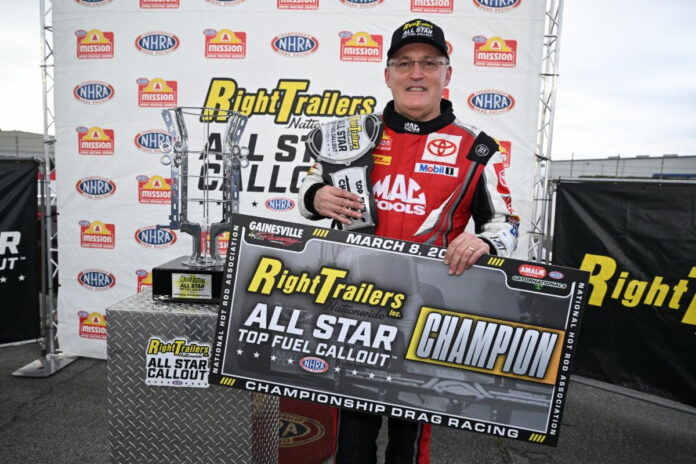
GAINESVILLE, Fla. (Jan. 27, 2026) – As part of the season-opening kickoff to NHRA’s 75th anniversary in 2026, the NHRA Top Fuel All-Star Callout returns to Gainesville Raceway, taking place on Saturday, March 7 as part of the 56th annual Amalie Motor Oil NHRA Gatornationals.
The specialty race features a loaded eight-car field, including defending Callout winner and reigning world champion Doug Kalitta. He earned the top seed in the unique bonus race that offers a big purse and bragging rights to open the milestone campaign. The rest of the field, in order, includes Kalitta’s teammate, Shawn Langdon, 2025 Gatornationals winner Antron Brown, racing legend Tony Stewart, Justin Ashley, Clay Millican, Shawn Reed and 2023 Callout winner Josh Hart.
With the unique Callout format, Kalitta will get to pick his opening-round opponent. Langdon will get the next selection until all the first-round matchups are set. The quickest winning driver in the opening round gets to call his shot for the semifinals, too, setting one of the matchups.
All three rounds take place on Saturday in Gainesville, with the opening-round selections set for Friday, March 6 in the Top Eliminator Club, A special Callout broadcast will also air on FS1.
Kalitta will also try to become the first Top Fuel driver to earn multiple wins in the Callout, which offers a total purse of $130,000.
“It was a good event last year and we ended up winning it, so definitely hoping we can pull it off again this year,” Kalitta said. “We ended up calling out Clay (Millican) for the first round. Anytime you get an opportunity to have those specialty races, they usually are just a lot of fun. It’s the first race of the year, too, and Gainesville really packs in the people. It’s always good to have an extra race on Saturday and just kind of have some fun with it. Our Mac Tools team is definitely looking forward to another opportunity this year. We hope to have some fun with it for sure and pick up right where we left off last season.”
Last season, Kalitta defeated Millican in the opening round and then knocked off Brown before taking down two-time world champ Brittany Force in the finals.
With a big purse, a special Callout trophy and plenty of bragging rights on the line, it can also provide the perfect boost to open the season at one of the most historic races on the NHRA schedule. This year’s loaded field features three NHRA Top Fuel world champions, while all eight participants have Top Fuel victories.
Final 2026 NHRA Top Fuel All-Star Callout Field
Doug Kalitta
Shawn Langdon
Justin Ashley
Tony Stewart
Clay Millican
Shawn Reed
Antron Brown
Josh Hart
The 2025 Amalie Motor Oil NHRA Gatornationals featured wins by Antron Brown (Top Fuel), Chad Green (Funny Car), Dallas Glenn (Pro Stock) and Gaige Herrera (Pro Stock Motorcycle). This year’s race will again be broadcast on FS1.
This year promises to be one of the biggest races in Gatornationals history. Along with a full slate of racing, fans can expect a multitude of events to celebrate the Amalie Motor Oil NHRA Gatornationals and NHRA’s 75th anniversary, including:
Appearances from a host of NHRA legends during the event, including Kenny Bernstein, Don Garlits, Joe Amato, Don Prudhomme, Shirley Muldowney, Darrell Gwynn and Bob Frey.
A celebration of Bernstein’s historic 300-mph run from 1992.
A free, limited-edition NHRA 2026 season poster to the first 6,500 fans in attendance on Sunday.
A new-look Nitro Mall, special displays and a 75th anniversary stage in Nitro Alley.
Race winners will get the special NHRA 75th anniversary Diamond Wally, along with the Gatornationals traditional Golden Gator trophy.
This year, fans will see a host of major stars, including Kalitta, Stewart, Hart, who joined John Force Racing, and the return of star driver Leah Pruett. In Funny Car, the stars include back-to-back world champ Austin Prock, Capps, Matt Hagan, Jack Beckman and new John Force Racing driver Jordan Vandergriff, while Pro Stock features champ Glenn, Anderson, Erica Enders, Jeg Coughlin Jr. and Aaron Stanfield.
In Pro Stock Motorcycle, Gaige Herrera is after a fourth straight Gatornationals win, while Richard Gadson begins his title defense against the likes of Matt Smith, Angie Smith and Chase Van Sant.
To purchase tickets to the 2026 Amalie Motor Oil NHRA Gatornationals, Including upgraded experiences in the Gainesville Top Eliminator Club, fans can visit www.NHRA.com/tickets. Children 12 and under are free in general admission areas with the purchase of an adult ticket. For more information about the NHRA, visit www.NHRA.com.
About Mission Foods
MISSION®, owned by GRUMA, S.A.B. de C.V., is the world’s leading brand for tortillas and wraps. MISSION® is also globally renowned for flatbreads, dips, salsas and Mexican food products. With presence in over 112 countries, MISSION® products are suited to the lifestyles and the local tastes of each country. With innovation and customer needs in mind, MISSION® focuses on the highest quality, authentic flavors, and providing healthy options that families and friends can enjoy together. For more information, please visit https://www.missionfoods.com/
About NHRA
NHRA is the primary sanctioning body for the sport of drag racing in the United States. NHRA presents 20 national events featuring the NHRA Mission Foods Drag Racing Series and NHRA Lucas Oil Drag Racing Series, as well as the NHRA Pro Mod Drag Racing Series and NHRA Flexjet Factory Stock Showdown™ at select national events. NHRA provides competition opportunities for drivers of all levels in the NHRA Summit Racing Series and NHRA Street Legal™. NHRA also offers the NHRA Jr. Street® program for teens and the Summit Racing Jr. Drag Racing League® for youth ages 5 to 17. With more than 100 Member Tracks, NHRA allows racers to compete at a variety of locations nationally and internationally. NHRA’s Youth and Education Services® (YES) Program reaches over 30,000 students annually to ignite their interest in automotive and racing related careers. NHRA’s streaming service, NHRA.tv®, allows fans to view all NHRA national events as well as exclusive features of the sport. In addition, NHRA owns and operates three racing facilities: Gainesville Raceway in Florida; Lucas Oil Indianapolis Raceway Park; and In-N-Out Burger Pomona Dragstrip in Southern California. For more information, log on to www.NHRA.com, or visit the official NHRA pages on Facebook, Instagram, Twitter, and YouTube.
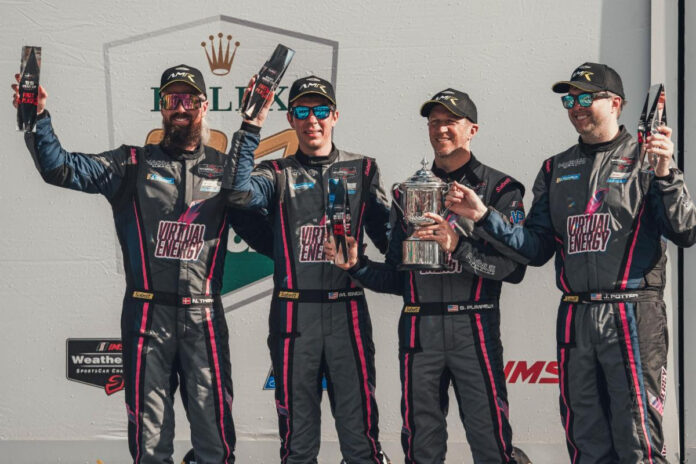
DAYTONA BEACH, Fla (January 25, 2026) – Leading North America’s most prized sportscar race with only minutes remaining, Magnus Racing and the No. 44 Virtual Energy Aston Martin Vantage GT3 EVO took an incredible runner-up finish at this year’s 2026 edition of the Rolex 24 at Daytona, taking the checkered flag after one of the most highlighted end-of-race battles in race history. While the closing 30 minutes would populate highlight reels worldwide, the result also served as the team’s fifth podium at Daytona, and most notably marked the team’s return to form.
“How fortunate are we to be disappointed in second,” stated Magnus Racing team owner and co-driver John Potter. “We’d be lying to say the last few minutes weren’t disappointing, but ultimately, we’re happy to be on the podium knowing the team performed so well. To be leading with such a strong car, and only minutes remaining, is a testament to how everyone executed. The drivers performed well, the crew was faultless, the car was fast, and the strategy put us in the right place at the end. It’s great to see everyone rewarded for such hard work getting to here. I can’t thank our fans, and of course incredible partners at Virtual Energy, for all of their support through this.”
In typical Rolex 24 fashion, this year’s twice-around-the-clock classic featured no shortage of trials and tribulations.
With team owner John Potter taking the green flag, a flawless opening two hours would demonstrate John’s pace in combination with his experience, passing multiple cars while putting a premium on maintaining a clean car. As his double-stint continued, John’s pace would take the car to the top-10 by time he stepped out.
Unfortunately, an ill-timed caution period two hours into the race would send the team one lap down, however an equally well-time caution period would allow the team to get the lead lap back just 45 minutes later. Knowing how critical a clean car would be for the end of the race, the next eight hours would be an effectively smooth process, with Potter, Spencer Pumpelly, Madison Snow, and Nicki Thiim all taking their turns to simply manage their time.
As the night progressed, however, the coastal community of Daytona Beach would be engulfed in a long period of dense fog, forcing the field to run under caution for over six hours. Running through the night and into the morning at safety car speeds, the team shifted from enduring through the night to focusing on performance for the next day, knowing that when the green flag fell it would become a seven-hour sprint race.
Once racing resumed, the intensity of the race would ramp up significantly. Fighting his way into the top five, Spencer Pumpelly took opening honors to place the car in a strong position for the races closing hours. Unfortunately, strong contact from behind by a lap-down Ferrari would send him spinning in the bus stop, luckily with minimal damage but a frustrating loss of track position.
Swapping to Nicki Thiim under the six-hour mark, the pace of the car began to show, with Nicki making his way through the field and sending a clear message on the car’s pace.
The next three hours would rotate from Thiim to Madison Snow, with the usual ebb-and-flow of track position and offsetting sequences placing the car a little further back, however a timely caution just under the three-hour mark would set the stage for a wild finish.
With Nicki back in the car to the finish, it was a hard-fought restart that would dramatically change the tone of the race. Taking the green flag in fifth, an unreal and impossible-to-describe series of passes through the first six turns would vault the team to first, and with it a strong feeling that victory was a real possibility. As the race evolved to the final 90 minutes, the car would drop back to second briefly due to offsetting strategies with another Aston Martin, but ultimately the strategy and pace of the No. 44 would prevail, and the team continued to lead after the final round of pit stops.
With no pit stops remaining and no concerns on needing to save to the end, all focus was simply on getting to the finish, with the team now leading with a palpable sense of excitement.
However, with only minutes remaining, the No. 57 AMG Mercedes arrived with a surprisingly strong pace that had not existed prior. Taking an opportunity in prototype traffic to take the lead, the Mercedes succeeded but with the Aston giving strong chase to take victory back.
With just over 10 minutes remaining, the battle for the race lead came to a head. Following a strong exit in the famed bus stop chicane, Nicki would make a run past the Mercedes down the front straight, only for the Mercedes to make a dangerous block at the Magnus No. 44 at over 170 MPH, making contact and allowing the No. 57 to maintain the lead. It was a move largely considered illegal by both fans and industry insiders alike, but despite a protest from the team no real penalty was issued to the Mercedes.
With not enough time to make another move, the team would settle for a runner-up finish, which given a difficult 2025 season, will ultimately be seen as a positive.
It was the third runner-up finish in five years at Daytona, and a strong sign of the team’s potential moving forward.
Also worth noting, the team’s tradition of pitside webstreaming continued, with their 24-hour stream of all pitside communications and strategic discussions being put on YouTube for all to see, garnering over 6,000 viewers in the process.
For Spencer Pumpelly, adding yet another podium to his roster of success at Daytona was a welcome one.
“I can’t thank everyone on this team enough for their hard work,” stated Pumpelly. “The level of competition in IMSA is so high in the current era, and we put ourselves in a position to win at the end. It came from everyone executing perfectly, and I couldn’t be prouder of where we are as a group.”
For Madison Snow in his team debut, a solid performance capped off an enjoyable event.
“It was great to be part of this team,” stated Snow. “I’ve known so many people here for most of my career, so even if it was my first race it didn’t feel that way. The car was incredibly fast, and the results speak for the quality of the crew. It was an honor to be here and I look forward to how the rest of the season continues.”
Finally, for Nicki Thiim, a combination of joy and heartbreak would summarize his event.
“I wanted to take this team to victory more than I can describe,” stated Thiim. “They did an incredible job preparing the car and putting us in a position to fight. I don’t know what else to say. The video and public reaction says everything I need to say, it just means we’ll come back that much harder next year.”
Having committed to select endurance events throughout the season, the next event for Magnus Racing will be announced soon, with the team opting to simply enjoy the moment for the time being.
CLASH AT BOWMAN GRAY STADIUM Sunday, February 1 – NASCAR Cup Series, 8 p.m. ET (FOX, MRN, SXM)
For the second year in a row, the NASCAR season will kick off at one of the sport’s most historic venues as Bowman Gray Stadium in Winston-Salem, NC, hosts the Clash at Bowman Gray this weekend. The half-mile track hosted its first series event in 1958 and continues to be a popular place for its weekly racing series events each summer.
LOOKING AT THE 2026 FORD CUP LINEUP
There have been no changes in the Ford driver lineup for 2026 as all 10 drivers return to their respective teams. The only difference this weekend is that Corey LaJoie will be behind the wheel of the No. 6 RFK Racing Ford Mustang Dark Horse as Brad Keselowski continues to recover from a broken leg he suffered during a skiing accident in December. LaJoie has competed in the Clash one previous time, finishing 17th in 2024 while driving for Spire Motorsports. Keselowski is expected to be ready for the Daytona 500 on Feb. 15.
Driver – Car Number (Team)
Austin Cindric – No. 2 Ford Mustang Dark Horse (Team Penske)
Noah Gragson – No. 4 Ford Mustang Dark Horse (Front Row Motorsports)
Brad Keselowski – No. 6 Ford Mustang Dark Horse (RFK Racing)
Ryan Blaney – No. 12 Ford Mustang Dark Horse (Team Penske)
Chris Buescher – No. 17 Ford Mustang Dark Horse (RFK Racing)
Josh Berry – No. 21 Ford Mustang Dark Horse (Wood Brothers Racing)
Joey Logano – No. 22 Ford Mustang Dark Horse (Team Penske)
Todd Gilliland – No. 34 Ford Mustang Dark Horse (Front Row Motorsports)
Zane Smith – No. 38 Ford Mustang Dark Horse (Front Row Motorsports)
Ryan Preece – No. 60 Ford Mustang Dark Horse (RFK Racing)
FORD CLASH HISTORY
The Clash has been held in some form since 1979 and Ford has won it 10 times by seven different drivers. The best stretch in the event for Ford undoubtedly came during a three-year winning streak in which Rusty Wallace, Mark Martin and Dale Jarrett all reached victory lane from 1998-2000. Jarrett owns three of Ford’s 10 victories (1996, 2000, 2004) in the event and on two of those occasions (1996 and 2000) he went on to win the Daytona 500.
LOGANO WINS INAUGURAL CLASH AT THE COLISEUM
For the first time in NASCAR history, the Clash was held at a place other than the Daytona International Speedway as the Los Angeles Memorial Coliseum hosted the event on February 6, 2022. The specially-made quarter-mile asphalt track delivered in the main event as Logano, who won his heat race, passed Kyle Busch on lap 116 and led the final 35 to become only the second Ford driver to win the Clash more than once. Logano, who also captured the event in 2017, joined Dale Jarrett (three-time winner) with multiple Ford victories.
ELLIOTT CLAIMS FORD’S FIRST CLASH VICTORY
Bill Elliott became the first Ford driver to win a non-points event in the NASCAR Cup Series on February 8, 1987 when he captured the Busch Clash. The format that year was a single 20-lap run (50 miles) with no pit stop required. Elliott, who started on the pole in his No. 9 Coors Thunderbird after a blind draw, fell back to sixth on the start following a first lap accident involving Terry Labone and Ricky Rudd. On the ensuing restart, Elliott steadily reeled in leader Darrell Waltrip and passed him on lap eight. Elliott led the final 13 laps and won with an average speed of 197.802 mph, a record that still stands for the event. A week later, Elliott won his second Daytona 500.
FORD’S HISTORY AT BOWMAN GRAY
Ford has won more NASCAR Cup Series races at Bowman Gray Stadium than any other manufacturer. In the 29 races held at the half-mile track, Ford has 12 victories. The list of Ford winners is a virtual Hall of Fame lineup that includes Glen Wood, who leads the way with four, including three straight during the 1960 season. Junior Johnson is next on the list with three while David Pearson, Richard Petty and Bobby Allison have one Ford win each. NASCAR officially recognized Allison’s 1971 victory last October, upping his career win total to 85 and moving him into fourth on the all-time list. That also represents the first official series victory for Mustang.
FORD CUP WINNERS AT BOWMAN GRAY
Jim Reed – March 30, 1959
Glen Wood – April 18, 1960
Glen Wood – June 25, 1960
Glen Wood – August 23, 1960
Glen Wood – July 13, 1963
Marvin Panch – March 30, 1964
Junior Johnson – August 22, 1964
Junior Johnson – May 15, 1965
Junior Johnson – August 28, 1965
David Pearson – August 10, 1968
Richard Petty – August 22, 1969
Bobby Allison – August 6, 1971
FORD’S CLASH WINNERS
1987 – Bill Elliott
1992 – Geoffrey Bodine
1996 – Dale Jarrett
1998 – Rusty Wallace
1999 – Mark Martin
2000 – Dale Jarrett
2004 – Dale Jarrett
2017 – Joey Logano
2018 – Brad Keselowski
2022 – Joey Logano
As the spirit of America, the Ford Mustang is the world’s best selling sports car and one of the planet’s most popular race cars. With Mustang-based race cars competing in international sports car competition (GT3 and GT4), NASCAR, NHRA, Formula Drift, in Supercars, at the Pikes Peak International Hill Climb and in its own bespoke regional one-make series – Mustang Cup and Mustang Challenge – the platform has an unprecedented global reach. This weekend, 10 Mustang race cars are scheduled to race across all disciplines. Learn more about Mustang at www.FordRacing.com .
Portugal’s online gambling scene isn’t just growing — it’s leveling up big time. Thanks to solid licensing rules and tight oversight, this market is all about keeping things fair and square. No shady business here. Plus, with certified game software running the show, players know they’re in safe hands. It’s no wonder the online casino world in Portugal is pulling in folks who want the real deal — reliable, transparent, and built for the long haul. Forget the flashy gimmicks; here, quality rules the day.
For many users, choosing the best online casino Portugal involves balancing generous bonuses with high RTP games and legal security. Understanding how these factors interact within a regulated framework helps players make informed decisions and enjoy online gaming responsibly.
Casino Online Portugal Legal Environment
The casino online Portugal legal framework is built on national legislation that strictly controls online gambling activity. Online casinos were officially legalized in 2015, with a licensing regime established to protect players and ensure fair play.
Every licensed operator has to play by the book — and that book is written by the Serviço de Regulação e Inspeção de Jogos (SRIJ), the watchdog running the show under Turismo de Portugal. If a platform doesn’t have its stamp of approval, it simply can’t offer games to players in Portugal. This means every online casino in Portugal you come across is held to the same strict legal and technical standards. No shortcuts, no exceptions. Want the full scoop? You can find all the official details on the government’s website.
Bonuses Offered by Portugal Online Casino Platforms
Bonuses remain a key attraction in the Portugal online casino market, but unlike in unregulated regions, promotions must comply with strict transparency rules. This protects players from misleading conditions and unclear wagering requirements.
Licensed platforms commonly structure promotions around the following bonus formats:
Welcome bonuses tied to first deposits;
Free spins on selected high RTP slots;
Reload bonuses for existing players.
International brands such as Beef Casino and Martin Casino are often cited in industry discussions for their structured bonus logic. However, only locally licensed operators can legally offer promotions in Portugal.
High RTP Games in Casino Portugal Online
High RTP games are a defining feature of regulated platforms. RTP values must be certified and disclosed, giving players a clearer understanding of long-term payout expectations in the casino Portugal online.
Most licensed casinos focus on the following game categories to meet player demand:
Online slots with RTPs exceeding 96%
European roulette with a low house edge
Blackjack variants using standard rules
Game providers supplying these titles publish technical details directly on their official websites, such as NetEnt and Play’n Go, allowing players to verify RTP information independently.
Player Preferences in Online Casino Portugal
Portuguese players? They’re no rookies. These folks come ready — cautious, sharp, and always on the lookout. The game changed thanks to tight regulations. Now it’s not about flashy promos or hype trains. Nope. It’s all about playing safe — legal security, real RTP numbers, and solid tools to keep things responsible.
Before jumping in, they dig deep: checking licenses, scoping out payout stats, and eyeballing bonus terms like pros. No more impulsive clicks and “let’s see what happens.” It’s imaginative play, controlled moves, and knowing exactly what’s on the table. That’s how you roll in Portugal’s online casino world.
Sure, names like Flagman Casino and Sol Casino pop up in international chats. But when it comes down to it, Portuguese players aren’t just chasing big brands. Nope — they care way more about whether a platform’s licensed and playing by the rules. That trust in the system runs deep and keeps the online casino Portugal scene solid. Because of this, operators don’t just throw flashy promos around — they focus on transparency, certified software, and steady, reliable service. Long game over, quick wins, every time.
Payments and Transaction Security
Secure payments? That’s non-negotiable for any legit platform. Licensed operators have to use approved financial systems that keep a close eye on every transaction to stop fraud in its tracks. These setups don’t just get a once-over — they’re regularly audited to make sure they play by the rules, both national and European. That means extra layers of protection for players and operators alike. Peace of mind? Guaranteed.
Instead of flooding you with endless payment options, regulated casinos keep it tight and reliable. It’s all about making sure every deposit and withdrawal is traceable and complies with the financial and anti-money laundering rules. Clear-cut verification steps, speedy withdrawal times, and no-hidden-fee vibes make players feel safe and in control. This kind of transparency builds serious trust and sets the stage for a smooth, rock-solid transaction experience that lasts.
Responsible Gambling Standards in Portugal
Responsible gambling is a mandatory component of the Portuguese system. Every licensed Portuguese online casino must provide tools that allow players to manage their activity and reduce potential risks.
These measures include deposit limits, session controls, and self-exclusion options, all of which are monitored by the regulator. Additional information on responsible gaming principles can be found at the official website.
Comparison of Bonuses and RTP Transparency
To better understand why regulated platforms stand out, it is helpful to compare licensed casinos with unregulated alternatives. The table below highlights how bonuses and RTP transparency vary by legal status.
Feature
Licensed Portugal Online Casino
Unlicensed Platforms
Bonus Transparency
Clearly regulated
Clearly regulated
RTP Disclosure
Mandatory
Mandatory
Player Protection
High
High
Legal Security
Guaranteed
Guaranteed
This comparison shows that regulation directly influences the overall quality of the player experience. Licensed platforms are required to balance promotional offers with fair payout structures, while unregulated casinos often lack accountability. For players, choosing a regulated online casino Portugal option reduces uncertainty and supports safer, more predictable long-term gameplay.
Conclusion
Portugal’s online gambling scene shows it’s totally possible to mix strict legal oversight, juicy high RTP games, and clear, no-nonsense bonuses — all in one place. By putting player protection first and running certified software, the Portuguese online casino world delivers a gaming environment you can actually trust. If you’re the type who checks licenses, digs into RTP stats, and values solid, responsible gaming tools, you’re set for a long, fun ride without nasty surprises. In Portugal, it’s all about playing smart and playing safe.
The Portuguese model emphasizes sustainable growth over flashy, short-term promos. Clear rules push operators to focus on game quality, user experience, and fairness — not just aggressive marketing. This benefits players and regulators alike by cutting risks and boosting transparency. As technology advances and players expect more, Portugal’s legal framework sets a strong foundation for innovation while keeping responsible gaming front and center.