Similar to Ashburn, Virginia, in the United States, the Netherlands has become a global hotspot for VPS hosting thanks to its investment in robust data centers. Servers located in the Netherlands have become the foundation of Europe’s internet. A vps in netherlands offers performance, privacy, and EU-regulated standards that allow businesses and developers to start or expand in Europe. Continue reading to learn more about what a VPS is and why the Netherlands is an appealing option for one.
What is a VPS?
A Virtual Private Server (VPS) is a hosting environment in which a single server is divided into multiple virtual machines, with the workload spread across them. Typically, a VPS is allocated a percentage of CPU, RAM, and Storage based on the hosting company’s tier or monthly fee. VPSs are a good option for businesses, startups, and individual users who don’t want to cover the full cost of a dedicated server and can instead meet their needs with a VPS. Some of the core benefits of a VPS include:
Consistent Performance
Root Access
Wide range of Operating Systems
Ability to run and maintain databases, video games, applications, and business-related software.
Quick Scalability
Use-Cases for a Netherlands VPS
Business – A VPS offers a specific number of dedicated resources consistently. This makes them fantastic for online stores, applications, membership services, and more. A Netherlands VPS will also be GDPR compliant, which provides customer trust and legal consistency.
API and Application Development – Dutch servers offer an extremely high uptime alongside more than adequate network performance. Making a VPS here is ideal for staging servers, microservices, CI/CD runners, and API endpoints. Data-handling rules outlined in European regulations also set secure storage standards for logs and user information.
Privacy Deployment and Development – The Netherlands is home to some of the strictest data-protection laws. While not entirely bulletproof, any Dutch host must follow legal procedures before releasing any data.
Game Servers & Live Applications – Thanks to investments in data centers, VPSs in the Netherlands can deliver low-latency gameplay to users across Europe. This also applies to any other use case that requires a low and stable ping, such as VoIP.
Media Hosting – The high data throughput makes a Dutch-based VPS more than capable of video streaming, podcast hosting, or file distribution.
What We Recommend
While there is no shortage of VPS providers in the Netherlands, it’s more about which provider provides the most for your business or startup. Our recommendation is FOTBO, as they offer a competitive price point and comply with the EU’s standards and regulations.
Every VPS provider must compete with giants like Amazon Web Services (AWS) and Digital Ocean (DO). Here’s how FOTBO compares:
FOTBOT
AWS
DO
Specifications
1 CPU 2,5 RAM 15GB NVME
1 CPU 2 RAM 30GB SSD
1 CPU 2 RAM 50GB SSD
Pricing
3,80 €/Mon
15,30 €/Mon
11,10 €/Mon
Server Strength (Single Core Score)
4261
3016
2551
When it comes to price-to-performance, FOTBO delivers a compelling value proposition. The key differences are stronger CPU performance, significantly cheaper, and fast data storage (NVME). FOTBO also offers the same scalability as its competitors, enabling expansion that meets your business’s needs; however, it is primarily focused on European deployment.
Conclusion
Opting for a VPS in the Netherlands for your business will ensure strong performance, privacy, and compliance with the EU’s standards and regulations. Anyone or any company willing to specialize in European deployments will not be dissatisfied with FOTBO’s predictable pricing, performance, and clarity. For business focused on EU deployments and hosting, securing a Dutch VPS will ensure long-term consistency and performance.
Omega boosting started as a fringe workaround, a workaround for impatient players, and now it’s baked into the World of Warcraft economy. You pay skilled players or services to accelerate your character’s gear, progression, or mythic+ scores. Coordinated runs, power-leveling hacks, and even account-sharing methods are standard. Back in the early raid-carry days, gold-for-gear trades filled the same niche—players chasing competitive parity without the grind. Over time, third-party platforms, streaming visibility, and relaxed social norms normalized transactional progression.
We think the tradeoffs are obvious: speed versus legitimacy, short-term gain versus community backlash, account risk versus convenience. For casuals, it’s pragmatic—you reclaim time or join friends at endgame. For some, it undercuts achievement narratives. Enforcement and Blizzard’s nudges—sometimes heavy-handed, sometimes invisible—push services toward safer models or underground workarounds. Omega boosting is a market-driven, adaptive phenomenon, molded by demand and policy.
When you break it down, manaforge omega boost is pure mechanics: tools, routes, and defined team roles. Add-ons plot waypoints, combat macros shave execution variance, and consumables cut minutes per pull. Routes are rehearsed node-to-node chains, optimizing XP, quest-turn-ins, and downtime. Patch changes or server shifts tweak decisions, so tracking metrics is constant. Team roles are rigid: puller, AOE cleaver, healer/support, navigator. Communication is terse—pull, skip, emergency rez. Cooldowns and backups are synchronized to prevent single-point failures. The result? Predictable runs, repeatable pipelines, and rapid progression.
Who Runs and Who Buys
Omega boosting isn’t just for high-skill grinders chasing speed. Casuals want progression with minimal grind. Competitive gamers chase ranks or seasonal rewards, rolling alts efficiently. Time-crunched players, maybe streamers or working adults, convert limited hours into endgame access. Providers treat boosting like a service with predictable ROI. It’s pragmatic: scarce hours turn into rank, gear, or unlocked content. The math is measurable, not just flashy skill.
Account Risk, Ethics, and Community Consequences
There’s a catch. You risk accounts and reputation. Blizzard’s enforcement targets unauthorized third-party services. Suspensions, temporary lockouts, permanent bans—your purchased items and progression vanish. Enforcement isn’t theoretical; it’s retroactive, automated. You could lose access months later.
Social backlash isn’t trivial either. Paid boosts shift guild dynamics, invite stigma, and irritate teammates who grinded organically. Streamers or competitive players risk credibility if linked to these services. Detection likelihood, appeals, and social cost matter. Quick gains can backfire with lasting consequences.
Reshaping Progression
Omega boosting shortcuts gated progression, changes how players advance, and influences Blizzard’s pacing design. Instant access weakens feedback loops. Goals that once paced you now feel trivial. Incremental unlocks lose value. Game design reacts: gating might tighten or compress, loot ramps accelerate, matchmaking clusters faster players at endgame. Social dynamics shift. Convenience versus satisfaction. The sense of achievement erodes, forcing developers to rethink engagement metrics.
Player Takeaways
Reduced gating: expect rapid advancement to force design adjustments.
Reward inflation: faster power ramps require loot rebalancing.
Social stratification: endgame clustering shifts grouping and content experiences.
Frequently Asked Questions
Can Omega Boosting Cross Expansions?
Yes, but compatibility varies. Level caps must align, and cross-game mechanics matter. Check server rules, transfer restrictions, and item/XP limitations.
Does Omega Boosting Affect Achievements or Stats?
Yes. Achievements usually track correctly, but stats can skew with boosted XP or gear. Leaderboards don’t always reflect organic play.
Are There Legal Risks Outside Blizzard?
Yes. Selling boosts may breach local laws—real-money transactions, fraud, money laundering, consumer protection. Consult jurisdiction-specific counsel.
How Does Omega Boosting Affect Guild Leadership or Recruitment?
Expect shifts. Guilds balance fast gains with culture fit. Leaders vet more strictly to keep cohesion intact.
Can Solo Players Mimic Omega Boosting?
Partially. Solo methods exist but lack group buffs and rotation coordination. You’ll need optimized routes, macros, and patience to approximate team efficiency.
Buying your first car is a huge milestone. I remember when I was looking for my first car, and the excitement almost matched the confusion and anxiety. There’s a lot to consider, from personal preferences to budgeting and even the practicalities of what you need in a vehicle. Knowing what to look for and prioritizing your needs can make the process significantly simpler.
Budget
Let’s be honest — money matters, and your budget is the primary factor. I quickly learned that while dreaming about a flashy sports car was fun, reliability and affordability had to guide my decision.
Besides the sticker price, include insurance, taxes, registration fees, and maintenance expenses in your budget planning. If you’re considering a loan, ensure the monthly payments are something you’re comfortable with for the duration of the loan.
In addition to considering the cost of ownership, it’s beneficial to explore reliable sources for purchasing options. One such place where you might explore options further is through Vern Laures Auto Center. They can offer insights or choices you hadn’t initially considered as you put your budget into perspective.
Another important financial aspect to consider is the potential resale value of the car. An initial affordable price might seem attractive, but factoring in how well a car retains its value over time could influence your long-term financial satisfaction. It’s wise to research which makes and models stand out for their depreciation rates and consider them during your hunt for a car.
Purpose
Consider how you will use the car. Are you buying primarily for commuting or for road trips? When I bought my first car, I needed something reliable for daily trips to school. So, comfort and fuel efficiency were my top priorities.
Daily Commute: Compact cars are ideal for solo or one-passenger driving, particularly for shorter distances.
Family Use: You might need more space for family outings, which means considering SUVs or minivans.
Road Trips: If long drives are on your radar, opt for something with a robust engine and a comfortable interior.
Don’t forget to factor in parking availability and potential restrictions in your area. A spacious SUV might be tempting, but fitting into tight urban parking spots could become a real challenge. Ensure your chosen vehicle aligns not only with your lifestyle but also with your living situation.
New vs. Used
Should you buy new or settle for a used car? Each has its pros and cons, and the choice often depends on your budget and usage frequency.
New Cars come with warranty coverage, less maintenance, and the latest features. However, they depreciate quickly and cost more upfront. I opted for a well-maintained used car. It was more affordable and didn’t lose much value over time. Just make sure to check the car’s history and condition thoroughly.
When buying a used car, it’s essential to verify the authenticity of the vehicle history report. Take the time to determine no major accidents or modifications that might affect safety or performance. This can offer peace of mind by ensuring there are no hidden surprises after purchase.
Features
Cars these days come with an overwhelming array of features. Determining what’s important to you can save time and money.
Invest in safety features like airbags, backup cameras, and automatic emergency braking systems. Connectivity devices like Bluetooth, navigation systems, and USB ports can make driving more convenient. Seats with good support and climate control are necessary if you spend a lot of time driving.
Energy efficiency is gaining attention as a valuable feature in vehicles, with many models now offering hybrid or fuel-efficient versions. While electric or hybrid cars can be more expensive initially, they might prove to be a smart choice in locations with high fuel costs or strong environmental policies.
Test Drive and Inspection
Never underestimate the importance of a test drive. It’s only when I got behind the wheel that I noticed minor details that swayed my decision.
Comfort Test: Ensure the seat, steering wheel, and visibility feel right to you.
Mechanical Check: If opting for a used car, have a mechanic check it out. This precaution prevents future headaches.
During the test drive, pay attention to how the car handles in different conditions. Testing it out in both city traffic and on the highway can provide insights into how it performs in various settings. Check the brakes, acceleration, and steering responsiveness to ensure the vehicle meets your expectations.
In Summary
Choosing your first car might feel daunting, but breaking down the decision into manageable parts simplifies the process. Your first car might not be a luxury sedan or the kind of car you dream about every night, but it should meet your primary needs, fit comfortably in your budget, and be reliable. Remember that this decision could affect your finances and personal life for years to come, so weigh your options carefully as you journey into this next chapter of independence on the road.
Navigating through unknown roads can be daunting, but with a Mazda SD card, the process becomes smooth and stress-free. These SD cards are programmed to enhance your Mazda’s navigation system by providing up-to-date maps, crucial traffic alerts, and optimizing route calculations. But what makes these SD cards essential for your driving experience? Let’s dive in.
Enhanced Driving Experience
Mazda SD cards contain the latest maps and software updates for your vehicle’s in-built navigation system. This ensures you’re not missing out on any recent changes in road networks, which significantly eases your driving experience.
Cost-Efficiency Over Third-party Systems
Investing in a Mazda navigation SD card can be more cost-effective compared to relying on third-party GPS systems or the data plans required for smartphone-based navigation apps. The SD card offers a one-time update fee, saving you from recurrent subscriptions.
Reliability and Accuracy
Unlike some external navigation devices that depend on a cellular signal, an SD card-based system in Mazda vehicles provides consistent performance. Its format allows the navigation system to function effectively even in areas with poor network coverage.
Opinions from Experts and Users
According to automotive industry experts, Mazda SD navigation cards are among the most reliable when it comes to delivering accurate road data without interruptions. Many drivers appreciate the convenience of having the navigation system seamlessly integrated with their vehicle’s HUD (Head-Up Display).
Users frequently share positive feedback regarding how these cards improve travel planning and reduce time spent in traffic. However, some users feel that the cost of Mazda’s proprietary cards could be lower compared to further improved capabilities offered by other brands.
Mazda SD Card Ratings and Comparisons
Considering user and expert ratings, Mazda SD cards often receive high scores for accuracy, ease of use, and installation simplicity. Let’s look at a brief comparison against another popular navigation system:
Feature
Mazda SD Card
Third-party GPS Systems
Accuracy
High
Variable
Initial Cost
Moderate
Low
Update Frequency
Regular
Periodic
User Interface
Vehicle-integrated
Device-specific
Advantages and Disadvantages of Mazda SD Cards
Advantages
Seamless Integration: Designed specifically for Mazda vehicles, offering a tailored navigation experience.
Reliable Performance: Functions without the need for cellular connectivity.
Regular Updates: Ensures the most accurate maps and routes are available.
Disadvantages
Cost: Higher initial investment compared to some alternatives.
Vehicle Specificity: Less flexibility as they are specifically designed for Mazda navigation systems.
Conclusion
Incorporating a Mazda navigation SD card into your vehicle can greatly enhance your driving experience by offering precise and reliable navigation capabilities. While the initial cost may be a consideration, the long-term benefits in terms of improved driving convenience and stress-free travel cannot be understated. For those seeking tailored navigation built into their Mazda, investing in a genuine SD card is a decision that brings lasting rewards.
For more information on purchasing Mazda navigation SD cards, you can visit navi-world.com for a variety of options.
Running an auto repair shop entails managing a tremendous amount of operational workload, from customer service and part inventories to payroll and financials. For shop owners aiming to scale efficiently, integrating the best accounting software specific to their industry can spell the difference between seamless management and administrative chaos.
The best accounting software for auto repair shop owners amalgamates ease of use with powerful features that cater to industry-specific needs. This guide explores top accounting solutions that drive efficiency and profitability, helping shop owners make informed decisions.
Why Does Accounting Software Matter for Growing Businesses?
In the rapidly evolving business landscape, accounting software is no longer a luxury; it’s a necessity. For auto repair shops, tracking income, expenses, payroll, tax compliance, and inventory can be complex. Here’s why accounting software is critical for growth:
Efficiency and Accuracy
Accounting software eliminates manual data entry, reducing human error and saving time. It automates repetitive tasks, such as invoicing and payroll, allowing shop owners to focus more on customer service and shop performance rather than administrative burdens.
Real-Time Financial Insights
Accounting software provides real-time financial insights that are crucial for strategic decision-making. Whether tracking cash flow or determining seasonal profitability, having up-to-date data empowers auto repair shops to make informed business decisions.
Scalability
As an auto repair shop grows, its accounting needs become more complex. Investing in a scalable software solution ensures that the shop can handle increased transaction volumes and expanded reporting requirements without a hitch.
Compliance and Reporting
Compliance with local and federal tax regulations is a critical focus area for any business. Accounting software ensures compliance through automated tax calculations and prepares accurate reports required during tax seasons.
Enerpize: The Best Accounting Software for Auto Repair Shops
Enerpize outperforms other accounting software options by offering a comprehensive array of features tailored to auto repair shops. From seamless inventory management to detailed financial reporting, Enerpize offers unparalleled benefits that enable repair shop owners to streamline operations, enhance customer satisfaction, and improve profitability.
Inventory Management
Enerpize’s robust inventory management features help auto repair shops efficiently track parts and supplies. The system automatically updates inventory levels as parts are used, ensuring real-time accuracy and reducing the chances of stock shortages.
Invoicing and Billing
With its intuitive invoicing and billing features, Enerpize enables auto repair shops to process bills quickly and accurately. Customizable invoice templates and automated follow-ups minimize the typical hassles related to collections.
Financial Reporting
Enerpize provides a wide array of financial reports that facilitate strategic planning and informed decision-making. Owners can generate tailored reports, from balance sheets to profit and loss statements, with just a few clicks.
Expense Tracking
Enerpize’s expense-tracking tools enable meticulous recording and categorization of repair shop expenses, making it easier to identify cost-saving opportunities and maintain healthy financials.
Payables and Receivables
The software’s payables and receivables management functions help repair shop owners maintain a keen overview of outstanding client payments and outgoing payments, ensuring cash flow remains optimal.
Payroll Management
Enerpize simplifies payroll processes for auto repair shops by handling complex calculations and ensuring compliance with labor laws and tax regulations, while also offering features like direct deposit and employee self-service portals.
Tax Compliance
Enerpize effortlessly handles various tax complexities, from calculating VAT to generating tax-ready reports, ensuring compliance and preparedness for audits or tax time.
Multi-Location Support
For repair shops with multiple locations, Enerpize offers centralized control, enabling owners to manage financials and operations from a single platform.
Cloud-Based Efficiency
Being cloud-based, Enerpize offers anytime, anywhere access for repair shop teams, enabling seamless collaboration and the flexibility to check the business’s health from any location.
Customization Options
Enerpize offers numerous customization options, enabling auto repair shops to tailor the software to specific needs, from workflow automation to report customization.
Pros:
User-friendly interface
Comprehensive feature set
Efficient customer support
Flexible pricing models
Cons:
May require training time for advanced features
Pricing: Basic starting at $9.99/month; Advanced at $29.95/month; Enterprise at custom pricing. More details on the Enerpize pricing page.
User Review: “Enerpize offers the best mix of features and intuitiveness for auto shops.”
QuickBooks: Popular Option for Small Shops
QuickBooks is a renowned name in the accounting software sector, well-suited for small businesses, including auto repair shops. Offering a comprehensive suite of tools for managing finances, QuickBooks streamlines operations. Although not as tailored as Enerpize, it’s a catch-all solution many small shops have adopted.
Simple Invoicing
QuickBooks provides a streamlined invoicing process with customizable templates, automated billing, and scheduled invoices that ensure timely payments from clients.
Expense Management
QuickBooks offers robust expense management, allowing users to snap pictures of receipts, link them to transactions, and categorize expenses for accurate tracking.
Payroll Management
Offering direct deposit, tax calculations, and filing, QuickBooks manages payroll efficiently, making it suitable for small-team operations commonly found in repair shops.
Pros:
Widely recognized and trusted
Extensive integrations with other tools
Ease of use
Cons:
It can become costly with advanced features
Less customizable compared to niche-specific tools
Pricing: Starting at $25/month for Simple Start; $70/month for Advanced. For more, visit QuickBooks pricing.
User Review: “QuickBooks remains a trusted companion for small auto shops.”
Comparison Table
Product
Best For
Starting Price
Enerpize
Comprehensive features, scalability
$10/month
QuickBooks
Small auto repair shops
$25/month
How to Choose the Right Accounting Software?
Choosing the right accounting software is crucial for maintaining efficiency and supporting the growth of your auto repair shop. Here are some actionable insights to help you make the best choice:
Identify Your Specific Needs
Evaluate your shop’s specific accounting needs, from invoicing to payroll, and ensure the software can accommodate these requirements. Enerpize, for example, offers customization that fits the diverse needs of auto shops.
Consider Scalability
Opt for a scalable solution that accommodates future growth. As you expand, you’ll need features that can handle increased data volumes and potential multi-location operations.
Examine Integration Options
Checking the software’s compatibility with your existing systems is crucial. The best software, like Enerpize, seamlessly integrates with other tools, such as CRM systems and inventory management software.
Evaluate User Experience
A user-friendly interface saves time and reduces the learning curve for team members. Enerpize masterfully blends robust features with ease of use, suiting both tech-savvy and novice users.
Budget and Pricing Models
Understanding the cost of the software in relation to your budget is vital. Enerpize offers tiered pricing models, allowing you to choose a plan that aligns with your financial constraints while still delivering necessary features.
Assess Customer Support
Reliable customer support can be a distinguishing factor. Make sure the provider offers robust support options, including live chat, email, and phone assistance, as available with Enerpize.
Run a Free Trial
Opt for software solutions that offer a free trial period. This allows you to explore the features and determine if the software genuinely meets your business expectations before committing.
Conclusion
In conclusion, the right accounting software can significantly improve an auto repair shop’s operational efficiency. While there are multiple options available, Enerpize stands out as the best choice due to its comprehensive features, affordability, and scalability.
Offering a seamless blend of functionality and ease of use, Enerpize aids auto repair shop owners in streamlining their processes, achieving compliance, and driving business growth. Invest in the right tools today and watch your shop transform into a more prosperous enterprise.
When people ask me about the most transformative experiences of my adult life, they’re often surprised when I mention online gaming. Their faces reveal the same assumptions I once held – that games are mere entertainment, digital distractions with little connection to “real” life. Yet my journey through various virtual worlds, from casual sessions on mostbet to immersive multiplayer universes where I’ve invested thousands of hours, has reshaped my understanding of community, personal growth, and even my own capabilities in ways that rival any traditional life experience. What began as simple curiosity has evolved into a rich dimension of my existence that defies the artificial boundary between “virtual” and “real” that many still cling to.
The Voice I Found in Silence
I’ve never been comfortable as the center of attention. In school, I was the quiet kid who knew the answer but wouldn’t raise my hand. At work, I had ideas but hesitated to share them, perpetually afraid of judgment or rejection. This pattern followed me for years, limiting opportunities and leaving me frustrated with my own inability to overcome it.
Something unexpected happened during a particularly challenging raid in an online game. Our group had failed multiple times using the standard strategy, and I noticed a pattern no one else had mentioned – a different approach that might work where others had failed. Despite my usual hesitation, I unmuted my microphone. “What if we tried this instead?” I suggested, my heart racing despite the digital distance.
To my surprise, the team listened, implemented my idea, and succeeded. The flood of positive feedback was immediately reinforcing: “That was brilliant!” “Why didn’t we think of that?” “You really came through for us.” In this space, where my ideas could stand on their own merit without the self-consciousness of physical presence, I found my voice.
As similar experiences accumulated across different games and teams, a new neural pathway began forming – one where sharing ideas led to positive outcomes rather than the catastrophic rejection my anxiety had always predicted. Gradually, almost imperceptibly, this newfound confidence began transferring into other areas of my life. I contributed more in meetings. I pursued projects that previously would have seemed beyond my capabilities.
What looked like “just games” from the outside was actually a training ground for a fundamental shift in how I perceived myself and my potential – a shift that has transformed every aspect of my life from personal relationships to my career.
The Museum of Human Character
The semi-anonymity, the pressure of time-sensitive decisions, and the necessity of teamwork create conditions that often strip away social masks and reveal authentic character with remarkable clarity.
I have witnessed seemingly confident people crumble under the slightest pressure. I have seen unexpected kindness from gruff, taciturn players who go out of their way to help the newcomers. I have observed how some prioritize personal satisfaction over team success, while others consistently sacrifice individual achievements for collective goals. This human behavior has made me a better judge of character in all areas of life.
Perhaps most valuable, I have seen my own character reflected back to me with clarity. My impatience when things don’t go as planned, and my occasional prioritization of efficiency over people’s feelings. My tendency is to withdraw rather than communicate when frustrated. The game environment stripped away my social persona and showed me aspects of myself that needed more attention to grow.
This mirror function of gaming environments offered a rare opportunity for honest self-assessment, free from the defensive mechanisms that typically shield us from uncomfortable truths about ourselves. Recognizing these patterns was the necessary first step toward changing them – not just within games, but in all domains of my life.
The Architecture of Trust
One of the most remarkable aspects of gaming communities is how quickly deep trust can develop between people who have never met face-to-face. This might seem counterintuitive given concerns about online interactions, yet I’ve experienced it consistently across different games and communities.
I believe this accelerated trust development occurs because gaming creates unique conditions that bypass many barriers to connection in physical spaces. We demonstrate trustworthiness through actions rather than claims. We reveal character through behavior in challenging situations rather than carefully curated self-presentation. We build relationships through shared experiences and mutual support rather than social performance.
The depth of these bonds became clear when one of our regular teammates disappeared suddenly for several weeks, which was completely out of character for someone who rarely missed our scheduled sessions. Our group used the limited personal information we had to check his well-being, eventually discovering he had been hospitalized after a serious accident.
What followed demonstrated the authenticity of connections often dismissed as “not real.” Team members who lived nearby organized hospital visits. Others arranged meal deliveries for his family. We created a rotation schedule to help him catch up on coursework once he was well enough to return to his studies. These weren’t hollow gestures between internet strangers who share a hobby. They were the natural response of friends supporting someone they care about, and those friends’ connection happened to form through a digital platform rather than physical proximity.
The Borderless Community
“Where are you from?” I asked a new team member during a casual conversation between game objectives. “Originally Ukraine, but I’m in Poland now,” he replied. “You?” “Small town in Canada. About three hours north of Toronto.” “Huh, funny to think we’re playing together from opposite sides of the world.”
This exchange highlights another element I treasure about online gaming – its remarkable ability to connect people across geographical, cultural, and social boundaries that might otherwise keep them apart. My regular gaming circles include people from at least a dozen different countries, spanning ages from late teens to early seventies, representing wildly different life experiences and perspectives.
These cross-cutting connections have expanded my worldview in subtle but meaningful ways. Political issues become more nuanced when I’ve heard firsthand accounts from those directly affected. Cultural differences gain context and complexity through casual conversations that happen naturally between gaming sessions. Global events transform from abstract headlines to concerns about people I care about.
In a world increasingly divided by filter bubbles and algorithmic segregation, these bridges across difference provide a valuable counterbalance – reminders of our common humanity and capacity for connection despite the forces that often push us apart. The game creates a neutral territory where connection can precede judgment – where we can know each other as teammates and friends before categorizing each other based on nationality, politics, or other potential divides.
The Balance of Worlds
Like any meaningful pursuit, gaming requires thoughtful integration with other dimensions of life. There was a period when I played excessively, using virtual achievements as substitutes for progress in areas I was neglecting. This imbalance ultimately diminished both my gaming enjoyment and my overall well-being.
Finding equilibrium didn’t necessarily mean gaming less, but gaming with greater intention – being fully present and engaged rather than using it as mere distraction or escape. The digital worlds became more meaningful when properly situated within a well-rounded life that included physical activity, in-person relationships, professional growth, and other forms of enrichment.
What I’ve come to appreciate most about online gaming is not how it provides an alternative to “real life,” but how it has enhanced my experience of life as a whole. The confidence, communication skills, strategic thinking, and diverse relationships developed through these digital adventures have made me more effective and connected in all domains of my existence.
As technology continues to evolve and the boundaries between physical and digital experiences increasingly blur, the distinction between “virtual” and “real” seems increasingly arbitrary and outdated. What matters isn’t where experiences happen, but their impact on our growth, connections, and understanding of ourselves and others. By this measure, the journey through digital worlds has been as real and meaningful as any in my life.
Placing your first online sports bet feels exciting and confusing at the same time. Every platform claims to have the best odds, the smartest tools, and the easiest interface. And if you’re completely new to this world, it’s hard to tell what’s genuinely helpful and what’s just flashy marketing.
A lot of beginners assume sports betting is simply picking a team and hoping for the best. But once you dive in, you quickly realise there’s a whole ecosystem behind every wager — odds, bet types, risk levels, bankroll decisions, and a good dose of emotional control. That’s why starting with the right mindset matters more than the actual bet you place.
This guide walks you through the essentials so your first experience feels informed instead of overwhelming. And as you’ll see in the sections below, the smartest bettors aren’t reckless risk-takers — they’re curious learners who build structure into their decisions.
Understand What Odds Really Mean
One of the first things that surprises beginners is that odds don’t just show how much you’ll win — they show how likely something is to happen.
If the odds look “too good,” it usually means the outcome is unlikely. And if the return is small, it’s because the platform expects that team or athlete to perform well. Instead of rushing into a bet just because the potential payout looks huge, start by asking yourself a simple question: Does this outcome actually make sense based on performance, history, or current form?
Learning how to interpret odds early helps you avoid impulsive bets and builds confidence as you explore more advanced bet types later.
Your First Step: Follow Reliable Analysis, Not Hype
This is where things can get confusing for beginners. Online sports prediction spaces are crowded, and not all advice comes from people who understand the sport, the statistics, or risk management.
A helpful way to get grounded is to follow communities, analysts, or platforms that break things down with logic — not emotion. For example, some bettors prefer checking resources like Honest Betting Reviews when they want clear explanations or comparisons before trusting any betting advice online. It sets expectations realistically, which is something many new bettors don’t realise they need until they’ve made a few rushed decisions.
After you get exposure to how experienced bettors evaluate matches, you’ll find it easier to spot the difference between educated predictions and random guesses dressed up as “expert picks.”
Start Simple: Don’t Touch Complicated Bet Types Yet
The biggest mistake beginners make is diving straight into accumulator bets, parlays, or special markets because they look exciting.
Simple bets — like match winners or over/under scores — give you the space to understand the rhythm of betting. They also help you track what influences outcomes, such as momentum, weather, form, or injuries. Once you understand these basics, more advanced bet types will make far more sense.
Think of it like learning to drive. You don’t start on a busy motorway — you start in an empty parking lot.
Bankroll Management Is Your Real Safety Net
Every experienced bettor repeats this advice for a reason. Managing your bankroll is the difference between smart betting and emotional gambling.
Set a fixed amount of money that’s only for betting — and treat it as a learning budget. Never chase losses, and never increase your bet size out of frustration or excitement. Slow and steady always wins in the long run, even if it looks boring compared to people online bragging about “massive wins.”
Those “massive wins” usually have a backstory they’re not telling you.
Research Matters More Than Instinct
Sports fans often assume that being loyal to a team or “having a feeling” about a certain player gives them an advantage. It doesn’t.
Research is what sets apart beginners who progress and beginners who burn out. Look at team performance trends, matchup history, injuries, tactical changes, or even travel schedules for away games. Small details swing outcomes more than people realise.
Instinct has its place, but it should sit on top of research — not replace it.
Don’t Bet While Emotional (Seriously)
Betting while angry, excited, or stressed almost always leads to poor decisions. It affects how you read odds, how you judge risk, and how much you’re willing to stake. The best bettors treat emotions as noise.
Give yourself boundaries, such as:
Never bet after a team you love loses.
Never bet late at night when you’re tired.
Never betting to “feel better.”
You need a clear mind to make a clear prediction.
Choose Platforms With Tools That Help You Learn
Not all betting platforms are created equal. Some offer useful features that make life easier for beginners:
Stats dashboards
Live bet explanations
Glossaries for different bet types
Risk calculators
Market insights
As a new bettor, tools like these help you understand context before putting your money down. Suppose a platform feels confusing or overwhelming, switch. The right support makes a noticeable difference.
Track Your Bets — The Most Underrated Habit
Most beginners remember wins and forget losses. That’s not useful. Tracking every bet creates patterns you won’t see otherwise.
This data helps you improve far faster than randomly placing wagers and hoping the trend magically changes.
Conclusion
Making your first online sports bet shouldn’t feel stressful — it should feel like a small step into something you understand. When you break things down into research, bankroll control, simple bet types, and reliable sources of analysis, the entire experience becomes much clearer.
Treat sports betting as a learning process, not a sprint. The choices you make early on shape your confidence later, and the more structure you build from the beginning, the easier it becomes to make smart, balanced decisions.
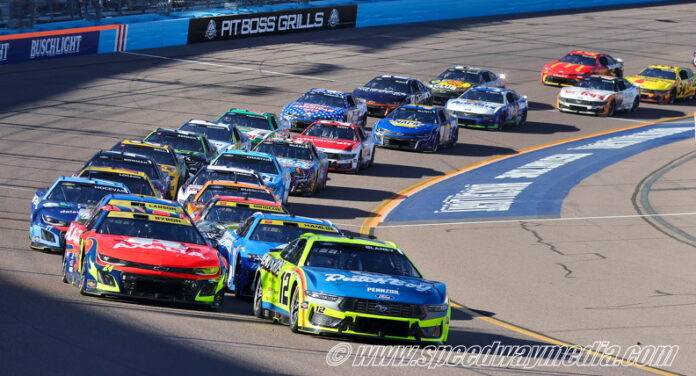
Phoenix Championship Race Photo by Ron Olds for SpeedwayMedia.com
The 2025 NASCAR Cup Series season delivered an impressive year of competitive racing. Nine races were decided by a last-lap pass, which set a series record for the most in a season. And, in an exciting finale, Kyle Larson won his second Cup Series championship title and the 15th for Hendrick Motorsports.
Wins:
In the 2025 Cup Series season, there were 14 different race winners. By comparison, it was the fewest since 2020, when 13 unique drivers won.
Seven drivers had multiple wins, led by Denny Hamlin with six. Shane van Gisbergen scored five victories, followed by Christopher Bell and Ryan Blaney with four. Chase Briscoe, William Byron and Kyle Larson scored three wins each.
Last Lap Passes for the Win:
Nine races were decided with a last-lap pass on the final lap, setting a new precedent.
Wins from the Front Row:
Fifteen races were won from the front row. It was the most since 1980, when 17 unique drivers claimed victory after starting in the front of the field.
Best in Qualifying:
Joe Gibbs Racing achieved the most poles in 2025 with 13. The organization had led the series in pole for three consecutive years.
Lead changes:
The 2025 Cup Series season generated the most lead changes since 1982. Nine races featured 30 or more lead changes with 835 throughout the season. It was the most since 2011 (914).
Margin of Victory:
Three races ended with a margin of victory of more than 10 seconds. All three races were won by Shane van Gisbergen.
Milestones:
Ross Chastain won the Cup Series 2025 Coca-Cola 600 after starting last. He was the first driver to win from the last starting spot since Bobby Allison accomplished this feat at Richmond Fairgrounds in 1974.
Austin Dillon also achieved a memorable milestone by leading 107 laps in the Cup Series and capturing the win at Richmond Raceway. It was the most laps led by the No. 3 car in a Cup Series race since Dale Earnhardt’s historic victory in the 1998 Daytona 500.
Secures Sixth Top Fuel Championship for Kalitta Motorsports and Ninth for Toyota
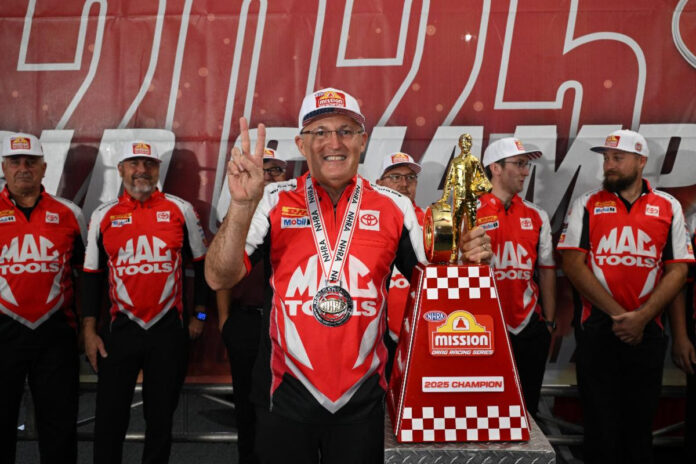
POMONA, Calif. (November 15, 2025) – With the cancellation of qualifying due to inclement weather at In-N-Out Burger Pomona Dragstrip for the NHRA Finals, Doug Kalitta officially clinched his second NHRA Mission Foods Drag Racing Series Top Fuel World Championship. Kalitta had another impressive season in his legendary career to claim his second world title in the last three seasons.
This championship also marks the ninth Top Fuel title for Toyota since they joined the NHRA category in 2007.
TOYOTA FAST FACTS
Kalitta’s four victories through the first 19 races in the 2025 NHRA season came at Sonoma Raceway (July), Brainerd International Raceway (August), World Wide Technology Raceway (Madison, Illinois; in September) and the Texas Motorplex (October).
Kalitta’s four wins put him at 59 for his career, placing him fourth on the all-time Top Fuel wins list. He also currently sits 12th in all-time NHRA victories.
Kalitta earned a Top Fuel-leading nine No. 1 qualifying positions this season, giving him 67 for his career and placing him seventh on the all-time NHRA No. 1 qualifiers list.
Kalitta earned 39 round wins through the first 19 races this season.
Kalitta also earned five victories in the Mission Foods #2Fast2Tasty Challenge and was victorious in the Top Fuel All-Star Callout at In-N-Out Burger Pomona Dragstrip in March.
Kalitta is now the 13th NHRA Top Fuel driver to have won at least two world championships, also claiming the championship in 2023.
This championship is the sixth for Kalitta Motorsports, and the team’s fourth in Top Fuel. It also fueled Toyota’s second consecutive triumph in the NHRA Manufacturers Cup championship.
Kalitta’s 2025 championship adds to Toyota’s legacy in NHRA Top Fuel racing, accompanying his 2023 title, along with Larry Dixon (2010); Del Worsham (2011); Antron Brown (2012, 2015, 2016, 2024); and Shawn Langdon (2013).
TOYOTA QUOTES
DOUG KALITTA, Mac Tools Toyota Top Fuel Dragster, Kalitta Motorsports
“Yeah, this (clinching the championship before race day) is definitely a lot easier (than 2023). It’s always seemed to come down to the last race, last day, but we had a nice string of runs throughout the Countdown. Alan (Johnson, crew chief) and my whole Mac Tools Toyota team have had my car going down the track. It’s been really nice, and just getting good, solid runs. Alan is always throwing down and always has something up his sleeve. So, I’m just really proud of him and my whole team. It’s a huge relief to be able to win the championship before the last round at the last race, and we’re all just super happy.”
CHAD HEAD, general manager, Kalitta Motorsports
“Very proud to work for Connie Kalitta (team owner) and Kalitta Motorsports. Obviously, doing this with Mac Tools – two out of the last three years, it’s just really exciting. Having Toyota, TRD (Toyota Racing Development) giving us all of the technology, all the support really means a lot to this organization. Hopefully, Kallita Motorsports can continue to win championships in this sport for a long time.”
ALAN JOHNSON, crew chief, Mac Tools Toyota Top Fuel Dragster, Kalitta Motorsports
“The championship run is about two parts of the season. You have the regular season and then, the Countdown to the Championship. The regular season, we tried to prepare ourselves to be at our best when the Countdown started. We were pretty much on a roll and we ended up having that incident in Reading (Maple Grove Raceway) that set us back a little bit. But we came back and got those two wins (at Gateway and Ennis) that set us up for this. Everything we worked on throughout the year played out how we envisioned it, and we got the job done!”
PAUL DOLESHAL, general manager, motorsports and sponsorships, Toyota Motor North America
“This was an exceptional season for Doug Kalitta and his Kalitta Motorsports team, and to cap it off with another world championship is icing on the cake. Doug is one of the greatest drivers ever to pilot a Top Fuel Dragster, and we have been honored to celebrate so many wins with him over the years and now two world championships. We look forward to celebrating this tremendous triumph with Doug, his family and our great partners at the Kalitta Motorsports organization.”
About Toyota
Toyota (NYSE:TM) has been a part of the cultural fabric in North America for nearly 70 years, and is committed to advancing sustainable, next-generation mobility through our Toyota and Lexus brands, plus our more than 1,800 dealerships.
Toyota directly employs nearly 64,000 people in North America who have contributed to the design, engineering, and assembly of nearly 49 million cars and trucks at our 14 manufacturing plants. In 2025, Toyota’s plant in North Carolina began to assemble automotive batteries for electrified vehicles.
POMONA, Calif. (Nov. 15, 2025) – For the second time in three years, Doug Kalitta is a world champion, as the veteran officially clinched the 2025 NHRA Mission Foods Drag Racing Series Top Fuel world championship on Saturday at the In-N-Out Burger NHRA Finals at In-N-Out Burger Pomona Dragstrip.
Kalitta locked up the title when qualifying was canceled on Saturday due to weather. It marked a far different feel than Kalitta’s first championship, which went down to a winner-take-all final round at Pomona in 2023.
This time, Kalitta’s dominance in the Countdown to the Championship playoffs ensured that a pressure-packed situation wouldn’t be necessary. He reached the final round of the first four playoff races, winning in St. Louis and Dallas to take control in his 12,000-horsepower Mac Tools dragster.
That led to the championship being clinched on Saturday, as Kalitta celebrated with his team before the first round of eliminations even started.
“Yeah, this is definitely a lot easier [than 2023],” said Kalitta. “It’s always seemed to come down to the last race, last day, but we had a nice string of runs throughout the Countdown. Alan [Johnson, crew chief] and my whole team have had my car going down the track. It’s been real nice, and just not doing something stupid on the track and getting good, solid runs.
“Alan is always throwing down and always has something up his sleeve. So, I’m just really proud of him and my whole team. It’s a huge relief to be able to win the championship before the last round at the last race, and we’re all just super happy.”
Much as was the case in his 2023 championship season, Kalitta and his Alan Johnson-led Mac Tools team didn’t catch fire until midway through the regular season with back-to-back wins in Sonoma and Brainerd, and entered the Countdown to the Championship playoffs in fourth place.
After a runner-up at both Reading and Charlotte, Kalitta defeated Ida Zetterström in the final round in St. Louis and four-time world champ Steve Torrence in the final round in Dallas to cement his points lead.
A semifinal finish at the season’s penultimate event in Las Vegas gave Kalitta enough of a points lead to ensure the championship would be clinched in qualifying at Pomona.
“It’s hard to pinpoint exactly what the secret sauce is with what we’ve done here, but Alan has spent hours building these parts and he’s just got it figured out,” said Kalitta, who has four wins, seven final-round appearances and eight No. 1 qualifiers through 19 races this season.
“You also have to have guys putting that car together exactly the same each and every run to get the consistency for any of these guys to be able to tune the car, so it’s just huge.”
The championship is the sixth for team owner Connie Kalitta and Kalitta Motorsports, and its fourth in Top Fuel. Scott Kalitta won back-to-back Top Fuel crowns in 1994 and ’95 to precede his cousin Doug’s two titles. Del Worsham won Kalitta’s first Funny Car championship in 2015 and J.R. Todd won another in 2018.
Eliminations for the In-N-Out Burger NHRA Finals are scheduled to begin at 10 a.m. PT on Sunday. Gates open at 7:30 a.m.
To purchase tickets to the 60th annual In-N-Out Burger NHRA Finals, fans can visit www.NHRA.com/tickets. All children 12 and under will be admitted free in the general admission area with a paid adult. For more information about NHRA, visit www.NHRA.com.