Home Blog Page 31

Rick Ware Racing: Cracker Barrel 400 from Nashville

RICK WARE RACING
Cracker Barrel 400
Date: May 31, 2026
Event: Cracker Barrel 400 (Round 14 of 36)
Series: NASCAR Cup Series
Location: Nashville (Tenn.) Superspeedway (1.33-mile, concrete oval)

Format: 300 laps, broken into three stages (90 laps/95 laps/115 laps)

Race Winner: Denny Hamlin of Joe Gibbs Racing (Toyota)

Stage 1 Winner: AJ Allmendinger of Kaulig Racing (Chevrolet)

Stage 2 Winner: Daniel Suárez of Spire Motorsports (Chevrolet)

RWR Finish:

● Cody Ware (Started 34th, Finished 22nd / Running, completed 299 of 300 laps)

RWR Points:

● Cody Ware (35th with 117 points)

RWR Notes:

● Ware earned his fourth top-25 of the season and his first top-25 in three career NASCAR Cup Series starts at Nashville.

● Ware’s 22nd-place result bettered his previous best finish at Nashville – 27th, earned in 2022.

Race Notes:

● Denny Hamlin won the Cracker Barrel 400 to score his 62nd career NASCAR Cup Series victory, his second of the season and his first at Nashville. His margin over second-place Christopher Bell was .115 of a second.

● There were 11 caution periods for a total of 77 laps.

● Only 15 of the 38 drivers in the race finished on the lead lap.

● Tyler Reddick remains the championship leader after Nashville with a 97-point advantage over second-place Hamlin.

Sound Bites:

“Tonight was just a good night for the race team. Really, that was all thanks to the hard work the guys did that kept us in the hunt all night. We stayed on the lead lap for 80 percent of the race and made good adjustments. Felt like we worked together really well. It’s definitely a really positive day that I feel like we can build off of going to three or four races here over the month of June that we’re looking forward to. So I’m proud of that and looking forward to get going.” – Cody Ware, driver of the No. 51 Jacob Construction Chevrolet

Next Up:

The next event on the NASCAR Cup Series schedule is the FireKeepers Casino 400 on Sunday, June 7 at Michigan International Speedway in Brooklyn. The race begins at 3 p.m. EDT with live coverage provided by Prime Video and SiriusXM NASCAR Radio.

The 2026 Shift: Lewis Hamilton And Formula 1’s Changing Identity

Photo by depositphotos at https://depositphotos.com/

The future of Formula 1 in 2026 will no longer necessarily rely on advances in technology, tire strategies, or power units. The ongoing development is not limited to technical aspects of racing cars and racing weekends. Nowadays, Formula 1 drivers are expected to perform in multiple dimensions that go far beyond the racing track.

Perhaps no driver better represents this trend than Lewis Hamilton.

During his Formula 1 career, Hamilton evolved from an outstanding race car driver into a globally known celebrity. What makes Hamilton’s evolution particularly significant is how similar the process proved to be for Formula 1 as a whole. The sport no longer exists for the sake of races.

Instead, modern Formula 1 combines features of motorsport, entertainment, fashion, marketing, and media promotion. As a result, the visibility of Formula 1 drivers is now defined by multiple aspects that go far beyond qualifying sessions or finishing positions.

This aspect became especially evident after the rapid global expansion of Formula 1 towards younger audiences. Fans are now interested not only in lap times and championship standings. Social media activity, appearances in fashion, films, interviews, documentaries, and business investments have become equally important.

Hamilton was aware of this evolution for quite a while.

By participating in various activities related to motorsport and Formula 1 racing in particular, he managed to turn his image into something beyond mere racing driver. At the same time, Hamilton always remained among top Formula 1 competitors during the decade-long period.

It was not a secret for him to combine motorsport and other areas that became an integral part of Formula 1 racing over time. Certain information regarding these steps could even be found in the article dedicated specifically to the potential involvement of drivers in Hollywood films.

However, there are additional factors driving the evolution of Formula 1 drivers.

These include changes within motorsport organizations and their adaptation to this reality. In modern times, Formula 1 teams are expected to focus on branding, media promotions, social media visibility, and other areas of activity in addition to actual racing performance.

In some cases, the latter may require considerable investment on behalf of motorsport teams themselves. Drivers should not only demonstrate their skills on the track but also act as brand ambassadors during non-racing periods.

That is the main reason why personality and media presence now play a crucial role in modern Formula 1.

The rise of streaming platforms, documentary films, and various online promotions contributed to the creation of an environment in which drivers need to remain publicly available all year long, rather than appear occasionally during races or interviews.

And again, Hamilton played a significant role here.

While it may be possible to debate whether participation in various activities distracts drivers from racing, it is impossible to overlook their contribution to the increasing popularity of the sport among other sectors of society. Luxury brands, entertainment, and fashion industries are no longer foreign for Formula 1 drivers.

One way or another, modern motorsport became integrated into a much wider cultural context.

Today, drivers are no longer considered only professional racers. Instead, they become personalities representing a range of values associated with different aspects of modern media and entertainment.

As the 2026 season moves forward, Formula 1 is likely to continue its evolution in this direction. Actual performance on the track remains essential. However, motorsport as a whole is inseparable from the media landscape in which it exists today.

How DOT Welding and Annual Inspections Keep Fleets Road-Ready

Managing a commercial vehicle fleet is not just about fuel efficiency and route optimization, it’s a complex challenge for modern logistics providers, construction companies and transport operations. Whether you have only a couple of commercial trucks, or you manage a fleet of hundreds or thousands of vehicles, keeping these vehicles safe, compliant and operating at all times is essential to your company’s success. This is because a mechanical problem, structural damage, or neglect of vehicle maintenance can result in significant downtime, financial penalties and dangerous situations on the road.

To minimize these hazards, the U.S. Department of Transportation (DOT) has created rigorous maintenance and inspection criteria for commercial vehicles. The two most important elements in this regard are DOT welding compliance and the DOT annual inspection process. These practices work hand in hand to keep commercial vehicles safe, structurally sound and in line with legal requirements for both drivers and the public.

For fleet operators looking for dependable Annual DOT Inspection services in Long Island, grasping the significance of these procedures is crucial for keeping a fleet that’s ready for the road.

Understanding DOT Regulations

The Department of Transportation (DOT) is the federal agency that takes charge of transportation safety regulations across the United States. The Federal Motor Carrier Safety Administration (FMCSA), which is part of the DOT, is the primary regulator of commercial motor vehicles that are engaged in interstate commerce. The purpose of DOT regulations is to enhance highway safety, minimize accidents, and assure the operational safety of commercial vehicles. These regulations cover vehicle maintenance, driver eligibility, working hours, cargo securing and inspection methods.

It is mandatory for the fleet operators to follow the rules of DOT regulations. Failing to satisfy the requirements for an inspection or maintenance can lead to penalties, out-of-service orders, legal liabilities and damage to your company’s reputation. Most importantly, non-compliance can not only risk the drivers but also other road users.

Importance of compliance for safety and legal reasons

One of the key elements of DOT compliance is making sure that every commercial vehicle gets regular inspections and maintenance checks. These inspections are essential to find out safety issues even before they develop into major problems. The DOT inspector examines key parts of the vehicle like brakes, tires, suspension, steering, lighting and structural components, to ensure that each vehicle meets the vehicle safety standards.

A lot of commercial fleets operate in areas with very high demand, putting an excessive amount of load on trailers, truck frames, and equipment. As time passes, metal fatigue, corrosion, vibration and impact damage can weaken the structural integrity of the equipment. This is why adhering to DOT inspection standards is so vital to maintain the safety of the vehicles.

The Role of DOT Welding in Fleet Maintenance

Welding is an essential task in ensuring that commercial vehicles remain in working condition. Whether it’s fixing trailer frames, truck bodies, or support brackets, welding makes it possible to safely and effectively restore damaged or weakened parts.

However, not all welding work is done according to the DOT standards. It is therefore essential for commercial vehicles to adhere to industry-approved welding practices to ensure repaired components can handle the daily stresses and loads of regular operation.


Importance of DOT Welding Standards

DOT welding standards are designed to ensure the structural safety of commercial vehicles. For welding repairs on fleet vehicles, it’s very important to follow the guidelines set by organizations like the American Welding Society (AWS) and the Federal Motor Carrier Safety Administration (FMCSA).

In the world of fleet maintenance, certified welders play a crucial role in safety because improper welding can adversely affect the strength of a vehicle’s structure. Weak welds or welds made with improper materials are likely to fail under stress, leading to serious safety risks. That’s why getting it right the first time isn’t just a good practice, it can literally save lives.

Benefits of Proper Welding Practices

DOT-compliant welding provides a number of significant benefits for fleet owners.

1. Enhancing Structural Integrity

Heavy cargo loads, long distances travelling and constant vibration can create a lot of stress on trucks and trailers. By ensuring proper welding repairs, you can reinforce the structural integrity of truck frames, trailers and support systems. This not only helps maintain strength but also minimizes the chances of equipment failure while on the road.

2. Preventing Costly Repairs and Downtime

If minor cracks or damaged metal parts are ignored, they can quickly turn into serious structural issues resulting in to major failures in the structure of the vehicle or trailer. By having early welding repairs, fleet owners can help prevent having a costly and unexpected repair as well as downtime. Also regular maintenance can significantly extend the life of fleet vehicles and trailers.

3. Supporting Safety Compliance

When welding is found defective in inspections, this often means vehicles are out of use until the welding repair is completed. That’s why, professional welding service is necessary to make sure that fleet vehicles stay compliant with DOT safety standards and can pass inspections without a hitch.

The Importance of Annual Inspections

A DOT Annual Inspection is a thorough safety check for commercial vehicles that needs to be done every year. During this inspection, professionals check the brakes, tires, steering, exhaust, fuel systems, lights, wipers, coupling devices, and frame components on the vehicle for signs of corrosion, cracking, leaking, or excessive wear.

For vehicles that pass the inspection, it’s important to keep documentation as proof of compliance which ensures that the car is inspected regularly and that all issues are corrected on time. Often, fleet owners opt for more regular inspections than once per year to ensure the safety of the drivers.

Working with experienced providers who offer DOT Inspection Services in Long Island can make scheduling, compliance, and record management much easier for fleet businesses.

Benefits of regular Inspections

1. Identifying Problems Early

Routine checks allow you to identify potential problems like worn out brakes, suspension issues, worn out tires, or even any frame cracks before they lead to major safety problems.

2. Improving Fleet Safety

Conducting routine vehicle inspections can prevent brake failures, steering issues and tire blowouts which not only minimizes the risk of accidents related to equipment failure but also enhances overall road safety.

3. Reducing Liability Risks

Keeping thorough inspection records and maintenance logs is vital for showing compliance and demonstrating responsible fleet management, reducing the risk of legal issues and insurance expenses.

4. Maximizing Vehicle Lifespan

Inspections and regular maintenance can increase the life span of the vehicles by identifying and repairing the damage early. This reduces stress and safeguards your fleet investments.

Consequences of Neglecting Annual Inspections

Fleet operators may be subject to serious consequences if they do not complete their annual DOT inspections.

1. Legal and Financial Penalties

If a vehicle fail inspections or operate without proper documentation they could end up facing fines, citations, or even be taken out of service. These violations can also lead to poor CSA (Compliance, Safety, and Accountability) scores, affecting future business ventures and insurance costs.

2. Increased Downtime

Vehicles that malfunction suddenly can cause unexpected downtime, lead to delays and expensive repairs and disrupt operational efficiency.

3. Higher Safety Risks

Vehicles that are poorly maintained lead to higher risk of accidents due to issues like brake failures, tire blowouts or structural damage which could result in physical harm to individuals, damage to property or costly legal action.

Conclusion

DOT welding and annual inspection are vital parts of vehicle fleet maintenance. The use of proper welding techniques is important to maintain a commercial vehicle’s structural integrity, while those yearly inspections help meet federal safety standards and identify potential issues before they develop into severe problems.
By adopting a proactive approach to fleet maintenance, you not only safeguard your vehicles and drivers but also ensures future success for businesses in a transportation industry that’s increasingly focused on safety.

JiliGames in GameZone: Why Beginners Find It Easier Today

JiliGames inside GameZone continues gaining attention as more players shift toward simpler, faster, and more intuitive online gaming experiences. Modern users rarely want to spend time decoding complex menus or learning unclear systems before they can play. They prefer platforms that feel immediate—where games are easy to find, easy to understand, and smooth to navigate across devices.

GameZone online games support this expectation by organizing JiliGames into structured layouts, consistent controls, and predictable gameplay flow. For beginners especially, this reduces friction and helps them focus on enjoyment instead of confusion. Over time, this design approach has made JiliGames feel more accessible compared to less structured platforms.

Basic Jili gaming strategies also play a role in helping new users adjust. These approaches allow beginners to understand gameplay patterns gradually without feeling overwhelmed. In many cases, familiarity grows naturally through repeated sessions rather than instruction-heavy onboarding.

Another factor shaping accessibility is the familiarity of Filipino-themed casino games, which often feel easier for local players to relate to due to recognizable mechanics and casual pacing. Combined with GameZone’s structured system, this creates a smoother entry point into JiliGames for first-time users.

Why JiliGames Can Feel Overwhelming at First

Even though JiliGames are designed for entertainment, beginners often experience initial confusion. This is not usually because the games are difficult, but because the environment introduces multiple new elements at once.

Several common factors contribute to early hesitation:

  • Large libraries containing many Jili game variations
  • Fast gameplay pacing that assumes prior understanding
  • Different slot formats across individual titles
  • Limited familiarity with best Jili slot game mechanics

When everything appears new simultaneously, players may pause or hesitate. This reaction is natural in digital environments where systems are not yet familiar.

In many cases, confusion is temporary. Once players understand the structure, gameplay becomes significantly easier to follow. However, early experience plays a crucial role in whether users continue or leave. This is where platform design becomes important.

How GameZone Simplifies JiliGames for Beginners

GameZone focuses on reducing confusion while preserving gameplay depth. Instead of changing how JiliGames work, it improves how users interact with them.

Cleaner Game Organization

Inside GameZone casino and GameZone online environments, games are grouped into clearly defined categories. This structure helps players immediately understand where to go without searching through cluttered menus.

Users can quickly access:

  • Slot categories
  • Featured JiliGames
  • Demo versions such as Jili games demo
  • Popular titles like Slot Super Ace Jili Games

This organized layout reduces cognitive load, especially for beginners who are still learning how online gaming systems are structured.

Faster Game Access

Speed plays a major role in user satisfaction. Long loading or setup steps often discourage new players.

GameZone minimizes this issue by streamlining access through both browser play and Jili slot game download options. The goal is simple: reduce waiting time and allow players to reach gameplay faster.

This improvement makes a noticeable difference for users who prefer short, casual sessions rather than extended navigation.

Consistent Layout Across Games

One of the most overlooked features in beginner-friendly design is consistency. When every game looks different, users must constantly relearn controls.

GameZone avoids this problem by keeping:

  • Button placement consistent
  • Menu structures familiar
  • Gameplay flow predictable

This consistency allows players to switch between all JiliGames without confusion. Over time, this familiarity builds confidence, which is especially important for beginners still learning system behavior.

Player Psychology: Why Simplicity Improves Retention

Most users do not stop playing because games are complex. They stop when experiences feel unclear or inconsistent.

GameZone reduces this issue by minimizing mental effort required to understand gameplay. When systems behave predictably, players feel more relaxed and engaged.

This is especially visible in GameZone online games, where comfort and clarity directly influence session length.

From a behavioral perspective, players tend to stay longer when:

  • Controls behave consistently
  • Feedback is immediate and understandable
  • Navigation feels predictable
  • Interfaces remain stable across sessions

This creates a sense of control, which is a key factor in long-term engagement.

Mobile Experience and Beginner Accessibility

Mobile gaming adds another layer of complexity, especially for beginners. Smaller screens and touch controls can make poorly designed systems feel crowded or confusing.

GameZone addresses this by optimizing JiliGames for mobile-first interaction:

  • Clean layouts without unnecessary clutter
  • Large, readable buttons for touch input
  • Fast transitions between actions
  • Stable performance across devices

This design approach is particularly useful for fast-paced titles like Slot Super Ace Jili Games, where quick comprehension matters more than complex visuals.

By prioritizing simplicity, GameZone ensures that mobile users do not feel overwhelmed during early gameplay experiences.

Simple Tips to Reduce Confusion in JiliGames

Beginners can also improve their experience by adopting a few practical habits:

Starting with Jili games demo versions helps users understand mechanics without pressure. It creates a risk-free environment for learning basic gameplay flow.

Focusing on one game type at a time is also helpful. Jumping across all JiliGames too quickly often increases confusion instead of reducing it.

Observing patterns in best Jili slot game formats can also improve understanding over time, especially when players take a slower, more intentional approach.

Finally, keeping sessions short during early stages helps avoid information overload. Small, repeated sessions build familiarity more effectively than long play periods.

Risks Beginners Should Be Aware Of

Even in structured platforms like GameZone, certain risks still exist when players move too quickly.

Common issues include:

  • Misunderstanding fast-paced mechanics
  • Switching between too many games at once
  • Extended play without breaks
  • Confusing similar-looking game features

GameZone reduces these risks through structure and consistency, but player awareness remains important for maintaining a balanced experience.

Why GameZone Feels More Beginner-Friendly

Compared to less organized platforms, GameZone prioritizes clarity in every layer of interaction.

Beginners benefit from:

  • Clear navigation across all JiliGames
  • Consistent layouts across different titles
  • Easy access to Jili games demo modes
  • Smooth transitions within GameZone online games

This combination creates a more welcoming environment for new users. Instead of feeling overwhelmed, players can gradually learn how the system works at their own pace.

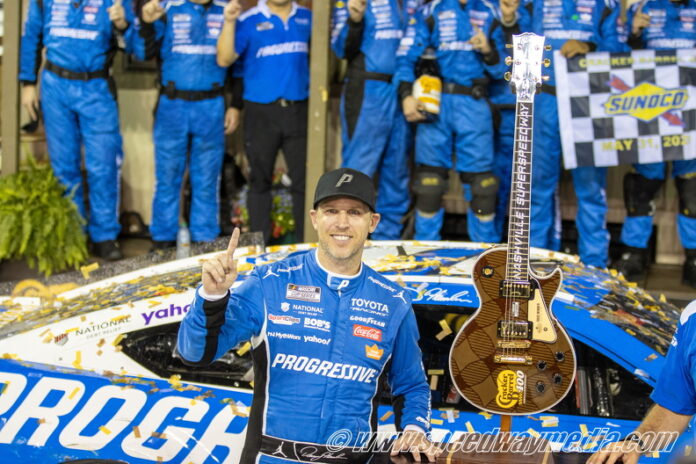
Denny Hamlin perseveres for thrilling Cup victory at Nashville

Photo by Logan Allen for SpeedwayMedia.com.

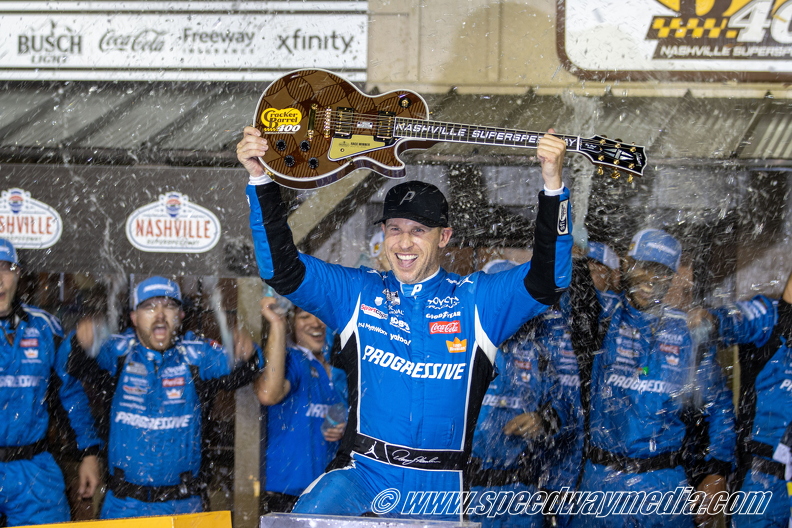
Denny Hamlin capped off a long evening of racing from losing the lead after jumping the start to outdueling teammates Christopher Bell and Chase Briscoe during a four-lap shootout to win the Cracker Barrel 400 at Nashville Superspeedway on Sunday, May 31.

The three-time Daytona 500 champion from Chesterfield, Virginia, led twice for a race-high 57 of 300-scheduled laps. He was awarded the pole position due to inclement weather canceling Saturday’s qualifying session. Then, at the event’s start, Hamlin received a drive-through penalty for launching before the restart zone. Despite starting at the rear of the field in the early stages, he weathered through the event. It was mired in delays due to inclement weather. There were also numerous on-track incidents and various pit strategies amongst the field to cycle back towards the front.

After leading through the start of the final stage period, Hamlin spent most of the stage period battling with Bell and Briscoe on the track amid a late fuel-mileage battle. Once Hamlin pitted under green with 43 laps remaining, he cycled behind his Joe Gibbs Racing teammates and was racing in fourth place when a late-race caution flew with 13 laps remaining. During a four-lap shootout, Hamlin dueled with Bell for three full consecutive laps as both remained in front of Briscoe.

Then, on the final lap, Hamlin took advantage of Bell diving through the first turn too deeply for an advantageous attempt to clear Bell. With the lead in his possession, Hamlin fended off Bell and Briscoe to cruise to his first NASCAR Cup Series victory in Music City on a last-lap pass.

The event’s starting lineup was set by a qualifying metric formula as inclement weather canceled Saturday’s qualifying session. t, Denny Hamlin was awarded the pole position, sharing the front row with Tyler Reddick.

When the green flag waved and the event commenced following a delay that lasted more than an hour due to inclement weather, Denny Hamlin launched his No. 11 Progressive Toyota Camry XSE entry ahead of Tyler Reddick and the field. However, he received a drive-through penalty. As Hamlin served his penalty by the third lap, Reddick cycled to the lead as he had Christopher Bell, Daniel Suarez, Kyle Larson and Ty Gibbs trailing in the top five, respectively.

Through the first 10 laps, Reddick maintained the lead by seven-tenths of a second. Bell, Larson, Ty Gibbs and Ryan Blaney trailed in the top five. William Byron, Suarez, Shane van Gisbergen, Erik Jones, and Joey Logano followed, respectively. Behind, Zane Smith occupied 11th place in front of AJ Allmendinger, Carson Hocevar, Brad Keselowski and Bubba Wallace. Michael McDowell, Alex Bowman, Riley Herbst, Todd Gilliland and Ricky Stenhouse Jr. trailed in the top 20 ahead of Corey Heim, Chase Elliott, Chris Buescher, Cole Custer and Austin Hill, respectively.

Meanwhile, Chase Briscoe was mired in 26th place. Ross Chastain was in 29th place, rookie Connor Zilisch was in 32nd place behind Ryan Preece, Austin Dillon was mired in 34th place between brother Ty Dillon and Austin Cindric and Denny Hamlin was mired at the tail end of the field in 38th place, though the latter remained on the lead lap.

Ten laps later, Reddick stabilized his early advantage to eight-tenths of a second over Bell while Larson, Ty Gibbs and Byron followed suit in the top five, respectively. By then, Blaney and Suarez dropped to sixth and ninth, respectively, while Erik Jones moved up to seventh place. In addition, Zane Smith moved into 10th place and Logano dropped to 13th place. Meanwhile, Hamlin was in 37th place, trailing the lead by 28 seconds. Suarez was outdueled by Zane Smith for ninth place by Lap 29. Meanwhile, Reddick retained the lead by nine-tenths of a second at the Lap 30 mark.

On Lap 35, a competition caution flag flew with Reddick leading by more than a second over Bell, Larson, Ty Gibbs, Byron, Blaney, Erik Jones, van Gisbergen, Zane Smith and Hocevar, respectively. During the competition caution, the lead-lap field of 36, led by Reddick, pitted. Following the pit stops and with mixed pit strategies throughout the field, van Gisbergen, Logano and Brad Keselowski all utilized two-tire pit stops to exit pit road in the top-three spots, respectively. Reddick and Larson, both of whom pitted for four fresh tires, followed suit in the top five as Bell, Alex Bowman, Chase Briscoe, Byron and Blaney exited in the top 10.

The next restart on Lap 41 featured van Gisbergen and Logano dueling for the lead through the frontstretch and the first two turns as the field behind fanned out. Van Gisbergen managed to motor his No. 97 Tootsie’s Chevrolet Camaro ZL1 entry ahead of Logano and lead for the remaining turns and the next lap while Logano maintained the runner-up spot in front of Reddick, Larson, Bell and Keselowski. Reddick then assumed the runner-up spot from Logano before Lap 43 as both he and Larson used their four fresh tires to move into second and third. As Bell overtook Logano for fourth place, Larson then drag-raced and dueled with Reddick through the frontstretch on Lap 44. Both Larson and Bell then overtook Reddick for second and third just past the Lap 45 mark as van Gisbergen maintained the lead with his two fresh tires.

On Lap 48, Larson used a strong run from the outside lane in Turns 3 and 4 to drag-race with van Gisbergen through the frontstretch and the first two turns. With both making slight contact in the backstretch, they continued to duel in front of Bell until van Gisbergen fended off Larson and stormed to the lead by Lap 50 through the frontstretch. Both Larson and van Gisbergen then dueled for the lead for a full lap for a second time before Larson assumed the lead through the backstretch on Lap 53. With Larson leading, van Gisbergen, who briefly stepped off the throttle through the backstretch, was overtaken by a hard-charging Bell, and he was left to challenge Reddick for third place.

On Lap 57, Bell, who spent the previous several laps reeling in Larson for the lead, briefly made a move to Larson’s inside and another to the outside, but the latter retained the top spot as van Gisbergen fended off and started to build a slight gap between himself and Reddick in third place. Behind, Byron overtook Logano for fifth place while Keselowski, Briscoe, Blaney and Erik Jones occupied the remaining top-10 spots over Bowman, Zane Smith, Ty Gibbs, Carson Hocevar and Suarez, respectively. At the front, Larson continued to lead by three-tenths of a second over Bell by Lap 60.

At the Lap 70 mark, Larson continued to lead by four-tenths of a second over Bell; third-place van Gisbergen trailed by more than three seconds, and the remaining top-five competitors of Reddick and Byron trailed by as far back as five seconds. A lap later, the caution flew due to Connor Zilisch scrapping and damaging the right side of his No. 88 Red Bull Chevrolet Camaro ZL1 entry against the outside wall through the first turn. The incident was the result of a broken brake rotor, and Zilisch was the first competitor to be taken out of contention.

During the caution period, AJ Allmendinger and Riley Herbst remained on the track while most of the leaders pitted. Herbst led the field with 11 laps remaining in the first stage period. Allmendinger fended off Herbst before being challenged by Blaney. Two laps later, the caution flag flew again. Ross Chastain experienced a similar fate to teammate Zilisch.

He had a broken right-front brake rotor and wrecked his No. 1 Busch Light Chevrolet Camaro ZL1 entry against the outside wall through the first two turns. Amid the chaos, Michael McDowell spun beneath Buescher but continued. Chastain joined teammate Zilisch in the garage.

During a one-lap dash to conclude the first stage period, Allmendinger battled with Blaney and Larson before he then edged Larson to capture his first Cup stage victory of the 2026 season. Larson settled in second ahead of Blaney, Elliott and Reddick. Wallace, Byron, Briscoe, Herbst and Heim followed in the top 10, respectively. Under the first stage break period, some led by the leader Allmendinger and including Chase Elliott and Riley Herbst pitted while the rest led by Larson remained on the track. Meanwhile, Ryan Preece, who was having issues with his water temperature, took his No. 60 Kroger/Celsius Ford Mustang Dark Horse entry to the garage to have a radiator replaced.

The second stage period started on Lap 99 as Larson and Blaney occupied the front row in front of Reddick, Wallace, Byron and Briscoe. At the start, Larson motored ahead of Blaney, Reddick and Briscoe as the field fanned out through the first two turns. Amid the battles within the field, Larson proceeded to lead at the Lap 100 mark.

By Lap 110, Larson, who has led since the start of the second stage period, was leading by six-tenths of a second over Briscoe while Reddick, Blaney, Erik Jones, Heim, Wallace, Hamlin, Byron and Bell were racing in the top 10 ahead of van Gisbergen, Logano, Ty Gibbs, Buescher, Keselowski, Austin Dillon, Zane Smith, Bowman, John Hunter Nemechek and Hocevar, respectively. Fifteen laps later, Briscoe, who spent the previous several laps stalking and reeling in Larson, challenged Larson for the lead from the inside lane as he dueled with the latter for a full lap.

Despite leading Lap 126, he remained locked on in a side-by-side battle with Larson for another lap before he motored his No. 19 Bass Pro Shops Toyota Camry XSE entry ahead through the frontstretch and led another lap for himself. As Briscoe led, Reddick and Blaney remained in third and fourth. Erik Jones challenged Heim for fifth place. Meanwhile, Briscoe extended his advantage to a second over Larson by Lap 130 before he added another second to his lead on Lap 135.

Then on Lap 138, a cycle of green flag pit stops commenced as Reddick pitted from the top-five mark. Ty Dillon also pitted with Reddick before Larson surrendered the runner-up spot to pit during the next lap. Wallace, Jones, Byron, Logano, Cindric, Noah Gragson, Heim, Hamlin, Buescher, Keselowski, and the leader Briscoe all pitted by Lap 140.

More drivers, including Keselowski, Austin Dillon, Josh Berry, and Nemechek, pit during the next lap. Amid the pit stops, Briscoe managed to blend back on the track in front of Larson.

On Lap 145, the caution flew again. Austin Dillon spun through the frontstretch after he was bumped by Buescher, who was trying to lift off the throttle and avoid hitting Keselowski. Dillon’s crew was displeased with the contact from Keselowski. The incident occurred amid a stack-up that occurred in front of Dillon as a handful of competitors had to take evasive action to avoid hitting Ricky Stenhouse Jr. as Stenhouse was peeling off the track to pit under green. By then, the top-eight competitors, led by Blaney, had yet to pit. Briscoe and Larson were mired in ninth and 10th.

During the recent caution period, some of the drivers, led by Blaney, pitted their respective entires. This included Elliott, McDowell, Allmendinger, Suarez, Todd Gilliland, Austin Hill and Cole Custer. But all cycled ahead of Briscoe as Briscoe was the first competitor who was scored a lap down. Briscoe received the free pass. All other competitors scored a lap down, took the wave-around to cycle back on the lead lap.

As the event restarted on Lap 151 and just past the halfway mark, Blaney motored ahead of Elliott through the frontstretch and the first two turns as the field fanned out and jostled for spots through the backstretch. Blaney led the next lap over Elliott while a three-wide battle between McDowell, Allmendinger and Suarez ensued for third place. Suarez then managed to clear both through the backstretch as Custer, Gilliland and Austin Hill trailed behind.

Larson and Briscoe eventually navigated their way up to eighth and ninth. Hamlin was mired in 13th after battling Heim, Bell and Erik Jones, all while Blaney continued to lead by more than a second over Elliott by Lap 160. Blaney proceeded to extend his lead to two seconds over Elliott through the Lap 170 mark.

Then on Lap 172, the caution flew again. AJ Allmendinger, who was having a stellar run in third place, drove his No. 16 Kaulig Racing Chevrolet Camaro ZL1 entry dead straight into the outside wall through the first two turns. His damaged entry was engulfed in flames on the right-front area due to a broken brake rotor. During the caution period, mixed pit strategies ensued while a majority of the field that included McDowell, Briscoe, Gilliland, Hamlin, Bell, van Gisbergen, Elliott and Blaney pitted. Meanwhile, Suarez, Bowman, Stenhouse, Cindric, Keselowski and Byron did not pit, with Suarez leading the event.

The next restart, with four laps remaining in the second stage period, only lasted a single lap before the caution returned due to van Gisbergen making contact and sending Todd Gilliland for a spin, as Gilliland then hit the outside wall with the rear end through the first two turns. Heim and Cole Custer would also wreck with Gilliland as they slid through the turns. The multi-car incident was enough for the second stage period to officially conclude under caution.

As a result, Suarez won his first Cup stage victory of the 2026 season. Bowman, Stenhouse, Cindric, Hamlin, McDowell, Byron, Bell, Briscoe and Keselowski finished in the top 10, respectively. Thirty of 38 starters finished on the lead lap. During the second stage break period, a majority of the field remained on the track. Some, including Bowman, Stenhouse and Byron, pitted.

With 109 laps remaining, the final stage period commenced as Hamlin and McDowell occupied the front row. At the start, Hamlin motored ahead of McDowell through the first two turns to clear the field that had fanned out through the backstretch with the lead. Seconds later, the caution returned. Keselowski was racing within the mid-pack region among a stacked group of competitors. Then, Noah Gragson got loose entering the frontstretch and was bumped by Austin Dillon while trying to steer just below the apron. Keselowski then made contact with Austin Cindric before he slid backwards and hit the outside wall hard on the left side as Cindric also spun sideways.

Hamlin outdueled Briscoe to lead during the next restart with 99 laps remaining, but the caution returned two laps later when Hocevar rubbed and made contact with Buescher. This sent Buescher up the track through the first two turns, and he was hit by Bubba Wallace. The carnage resulted in both Wallace and Byron hitting the outside wall before Wallace’s wrecked No. 23 Hardee’s Toyota Camry XSE entry came down the track with no brakes and clipped Bowman, which sent Bowman’s No. 48 Ally Chevrolet Camaro ZL1 entry backwards and back across into the outside wall.

As the field restarted with 89 laps remaining, the caution returned when Hocevar got Nemechek sideways through Turns 3 and 4, with Nemechek bouncing off the entries of Herbst and Berry before he proceeded to spin his No. 42 Pye-Barker Toyota Camry XSE entry through the frontstretch’s grass.

During the next restart with 80 laps remaining, Hamlin motored ahead of teammates Bell and Briscoe to retain the lead for a full cycle. As Hamlin proceeded to stabilize his advantage, Briscoe and Bell fiercely dueled for the runner-up spot over the next four laps before Briscoe managed to clear and motor ahead of Bell for the runner-up spot through the backstretch. As Briscoe and Bell settled in second and third, Elliott and Larson were racing in the top five as Hamlin stretched his advantage to nearly a second with 74 laps remaining. While both Briscoe and Bell tried to reel in their teammate who was leading, Hamlin stabilized his lead to within six-tenths of a second with less than 70 laps remaining.

Down to the final 60 laps of the event, the battle at the front started to brew as Briscoe and Bell reeled in and trailed Hamlin by two- and three-tenths of a second through the turns and straightaways. Three laps later, Bell dueled with Briscoe from the outside lane after Briscoe tried to get beneath Hamlin entering the first turn, but ended up clipping the apron when Hamlin blocked and stalled Briscoe’s momentum. As Bell overtook Briscoe for the runner-up spot, Bell then made a bold move in between a lapped competitor and Hamlin from Turns 3 and 4 and the frontstretch to overtake Hamlin for the lead entering the first two turns with 55 laps remaining. Bell proceeded to build an advantage as he led by a second over Hamlin with 50 laps remaining, while third-place Briscoe and fourth-place Elliott both also trailed by a second.

Then, with 43 laps remaining, Hamlin surrendered his battle with Briscoe for the runner-up spot by pitting under green. Van Gisbergen and Ty Dillon also pitted before Briscoe pitted from the runner-up spot two laps later. Bell then pitted from the lead a lap later, along with Larson, as Elliott cycled to a brief lead before he pitted. Meanwhile, Bell managed to cycle his No. 20 DeWalt Toyota Camry XSE entry ahead of teammates Briscoe and Hamlin following gate pit stops as Reddick, who has yet to pit, was leading.

Down to the final 35 laps of the event, Reddick continued to lead Ty Gibbs and Erik Jones, though the trio had yet to pit before the event’s conclusion. Meanwhile, Zane Smith and Blaney, both of whom were trying to stretch their fuel tank to the scheduled distance after pitting during the latest caution period, were racing in fourth and fifth.

Bell was in 11th place in front of teammates Briscoe and Hamlin, with all trailing the lead by more than 24 seconds. Once Reddick, Gibbs and Jones pitted over the next four laps, Smith and Blaney cycled atop the leaderboard with 30 laps remaining. By then, Blaney continued to stalk and intimidate Smith while Bell trailed the leaders by 16 seconds in sixth place.

Then, with 26 laps remaining, Blaney pitted from the runner-up spot under green as Smith continued to lead. Buescher also pitted while Bell cycled up to fourth place as he, Briscoe and Hamlin trailed by in between 12 and 16 seconds. A lap later, Smith’s advantage was five seconds over runner-up Herbst while Bell trailed by 11 seconds. Over the next 10 laps, Smith stabilized his advantage to one-and-a-half seconds while Bell and Briscoe were trailing in second and third, but both were reeling in on Smith amid lapped traffic. Meanwhile, Hamlin trailed by six seconds in fourth place while Elliott trailed by nine seconds in fifth place.

With 13 laps remaining, Bell overtook Smith and the lapped competitor of Logano to lead. Seconds later, the caution flew due to Buescher, who was racing just behind the leaders, scraping the outside wall exiting the backstretch and entering Turns 3 and 4 due to a broken brake rotor on the right-front area of his No. 17 Castrol Ford Mustang Dark Horse entry. During this caution period, Smith, Reddick, Blaney, McDowell, Stenhouse, Hocevar and Ty Dillon pitted while the rest, led by Bell, remained on the track.

As the event restarted with four laps remaining, Hamlin pushed Bell ahead of Briscoe through the frontstretch. Bell led through the first two turns as Hamlin outdueled Briscoe amid a side-by-side battle for the runner-up spot and he carried forth the momentum from the inside lane to draw even and battle against Bell for the lead through the backstretch. As Briscoe trailed in third place by a close distance, Hamlin and Bell remained dead even for the lead over the next two laps and through every turn and straightaway.

When the white flag waved and the final lap started, Bell and Hamlin continued to duel for the lead as Briscoe reeled in. Both Briscoe and Hamlin then pinned Bell in a tight three-wide battle through the frontstretch before Bell briefly rocketed ahead entering the first two turns. Bell then drifted up the track in front of Briscoe, which allowed Hamlin to use the inside lane to overtake and clear Bell entering the backstretch. With Bell unable to respond through Turns 3 and 4, Hamlin was able to claim the checkered flag for a thrilling victory and by a tenth of a second over Bell.

With the victory, Hamlin notched his 62nd career win in the NASCAR Cup Series division in his 735th series start. He also achieved his second victory of the 2026 season, his first since Las Vegas Motor Speedway in March and his first at Nashville Superspeedway. Hamlin’s Nashville victory was also the eighth victory of the 2026 season for the Toyota manufacturer, with the manufacturer achieving its first Cup victory at Nashville Superspeedway, and the third for Joe Gibbs Racing.

Photo by Logan Allen for SpeedwayMedia.com.

“Well, I think [Bell] and [Briscoe] were battling so hard on that first corner,” Hamlin said on the frontstretch on Prime Video. “Just letting me get to the inside of [Bell] in the first corner there after the restart and from there, it was just side by side with [Bell]. Man, he drove it in so deep on that last lap into [Turn] 1 that it just allowed me to barely clear off into [Turn] 2. What an unbelievable day. Starting first, going to last and back to first. I definitely jumped the start, no doubt about that. Looking back on it, [I] just didn’t wait quite long enough…thank you to this sellout crowd. Appreciate y’all sticking around. It’s been an honor.”

Bell, who is still seeking his first Cup victory of the 2026 season, settled in the runner-up spot for a third time in the 2026 season and for a second straight week. Meanwhile, Briscoe ended up in third place for his fifth top-five result of this season. Amid their late-race duel with Hamlin, both Joe Gibbs Racing competitors were left disappointed after falling short of winning at Nashville.

“Just disappointment,” Bell said. “I got nobody, nothing, no circumstances to blame except myself. I just didn’t win the race. That’s it. That’s all there is to it. ”

“With [Hamlin and Bell] running side by side, I kept trying to back up my entries to try and get a big run, to take’em three wide,” Briscoe added. “They just kept running each other up the racetrack, so I just kept trying to hit the bottom [lane]. I went to the top and was able to get to Christopher’s right rear, and then, we’re just all driving in so deep that we slide up the racetrack I was just kind of in No Man’s Land after that. Hate that we weren’t on the better end of that. I felt like [our car] was certainly capable of winning, and ended up third. Just wish we were the ones in first.”

Ricky Stenhouse Jr., who pitted for fresh tires before the final restart, muscled up to fourth place while Shane van Gisbergen finished in fifth place for his third top-five result of the 2026 season and his second on an oval/superspeedway event this season. Tyler Reddick and Chase Elliott finished sixth and seventh despite both being involved in a hard accident just past the checkered flag through the frontstretch, while Ryan Blaney, Zane Smith and Carson Hocevar completed the top 10 in the final running order.

There were 31 lead changes for 15 different leaders. The event featured 12 cautions for 75 laps. In addition, 15 of 38 starters finished on the lead lap.

Following the 14th event of the 2026 NASCAR Cup Series season, Tyler Reddick continues to lead the standings by 97 points over Denny Hamlin, 174 over Ryan Blaney, 195 over Chase Elliott and 208 over Ty Gibbs.

Results:

  1. Denny Hamlin, 57 laps led
  2. Christopher Bell, 29 laps led
  3. Chase Briscoe, 14 laps led
  4. Ricky Stenhouse Jr.
  5. Shane van Gisbergen, 12 laps led
  6. Tyler Reddick, 42 laps led
  7. Chase Elliott led three laps
  8. Ryan Blaney, 46 laps led
  9. Zane Smith, 18 laps led
  10. Carson Hocevar
  11. Erik Jones led three laps
  12. Ty Dillon
  13. Ty Gibbs, one lap led
  14. Joey Logano, one lap led
  15. Michael McDowell
  16. Noah Gragson, one lap down
  17. Riley Herbst, one lap down, one lap led
  18. Austin Dillon, one lap down
  19. Daniel Suarez, one lap down, 10 laps led, Stage 2 winner
  20. Todd Gilliland, one lap down
  21. Cole Custer, one lap down
  22. Cody Ware, one lap down
  23. Kyle Larson, one lap down, 56 laps led
  24. John Hunter Nemechek, two laps down
  25. Corey Heim, two laps down
  26. Austin Cindric, four laps down
  27. Austin Hill, seven laps down
  28. Chad Finchum, 18 laps down
  29. Chris Buescher – OUT, Accident
  30. William Byron – OUT, Accident
  31. Josh Berry – OUT, Accident
  32. Bubba Wallace – OUT, Accident
  33. Alex Bowman – OUT, Accident
  34. Brad Keselowski – OUT, Accident
  35. AJ Allmendinger – OUT, Accident, seven laps led, Stage 1 winner
  36. Ryan Preece – OUT, Radiator
  37. Ross Chastain – OUT, Accident
  38. Connor Zilisch – OUT, Accident

Next on the 2026 NASCAR Cup Series schedule is the FireKeepers Casino 400 at Michigan International Speedway in Brooklyn, Michigan. The event is scheduled to occur next Sunday, June 7, and air at 3 p.m. ET on Prime Video, MRN Radio, SiriusXM and HBO MAX.

HUGE CROWD SEES PROCK, LANGDON, ANDERSON & A. SMITH WIN INAUGURAL NHRA POTOMAC NATIONALS PRESENTED BY JEGS

  • Prock picks up first FC win with Tasca Racing
  • Langdon gets three in a row in TF thriller
  • Anderson rolls to PS victory
  • Smith gets 200th female win in MFDRS

MECHANICSVILLE, Md. (May 31, 2026) – The wait is over for back-to-back Funny Car world champion Austin Prock, as the standout won for the first time in 2026 on Sunday in front of a huge crowd at Maryland International Raceway, defeating John Force Racing’s Jack Beckman in the final round of the inaugural NHRA Potomac Nationals presented by JEGS.

Shawn Langdon (Top Fuel), Greg Anderson (Pro Stock) and Angie Smith (Pro Stock Motorcycle) also won the seventh of 20 races during the 2026 NHRA season. Smith’s win was the 200th victory by a woman in the NHRA Mission Foods Drag Racing Series.

Prock went 3.956-seconds at 324.20-mph in his 12,000-horsepower PPG Ford Mustang, holding off Beckman’s 3.971 at 323.50. It is Prock’s 22nd career win, but the first since leaving John Force Racing in the off-season after two straight world titles and joining Tasca Racing.

Prock’s family, including tuners Jimmy and Thomas Prock, came with him, but there were early-season struggles as they didn’t qualify at Gainesville to open the year and failed to win a round at the first five races. But the team showed signs in Chicago, advancing to the semifinals, and then had a massive weekend at MIR, starting with Saturday’s Mission #2Fast2Tasty Challenge victory.

On Sunday, he got past four-time world champ Matt Hagan, Spencer Hyde and points leader Ron Capps to reach the final round. Prock left first on Beckman and led wire-to-wire with his best run of the weekend, putting a stamp on the race and perhaps signaling the start of what could be another big year.

“It means a lot,” Prock said. “It’s like winning your first race all over again, because all of the work that we put in and everything that we learned. So, to be seven races in and win the Mission Challenge this weekend and win the diamond Wally, I think it says a lot about this race team and what we’re capable of. I’m just very proud of this whole Ford Racing team. It was a great weekend, but this is just the beginning of the new era of the Prock Rocket.

“As a competitor, you’re just kind of beat down, and then the race car started coming alive again, and I felt like I was behind the race car at times, where the race car was performing better than I was. After (Chicago), I was really, really hard on myself after the semifinals. I didn’t leave good enough to even put us in contention. I wanted to come in here this weekend and prove to myself that I’ve still got it, and I feel like I did that.”

Beckman reached his second final of 2026 and the 79th in his career, taking down Joe Morrison, J.R. Todd and teammate Jordan Vandergriff. Capps leads Todd by 16 points, with Chad Green in third.

In Top Fuel, Shawn Langdon continued his spectacular run, winning a third straight race for the first time in his Top Fuel career, taking down teammate Doug Kalitta in one of the closest Top Fuel races in NHRA history with a run of 3.762 at 334.90 in his 12,000-horsepower Kalitta Air dragster.

It is Langdon’s fourth win in the past six races, but the final round against Kalitta was a thriller for the ages. Kalitta left first with a .052 reaction time to Langdon’s .056, but the points leader slipped past the reigning world champion at the finish line, winning by a mere .0002 seconds (or one inch).

It was as close as it gets in the Top Fuel category, but there appears to be no stopping Langdon at the moment as he was simply tremendous all weekend. He qualified No. 1 at the new facility on the NHRA tour, won the Mission #2Fast2Tasty Challenge on Saturday, and then got past Justin Ashley and Billy Torrence to reach the finals.

He set the track record earlier in the day with a blistering 3.718 at 338.00 and was consistent throughout Sunday, stretching his lead over Kalitta to 76 points as Langdon’s dream season pushes on.

“I knew I had to hit the Tree better in the final because Doug had a little bit on me all weekend long, and I mean, Alan Johnson’s Alan Johnson for a reason, because in the final rounds he performs, and Doug’s been there, and had had one of the best cars over the last couple years. Brian [Husen, crew chief] was trying to run a little bit better than that in the final, and fortunately, I pulled just enough out of somewhere,” Langdon said.

“Three wins in a row means a lot because of all the hard work that’s gone into this team over the last couple of years. When Brian came over and revamped everything within the team, the guys just all got together and they’ve done such a fantastic job. It just makes my job a lot easier. I just have to go out there and hit the gas on time and hold the thing straight. When you have confidence in your team and confidence in your car, it makes it a lot of fun.”

Kalitta knocked off Lex Joon, Clay Millican and Leah Pruett to reach the finals for the fourth time this season and 130th time in his career.

Pro Stock’s Greg Anderson still had the upper hand in final rounds against points leader Dallas Glenn – at least on Sunday – racing past the reigning world champion with a run of 6.472 at 212.46 in his HendrickCars.com Chevrolet Camaro. It improved Anderson to 10-1 in final rounds against Glenn, also handing Pro Stock’s winningest driver his 114th career win and second this year.

Anderson lived in the 6.40s on Sunday, showing championship form at a track where he’s raced and tested at over the years. But this was a first in the NHRA and Anderson made the most of it, defeating Brandon Miller with a 6.476, Deric Kramer with a track-record 6.464 and then Greg Stanfield to reach the final round.

Glenn had a huge starting-line advantage, but his car ran into trouble early and Anderson took advantage, racing to the victory. He remains second in points and was thrilled with how the entire weekend transpired at the standout facility.

“You can’t try to be Superman, no matter what the competition’s doing and that’s a hard thing,” Anderson said. “It’s easy to say, but it’s hard to do when you’re going up there and you got Aaron Stanfield and Dallas Glenn, and you know the reaction time is going to start with a zero or one. It’s just the way it is and I’m not that guy anymore.

“I told myself before that final round, do not make a mistake like you did last weekend, and obviously went too far the other way, and I had a horrible light. But thank God Dallas’ car didn’t make it, so just my day, my lucky day. My car was fantastic all day long, and it’s just a good, a good feeling racetrack for me.”

Glenn, who now holds an 11-point lead over Anderson, made it to the finals for the fourth time this season and 44th time overall thanks to round wins against Shane Tucker, Aaron Stanfield and Troy Coughlin Jr.

Pro Stock Motorcycle’s Angie Smith capped off an emotional – yet highly successful – weekend in the best way possible, winning for the first time in nearly four years and capturing the 200th victory by a female in the NHRA Mission Foods Drag Racing Series with a weekend-best run of 6.683 at 201.52 on her Denso Auto Parts Buell to defeat Ryan Oehler in the final round.

It reversed the heartbreak of the most recent event in Chicago, when Smith’s bike broke on the starting line in the finals, as she continued to have the best bike in the category for the second straight race. This weekend, Smith made sure to finish the job en route to her fourth career victory in the class.

Her husband, six-time world champ Matt Smith, was also hospitalized on Friday, but he continued to tune the bikes as Angie powered to the No. 1 spot. He was back at the track on Sunday to see his wife dominate, as she cruised to round wins against Brayden Davis and Clayton Howey, going 6.696 in the semifinals.

There were no issues this time in the finals, and Smith led the entire way, securing a monumental and historic victory. She’s now second in points, 26 behind Richard Gadson.

“I was just ecstatic because at 7 a.m. Friday, we were running zero bikes, we were taking the Tree and getting our 30 points, packing up and going home,” Smith said. “At 10 a.m. Matt said, ‘We’re running all four bikes, I believe in you, and you can do it.’ So that’s what we did. It was tough and it was not easy, and it’s one of those things when your team believes in you and your husband believes in you.

“Matt is a remarkable person for him to just navigate running four motorcycles, lining four people up. It was just a challenge, and as a team, we had to step up to the plate. I was very thankful that Matt made it back before first round. He didn’t want to be at the hospital; he wanted to be there with us.”

“It means everything (to get the 200th). From Erica to Shirley to Angelle, to all of those ladies who have paved the way for me to come out here, and I get to call some of them my really good friends, and that’s what means so much to me. We have such a close relationship, and I will always be the 200th. I’m glad I can represent the women of NHRA.”

Oehler advanced to his first final round in five years and fifth in his career, continuing to show strong progress with round wins against Chase Van Sant, reigning world champion Gadson and Jianna Evaristo.

The NHRA Mission Foods Drag Racing Series returns to action June 5-7 with the NHRA New England Nationals presented by bproauto at New England Dragway in Epping, N.H.


MECHANICSVILLE, Md. — Final finish order (1-16) at the Inaugural NHRA Potomac Nationals presented by JEGS at Maryland International Raceway. The race is the seventh of 20 events in the NHRA Mission Foods Drag Racing Series.

TOP FUEL:

  1. Shawn Langdon; 2. Doug Kalitta; 3. Leah Pruett; 4. Billy Torrence; 5. Shawn Reed; 6. Clay Millican; 7. Will Smith; 8. Justin Ashley; 9. Maddi Gordon; 10. Lex Joon; 11. Josh Hart; 12. Antron Brown; 13. Tony Stewart; 14. Tony Schumacher; 15. Spencer Massey.

FUNNY CAR:

  1. Austin Prock; 2. Jack Beckman; 3. Ron Capps; 4. Jordan Vandergriff; 5. Chad Green; 6. J.R. Todd; 7. Spencer Hyde; 8. Cruz Pedregon; 9. Alexis DeJoria; 10. Paul Lee; 11. Del Worsham; 12. Daniel Wilkerson; 13. Matt Hagan; 14. Blake Alexander; 15. Joe Morrison; 16. Dave Richards.

PRO STOCK:

  1. Greg Anderson; 2. Dallas Glenn; 3. Greg Stanfield; 4. Troy Coughlin Jr.; 5. Aaron Stanfield; 6. Jeg Coughlin; 7. Deric Kramer; 8. Kenny Delco; 9. Eric Latino; 10. Matt Latino; 11. Shane Tucker; 12. Matt Hartford; 13. Brandon Miller; 14. Alan Prusiensky; 15. Erica Enders; 16. Cody Anderson.

PRO STOCK MOTORCYCLE:

  1. Angie Smith; 2. Ryan Oehler; 3. Jianna Evaristo; 4. Clayton Howey; 5. Richard Gadson; 6. Brayden Davis; 7. John Hall; 8. Chip Ellis; 9. Chase Van Sant; 10. Kelly Clontz; 11. Steve Johnson; 12. Geno Scali; 13. Wesley Wells; 14. Gaige Herrera; 15. Charles Poskey.

MECHANICSVILLE, Md. — Sunday’s final results from the Inaugural NHRA Potomac Nationals presented by JEGS at Maryland International Raceway. The race is the seventh of 20 in the NHRA Mission Foods Drag Racing Series:

Top Fuel — Shawn Langdon, 3.762 seconds, 334.90 mph def. Doug Kalitta, 3.766 seconds, 334.24 mph.

Funny Car — Austin Prock, Ford Mustang, 3.956, 324.20 def. Jack Beckman, Chevy Camaro, 3.971, 323.50.

Pro Stock — Greg Anderson, Chevy Camaro, 6.472, 212.46 def. Dallas Glenn, Camaro, 14.576, 58.85.

Pro Stock Motorcycle — Angie Smith, Buell, 6.683, 201.52 def. Ryan Oehler, Buell, 6.741, 201.91.

Top Alcohol Dragster — Jackie Fricke, 5.478, 274.33 def. Gary Pritchett, 7.077, 258.91.

Top Alcohol Funny Car — Sean Bellemeur, Chevy Camaro, 5.393, 270.92 def. Bob McCosh, Camaro, 5.453, 268.38.

Competition Eliminator — Steve Szupka, Spitzer, 6.923, 173.72 def. Joseph Arrowsmith, Pontiac GTO, 7.834, 172.85.

Top Sportsman — Ronald Riegel, Chevy Camaro, 6.725, 202.91 def. Vince Fourcade, Camaro, 7.137, 187.68.

Junior Dragster Shootout — Cole Rudy, Mike Bos, 7.990, 77.27 def. Jordyn Willingham, Strikeforce, 7.908, 82.18.

MECHANICSVILLE, Md. — Final round-by-round results from the Inaugural NHRA Potomac Nationals presented by JEGS at Maryland International Raceway, the seventh of 20 events in the NHRA Mission Foods Drag Racing Series:

TOP FUEL:

ROUND ONE — Clay Millican, 3.823, 330.39 def. Josh Hart, 4.026, 268.92; Will Smith, 3.802, 327.03 def. Maddi Gordon, 3.805, 330.07; Leah Pruett, 3.786, 323.97 def. Spencer Massey, 6.364, 104.02; Shawn Langdon, 3.718, 338.00 was unopposed; Doug Kalitta, 3.760, 334.40 def. Lex Joon, 3.867, 320.51; Shawn Reed, 4.219, 267.06 def. Tony Stewart, 4.411, 215.72; Billy Torrence, 3.997, 286.44 def. Tony Schumacher, 4.877, 150.06; Justin Ashley, 3.995, 276.52 def. Antron Brown, 4.030, 283.85;

QUARTERFINALS — Torrence, 3.839, 329.02 def. Reed, 3.853, 327.11; Pruett, 3.786, 330.80 def. Smith, 4.499, 206.29; Kalitta, 3.798, 333.16 def. Millican, 3.860, 327.35; Langdon, 3.791, 331.45 def. Ashley, 5.901, 114.27;

SEMIFINALS — Langdon, 3.772, 334.57 def. Torrence, 3.860, 318.77; Kalitta, 3.772, 334.15 def. Pruett, 3.787, 329.91;

FINAL — Langdon, 3.762, 334.90 def. Kalitta, 3.766, 334.24.

FUNNY CAR:

ROUND ONE — Chad Green, Ford Mustang, 3.975, 323.27 def. Paul Lee, Dodge Charger, 4.016, 319.75; Spencer Hyde, Mustang, 4.171, 277.89 def. Daniel Wilkerson, Mustang, 4.303, 216.20; Jack Beckman, Chevy Camaro, 3.939, 325.69 def. Joe Morrison, Charger, 5.027, 161.23; Jordan Vandergriff, Camaro, 3.988, 322.27 def. Dave Richards, Mustang, 14.327, 64.45; Cruz Pedregon, Charger, 4.016, 316.60 def. Del Worsham, Toyota Supra, 4.127, 254.23; Austin Prock, Mustang, 3.977, 323.19 def. Matt Hagan, Charger, 4.388, 202.48; Ron Capps, Toyota GR Supra, 4.001, 321.12 def. Alexis DeJoria, Camaro, 4.009,

326.56; J.R. Todd, GR Supra, 4.015, 328.14 def. Blake Alexander, Charger, 4.878, 165.25;

QUARTERFINALS — Vandergriff, 3.996, 324.98 def. Green, 4.008, 321.81; Prock, 3.999, 321.88 def. Hyde, 4.112, 274.44; Beckman, 4.003, 324.05 def. Todd, 4.018, 311.41; Capps, 4.255, 263.05 def. Pedregon, 4.939, 163.67;

SEMIFINALS — Prock, 3.998, 323.12 def. Capps, 4.014, 320.28; Beckman, 3.923, 328.22 def. Vandergriff, 4.122, 250.83;

FINAL — Prock, 3.956, 324.20 def. Beckman, 3.971, 323.50.

PRO STOCK:

ROUND ONE — Jeg Coughlin, Chevy Camaro, 6.505, 212.09 def. Erica Enders, Camaro, 9.152, 107.22; Aaron Stanfield, Camaro, 6.510, 211.83 def. Cody Anderson, Camaro, 11.703, 75.03; Kenny Delco, Camaro, 6.536, 211.89 def. Matt Hartford, Camaro, 6.547, 212.79; Deric Kramer, Camaro, 6.489, 212.23 def. Matt Latino, Camaro, 6.526, 212.63; Greg Anderson, Camaro, 6.476, 212.26 def. Brandon Miller, Dodge Dart, 6.863, 164.91; Dallas Glenn, Camaro, 6.473, 212.09 def. Shane Tucker, Camaro, 6.530, 213.06; Greg Stanfield, Camaro, 6.501, 212.73 def. Alan Prusiensky, Dart, 7.288, 140.81; Troy

Coughlin Jr., Camaro, 6.537, 211.66 def. Eric Latino, Camaro, Foul – Red Light;

QUARTERFINALS — Coughlin Jr., 6.535, 211.23 def. Delco, 13.181, 66.00; G. Stanfield, 6.487, 212.33 def. Coughlin, 6.525, 211.66; G. Anderson, 6.464, 212.79 def. Kramer, 10.887, 83.72; Glenn, 6.488, 212.23 def. A. Stanfield, 6.503, 211.99;

SEMIFINALS — Glenn, 6.492, 212.16 def. Coughlin Jr., 6.550, 210.90; G. Anderson, 6.488, 212.53 def. G. Stanfield, 6.501, 212.13;

FINAL — G. Anderson, 6.472, 212.46 def. Glenn, 14.576, 58.85.

PRO STOCK MOTORCYCLE:

ROUND ONE — Brayden Davis, Buell, 6.743, 202.64 def. Gaige Herrera, Suzuki, Broke; Jianna Evaristo, Buell, 6.702, 204.98 def. Kelly Clontz, Suzuki, 6.786, 201.46; Ryan Oehler, Buell, 10.750, 75.57 def. Chase Van Sant, Suzuki, Foul – Red Light; Chip Ellis, Buell, 6.776, 200.92 def. Geno Scali, Suzuki, 6.827, 200.71; Clayton Howey, Suzuki, 6.733, 202.21 def. Steve Johnson, Suzuki, 6.799, 198.26; John Hall, 6.758, 199.82 def. Charles Poskey, Suzuki, Broke – No Show; Angie Smith, Buell, 6.715, 203.65 was unopposed; Richard Gadson, Suzuki, 6.716, 201.88 def. Wesley Wells, Suzuki, Foul – Red Light;

QUARTERFINALS — Howey, 6.751, 199.94 def. Ellis, Broke; Smith, 6.702, 201.49 def. Davis, Foul – Red Light; Evaristo, 6.746, 202.06 def. Hall, 6.778, 199.35; Oehler, 6.697, 203.12 def. Gadson, 6.734, 201.58;

SEMIFINALS — Smith, 6.696, 201.52 def. Howey, 6.776, 198.85; Oehler, 6.728, 201.82 def. Evaristo, Foul – Red Light;

FINAL — Smith, 6.683, 201.52 def. Oehler, 6.741, 201.91.

MECHANICSVILLE, Md. — Point standings (top 10) following the Inaugural NHRA Potomac Nationals presented by JEGS at Maryland International Raceway, the seventh of 20 events in the NHRA Mission Foods Drag Racing Series –

Top Fuel

  1. Shawn Langdon, 722; 2. Doug Kalitta, 646; 3. Leah Pruett, 506; 4. Tony Stewart, 424; 5. Josh Hart, 409; 6. Maddi Gordon, 395; 7. Justin Ashley, 364; 8. Billy Torrence, 356; 9. Antron Brown, 345; 10. Clay Millican, 294.

Funny Car

  1. Ron Capps, 540; 2. J.R. Todd, 524; 3. Chad Green, 500; 4. Matt Hagan, 493; 5. Jordan

Vandergriff, 485; 6. Alexis DeJoria, 427; 7. Jack Beckman, 412; 8. Spencer Hyde, 370; 9. Austin Prock, 323; 10. Daniel Wilkerson, 264.

Pro Stock

  1. Dallas Glenn, 630; 2. Greg Anderson, 619; 3. Greg Stanfield, 483; 4. Matt Hartford, 410; 5. Erica Enders, 400; 6. Aaron Stanfield, 397; 7. Matt Latino, 380; 8. Jeg Coughlin, 339; 9. Troy Coughlin Jr., 324; 10. Eric Latino, 291.

Pro Stock Motorcycle

  1. Richard Gadson, 455; 2. Angie Smith, 429; 3. Matt Smith, 407; 4. Gaige Herrera, 357; 5. John Hall, 320; 6. Clayton Howey, 310; 7. Ryan Oehler, 279; 8. Chase Van Sant, 262; 9. Jianna Evaristo, 242; 10. Brayden Davis, 231.
Palou Prevails Amid Chaos, Varying Tire Strategies in Detroit

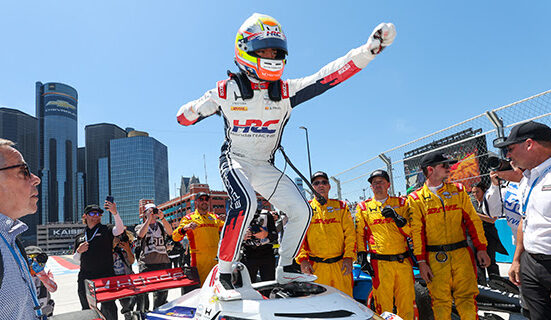
DETROIT (Sunday, May 31, 2026) – Four-time NTT INDYCAR SERIES champion Alex Palou prevailed in a full-contact race filled with various tire strategies, winning the Chevrolet Detroit Grand Prix presented by Lear on Sunday for his fourth victory in eight races this season.

Pole sitter Palou drove his No. 10 HRC Chip Ganassi Racing Honda to a 3.0584-second victory over the No. 27 Sam’s Club Honda of Andretti Global’s Kyle Kirkwood. It was the 23rd victory of Palou’s career in 106 starts, a remarkable strike rate of 21.7 percent, and he has won 12 of the last 25 races (48 percent win rate) dating to the start of the 2025 season.

“It feels like the first time, honestly” Palou said. “It was a tough one, a very tough one. But the team did an incredible job once again with the strategy. The pit stops were incredible. Incredible run, incredible start of the year, but it was tough.”

The victory extended Palou’s championship lead to 62 points over Kirkwood, more than a race’s worth of margin. The Spaniard is aiming for an INDYCAR SERIES record-tying fourth straight title.

Graham Rahal finished third in the No. 15 Fifth Third Bank Honda of Rahal Letterman Lanigan Racing, his third podium finish of the season.

Arrow McLaren teammates Pato O’Ward and Christian Lundgaard finished fourth and fifth in the No. 5 and No. 7 Chevrolet-powered cars, respectively, at General Motors’ home event.

Palou led 71 of the 100 laps, but this wasn’t a stroll down Easy Street. He took the lead for good on Lap 69 when Kirkwood pitted from the lead for the last time and stayed out front on restarts on Laps 72, 76, 83 and 93 after full-course yellows bunched the field.

The move to the front was paved a few laps earlier when strategist Barry Wanser and Palou decided to make their final pit stop at the end of Lap 63, switching from the faster but less durable Firestone Firehawk alternate tire to the primary tire. Wanser saw a variety of jousts for position unfolding on the tight, nine-turn, 1.645-mile street circuit and wisely didn’t want Palou to get caught on track under caution and lose track position.

Wanser’s decision proved prescient on Lap 66 when Santino Ferrucci’s No. 14 Homes For Our Troops Chevrolet of AJ Foyt Racing nudged the rear of Rinus VeeKay’s No. 76 Juncos Hollinger Racing Chevrolet into a spin in Turn 5. Kirkwood was leading but still had to make his final stop, which he did under yellow on Lap 69 and was forced to use a set of Firestone Firehawk alternates per INDYCAR rules that require at least two sets of the softer rubber to be used in street-circuit events.

Palou rocketed away from Alexander Rossi’s No. 20 Java House Chevrolet of ECR on the restart on Lap 72. Rookie Mick Schumacher and David Malukas were engaged in an intense duel for third on the restart, with Schumacher missing the corner in Turn 5 and nosing into the barriers in his No. 47 ENVE Honda of Rahal Letterman Lanigan Racing. Malukas had nowhere to go and ran wide in his No. 12 Verizon Team Penske Chevrolet, with the incident triggering another full-course caution on Lap 73.

By this point, Kirkwood had worked his way back to third after his final pit stop and had to make the most of the added early grip of the alternate tire before the increased durability of Palou’s primary tires prevailed in the closing laps. Kirkwood passed Rossi and then set sail for Palou, knowing this was his best chance to win.

Kirkwood pulled to within two car lengths of Palou on Lap 79 and appeared to be ready to pounce for the lead when Ferrucci’s car slowed in Turn 4 with a mechanical problem, triggering the fifth full-course yellow of the race on Lap 80.

“We took a little bit of a gamble on tires there, being the only guy on reds (alternates) at the end,” Kirkwood said. “It nearly paid off. It was so, so close. There were two untimely yellows.

“We almost covered Palou when we were on primes, which would have been phenomenal, and then we had that other yellow where I had him lined up. I was ready to make a dive on him, and, of course, (the yellow) comes out after I burned 10 seconds of overtake. From there, we just didn’t really have another shot at it. I think I just used up my tires too much to make that one pass.”

Palou kept the lead on the restart on Lap 83, but Kirkwood continued to push and forced Palou into a flat-spotting tire lockup on Lap 88. But Palou gathered himself and his car and started to pull away, building a lead of 1.8929 seconds by Lap 91.

But there was one more restart for Palou to manage after Rossi clipped the rear of the No. 18 BMax Honda driven by Romain Grosjean of Dale Coyne Racing and sent Grosjean into the outside wall approaching Turn 3 on Lap 91. That triggered the last of six full-course yellows, but Palou pulled away from Kirkwood and the field on the Lap 93 restart and was never threatened despite the 173 on-track passes today, a high for a street circuit this season.

“Being able to be up front was key,” Palou said. “On the first stint, I started struggling and kind of put myself in a bad spot and lost two positions with Lundgaard and (Scott) McLaughlin. I lost us positions there, but the team made a great call to be safe with the yellow. It kind of worked out for us.”

The next NTT INDYCAR SERIES race is the Bommarito Automotive Group 500 presented by Axalta and Valvoline on Sunday, June 7. Live coverage of the night race starts at 9 p.m. ET on FOX, FOX One and INDYCAR Radio powered by OnlyBulls.

Fittipaldi Wins Motor City Thriller, Takes Series Lead

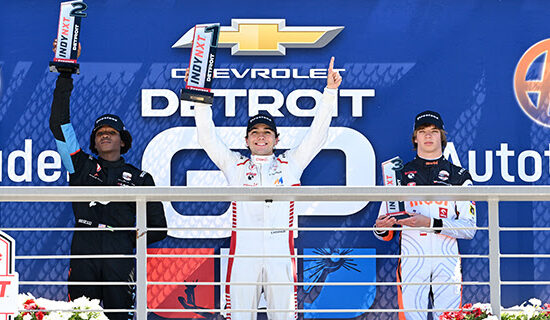
DETROIT (Sunday, May 31, 2026) – Enzo Fittipaldi returned his famous last name to Victory Lane in Detroit for the first time in 35 years, winning the INDY NXT by Firestone Detroit Grand Prix despite driving nearly the entire distance with a damaged front wing and nose cone.

Series rookie Fittipaldi won the race, originally scheduled for 45 laps but switched to a timed event, under caution in the No. 67 HMD Motorsports car after starting seventh. It was his second victory of the season and vaulted him to the championship lead in the INDYCAR development series, seven points ahead of Nikita Johnson of Cape Motorsports Powered by ECR and eight ahead of HMD teammate Tymek Kucharczyk.

The victory also was the first by the legendary Fittipaldi name in Detroit since his grandfather and two-time Indy 500 winner Emerson Fittipaldi won INDYCAR SERIES races on a different downtown street circuit in the Motor City in 1989 and 1991.

“I just pushed as hard as I could,” Enzo Fittipaldi said. “I found pace. I was really, really fast. Just so happy to get the win. I love to race; I’m a racer.”

Series veteran Myles Rowe finished a season-best second in the No. 99 Abel Motorsports with Force Indy machine, with rookie Kucharczyk rounding out the podium finishers in the No. 71 HMD Motorsports entry.

Rookie Max Garcia tied his season-best finish by placing fourth in the No. 12 Abel Motorsports machine, with veteran Seb Murray rounding out the top five in the No. 27 Megatron car of Andretti Global.

Frenzied action started from the drop of the green flag on Lap 1, as Lochie Hughes made an aggressive move into the Turn 3 hairpin with his No. 26 Andretti Global car, punting pole sitter Alessandro de Tullio into a spin from the lead in the No. 14 AJ Foyt Racing entry. Hughes received a drive-through penalty for avoidable contact.

Fittipaldi nudged another car in that chain-reaction melee, which damaged the right side of his front wing and punched a large hole in his nose cone. Kucharczyk took the lead from that point, keeping it on the restart on Lap 8.

Kucharczyk built a lead of 3.324 seconds over Fittipaldi by Lap 13, with Rowe climbing to third by Lap 18. Rowe dove under Fittipaldi for second on Lap 20 and started to chase down Kucharczyk.

By Lap 21, Rowe pulled to within .5477 of a second of leader Kucharcyzk, slicing 1.6 seconds from the Polish driver’s lead in just three laps. But the complexion of the race changed on Lap 26 when the second of four full-course yellow flags in the race were unfurled for debris on the nine-turn, 1.645-mile temporary street circuit.

The restart came at the end of Lap 27, with Rowe trying to dive under Kucharczyk for the lead immediately after the green flag, in the Turn 3 hairpin. But the move forced both cars wide, leaving an opening along the inside curb for Fittipaldi.

He took it, squeezing past Rowe and Kucharcyzk and never trailing thereafter. Fittipaldi stayed out front on another restart on Lap 34 after Niels Koolen nosed his No. 10 Chip Ganassi Racing machine into the barrier in Turn 8.

“I got it done,” Fittipaldi said. “I knew Myles was going to go for a lunge there, and I just prepared my mid-(corner) to exit of Turn 3, and he went on the lunge on Tymek, and I was able to do the crossover and got the lead. I had the pace to stay there, and I was actually pulling away.”

The decisive move was one of 141 on-track passes, including 124 for position, in the exciting race – both INDY NXT records for any circuit on which the series has competed in the Motor City.

Fittipaldi expanded that gap to nearly six-tenths of a second when Andretti Global’s Max Taylor also nosed into the barrier in Turn 1 in his No. 28 Susan G. Komen car with about four minutes, 20 seconds left in what had become a timed race, triggering the final caution. Taylor’s car could not be cleared in time to restart the race, with the field finishing under yellow.

“I was losing quite a lot of time through (Turns) 6 and 7,” Fittipaldi said of the damage to his car. “It was quite difficult. Down the straight, I could feel the air coming through my legs and I said: ‘Man, this is not good. We’re definitely dragging a lot on the straight.’ It was hard to keep that lead and keep up with the guys.”

The next INDY NXT by Firestone event is Sunday, June 7 on the 1.25-mile oval at World Wide Technology Raceway in Madison, Illinois, in the shadow of the Gateway Arch in St. Louis. It’s the first of three oval races this season.

TOYOTA RACING – NOAPS Nashville Post-Race Report – 05.30.26

TOYOTA DEVELOPMENT DRIVER BRENT CREWS BRINGS HOME RUNNER-UP FINISH AT NASHVILLE
All Four Joe Gibbs Racing Toyota GR Supra’s Finish Inside Top-10

LEBANON, Tenn. (May 30 2026) – In just his 12th career start in the NASCAR O’Reilly Auto Parts Series, Brent Crews again came close to earning his first series victory, battling veteran Justin Allgaier for the win over the final 20 laps Saturday night at Nashville Superspeedway before finishing in the runner-up spot.

After starting 33rd, Crews charged through the field to lead 45 laps and record his fifth top-five finish of the season. It was also a strong night for Joe Gibbs Racing. The organization placed three cars in the top five and all four entries in the top 10, with William Sawalich finishing third, Brandon Jones fifth and Taylor Gray eighth.

TOYOTA RACING Post-Race Recap
NASCAR O’Reilly Auto Parts Series (NOAPS)
Nashville Superspeedway
Race 16 of 33 – 250.04 miles, 188 laps

TOYOTA FINISHING POSITIONS

1st, Justin Allgaier*

2nd, BRENT CREWS

3rd, WILLIAM SAWALICH

3rd, Sam Mayer*

5th, BRANDON JONES

9th, TAYLOR GRAY

14th, DEAN THOMPSON

27th, HARRISON BURTON

*non-Toyota driver

TOYOTA QUOTES

BRENT CREWS, No. 19 YoungLife Toyota GR Supra, Joe Gibbs Racing

Finishing Position: 1st

What did you learn racing Justin there at the end

“The positives were I thought we were going to win this race. Happy for our guys, everyone at Younglife. We had 60 to 80 people here and it turned out to be a beautiful day. Got to start 33rd and worked our way up to the lead and lead a lot of laps and got to race one of the best guys of all time in our series for the win there in the last few laps, couldn’t ask much more other than to beat him. Just fought really loose there at the end after we put on that set of tires, not sure what that was, but that was probably the most fun I’ve had in a race that I did not win, so that’s a positive from the night.”

When you are driving so hard racing for your first win with a guy like Justin, how much confidence do you have running a guy like him for the win?

“It’s definitely a lot different and there’s a lot of guys you are confident in racing and some others that you are not as confident in. Justin there at the end, I knew he was going to put it on my door and I could drive it in there deep and if I got a little free and wash up there with him we would be ok. Just gives me a lot more confidence being able to drive it in there really hard and race him hard and I could give him the bumper on entry and not worry about him spinning out and could race him really hard and I know he had fun, I know I did.”

WILLIAM SAWALICH, No. 18 Starkey Toyota GR Supra, Joe Gibbs Racing

Finishing Position: 4th

What more did you need there at the end?

“I think we just needed one last restart to go better to get better track position for that last run at the end of stage 3. We executed green flag pit stops really well and our GR Supra was really fast all night and the guys made good adjustments. Can’t thank the guys enough and we got some points and back in ninth.”

BRANDON JONES, No. 20 Menards/Pennington Toyota GR Supra, Joe Gibbs Racing

Finishing Position: 6th

What helped you bring home another top-10 finish?

“I’m really happy about that top-five finish. It’s not joke to start at the back of the field, we had to change an alternator after practice and I recognized it and had to change it because I didn’t want to get in the final stage and be leading the thing and have a dead battery and started dead last in the race. This is a really challenging racetrack to pass at, it can be done and we came up through the field and had a really good racecar to do it. I’ve been working with Sam McAulay really closely to try to get these GR Supras where they need to be in the top-five and I think this weekend we really did a good job of hitting on our setup. It’s nice to have really good speed like we did there at the end, it was circumstantial track position wise why we didn’t finish better and I think having a fifth-place finish and overcome all the adversity that we had and pass all the people that we did is pretty big.”

About Toyota

Toyota (NYSE:TM) has been a part of the cultural fabric in North America for nearly 70 years, and is committed to advancing sustainable, next-generation mobility through our Toyota and Lexus brands, plus our more than 1,800 dealerships.

Toyota directly employs nearly 64,000 people in North America who have contributed to the design, engineering, and assembly of over 50 million cars and trucks at our 14 manufacturing plants. In 2025, Toyota’s plant in North Carolina began to assemble automotive batteries for electrified vehicles.

For more information about Toyota, visit www.ToyotaNewsroom.com.

Used Kia Sorento for Sale: What Buyers Need to Know

Looking for a midsize SUV can be overwhelming. You want enough room for family trips, strong fuel economy, modern technology, and a price that makes ownership affordable long-term., many smart buyers actively search for a reliable pre-owned family vehicle.  Instead of purchasing a high-priced new SUV, which is why they actively search for a used kia sorento for sale.

Why the Kia Sorento Continues to Attract Used SUV Buyers

The Sorento appeals to shoppers because it meets multiple needs at once. It works well for growing households, daily commuters, and drivers who need SUV versatility without luxurious-level pricing.

Certainly, one of the largest motives consumers look for a used Kia Sorento on the market is value retention. In comparison to many competitors, Older Sorento models often include premium features at lower resale prices. When shopping the used SUV market, you can generally discover models loaded with premium features, including:

  • Apple CarPlay and Android Auto
  • Blind spot monitoring
  • Heated seats
  • Third-row seating
  • Panoramic sunroof options
  • AWD capability
  • Advanced safety technology

That combination makes the Sorento attractive in the used SUV market.

Understanding the Sorento’s Size and Interior Layout

The Kia Sorento sits in an interesting position within the SUV category. It is slightly larger than compact crossovers like the Sportage or CR-V but less difficult to power and park than full-size SUVs like the Telluride or Tahoe. For many families, that balance matters. The first and second rows provide a comfortable area for adults. While the third-row folds flat for children or shorter journeys, especially in older models. More recent Sorento generations progressed third-row usability and cargo flexibility. The cargo room also deserves attention. The Sorento turns exceedingly sensible for grocery runs, sports equipment, road trips, or weekend journeys. Drivers upgrading from sedans frequently admire how nimble the Sorento feels in traffic at the same time as still offering SUV capability.

V6 vs. 4-Cylinder Engines: Which One Makes More Sense?

One of the biggest choices while shopping for a used Sorento is engine choice. Different model years offered several engine options, and each comes with tradeoffs.

4 Cylinder Models

Four-cylinder Sorento models usually deliver better fuel economy and lower ownership costs. These trims appeal to drivers focused on commuting and budget-friendly driving. Modern 4-cylinder engines, particularly turbocharged versions, offer respectable acceleration for ordinary use.

Nonetheless, if you frequently carry passengers or cargo, some naturally aspirated four-cylinder models may feel underpowered during highway merging or uphill driving.

V6 Models

The V6 engine became popular for buyers wanting stronger performance and towing ability. A V6 Sorento generally offers the following:

  • Better highway acceleration
  • Smoother power delivery
  • More confidence with passengers and cargo
  • Improved towing functionality

The disadvantage of the V6 is a reduced fuel economy and slightly higher maintenance costs. For families taking road trips or drivers looking for more potent overall performance, the V6 regularly feels worth the extra fuel cost.

Best Kia Sorento Model Years for Used Buyers

Not every Sorento generation promises the same ownership experience. Some years offer much stronger value than others.

2016 to 2018 Models

These years remain popular in the used market due to their stability, affordability, technology, and reliability. You can often find:

  • Updated infotainment systems
  • Strong safety scores
  • Available V6 engines
  • Comfortable ride quality
  • Modern exterior styling

These years’ work especially well for budget-conscious buyers who still want modern features.

2019 to 2020 Models

These later third-generation models refined many earlier issues and added more advanced driver assistance features. They are often considered smart buys because they still feel modern without carrying the price tag of newer redesigns.

2021 and Newer Redesign

The 2021 redesign added a main styling update along with upgraded technology and interior quality. The cabin became more upscale, and hybrid options entered the lineup. These models commonly cost more, but consumers seeking near-luxury designs without luxury pricing are often drawn to the redesigned Sorento.

Family Features That Make the Sorento Stand Out

The Sorento continues to perform well with families because it focuses on practical usability instead of flashy gimmicks. Parents often appreciate the ease of entry into the second row and flexible seat-folding configurations. Safety technology improved significantly over the years as well. Depending on trim and year, you may find the following: 

  • Adaptive cruise control
  • Lane keeping assist
  • Rear cross traffic alert
  • Forward collision warning
  • Parking sensors
  • Surround view camera systems

For buyers with young children, rear seat air vents and multiple USB charging ports also improve daily convenience. Many used SUV buyers find out they can access these functions at a much lower expense than the competition.

AWD vs. FWD: Which Drivetrain Should You Choose?

The front-wheel-drive Sorento models are common and commonly cheaper. They work perfectly for city driving in mild climates. All-wheel-drive models provide added confidence in rain, snow, and tough road conditions. Front-wheel-drive models often deliver slightly better fuel economy and lower maintenance costs over time. The best choice depends on your driving conditions and budget priorities.

What to Inspect Before Buying a Used Kia Sorento

A clean vehicle history report is crucial; however, it should never replace a full inspection. Before buying, be aware of maintenance records and the overall condition. If feasible, have a dependable mechanic perform a pre-purchase inspection before finalizing the deal.

Technology Features Worth Looking For

The Sorento improved rapidly in technology during the last decade. Older base trims may feel basic, while more recent upper trims feel quite premium. Some standout functions available on later models include large touchscreen displays, premium audio systems, digital gauge clusters, and wireless smartphone integration.

Buyers reviewing inventory carefully evaluate trims because feature differences can vary significantly between packages. Better trims like the SX and SX Prestige commonly include the most advanced comfort and safety equipment. That can make a slightly older high-trim model a better fit than a more modern base trim.

Ownership Costs and Reliability Expectations

The Kia Sorento typically delivers competitive ownership costs compared to many midsize SUV rivals. Routine maintenance remains manageable, and replacement parts are widely available.

Common ownership expenses include the following:

  • Routine oil changes
  • Brake service
  • Tire replacement
  • Battery replacement
  • Suspension wear items over higher mileage

Drivers who keep up with scheduled maintenance generally enjoy fewer long-term issues. A well-maintained Sorento with documented service records is a much safer investment than a cheap, neglected car.

How the Sorento Compares to Competitors

The Sorento competes with vehicles like the Toyota Highlander, Honda Pilot, Hyundai Santa Fe, and Ford Edge. In comparison to some rivals, the Sorento often promises greater features for the price.

Toyota and Honda models may hold a slightly stronger long-term resale value, but they also carry higher used market prices. That creates an excellent opportunity for value-focused shoppers who want more features for less money.

To find a reliable vehicle that has been thoroughly checked, it is always best to partner with a trusted dealership that prioritizes transparency and vehicle history reports over flashy marketing.

Conclusion

The Kia Sorento continues to draw used SUV buyers because it delivers a strong balance of practicality, comfort, technology, and affordability. Few midsize SUVs manage the combination of three-row flexibility with manageable ownership costs as successfully as the Sorento. If you are comparing options, focus on vehicle condition, engine choice, trim level, and maintenance history rather than only looking at the model year. A well-maintained Sorento can offer years of dependable family transportation and daily-use comfort.