Home Blog Page 32

How Metal Roofing Helps Homeowners Prepare for Long-Term Property Ownership

Photo by depositphotos at https://depositphotos.com/

Introduction

Owning a home is a long-term commitment that requires thoughtful planning and regular investment. Every improvement made to the property should contribute to its durability, functionality, and overall value. Among the many exterior upgrades available, choosing the right roofing material plays a significant role in supporting long-term homeownership goals.

A roofing system protects the home from changing weather conditions while helping preserve the structural integrity of the building. Because replacing a roof is a major investment, many homeowners look for solutions that provide dependable performance over an extended period. Selecting durable materials can reduce future concerns while supporting confidence in the property’s condition.

Emerald Roofing and Siding LLC helps homeowners evaluate roofing solutions that align with both present needs and future plans. Understanding the long-term advantages of durable roofing materials allows property owners to make informed decisions that support lasting protection and peace of mind.

Plan for the Future Instead of the Present

Many home improvement decisions focus on solving immediate concerns. While addressing current needs is important, long-term planning often provides greater value by reducing future maintenance and replacement demands. Looking ahead allows homeowners to make choices that continue benefiting the property for years.

Thinking strategically also helps homeowners manage future expenses more effectively. Investing in quality improvements today often creates greater stability and fewer unexpected challenges later.

Choose Materials Built for Longevity

Long Service Life Matters

Every roofing material performs differently over time. Some options require more frequent attention, while others are designed to provide dependable performance for decades under normal conditions.

Choosing durable materials helps reduce the frequency of major roofing projects throughout long-term homeownership.

Reduce Future Replacement Concerns

Replacing a roof can be a significant undertaking that requires careful planning. Selecting a material known for long-lasting performance allows homeowners to focus on other property improvements instead of preparing for another roofing project in the near future.

Long-term durability supports greater confidence.

Improve Property Resilience

A home’s exterior experiences constant exposure to sunlight, rain, wind, and seasonal temperature changes. Durable roofing materials help the property respond more effectively to these environmental conditions while maintaining reliable protection over time.

Metal Roofing offers homeowners a dependable option for improving long-term resilience. Its strength and durability make it well suited for property owners who want reliable exterior protection throughout changing weather conditions.

Support Long-Term Property Value

Homeowners often view exterior improvements as investments rather than simple repairs. Durable roofing materials contribute to the overall condition of the property while demonstrating ongoing care and responsible ownership.

A well-maintained roof also supports curb appeal by helping the home maintain a clean and attractive appearance. Consistent exterior quality often benefits both everyday enjoyment and future resale opportunities.

Reduce Ongoing Maintenance Demands

Spend Less Time on Roofing Concerns

Long-term homeowners frequently look for ways to simplify routine property maintenance. Selecting durable roofing materials helps reduce the need for frequent corrective work while allowing homeowners to focus on other aspects of homeownership.

Less maintenance often leads to greater convenience throughout the years.

Create Predictable Maintenance Routines

Even durable roofing systems benefit from regular inspections and routine care. However, reliable materials often support more manageable maintenance schedules compared to options that require frequent attention.

Consistency improves long-term planning.

Prepare for Changing Family Needs

Homes often evolve as families grow and lifestyles change. Renovations, additions, and outdoor improvements may all become part of long-term ownership plans. A dependable roofing system supports these future projects by providing reliable protection for the entire property.

Strong roofing performance allows homeowners to approach future improvements with greater confidence. Reliable exterior systems contribute to successful long-term planning.

Think Beyond Initial Installation

Choosing roofing materials involves more than comparing installation costs. Homeowners should also consider durability, maintenance expectations, and long-term performance when evaluating available options.

Metal Roofing represents an investment in future reliability rather than only an immediate upgrade. Looking beyond the initial installation often helps homeowners recognize the lasting value of quality materials.

Improve Everyday Peace of Mind

Knowing that a home is protected by durable exterior materials provides reassurance throughout every season. Confidence in the condition of the roof allows homeowners to focus on enjoying their property instead of worrying about unexpected issues.

Emerald Roofing and Siding encourages homeowners to evaluate roofing improvements as part of a comprehensive long-term property strategy. Careful planning today helps create dependable performance well into the future.

Support Sustainable Homeownership

Long-lasting building materials contribute to more sustainable homeownership by reducing the frequency of major replacement projects. Durable roofing systems also encourage responsible resource management through extended service life.

Metal Roofing supports these goals by providing dependable protection while helping homeowners plan confidently for the future. Investing in durable materials creates lasting value for both the property and the people who live there.

Conclusion

Preparing for long-term homeownership involves making thoughtful decisions that support durability, efficiency, and future value. Roofing materials play an important role in protecting the home while reducing maintenance concerns over many years. Choosing quality solutions today helps establish a stronger foundation for tomorrow.

A dependable roofing system contributes to confidence by supporting reliable performance through changing seasons and evolving household needs. Long-lasting materials allow homeowners to focus on enjoying their property rather than frequently addressing major exterior improvements.

With guidance from Emerald Roofing and Siding LLC, homeowners can select roofing solutions that align with long-term goals and changing lifestyles. Investing in durable materials today creates lasting protection, greater peace of mind, and a stronger home prepared for many years of successful ownership.

How Fence Installation Improves Privacy, Security, and Long-Term Property Value

Photo by Simon Maage on Unsplash

Introduction

Installing a quality fence is one of the most effective ways to improve the functionality and appearance of a property. Beyond defining boundaries, a well-planned fence contributes to privacy, enhances security, and creates a more attractive outdoor environment. Homeowners often view fencing as an investment that delivers practical benefits for many years.

Choosing the right fencing solution requires more than selecting a style that complements the home. Material selection, placement, long-term maintenance, and intended use all influence the overall success of the project. Careful planning helps ensure that the finished fence meets both current needs and future expectations.

Hawk Fences LLC understands that every property has unique requirements. By considering how the fence will be used and planning the installation carefully, property owners can enjoy lasting value while improving both the appearance and functionality of their outdoor spaces.

Define the Purpose Before Building

Every fencing project should begin with a clear understanding of its primary purpose. Some homeowners prioritize privacy, while others focus on improving security, protecting children or pets, or enhancing curb appeal. Identifying these priorities helps guide every decision that follows.

A clearly defined objective also simplifies material selection and layout planning. When the fence is designed around practical needs, it becomes a more valuable addition to the property.

Select Materials That Match Your Goals

Balance Appearance and Durability

Different fencing materials offer unique advantages depending on the property’s requirements. Wood, vinyl, aluminum, and composite materials each provide varying levels of maintenance, durability, and visual appeal.

Choosing materials that match long-term expectations helps maximize satisfaction after installation.

Consider Future Maintenance

Every fencing material requires some level of ongoing care. Understanding maintenance requirements before construction begins helps homeowners choose an option that fits their lifestyle and long-term property goals.

Planning ahead supports lasting performance.

Improve Privacy Around the Property

One of the most common reasons homeowners invest in fence installation is to create greater privacy. Well-positioned fencing helps separate outdoor living areas from neighboring properties while creating a more comfortable environment for relaxing and entertaining.

Private outdoor spaces often become more enjoyable because they provide a greater sense of comfort and personal space. A thoughtfully designed fence supports everyday outdoor activities while enhancing the overall experience of the property.

Strengthen Property Security

Fencing also contributes to property security by creating clearly defined boundaries around the home. Although no fence eliminates every risk, it helps establish controlled access while discouraging unwanted entry.

Families with children or pets often appreciate the additional peace of mind that enclosed outdoor spaces provide. Secure boundaries encourage safer outdoor activities while helping homeowners feel more confident about their property’s protection.

Enhance Curb Appeal

Complement the Home’s Design

A fence should enhance the property’s architectural style rather than compete with it. Coordinating materials, colors, and overall design creates a more attractive exterior appearance.

Thoughtful design contributes to a polished and welcoming first impression.

Improve Overall Landscape Appearance

Fencing naturally becomes part of the property’s landscape design. Well-planned installations frame gardens, walkways, and outdoor living areas while creating greater visual organization throughout the yard.

Balanced design strengthens curb appeal.

Increase Long-Term Property Value

Exterior improvements often contribute to the overall value of a property when they combine functionality with attractive design. A professionally planned fence enhances usability while improving the home’s appearance from the street.

Fence installation Atlanta represents a long-term investment that benefits homeowners through improved privacy, security, and visual appeal. Buyers also frequently appreciate established fencing that requires minimal immediate upgrades after purchasing a home.

Plan for Everyday Use

Every household uses outdoor spaces differently. Some families enjoy entertaining guests, while others prioritize gardening, recreation, or creating safe play areas for children and pets.

Planning the fence around these activities ensures it supports everyday living instead of simply marking property lines. Practical design increases long-term satisfaction with the finished project.

Work With Experienced Professionals

A successful fencing project depends on careful planning, accurate measurements, and quality workmanship. Professional installation helps ensure that posts, gates, and panels function properly while maintaining an attractive appearance.

Hawk Fences LLC works closely with property owners to develop fencing solutions that reflect both functional needs and aesthetic preferences. Professional guidance helps homeowners make informed decisions throughout every stage of the project.

Think About Long-Term Ownership

A fence should continue providing value long after construction has been completed. Durable materials, thoughtful design, and quality workmanship all contribute to dependable performance through changing seasons and evolving household needs.

Investing in professional fence installation creates a stronger foundation for long-term property ownership. Careful planning today helps reduce future maintenance concerns while supporting lasting beauty and functionality.

Conclusion

Installing a fence offers benefits that extend far beyond defining property boundaries. Privacy, security, curb appeal, and long-term value all improve when fencing is planned with care and built using quality materials. Thoughtful preparation helps homeowners create outdoor spaces that remain useful and attractive for many years.

Professional fence installation provides lasting advantages by supporting everyday activities while improving the property’s overall appearance. A carefully designed fence enhances comfort, organization, and confidence throughout every season.

With guidance from Hawk Fences LLC, homeowners can choose fencing solutions that reflect their goals while providing dependable performance over time. Investing in a well-planned fence today creates lasting value, stronger property protection, and a more enjoyable outdoor living environment for years to come.

VANDERGRIFF, KALITTA & VANG ROLL TO PROVISIONAL NO. 1 SPOTS, GET DEECELL AFTER DARK LOW QUALIFIER BONUS AT DENSO NHRA SONOMA NATIONALS

SONOMA, Calif. (July 17, 2026) – Funny Car’s Jordan Vandergriff made the quickest Funny Car run of the 2026 season on Friday in front of a huge Sonoma Raceway crowd, taking the provisional No. 1 qualifier spot for John Force Racing at the Denso NHRA Sonoma Nationals presented by PowerEdge.

Doug Kalitta (Top Fuel) and Chris Vang (Pro Stock) are also the provisional No. 1 qualifiers in Sonoma at the 11th of 20 races during the 2026 NHRA Mission Foods Drag Racing Series season. After an oildown during the second Top Fuel session, racing was called for the night due to curfew.

Selections were also made in the opening round of the GETTRX Pro Stock Motorcycle All-Star Callout. Top seed Gaige Herrera selected Steve Johnson, Richard Gadson picked Chase Van Sant, reigning Callout winner Matt Smith chose Jianna Evaristo, setting Angie Smith and John Hall as the final pair.

Vandergriff went 3.849-seconds at 332.43 mph in his 12,000-horsepower Cornwell Tools Chevrolet SS to also collect the $4,000 Deecell After Dark Low Qualifier bonus.

Remarkably, Vandergriff kicked off the epic night session as part of the first pair, making an incredible run just as the sun was setting. But the rest of the field couldn’t top the John Force Racing standout, putting Vandergriff in position to pick up his second career No. 1 qualifier.

Currently fifth in points, Vandergriff has enjoyed a strong first Funny Car season, but Friday’s run with a massive crowd on hand certainly one of the highlights for him.

“To be the quickest Funny Car of the year so far is a huge accomplishment, especially with how competitive this class is. And I’m a rookie—I don’t even know what I’m doing yet,” Vandergriff said. “We fumbled a little in Q1, but I knew we had something figured out. The early numbers looked really good, so I believed we were going to run quick no matter when we went down the track.

“I knew the team wanted to push a little. We’ve run well this year, we’ve won a race, we’ve qualified No. 1 before, but we hadn’t really leaned on it. Tonight we did. I knew we were going to run well. I just didn’t know we were going to run that good.”

Vandergriff’s teammate, Jack Beckman, went 3.873 at 333.16 to sit second and Daniel Wilkerson is right behind in third after going 3.899 at 327.66.

In Top Fuel, Kalitta made the quickest run in the opening qualifying session on speed, edging teammate Shawn Langdon with a run of 3.714 at 337.07 in his 12,000-horsepower Aflac dragster for Kalitta Motorsports.

The reigning world champion also picked up the $4,000 Deecell After Dark Low Qualifier bonus for the second straight year as he looks to pick up his third No. 1 qualifier of the year.

Kalitta has always run well at Sonoma, with his six wins – including a victory last year – leading the way in the Top Fuel ranks.

“That first run was definitely a close one. At the time, you don’t realize it’s going to hold up, but it was enough to get us the No. 1 spot,” Kalitta said. “It was disappointing not to get the second session in. Alan Johnson definitely didn’t have that car tuned to run a 3.71 — we were planning to throw down something even quicker.

“Tomorrow’s conditions should be just as good, maybe even better. I think we’ll have a chance to improve on those numbers. It’s Sonoma, one of my favorite tracks. Every time we go up there, we’re trying to do the best job we can.”

Points leader Langdon is second with a 3.714 at 336.49 and Tony Stewart is third after going 3.736 at 333.91.

In a stunning turn of events in Pro Stock, Chris Vang performed better than an impressive list of event winners and world champions on Friday in Sonoma, taking the provisional No. 1 spot for the first time in his career with a run of 6.498 at 209.04 in his Prestige Trailers Chevrolet Camaro.

It hands the young second-year racer the $2,500 Deecell After Dark Low Qualifier bonus, as well as puts him in a prime position to earn the $2,000 GESi Pro Stock No. 1 Qualifier on Saturday. That would mean a great deal to the part-time racer who is making just his fourth start of the 2026.

But he made the most of his opportunities on Friday in prime conditions at Sonoma, making a pair of great runs, outlasting the stars in the class to possibly pick up a massive career milestone.

“It’s exciting. Pretty amazing. I don’t even know how to describe it. We came in here just hoping to qualify, and now we’re sitting No. 1,” Vang said. “We knew we had something to work with after the first session. We threw a little more at it, hoping to run in the 6.50s or maybe the high .49s, and we ended up right where we wanted.

“This bonus helps a lot. We’re trying to run about seven more races this season, and every little bit matters for a team like ours. We didn’t get everything out of that run. It was really good, but there’s still more in it.”

Rookie Cody Anderson was the only other driver to dip into the 6.40s, going 6.499 at 210.54 and Erica Enders is third after a run of 6.503 at 211.33.

M. Smith earned the $1,500 Deecell After Dark Low Qualifier bonus in Pro Stock Motorcycle for making the quickest run during Friday’s second time trial.

Qualifying continues at 12 p.m. PT on Saturday at the Denso NHRA Sonoma Nationals presented by PowerEdge at Sonoma Raceway. The first round of the GETTRX Pro Stock Motorcycle All-Star Callout begins at 11:30 a.m.

SONOMA, Calif. — Friday’s results after the first two of four rounds of qualifying for the 38th annual DENSO Sonoma Nationals presented by PowerEdge at Sonoma Raceway, 11th of 20 events in the NHRA Mission Foods Drag Racing Series. Qualifying will continue Saturday for Sunday’s final eliminations.

Top Fuel — 1. Doug Kalitta, 3.714 seconds, 337.07 mph; 2. Shawn Langdon, 3.714, 336.49; 3. Tony Stewart, 3.736, 333.91; 4. Tony Schumacher, 3.744, 293.73; 5. Maddi Gordon, 3.751, 336.49; 6. Jasmine Salinas, 3.751, 331.77; 7. Josh Hart, 3.763, 336.82; 8. Leah Pruett, 3.772, 327.98; 9. Antron Brown, 3.784, 324.59; 10. Billy Torrence, 3.803, 328.06; 11. Shawn Reed, 3.850, 315.34; 12. Will Smith, 3.893, 275.73; 13. Justin Ashley,

4.122, 225.82; 14. Clay Millican, 4.203, 206.16.

Funny Car — 1. Jordan Vandergriff, Chevy Camaro, 3.849, 332.43; 2. Jack Beckman, Camaro, 3.873, 333.16; 3. Daniel Wilkerson, Ford Mustang, 3.899, 327.66; 4. Ron Capps, Toyota GR Supra, 3.900, 330.07; 5. Chad Green, Mustang, 3.903, 321.12; 6. Spencer Hyde, Mustang, 3.915, 325.92; 7. Alexis DeJoria, Camaro, 3.917, 329.26; 8. Matt Hagan, Dodge Charger, 3.934, 321.81; 9. J.R. Todd, GR Supra, 3.939, 332.10; 10. Dave Richards, Mustang, 3.966, 329.50; 11. Hunter Green, Charger, 4.006, 320.97; 12. Jeff Arend, Charger, 4.019, 315.27; 13. Jason Rupert, Mustang, 4.048, 316.67; 14. Austin Prock, Mustang, 4.050, 316.52; 15. Tim Gibbons, Charger, 4.081, 297.55; 16. Paul Lee, Charger, 4.208, 219.79.

Not Qualified: 17. Dylan Winefsky, 4.450, 196.93; 18. Cruz Pedregon, 4.452, 191.35.

Pro Stock — 1. Chris Vang, Chevy Camaro, 6.498, 209.30; 2. Cody Anderson, Camaro, 6.499, 210.54; 3. Erica Enders, Camaro, 6.503, 211.33; 4. Matt Hartford, Camaro, 6.511, 211.30; 5. Shane Tucker, Camaro, 6.516, 212.16; 6. Matt Latino, Camaro, 6.516, 210.18; 7. Dallas Glenn, Camaro, 6.517, 210.97; 8. Greg Stanfield, Camaro, 6.520, 211.00; 9. Aaron Stanfield, Camaro, 6.520, 210.21; 10. Eric Latino, Camaro, 6.520, 210.18; 11. Greg Anderson, Camaro, 6.522, 210.21; 12. Stephen Bell, Camaro, 6.530, 210.54; 13. Jeg Coughlin, Camaro, 6.533, 210.21; 14. Troy Coughlin Jr., Camaro, 6.549, 210.14; 15. Kenny Delco, Camaro, 6.570, 209.82; 16. Mason McGaha, Camaro, 6.583, 210.57.

Not Qualified: 17. Joey Grose, 6.609, 208.62; 18. Alan Prusiensky, 6.749, 204.26.

Twice As Nice: Honeycutt Sweeps Friday’s zMAX CARS Tour Doubleheader

Kaden Honeycutt celebrates after winning Friday's zMAX CARS Tour Skyline National Bank 100 at North Wilkesboro Speedway. (HHP/NWS photo)
  • Kaden Honeycutt swept both zMAX CARS Tour races on Friday at North Wilkesboro Speedway, triumphing in the Pro Late Model Spears Manufacturing 75, then winning the Late Model Stock Car Skyline National Bank 100; Honeycutt will go for three wins in a row at NWS in Saturday’s FaithFest 250 NASCAR Craftsman Truck Series event, where he’ll start seventh
  • Truck Series points leader Layne Riggs captured the pole for the FaithFest 250 on Friday; NASCAR Cup Series stars Carson Hocevar (second), Christopher Bell (third) and Chase Elliott (sixth) will be in hot pursuit when racing gets underway on Saturday at 12:30 p.m.
  • Tickets for Sunday’s Window World 450 and Saturday’s FaithFest 250 presented by Mercer Transportation can be obtained by visiting www.northwilkesborospeedway.com

NORTH WILKESBORO, N.C. (July 17, 2026) – Kaden Honeycutt raced his way into the history books on Friday night at North Wilkesboro Speedway, sweeping an action-packed zMAX CARS Tour doubleheader in front of an spectacular crowd. Honeycutt held off T.J. DeCaire in the Spears Manufacturing 75 Pro Late Model race before managing the same against Corey Heim in the Skyline National Bank 100 Late Model Stock event.

“I just refuse to lose,” Honeycutt said. “I knew (Heim) and I were really strong. We were in practically the same car. Man, what a race car. Thank you to the fans coming out to the track on a Friday night. I can’t believe it. It’s an unbelievable stage that we just won on, twice.”

Honeycutt began Friday with a seventh-place qualifying effort for Saturday’s FaithFest 250 NASCAR Craftsman Truck Series race — then, he upped his game for prime time.

The driver ranked second in Truck Series points turned North Wilkesboro’s five-eighths-mile oval into his personal playground, dominating the Late Model Stock Car nightcap. Not even a spate of lapped traffic in the final laps could keep Honeycutt from winning, but Corey Heim made it interesting.

Heim has won the last two Truck Series races at NWS, but his considerable talent around the iconic bullring wasn’t enough to steal the zMAX CARS Tour crown from Honeycutt. Instead, Honeycutt maneuvered his way past Ronnie Bassett Jr.’s lapped car on the final lap and kept Heim at bay by just 0.313 seconds.

Heim settled for second ahead of Jake Bollman, Connor Hall and Brenden “Butterbean” Queen. Carson Kvapil, Conner Jones, Carson Loftin and Carson Brown completed the top 10.

HONEYCUTT HOLDS OFF DECAIRE, CLAIMS SPEARS MANUFACTURING 75

Honeycutt had all he could handle in the 75-lap PLM event. He fought with Luke Baldwin for much of the race before emerging with the lead in the closing stages and pulling away from his opposition. In what became a familiar theme, lapped traffic slowed Honeycutt’s momentum in the final two laps. Honeycutt’s hard-earned, one-second lead over DeCaire nearly evaporated, but Honeycutt held his nerve and crossed the finish line first by 0.256 seconds.

“That lapped car definitely made it interesting at the end,” Honeycutt said. “It’s just so cool to win here. The track changed a whole lot from practice (on Thursday). I found a line I thought I could run (after Friday’s Truck Series practice) and made it work for us.”

Conner Jones finished third with pole winner Luke Baldwin fourth and Mason Walters fifth. Kasey Kleyn, Keelan Harvick, Brody Monahan, Case James and Albert Francis rounded out the top 10.

RIGGS STAYS HOT, CAPTURES FAITHFEST 250 POLE

One of North Carolina’s own led the charge for the NASCAR Craftsman Truck Series on Friday, as Bahama, North Carolina, native Layne Riggs won the pole for Saturday’s FaithFest 250 presented by Mercer Transportation.

The driver of the No. 34 Front Row Motorsports Ford lapped North Wilkesboro in 18.502 seconds at an average speed of 121.608 miles per hour, scoring his second pole of the season.

“Track position here is very important,” Riggs, the series points leader, said. “We didn’t have any last year. This is the first time we’ve qualified on the new surface here. A lot of people did mock qualifying runs in practice and mine did not go well at all. I was a 10 out of 10 tight. It would not even attempt to turn. It was hard to tell my crew chief how much I needed to free it up.

“During my (qualifying) lap, I thought, ‘We’re still way too tight.’ I thought we’d have an eighth- to 10th-place qualifying run. Supposedly, I got very lucky with the clouds covering the track. I’d rather be lucky than good.”

Carson Hocevar was the fastest of several NASCAR Cup Series regulars in the field. Hocevar missed the pole by a scant 0.016 seconds, qualifying second after posting the fastest lap in pre-qualifying practice on Friday afternoon.

Cup Series star Christopher Bell was third with Corey Heim fourth and Giovanni Ruggiero fifth. Chase Elliott’s sixth-place effort made it three Cup standouts in the top six, while Kaden Honeycutt, Grant Enfinger, Chandler Smith and Stewart Friesen completed the top 10.

With a full slate of on- and off-track excitement coming to Sunday’s Window World 450 – including a Sawyer Brown Pre-Race Concert presented by Raymer Oil that’s free with Sunday admission – a limited number of tickets are available. They can be purchased online, along with Saturday tickets, at www.northwilkesborospeedway.com.

Race fans can connect with North Wilkesboro Speedway and get the latest news regarding the July 17-19 race weekend by following on X and Instagram or by becoming a Facebook fan.

Sell Your Junk Car for Cash in Florida

Photo by Andrei Poenalte on Unsplash

Are you prepared to let go of your car that is not going anywhere? Maybe it’s parked in the garage under an old sheet, or has been sitting in the side yard since last hurricane season. Maybe its battery is dead, and no one has touched it since. Regardless of the circumstances, it may be worth more than you know.

Wondering who buys junk cars in Florida and pays decent cash? At Cash for Cars Florida, we buy junk cars all across the state, running or not, titled or not, rusted through or barely a scratch on it. We don’t offer unrealistically high online quotes that shrink once a driver shows up. Just a fair offer, a fast pickup, and cash in your hand before the tow truck pulls away.

Why Do People Choose Cash For Cars Florida?

The majority of car junkyard owners say “we take anything,” but in practice a few of them actually follow through on what they promise. Cash for Cars Florida doesn’t reject your hand-me-down vehicles. We will buy all the types and models of cars, no matter the condition. That’s what keeps people calling us back.

Cash for Cars Florida turns your stalled asset into $100 to $1,500 cash for junk cars on average, sometimes more. We do it without asking the owner to fix a single thing first. If you’ve typed sell my car for cash into a search bar wondering whether anyone actually pays for a vehicle that barely runs, the short answer is yes.

We quote real numbers, not guesses. Undoubtedly, make, model, mileage, and current scrap prices shape every offer, but the number we give you is the number you get. There will be no surprise fee once the driver shows up. Choose us and your pickup will happen fast. Most cars are gone within a day or two of you saying yes.

At Cash For Cars Florida, junk car removal isn’t a side service bolted onto a repair shop or a scrapyard. It’s the entire business. The phone call, the quote, and the pickup all move at the pace of one conversation instead of three separate ones. Ready to junk my car for cash within 24-48 hours rather than next month? Reach out to us.

Normally, a missing title stops more sales than it should because people assume it’s an automatic dead end. At Cash For Cars Florida, it isn’t. We buy cars with or without a title. Florida allows the sale of older, low-value vehicles through alternate proof of ownership such an old registration, an insurance card, sometimes just a bill of sale paired with a photo ID. 

The Kind of Cars That Still Qualify

Going above and beyond to sell a twenty years old sedan? Trying hard to get rid of a truck with a blown transmission? Or doing everything to turn a minivan that has been quietly rusting into decent cash? You can count on us. We’ll accept them all. With Cash For Cars Florida, sellers can get a good price for the high mileage cars as well. 

Thinking about what if the car was in an accident? Don’t worry, collision damage, frame issues, even deployed airbags don’t rule a vehicle out of an offer from Cash for Cars Florida. The condition of the paint or the interior doesn’t matter much because nobody buying for parts or metal weight cares what the upholstery looks like. In other words, if your vehicle is non-running, high mileage, rusted, damaged, or has a missing title, we’re your best friend.

What Actually Moves the Number Up or Down

Struggling to find the companies offering $500 cash for junk cars without title? Call us and our professionals will fetch you decent cash for junk cars same day pickup no title. Seeking $1000 for junk cars or trying to sell junk cars for $1000? It’s not a problem for us. Getting $2,000 for cars without title is entirely possible if the drivetrain still works because buyers are pricing the parts and the metal, not the folder of documents that usually comes with them. 

If your car has a transmission with a little life left, a battery and alternator that still holds a charge or a body panel that is still in demand, you can sell cars for $3000 too. At the top end, we buy junk cars for $3,000 when a vehicle is late-model, low-mileage, or still road-legal with a clean-running engine.

How the Process Runs, Start to Finish

  • Make a short call or fill an online form covering year, make, model, and current condition.
  • After that, Cash for Cars Florida will give you a fair quote. We consider multiple factors such as current scrap metal prices, demand for that specific model, and an honest read on the vehicle’s condition. 
  • Once a pickup window is set, the driver handles the paperwork, looks the car over, and pays cash before it leaves the property. 
  • Towing is already folded into the offer, so there’s no separate fee or last-minute charges.

We Cover the State, Not Just the Big Cities 

Cash for Cars Florida operates on scheduled routes in Miami, Orlando, Tampa, Jacksonville, Fort Lauderdale, and West Palm Beach, as well as smaller cities around the coast that do not quickly appear in a search. Many customers type cash for cars near me or who buys junk cars into a search bar and find buyers who only bother with the largest metro areas. At Cash For Cars Florida, that’s not the case. If a given town isn’t an obvious stop on the map, it’s still worth a phone call rather than an assumption that no one’s coming.

FAQs

Do you buy cars without a title?

Yes, regularly. A registration, an old insurance card, or a bill of sale usually gets the job done in place of a title. If you’re not sure what you have, just call and we’ll walk you through it.

Is there any cost to get a quote?

None. Getting a quote, scheduling pickup, and the tow itself are all free, no matter what number we land on.

How fast can you pick up my car?

Usually within a day or two of accepting the offer, and often the same day in bigger cities depending on your schedule.

Will the offer change once the driver sees the car?

Not if you described it accurately over the phone. The number holds as long as the condition matches what we were told going in.

Do you buy cars that don’t run or were in an accident?

Absolutely. Dead batteries, blown engines, collision damage, storm damage, missing parts, none of that rules a car out of an offer.

How is your pricing different from a junkyard?

Most junkyards work off a flat scrap weight and don’t adjust much for anything else. We factor in the make, model, and current demand, which usually puts more money in your hands.

How do I actually get paid?

On the spot, in cash, the moment the car leaves. No mailed check, no waiting on a transfer to clear.

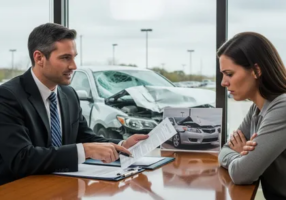
4 Most Common Forms of Distracted Driving and Ways to Prevent Them

Distracted driving is one of the leading causes of car crashes. Taking your eyes, hands, or attention away from driving for even a few seconds can increase the risk of a collision. Common forms of distracted driving include visual, manual, cognitive, and electronic distractions.

Understanding the different types of distracted driving is an important step toward preventing accidents. Recognizing these distractions can help drivers develop safer driving habits, remain attentive behind the wheel, and better protect themselves and others on the road.

What are the Most Common Types of Distracted Driving and Ways to Prevent Them?

Learning how distracted driving affects a driver’s ability to operate a vehicle safely can help you avoid it before it leads to an accident.

Visual Distractions

Visual distractions occur when a driver looks away from the roadway instead of focusing on surrounding traffic. Even a brief glance away can make it easier to miss sudden changes, changing traffic conditions, road signs, pedestrians, or vehicles slowing down ahead. Practicing effective road-scanning techniques can help drivers stay aware of potential hazards and react more quickly to changes in traffic.

Common examples include:

  • Looking at a navigation screen
  • Checking a GPS for too long
  • Turning to look at passengers

For example, a driver who glances at a navigation screen for several seconds may fail to notice that traffic has stopped, resulting in a rear-end collision. 

You can reduce visual distractions by setting your navigation before you begin driving and keeping your phone out of sight while the vehicle is moving. Avoid looking away from the road, and if something requires your full attention, pull over to a safe location first.

Manual Distractions

Manual distractions occur when drivers remove one or both hands from the steering wheel, making it harder to maintain control of the vehicle and react quickly in an emergency. Under 23 U.S.C. § 402, the federal government supports state highway safety programs that address distracted driving and other behaviors that contribute to motor vehicle crashes. 

Common examples include:

  • Eating or drinking
  • Adjusting the radio or climate controls
  • Reaching for loose items inside the vehicle

For example, a driver who reaches into the back seat to pick up a dropped item may unintentionally drift into another lane. 

To prevent manual distractions, adjust your mirrors, seat, climate controls, and music before leaving. Store loose items where they cannot roll around the vehicle, and avoid eating or handling objects while the vehicle is moving. Keeping both hands on the steering wheel gives you better control in unexpected situations.

Cognitive Distractions

Cognitive distractions occur when a driver’s mind is focused on something other than driving. Even when your eyes are on the road and your hands are on the wheel, losing mental focus can delay your reaction to hazards.

Common causes include:

  • Stress or anxiety
  • Emotional conversations
  • Excessive daydreaming
  • Thinking about work or personal problems

For example, a driver distracted by a stressful phone conversation may fail to notice a pedestrian entering a crosswalk. 

One of the best ways to prevent cognitive distractions is to focus your full attention on driving. If you are feeling overwhelmed, emotionally upset, or too tired to concentrate, consider waiting until you are calmer or taking a break before continuing your trip.

Electronic Device Use

Under 49 CFR § 392.82, federal regulations prohibit commercial motor vehicle drivers from using a hand-held phone while driving because of the significant safety risks associated with it. Using a smartphone or other electronic device is one of the most dangerous forms of distraction because it combines visual, manual, and cognitive distractions.

Common examples include:

  • Texting
  • Making handheld phone calls
  • Scrolling through apps
  • Using social media
  • Watching videos

For example, a driver who reads a text message while traveling at highway speed may cover the length of a football field without watching the road. 

You can reduce this risk by activating “Do Not Disturb While Driving” mode, silencing notifications before your trip, and keeping your phone out of reach. If you need to make a call, send a message, or use an app, wait until you have safely parked before using your device.

Final Takeaways

  • The most common forms of distracted driving include visual, manual, cognitive, and electronic device distractions.
  • Driving while distracted significantly increases the likelihood of preventable accidents.
  • Many distractions can be avoided through better preparation and safer driving habits.
  • Keeping your eyes on the road, hands on the wheel, and mind focused on driving helps improve road safety.
  • Eliminating distractions before and during a trip is one of the simplest ways to reduce the risk of a crash.

Injuries Commonly Seen Among Speeding Accident Victims

Speeding accidents often result in severe injuries because higher speeds increase the force of impact during a collision. Victims may suffer anything from broken bones and soft tissue injuries to traumatic brain injuries and spinal cord damage. The faster a vehicle is traveling, the greater the risk of life-altering or fatal injuries.

Speed limits are designed to protect everyone on the road, yet speeding continues to be one of the leading causes of serious traffic accidents. Drivers who exceed the speed limit have less time to react to hazards, and their vehicles require a longer distance to stop. As a result, collisions caused by excessive speed are often more destructive than other types of crashes.

Whether it involves a car, truck, or motorcycle, speeding significantly increases the likelihood of serious injuries for drivers, passengers, pedestrians, and cyclists. Understanding the injuries commonly associated with high-speed crashes highlights the importance of safe driving and prompt medical care after an accident.

Traumatic Brain Injuries

Traumatic brain injuries (TBIs) are among the most serious injuries seen in speeding accidents.

Even when a seat belt is worn, the force of a collision can cause the brain to strike the inside of the skull. Victims may experience headaches, dizziness, confusion, memory loss, difficulty concentrating, or loss of consciousness.

Some brain injuries heal over time, while others may result in permanent cognitive or physical impairments.

Spinal Cord and Back Injuries

The impact of a high-speed collision places tremendous stress on the spine.

Victims may suffer:

  • Herniated discs
  • Fractured vertebrae
  • Nerve damage
  • Spinal cord injuries
  • Partial or complete paralysis

These injuries often require surgery, rehabilitation, and long-term medical care.

Broken Bones and Fractures

Fractures are common because of the intense forces involved in speeding crashes.

Arms, legs, ribs, wrists, hips, and collarbones are especially vulnerable. Some fractures heal with casts or braces, while more severe breaks may require surgery and physical therapy.

Recovery time varies depending on the location and severity of the injury.

Internal Injuries

Not every injury is immediately visible after an accident.

Blunt-force trauma can damage internal organs or cause internal bleeding, which may become life-threatening if left untreated. Victims may not notice symptoms right away, making immediate medical evaluation essential after any high-speed collision.

Prompt diagnosis can prevent serious complications.

Neck and Soft Tissue Injuries

Whiplash is one of the most common injuries following a speeding accident.

The sudden forward and backward movement of the head can strain muscles, ligaments, and tendons in the neck and upper back. Although many people recover within weeks, others experience chronic pain, stiffness, and reduced mobility.

Soft tissue injuries should never be ignored simply because they are not visible on X-rays.

Emotional and Psychological Trauma

Serious accidents affect more than the body.

Many victims develop anxiety, depression, or post-traumatic stress disorder (PTSD) after experiencing a violent crash. Fear of driving, sleep disturbances, and emotional distress may continue long after physical injuries begin to heal.

Mental health treatment can be an important part of the recovery process.

Drivers have a legal duty to operate their vehicles responsibly.

For example, California Vehicle Code § 22350, commonly known as the Basic Speed Law, requires drivers to travel at a speed that is reasonable and prudent based on road, weather, visibility, and traffic conditions. A driver who violates this law may be found negligent if excessive speed contributes to an accident.

Evidence of speeding may become an important factor in determining liability during a personal injury claim.

Seek Medical Attention Immediately

Some injuries may not produce noticeable symptoms immediately after a crash.

Adrenaline can temporarily mask pain, delaying recognition of serious conditions such as internal bleeding or brain injuries. Seeking prompt medical attention helps ensure injuries are diagnosed early while creating documentation that may support an insurance claim or legal case.

Early treatment often improves recovery outcomes.

Key Takeaways

  • Speeding accidents often cause more severe injuries because of the greater force of impact.
  • Common injuries include traumatic brain injuries, spinal injuries, fractures, internal injuries, and whiplash.
  • Emotional trauma may continue long after physical injuries heal.
  • Some injuries are not immediately obvious and require prompt medical evaluation.
  • California Vehicle Code § 22350 requires drivers to operate vehicles at a safe and reasonable speed.
  • Medical records are important for both treatment and potential legal claims.
  • Safe driving and obeying speed limits help reduce the risk of serious accidents and injuries.

What You Need to Know About Driver and Owner Liability

Driver and owner liability determines who may be legally responsible for damages after a car accident. In many cases, the driver who caused the crash is liable, but there are situations where the vehicle owner may also share responsibility. Understanding how liability works can help you better navigate insurance claims and legal proceedings after an accident.

Car accidents often involve more than simply determining who was behind the wheel. Questions may arise about who owned the vehicle, whether the driver had permission to use it, and whether another party contributed to the collision. These factors can affect who is responsible for paying for injuries, property damage, and other losses.

Understanding liability in car accidents is important because it influences how compensation is pursued and which insurance policies may apply. Every accident is unique, and several legal factors may affect the outcome of a claim.

Driver Liability

In most accidents, the at-fault driver is primarily responsible for the damages they cause. Negligent driving behaviors may include:

  • Speeding
  • Distracted driving
  • Running a red light
  • Driving under the influence
  • Following too closely
  • Failing to yield the right of way

If a driver’s negligence causes an accident, they may be held liable for injuries, vehicle damage, lost wages, and other related losses.

When the Vehicle Owner May Be Liable

The owner of a vehicle is not automatically responsible for every accident involving their car. However, owner liability may arise under certain circumstances.

Examples include:

  • Allowing an unlicensed or reckless driver to use the vehicle.
  • Knowingly lending the vehicle to someone who is impaired.
  • Failing to maintain the vehicle properly if mechanical defects contribute to the accident.
  • Situations where state laws impose responsibility on vehicle owners.

The specific facts of each case determine whether the owner shares liability.

Permission Matters

Whether the driver had permission to use the vehicle can significantly affect liability. If someone borrows a car with the owner’s consent, the owner’s insurance policy may provide coverage, depending on the policy terms and applicable state law. However, if the vehicle was taken without permission, different legal and insurance rules may apply.

Insurance companies carefully investigate these facts before determining coverage.

Employer Liability

Some accidents involve company-owned vehicles. If an employee causes an accident while performing work-related duties, the employer may also be responsible under certain legal principles. This often depends on whether the employee was acting within the scope of their employment at the time of the collision.

Business vehicle accidents frequently involve commercial insurance policies and more complex investigations.

Comparative Fault Can Affect Compensation

Sometimes more than one party contributes to an accident. For example, one driver may have been speeding while another failed to yield. In these situations, state comparative fault laws may reduce the amount of compensation available based on each person’s percentage of responsibility.

Accident investigations focus on determining how each party’s actions contributed to the collision.

Evidence Helps Determine Liability

Strong evidence is essential when establishing responsibility after an accident. Helpful evidence may include:

  • Police reports
  • Photographs of the accident scene
  • Witness statements
  • Traffic camera footage
  • Vehicle damage
  • Medical records
  • Expert accident reconstruction

The more complete the evidence, the easier it is to evaluate liability accurately.

State Law May Influence Responsibility

Each state has its own rules regarding vehicle owner responsibility. For example, California Vehicle Code § 17150 provides that the owner of a motor vehicle may be liable for injuries or property damage resulting from the negligent operation of the vehicle by someone using it with the owner’s permission, subject to certain legal limitations. 

Laws like this illustrate why ownership can sometimes become an important issue in personal injury cases. An attorney can explain how your state’s laws apply to your specific situation.

Determining liability is not always straightforward. When multiple drivers, vehicle owners, employers, or insurance companies are involved, identifying the responsible parties may require a detailed investigation. An experienced attorney can review the evidence, explain your legal rights, and help you pursue appropriate compensation.

Understanding liability early can help avoid delays during the claims process.

Key Takeaways

  • Driver liability usually depends on whether negligent driving caused the accident.
  • Vehicle owners may also be responsible in certain situations.
  • Permission to use the vehicle can affect insurance coverage and liability.
  • Employers may share responsibility for accidents involving employees driving for work.
  • Strong evidence is essential for establishing fault.
  • California Vehicle Code § 17150 addresses owner liability when a permitted driver negligently operates a vehicle.
  • Understanding liability helps accident victims protect their rights and pursue fair compensation.

The Evolution of Digital Fan Communities: Lessons from Modern Football Clubs

People used to think of a sports fan community as something tied to place. Fans would meet at their local bar, fill up sports stadiums on game days, and read the local paper to get the news. But now, the world is more connected. The media is everywhere and not just local. This has changed everything. Now, you can find sports fans all over the world, thanks to the internet. People connect in new digital ways, not just where they live. The old way has given way to a new one where these groups are not held by borders. They live in the digital world.

Modern sports teams know that to stay strong in business for a long time, their brand needs to reach across borders. To get these changing groups of fans, the teams focus on social media engagement. This helps turn international viewers from being just watchers into fans who feel close to the brand and want to stay with it for years.

Quick Answer: How Have Fan Communities Evolved?

Modern digital fan communities started as small local groups but have now grown into big, worldwide networks. These groups are now much more interactive. This is because they use real-time updates, games, and Web3 tools. Sports organizations try to get the most value from their audience by using hubs for people to talk, local news feeds, and smart data to reach people better. This helps them turn people who just read or watch from far away into people who get involved with the brand and help create things.

Key Takeaways

  • People in different places now shape the main trends in digital sports culture and content.
  • Omnichannel delivery models help keep international business income steady, even when there is no game.
  • Fans talking to each other helps protect big global fan groups when the season is not going well.
  • Careful data collection at different centers helps find faster ways to earn money from sponsorships that target the right people.

What Are the Essential Components of Modern Digital Fan Hubs?

  • Decentralized platforms: Many fan groups now use different apps and some custom community tools to stay in touch.
  • Localized content streams: Top teams provide real-time updates in multiple languages, so people feel included no matter where they are from.
  • Co-creation spaces: Online places now thank fans for sharing their own posts. This lets fans help shape the stories that get told as news.
  • Gamified loyalty incentives: Fun games and digital items give fans something for taking part every day, not just for paying more.
  • Exclusive behind-the-scenes access: Films, practice clips, and locker room sounds show what life is like for the players, so fans at home feel close to them.
  • Integrated marketplace solutions: It’s easy to buy official team stuff, digital tickets, and be part of the group in one spot now.

Checking your brand’s digital footprint is a key first step when you want to manage your audience well. Looking at how far you reach on different platforms, whether your look is the same everywhere, and how fast you answer people can improve the digital world around you. Data from sports business studies says teams that set up a good digital membership system see a 34% jump in value from people who are not nearby.

This setup plays a big part in making sure your brand stays important over time. It also helps you stand strong in the market. When both basic and interactive steps are combined, the group builds a strong way to protect its community from changes in how things work online.

How Do Emerging Technologies Advance Global Fan Engagement?

Interactive tech helps people remember more because it gives real-time data. It also offers a space where people feel like a part of a community. There are quick updates on your phone too. With these tools, sports groups do not wait to share news after something happens. They reach out early and often to keep people coming back before the game even starts. Brands can use this set-up to grow strong loyalty with fans.

  • Immersive spatial streams bring the feel of a match-day stadium right into homes around the world.
  • Algorithmic content feeds change app dashboards for each fan by using what they have liked in the past.
  • Automated translation nodes quickly break down talking walls in fan forums around the globe.
  • Smart ticketing systems let people share tickets in a safe way and help them save up points for loyalty rewards.
  • Digital collectibles and tokens give fans the right to vote on small club choices they care about.
  • AI-driven moderation bots help to keep the chat space safe and without hate or trouble.
  • Real-time fan polls help guide fast broadcaster choices and change half-time entertainment.

Which Specific Strategies Prevent Community Churn and Fatigue?

  • Vary content formats between long text, short videos, and live audio rooms from time to time.
  • Thank top contributors publicly on club apps and in emails.
  • Have staff present and active in community forums to help build trust in the brand.
  • Host local watch parties in big world markets during major events.
  • Make community rules clear about promotion rules and how members should act.
  • Give fast ways to fix app problems and digital merchandise shipping mistakes.

How Do Strategy Frameworks Limit Community Fragmentation?

Engagement ModelPrimary Strategic FocusStandard Structural LimitsKey Community Benefit
BroadcastingMass-reach video, news deliveryLow interactive feedback loopsHigh cross-demographic brand awareness
Direct Peer-to-PeerDiscord hubs, community spacesHigher resource moderation needsIntense member loyalty and organic growth
Tokenized EcosystemsWeb3 voting, asset rewardsHigh initial technology entry barrierLong-term digital asset monetization

How Can Community Initiatives Maximize Content Co-Creation?

  • Official fan boards give quick feedback for the main projects that make money.
  • User-made highlight filters let creators remix match videos the right way.
  • Regular developer hackathons help build new add-ons for the main team apps with fans.
  • Creator pay structures reward fan channels when they help drive in-store sales.
  • Open design contests let fans come up with designs for special-edition merch.
  • Shared match-day photo walls collect local photos from fans all over the world.
  • Crowdsourced charity drives bring fans together worldwide for important social causes.

Setting clear engagement rules helps keep a community stable for a long time. It also supports steady money-making for businesses. Modern brand safety needs open and clear ways for organizations and supporter groups to communicate. A new, non-standard way of sharing media helps protect a brand’s ideas and digital work. This stops the audience from breaking apart when things are not going well.

The sports business today needs people to be active in places where content is open and not controlled by one group. They also need to talk with the community as things happen. You should check your tech setup each year to make sure your data and web safety steps are up to date. In the end, learning and knowing the culture well will help you turn a changing online group into a strong group that can keep going on its own.

Using new infrastructure together with smart, multi-platform social media engagement strengthens fan engagement and gives brands a sustainable way to build loyal global communities. Bringing these new ways to talk and connect helps businesses keep their place in today’s world. It also helps them grow their community around the globe with ease.

Layne Riggs nabs second consecutive Truck pole of 2026 at North Wilkesboro

Photo by John Knittel for SpeedwayMedia.com.

Layne Riggs sped to his second consecutive NASCAR Craftsman Truck Series pole position of the 2026 season for the Faith Fest 250 at North Wilkesboro Speedway in North Wilkesboro, North Carolina, on Friday, July 17.

The event’s starting lineup was determined through an on-track qualifying session that consisted of a single-truck, two-lap qualifying format. During the session, each of the 38 competitors vying for 36 starting spots cycled around North Wilkesboro Speedway twice to post the fastest lap amongst one another. The competitor who posted the single fastest lap was awarded the pole position. During the session, Riggs, who was the 10th-fastest competitor during Friday’s practice session, utilized his two-lap qualifying trail to post his fastest lap at 121.503 mph in 18.502 seconds. The lap was enough for Riggs and his No. 34 Infinity Ford F-150 team to secure the top-starting spot for Saturday’s main event.

With the pole, Riggs, who currently leads this year’s regular-season standings by 44 points, achieved his sixth Craftsman Truck Series career pole for his 69th start and his second on a short track circuit. He has finished third and second in his two previous starts at North Wilkesboro over the last two seasons as he strives to finish an extra spot ahead while gaining more momentum towards his Chase run and contend for his first Truck title.

Riggs will share the front row with Carson Hocevar, the latter of whom was the fastest competitor in practice. Hocevar, who is making his 10th Truck start in the No. 77 Chevrolet Silverado RST entry for Spire Motorsports, posted the second-fastest qualifying lap at 121.503 mph in 18.518 seconds. Christopher Bell, who was the third-fastest competitor in practice and who is making his fifth Truck start of this season with Halmar Friesen Racing, qualified in third place with his fastest lap at 121.157 mph in 18.571 seconds. Corey Heim, winner of the 2024 Truck event at North Wilkesboro and who is making his sixth start of this season with TRICON Garage, will start in fourth place with a lap at 120.916 mph in 18.608 seconds. Giovanni Ruggerio rounded out the top-five starting spots.

Chase Elliott, Kaden Honeycutt, Grant Enfinger, Chandler Smith (2025 Truck winner at North Wilkesboro) and Stewart Friesen completed the top-10 starting grid, respectively. Notably, Ryan Newman, who is piloting the No. 25 ‘Free Agent’ RAM 1500 entry for Kaulig Racing, will start in 25th place, and Shane van Gisbergen, who is making his third Truck start of 2026 this weekend in the No. 71 Chevrolet Silverado RST entry for Spire Motorsports, will start in 19th place. In addition, newcomers Kasey Kleyn and Donovan Strauss will start 31st and 32nd, respectively, while Tyler Ankrum, who currently occupies the 10th and final transfer spot to the Chase cutline, will start on the 12th row alongside Brenden Queen in 24th place.

With 38 competitors vying for 36 starting spots, Landon Huffman and Timmy Hill were the two competitors who failed to qualify for the main event.

North Wilkesboro – Qualifying Position, Best Speed, Best Time:

  1. Layne Riggs, 121.608 mph, 18.502 seconds
  2. Carson Hocevar, 121.503 mph, 18.518 seconds
  3. Christopher Bell, 121.157 mph, 18.571 seconds
  4. Corey Heim, 120.916 mph, 18.608 seconds
  5. Giovanni Ruggiero, 120.870 mph, 18.615 seconds
  6. Chase Elliott, 120.792 mph, 18.627 seconds
  7. Kaden Honeycutt, 120.592 mph, 18.658 seconds
  8. Grant Enfinger, 120.527 mph, 18.668 seconds
  9. Chandler Smith, 120.340 mph, 18.697 seconds
  10. Stewart Friesen, 120.308 mph, 18.702 seconds
  11. Cole Butcher, 120.186 mph, 18.721 seconds
  12. Nick Leitz, 120.102 mph, 18.734 seconds
  13. Justin Haley, 119.981 mph, 18.753 seconds
  14. Tanner Gray, 119.738 mph, 18.791 seconds
  15. Jake Garcia, 119.636 mph, 18.807 seconds
  16. Landen Lewis, 119.433 mph, 18.839 seconds
  17. Dawson Sutton, 119.319 mph, 18.857 seconds
  18. Christian Eckes, 119.313 mph, 18.858 seconds
  19. Shane van Gisbergen, 119.306 mph, 18.859 seconds
  20. Andres Perez De Lara, 119.250 mph, 18.868 seconds
  21. Daniel Hemric, 119.231 mph, 18.871 seconds
  22. Ben Rhodes, 119.085 mph, 18.894 seconds
  23. Brenden Queen, 119.085 mph, 18.894 seconds
  24. Tyler Ankrum, 119.073 mph, 18.896 seconds
  25. Ryan Newman, 118.985 mph, 18.910 seconds
  26. Kris Wright, 118.558 mph, 18.978 seconds
  27. Ty Majeski, 118.434 mph, 18.998 seconds
  28. Mini Tyrrell, 118.303 mph, 19.019 seconds
  29. Luke Baldwin, 117.795 mph, 19.101 seconds
  30. Tyler Reif, 117.684 mph, 19.119 seconds
  31. Kasey Kleyn, 117.659 mph, 19.123 seconds
  32. Donovan Strauss, 117.059 mph, 19.221 seconds
  33. Nathan Nicholson, 116.822 mph, 19.260 seconds
  34. Corey LaJoie, 115.973 mph, 19.401 seconds
  35. Clayton Green, 115.090 mph, 19.550 seconds
  36. Frankie Muniz, 114.685 mph, 19.619 seconds

The 2026 Faith Fest 250 at North Wilkesboro Speedway is scheduled to occur on Saturday, July 18, at 12:30 p.m. ET on FS1, NASCAR Racing Network and SiriusXM.